Balenciaga Fall 2026 Collection
For Fall 2026, Pierpaolo Piccioli continued redefining Balenciaga with a collection built around a deceptively simple idea: the collar. Enlarged, sculpted, and elevated, these portrait-like frames transformed coats and dresses into architectural compositions that drew the eye directly to the face.
The show unfolded in a darkened space along the Champs-Élysées, inside a former flagship store by Adidas. Piccioli collaborated with Sam Levinson, whose visual installation filled the venue with flickering monitors showing California landscapes, empty bars, wolves, and fragments featuring cast members from Euphoria, including Danielle Deadwyler. The imagery echoed the designer’s fascination with contemporary youth culture.
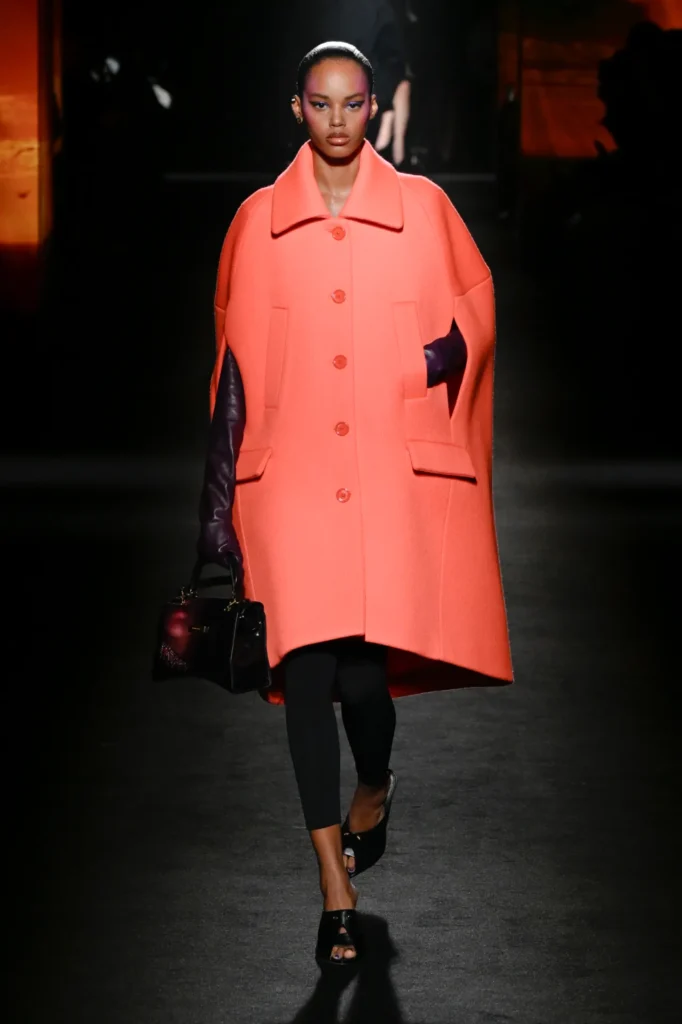
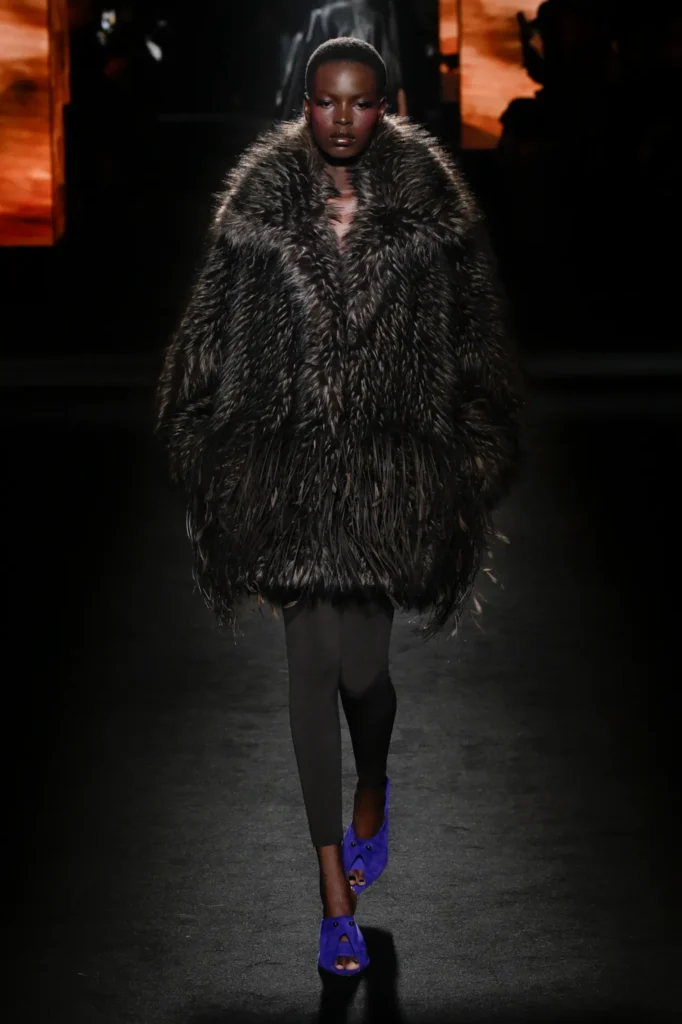
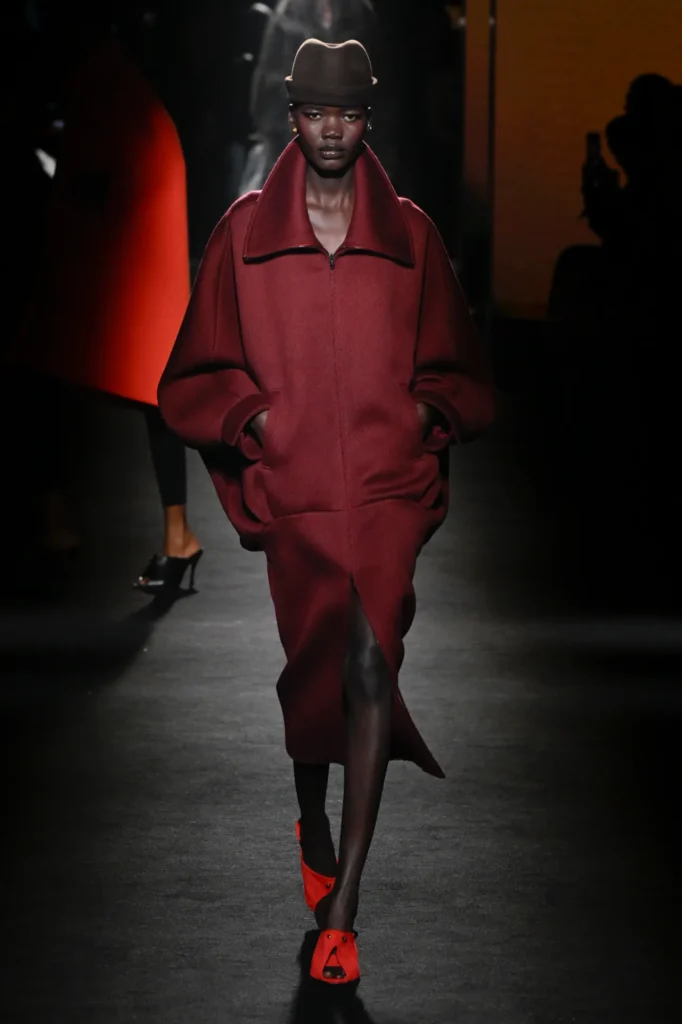
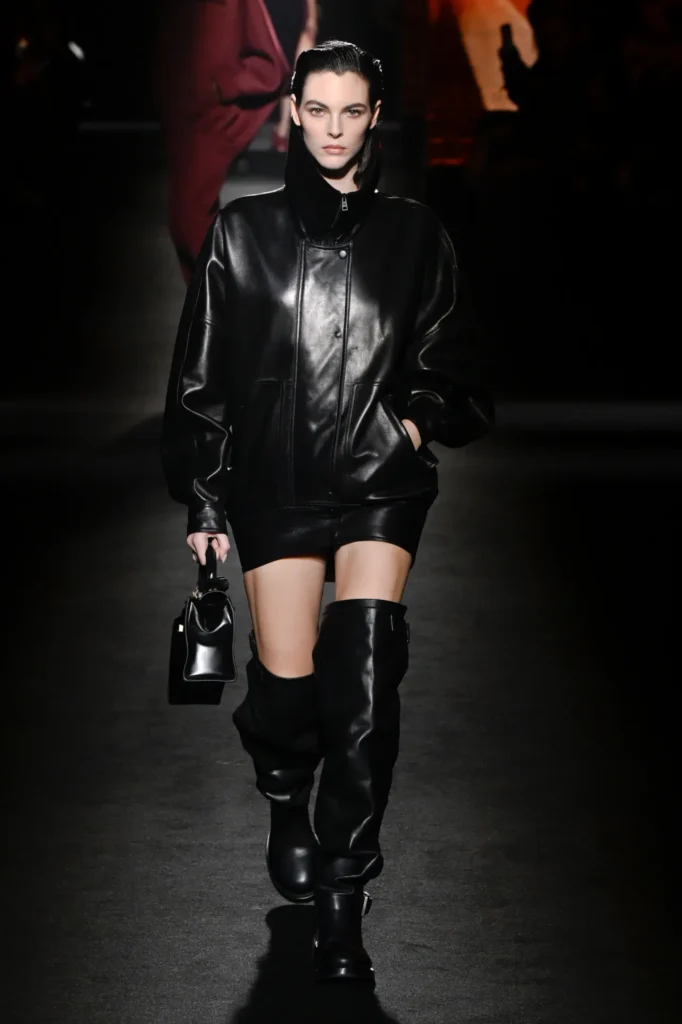
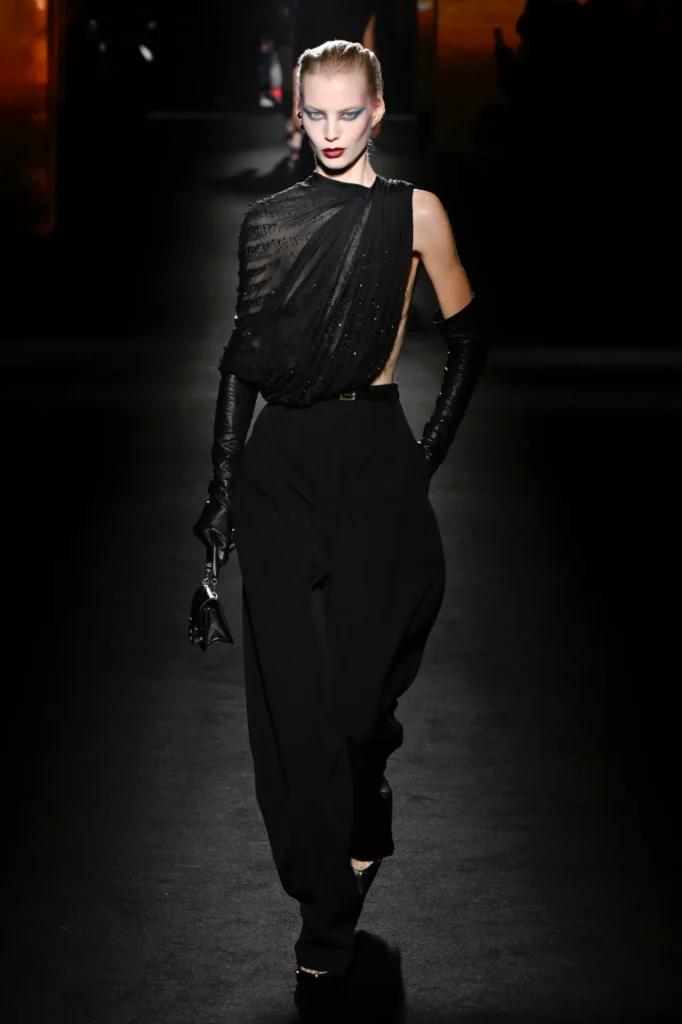
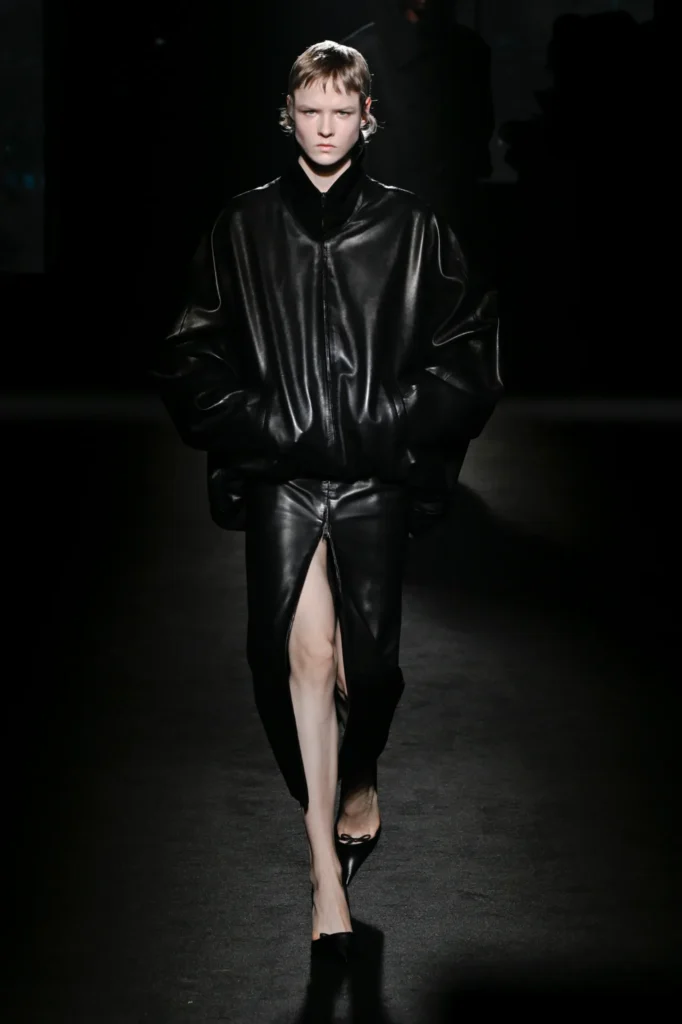
On the runway, 81 models emerged one by one under narrow beams of light, each look anchored by a commanding coat. Many silhouettes featured rounded, cocoon-like backs—a modern interpretation of the sculptural forms pioneered by founder Cristóbal Balenciaga.
Piccioli’s defining gesture was the collar itself. Portrait collars, chimney collars, and petal-shaped constructions rose around the neck, framing the face with quiet drama. The motif reflected Levinson’s unfiltered portrait of Generation Z: direct, vulnerable, and emotionally charged.
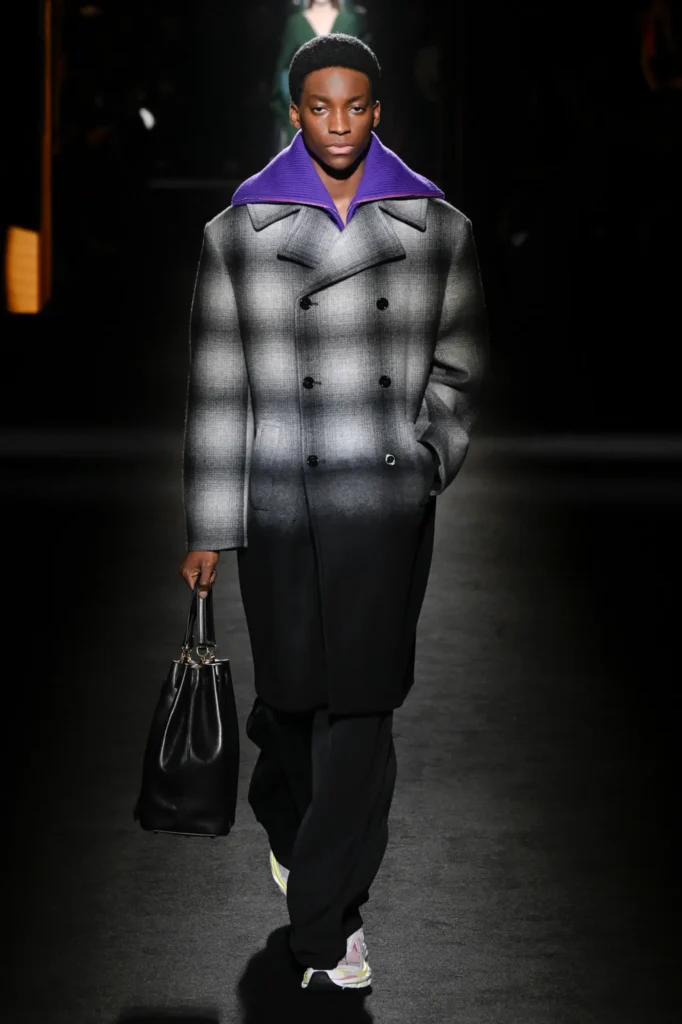
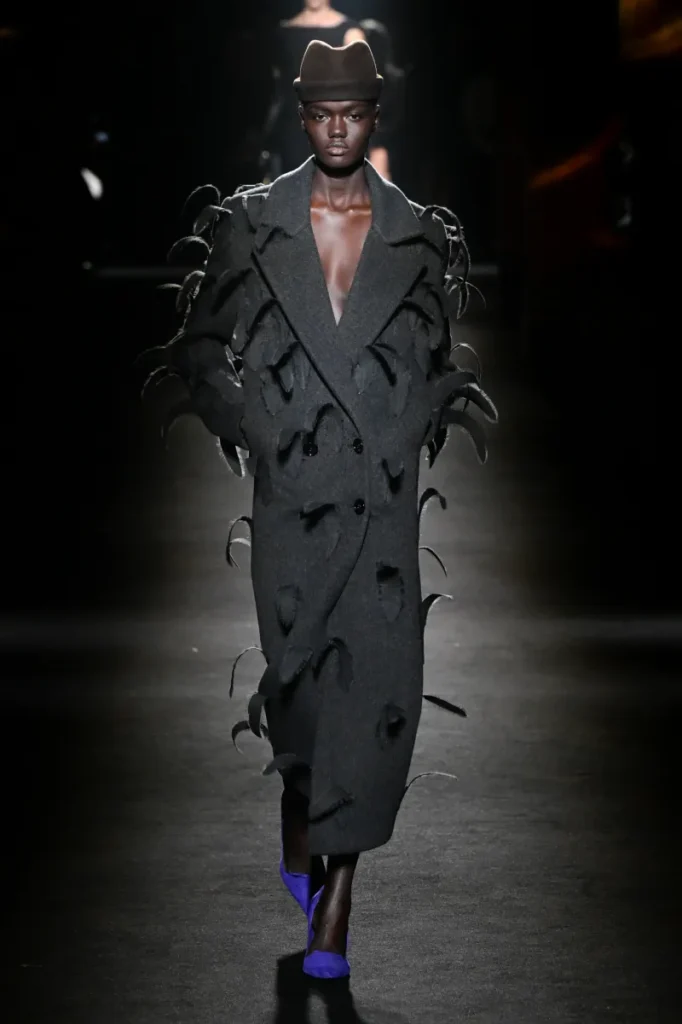
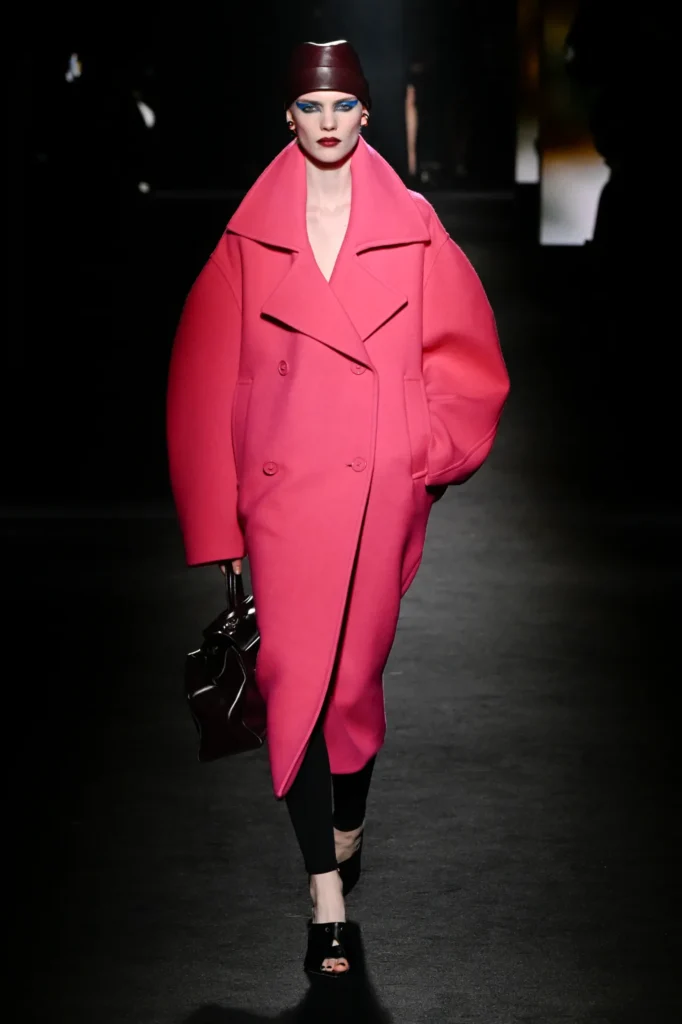
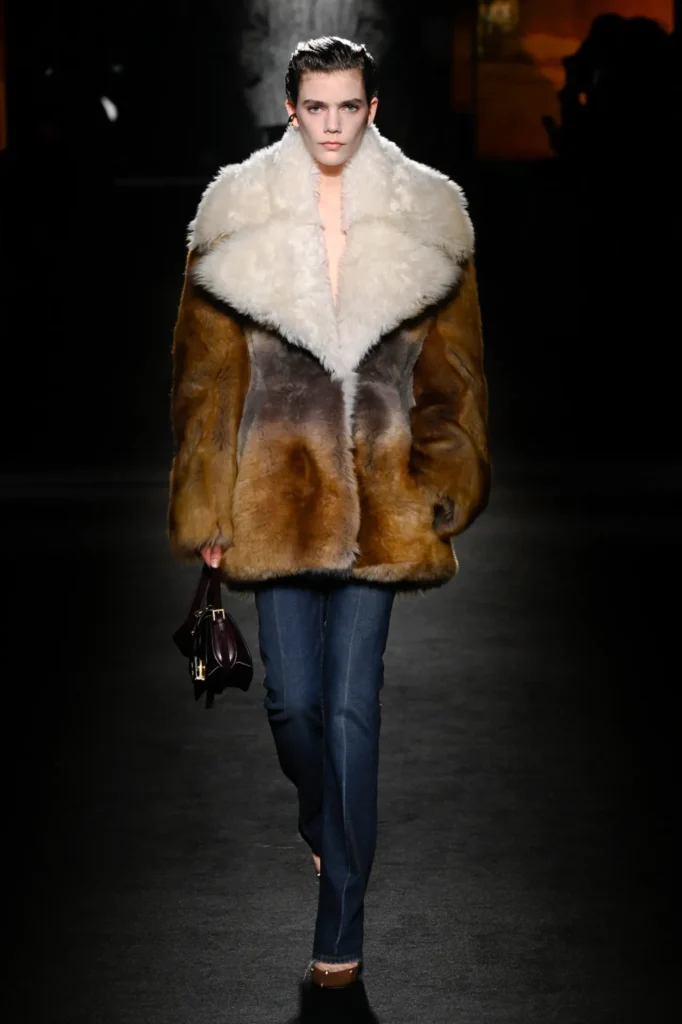
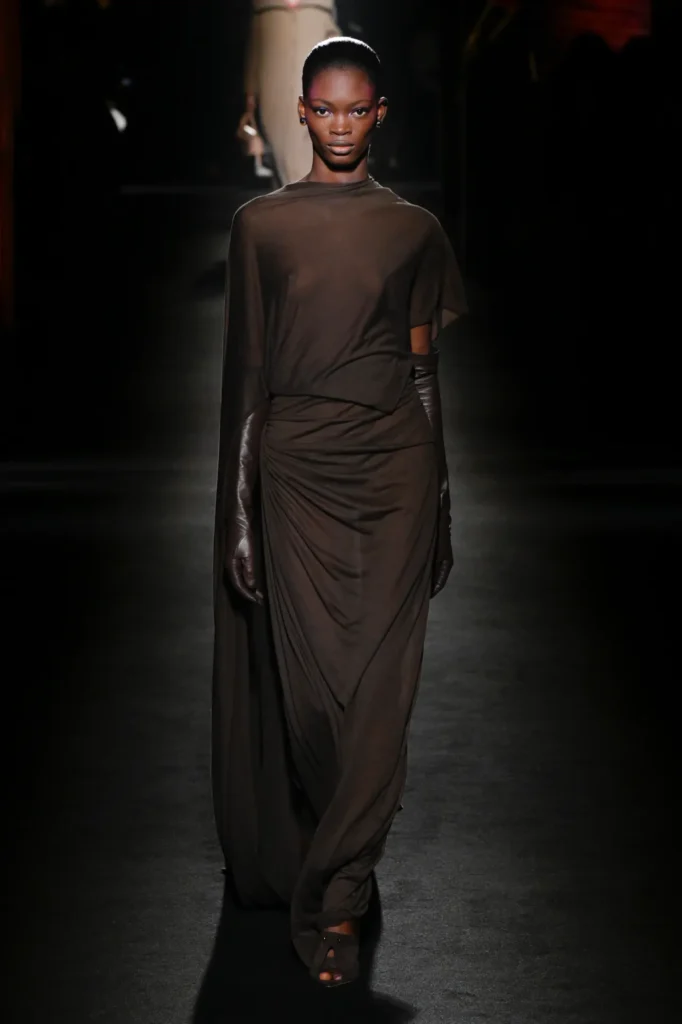
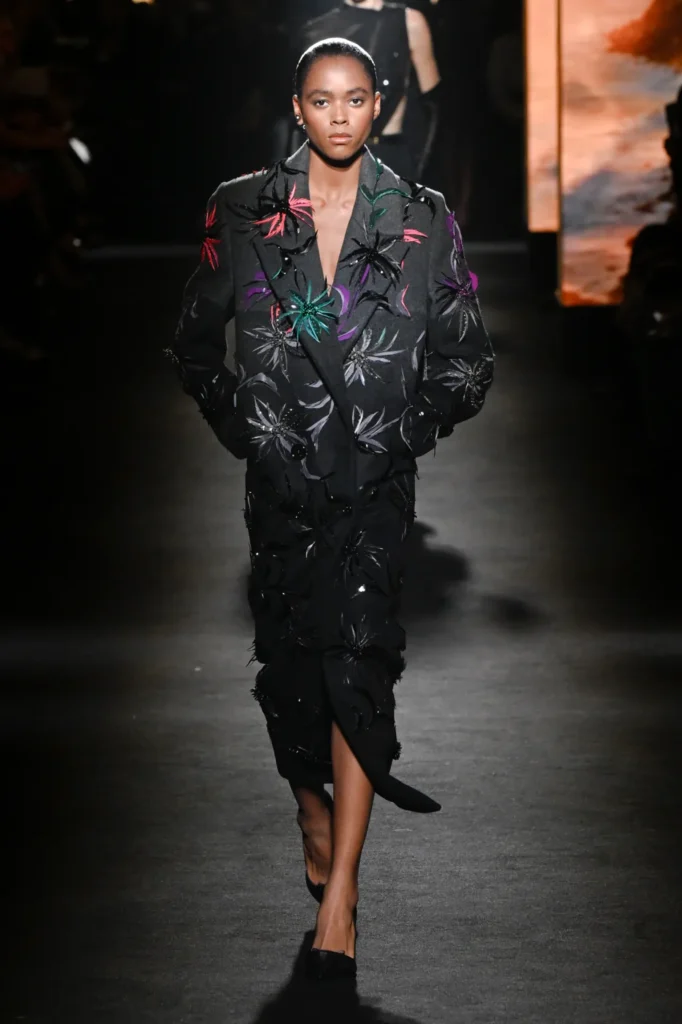
The show opened with a sequence in deep black, the color dominating the collection. A voluminous leather bomber with a bubble-shaped back set the tone, followed by a sculptural naval coat with a collar rising like a calla lily. A commanding officer’s coat appeared next, its collar and lapels lifted from softly sloped shoulders.
Between these outerwear statements, Piccioli introduced fluid jersey dresses—technical feats of draping with almost invisible seams—alongside sharply cut high-waisted denim that grounded the collection in everyday wear.
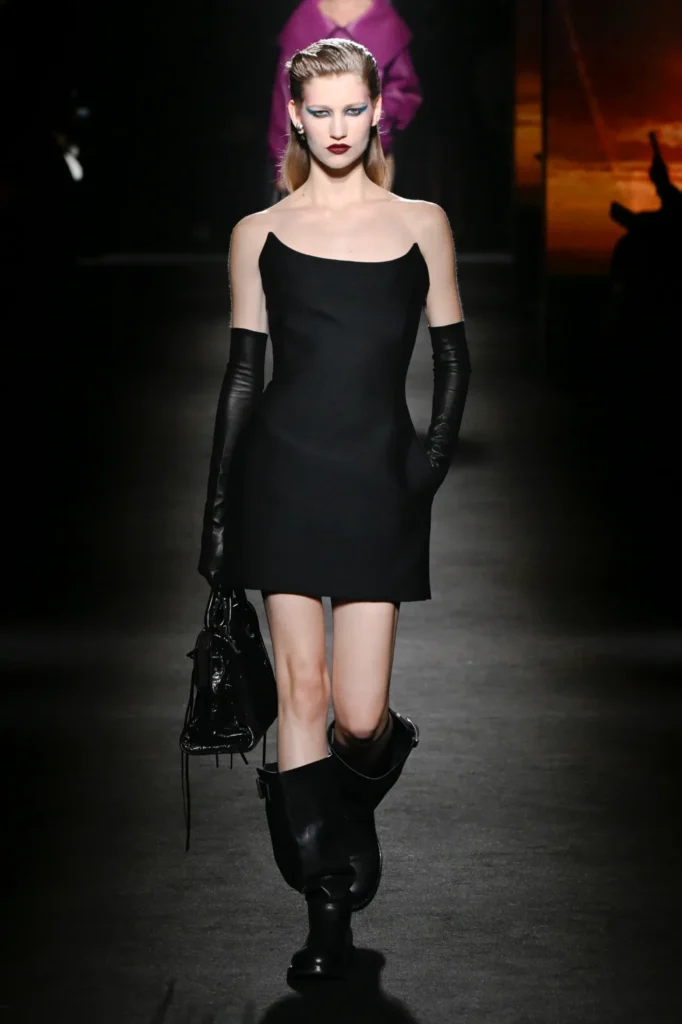
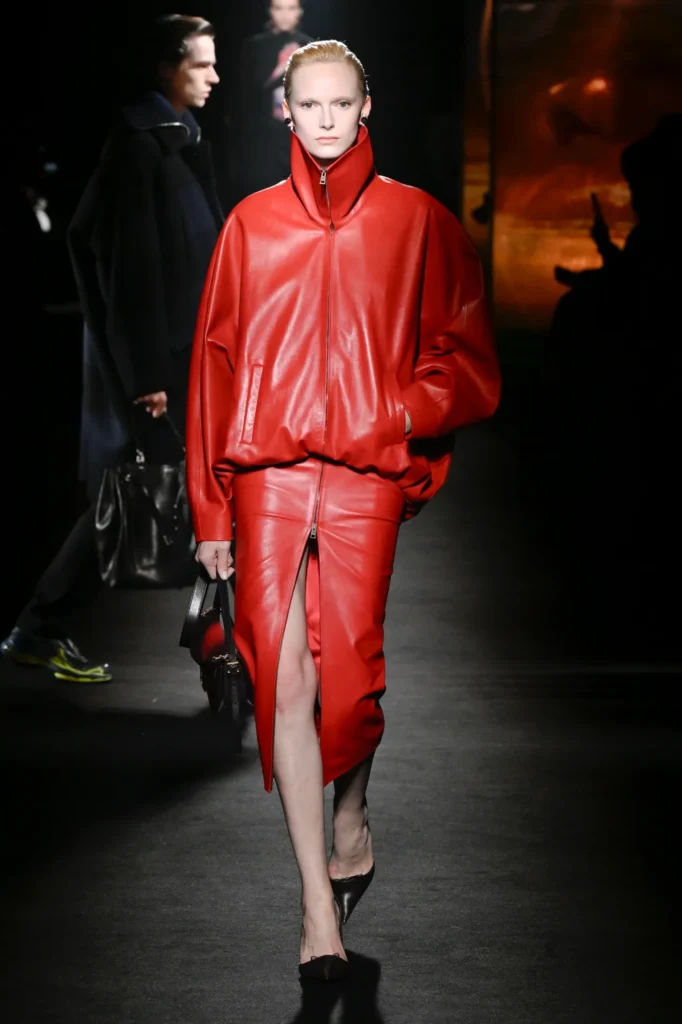
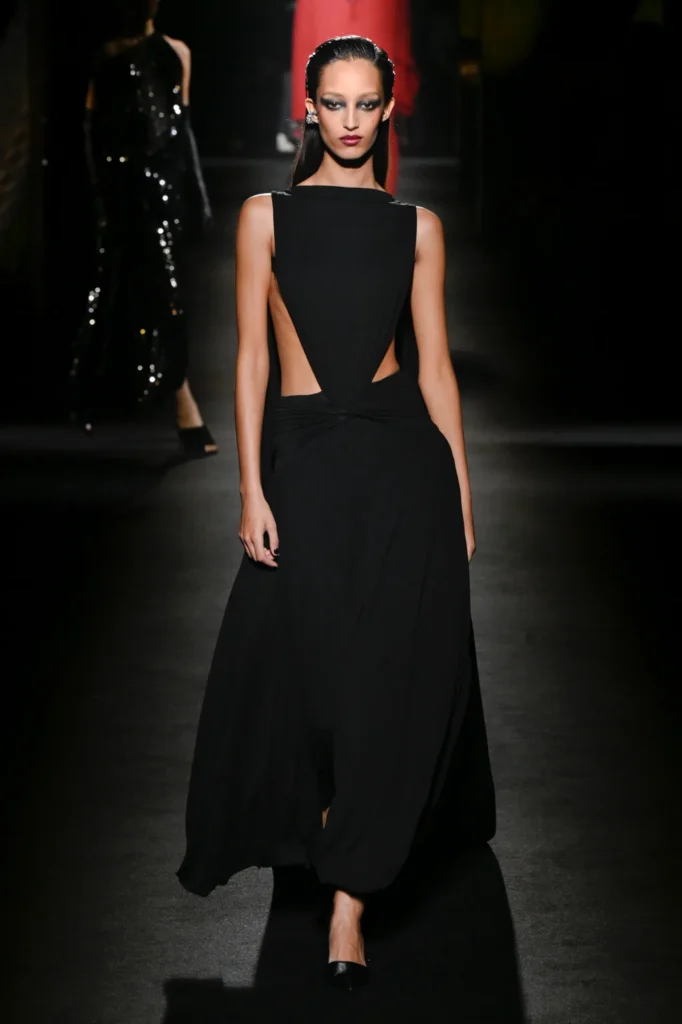
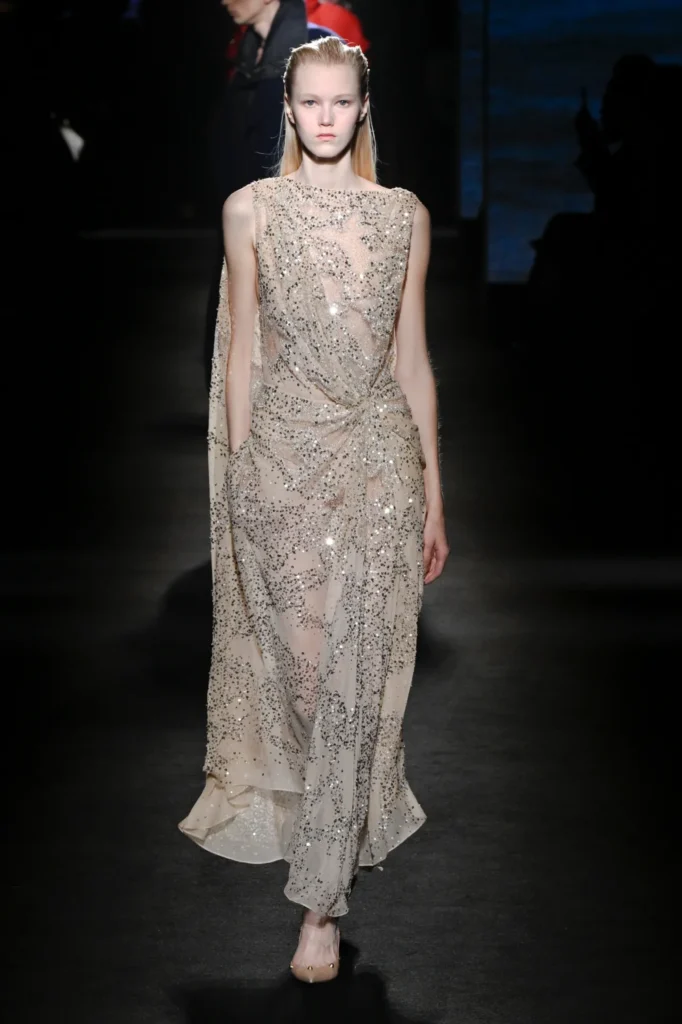
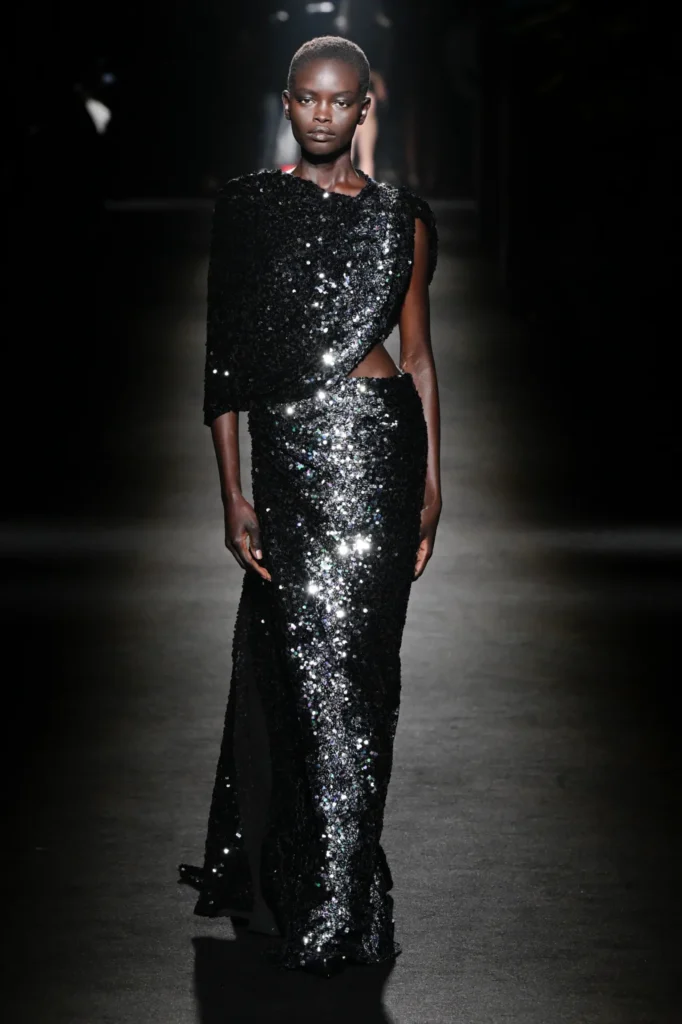
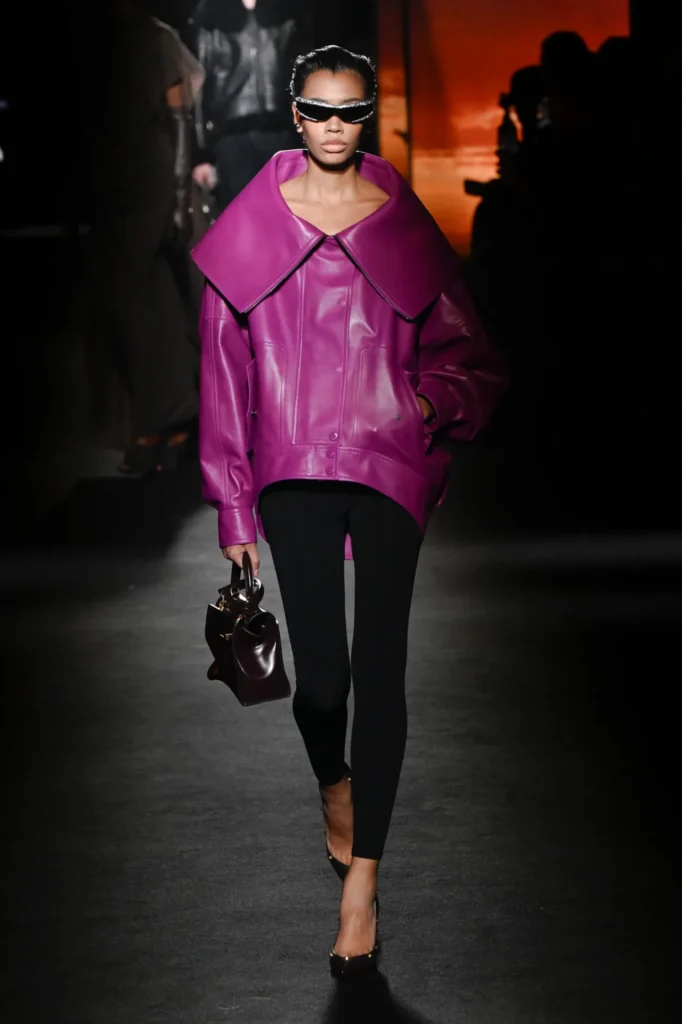
The result was restrained yet powerful: clothing that spoke through shape rather than spectacle. By framing the face with sculptural collars, Piccioli turned Balenciaga’s signature volume into something intimate—an architecture built not just around the body, but around identity itself.