Chanel Haute Couture Spring 2026 Collection
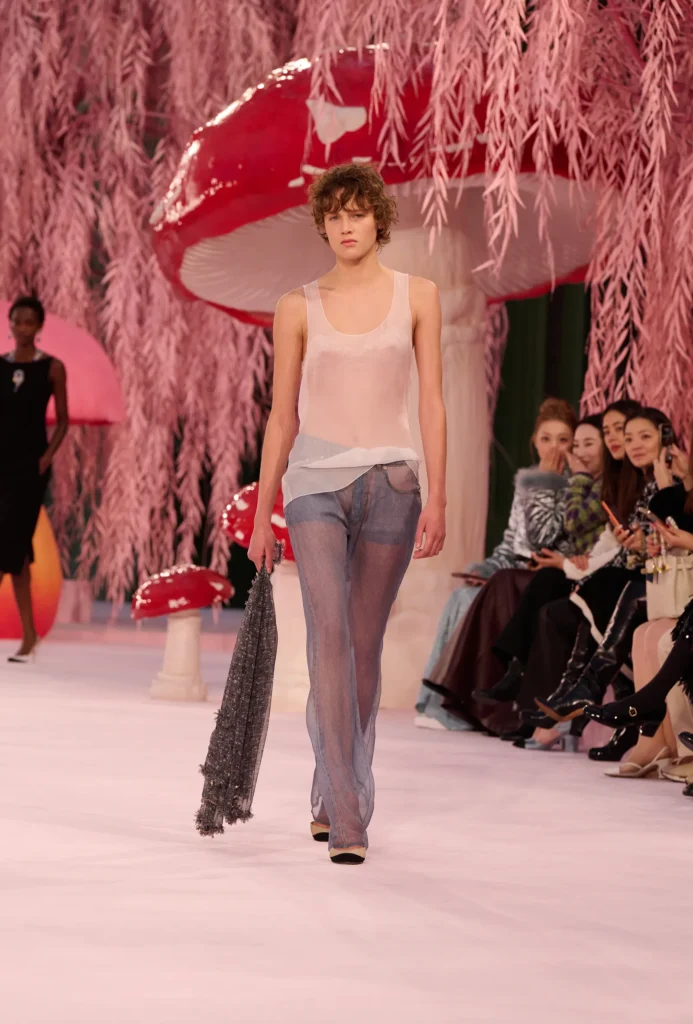
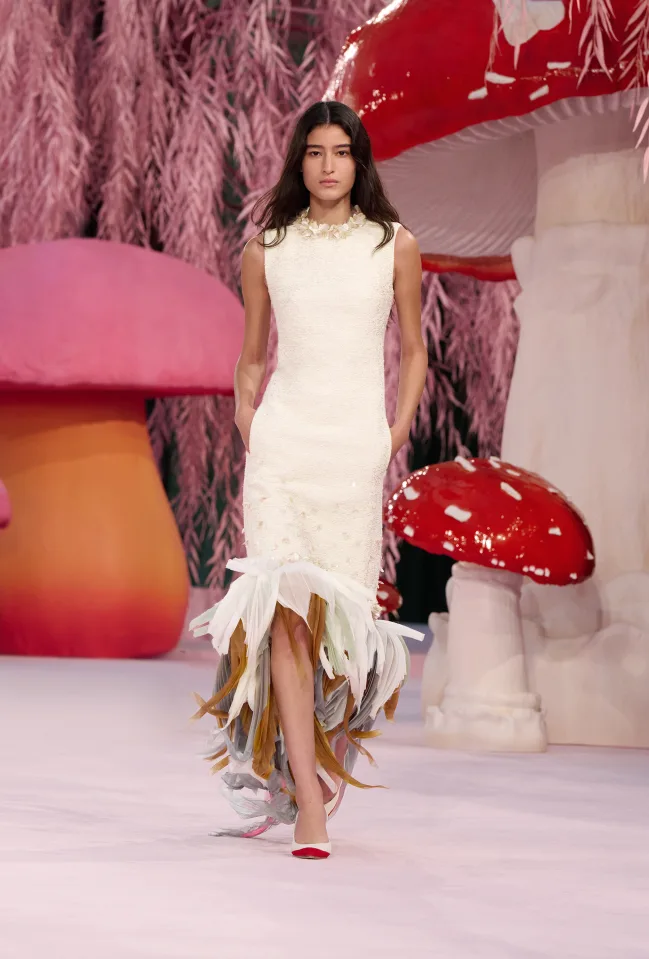
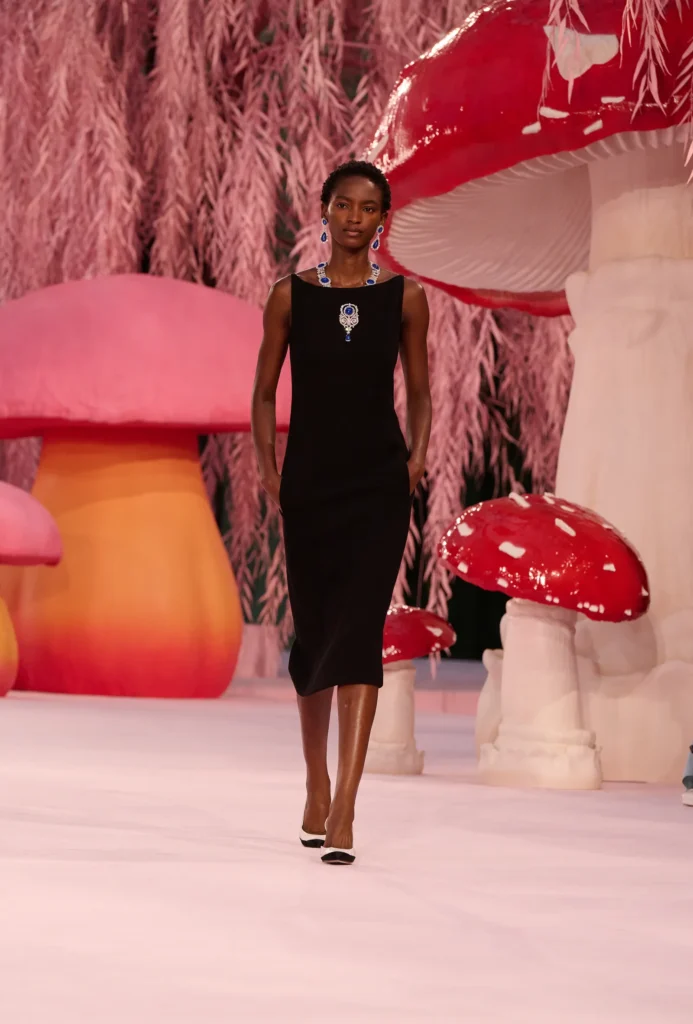
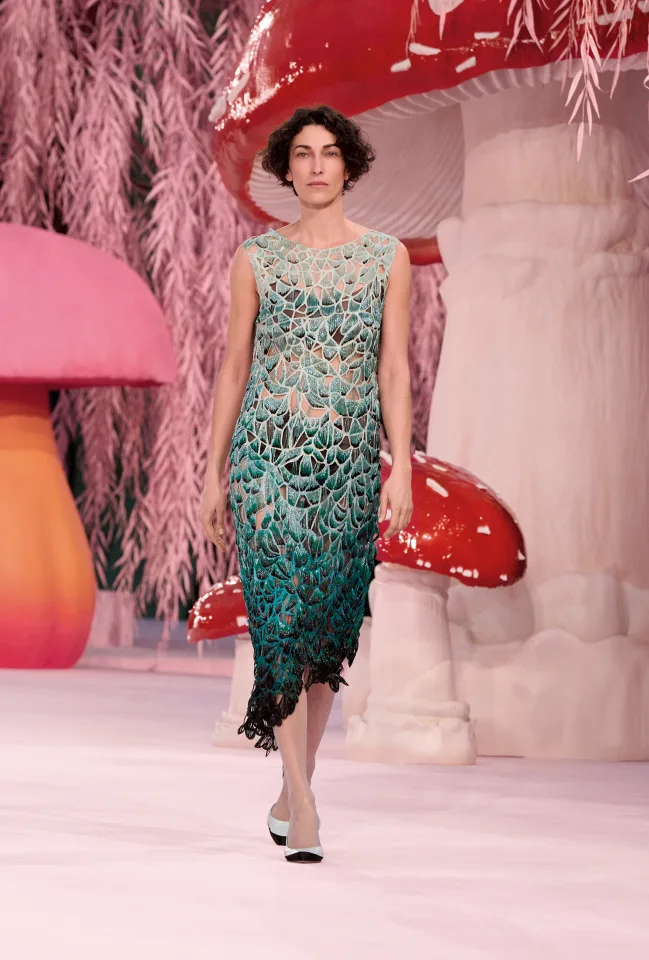
Matthieu Blazy’s haute couture debut for Chanel arrived with an unexpected sense of ease. Staged beneath the glass dome of the Grand Palais, the pale-pink set—punctuated by oversized, dreamlike mushrooms—signaled a clear intent: to soften the weight of expectation and reintroduce wonder into one of fashion’s most codified houses.
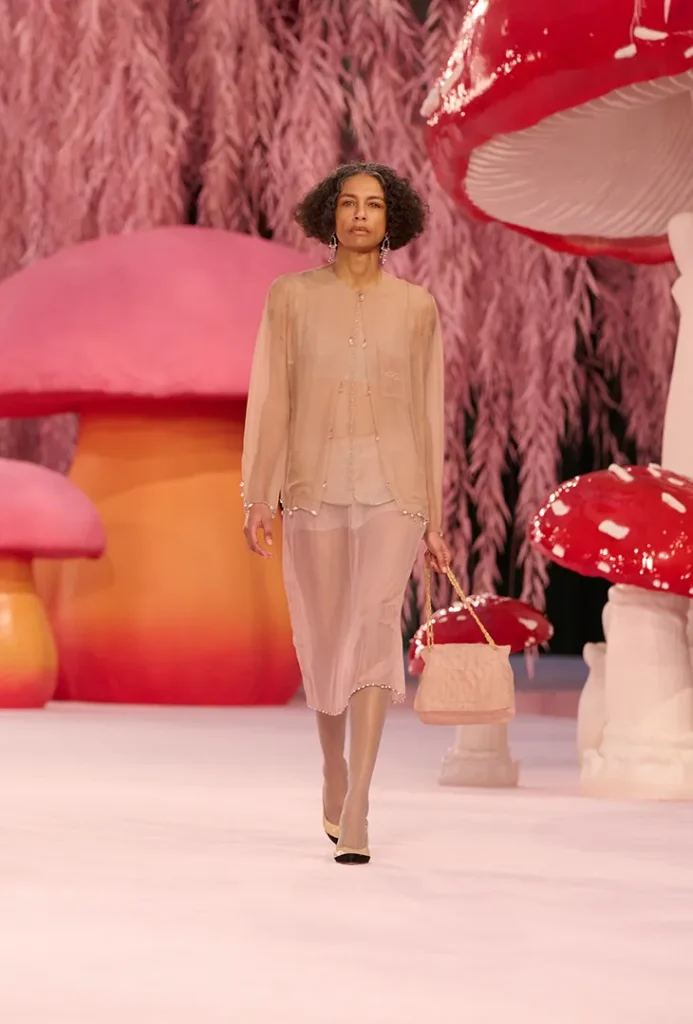
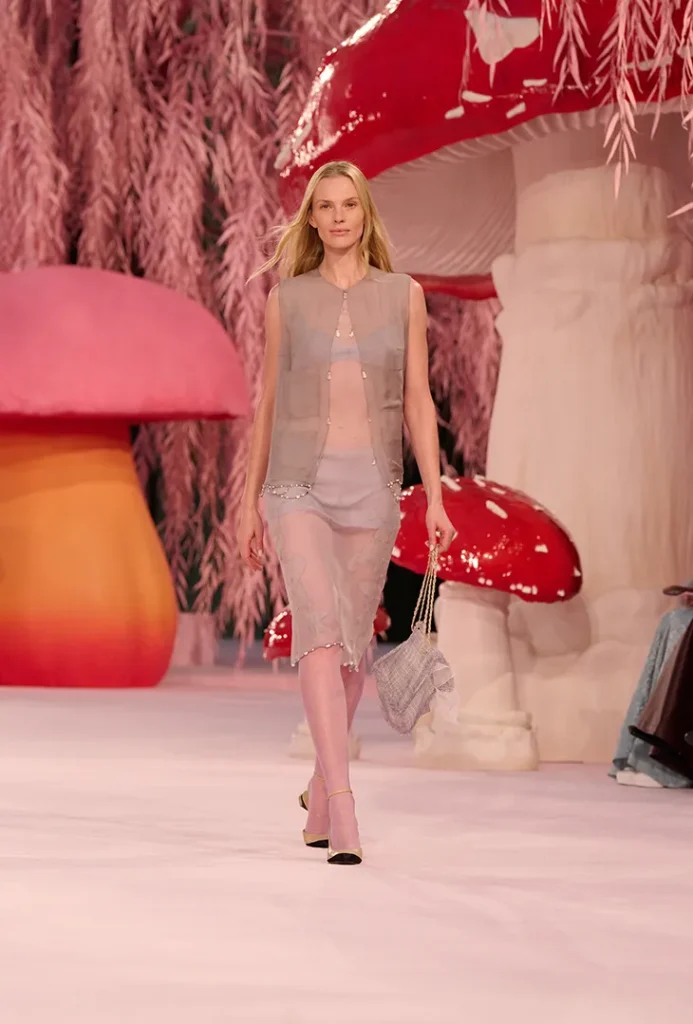
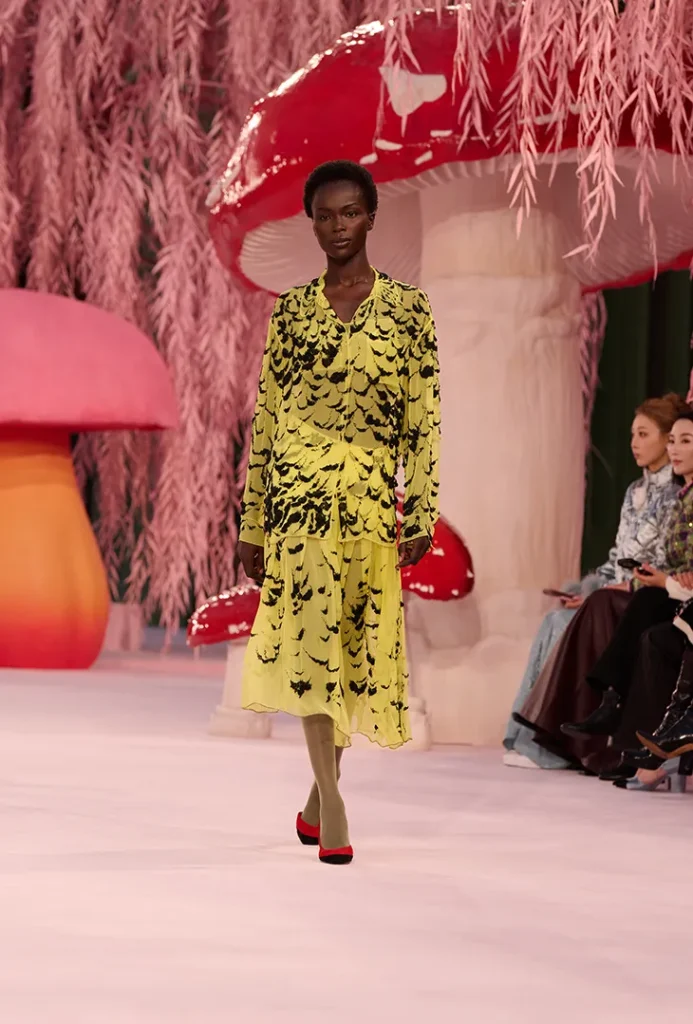
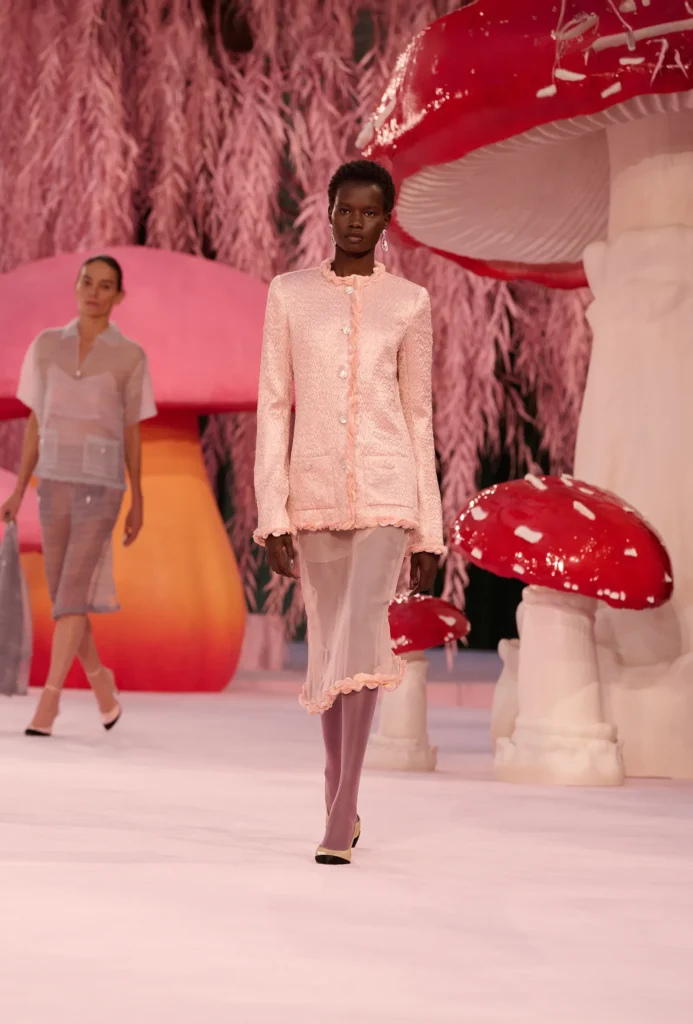
Blazy framed the collection with a short animated film of woodland animals industriously working inside a Chanel atelier, a whimsical overture that set the tone. “I wanted something light, poetic, and easy to read,” he explained backstage. That lightness became both concept and execution.
The opening look distilled the idea perfectly: a barely-there version of the classic Chanel tweed suit, rendered in nude chiffon. Its translucent layers were held together by fine chains and pearls stitched at the hems, floating around the body rather than defining it. Worn by Italian model Stephanie Cavallaro, the suit nodded to Chanel’s quilted handbag while quietly dismantling the stiffness historically associated with couture.
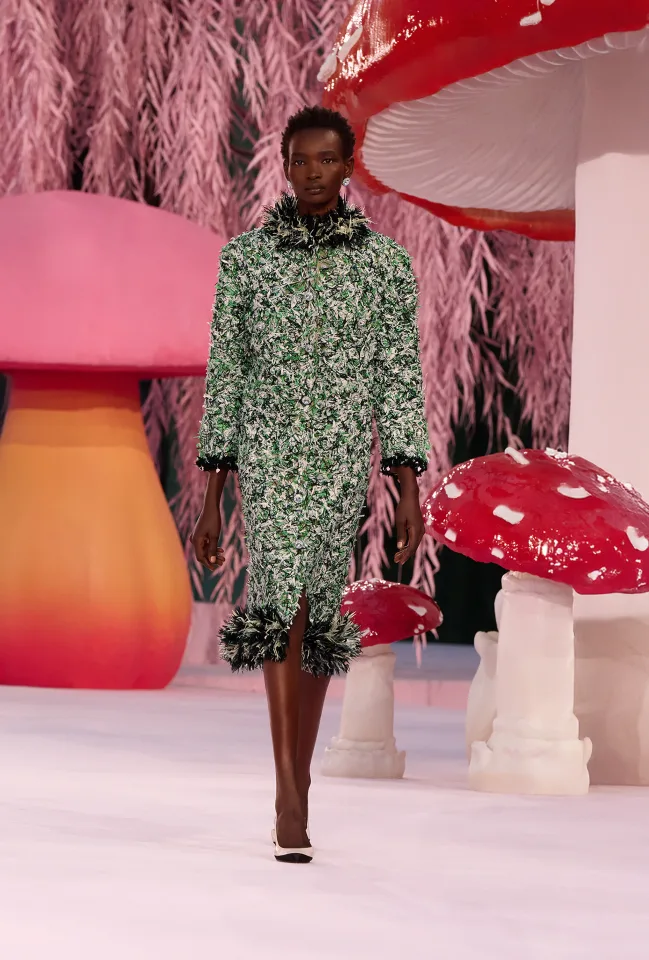
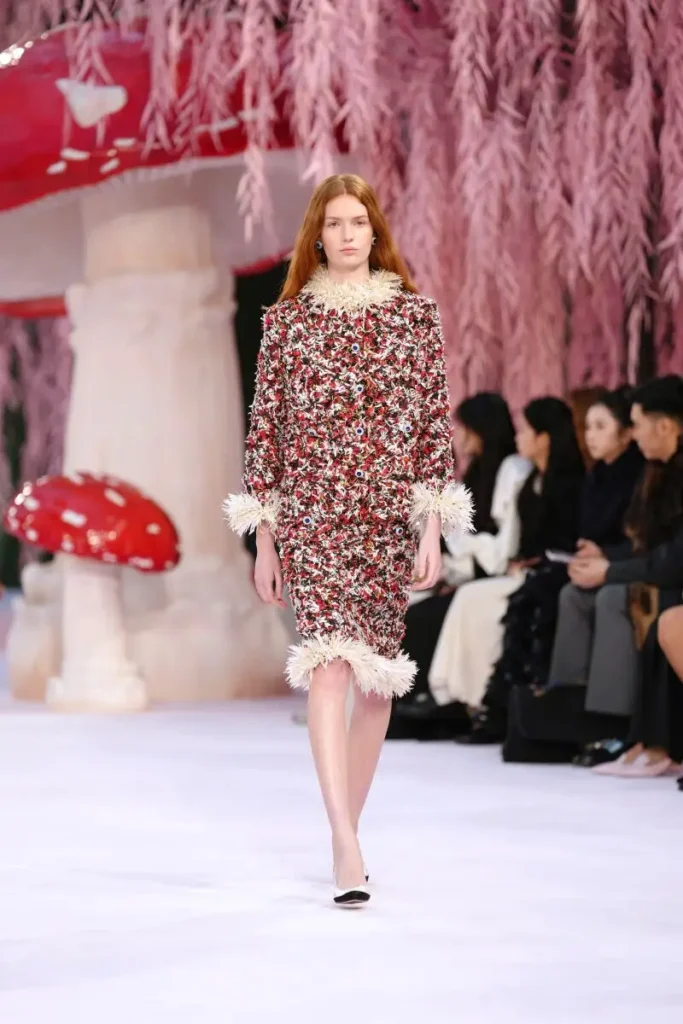
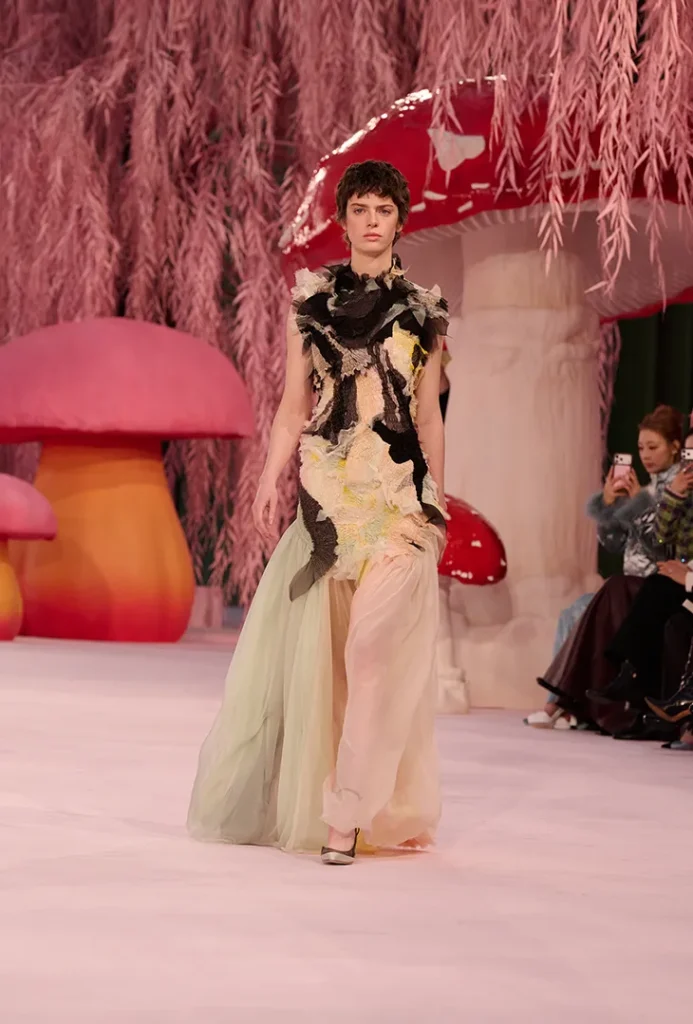
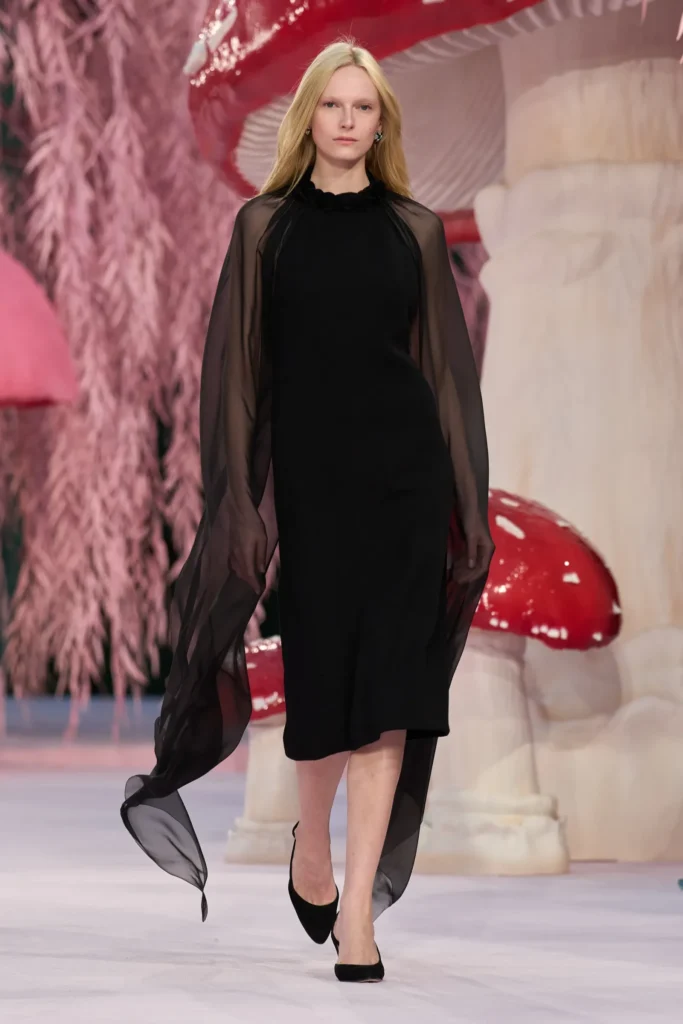
By stripping back the house’s most recognizable symbols—tweed, camellias, overt structure—Blazy bypassed the legacy of Karl Lagerfeld and reached further back, toward Gabrielle “Coco” Chanel herself. Her philosophy of freedom, movement, and restraint shaped the collection. As Blazy put it, this was about “a woman in motion,” dressed without constraint.
Birds emerged as the central metaphor. Chanel’s ateliers delivered feats of technical finesse: iridescent embroideries suggesting plumage, jet-black raffia coats with feathery texture, and raw threads arranged to mimic peacock tails on flapper-style dresses. Dove-gray petals shimmered on near-invisible skirt suits, while psychedelic embroidery added a surreal edge.
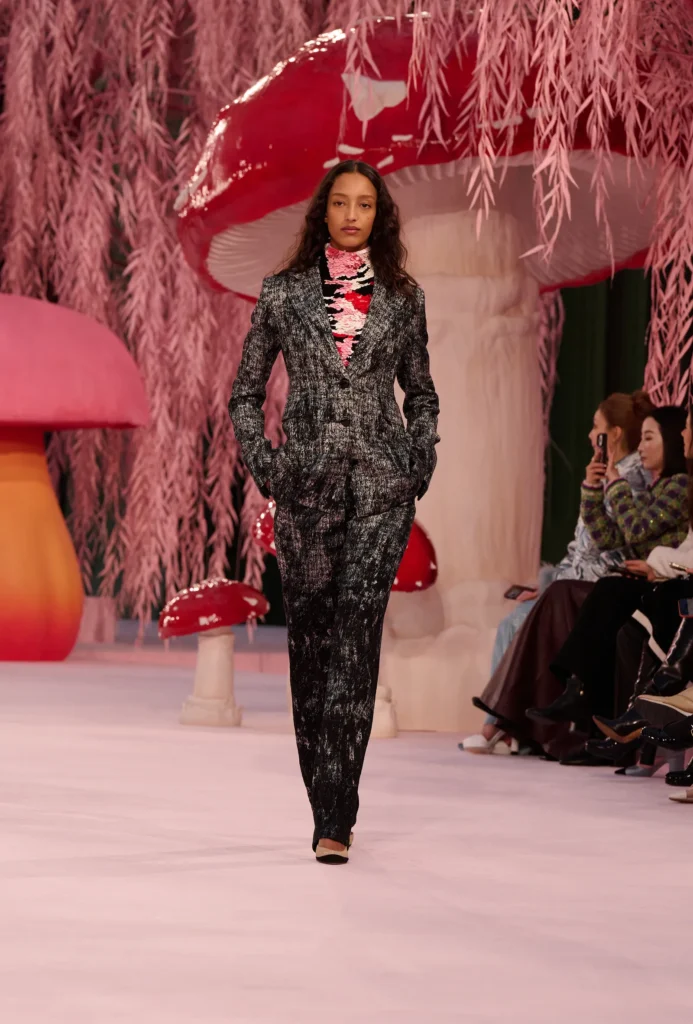
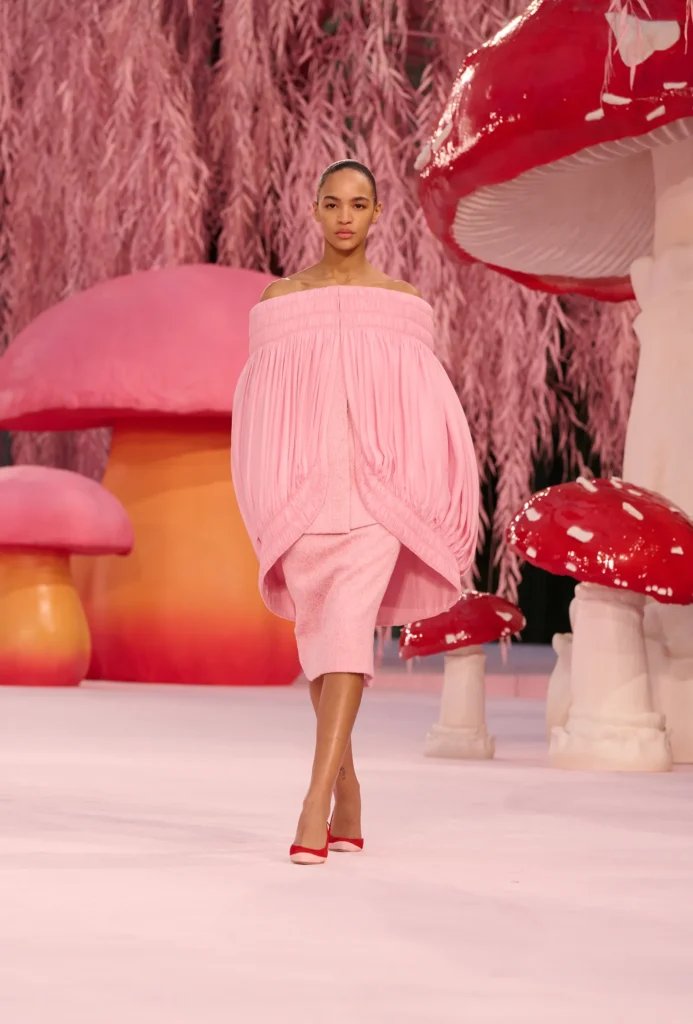
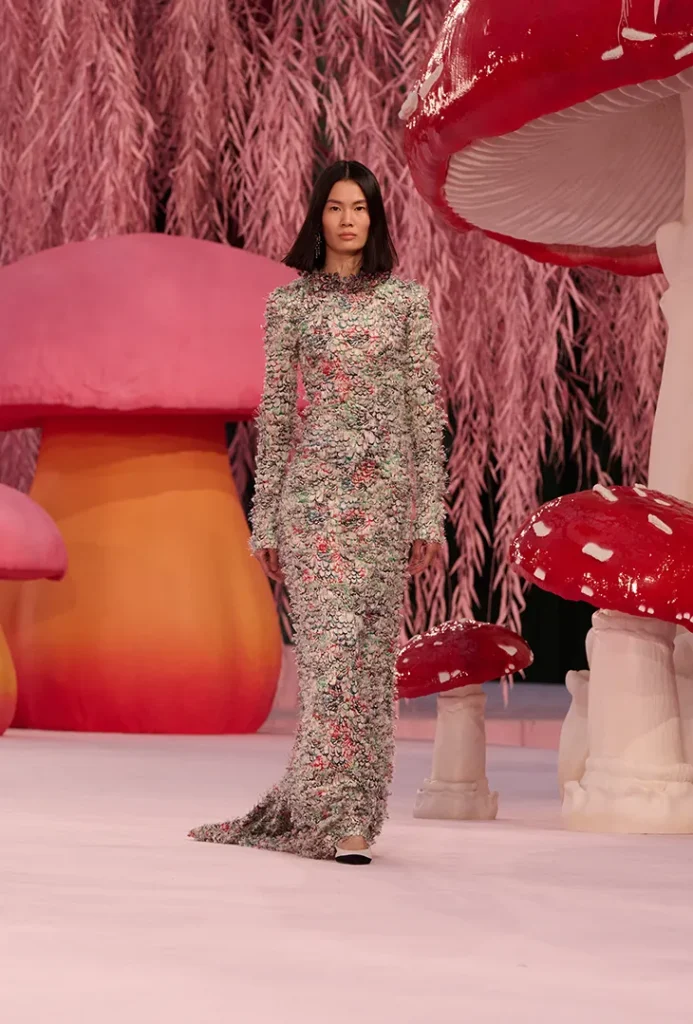
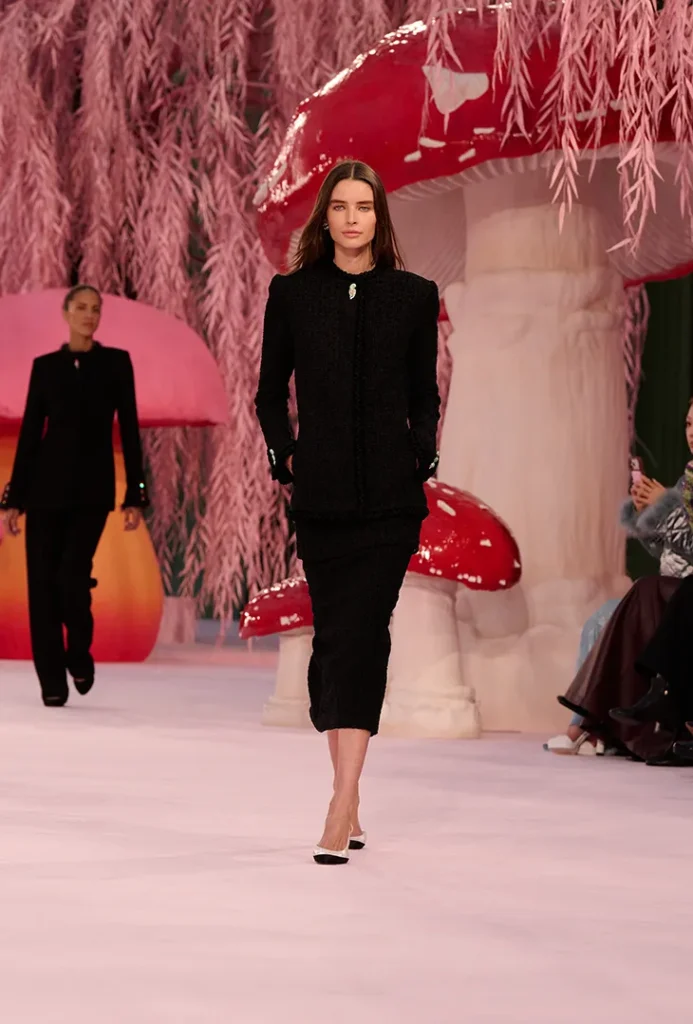
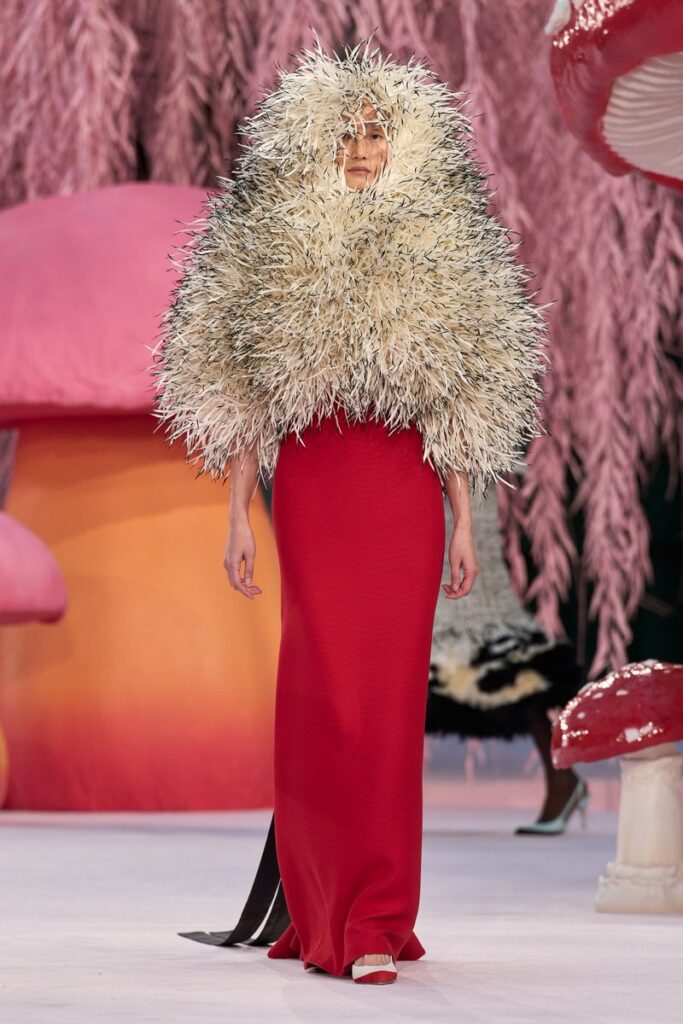
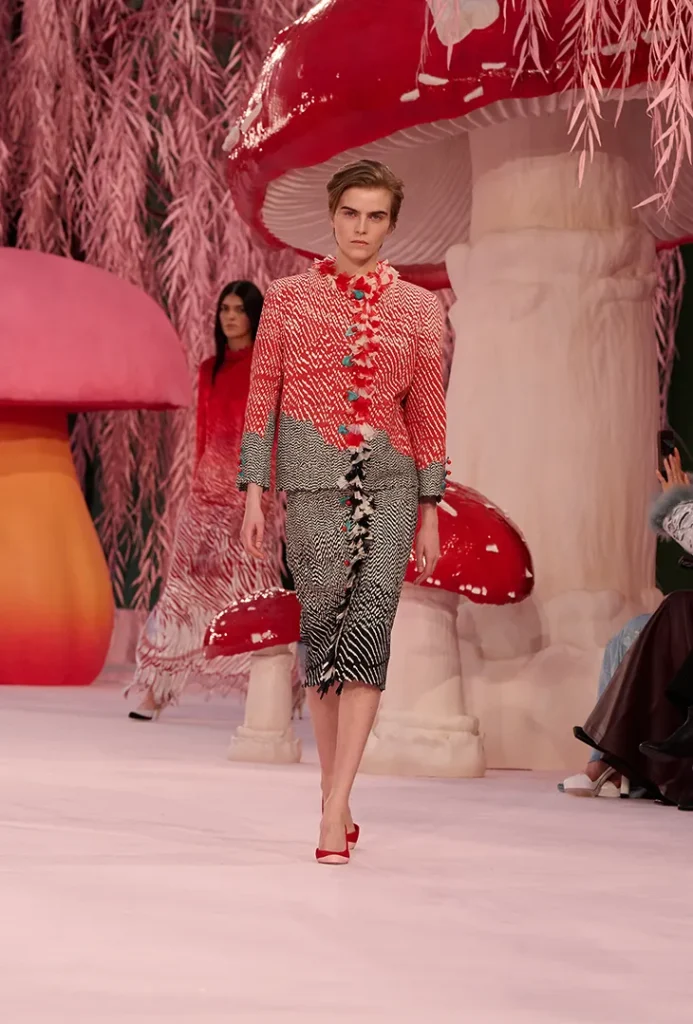
There were subtle personal signatures throughout. A trompe-l’oeil tank top and jeans, crafted entirely in organza, referenced Blazy’s past at Bottega Veneta. A red evening gown finished with a cocoon of feathers stood out as the collection’s most striking moment—couture fantasy without heaviness. Balancing the color were sharp black silhouettes, including a modern little black dress worn by Alex Consani, its gauze sleeves trailing like wings.
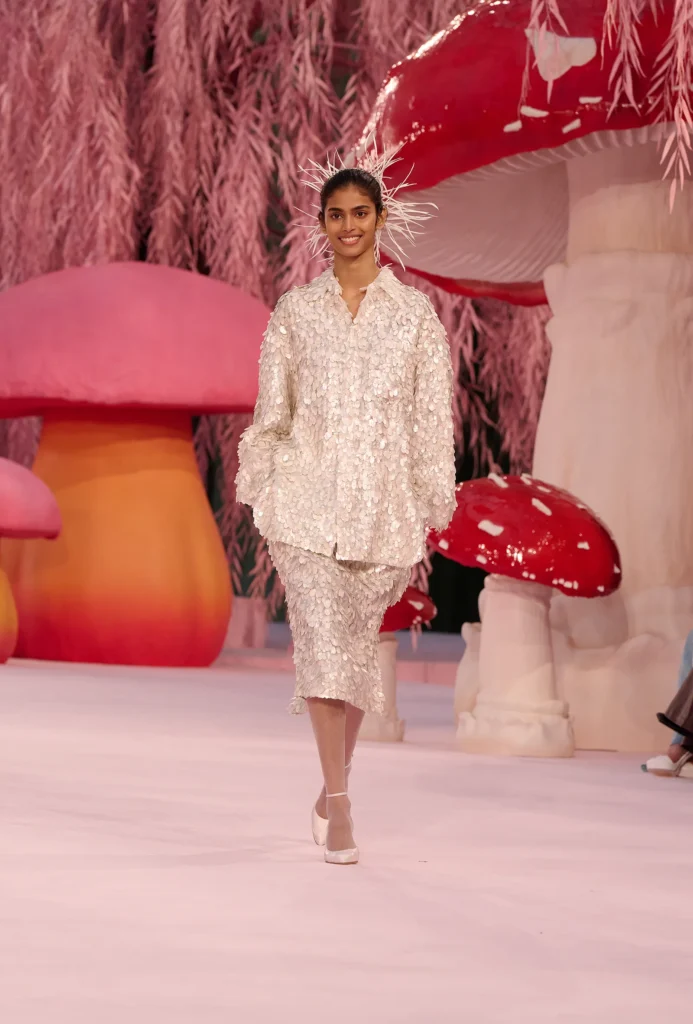
Perhaps the most radical gesture was offering choice. Rather than prescribing a single total look, Blazy invited models—and by extension clients—to personalize their garments with embroidered symbols and messages. Couture, here, was not about uniformity but identity.