Anya Taylor-Joy Stars in Tiffany & Co.’s 2025 Holiday Campaign: “Love Is a Gift”
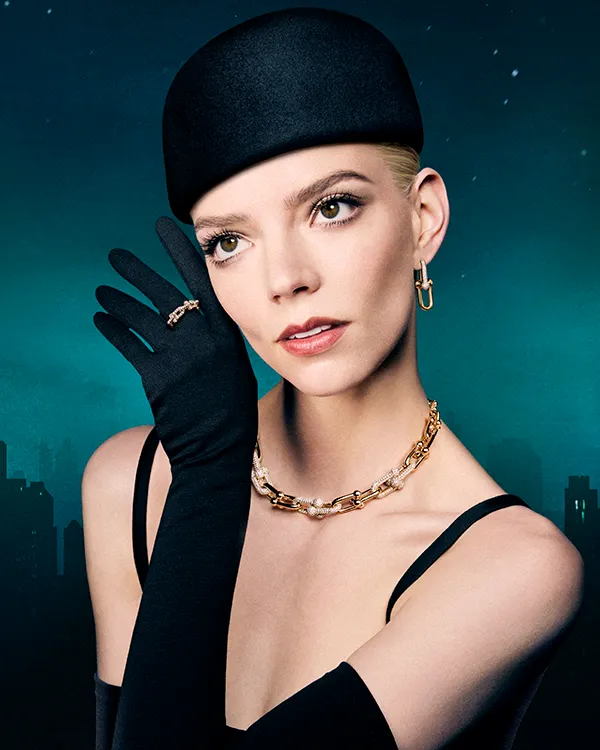
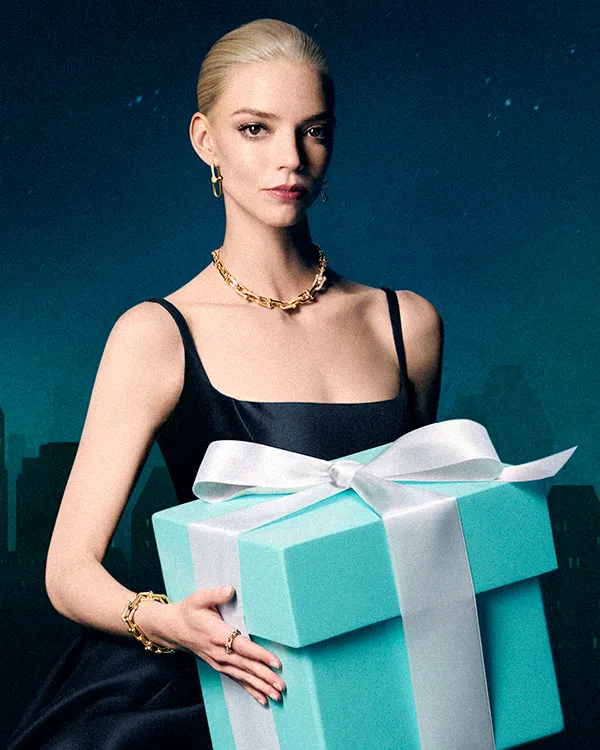
Anya Taylor-Joy brings the magic of connection to life this holiday season as she stars in Tiffany & Co.’s 2025 Holiday Campaign, “Love Is a Gift.” The Academy Award–nominated actress and global brand ambassador embodies the spirit of joy, generosity, and timeless elegance that defines the jewelry house.
Courtesy of Tiffany & Co.
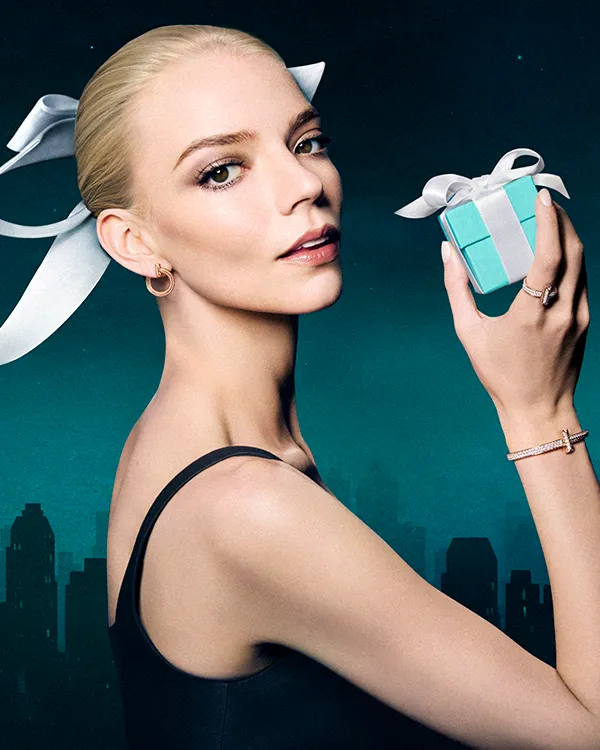
Directed by Jonas Lindstroem and photographed by Carlijn Jacobs, the cinematic campaign follows Taylor-Joy on a luminous journey across the world — from New York City to London and Tokyo — before returning to Tiffany’s hometown of New York. Along the way, she presents the iconic Tiffany Blue Box, weaving a visual story that celebrates love in all its forms: romantic, familial, and self-love.
Throughout the imagery and film, Taylor-Joy shines in pieces from Tiffany Icons, including the HardWear, Lock, T, and Knot collections, as well as the whimsical Bird on a Rock designs introduced for the season. A soft white satin ribbon — symbolizing the act of unwrapping a gift — flows through each frame, connecting the moments into one continuous expression of affection and beauty.
Courtesy of Tiffany & Co.
The campaign culminates in front of The Landmark in New York, where Taylor-Joy’s voice delivers the message at the heart of the story:
“Whether shared with someone else or kept for ourselves, love — in all its forms — is the most precious gift of all.”
Launching across digital platforms and social media, the campaign reinforces Tiffany & Co.’s enduring legacy as the ultimate destination for meaningful holiday gifting. With “Love Is a Gift,” the House once again transforms its legendary Blue Box into a universal symbol of affection — and a reminder that love, above all, is timeless.
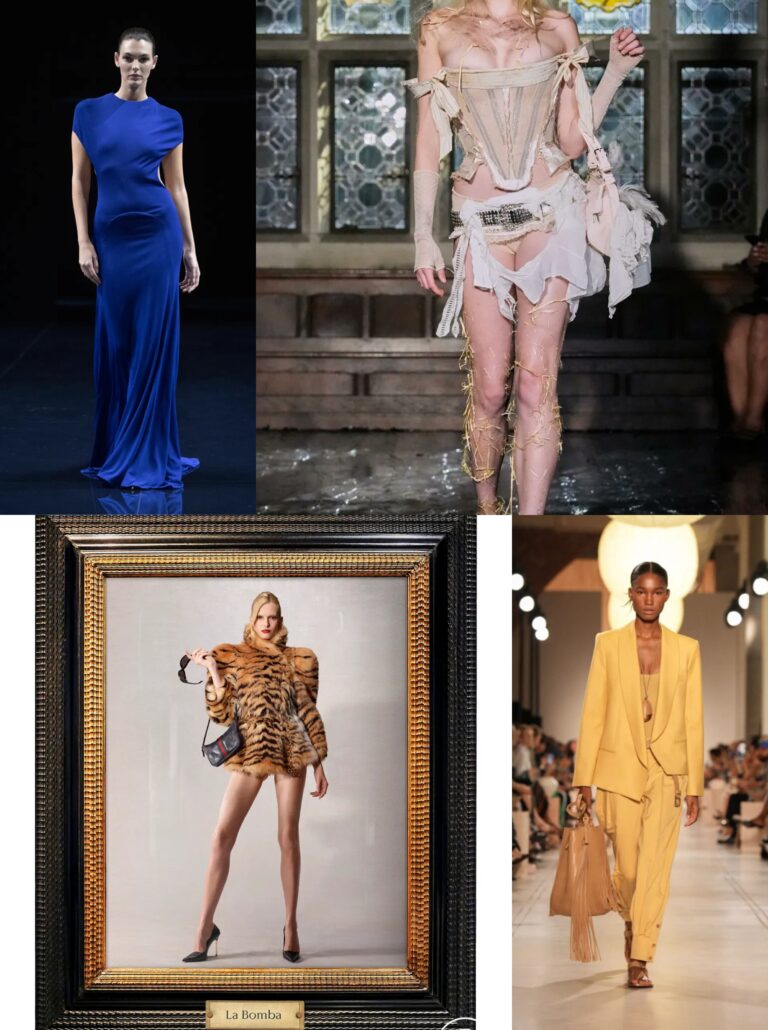
Spring Summer 2026: September’s Fashion Weeks Report
Paris Fashion Week wrapped up nearly two weeks ago — just enough time for the glitter to settle, the reviews to roll in, and our minds to decide which collections we liked best and which are to be considered more like a fever dream.
And while adventuring in almost every corner of the internet to find recaps of all the weeks tied together, I soon realized I had to go back and forth between one site and another. Therefore, in the following pages, I decided to revisit each city’s highlights — from the most memorable debuts to the moments that defined this season.
New York Fashion Week: When Fashion Starts from the Streets
The first news that revolved around NYFW actually arrived in February, when the CFDA and KFN announced their upcoming partnership, whose first changes would be seen this September. With a project that covers future events until 2027, the goal of this collaboration is to give New York’s fashion back to New Yorkers: by increasing the digital coverage of the runways, launching the Venue Collective — a space where emerging designers were able to show their creations at lower costs — and promising an American Fashion Festival to be held in 2026, CFDA and KFN are actively working toward a more open era of fashion.
But this was not the only premise to take into account, as this past April, the Prada Group announced the acquisition of Versace from Capri Holdings — a shift that not only gave the Prada Group major power over the luxury sector but also stemmed from Capri Holdings’ desire to focus more on its larger American brand, Michael Kors.
Having said that, it’s also important to consider how the political situation in the U.S. may have led American designers to showcase their collections outside the States — a shift that was not welcomed in the best way. Before diving into the analysis of New York’s new fashion, there was a lot to take into account — which is summarized here at its most concise level — but with this small preamble, any reader will have a clearer view of the behind-the-scenes of this hectic week.
From the Runway: The Collection That Stood Out
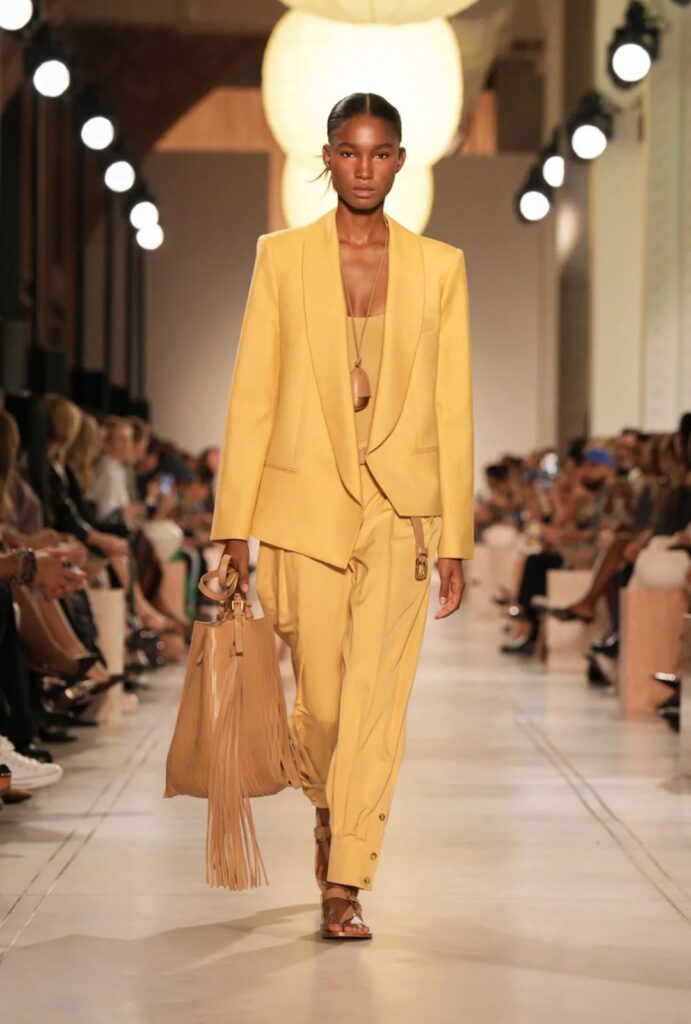
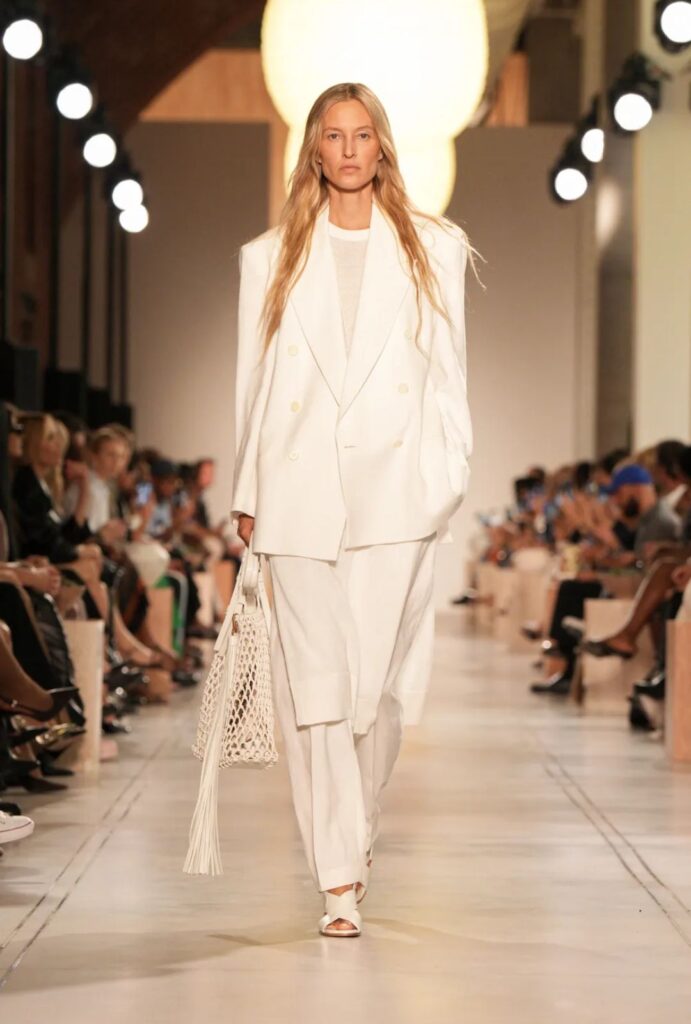
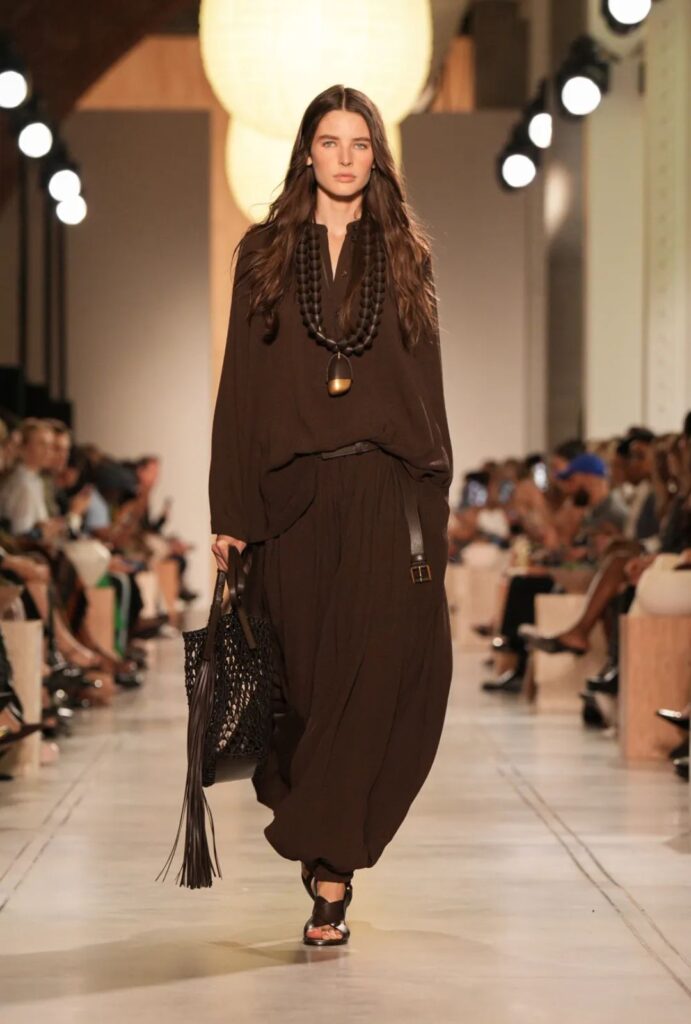
Michael Kors Considering that the inspiration for the collection came from Kors’s travels to Morocco, it’s safe to say that the pieces do not resemble the luxury street style we’re used to seeing in the city. The warm tones — such as brown and sand — welcome us spectators into a relaxed and calm environment, emphasized by the fluidity of the clothes that softly fall on the models’ silhouettes.
Ironically enough, the opening collection of a week focused on New York’s roots was created from feelings of escapism — which, in times of tension like these, is both a desire and a burden: a desire because we all share the wish to leave behind social and political troubles, and a burden because, despite longing for a calmer life, we cannot — and should not — ignore the reality that surrounds us. But at least, in terms of everyday life, if New York calls for a fast-paced routine, this collection manages to ground and center whoever is wearing it.
Courtesy Of Michael Kors
Week’s Takeaways
This year, New York presented a wide variety of styles and collections: from Ralph Lauren’s woman — whose power I imagine being introduced clothes first — to Tory Burch’s bright colors, a rebellious symbol in darker times.
Not being a New Yorker myself, it’s harder to determine whether what was presented truly reflected the city at its fullest, but I can definitely say that American designers interpret the same time period in very different ways — which overall is a good thing, as it gives us the gift of diversity.
Among the different CFDA proposals, one of the ideas was the creation of a single American Fashion Week — merging the A/W and S/S collections as well as the ones in between. While this is still to be decided, personally I think that keeping the collections separate enables viewers and critics to digest and reinterpret what has been seen in a better way. But considering that the changes made so far have all aimed to create a more cohesive fashion week, I’m excited to see what’s coming next under this partnership.
London Fashion Week: Celebration of Creativity
New York wasn’t the only city to see major changes at the top. Earlier this year, the British Fashion Council announced its new CEO, Laura Weir, marking a new chapter for London fashion. Her mission for fashion week was clear: to give a platform to local talent. To bring this vision to life, Weir and the BFC team made an innovative move — removing the participation fees that designers and labels previously had to pay in order to secure a spot on the schedule. The initiative aimed to open new doors and give emerging talents a chance to prove themselves.
Long celebrated for its fearlessness in overcoming boundaries, London — through provocative art — aimed to reaffirm its place as the creative heart of the industry. In the past, I’ll admit I had wrongly overlooked London’s collections and paid more attention to their Parisian and Milanese counterparts. But this year was different. When it came to the other cities, I was able to pick a favorite, whereas for London the choice felt impossible. Therefore, for my favorite, I’ll have to go with a tie.
From the Runway: The Collection(s) That Stood Out
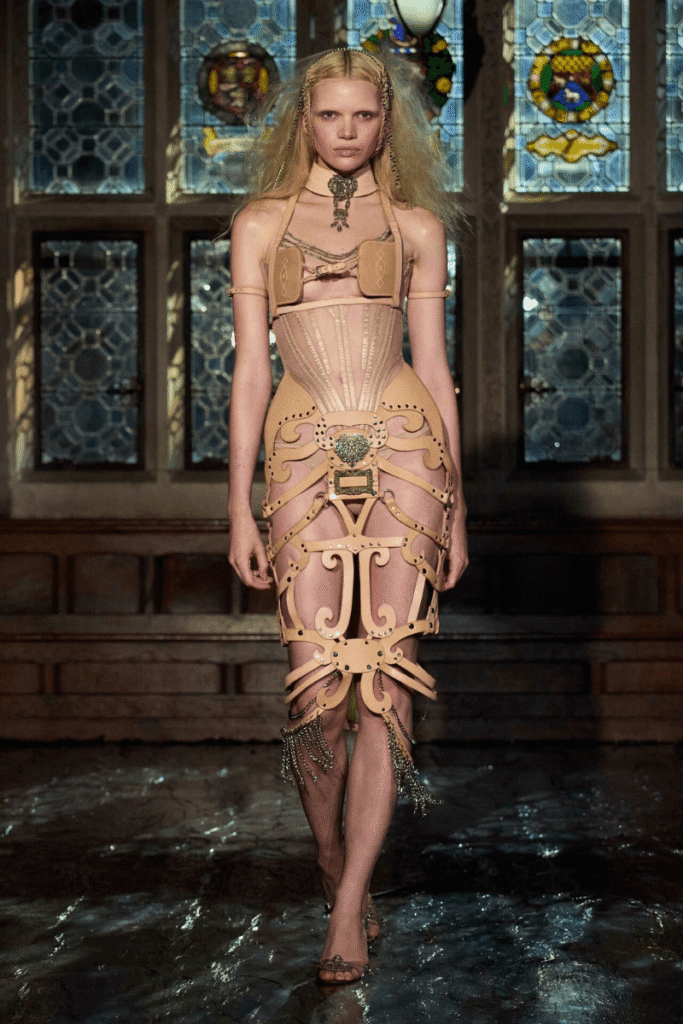
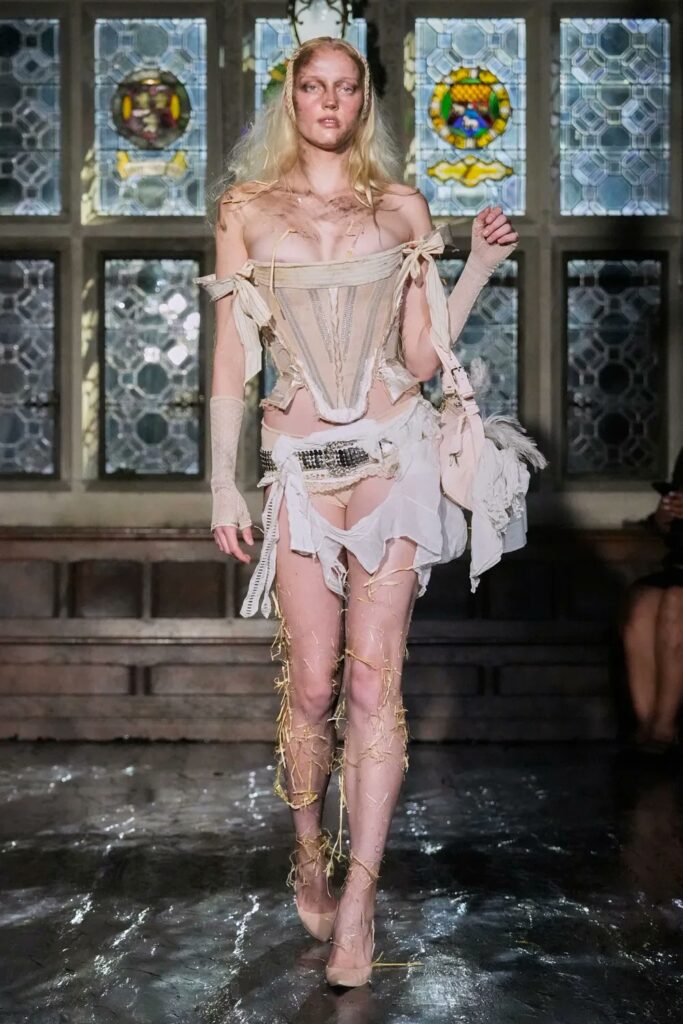
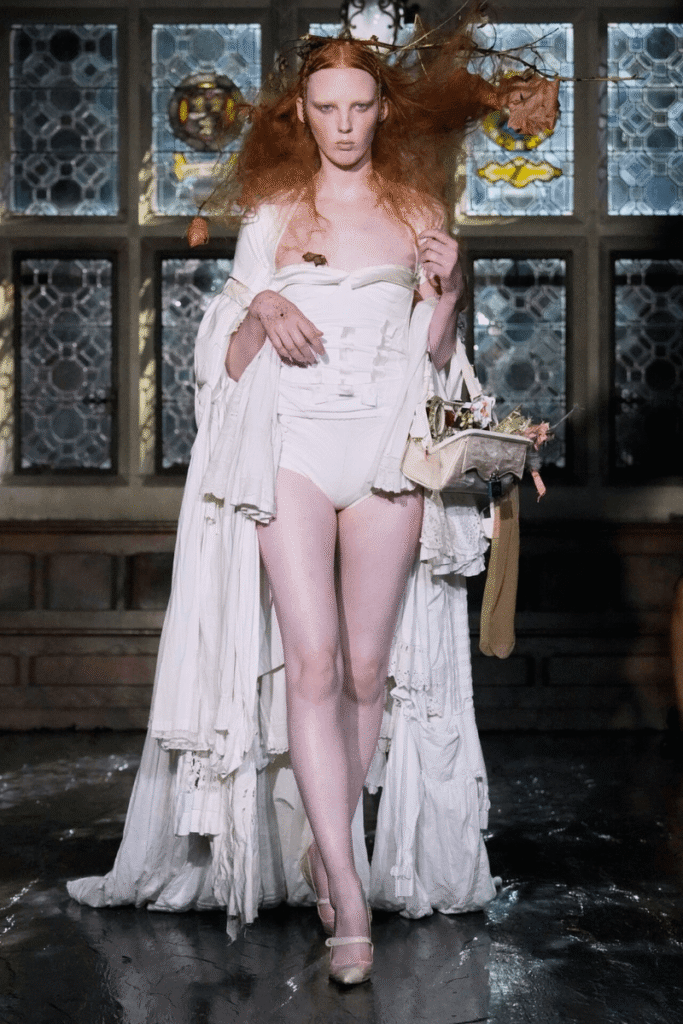
Dilara Findikoglu: Cage of Innocence This collection was not just about celebrating art — it was a powerful political message. Findikoglu’s Cage of Innocence dove into the suffering women have to endure when confined within the cages of purity and societal conditioning. On the runway, this narrative came to life through an interplay of Victorian silhouettes, disheveled hair, frayed fabrics, and literal face cages — a discomfort so obvious it was impossible to ignore.
Courtesy Of Dilara Findikoglu
The impeccable tailoring reflected the theme: the structured garments felt restrictive and mirrored the emotional and social confinement the collection aimed to expose. What enabled me to connect with the collection on a deeper level was learning about the designer’s roots: born in Turkey, she moved to London for her studies and, far from her conservative family, found herself in the city’s goth and edgy scene. Therefore, the clothes shown don’t just reflect a distant reality but one she herself had to escape from.
Labrum London: Osmosis Another great example of fashion communicating more than words. Titled Osmosis, the collection reflects the duality of designer Foday Dumbuya, who was born in Sierra Leone and moved to London at the age of six. Through accessories, prints, and cultural elements from both heritages, he created a narrative connecting his Sierra Leonean roots with his British upbringing.
In Dumbuya’s hands, fashion became both a celebration and a statement: especially after the anti-immigration protests, it stood as living proof of the richness and creativity brought by diversity.
Week’s Takeaways
Beyond Dilara and Labrum, an honorable mention must go to Burberry and Harris Reed — both of whom captivated audiences with their colors and innovative creations, reminding us of their city’s versatility and theatrical spirit.
While there is still work to be done in expanding opportunities for emerging designers, this season proved that London has not lost its creative touch — not only through the tailoring of garments but also through the messages they embody.
Milan Fashion Week: A New Era of Fashion
This year, Milan was the city of debuts: between Vitale at Versace, Demna at Gucci, and Trotter at Jil Sander — to name just a few — it was impossible to decide where to focus our attention.
New beginnings can be both exciting and daunting: designers shoulder the responsibility of reinventing the brands they represent, honoring old traditions while bringing fresh perspectives — which we can all agree is no easy task.
While for the judged — the designers — it can be frightening, for us — the judges — it’s thrilling.
On a more bureaucratic level, if Versace’s acquisition by the Prada Group affected New York Fashion Week — since the brand was sold by Capri Holdings — it’s safe to assume it had an even greater impact on how things unfolded during Milan Fashion Week, throughout which the acquisition had not yet been approved (the approval from the European Commission came in the last days of September).
Lastly, this fashion week closed with Armani’s collection, officially the last designed by the man who defined Italian fashion for the past 50 years. From new beginnings to emotional farewells, Milan Fashion Week had everyone watching.
From the Runway: The Collection That Stood Out
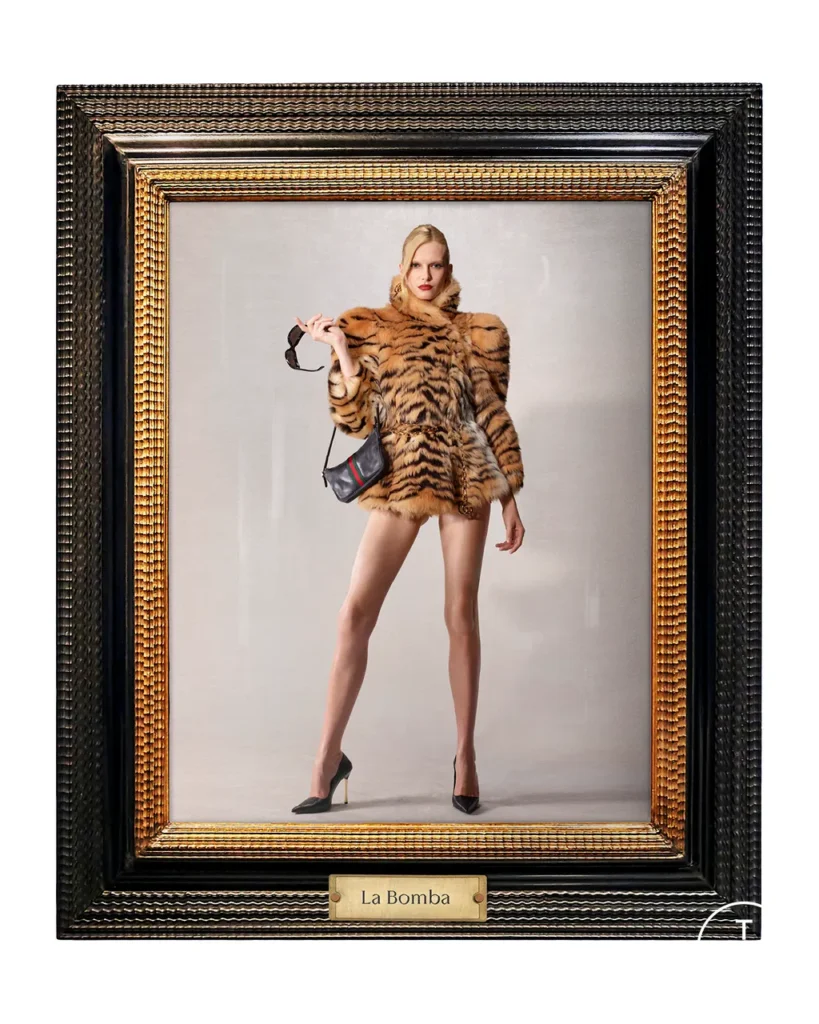
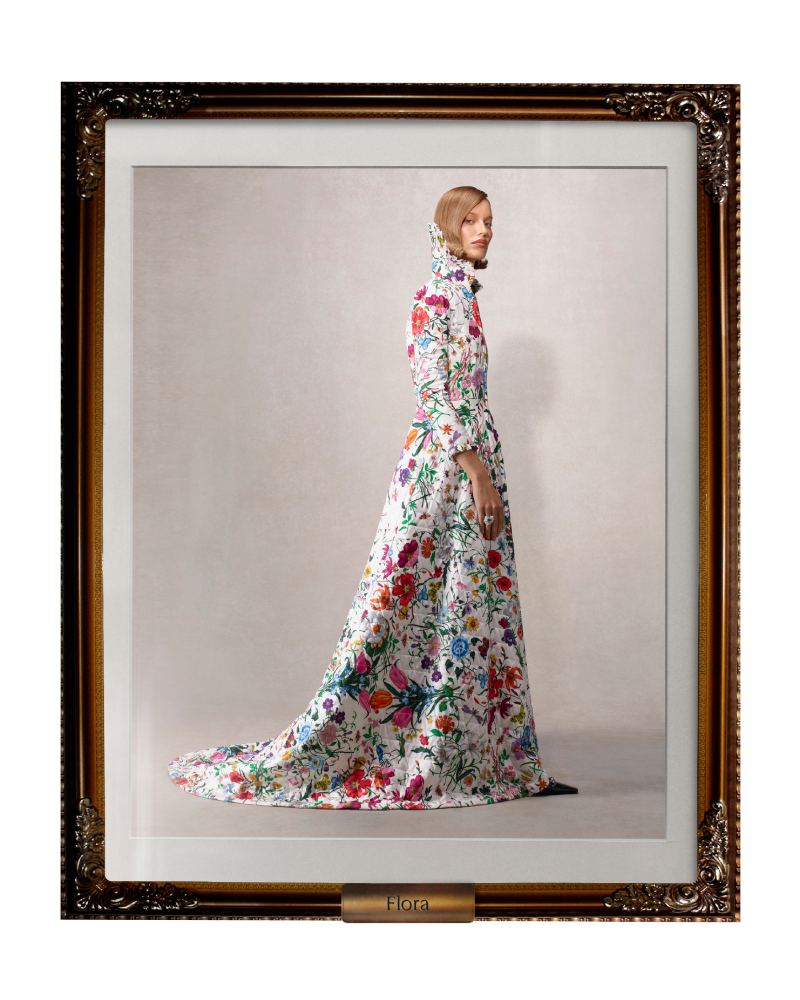
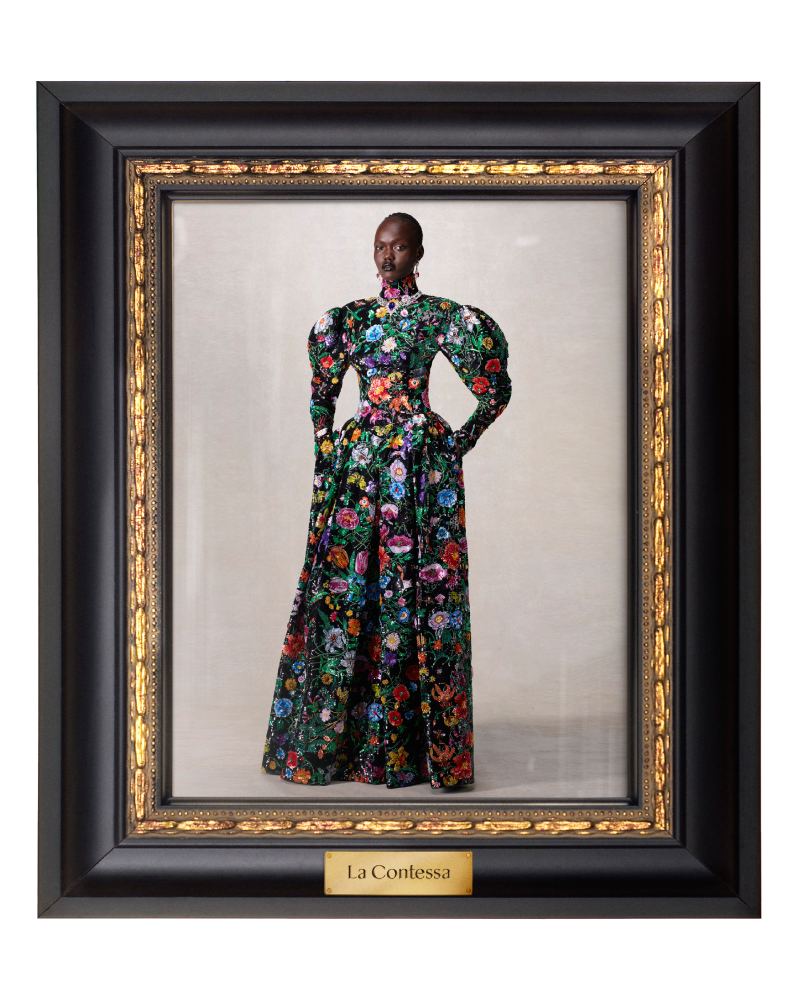
Gucci: La Famiglia When Gucci’s Instagram profile cleared, we instantly knew something big was about to be unveiled. The collection, first shown through a lookbook and later presented in a small venue, was titled La Famiglia. It represents the archetype of the Italian family — but in this case, specifically, the Gucci family — whose story has always been deeply intertwined with the brand’s history.
Courtesy Of Gucci
From the first portrait of the lookbook — because yes, each piece was placed in a portrait — you can already decode the references: luggage, whose unmistakable printed logos have followed the brand from its earliest creations to the items sold in stores today.
When it came to paying homage to the house’s roots, Demna was meticulous with the details. But how did he bring innovation to this new era?
The private presentation was certainly an interesting way to introduce us to the new Gucci, but what was even more captivating was the short film The Tiger, in which Demi Moore plays Barbara Gucci — the head of the label who, despite a successful career, is tired of maintaining a polished image of perfection.
During the movie — and throughout the collection — you can feel the strong presence and power of family, of heavy traditions that feel daunting yet essential.
“Isn’t it strange you can only see yourself from the inside, and everyone else sees you from the outside?” “I mean, the way you see yourself could be completely different from the way people see you — and you’ll never know.” “That’s terrifying.” “How do you see me?” (From The Tiger)
Week’s Takeaways
Here, I can say I am not an impartial judge — my beloved Italy never fails to amaze me. During this week, we saw several bold collections, each telling its own story to whoever was watching.
My personal favorite is, as written, Gucci’s — but it goes without saying that Armani, Dolce & Gabbana, and Ferragamo all brought diverse and captivating creations as well.
In Italy, I’ve always felt that the thread connecting the collections isn’t just about aesthetic similarities but relates to the shared tradition that defines Italian fashion houses — a tradition built on family legacies, common techniques, and, in some cases more than others, values.
Paris Fashion Week: Redefinement of Elegance
If Milan was the city of debuts, Paris was no exception: fifteen new designers were ready to present their first collections for the upcoming spring.
We had Anderson at Dior — a man who has already built a solid reputation in the industry and has successfully led Loewe for the past 11 years (as well as his own brand, JW Anderson, since 2008). And while many eagerly awaited Anderson, just as many looked forward to Pierpaolo Piccioli at Balenciaga, Matthieu Blazy at Chanel — the closing act of the week — and Miguel Castro for Mugler.
A list of names that’s just a longer way of saying that nobody actually slept from the 29th to the 7th.
When it comes to Paris, expectations are always sky-high because it’s the cradle of fashion — the place where trends are born. Especially now, as major houses have become the canvas for ongoing change.
From the Runway: The Collection That Stood Out
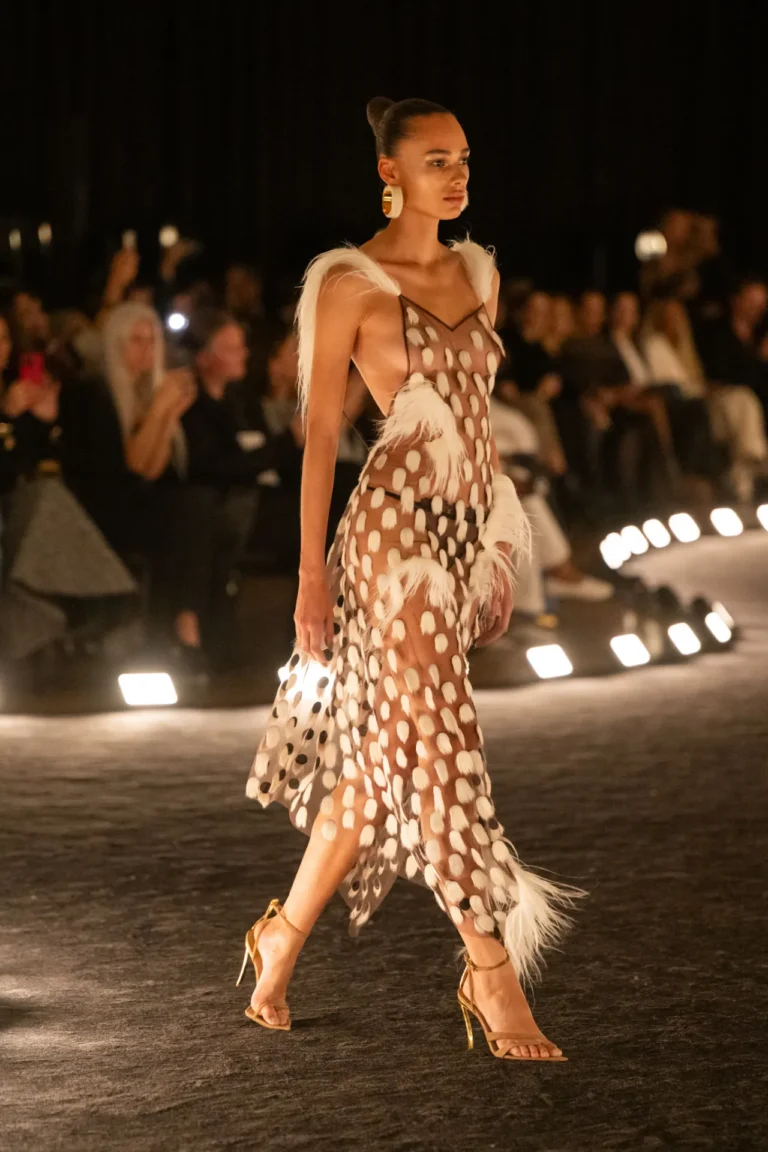
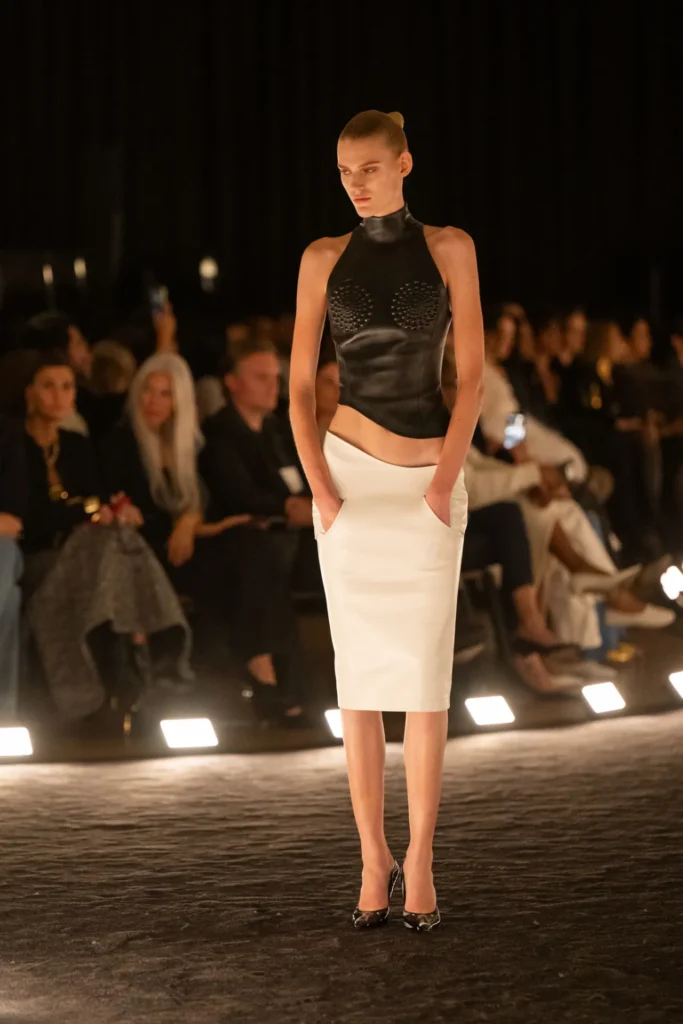
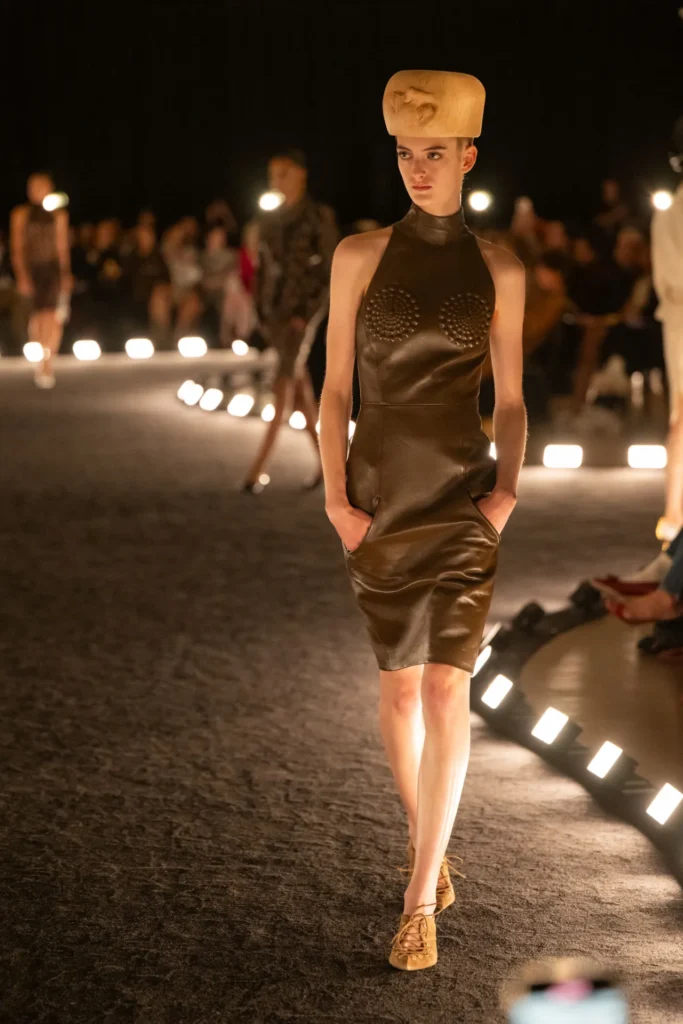
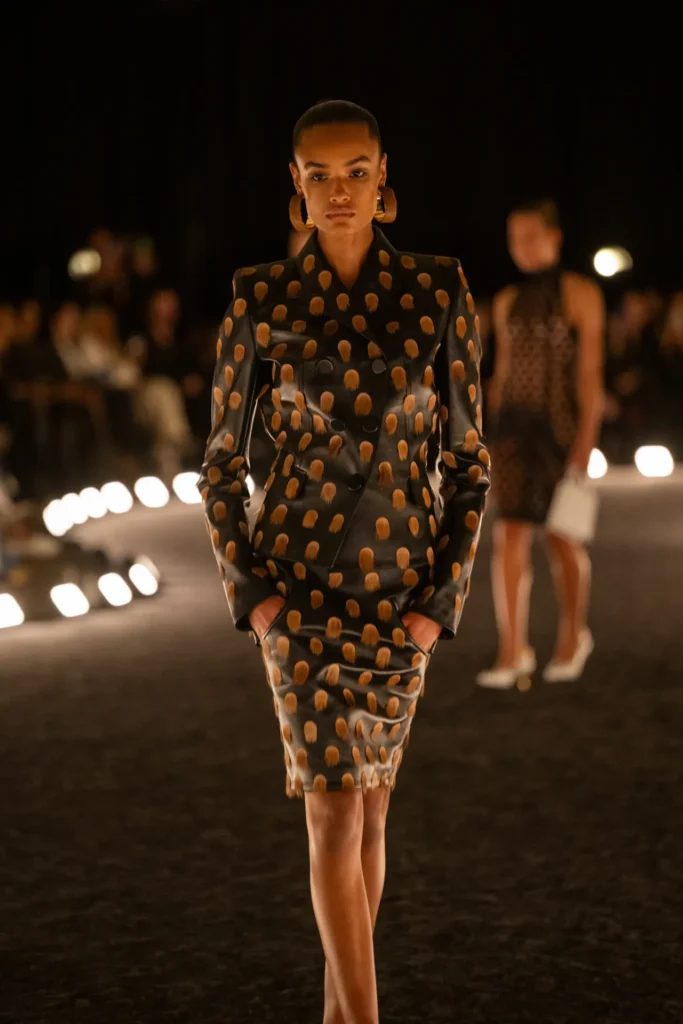
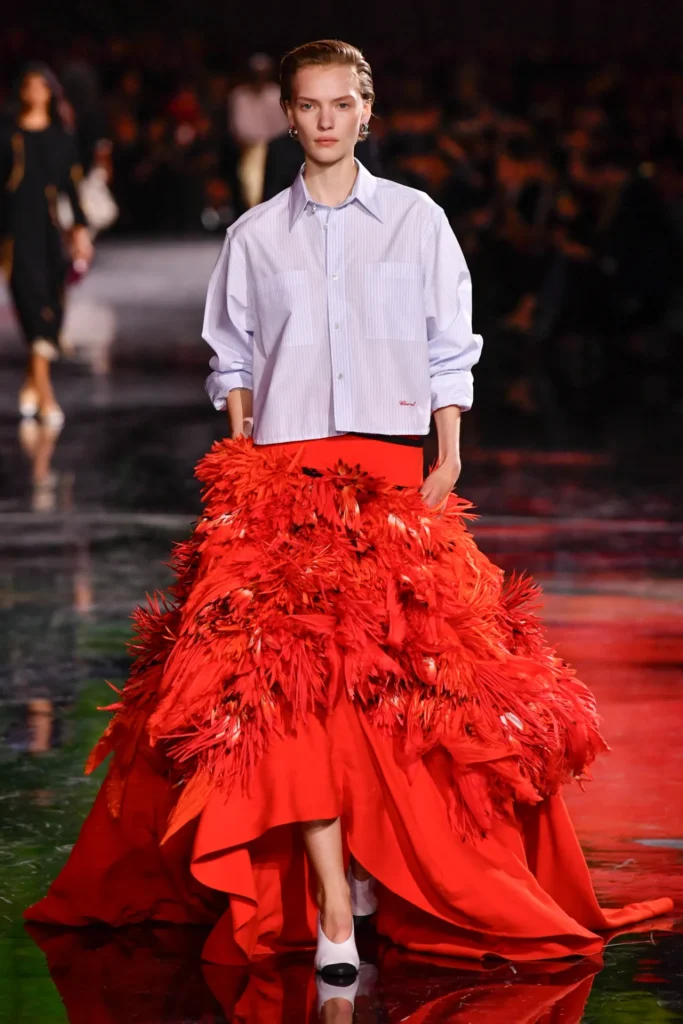
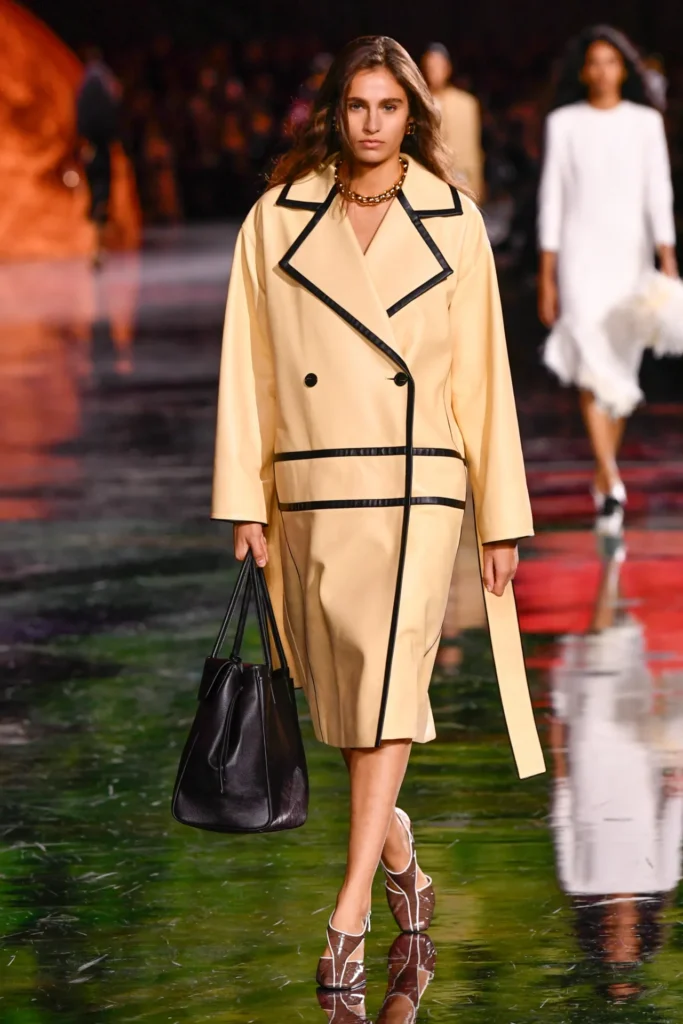
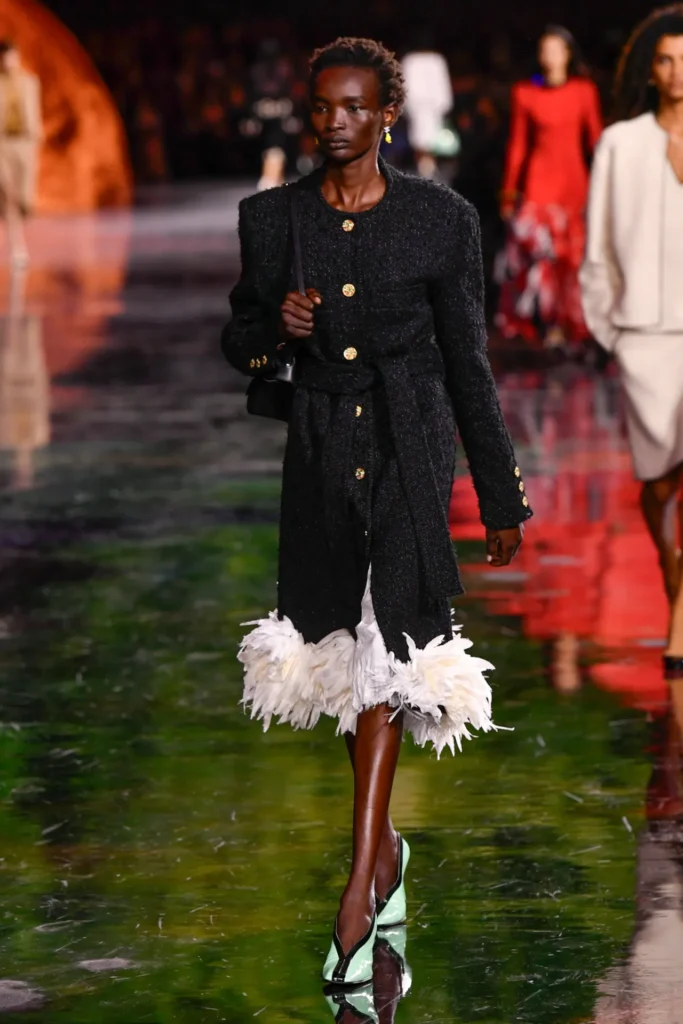
Tom Ford: Desire & Allure In a nocturnal atmosphere where everything seemed blurred, the theatrical entrance of the first three models immediately caught everyone’s attention. Boldly dressed in leather, the women seemed to have come straight out of a movie — not just any movie, but one that keeps you on the edge, makes you wonder what will happen next, and always has a veil of mystery around it.
Courtesy Of Tom Ford
Inspired by midnight swims — described by Ackermann as one of the most “dangerous and sexy things to do” — the collection aims to embody seduction, not the obvious kind, but the hidden, unaware type.
The presence of leather and lace takes care of portraying sensuality — not only embodying seduction but also captivating whoever watches the pieces glide down the runway. Attraction is further emphasized by the vivid colors that characterized the collection, which — when contrasted with the setting — enhanced the garments’ power.
This collection not only brought something new but also preserved the intrinsic values of Tom Ford, creating a beautiful thread between the brand’s origins and its new era.
Week’s Takeaways
When you think of Paris, you think of elegance — which is often mistakenly confused with “quiet luxury” or “modesty.” This season proved those beliefs wrong. Elegance is presence, transparency, and — more than ever — authenticity.
It was refreshing to see established brands like Dior and Chanel — which have defined elegance since their creation — take a new creative direction that still celebrates the essence of the houses while bringing them into the modern day, where beauty standards and values are no longer what they once were.
On a digital level, Paris’s social media coverage generated $500.3 million in earned media value — the highest among all fashion weeks — once again proving the enormity of French fashion and its global influence.
Jisoo Returns to Bring Holiday Magic to Tommy Hilfiger
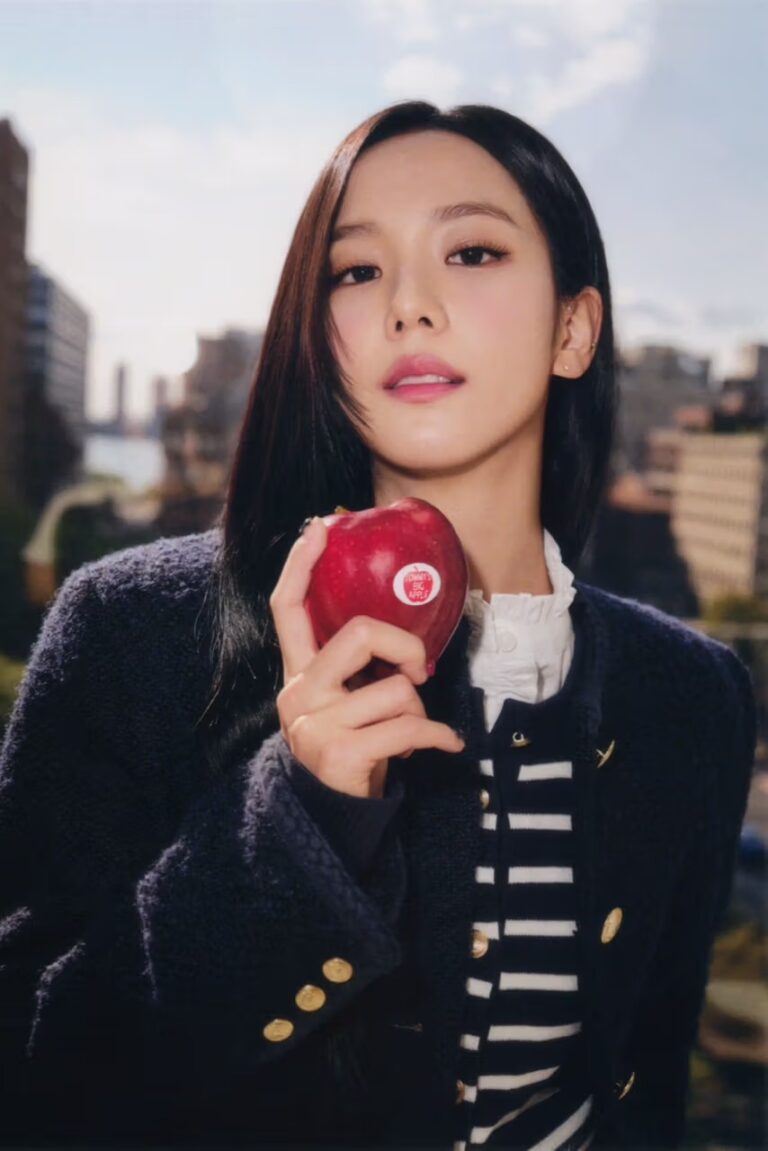
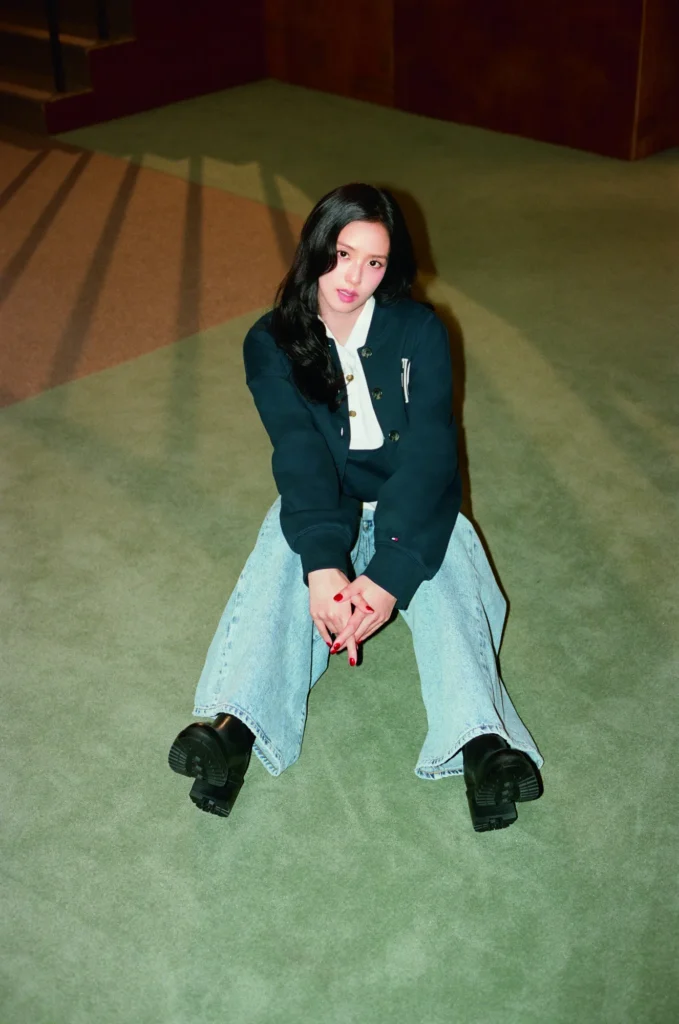
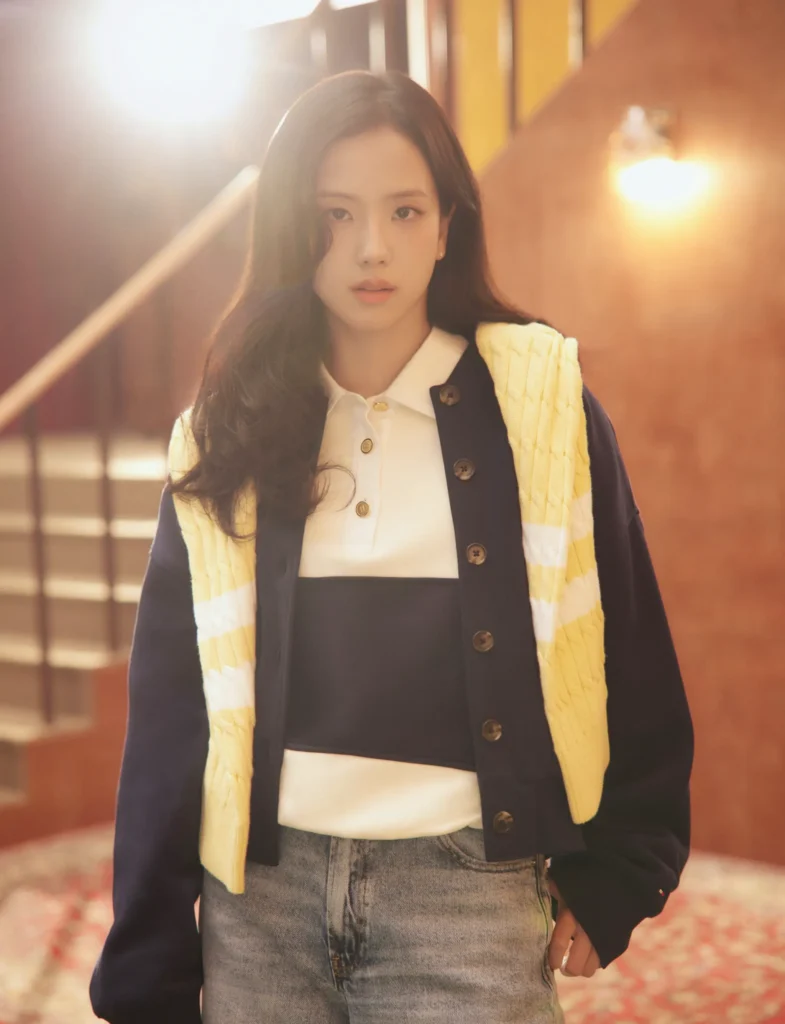
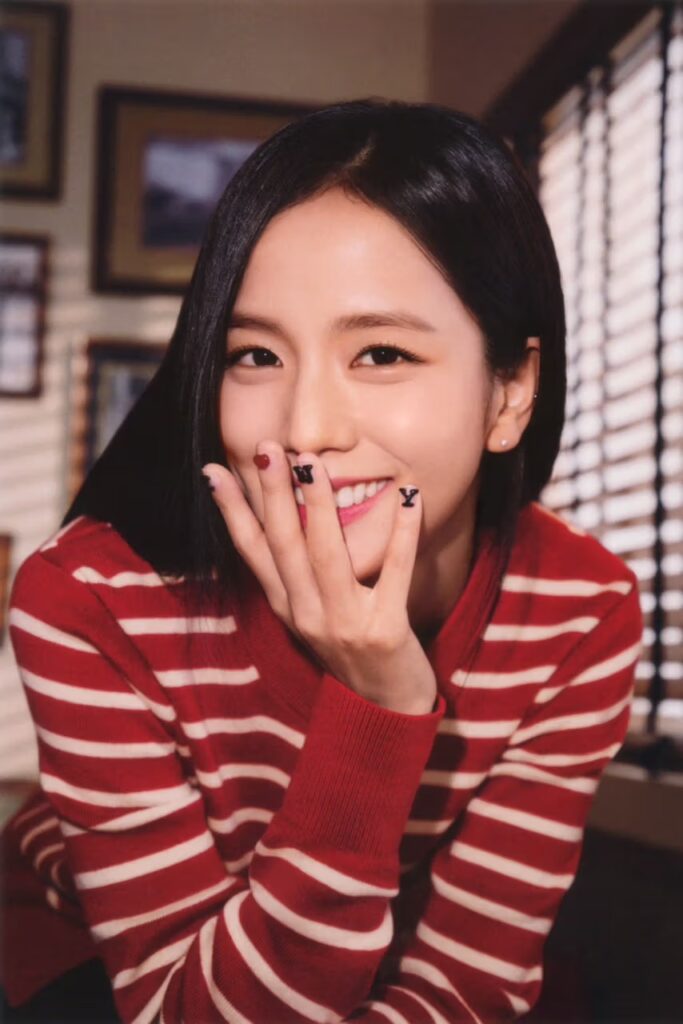
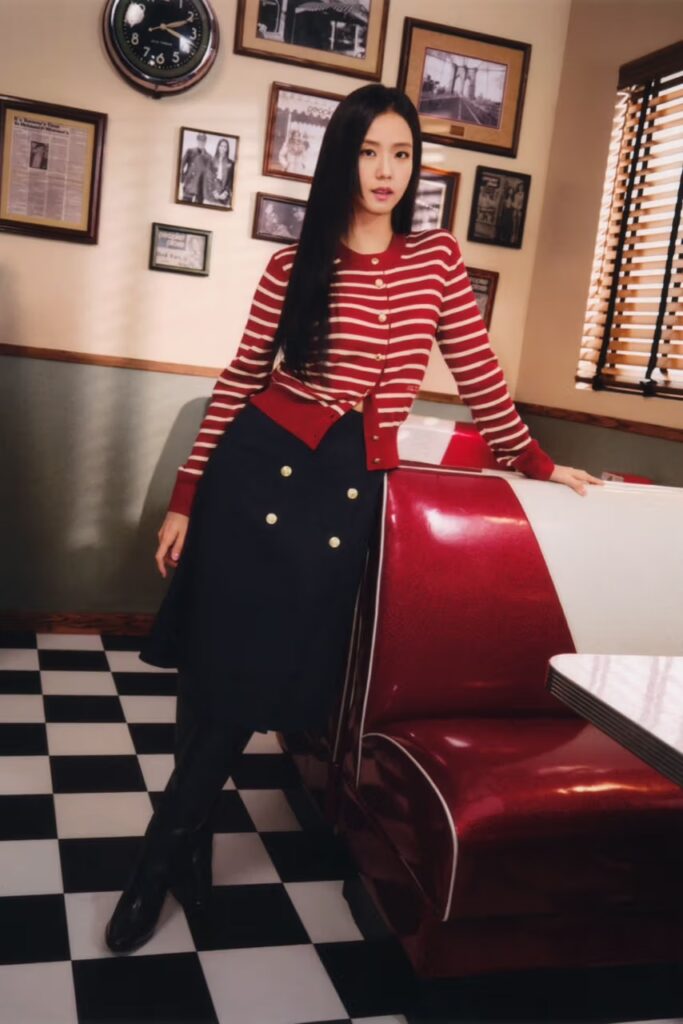
For the fifth time, global fashion icon, singer, and actress Jisoo takes center stage in Tommy Hilfiger’s new holiday campaign, “A Hilfiger Holiday.” The South Korean superstar, now 30, continues to redefine preppy style through a distinctly modern and international lens.
Courtesy of Tommy Hilfiger
Photographed by Yoon Ji Yong and styled by Choi Ja Young, the campaign celebrates Jisoo’s timeless yet youthful approach to fashion. In one look, she wears a tailored bomber layered over a crisp Oxford shirt, paired with a pleated wool-blend mini skirt and classic loafers. Another ensemble features a varsity jacket over a plush rugby sweatshirt, matched with high-rise, wide-leg ’70s jeans — a nod to Hilfiger’s signature Americana. A “Lady Jacket” with a textured preppy finish completes her standout looks.
Courtesy of Tommy Hilfiger
The global rollout of “A Hilfiger Holiday” begins Thursday and will run through early January, spanning tommy.com, print media, social platforms, in-store displays, and major wholesale partners.
Jisoo and Tommy Hilfiger first met during the brand’s Spring 2025 New York Fashion Week show, staged aboard a decommissioned Staten Island ferry at Pier 17. Their creative partnership has since deepened — earlier this year, Hilfiger designed Jisoo’s custom couture looks for Blackpink’s 2025 “Deadline” world tour.
Beyond Hilfiger, Jisoo’s influence continues to grow across luxury fashion. She currently represents Dior, Cartier, Self-Portrait, and Alo Yoga, cementing her position as one of the most sought-after figures in global style.
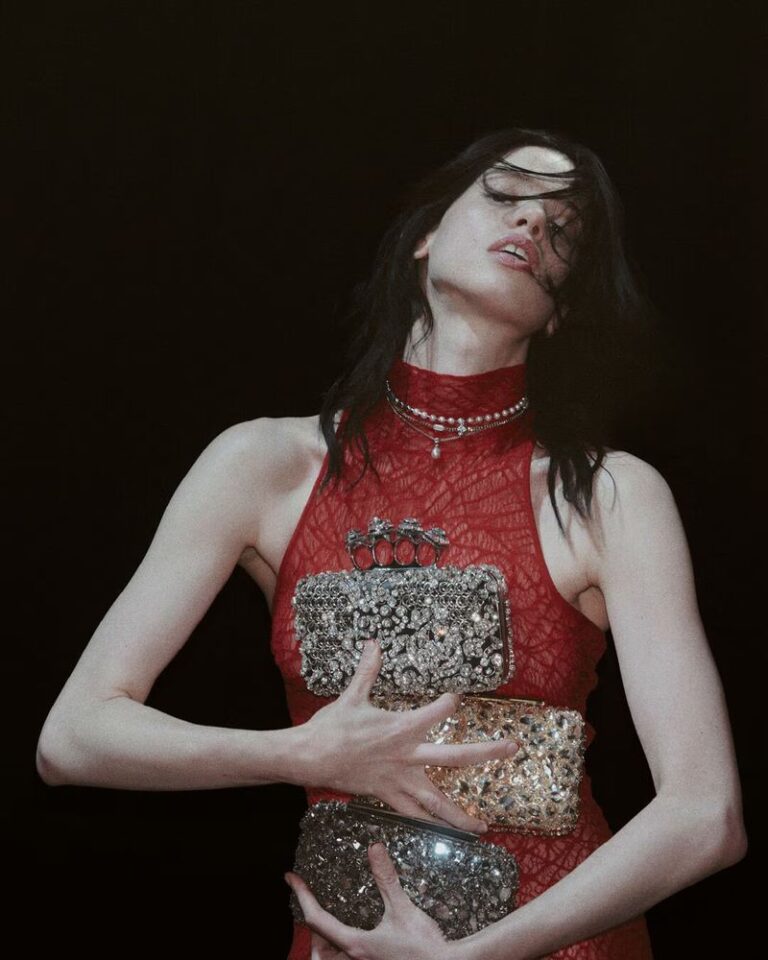
Alexander McQueen is celebrating the holiday season with a cinematic tribute to Art Deco glamour. The brand’s 2025 Holiday Campaign was filmed inside Eltham Palace, a 1936 architectural jewel located in southeast London and now part of English Heritage — an ideal setting for a house that thrives on the tension between classicism and rebellion.
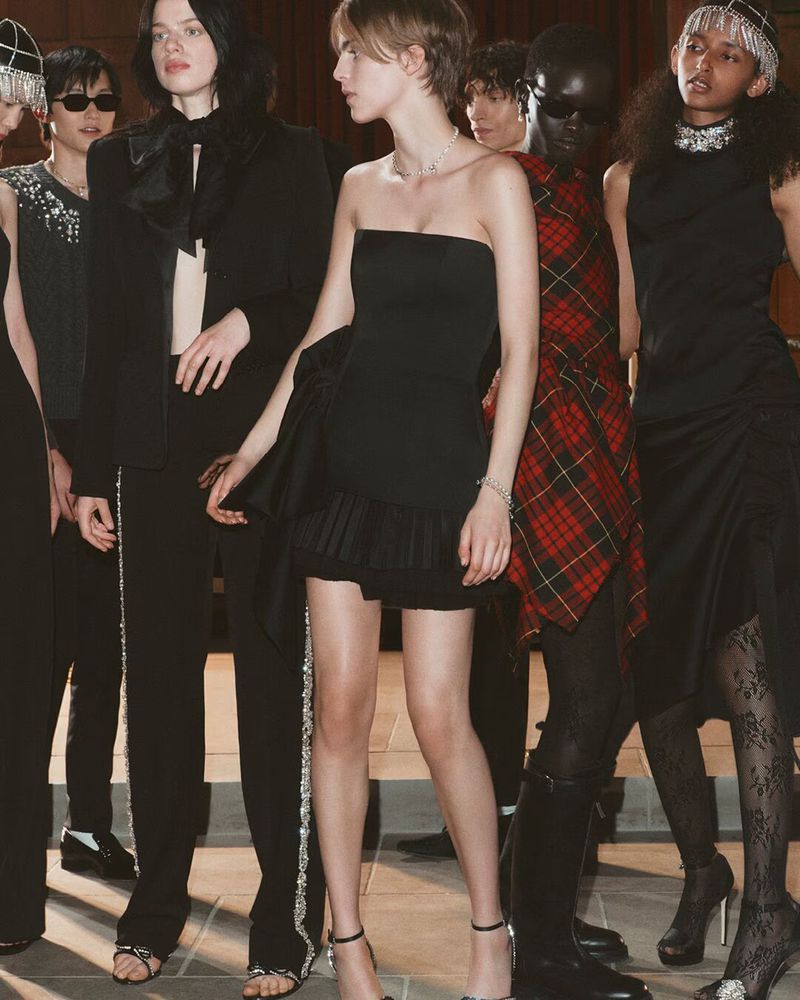
The campaign, launched this week, was directed by Seán McGirr, photographed by Sammy Khoury, and creatively directed by SJ Todd. Together, they transformed the palace’s sleek geometry and gleaming interiors into a stage for McQueen’s vision of joyful elegance and subversive British heritage.
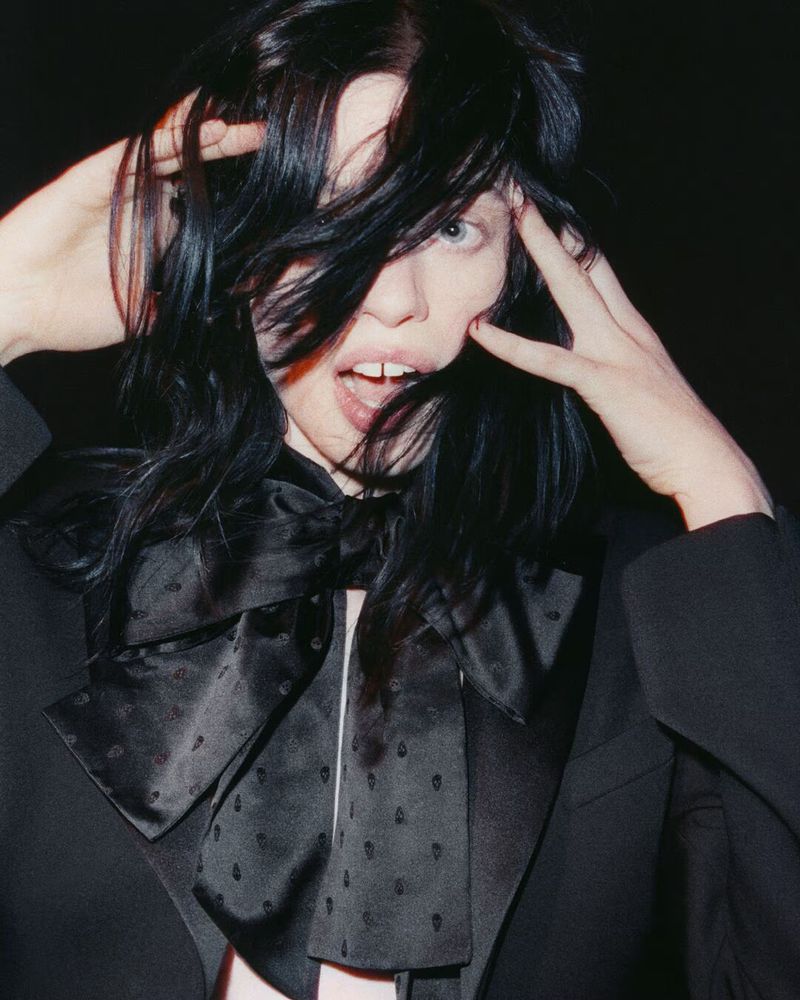
Courtesy Of McQueen
“The choice of Eltham Palace was deliberate,” explained McGirr. “It captures the central tension of the collection — British heritage reimagined through a new kind of hedonism. It’s about evolution, about finding balance between restraint and liberation. That ongoing dialogue between formality and rebellion lies at the heart of McQueen, and it’s something I continue to explore with each collection and campaign.”
Models appear in Pre-Spring 2026 looks — a series of rich velvet and satin dresses in deep burgundy tones, adorned with jewel-embellished collars and spiderweb lace, alongside crystal-studded Knuckle clutches and metallic Skull Flower bags. Tailored tuxedo suits, asymmetrical MacQueen tartans, and crystal-dusted knitwear complete the lineup, blending a sense of power with poetic delicacy.
Though the collection featured pre-spring designs, the atmosphere of the shoot evoked the romantic, moody spirit of McQueen’s Fall 2025 season — a celebration of timeless decadence viewed through a contemporary lens. Under McGirr’s direction, the house continues to refine its dual identity: fiercely modern yet deeply rooted in heritage, always balancing elegance with edge.
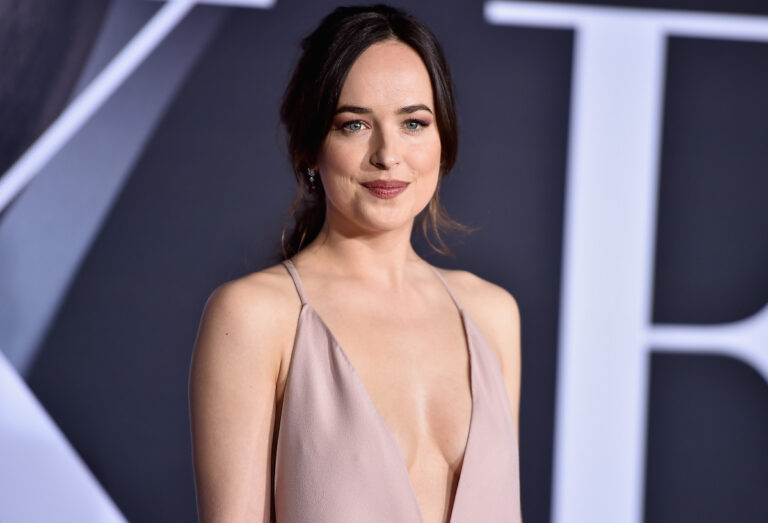
Dakota Johnson Named Global Ambassador for Valentino
Valentino has officially named Dakota Johnson as its new Global Brand Ambassador, marking both a new creative chapter for the Roman couture house and a heartfelt reunion with Alessandro Michele, the brand’s recently appointed Creative Director. Their collaboration feels less like a corporate move and more like a continuation of a long-standing friendship rooted in shared artistry and a mutual love for beauty in all its forms.
“I’m thrilled to join the Valentino family and beyond happy to reunite with my dear friend Alessandro Michele,” said Johnson. “It’s an honor and an exciting new chapter with such a wonderful and talented team.”
For Valentino, the partnership represents “the continuation of the Maison’s ongoing dialogue with individuals who embody a shared commitment to art, elegance, and cultural resonance.” Michele, known for his emotionally charged aesthetic and human approach to fashion, finds in Johnson a modern muse — intelligent, understatedly glamorous, and deeply authentic.
Before becoming a fashion favorite, Johnson began acting at just ten years old in Crazy in Alabama (1999). Her breakout role as Anastasia Steele in the Fifty Shades trilogy (2015–2018) made her an international star. More recently, she starred in Splitsville, a romantic dramedy about open relationships that premiered at the Cannes Film Festival, and in Céline Song’s Materialists, alongside Chris Evans and Pedro Pascal. In 2026, she is set to appear in Verity, a psychological romantic thriller directed by Michael Showalter and co-starring Anne Hathaway and Josh Hartnett, based on Colleen Hoover’s bestselling novel.
Under Michele’s new creative direction, Valentino continues to evolve its identity — merging emotion, culture, and couture in a way that feels both personal and poetic. With Dakota Johnson as its face, the brand enters this new era with a renewed sense of intimacy and sophistication — a true union of friendship and fashion.
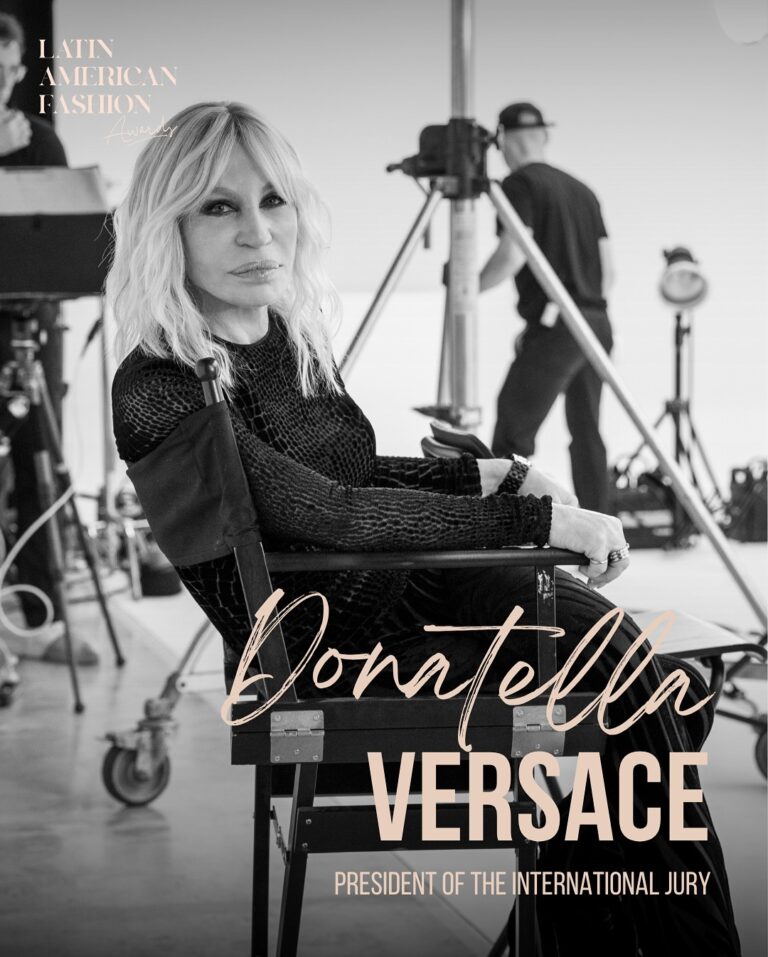
Donatella Versace to Lead the Jury at the Latin American Fashion Awards
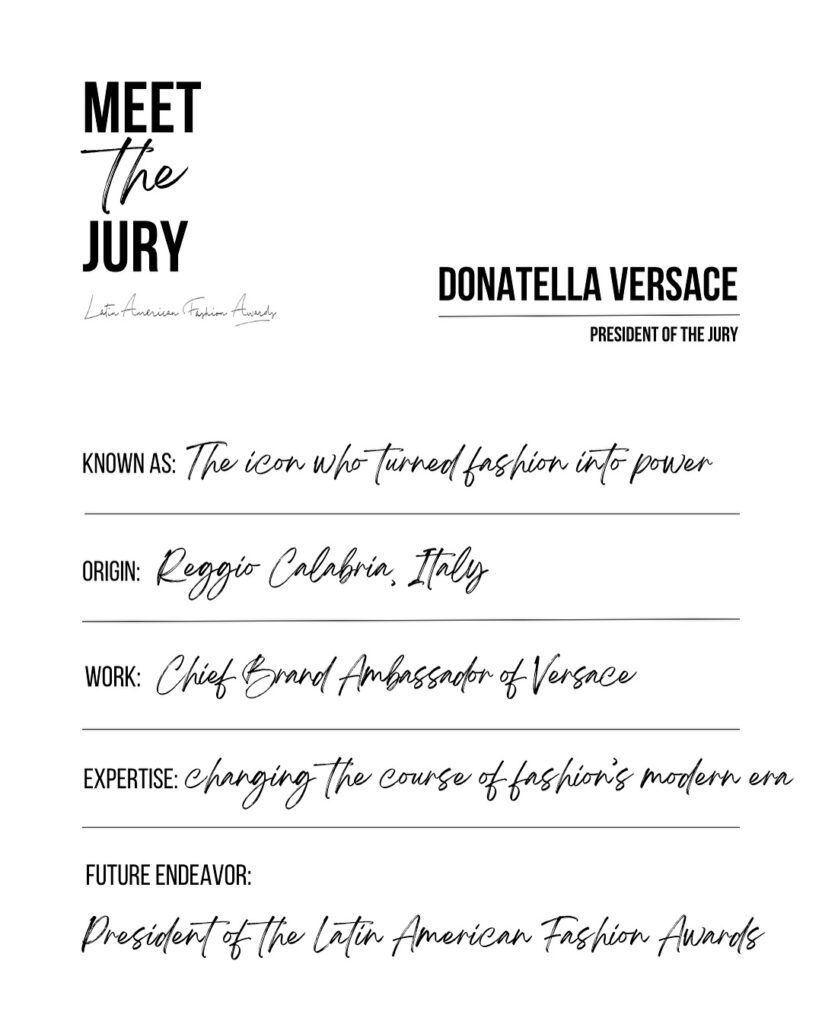
The Latin American Fashion Awards have announced Donatella Versace as president of the jury for their highly anticipated second edition, taking place November 6–9 in the Dominican Republic.
Following in the footsteps of last year’s president, Haider Ackermann, Versace will lead an impressive panel of global fashion authorities united by a shared mission: to celebrate and elevate the most visionary designers, artists, and cultural innovators from Latin America and its global diaspora.
“I have always championed the next generation of design talent,” said Versace. “It has never been more important to support and encourage our global creative community, and I am truly honored to preside over the Latin American Fashion Awards.”
Her fellow jurors form a constellation of international fashion powerhouses, including Nina García, editor-in-chief of ELLE U.S.; Anna Dello Russo, Italian fashion editor and journalist; Carmen Busquets, entrepreneur and philanthropist; Imran Amed, founder and CEO of The Business of Fashion; Steven Kolb, president and CEO of the CFDA; Carlo Capasa, president of the Camera Nazionale della Moda Italiana; Kean Etro, former creative director of Etro; and Sara Sozzani Maino, creative director of the Fondazione Sozzani.
They will be joined by Vivian Sotocorno, fashion director of Vogue Brasil; Gabriela Hearst, designer of her eponymous label; Zelika García, founder and director of ZsONAMACO, Latin America’s leading art and design fair; Karla Martínez de Salas, head of editorial content for Vogue México y Latinoamérica; Alessia Glaviano, global director of photography at Vogue; Oskar Metsavaht, founder and director of Osklen and UNESCO Goodwill Ambassador for Sustainability; and Carlos Nazario, global fashion director of Harper’s Bazaar.
A visionary force at the helm of Versace since 1997, Donatella has long embodied a philosophy of inclusion, empowerment, and audacious glamour. Her collaborations with supermodels, musicians, artists, and activists have not only shaped fashion history but have also expanded its cultural relevance. Earlier this year, she was appointed chief ambassador of the house, reaffirming her role as the brand’s enduring symbol of power and creativity. Founded by Constanza Cavalli Etro and Silvia Argüello, the Latin American Fashion Awards have rapidly become a global platform spotlighting the region’s creative excellence. The winners of this year’s edition will be revealed during the four-day celebration in November, where artistry, diversity, and innovation promise to take center stage beneath the Caribbean sun.
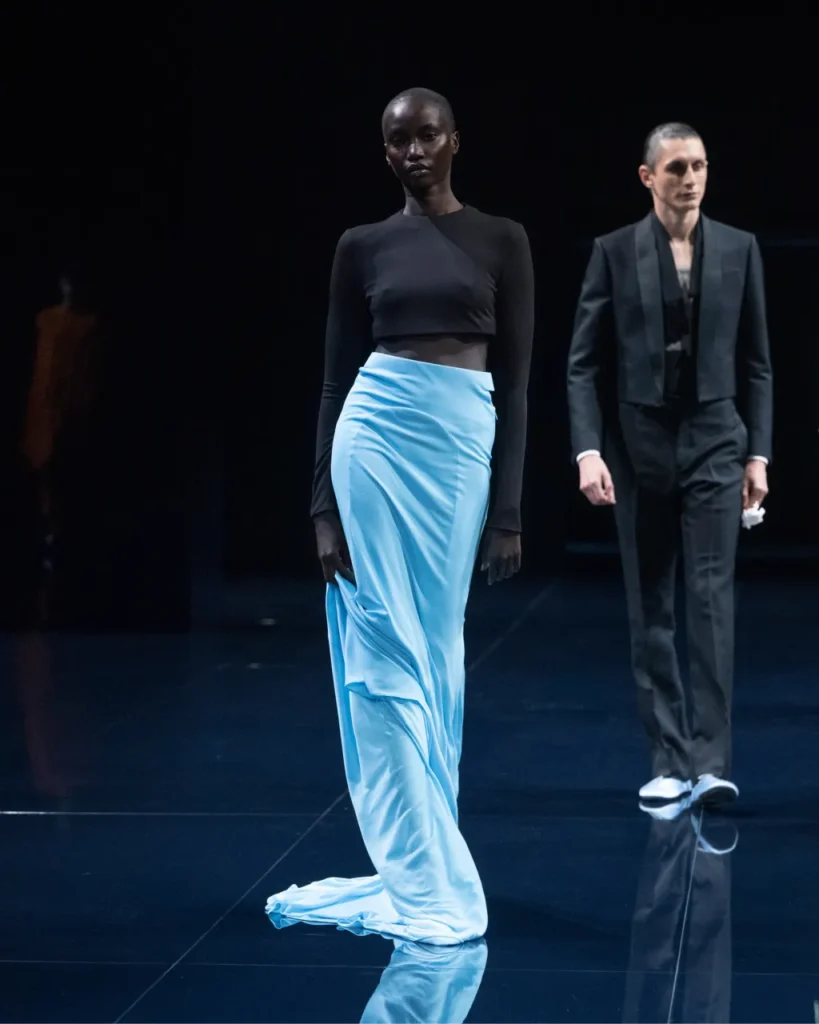
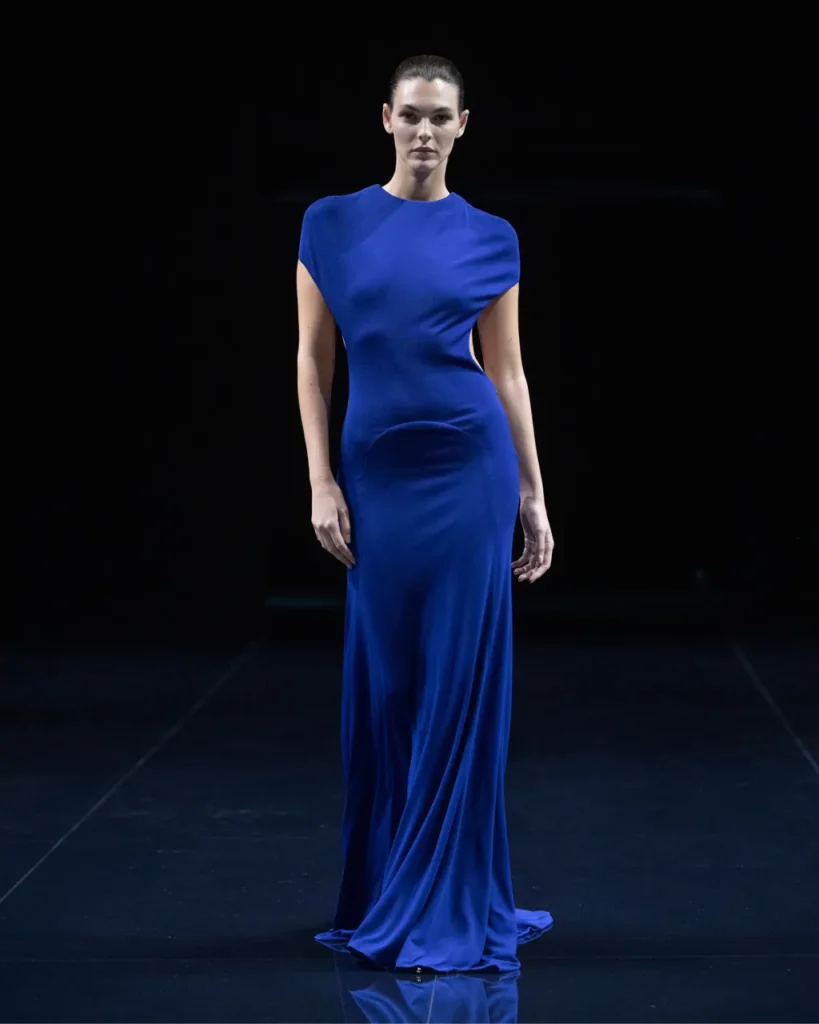
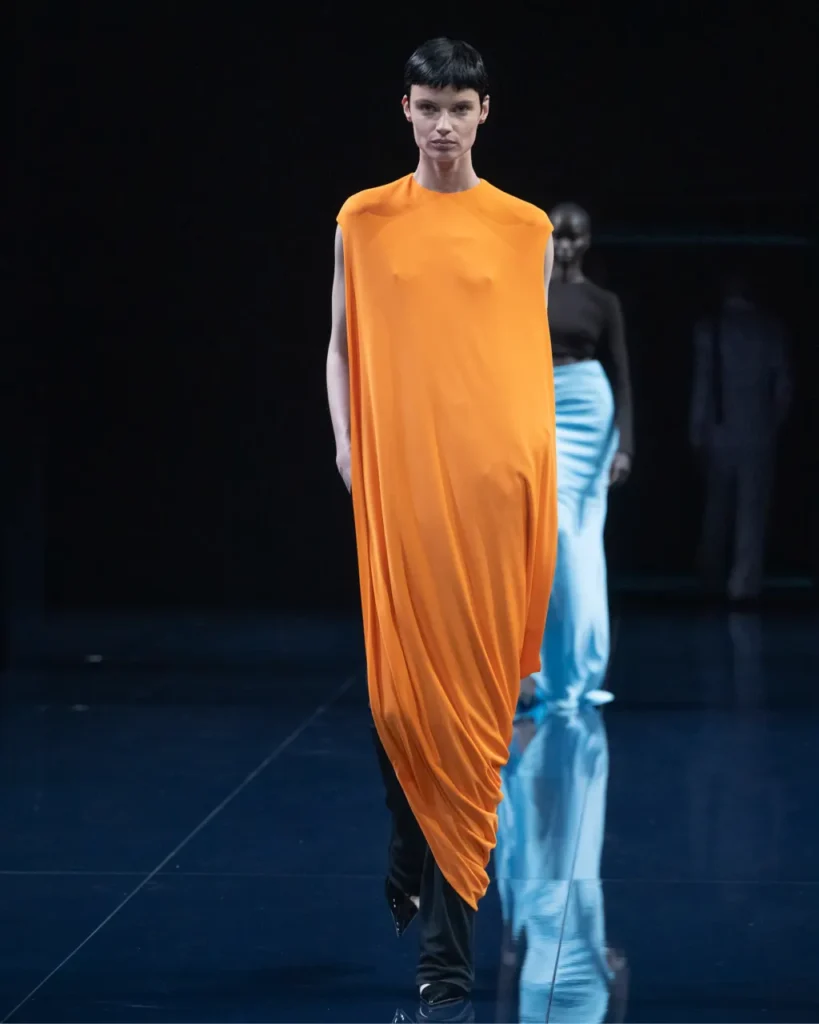
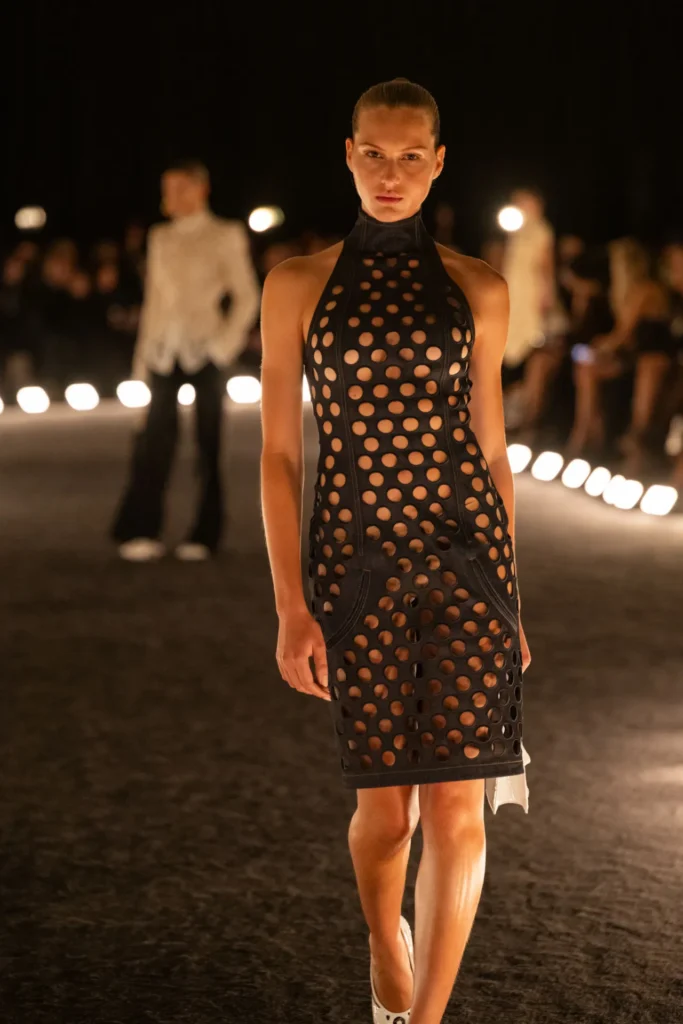
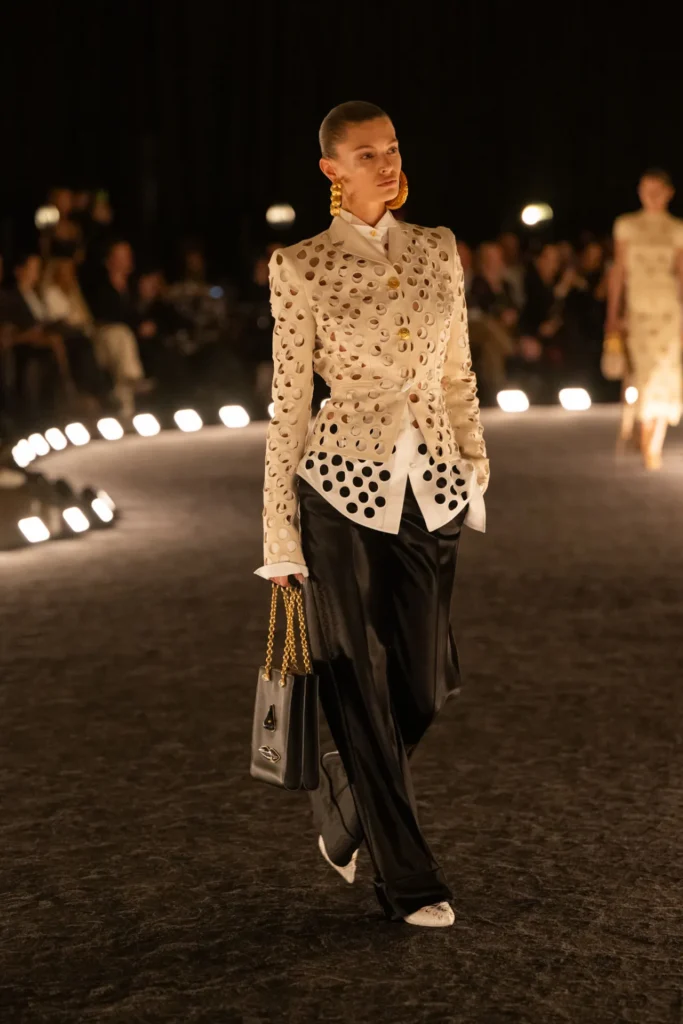
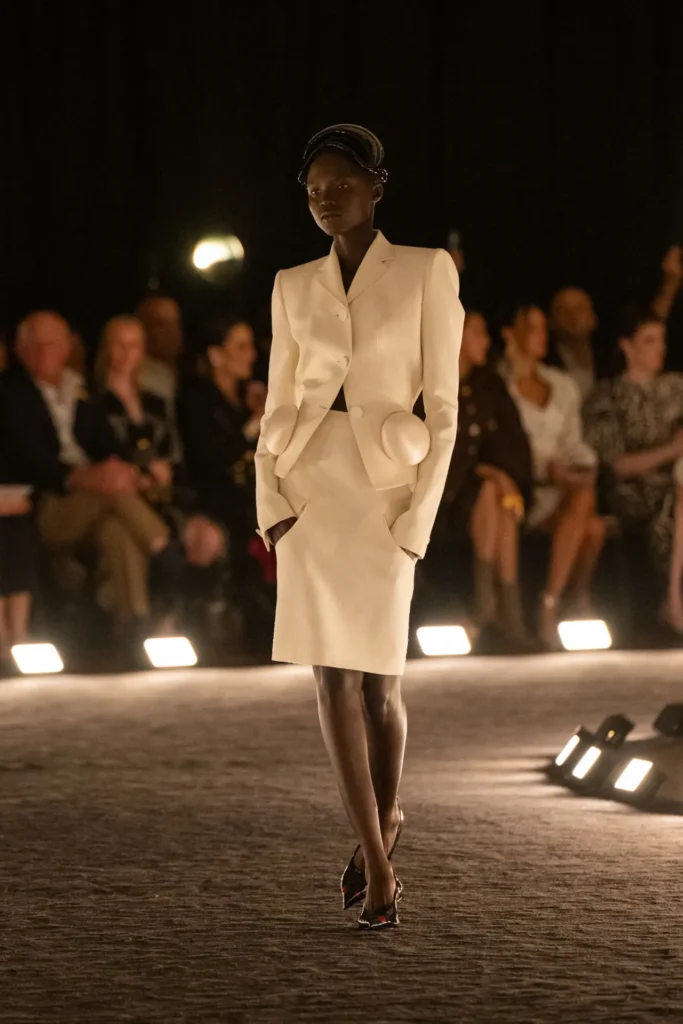
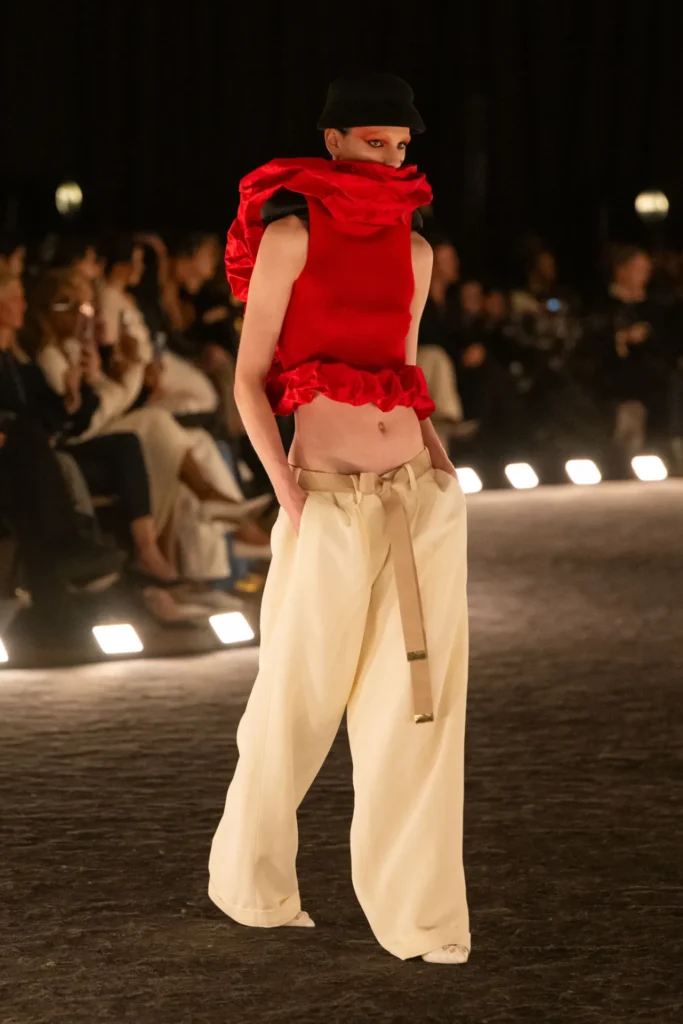
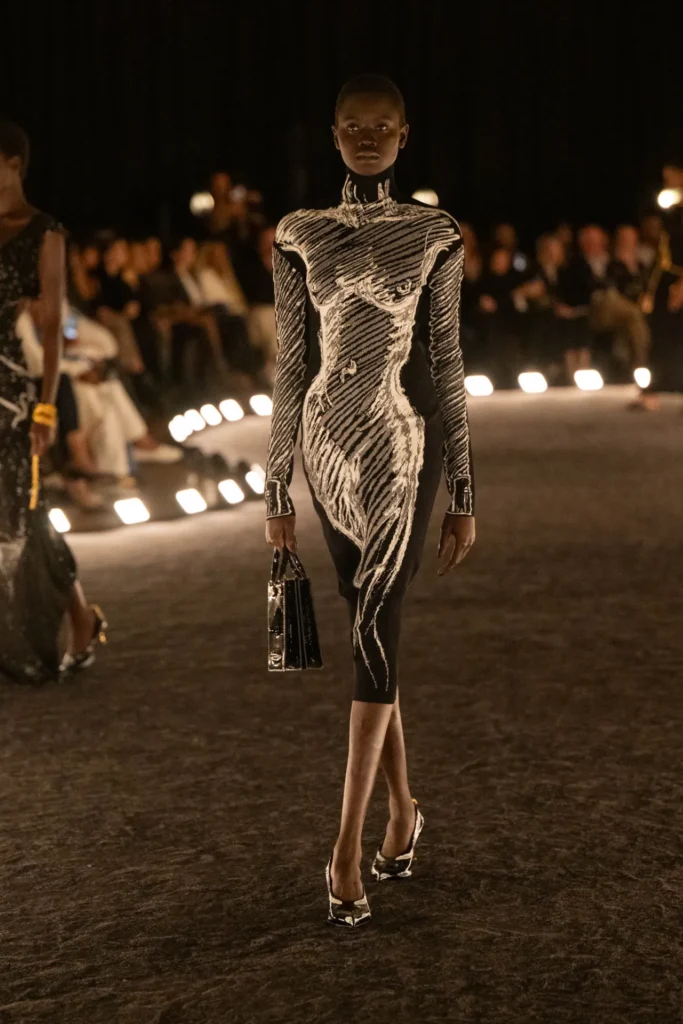
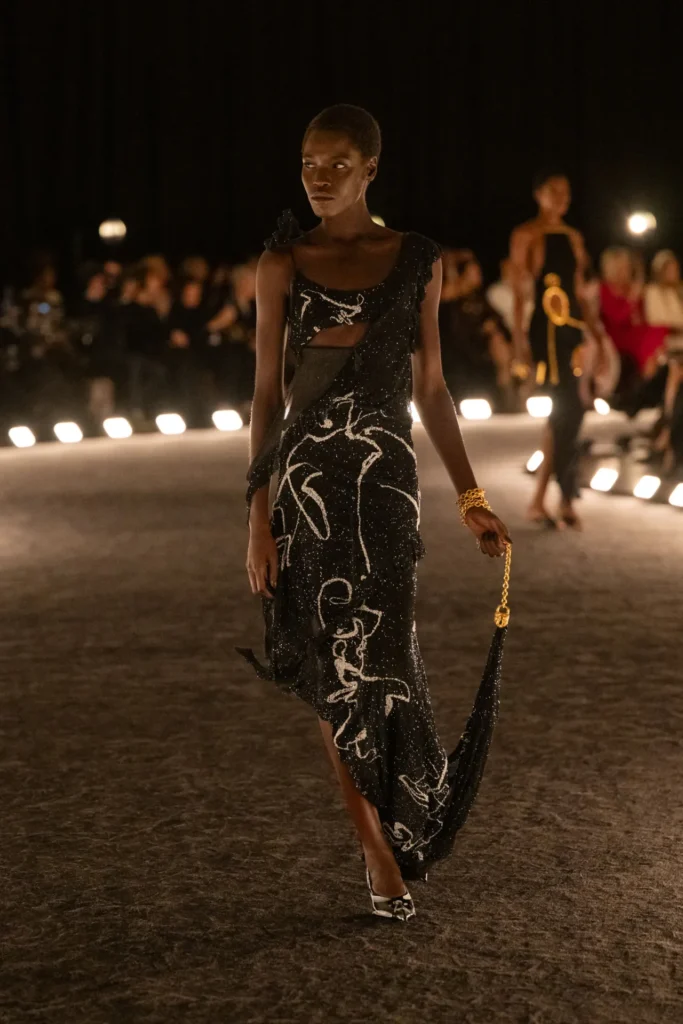
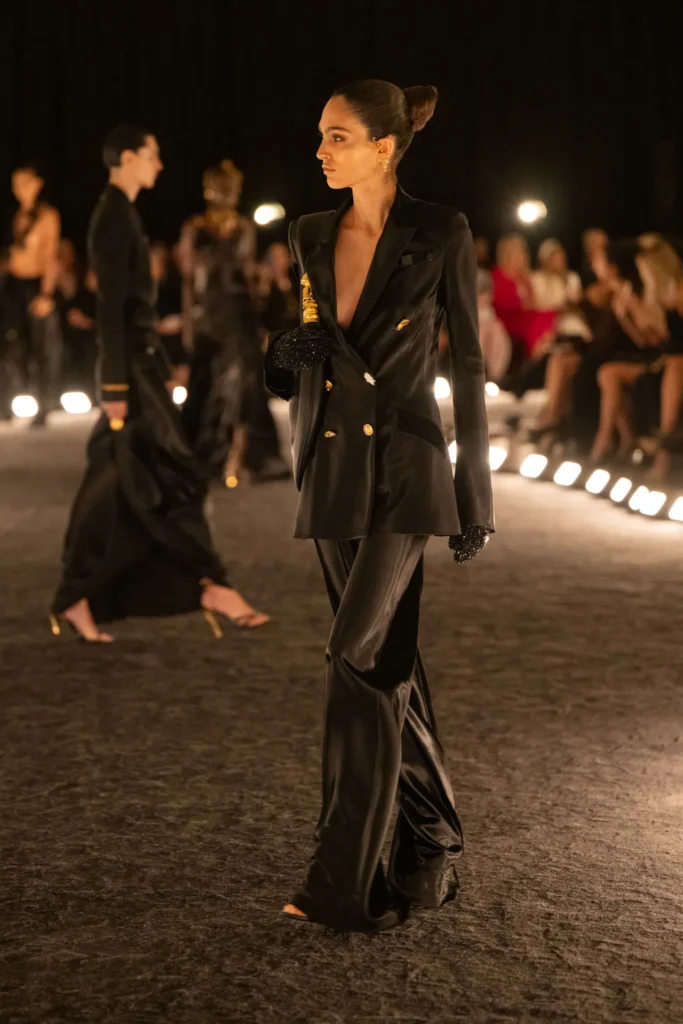
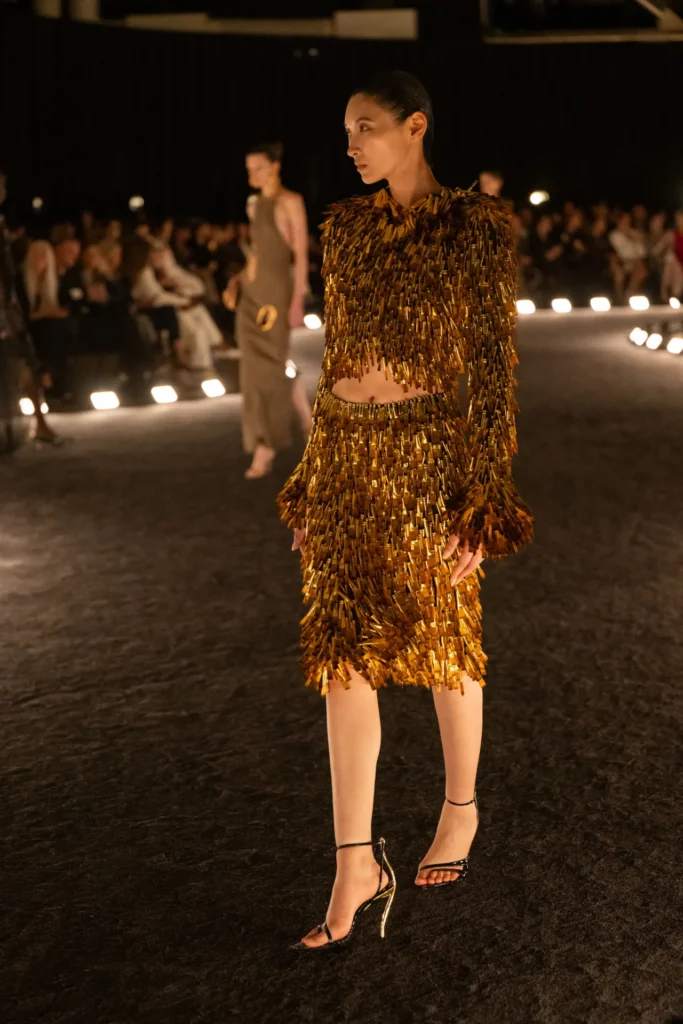
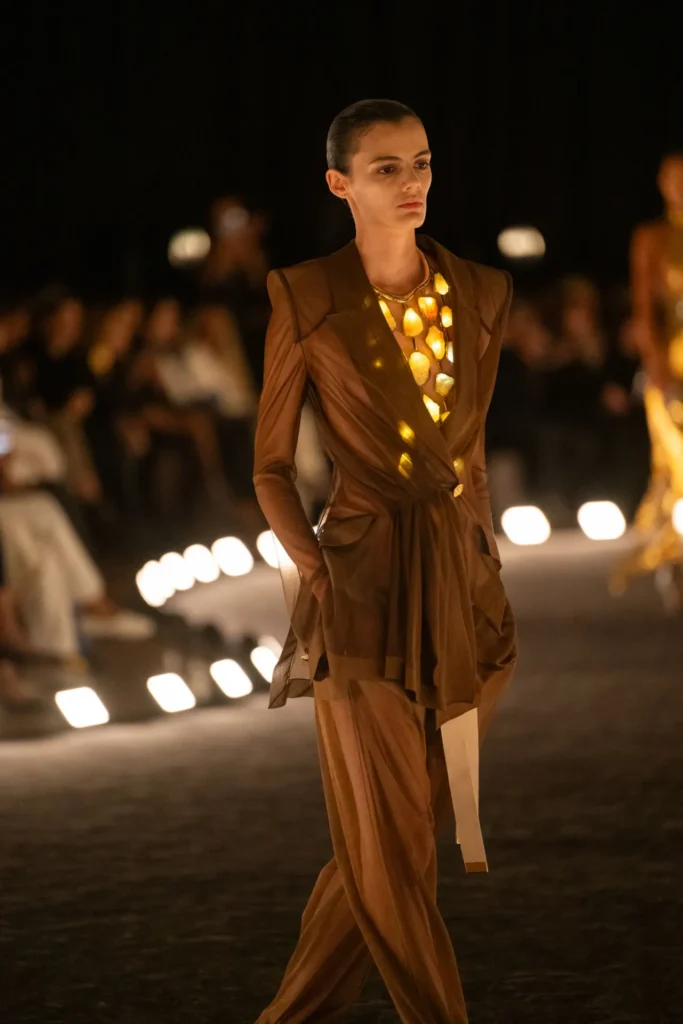
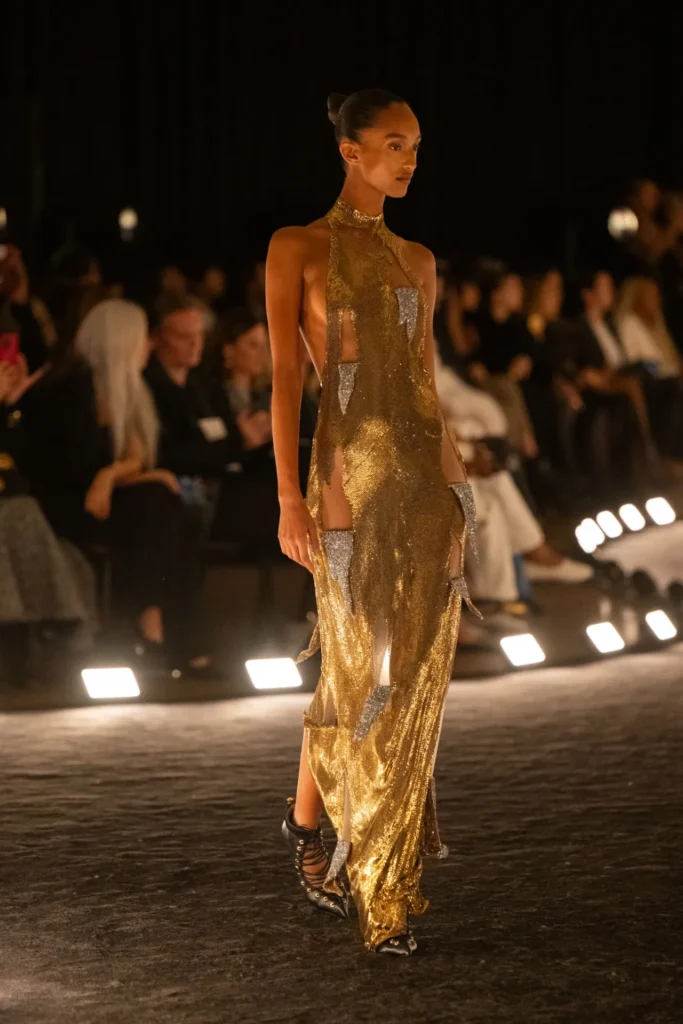
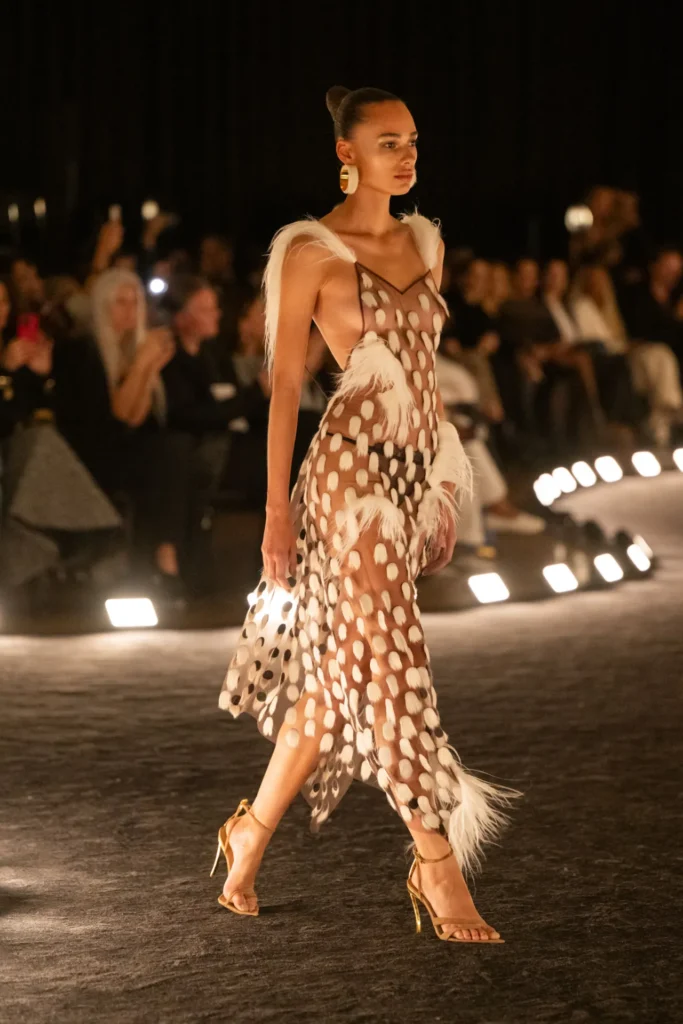
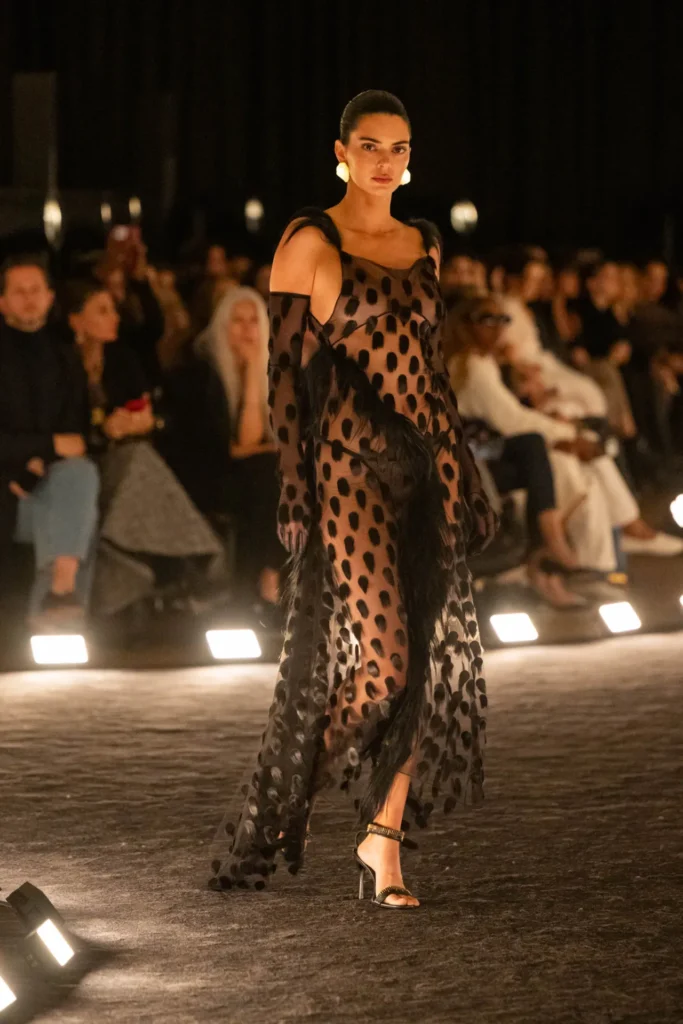
On the rooftop of the Pompidou Center — currently closed for renovations — Daniel Roseberry staged one of his most restrained yet impactful Schiaparelli shows to date. With panoramic views stretching from Sacré-Coeur to the Eiffel Tower, guests like Kylie Jenner, Rosalía, and FKA Twigs gathered to witness a collection that balanced extreme drama with surprising wearability.
Courtesy Of Schiaparelli
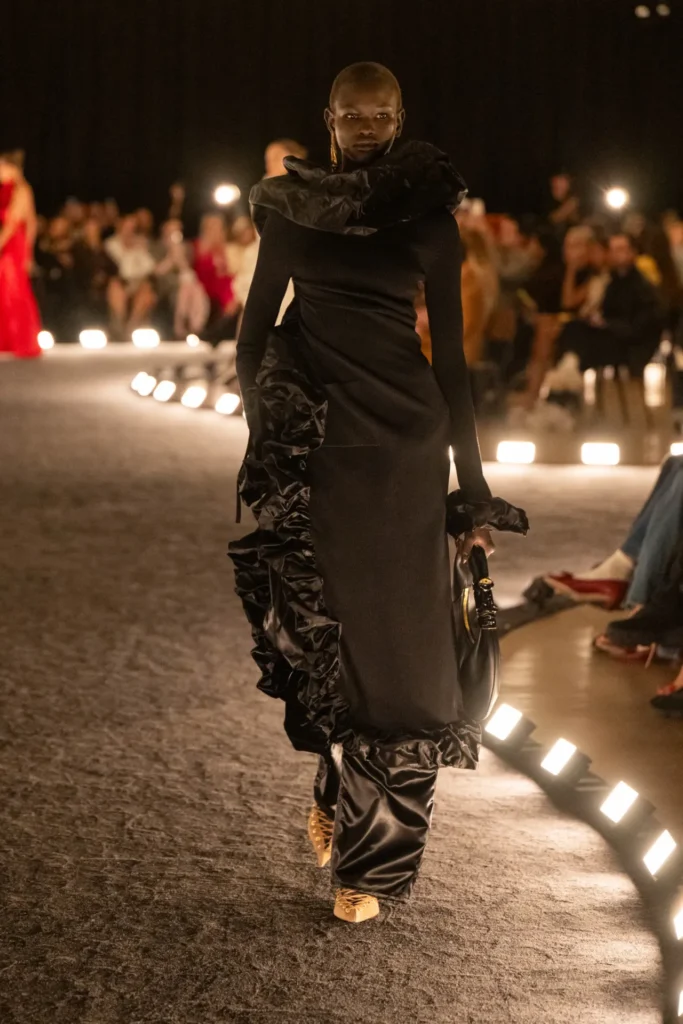
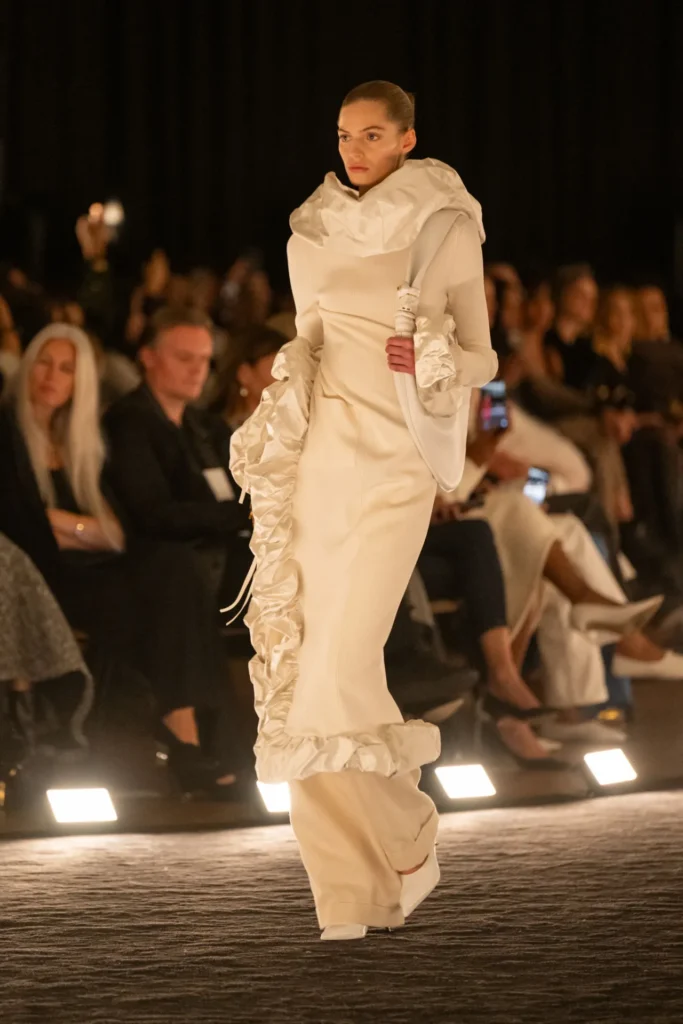
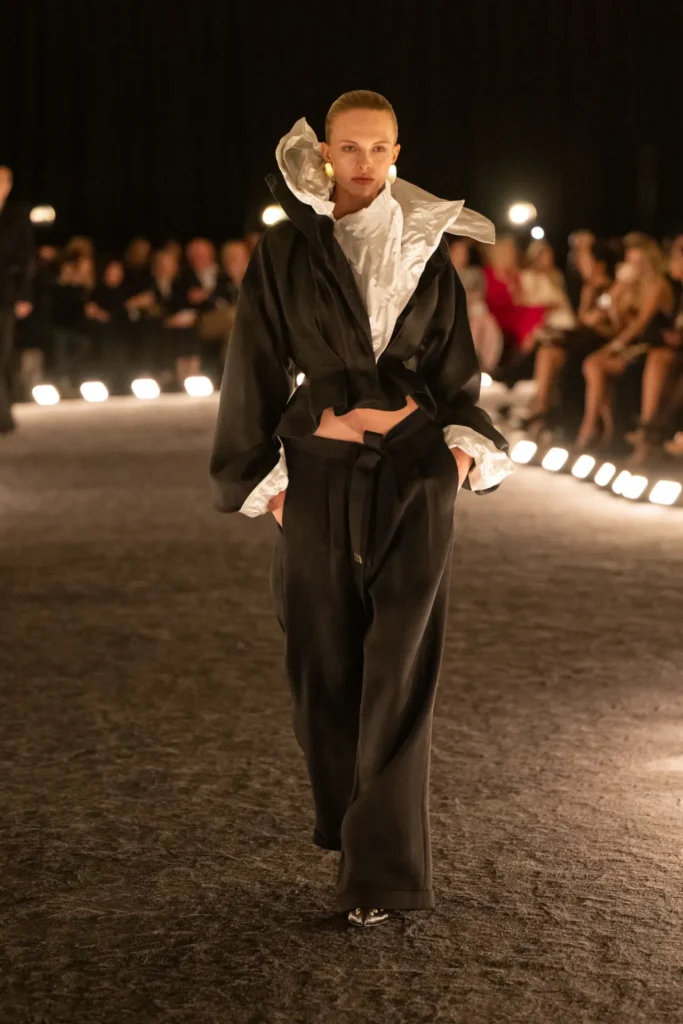
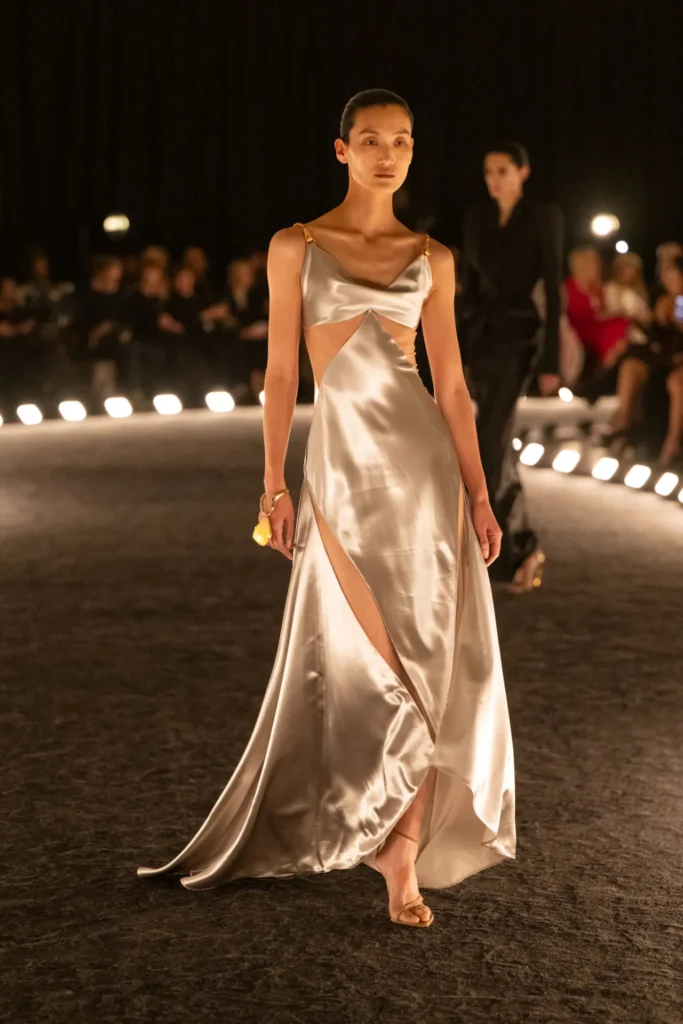
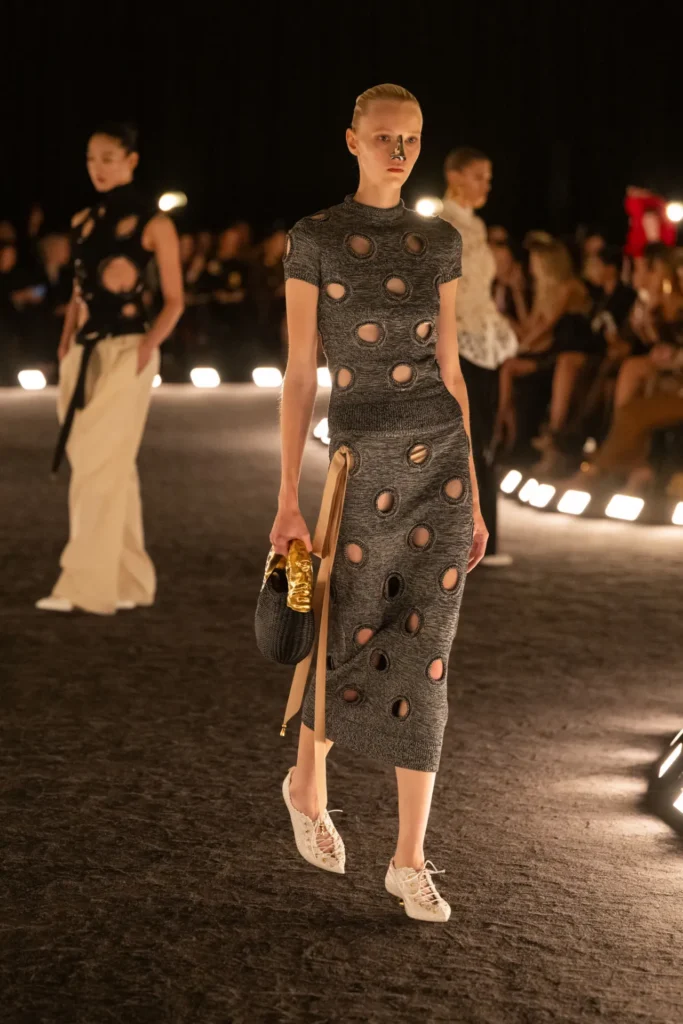
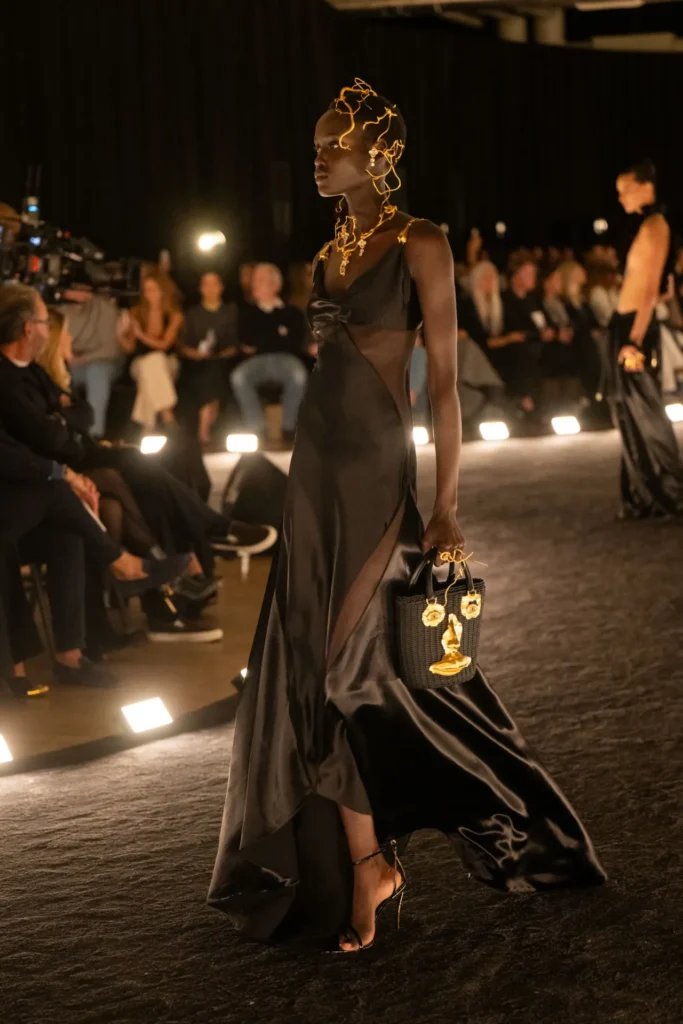
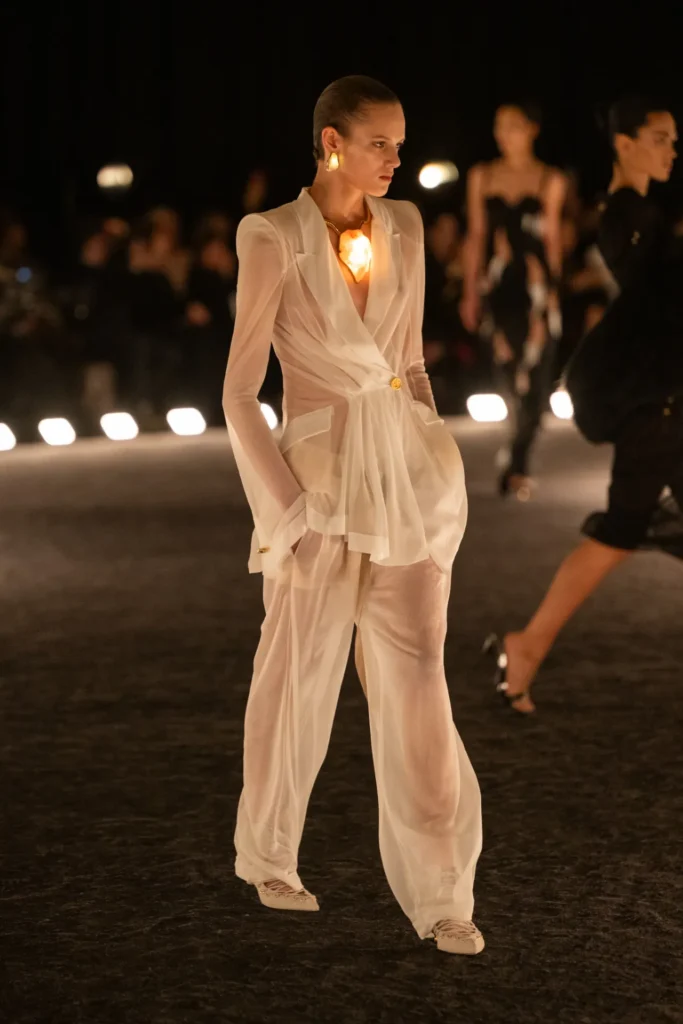
Roseberry found his starting point in the museum’s previous exhibition dedicated to sculptor Constantin Brâncuși. The artist’s clean lines and essential palette echoed throughout the collection, where minimalist tailoring was enhanced by curved waistbands, pebble-shaped pockets, and oversized cutouts on everything from leather shirts to knit tube dresses. Hammered ruffles rippled across cropped tops paired with cream trousers, while bias-cut evening gowns shimmered in panels of satin, suspended from delicate chain straps that hovered like jewelry over sheer bases. The usual gilded theatrics were pared back, save for a few sculptural nose jewels.
Courtesy Of Schiaparelli
“I wanted something radically wearable, but still with that extreme drama that makes the air shift when you walk into a room wearing Schiap,” Roseberry said post-show. He deliberately set aside the hourglass corsetry of past seasons, letting fabric dictate silhouette instead. “It was a revelation to put on bias-cut dresses and watch how the body itself did the work. This was really about going back to the house’s roots.”
Courtesy Of Schiaparelli
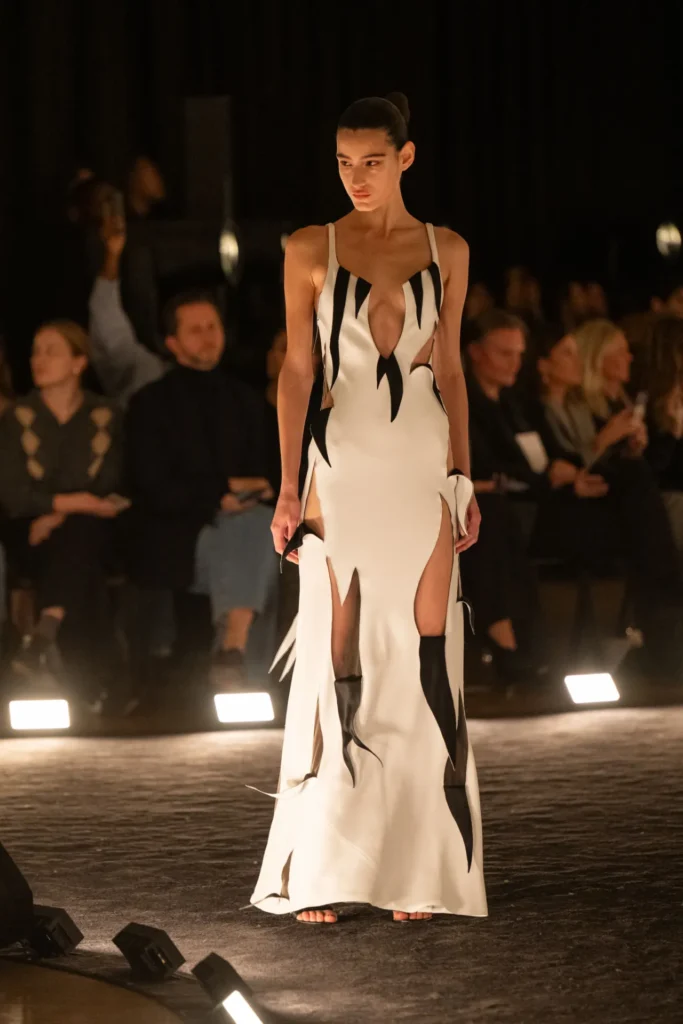
Those roots include provocation — a Schiaparelli signature since Elsa’s collaborations with surrealist artists. Roseberry revisited the legendary Tears Dress of 1938, designed with Salvador Dalí, whose trompe-l’œil illusion of ripped flesh reappeared here in 3D silk crêpe panels shredded at the edges. At times, his creations were barely more than fragments of cloth: Kendall Jenner closed the show in a sheer black negligée, a reminder that whether maximalist or minimalist, a Schiaparelli woman never fades into the background.
Courtesy Of Schiaparelli
The timing felt pointed. With the house preparing for a major exhibition at London’s Victoria & Albert Museum next year, Roseberry delivered a collection that simultaneously honored its surrealist past and carved out a modern, wearable vision for its future — a conversation between art and fashion staged in the perfect setting: a museum in transformation.
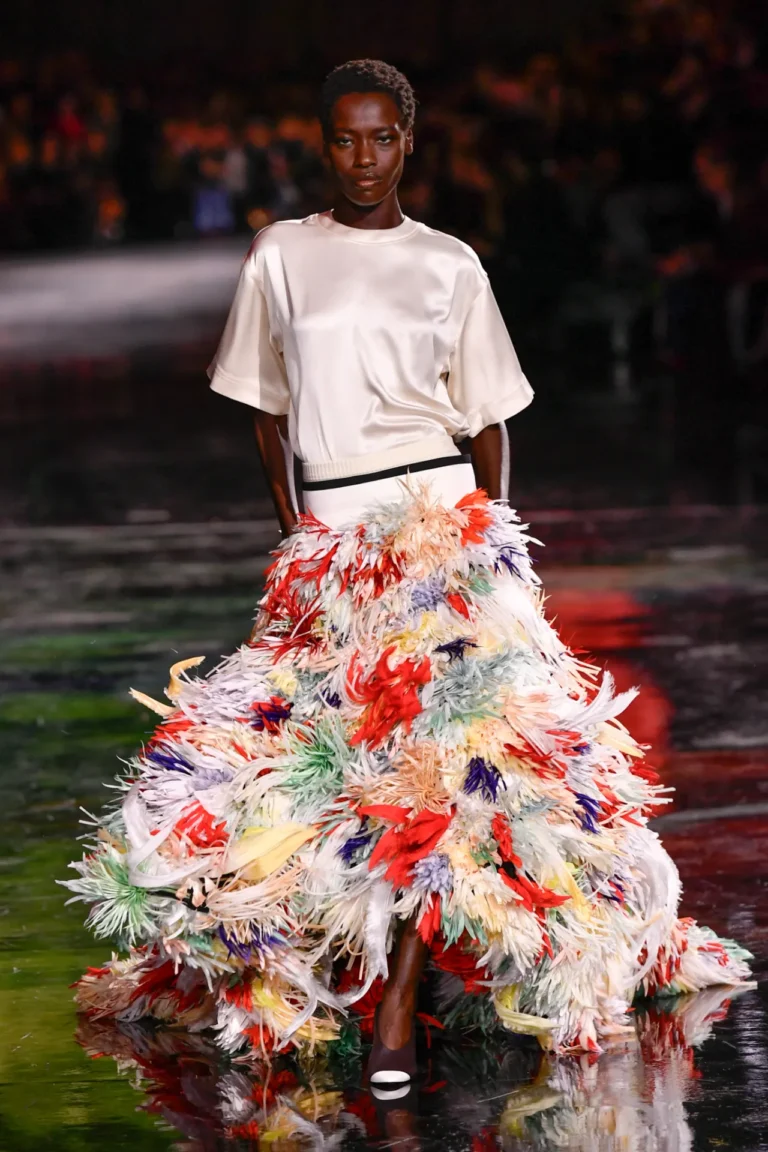
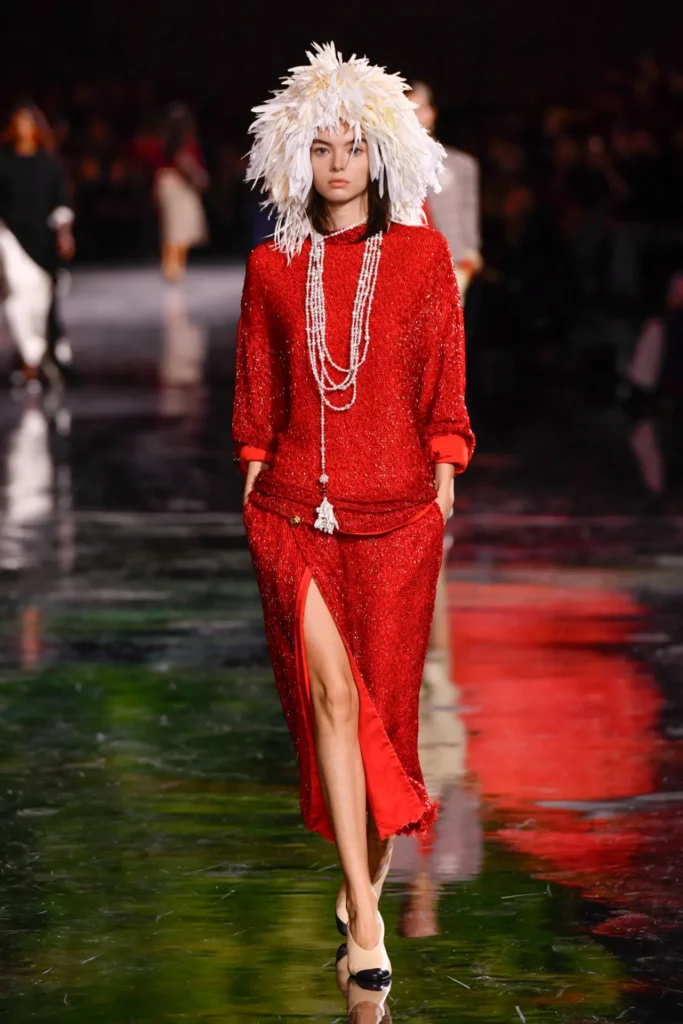
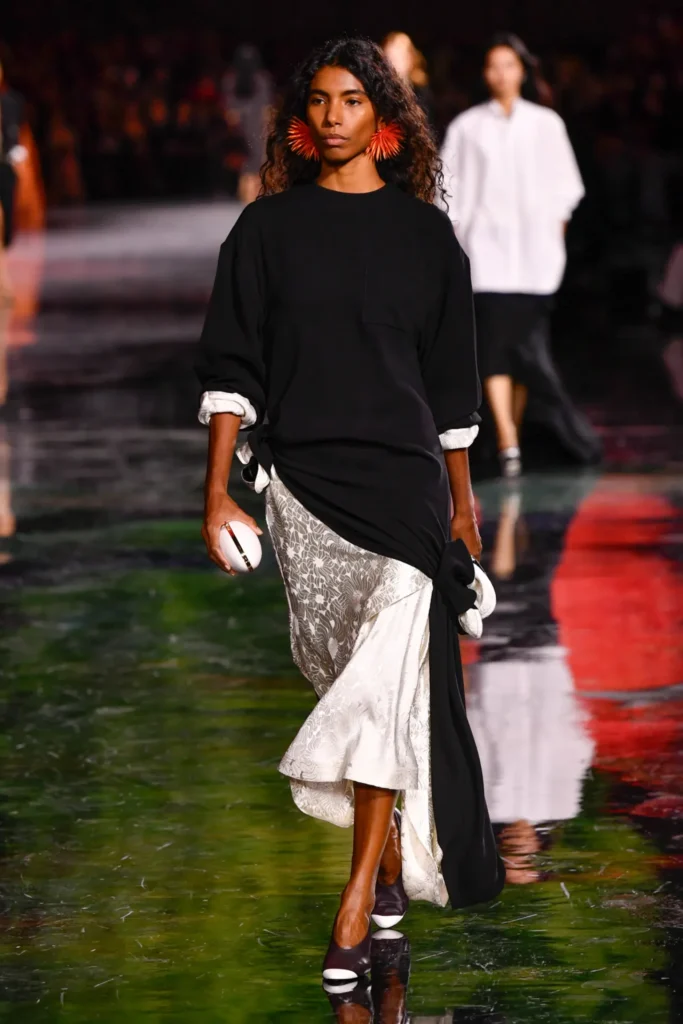
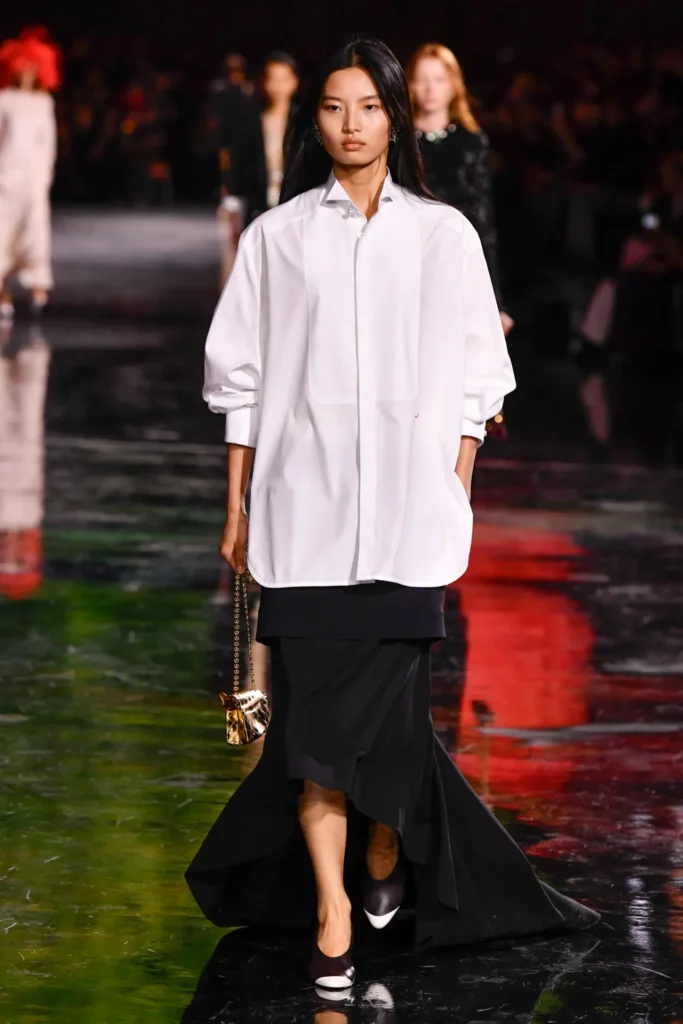
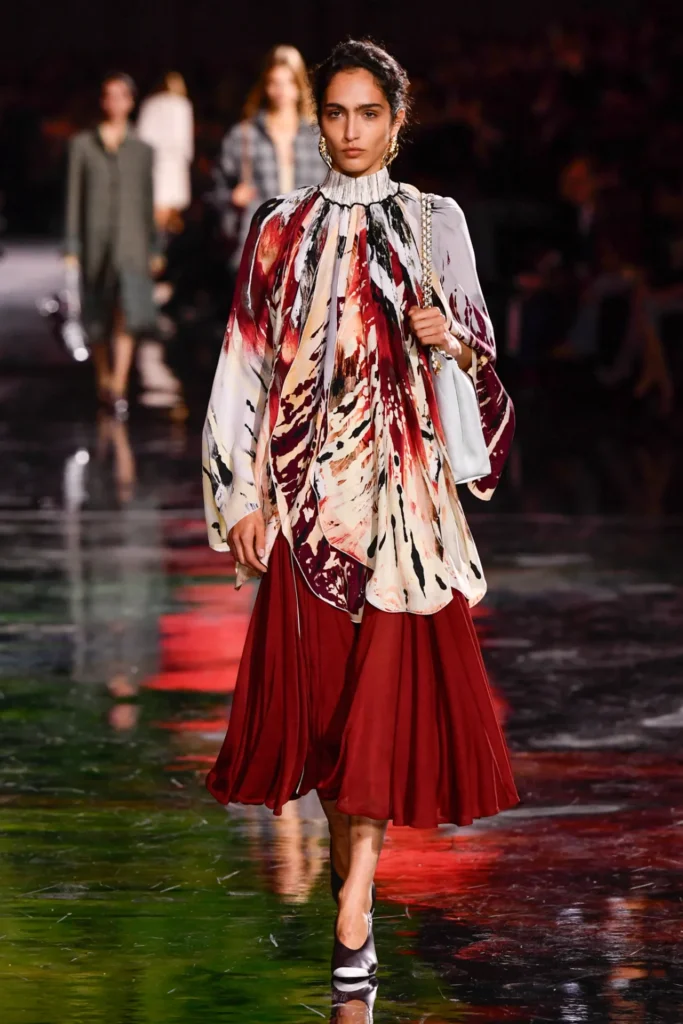
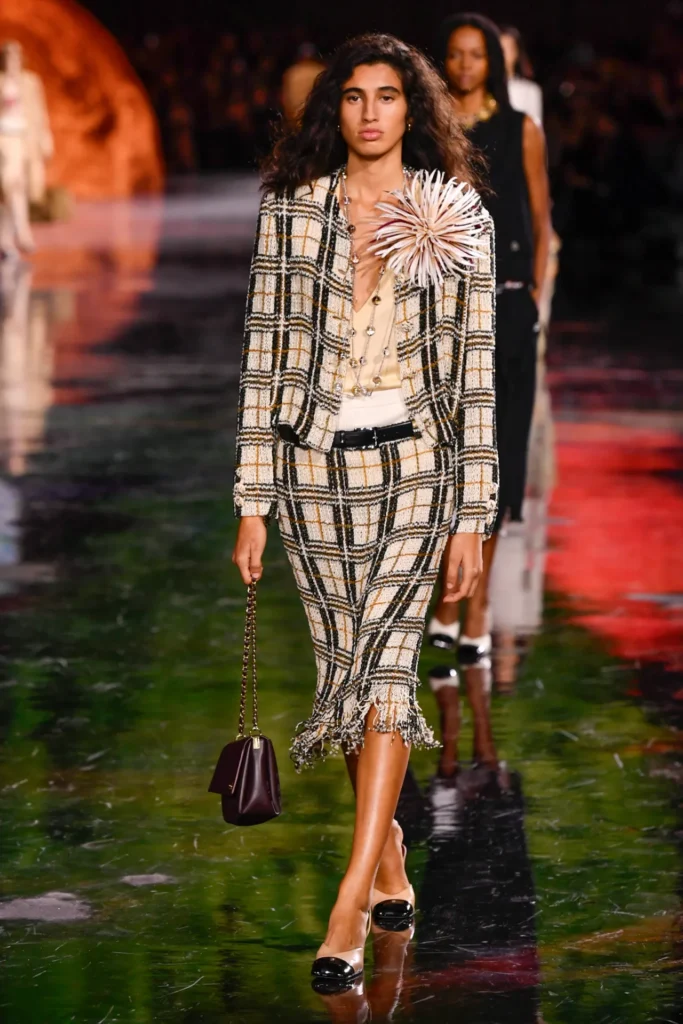
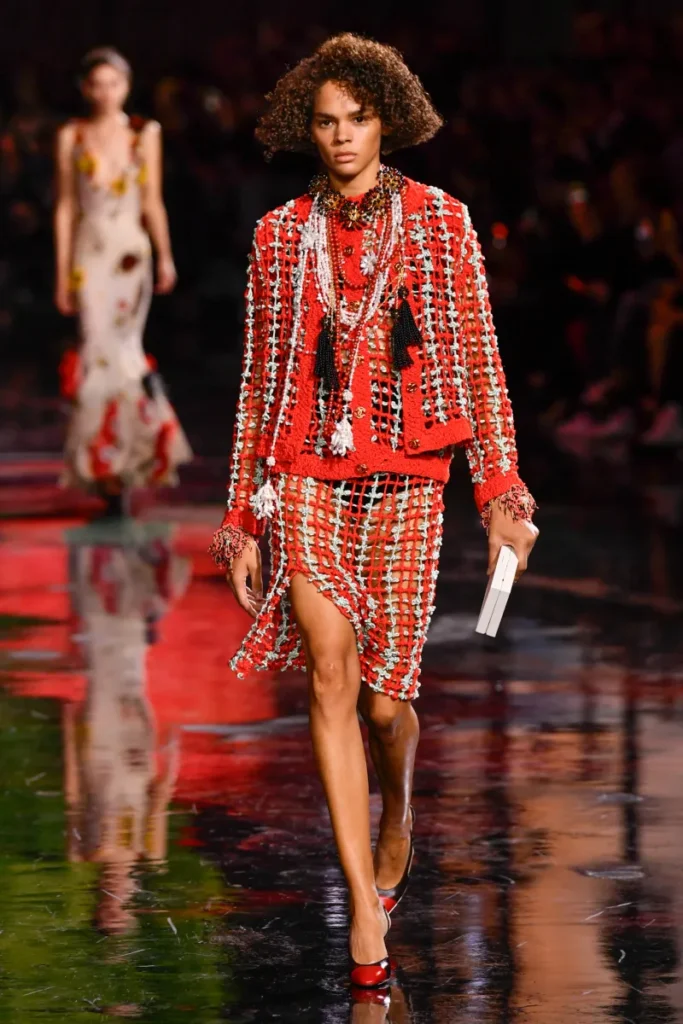
His Spring 2026 collection was a study in tension: between heritage and reinvention, softness and precision, the familiar and the unknown. “It felt like a roller coaster,” Blazy admitted of his first season. “The archive was overwhelming — almost too much beauty to contain. But the beauty of Chanel’s codes,” he continued, “is that they can also be simplified. They still look like Chanel.”
Courtesy Of Chanel
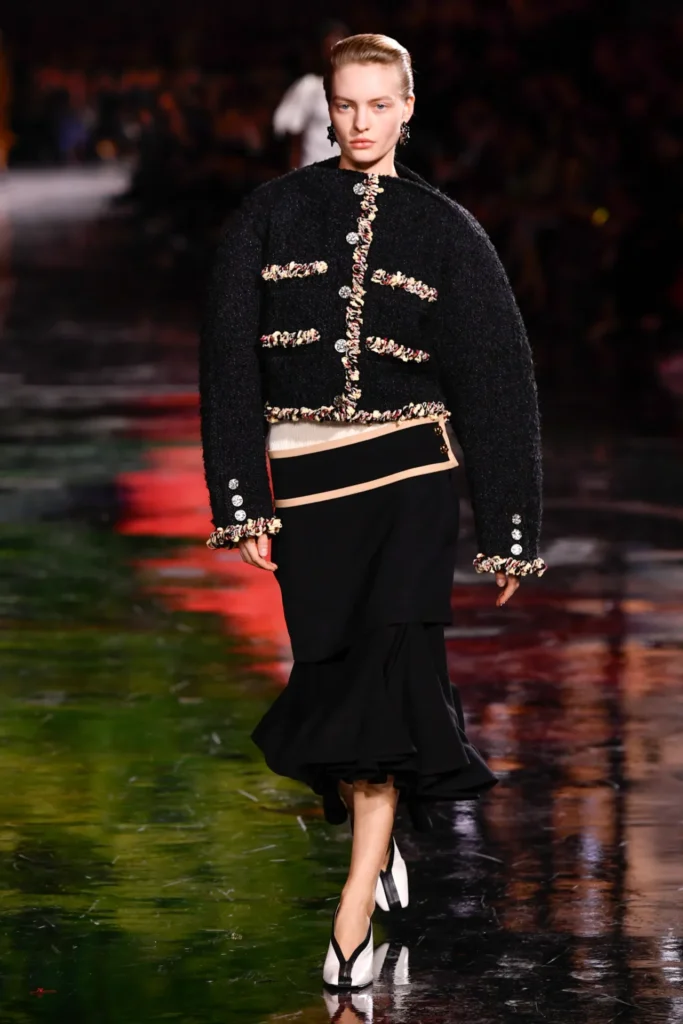
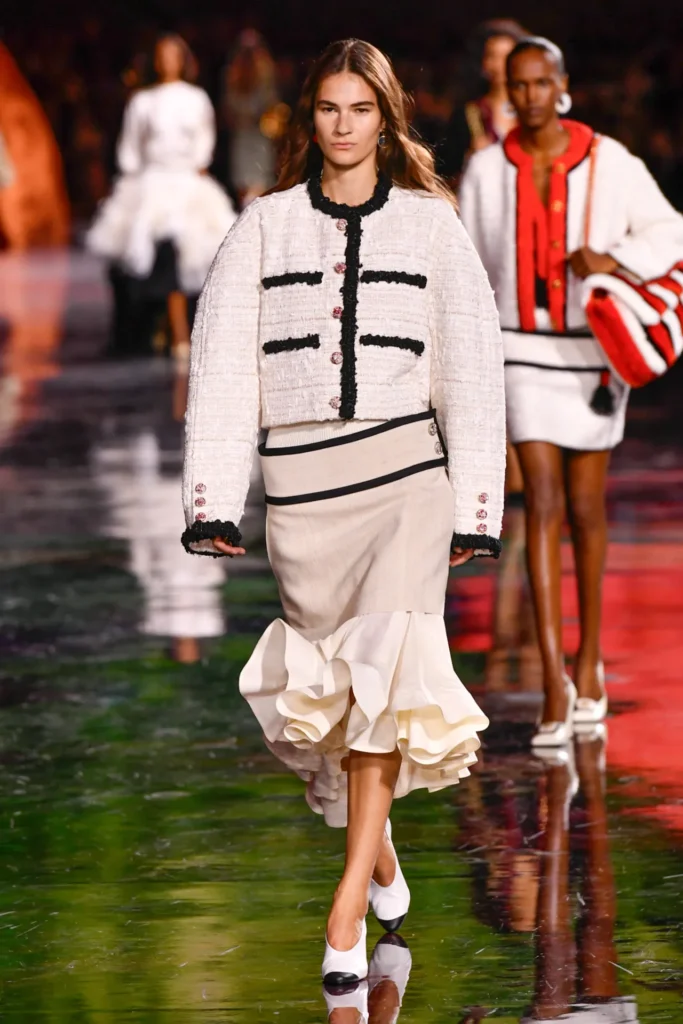
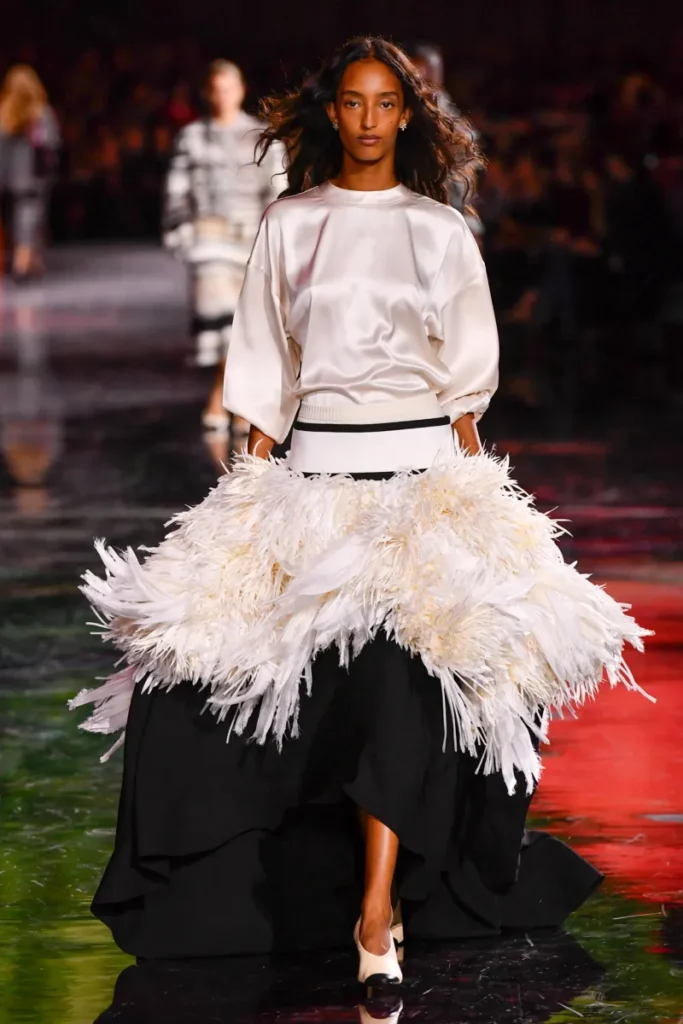
Gone were the oversized pearl-chain handbags that defined his predecessors’ era. In their place came a nuanced exploration of the house’s DNA — a complex, multi-layered vision that recharged the brand with fresh cultural relevance. Even his reimagined two-tone ballet flats carried a new sensuality, their supple chocolate-praline leather both playful and deliciously subversive.
Courtesy Of Chanel
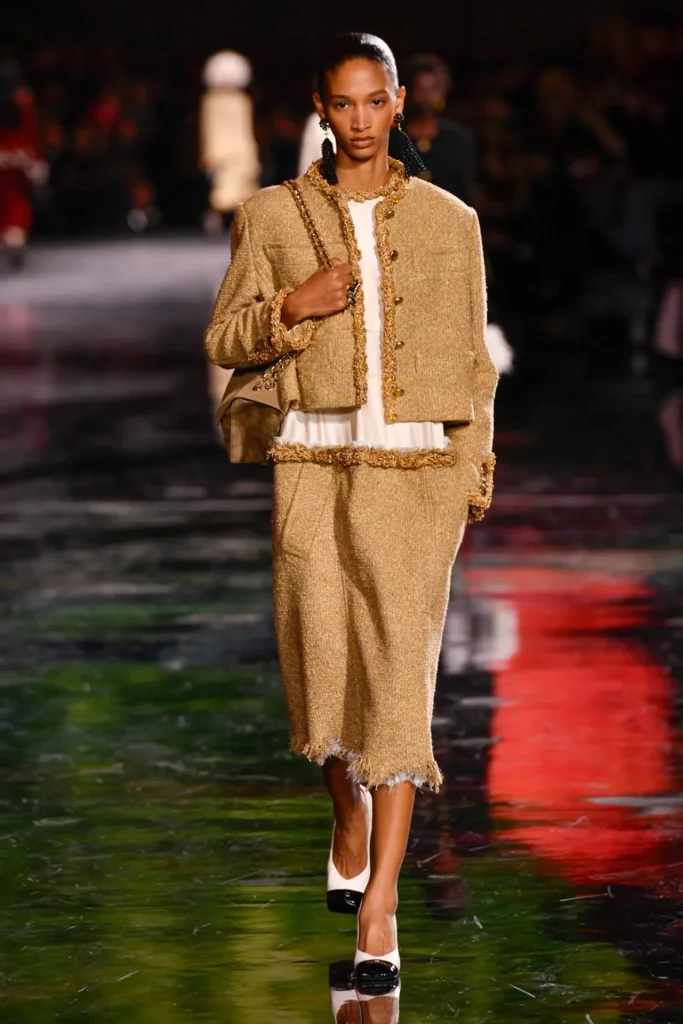
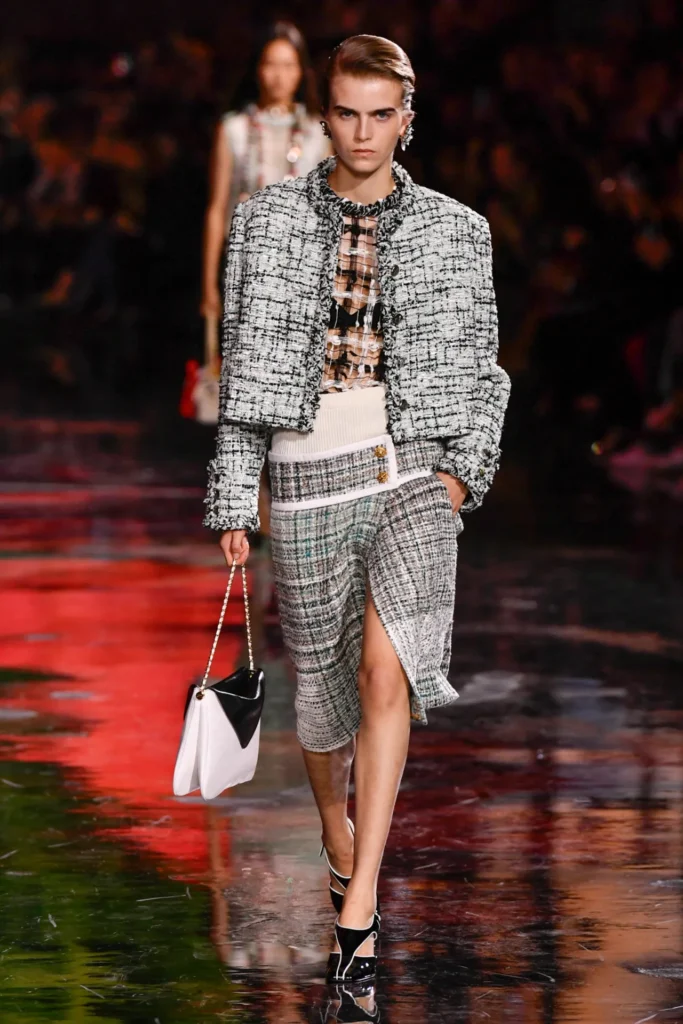
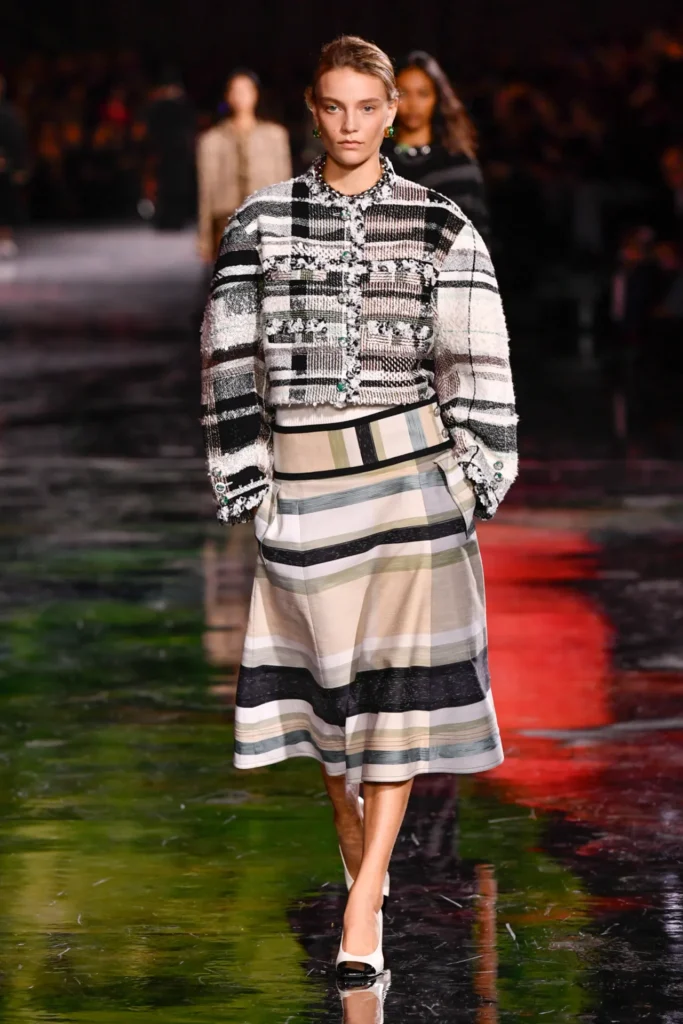
The tweed suit, perhaps the collection’s greatest challenge, appeared frayed, fringed, and brushed into blanket-like softness — inspired, Blazy said, by Chanel herself and her penchant for wearing her lovers’ clothes. “She thought the Duke of Westminster was the most elegant man because he wore his things until they looked used,” he mused.
Courtesy Of Chanel
Some of the proportions were intentionally off-kilter — oversized jackets, sweeping hems, and slouchy silhouettes that dared imperfection. Yet amid the experimentation were stunning moments of clarity: plaid suits with low-slung wrap skirts, based on a mysterious archival look from 1964 that, as Blazy noted, “could have come from anywhere — France, or beyond.”
Courtesy Of Chanel
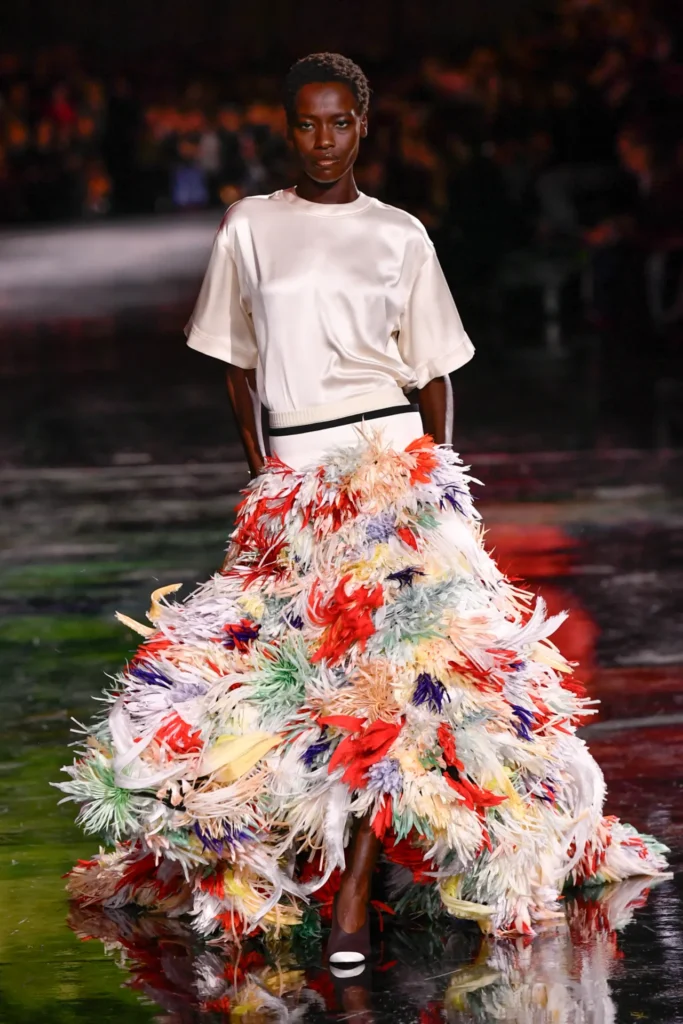
The show’s cosmic set became a metaphor for his intent. “We all look at the same sky,” Blazy reflected. “We all see the stars. There’s something universal in that — beauty without borders. That’s what fashion should offer, too.”
Courtesy Of Chanel
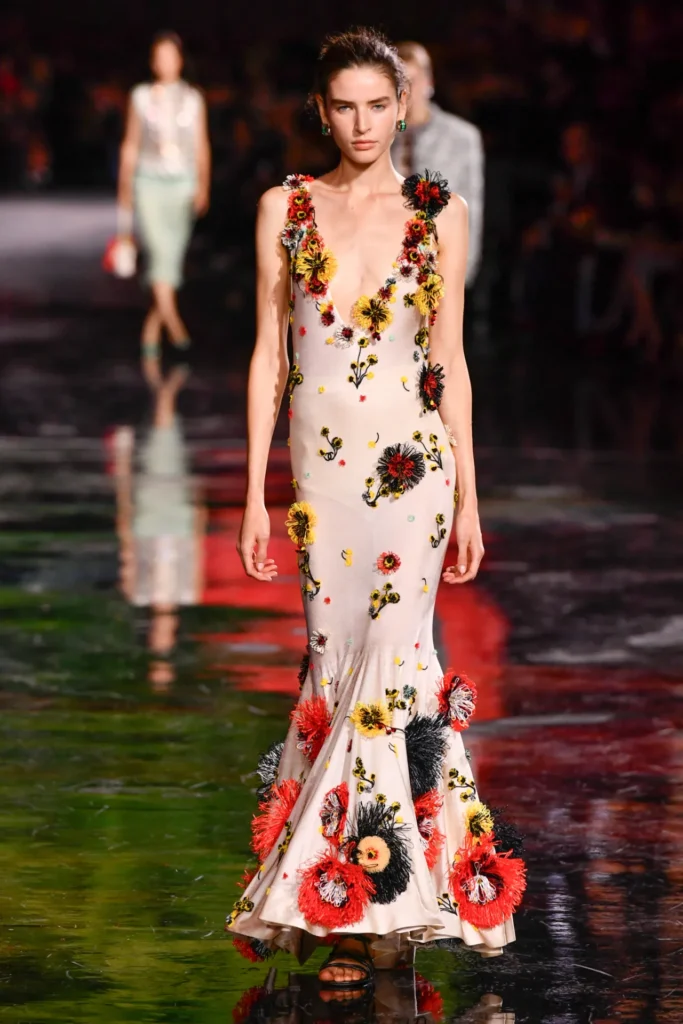
As the final look appeared — model Awar Odhiang gliding through the galaxy in an ivory silk T-shirt split open at the back and a skirt blossoming with multicolored flowers — the audience rose in ovation. She danced, radiant, toward Blazy.
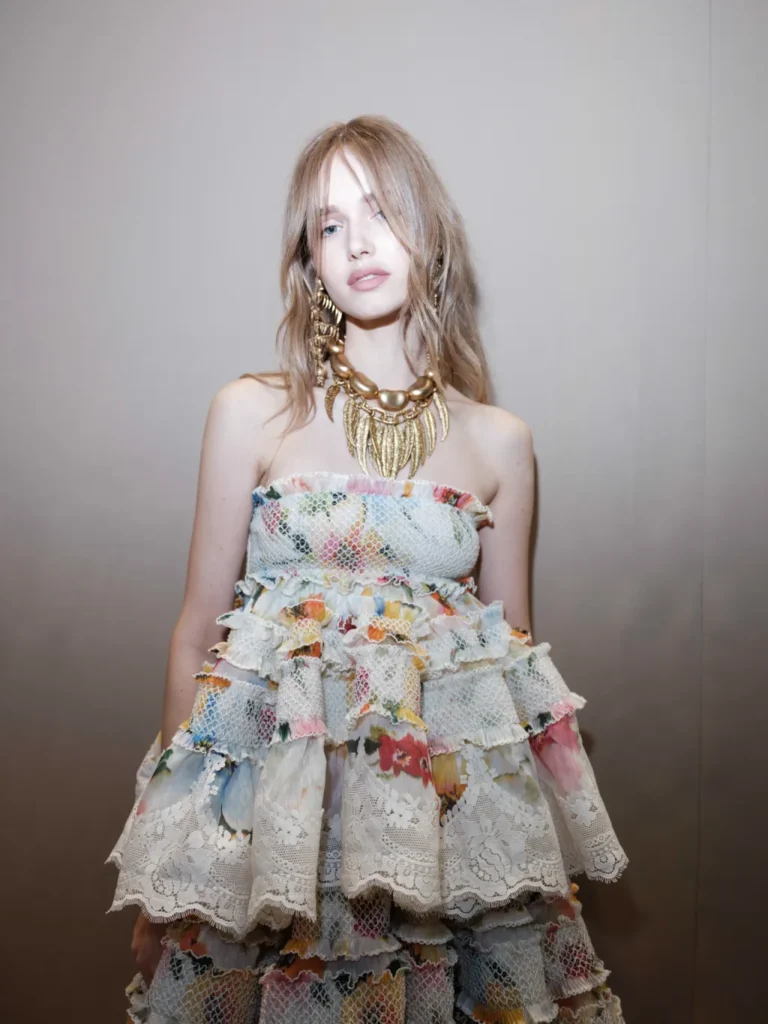
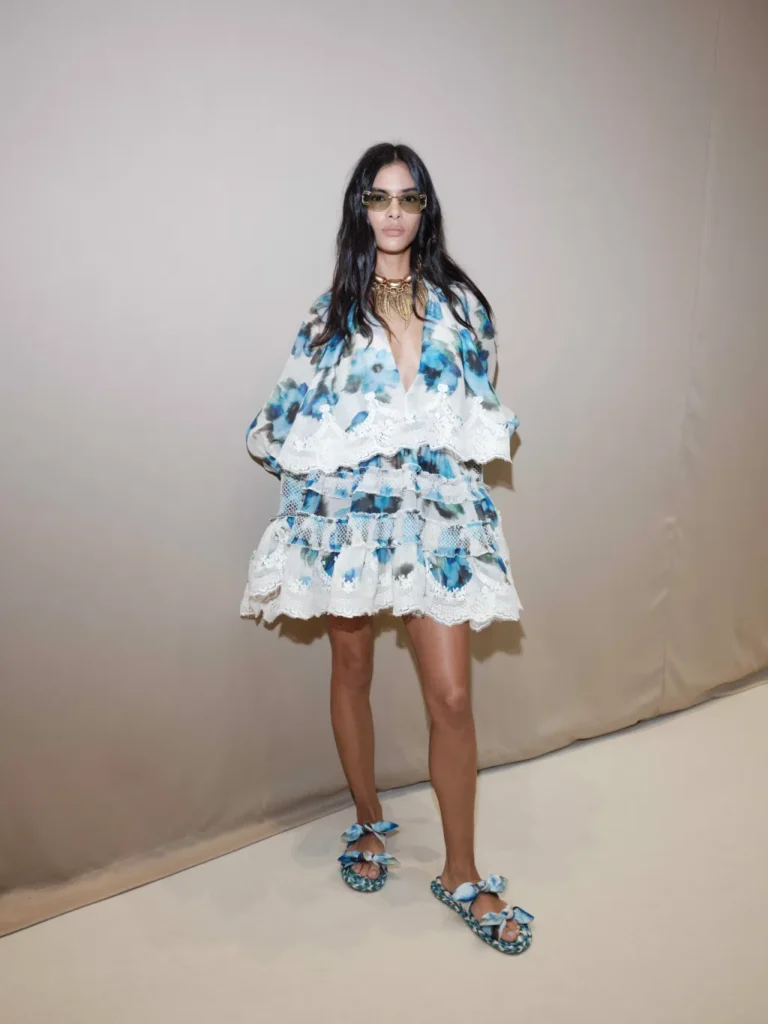
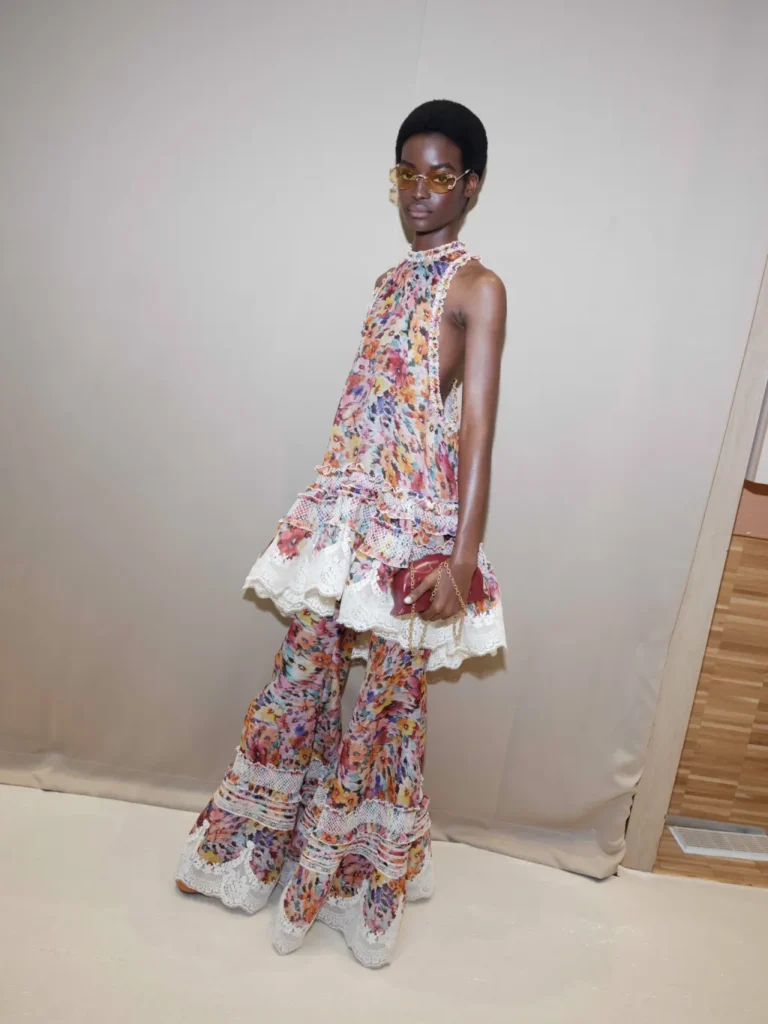
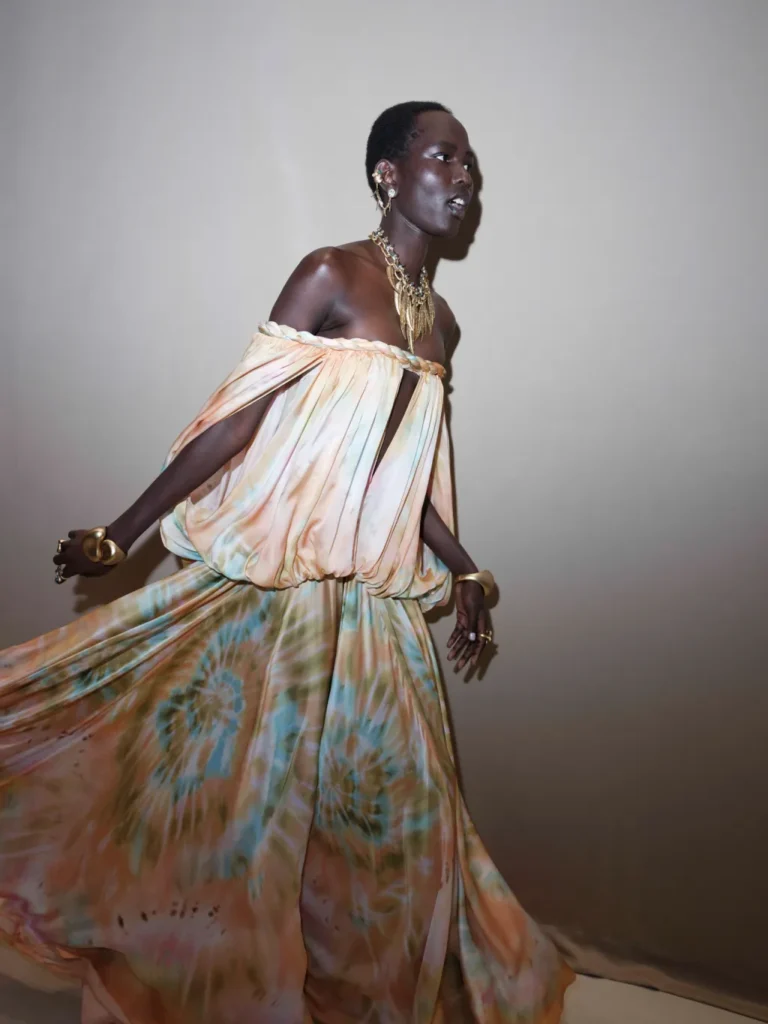
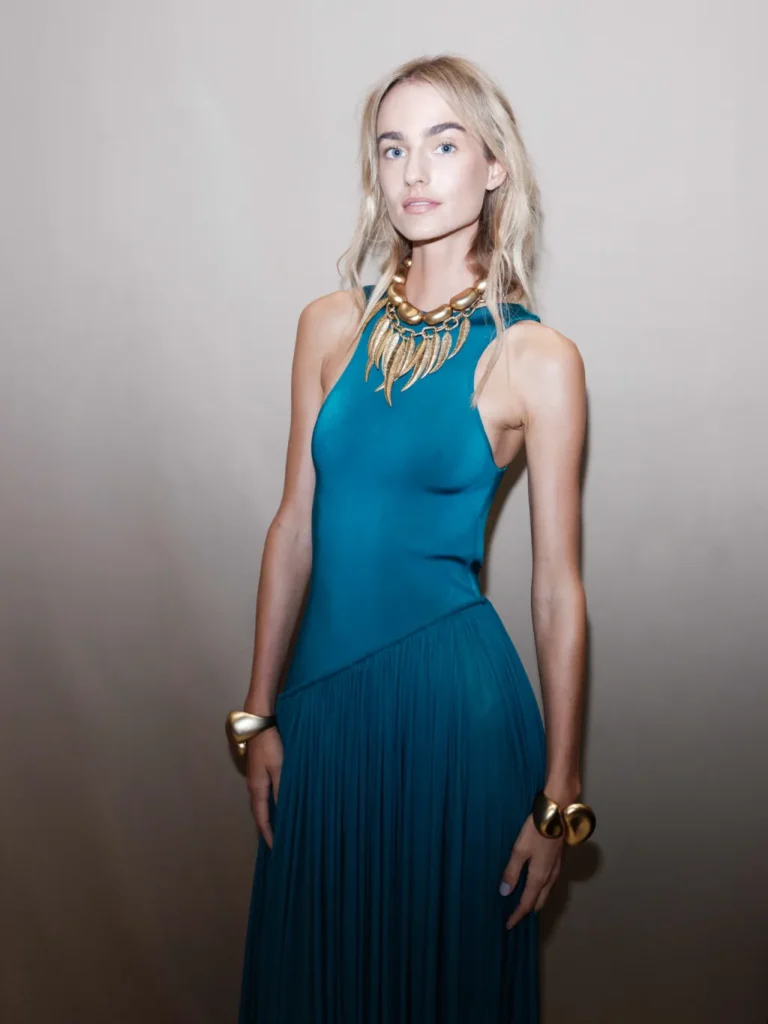
Nicky Zimmermann’s latest collection shimmered with psychedelic joy — a sun-soaked daydream inspired by the bohemian artists of Lavender Bay, a seaside enclave outside Sydney that thrived in the free-spirited 1970s. “They threw the most incredible parties,” Zimmermann recalled backstage. “If the Rolling Stones were in town, they’d end up in Lavender Bay hanging out with the artists.”
Captured by Emily Malan
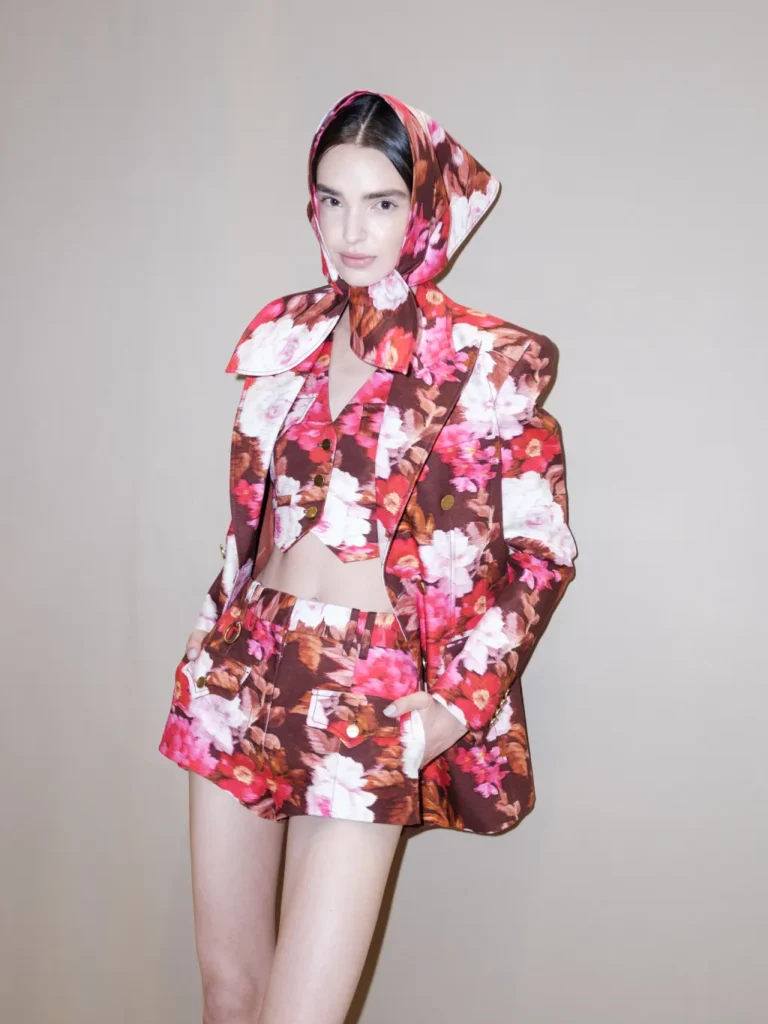
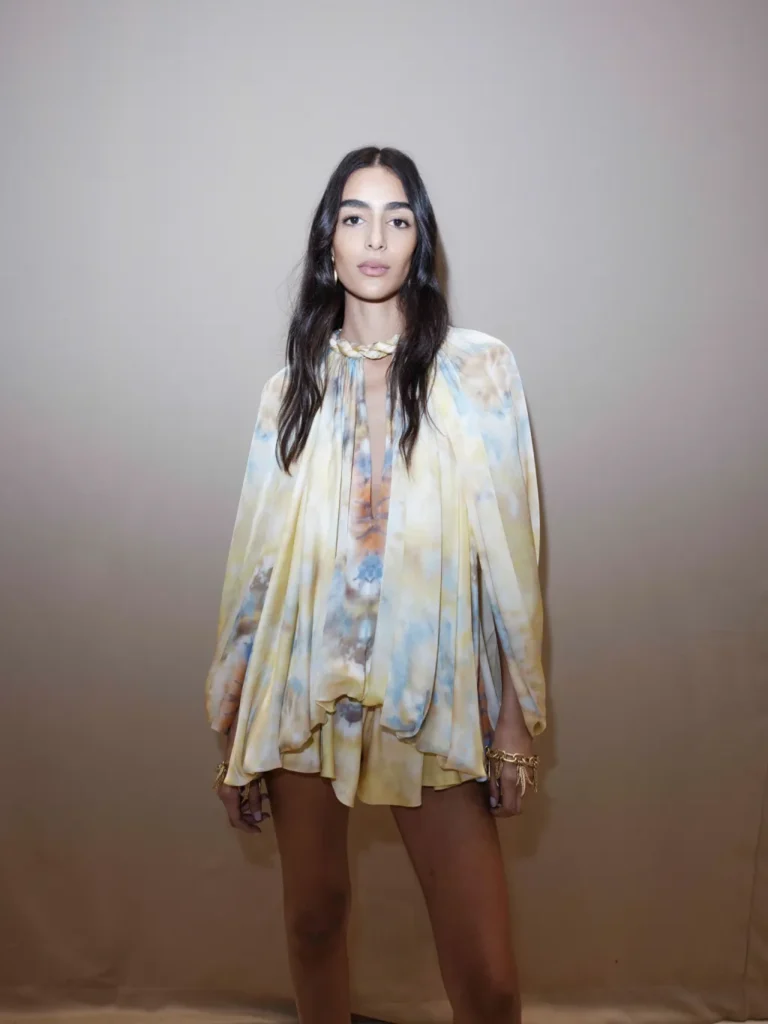
That hedonistic energy flowed through the collection’s warped floral prints and rainbow tie-dyes, drifting across parachute dresses and gauzy layered tops that seemed to move with the air itself. “I always love movement,” said the designer, “but this time, I wanted the prints to move too.”
Captured by Emily Malan
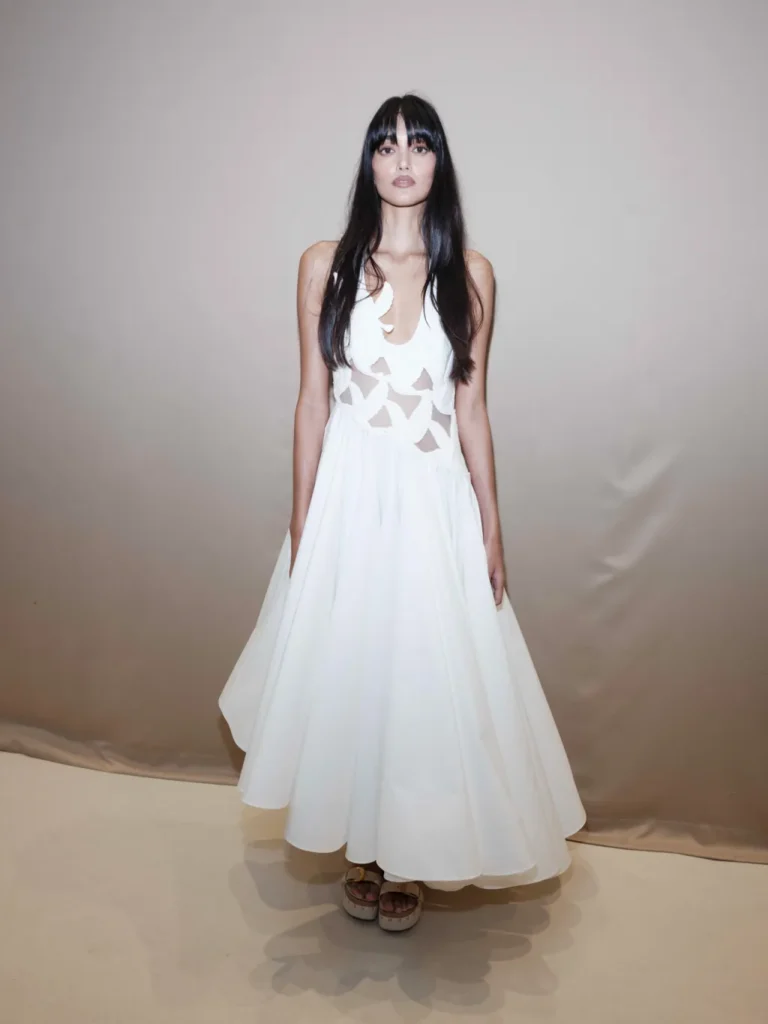
Full crinoline skirts were structured with bands of tulle that rippled as models walked, while soft, pastel tie-dyes melted into one another like watercolor on silk. Amid the dreamscape, Zimmermann’s signature craft shone through: a crisp white eyelet shirt embroidered with a hand-stitched bird motif, earthy swimsuits styled as tops, and a supple leather coat that hinted at effortless cool.
Captured by Emily Malan
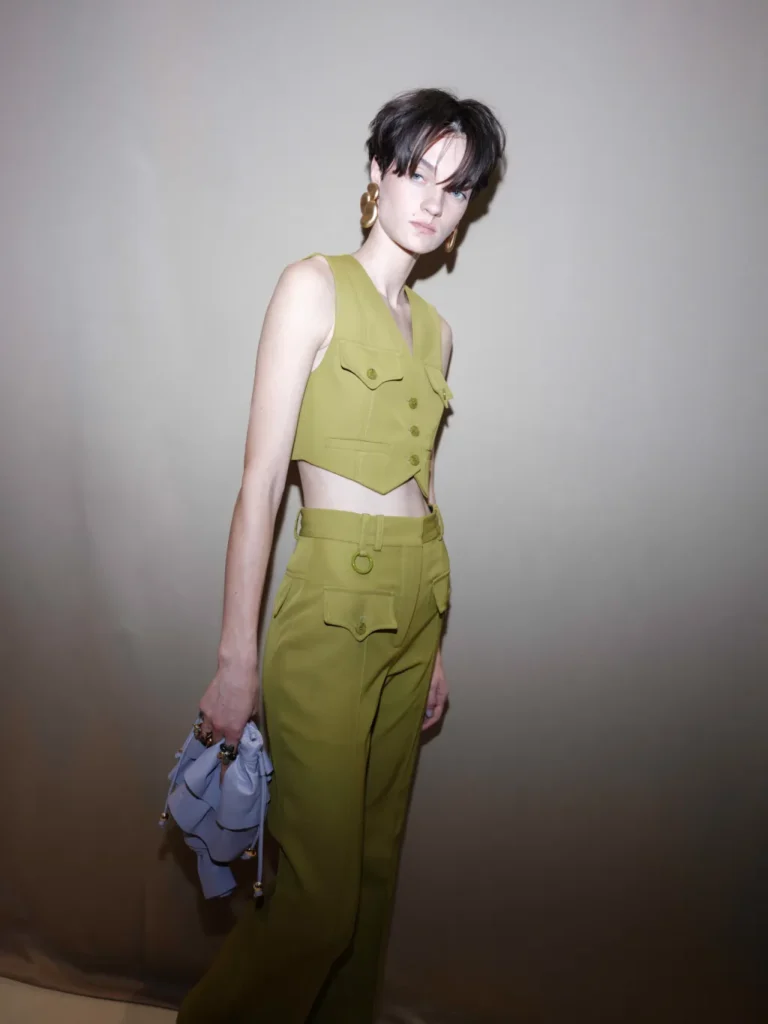
Menswear influences peeked in through tonal dressing — a nod to vintage Lavender Bay photographs — with utility jackets, sculptural flared pants, and color-blocked jumpsuits accented with retro metal rings.
Zimmermann has long transcended her origins as a purveyor of romantic resortwear. This season proved she’s now the architect of a lifestyle — one of light, laughter, and sun-drenched elegance. In Lavender Bay, art was life; on Zimmermann’s runway, it’s fashion at its most blissful.
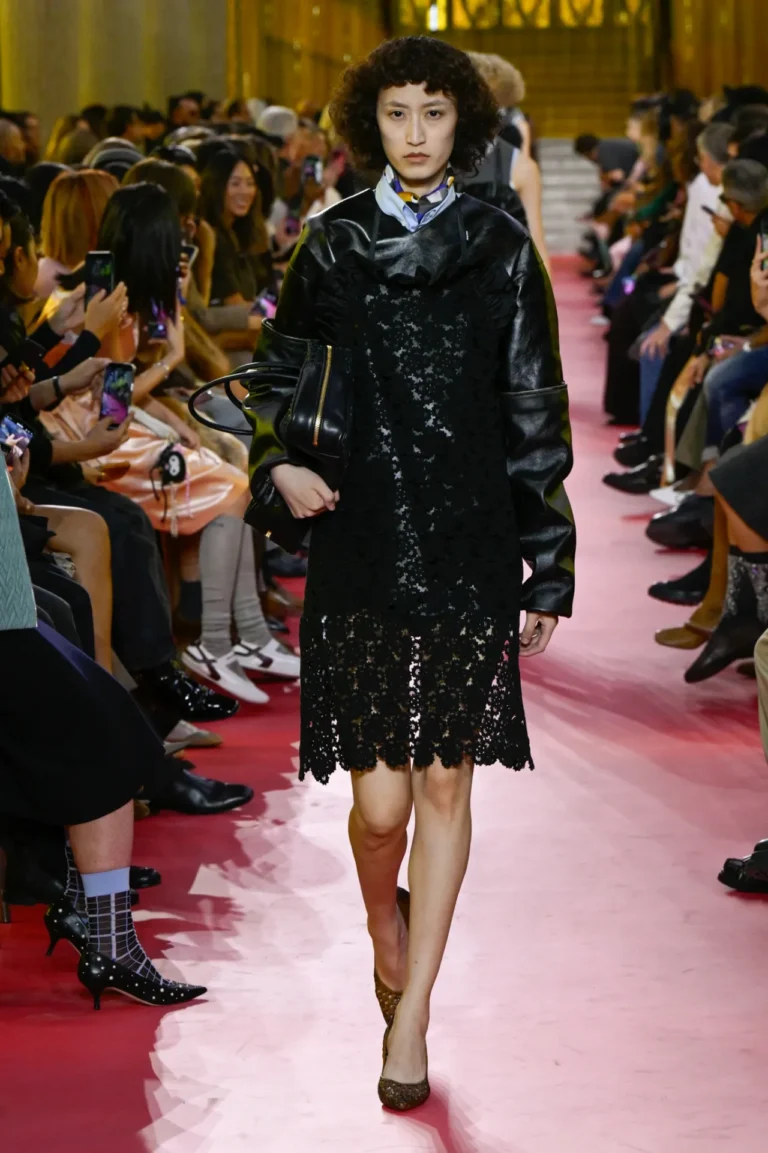
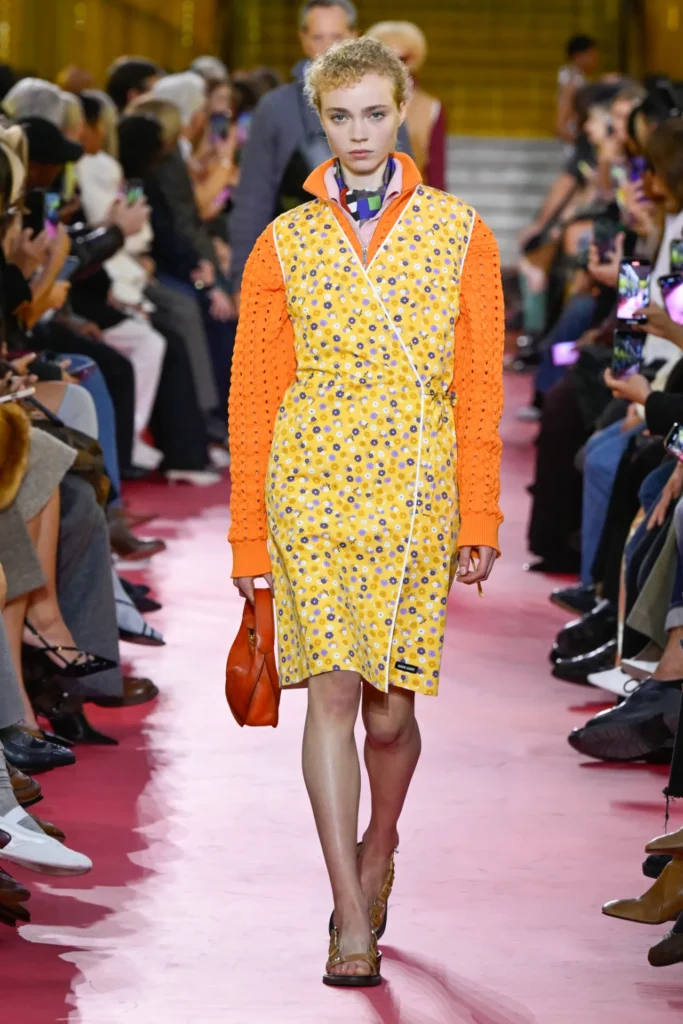
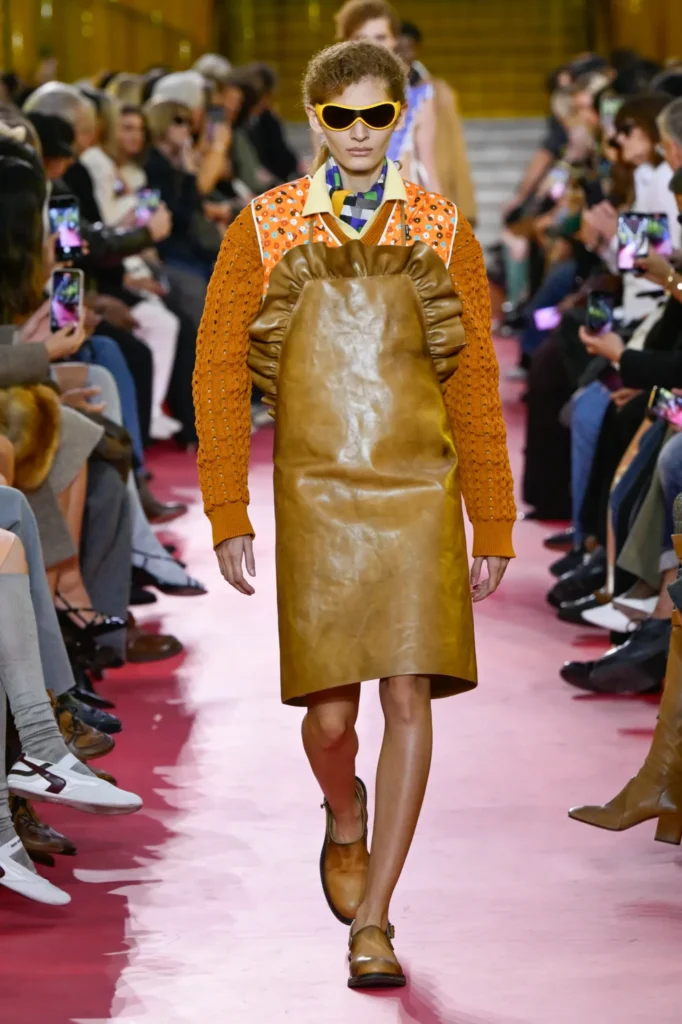
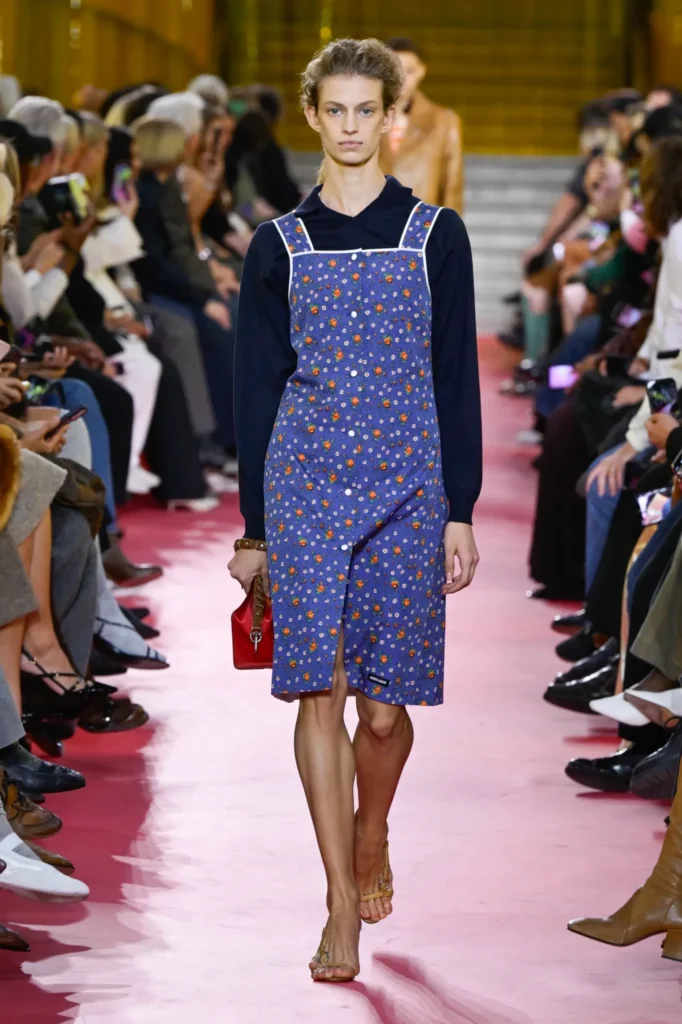
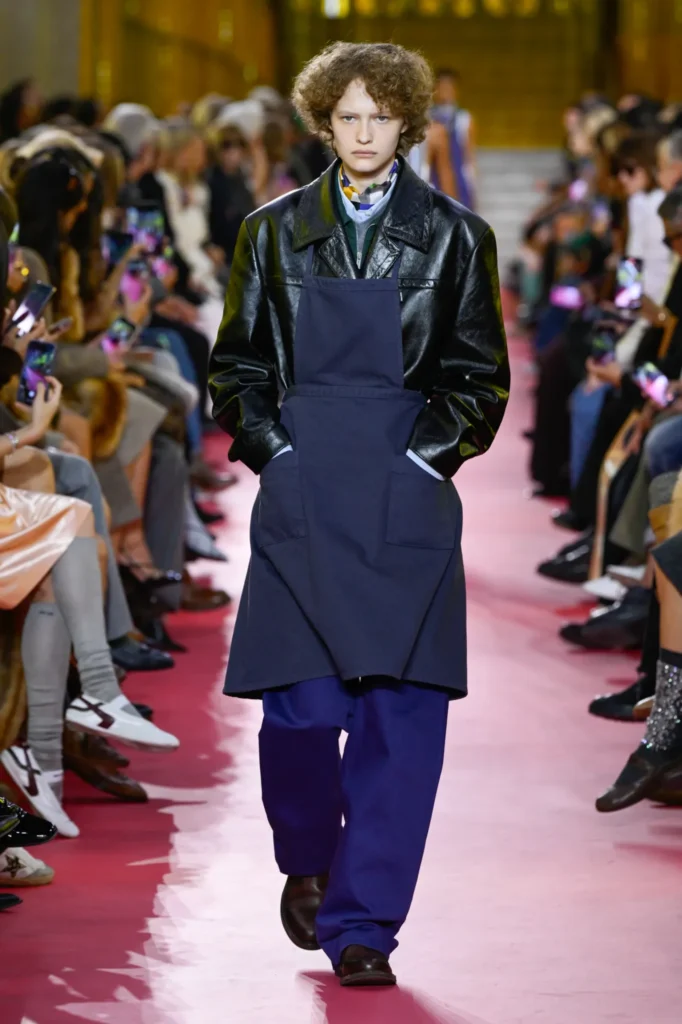
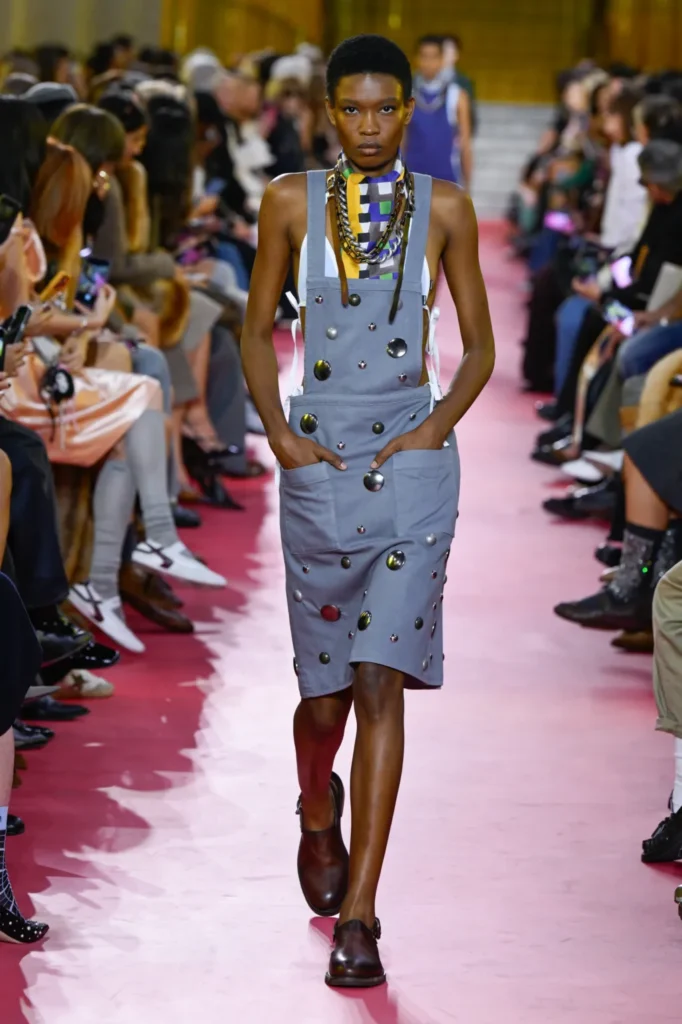
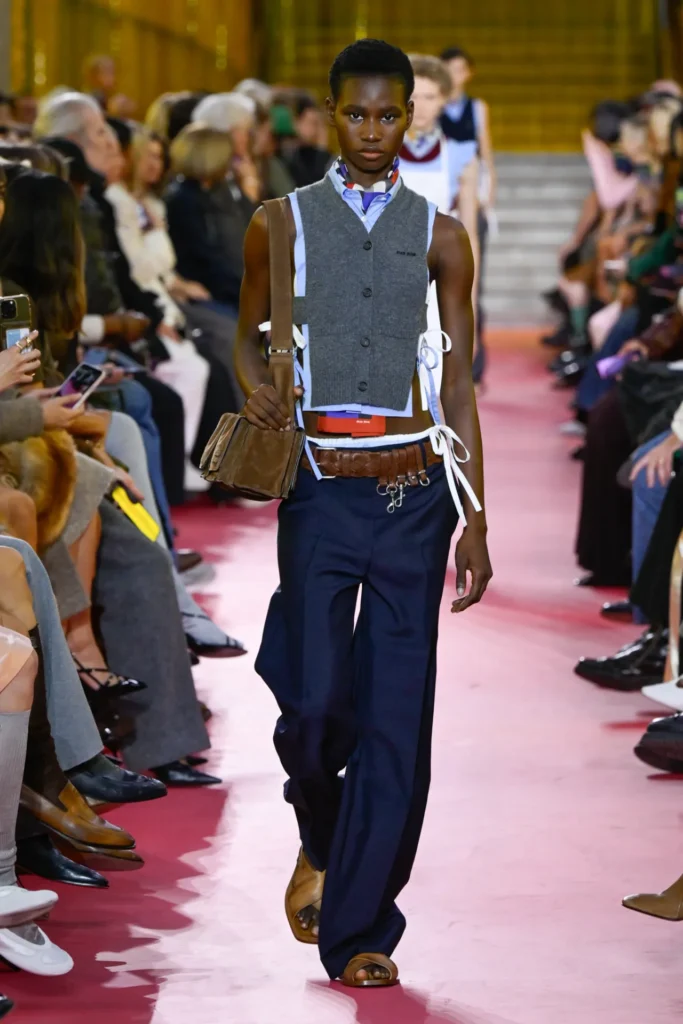
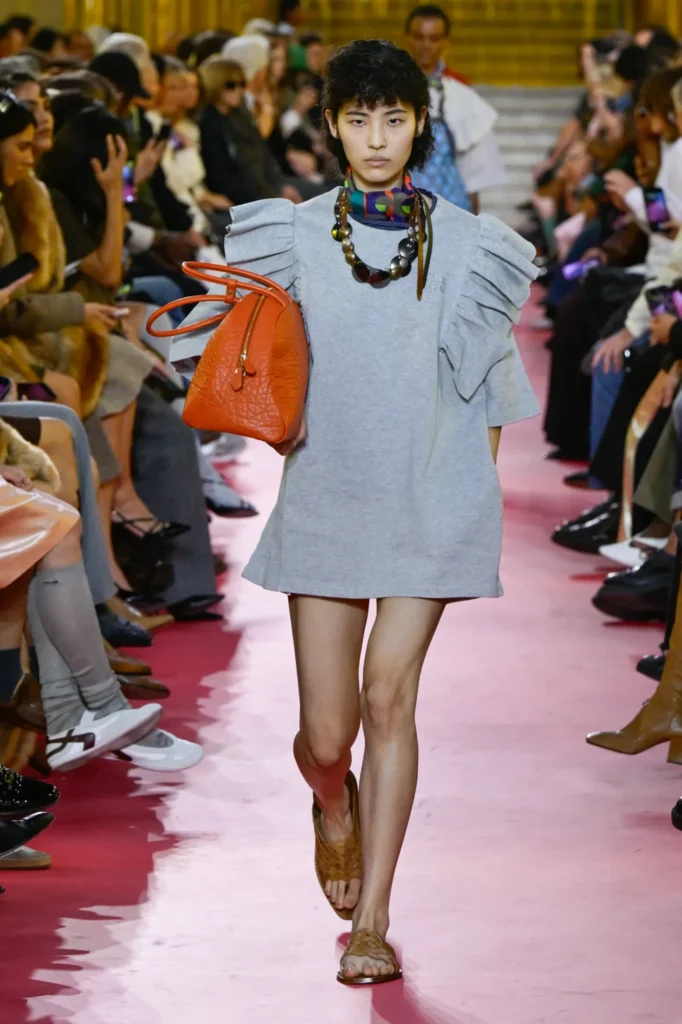
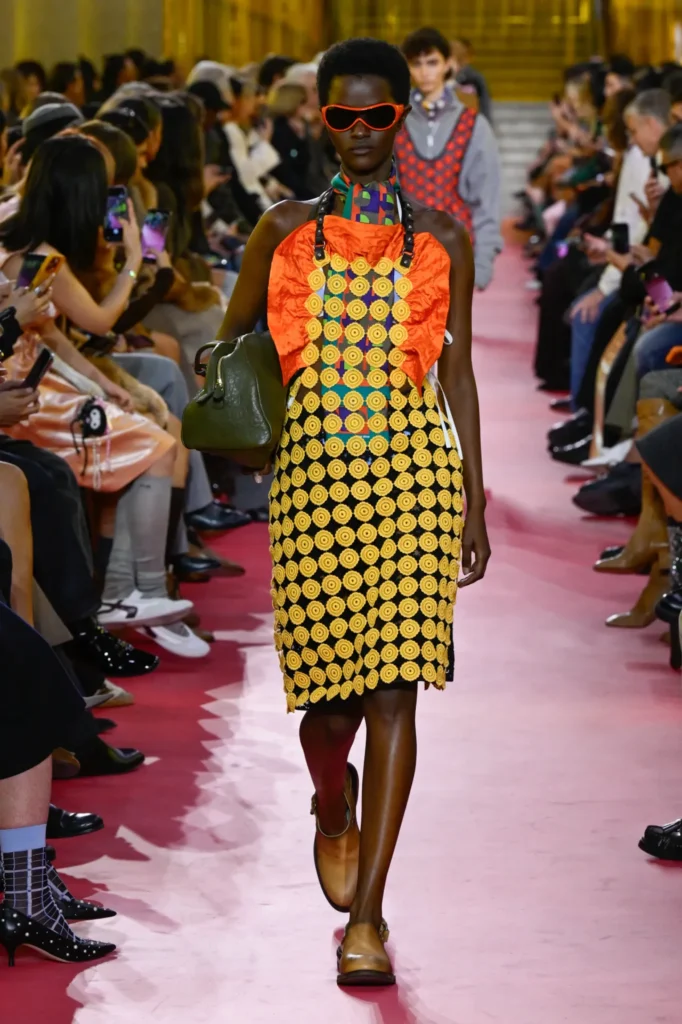
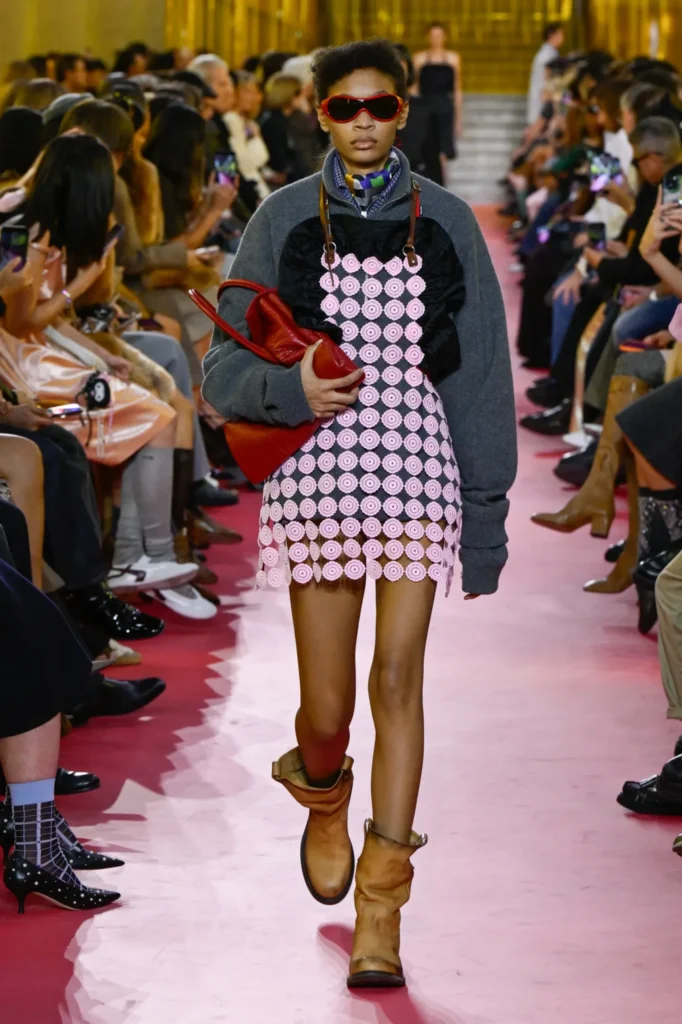
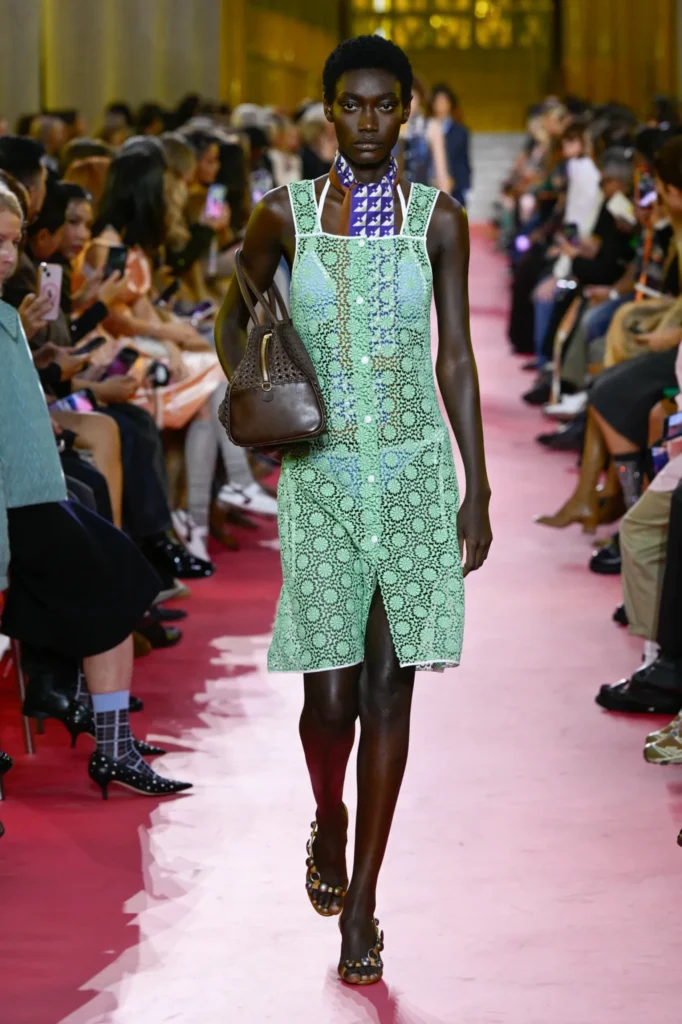
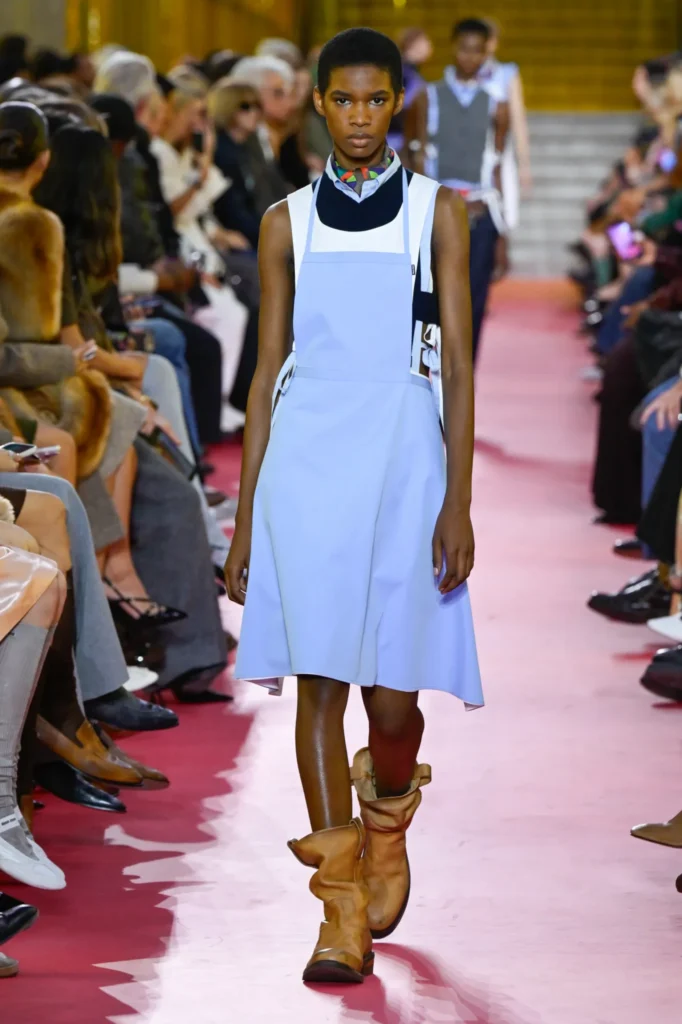
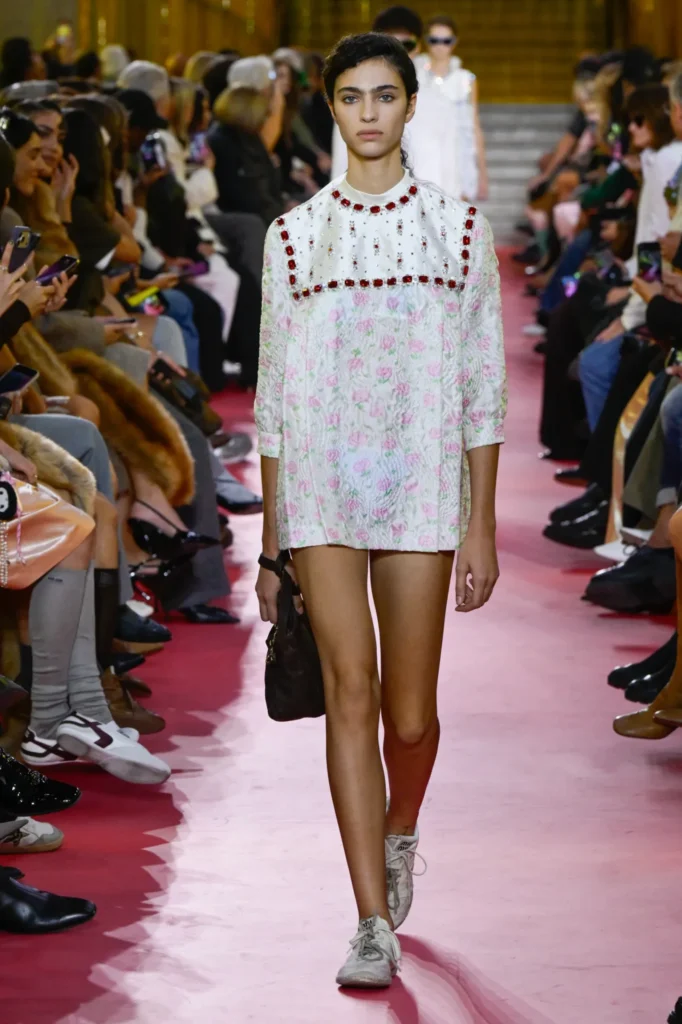
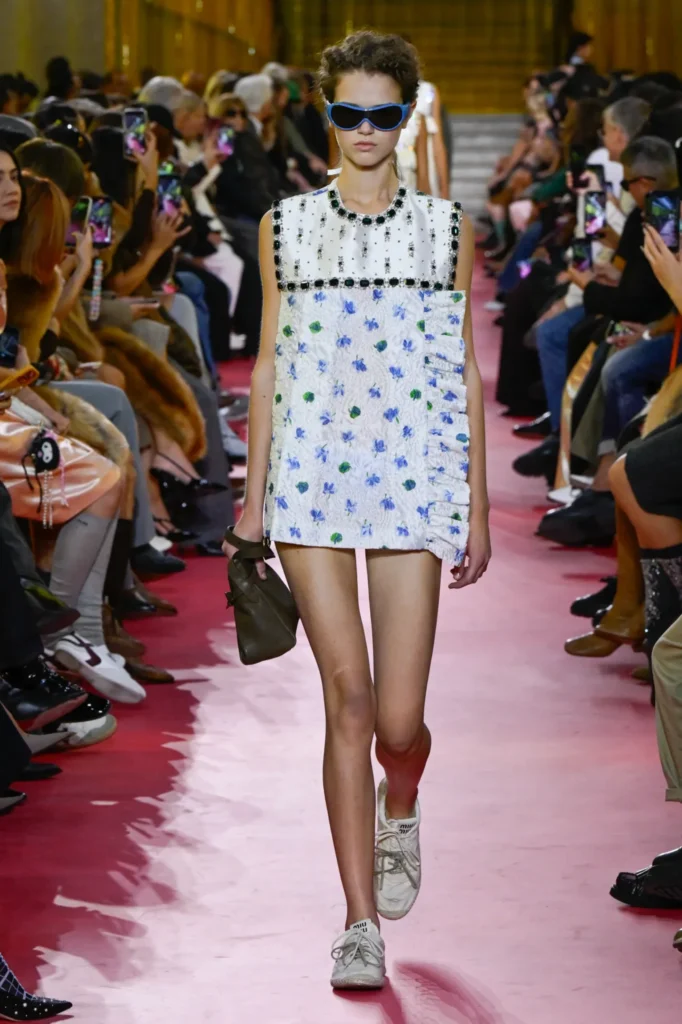
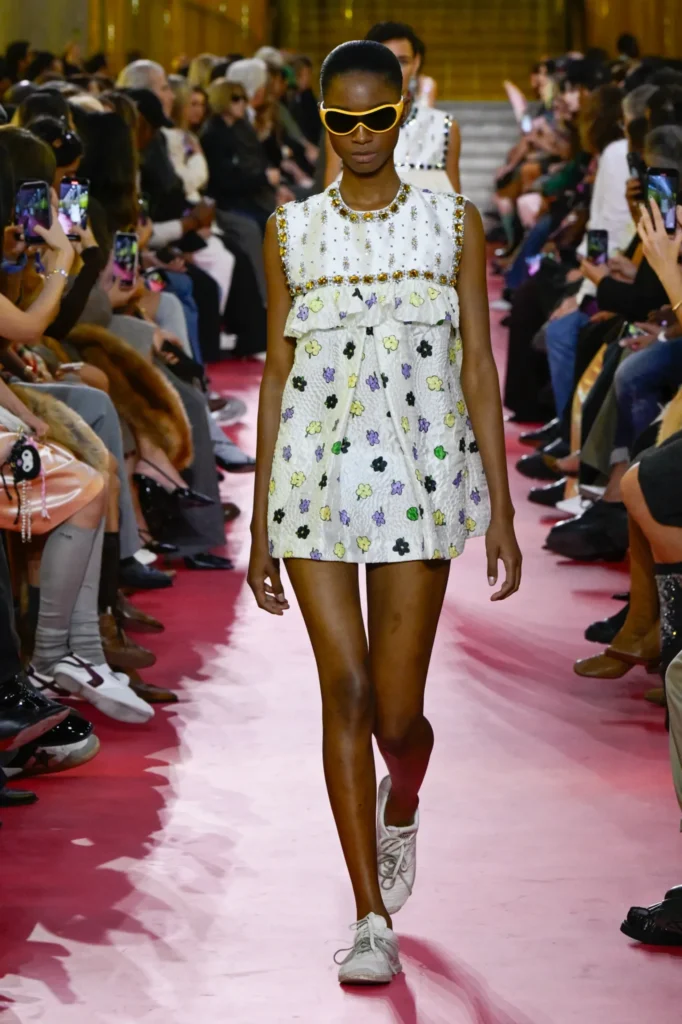
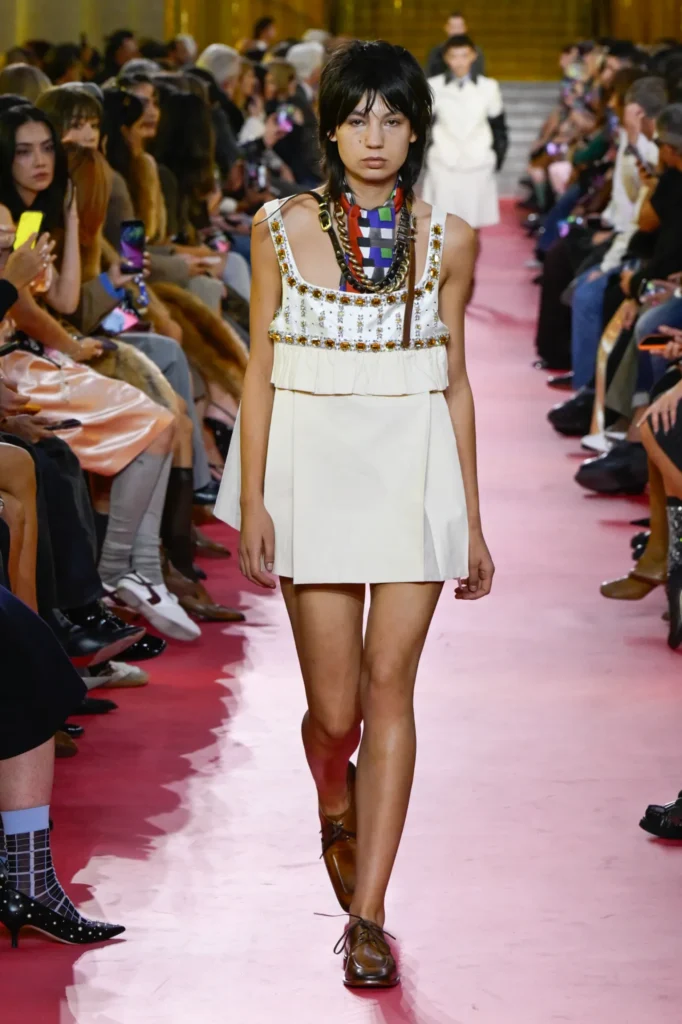
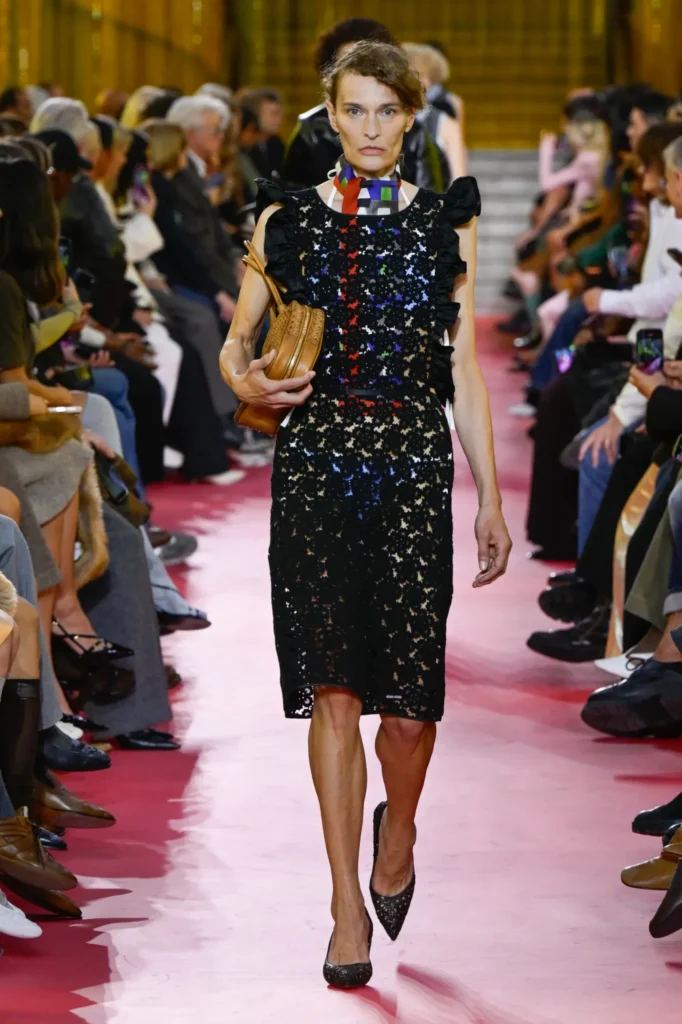
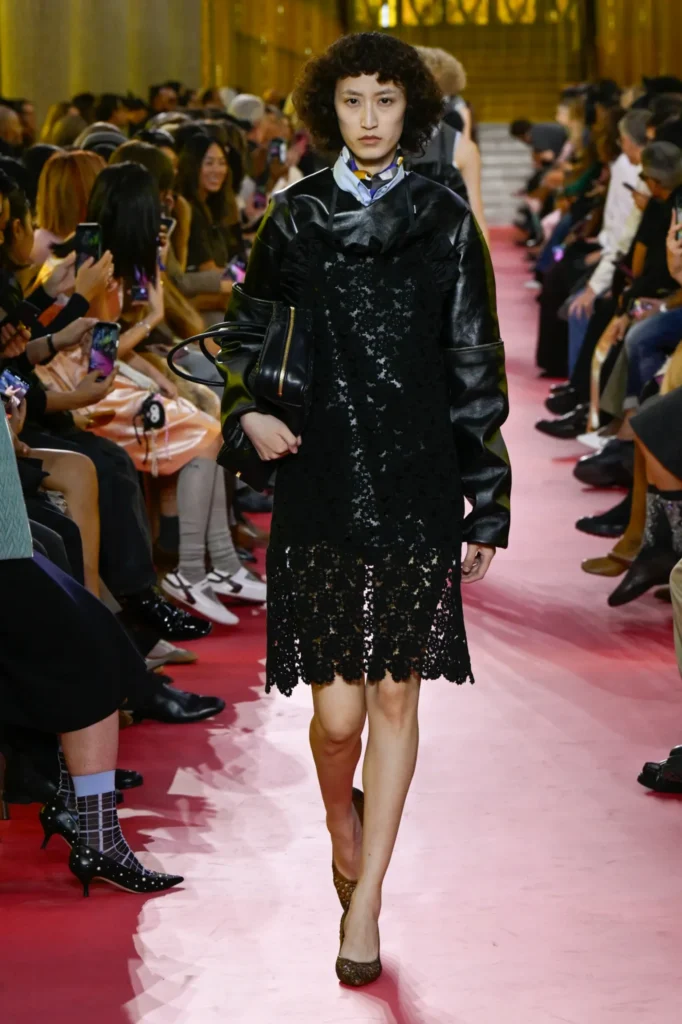
For Spring 2026, the reigning queen of irony turned her gaze toward labor — not metaphorically, but literally. On a runway lined with factory lights and stainless steel, she sent out cleaners, waitresses, welders, and factory hands. The collection’s utilitarian spirit was underscored by sturdy denim coats, industrial drill trousers, and aprons in retro floral prints that gave a wink to mid-century domesticity.
Courtesy Of Miu Miu
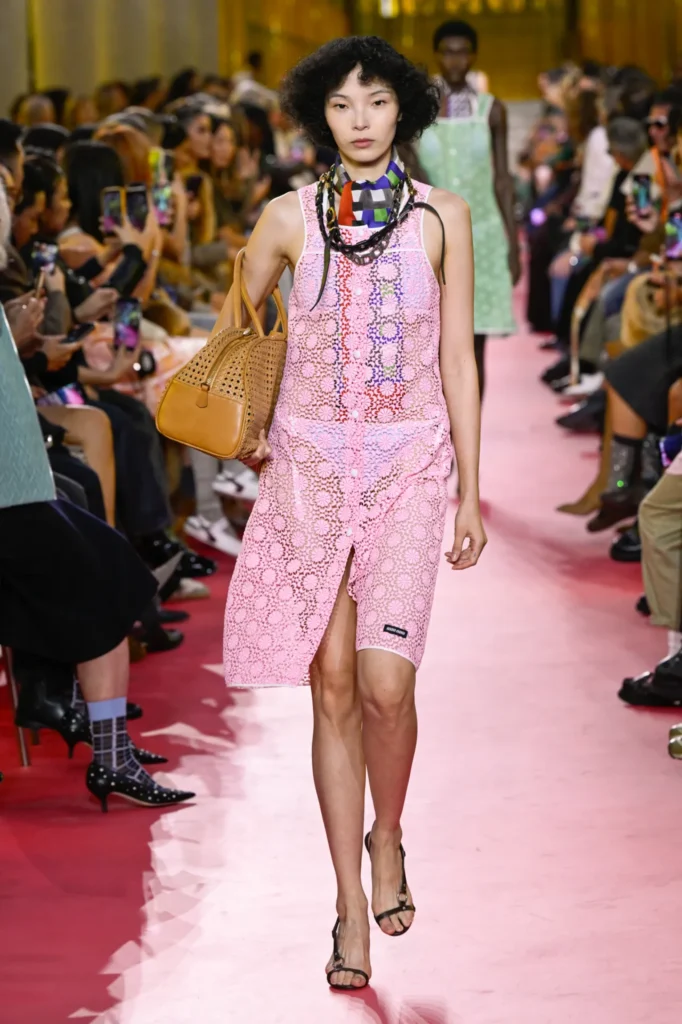
Sandra Hüller, star of Anatomy of a Fall, opened the show looking like she’d just stepped off a chilly assembly line, hands buried in her pockets, expression unreadable. From there, the mood evolved — the aprons became glamorous, the uniforms seductively impractical. Cleaning smocks were trimmed with ruffles and crystals; heavy-duty overalls gave way to delicate lace versions meant for the night shift of a different kind.
Courtesy Of Miu Miu
Milla Jovovich appeared in an apron of black leather with a ruffled bib, a sharp contrast to the navy wool sweaters and dual-knit waitress skirts that preceded it. By the finale, the workers had become icons — their tools replaced by sequins and studs, their labor turned into luxury.
Courtesy Of Miu Miu
The collection’s tongue-in-cheek social commentary was unmistakable. As Miu Miu continues to dominate the global market — sales up 49% in the first half of the year, still holding the No. 1 spot on Lyst — Prada seemed to remind us that fashion’s hardest work is in reinvention itself.