Home Blog Page 20

Moschino Spring 2026 Collection

Moschino Spring 2026 Collection

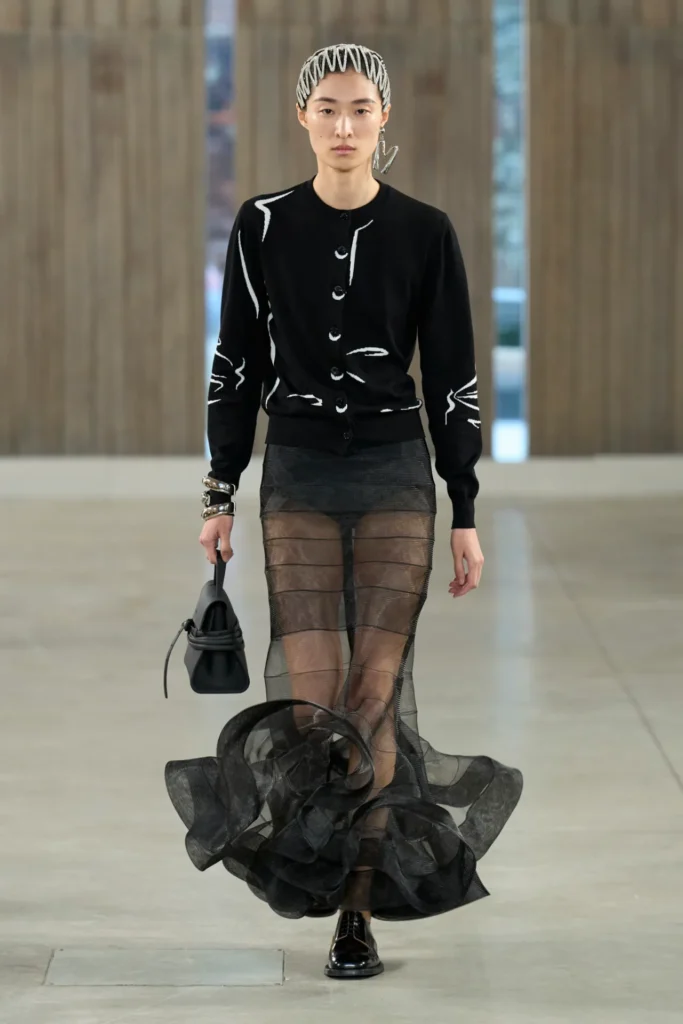
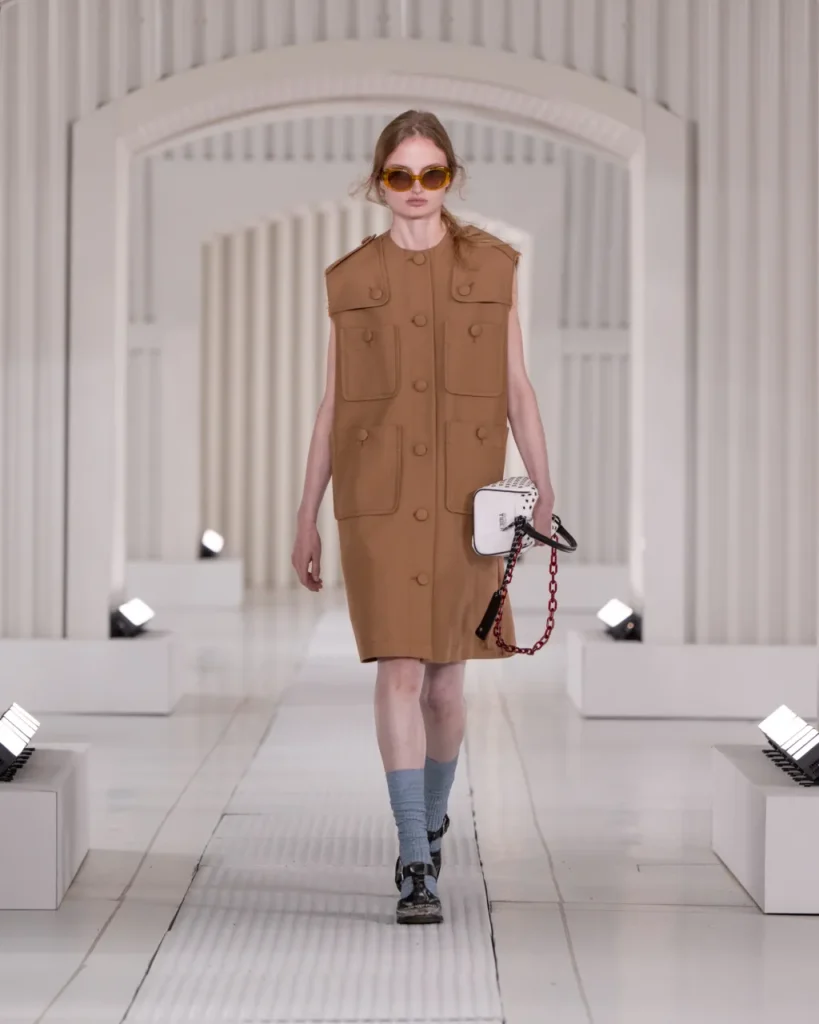
At the heart of Moschino’s Spring 2026 show, Adrian Appiolaza posed a provocative question: what if the true value of clothing came not from its price tag but from the power of ideas? Drawing inspiration from the Italian Arte Povera movement of the late ’60s, he set out to elevate the ordinary into the extraordinary, using irony as his most potent design tool.
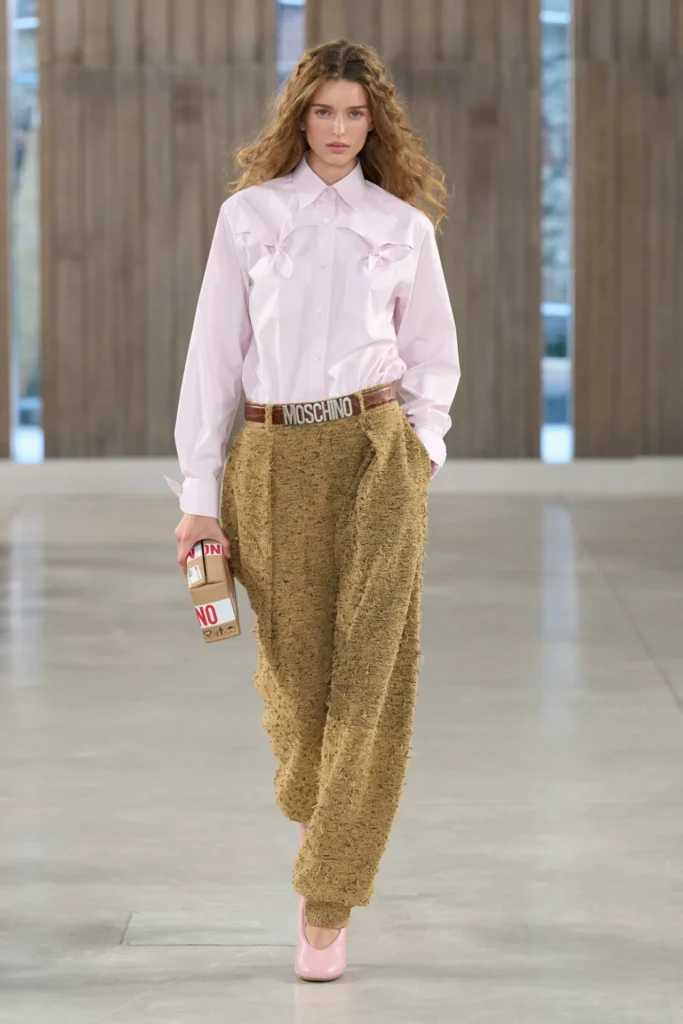
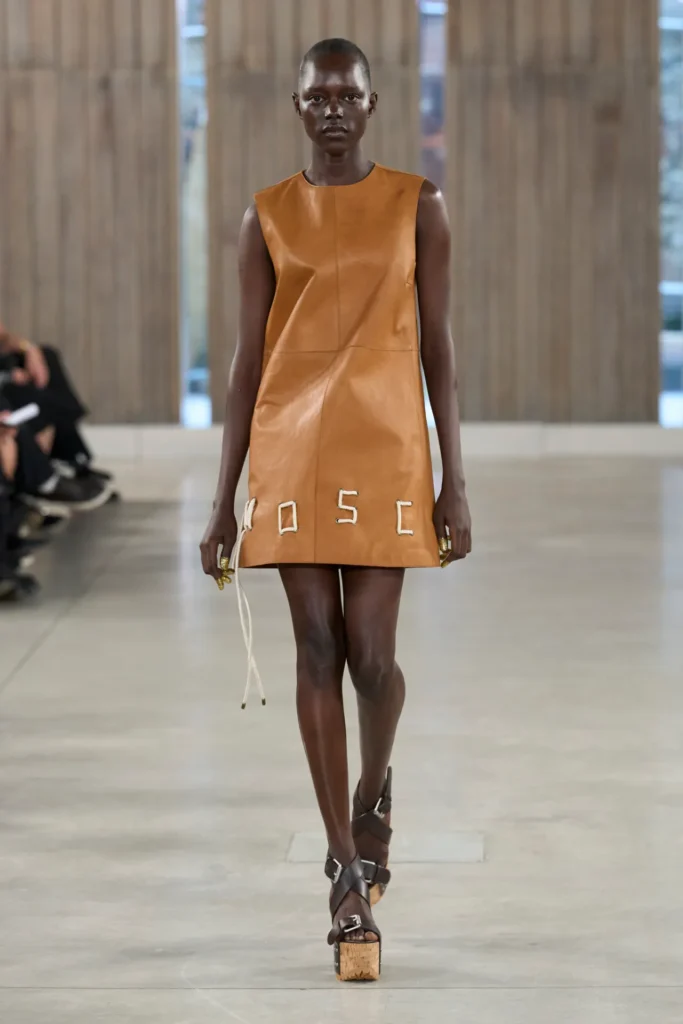
Unlike the razor-sharp precision of last season, Appiolaza leaned into imperfection and spontaneity. Dresses and skirts built from fabric scraps, a trench layered with patchwork, and a strapless compressed dress reminiscent of Michelangelo Pistoletto’s Venus of the Rags embodied his ethos of “making something out of nothing.” Craft, texture, and wit defined the new Moschino silhouette.
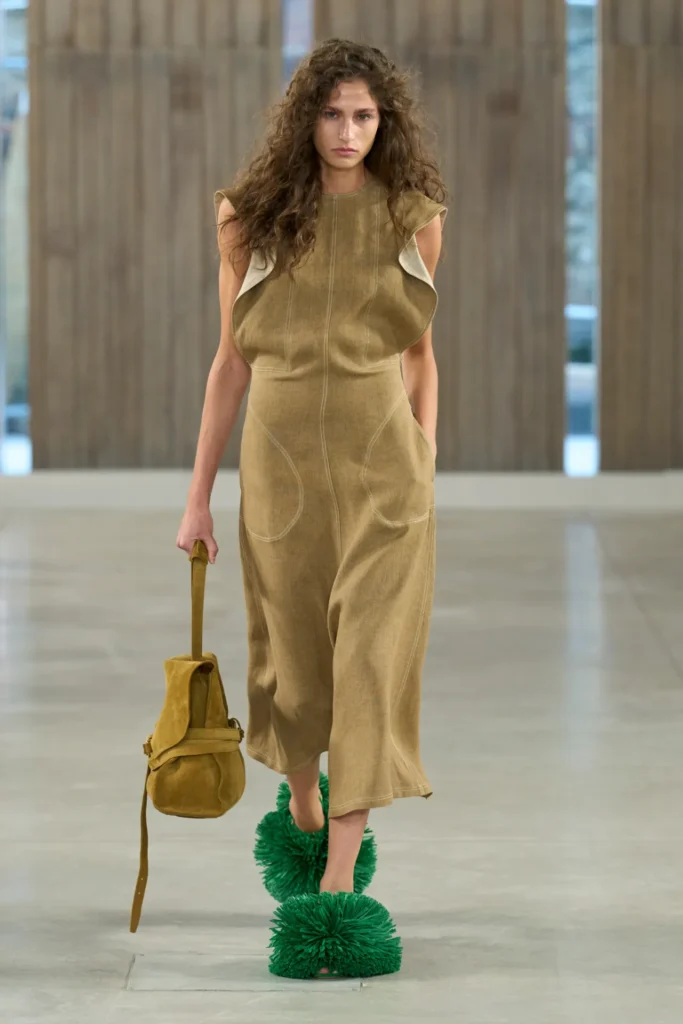
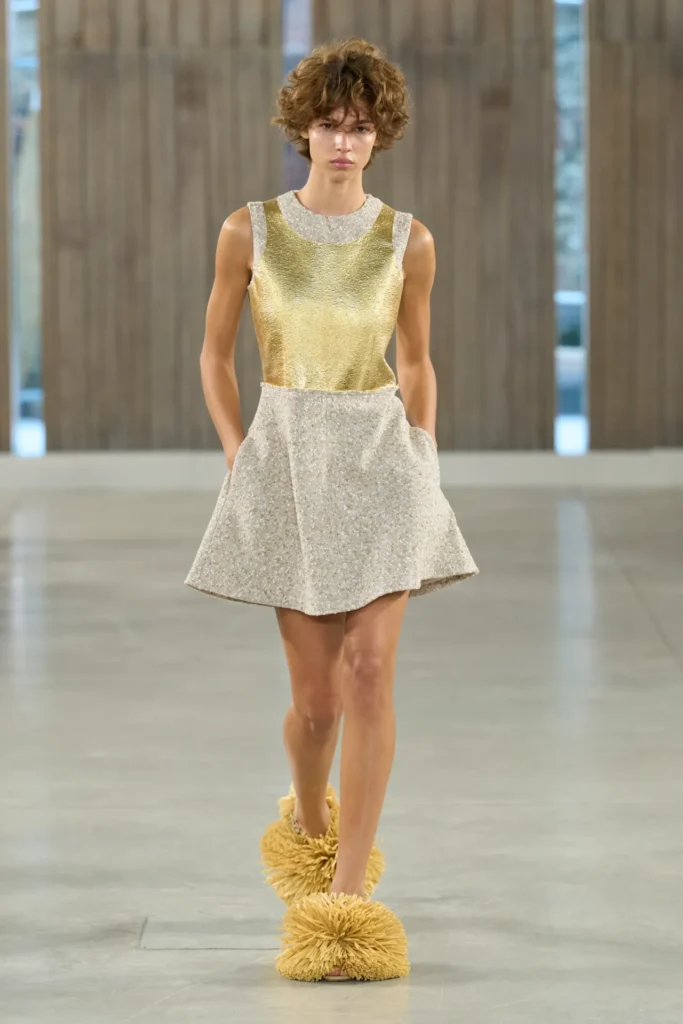
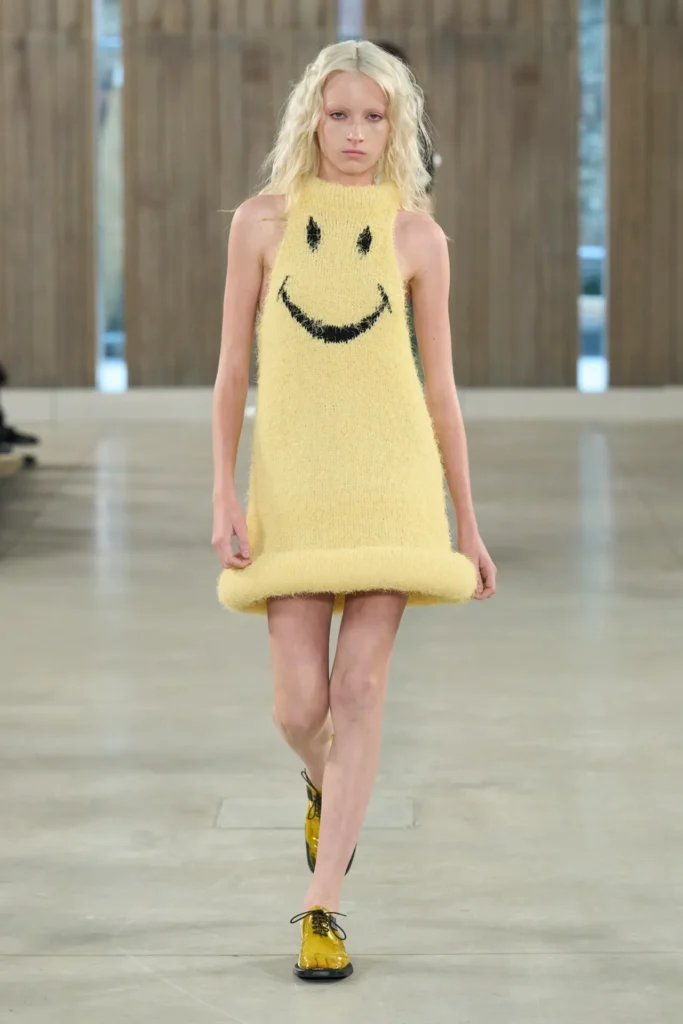
The house’s archives provided strong anchors. Franco Moschino’s iconic “Niente” T-shirt returned as a manifesto, while the brand’s ’90s newspaper print was reimagined with upbeat headlines. Classic trompe-l’œil illusions and the Smiley icon resurfaced on knit dresses and playful cardigans, keeping the brand’s DNA front and center.
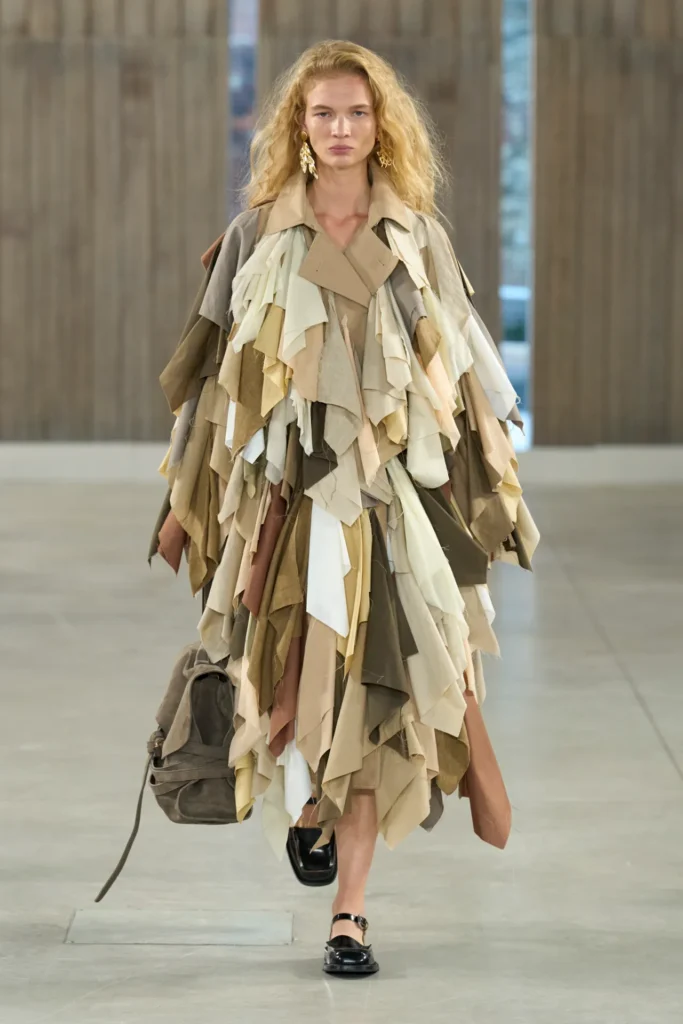
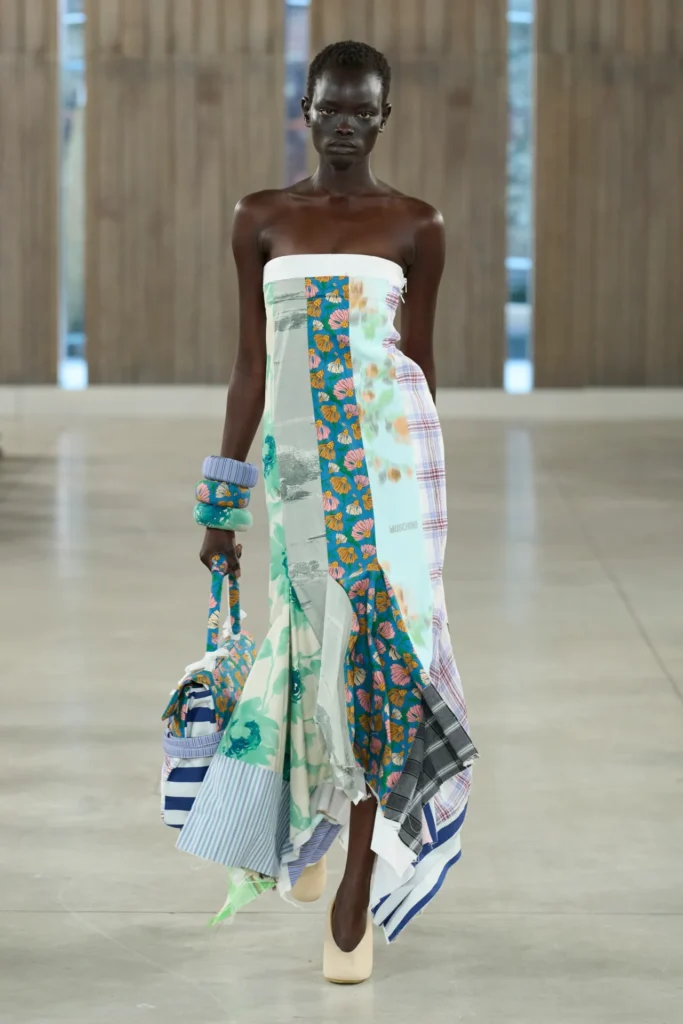
Appiolaza enriched the lineup with delicate, tactile touches: appliqué florals on fluid tailoring, knitted ruffles that added movement, and raffia fringes that emphasized a three-dimensional, handcrafted feel. This interplay between naïve simplicity and intricate craftsmanship gave the collection a uniquely feminine edge.
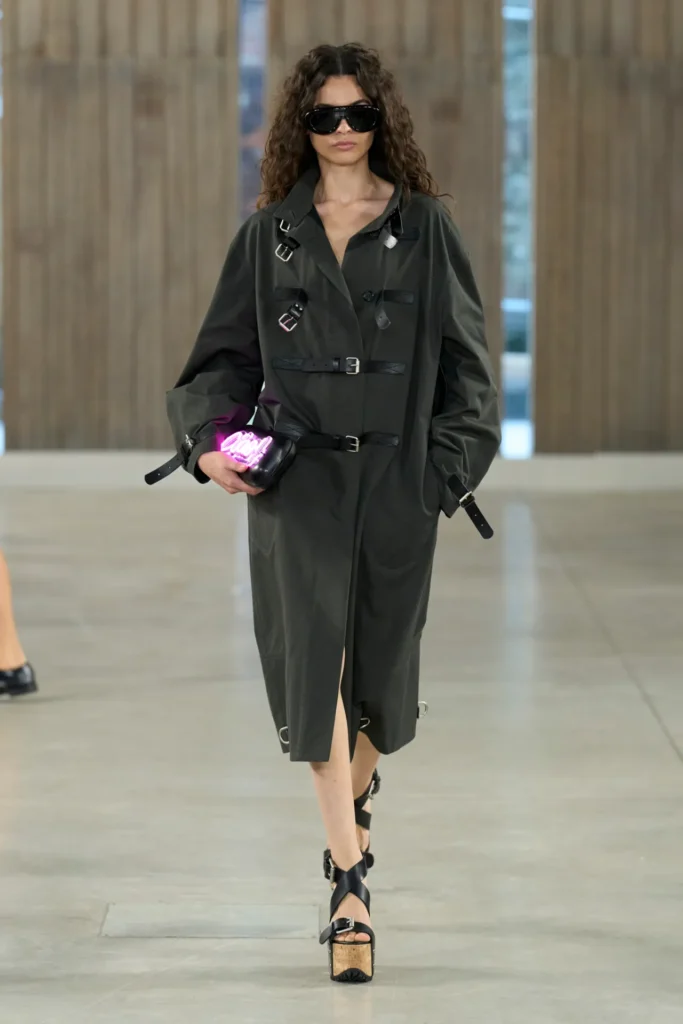
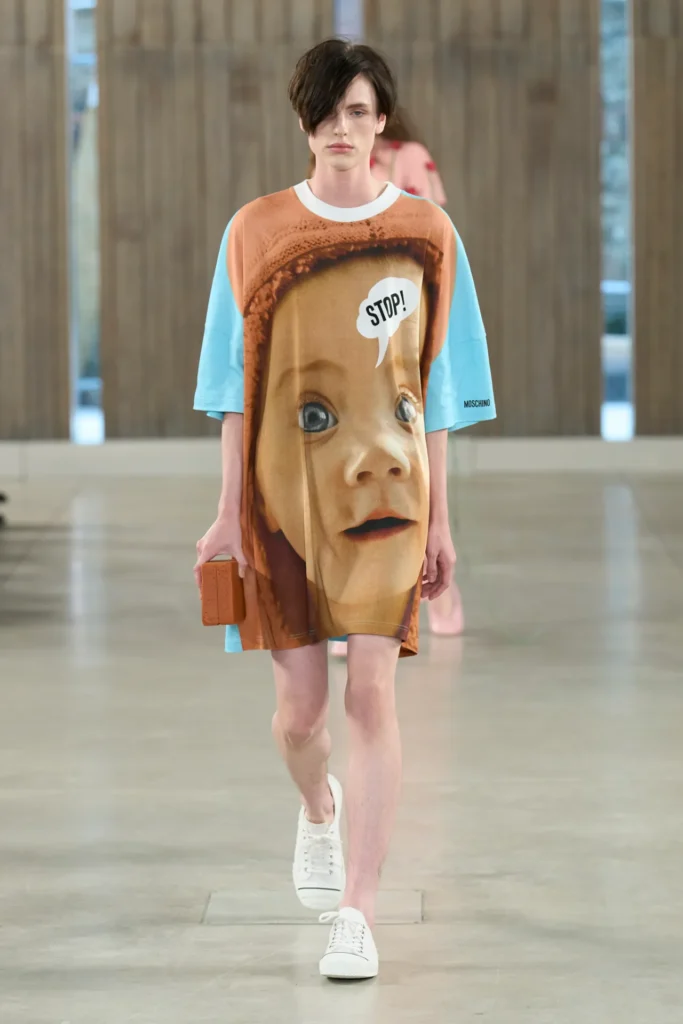
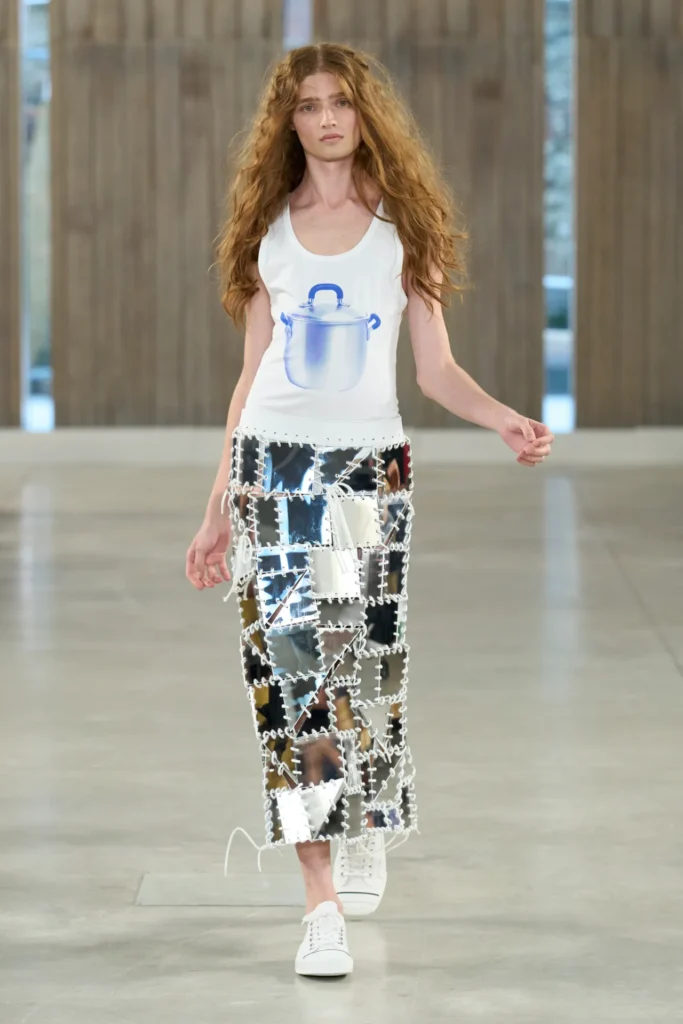
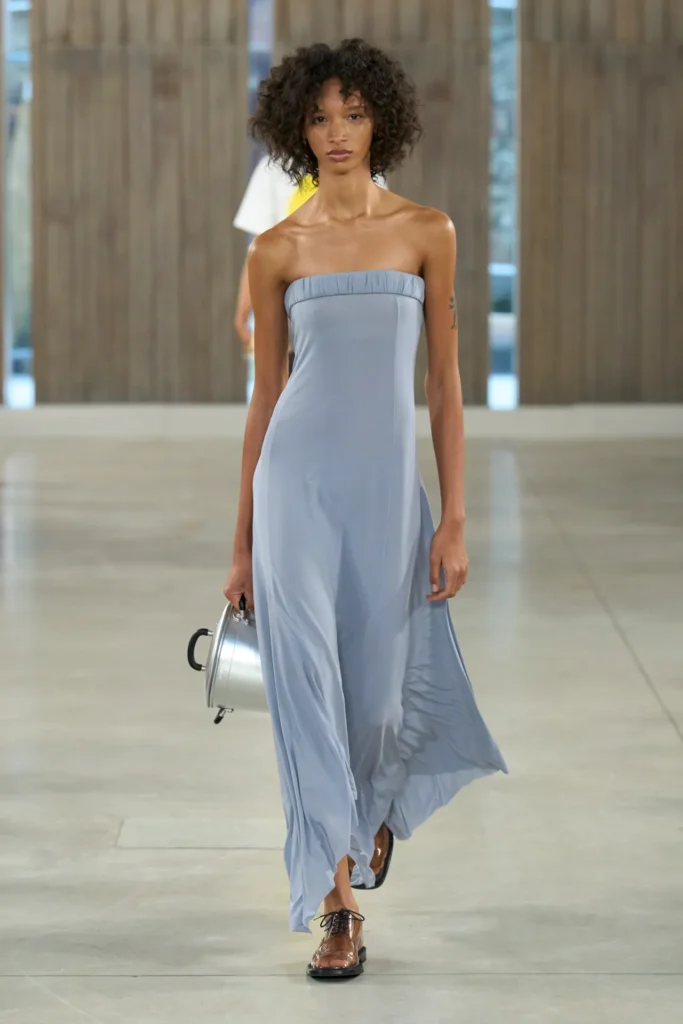
Accessories brought Moschino’s signature irony to life. Purses shaped like cooking pots, toy beach buckets, or stacks of newspapers paraded alongside shoes inspired by toilet brushes and balloon-dog brooches. Even a bag resembling a package of apples added a cheeky dose of everyday surrealism.
Emporio Armani Spring 2026 Collection

Emporio Armani Spring 2026 Collection

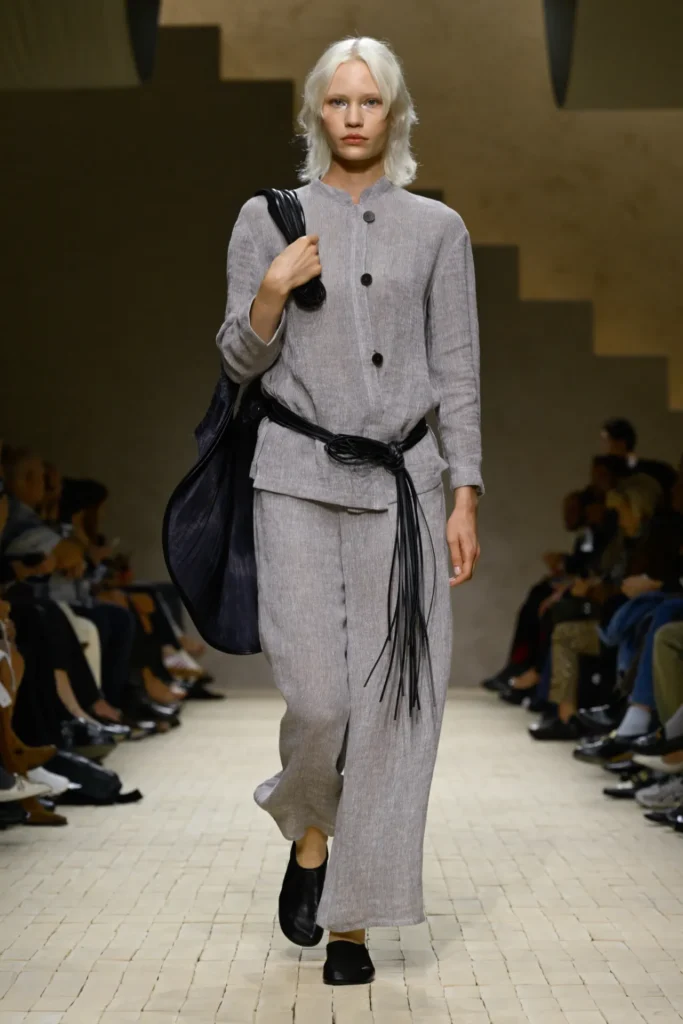
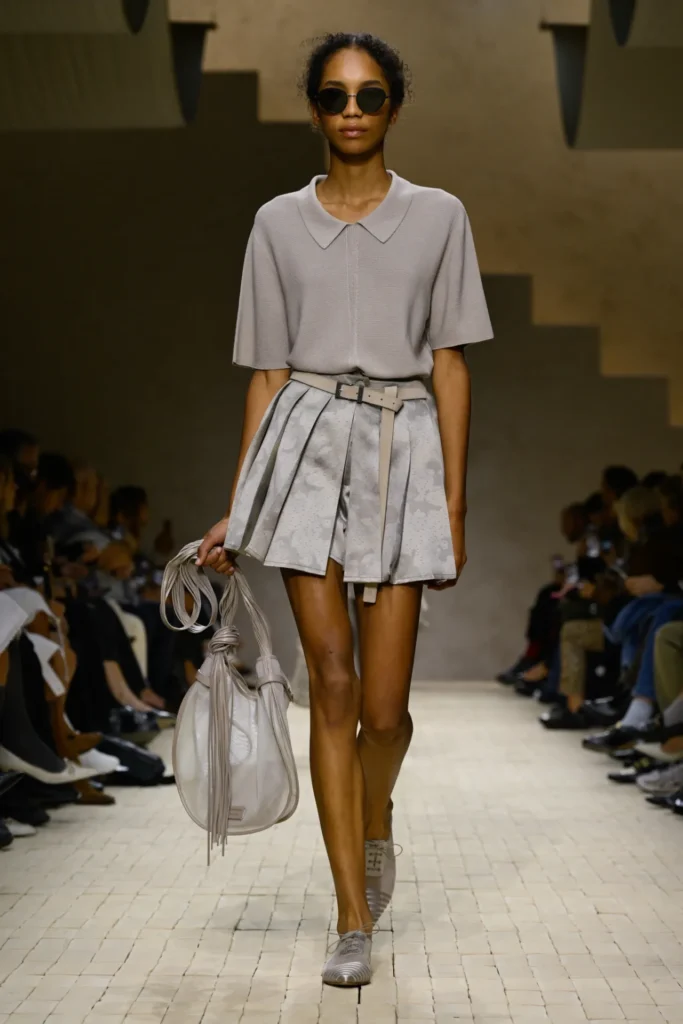
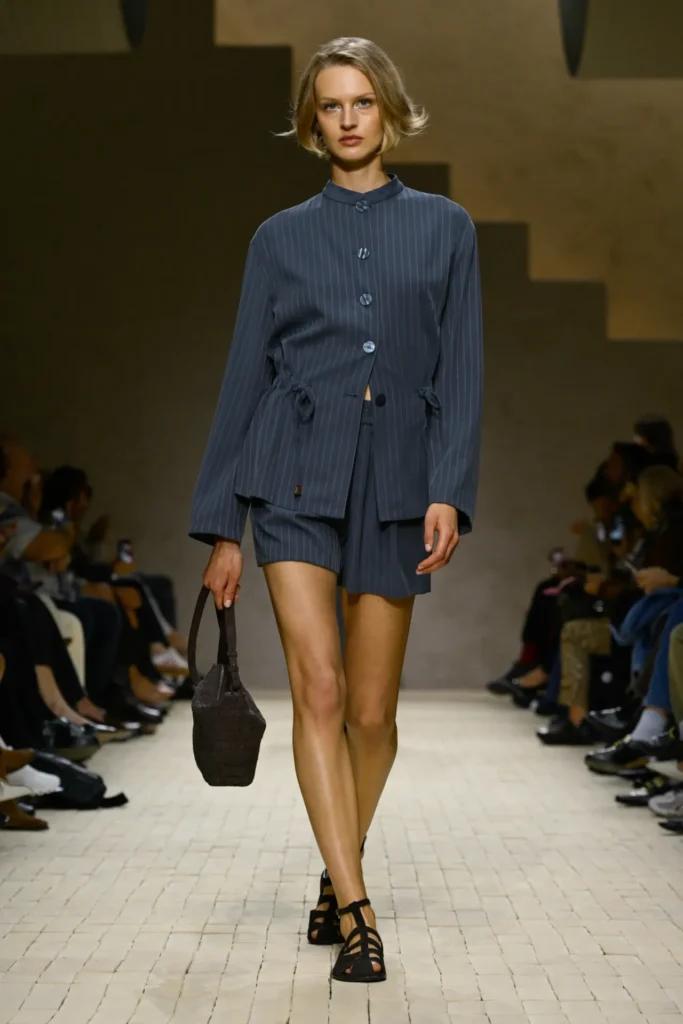
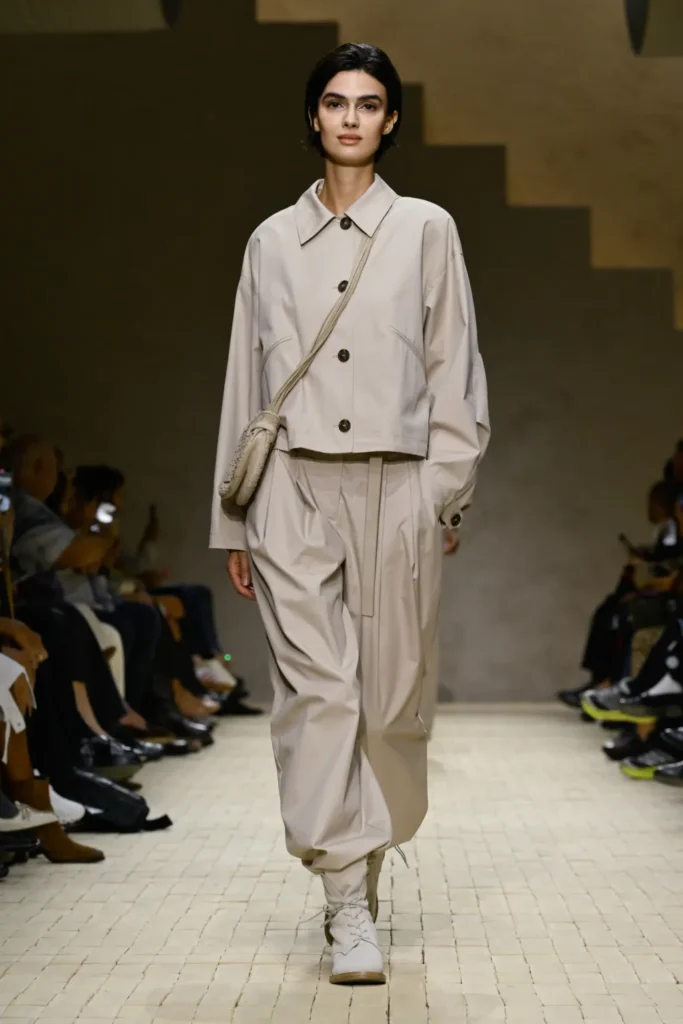
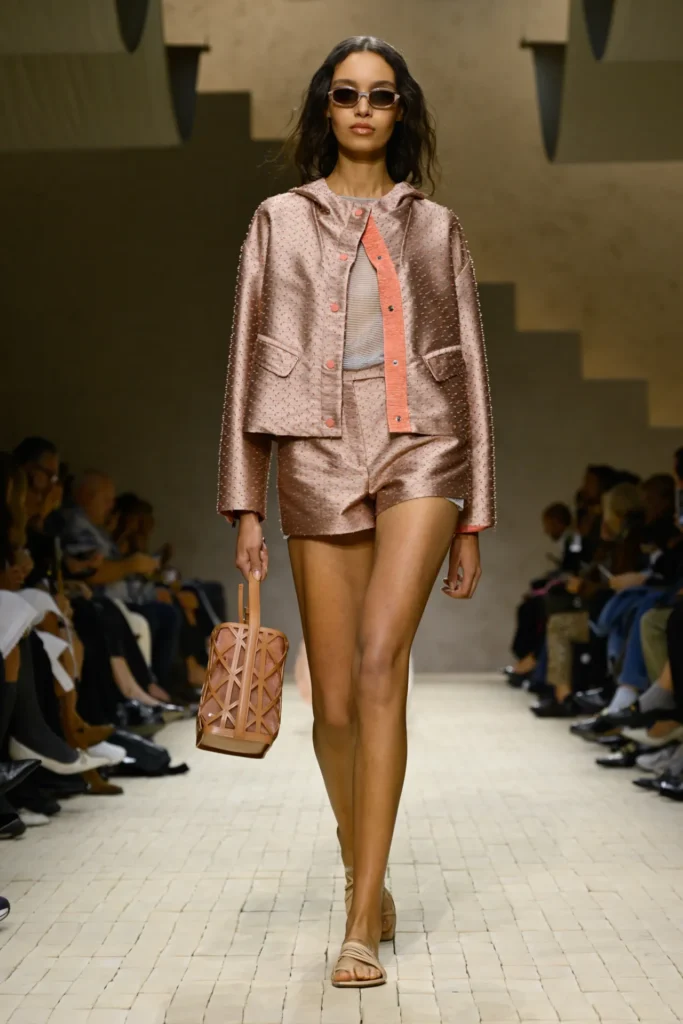
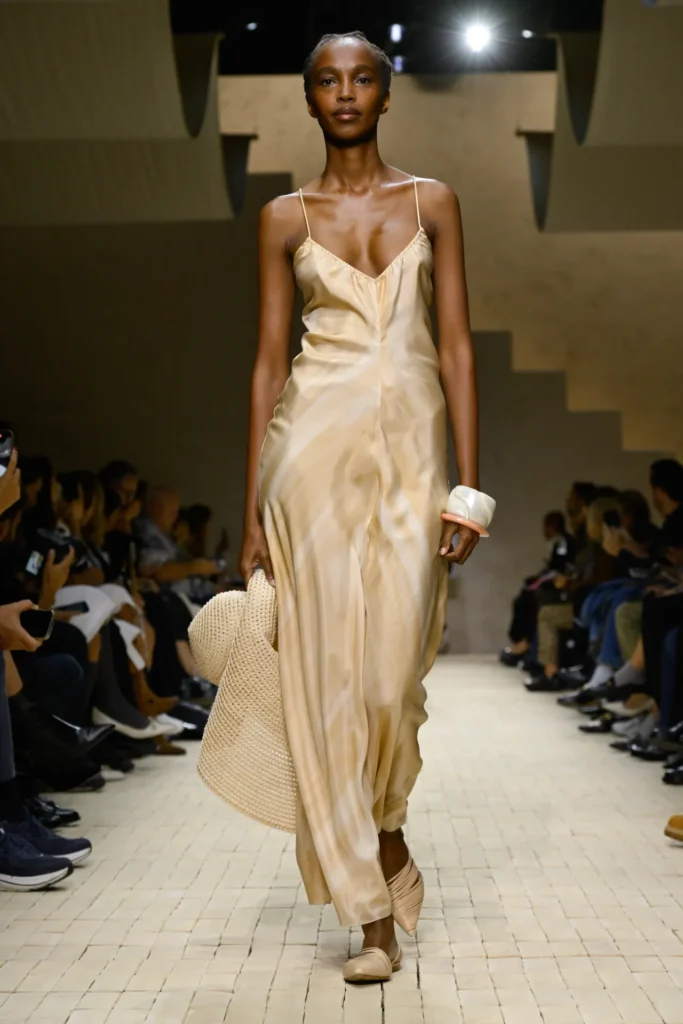
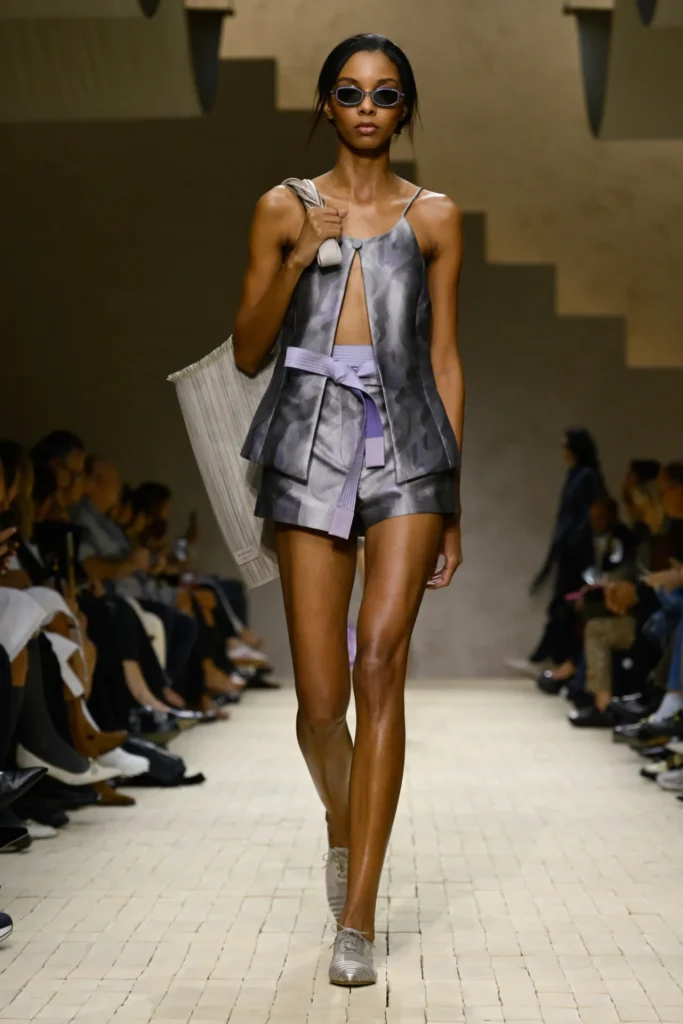
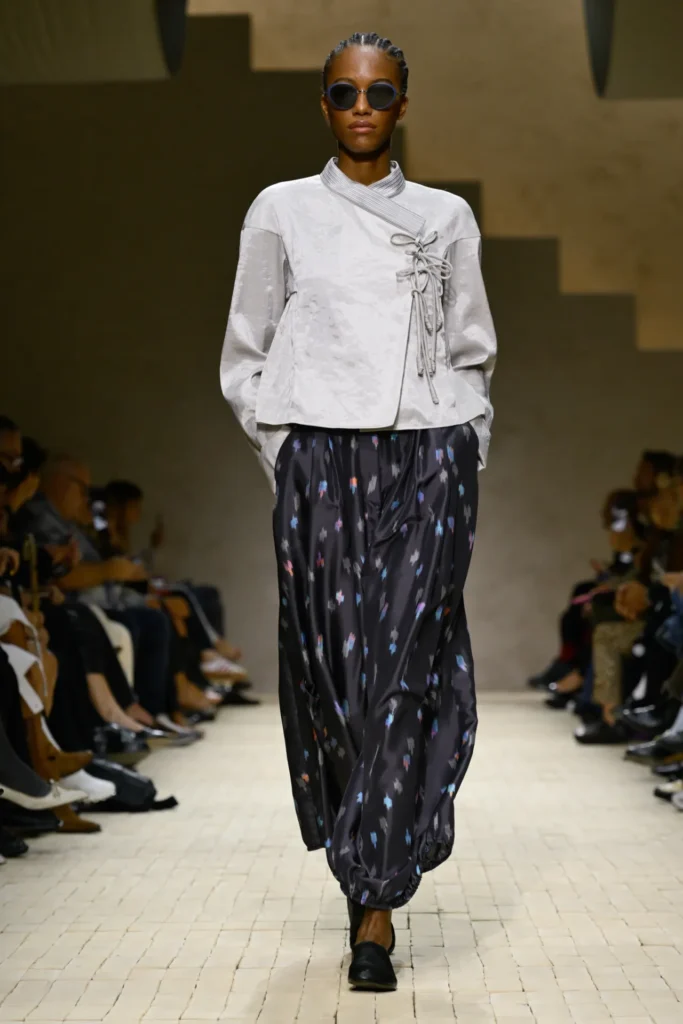
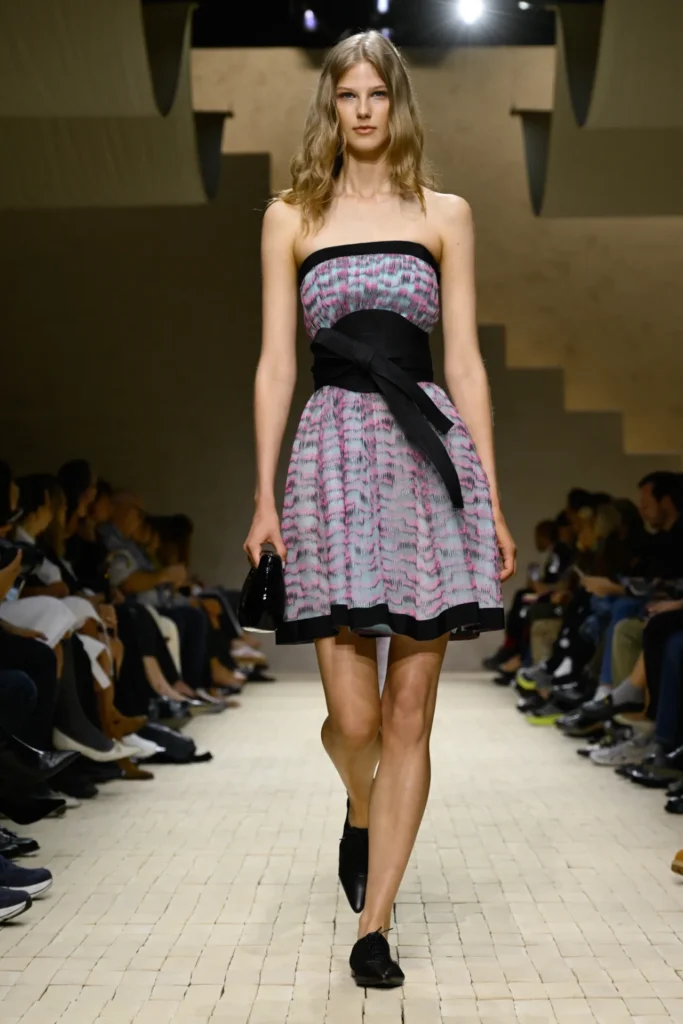
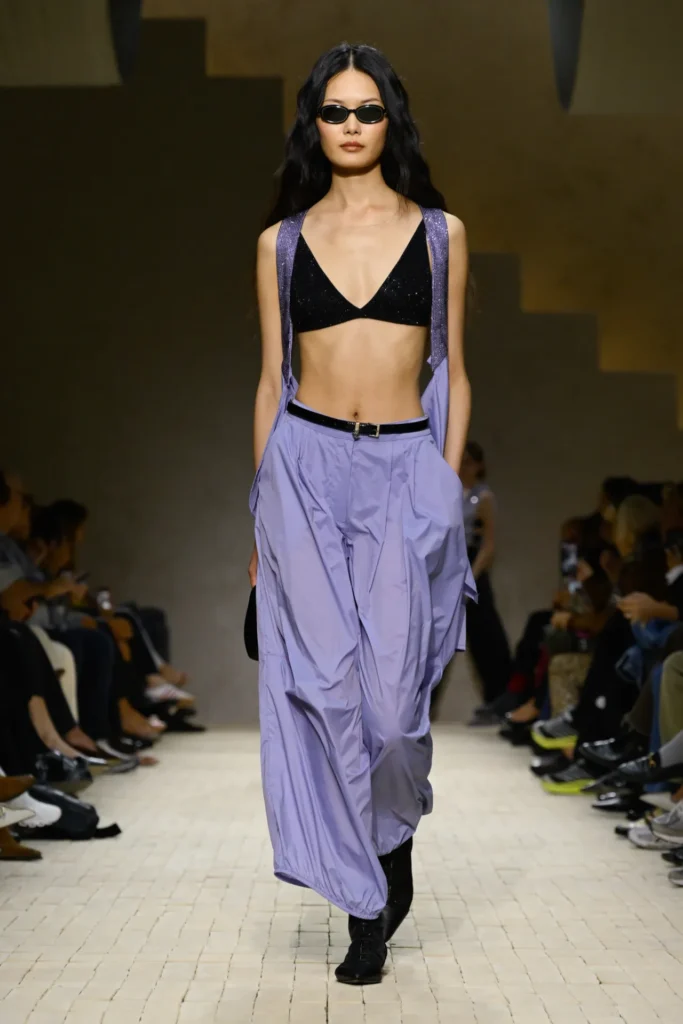
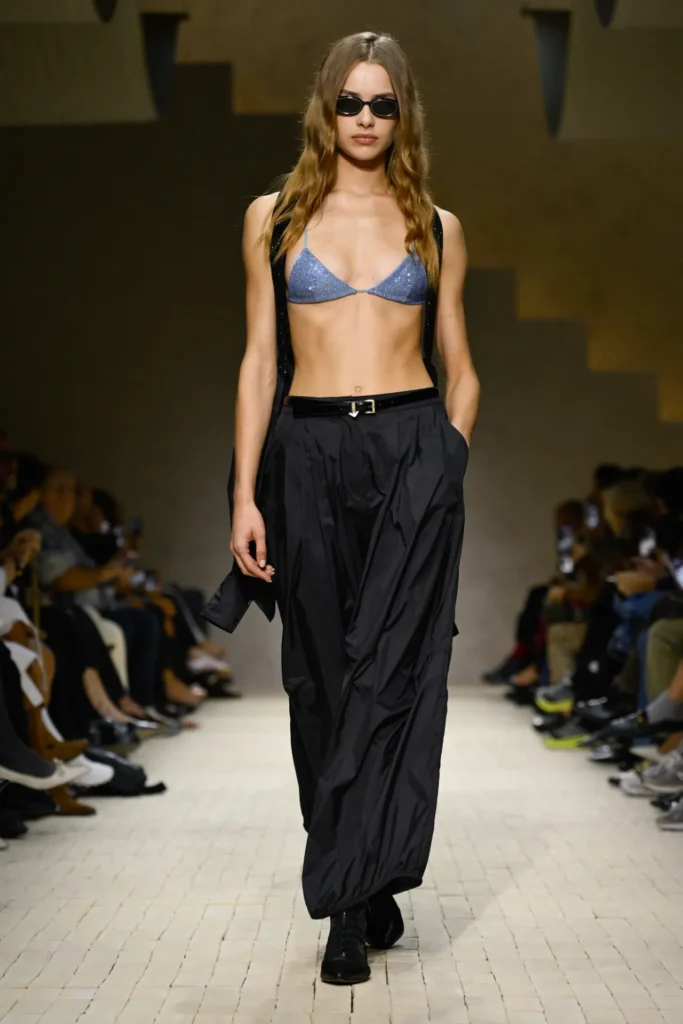
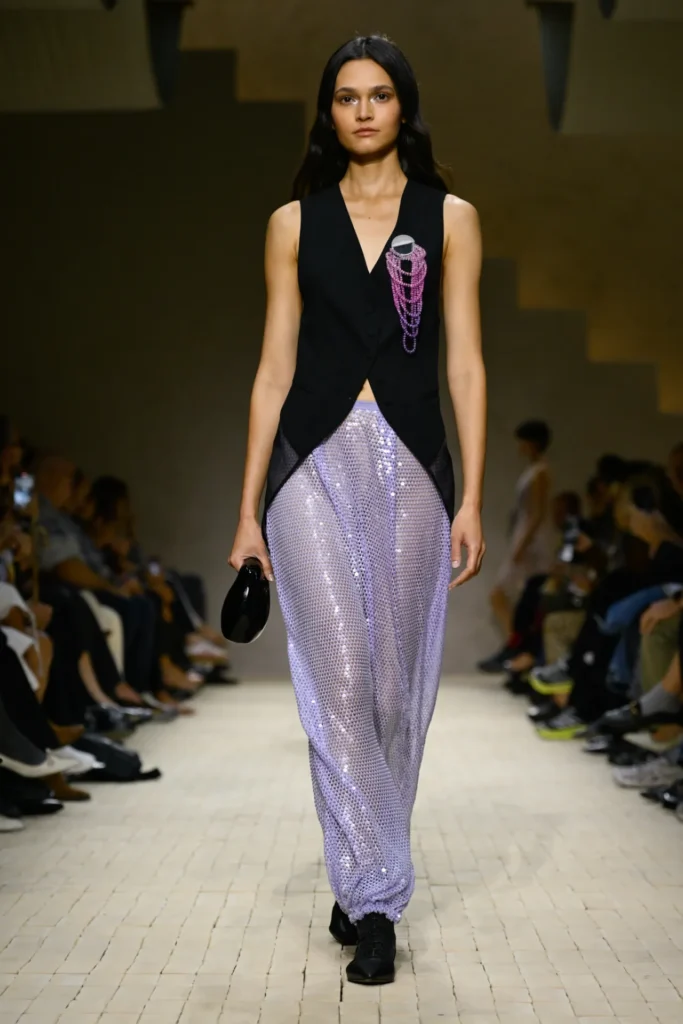
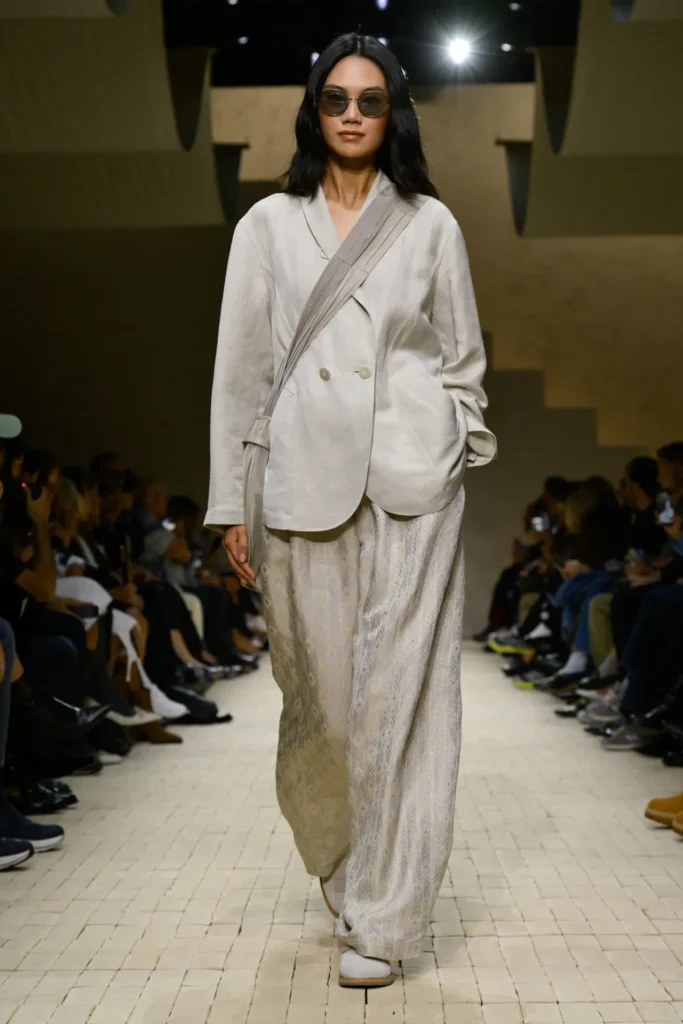
Emporio Armani’s Spring 2026 runway will be remembered as both emotional and powerful: Giorgio Armani’s final collection for the brand’s younger line. There was no final bow; the audience waited in silence, some with tears in their eyes, as the models disappeared from a stage designed like the steps of an Aztec temple.

The collection embodied Armani’s lifelong love of travel and cross-cultural inspiration. It captured that fleeting moment when travelers return from vacation still glowing with energy, before reality takes hold.

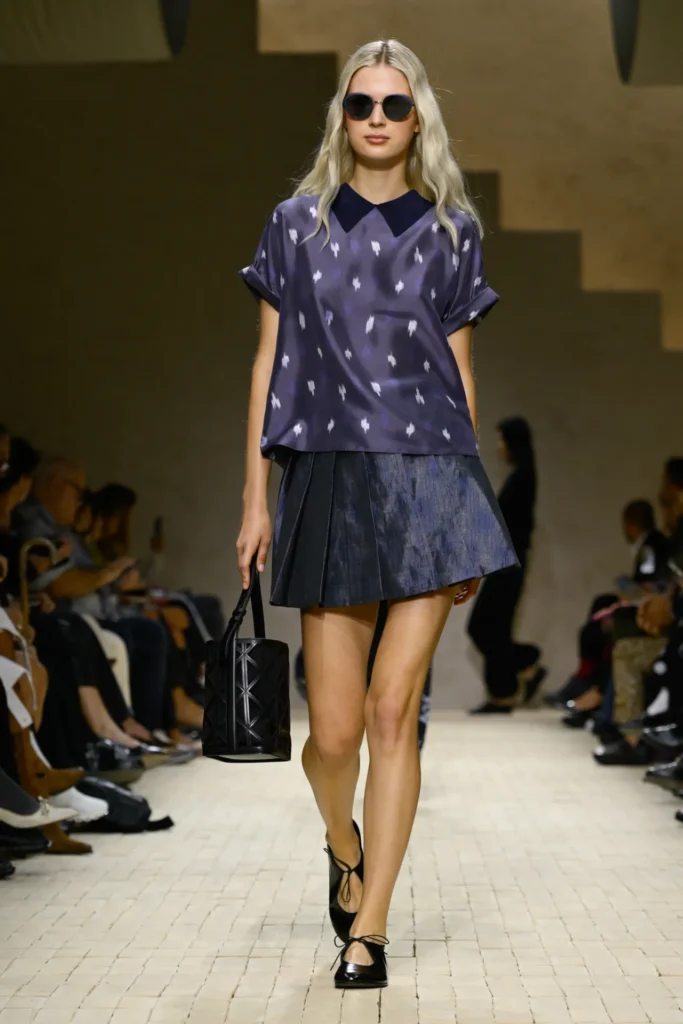
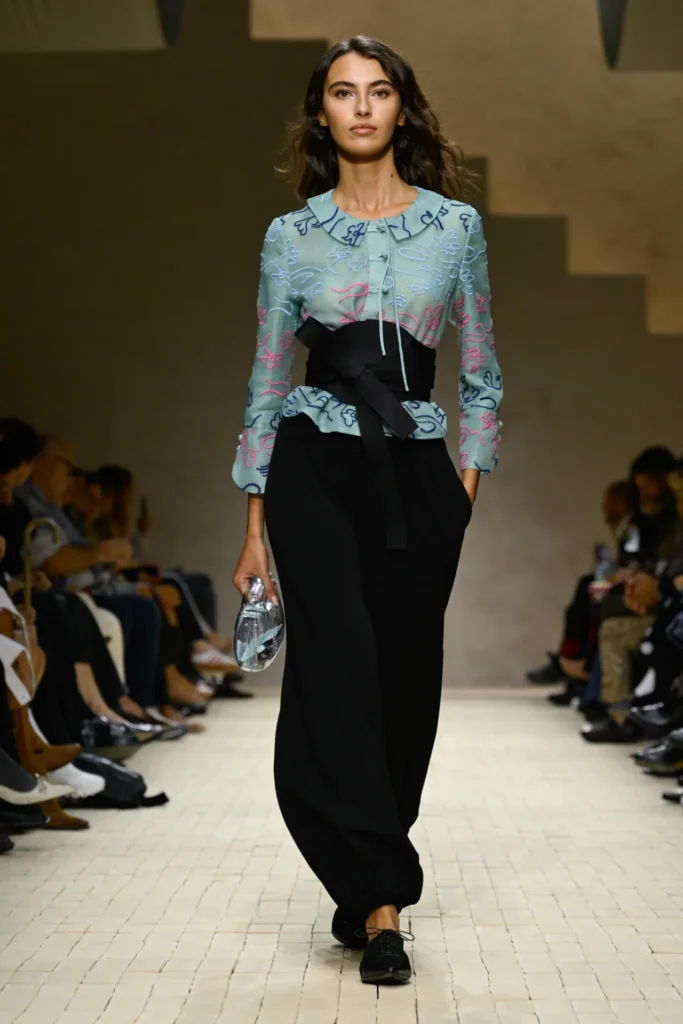
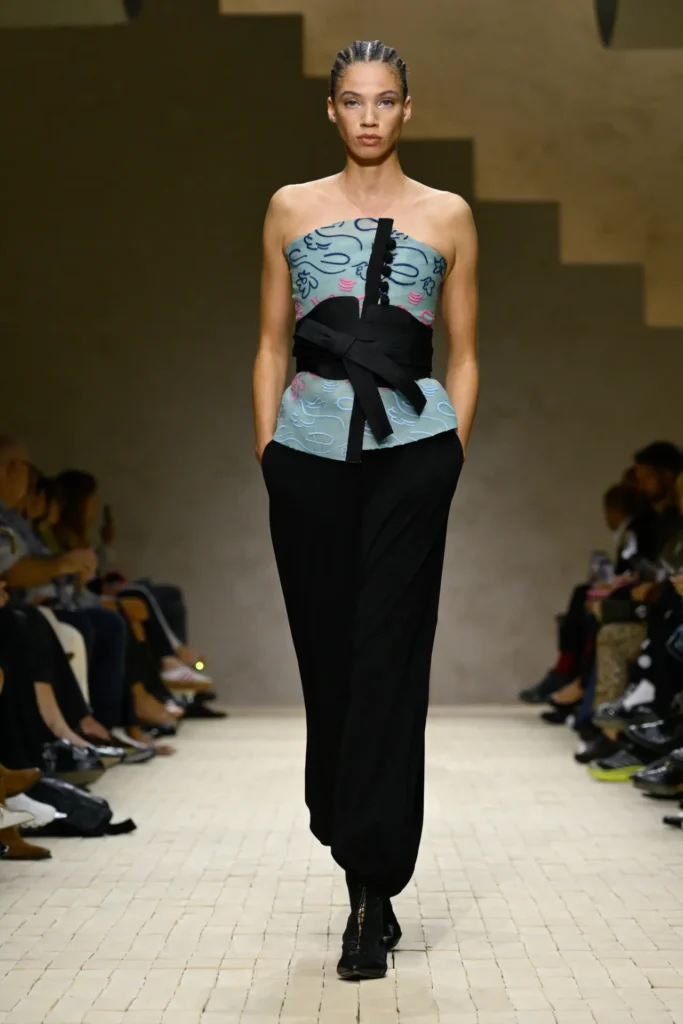
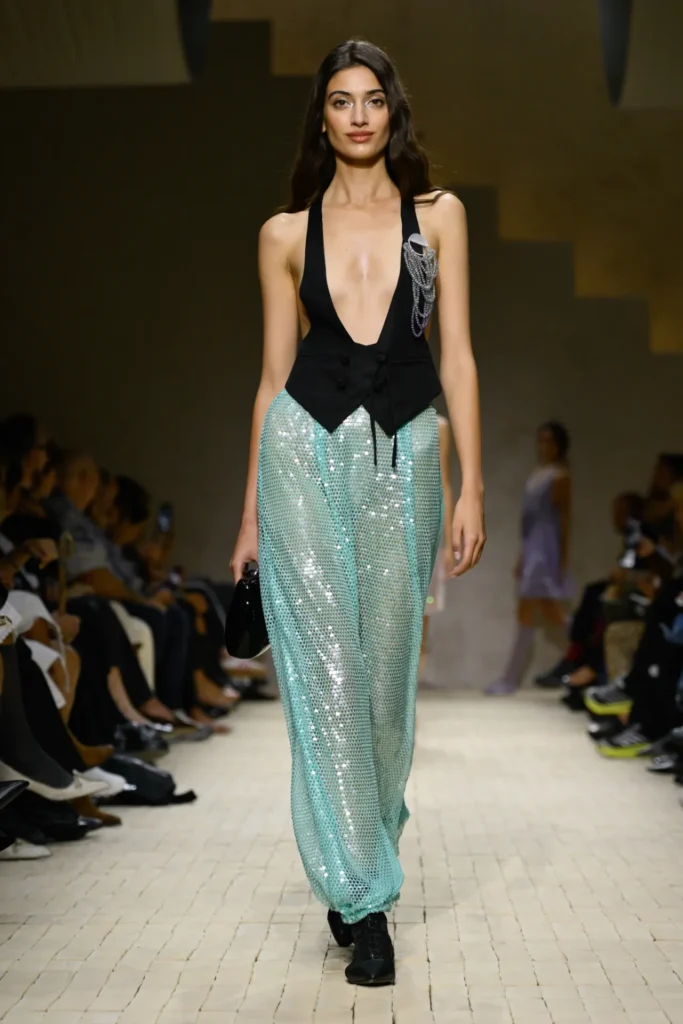
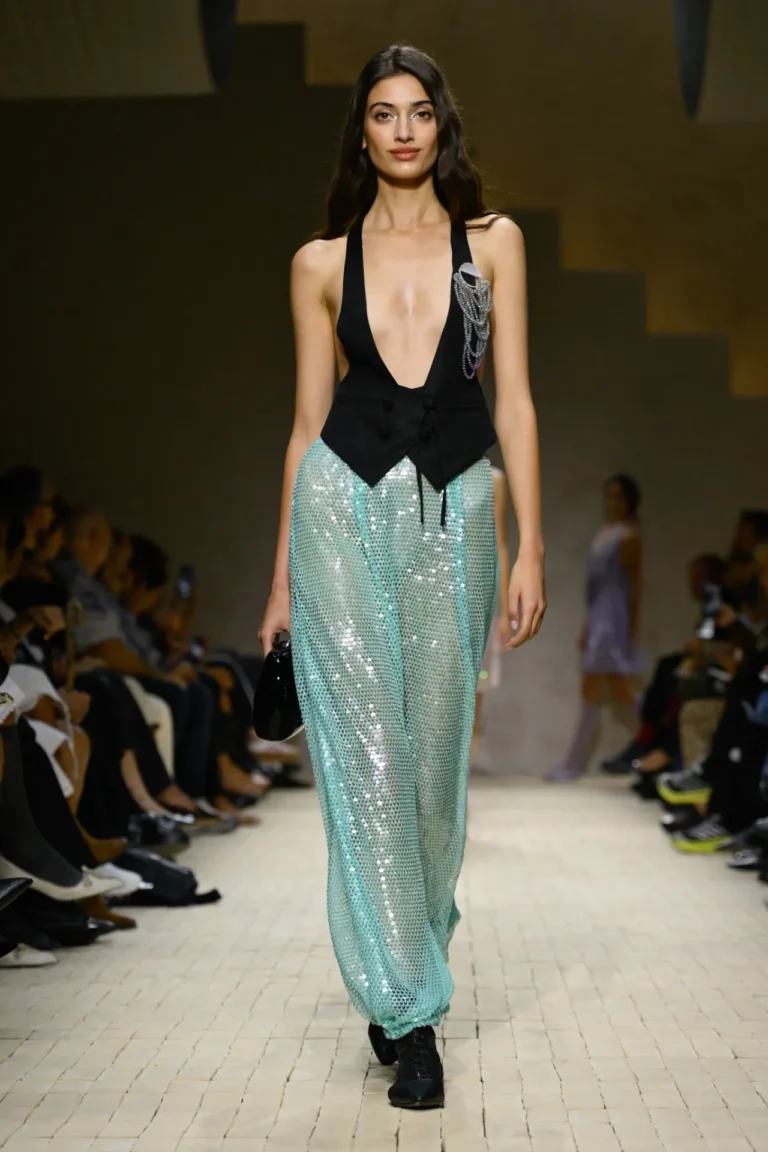
The show opened with earthy sand and copper tones, only to explode into a kaleidoscope of fuchsia, violet, seafoam green, and soft pink. Sequined halter dresses, harem pants, and bandeau tops shimmered under the lights, while sheer organza layers and ikat-inspired prints added texture and movement. Balancing youthful spirit with sophistication, Armani also injected sporty details: drawstring-fitted jackets, scooter skirts, and fluid trousers.

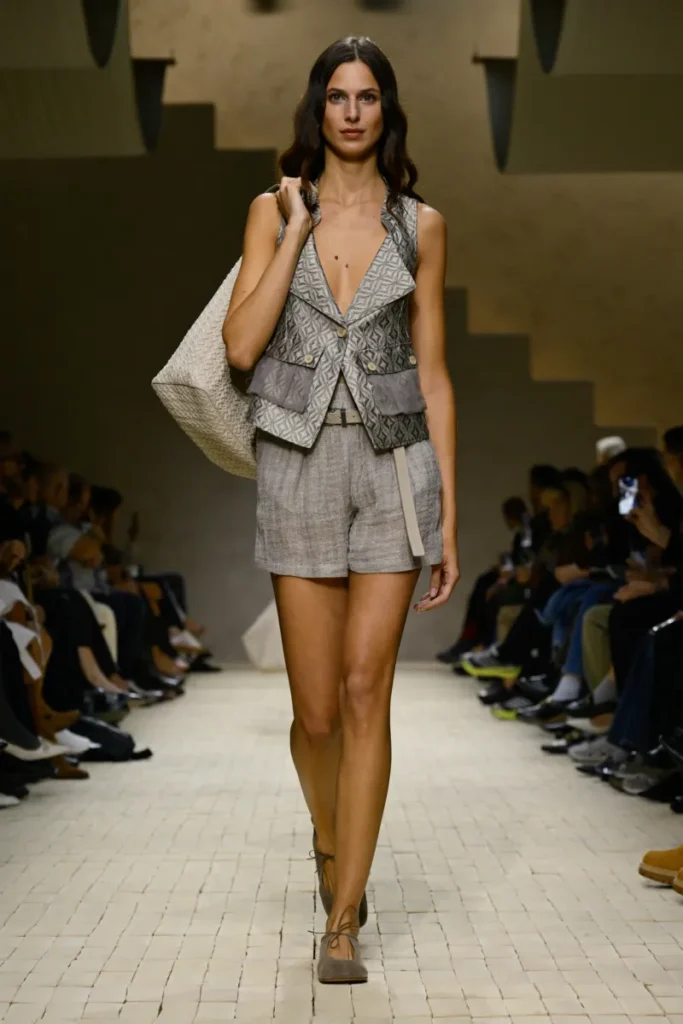
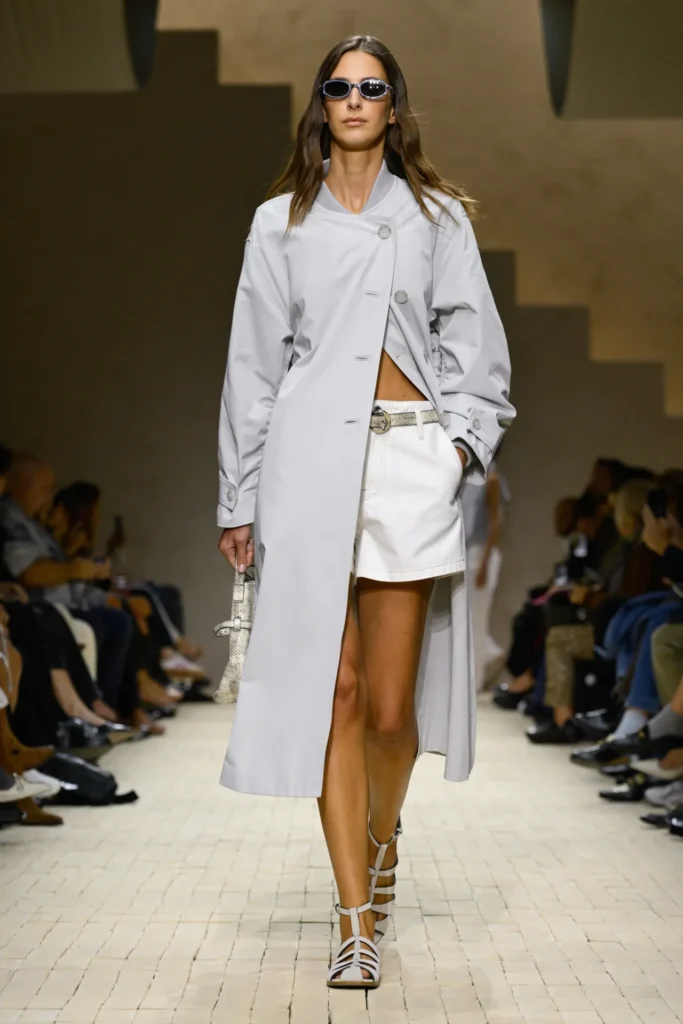
Fabrics played a starring role, from lightweight cotton trench coats and suede vests with a hippie vibe to ruched silk blouses paired with wide-leg pants or black harem silhouettes. All looks were grounded in comfort, styled with flat shoes and low-heeled boots—an expression of Armani’s belief that true empowerment comes through ease and elegance.

A poetic touch came in the form of billowing silk gauze in peach, violet, and seafoam green, floating around the models like soft clouds. Accessories reinforced the narrative, with structured obi belts defining the waist and luminous pearlized leather bags reflecting light like water surfaces.

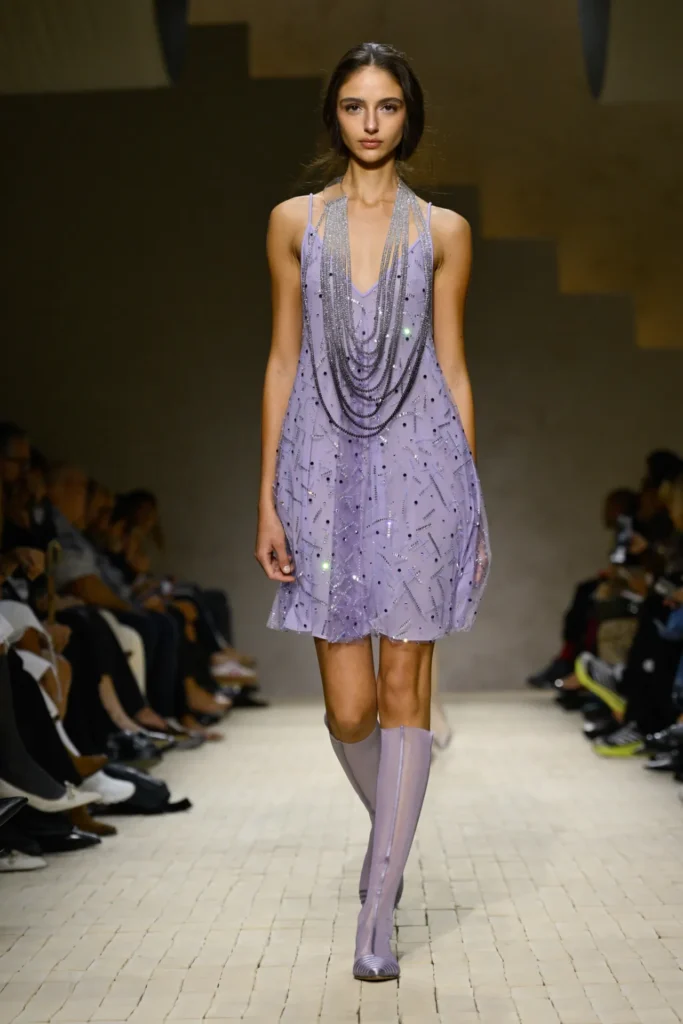
The finale showcased pastel sheer dresses adorned with sequins, paired with boots crafted from the same fabric, giving the models a fairy-like, ethereal charm. Armani’s last message for Emporio was clear and timeless: “Relax, dream, and shine.” A parting legacy of elegance and freedom that transcends fashion.
Boss Spring 2026 Collection

Boss Spring 2026 Collection

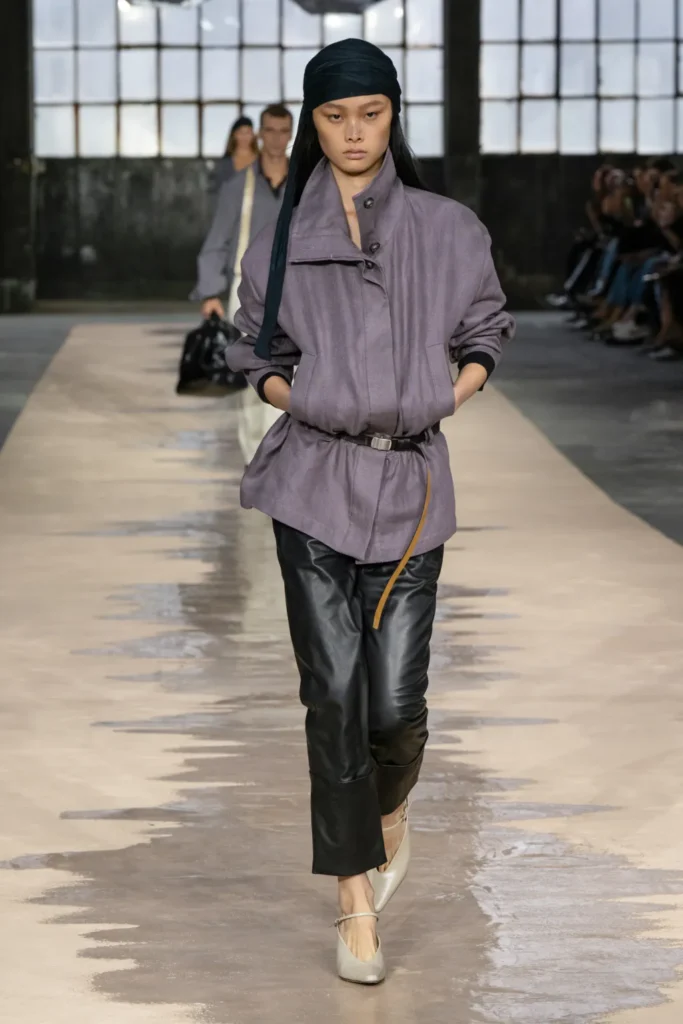
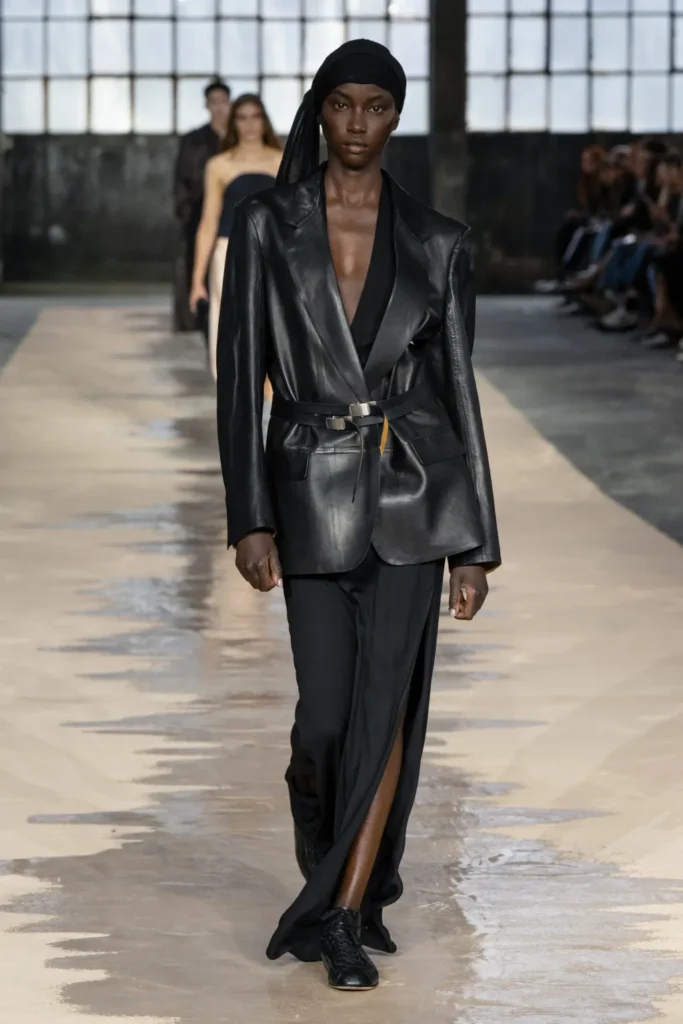
For Spring 2026, Marco Falcioni led Boss into a realm where contrasts and contradictions became the centerpiece. Inspired by an imagined dialogue between industrial design legend Dieter Rams and revolutionary choreographer Pina Bausch, the collection explored the intersection of structure and expressive freedom, redefining the classic corporate wardrobe.

Traditional tailoring was reinterpreted with unexpected layering and playful proportions: oversized culotte shorts for men paired with suspenders, fluid silk blouses, lightly knotted thin ties, and exaggerated wide-leg trousers for women paired with loose silk tops. Rather than dressing for the office, the collection conveyed the sensuality and ease of undressing after hours, evoking a sense of liberation from rigid workday uniforms.

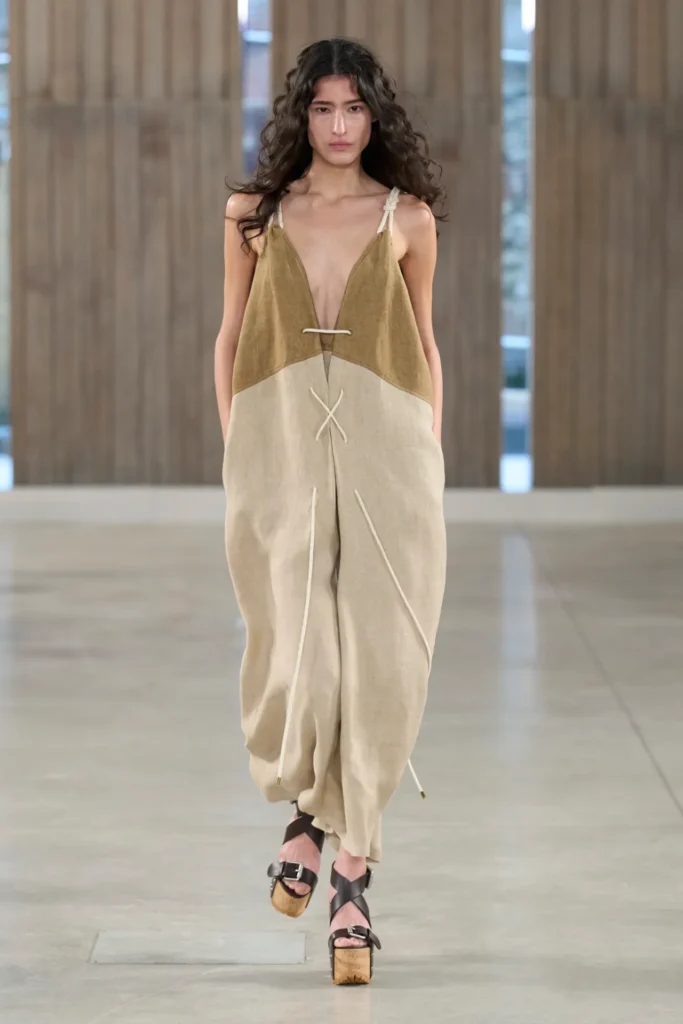
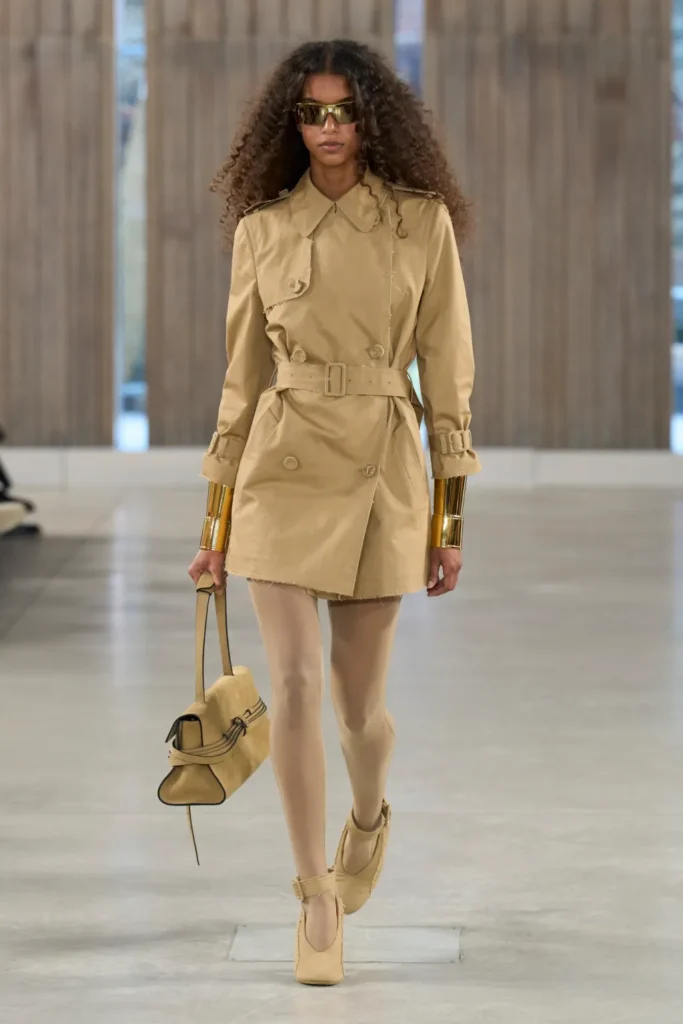
Standout moments included Amelia Grey walking in an ankle-length sack dress with a plunging V-back, and S.Coups, K-pop sensation and member of Seventeen, closing the show in a wide, camel-colored trench crafted from flexible leather. The lineup also featured glossy short coats, bias-cut jersey tops, and functional yet chic details such as welt pockets on sleek dresses, merging practicality with understated elegance.

A striking scenographic element enhanced the show’s narrative: a ribbon of shiny fabric suspended above the runway swayed in a carefully choreographed motion, reflecting the controlled chaos and vibrant energy embedded in the collection.

Celebrity attendees, including David Beckham, witnessed this reimagination of Boss—a brand traditionally associated with corporate minimalism—where sophistication meets emotional performance, and the office uniform evolves into wearable artistry for modern women.

The collection blended classic Boss tailoring with contemporary movement, combining structured pieces with fluid silhouettes, playful volume contrasts, and subtle nods to streetwear influence, demonstrating that the brand can innovate while remaining unmistakably elegant.

Prada Spring 2026 Collection

Prada Spring 2026 Collection

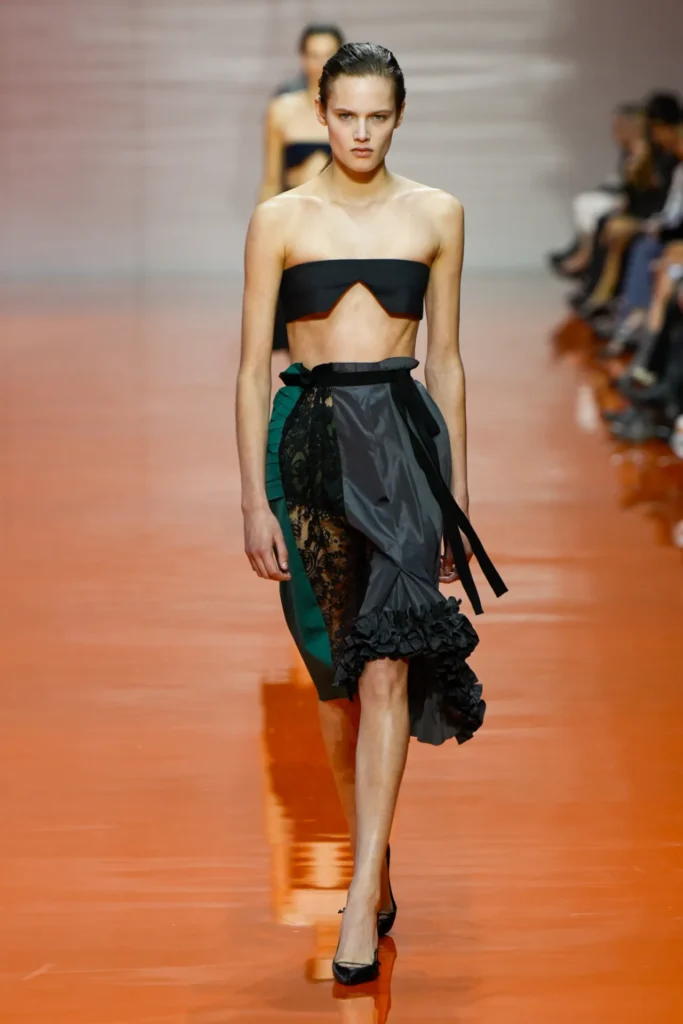
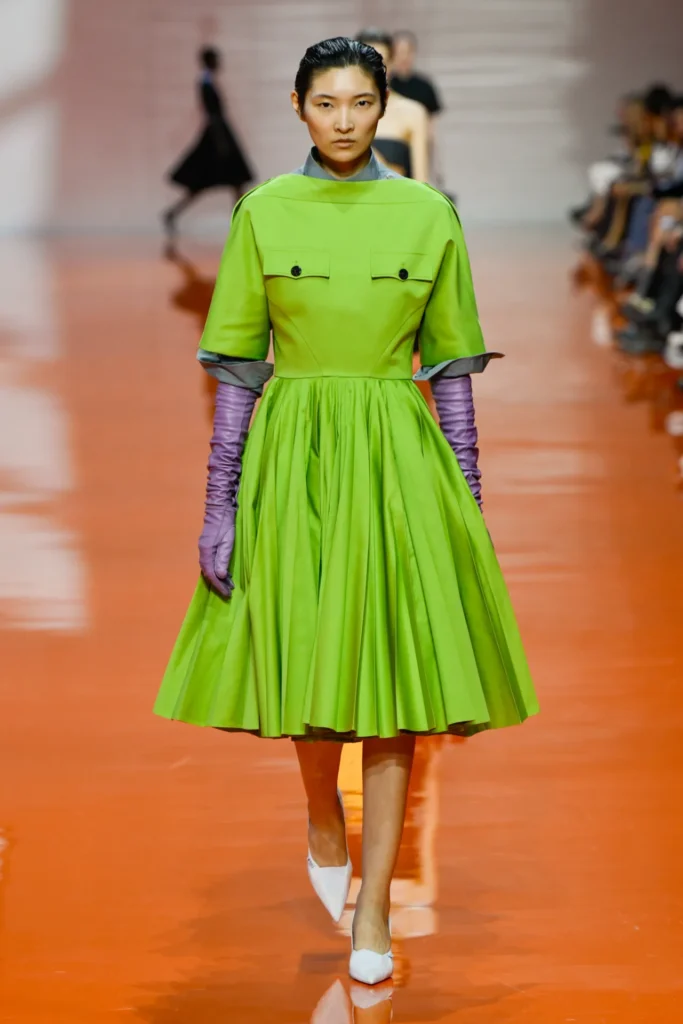
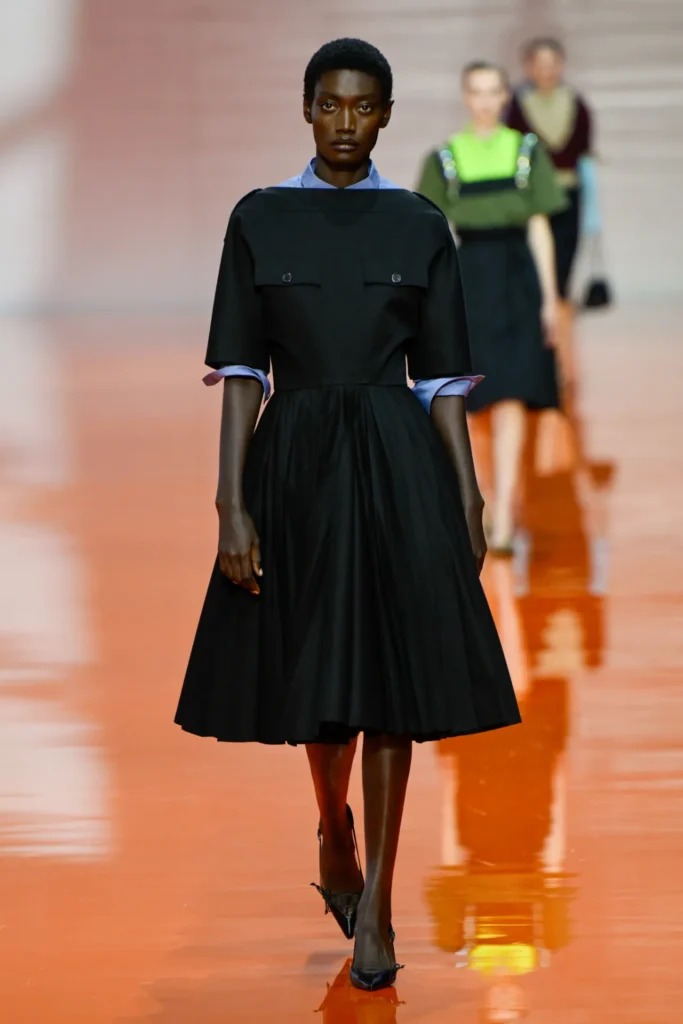
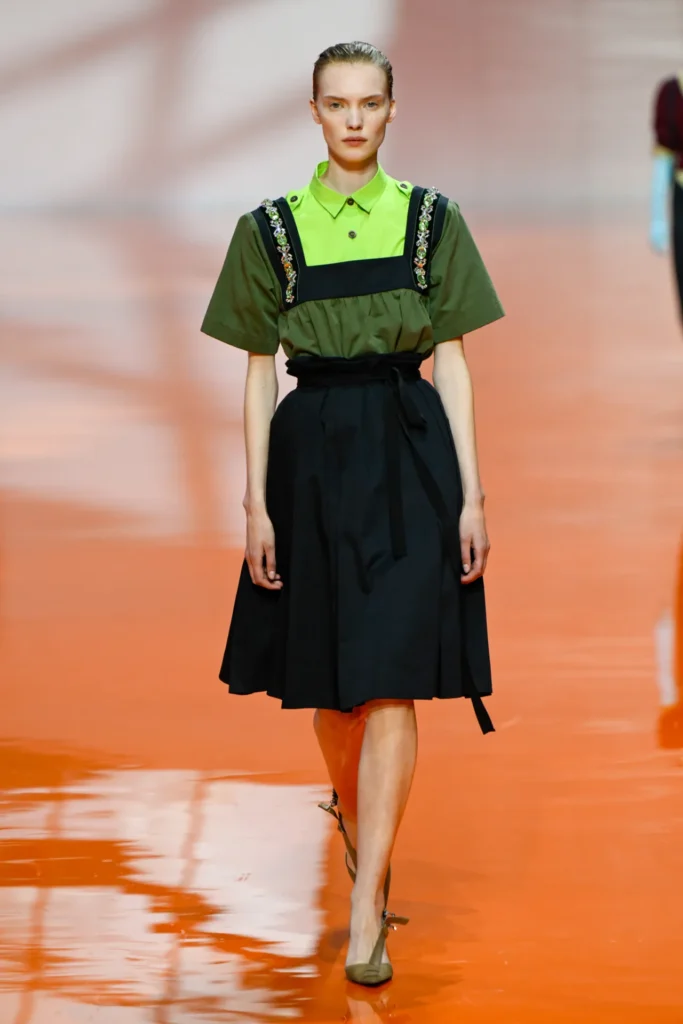
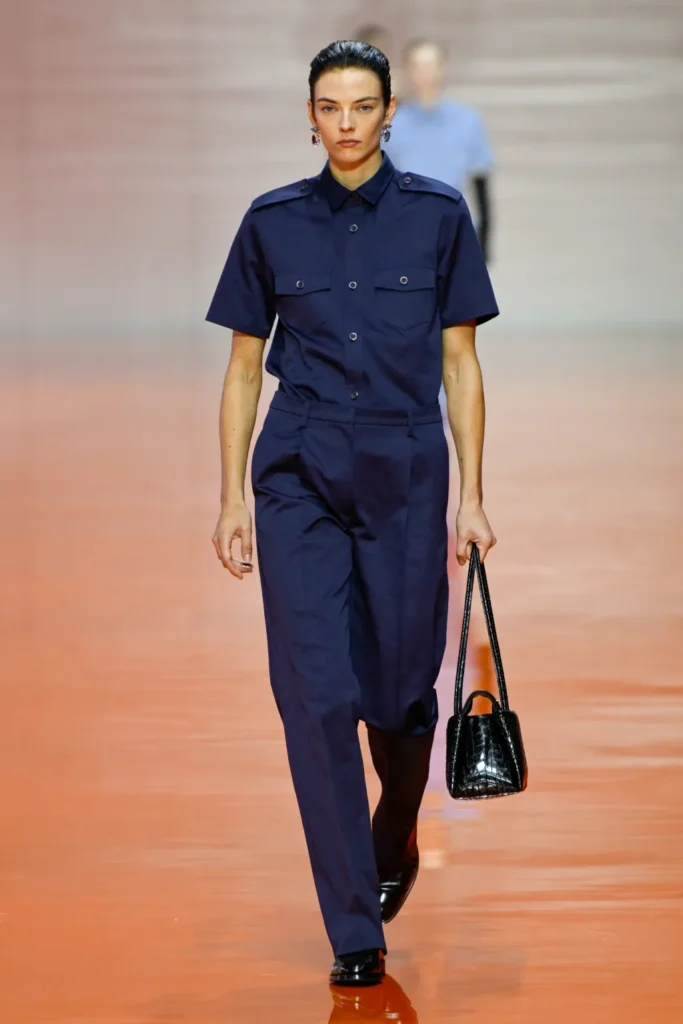
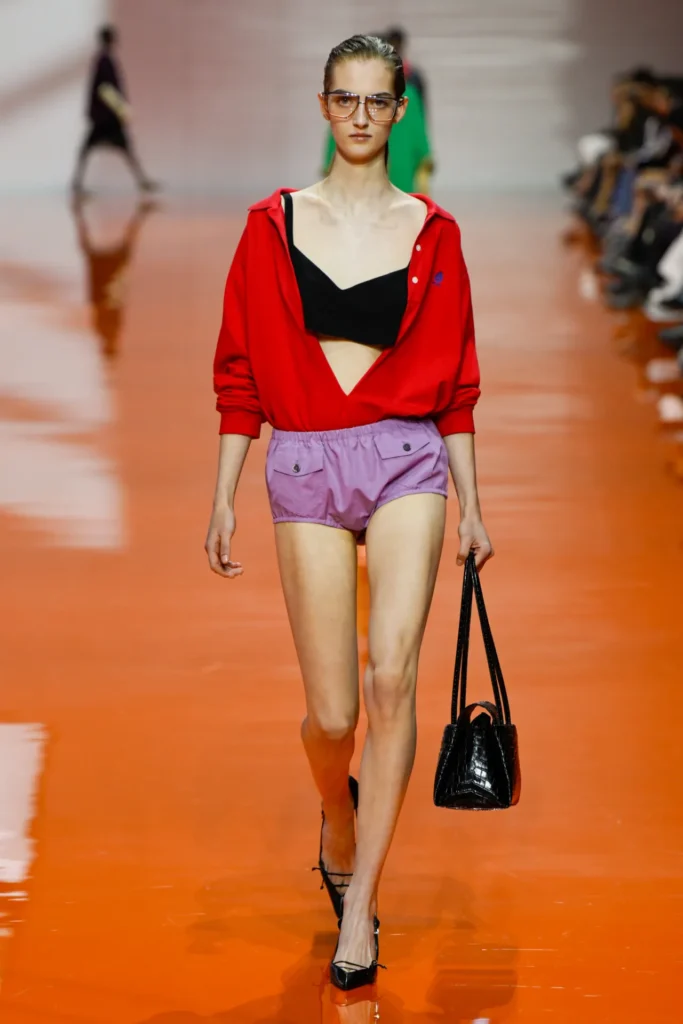
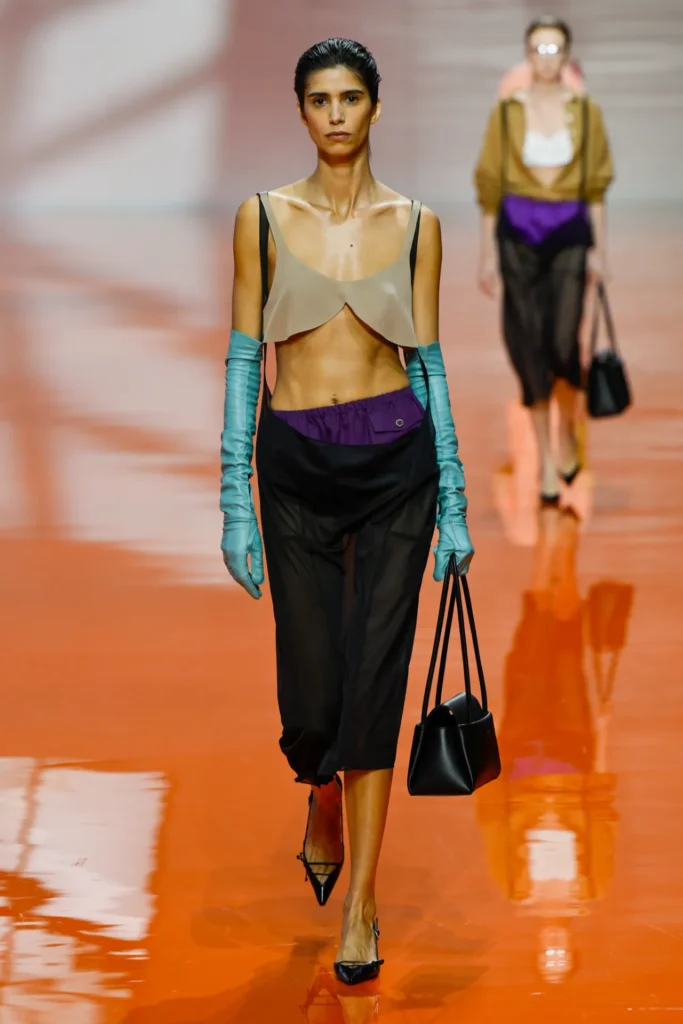
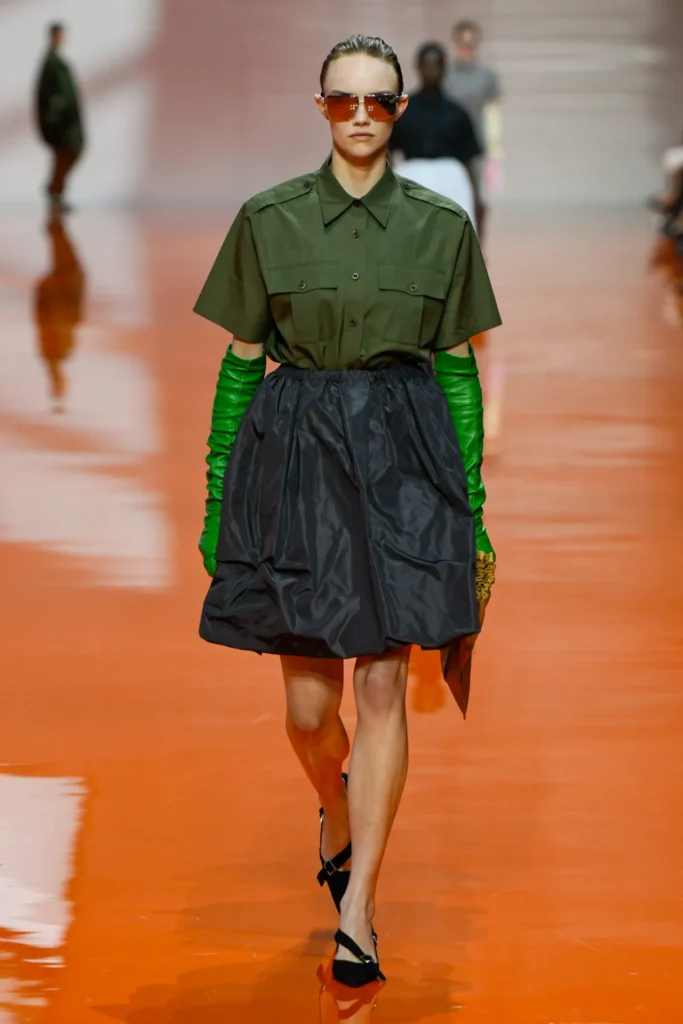
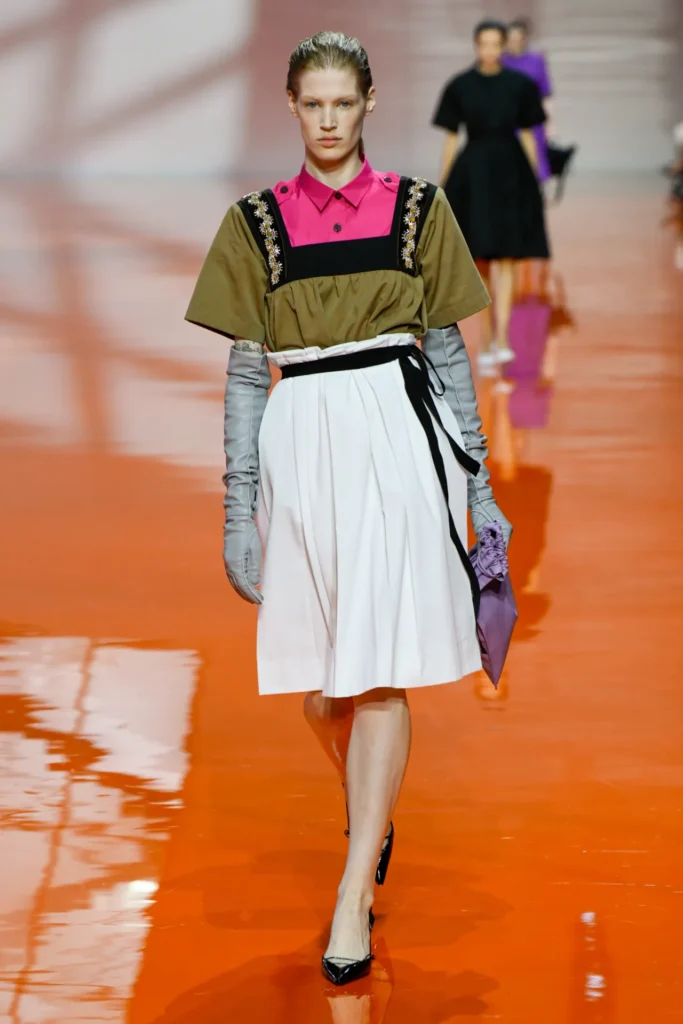
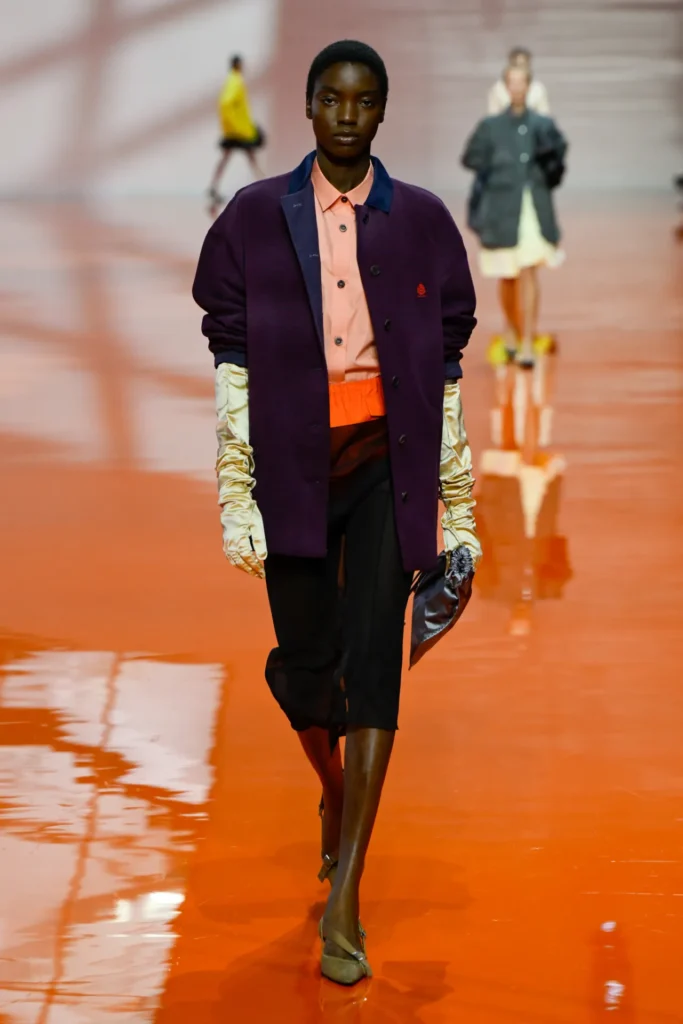
In a season where fashion swings between minimalism and maximalism, Miuccia Prada and Raf Simons took an agnostic stance toward clothing’s function, purpose, and occasion. The show opened with a provocative juxtaposition: reimagined uniforms — short-sleeved military shirts, sharply pleated trousers, and opera-length gloves paired with glittering stiletto heels. The question lingered: was it an evening at the opera, or a night shift on security duty?

Transparency defined the runway with tube skirts held by delicate straps, while bra tops were stripped down to sheer wisps of chiffon — garments seemingly designed more for the lens and social media than for everyday wear. Yet behind these contrasts was a recurring message: freedom. Freedom to pair a military jacket with a floral dress. Freedom to feel just as elegant and powerful in a uniform as in an evening gown.
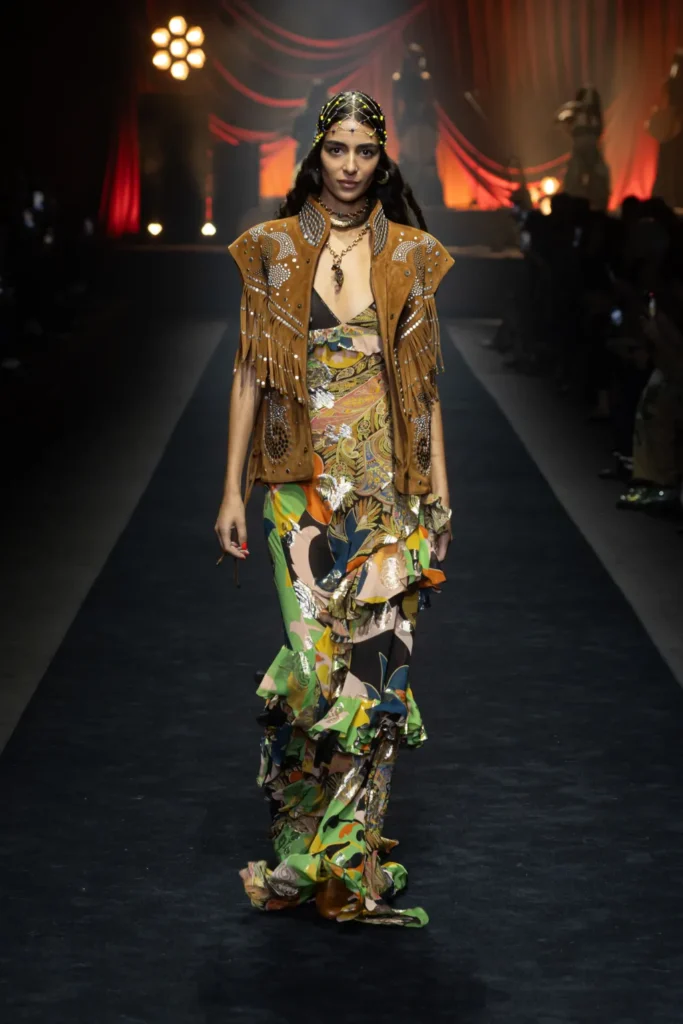
The collection balanced concept and craft. Whisper-light organza and flowing chiffon collided with sturdier utilitarian fabrics, while accessories underscored the duality: dramatic gloves, sculptural handbags, and sparkling heels reinforced the experimental tone.

Backstage, their mood board echoed with layered references and a central question: how should fashion respond to uncertainty? “These are clothes that can adapt, transform, and shift depending on the moment,” Prada explained. Simons added that the challenge was to capture today’s harsh realities while still acknowledging the beauty that remains.

Ultimately, Prada and Simons delivered more than a collection; they offered a visual manifesto — a new form of elegance that thrives on hybridity, ambiguity, and freedom, refusing to align with extremes while responding to the complexities of our time.

Onitsuka Tiger Spring 2026 Collection

Onitsuka Tiger Spring 2026 Collection

For Spring 2026, Andrea Pompilio elevated Onitsuka Tiger’s sporty DNA into a sleeker, more polished wardrobe. The show opened with structured jackets styled over vintage running shorts and slim joggers, setting the tone for a collection where tailoring met athletic ease. Oversized coats followed, along with sharply cut shirts in bright yellow tweed, a nod to Parisian couture houses but filtered through the brand’s street-infused lens.

Although loose striped sweatpants, boxy jogging shorts, and oversized hoodies stayed on the runway, Pompilio softened their casual edge with ruffled blouses, wrinkled cotton shirts tied with ribbons, and fluid dresses that looked as if they had just been pulled out of a gym bag—paired, of course, with the label’s iconic Mexico 66 sneakers.

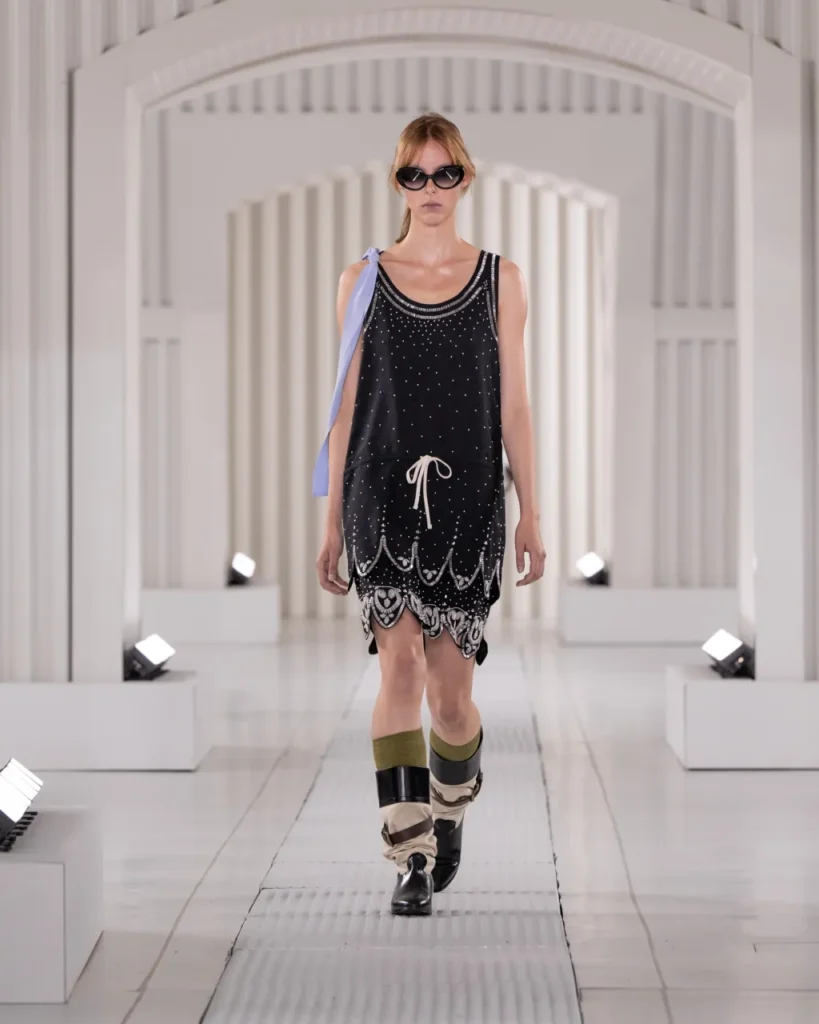
One of the most striking moments came with the paper-effect leather miniskirts worn low on the hips, juxtaposed with a shiny black flapper-style dress finished with a flowing lavender ribbon at the neckline. Other pieces, such as square-cut, button-front dresses, added a playful yet slightly disheveled touch to an otherwise vibrant and busy runway.

Footwear was a collection highlight: satin ballerinas reinterpreting the Mexico 66, alongside leather and suede boots and sandals designed for both urban life and the summer festival circuit.

Pompilio’s vision balanced glamorous sportswear with urban tailoring, proving once again that Onitsuka Tiger is no longer just about sneakers, but about creating a global wardrobe where comfort meets sophistication.

Max Mara Spring 2026 Collection

Max Mara Spring 2026 Collection

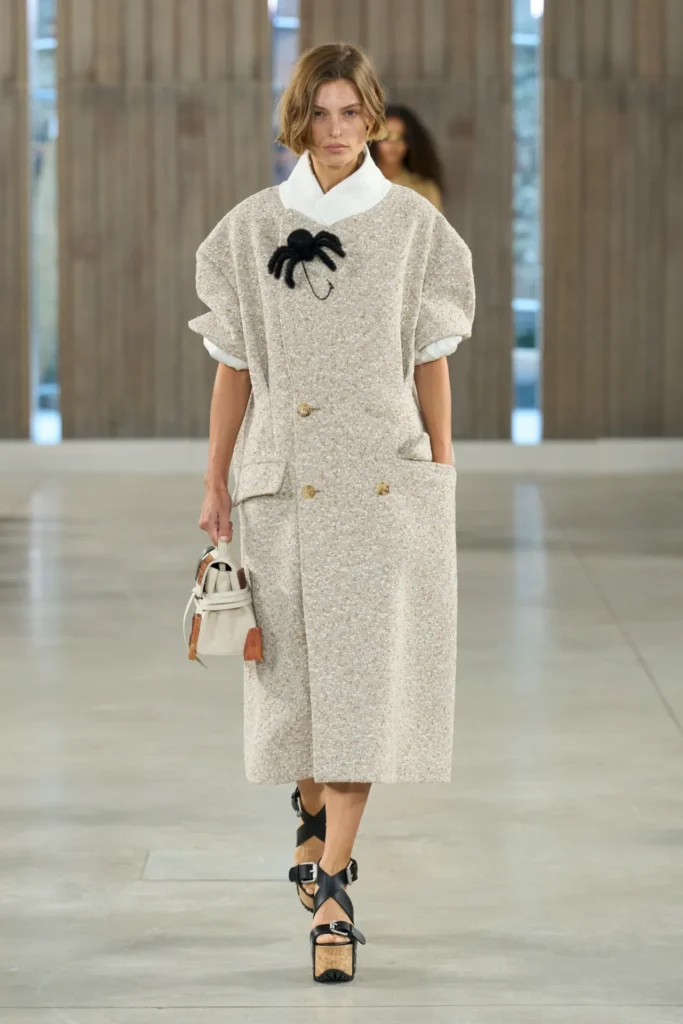
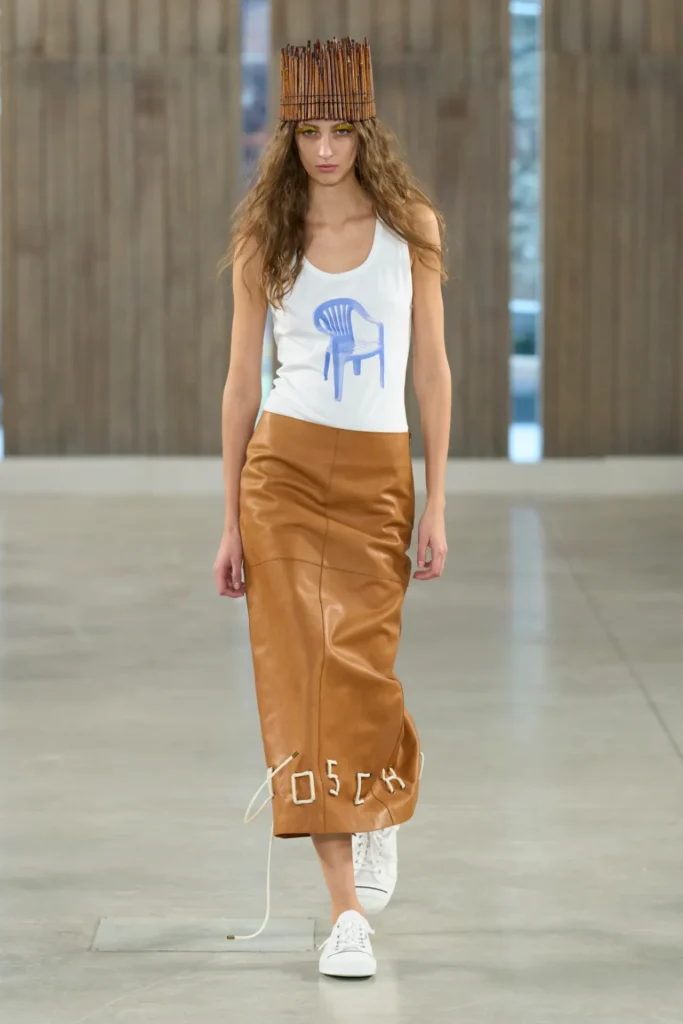
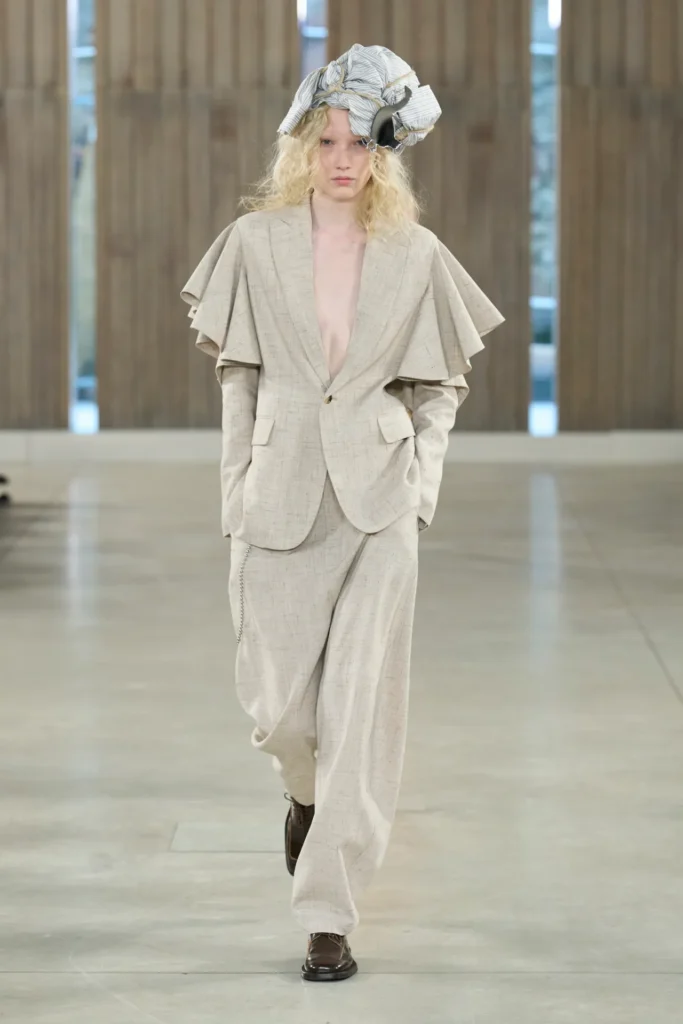
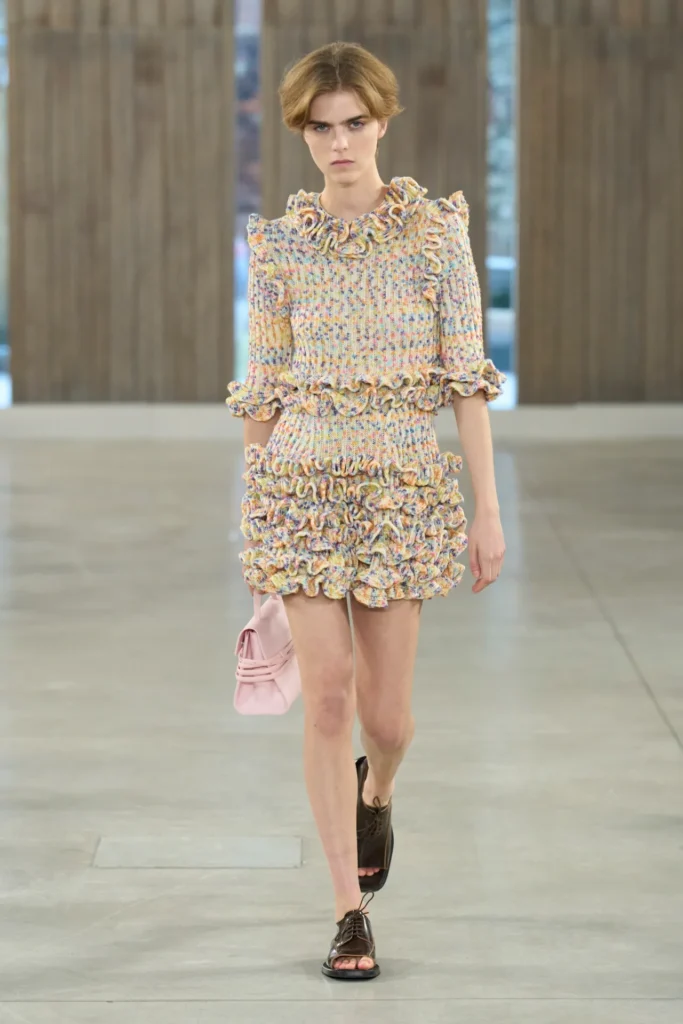
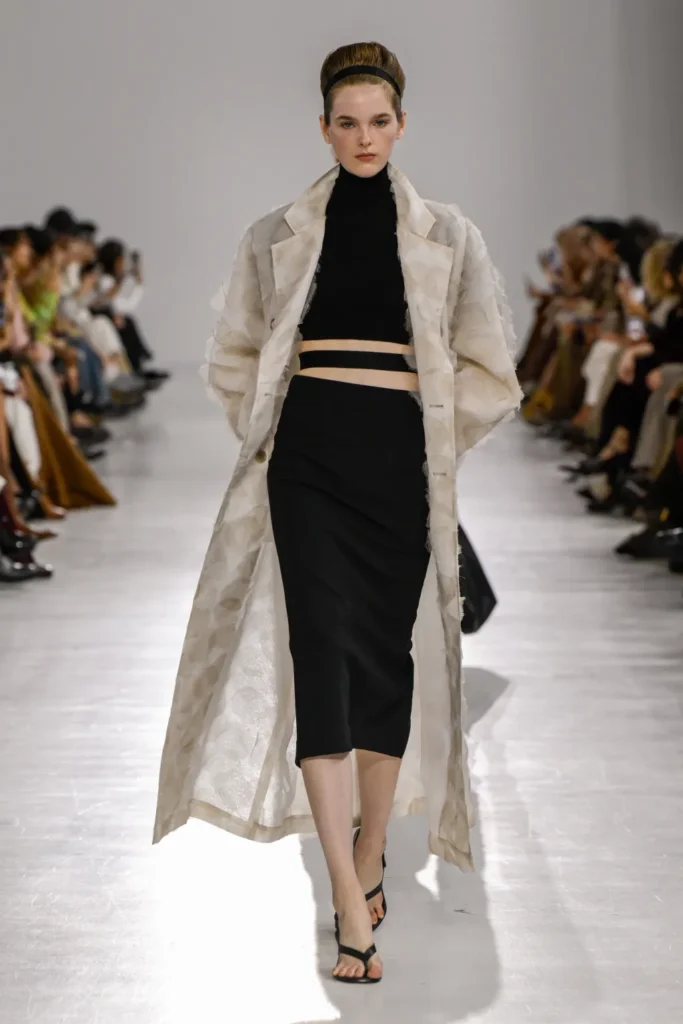
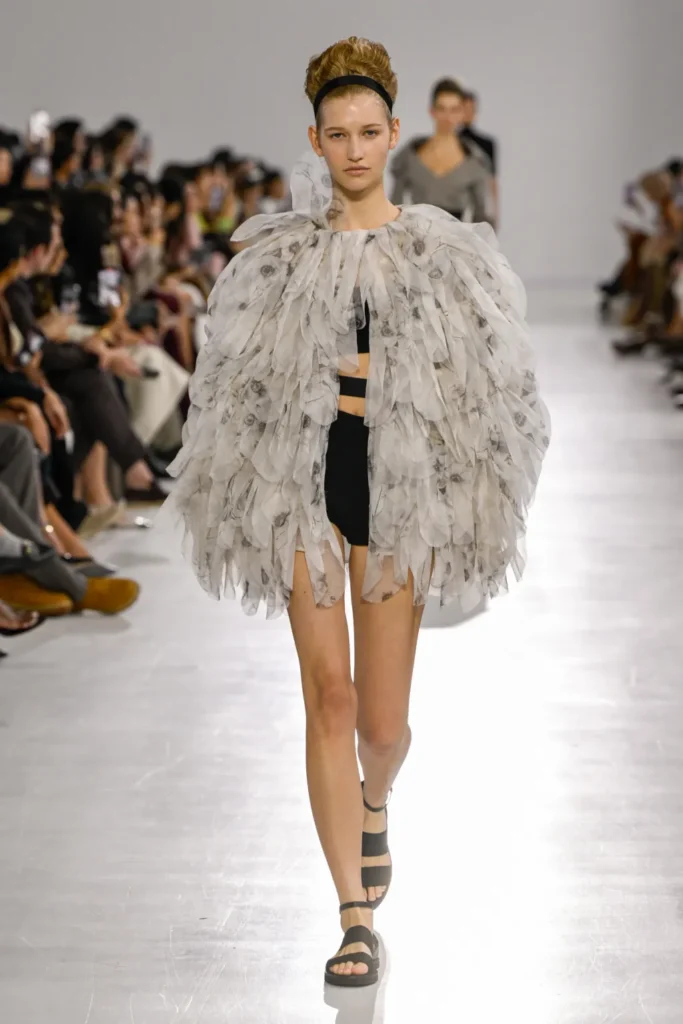
Instead of focusing on Marie Antoinette, Ian Griffiths turned his gaze to another figure of 18th-century French court life: Madame de Pompadour, renowned patron and emblem of Rococo style. This choice allowed him to explore an intriguing dialogue between eras, staging a collection that oscillated between the opulence of the 1780s and the sleek restraint of the 1980s.

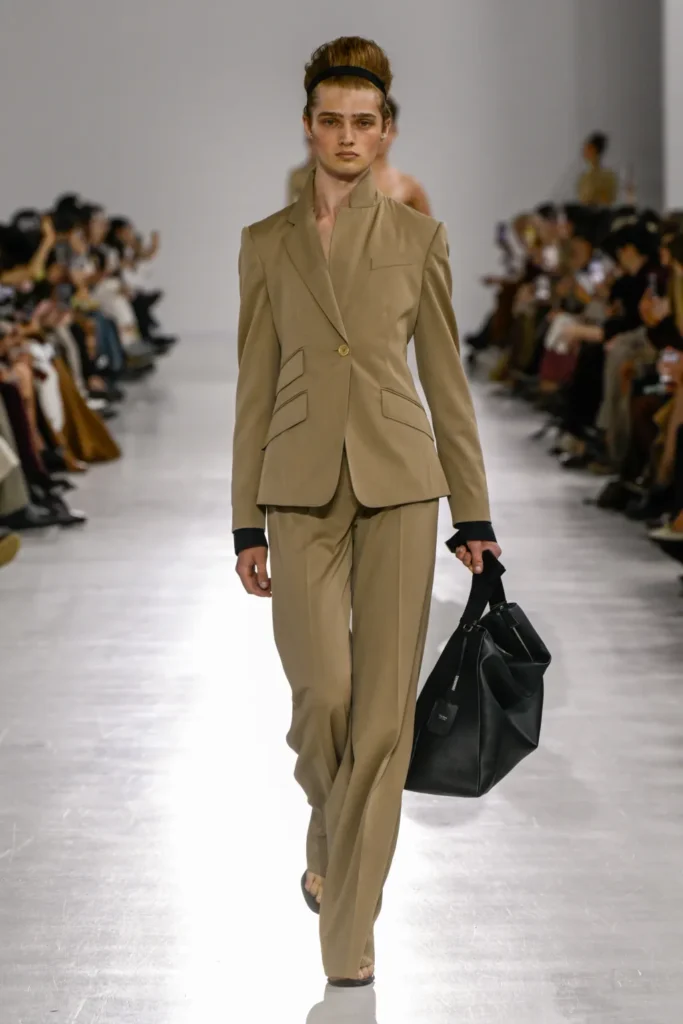
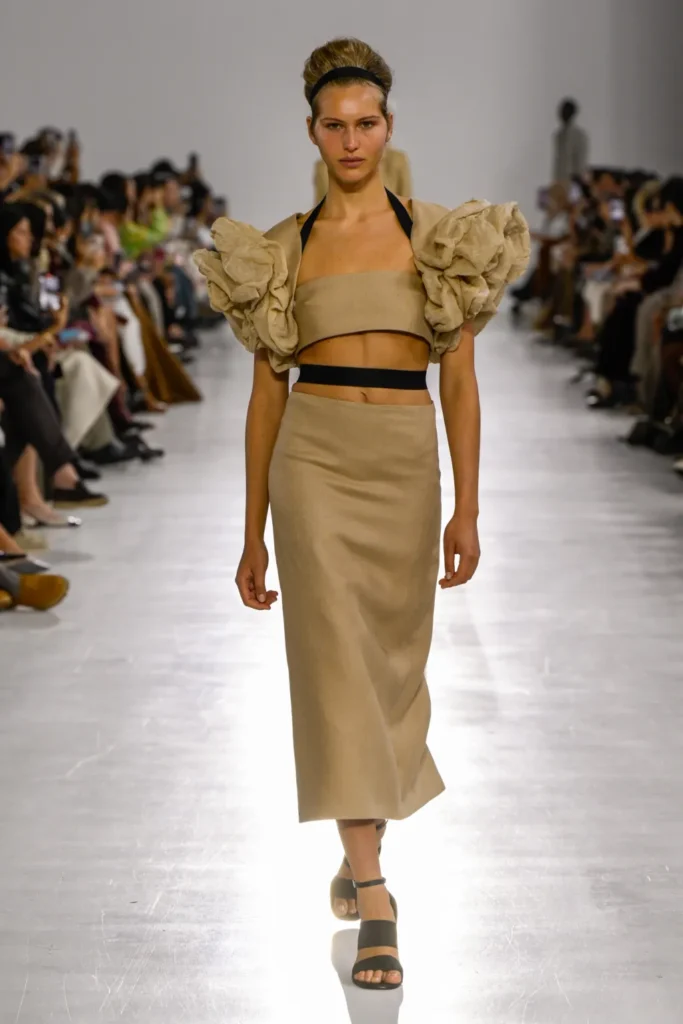
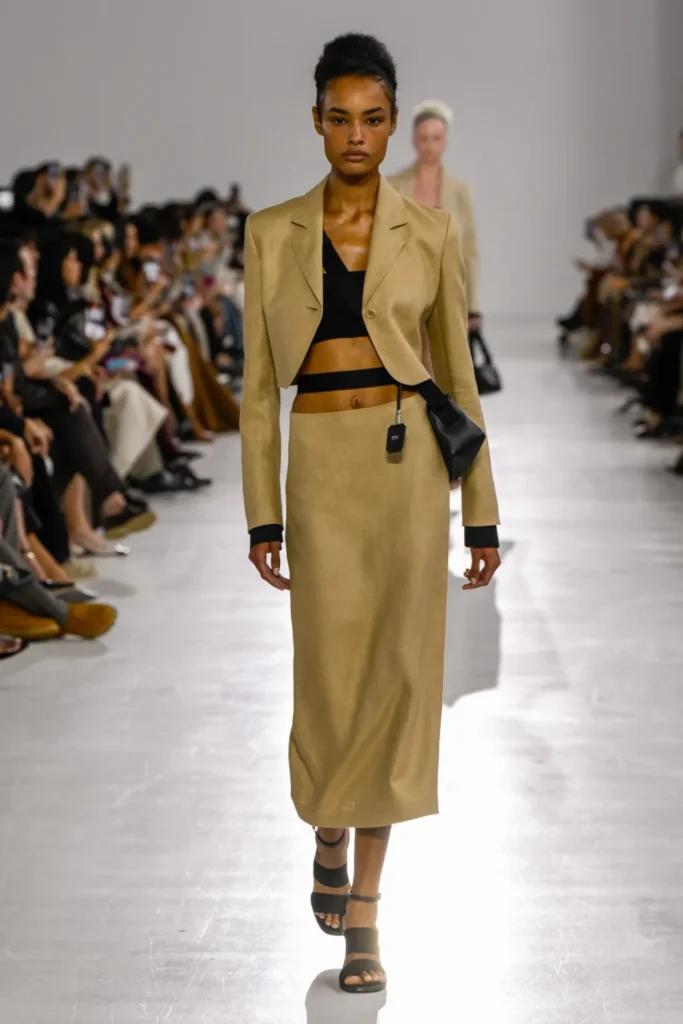
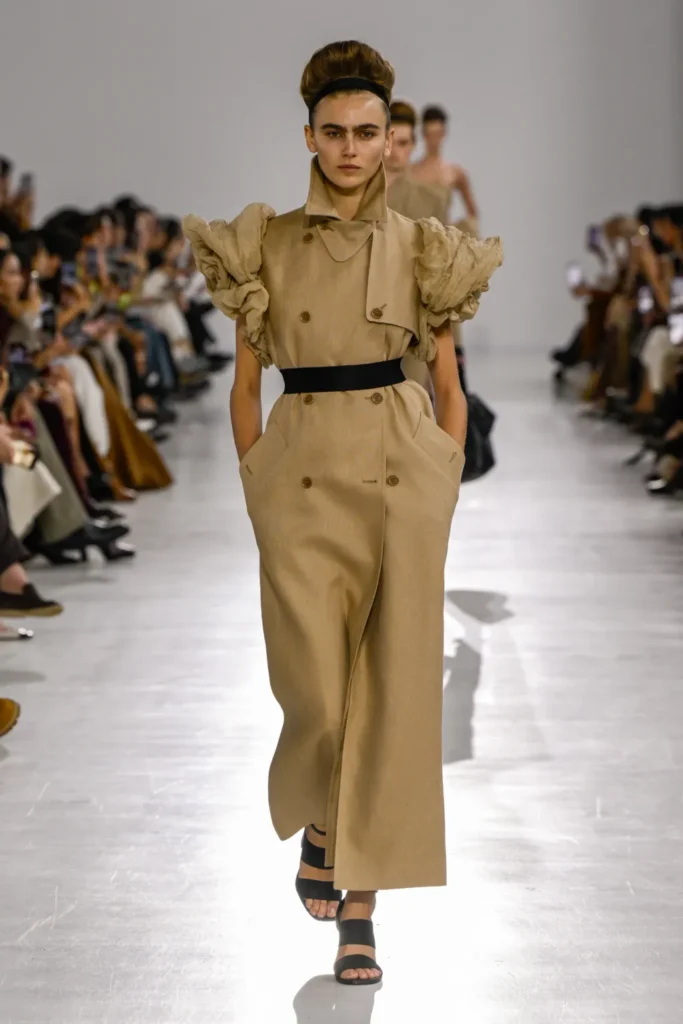
The runway opened with a sleeveless trench dress featuring ruffled shoulders, followed by a sharply tailored pantsuit. Together, they reflected Griffiths’ interplay of Rococo exuberance with echoes of David Bowie’s Pierrot costume, which shared space on his backstage moodboard with portraits of Pompadour.

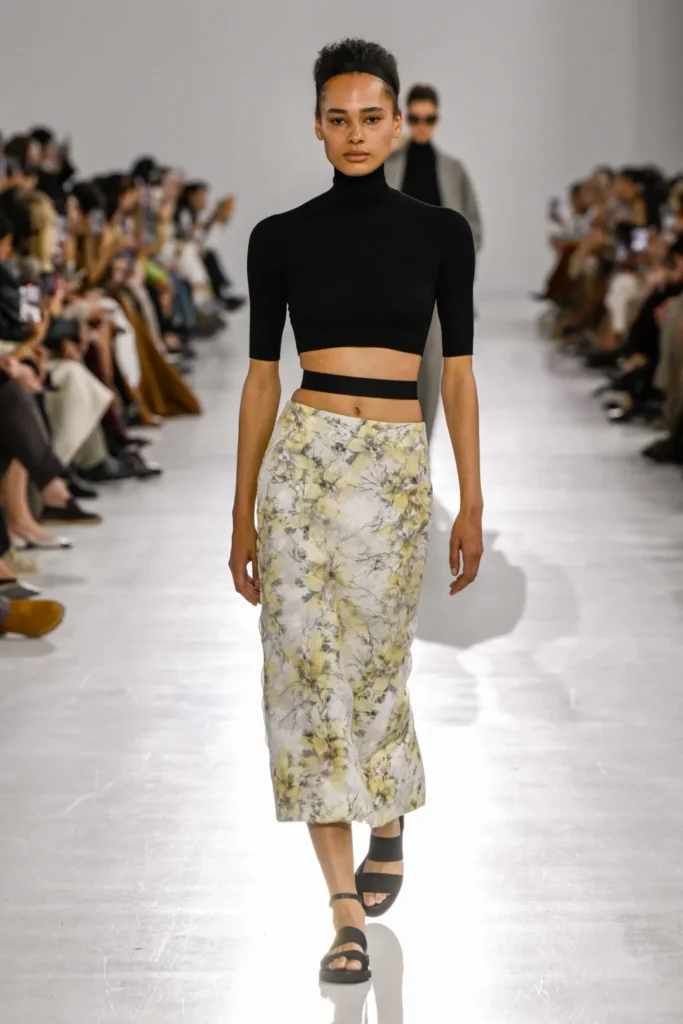
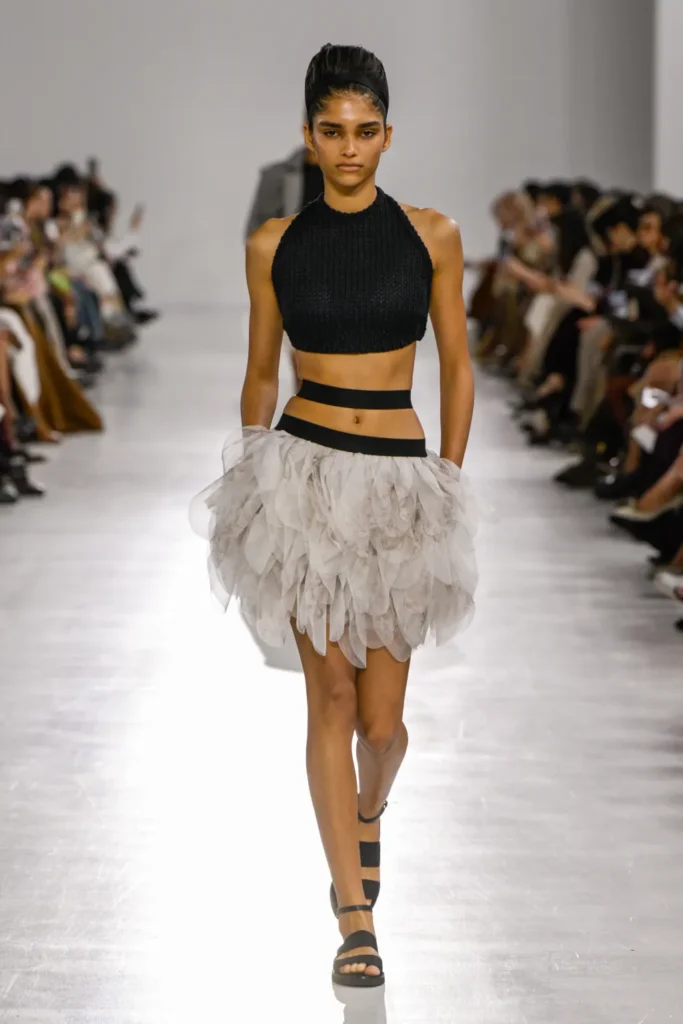
Though heavy with historical allusions, Griffiths made his intent clear: “We’re not making a BBC period drama; we’re creating modern fashion for modern women.” That philosophy translated into body-conscious knitwear, cropped jackets, halter necklines exposing shoulders and backs, and harness-style elastic details defining the waist.

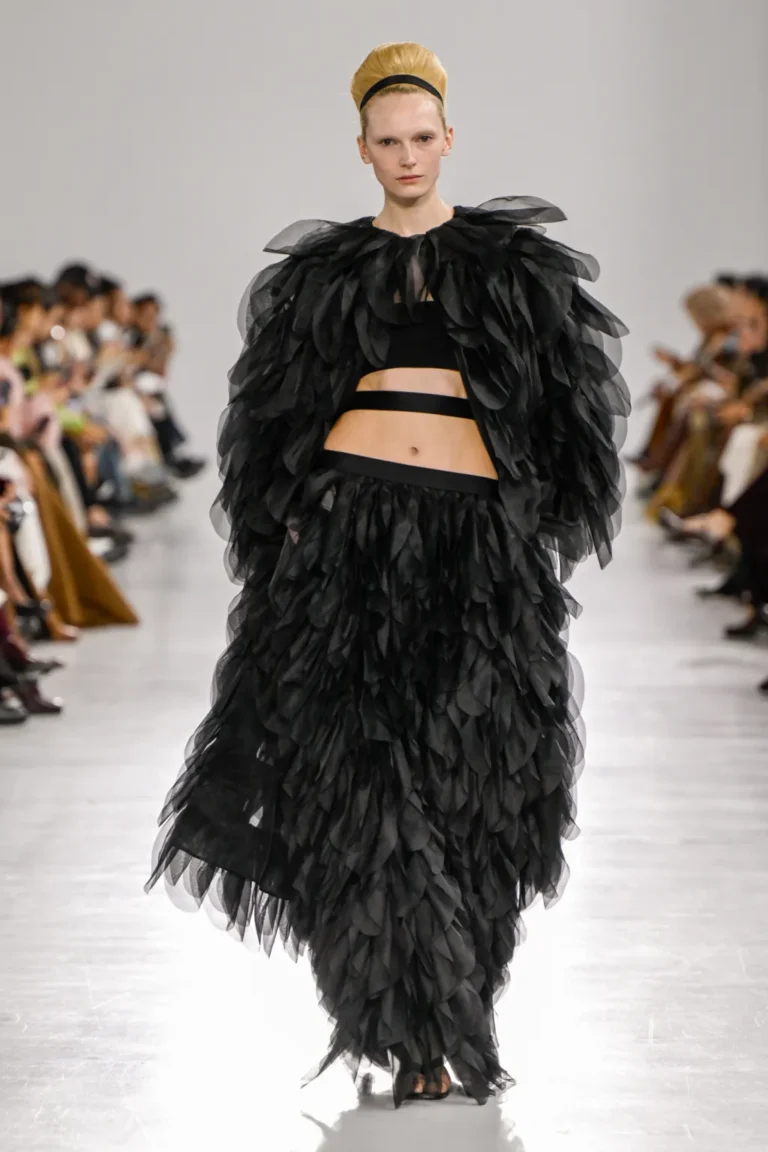
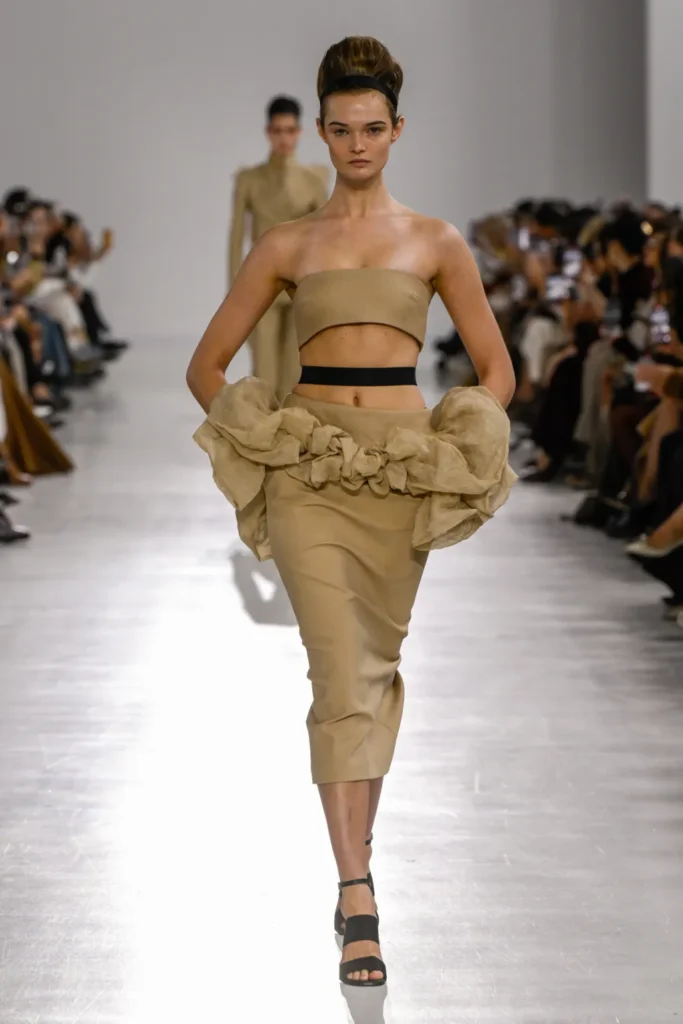
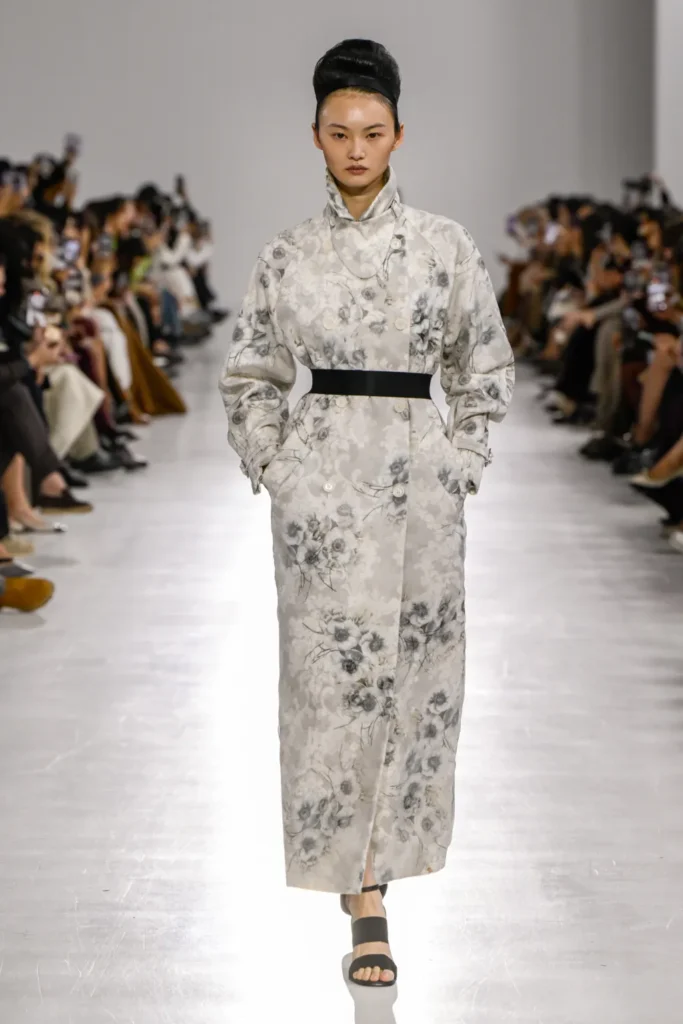
The palette leaned heavily into camel and beige, only occasionally interrupted by delicate florals or ghostly marine motifs, underscoring the house’s commitment to a more minimalist aesthetic amid Milan’s current maximalist wave. Yet, Griffiths injected organza garlands, fabric petals, and layered ruffles at shoulders and hips, infusing the collection with a fresh Rococo edge.

Unexpectedly, there were few coats—the brand’s historic backbone—but the short trench coats and fitted suits are sure to resonate commercially. What emerged was a vision of Max Mara that felt lighter, sensual, and contemporary, perfectly attuned to modern women’s need for versatility and sophistication.

Adding a personal note, Griffiths recalled his very first party outfit from the 1980s, hand-sewn from lining fabric on his mother’s machine: a broad-shouldered look with a whimsical frill, bridging the flamboyance of Bowie with the elegance of Pompadour, and encapsulating the dual spirit of this collection.

Etro Spring 2026 Collection

Etro Spring 2026 Collection

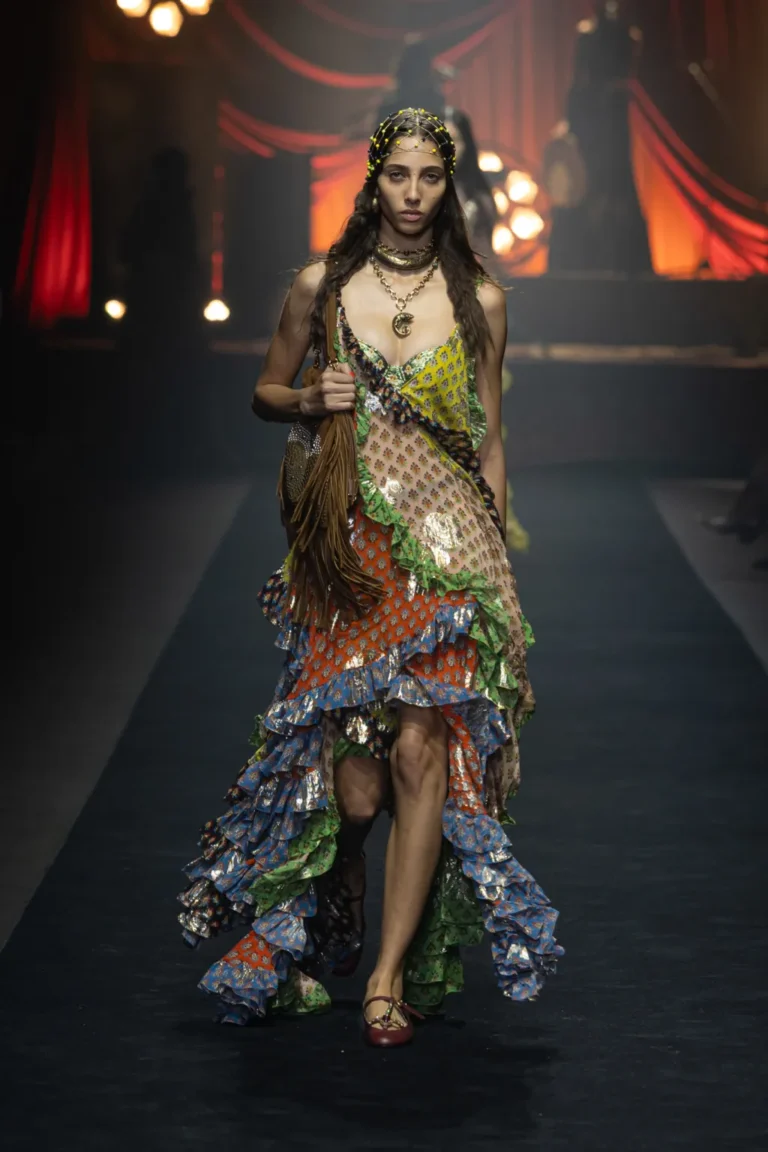
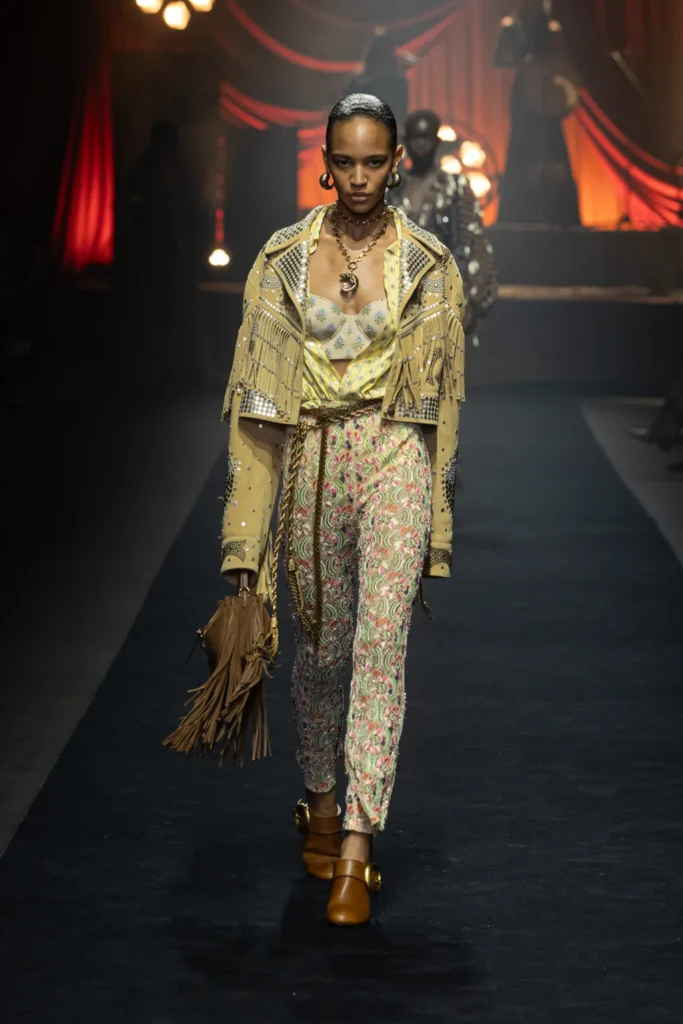
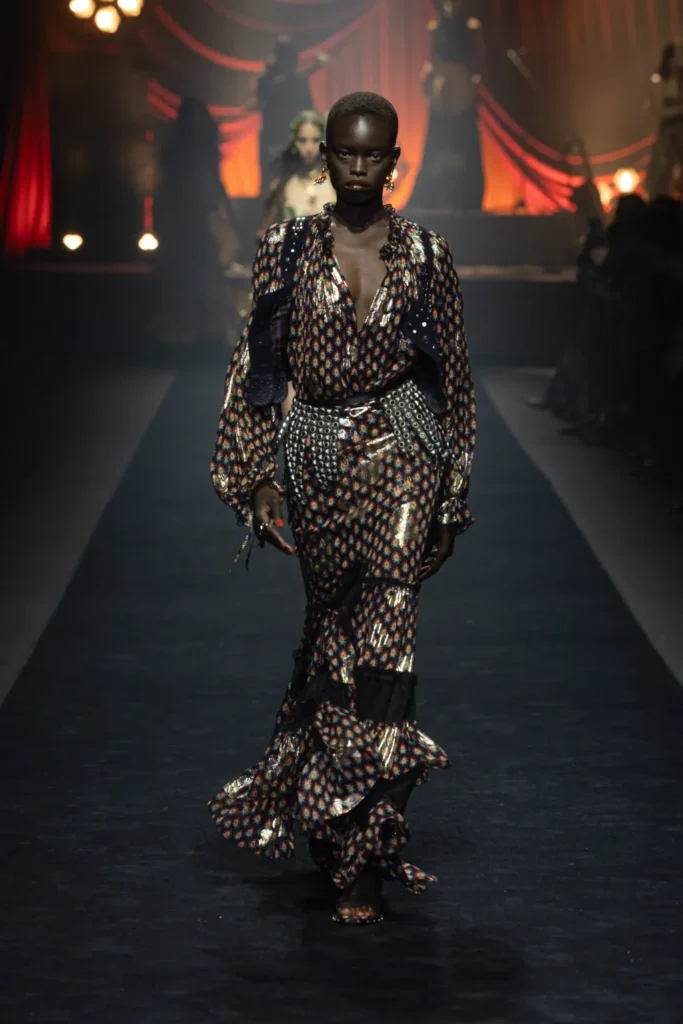
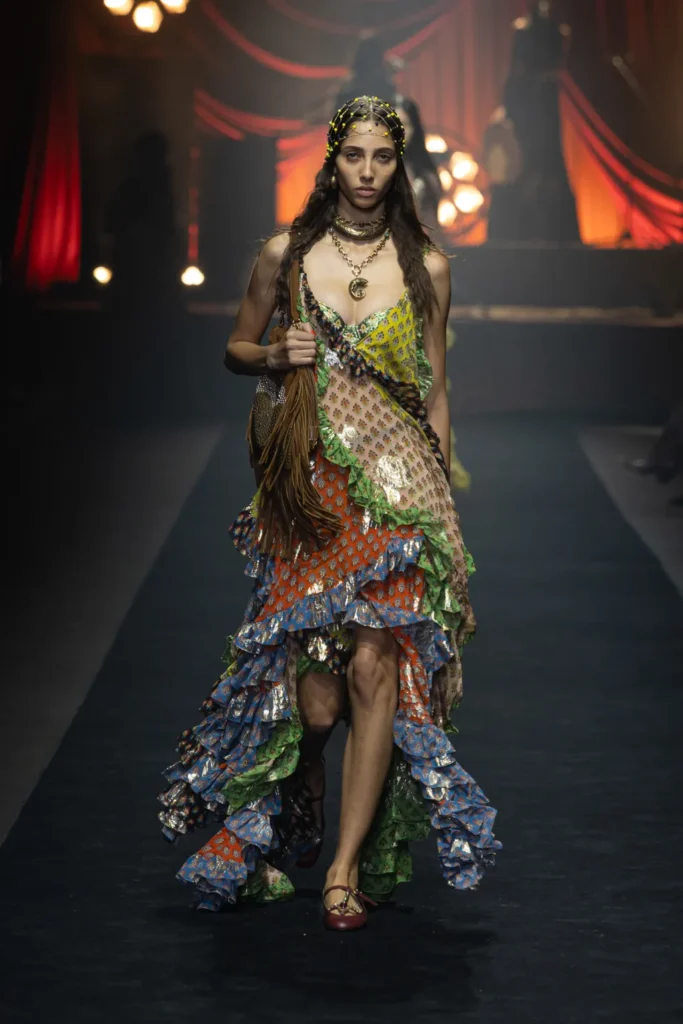
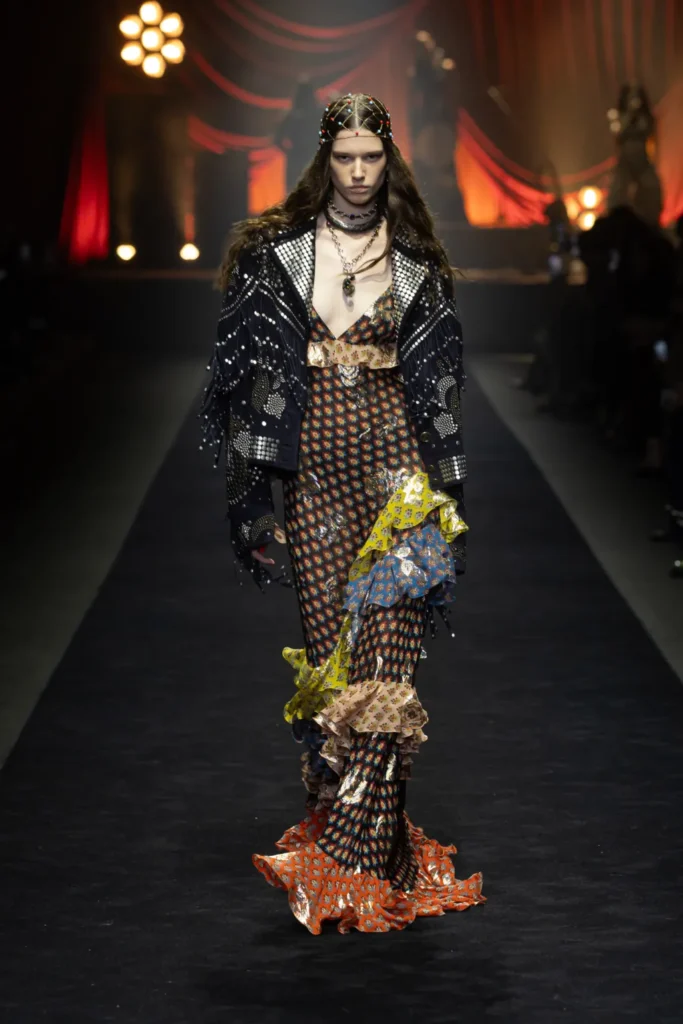
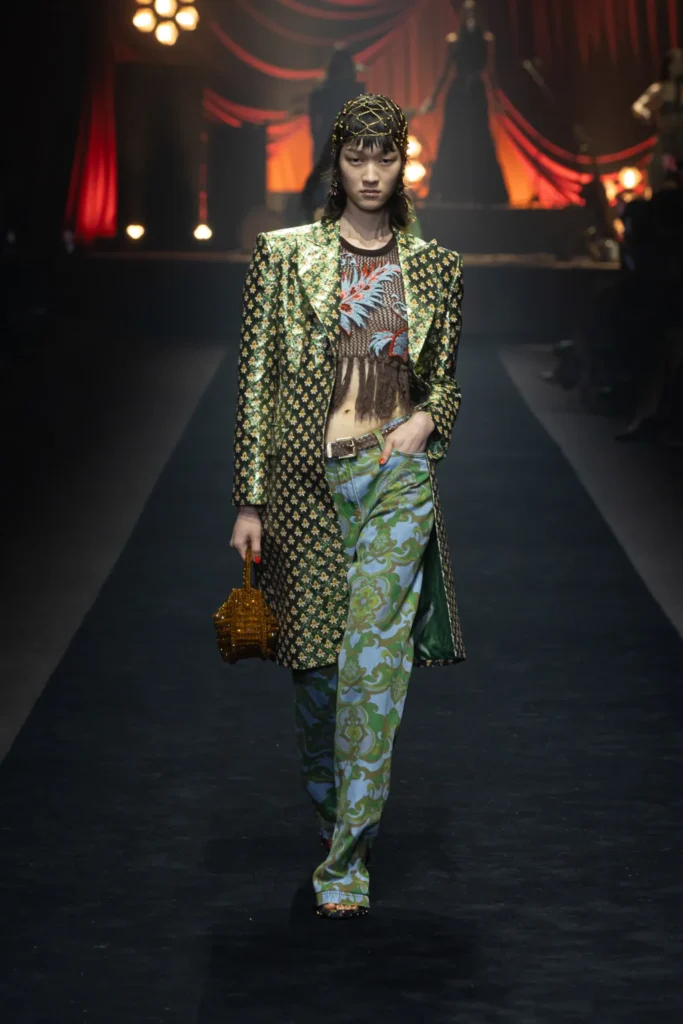
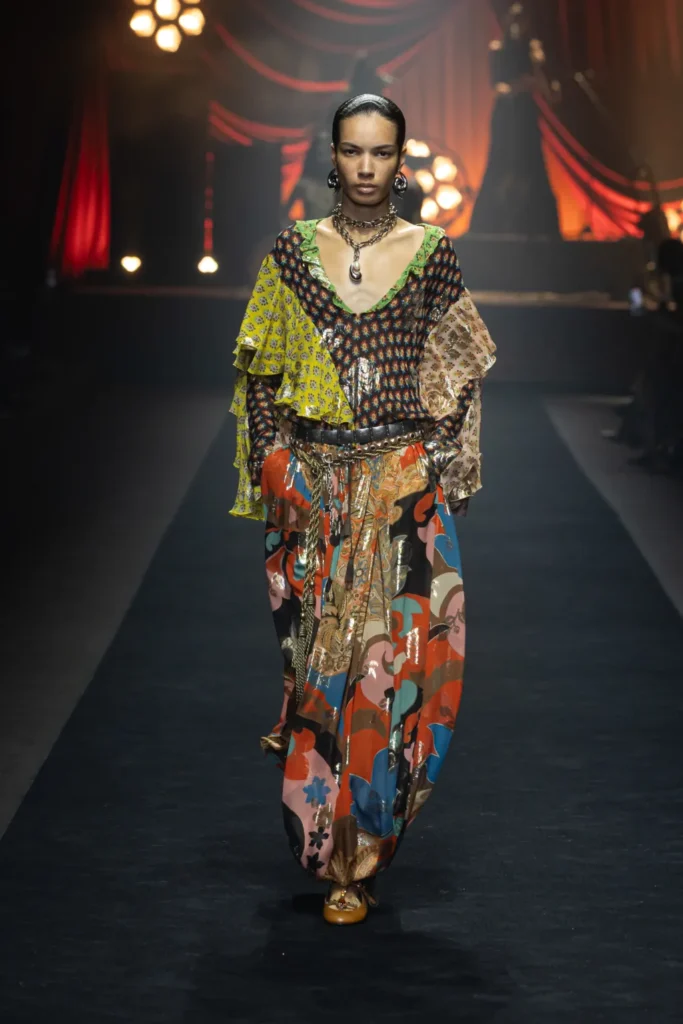
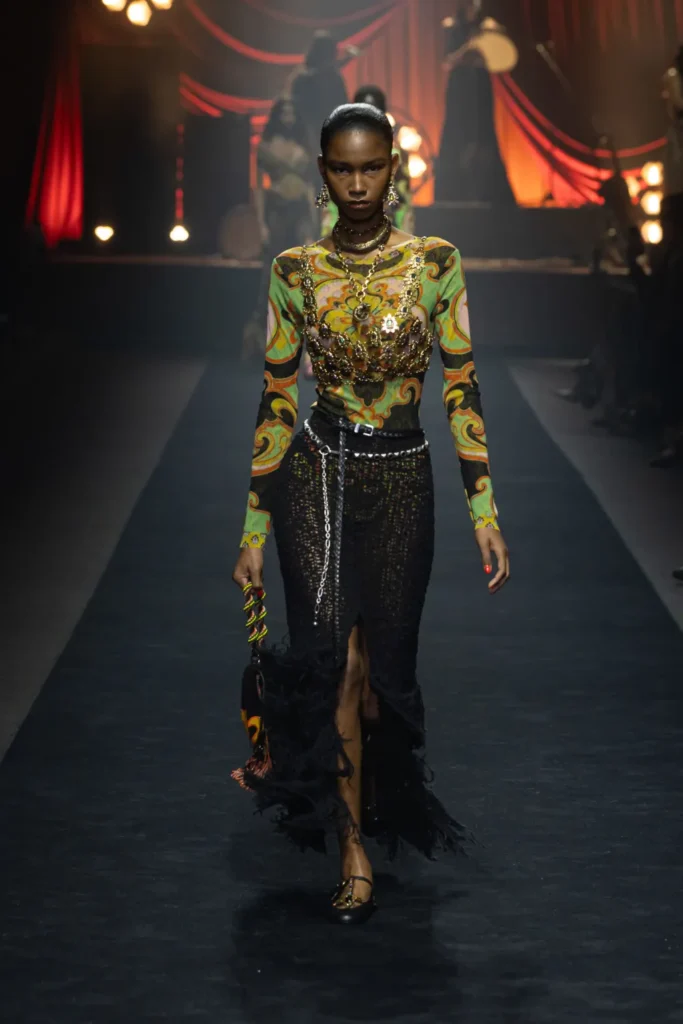
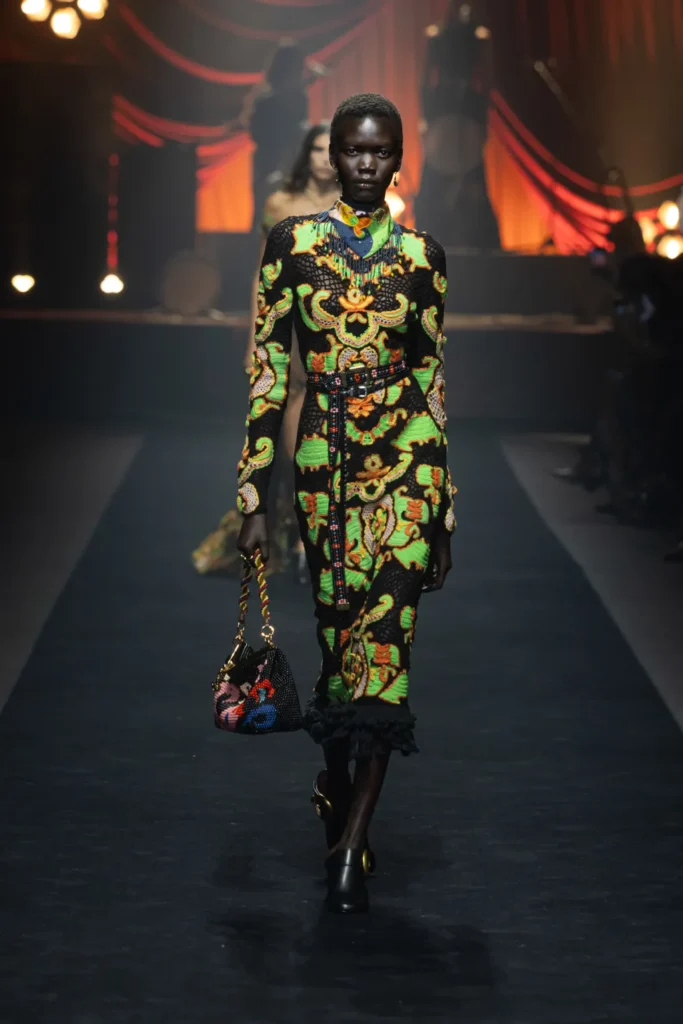
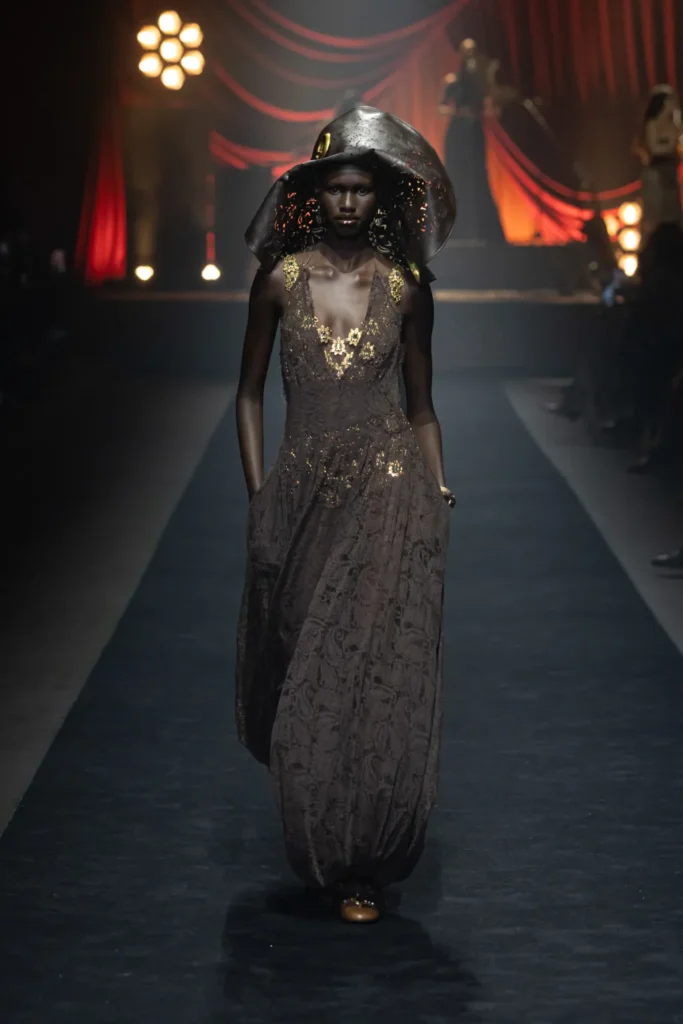
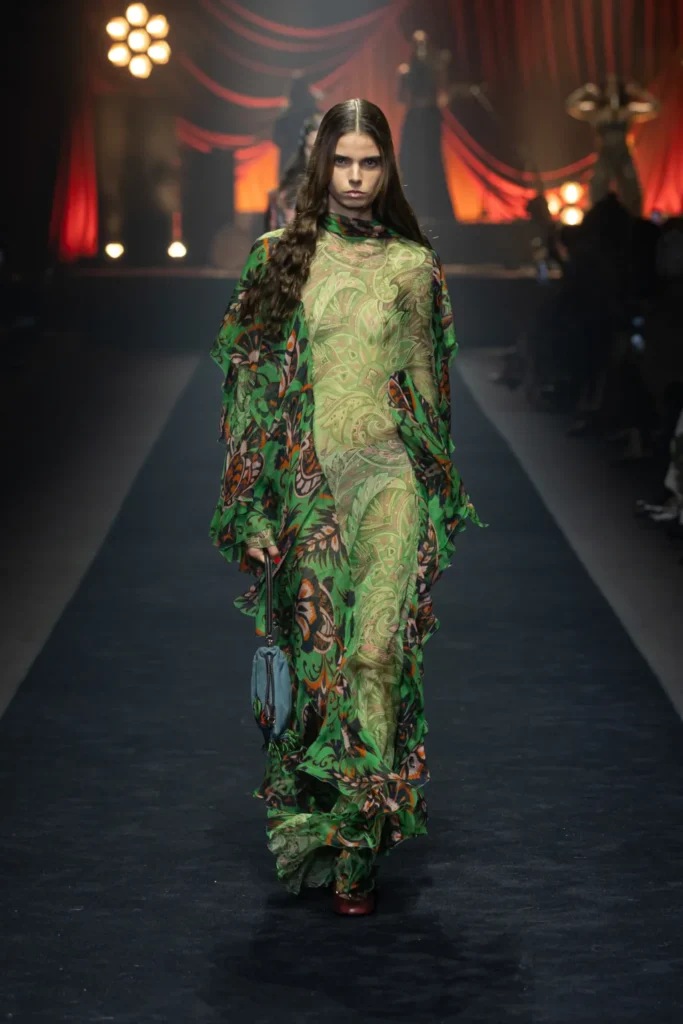
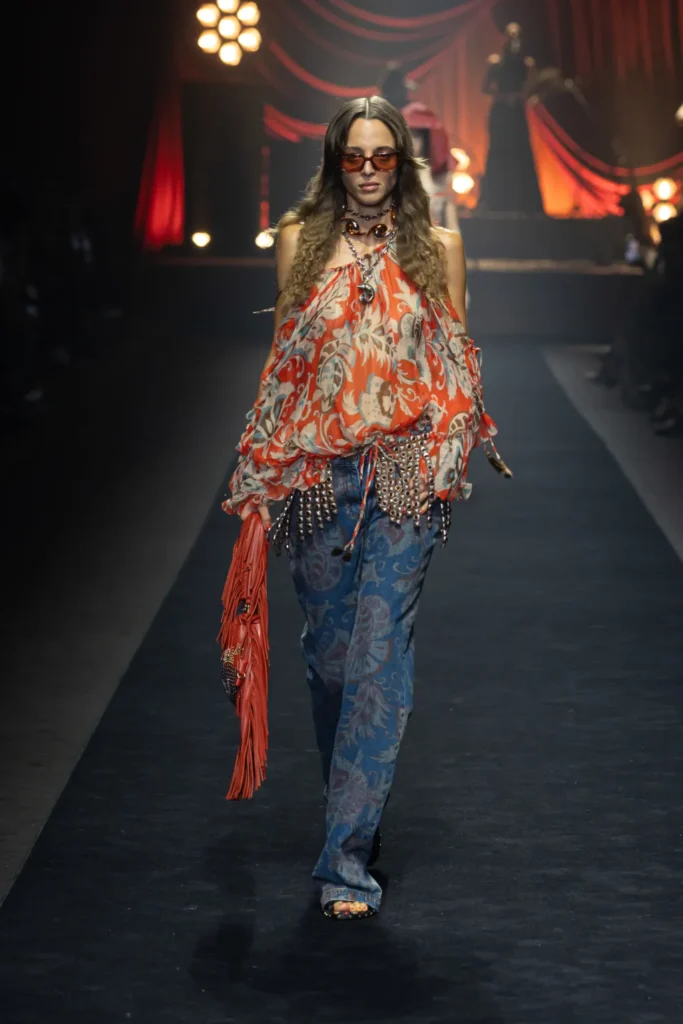
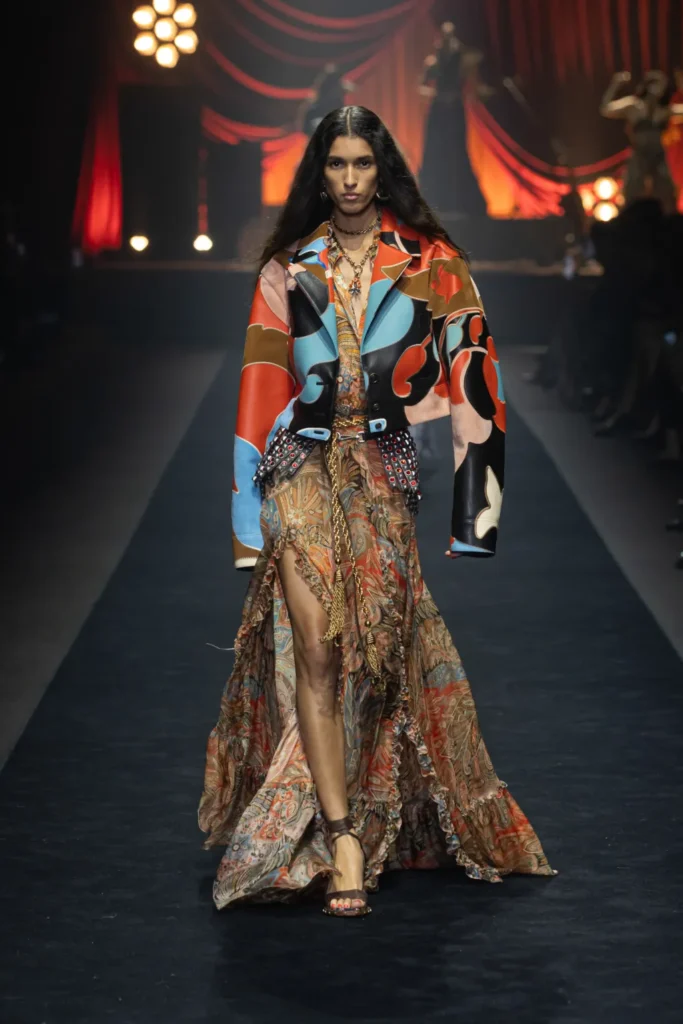
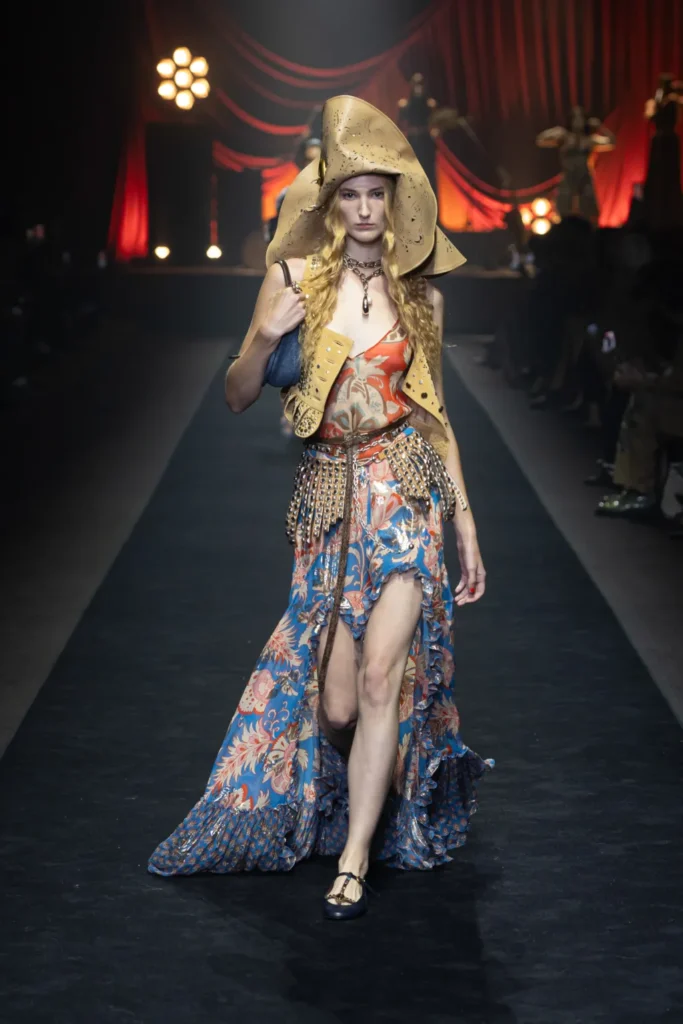
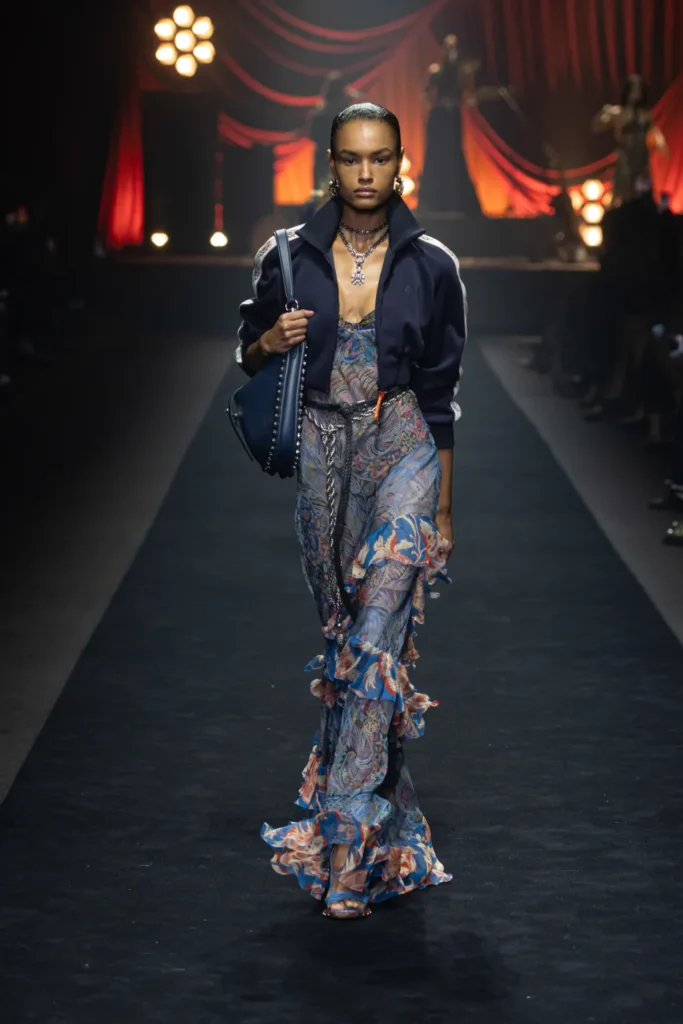
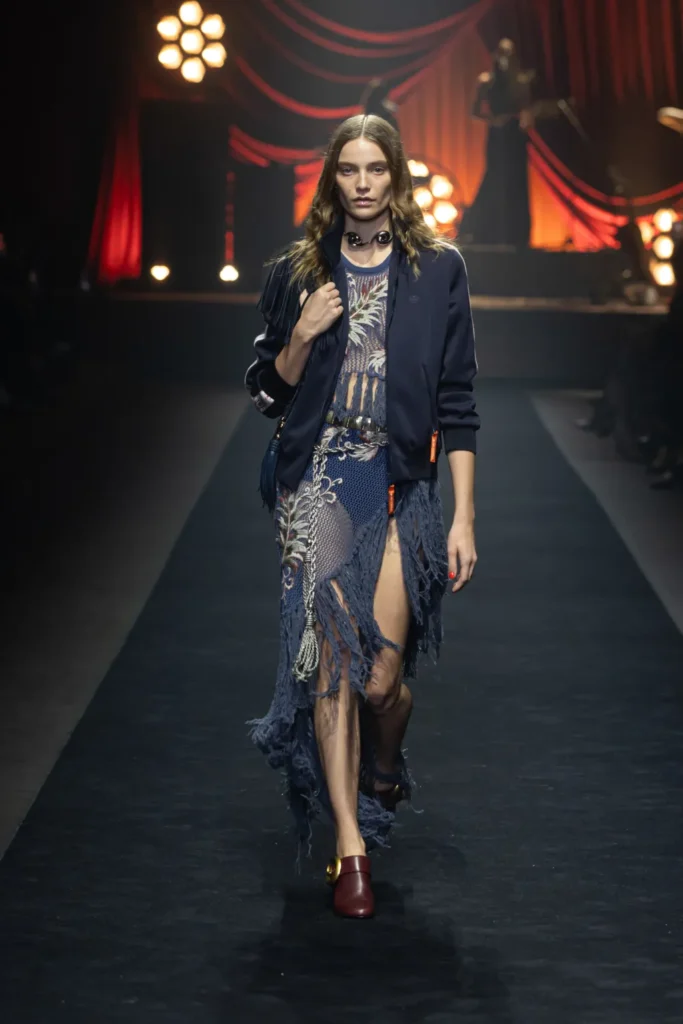
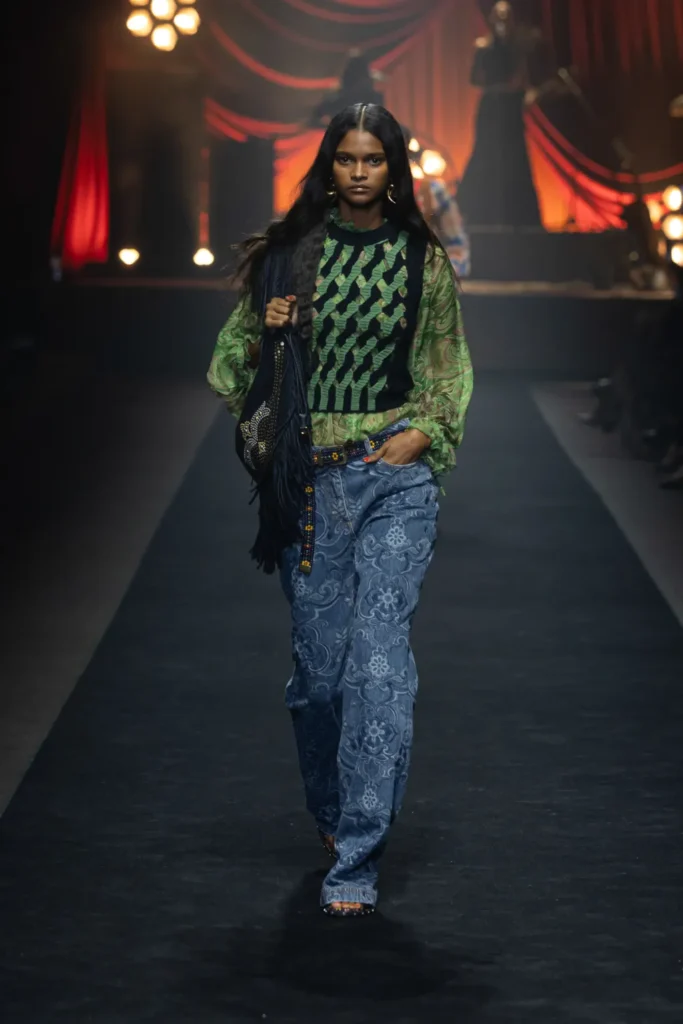
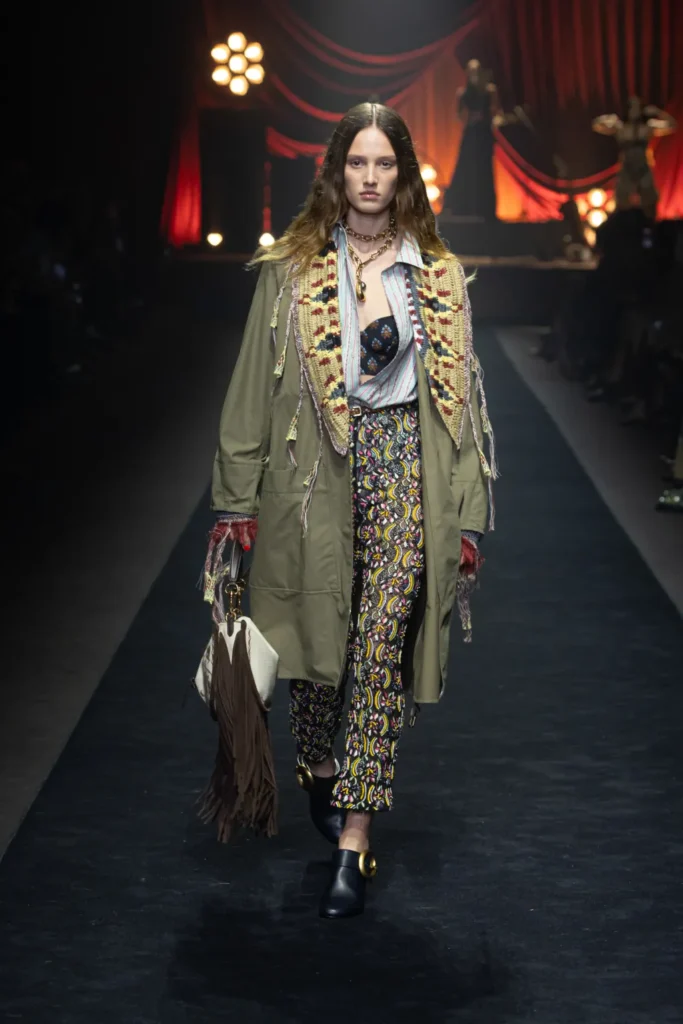
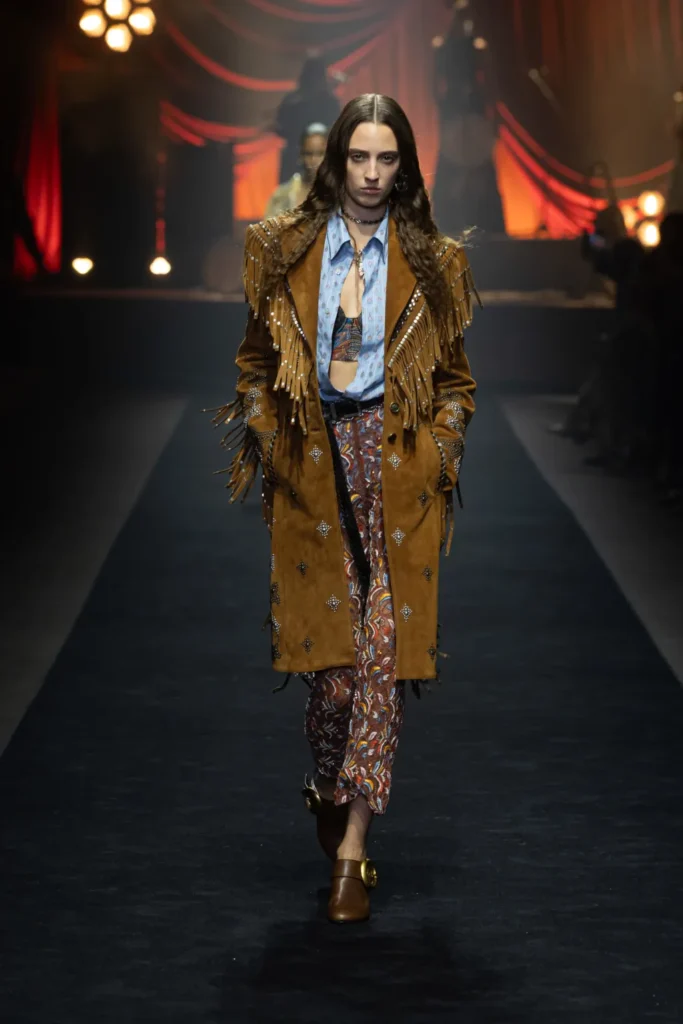
For Spring 2026, Marco de Vincenzo took Etro’s signature maximalism to its most exuberant expression yet, blending tradition with bold, contemporary energy. The collection was a feast for the senses: fringes, metallic studs, ruffles, crystal beads, and a cascade of the house’s iconic prints merged seamlessly with metallic brocades. Every element spoke to a vision of fashion that celebrates joyful self-expression and visual richness.

The runway came alive with the live performance of La Niña, a folk artist from Naples known for combining the Neapolitan dialect with electronic sounds and multi-layered harmonies. Her music, amplified by her band and backup singers, created an immersive atmosphere reminiscent of a 1970s underground club, and de Vincenzo explained that the collection’s rhythm and flow were deeply inspired by her music, making it an integral part of the design process rather than a simple soundtrack.

Among the standout pieces were daring flounced skirts with side slits, modernized jeans subtly embossed with Etro motifs, and densely adorned statement bags, which added a sophisticated counterpoint to the more opulent garments. The mix of textures, patterns, and embellishments demonstrated de Vincenzo’s skill at balancing maximalist intensity with wearable artistry.

After three years leading the house, Marco de Vincenzo has clearly embraced Etro’s legacy, merging its heritage with his personal vision: an unapologetic celebration of color, pattern, and exuberance, now elevated to an almost theatrical scale. The collection reaffirms Etro’s position as a house where maximalism is not just a style but a philosophy of joyful creativity and cultural storytelling.

Courtesy of Etro

Fendi Spring 2026 Collection

Fendi Spring 2026 Collection

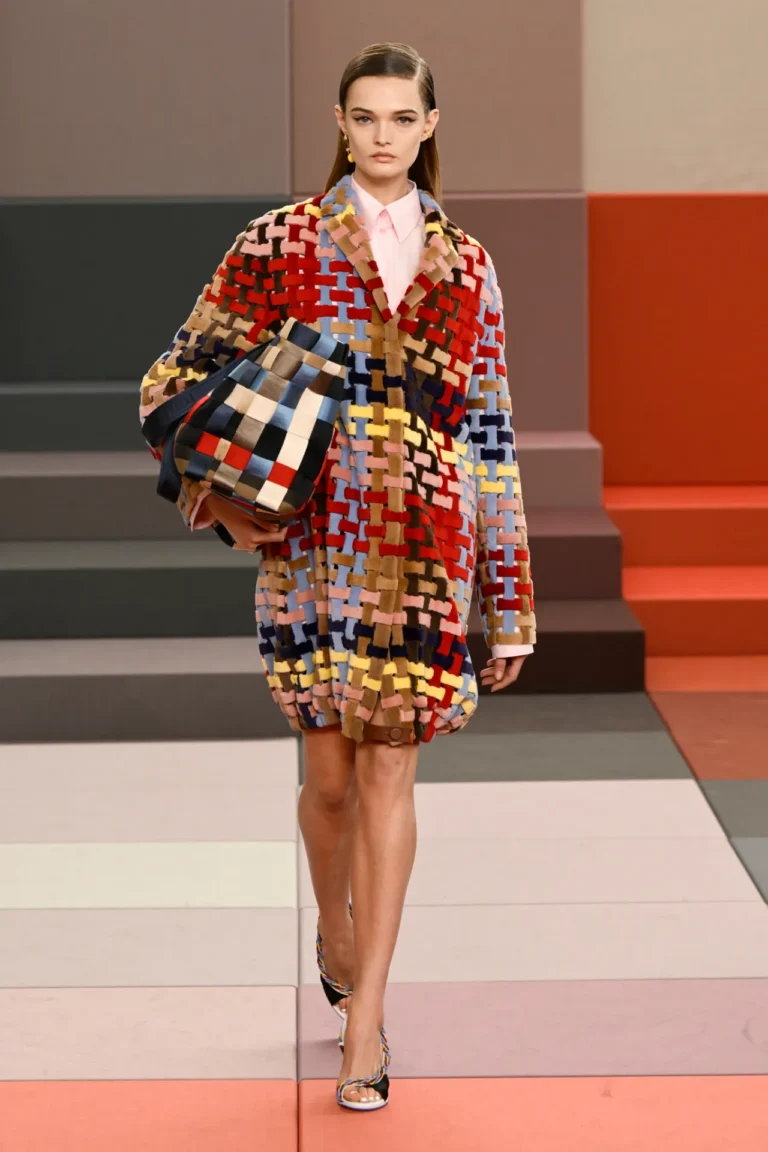
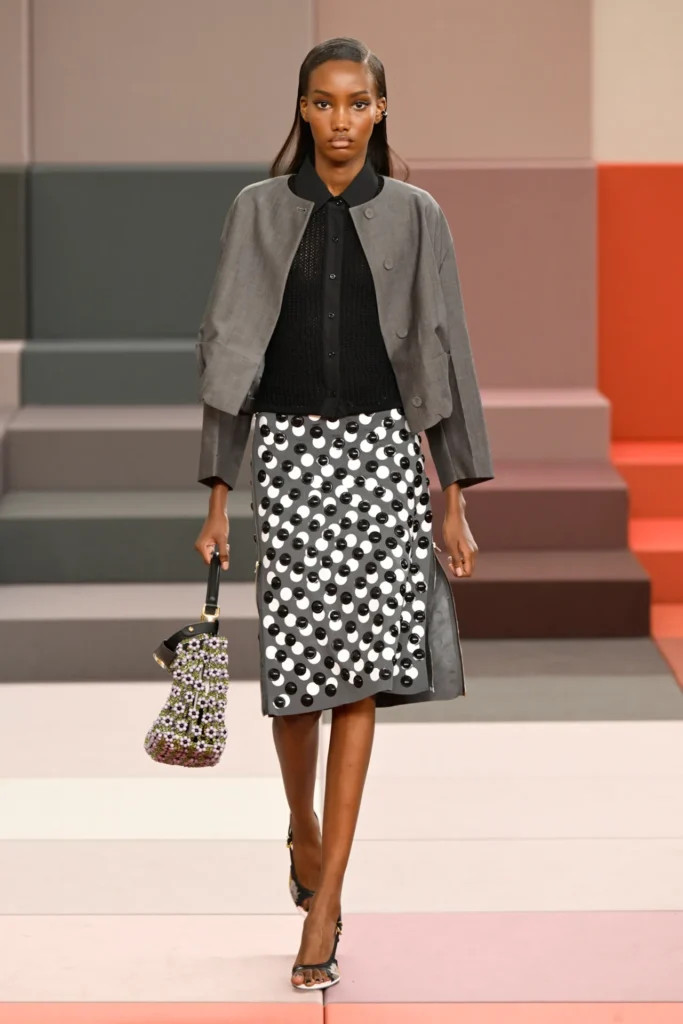
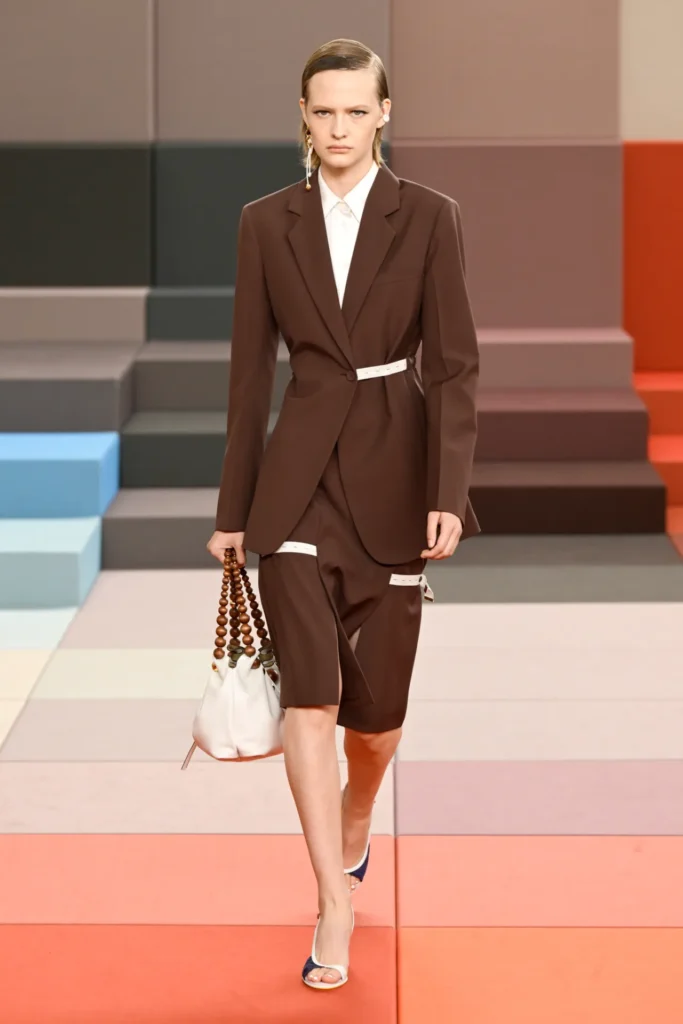
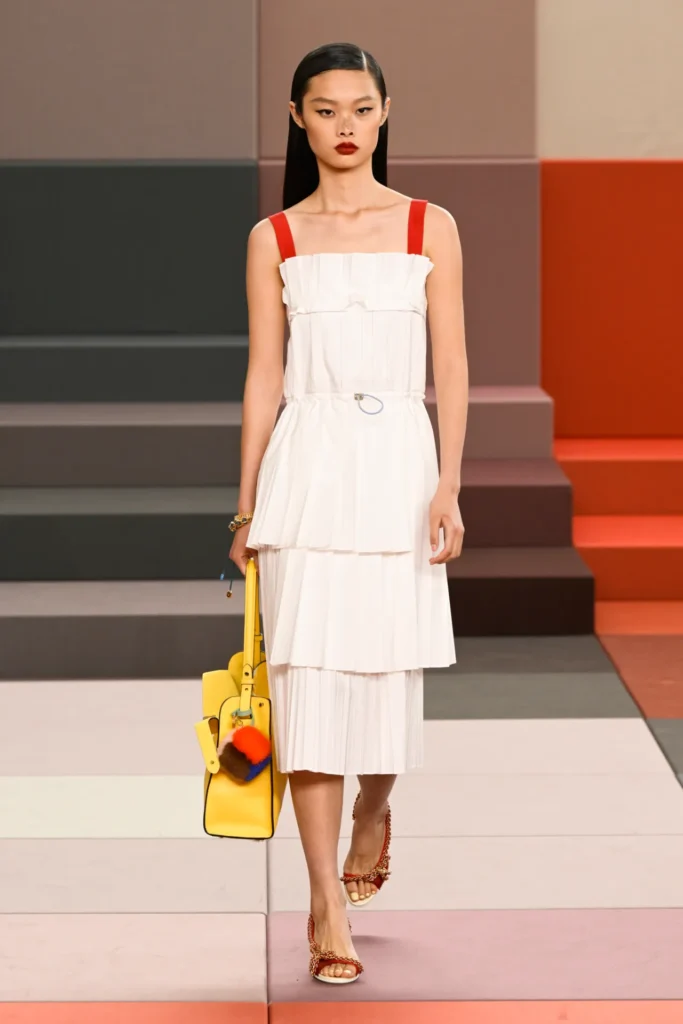
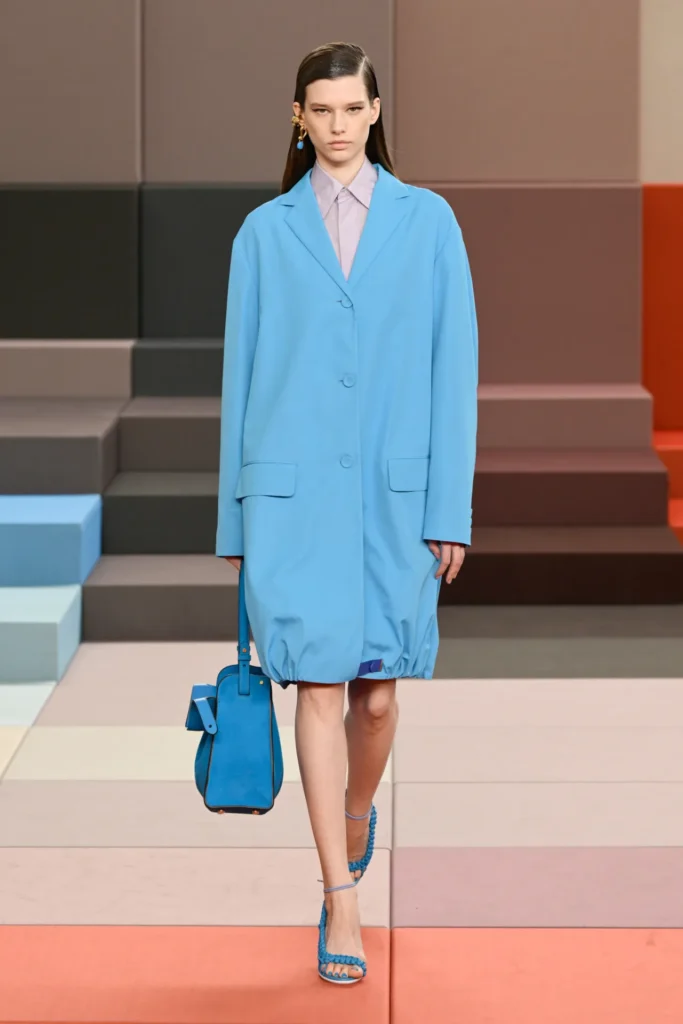
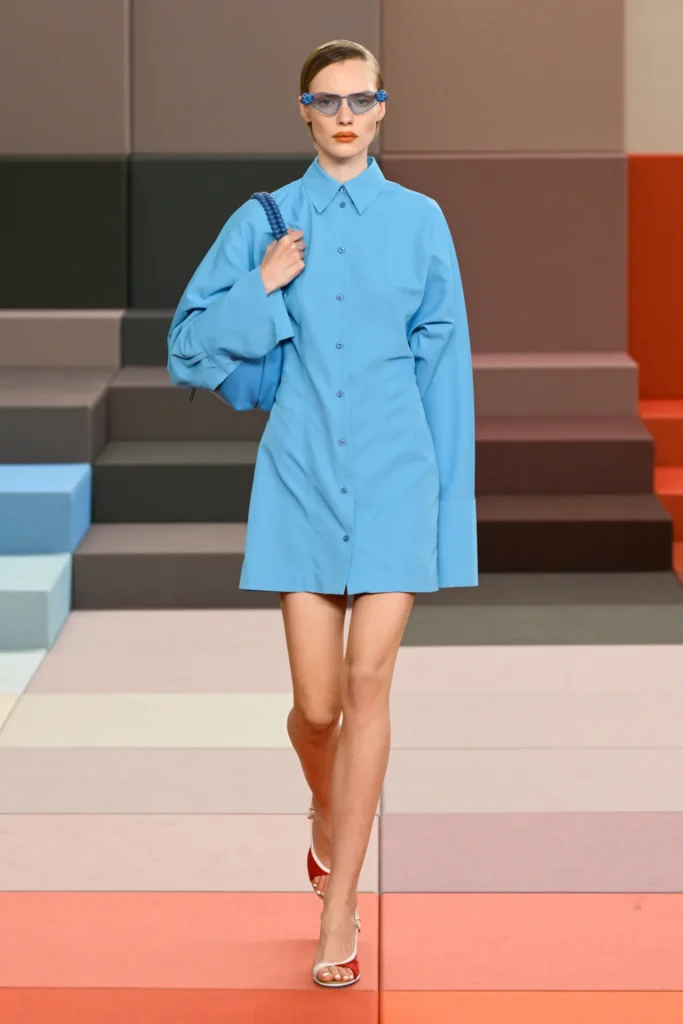
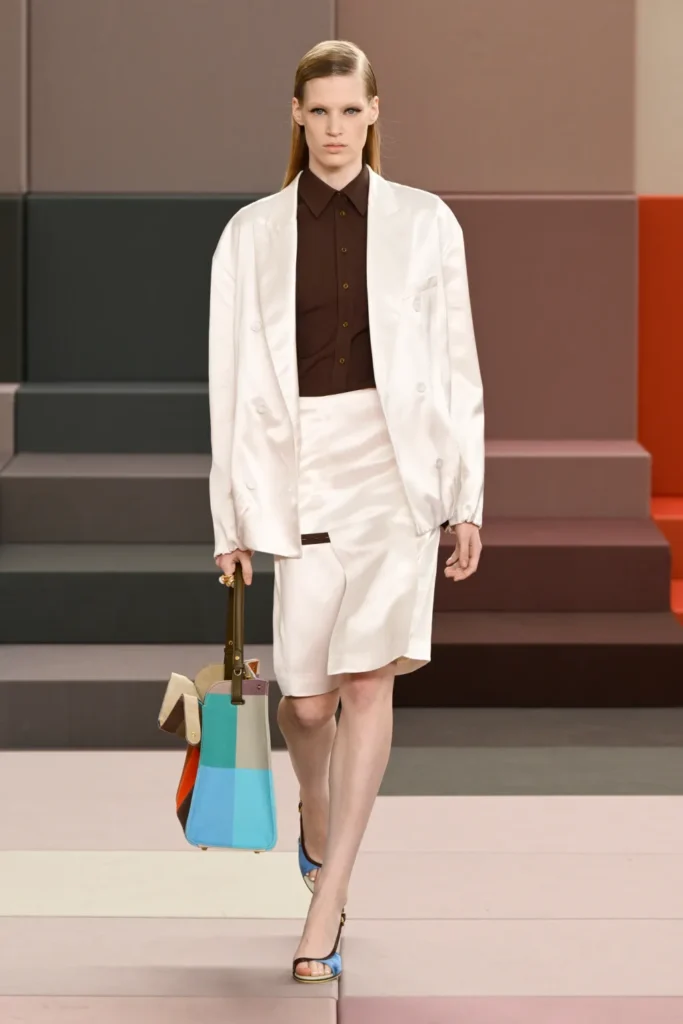
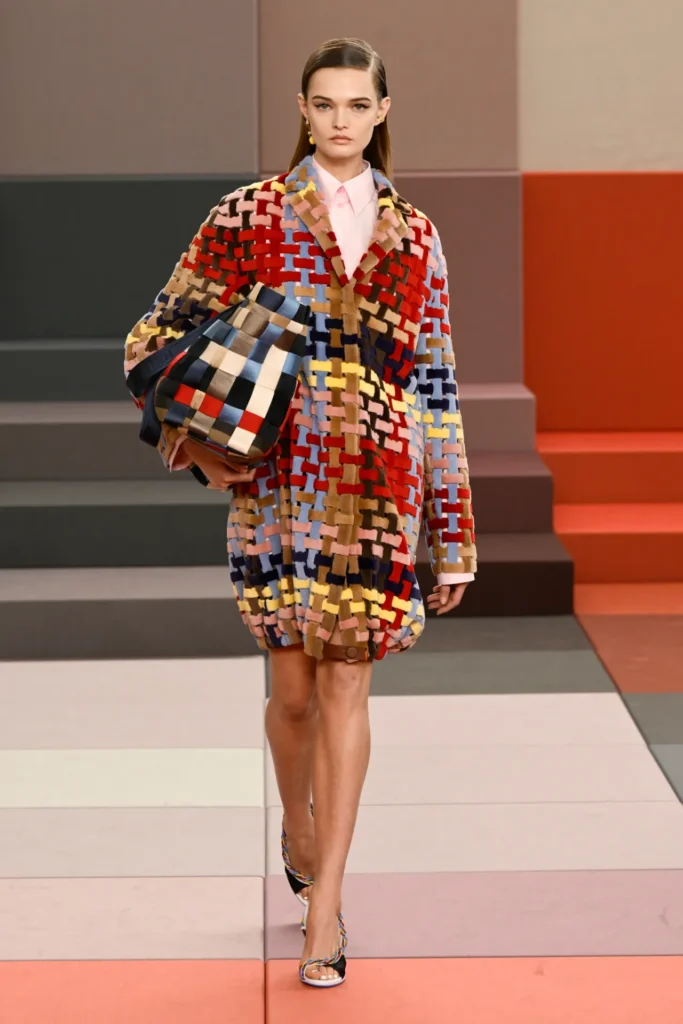
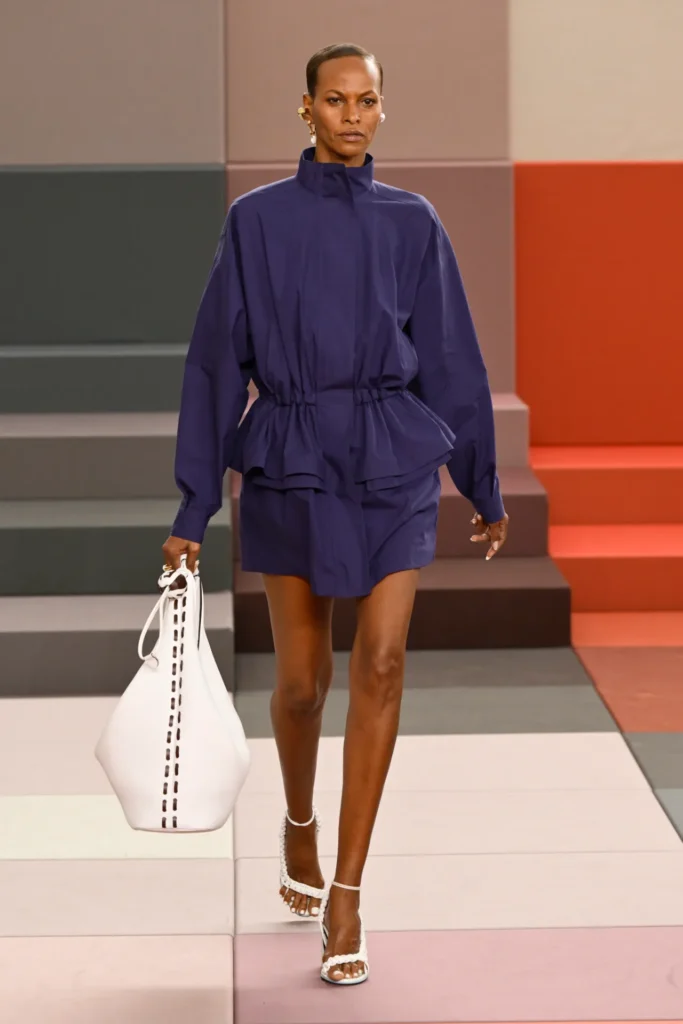
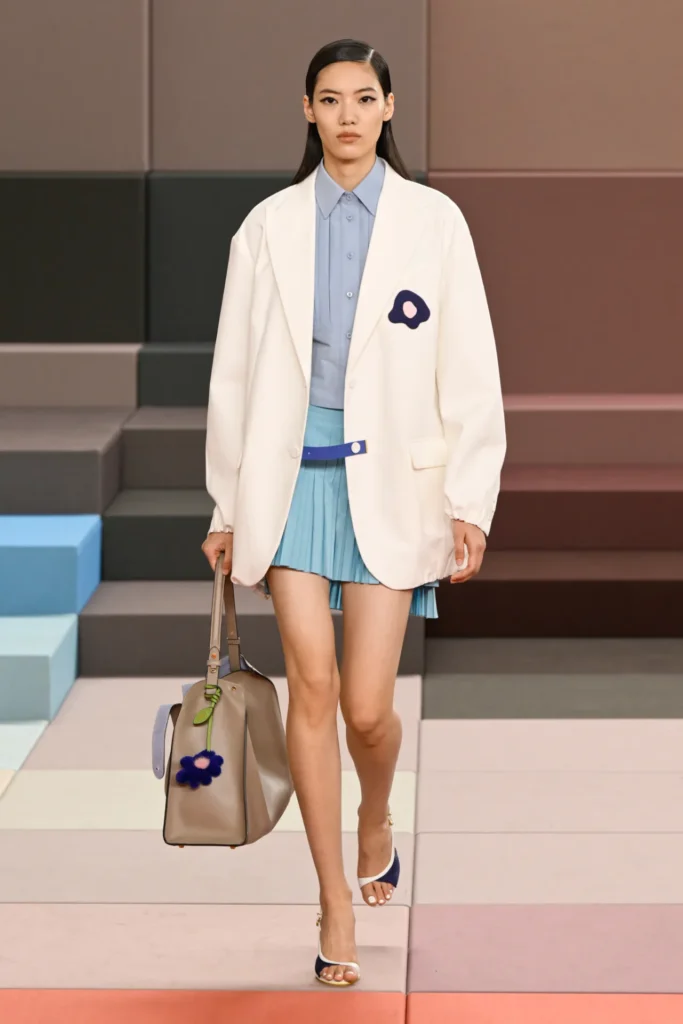
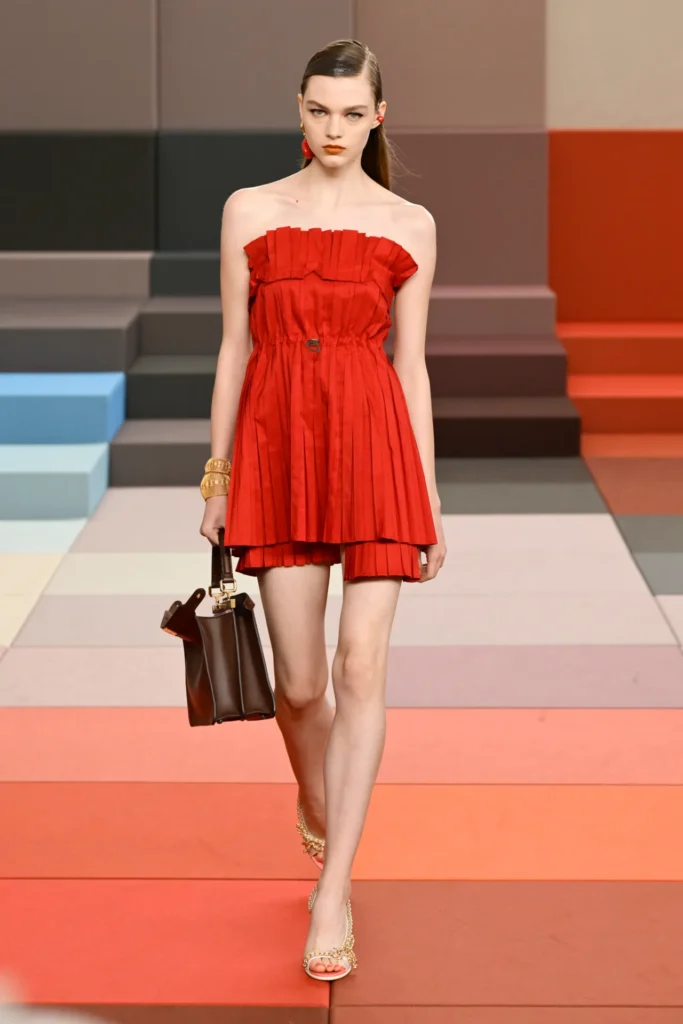
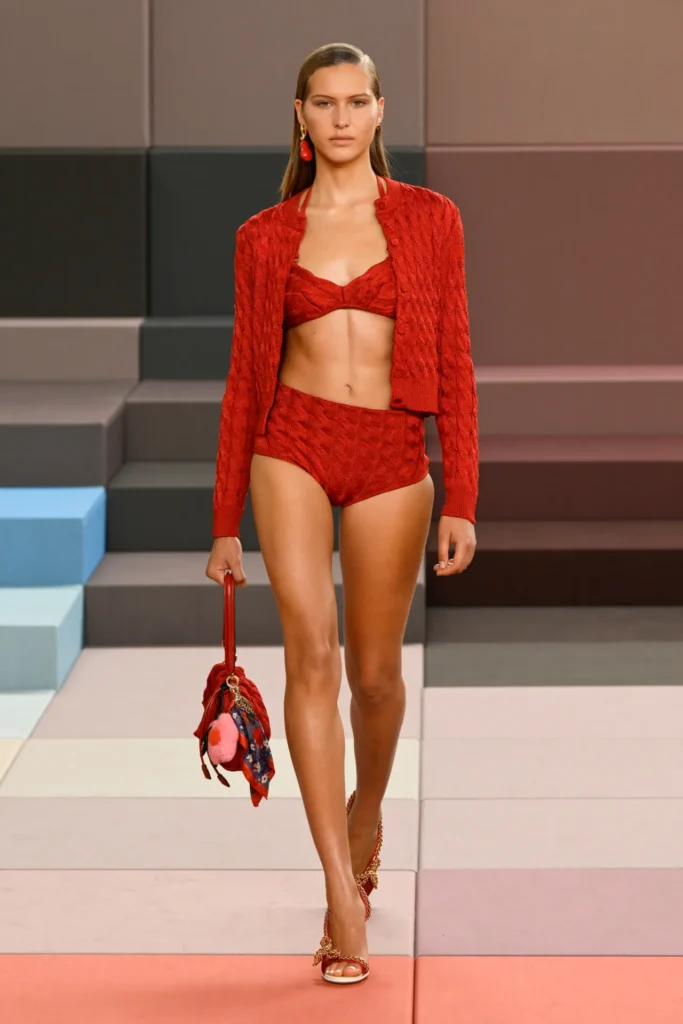
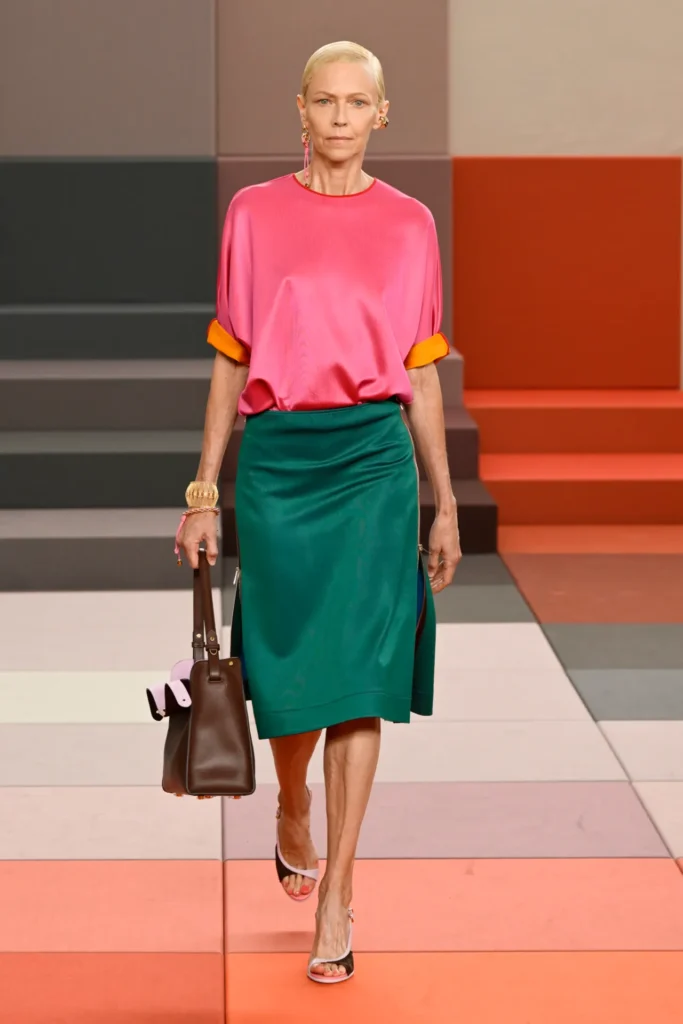
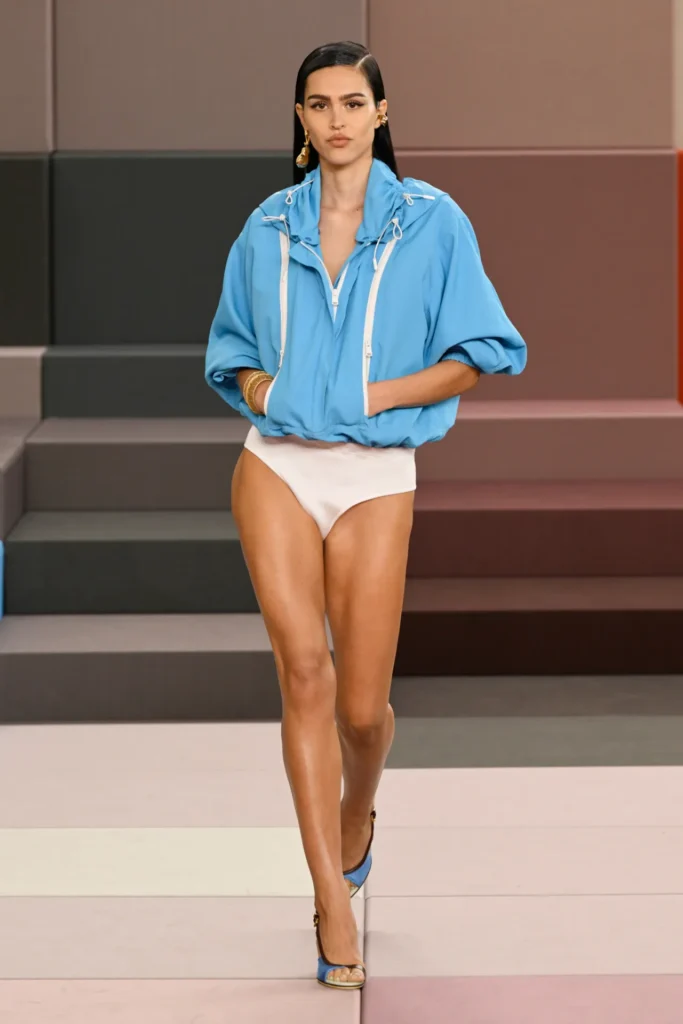
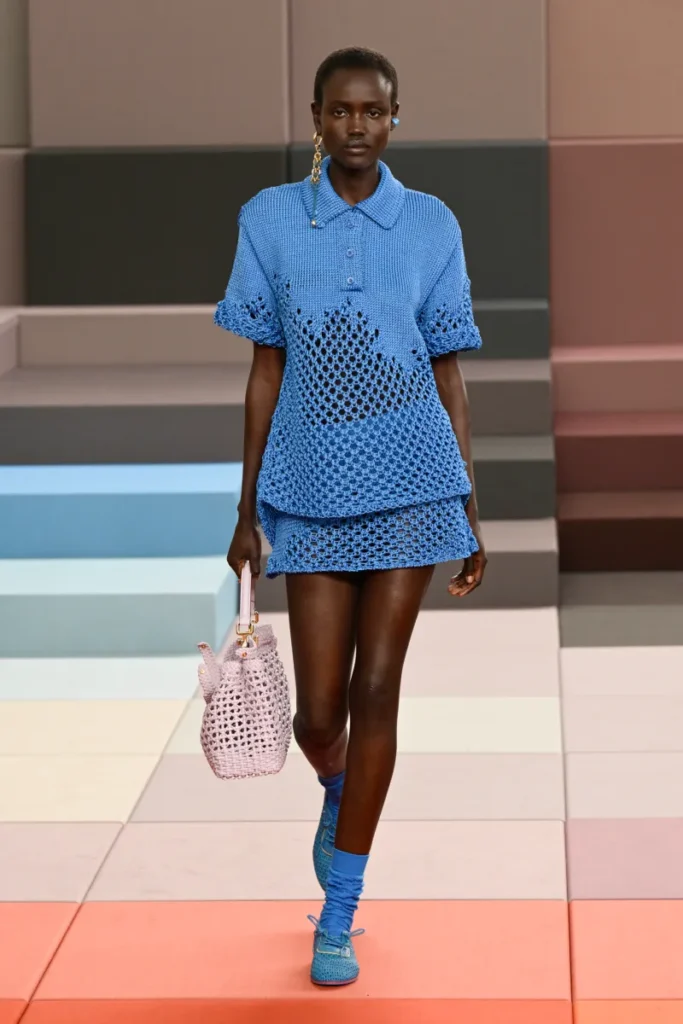
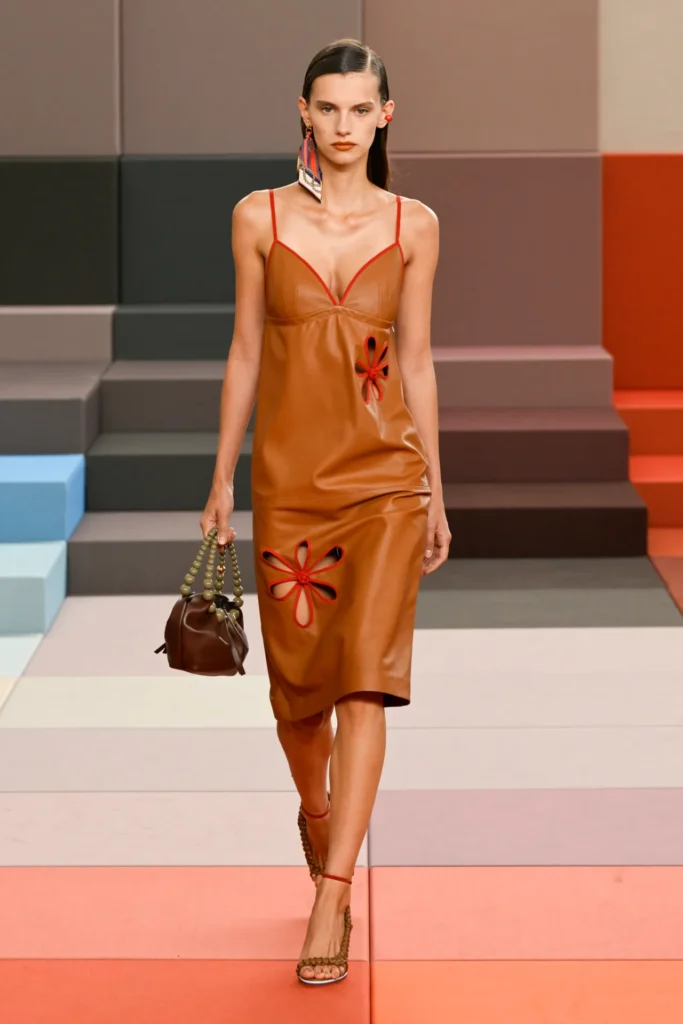
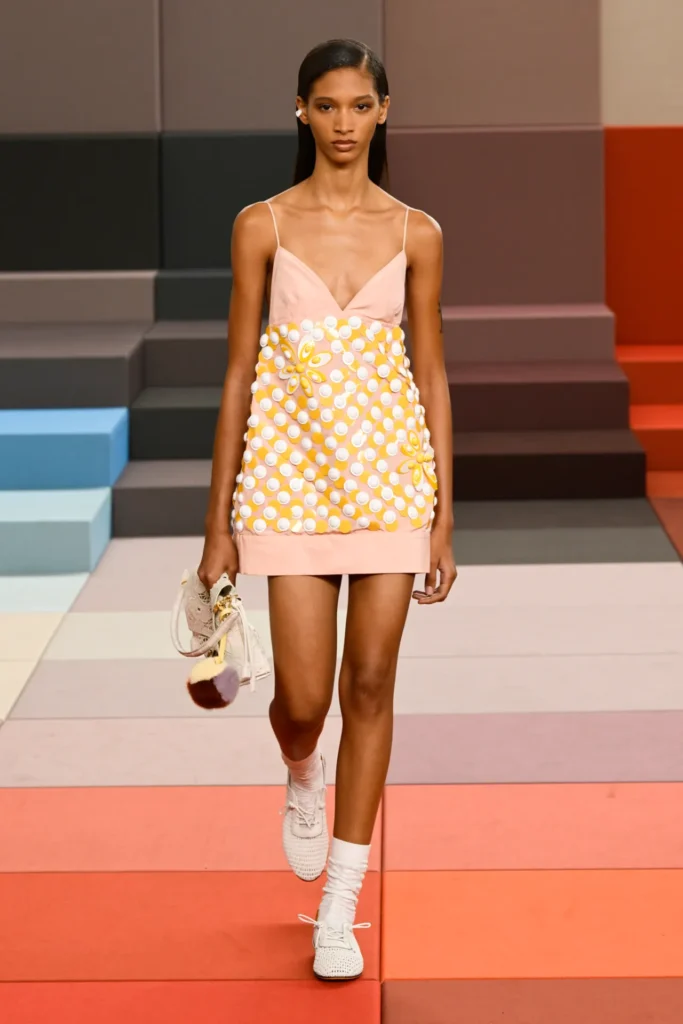
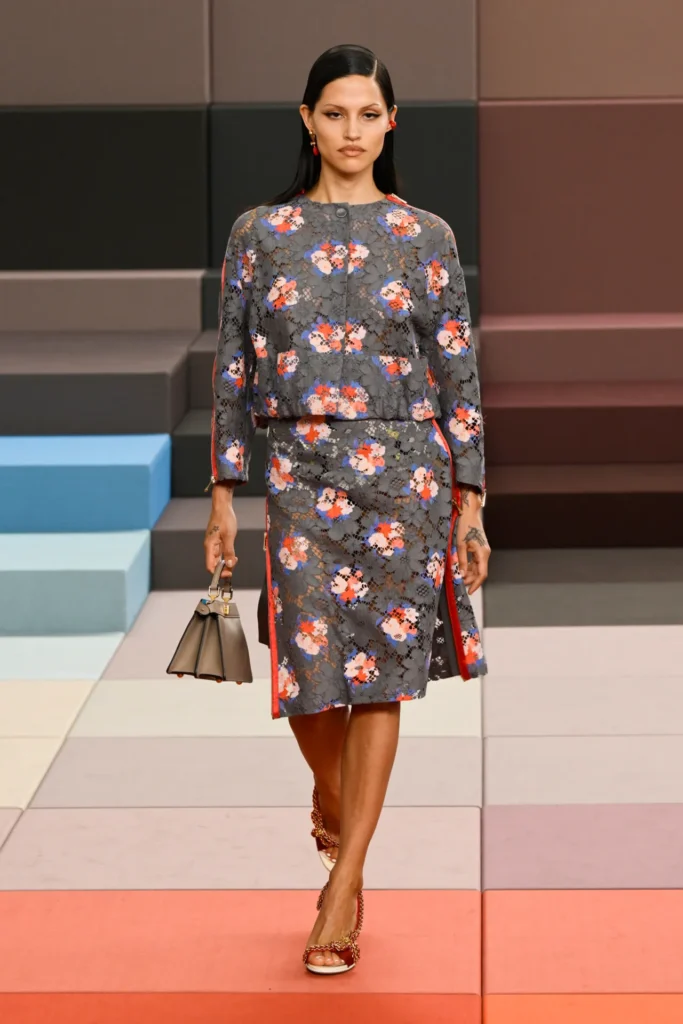
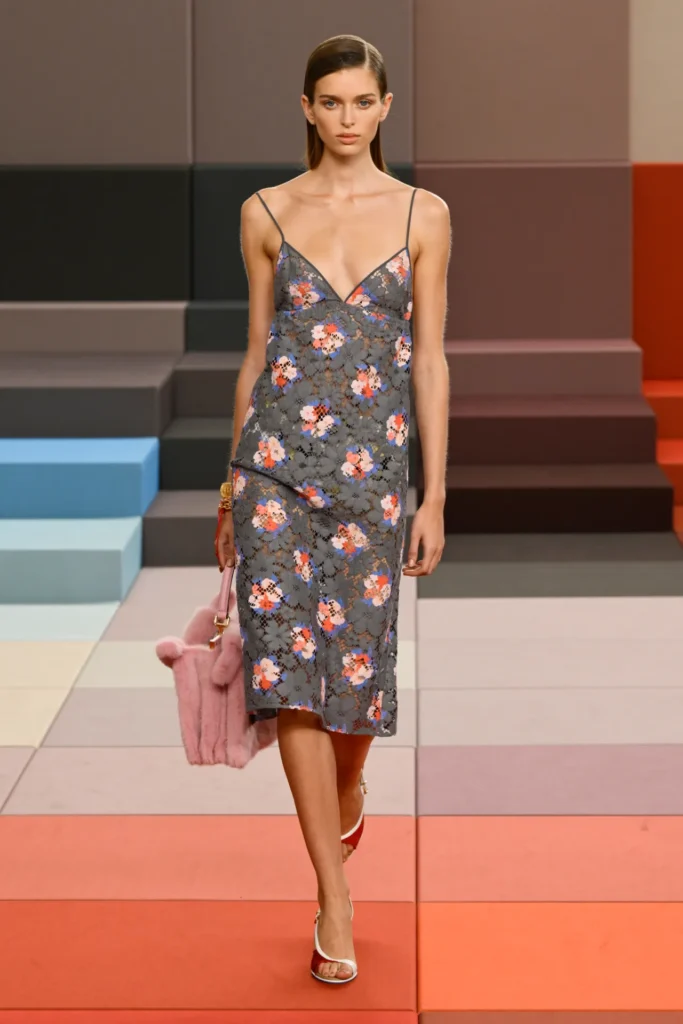
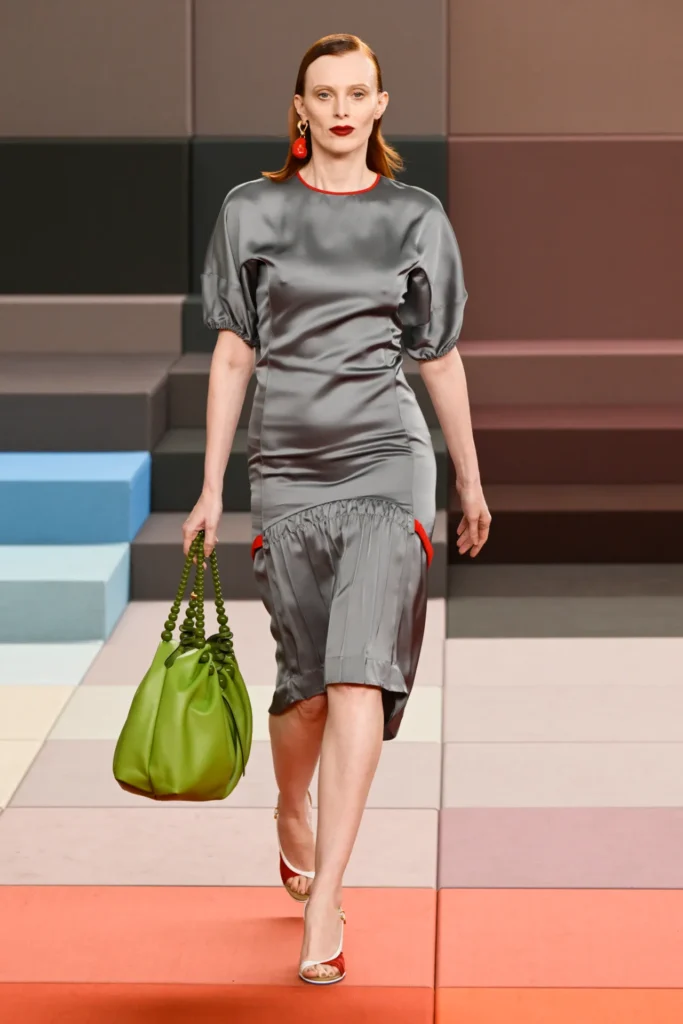
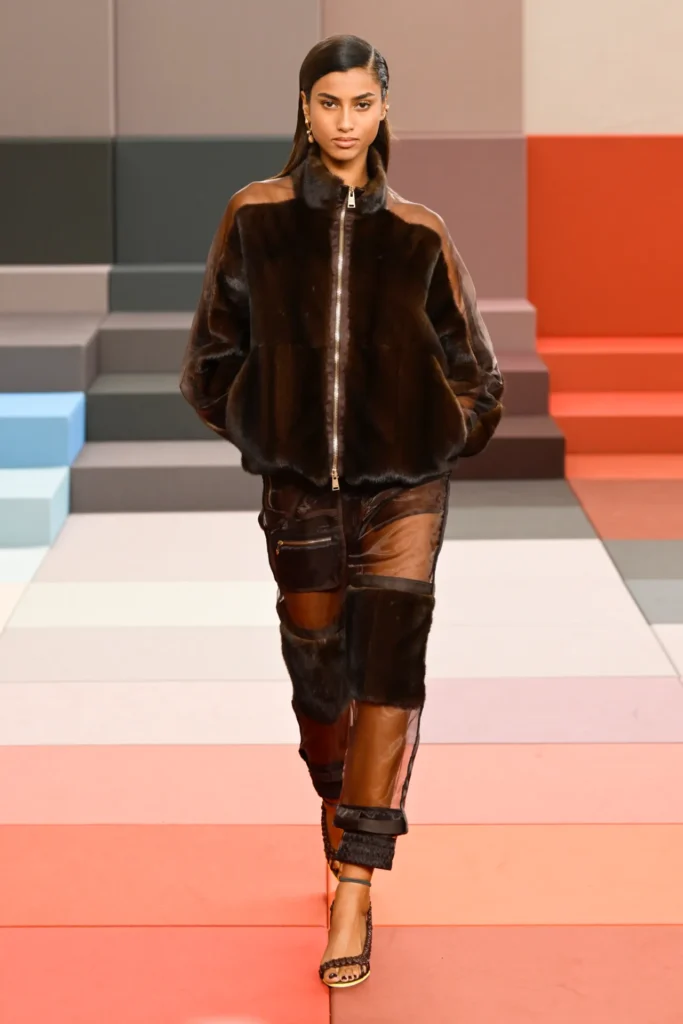
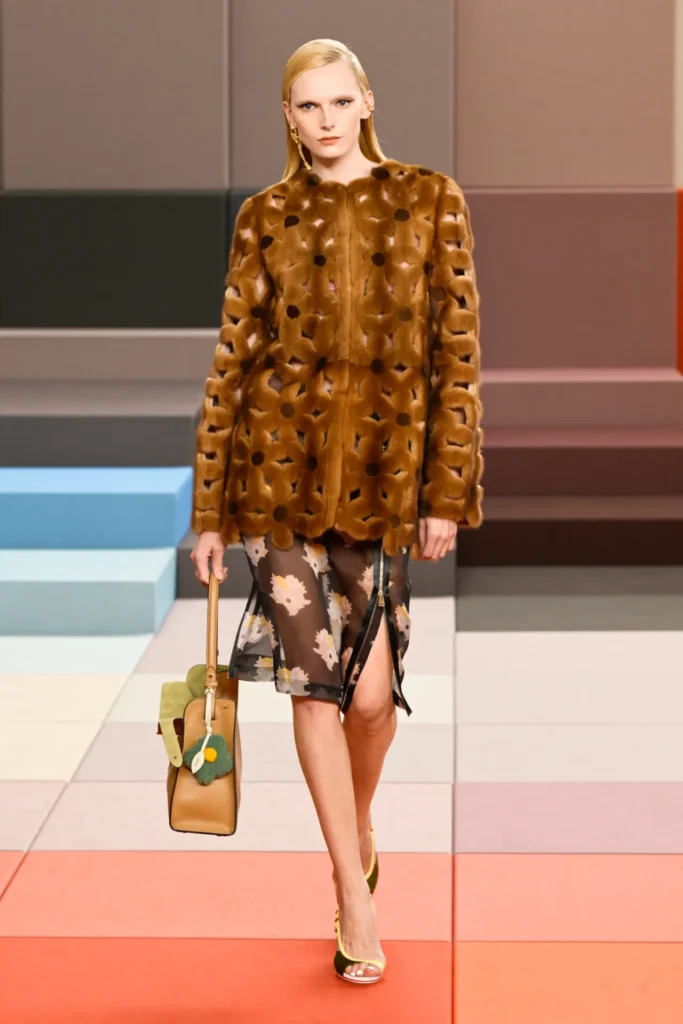
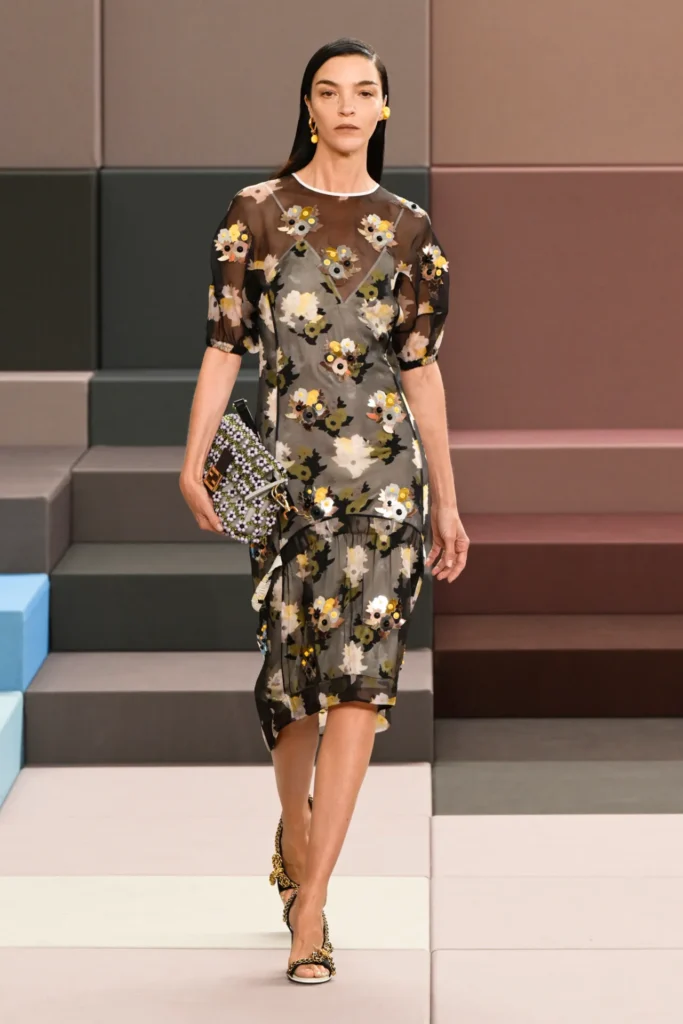
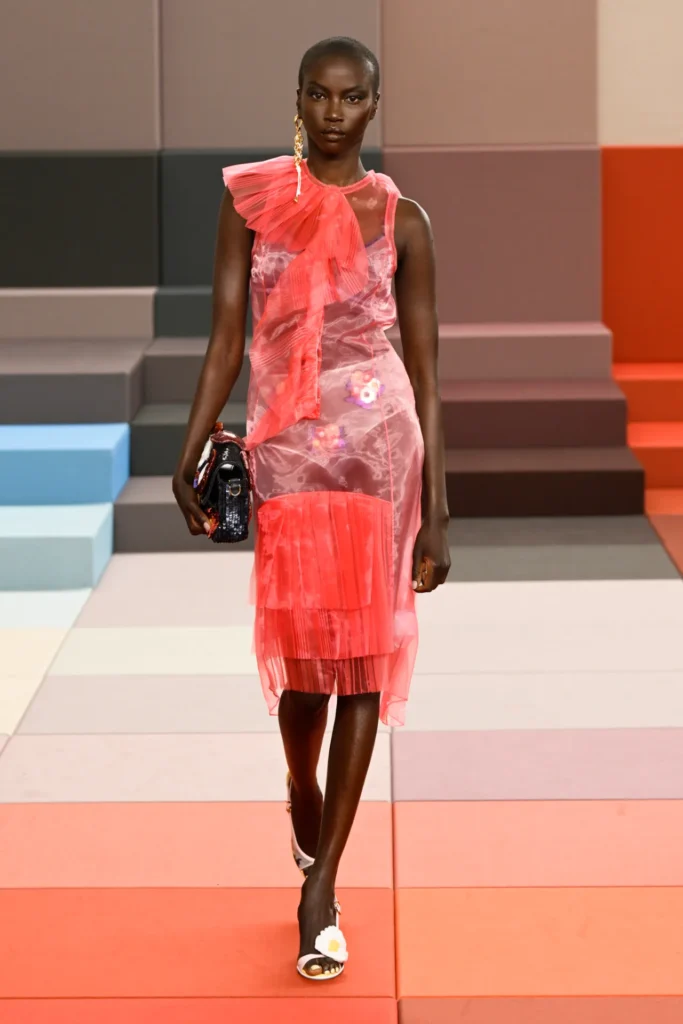
On a pixelated, wave-like stage designed by Marc Newson, Silvia Venturini Fendi unveiled a vision that redefined the very notion of “quiet luxury,” immersing it in a kaleidoscope of bold colors, psychedelic floral motifs, and theatrical accessories.

The collection highlighted the fusion of sportswear codes with couture craftsmanship: drawstrings, adjustable straps, elastic hems, and zippers appeared reinterpreted in luxurious versions, crafted in silk faille, laser-cut perforated leather, and glossy lightweight fabrics. A sporty jacket, paired with a sleek pencil skirt, evolved into the maison’s new idea of eveningwear.

Accessories took center stage. The iconic Peekaboo bags revealed a sense of “private luxury” with hidden sequin embroideries inside, while the new Collier bag, featuring a sculptural built-in necklace, made its debut. Adding to the playful yet sophisticated spirit were hair-trimmed mesh loafers, whimsical charms, and jewel-like handbags, underscoring Fendi’s reputation for collectible, statement-making pieces.

Color also played a starring role, with electric shades, printed lace, cutout florals, and three-dimensional embroideries amplifying the collection’s psychedelic energy. The runway turned into a vibrant spectacle, transforming everyday garments into expressions of pure luxury—perfectly timed as Milan gears up for the 2026 Winter Olympics.

With this collection, Venturini Fendi proves that luxury doesn’t always whisper—it can be exuberant, sensual, sporty, and striking, all at once.

Antonio Marras Spring 2026 Collection

Antonio Marras Spring 2026 Collection

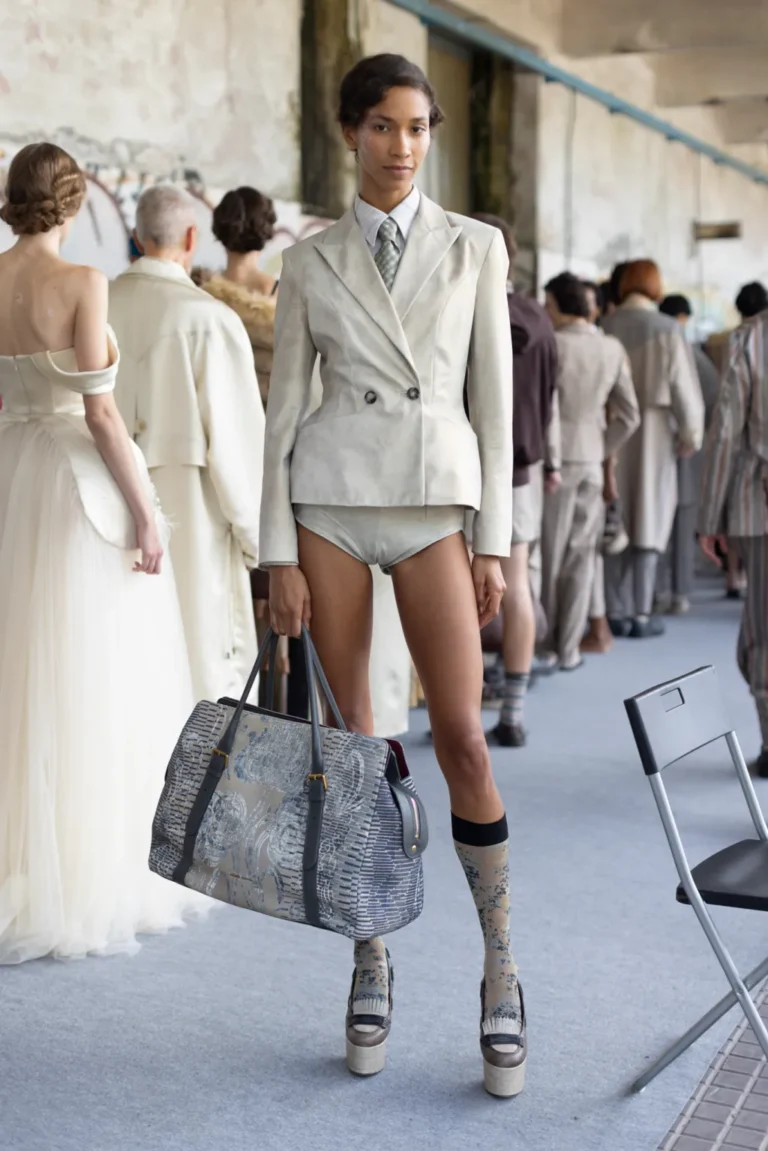
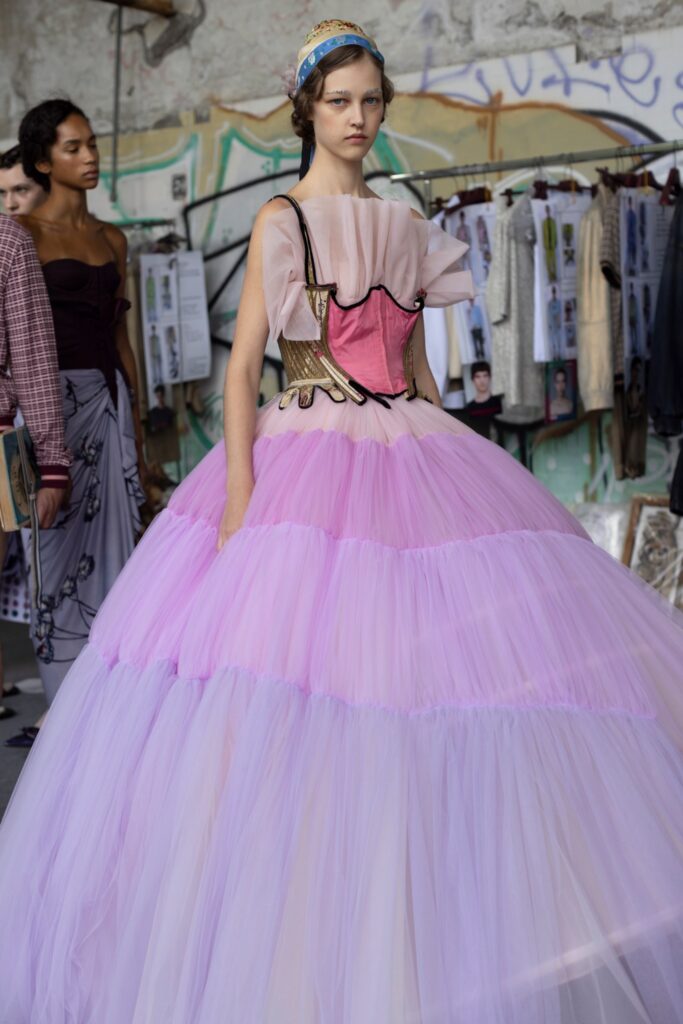
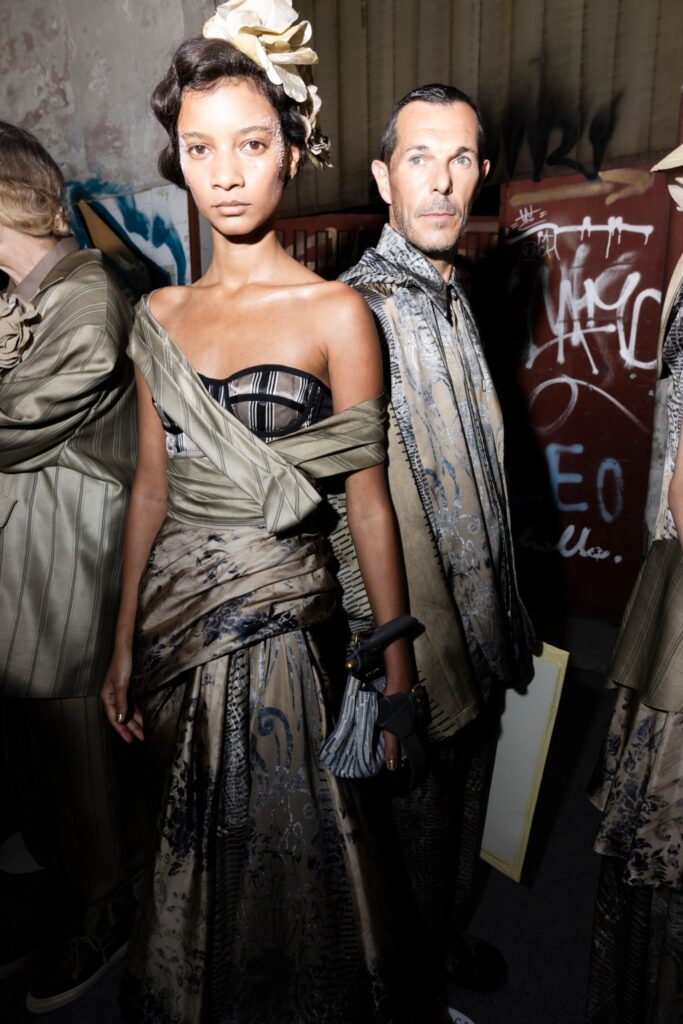
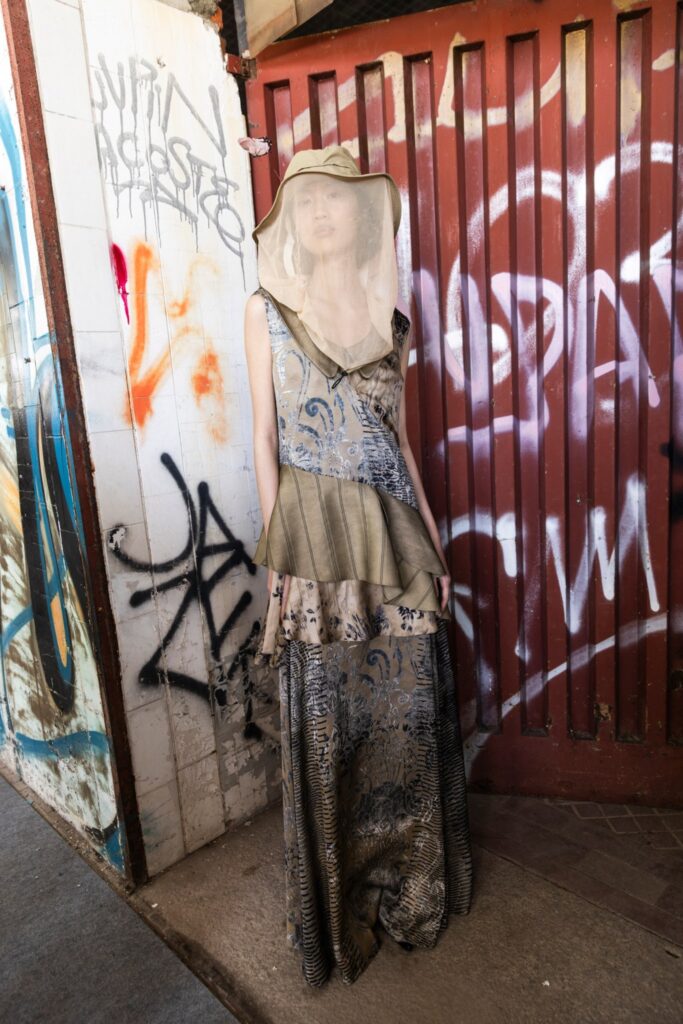
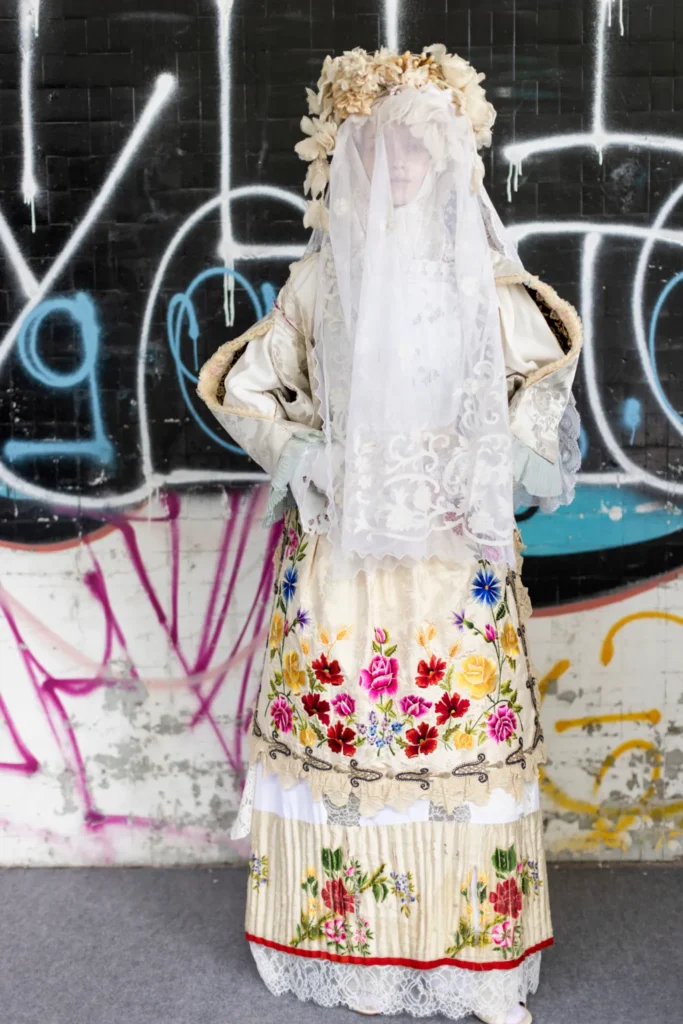
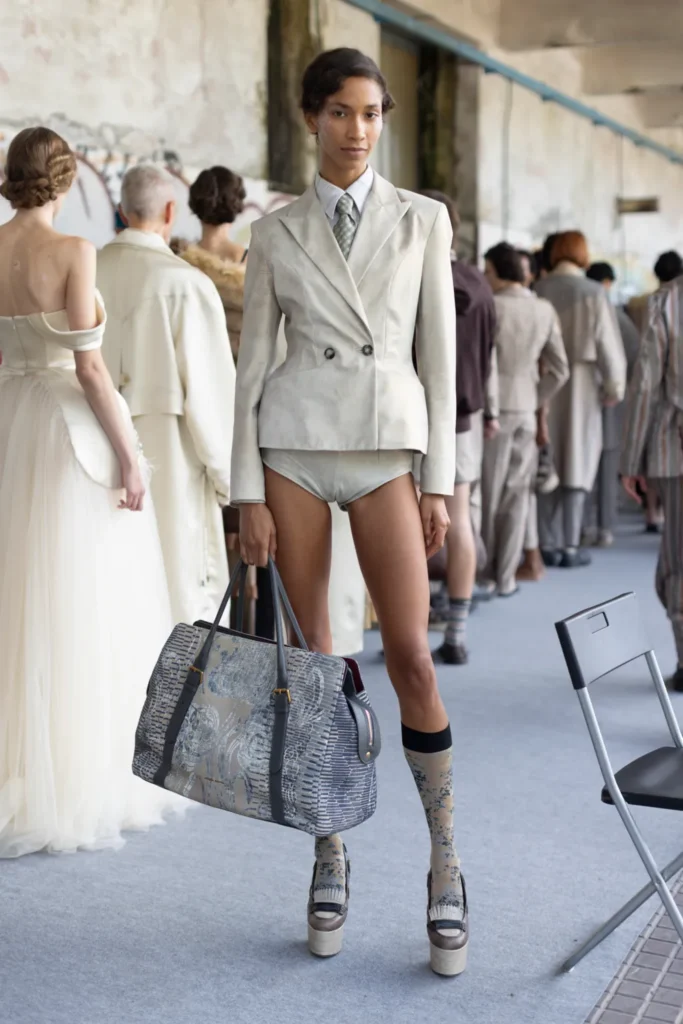
This season, Antonio Marras once again turned to his beloved Sardinia, while also drawing inspiration from the intellectual and aesthetic legacy of the Bloomsbury Group, with references to Virginia Woolf, Katherine Mansfield, and D.H. Lawrence. True to his style, the show was anything but minimal—an extended journey through cultures and centuries that resisted the idea of overly edited collections.

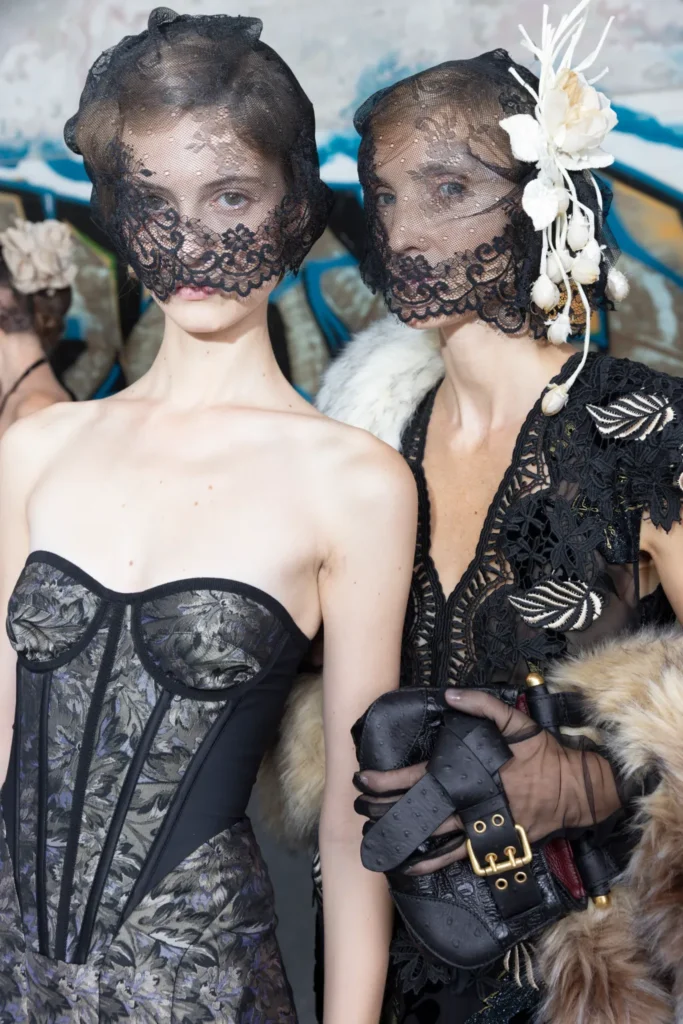
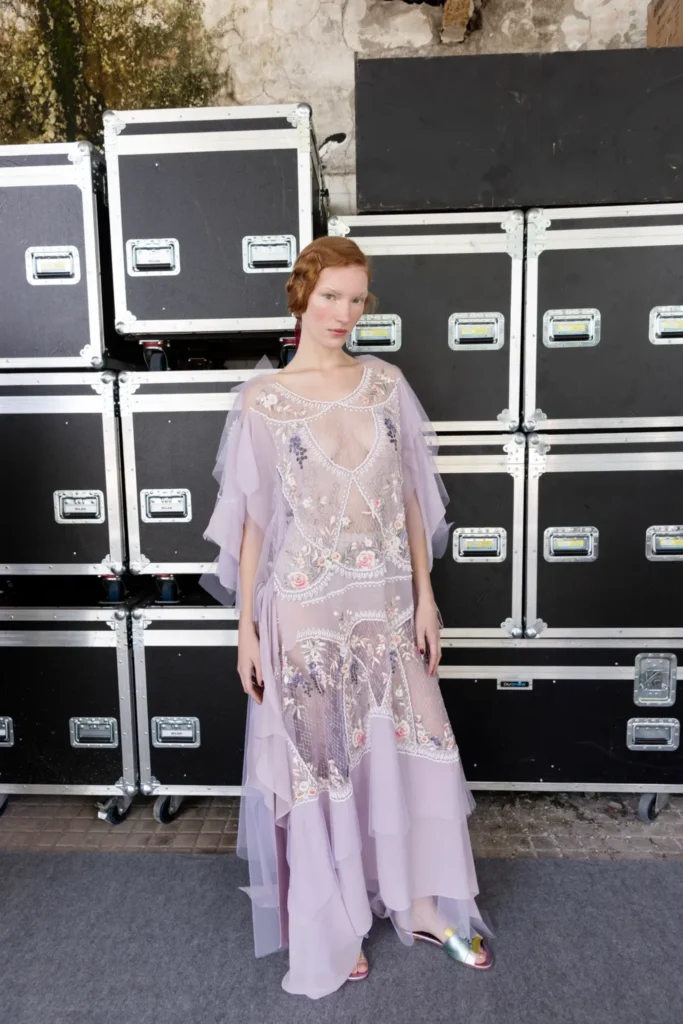
On the runway, vintage garments and traditional Sardinian costumes, sourced from a private collector, were seamlessly paired with Marras’s new creations, highlighting how heritage and modernity can coexist effortlessly. Early standouts included silk dresses in lilac and cadmium hues adorned with floral prints, some tightly cinched with delicate corsets, as well as 1920s-inspired designs embellished with jet embroidery.

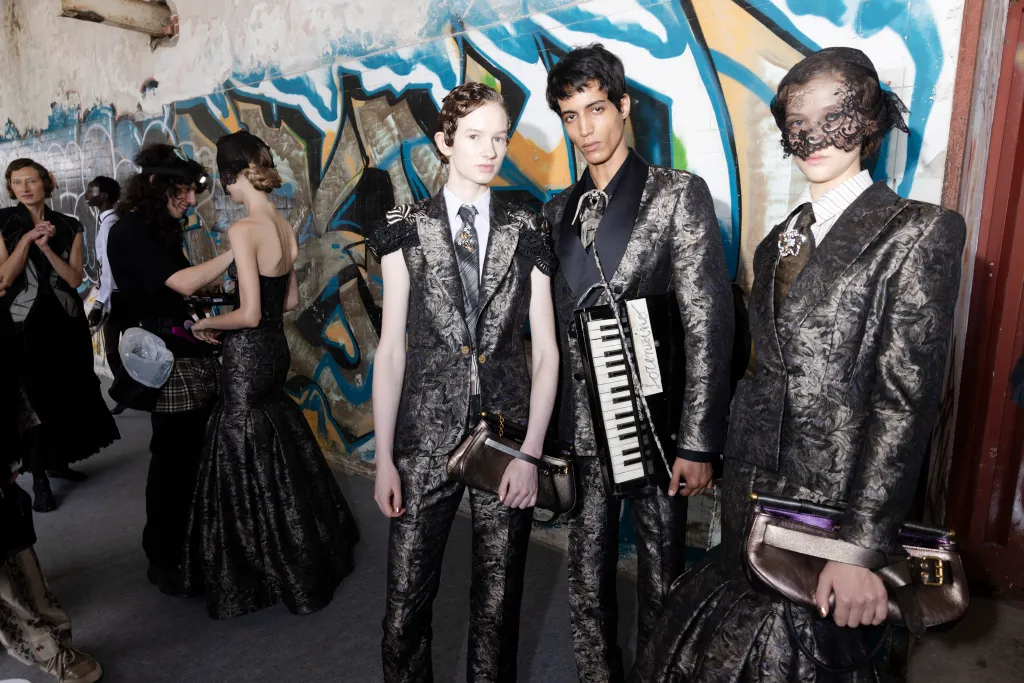
Marras’s signature patchwork made a strong statement once again: checks clashed with florals, stripes intertwined with damasks, and faux furs met intricate embroidery, creating an eclectic and poetic visual universe. His technical mastery was evident in draping, pleating, and artisanal embroidery, which brought theatrical elegance to a selection of cocktail dresses.

Menswear also played a central role, with models walking in silk pajamas, oversized pea coats, and sharply tailored jackets, often crafted in the same fabrics as the womenswear, reinforcing Marras’s vision of breaking gender boundaries.

Courtesy Of Delphine Achard/WWD

The finale carried a deeply personal message: the appearance of Sardinian shepherd Giuseppe Ignazio Loi, who famously refused to sell his land to a multinational corporation. Marras presented him as a living symbol of resistance, roots, and belonging—values the designer continuously weaves into his fashion.

Missoni Spring 2026 Collection

Missoni Spring 2026 Collection

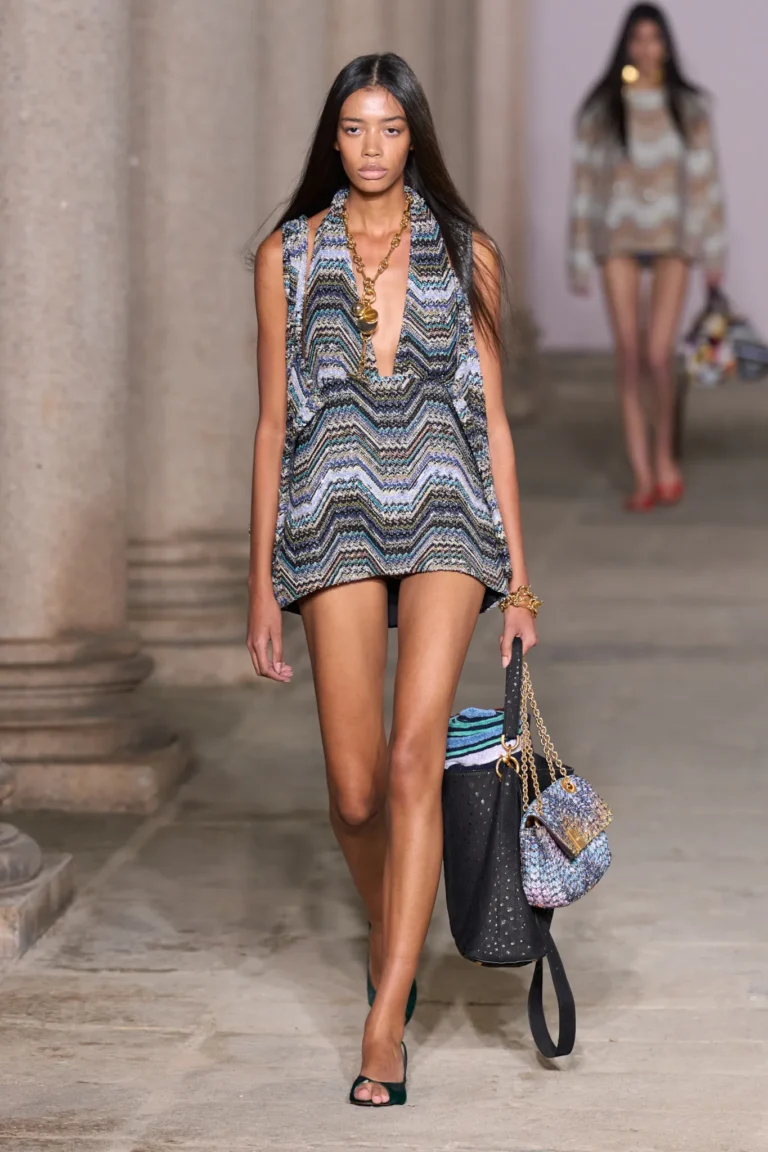
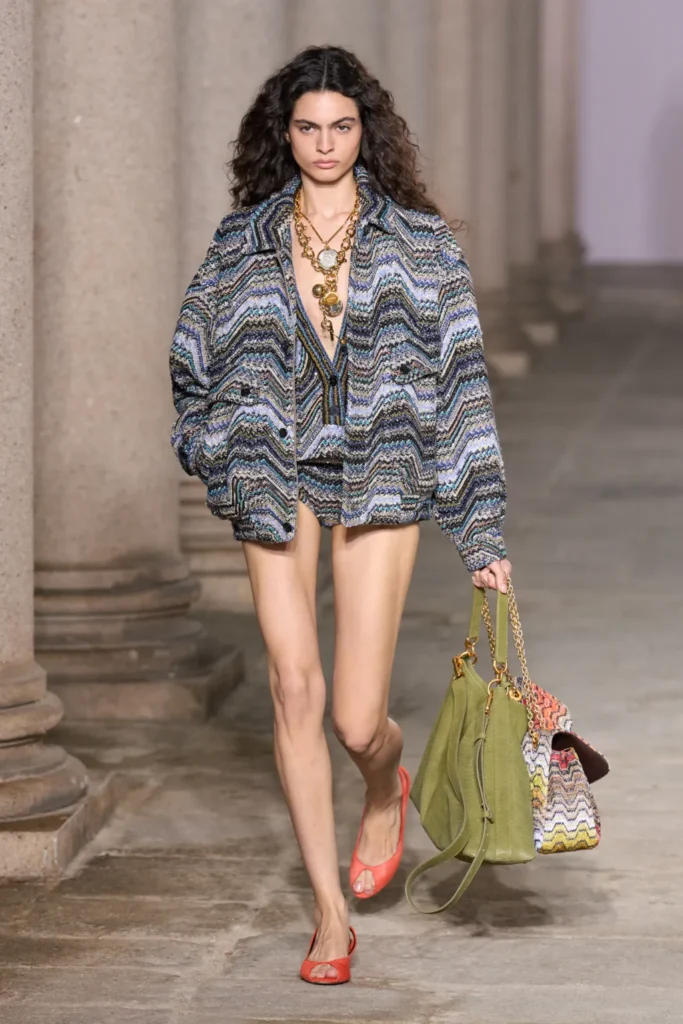
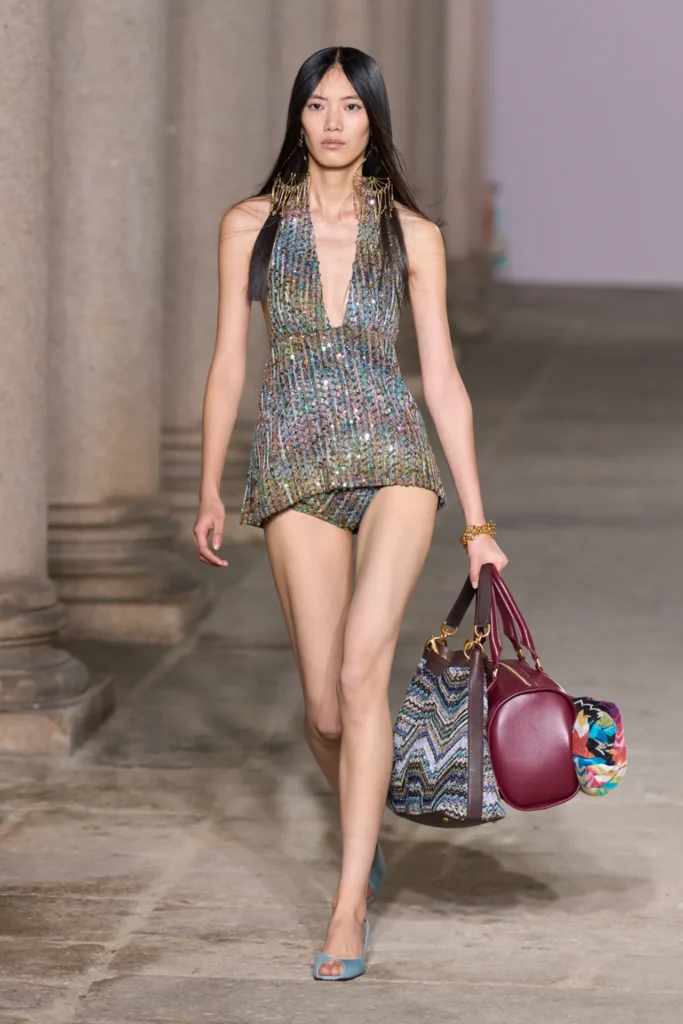
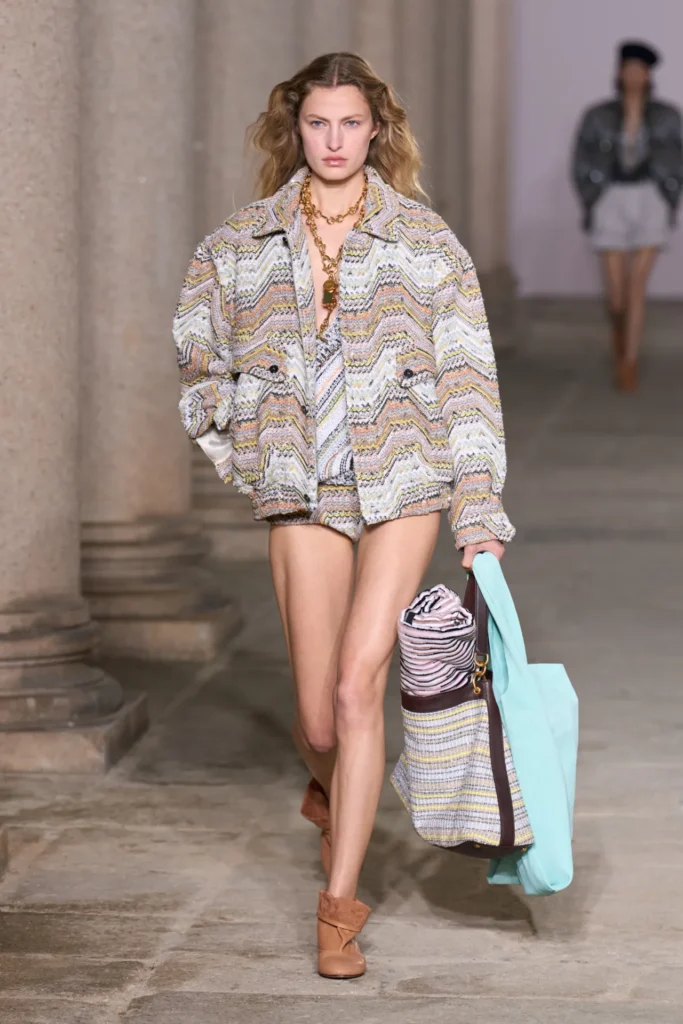
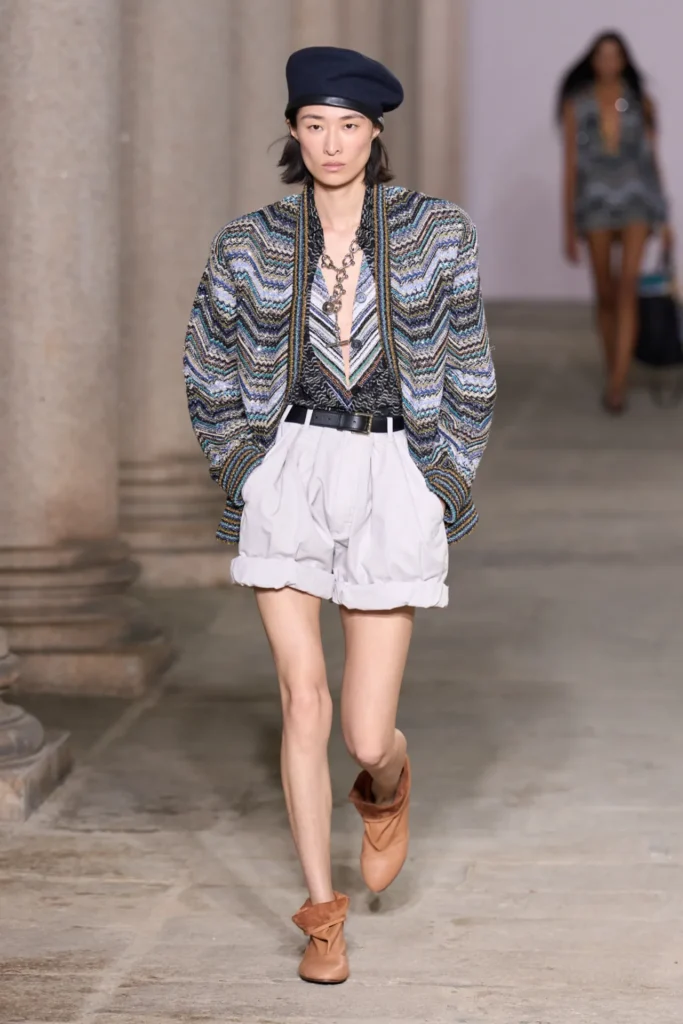
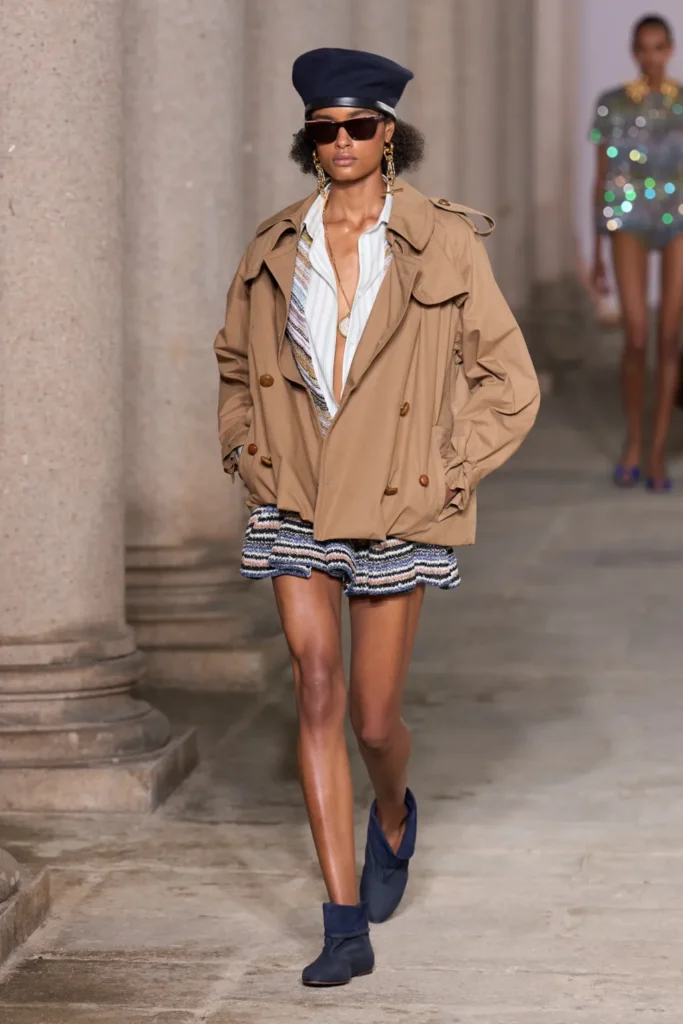
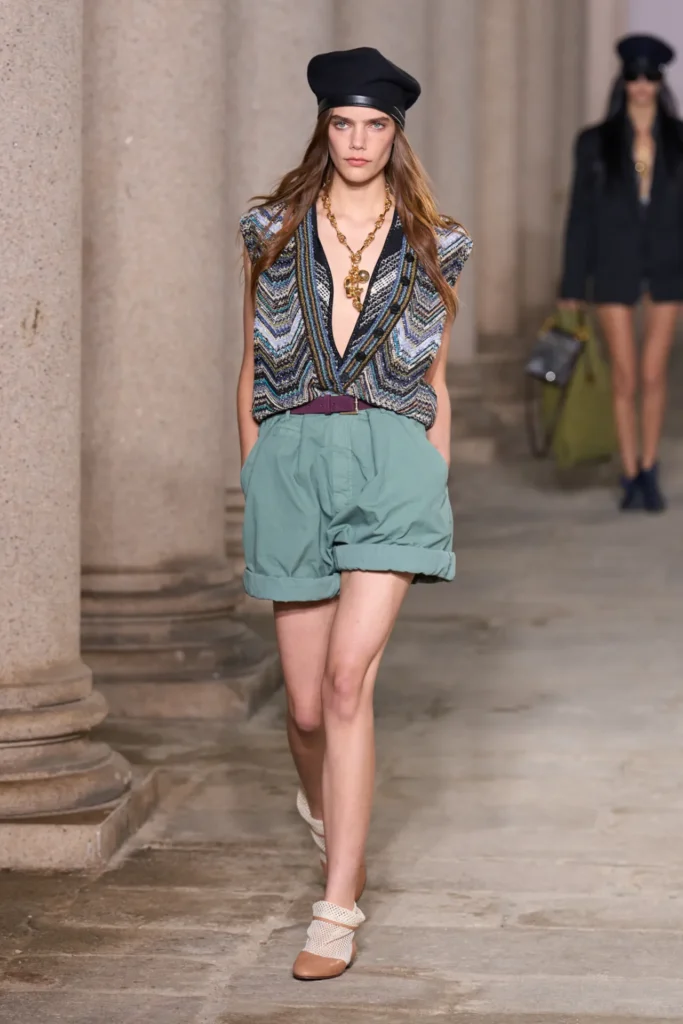
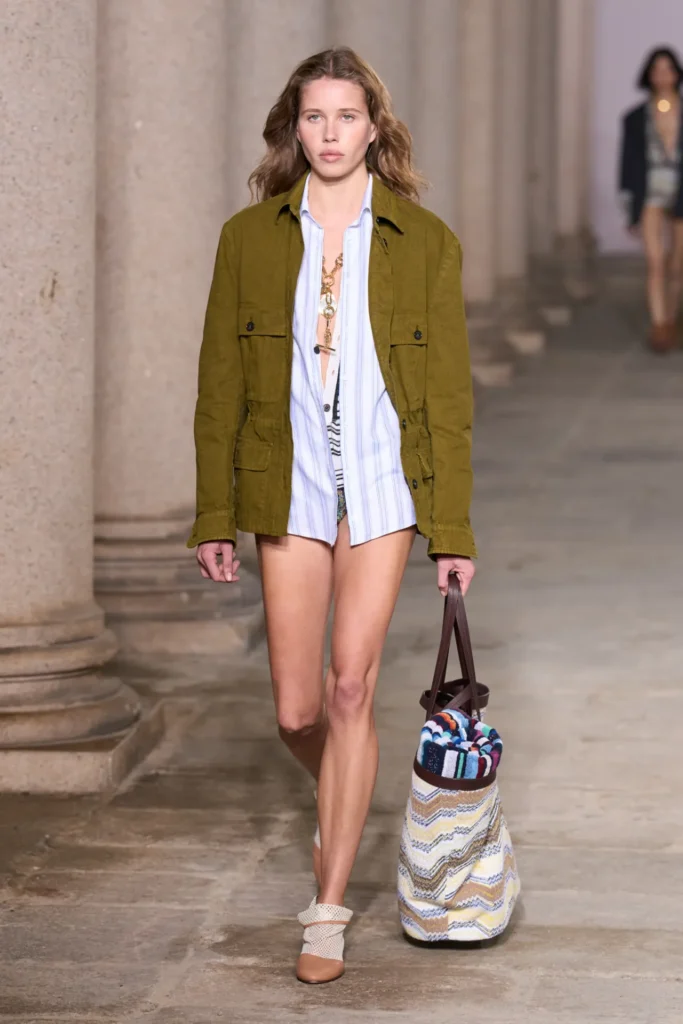
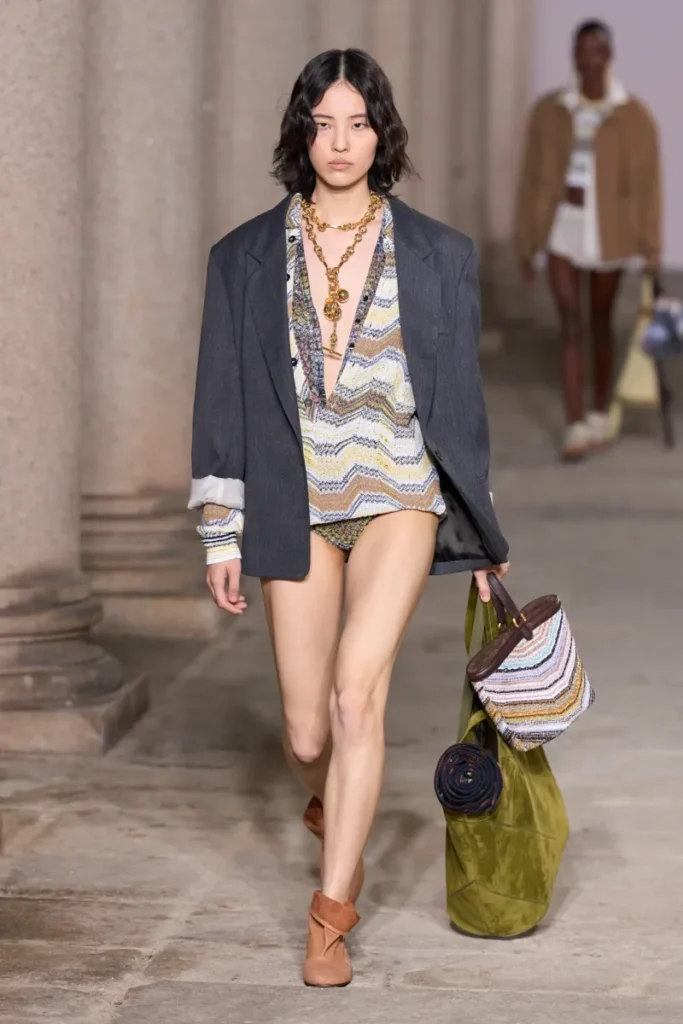
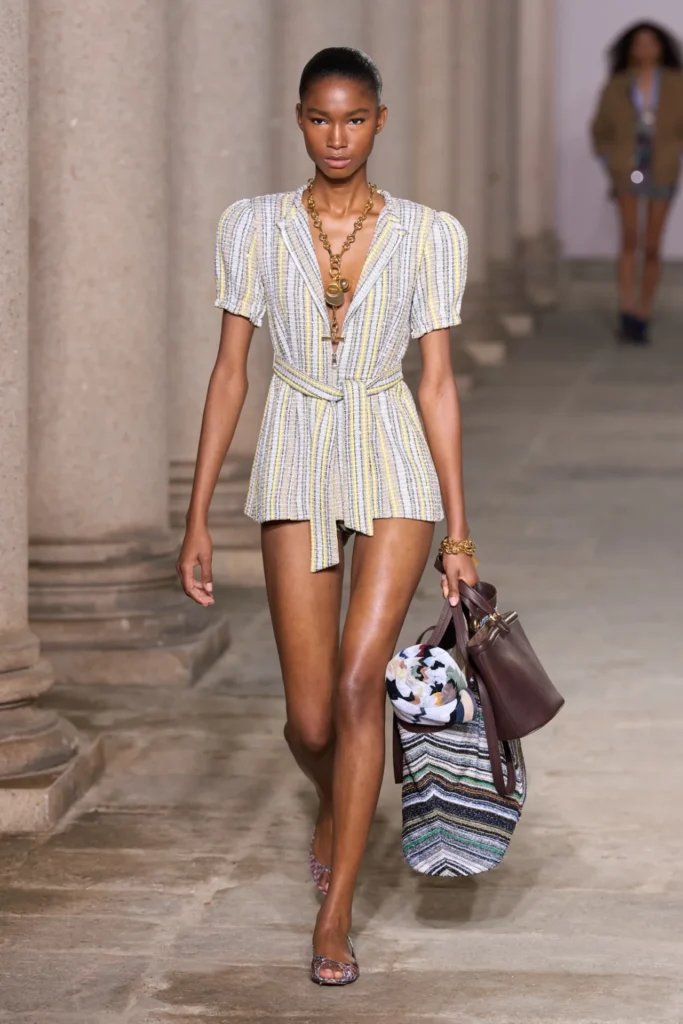
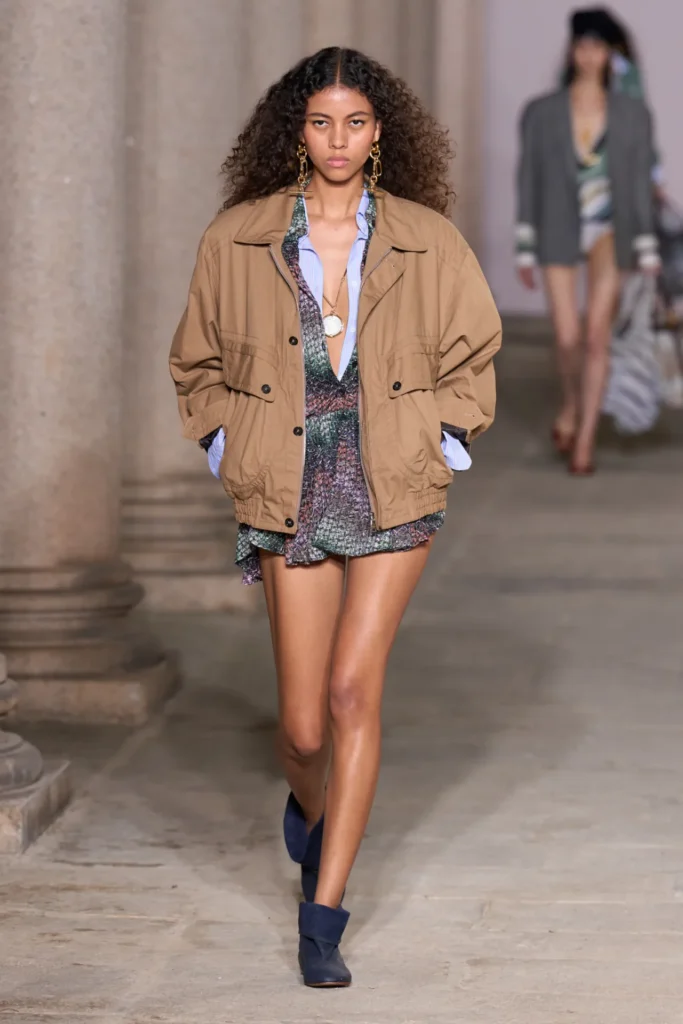
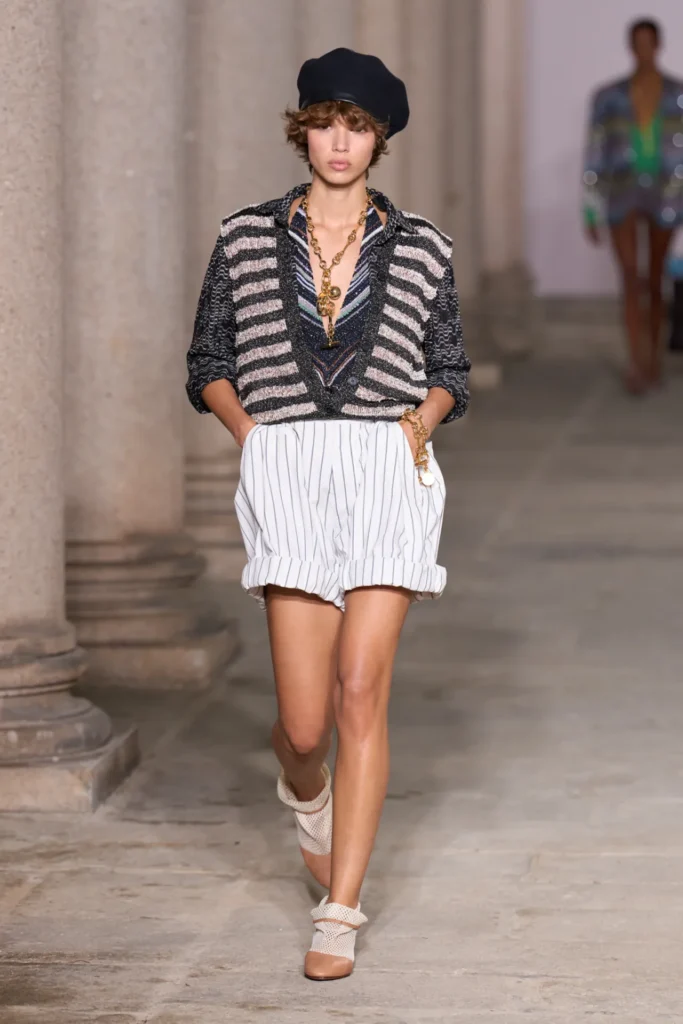
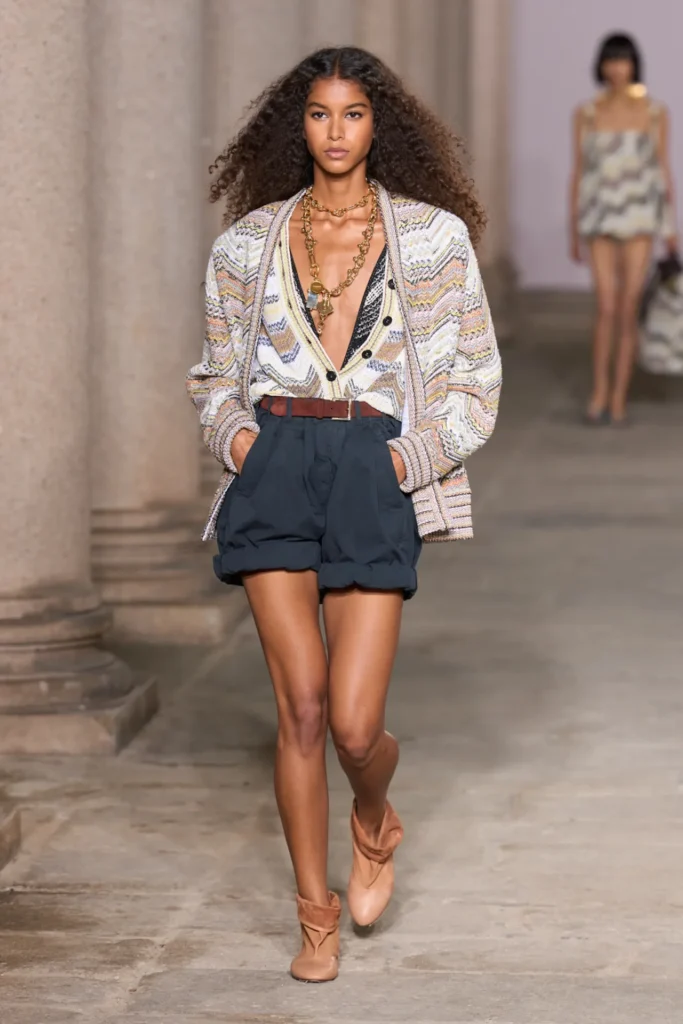
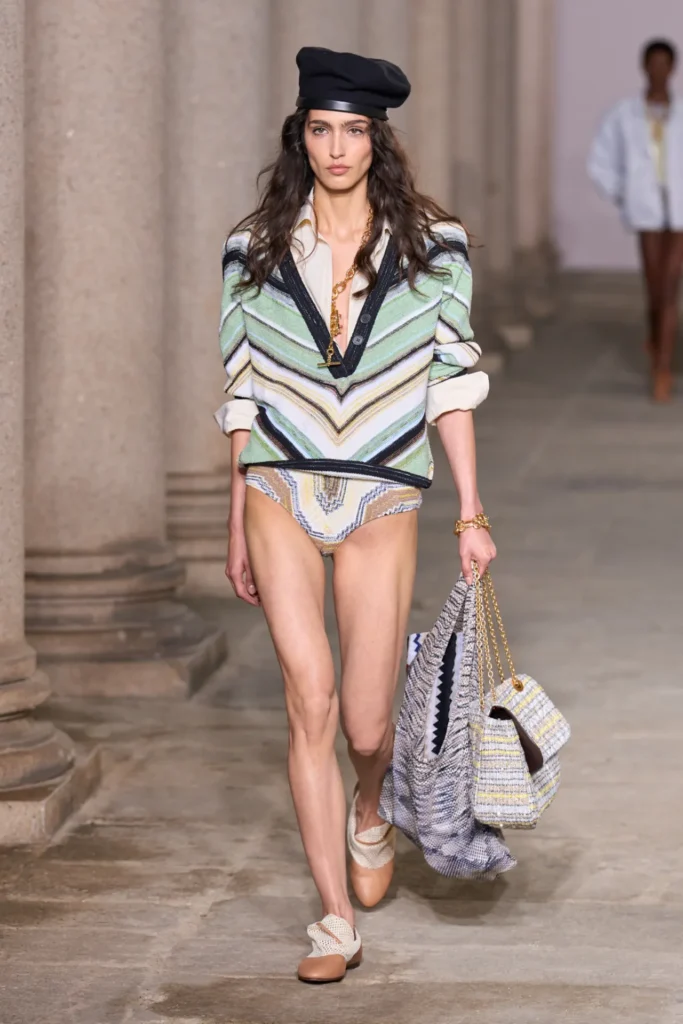
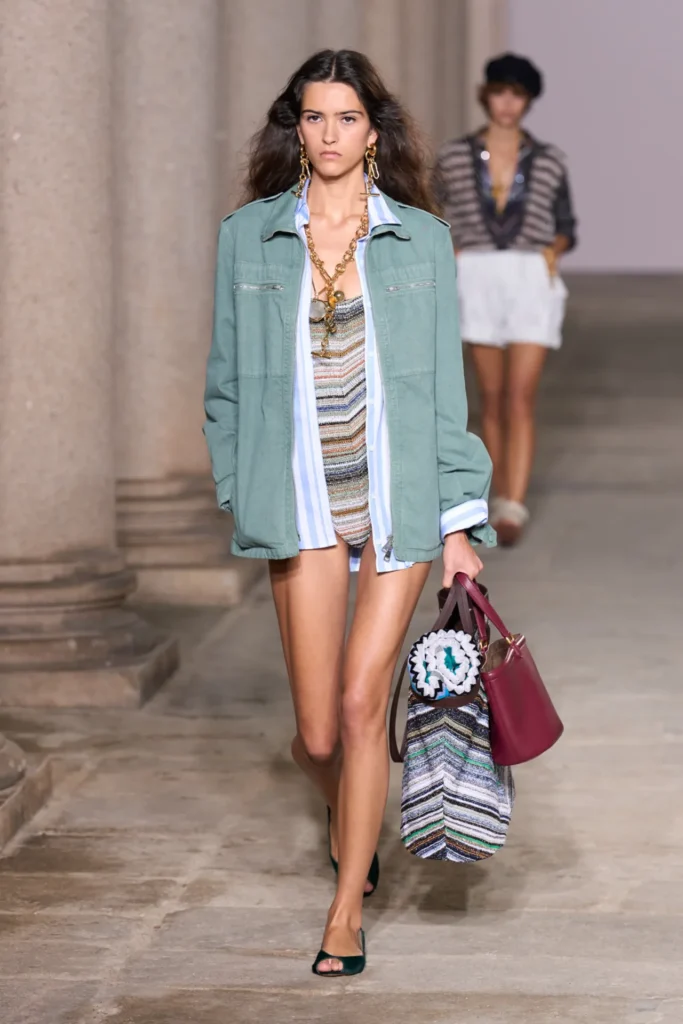
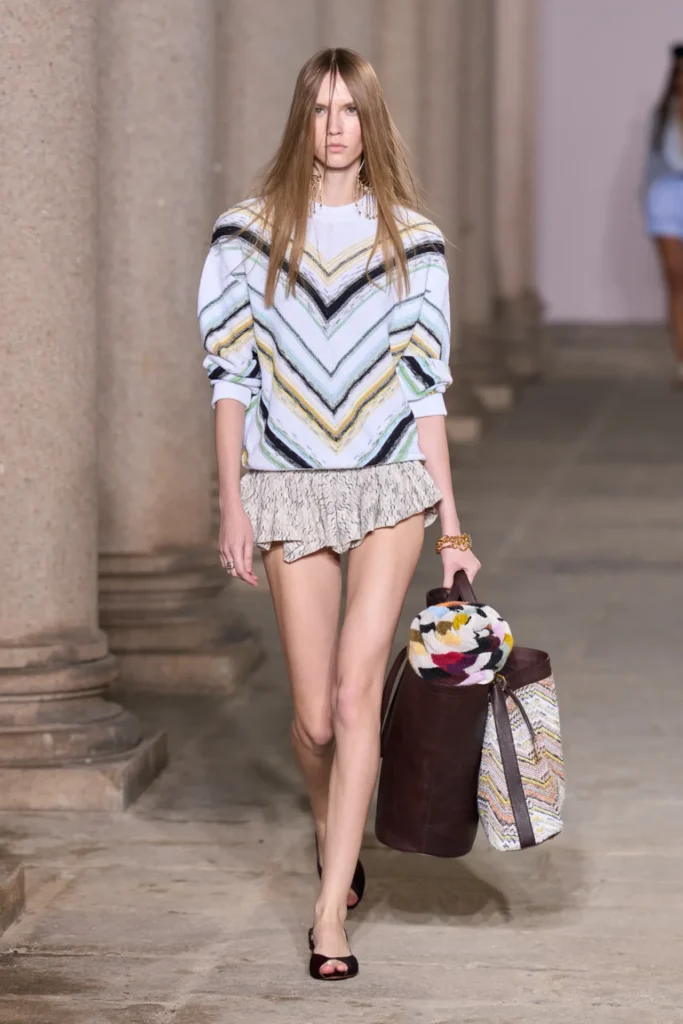
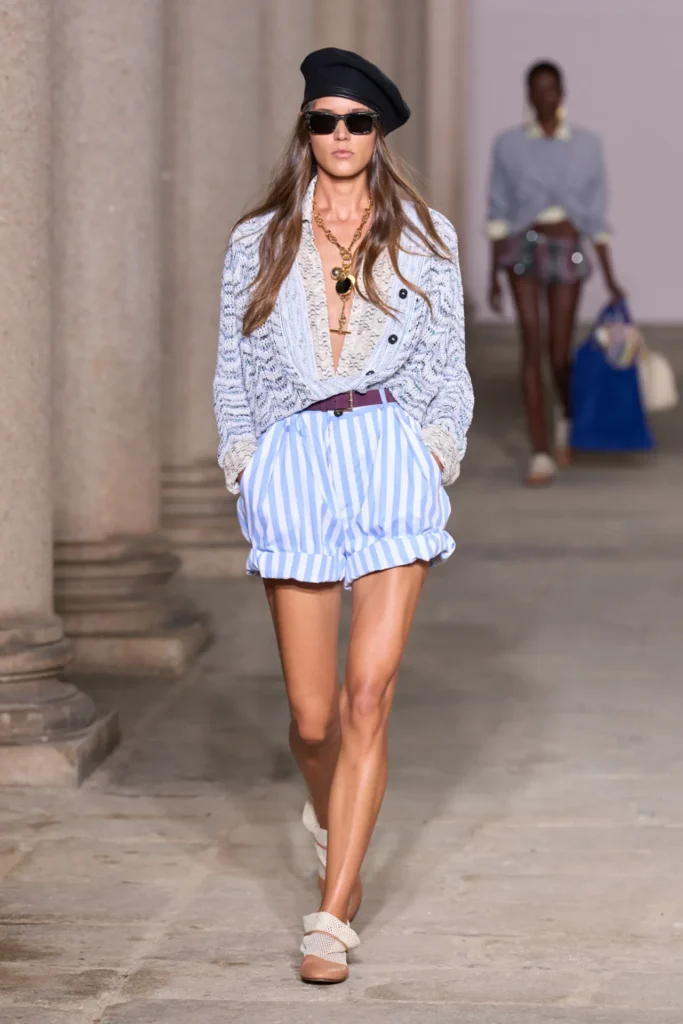
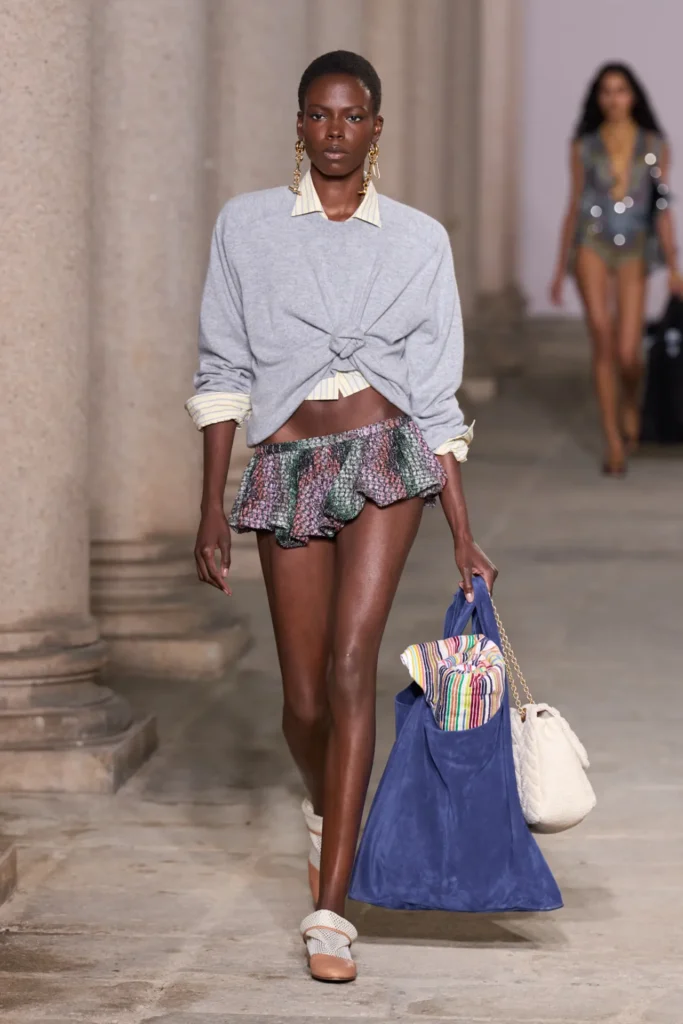
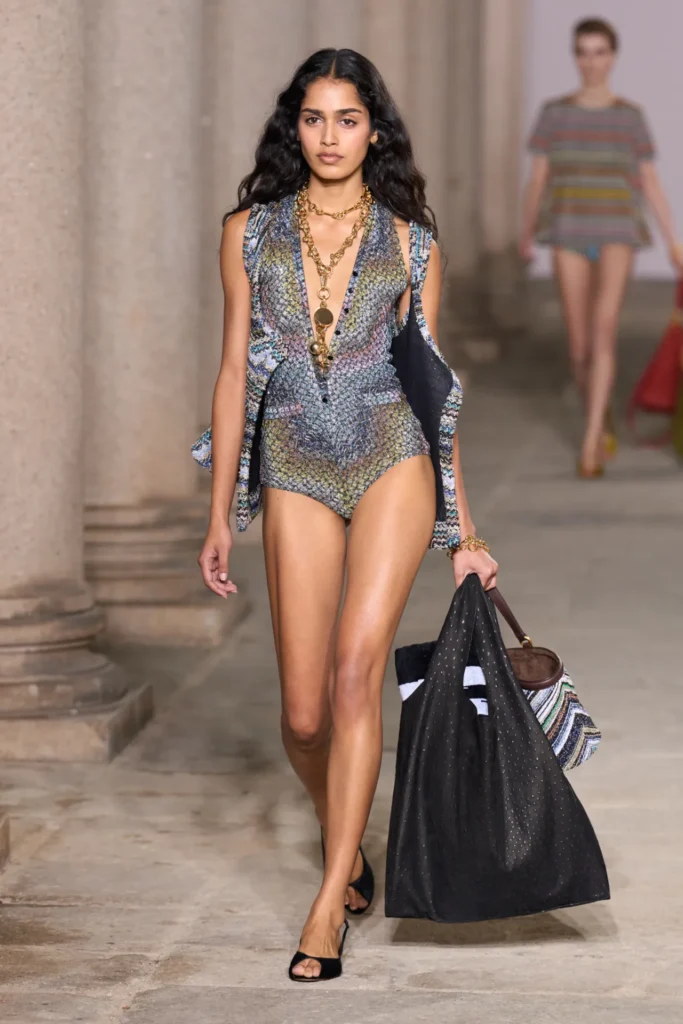
Alberto Caliri’s Spring 2026 collection for Missoni fused playful resort vibes with elevated citywear, presenting a wardrobe that seamlessly transitions from office to leisure. Guests arriving at the show discovered a Missoni beach towel at each seat, a whimsical nod to the collection’s dual purpose—functional enough for everyday wear, yet effortlessly suited for the beach or a weekend escape.

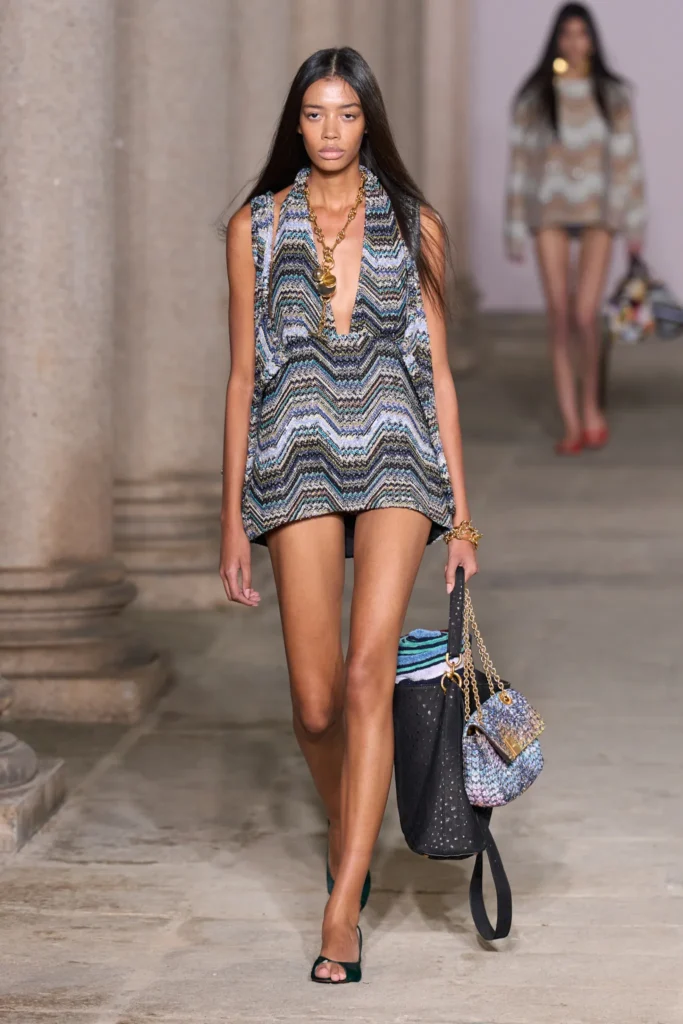
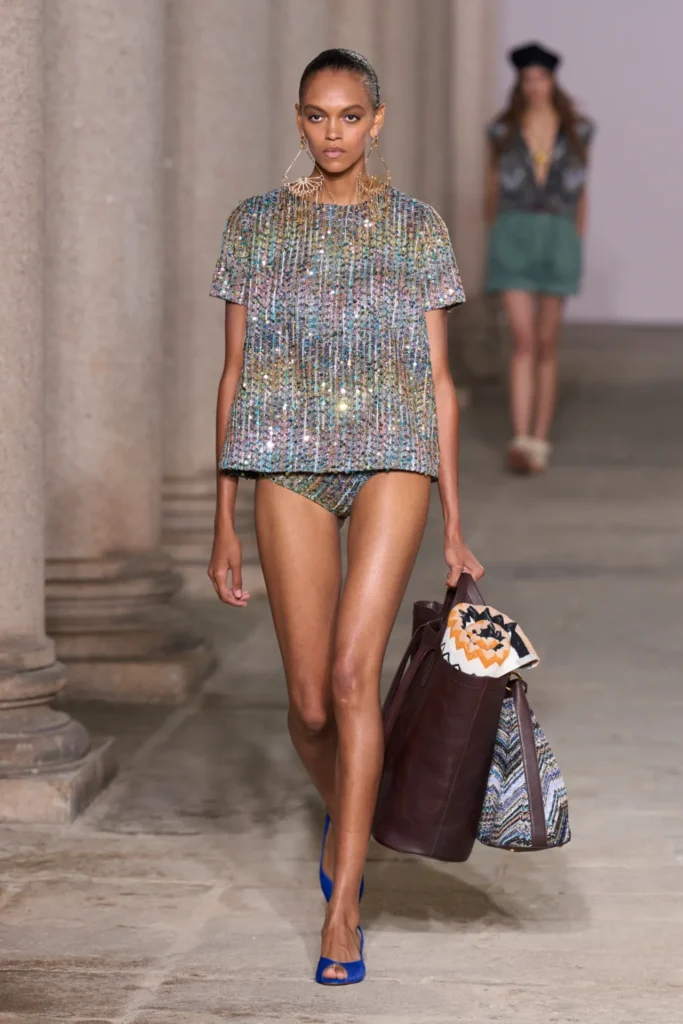
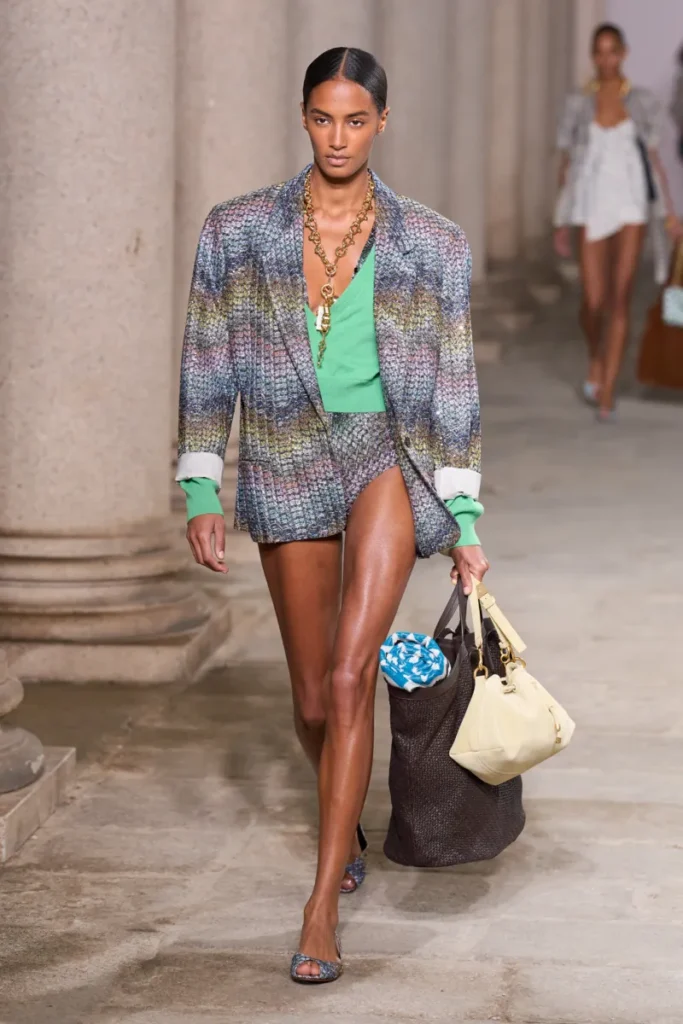
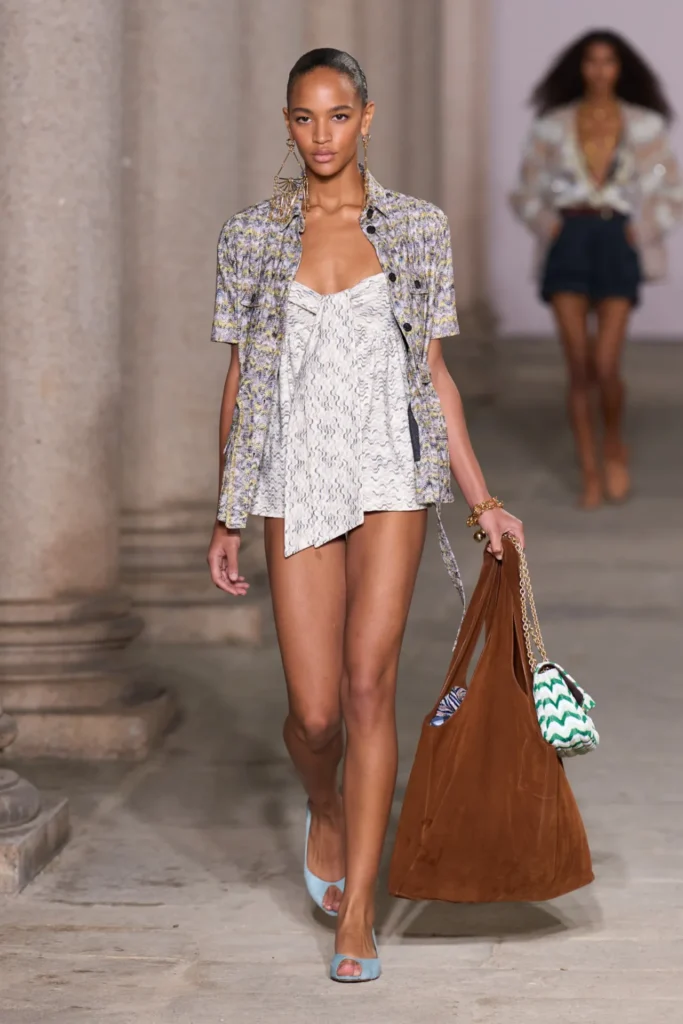
The collection celebrated elongated silhouettes: high-cut bikini bottoms, rolled-up men’s shorts, and micro cheerleader-style skirts laid the foundation for airy blouses, flowing cardigans, and lightweight, shimmering tops. Layered over these were structured yet relaxed pieces, including short trench coats, cropped military-style jackets, and tailored blazers in diplomatic stripes, all infused with Missoni’s signature zigzag motifs, often embroidered with sequins for a sun-kissed sparkle.

Accessories were a central highlight, reinforcing the lifestyle approach of the line. Models carried multiple bags simultaneously, ranging from oversized totes and chic satchels to structured bucket bags and quilted flap styles with chain handles. Many of these bags contained rolled Missoni beach towels, underlining the collection’s playful, holiday-ready spirit.

Caliri, with over 25 years of experience at Missoni—including work in home goods, knitwear, and textiles—showcased his vision of the brand as a modern lifestyle label. This collection combined Missoni’s colorful, artisanal DNA with practical, wearable pieces, emphasizing youthful energy, relaxed sophistication, and a commitment to sustainable fashion.