Home Blog Page 20

Jisoo Returns to Bring Holiday Magic to Tommy Hilfiger

Jisoo Returns to Bring Holiday Magic to Tommy Hilfiger

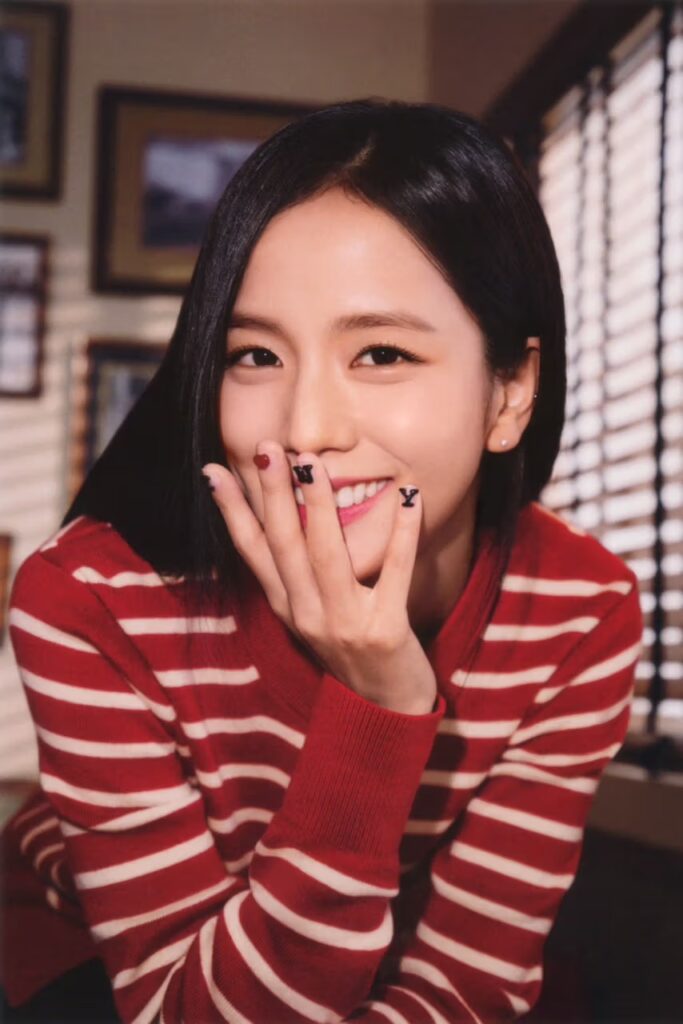
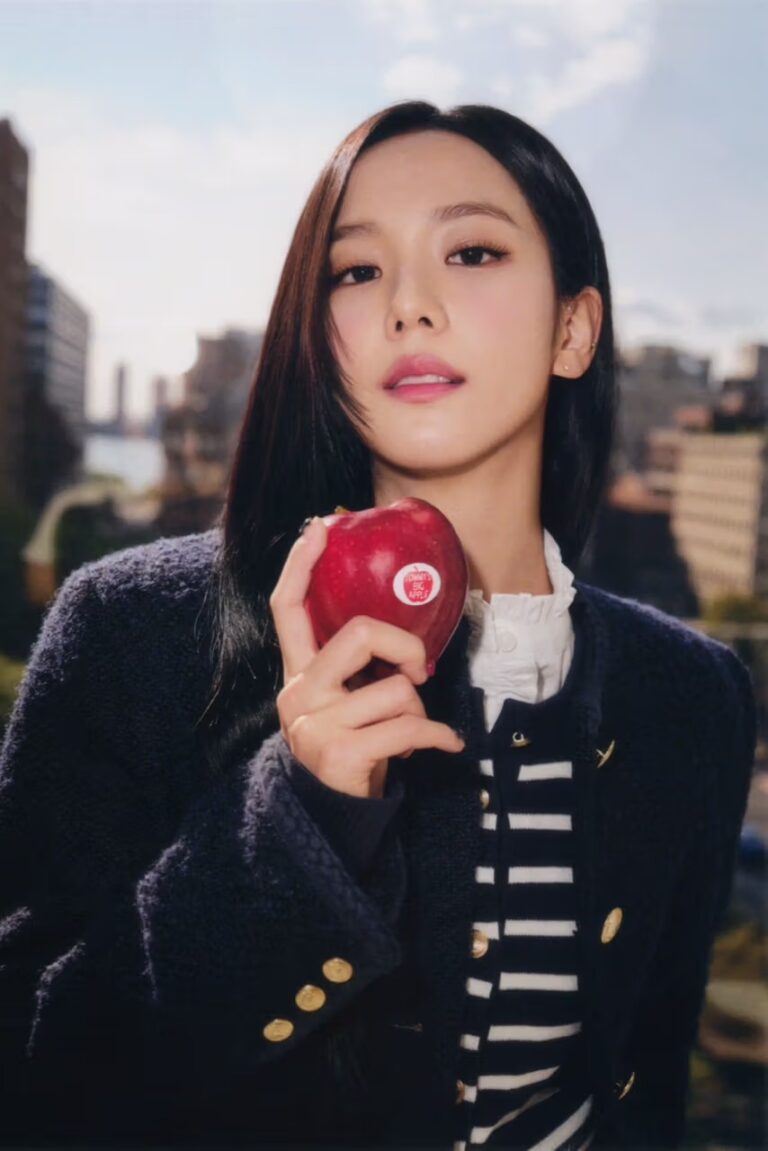
For the fifth time, global fashion icon, singer, and actress Jisoo takes center stage in Tommy Hilfiger’s new holiday campaign, “A Hilfiger Holiday.” The South Korean superstar, now 30, continues to redefine preppy style through a distinctly modern and international lens.
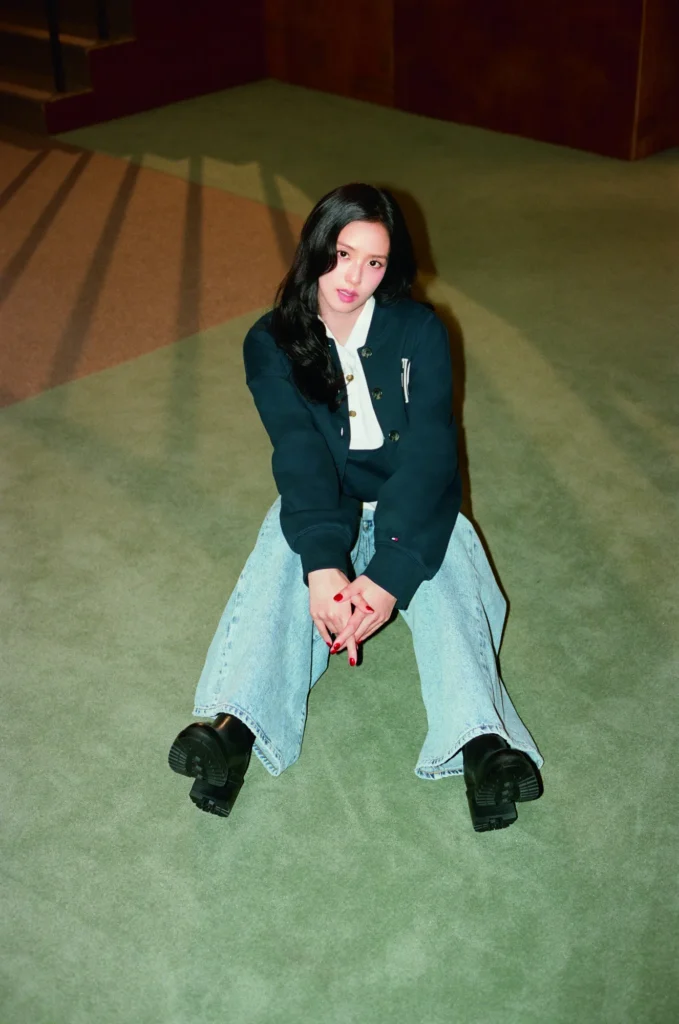
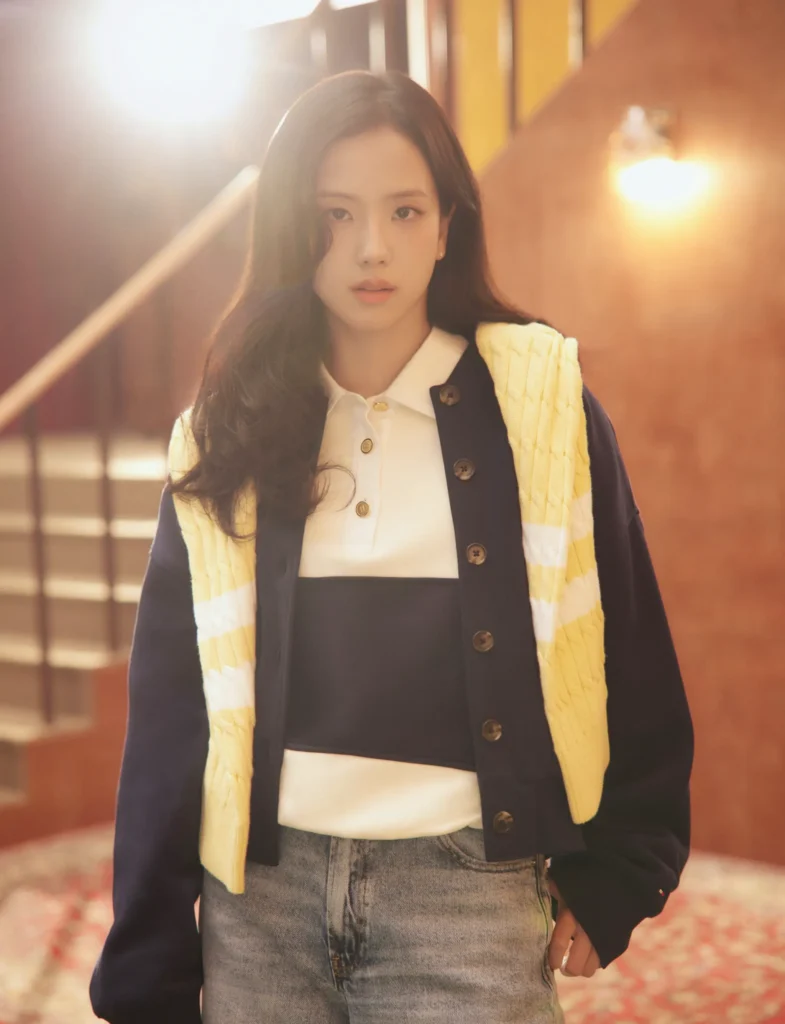
Photographed by Yoon Ji Yong and styled by Choi Ja Young, the campaign celebrates Jisoo’s timeless yet youthful approach to fashion. In one look, she wears a tailored bomber layered over a crisp Oxford shirt, paired with a pleated wool-blend mini skirt and classic loafers. Another ensemble features a varsity jacket over a plush rugby sweatshirt, matched with high-rise, wide-leg ’70s jeans — a nod to Hilfiger’s signature Americana. A “Lady Jacket” with a textured preppy finish completes her standout looks.
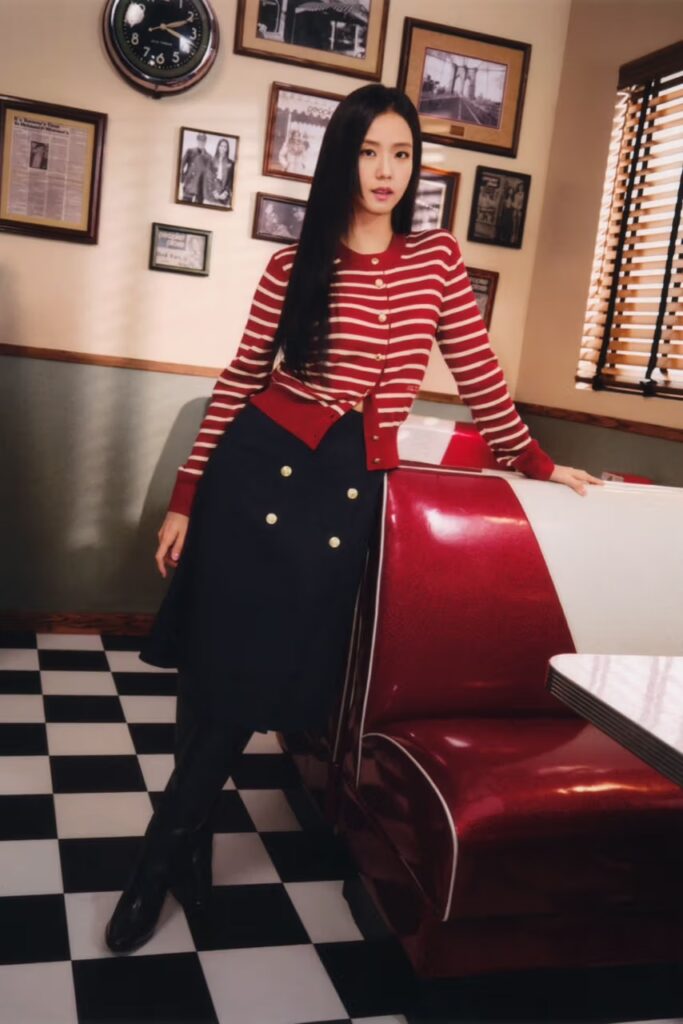
Courtesy of Tommy Hilfiger

The global rollout of “A Hilfiger Holiday” begins Thursday and will run through early January, spanning tommy.com, print media, social platforms, in-store displays, and major wholesale partners.

Jisoo and Tommy Hilfiger first met during the brand’s Spring 2025 New York Fashion Week show, staged aboard a decommissioned Staten Island ferry at Pier 17. Their creative partnership has since deepened — earlier this year, Hilfiger designed Jisoo’s custom couture looks for Blackpink’s 2025 “Deadline” world tour.

Beyond Hilfiger, Jisoo’s influence continues to grow across luxury fashion. She currently represents Dior, Cartier, Self-Portrait, and Alo Yoga, cementing her position as one of the most sought-after figures in global style.
McQueen Ushers In a Joyful Art Deco Christmas

McQueen Ushers In a Joyful Art Deco Christmas

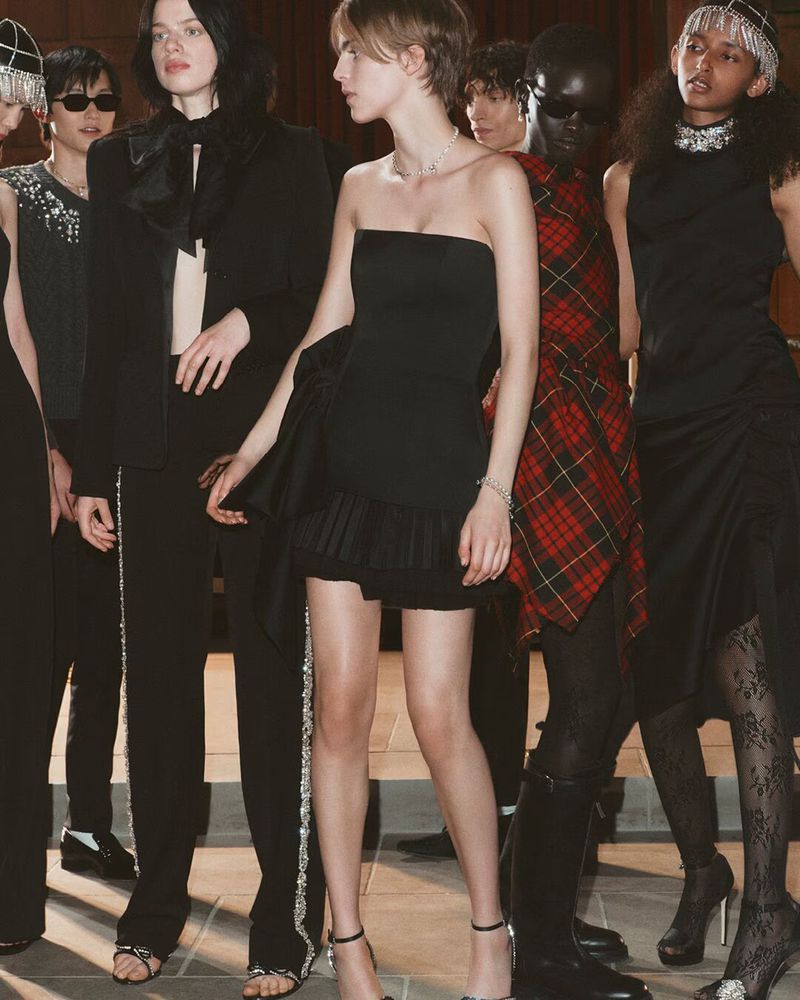
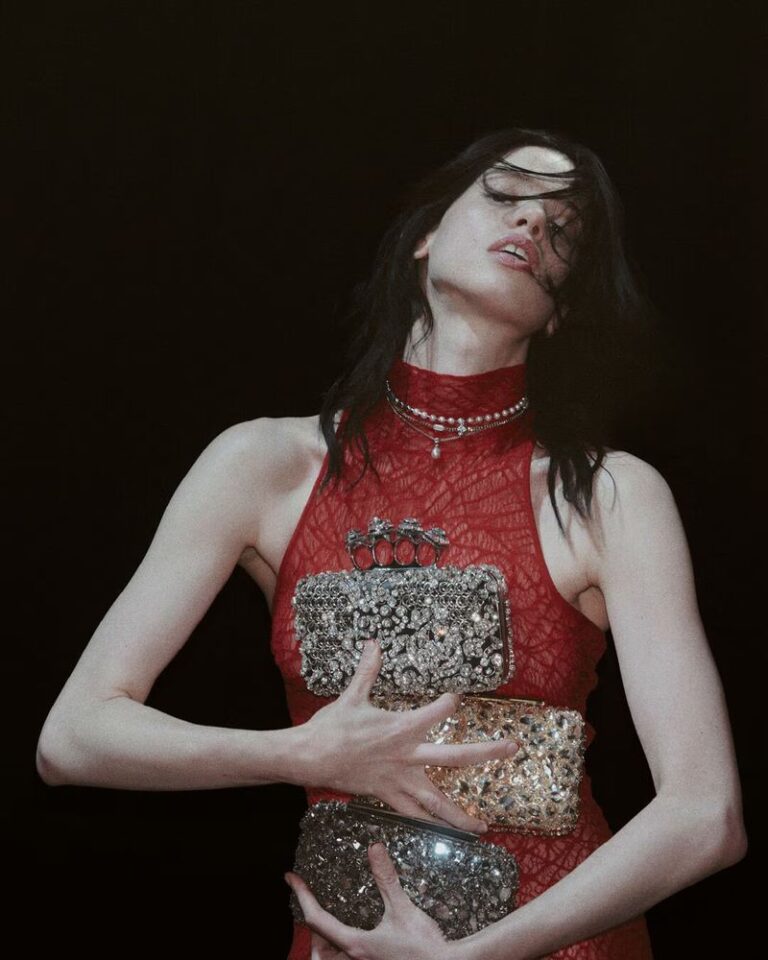
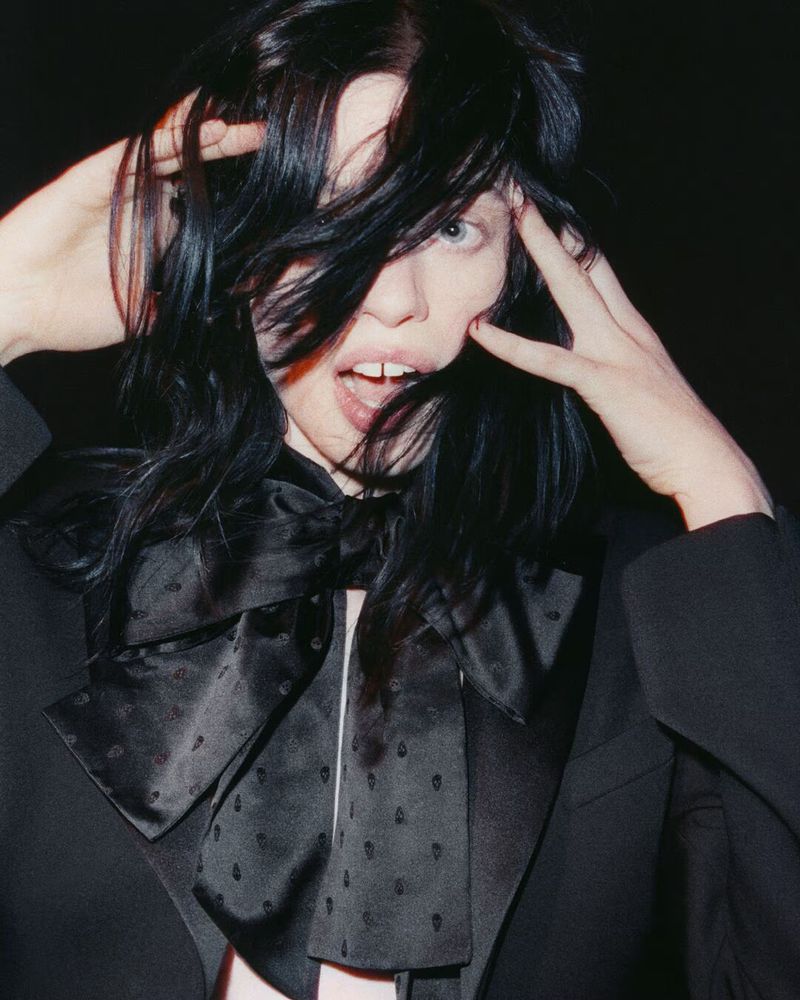
Alexander McQueen is celebrating the holiday season with a cinematic tribute to Art Deco glamour. The brand’s 2025 Holiday Campaign was filmed inside Eltham Palace, a 1936 architectural jewel located in southeast London and now part of English Heritage — an ideal setting for a house that thrives on the tension between classicism and rebellion.

The campaign, launched this week, was directed by Seán McGirr, photographed by Sammy Khoury, and creatively directed by SJ Todd. Together, they transformed the palace’s sleek geometry and gleaming interiors into a stage for McQueen’s vision of joyful elegance and subversive British heritage.

“The choice of Eltham Palace was deliberate,” explained McGirr. “It captures the central tension of the collection — British heritage reimagined through a new kind of hedonism. It’s about evolution, about finding balance between restraint and liberation. That ongoing dialogue between formality and rebellion lies at the heart of McQueen, and it’s something I continue to explore with each collection and campaign.”

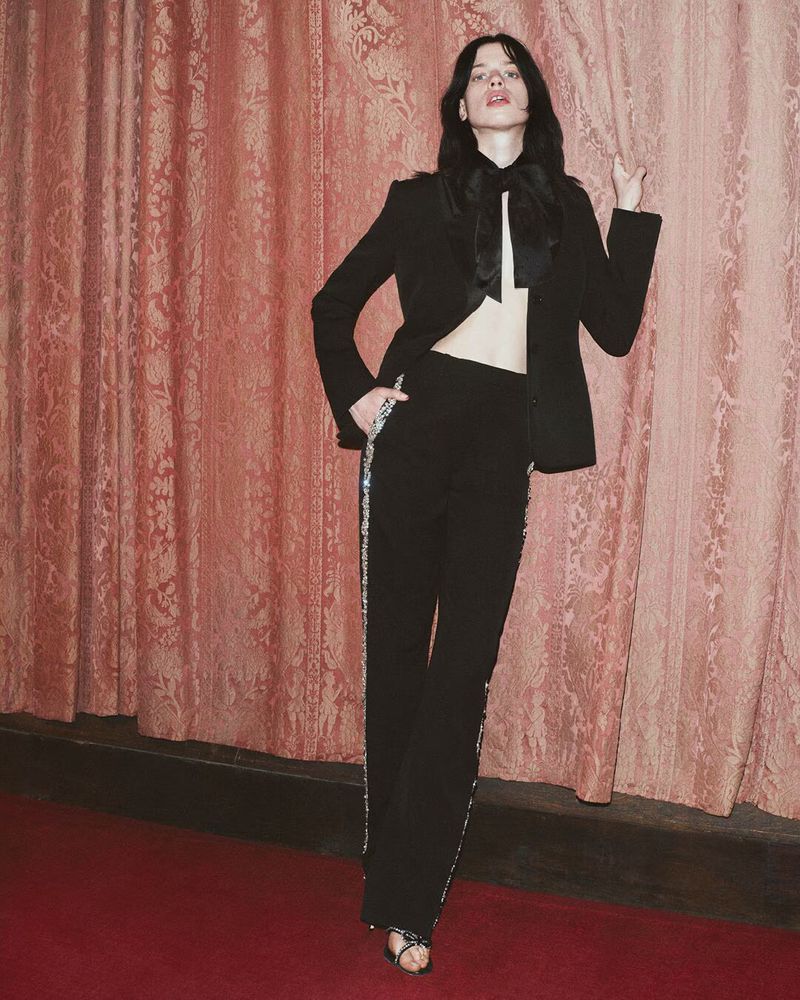
Models appear in Pre-Spring 2026 looks — a series of rich velvet and satin dresses in deep burgundy tones, adorned with jewel-embellished collars and spiderweb lace, alongside crystal-studded Knuckle clutches and metallic Skull Flower bags. Tailored tuxedo suits, asymmetrical MacQueen tartans, and crystal-dusted knitwear complete the lineup, blending a sense of power with poetic delicacy.

Though the collection featured pre-spring designs, the atmosphere of the shoot evoked the romantic, moody spirit of McQueen’s Fall 2025 season — a celebration of timeless decadence viewed through a contemporary lens. Under McGirr’s direction, the house continues to refine its dual identity: fiercely modern yet deeply rooted in heritage, always balancing elegance with edge.

Dakota Johnson Named Global Ambassador for Valentino

Dakota Johnson Named Global Ambassador for Valentino

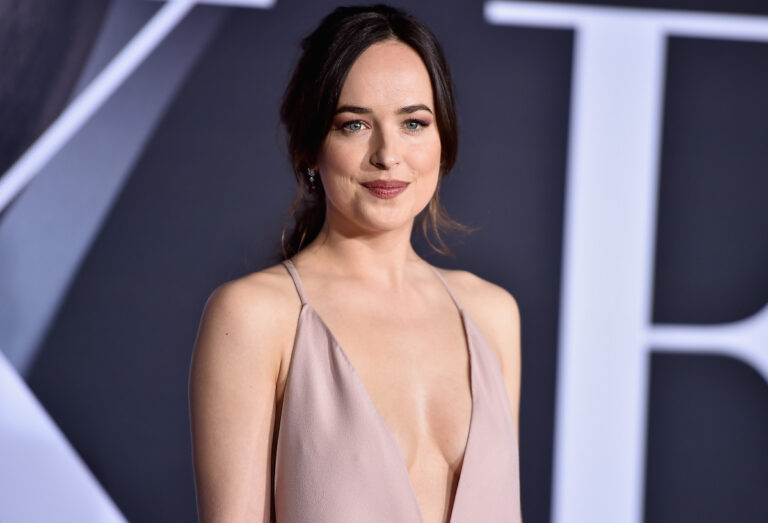
Valentino has officially named Dakota Johnson as its new Global Brand Ambassador, marking both a new creative chapter for the Roman couture house and a heartfelt reunion with Alessandro Michele, the brand’s recently appointed Creative Director. Their collaboration feels less like a corporate move and more like a continuation of a long-standing friendship rooted in shared artistry and a mutual love for beauty in all its forms.

“I’m thrilled to join the Valentino family and beyond happy to reunite with my dear friend Alessandro Michele,” said Johnson. “It’s an honor and an exciting new chapter with such a wonderful and talented team.”

For Valentino, the partnership represents “the continuation of the Maison’s ongoing dialogue with individuals who embody a shared commitment to art, elegance, and cultural resonance.” Michele, known for his emotionally charged aesthetic and human approach to fashion, finds in Johnson a modern muse — intelligent, understatedly glamorous, and deeply authentic.

Before becoming a fashion favorite, Johnson began acting at just ten years old in Crazy in Alabama (1999). Her breakout role as Anastasia Steele in the Fifty Shades trilogy (2015–2018) made her an international star. More recently, she starred in Splitsville, a romantic dramedy about open relationships that premiered at the Cannes Film Festival, and in Céline Song’s Materialists, alongside Chris Evans and Pedro Pascal. In 2026, she is set to appear in Verity, a psychological romantic thriller directed by Michael Showalter and co-starring Anne Hathaway and Josh Hartnett, based on Colleen Hoover’s bestselling novel.

Under Michele’s new creative direction, Valentino continues to evolve its identity — merging emotion, culture, and couture in a way that feels both personal and poetic. With Dakota Johnson as its face, the brand enters this new era with a renewed sense of intimacy and sophistication — a true union of friendship and fashion.

Donatella Versace to Lead the Jury at the Latin American Fashion Awards

Donatella Versace to Lead the Jury at the Latin American Fashion Awards

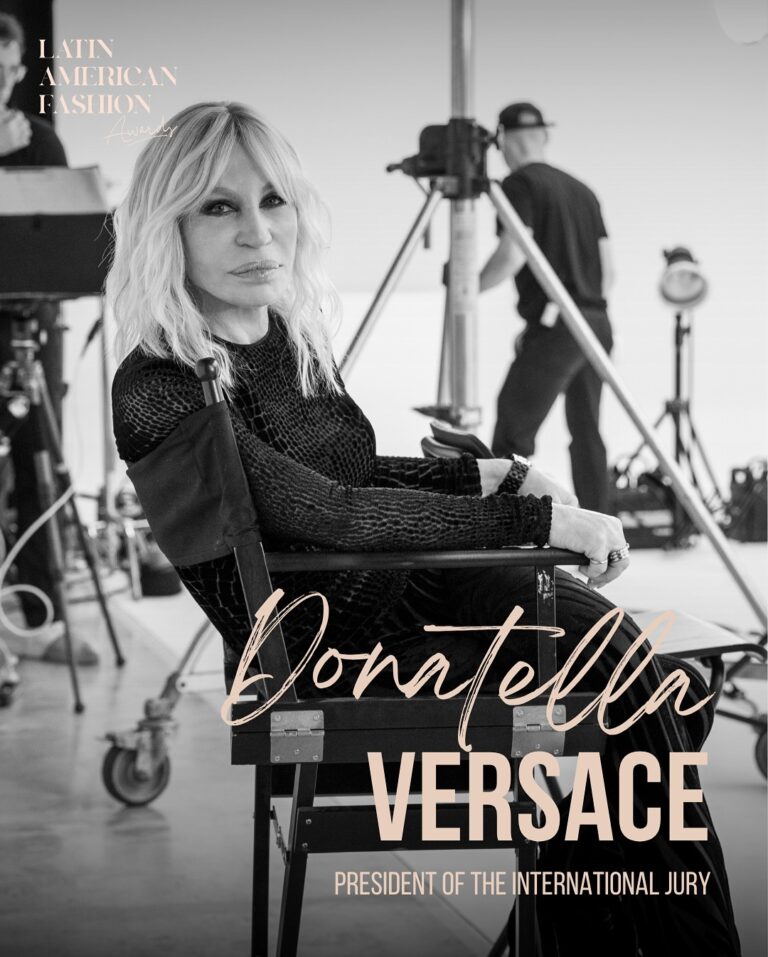
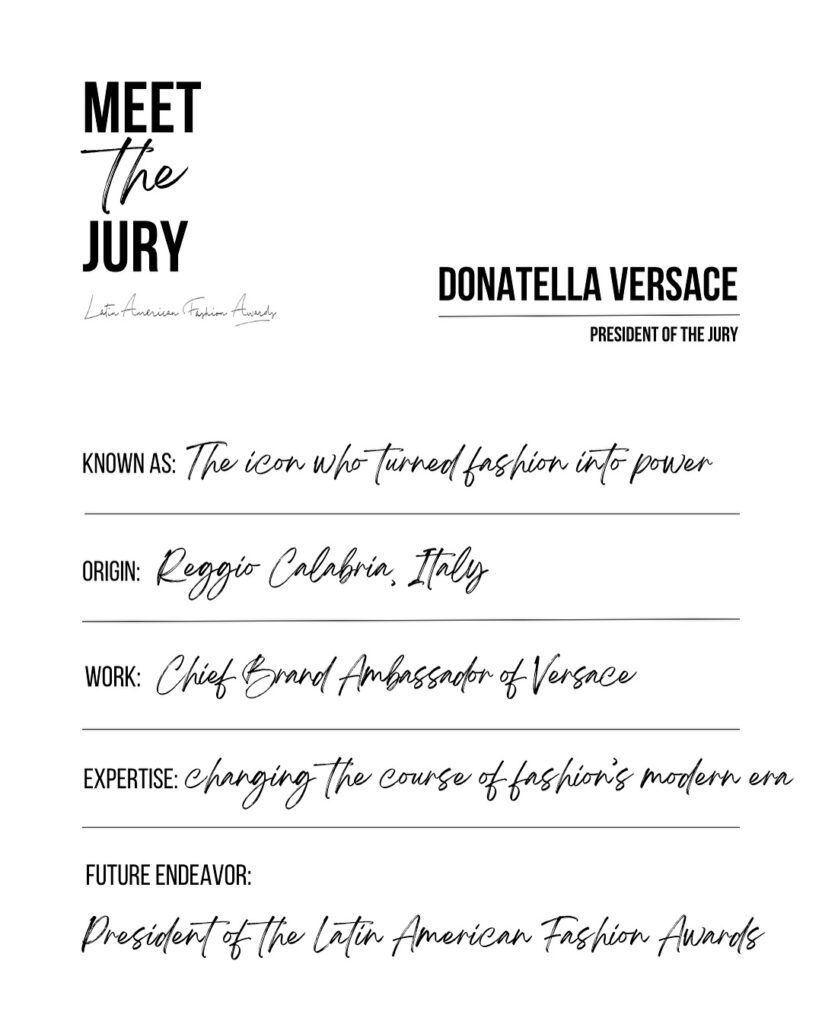
The Latin American Fashion Awards have announced Donatella Versace as president of the jury for their highly anticipated second edition, taking place November 6–9 in the Dominican Republic.

Following in the footsteps of last year’s president, Haider Ackermann, Versace will lead an impressive panel of global fashion authorities united by a shared mission: to celebrate and elevate the most visionary designers, artists, and cultural innovators from Latin America and its global diaspora.

“I have always championed the next generation of design talent,” said Versace. “It has never been more important to support and encourage our global creative community, and I am truly honored to preside over the Latin American Fashion Awards.”

Her fellow jurors form a constellation of international fashion powerhouses, including Nina García, editor-in-chief of ELLE U.S.; Anna Dello Russo, Italian fashion editor and journalist; Carmen Busquets, entrepreneur and philanthropist; Imran Amed, founder and CEO of The Business of Fashion; Steven Kolb, president and CEO of the CFDA; Carlo Capasa, president of the Camera Nazionale della Moda Italiana; Kean Etro, former creative director of Etro; and Sara Sozzani Maino, creative director of the Fondazione Sozzani.

They will be joined by Vivian Sotocorno, fashion director of Vogue Brasil; Gabriela Hearst, designer of her eponymous label; Zelika García, founder and director of ZsONAMACO, Latin America’s leading art and design fair; Karla Martínez de Salas, head of editorial content for Vogue México y Latinoamérica; Alessia Glaviano, global director of photography at Vogue; Oskar Metsavaht, founder and director of Osklen and UNESCO Goodwill Ambassador for Sustainability; and Carlos Nazario, global fashion director of Harper’s Bazaar.

A visionary force at the helm of Versace since 1997, Donatella has long embodied a philosophy of inclusion, empowerment, and audacious glamour. Her collaborations with supermodels, musicians, artists, and activists have not only shaped fashion history but have also expanded its cultural relevance. Earlier this year, she was appointed chief ambassador of the house, reaffirming her role as the brand’s enduring symbol of power and creativity. Founded by Constanza Cavalli Etro and Silvia Argüello, the Latin American Fashion Awards have rapidly become a global platform spotlighting the region’s creative excellence. The winners of this year’s edition will be revealed during the four-day celebration in November, where artistry, diversity, and innovation promise to take center stage beneath the Caribbean sun.

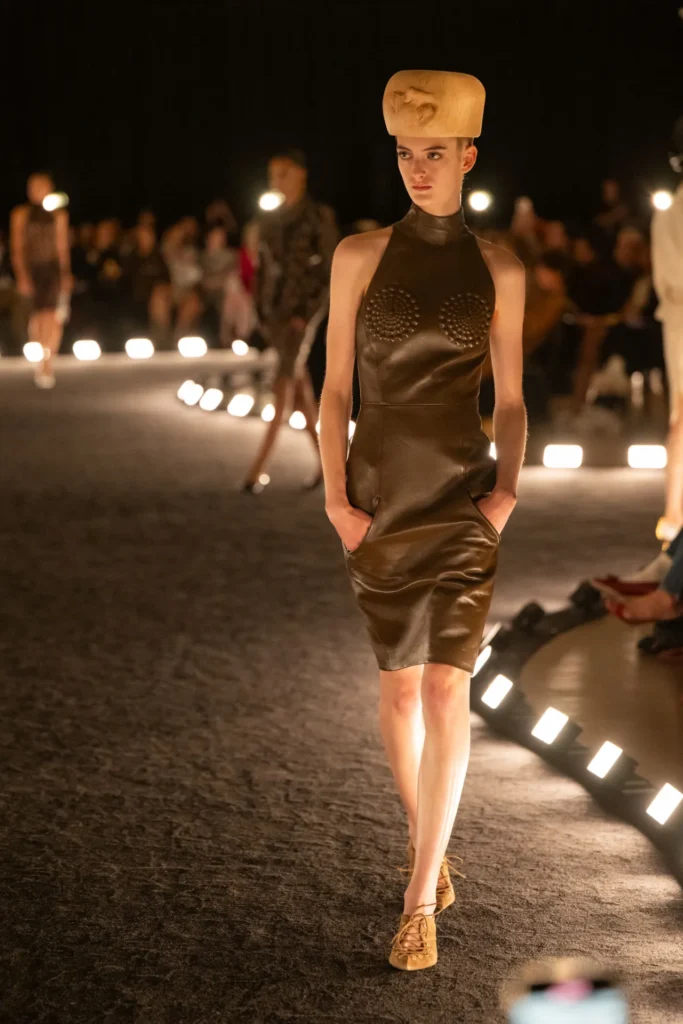
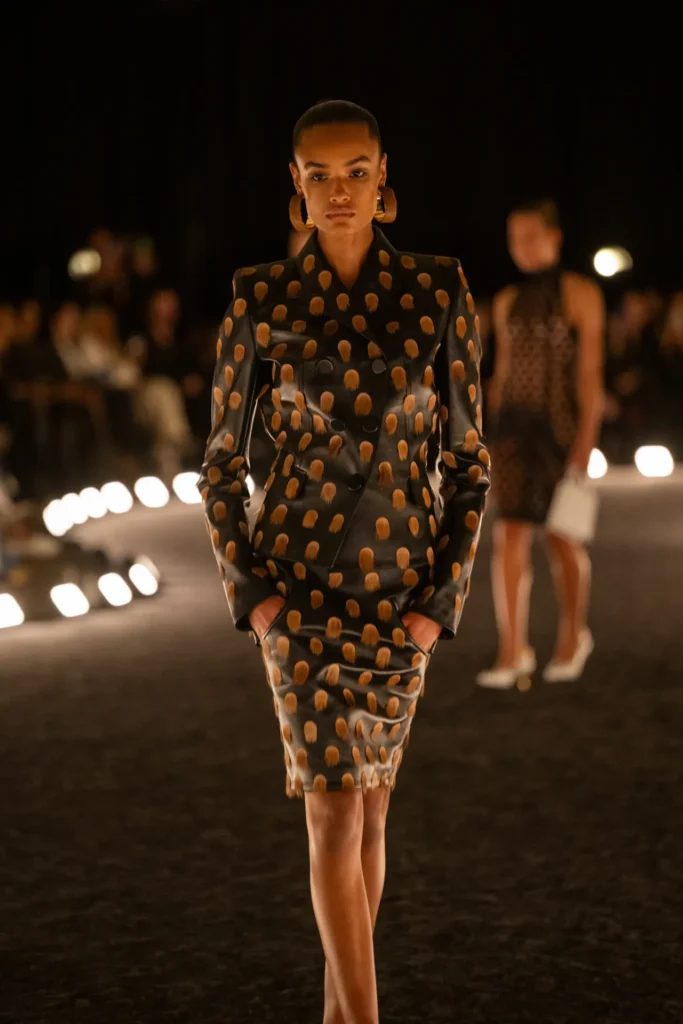
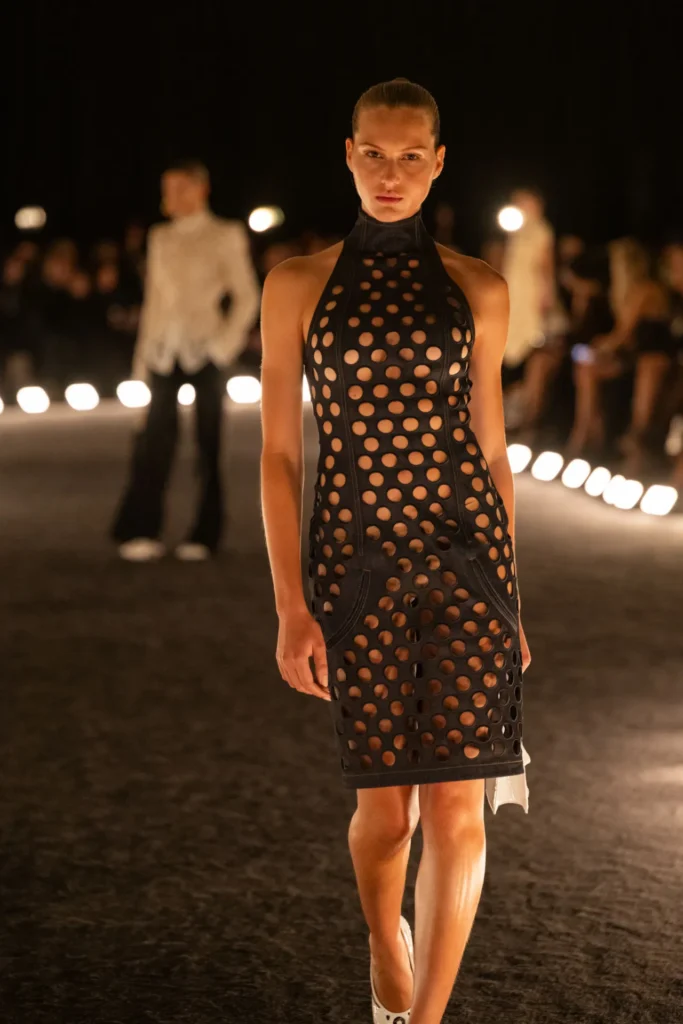
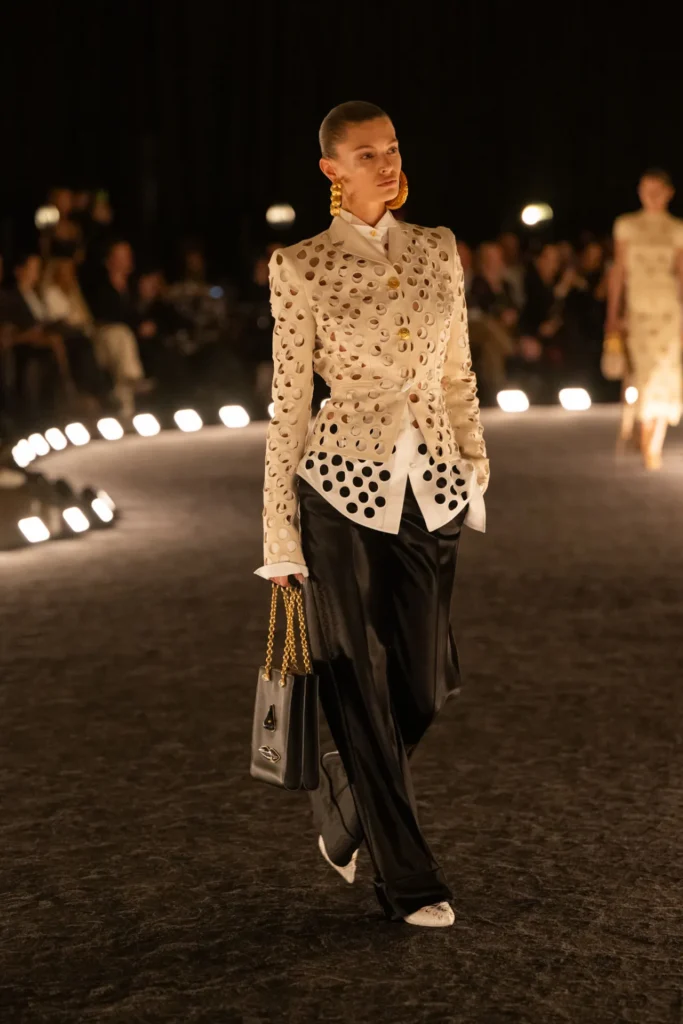
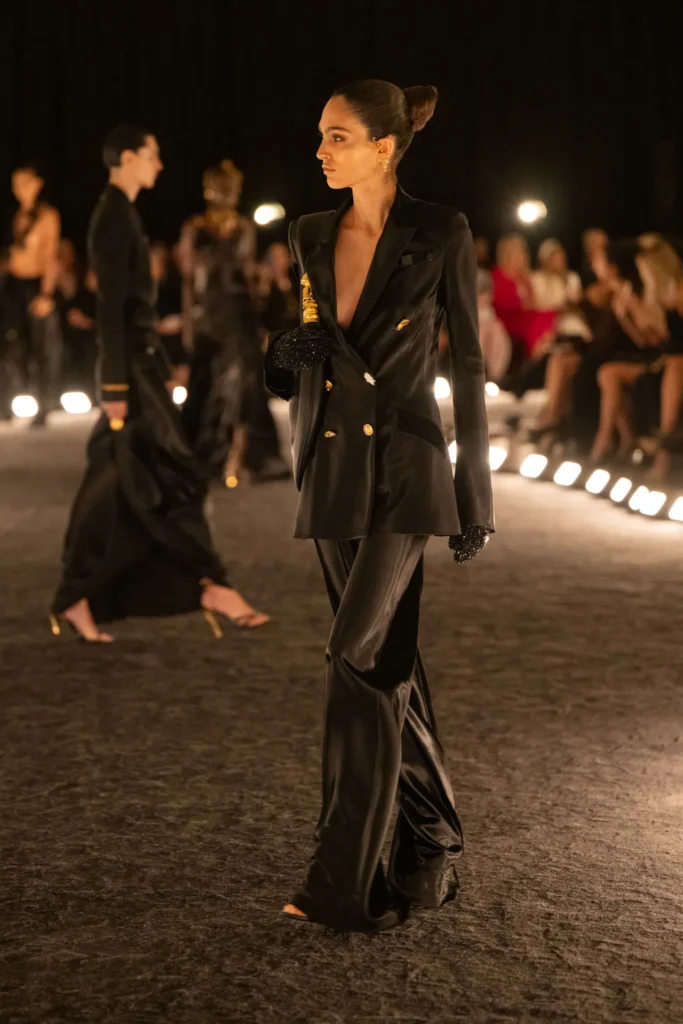
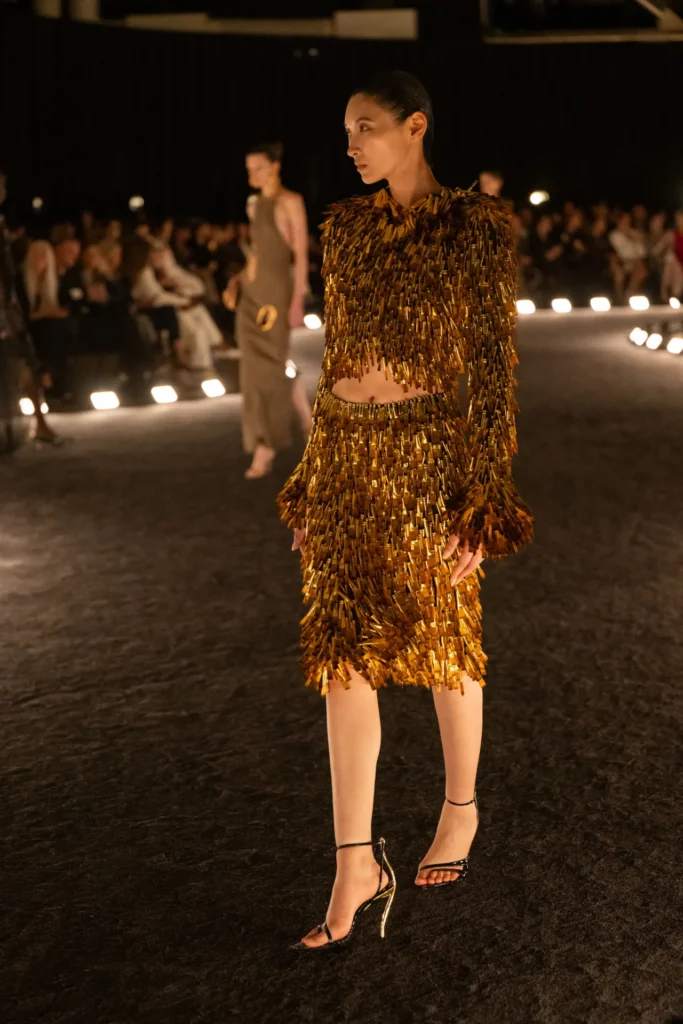
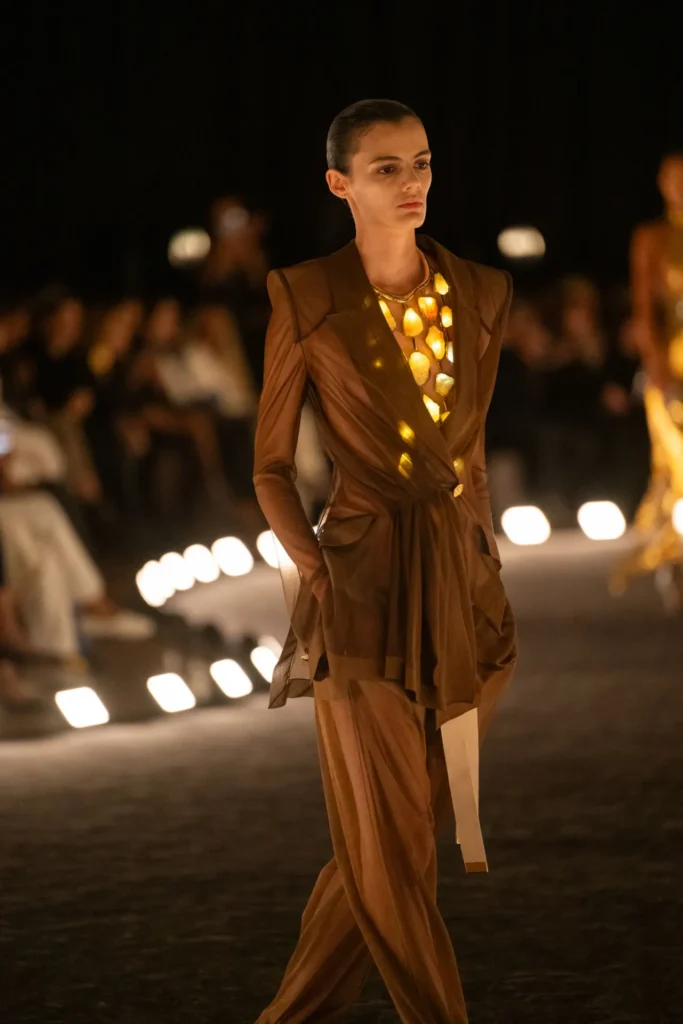
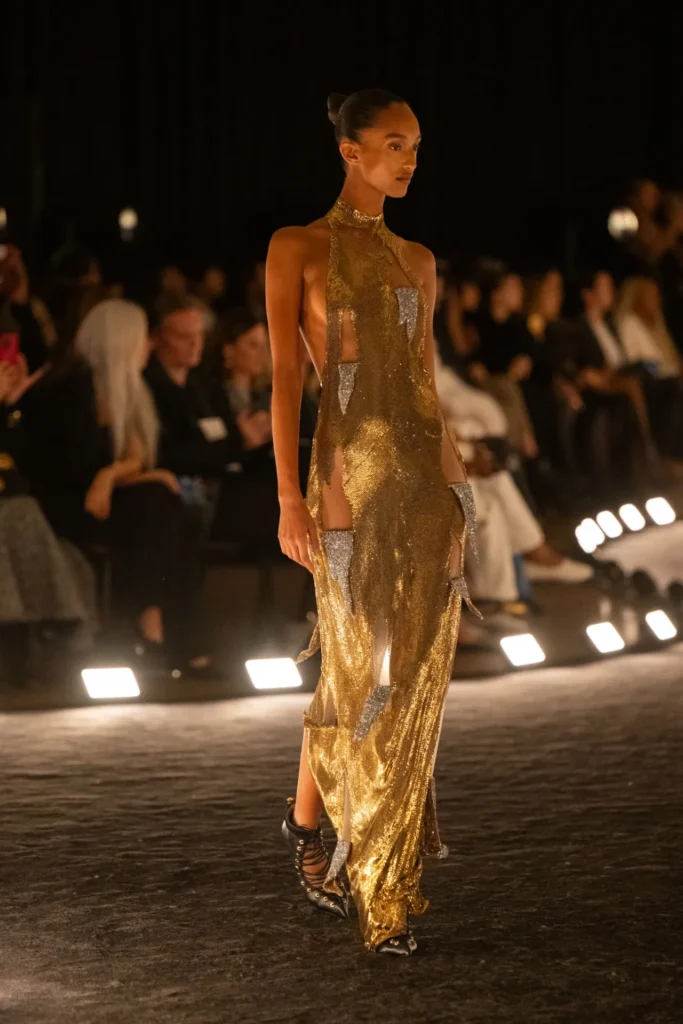
Schiaparelli Spring 2026 Collection

Schiaparelli Spring 2026 Collection

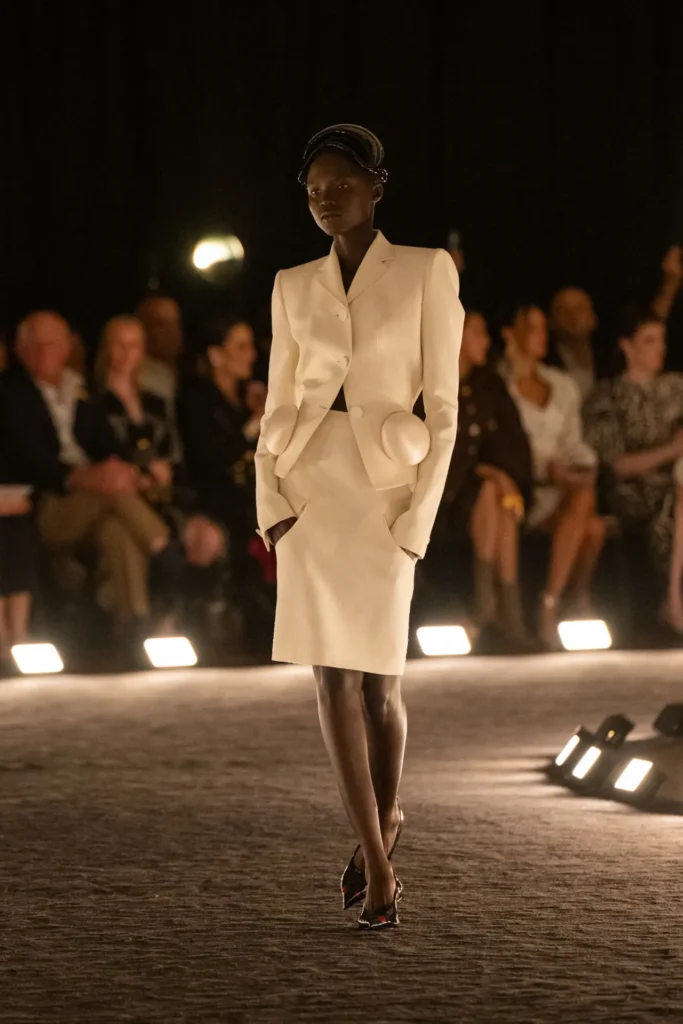
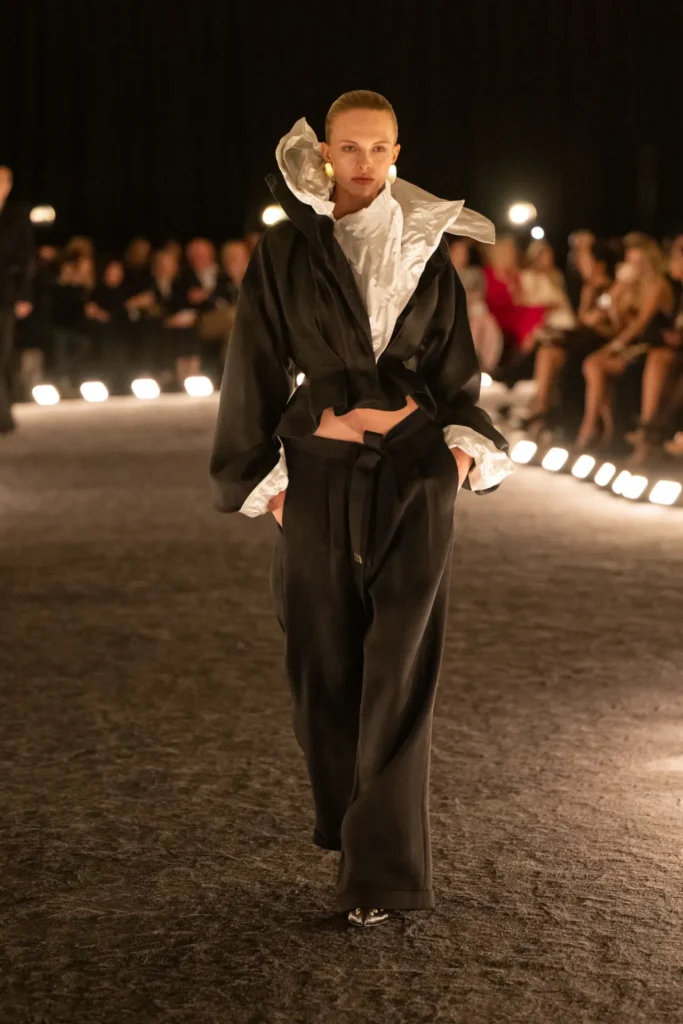
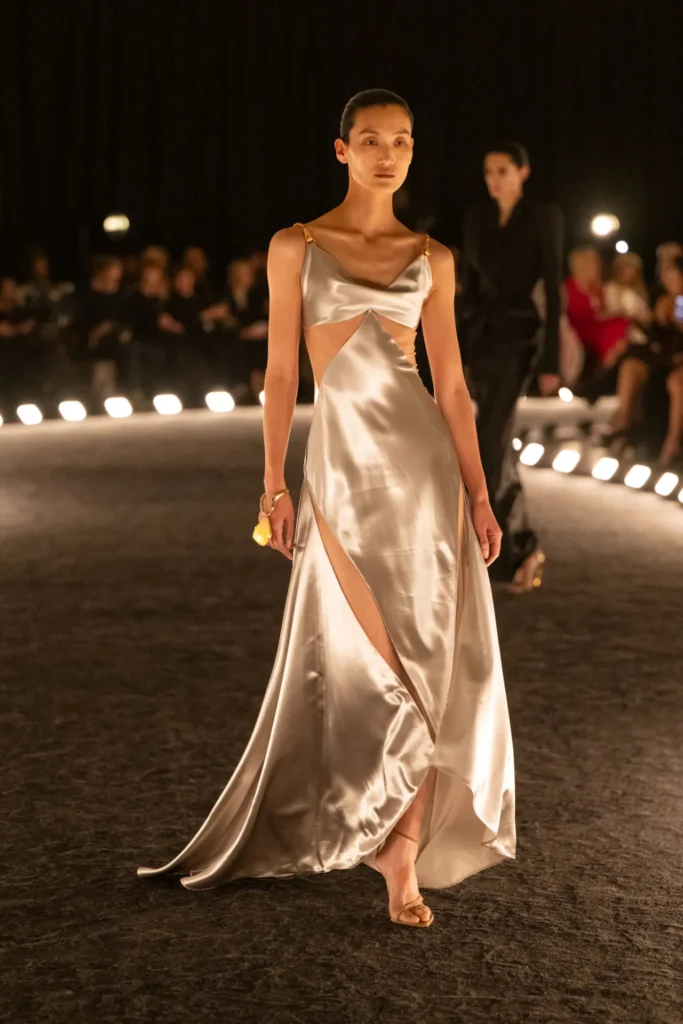
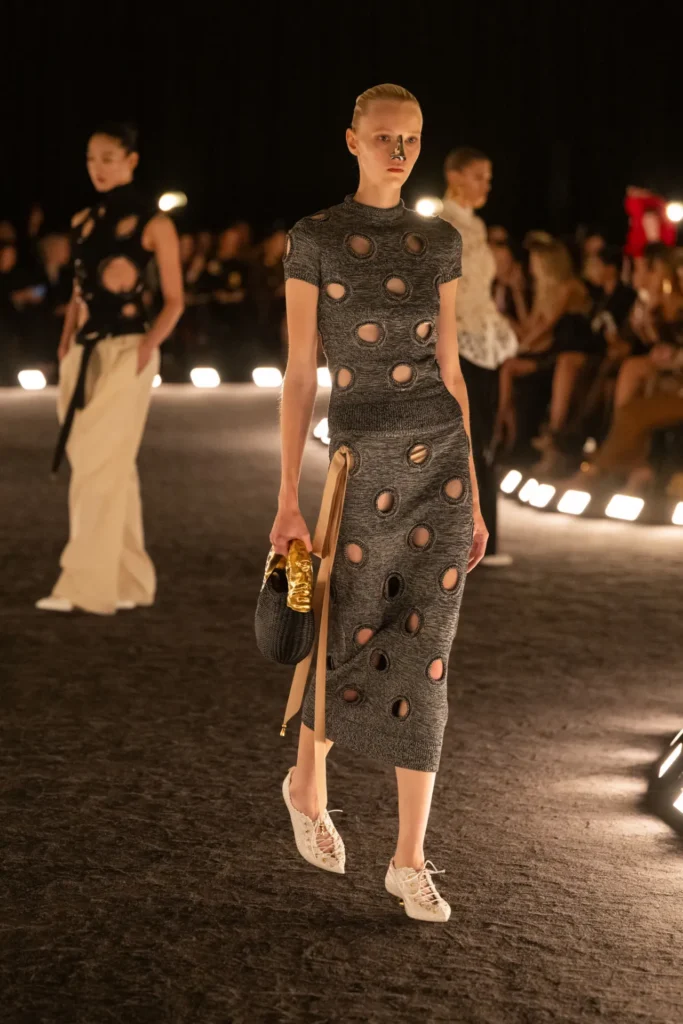
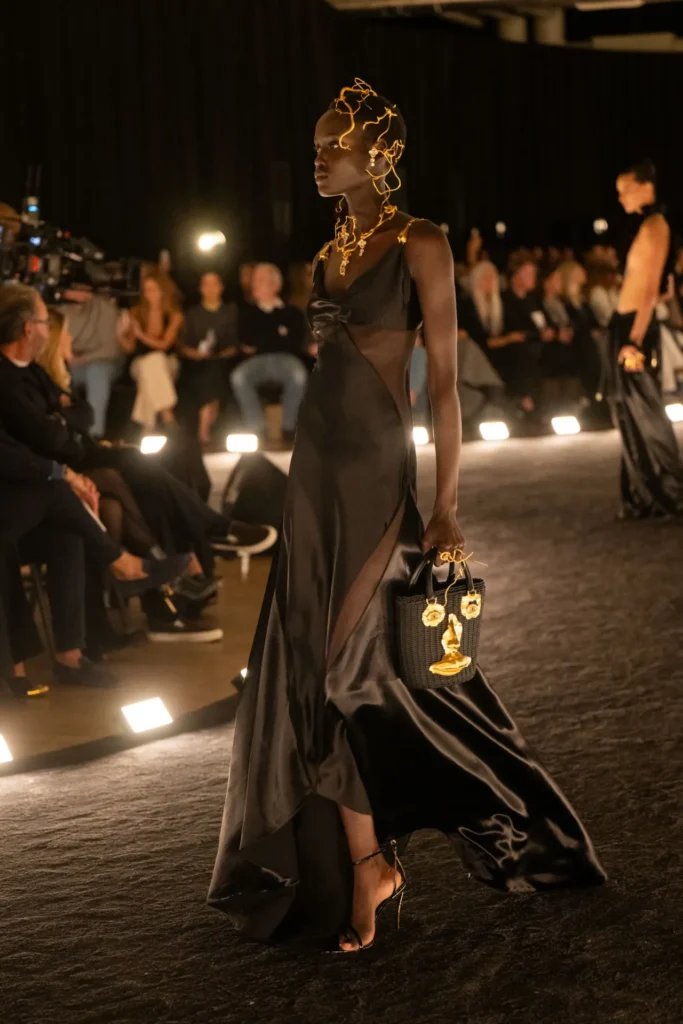
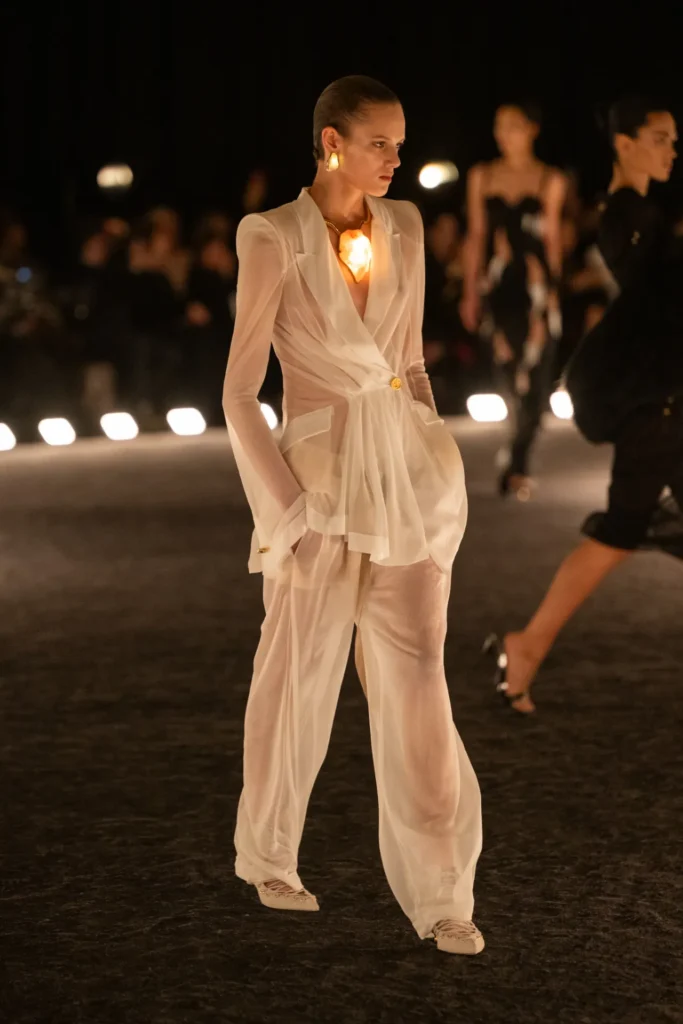
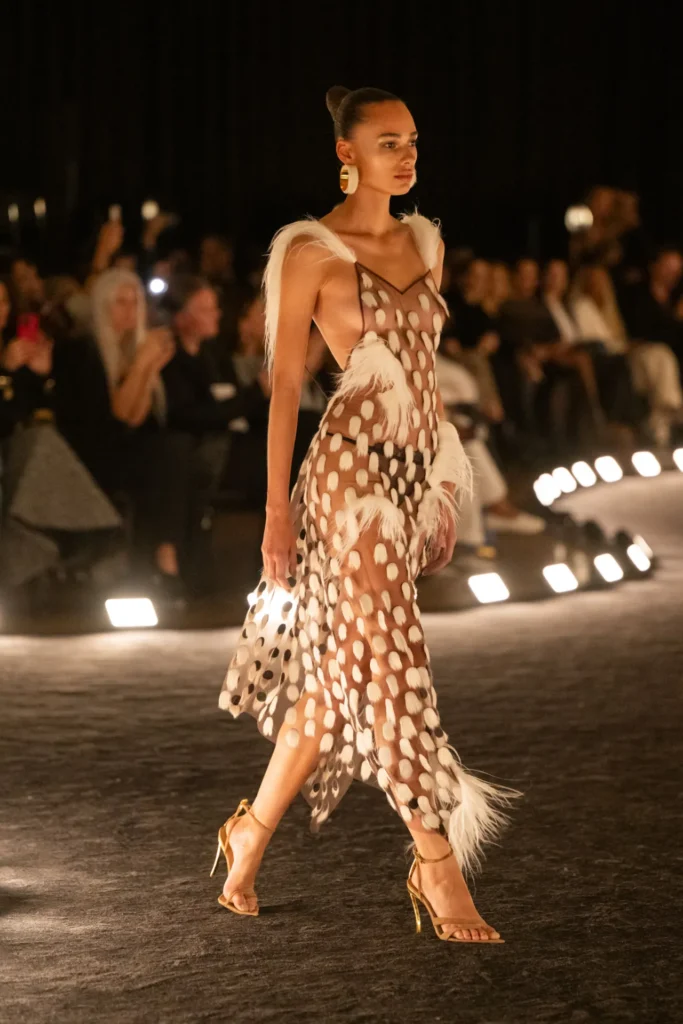
On the rooftop of the Pompidou Center — currently closed for renovations — Daniel Roseberry staged one of his most restrained yet impactful Schiaparelli shows to date. With panoramic views stretching from Sacré-Coeur to the Eiffel Tower, guests like Kylie Jenner, Rosalía, and FKA Twigs gathered to witness a collection that balanced extreme drama with surprising wearability.

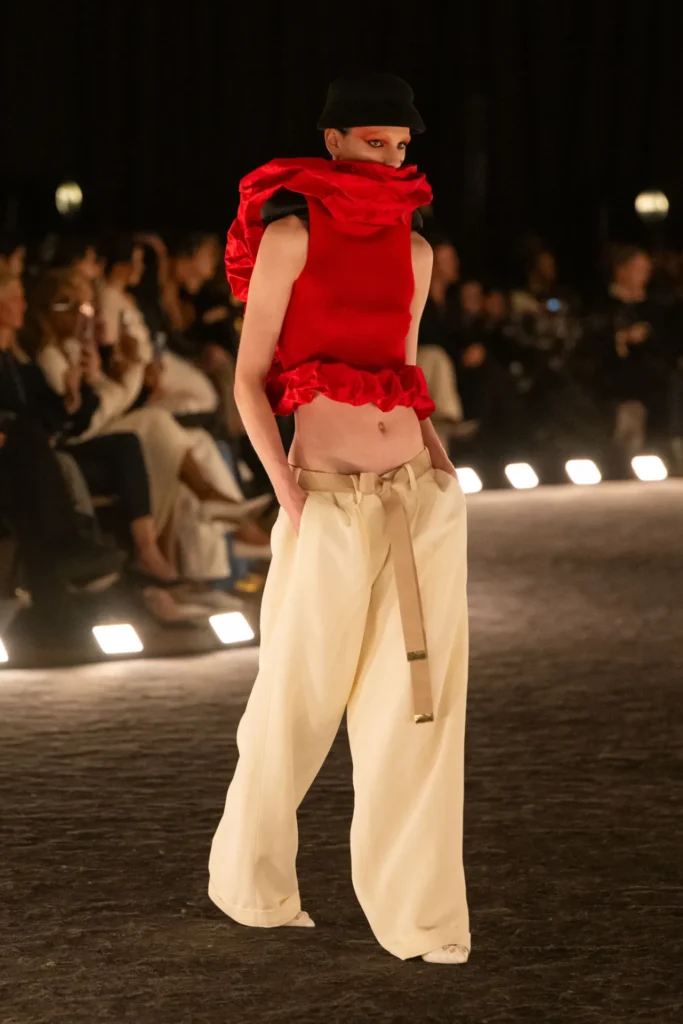
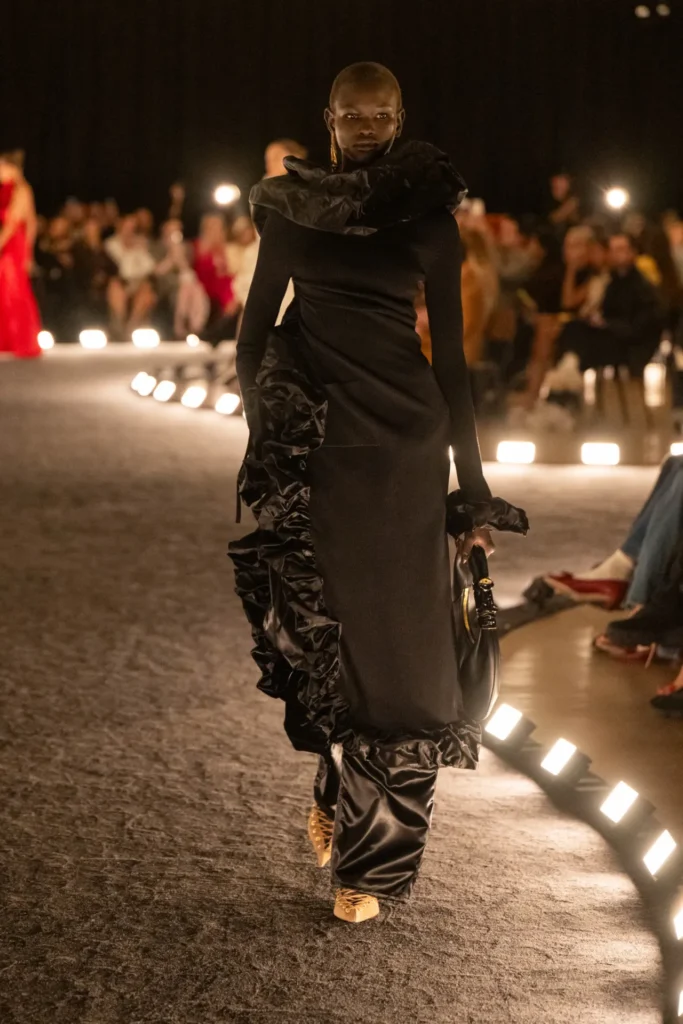
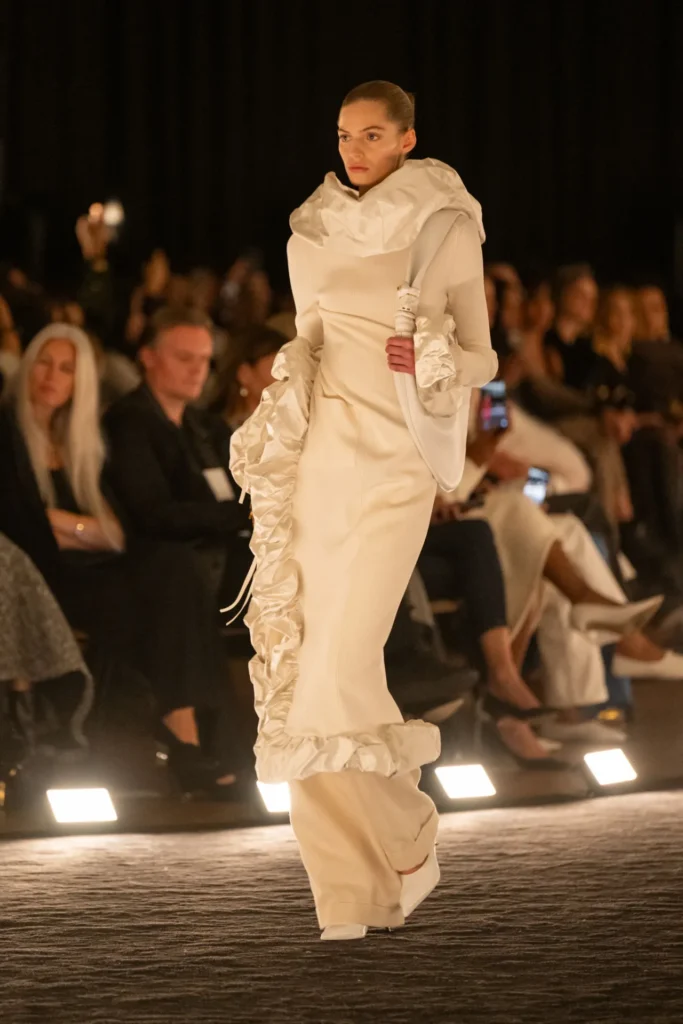
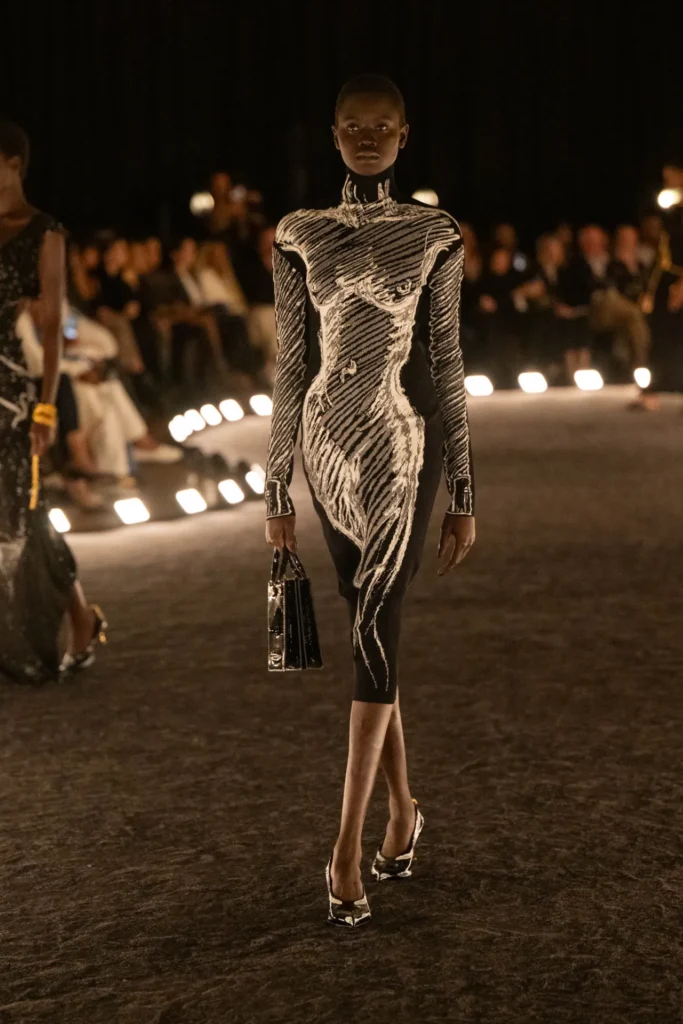
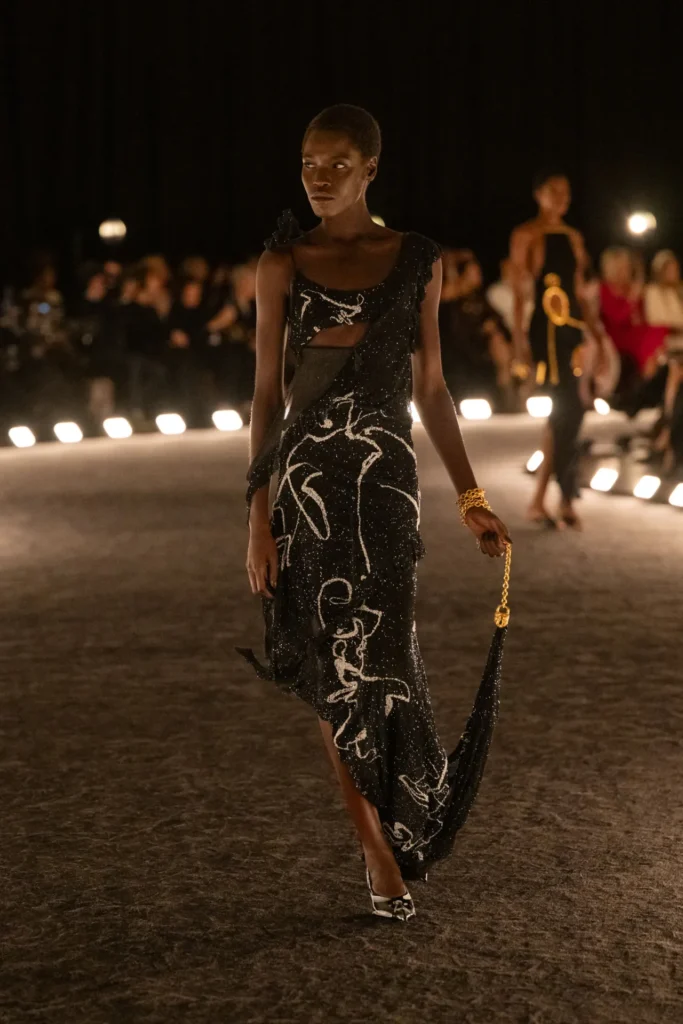
Roseberry found his starting point in the museum’s previous exhibition dedicated to sculptor Constantin Brâncuși. The artist’s clean lines and essential palette echoed throughout the collection, where minimalist tailoring was enhanced by curved waistbands, pebble-shaped pockets, and oversized cutouts on everything from leather shirts to knit tube dresses. Hammered ruffles rippled across cropped tops paired with cream trousers, while bias-cut evening gowns shimmered in panels of satin, suspended from delicate chain straps that hovered like jewelry over sheer bases. The usual gilded theatrics were pared back, save for a few sculptural nose jewels.

“I wanted something radically wearable, but still with that extreme drama that makes the air shift when you walk into a room wearing Schiap,” Roseberry said post-show. He deliberately set aside the hourglass corsetry of past seasons, letting fabric dictate silhouette instead. “It was a revelation to put on bias-cut dresses and watch how the body itself did the work. This was really about going back to the house’s roots.”

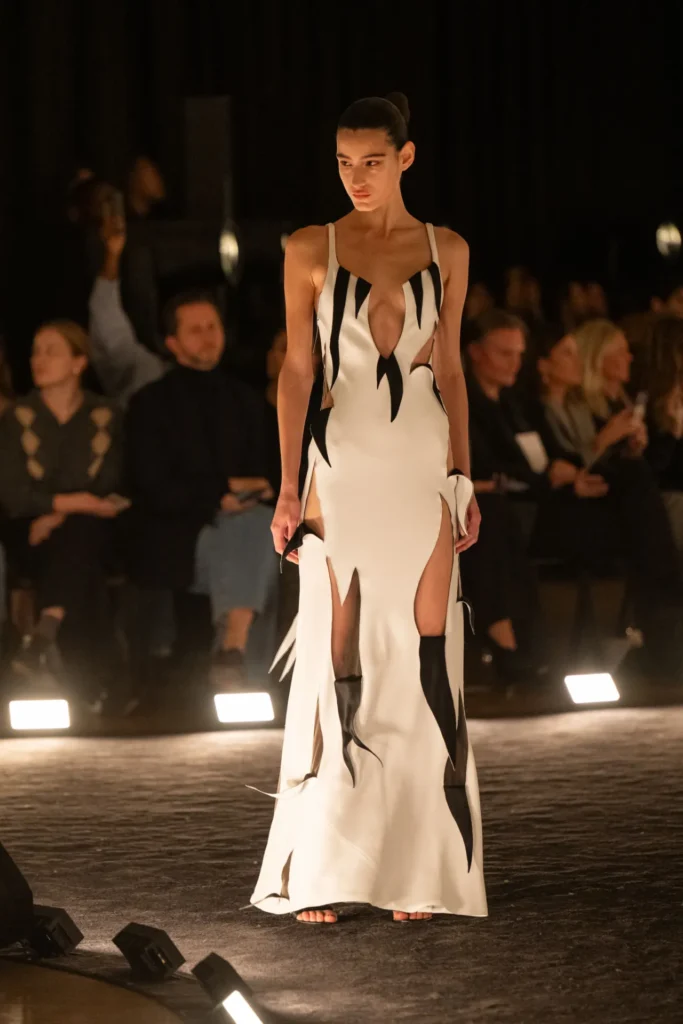
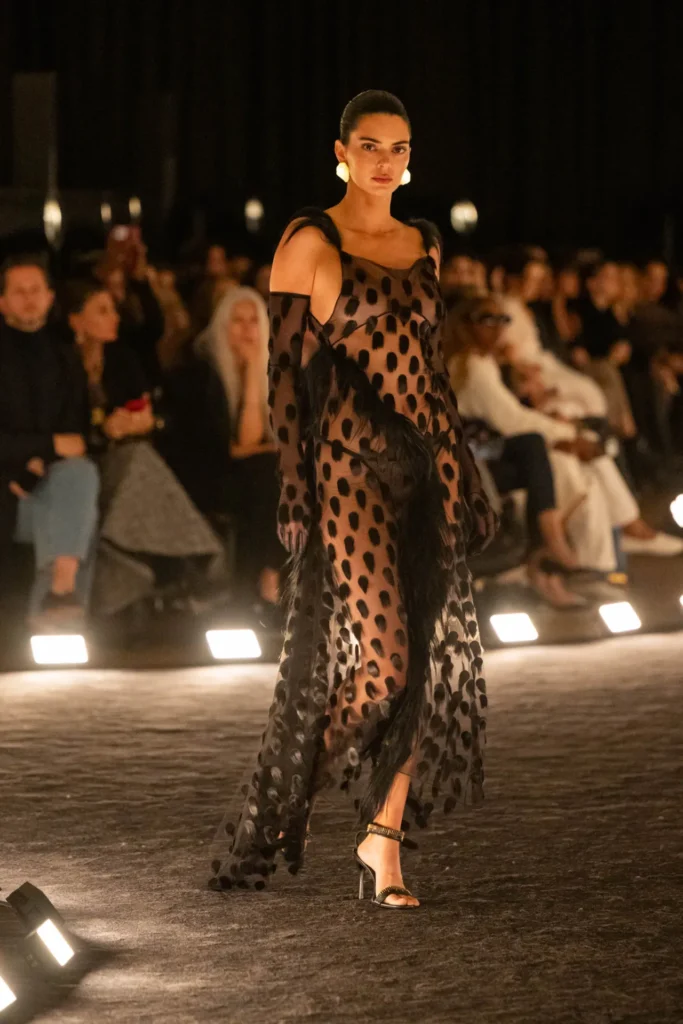
Those roots include provocation — a Schiaparelli signature since Elsa’s collaborations with surrealist artists. Roseberry revisited the legendary Tears Dress of 1938, designed with Salvador Dalí, whose trompe-l’œil illusion of ripped flesh reappeared here in 3D silk crêpe panels shredded at the edges. At times, his creations were barely more than fragments of cloth: Kendall Jenner closed the show in a sheer black negligée, a reminder that whether maximalist or minimalist, a Schiaparelli woman never fades into the background.

The timing felt pointed. With the house preparing for a major exhibition at London’s Victoria & Albert Museum next year, Roseberry delivered a collection that simultaneously honored its surrealist past and carved out a modern, wearable vision for its future — a conversation between art and fashion staged in the perfect setting: a museum in transformation.

Chanel Spring 2026 Collection

Chanel Spring 2026 Collection

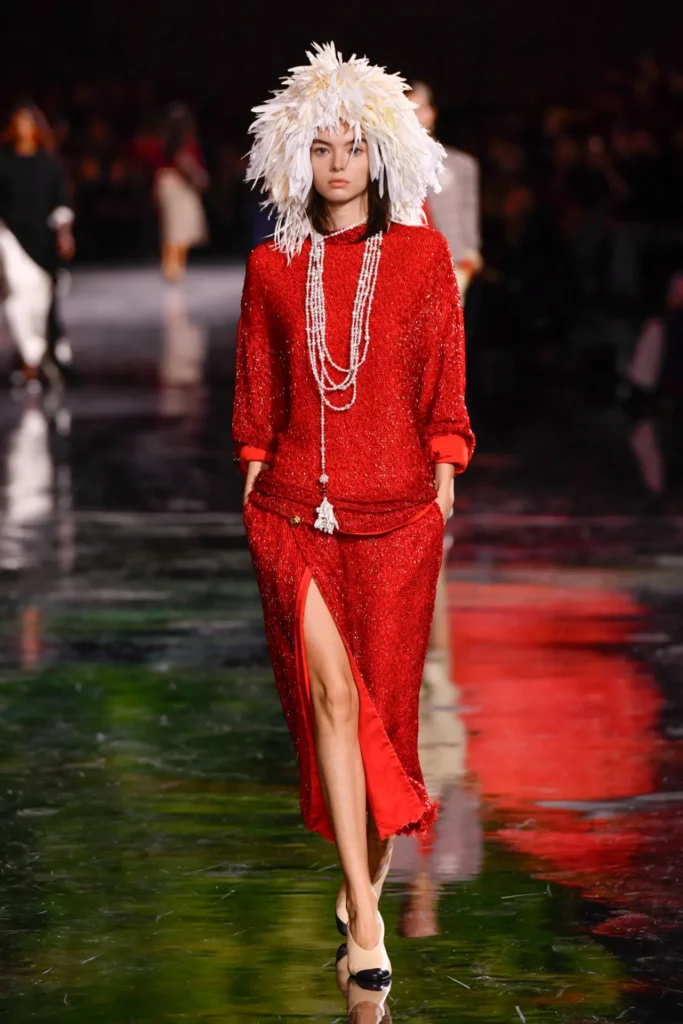
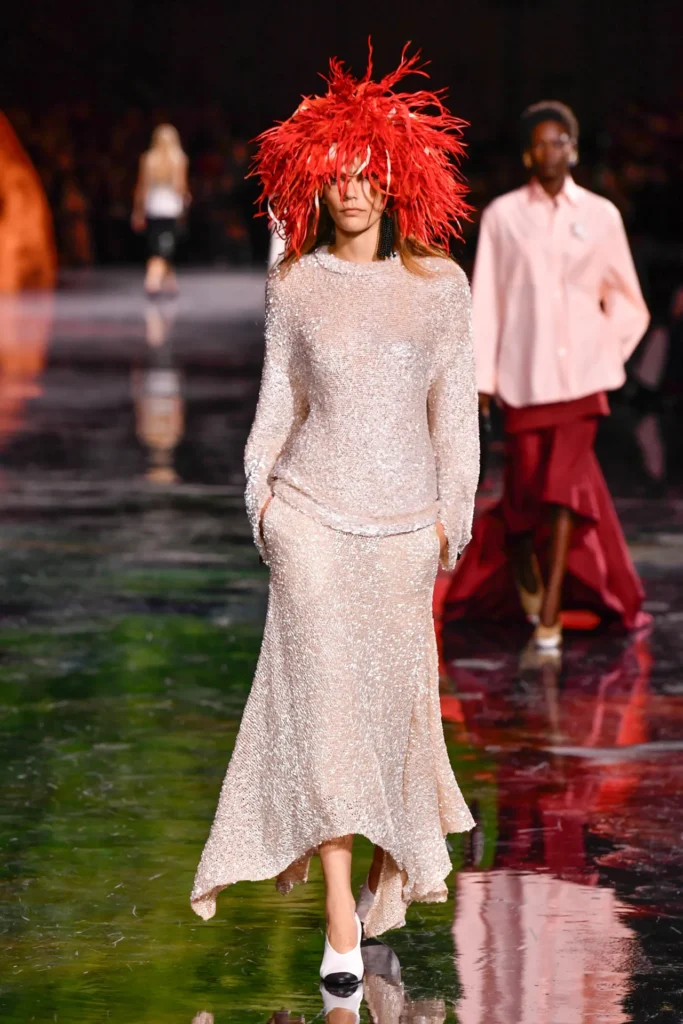
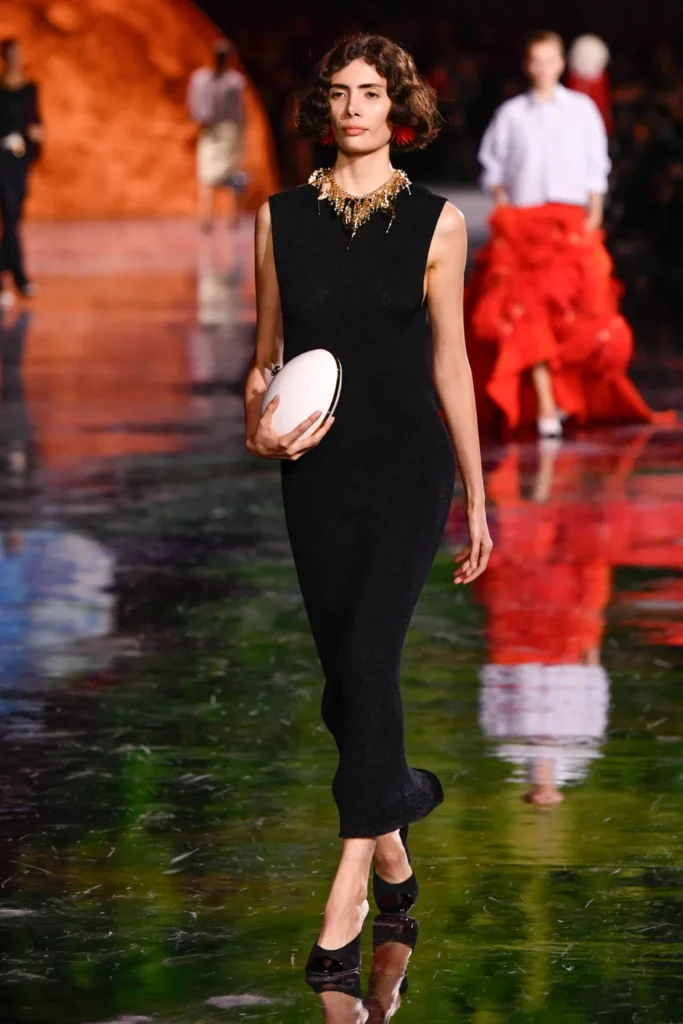
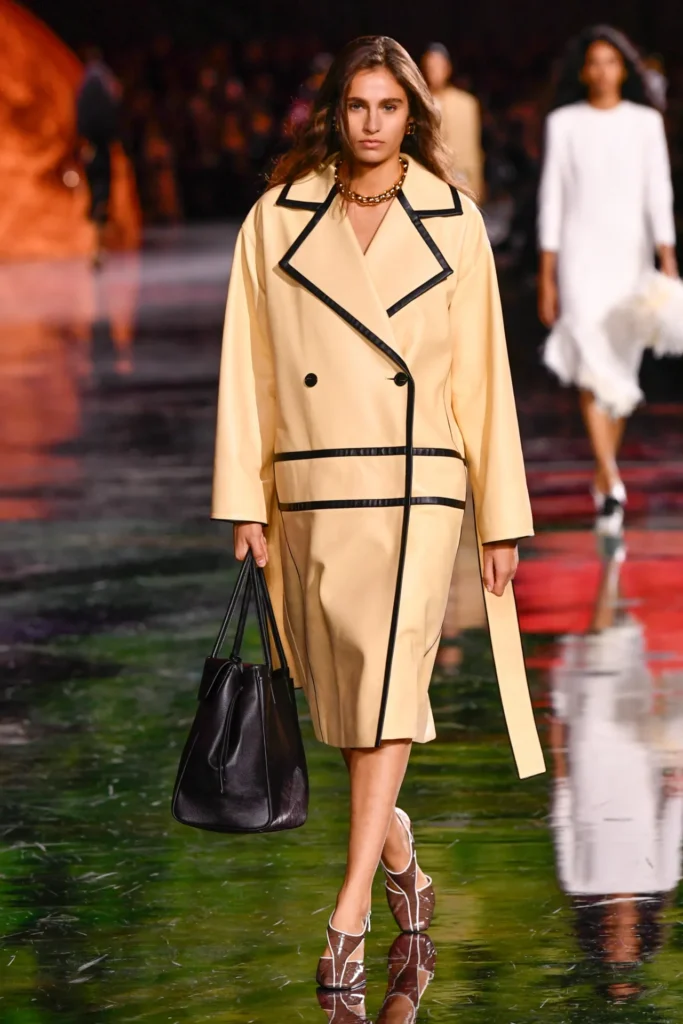
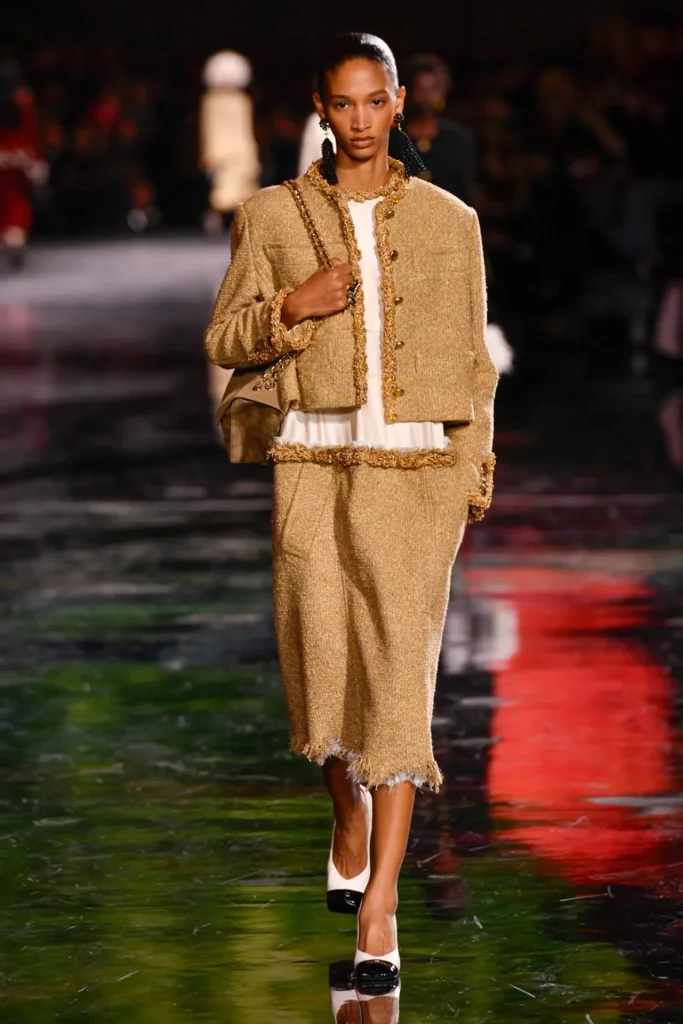
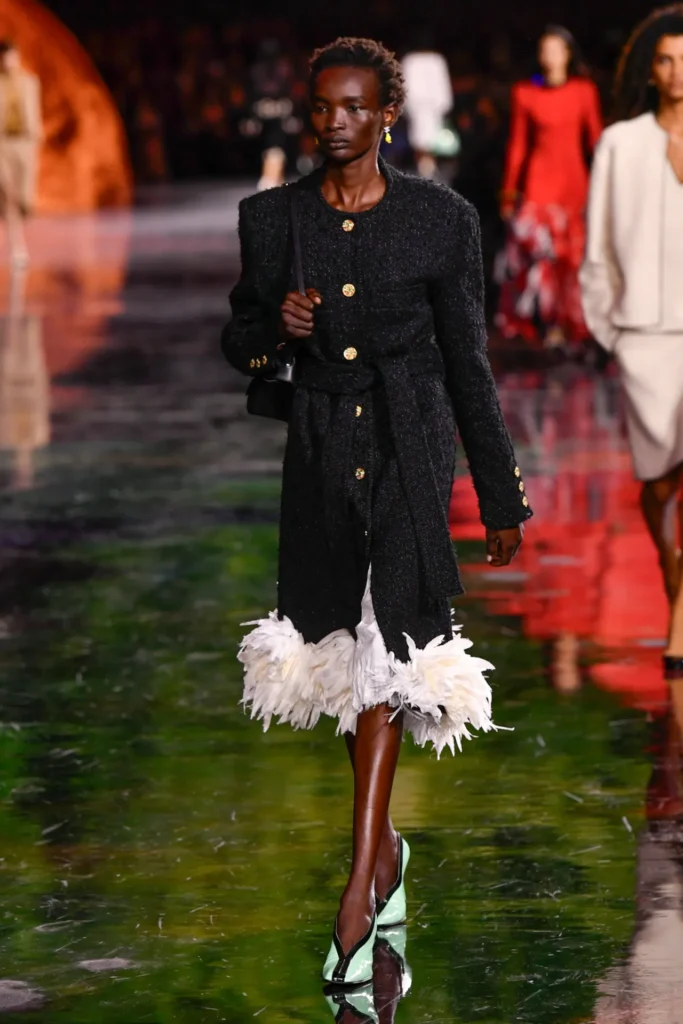
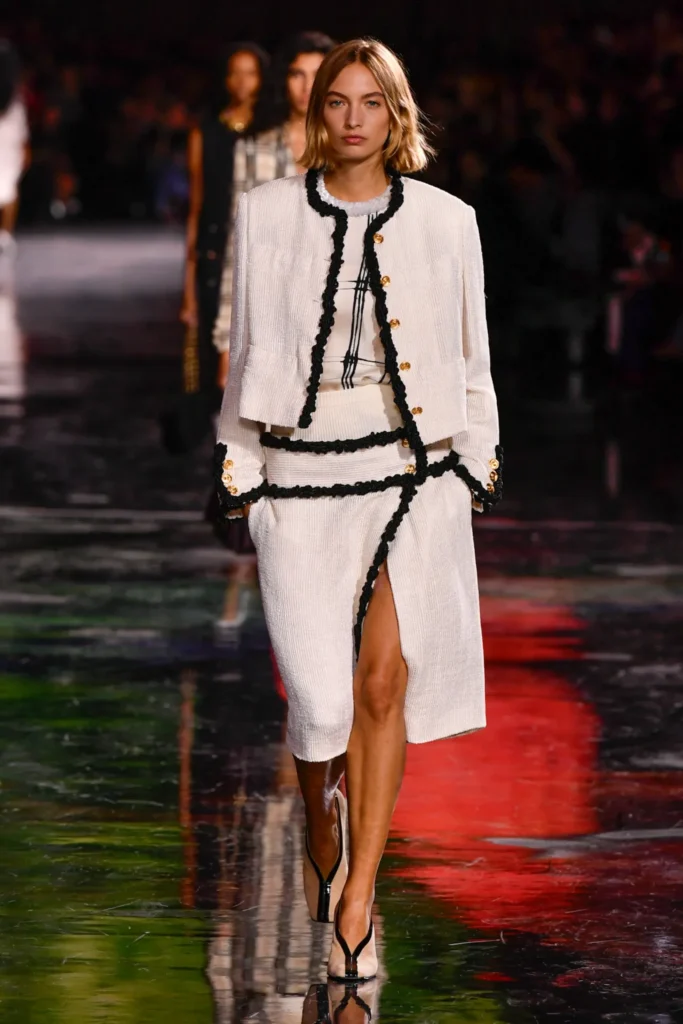
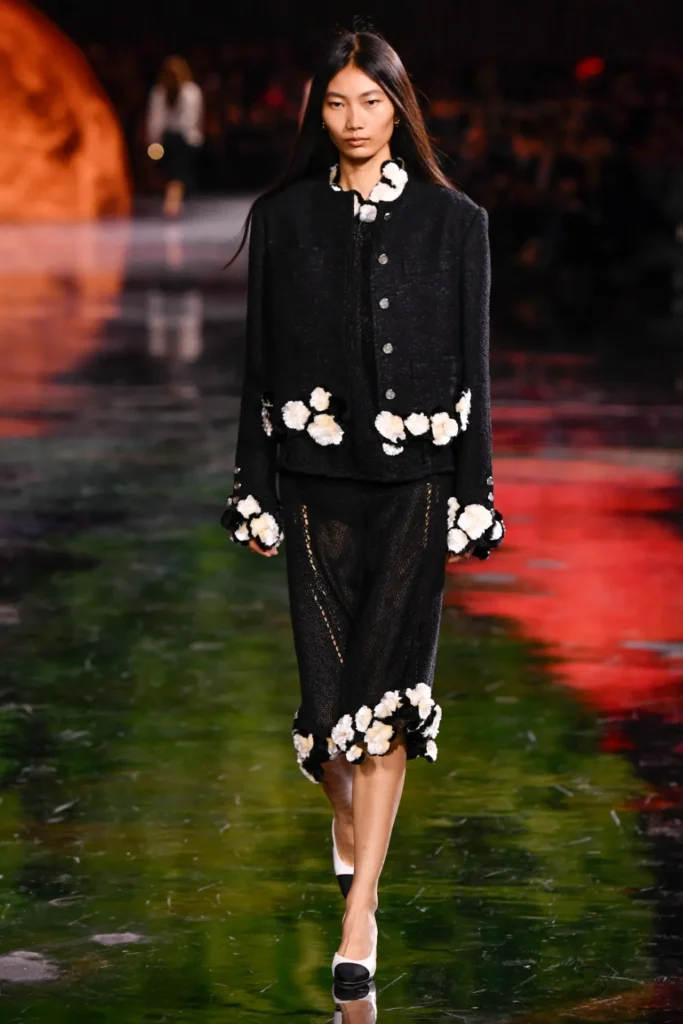
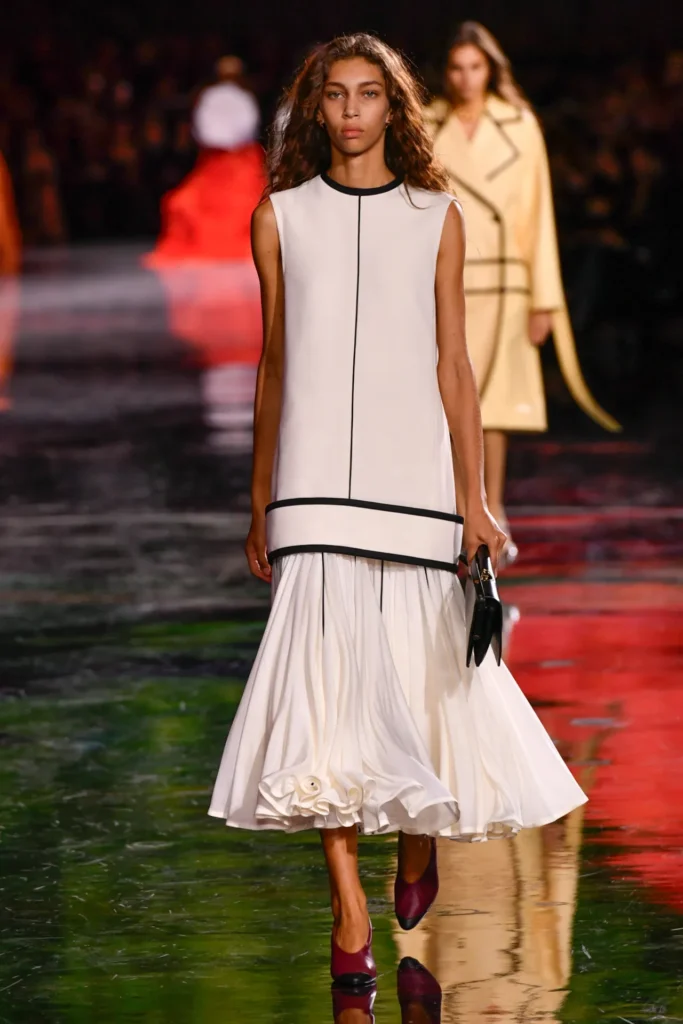
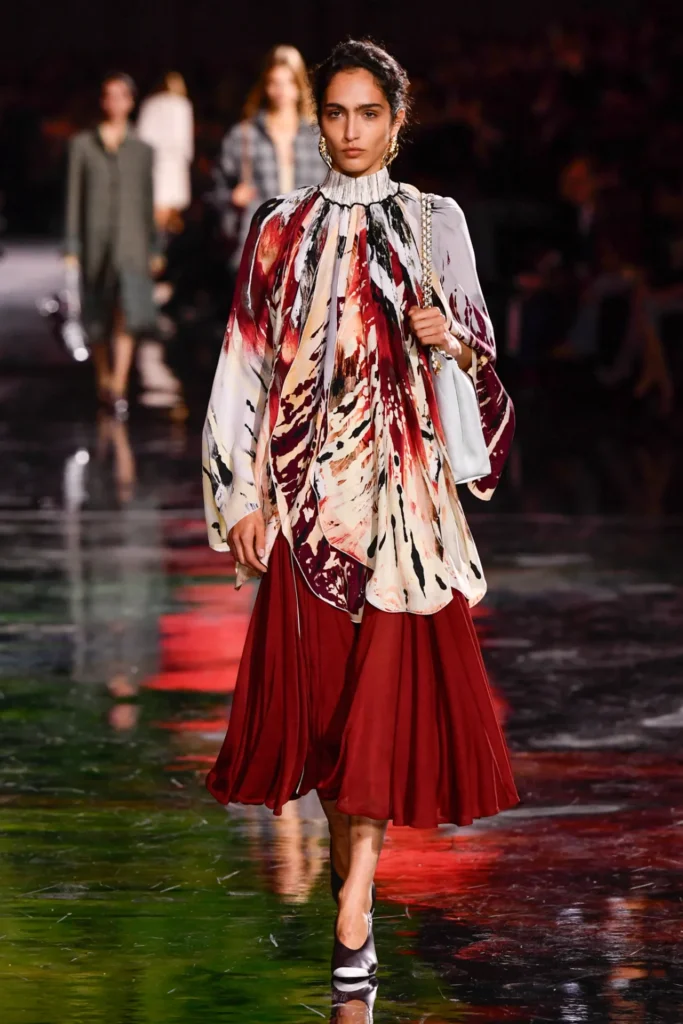
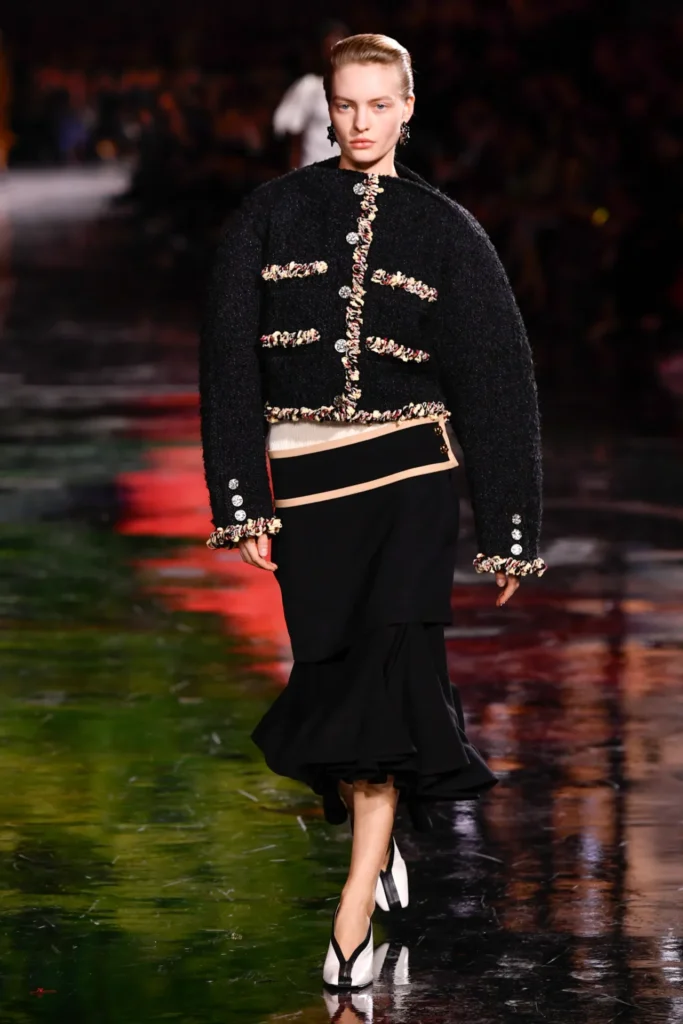
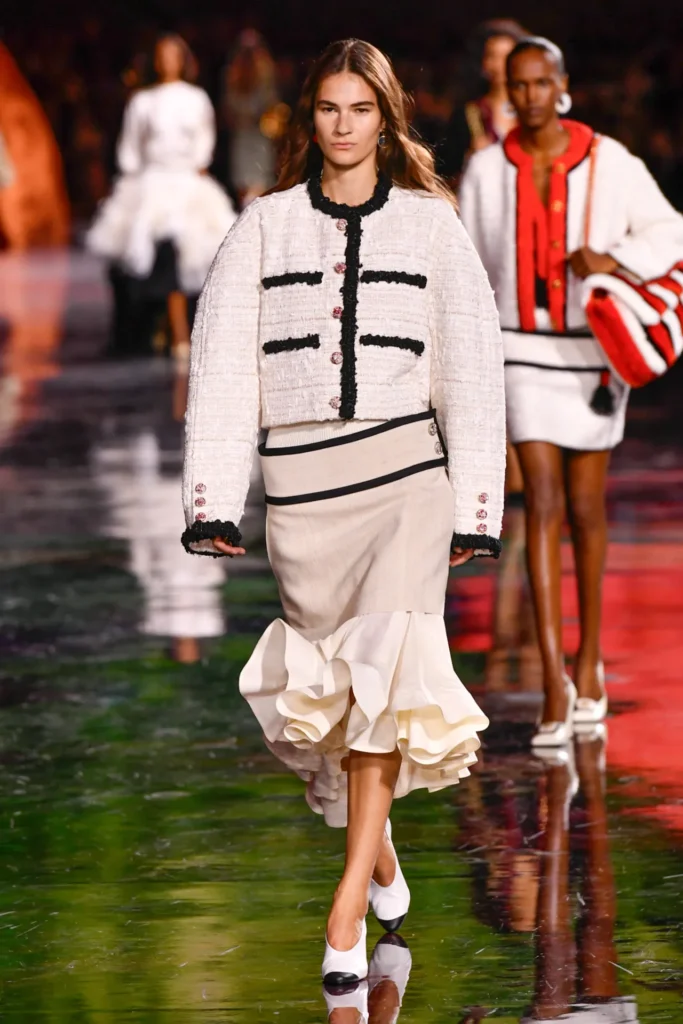
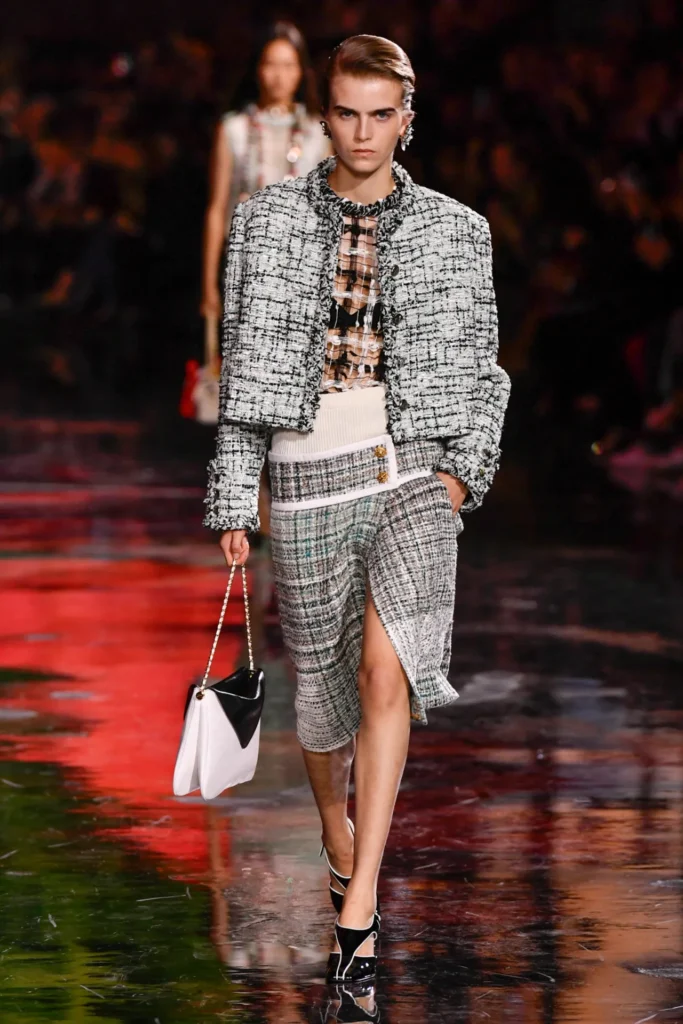
His Spring 2026 collection was a study in tension: between heritage and reinvention, softness and precision, the familiar and the unknown. “It felt like a roller coaster,” Blazy admitted of his first season. “The archive was overwhelming — almost too much beauty to contain. But the beauty of Chanel’s codes,” he continued, “is that they can also be simplified. They still look like Chanel.”

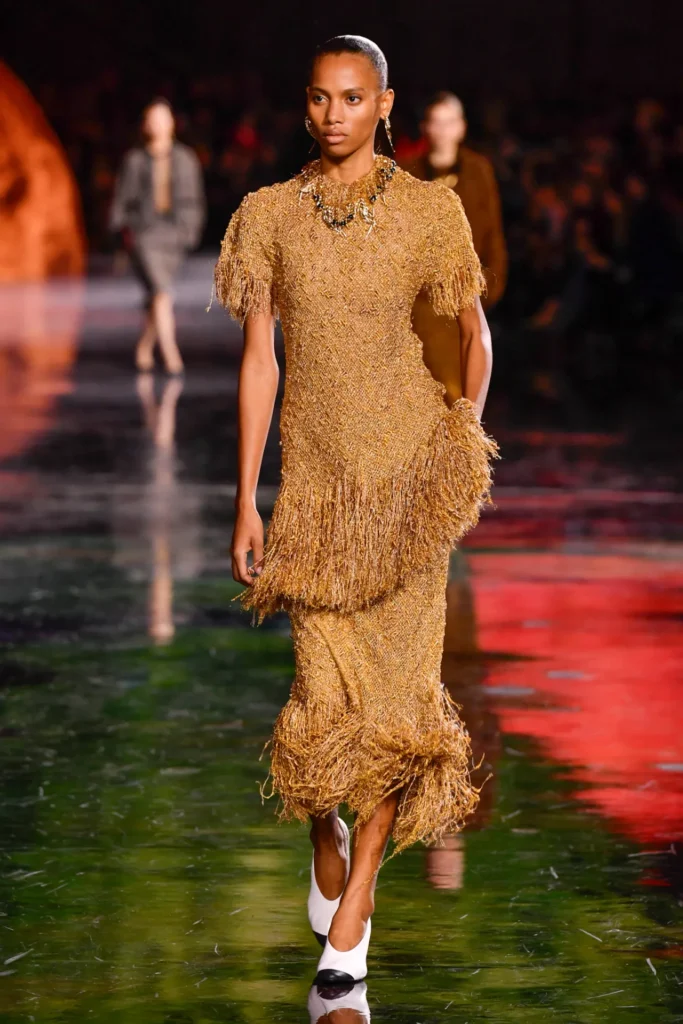
Gone were the oversized pearl-chain handbags that defined his predecessors’ era. In their place came a nuanced exploration of the house’s DNA — a complex, multi-layered vision that recharged the brand with fresh cultural relevance. Even his reimagined two-tone ballet flats carried a new sensuality, their supple chocolate-praline leather both playful and deliciously subversive.

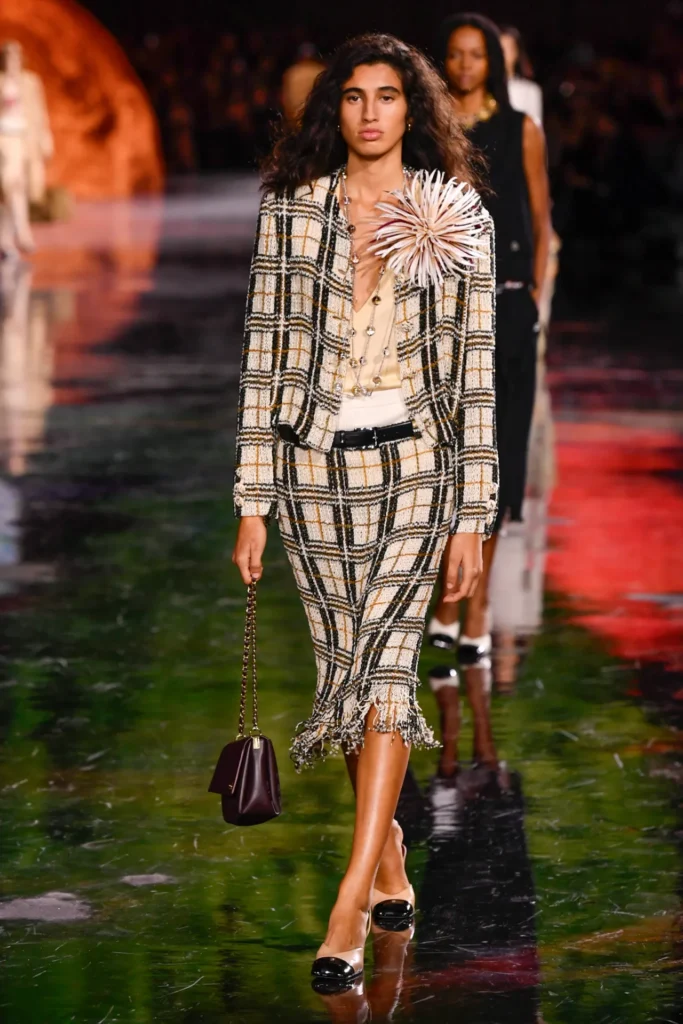
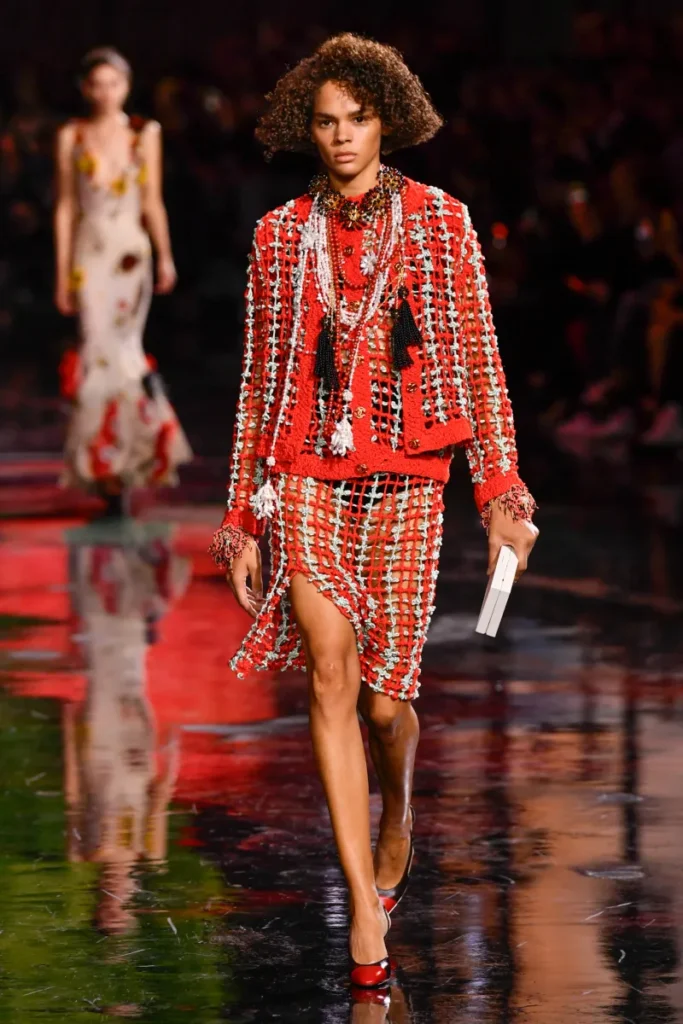
The tweed suit, perhaps the collection’s greatest challenge, appeared frayed, fringed, and brushed into blanket-like softness — inspired, Blazy said, by Chanel herself and her penchant for wearing her lovers’ clothes. “She thought the Duke of Westminster was the most elegant man because he wore his things until they looked used,” he mused.

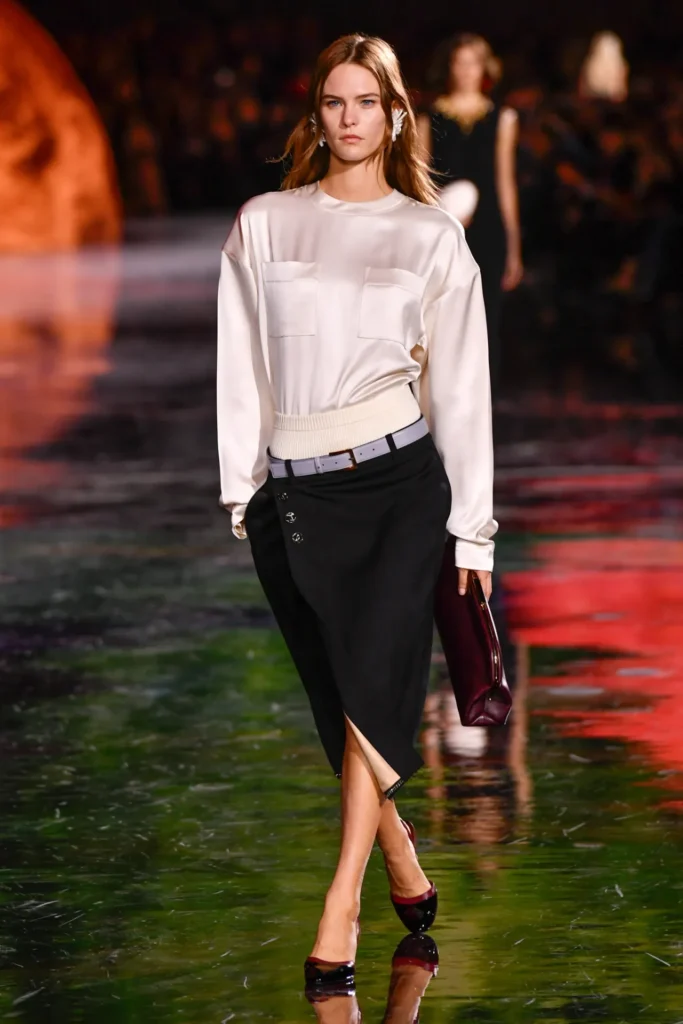
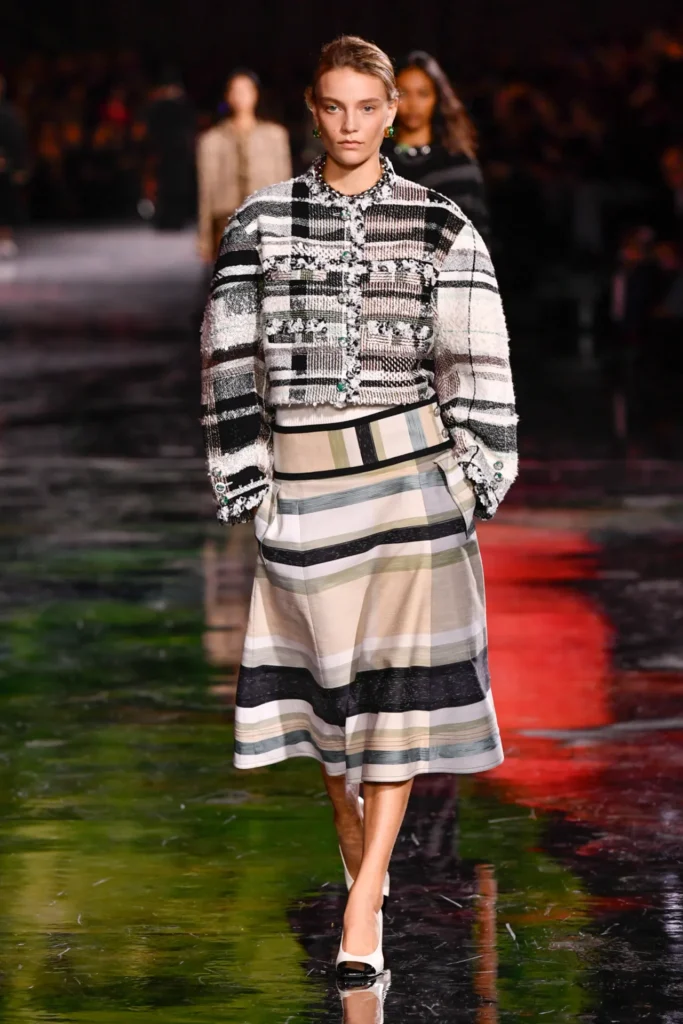
Some of the proportions were intentionally off-kilter — oversized jackets, sweeping hems, and slouchy silhouettes that dared imperfection. Yet amid the experimentation were stunning moments of clarity: plaid suits with low-slung wrap skirts, based on a mysterious archival look from 1964 that, as Blazy noted, “could have come from anywhere — France, or beyond.”

The show’s cosmic set became a metaphor for his intent. “We all look at the same sky,” Blazy reflected. “We all see the stars. There’s something universal in that — beauty without borders. That’s what fashion should offer, too.”

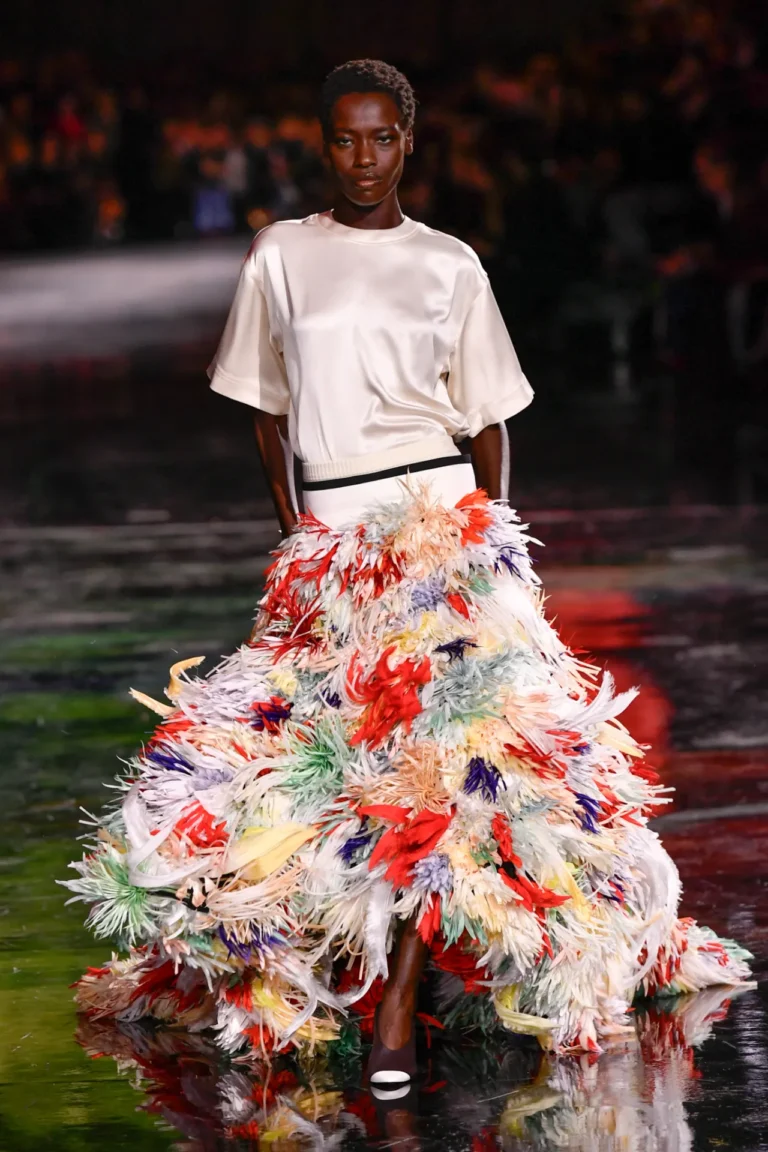
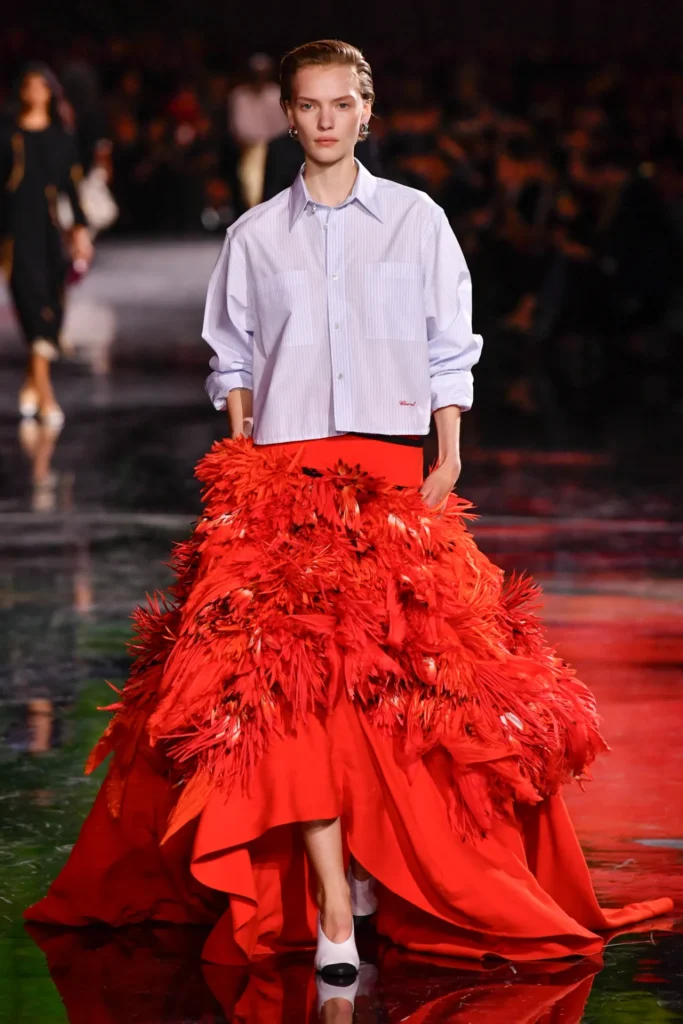
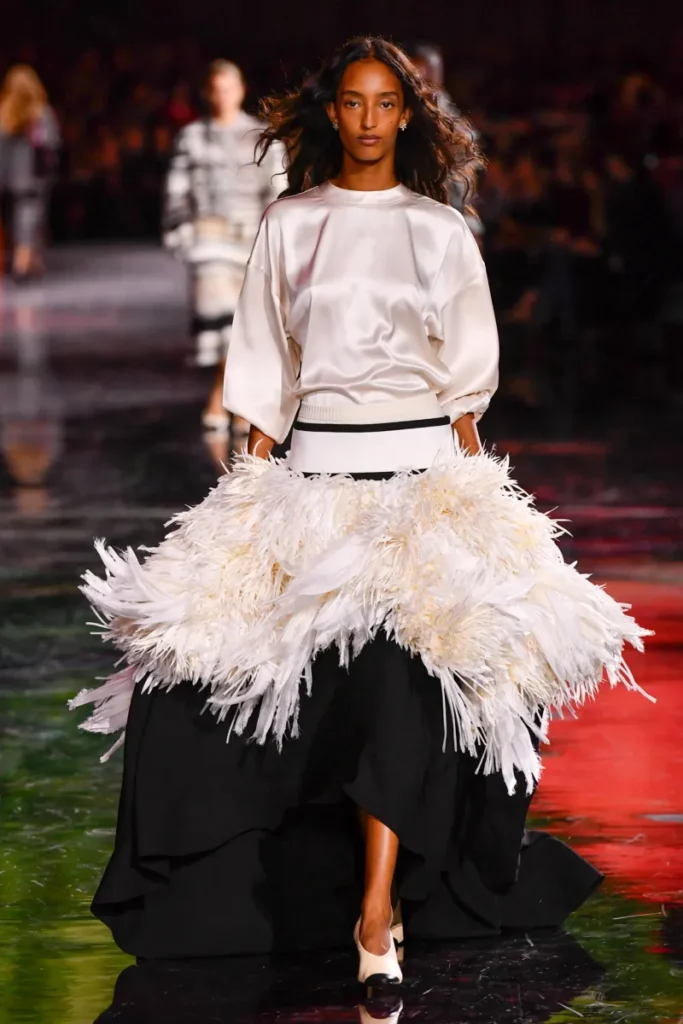
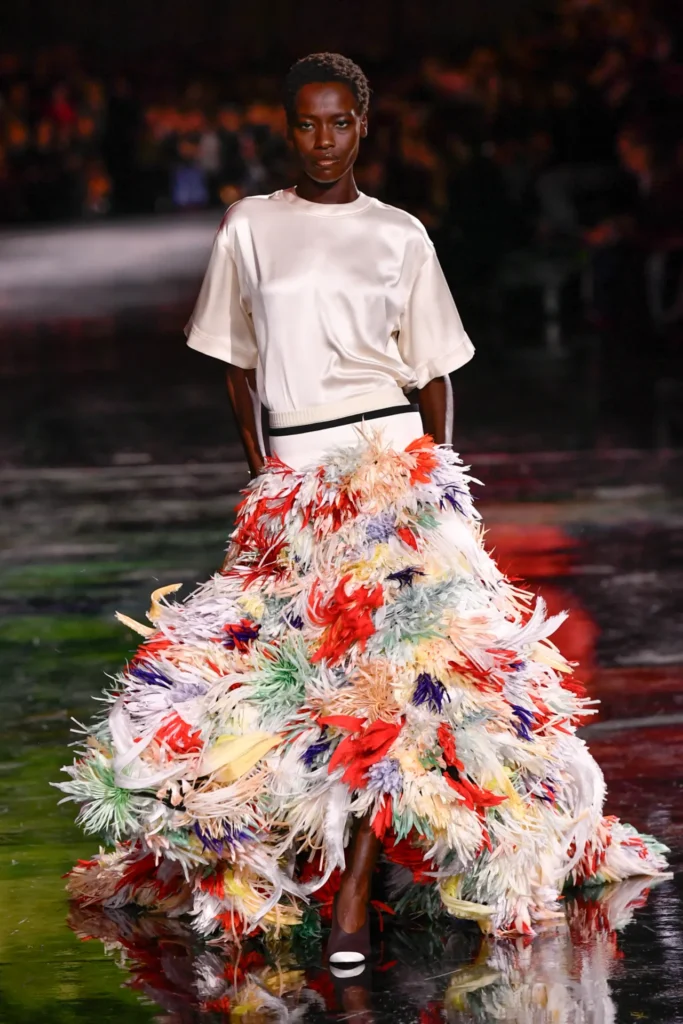
As the final look appeared — model Awar Odhiang gliding through the galaxy in an ivory silk T-shirt split open at the back and a skirt blossoming with multicolored flowers — the audience rose in ovation. She danced, radiant, toward Blazy.

Zimmermann Spring 2026 Collection

Zimmermann Spring 2026 Collection

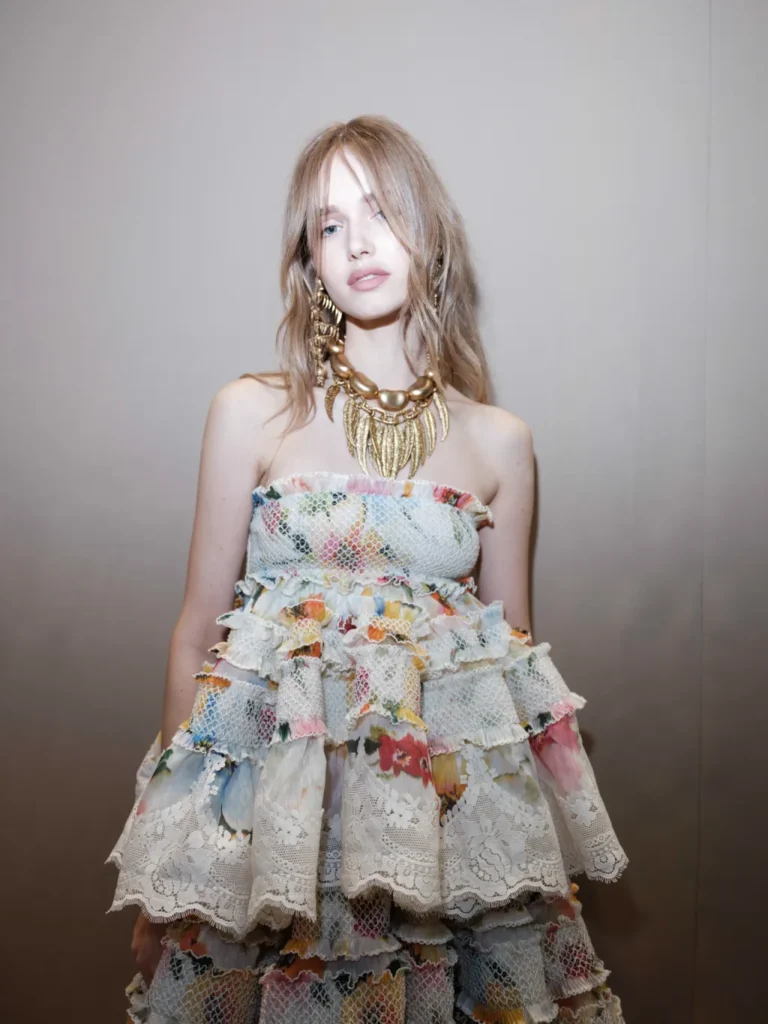
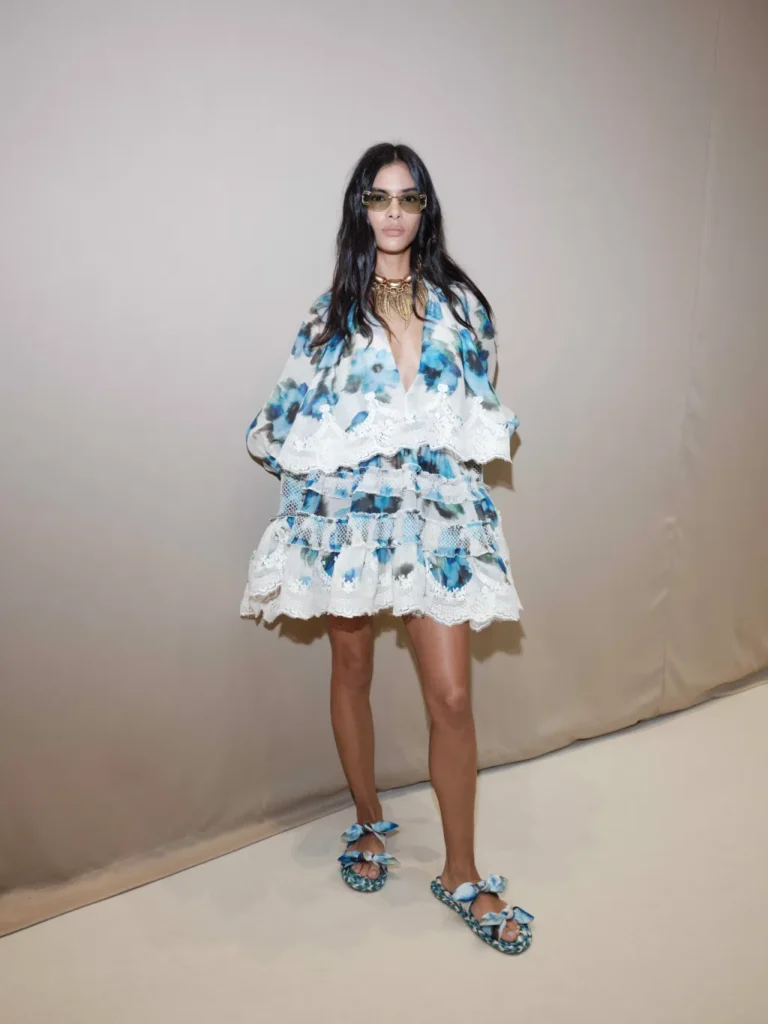
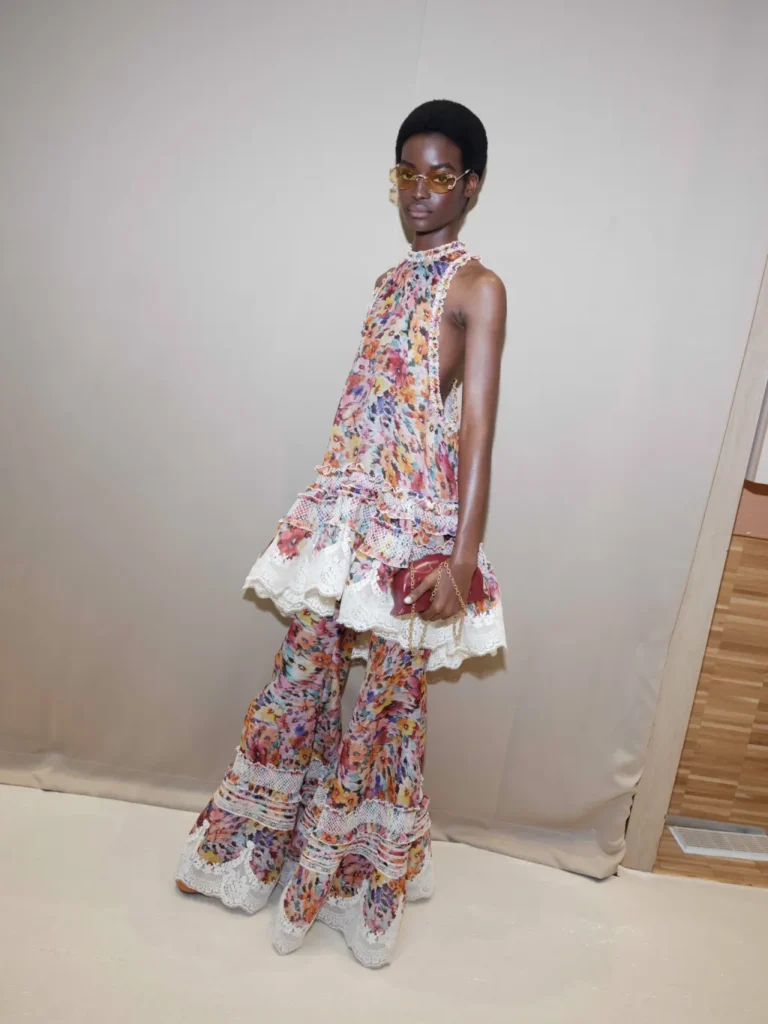
Nicky Zimmermann’s latest collection shimmered with psychedelic joy — a sun-soaked daydream inspired by the bohemian artists of Lavender Bay, a seaside enclave outside Sydney that thrived in the free-spirited 1970s. “They threw the most incredible parties,” Zimmermann recalled backstage. “If the Rolling Stones were in town, they’d end up in Lavender Bay hanging out with the artists.”

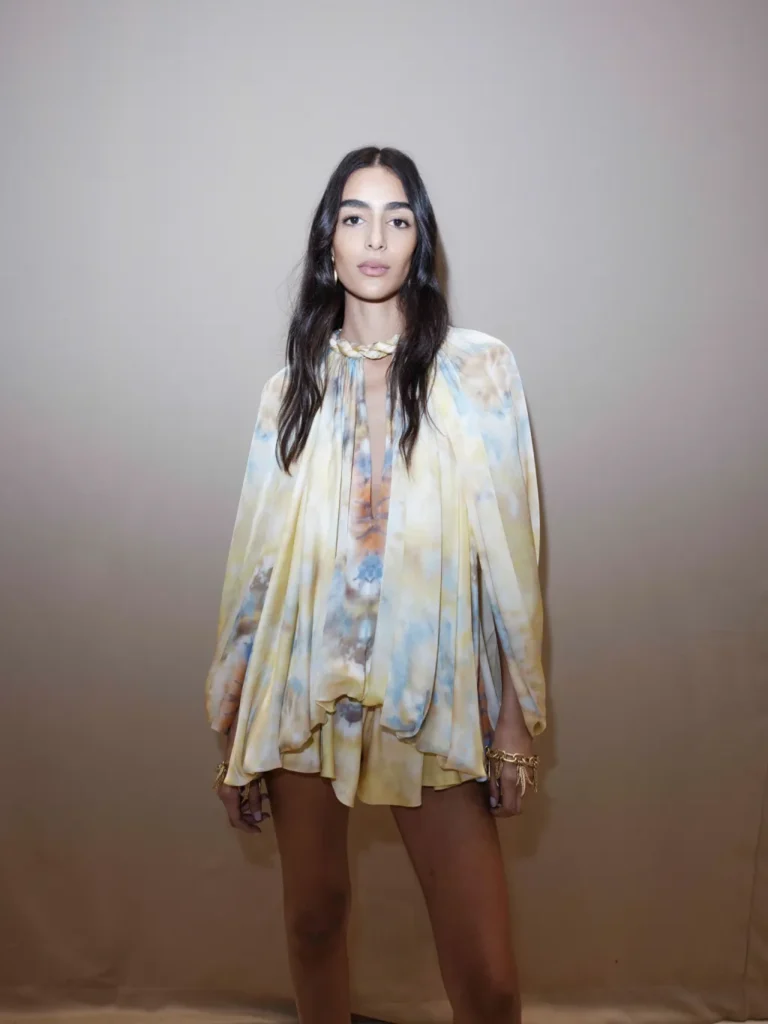
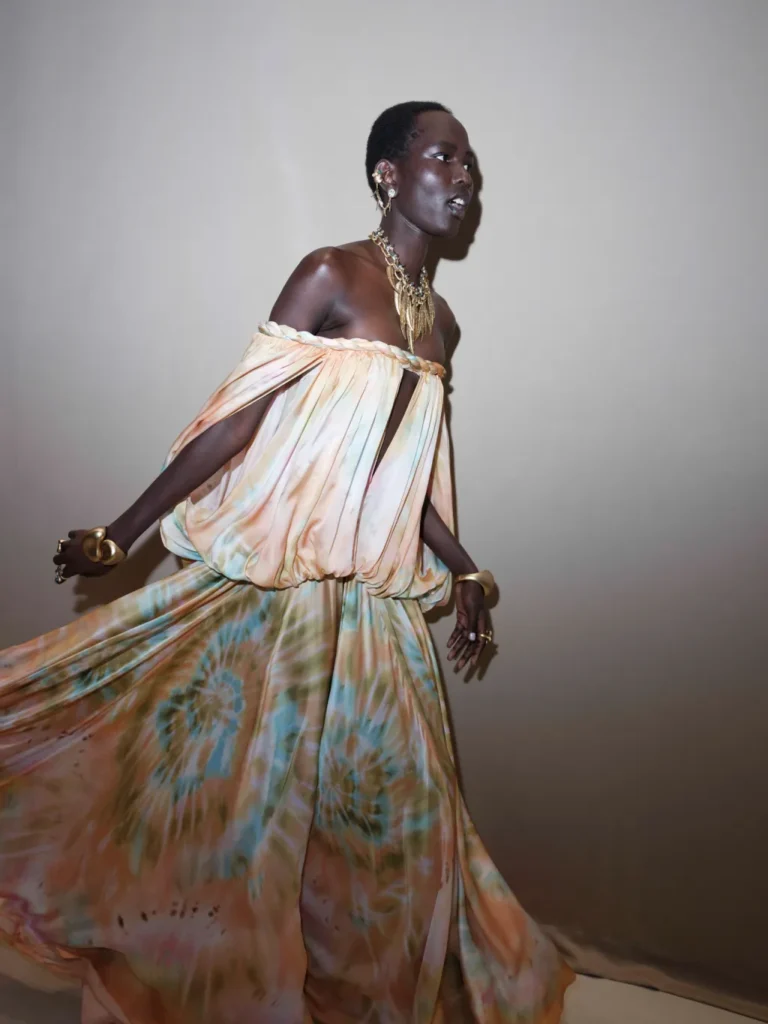
That hedonistic energy flowed through the collection’s warped floral prints and rainbow tie-dyes, drifting across parachute dresses and gauzy layered tops that seemed to move with the air itself. “I always love movement,” said the designer, “but this time, I wanted the prints to move too.”

Full crinoline skirts were structured with bands of tulle that rippled as models walked, while soft, pastel tie-dyes melted into one another like watercolor on silk. Amid the dreamscape, Zimmermann’s signature craft shone through: a crisp white eyelet shirt embroidered with a hand-stitched bird motif, earthy swimsuits styled as tops, and a supple leather coat that hinted at effortless cool.

Menswear influences peeked in through tonal dressing — a nod to vintage Lavender Bay photographs — with utility jackets, sculptural flared pants, and color-blocked jumpsuits accented with retro metal rings.

Zimmermann has long transcended her origins as a purveyor of romantic resortwear. This season proved she’s now the architect of a lifestyle — one of light, laughter, and sun-drenched elegance. In Lavender Bay, art was life; on Zimmermann’s runway, it’s fashion at its most blissful.

Miu Miu Spring 2026 Collection

Miu Miu Spring 2026 Collection

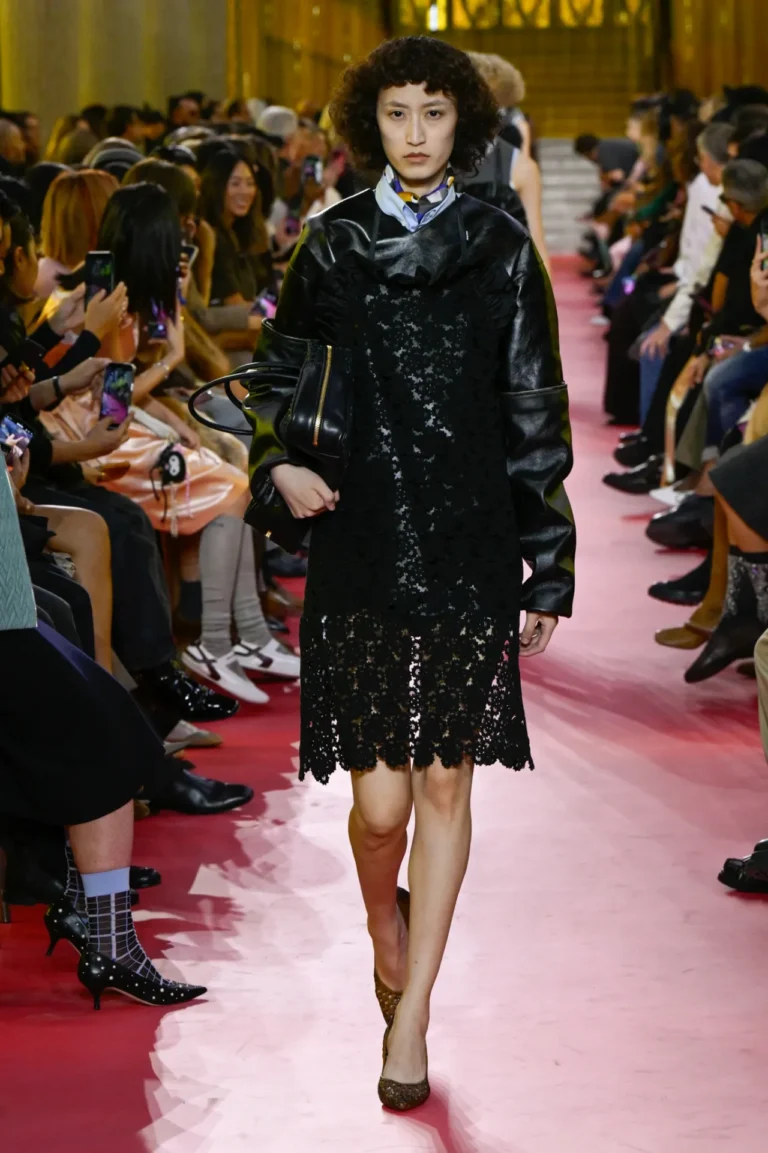
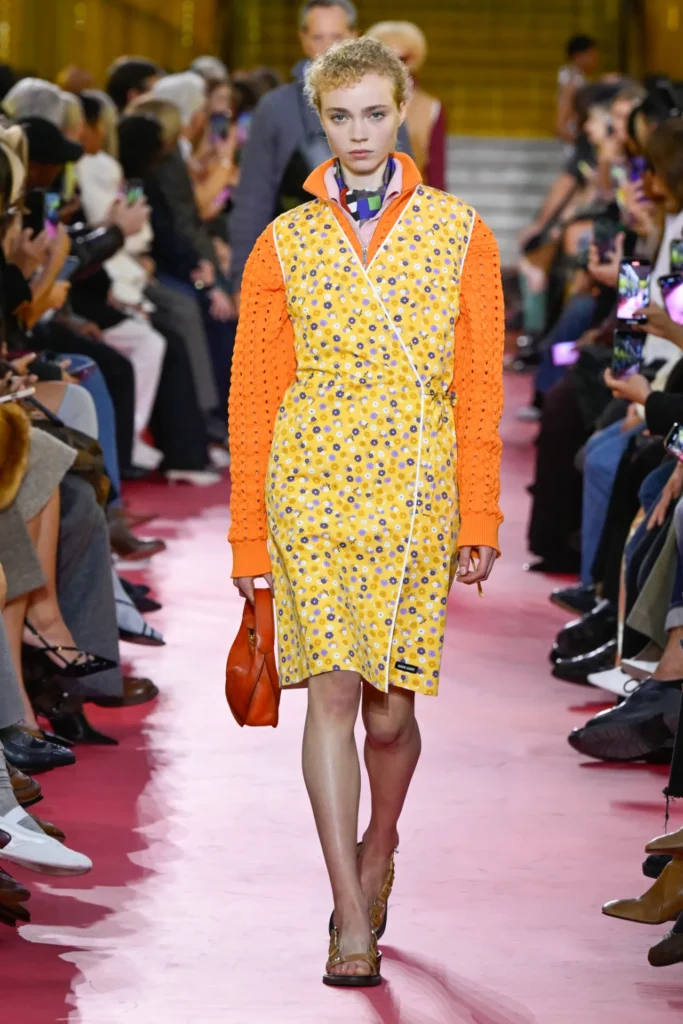
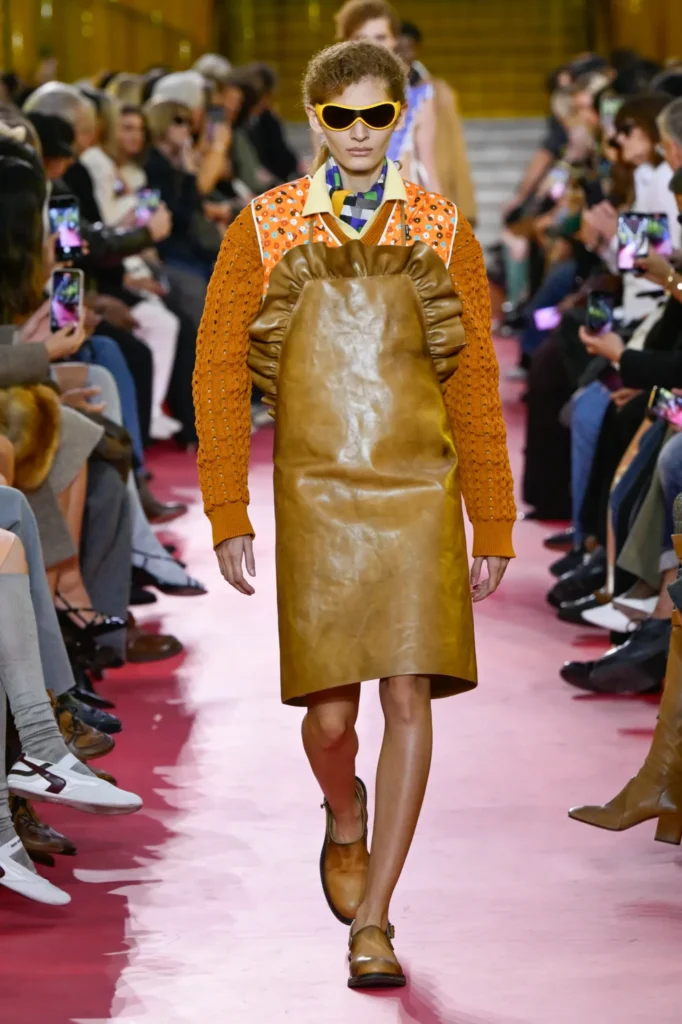
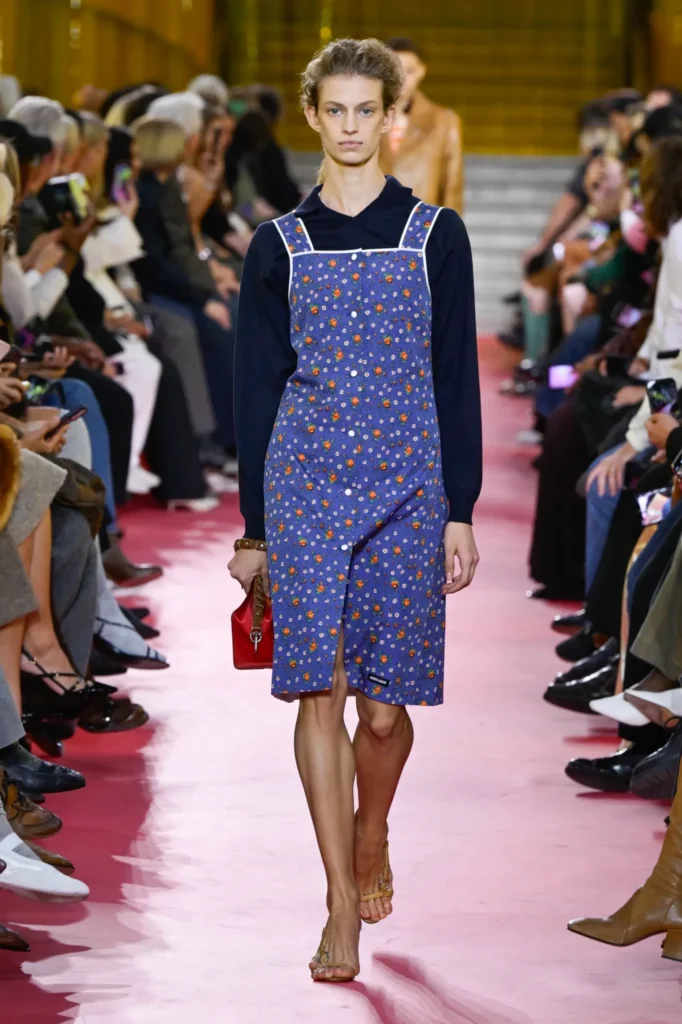
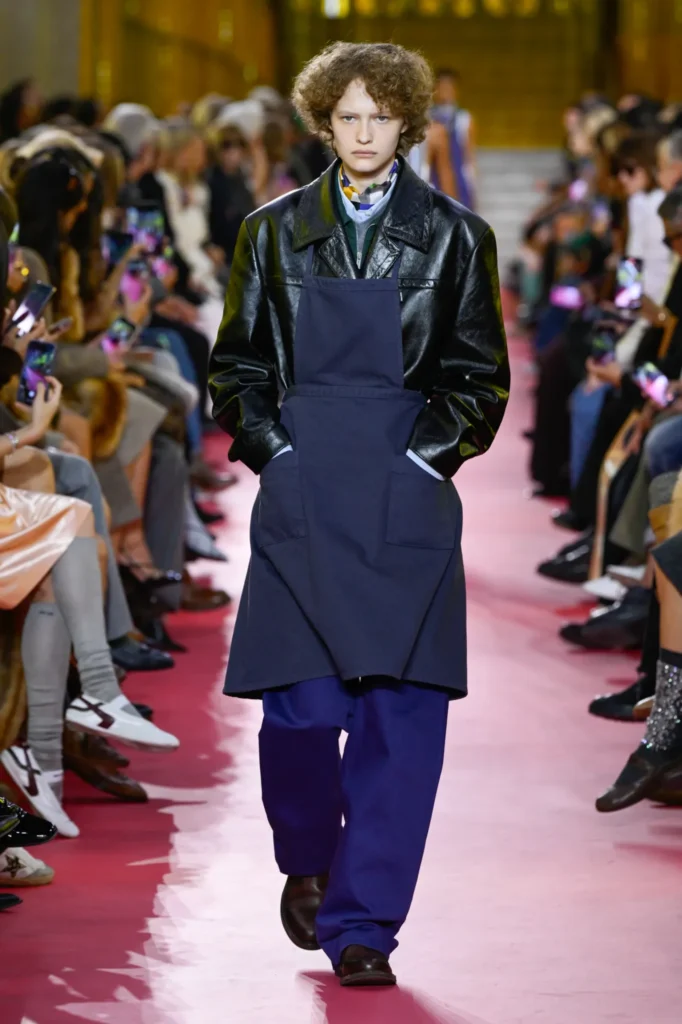
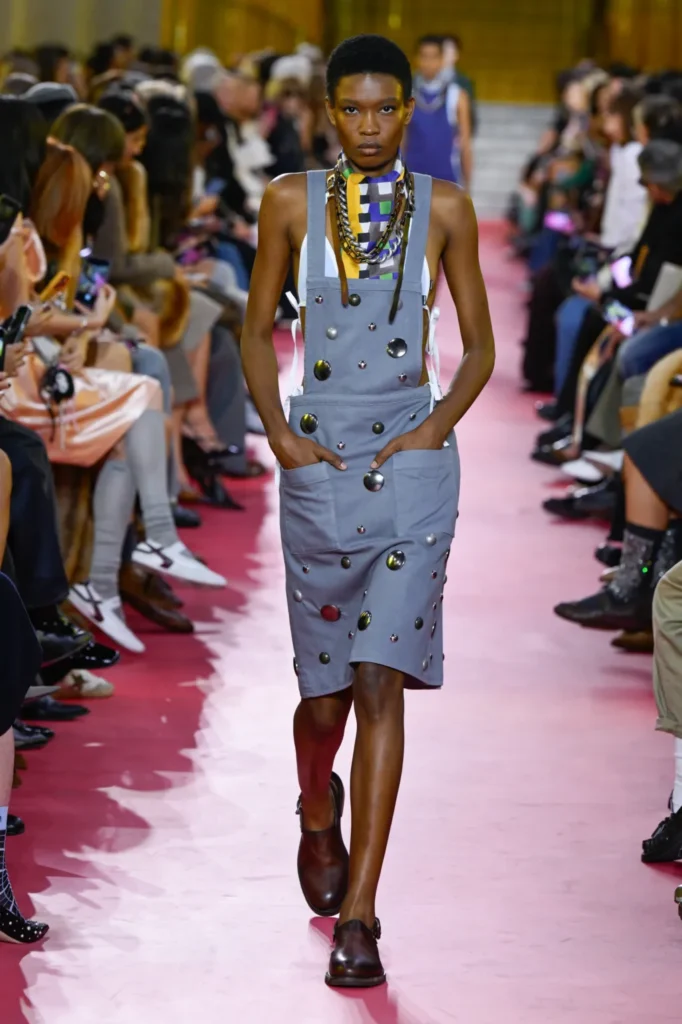
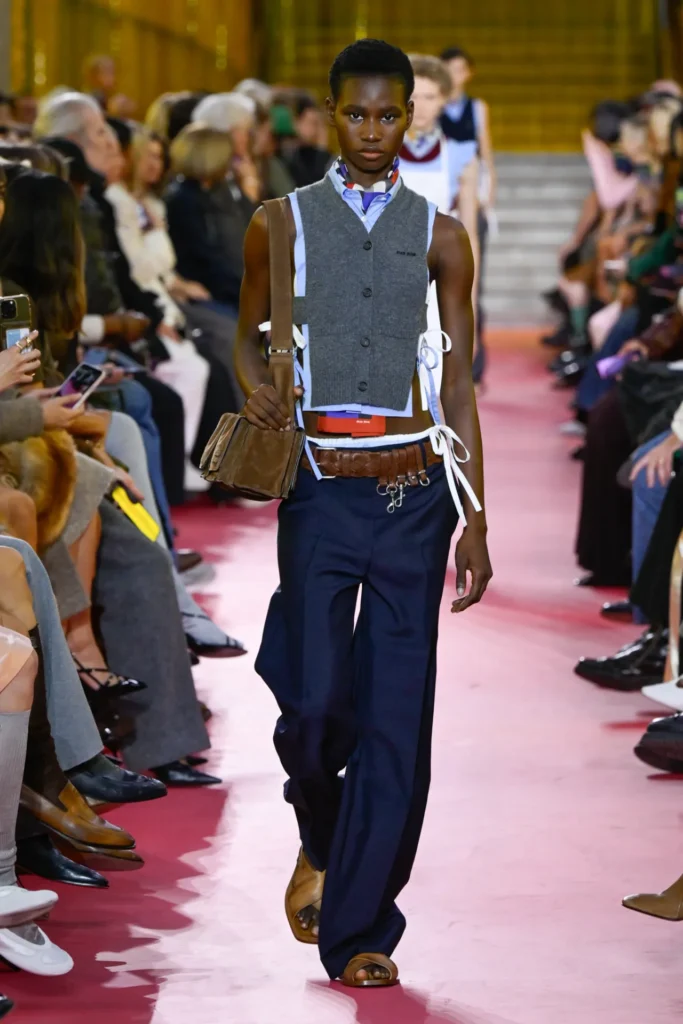
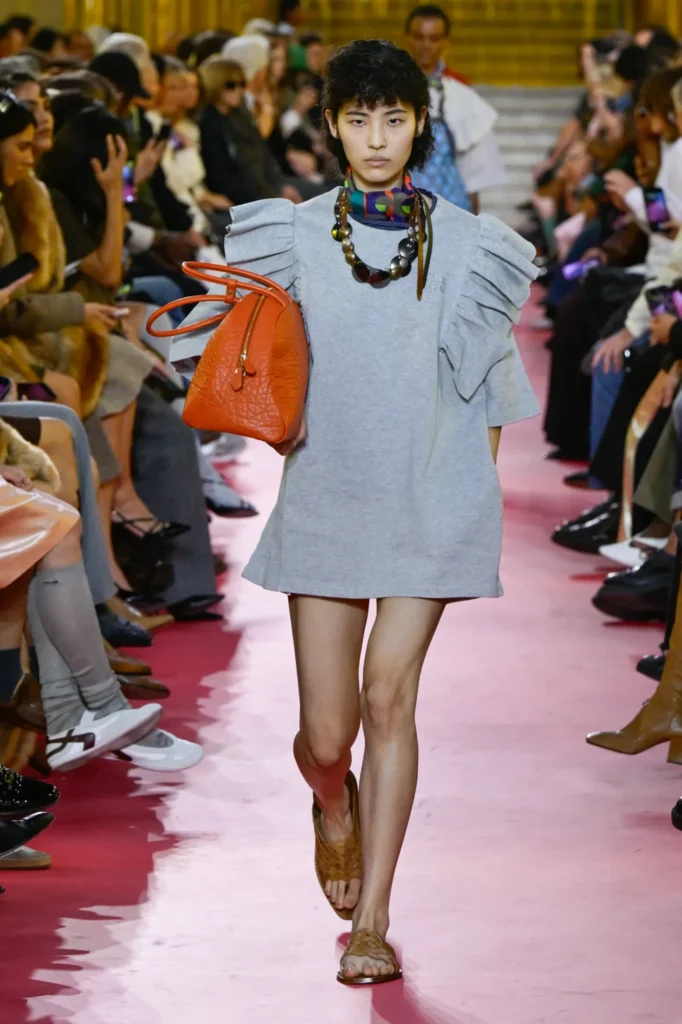
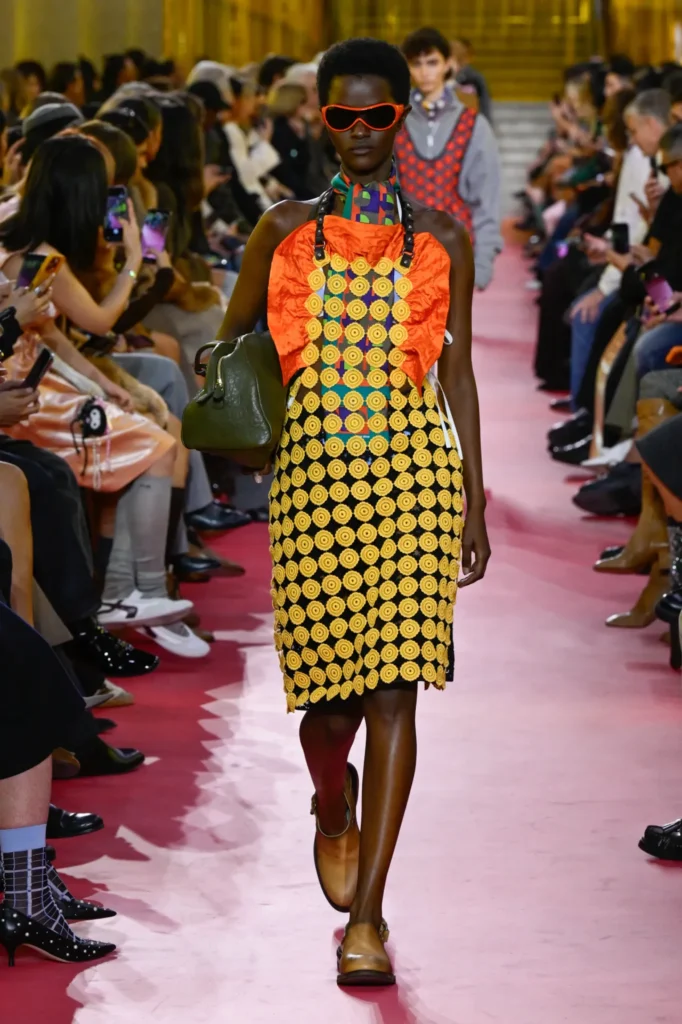
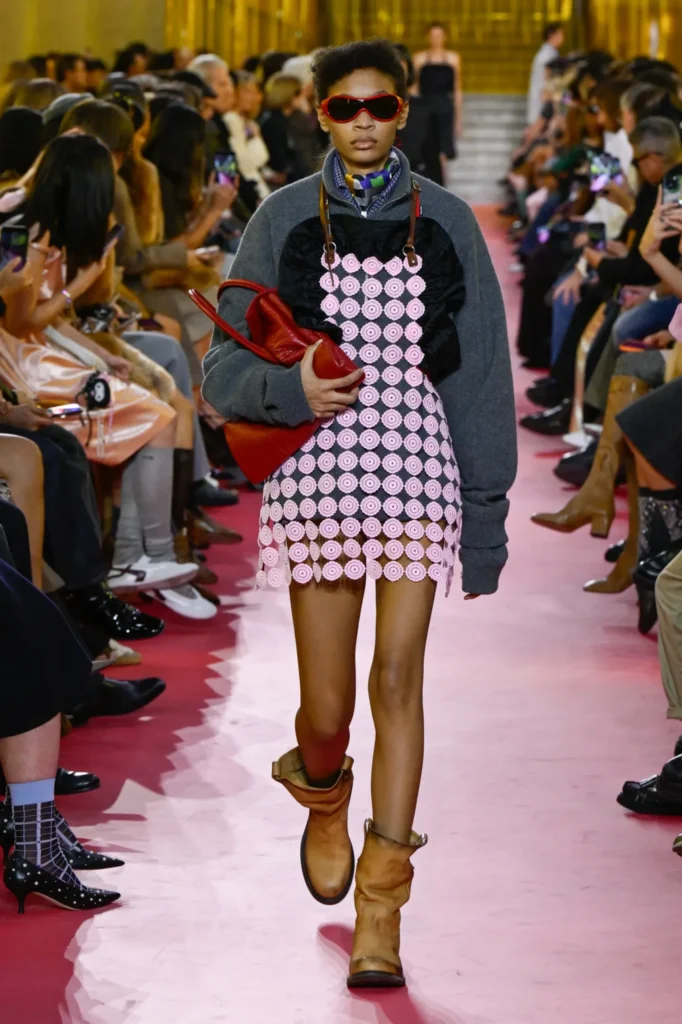
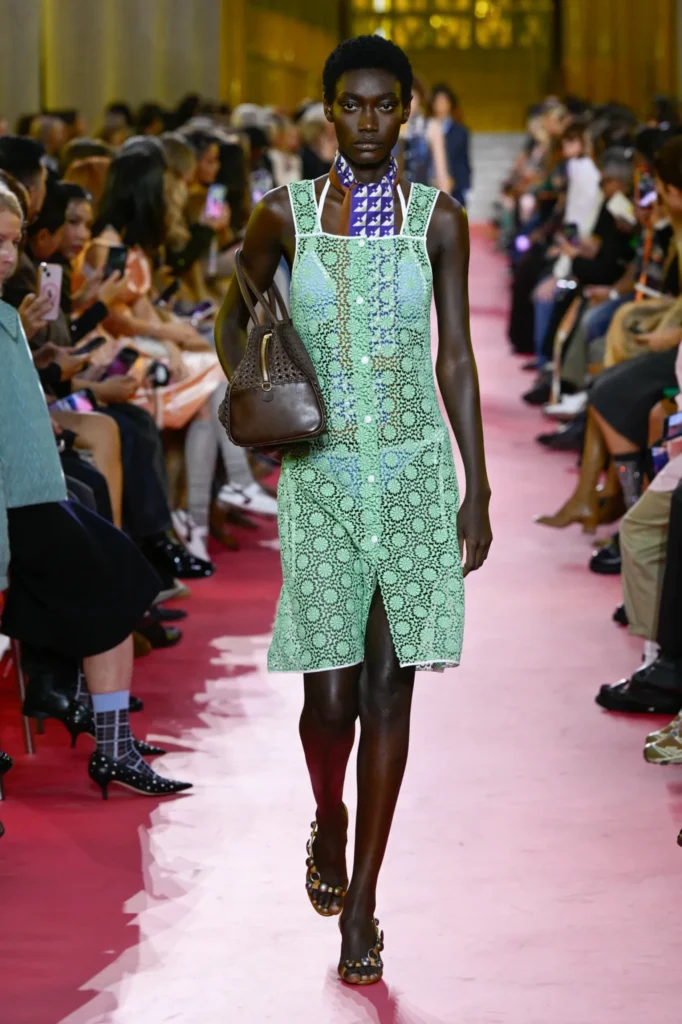
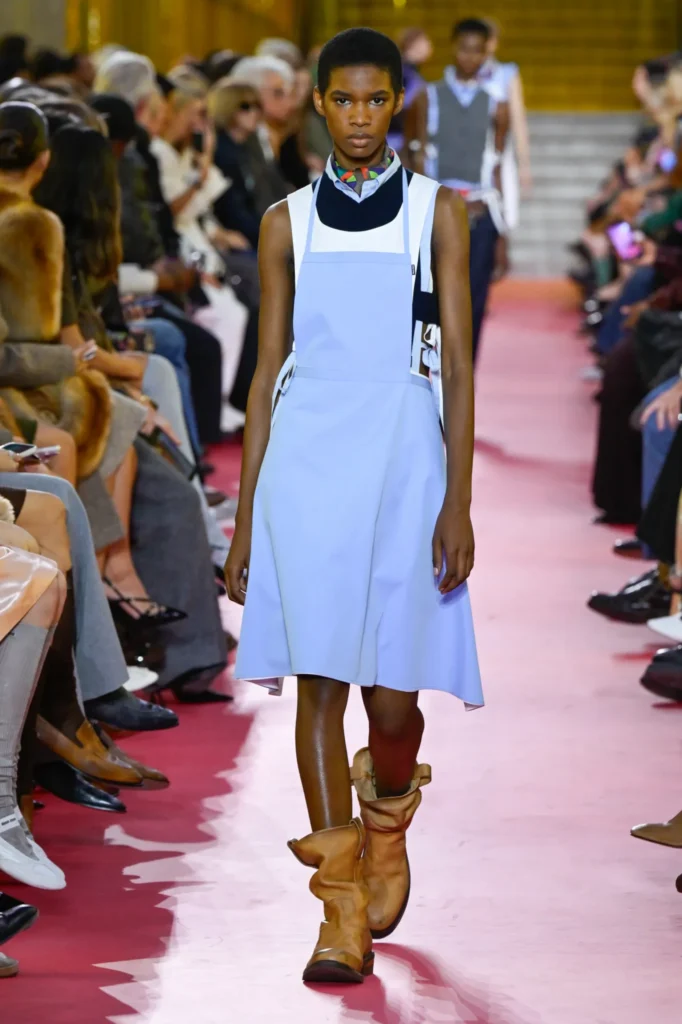
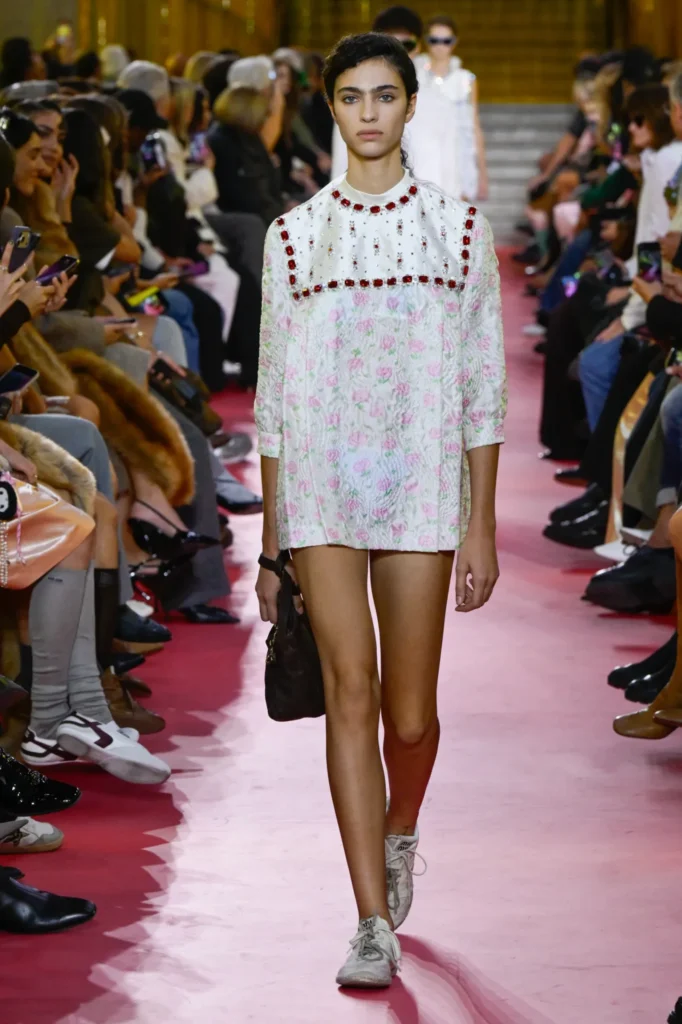
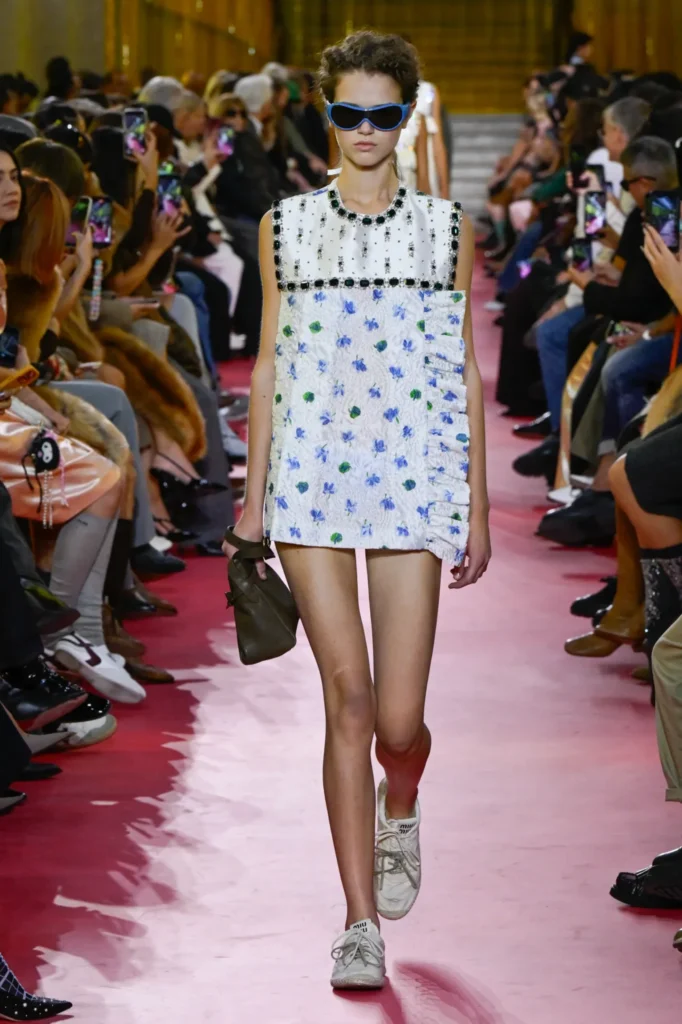
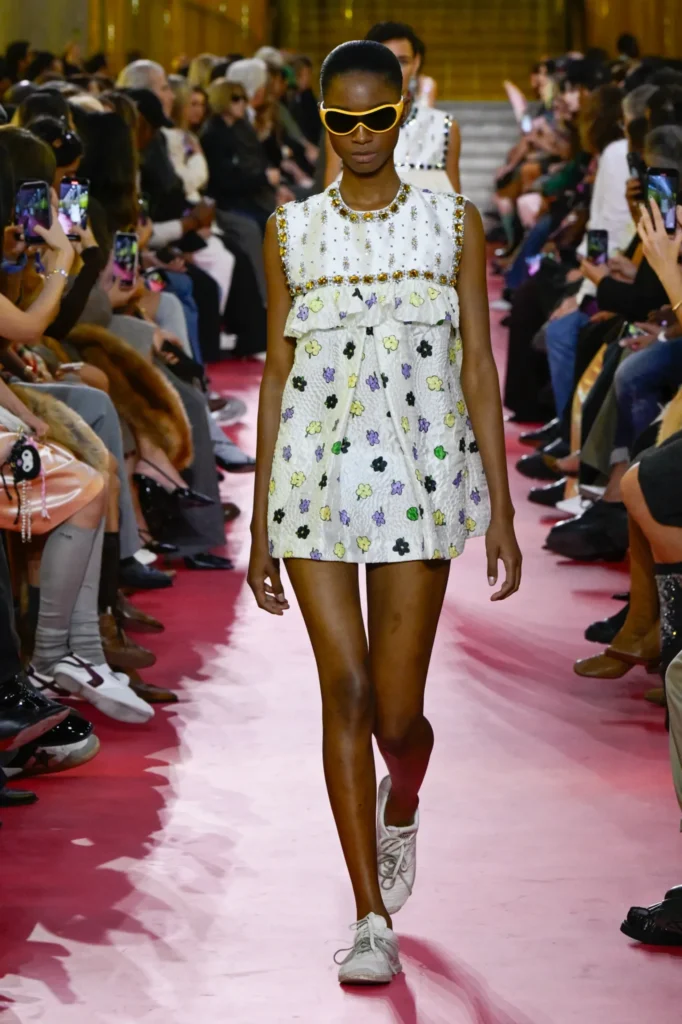
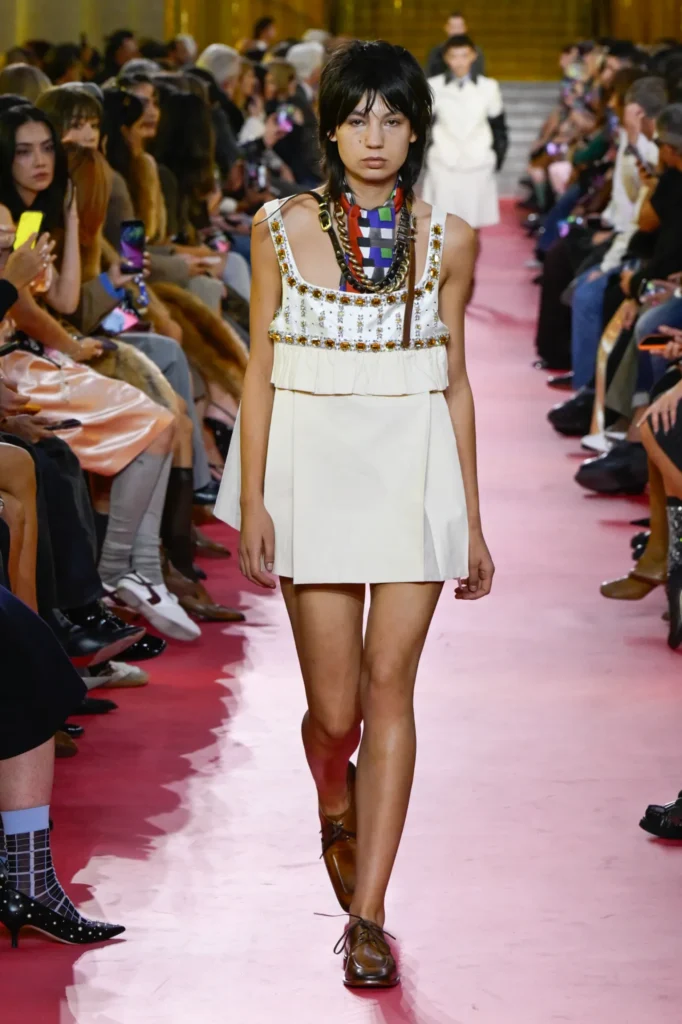
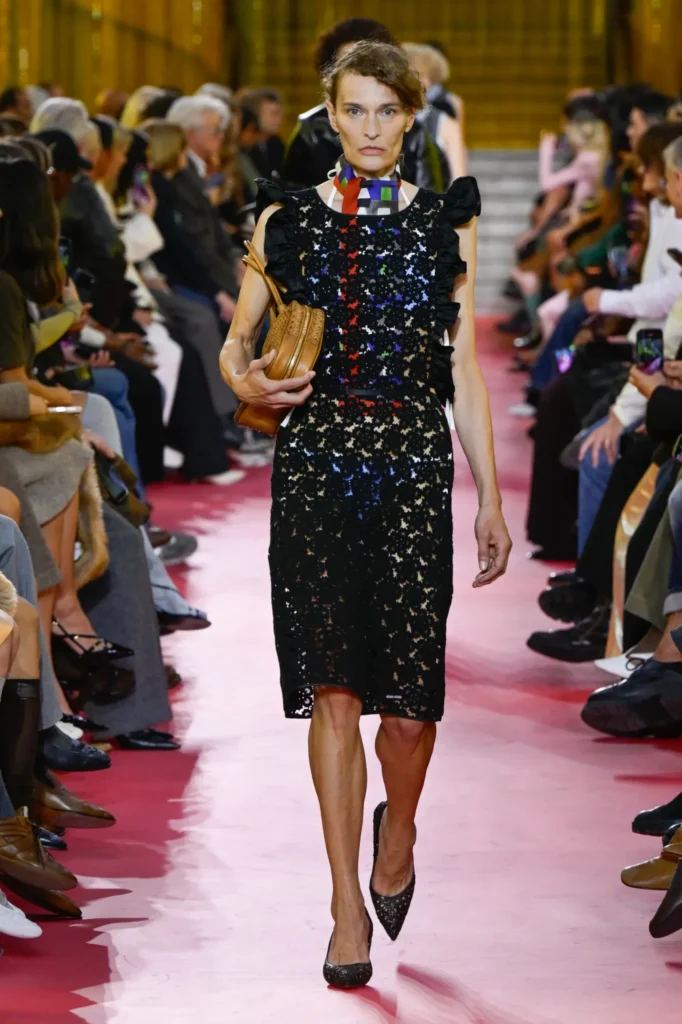
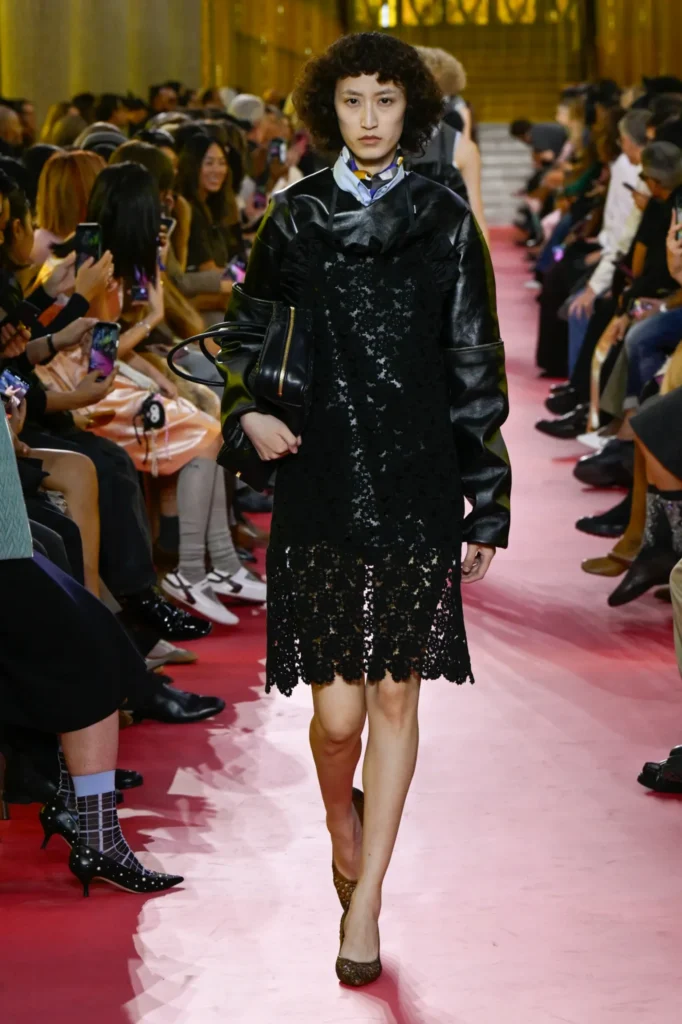
For Spring 2026, the reigning queen of irony turned her gaze toward labor — not metaphorically, but literally. On a runway lined with factory lights and stainless steel, she sent out cleaners, waitresses, welders, and factory hands. The collection’s utilitarian spirit was underscored by sturdy denim coats, industrial drill trousers, and aprons in retro floral prints that gave a wink to mid-century domesticity.

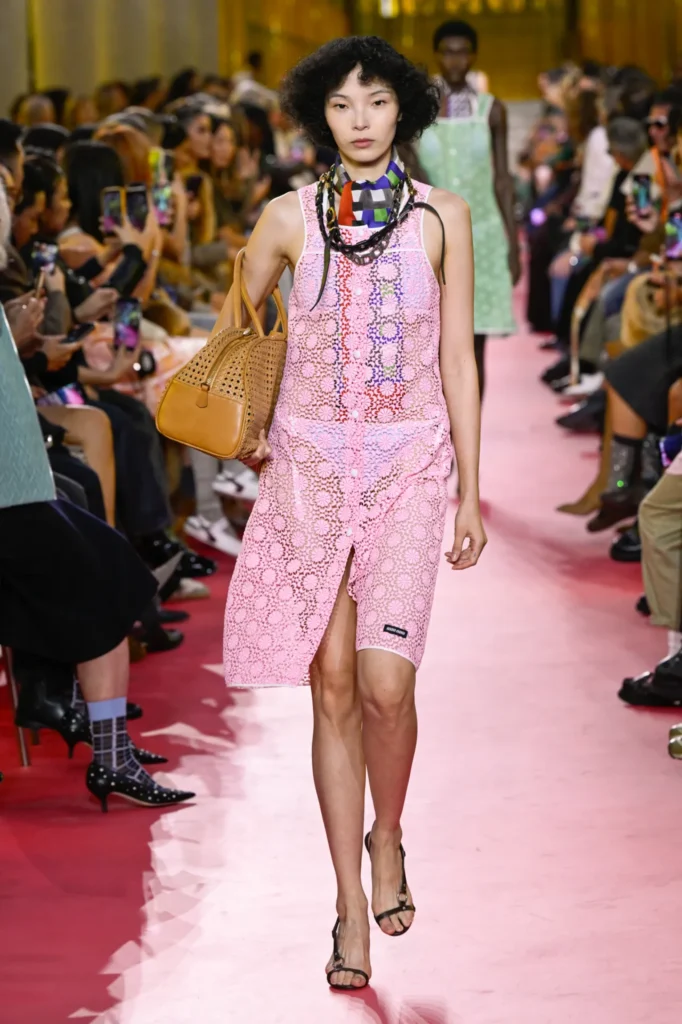
Sandra Hüller, star of Anatomy of a Fall, opened the show looking like she’d just stepped off a chilly assembly line, hands buried in her pockets, expression unreadable. From there, the mood evolved — the aprons became glamorous, the uniforms seductively impractical. Cleaning smocks were trimmed with ruffles and crystals; heavy-duty overalls gave way to delicate lace versions meant for the night shift of a different kind.
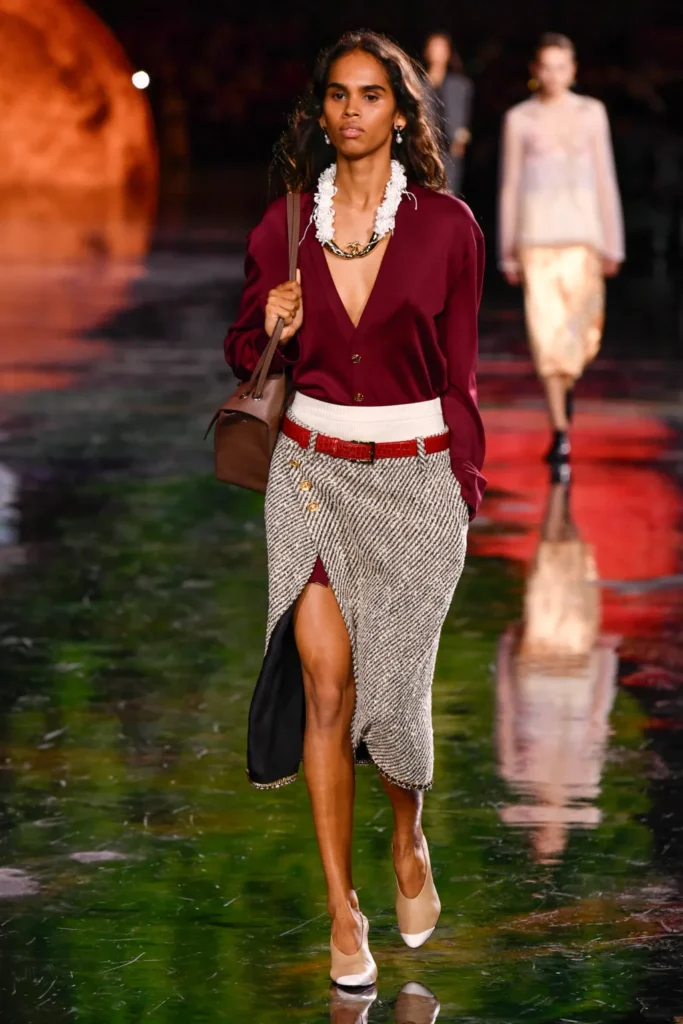
Milla Jovovich appeared in an apron of black leather with a ruffled bib, a sharp contrast to the navy wool sweaters and dual-knit waitress skirts that preceded it. By the finale, the workers had become icons — their tools replaced by sequins and studs, their labor turned into luxury.

The collection’s tongue-in-cheek social commentary was unmistakable. As Miu Miu continues to dominate the global market — sales up 49% in the first half of the year, still holding the No. 1 spot on Lyst — Prada seemed to remind us that fashion’s hardest work is in reinvention itself.
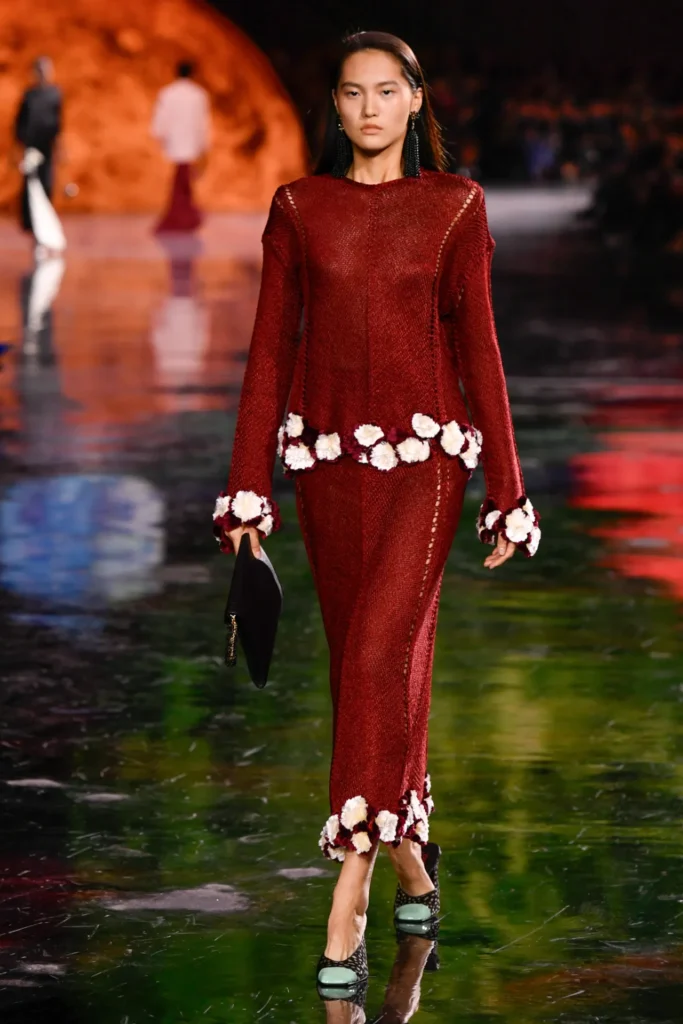
McQueen Spring 2026 Collection

McQueen Spring 2026 Collection

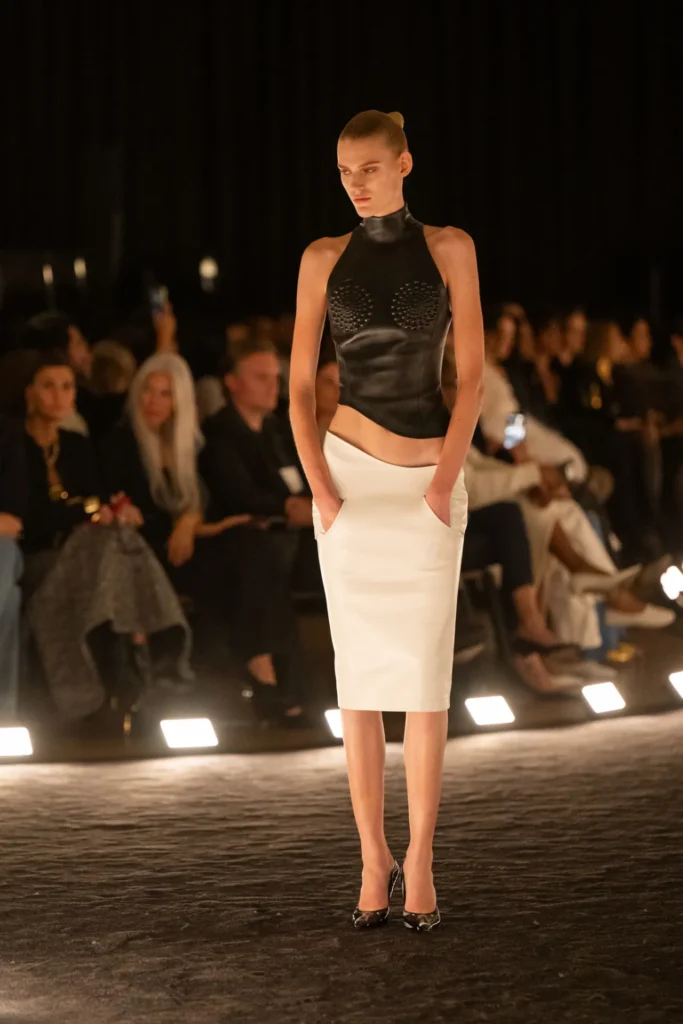
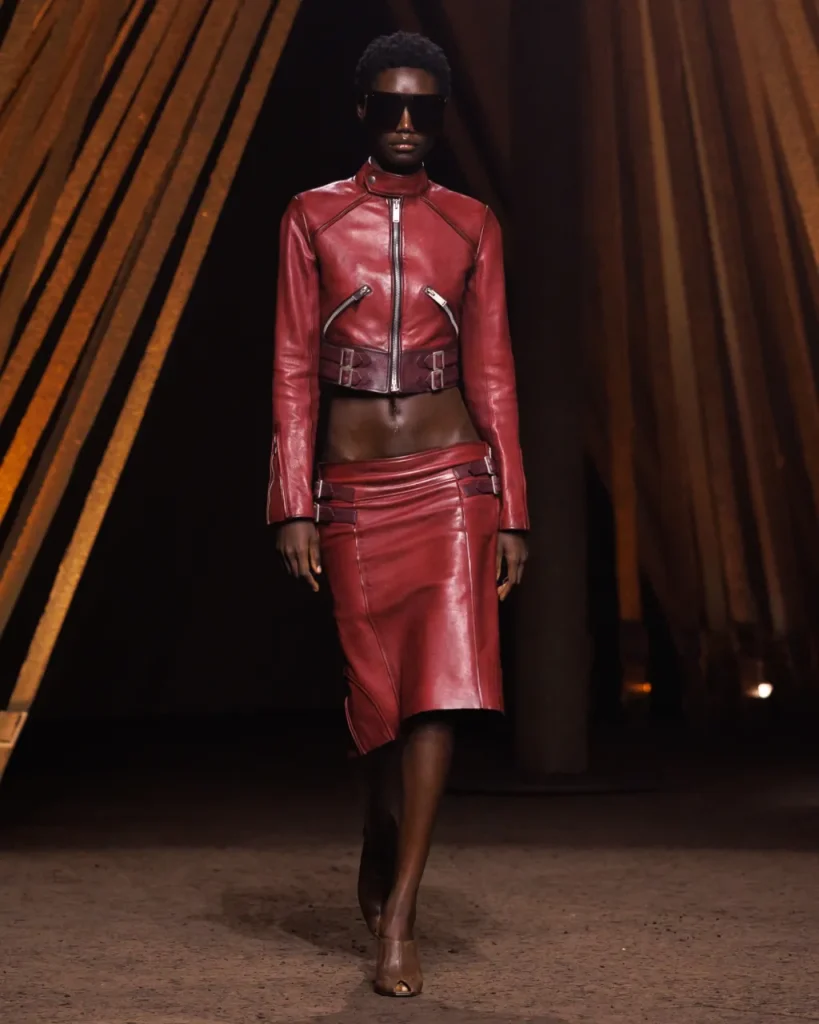
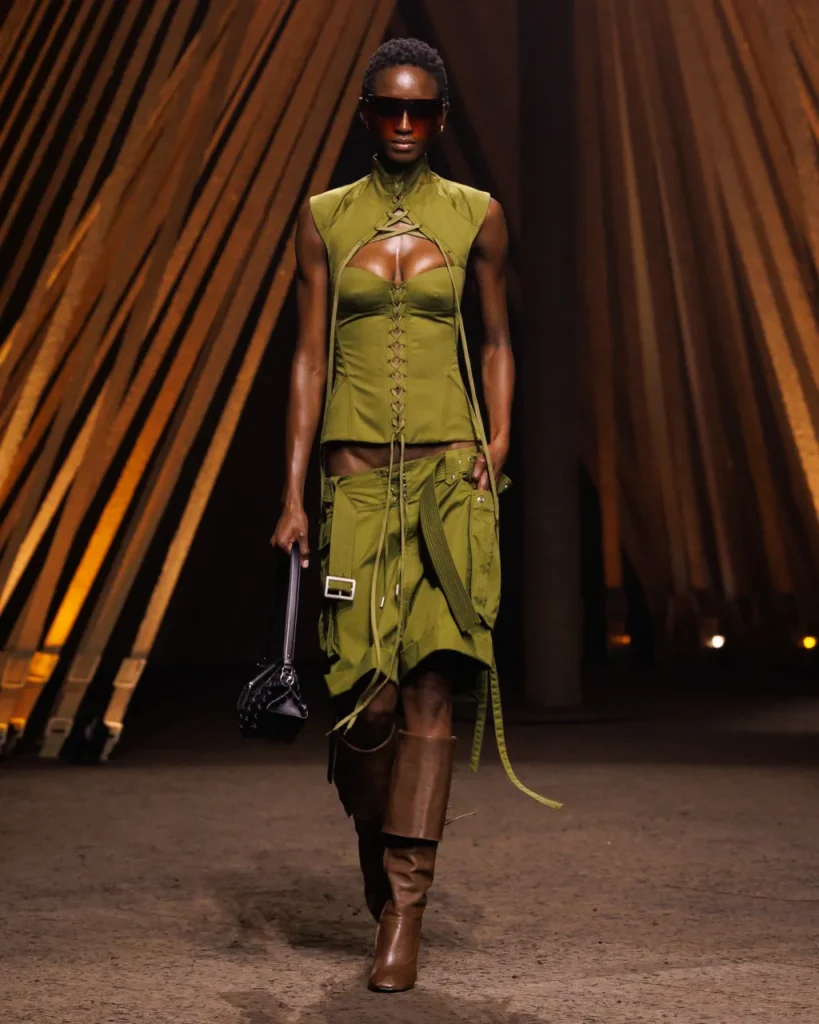
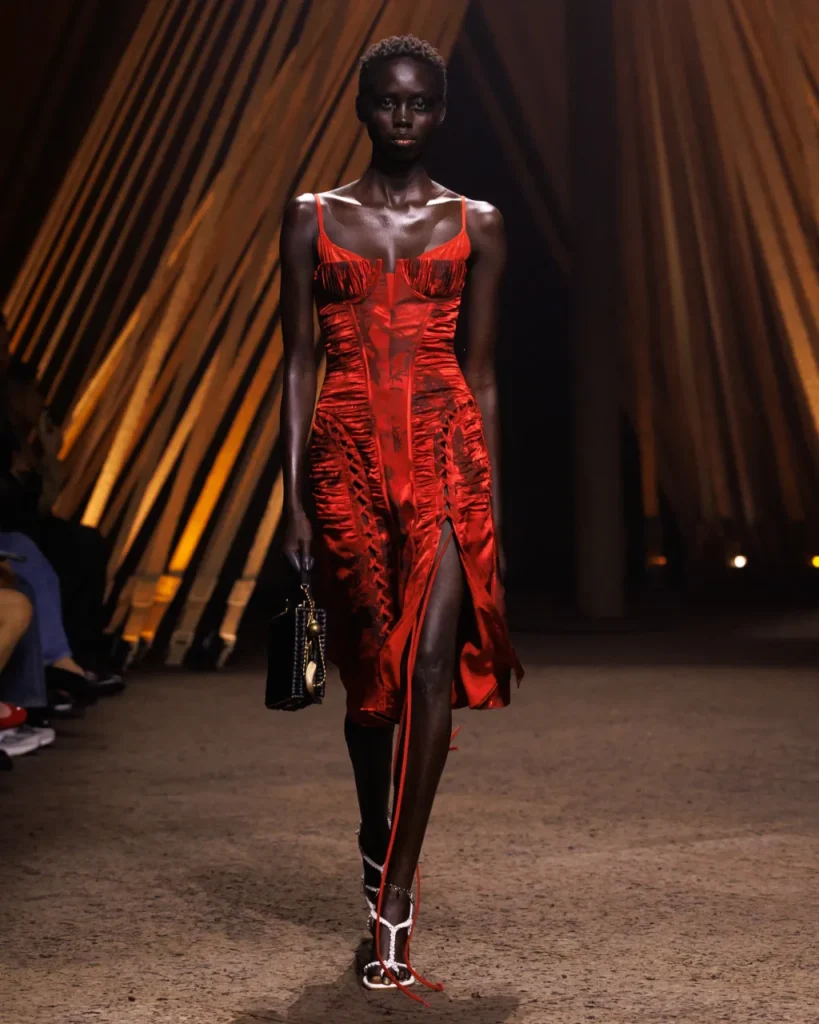
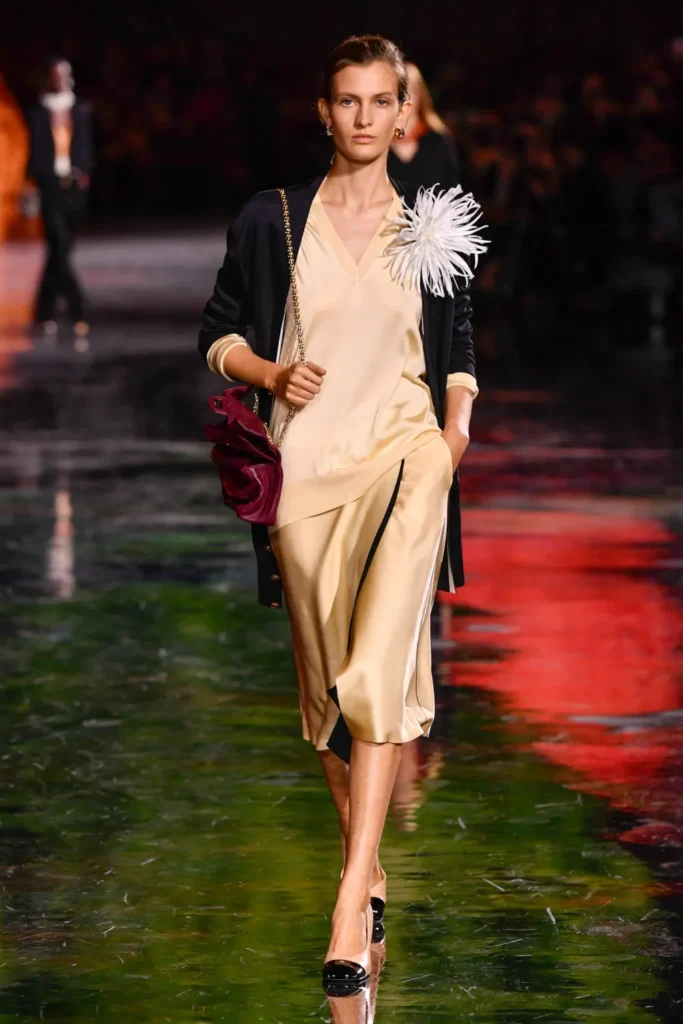
For Spring 2026, Seán McGirr resurrected Alexander McQueen’s infamous ultra-low-rise trousers, infusing the collection with a taut, erotic tension that threaded through daywear and eveningwear alike. Military-inspired jackets met flouncy corsets and cropped mesh tops, while pronounced waistlines appeared on skirts, bandeau shorts, and cargo pants — some with exposed zippers for added daring.
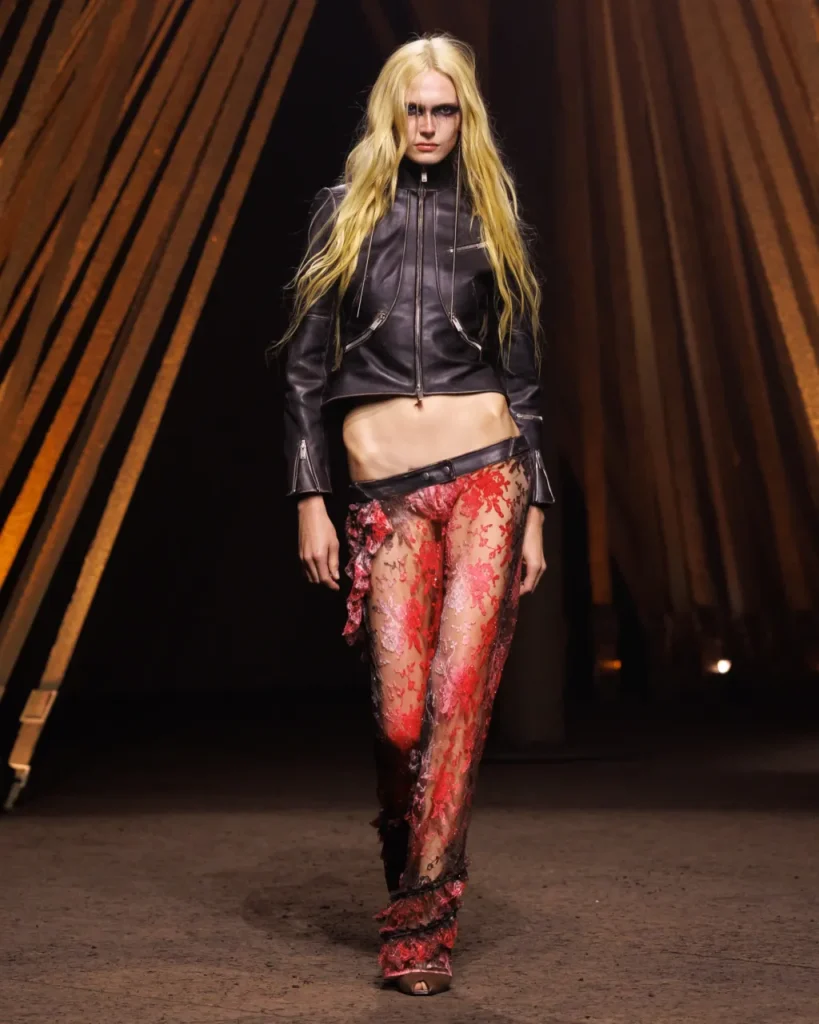
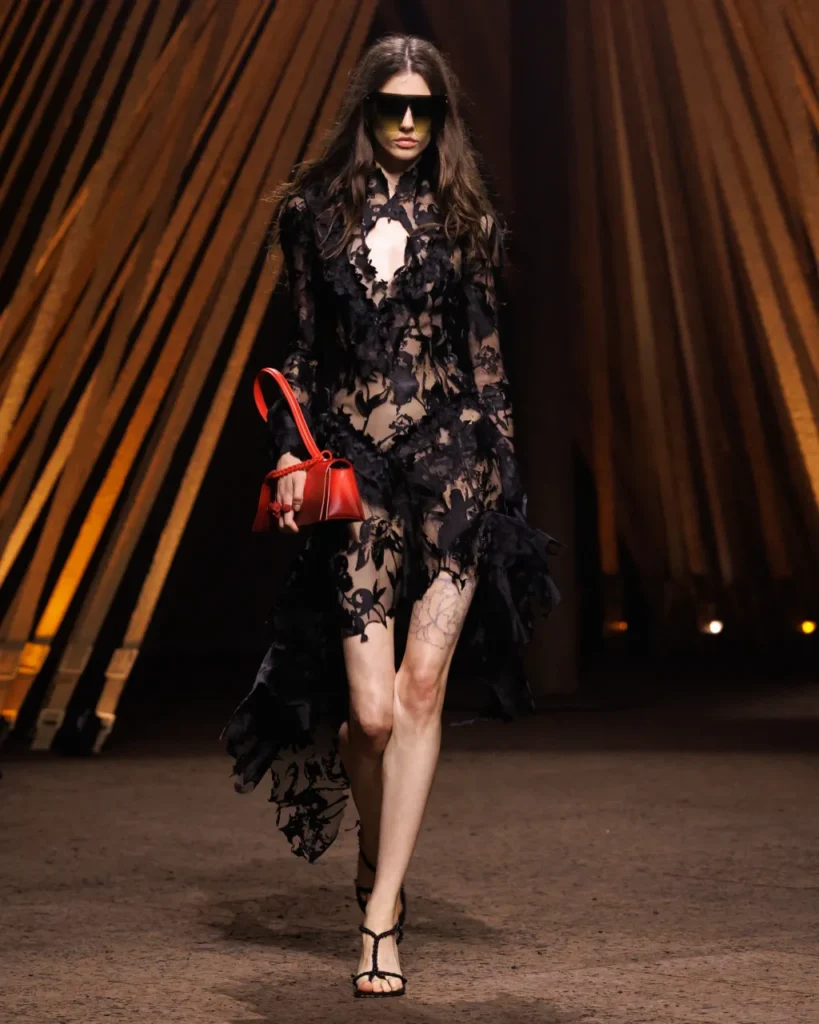
Presented on a circular stage adorned with May Day motifs, McGirr drew inspiration from The Wicker Man (1973), the cult British horror set on a fictional Scottish isle, where pagan rituals pulse beneath idyllic facades. “There’s a kind of sexual energy in the film and the girl I wanted to present,” he explained. “There’s looseness, informality, attitude — because the silhouette has a toughness, a strength. The McQueen woman always wants to look powerful.”

In his first fully independent women’s collection following three mixed shows, McGirr leaned into wearability while keeping the house’s signature drama alive. Uniform-blue shirts softened with corsetry; pencil skirts ranged from frayed white denim to faded floral jacquard and black leather with grommets and fringe. Vibrant red-rose prints sliced across hips or laced like corsets, recalling the rebellious glamour of Y2K low-rise jeans, though the shock factor has softened over time.

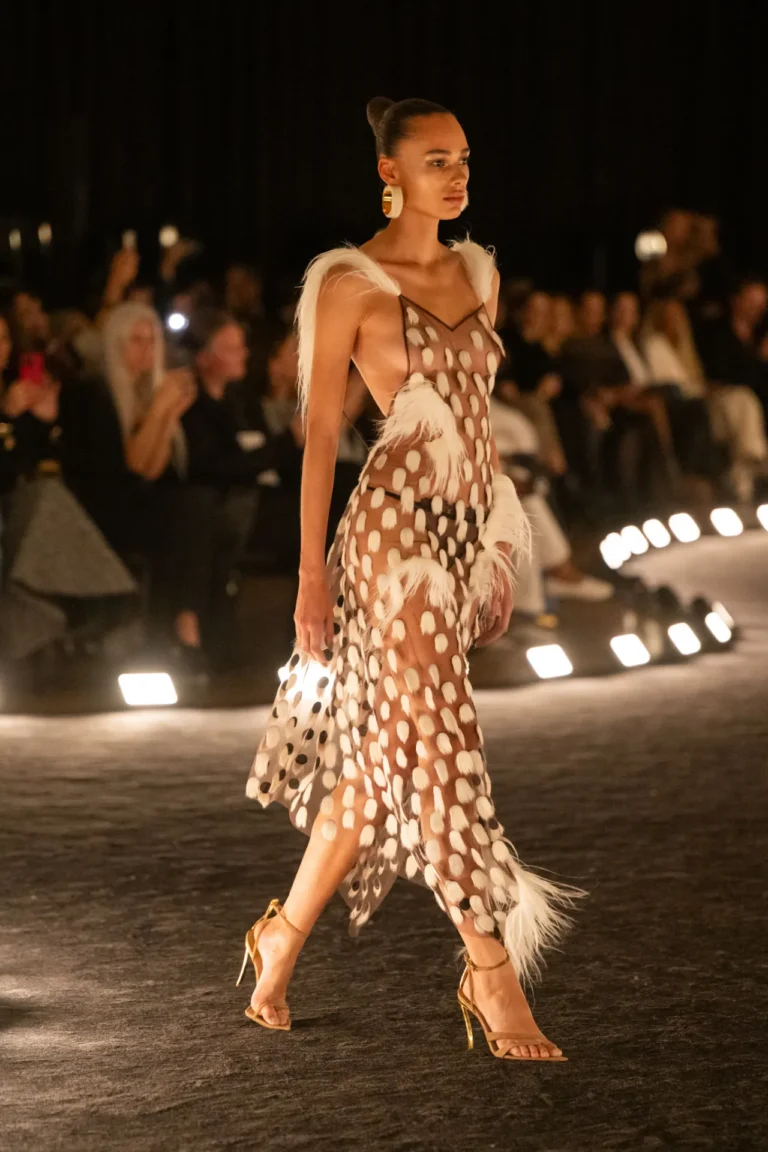
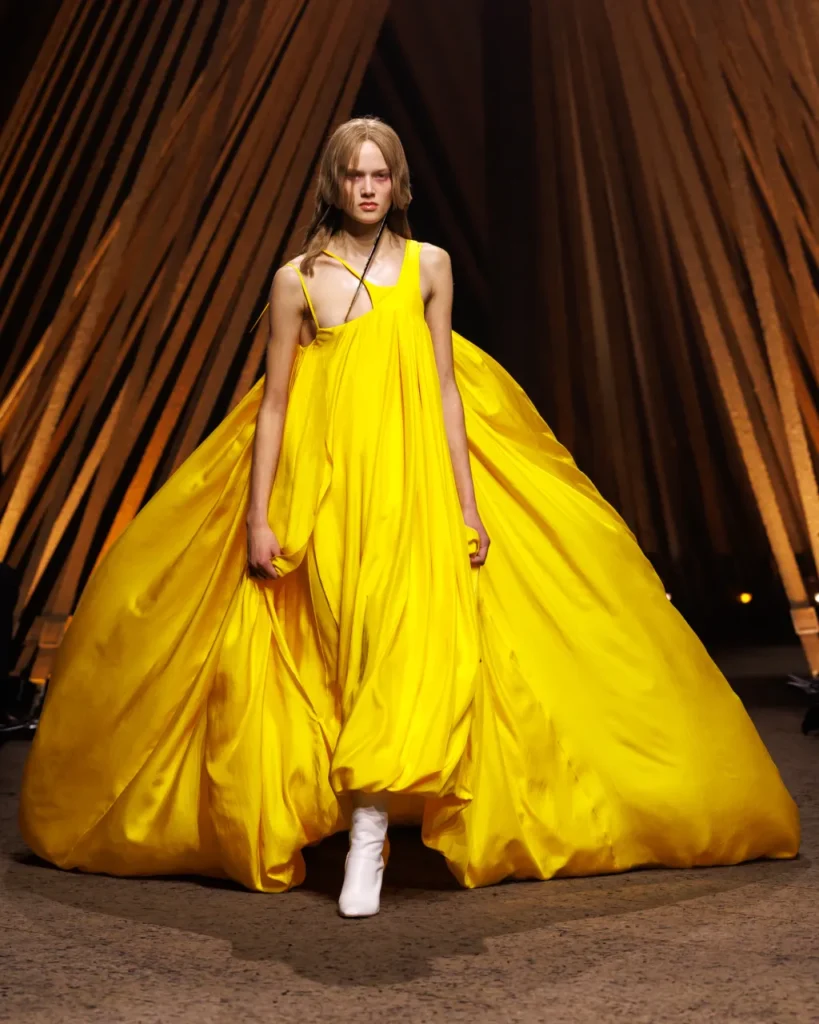
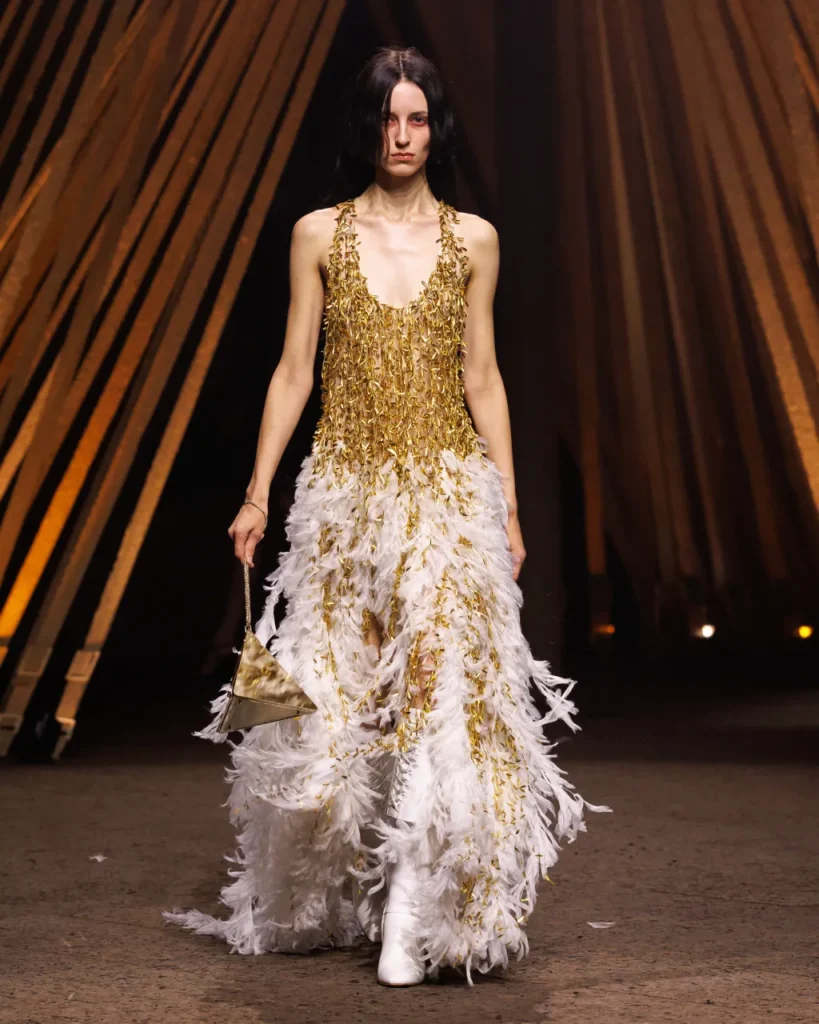
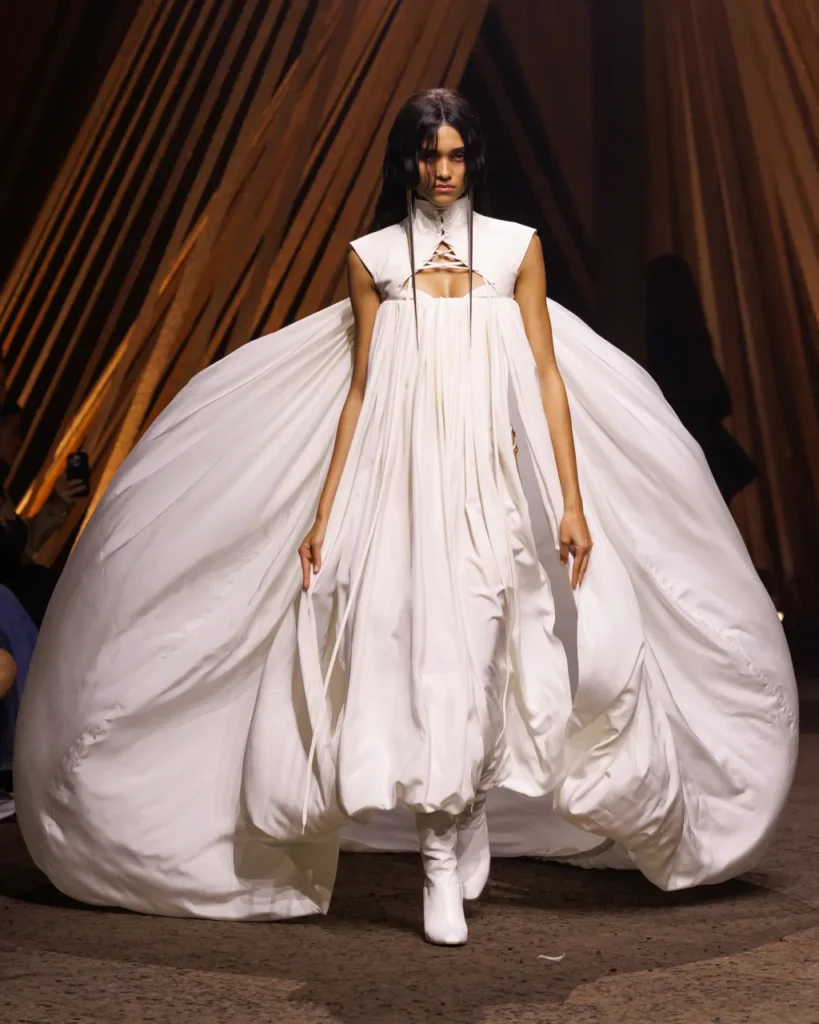
Standout moments balanced practicality with spectacle: a gold-sequined strappy dress trimmed with white feathered ruffles, and a parachute gown printed in dreamy watercolor, which McGirr said symbolized liberation. Hidden within the print were two ladybugs in a clandestine tryst, a playful nod to the film’s insect mating scene. “It’s wild,” he chuckled.

Chloé Spring 2026 Collection

Chloé Spring 2026 Collection

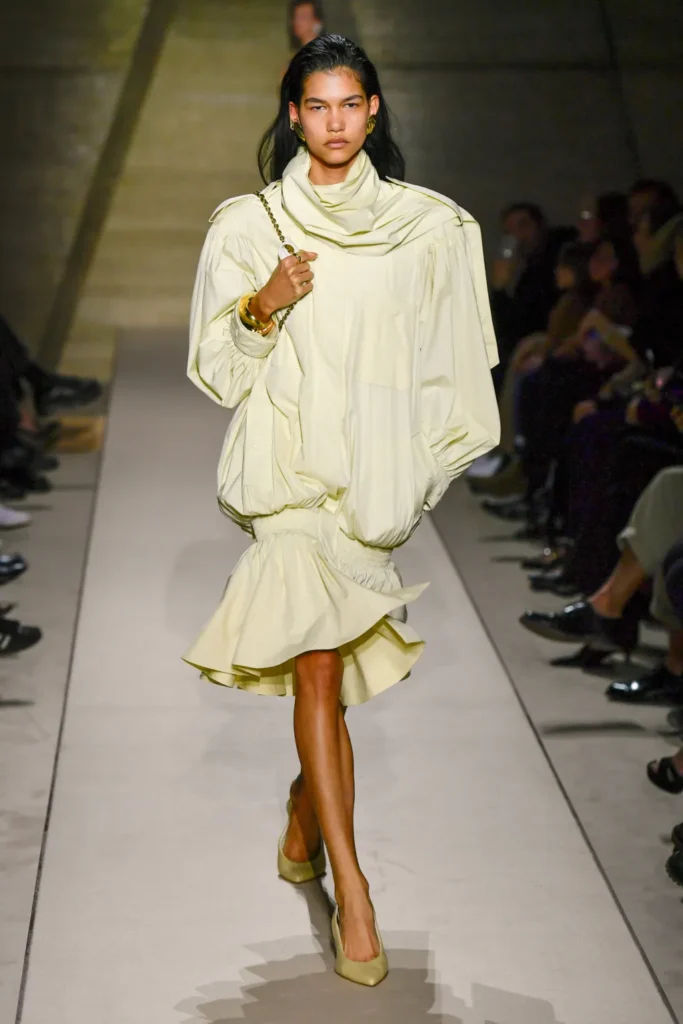
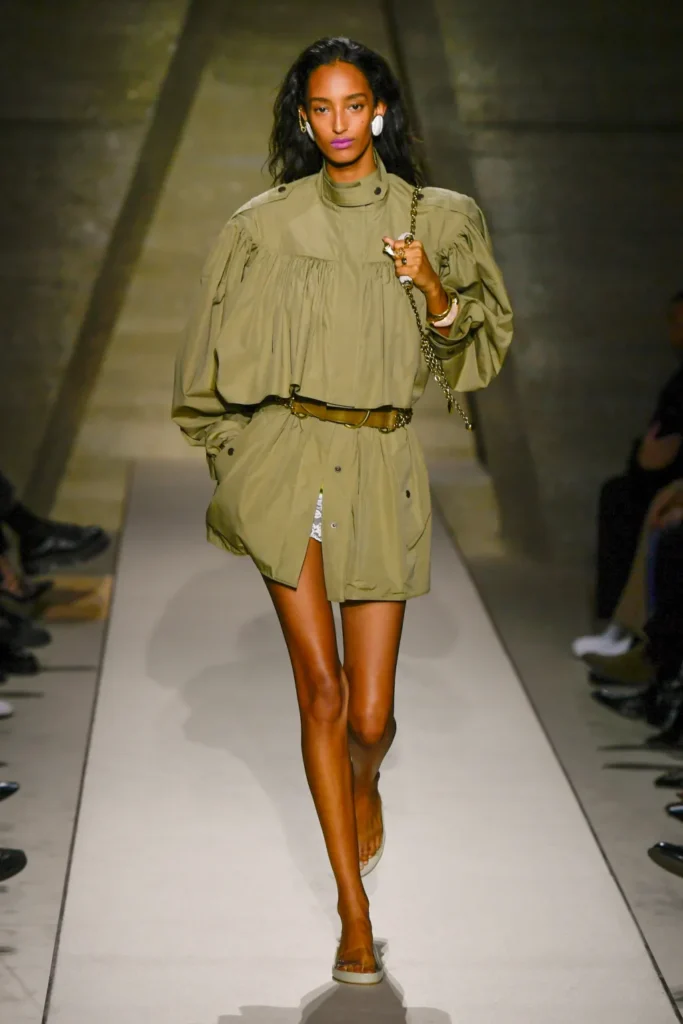
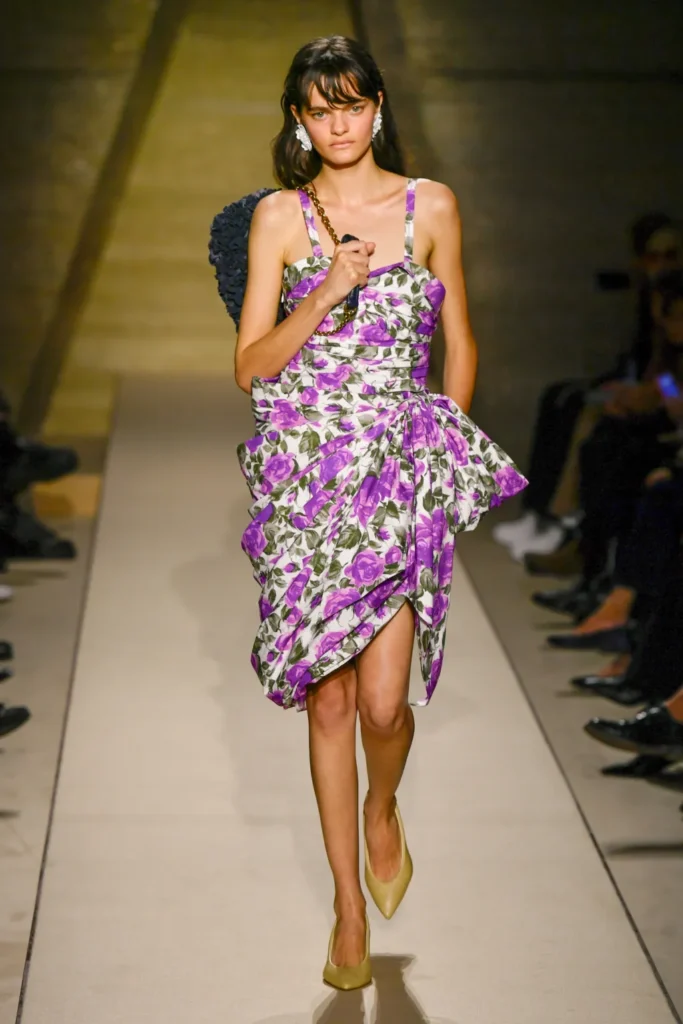
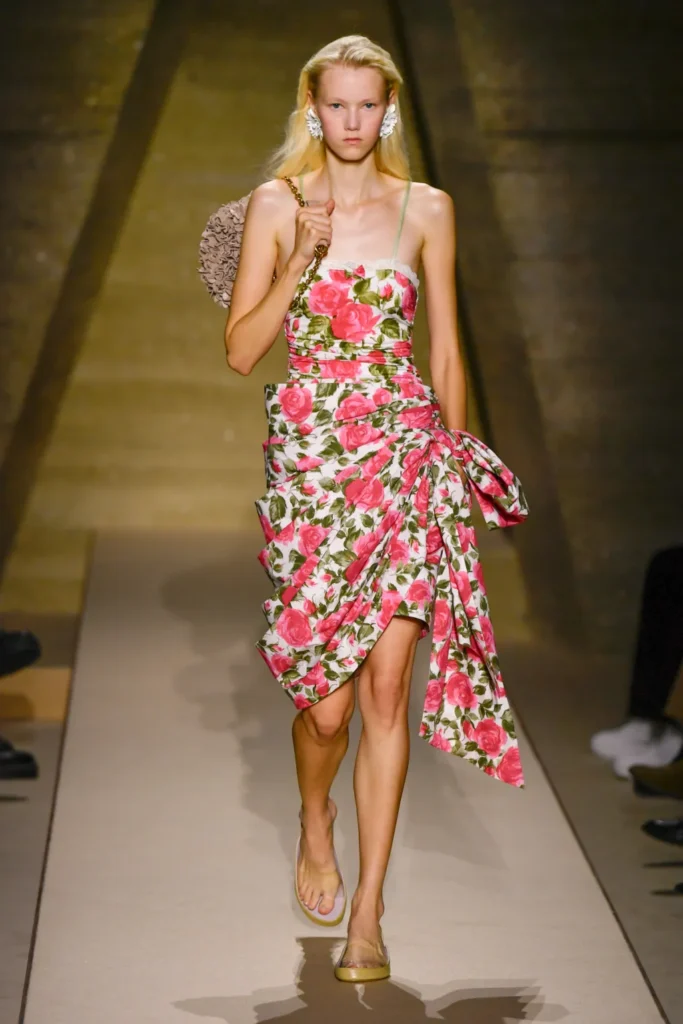
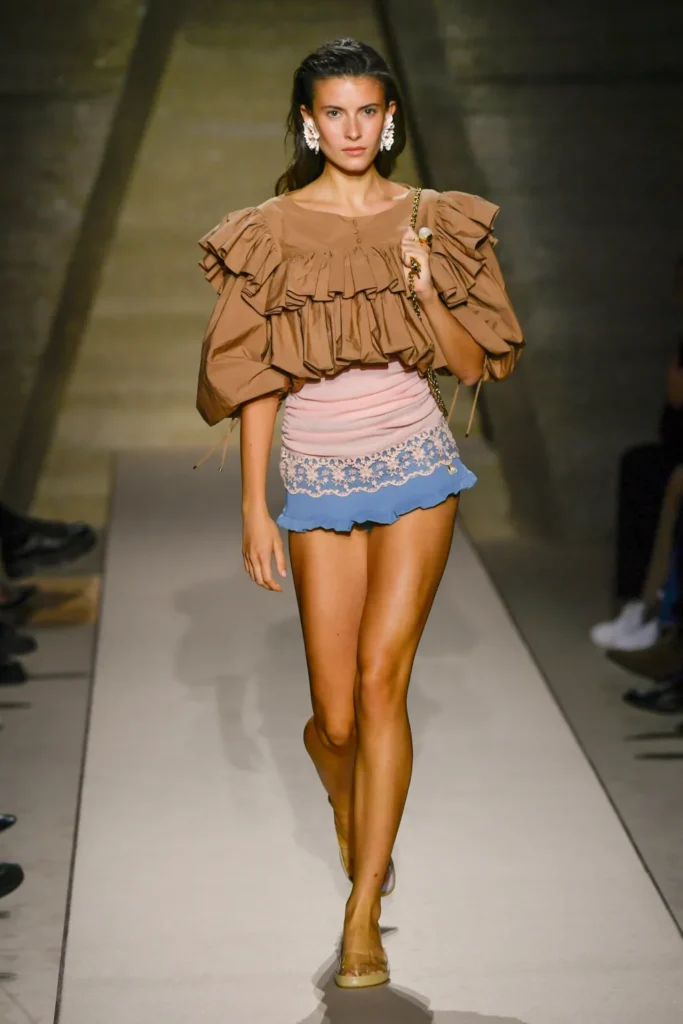
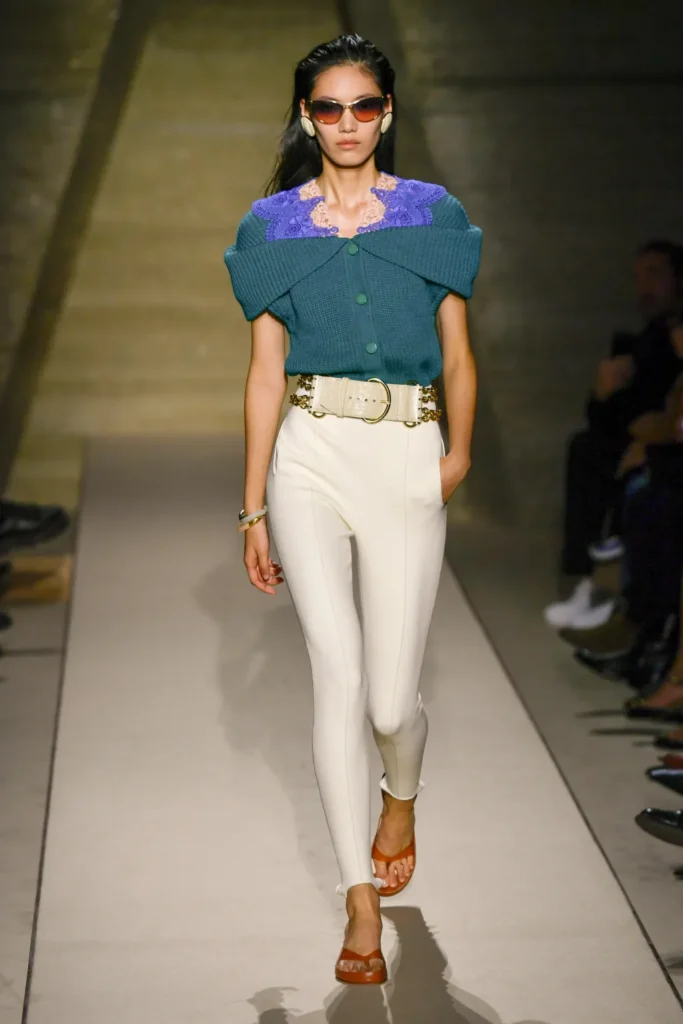
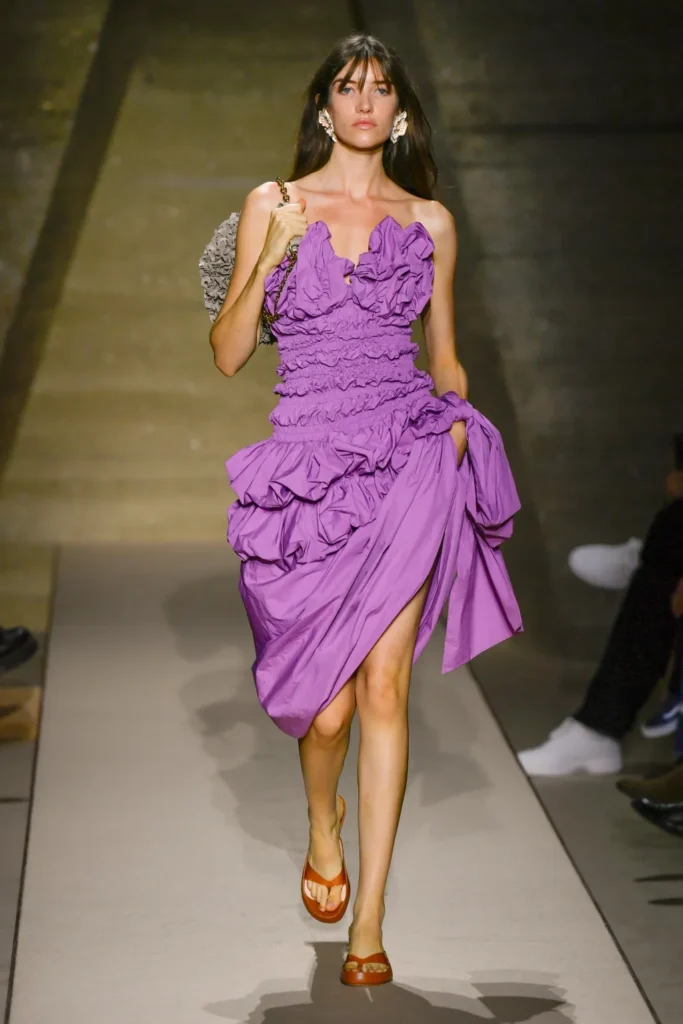
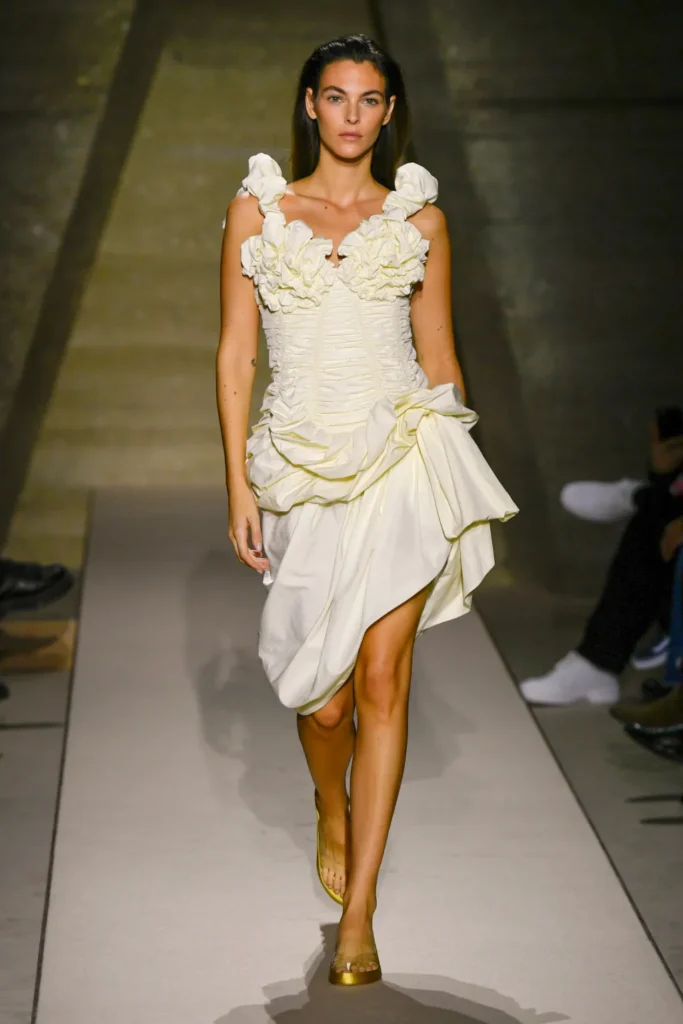
Chemena Kamali continues to peel back the layers of Chloé — and this season, she did it quite literally, exploring the tension between softness and structure through the language of couture craftsmanship.

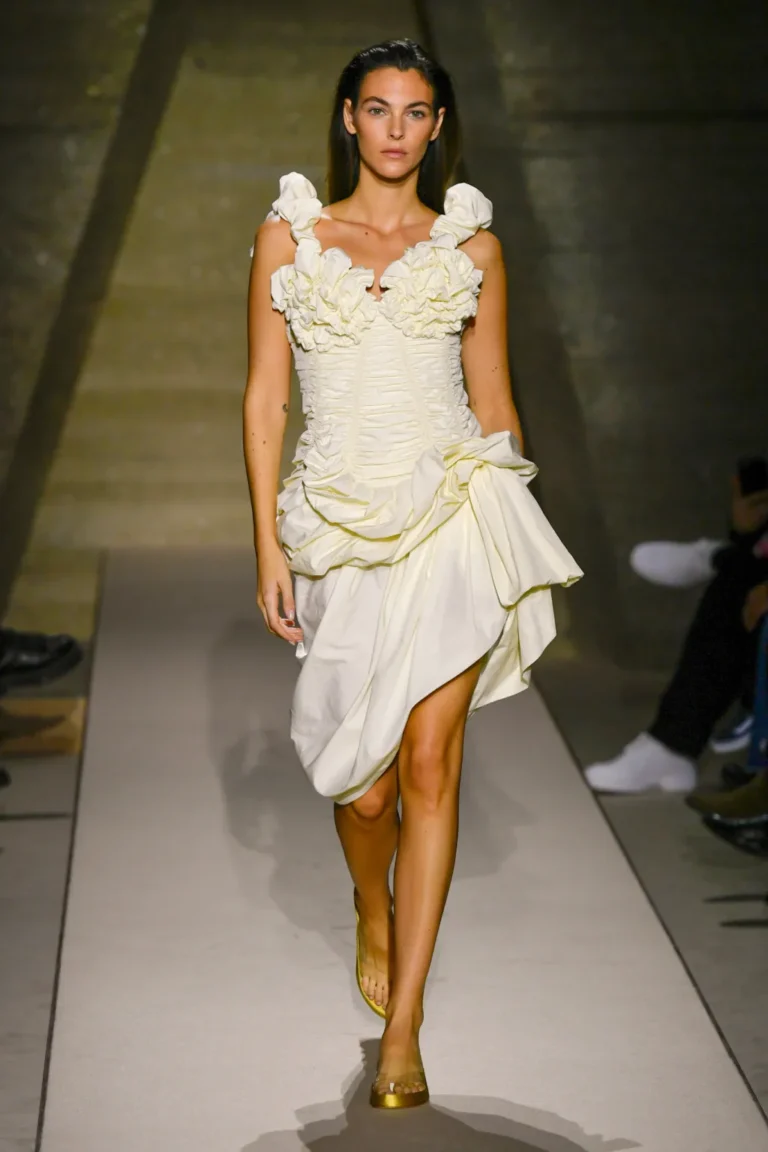
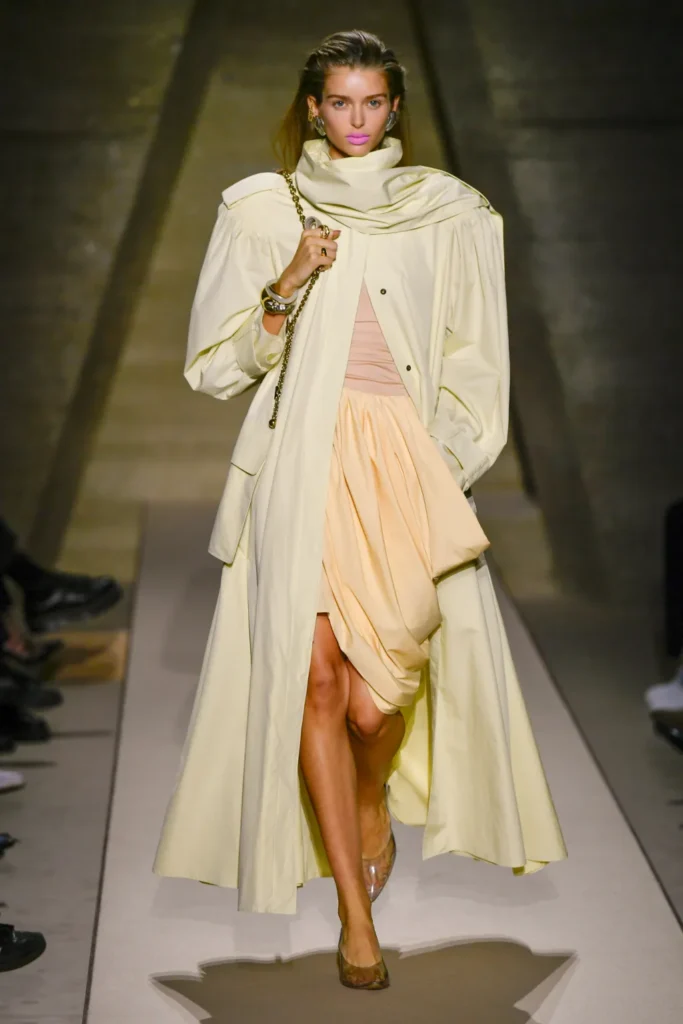
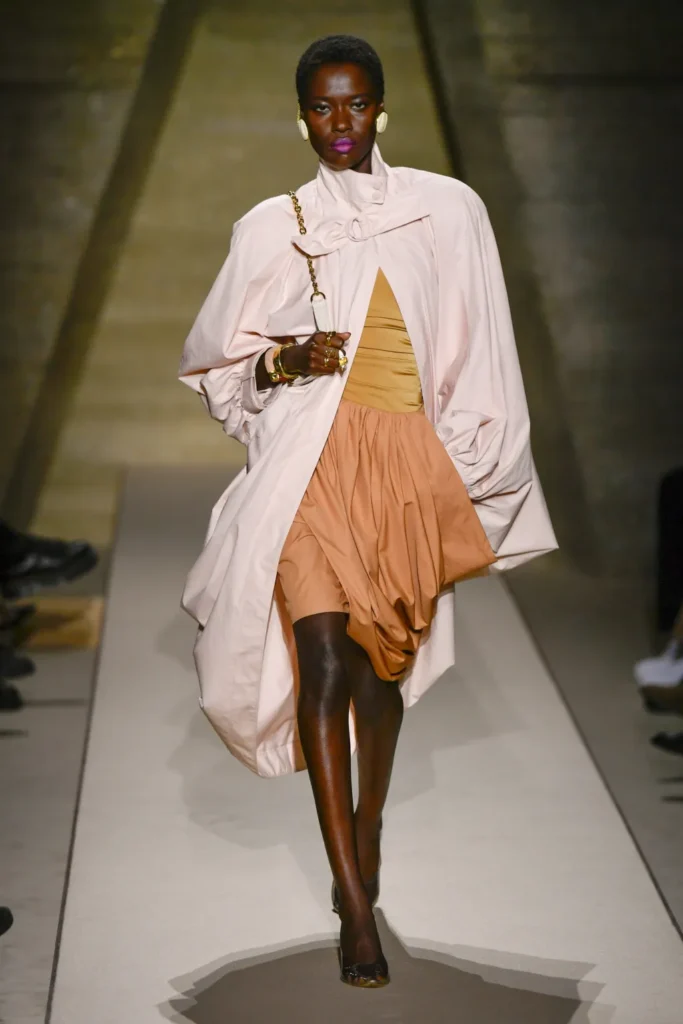
For Spring 2026, she took humble materials — dense cottons printed with faded florals — and twisted, draped, and gathered them into baby-doll dresses, swimwear-inspired tops, and full skirts that seemed to ripple like curtains caught in a summer breeze. “I’ve always been a 3D draper,” Kamali said before the show. “Draping comes more naturally to me than drawing.”

Her instinct showed. The collection echoed the legacy of Chloé’s founder, Gaby Aghion, who pioneered luxury ready-to-wear in the early 1950s. Aghion’s vision was to liberate women from the stiffness of couture while borrowing its codes — the pleats, the softness, the silhouette. Kamali’s approach felt like a conversation across time: taking those same haute couture gestures and grounding them in cotton, the most democratic of fabrics.

The result was a romantic, slightly eccentric lineup that nodded to vintage Miami florals and 1950s seaside glamour. Later looks pared things back to the brand’s signature palette of sand and cream, where cocoon coats and cropped blouses played with proportion and restraint — though some silhouettes edged toward the voluminous.