Balmain Spring 2027 Collection
Antonin Tron pushed Balmain into more sensual territory, using fluid fabrics, body-conscious silhouettes, and provocative lingerie references to sharpen his vision for the house.
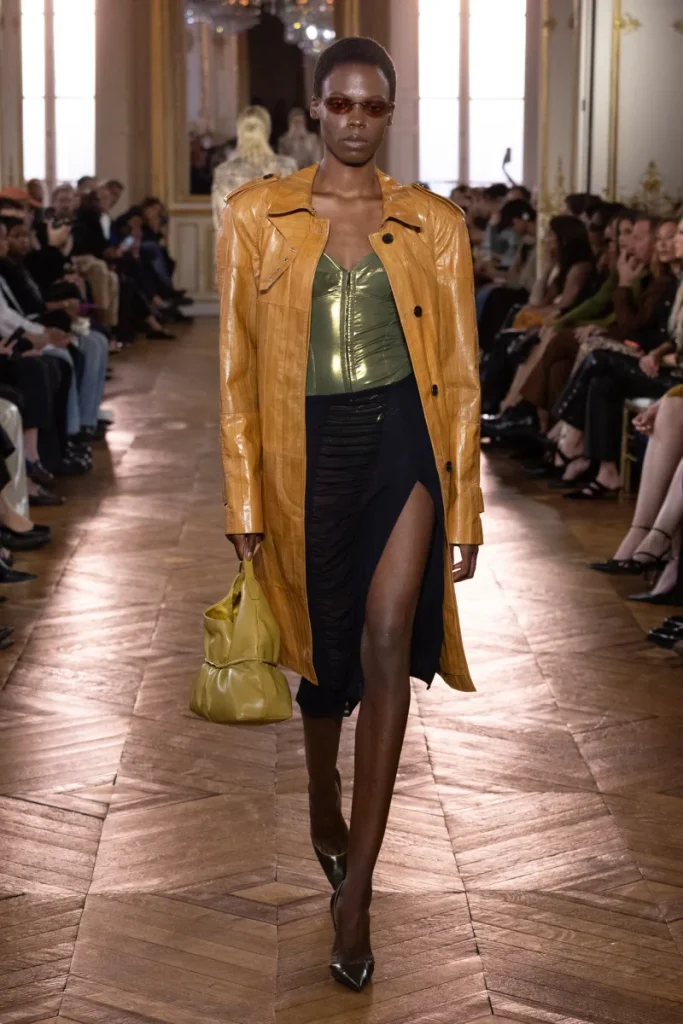
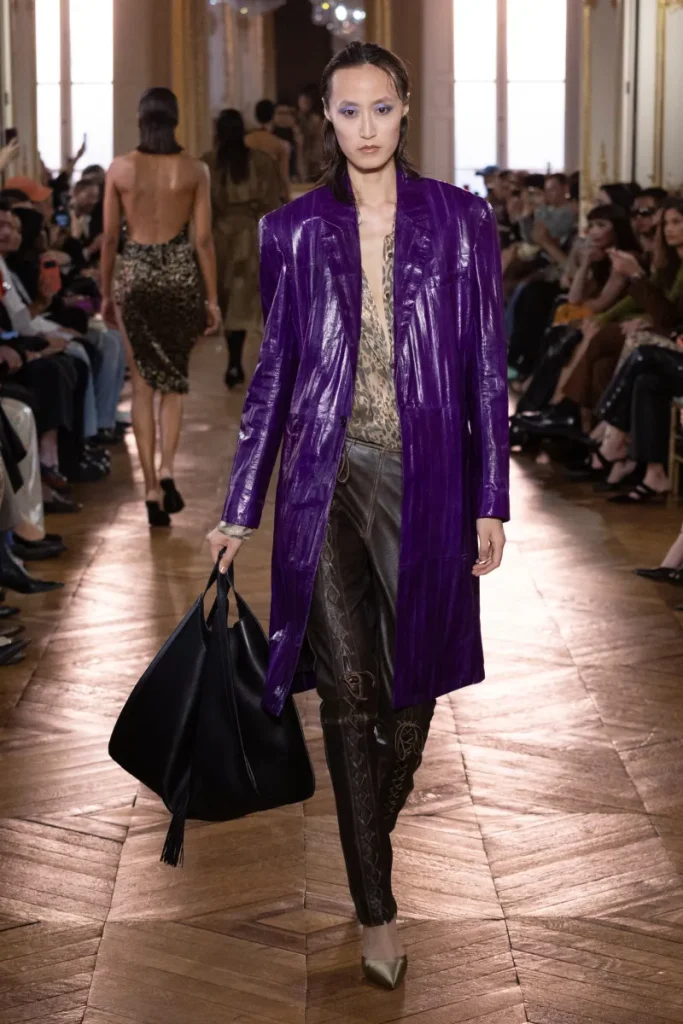
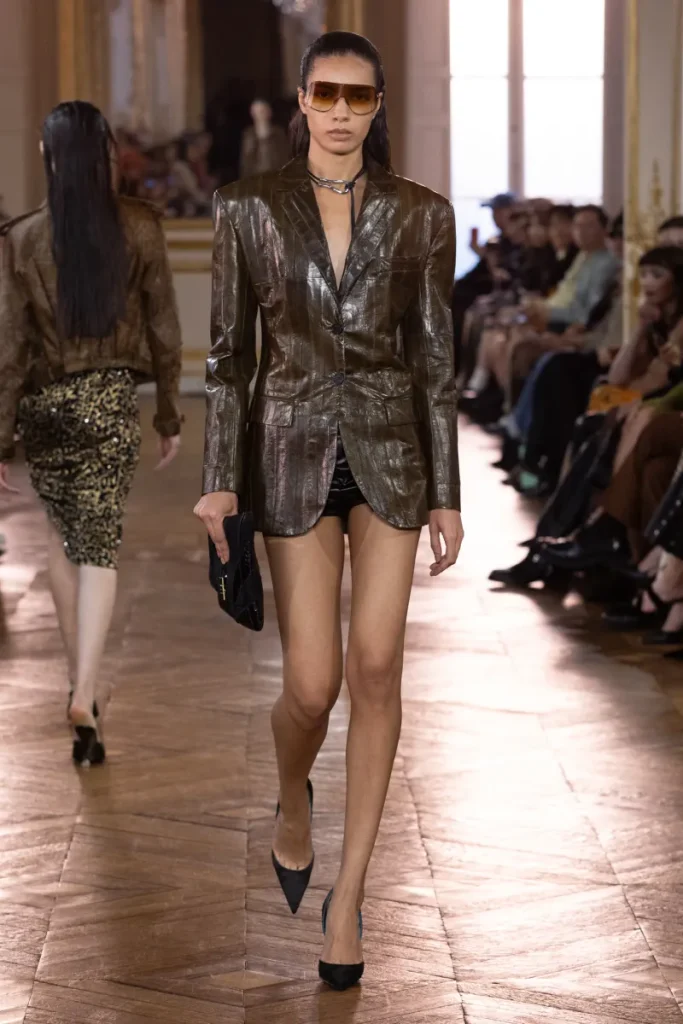
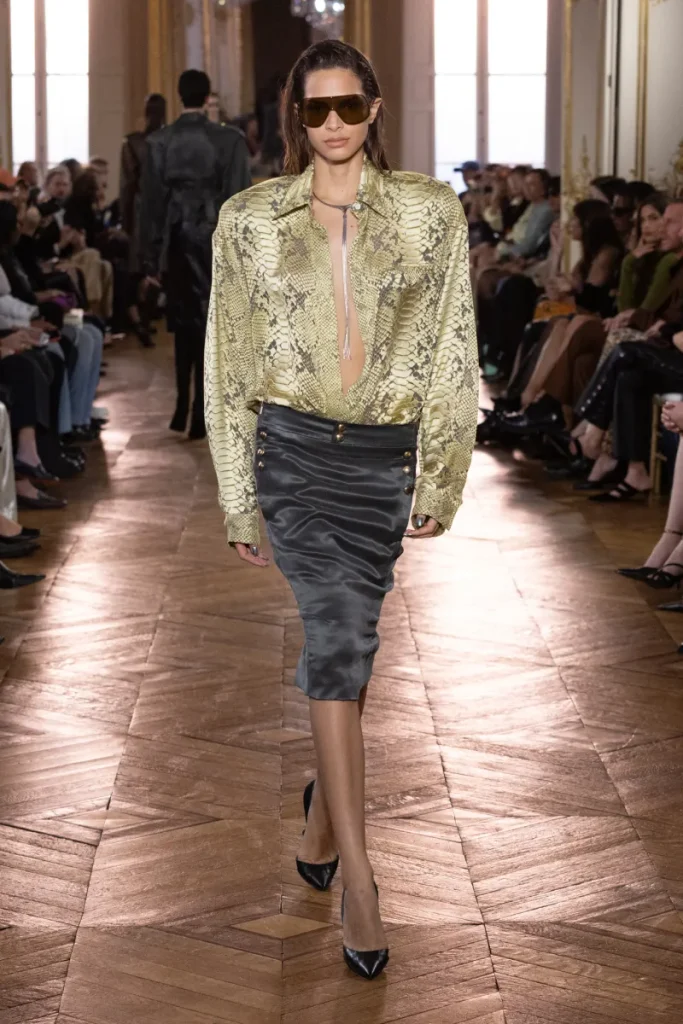
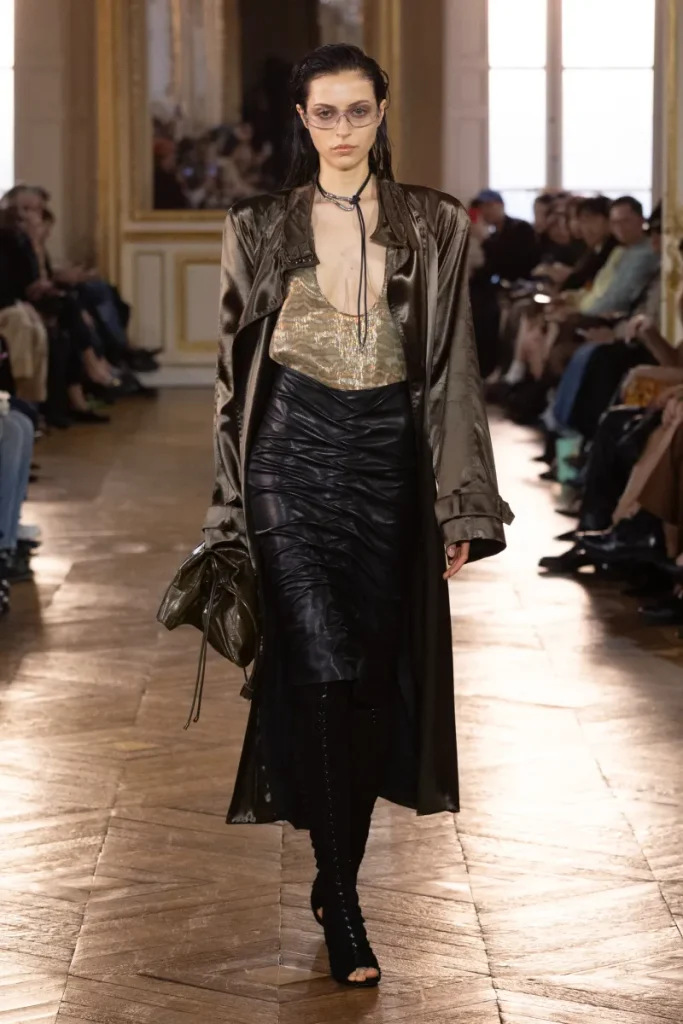
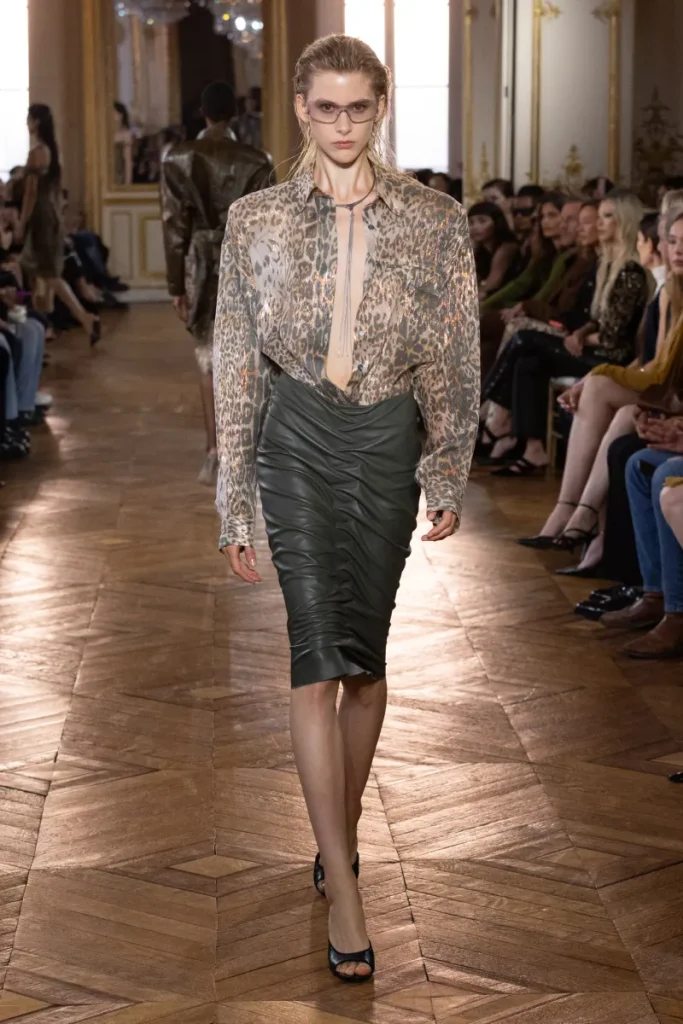
For his second runway at Balmain, Tron looked to the archives and discovered a series of backstage photographs taken by Mark Shaw in 1954. Beyond the era’s sharply defined waists, the images revealed an attitude that felt surprisingly contemporary—and offered a starting point for exploring one of Balmain’s more sensual codes.
The designer was drawn to the idea of the déshabillé: corsets, bare backs, lingerie-inspired details, and the seductive side of Pierre Balmain’s legacy. It was a direction previously explored by Christophe Decarnin, but Tron approached it through a distinctly contemporary wardrobe.
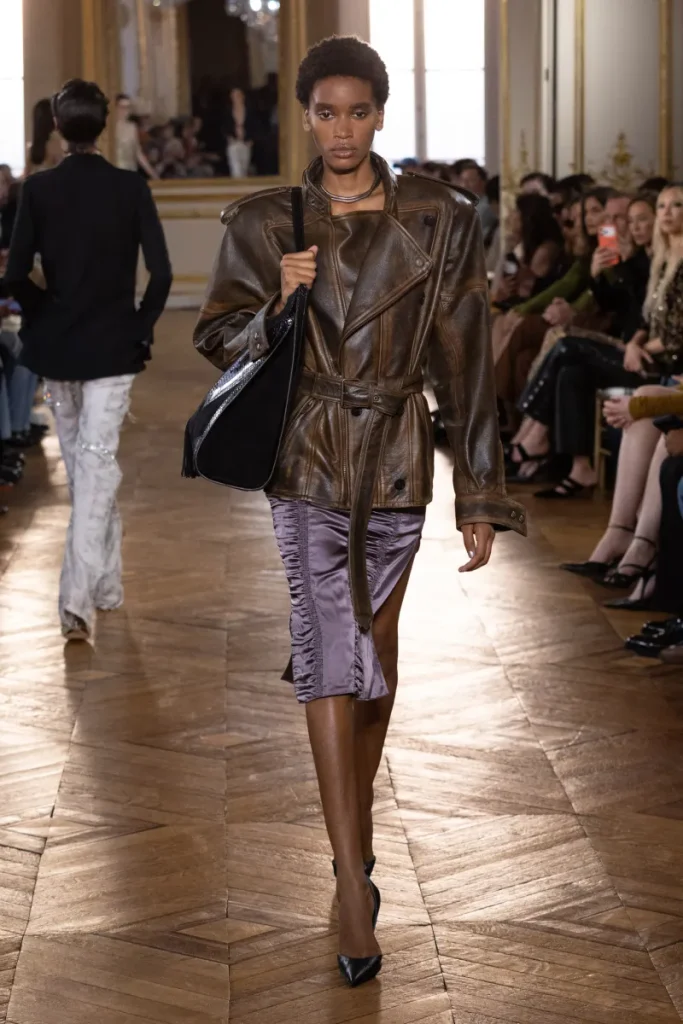
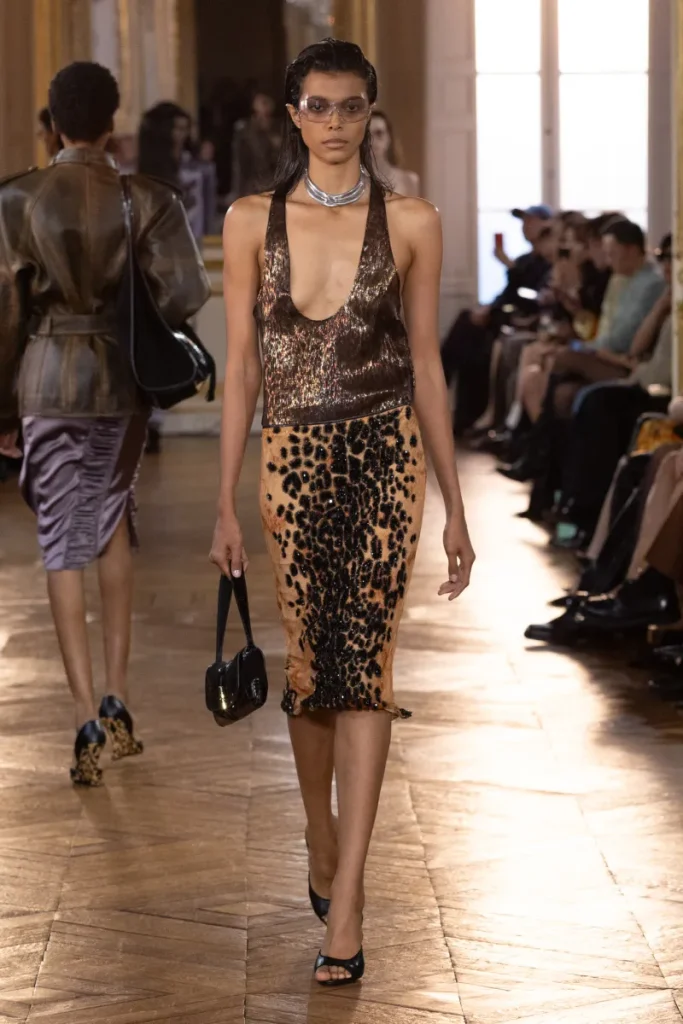
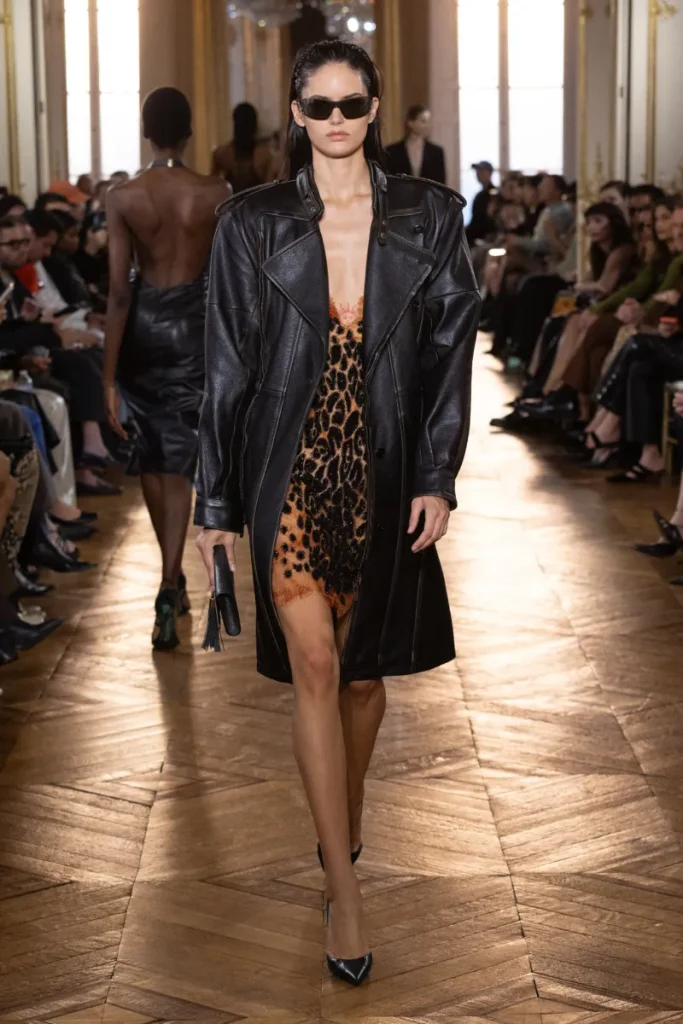
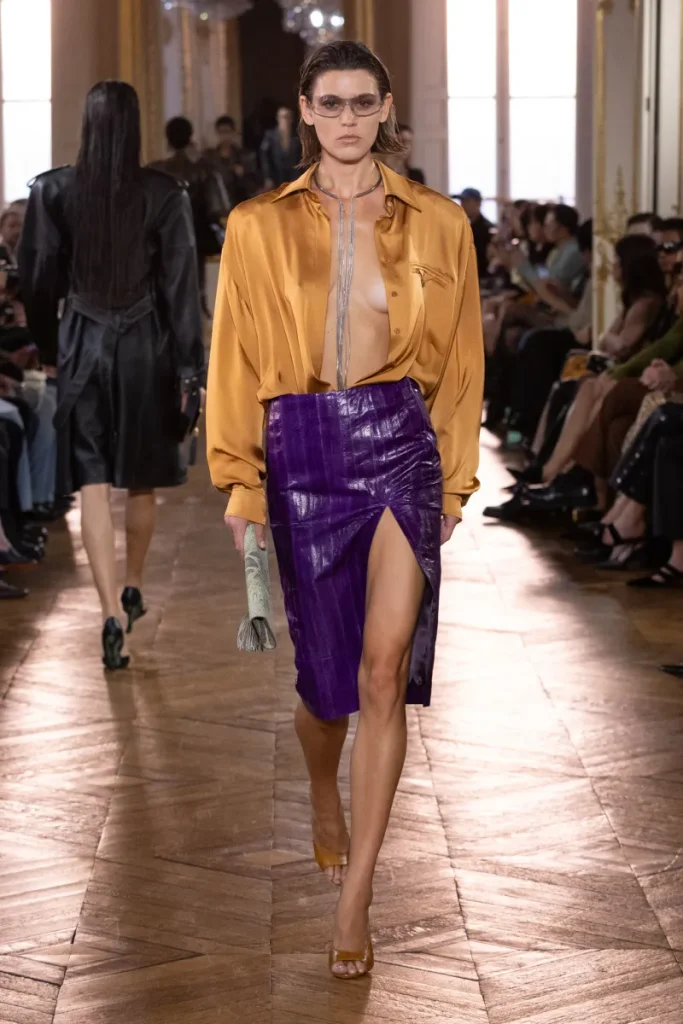
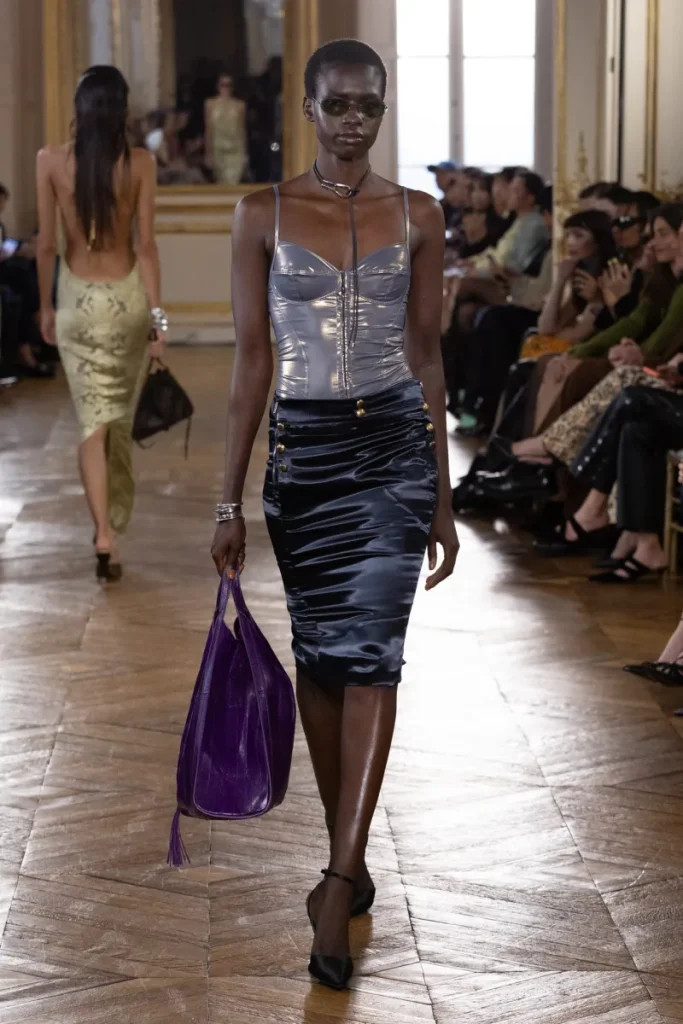
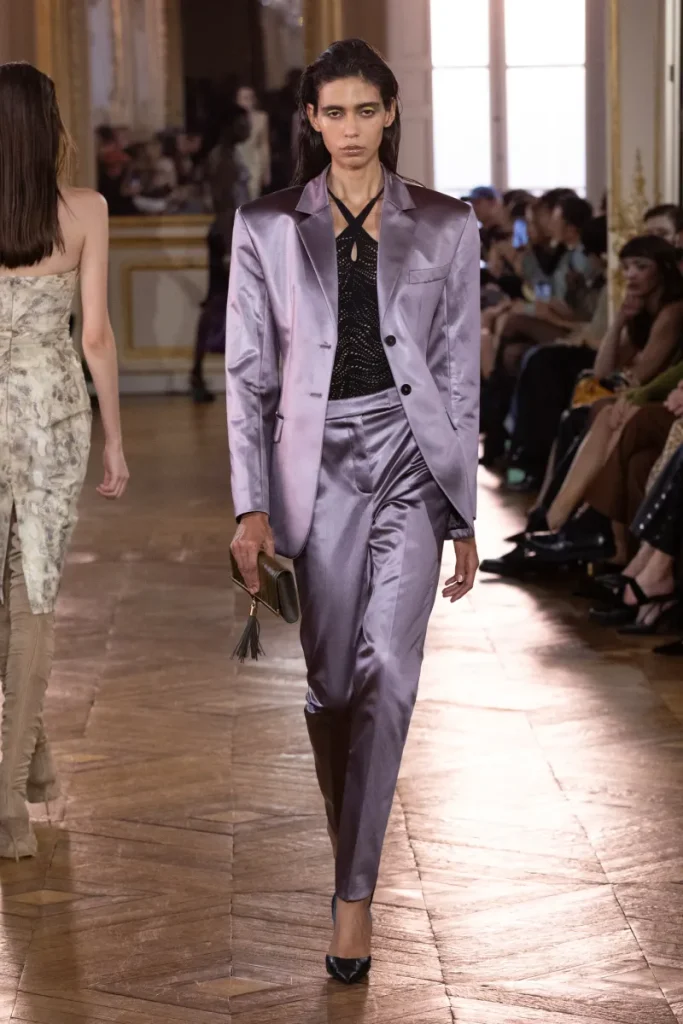
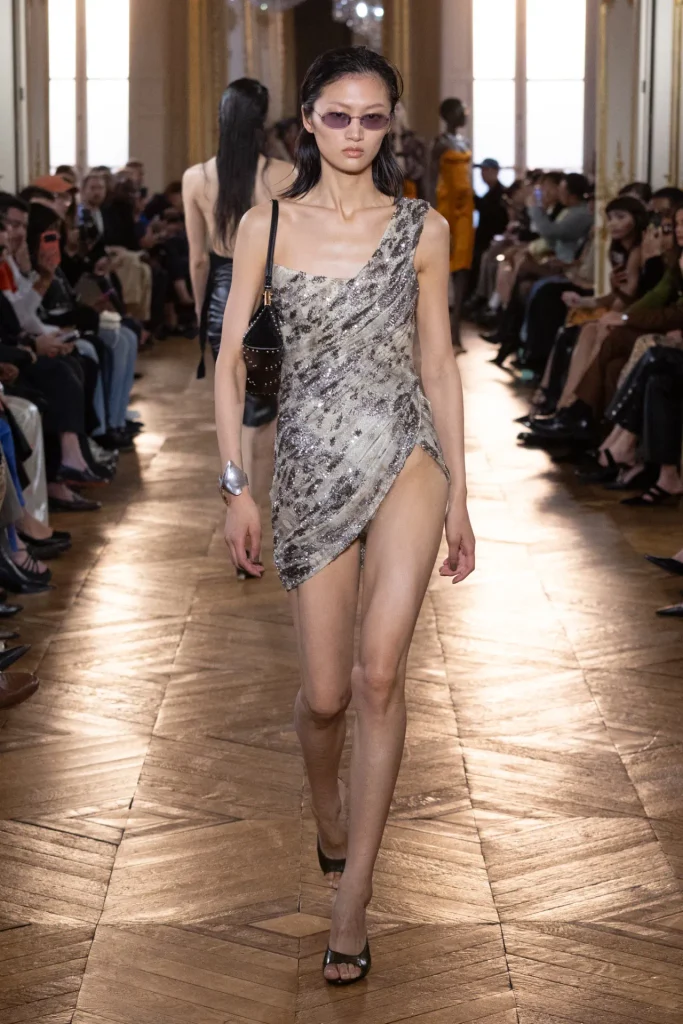
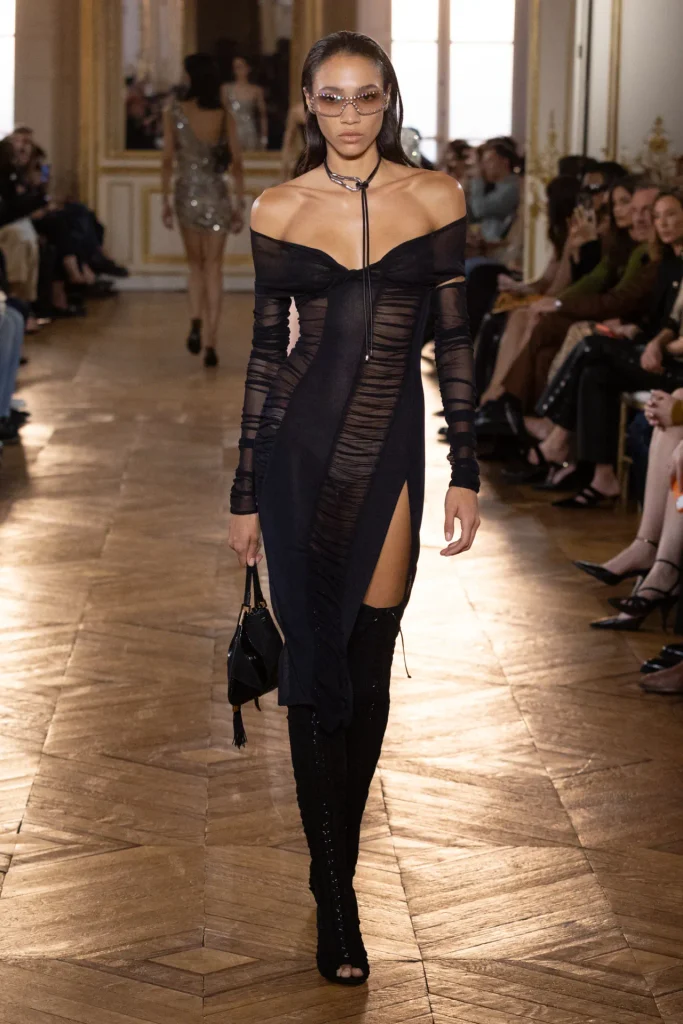
The result was considerably more body-conscious than his debut. Animal prints were paired with liquid textures and fabrics including eel-like leather, snakeskin, viscose, and silk lamé. The aviator jacket with pronounced shoulders that defined his first collection returned, but this time it was combined with sharply fitted pieces and overt lingerie details, including garter straps hanging from miniskirts.
Some crystal-covered cocktail dresses were reduced to barely-there proportions, hovering between eveningwear and swimwear. Elsewhere, the clothes followed the body through fluid construction and glossy surfaces, creating the sensation of fabric moving directly across the skin.
A black cotton-satin look captured the mood particularly well: a plunging neckline framed by a wave-like silk lapel with raw edges. Tron described it as looking as though the woman had “just stepped out of a Cadillac,” evoking the provocative glamour of the 1970s and the countercultural spirit of California.
Surf culture also informed the collection, most clearly through the wet-look finishes and second-skin silhouettes. Rather than treating the reference literally, Tron translated its sense of movement and physicality into the clothes.
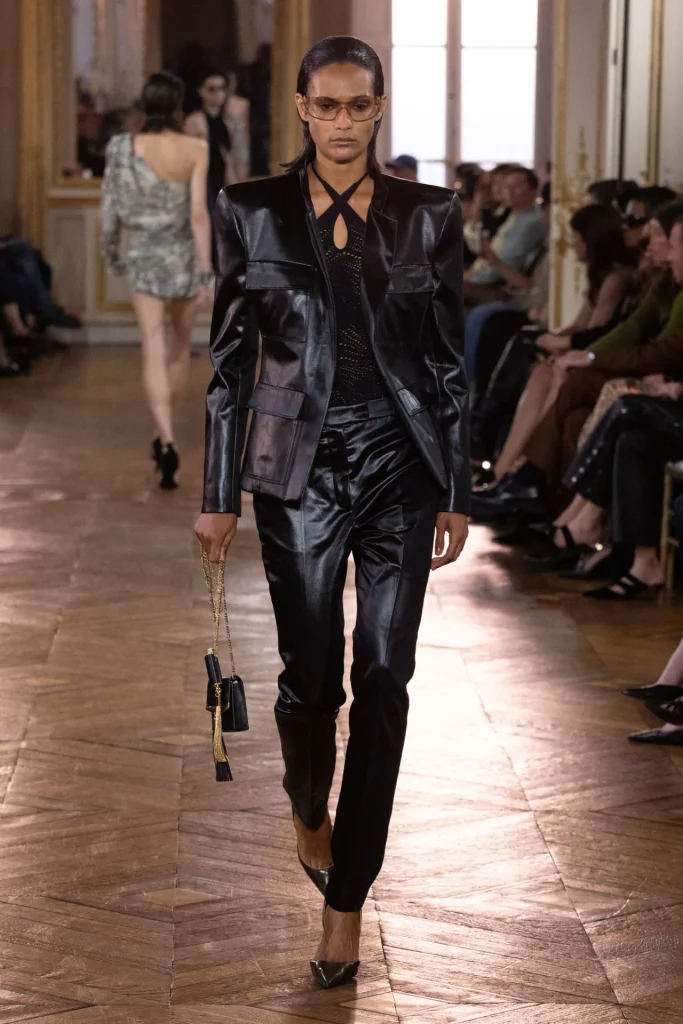
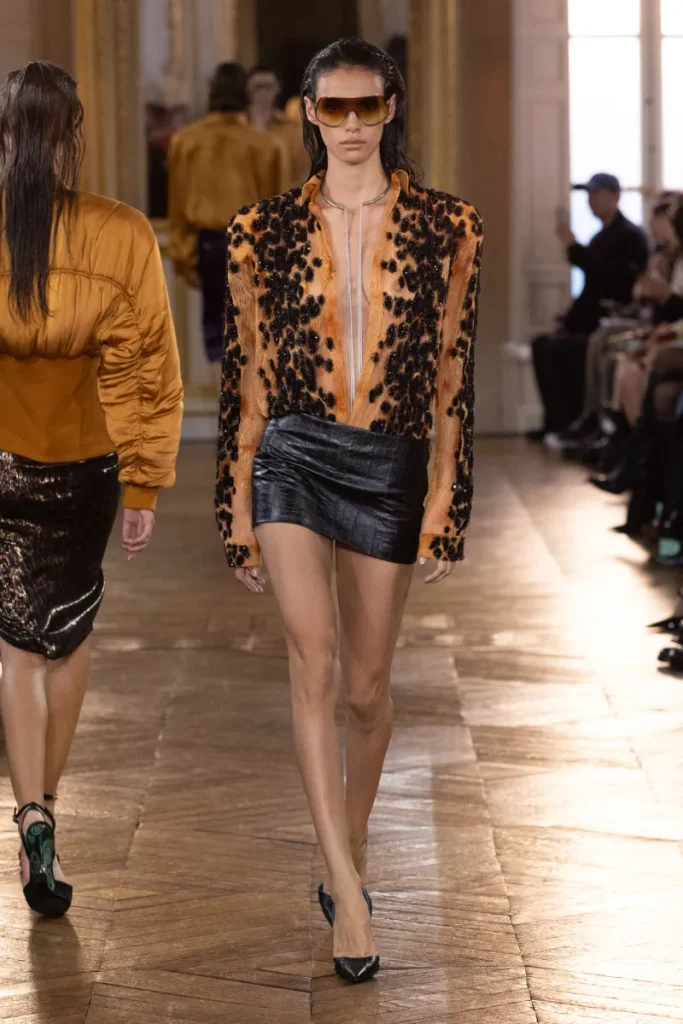
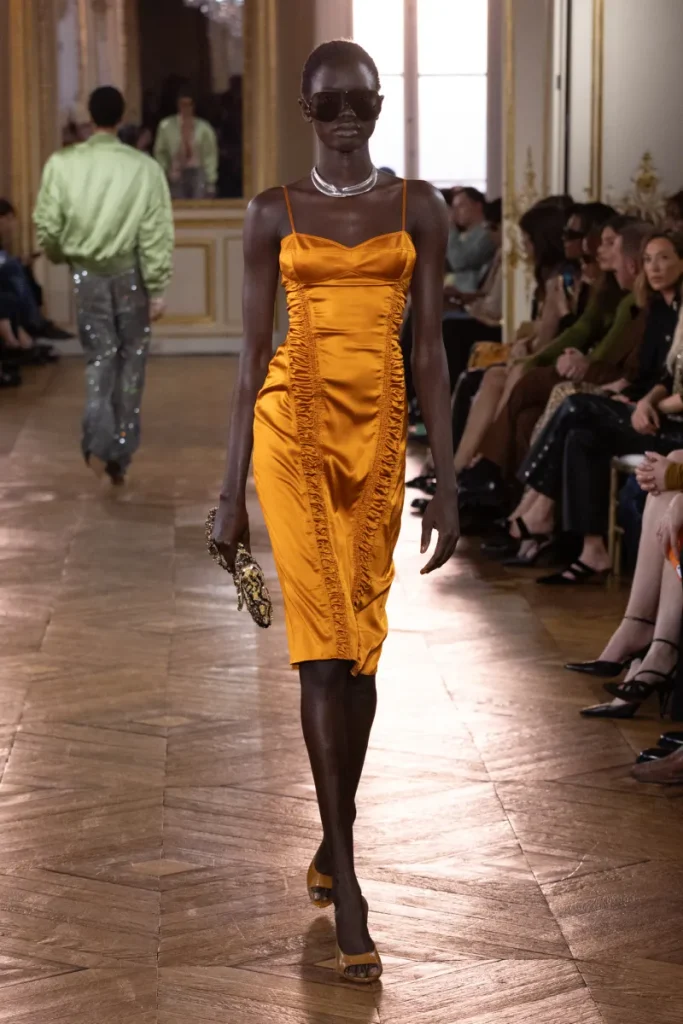
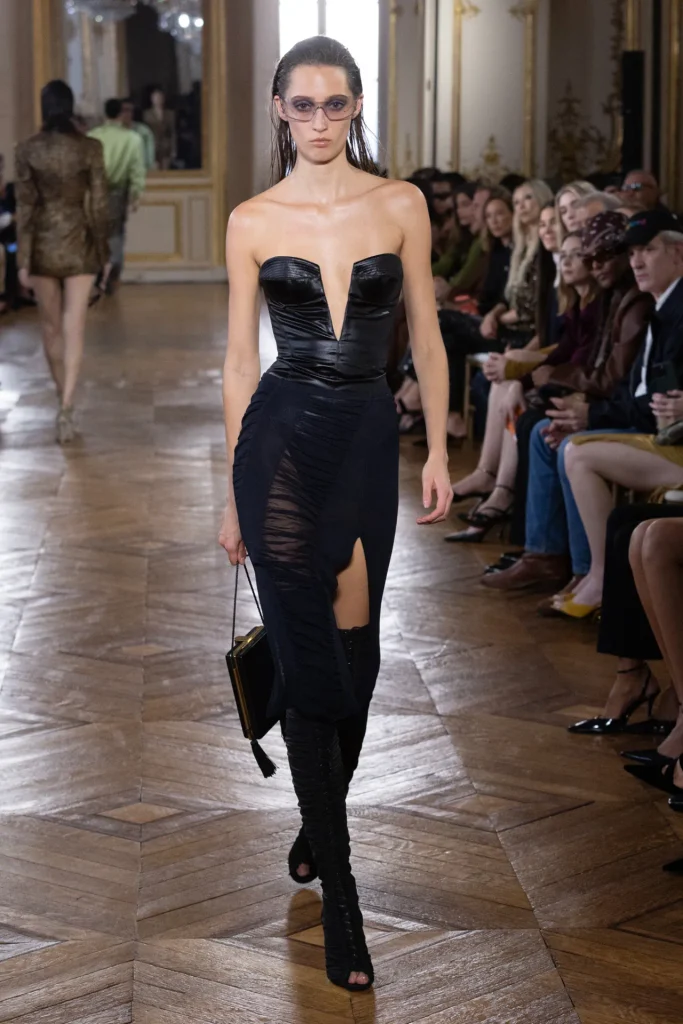
The setting added another layer of history. The show took place at the Hôtel de Maison, the Left Bank residence where Karl Lagerfeld lived for decades. Lagerfeld had begun his career as an apprentice to Pierre Balmain in the 1950s, creating a direct link between the house’s past and Tron’s contemporary reinterpretation.
For Spring 2027, Tron gave Balmain a sharper and more provocative identity. By combining archival references with the sensuality of the déshabillé, he moved the house toward a more fluid, physical, and distinctly modern expression.