Spring Summer 2026: September’s Fashion Weeks Report
Paris Fashion Week wrapped up nearly two weeks ago — just enough time for the glitter to settle, the reviews to roll in, and our minds to decide which collections we liked best and which are to be considered more like a fever dream.
And while adventuring in almost every corner of the internet to find recaps of all the weeks tied together, I soon realized I had to go back and forth between one site and another. Therefore, in the following pages, I decided to revisit each city’s highlights — from the most memorable debuts to the moments that defined this season.
New York Fashion Week: When Fashion Starts from the Streets
The first news that revolved around NYFW actually arrived in February, when the CFDA and KFN announced their upcoming partnership, whose first changes would be seen this September. With a project that covers future events until 2027, the goal of this collaboration is to give New York’s fashion back to New Yorkers: by increasing the digital coverage of the runways, launching the Venue Collective — a space where emerging designers were able to show their creations at lower costs — and promising an American Fashion Festival to be held in 2026, CFDA and KFN are actively working toward a more open era of fashion.
But this was not the only premise to take into account, as this past April, the Prada Group announced the acquisition of Versace from Capri Holdings — a shift that not only gave the Prada Group major power over the luxury sector but also stemmed from Capri Holdings’ desire to focus more on its larger American brand, Michael Kors.
Having said that, it’s also important to consider how the political situation in the U.S. may have led American designers to showcase their collections outside the States — a shift that was not welcomed in the best way. Before diving into the analysis of New York’s new fashion, there was a lot to take into account — which is summarized here at its most concise level — but with this small preamble, any reader will have a clearer view of the behind-the-scenes of this hectic week.
From the Runway: The Collection That Stood Out
Michael Kors
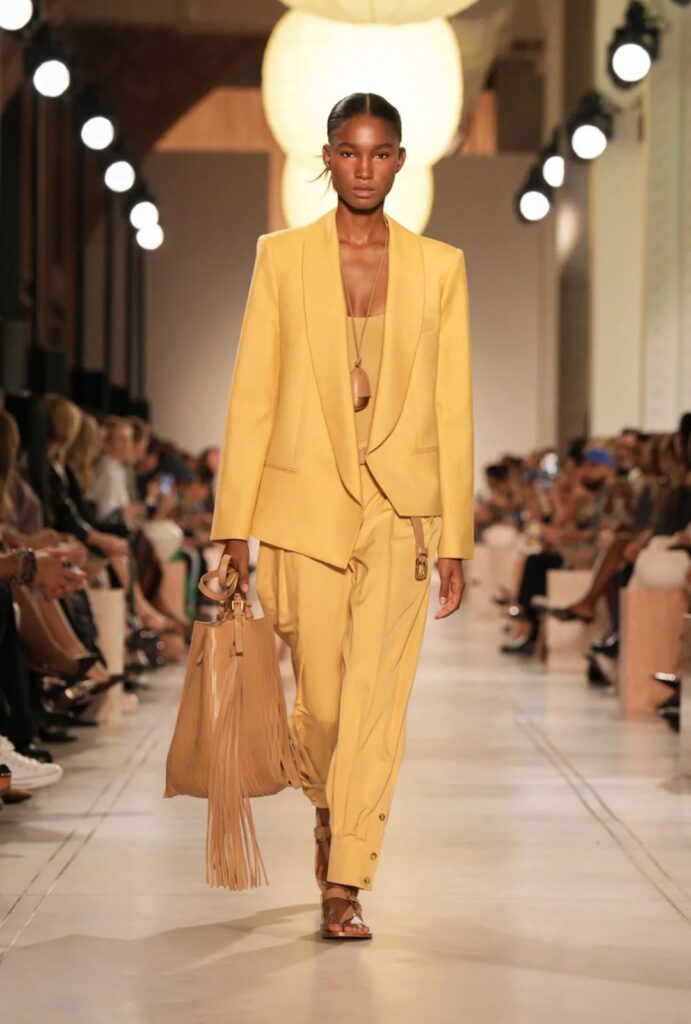
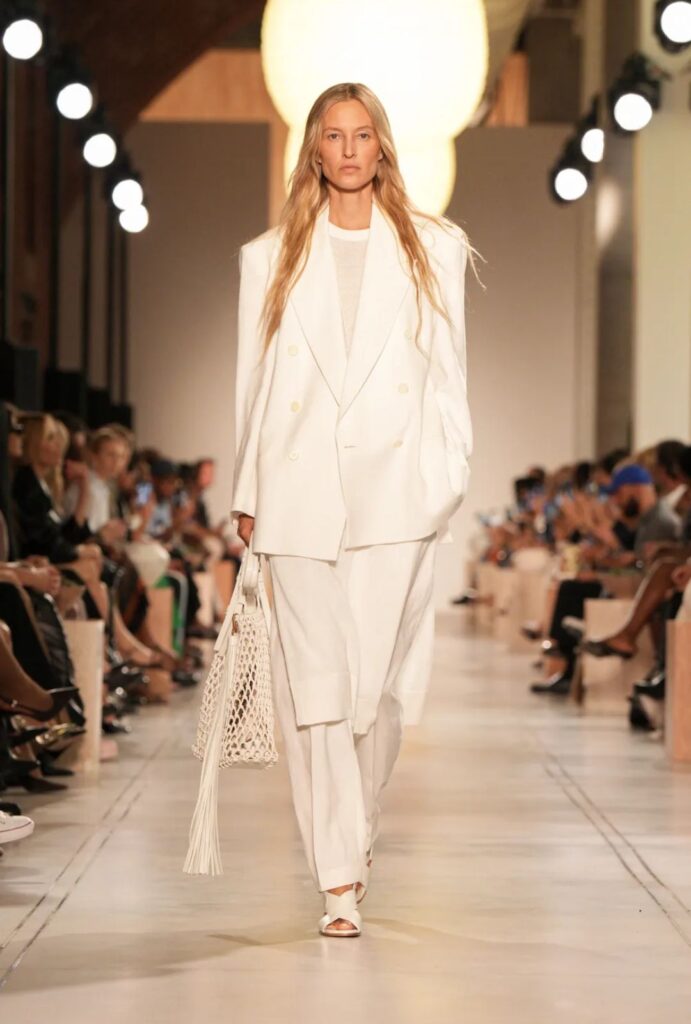
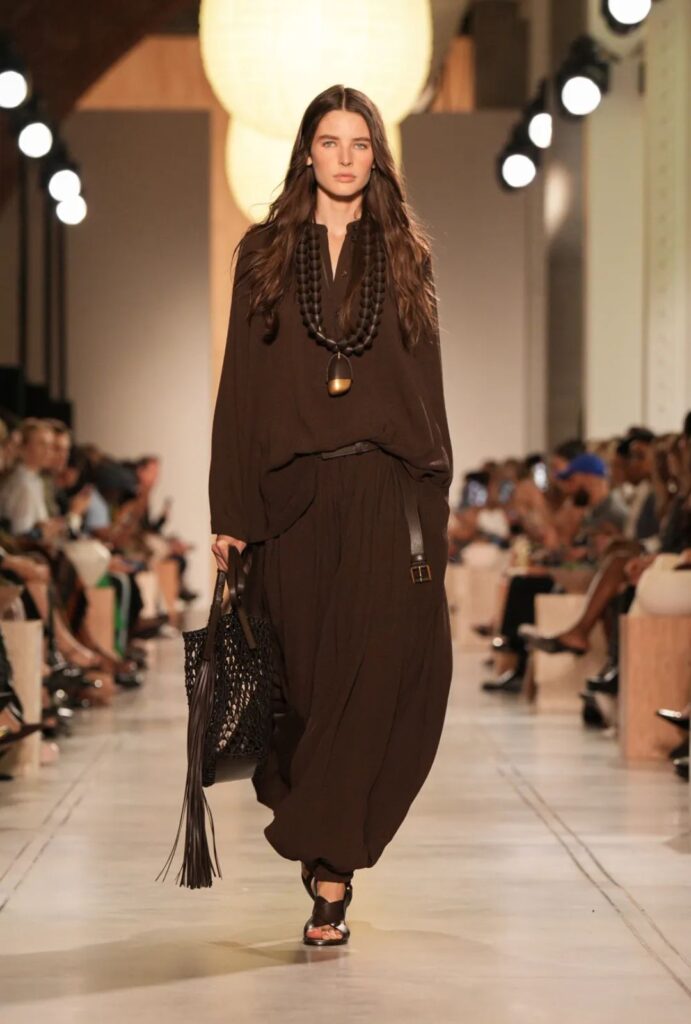
Considering that the inspiration for the collection came from Kors’s travels to Morocco, it’s safe to say that the pieces do not resemble the luxury street style we’re used to seeing in the city. The warm tones — such as brown and sand — welcome us spectators into a relaxed and calm environment, emphasized by the fluidity of the clothes that softly fall on the models’ silhouettes.
Ironically enough, the opening collection of a week focused on New York’s roots was created from feelings of escapism — which, in times of tension like these, is both a desire and a burden: a desire because we all share the wish to leave behind social and political troubles, and a burden because, despite longing for a calmer life, we cannot — and should not — ignore the reality that surrounds us. But at least, in terms of everyday life, if New York calls for a fast-paced routine, this collection manages to ground and center whoever is wearing it.
Week’s Takeaways
This year, New York presented a wide variety of styles and collections: from Ralph Lauren’s woman — whose power I imagine being introduced clothes first — to Tory Burch’s bright colors, a rebellious symbol in darker times.
Not being a New Yorker myself, it’s harder to determine whether what was presented truly reflected the city at its fullest, but I can definitely say that American designers interpret the same time period in very different ways — which overall is a good thing, as it gives us the gift of diversity.
Among the different CFDA proposals, one of the ideas was the creation of a single American Fashion Week — merging the A/W and S/S collections as well as the ones in between. While this is still to be decided, personally I think that keeping the collections separate enables viewers and critics to digest and reinterpret what has been seen in a better way. But considering that the changes made so far have all aimed to create a more cohesive fashion week, I’m excited to see what’s coming next under this partnership.
London Fashion Week: Celebration of Creativity
New York wasn’t the only city to see major changes at the top. Earlier this year, the British Fashion Council announced its new CEO, Laura Weir, marking a new chapter for London fashion. Her mission for fashion week was clear: to give a platform to local talent. To bring this vision to life, Weir and the BFC team made an innovative move — removing the participation fees that designers and labels previously had to pay in order to secure a spot on the schedule. The initiative aimed to open new doors and give emerging talents a chance to prove themselves.
Long celebrated for its fearlessness in overcoming boundaries, London — through provocative art — aimed to reaffirm its place as the creative heart of the industry. In the past, I’ll admit I had wrongly overlooked London’s collections and paid more attention to their Parisian and Milanese counterparts. But this year was different. When it came to the other cities, I was able to pick a favorite, whereas for London the choice felt impossible. Therefore, for my favorite, I’ll have to go with a tie.
From the Runway: The Collection(s) That Stood Out
Dilara Findikoglu: Cage of Innocence
This collection was not just about celebrating art — it was a powerful political message. Findikoglu’s Cage of Innocence dove into the suffering women have to endure when confined within the cages of purity and societal conditioning. On the runway, this narrative came to life through an interplay of Victorian silhouettes, disheveled hair, frayed fabrics, and literal face cages — a discomfort so obvious it was impossible to ignore.
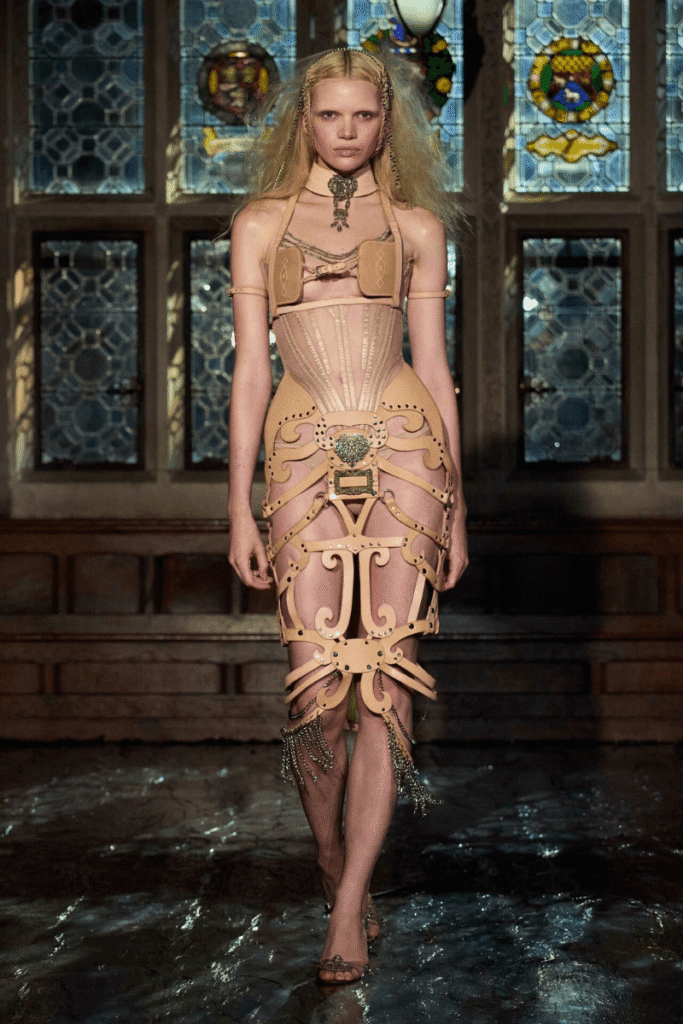
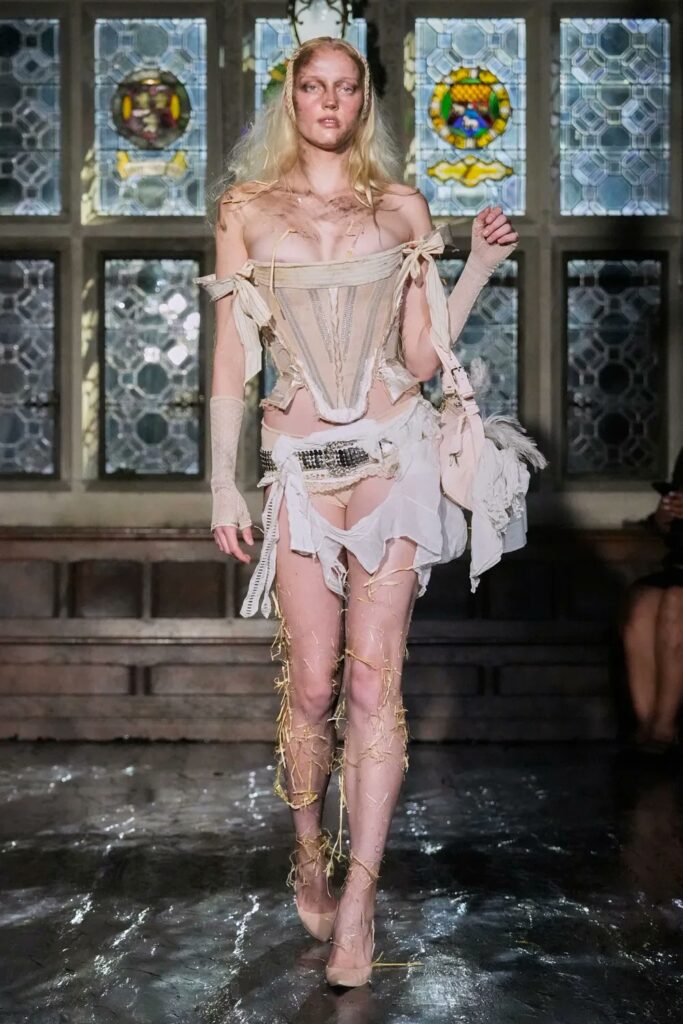
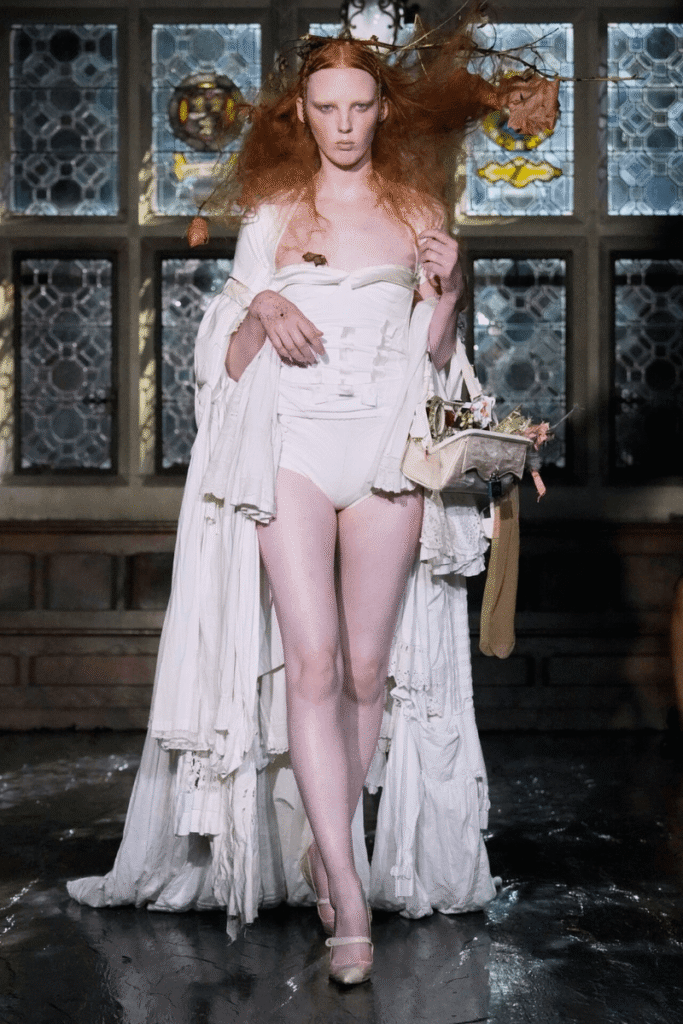
The impeccable tailoring reflected the theme: the structured garments felt restrictive and mirrored the emotional and social confinement the collection aimed to expose. What enabled me to connect with the collection on a deeper level was learning about the designer’s roots: born in Turkey, she moved to London for her studies and, far from her conservative family, found herself in the city’s goth and edgy scene. Therefore, the clothes shown don’t just reflect a distant reality but one she herself had to escape from.
Labrum London: Osmosis
Another great example of fashion communicating more than words. Titled Osmosis, the collection reflects the duality of designer Foday Dumbuya, who was born in Sierra Leone and moved to London at the age of six. Through accessories, prints, and cultural elements from both heritages, he created a narrative connecting his Sierra Leonean roots with his British upbringing.
In Dumbuya’s hands, fashion became both a celebration and a statement: especially after the anti-immigration protests, it stood as living proof of the richness and creativity brought by diversity.
Week’s Takeaways
Beyond Dilara and Labrum, an honorable mention must go to Burberry and Harris Reed — both of whom captivated audiences with their colors and innovative creations, reminding us of their city’s versatility and theatrical spirit.
While there is still work to be done in expanding opportunities for emerging designers, this season proved that London has not lost its creative touch — not only through the tailoring of garments but also through the messages they embody.
Milan Fashion Week: A New Era of Fashion
This year, Milan was the city of debuts: between Vitale at Versace, Demna at Gucci, and Trotter at Jil Sander — to name just a few — it was impossible to decide where to focus our attention.
New beginnings can be both exciting and daunting: designers shoulder the responsibility of reinventing the brands they represent, honoring old traditions while bringing fresh perspectives — which we can all agree is no easy task.
While for the judged — the designers — it can be frightening, for us — the judges — it’s thrilling.
On a more bureaucratic level, if Versace’s acquisition by the Prada Group affected New York Fashion Week — since the brand was sold by Capri Holdings — it’s safe to assume it had an even greater impact on how things unfolded during Milan Fashion Week, throughout which the acquisition had not yet been approved (the approval from the European Commission came in the last days of September).
Lastly, this fashion week closed with Armani’s collection, officially the last designed by the man who defined Italian fashion for the past 50 years. From new beginnings to emotional farewells, Milan Fashion Week had everyone watching.
From the Runway: The Collection That Stood Out
Gucci: La Famiglia
When Gucci’s Instagram profile cleared, we instantly knew something big was about to be unveiled. The collection, first shown through a lookbook and later presented in a small venue, was titled La Famiglia. It represents the archetype of the Italian family — but in this case, specifically, the Gucci family — whose story has always been deeply intertwined with the brand’s history.
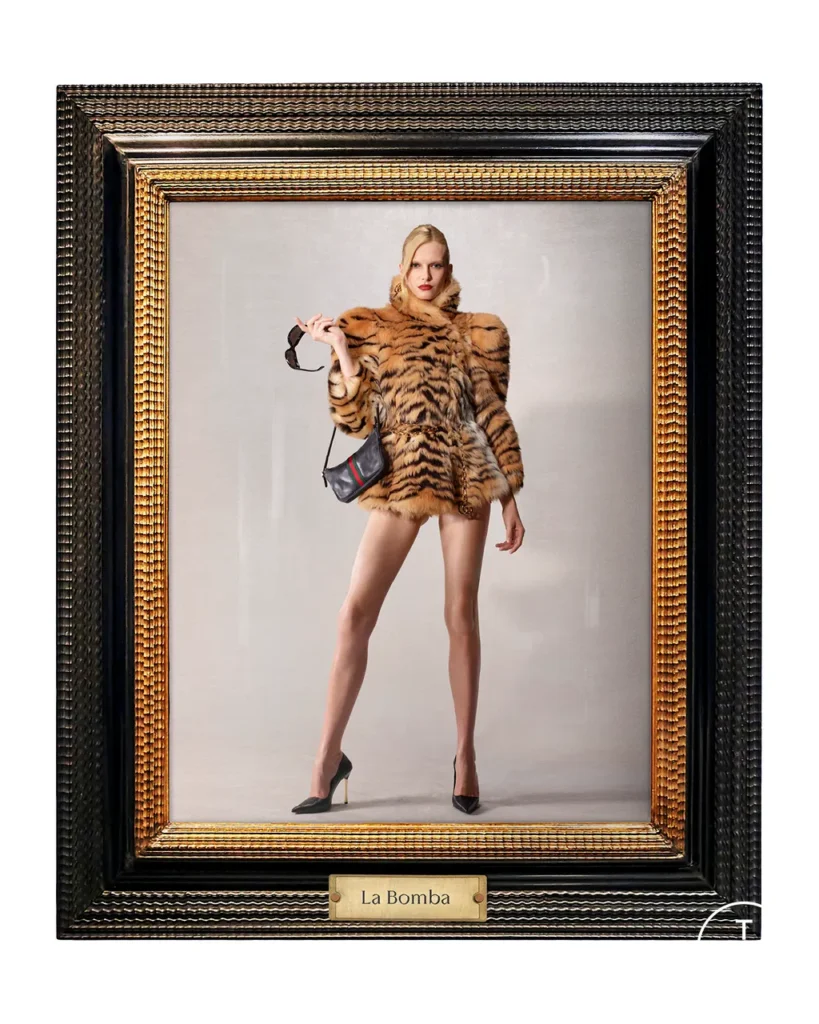
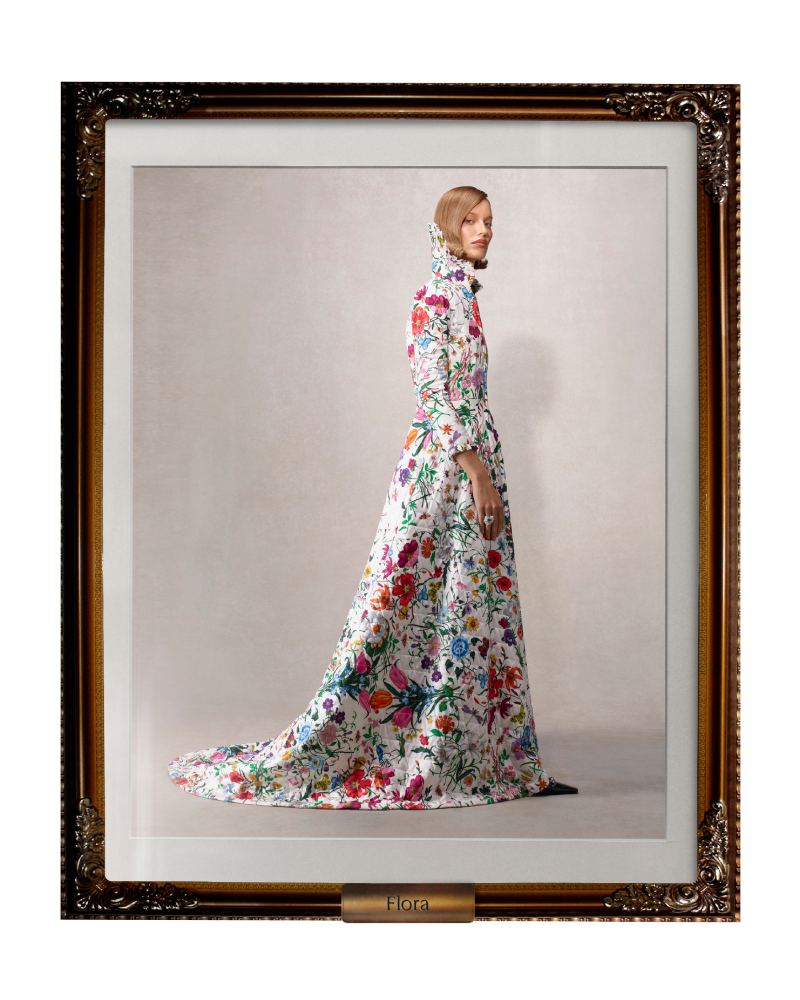
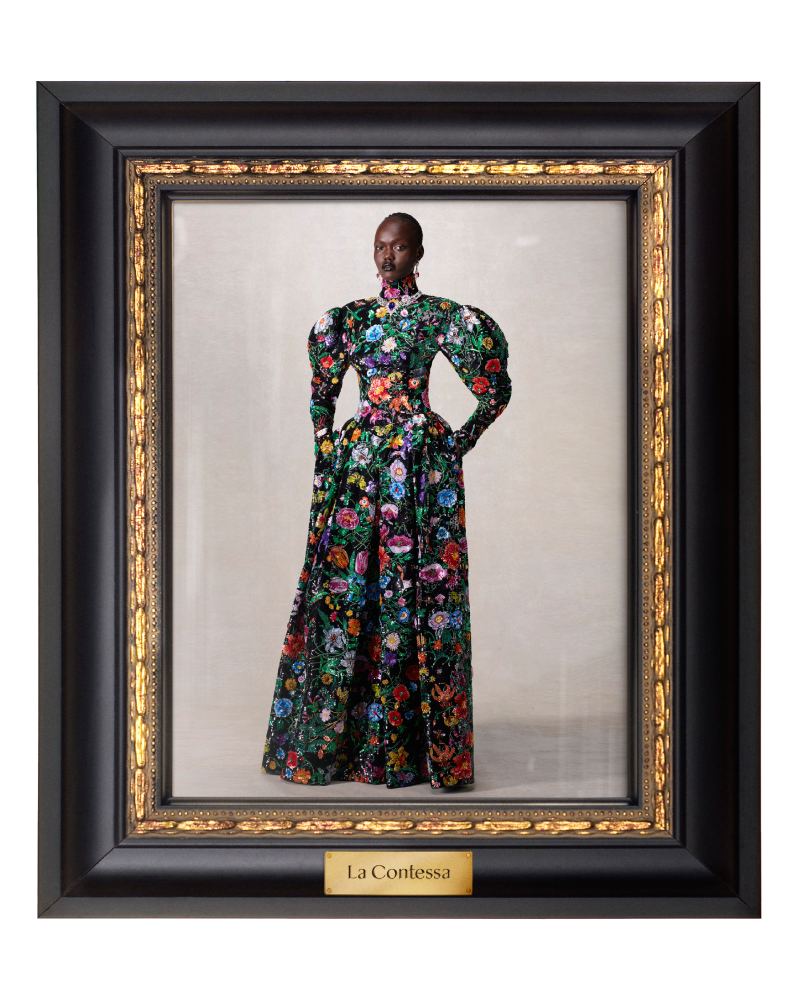
From the first portrait of the lookbook — because yes, each piece was placed in a portrait — you can already decode the references: luggage, whose unmistakable printed logos have followed the brand from its earliest creations to the items sold in stores today.
When it came to paying homage to the house’s roots, Demna was meticulous with the details. But how did he bring innovation to this new era?
The private presentation was certainly an interesting way to introduce us to the new Gucci, but what was even more captivating was the short film The Tiger, in which Demi Moore plays Barbara Gucci — the head of the label who, despite a successful career, is tired of maintaining a polished image of perfection.
During the movie — and throughout the collection — you can feel the strong presence and power of family, of heavy traditions that feel daunting yet essential.
“Isn’t it strange you can only see yourself from the inside, and everyone else sees you from the outside?”
“I mean, the way you see yourself could be completely different from the way people see you — and you’ll never know.”
“That’s terrifying.”
“How do you see me?”
(From The Tiger)
Week’s Takeaways
Here, I can say I am not an impartial judge — my beloved Italy never fails to amaze me. During this week, we saw several bold collections, each telling its own story to whoever was watching.
My personal favorite is, as written, Gucci’s — but it goes without saying that Armani, Dolce & Gabbana, and Ferragamo all brought diverse and captivating creations as well.
In Italy, I’ve always felt that the thread connecting the collections isn’t just about aesthetic similarities but relates to the shared tradition that defines Italian fashion houses — a tradition built on family legacies, common techniques, and, in some cases more than others, values.
Paris Fashion Week: Redefinement of Elegance
If Milan was the city of debuts, Paris was no exception: fifteen new designers were ready to present their first collections for the upcoming spring.
We had Anderson at Dior — a man who has already built a solid reputation in the industry and has successfully led Loewe for the past 11 years (as well as his own brand, JW Anderson, since 2008). And while many eagerly awaited Anderson, just as many looked forward to Pierpaolo Piccioli at Balenciaga, Matthieu Blazy at Chanel — the closing act of the week — and Miguel Castro for Mugler.
A list of names that’s just a longer way of saying that nobody actually slept from the 29th to the 7th.
When it comes to Paris, expectations are always sky-high because it’s the cradle of fashion — the place where trends are born. Especially now, as major houses have become the canvas for ongoing change.
From the Runway: The Collection That Stood Out
Tom Ford: Desire & Allure
In a nocturnal atmosphere where everything seemed blurred, the theatrical entrance of the first three models immediately caught everyone’s attention. Boldly dressed in leather, the women seemed to have come straight out of a movie — not just any movie, but one that keeps you on the edge, makes you wonder what will happen next, and always has a veil of mystery around it.
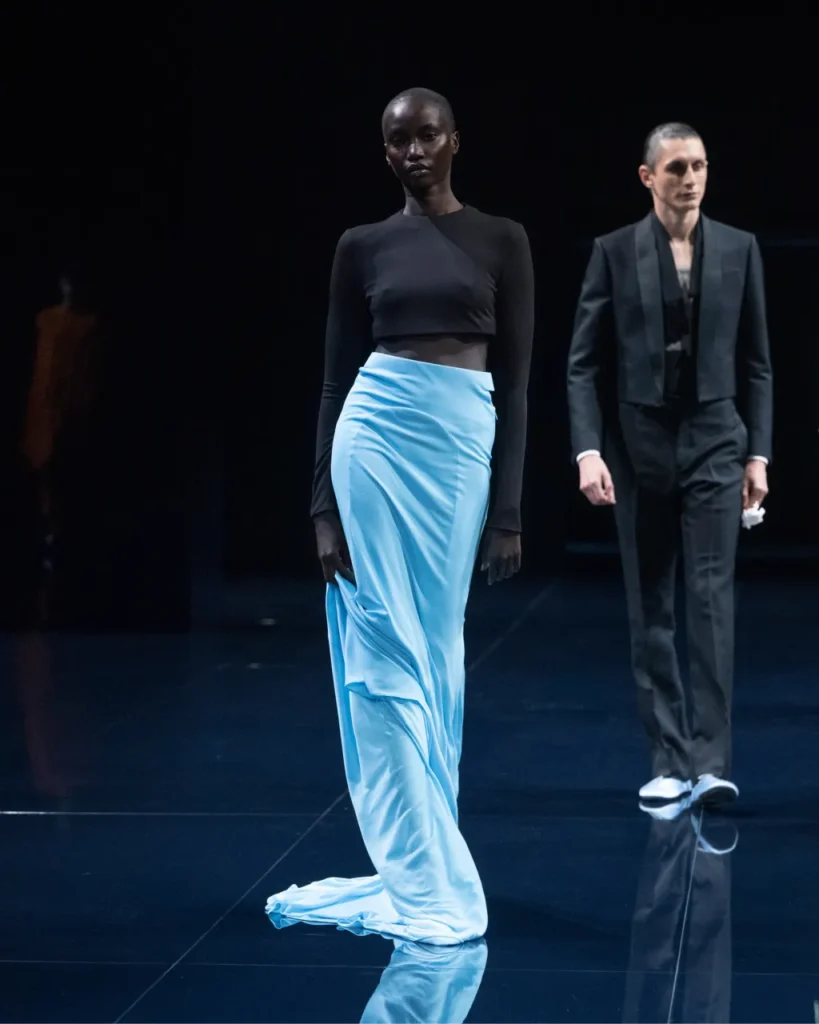
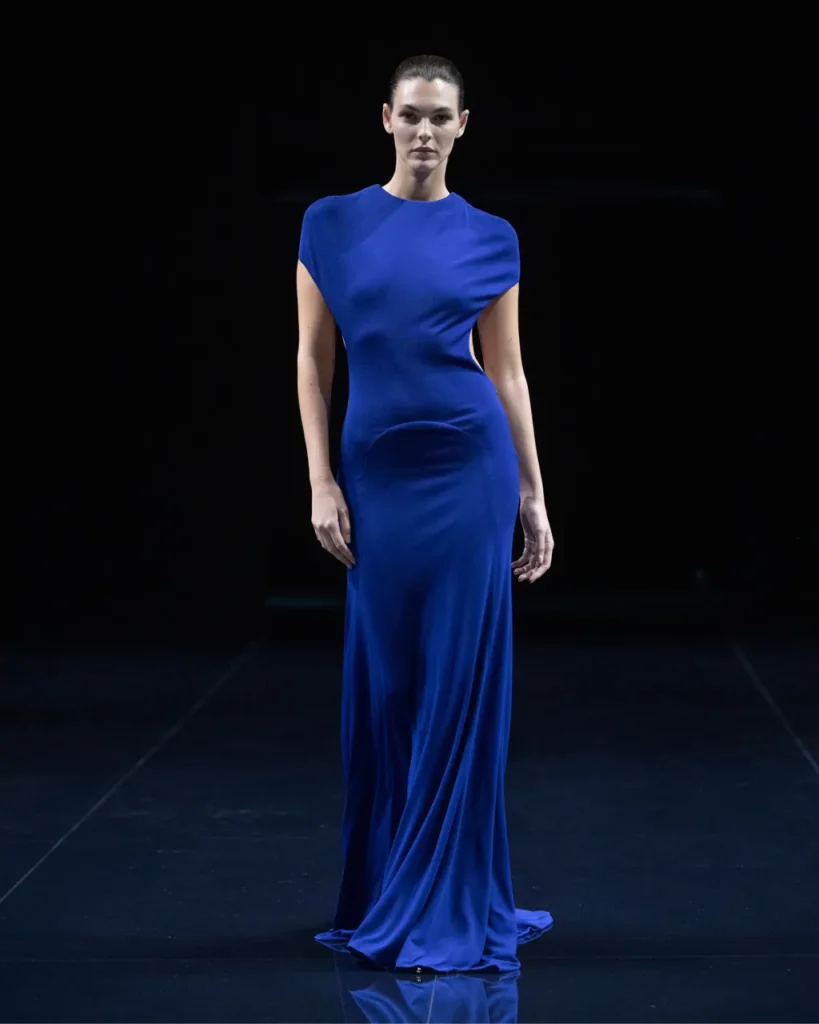
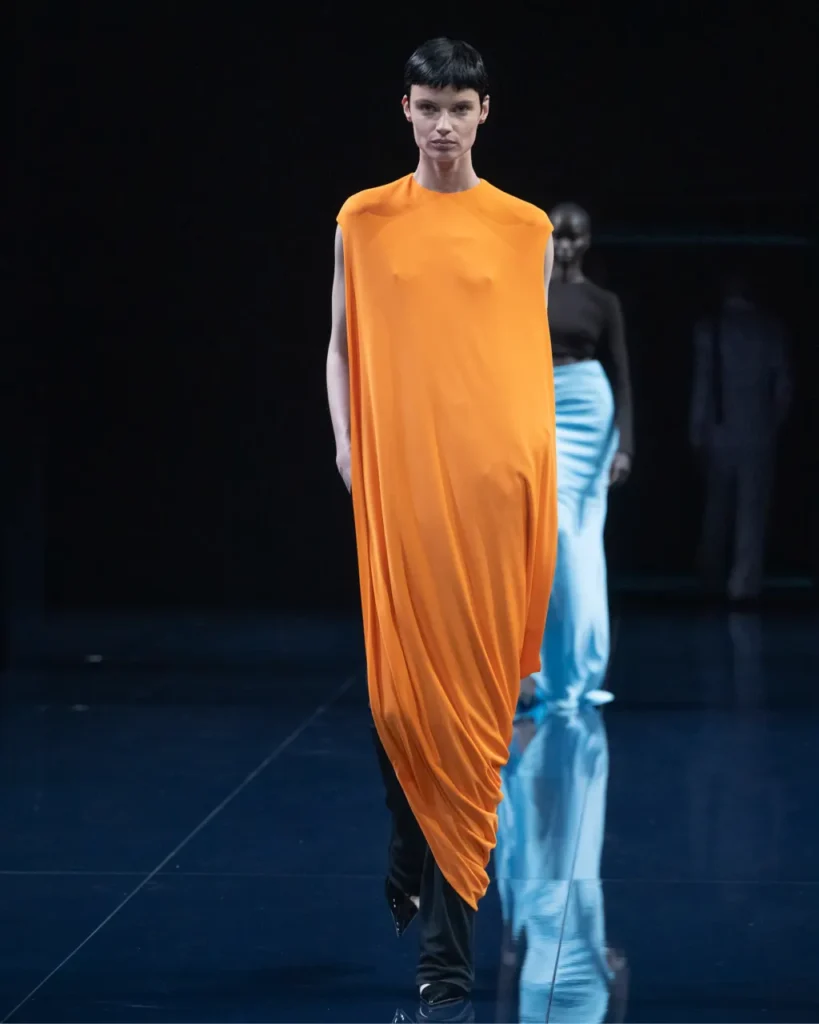
Inspired by midnight swims — described by Ackermann as one of the most “dangerous and sexy things to do” — the collection aims to embody seduction, not the obvious kind, but the hidden, unaware type.
The presence of leather and lace takes care of portraying sensuality — not only embodying seduction but also captivating whoever watches the pieces glide down the runway. Attraction is further emphasized by the vivid colors that characterized the collection, which — when contrasted with the setting — enhanced the garments’ power.
This collection not only brought something new but also preserved the intrinsic values of Tom Ford, creating a beautiful thread between the brand’s origins and its new era.
Week’s Takeaways
When you think of Paris, you think of elegance — which is often mistakenly confused with “quiet luxury” or “modesty.” This season proved those beliefs wrong. Elegance is presence, transparency, and — more than ever — authenticity.
It was refreshing to see established brands like Dior and Chanel — which have defined elegance since their creation — take a new creative direction that still celebrates the essence of the houses while bringing them into the modern day, where beauty standards and values are no longer what they once were.
On a digital level, Paris’s social media coverage generated $500.3 million in earned media value — the highest among all fashion weeks — once again proving the enormity of French fashion and its global influence.