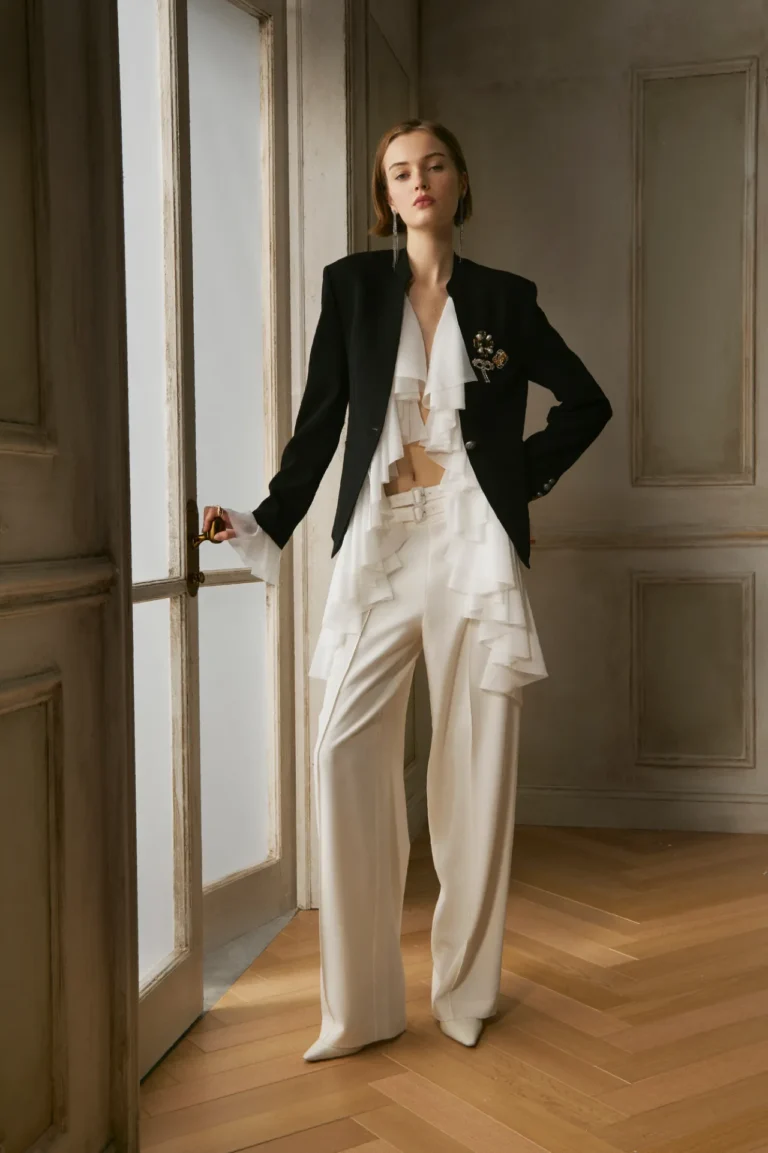
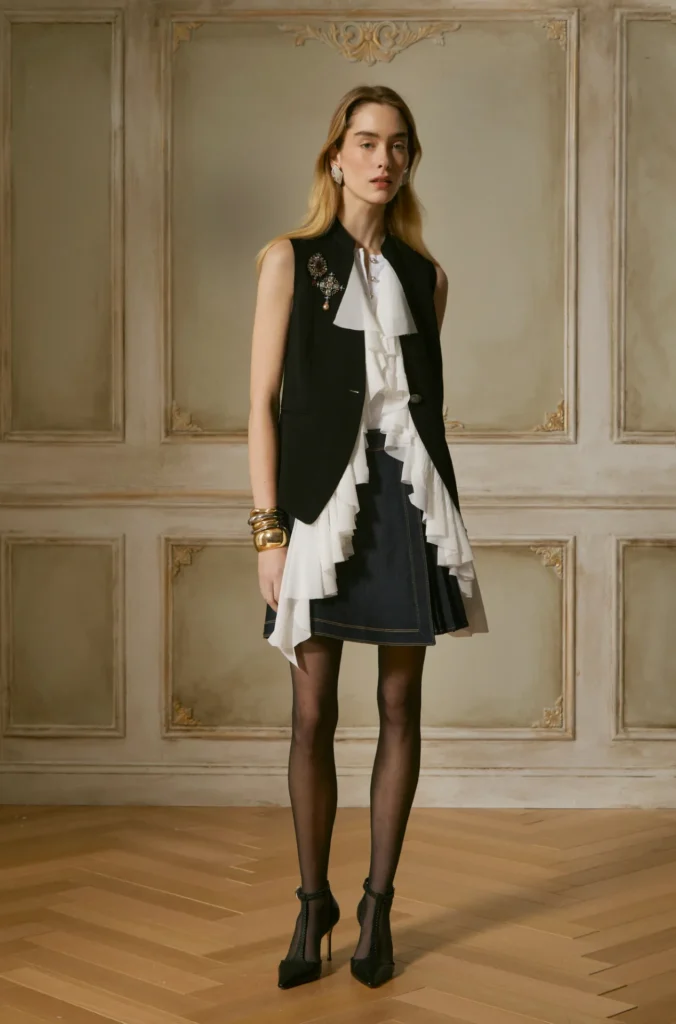
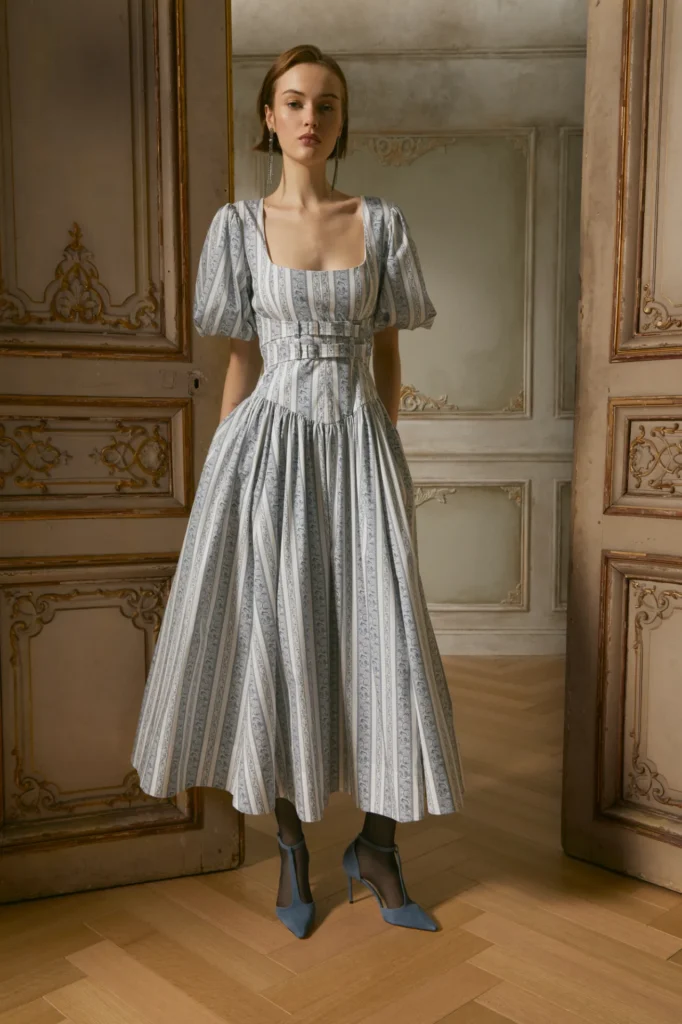
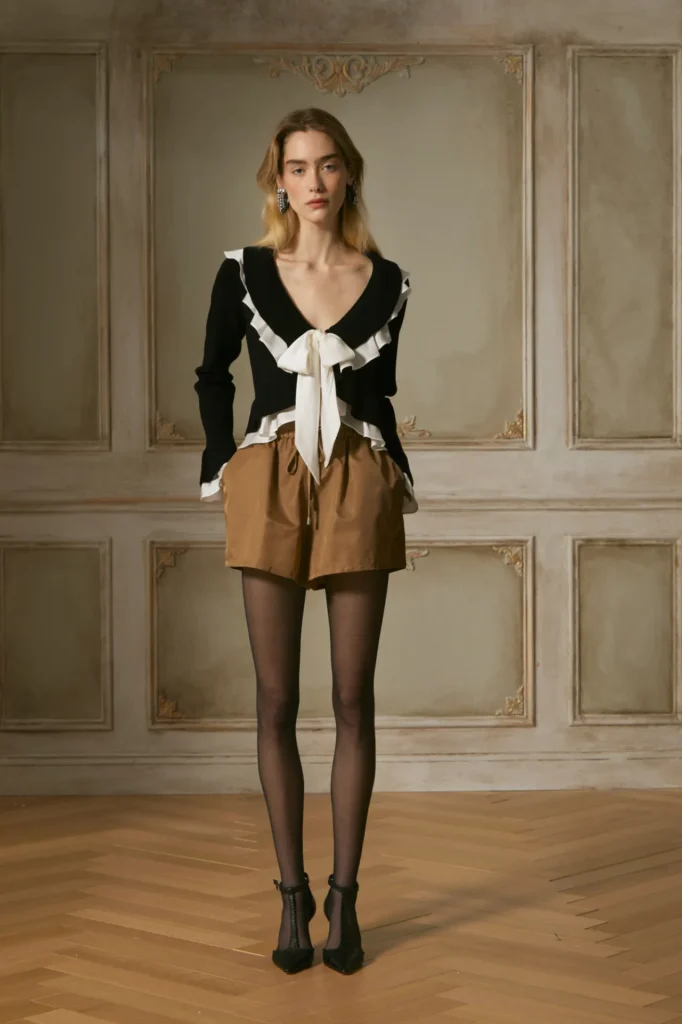
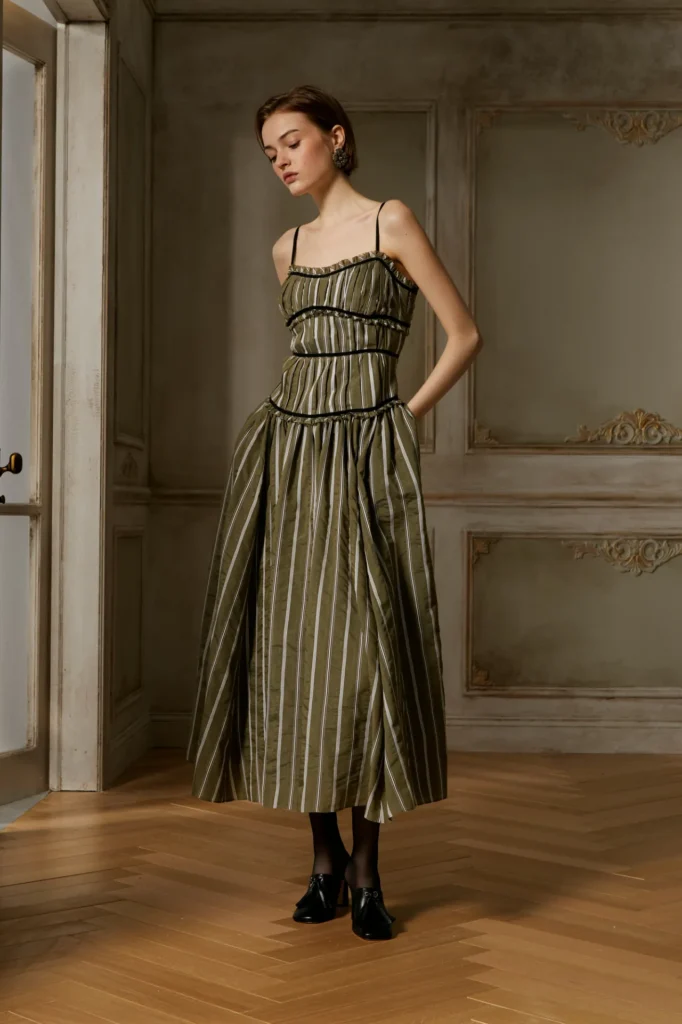
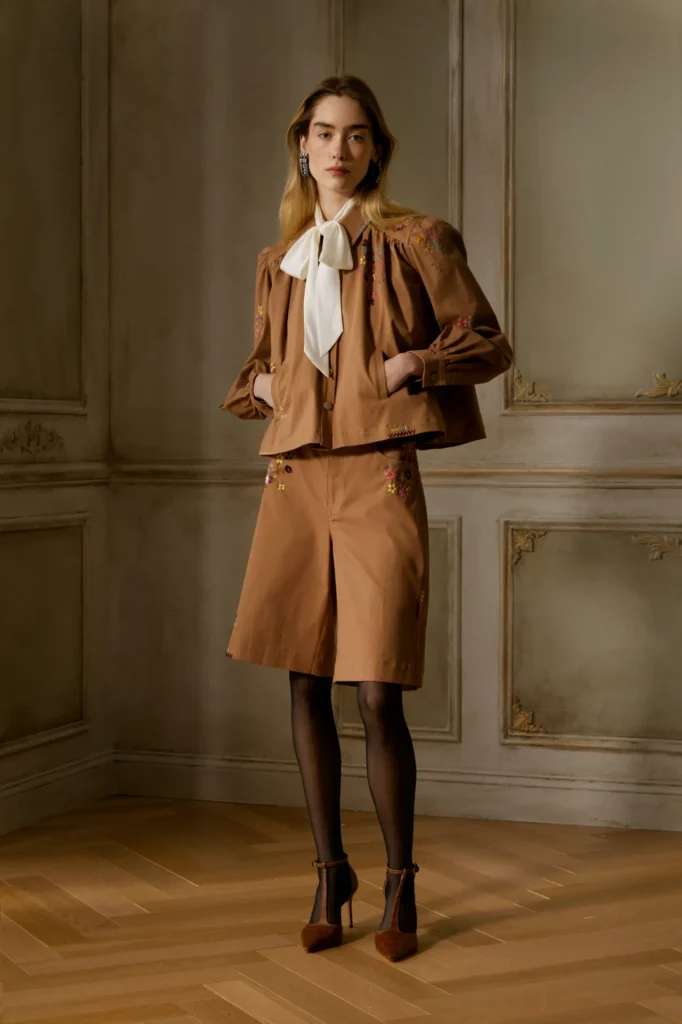
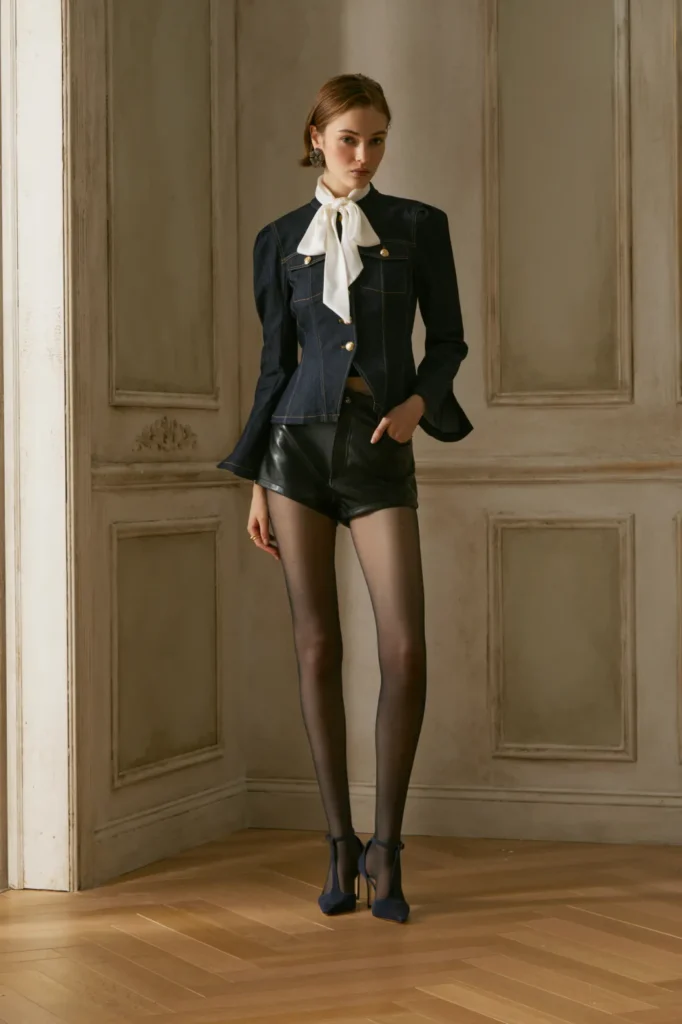
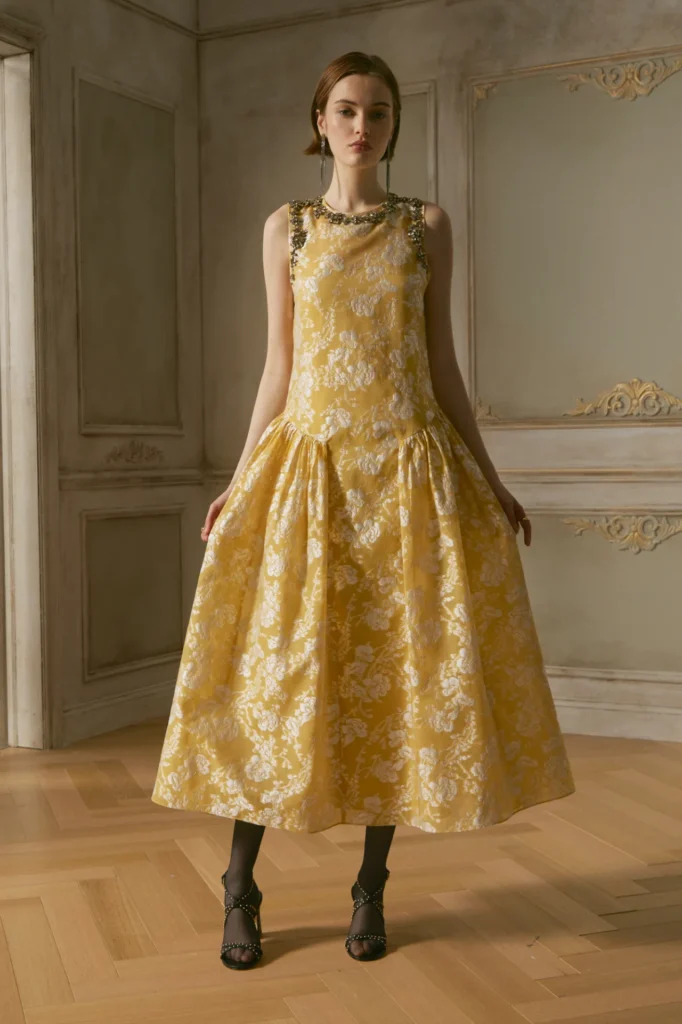
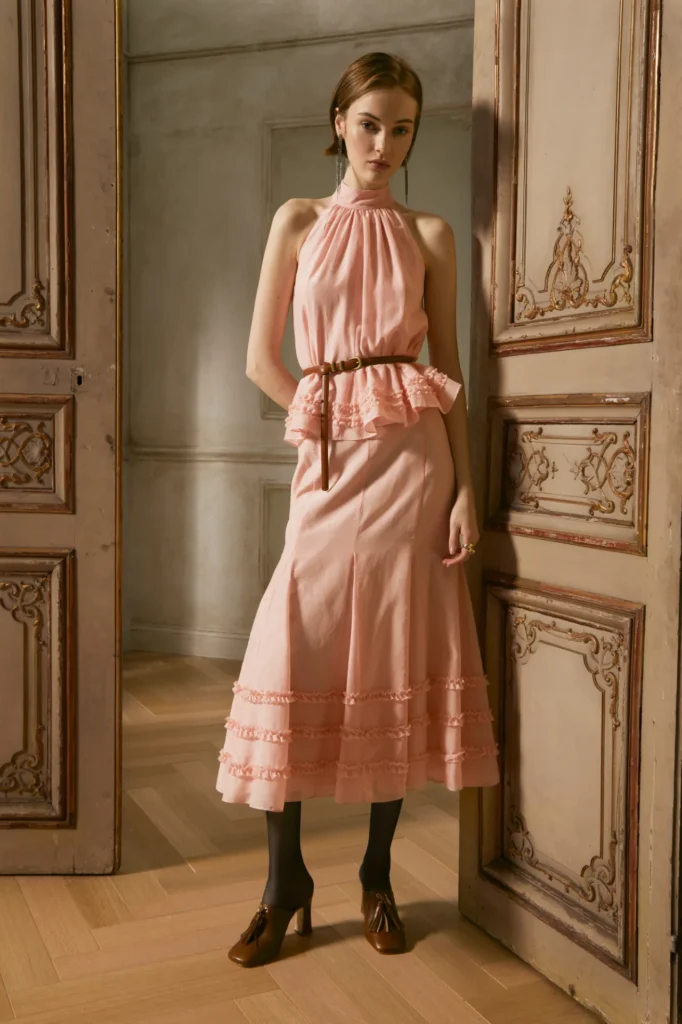
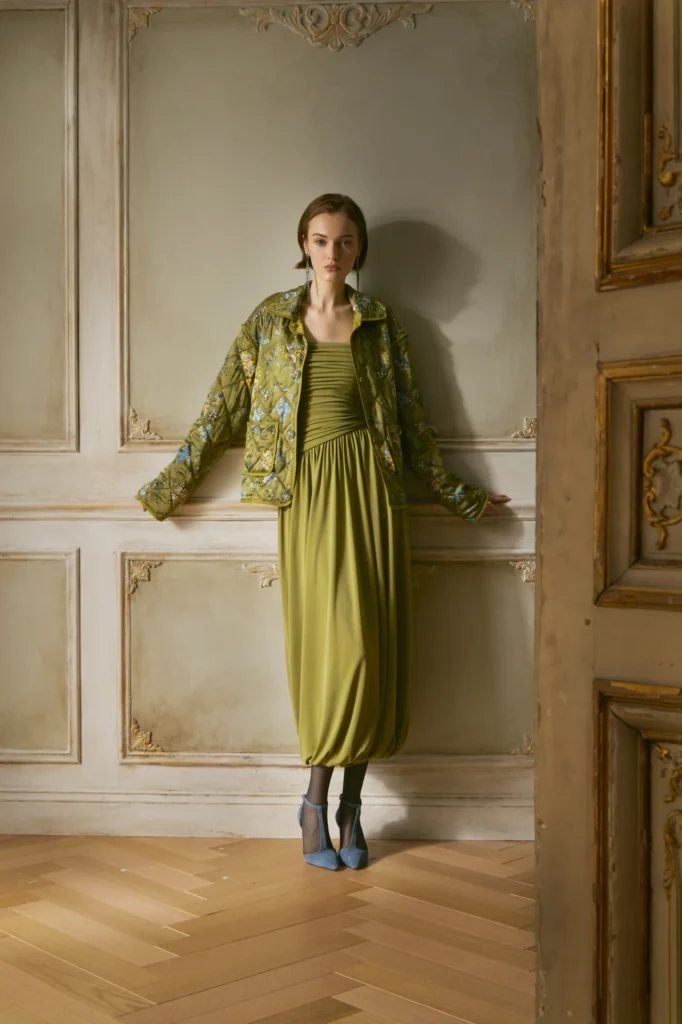
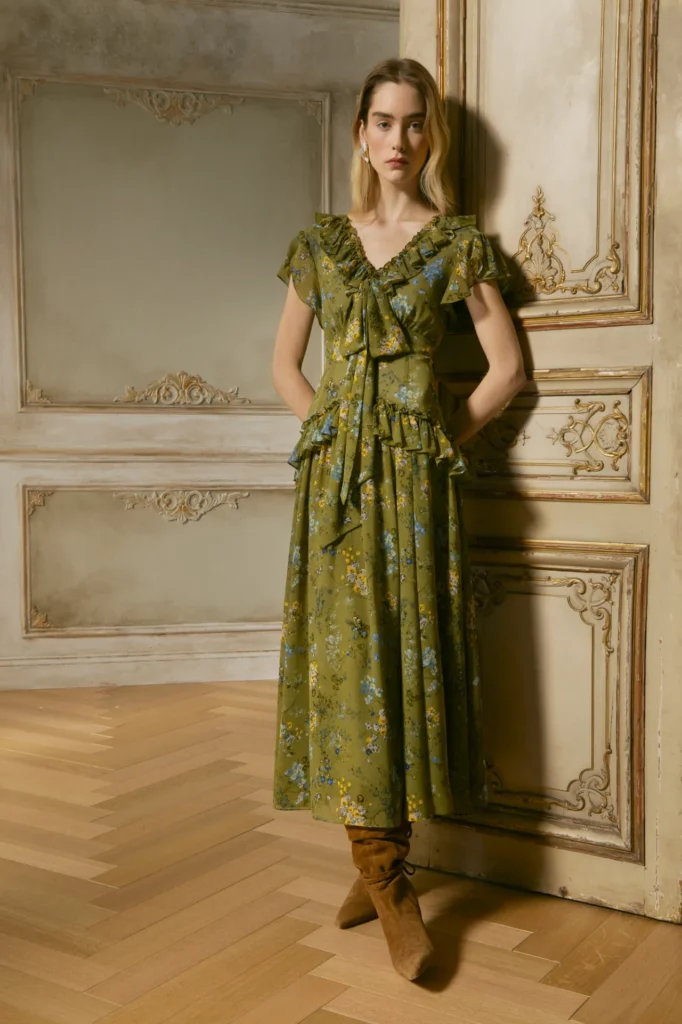
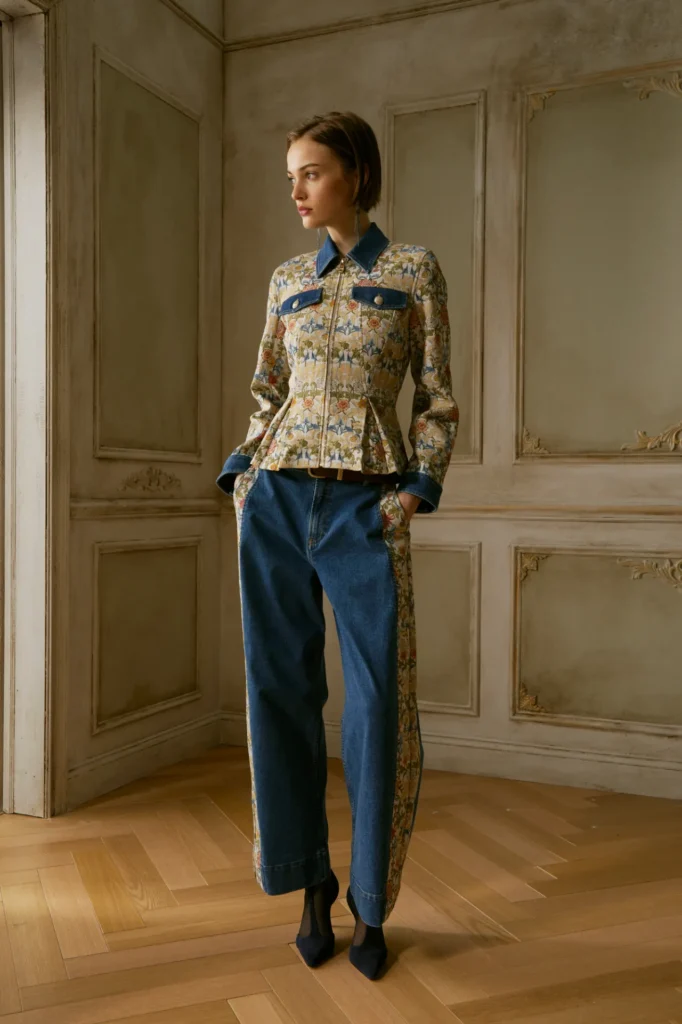
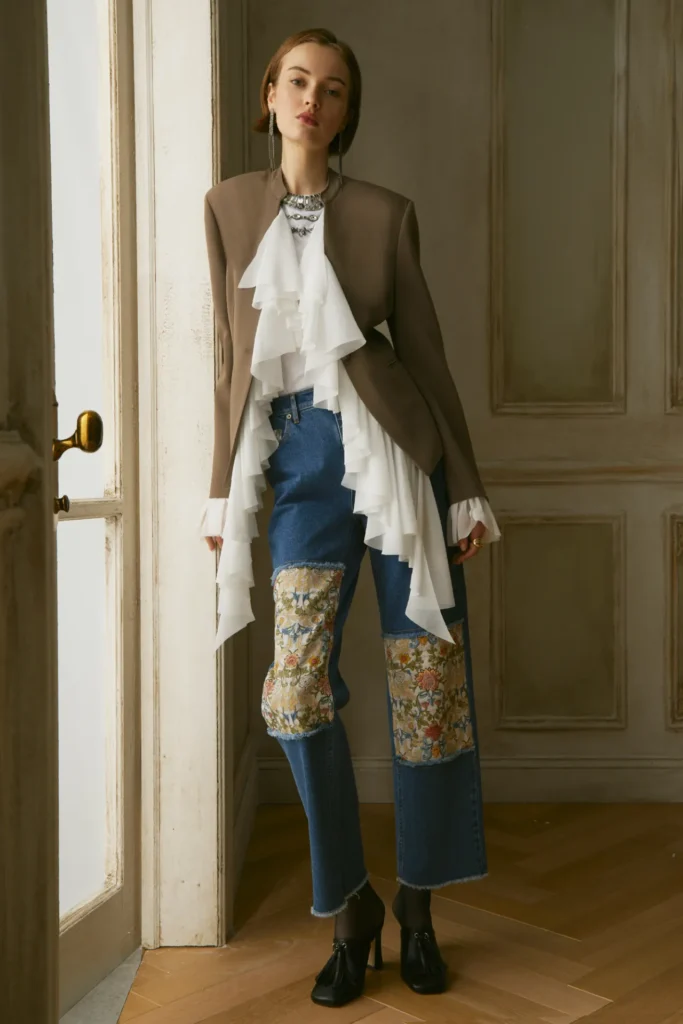
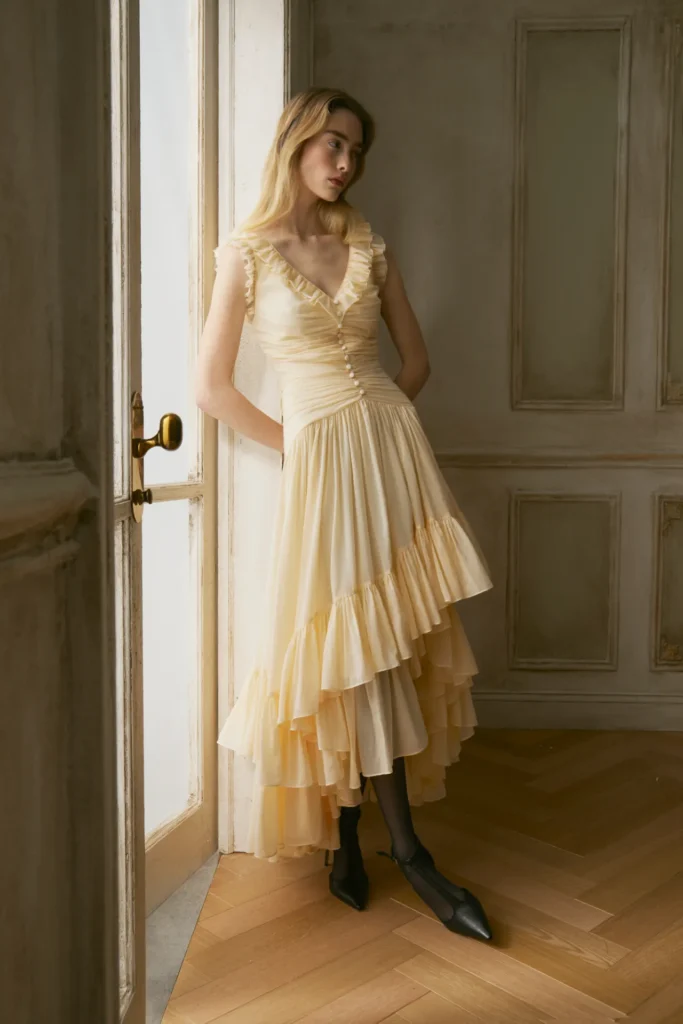
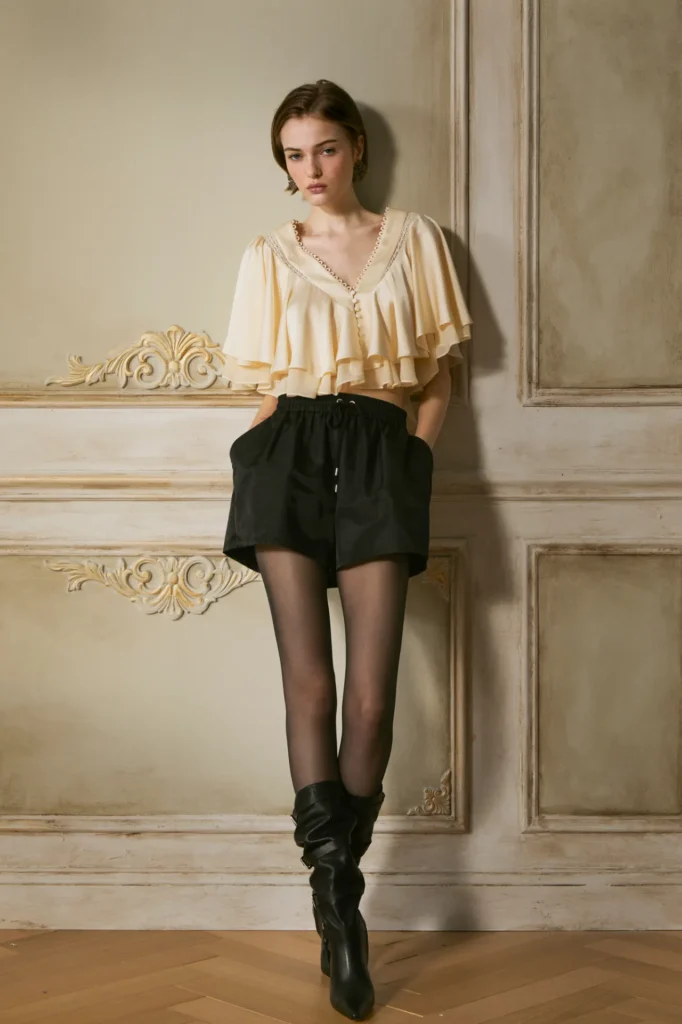
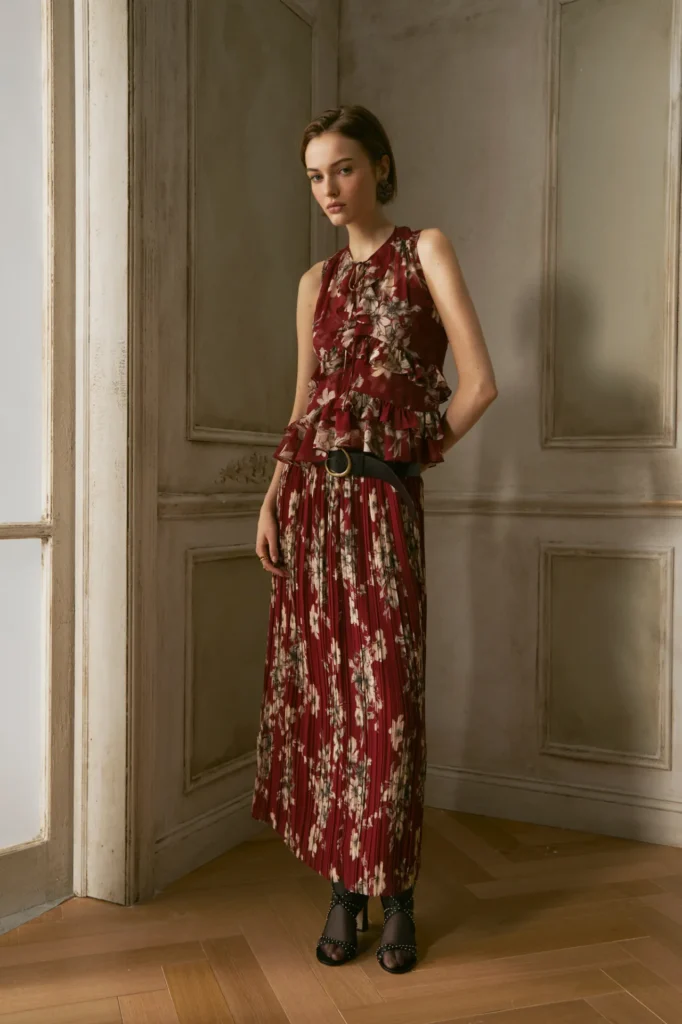
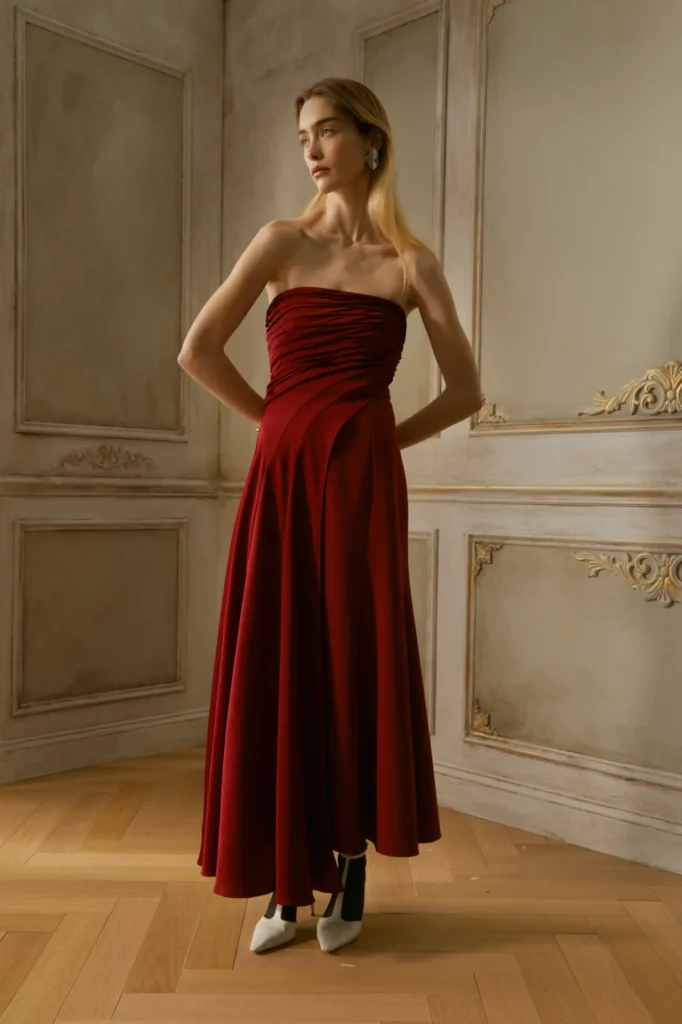
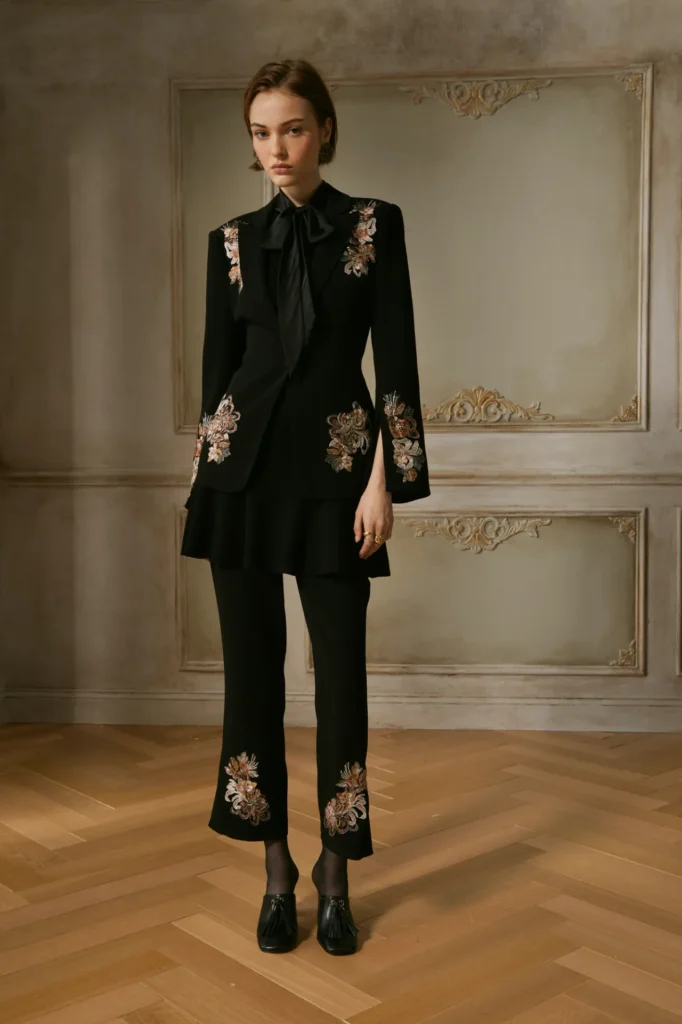
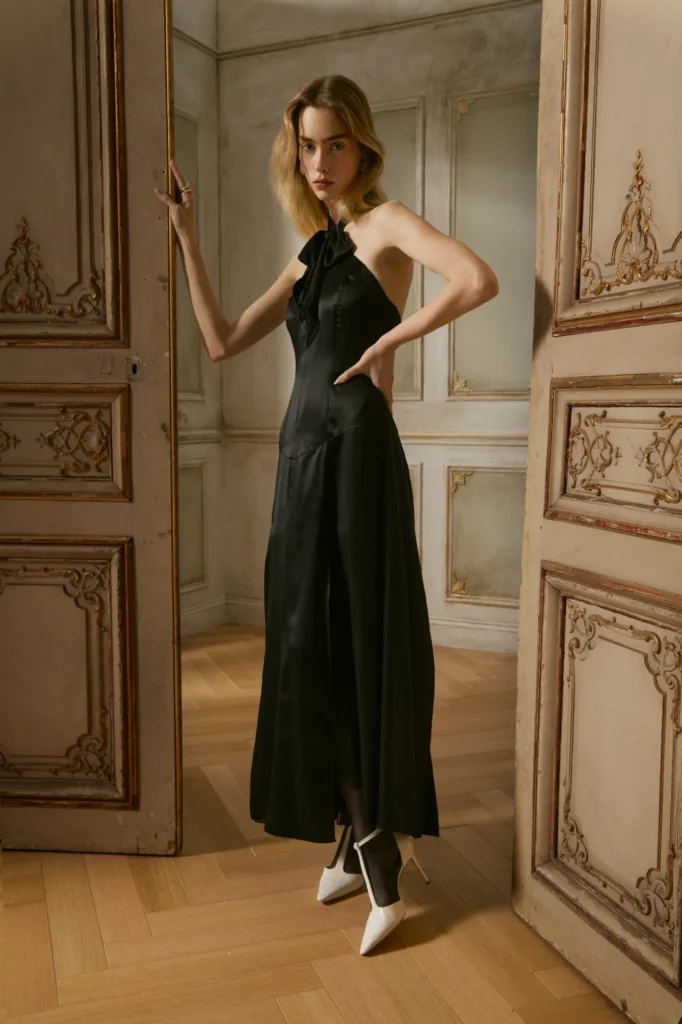
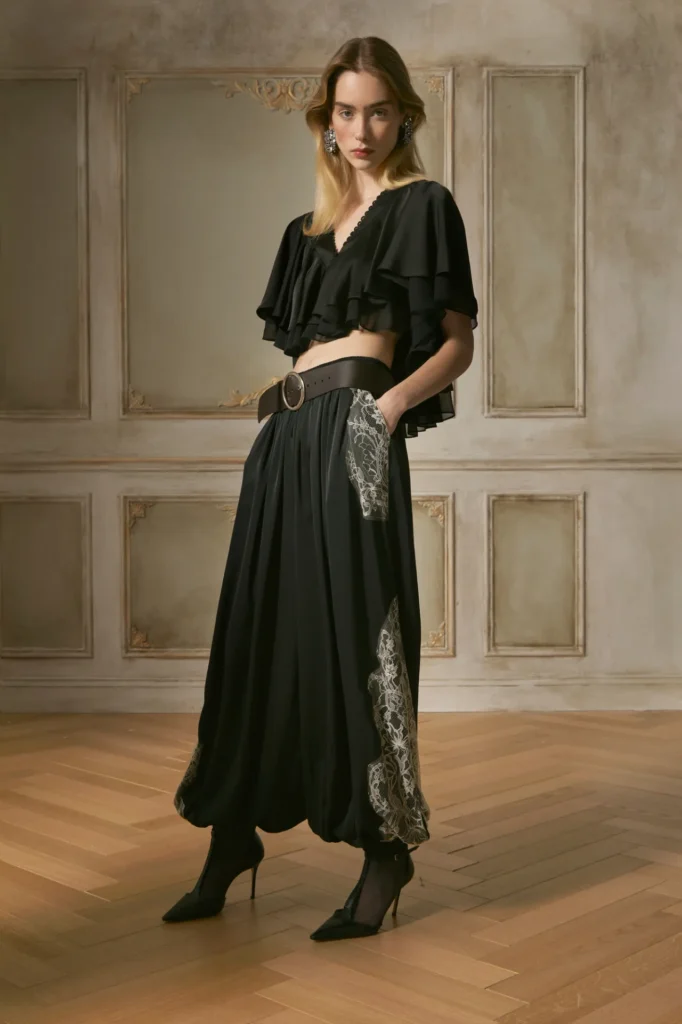
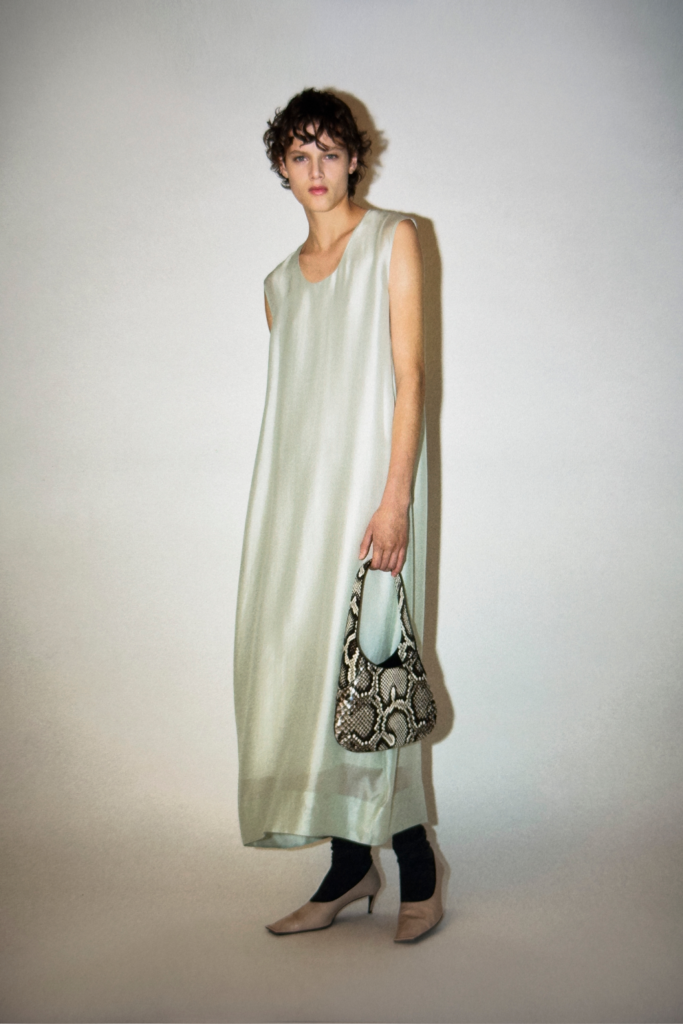
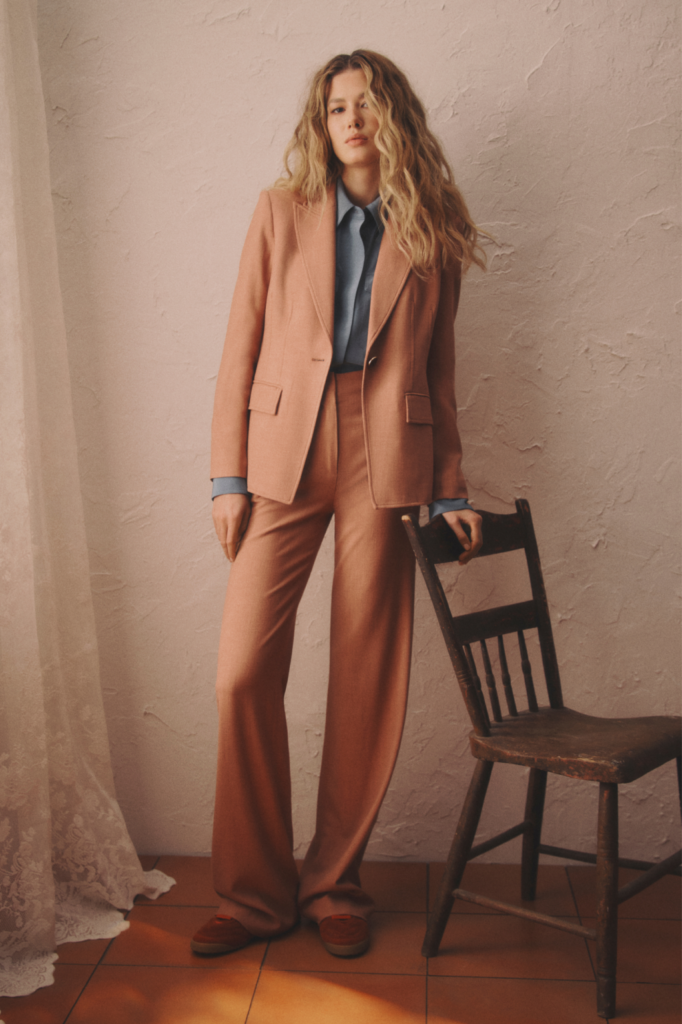
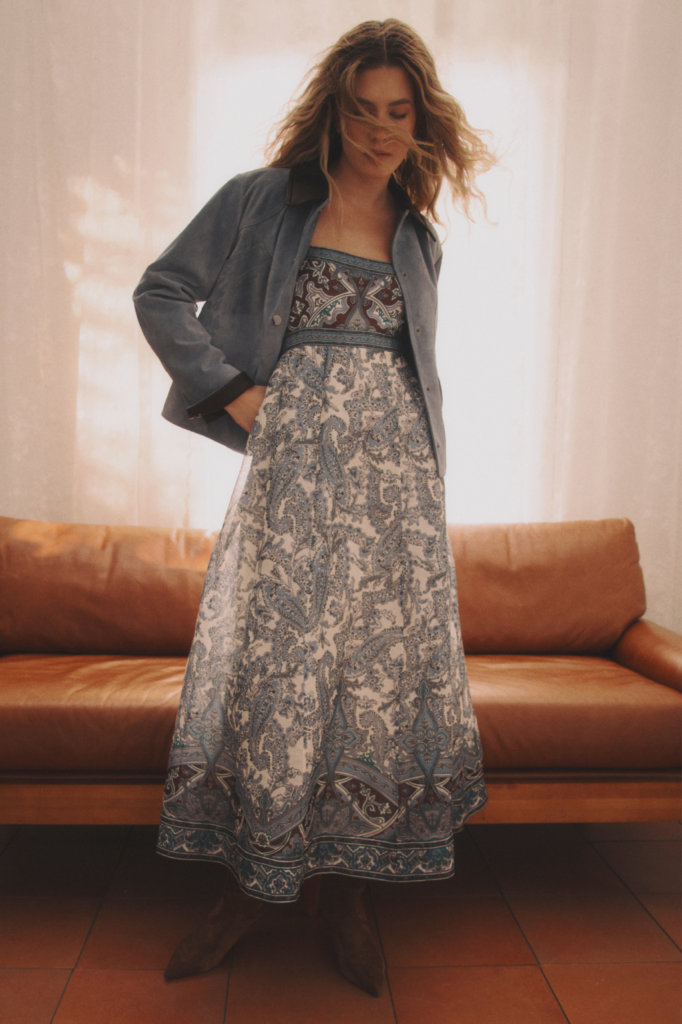
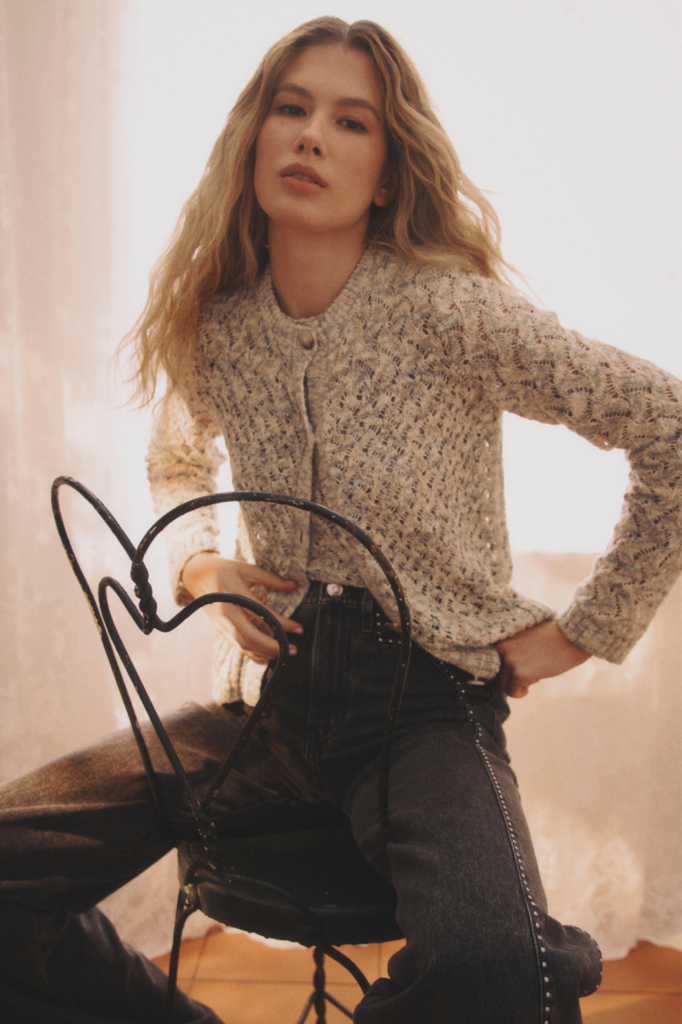
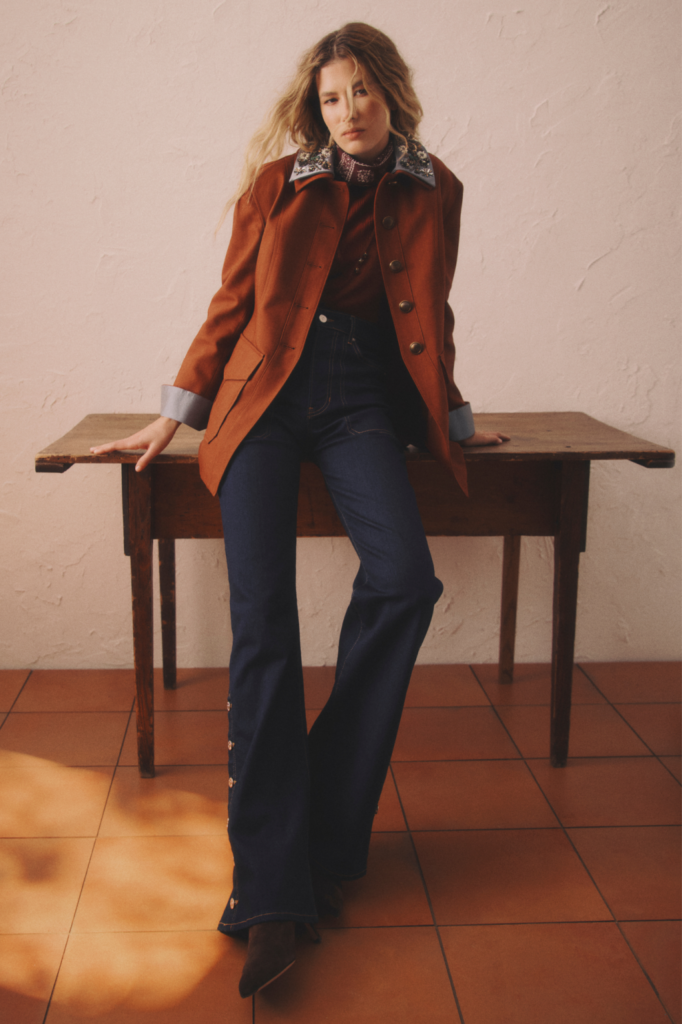
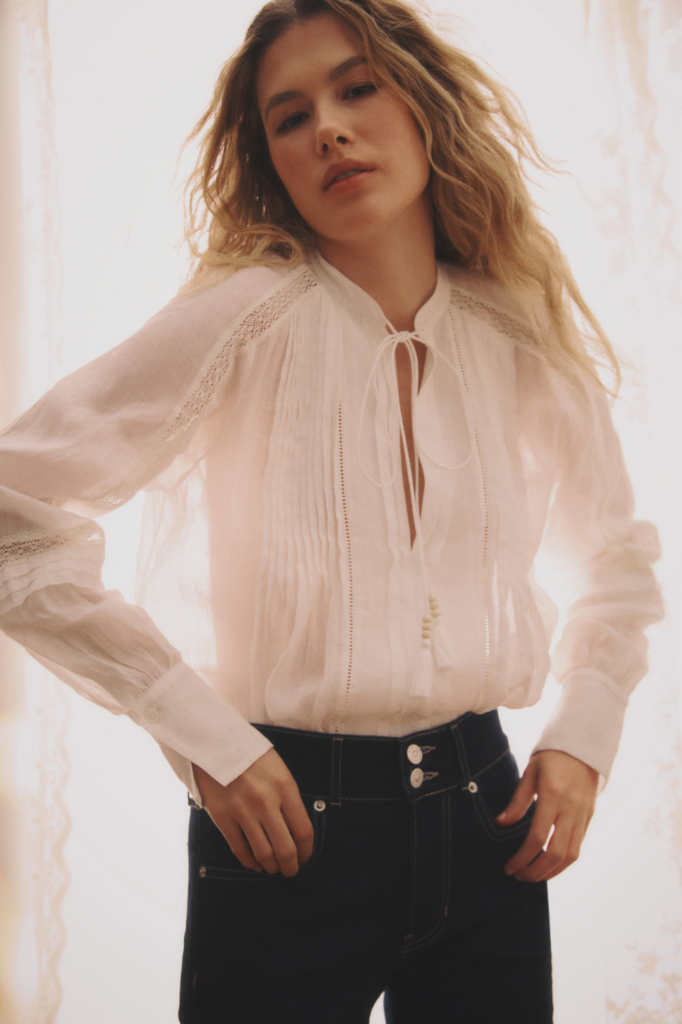
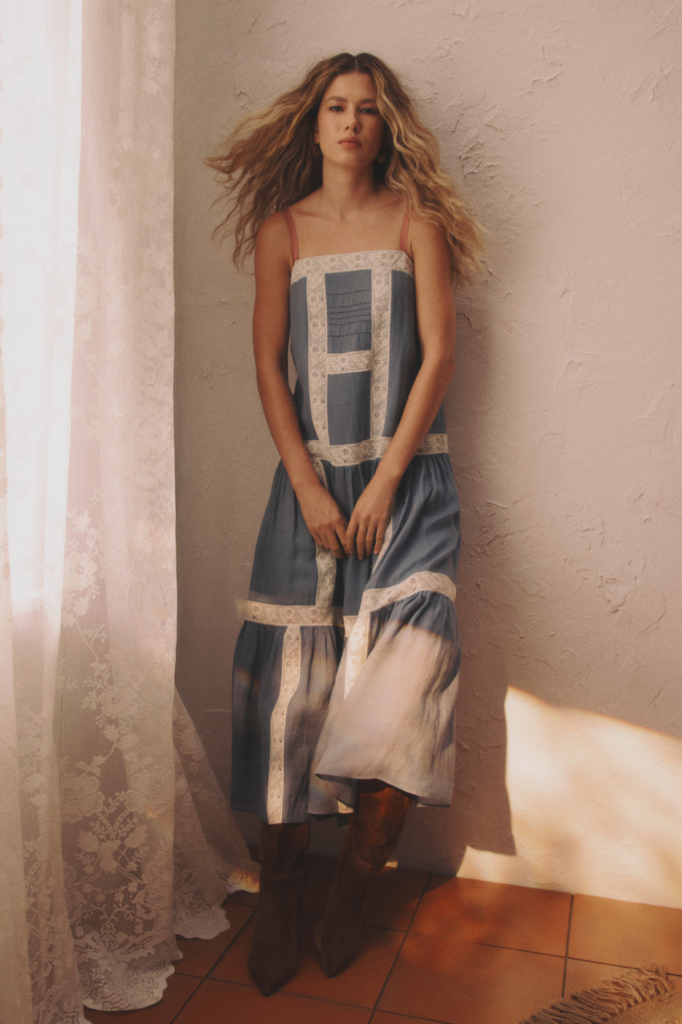
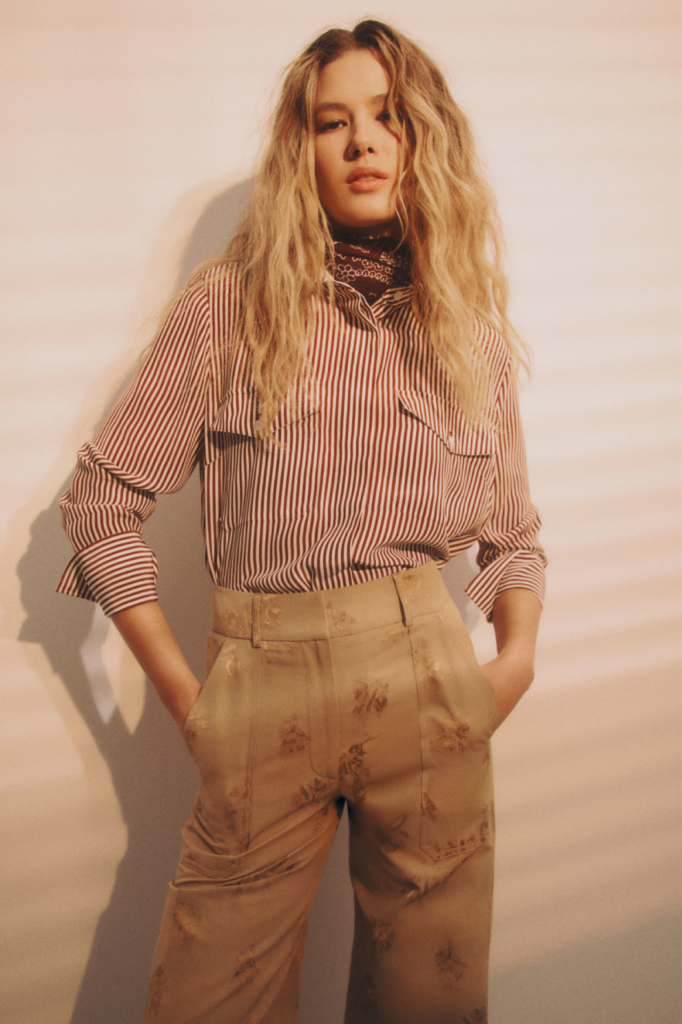
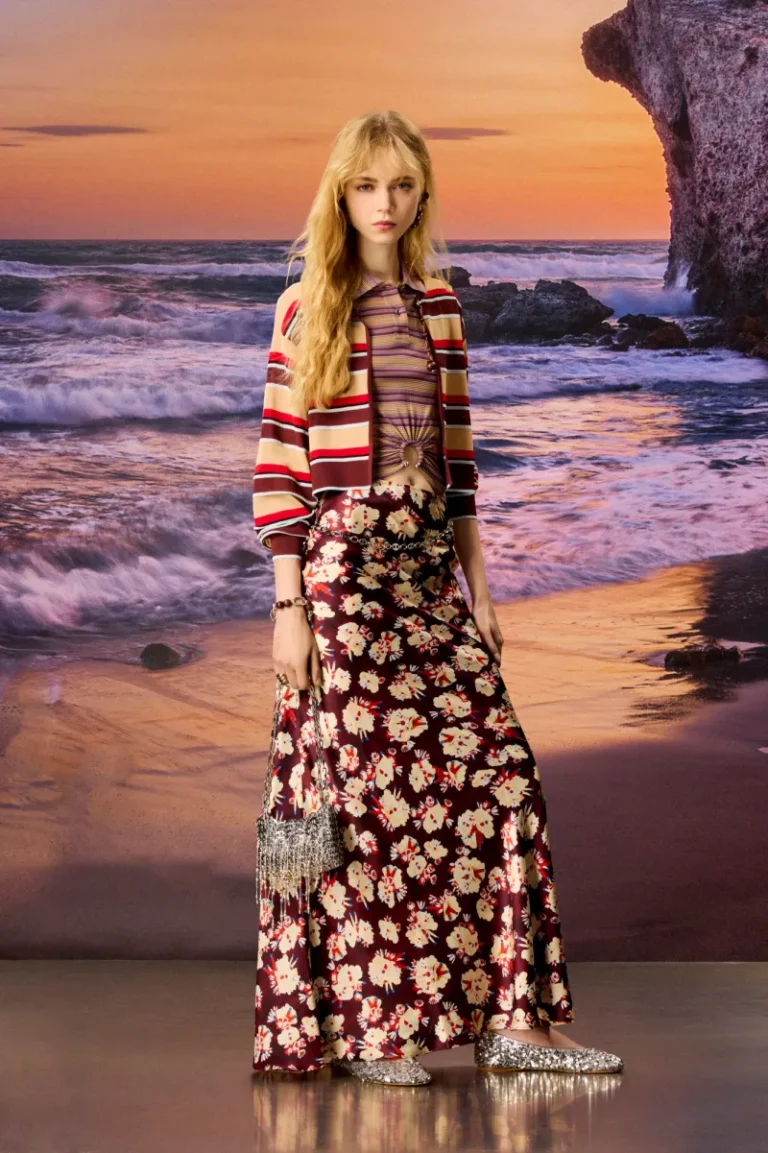
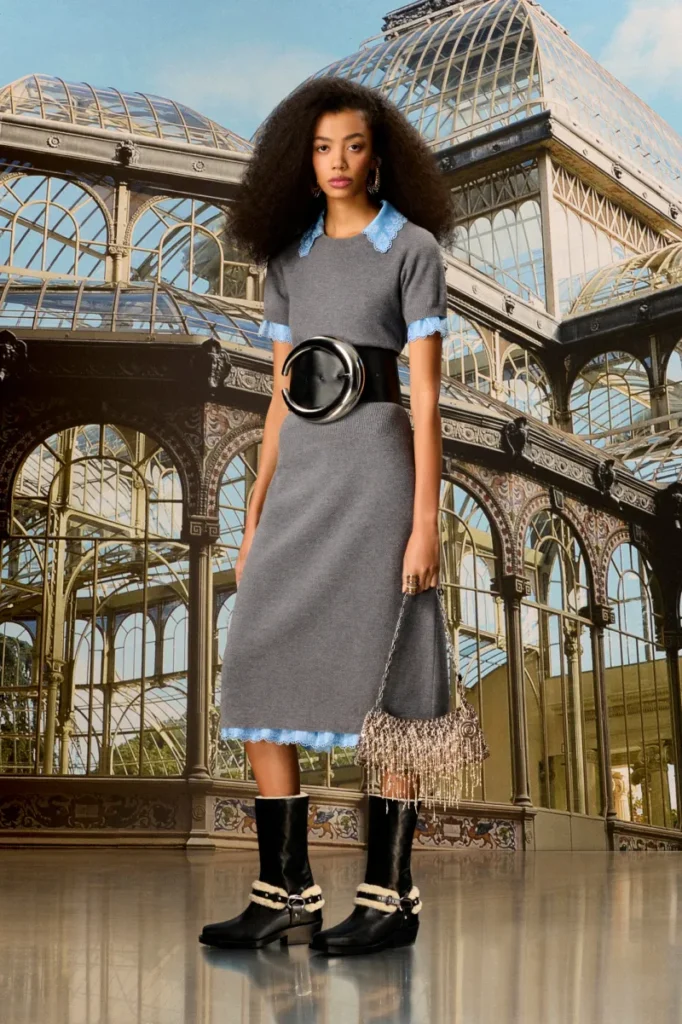
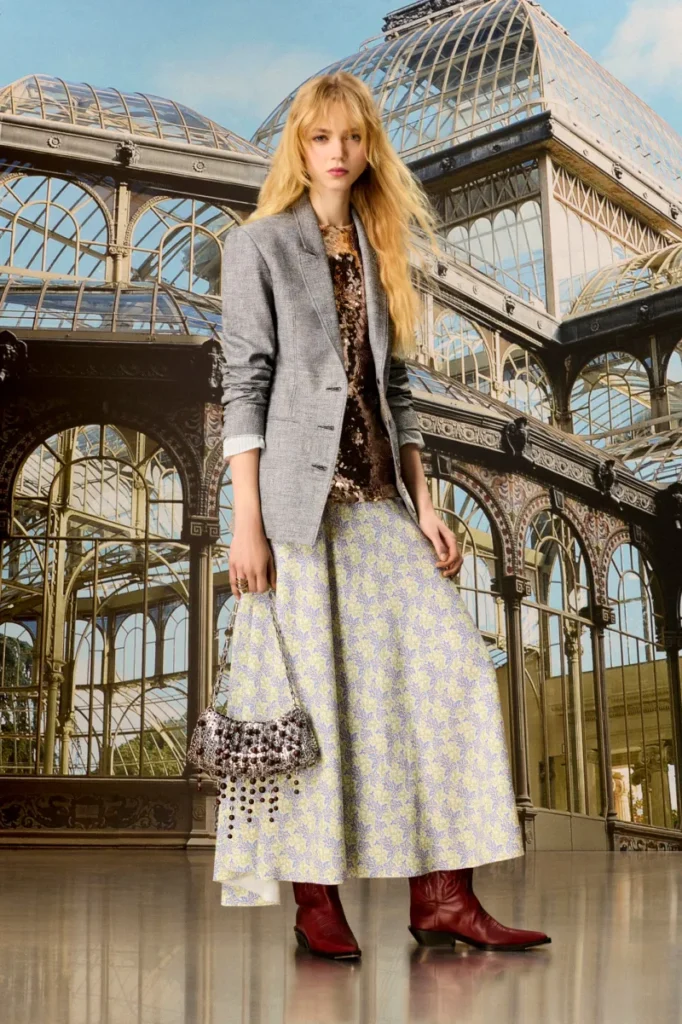
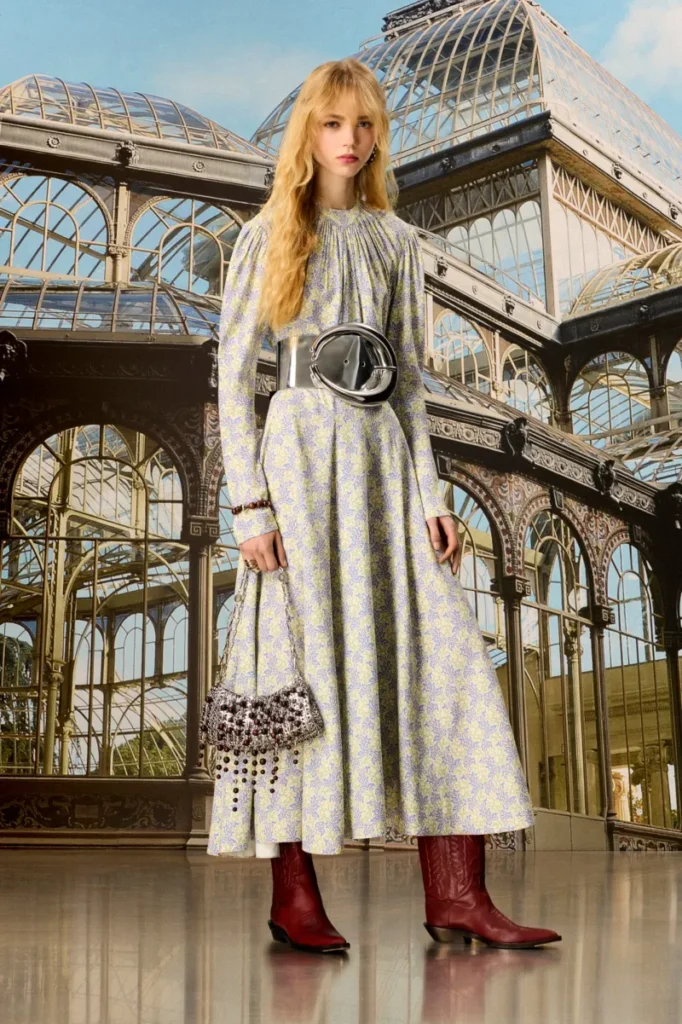
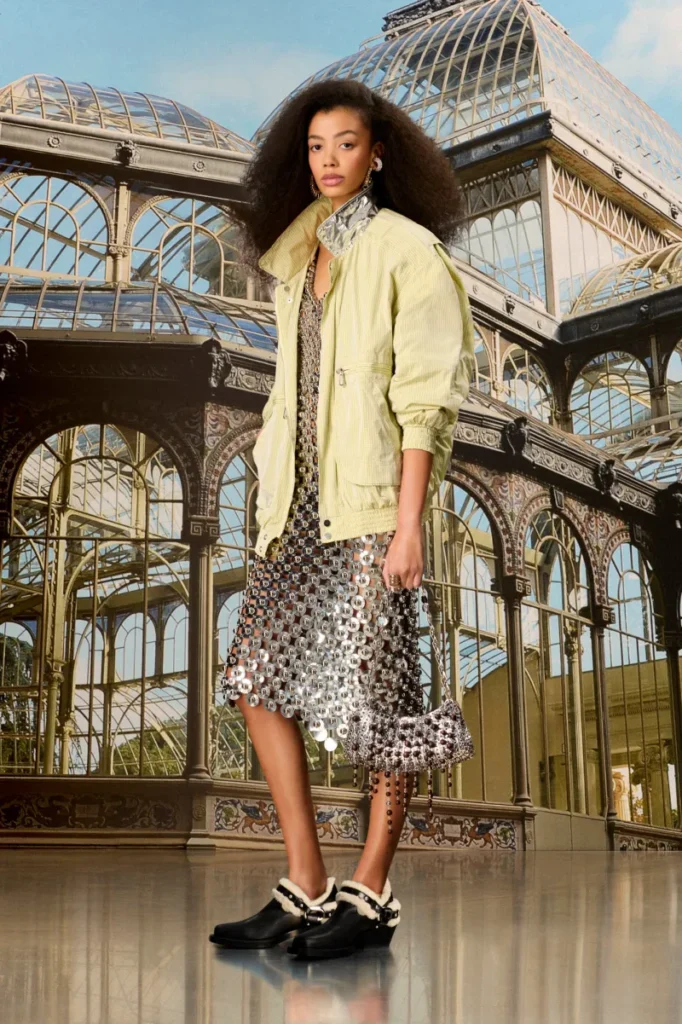
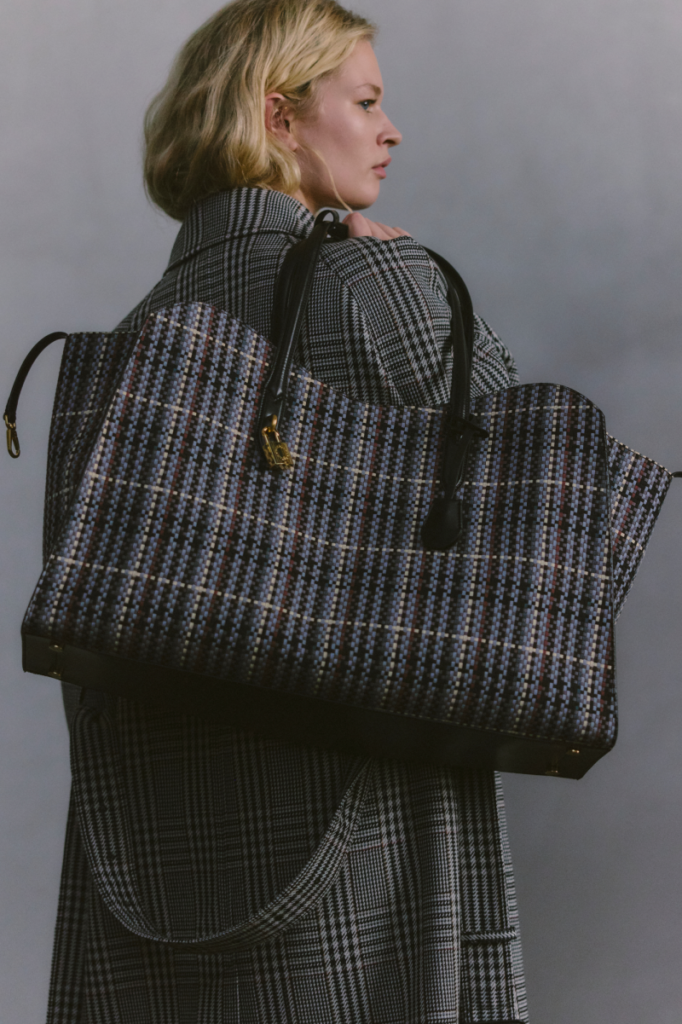
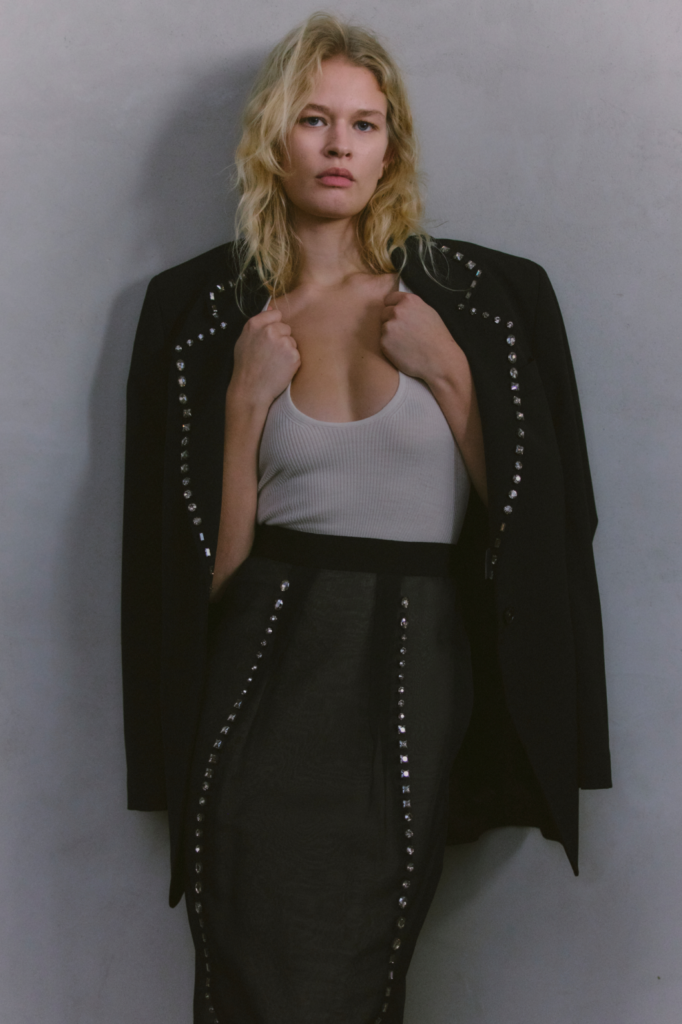
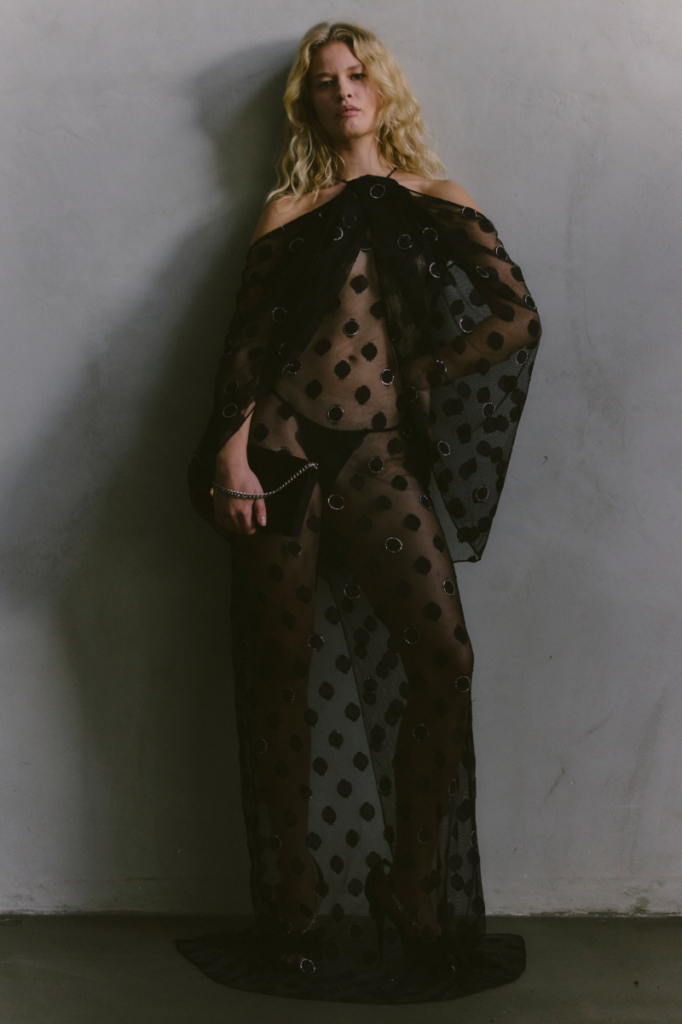
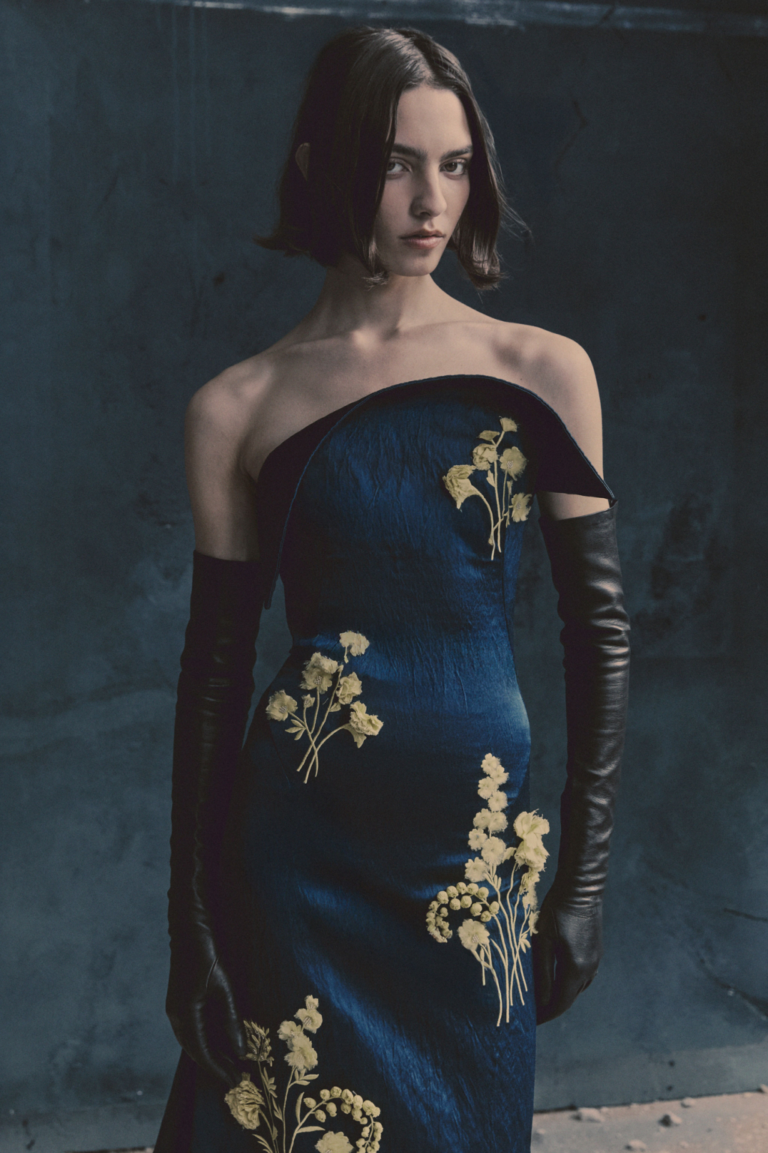
For Pre-Fall 2026, Jane Siskin turns to an imagined Parisian wardrobe—one shaped by the ease of the French countryside, the graphic cool of ’60s Françoise Hardy, and a flash of Jimi Hendrix’s eccentric edge. The result is a confident remix of the signatures that have defined Cinq à Sept’s contemporary appeal.
Courtesy of Cinq A Sept
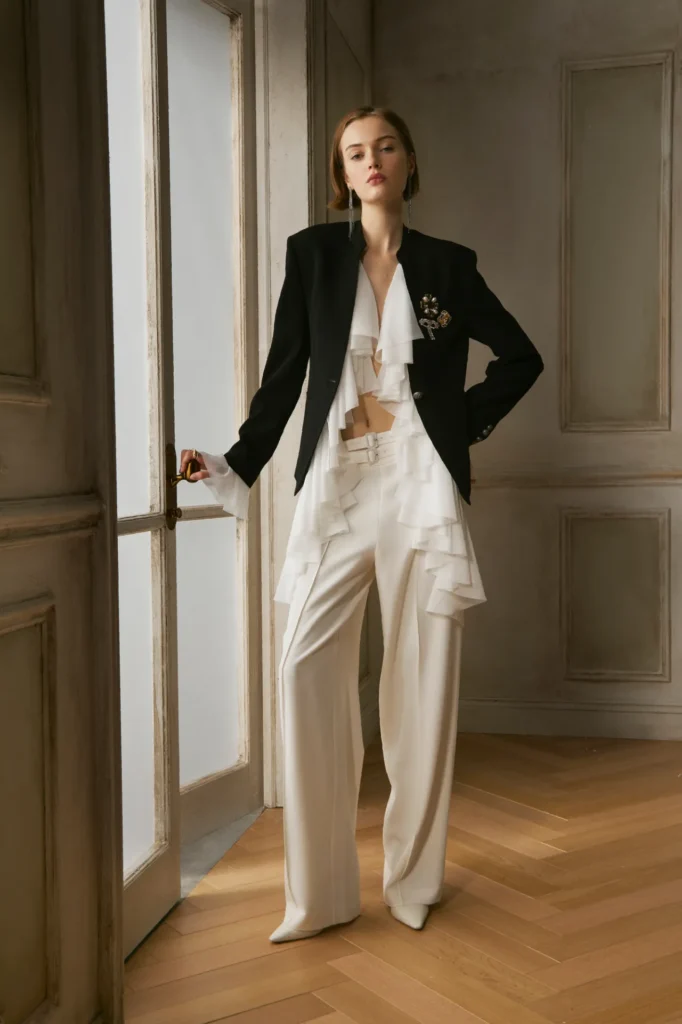
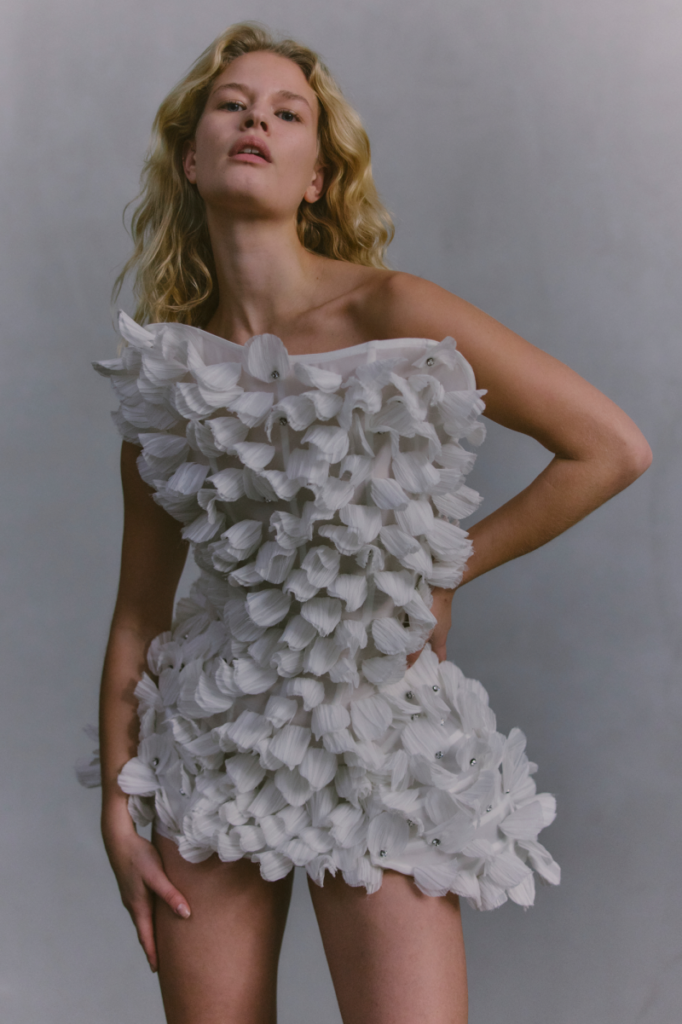
Romantic floral dresses with soft ruffles anchor the collection, updated with reworked archival prints that feel familiar yet refreshed. Alongside them, Siskin expands her focus on statement separates, introducing flared jackets and vests designed as wardrobe investments. Vintage-inspired brooches and ruffled linings add character while keeping styling effortless.
Courtesy of Cinq A Sept
Volume plays a key role. Bubble hems appear in draped viscose skirts—most notably a “double-bubble” silhouette—while harem pants inject a relaxed sensuality. A black satin version with white lace insets stands out, paired with a tiered caplet top that underscores the collection’s emphasis on versatile pieces.
Courtesy of Cinq A Sept
Throughout, Siskin leans into mix-and-match dressing, offering separates that transition easily from day to evening. It’s a collection that feels playful yet practical, rooted in romance but sharpened by attitude—exactly the kind of wardrobe you’d want to discover in a cool Parisian closet.
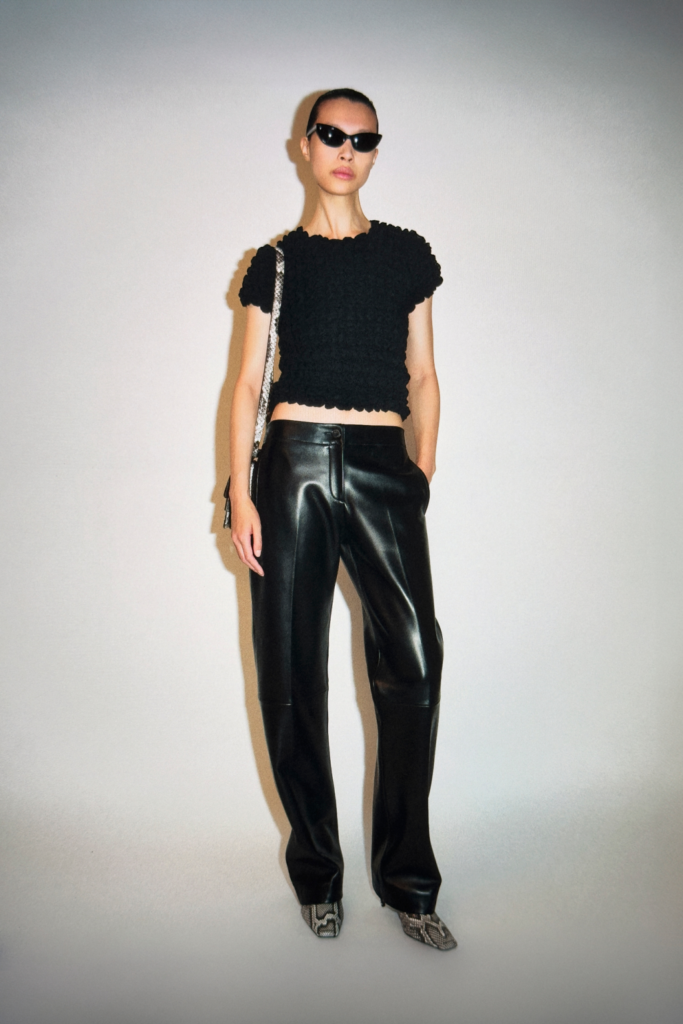
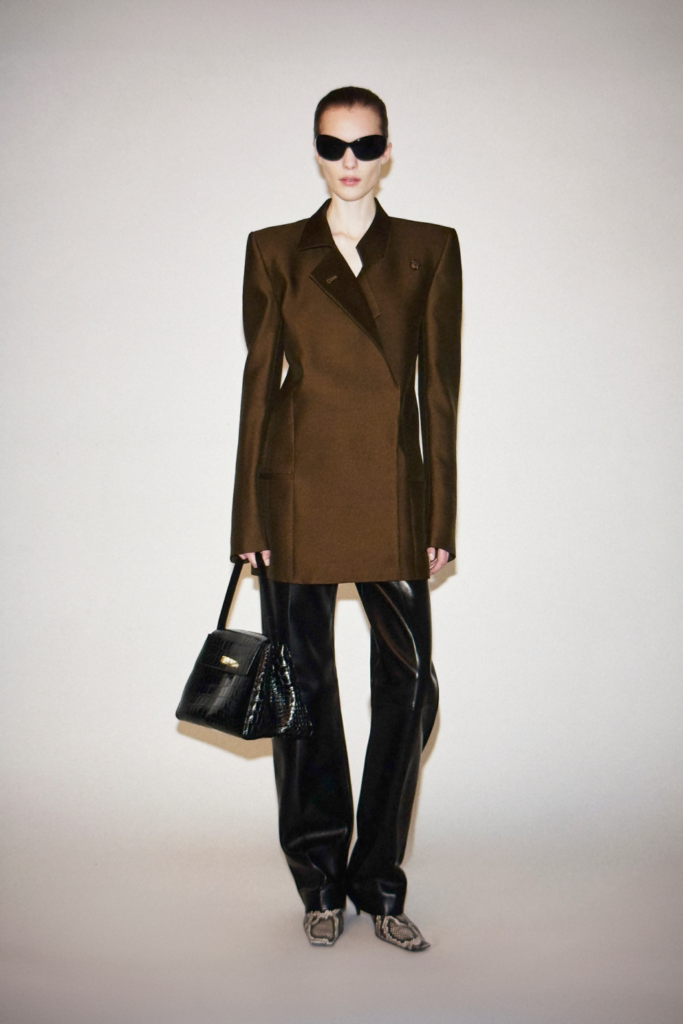
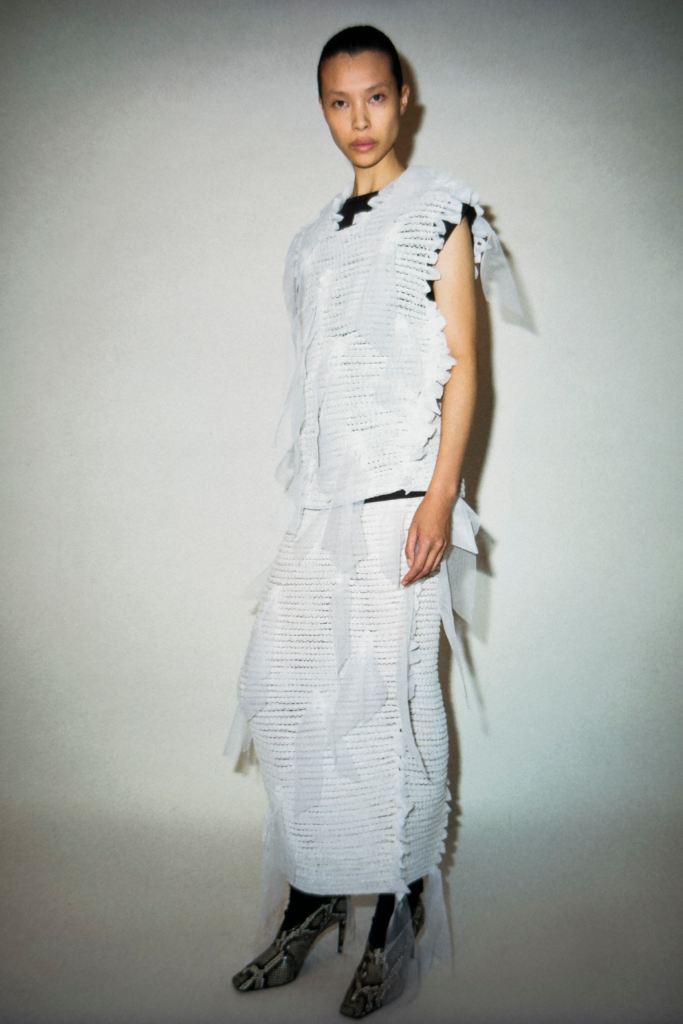
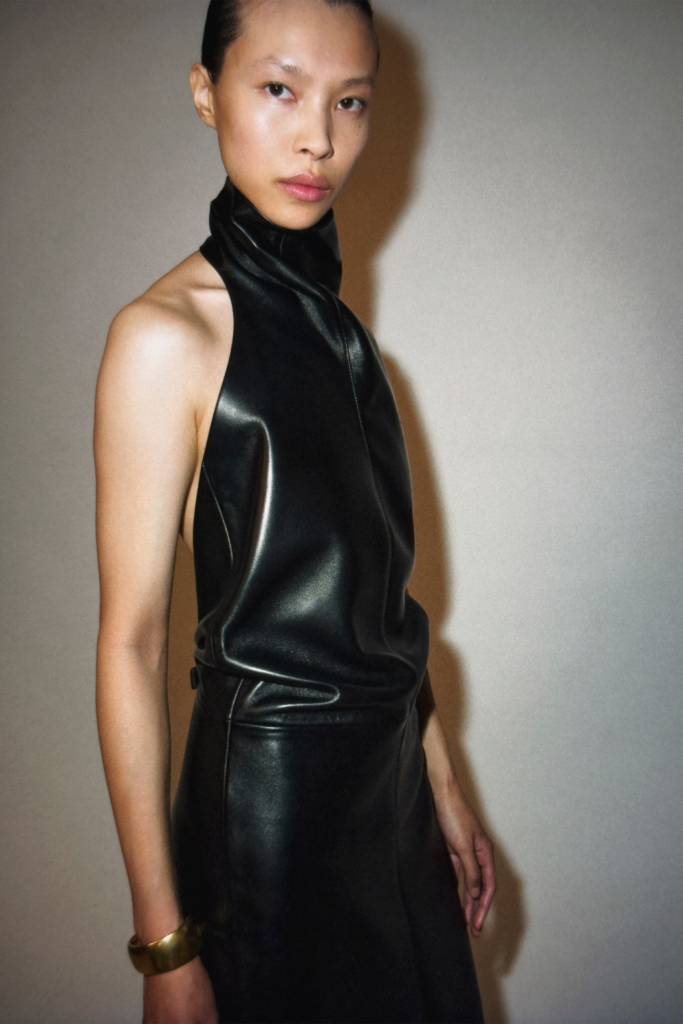
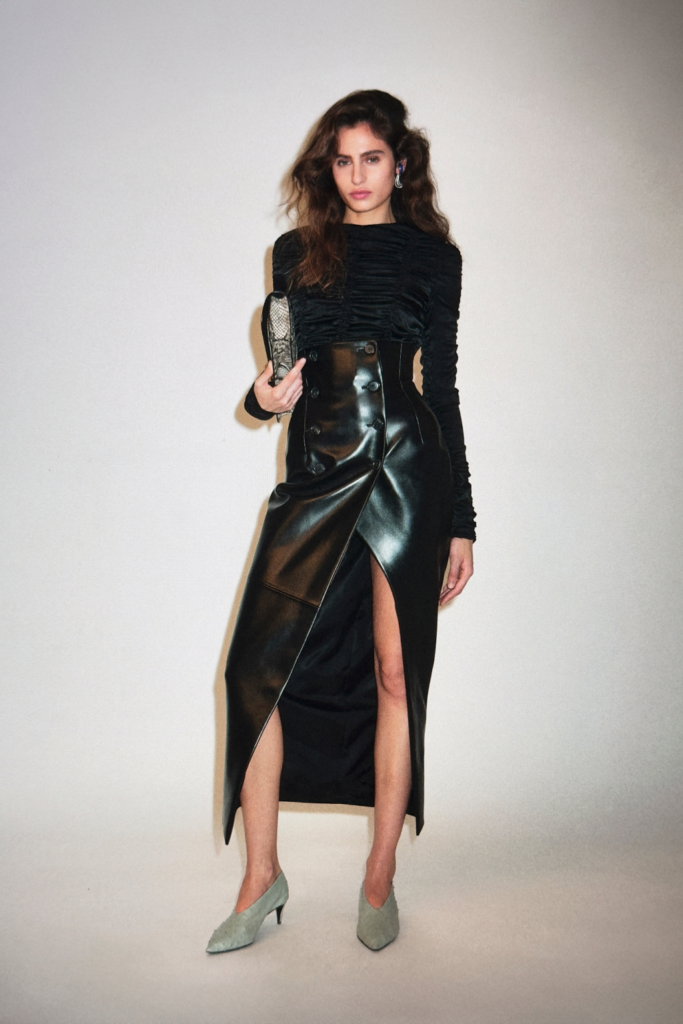
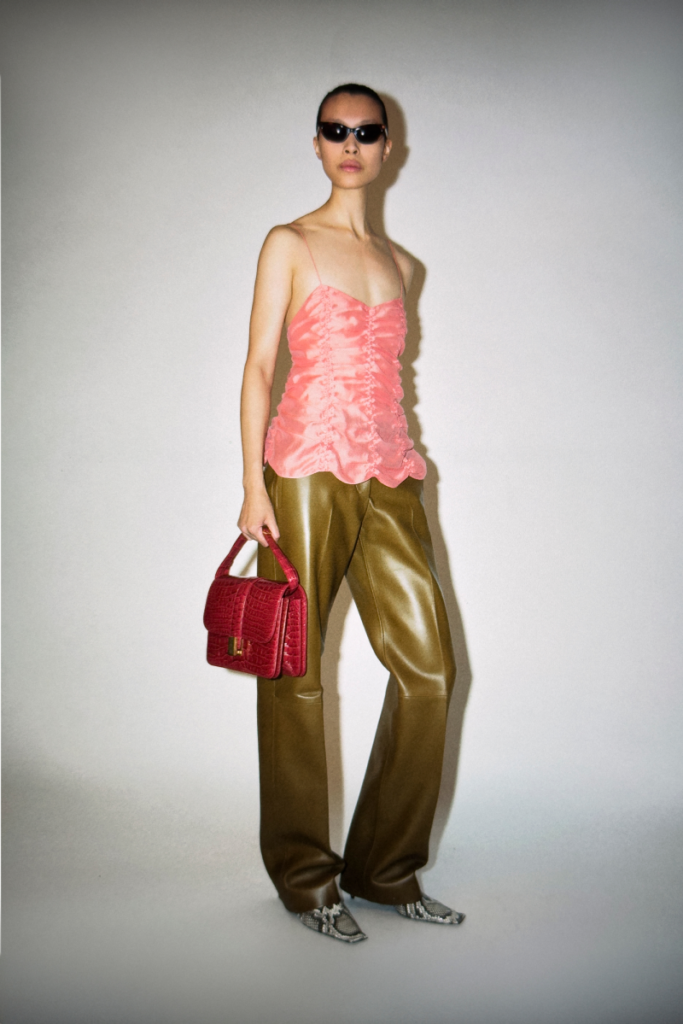
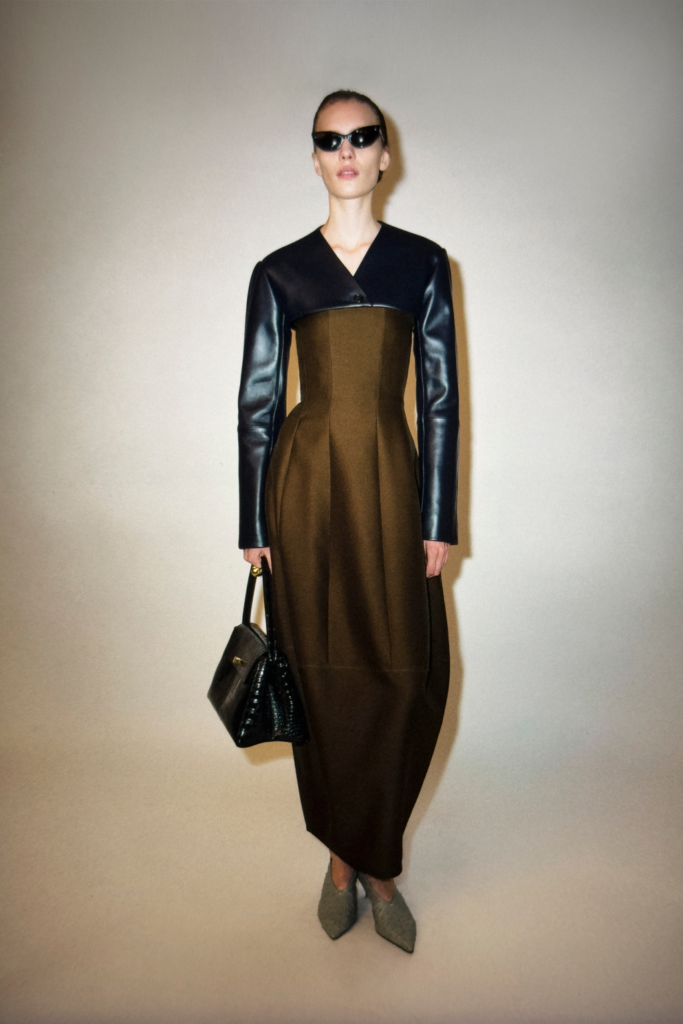
Catherine Holstein played with twisting up her stealthy ready-to-wear while peppering in playful moments of ’90s feminine grunge in her pre-fall collection. “This collection was a study in the ‘right way’ to wear something or the ‘right way’ a garment should fit,” Khaite’s Catherine Holstein said of her pre-fall lineup. The designer was pregnant with her second child while designing it and observing how garments were sitting on her changing body during that time — a feeling akin to when she was a teenager — was her starting point.
Courtesy of Khaite
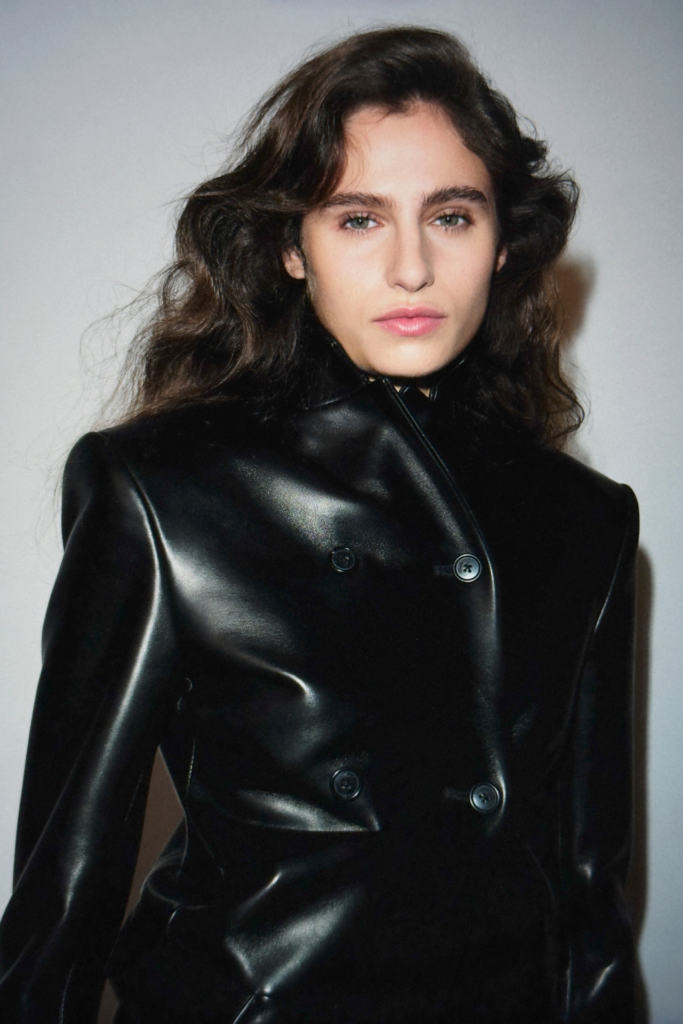
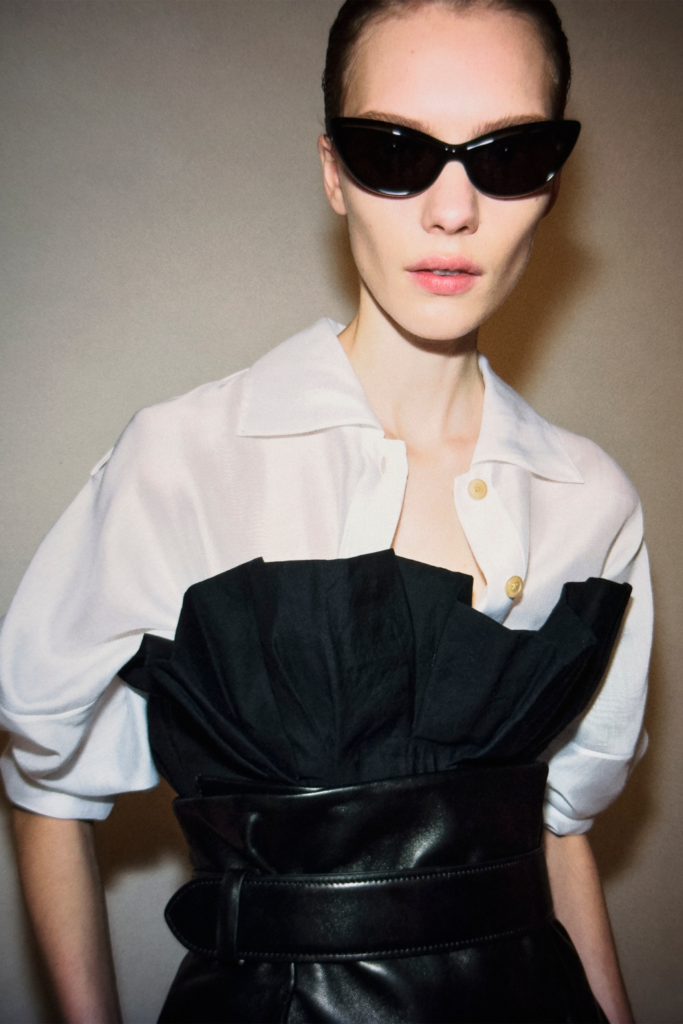
The idea brought forth an approach of challenging the perceived notions of what an outfit should be, so for pre-fall, she played with silhouettes by slightly twisting seams around the body, and placing buttons slightly off-kilter on striking blazers and jackets.
“I created this brand to serve women, thus comfort and functionality will always be a priority. But it was an exercise in challenging conventional concepts of each silhouette and bringing opposing elements together,” Holstein said. “Reimagining traditional form, while staying true to the brand.” For Holstein, comfort equals luxury, which she imbues into each piece, no matter if it’s the collection’s stealthy ultra, ultra-cropped plonge leather jacket or specialty, hand-done knitted and knotted tulle sets. No matter the twists and tweaks, she designs for customers to not just look good, but feel good without having to readjust.
Courtesy of Khaite
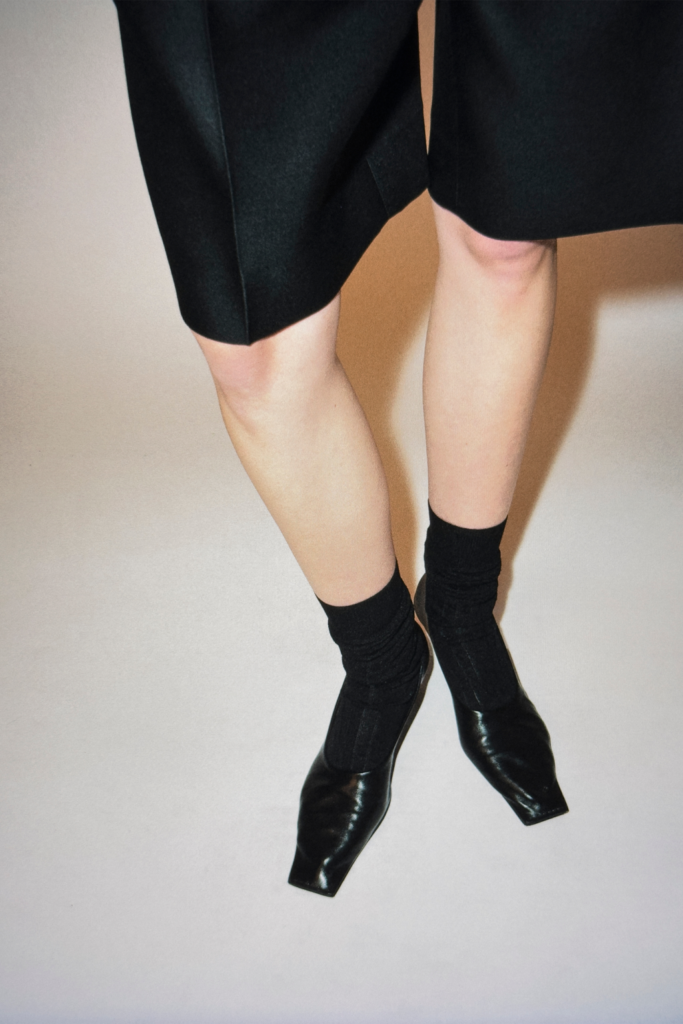
One of the most delightfully surprising twists she debuted this season came through a section of malleable, pointed square-toe shoes (flats and pumps) that on the foot, laid flat, but on the shelf, curled distinctly upward at the toe — a nice differentiation point that will surely stick out to shoppers browsing in-store or online.
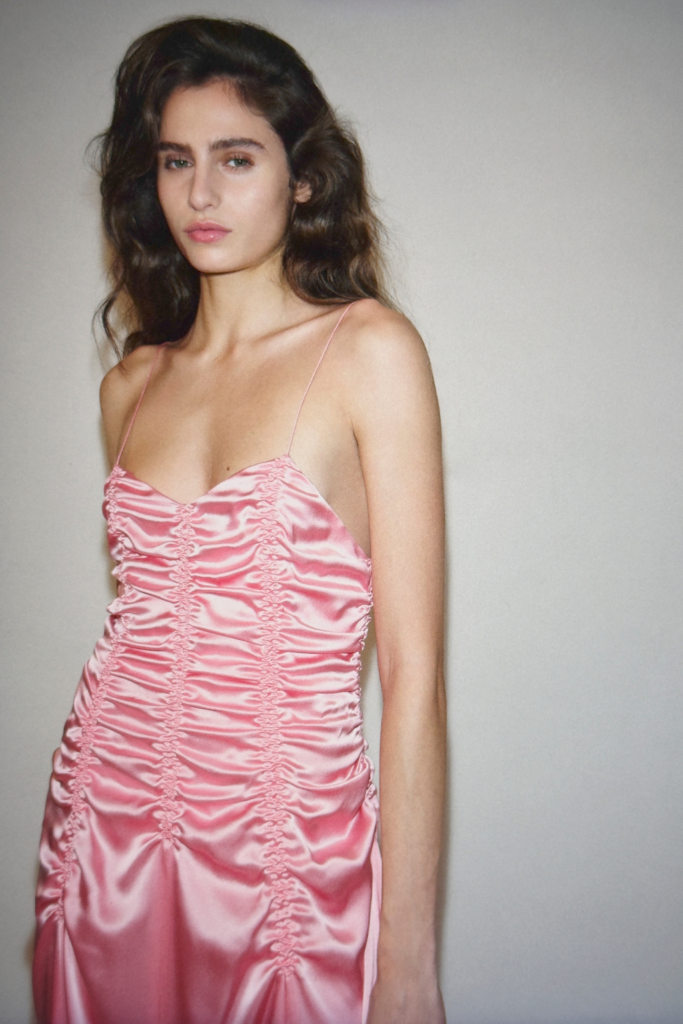
And it wouldn’t be a Khaite collection without a little nod to the ‘90s, here through the lens of feminized grunge with an ultra-cool off-the-shoulder hand-draped pink dress with Venetian-inspired drapes — her take on the grunge prom dress, which also came as stellar long skirts. Furthermore, popcorn knits melded novelty with a sense of playfulness alongside great oversize waffle knits with unfinished hems, paperbag pants and an extension of the brand’s bestselling, sharp leather — in happy, unexpected sky blue — and elevated pony hair layers.
Courtesy of Khaite
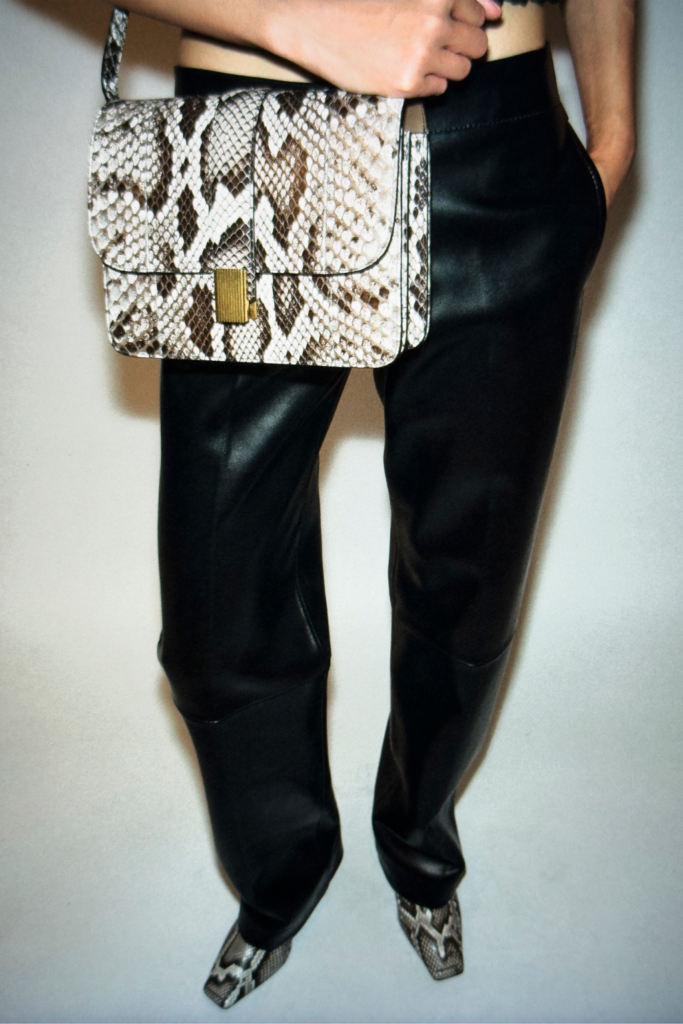
Holstein rounded it all out with a slew of new accessories, including a smaller size of the Joan bag, the Lotus in fringe, and a clutch-size Blake bag alongside cool menswear-inspired loafers, new takes on their Lotus-shaped silver and gold earrings (accented with suede), and cool shades as part of the brand’s continued partnership with Oliver Peoples.
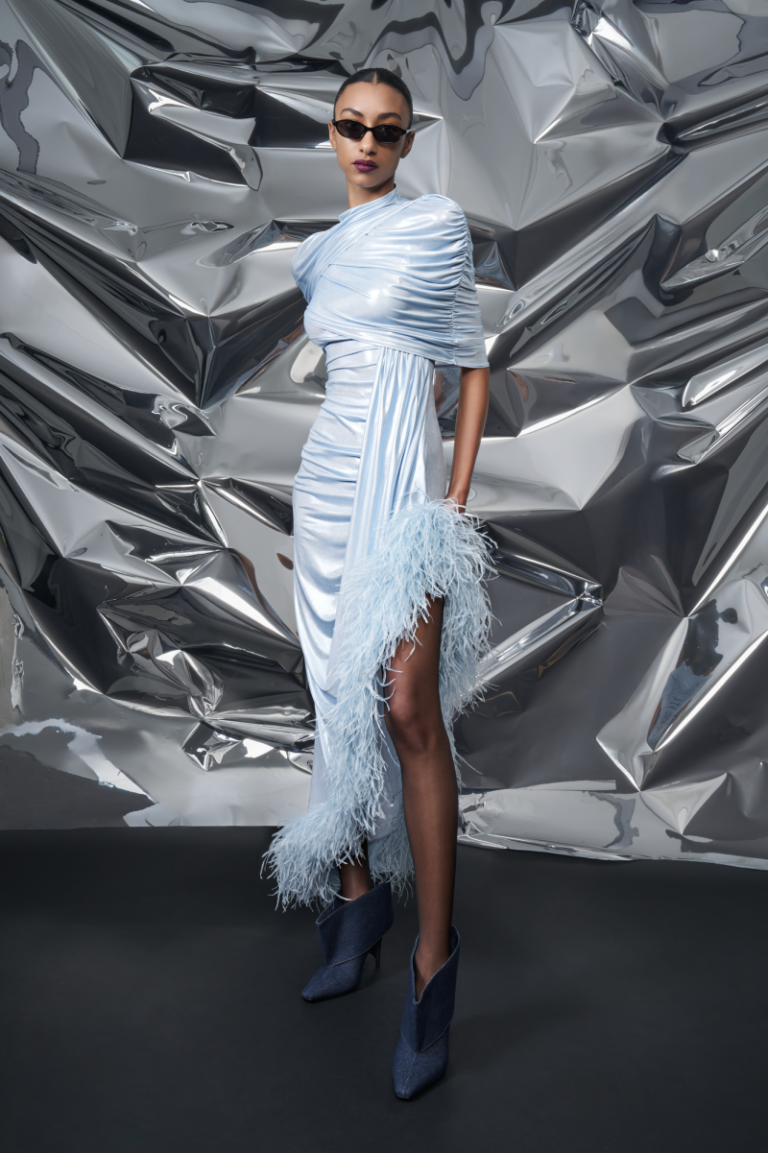
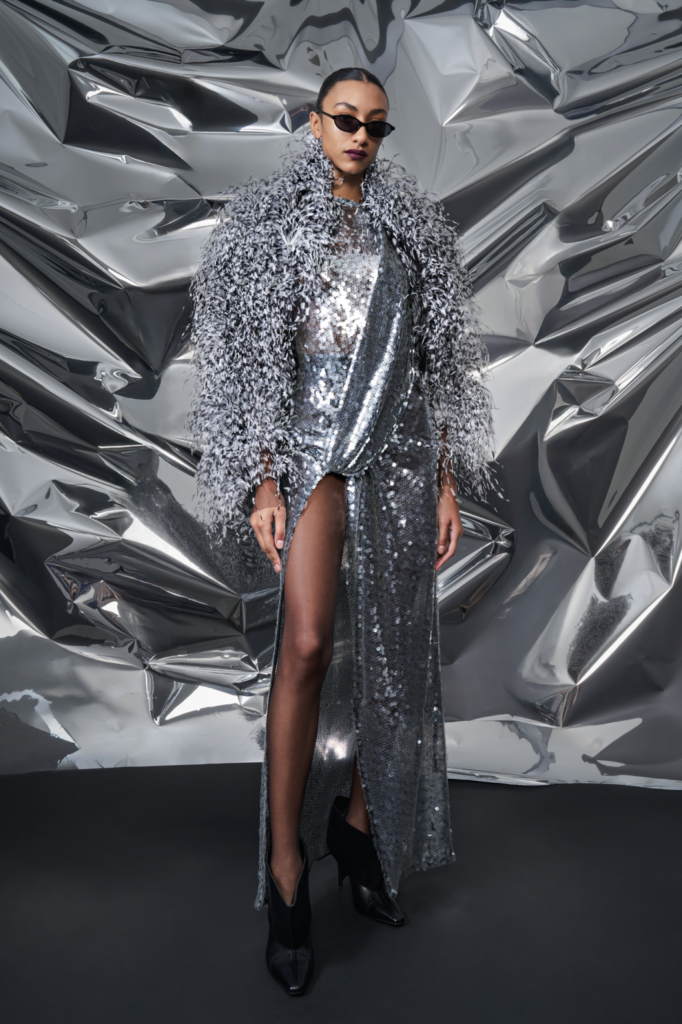
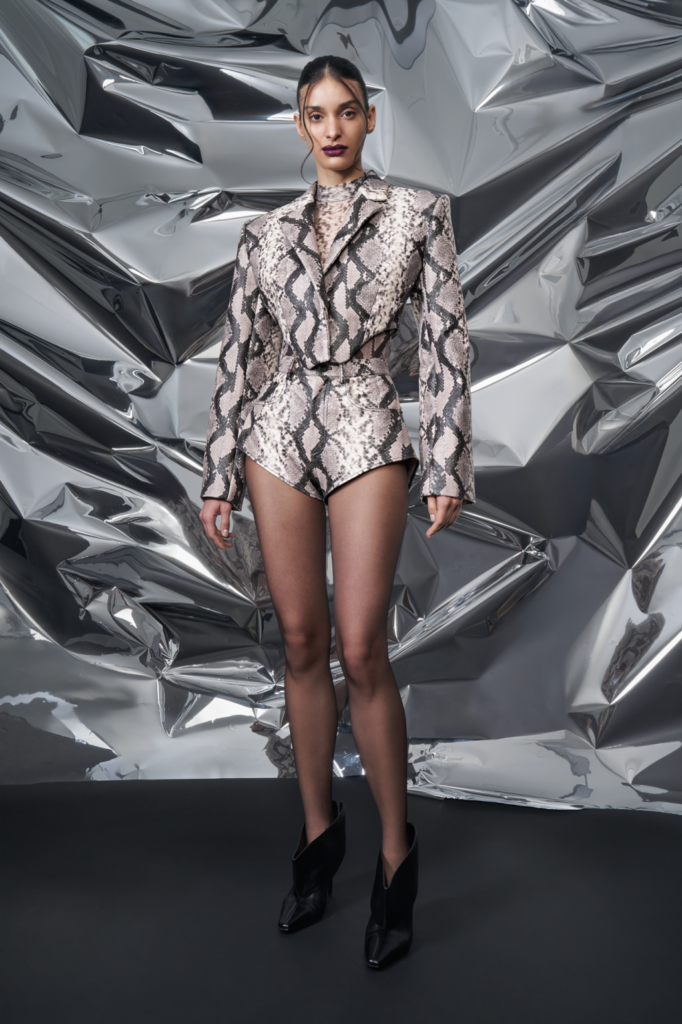
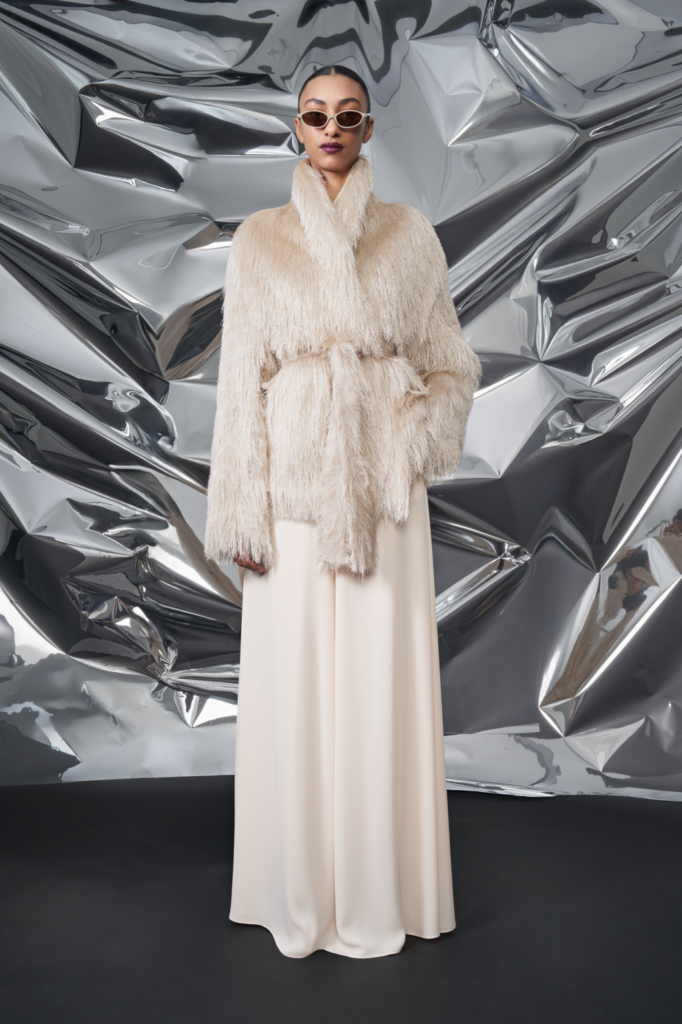
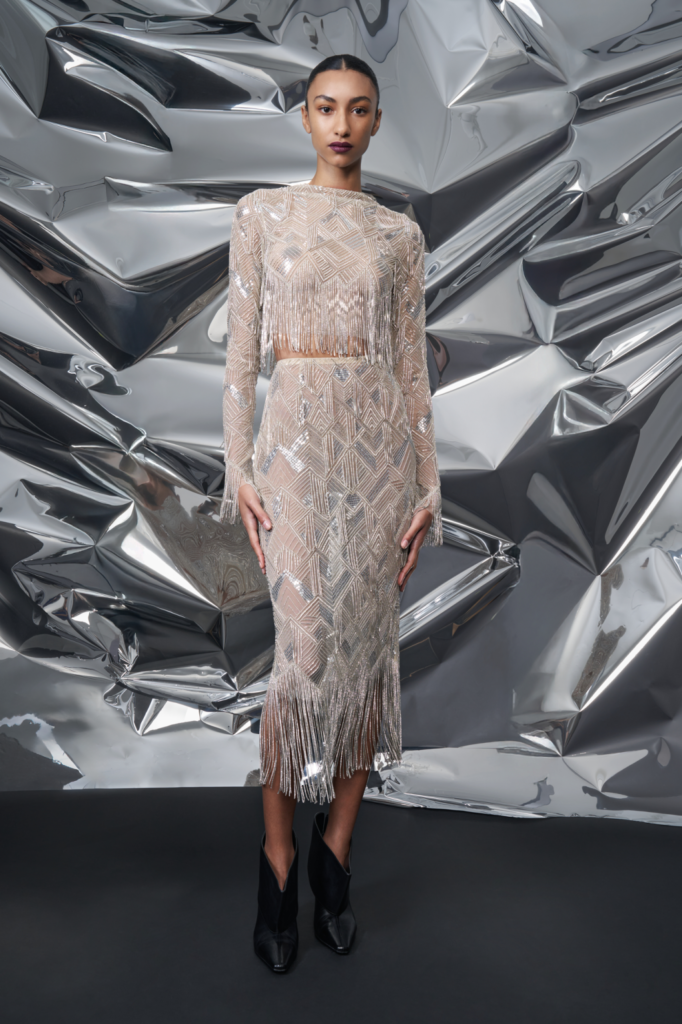
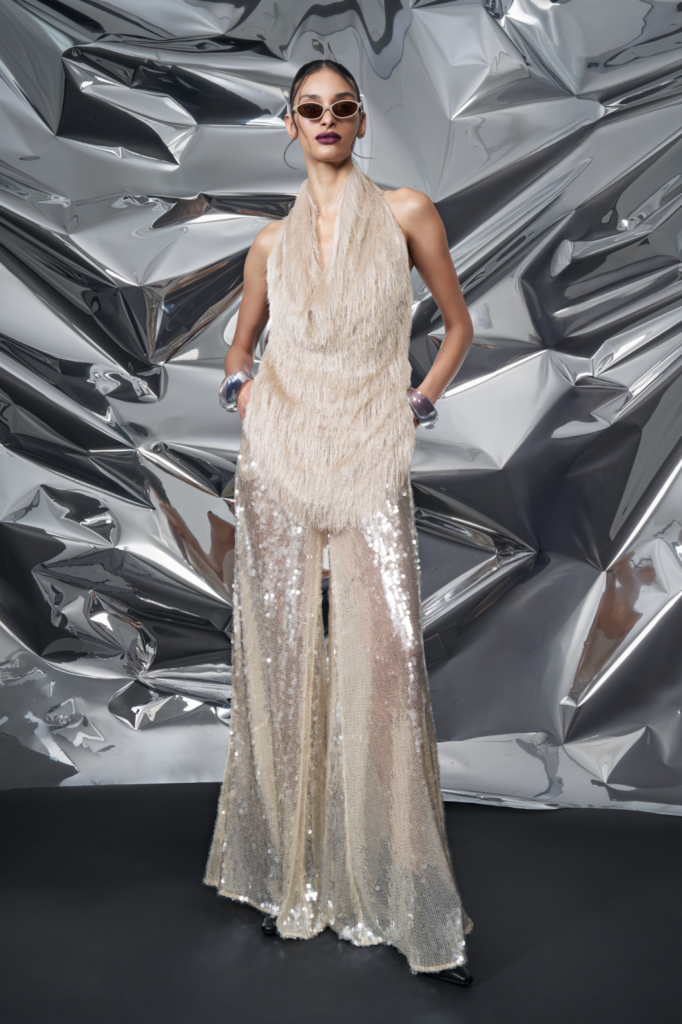
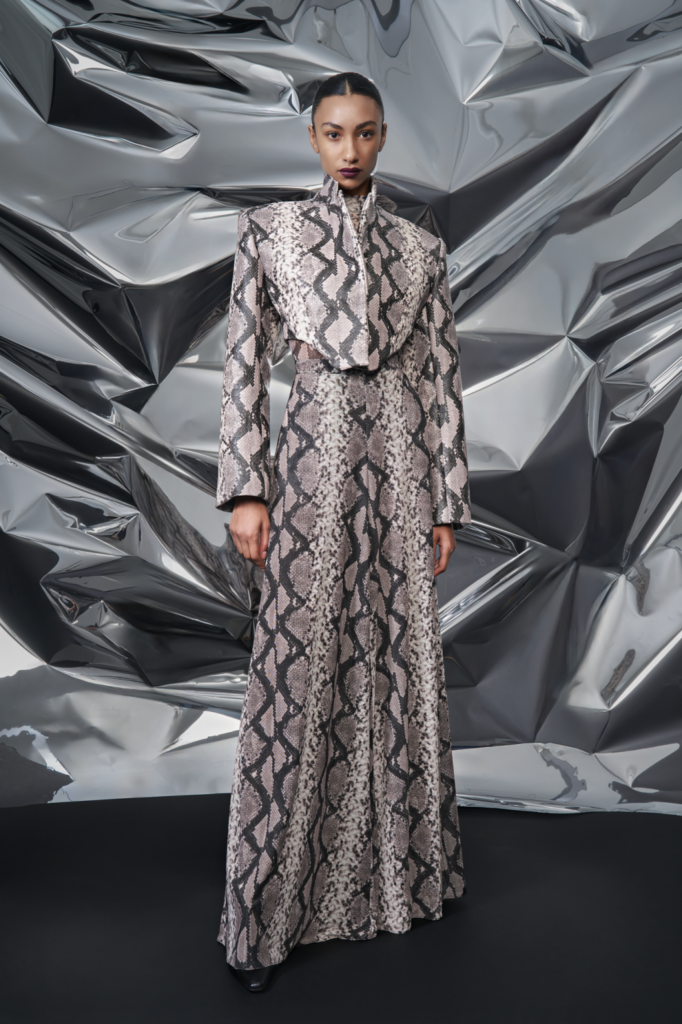
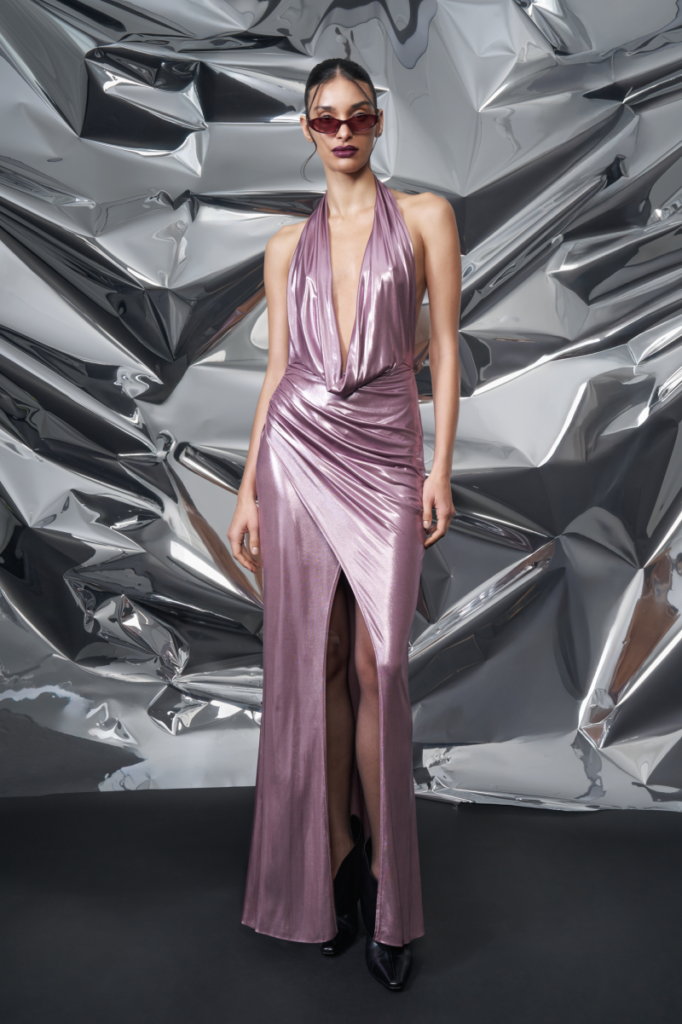
For Pre-Fall 2026, Sally LaPointe doubles down on the category she does best: elevated occasion dressing with bite. The collection is deliberately edited, confident in its restraint, and all the stronger for it.
Courtesy of LaPointe
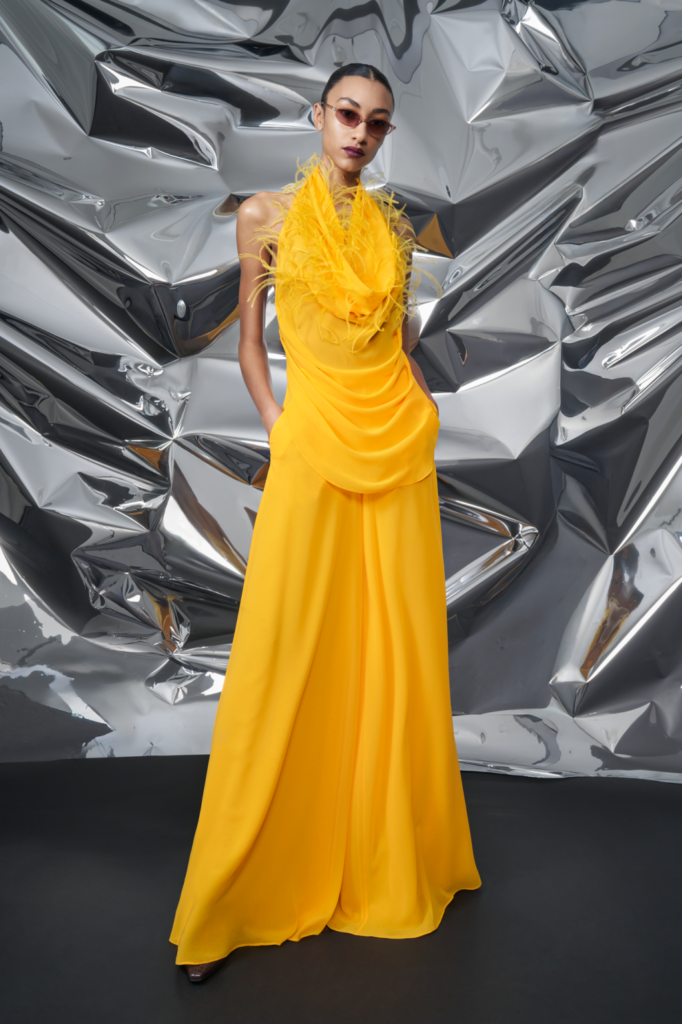
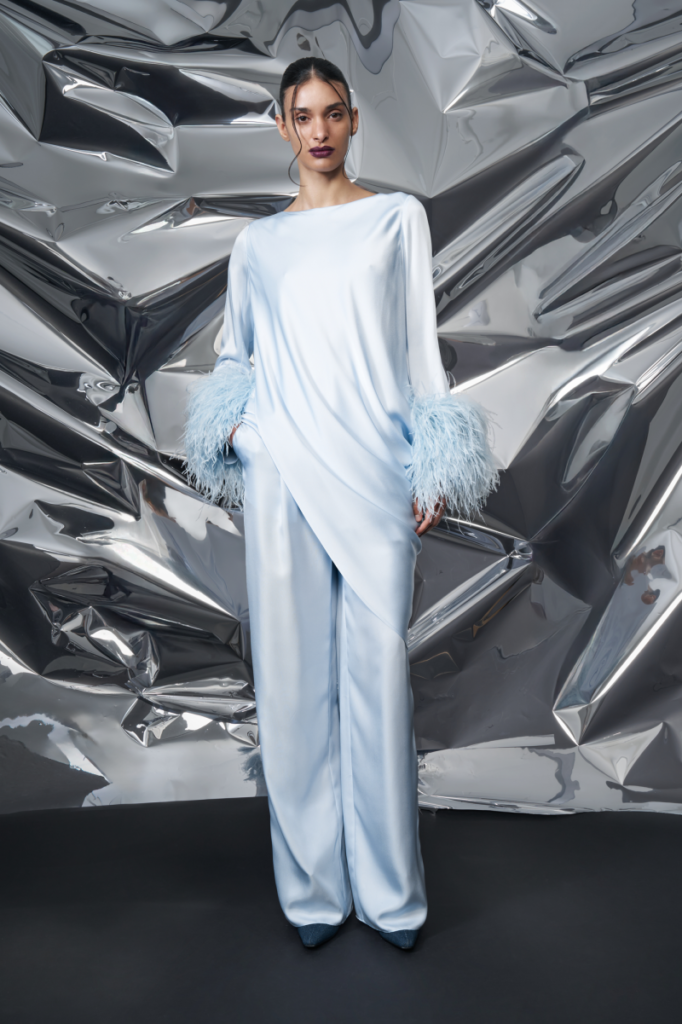
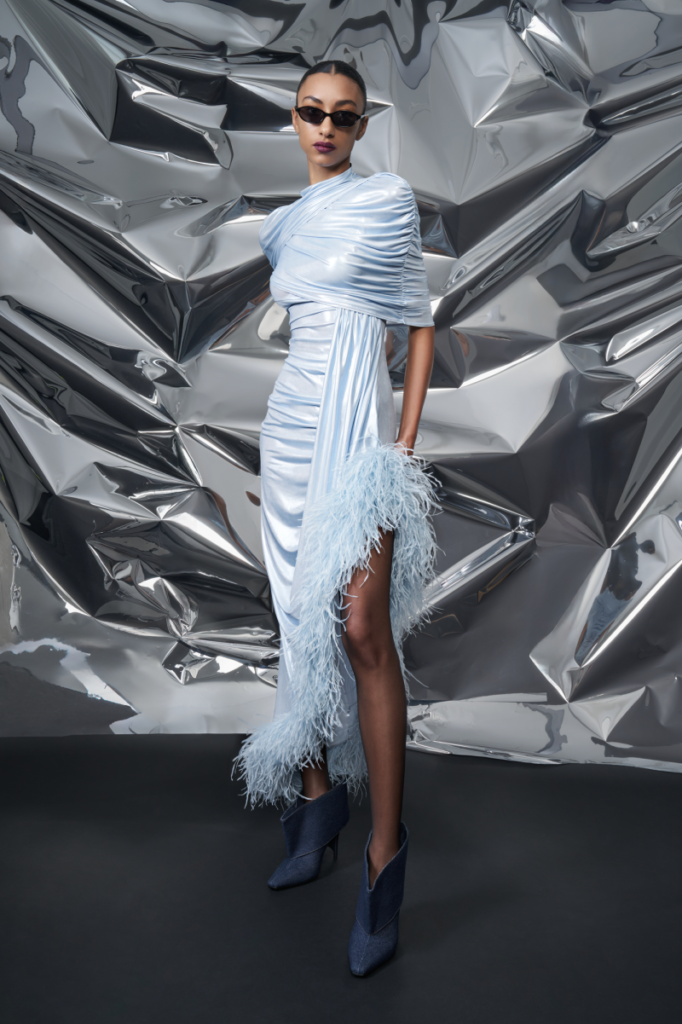
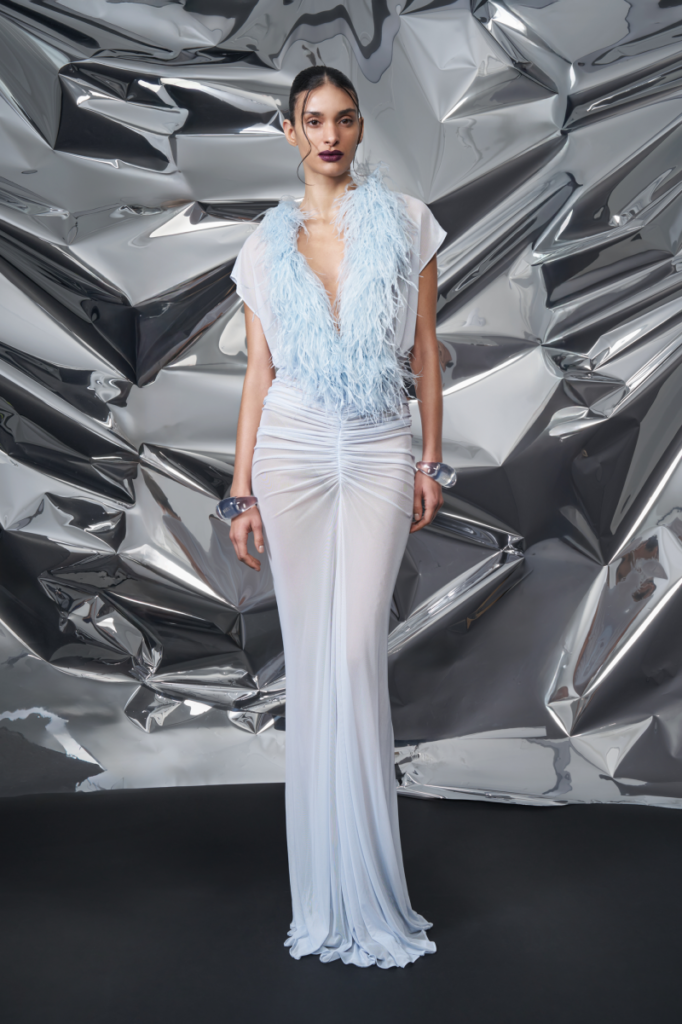
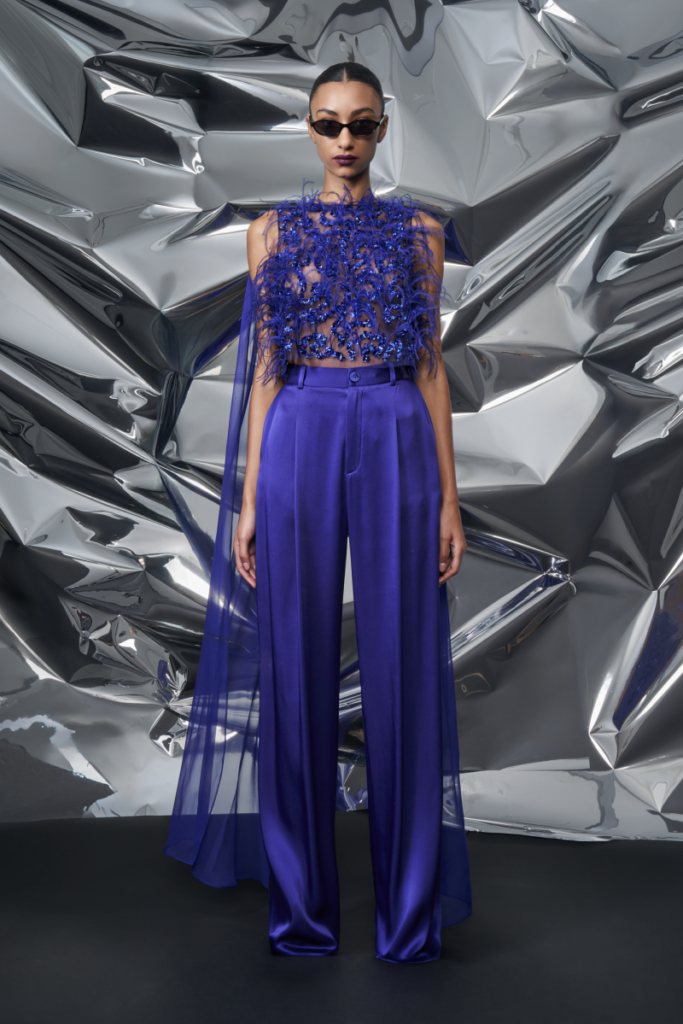
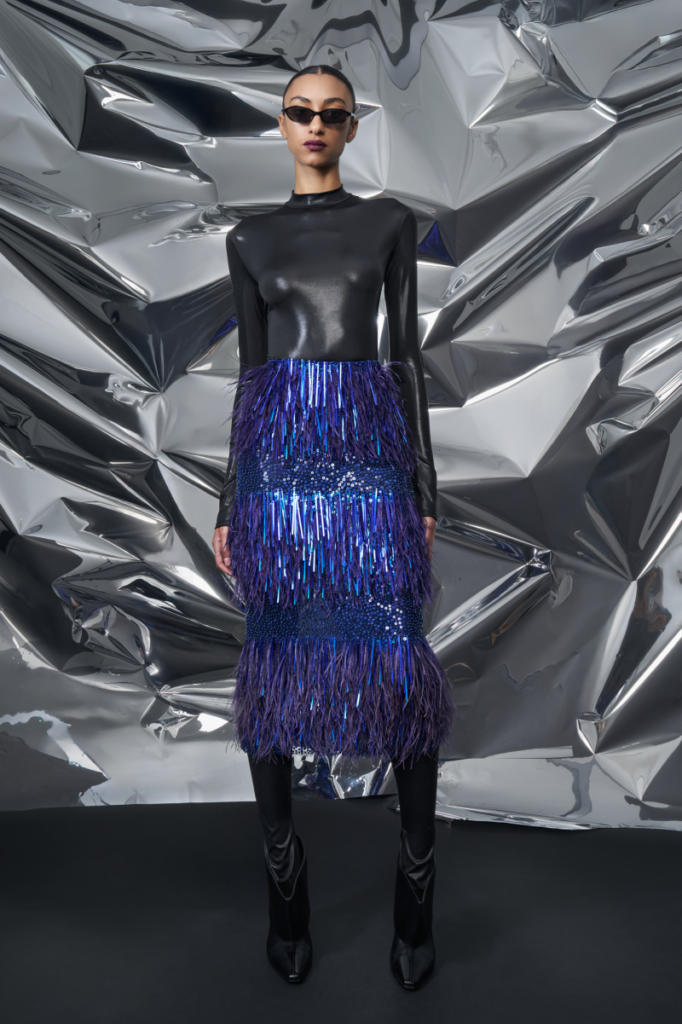
The lineup refines LaPointe’s signature mix of sensuality and polish through proven materials and silhouettes. Stretch leather returns as a core fabric, reimagined in a black-and-white snakeskin print and paired with a coordinating mesh top. Ruched jersey dresses deliver body-conscious ease, while new draped tops are styled with statement trousers — feather-trimmed or cut to dramatic, ultra-wide proportions — in vivid citrus orange and soft baby blue.
Courtesy of LaPointe
A sense of quiet power runs throughout, tempered by lighter constructions suited to the lingering warmth of late summer. Outerwear, one of the brand’s strongest categories, appears featherlight in hand-painted black-and-white plumes or raw ecru Lurex fringe. Sequined dresses — perennial bestsellers — are left unlined and backed with sheer mesh, maintaining their impact while keeping the mood fresh and wearable.
Courtesy of LaPointe
With Pre-Fall 2026, LaPointe proves that precision, not excess, is the key to modern glamour.
For Pre-Fall 2026, Veronica Swanson Beard and Veronica Miele Beard explore a polished frontier where softness meets edge. The collection leans into the brand’s evolving transitional wardrobe — a category the designers have refined with growing confidence — and amplifies the emotional pieces that resonated strongly during Resort.
Courtesy of Veronica Beard
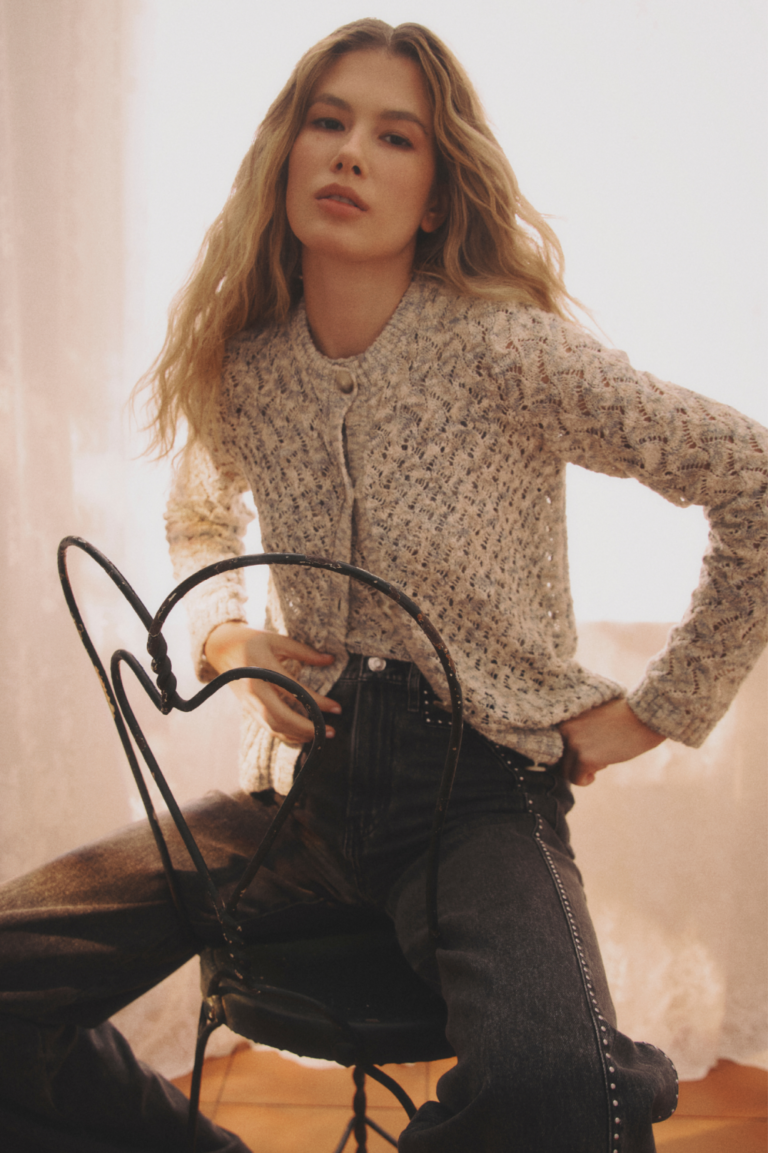
Western accents thread through the lineup, grounding the brand’s signature tailoring in a new sense of freedom. Flared denim with contrast stitching and classic hardware anchors the offering, joined by patchwork details and saddle-inspired finishes. A vintage-tinged prairie dress trimmed with lace, fluid floral gowns, and an updated work jacket in rust — complete with a removable floral-embroidered collar — bring romance with a utilitarian twist.
Courtesy of Veronica Beard
The designers frame Pre-Fall as a study in durability and versatility. Lightweight shirts pair effortlessly with a new distressed-denim military jacket and matching pants, adding a rugged counterpoint to the house’s more structured blazers and tailoring sets. The effect is a wardrobe built for movement between seasons, blending ease, attitude, and refinement — the essence of Veronica Beard’s modern American style.
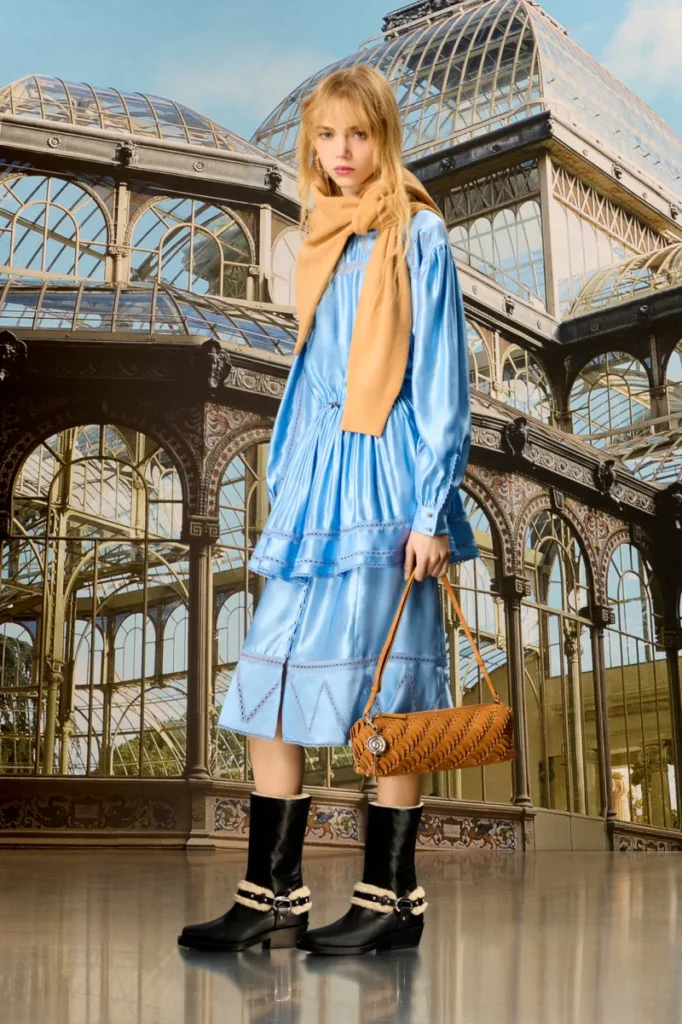
With his Pre-Fall 2026 collection, creative director Julien Dossena delivers a master class in balance — merging the legacy of Paco Rabanne’s space-age heritage with the relaxed confidence of modern bohemia.
Courtesy of Rabanne
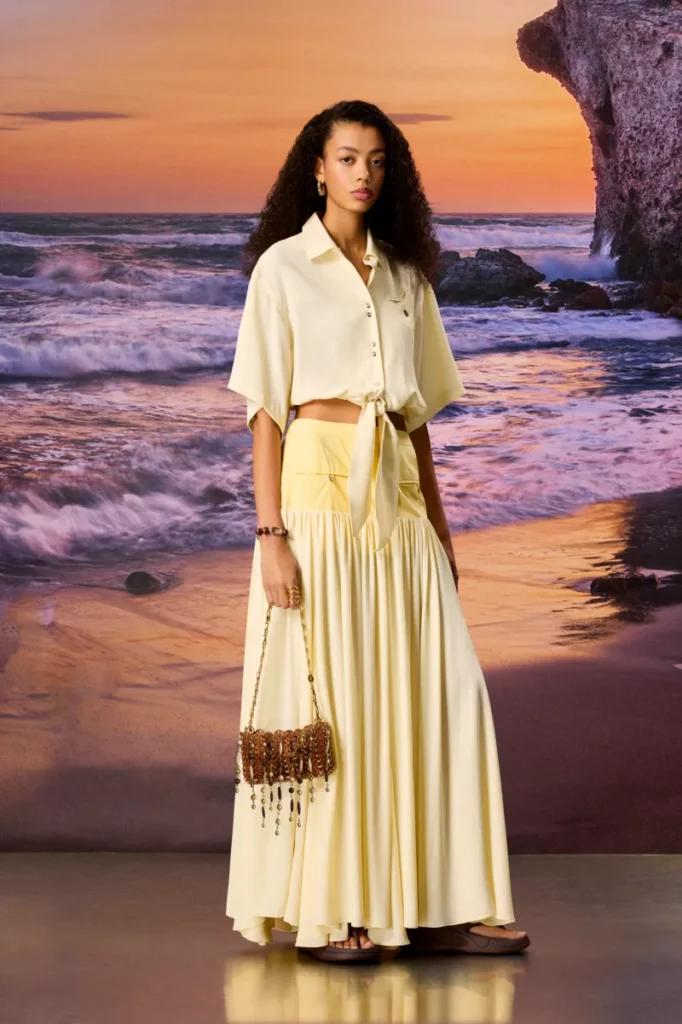
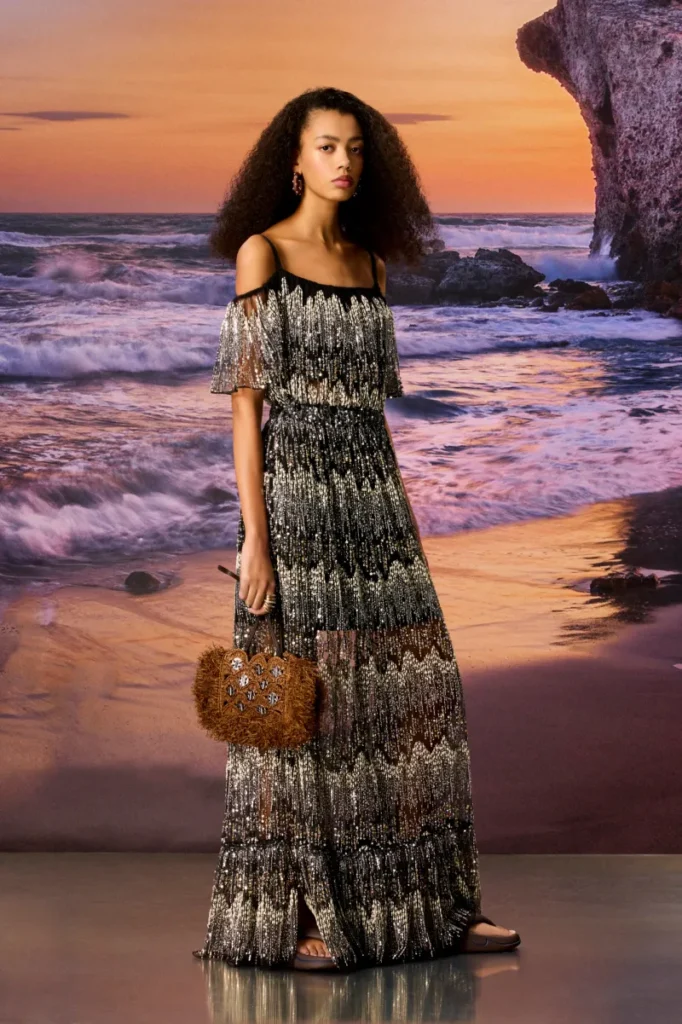
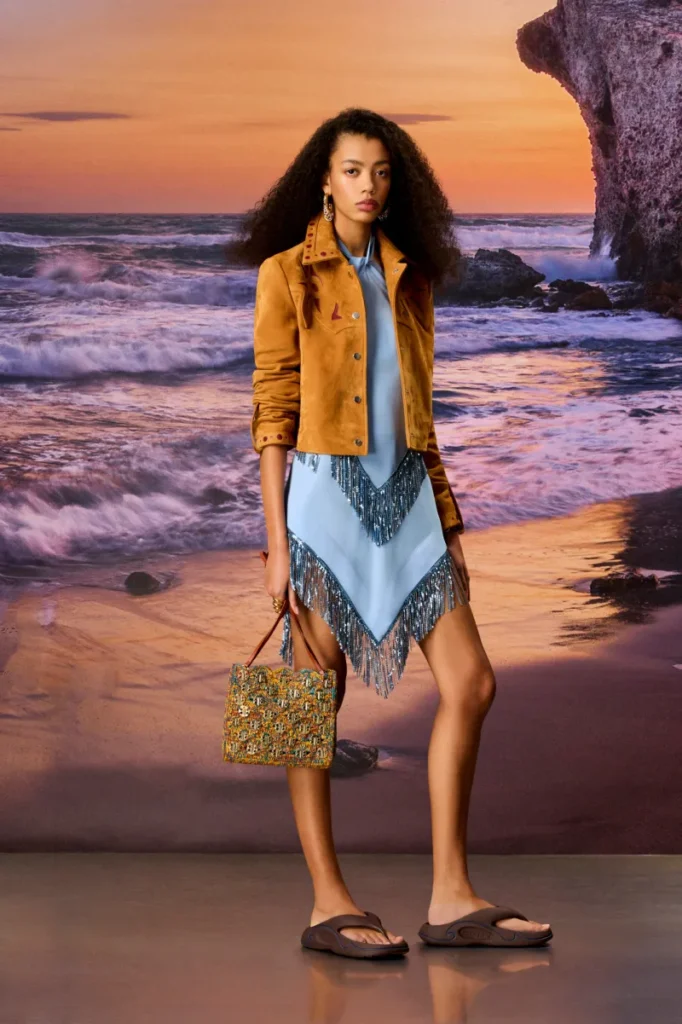
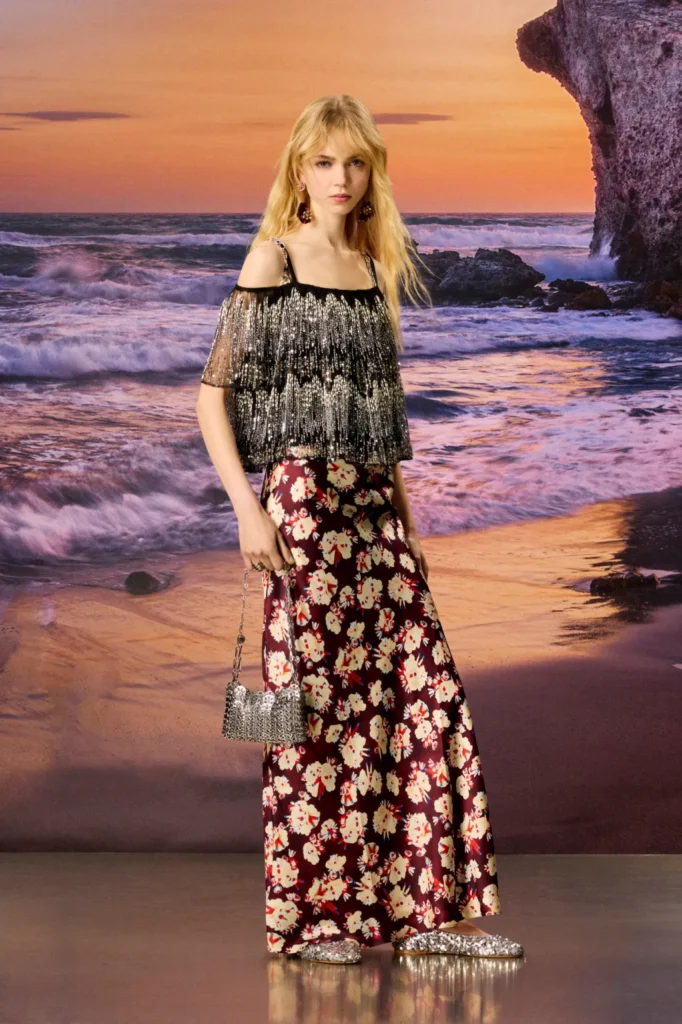
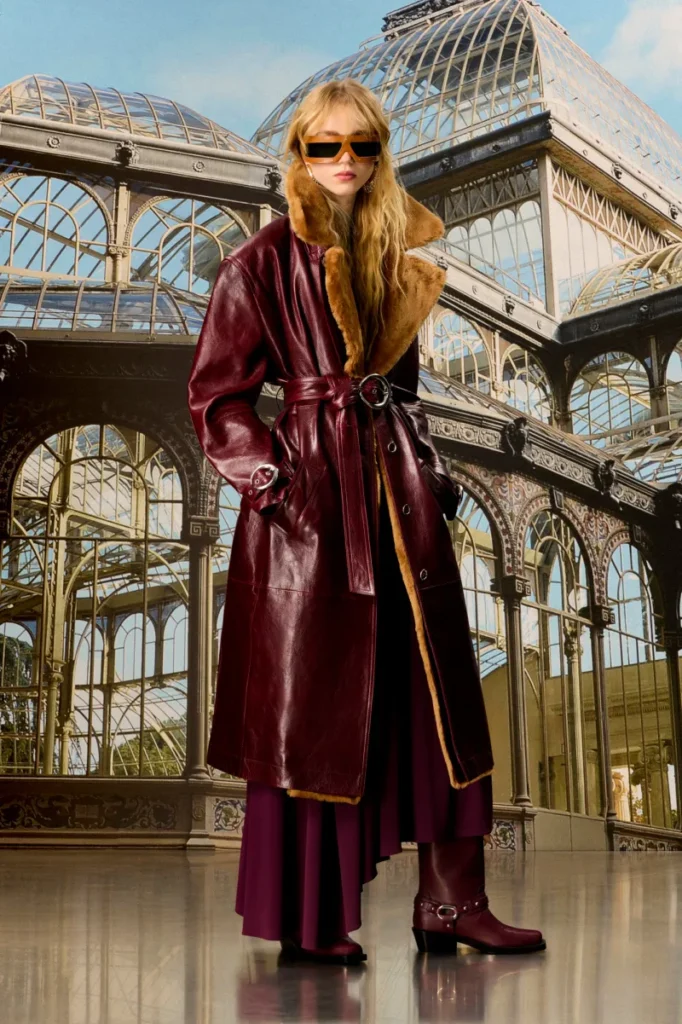
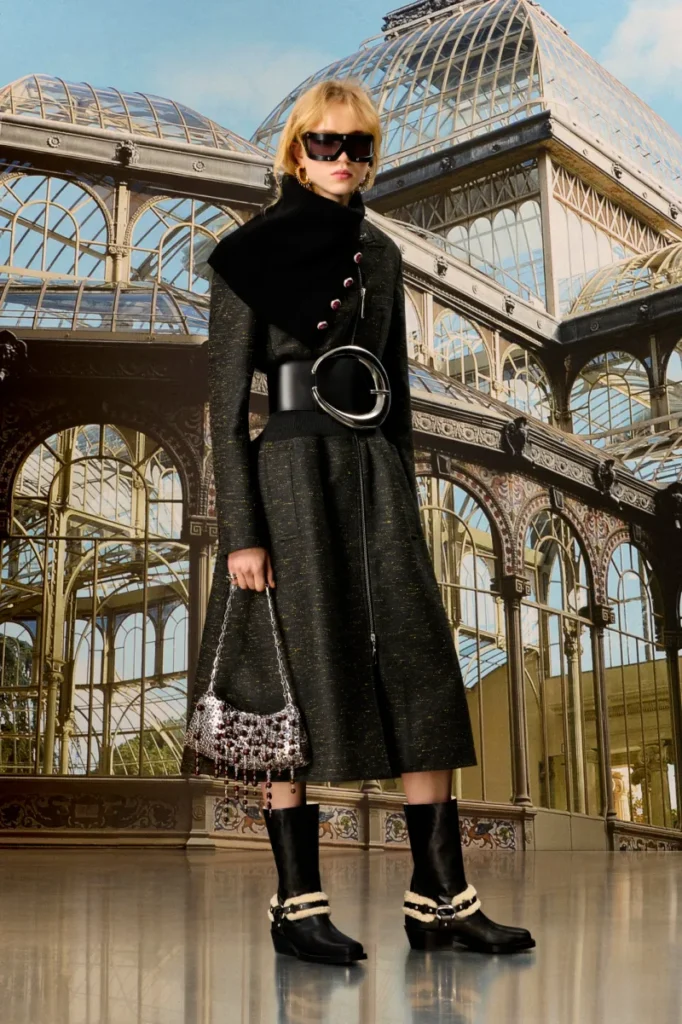
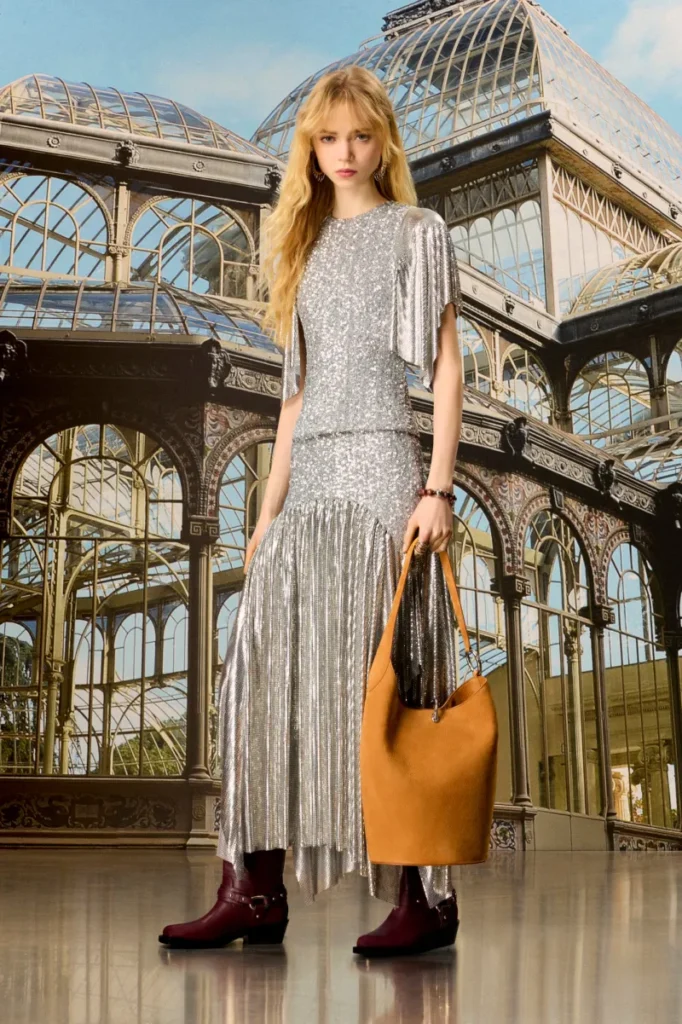
Dossena reintroduces craft and material richness — mesh dresses, metallic clutches, suede trenches — while retaining Rabanne’s signature futuristic edge. Western echoes emerge throughout: cowboy boots, long floral dresses, suede outerwear. Even the brand’s iconic 1969 metallic clutch returns, now reimagined with suede accents or wooden bead detailing.
He describes the collection as “sophistication, texture, craftsmanship — expressed in a very relaxed way.” That intention shows in silhouettes that drape softly and materials that feel tactile and lived-in. A caramel suede trench with a belt, paired with a sequin-embroidered floor-length dress, evokes a sense of unforced glamour; while a camel-toned jersey dress cinched with a wide oxblood leather belt balances sensuality and comfort.
Courtesy of Rabanne
Period-inflected pieces nod to different eras: prairie-style gowns with Victorian floral prints, 1950s-inspired bowling shirts tied at the waist, pastel maxi skirts, striped polos with Rabanne’s signature ring detail — all carrying a subtle seventies ease. A standout burgundy leather trench lined with plush shearling rounds out the mood.
Courtesy of Rabanne
Accessories remain central. Nearly every look includes a handbag — a smart acknowledgment of leather goods’ growing importance for the house. Dossena positions Rabanne bags not merely as accessories but as design objects: distinctive, collectible pieces rooted in the brand’s metalwork heritage, not chasing the traditional leather-goods giants. He notes, “If you buy a Paco Rabanne bag, you’re buying an object nearly part of design history. The question is how to embrace that uniqueness — and expand it confidently.”
Even the sunglasses — archival frames updated in thick leather montures — embody the collection’s hybrid identity: steeped in the past, yet of the moment.
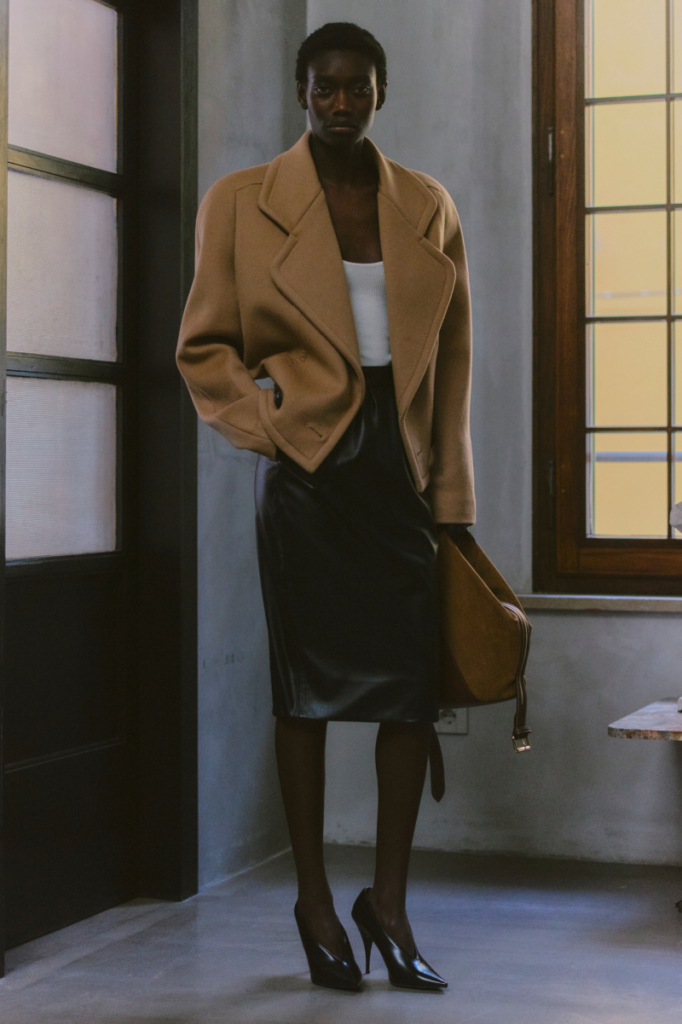
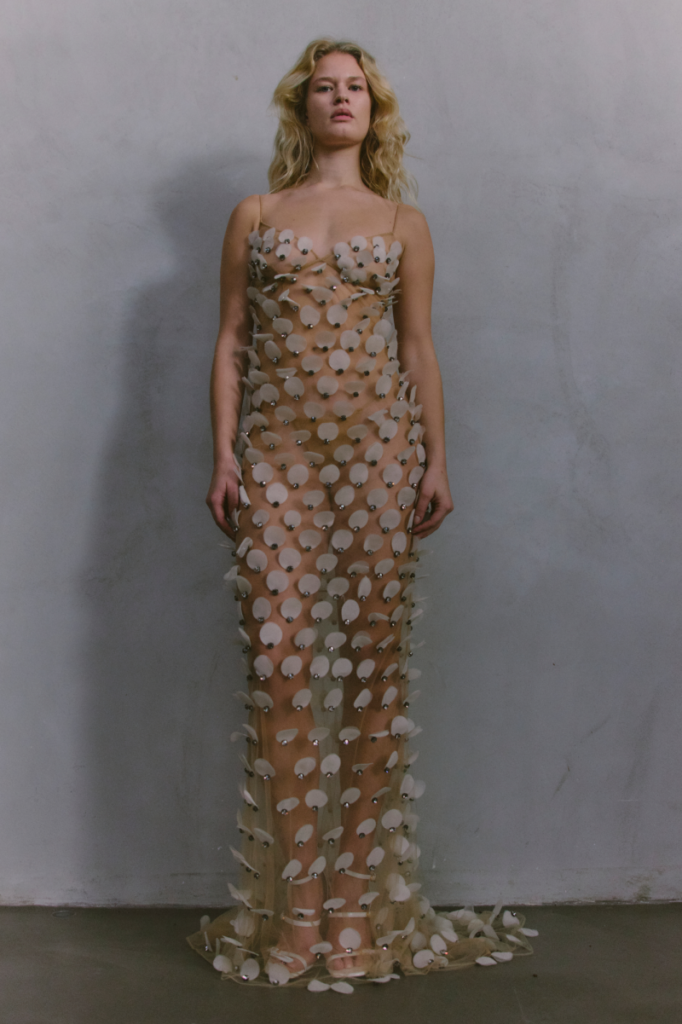
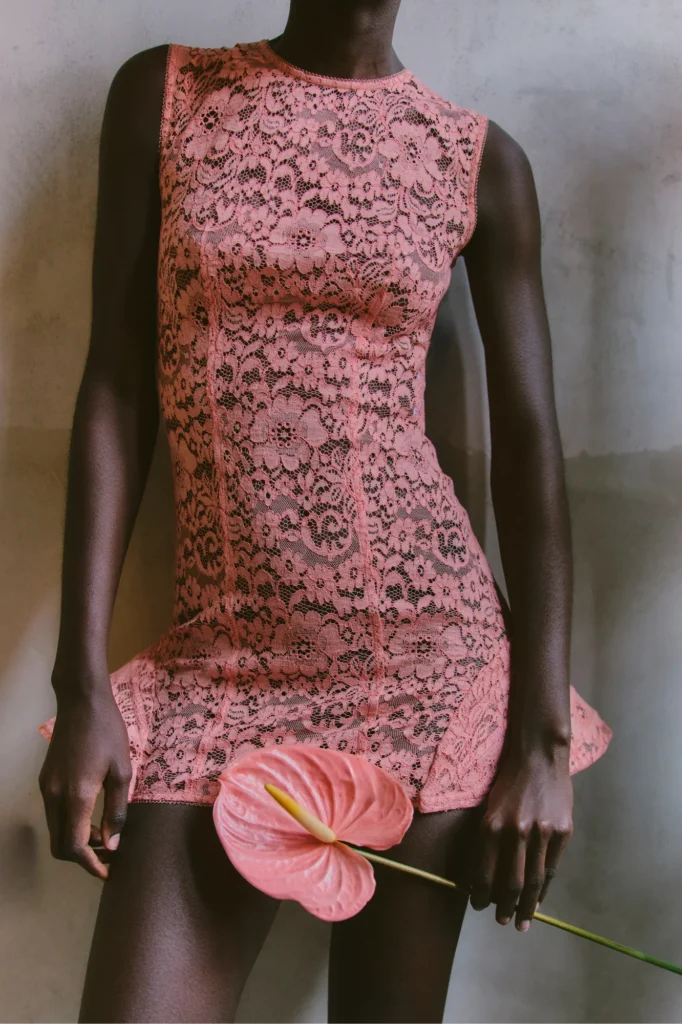
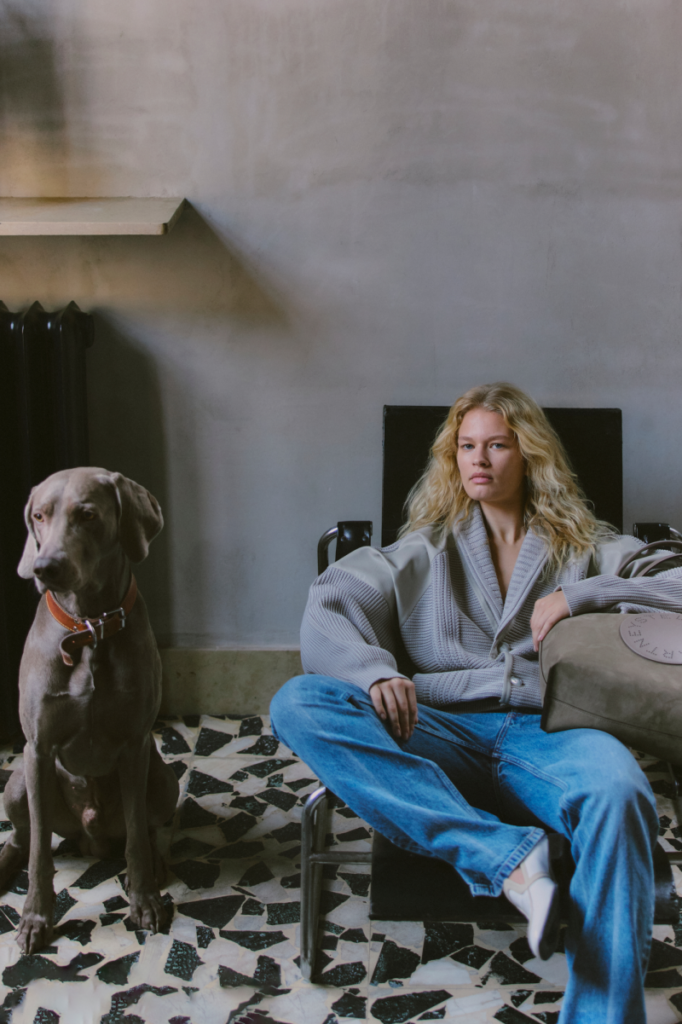
Stella McCartney Pre-Fall 2026: Riding Into Nostalgia
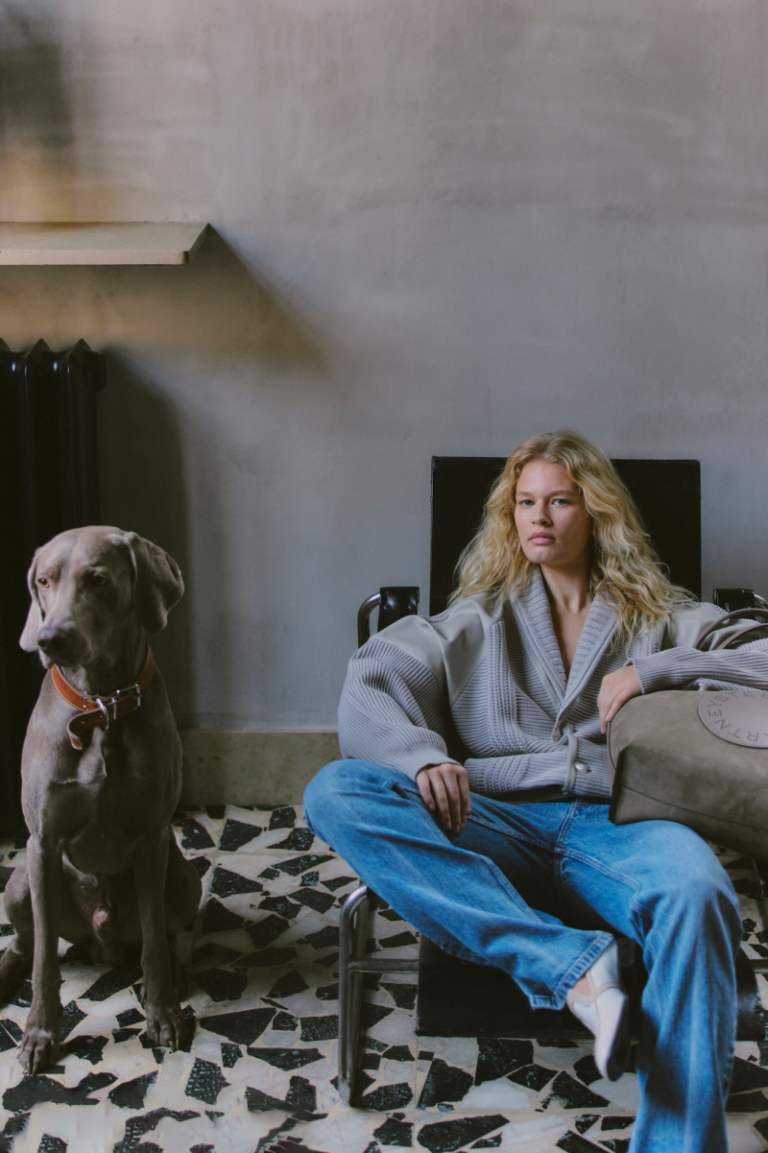
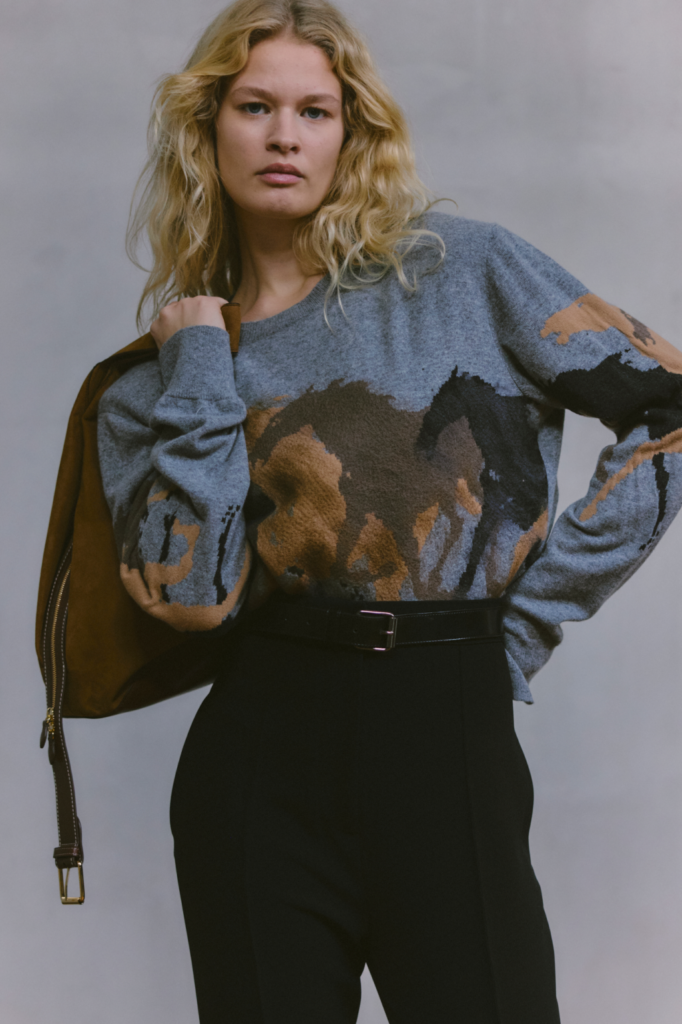
Stella McCartney turns to the landscapes of her Scottish childhood—and the easy, unstudied style of her parents, Linda and Paul McCartney—for a Pre-Fall 2026 collection that blends coziness with sharp tailoring and her signature sustainable rigor. The Chinese zodiac’s upcoming Year of the Horse offered an additional visual cue, prompting equine motifs to trot across knitwear, denim, and accessories.
Courtesy of Stella McCartney
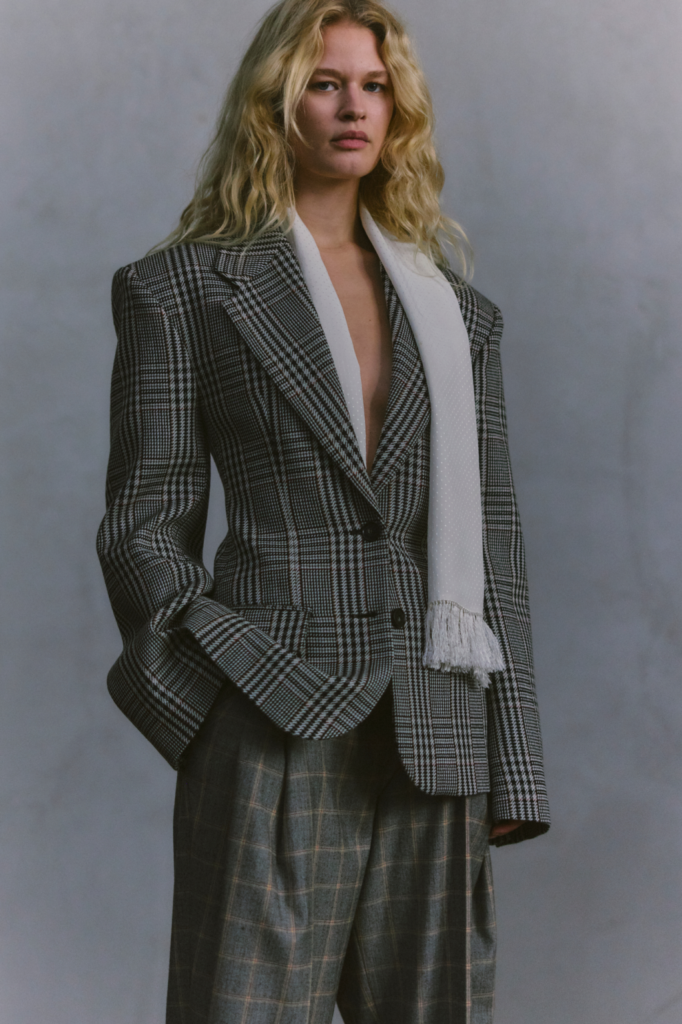
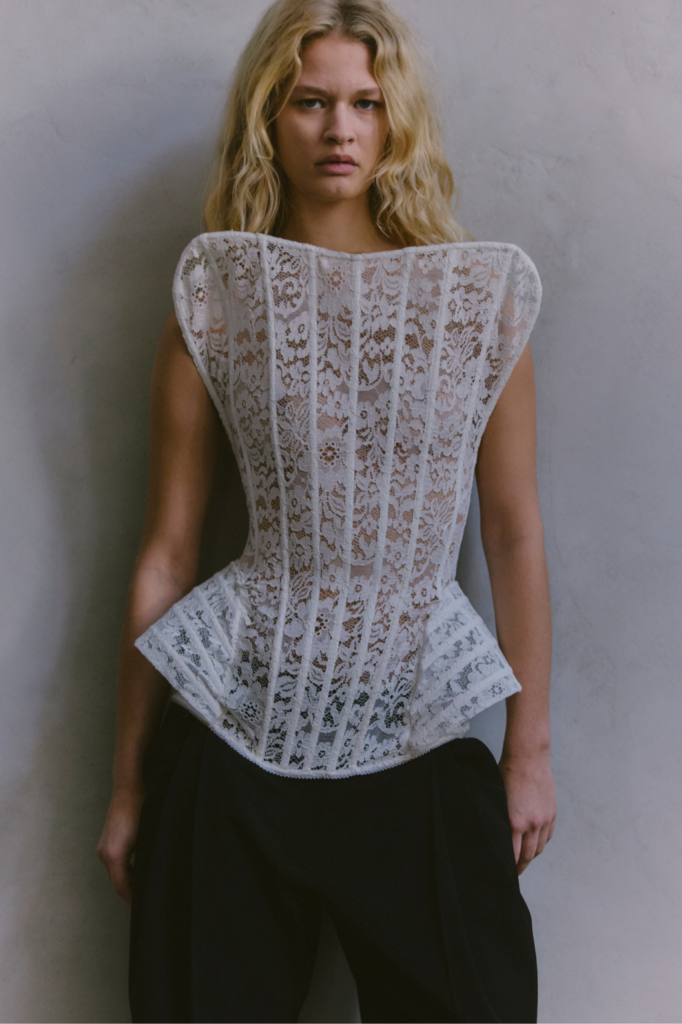
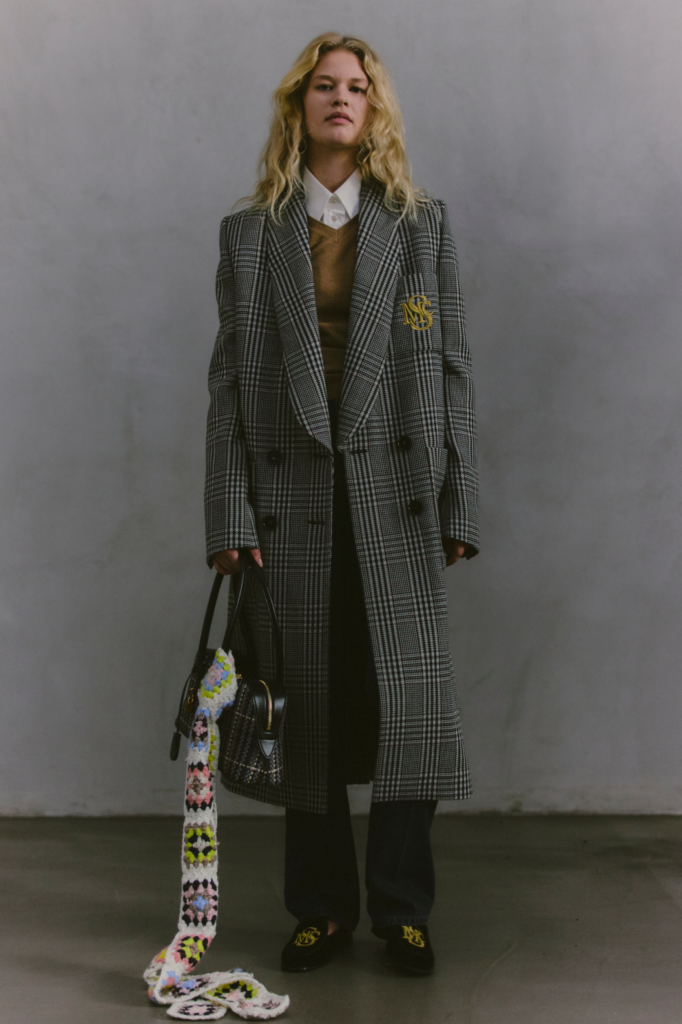
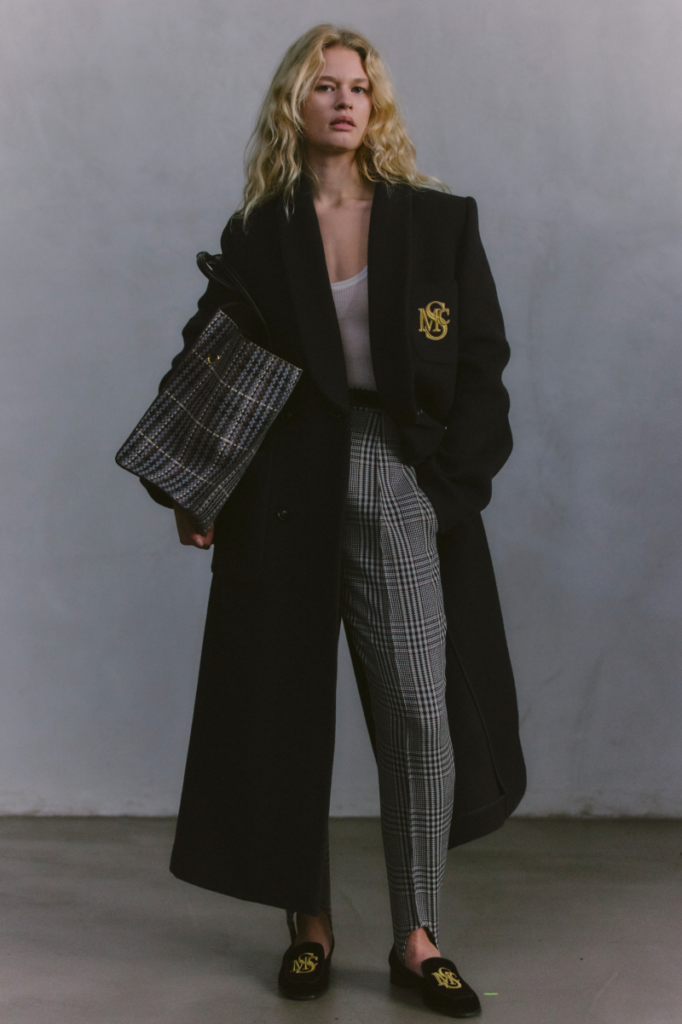
The collection’s structure leans into sculpted tailoring: broad-shouldered jackets with cinched waists, elongated vests, double-breasted outerwear, and wide-leg pleated trousers cut from responsibly sourced wool. Many pieces carry the season’s “SMC” crest embroidered in gold thread, adapted from a pair of Paul McCartney’s vintage sneakers. Evening-leaning tailoring—tuxedo jackets, coats, and sharply cut separates—arrives hand-finished with lead-free crystals for a clean, modern shimmer.
Courtesy of Stella McCartney
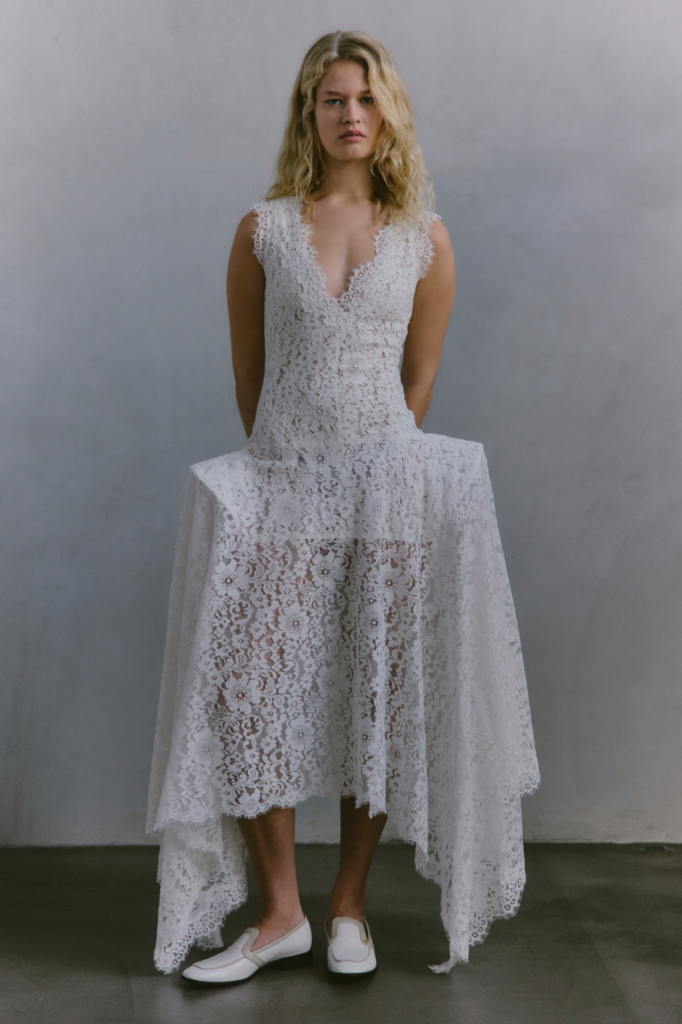
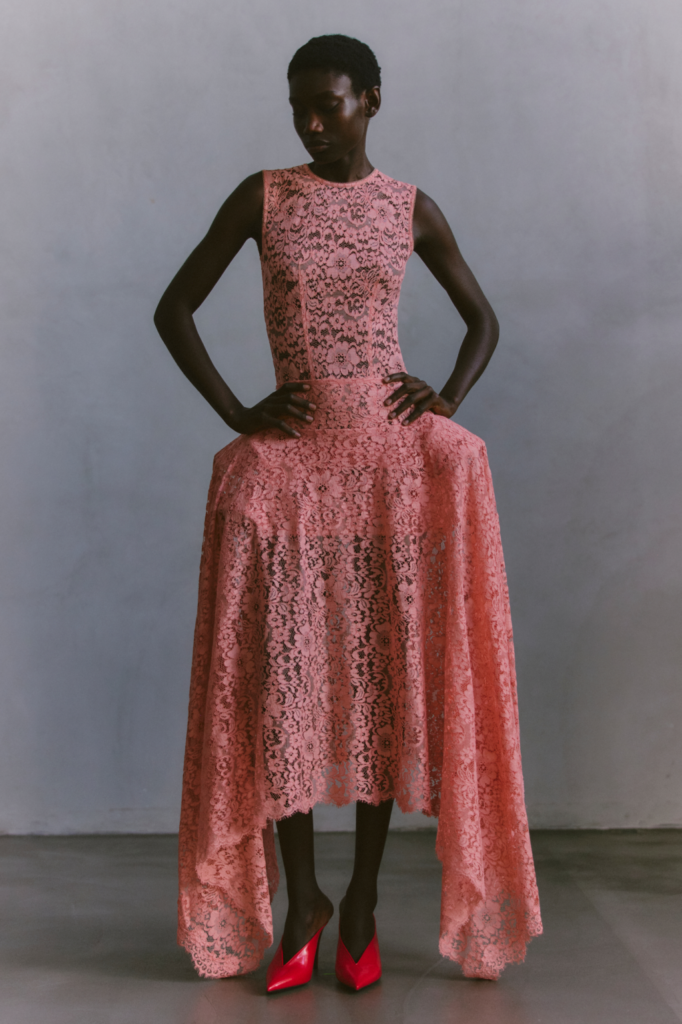
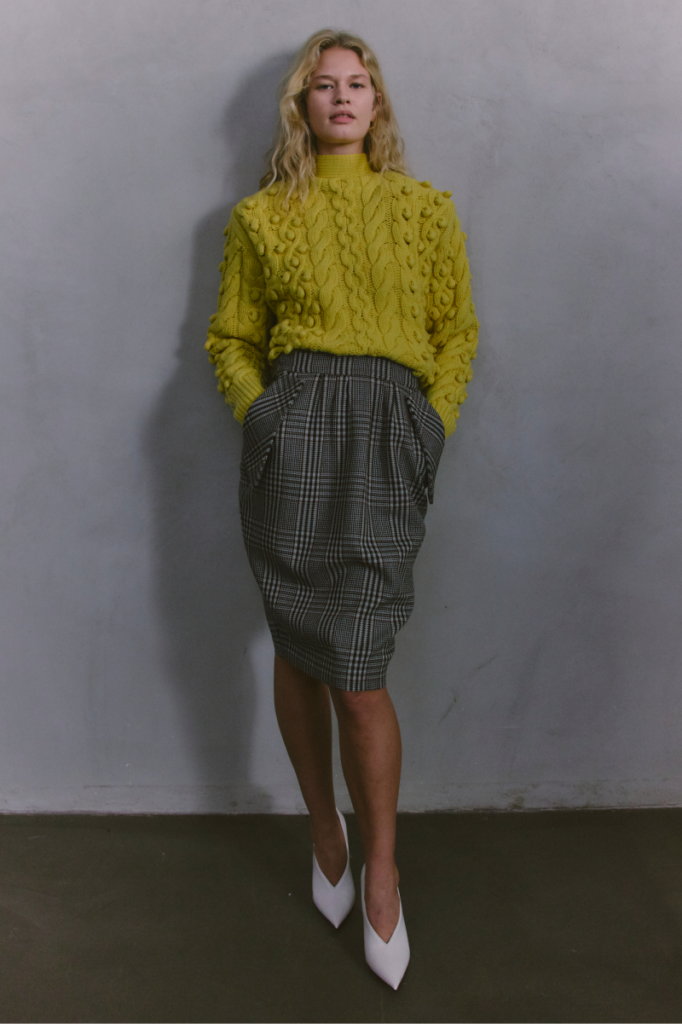
McCartney explores 1970s softness through fluid dresses with ’40s-influenced draping, peplums, scarf-like shoulders, and corded lace. Her memories of rural Scotland surface in oversized recycled-cashmere cardigans, ribbed turtlenecks paneled with vegan leather, richly textured Aran knits, and horse-pattern intarsia.
The designer also leans into crafty textures: hybrid corduroy-and-denim pieces, sun-washed patchworks, and vintage-brown wales that reinforce the collection’s worn-in, bohemian ’70s character. Denim appears in bootcut and relaxed boyfriend cuts with grounded hems.
Courtesy of Stella McCartney
As McCartney continues to push the boundaries of luxury sustainability, she notes that 98% of the collection uses responsible materials—forest-friendly viscose and acetate, responsible wool, certified organic cotton, and Econyl. Her innovations in alternative leather include plant-based Vegea, Airlite air-purifying bags, and algae-derived pigments from Living Ink.
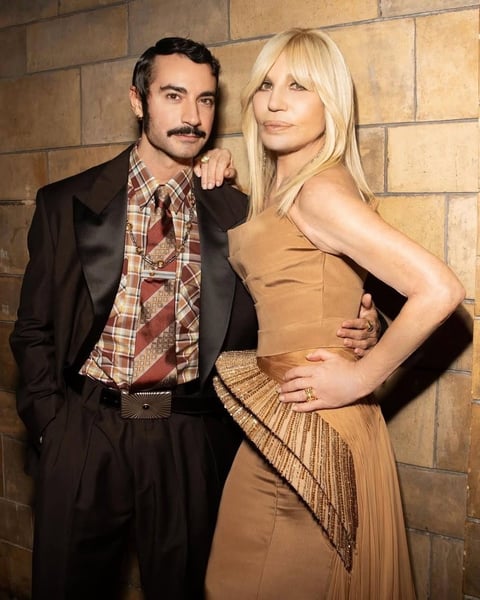
Donatella Versace & Dario Vitale attend the Clooney Foundation
Only days after Prada Group officially closed its acquisition of Versace, the creative landscape at the Milanese house has shifted: Dario Vitale has exited the brand.
Versace confirmed his departure, though the timing and future creative direction remain undisclosed. Vitale, appointed creative director in March and widely respected for his hands-on presence in the studio, had not been seen at headquarters in recent days, fueling speculation about his status.
The abrupt change comes despite expectations that Vitale would remain at the helm through February to present his fall collection, a project he was reportedly developing intensely with his team. Market sources note that Vitale—who previously served as design director for ready-to-wear at Miu Miu—had been seeking opportunities outside Prada Group, making this sudden convergence of events particularly pointed.
Prada executives had emphasized that Vitale’s arrival at Versace was unrelated to the acquisition, yet the rapid pace of organizational shifts suggests a strategic tightening at the top. Industry observers say Prada Group rarely entertains senior departures lightly, particularly among seasoned talent.
For now, Emmanuel Gintzburger remains CEO of Versace, while Lorenzo Bertelli—Prada Group’s head of CSR and the son of Patrizio Bertelli and Miuccia Prada—is expected to assume the role of executive chairman.
Vitale made his runway debut for Versace in September, delivering a bold, color-saturated collection that resonated with retailers and paid direct homage to Gianni Versace’s legacy. His exit marks an early and significant reset as Versace transitions into its next chapter under Prada Group’s ownership.
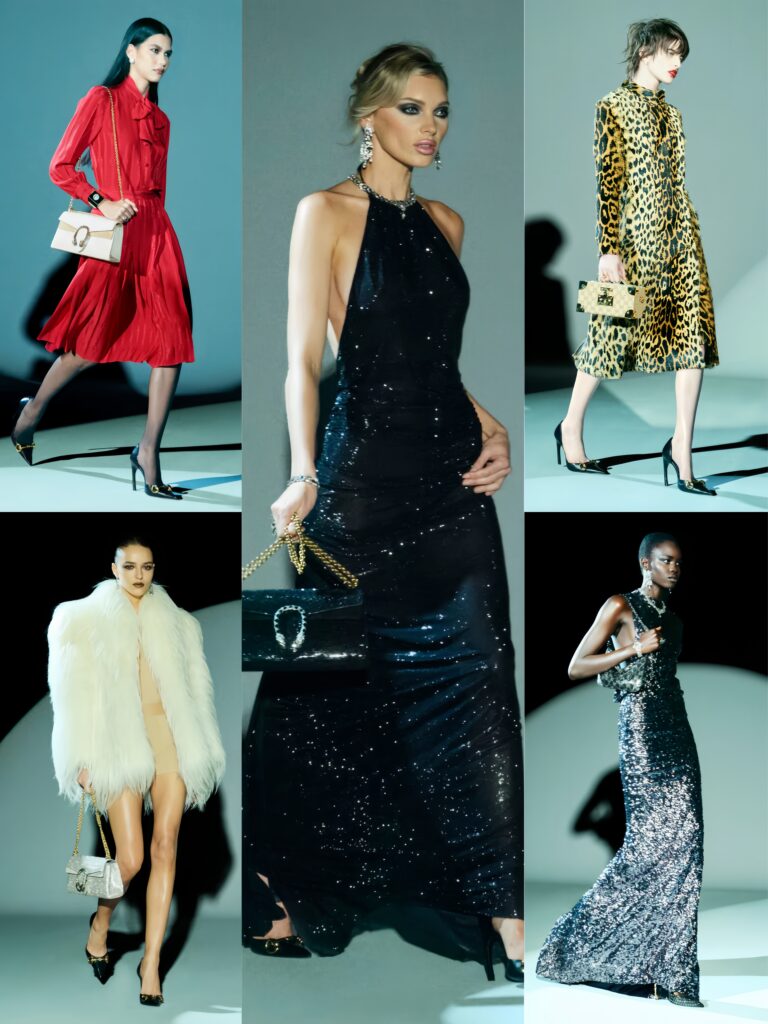
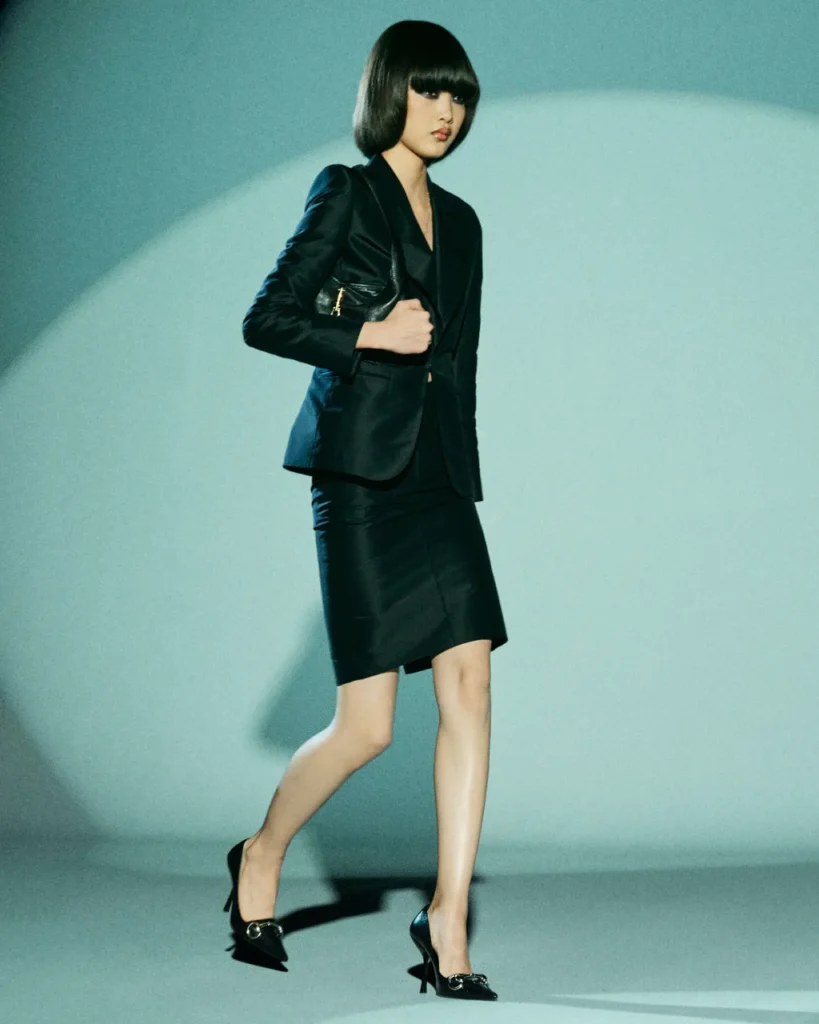
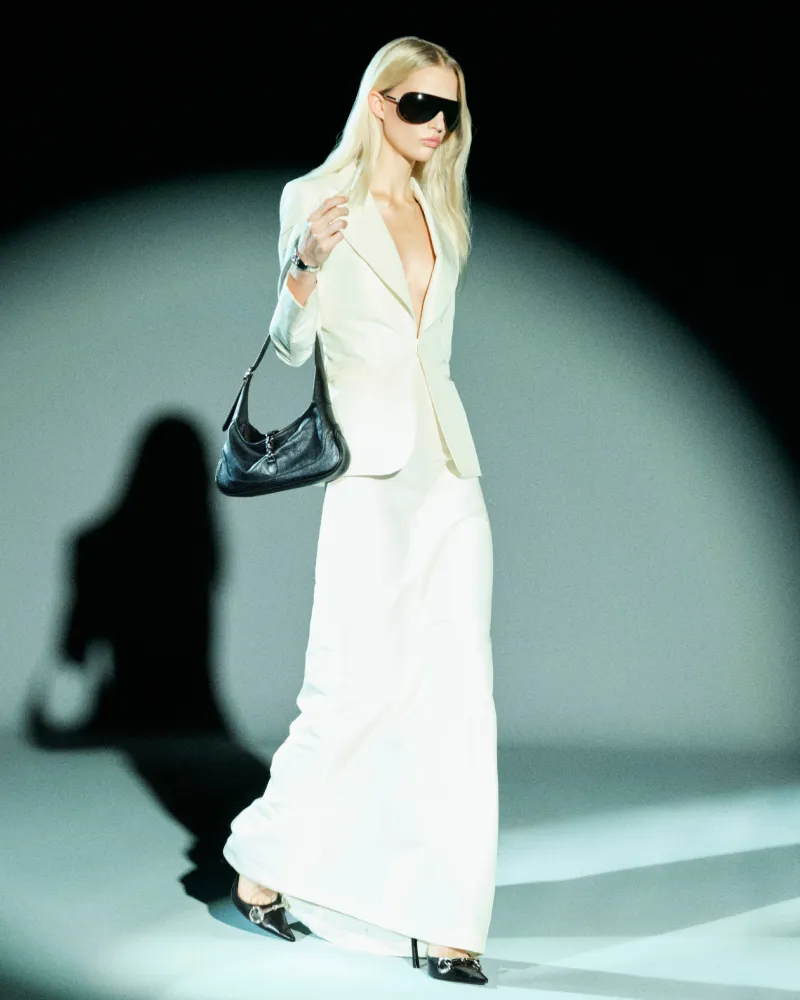
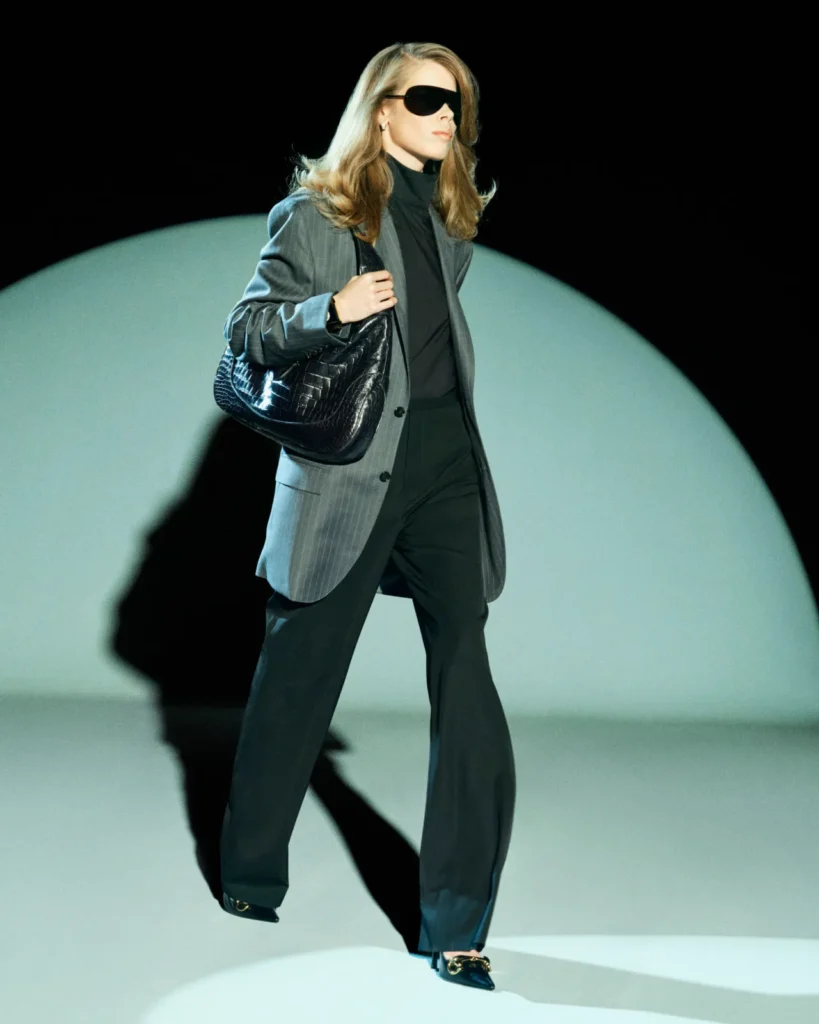
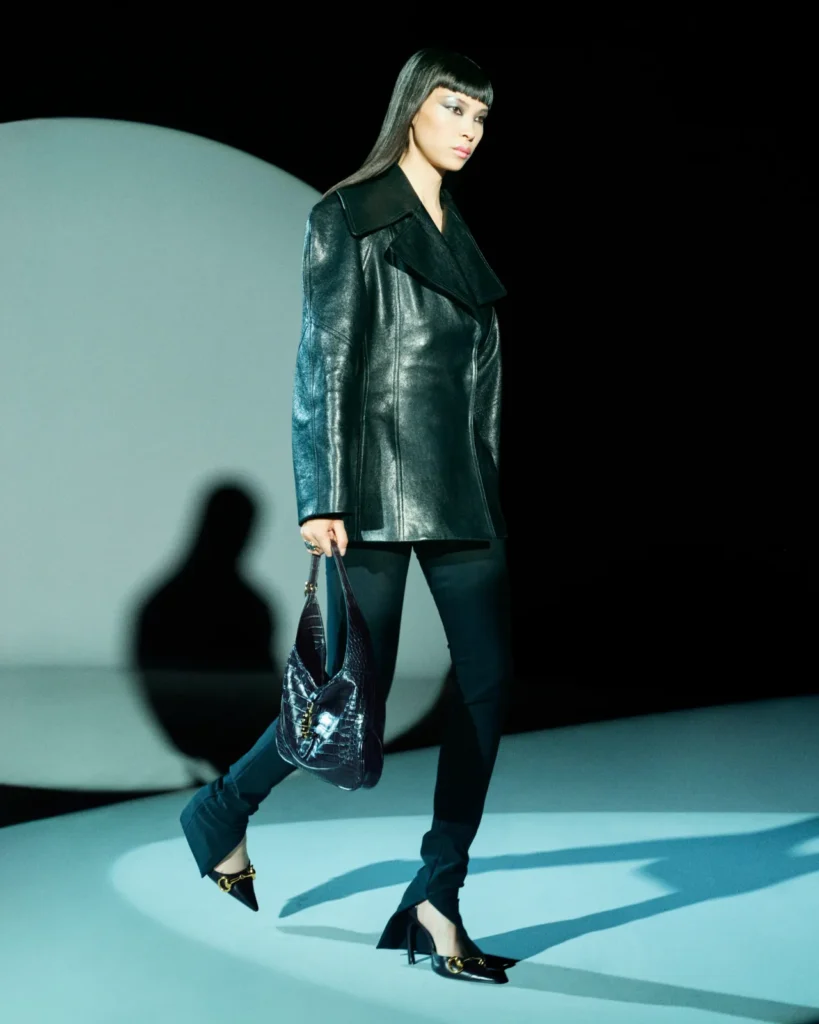
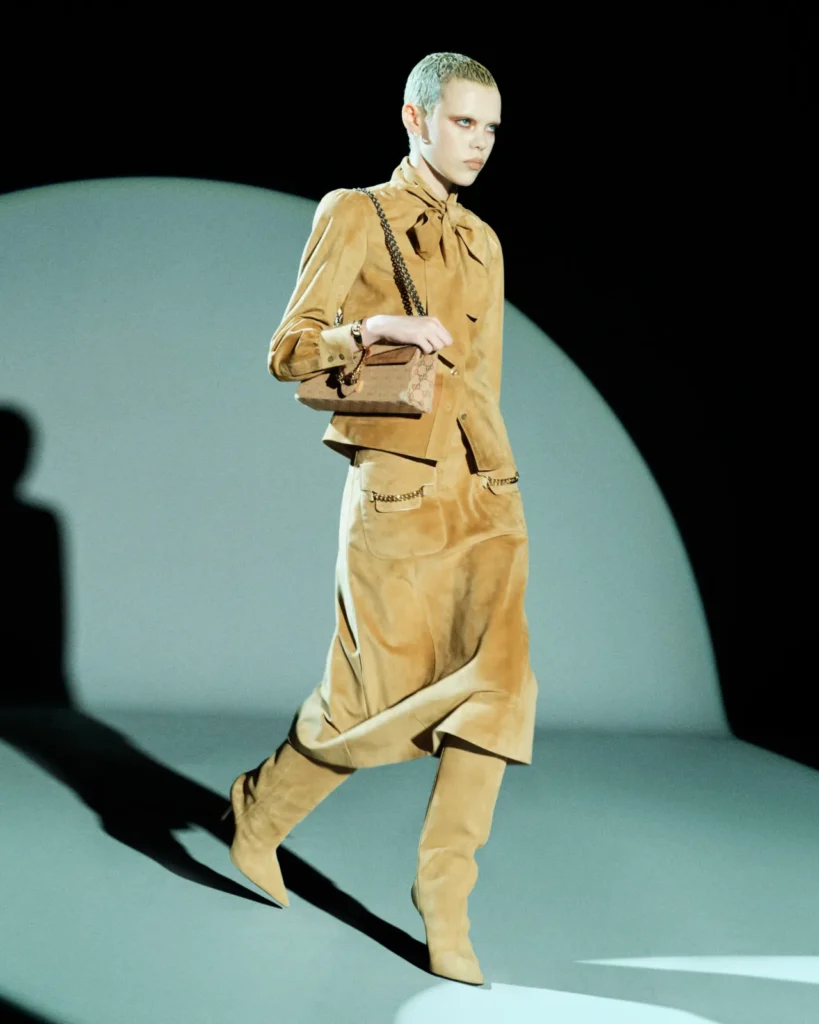
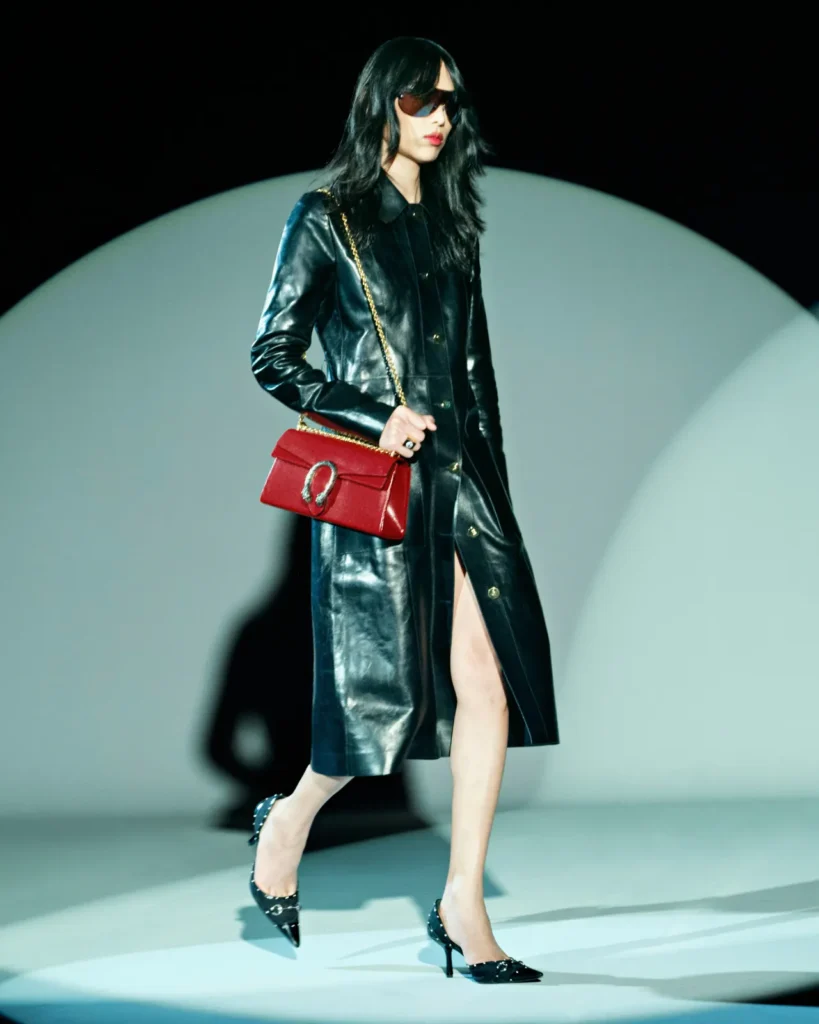
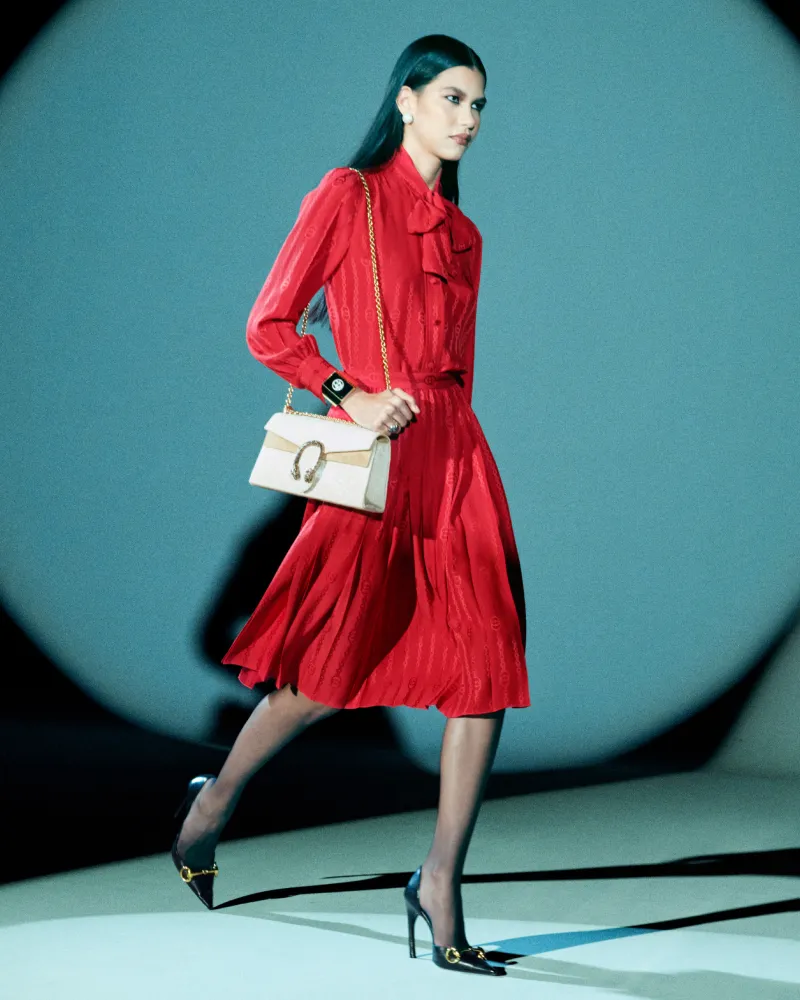
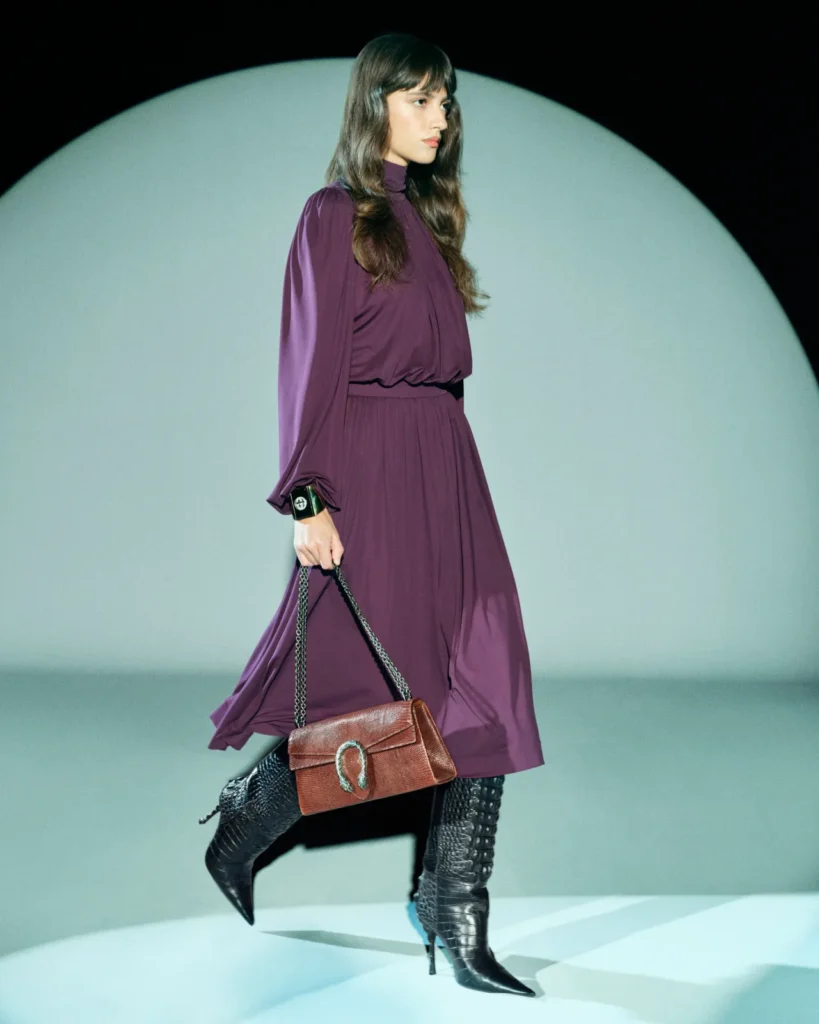
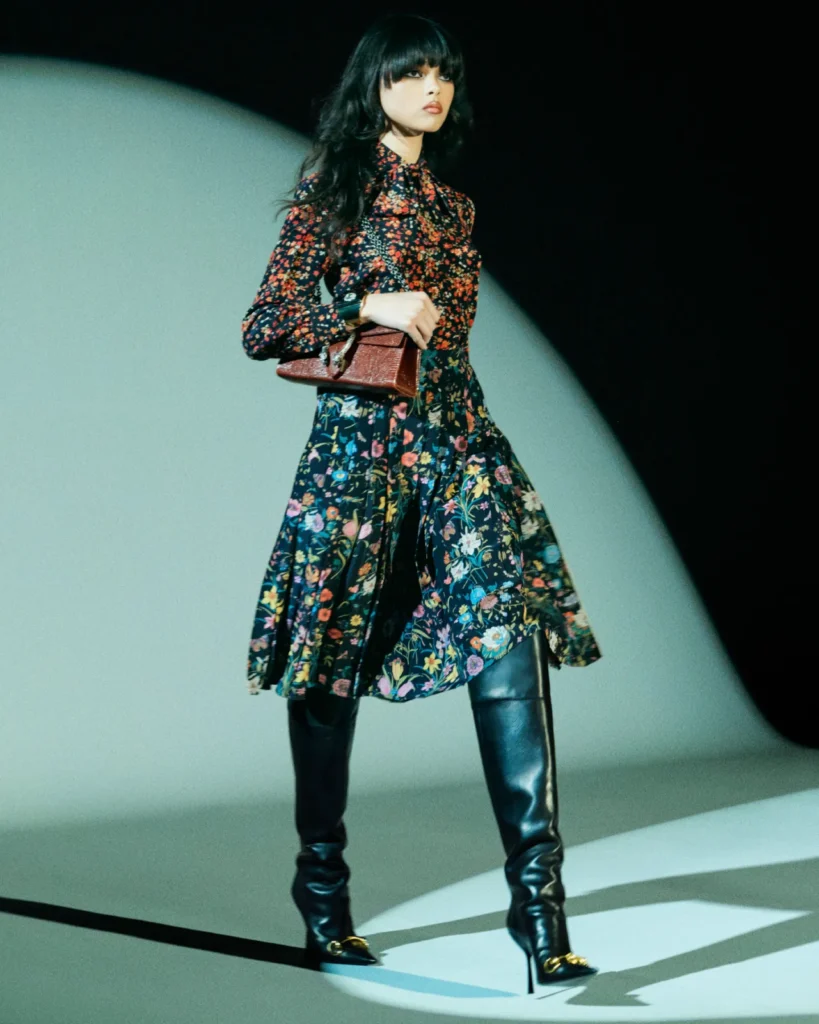
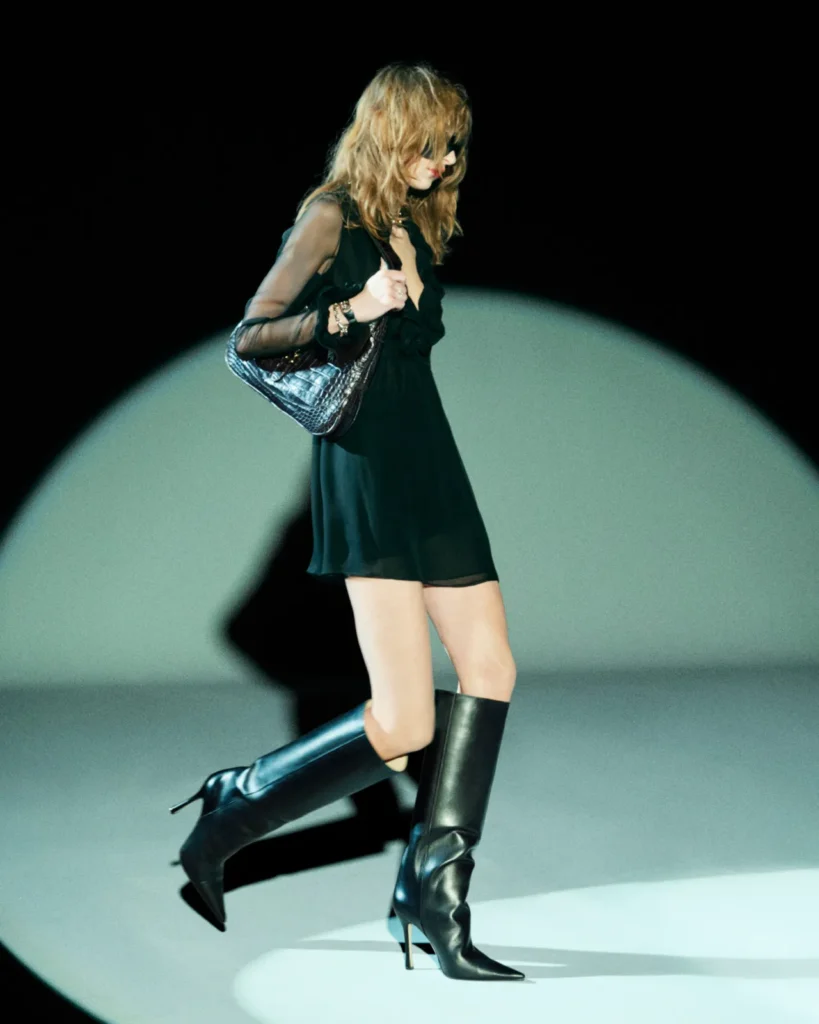
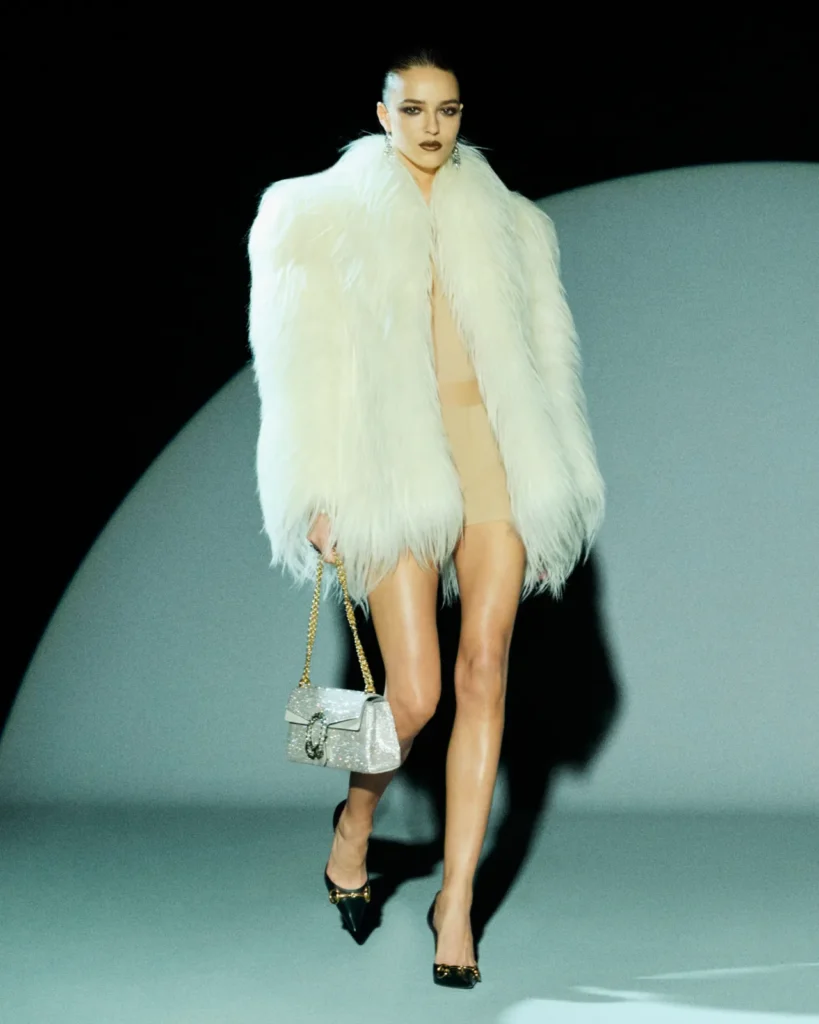
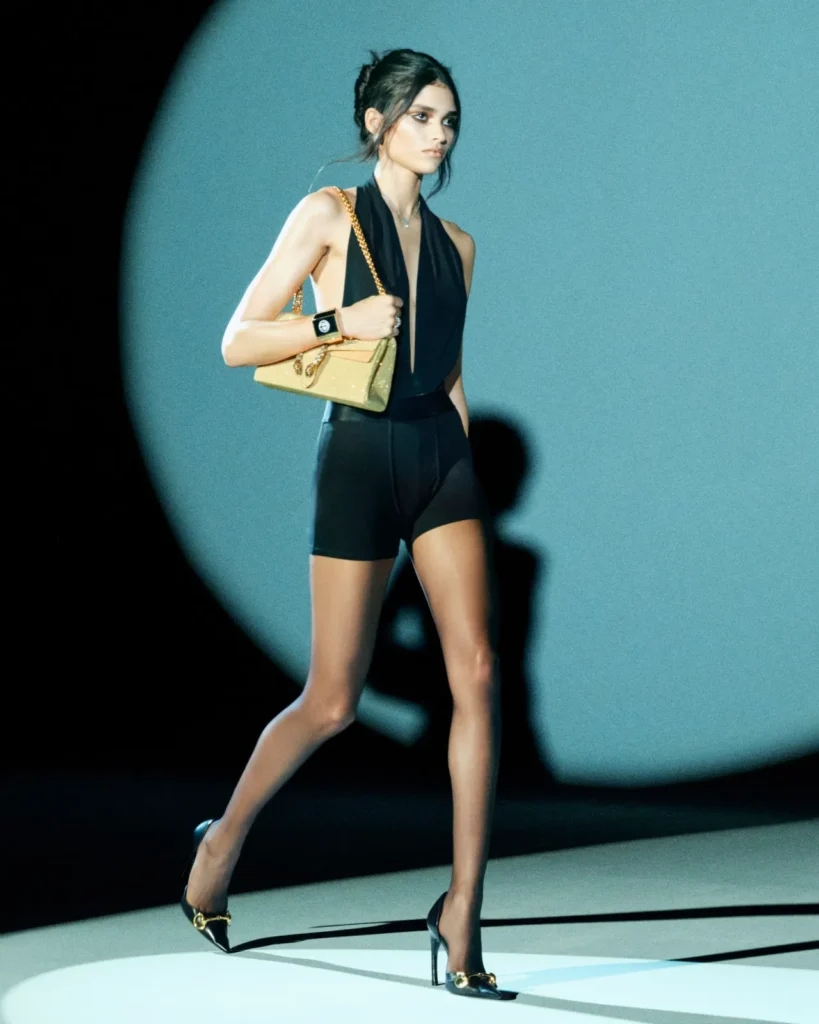
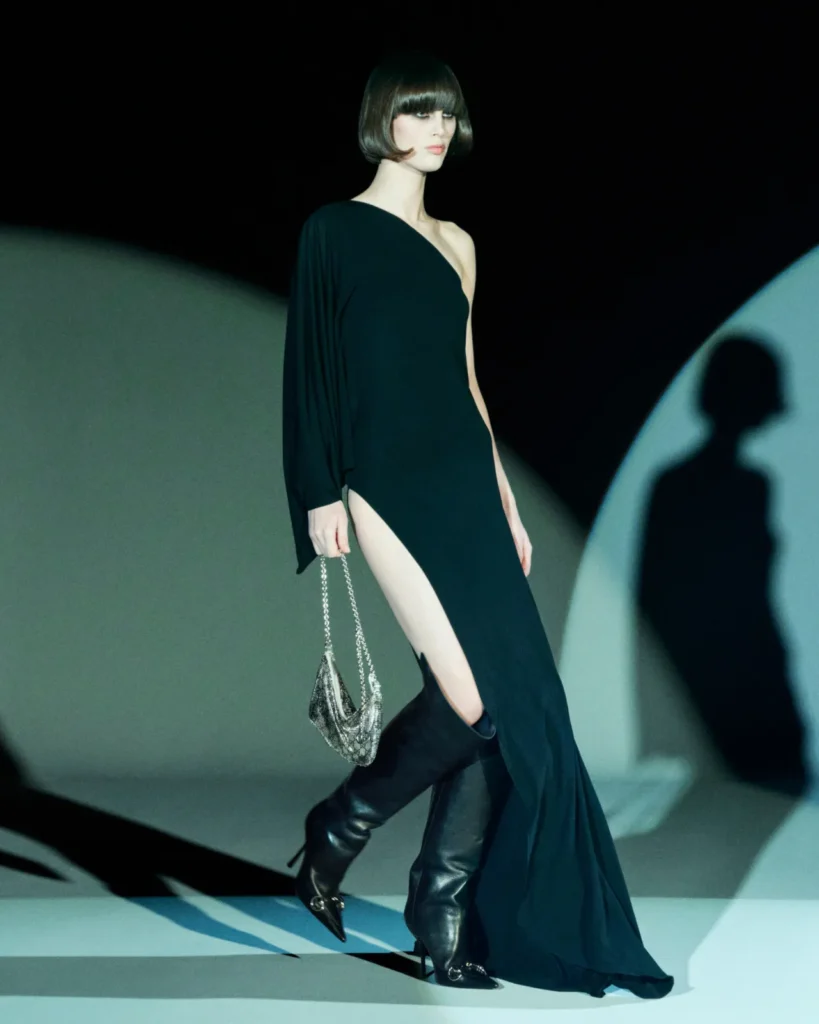
Demna’s first pre-fall collection for Gucci sharpens his emerging vision for the house—a vision increasingly anchored in the seductive minimalism and razor-sharp attitude of Tom Ford’s Gucci. If nostalgia for the Ford era still burns bright, Demna is fanning the flame with intention.
Courtesy of Gucci
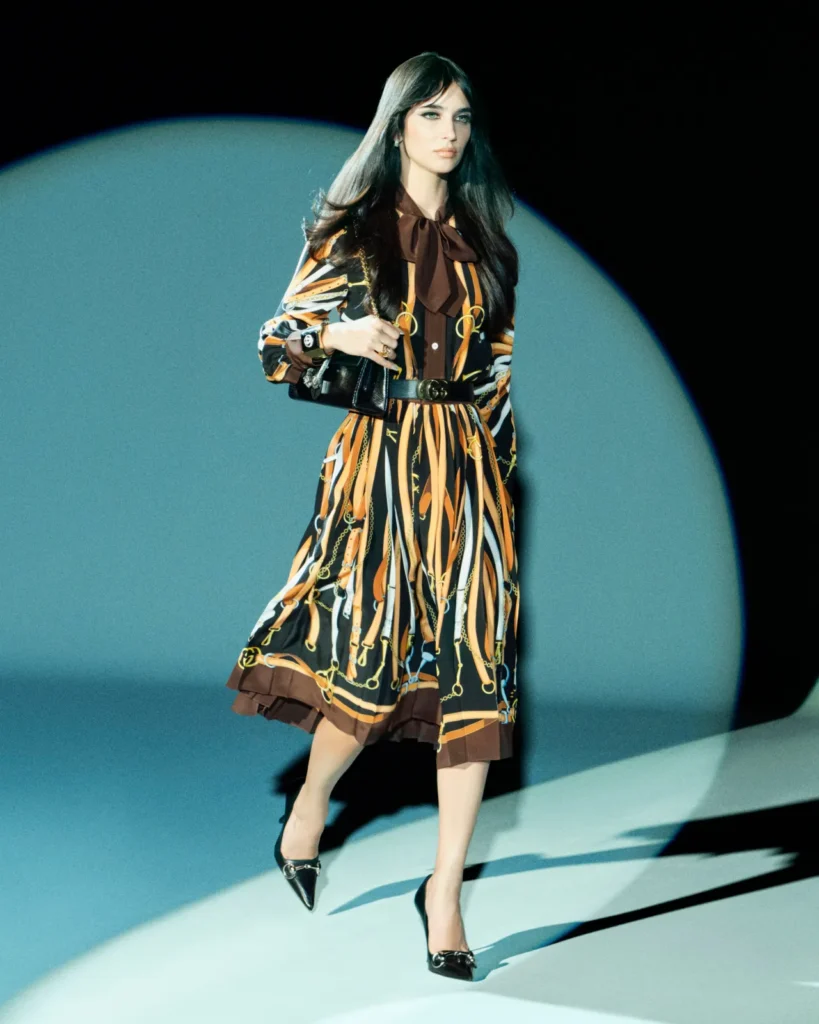
Following the “La Famiglia” lookbook and the buzz around his short film The Tiger, the designer continues to probe the brand’s identity through what he calls the “Gucci Generation.” Pre-Fall 2026 refines his cast of archetypal characters and hints at the direction he will cement at his first runway show in Milan this February. While house codes from the ’70s—GG monograms, Web stripes—remain present, the gravitational pull is unmistakably toward Ford’s sleek sensuality.
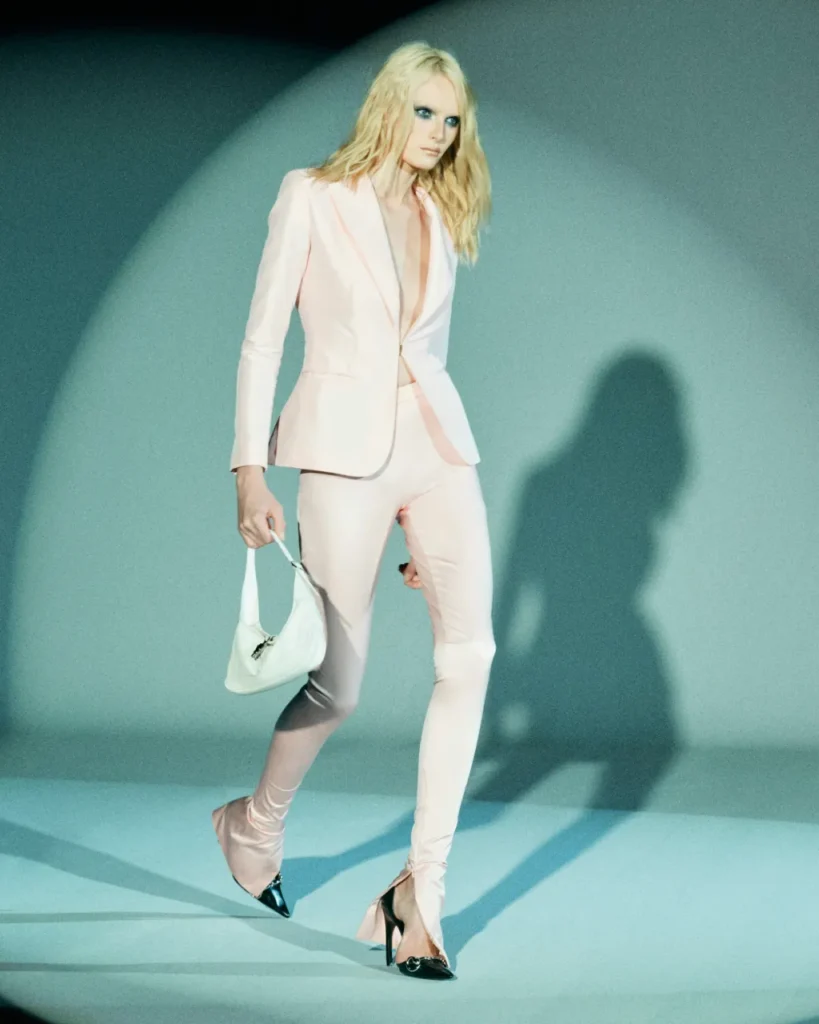
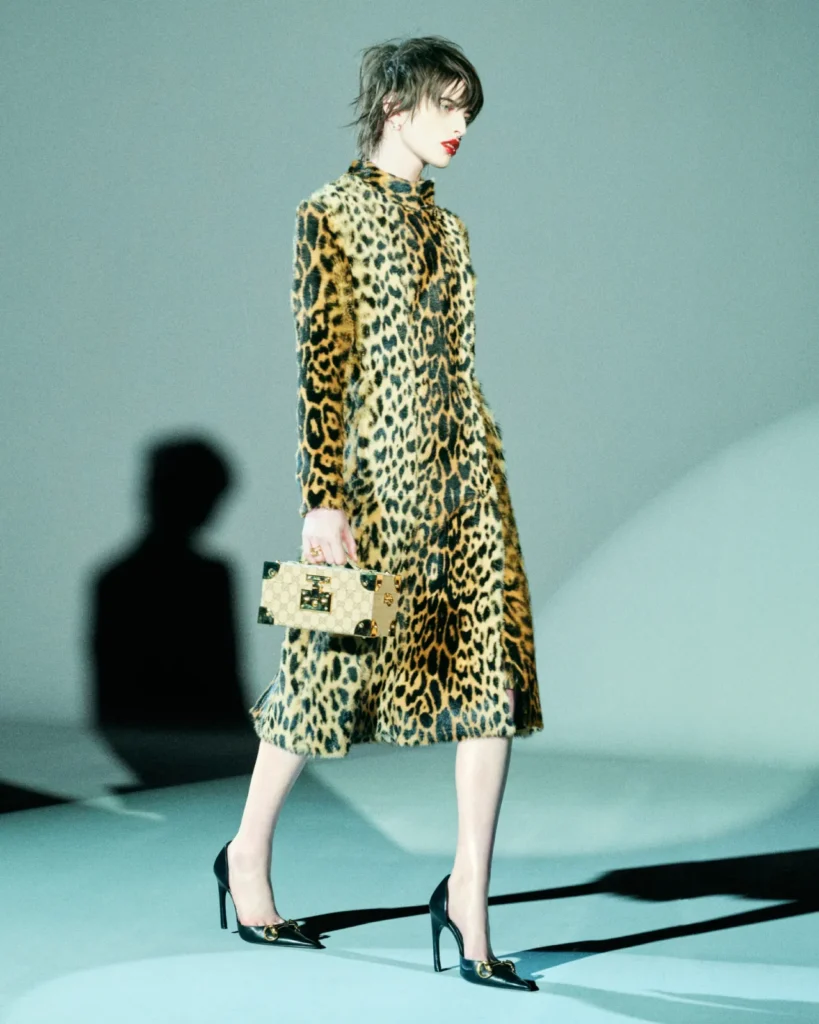
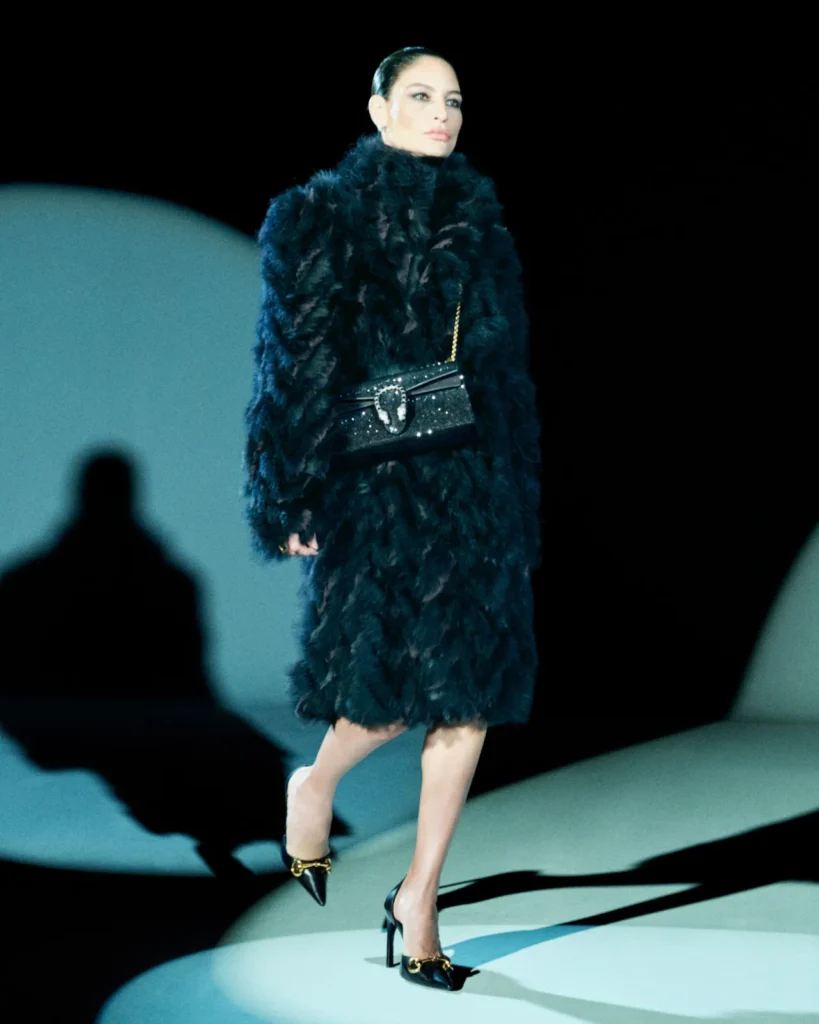
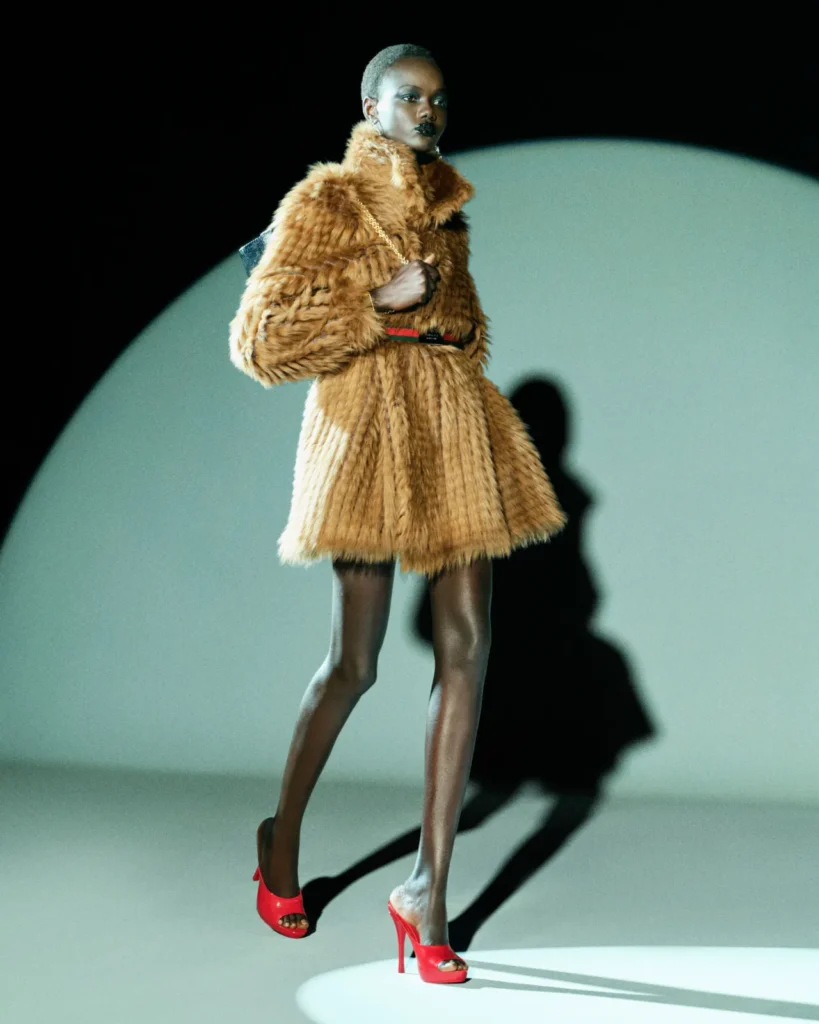
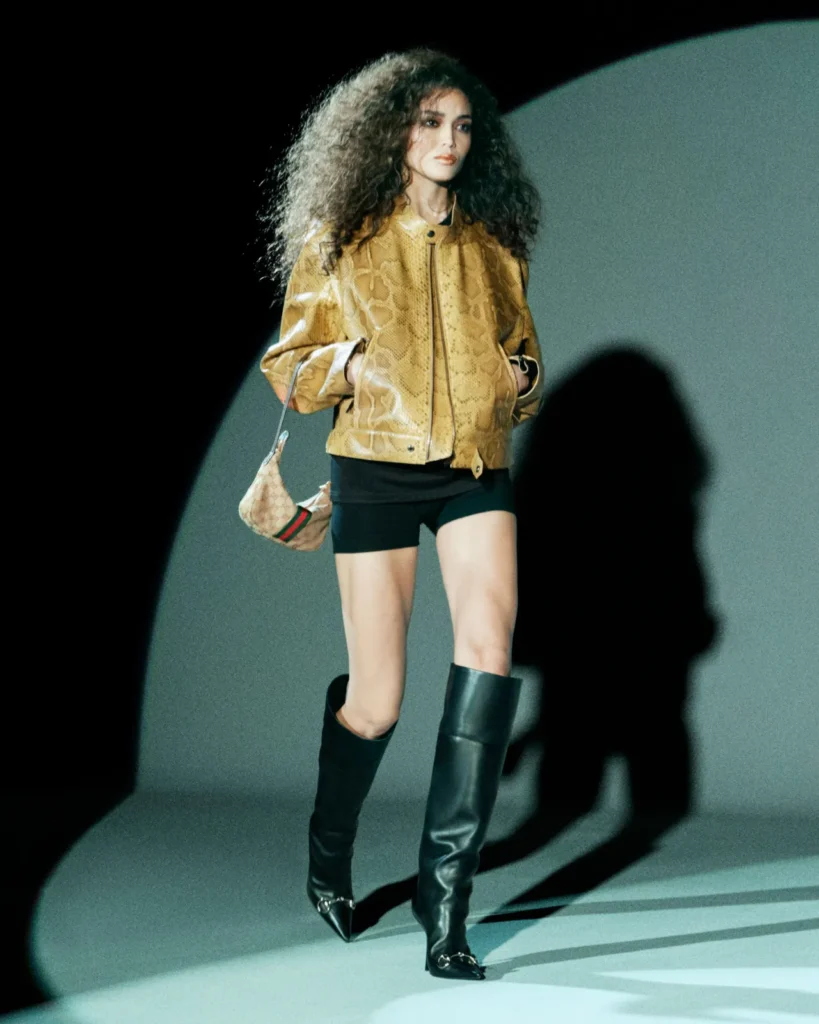
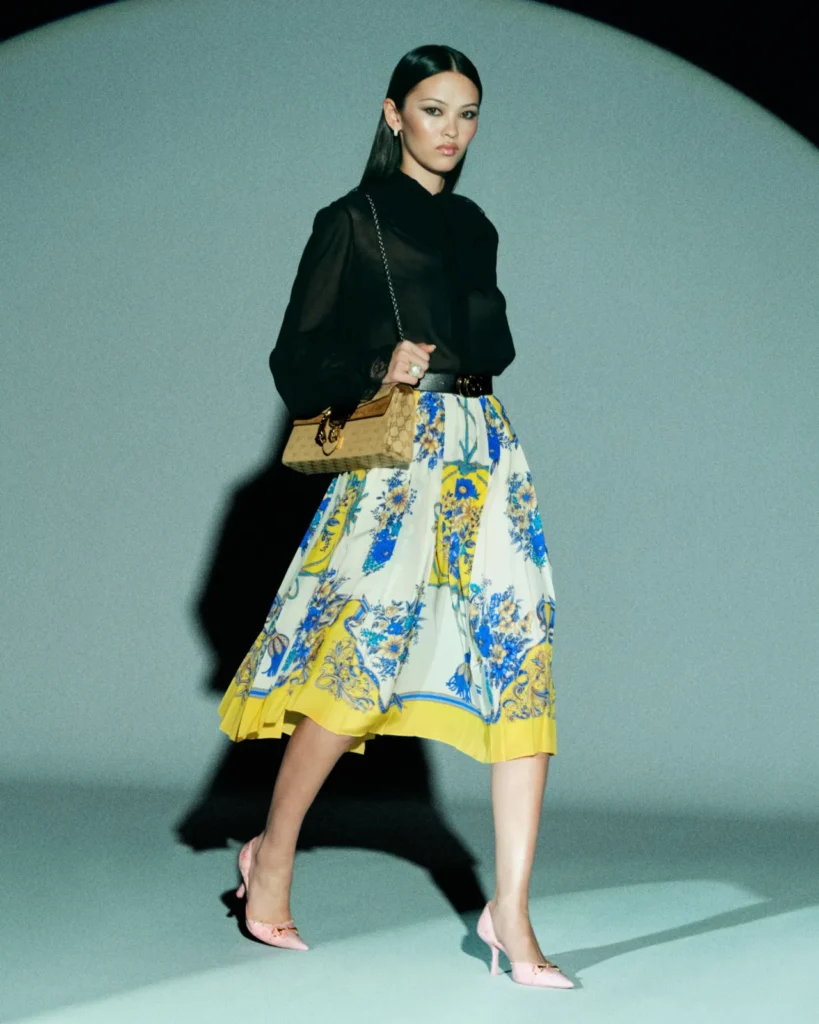
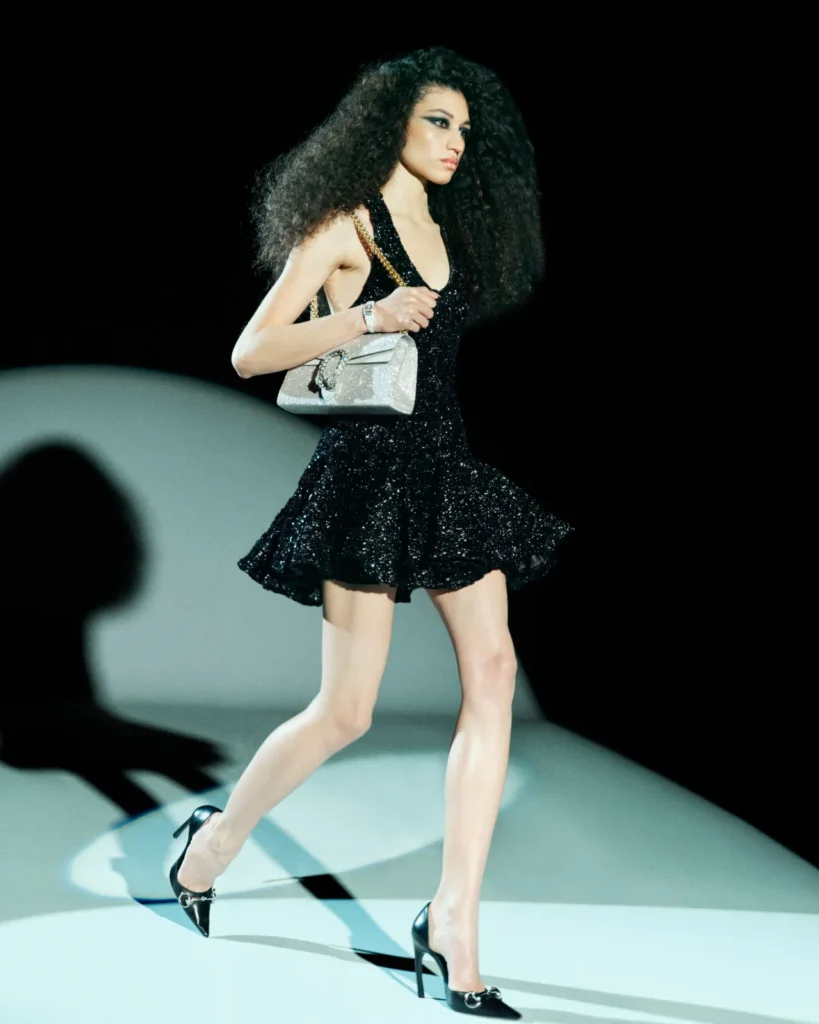
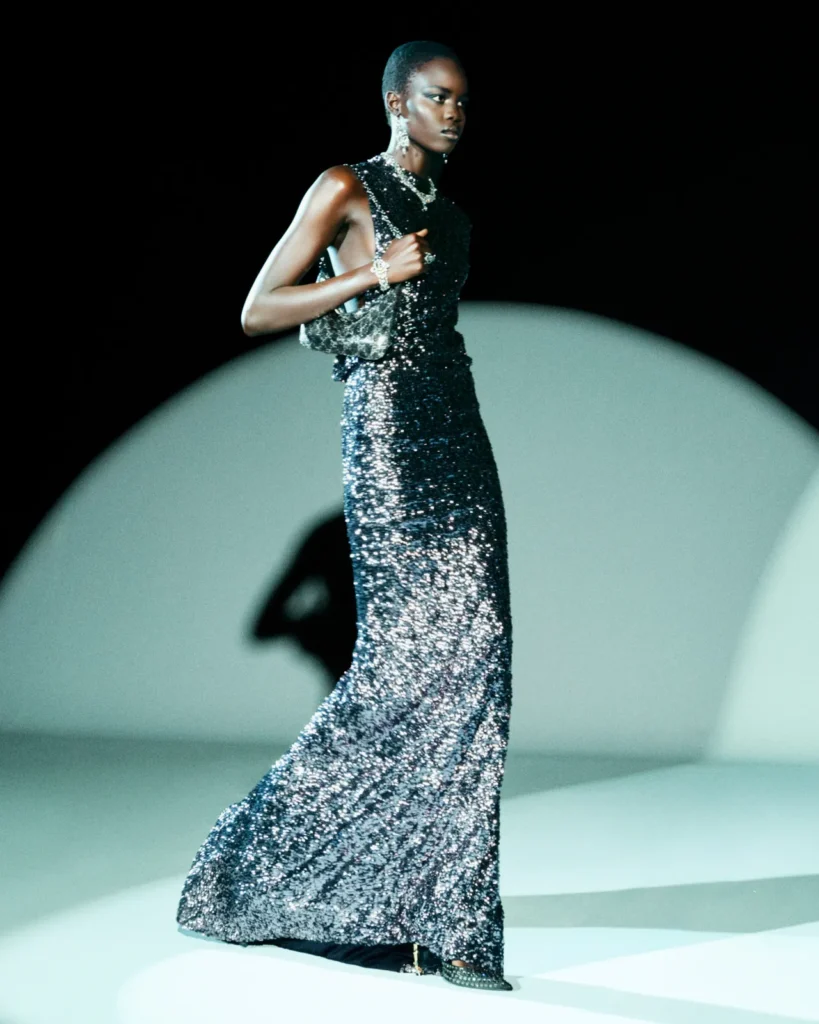
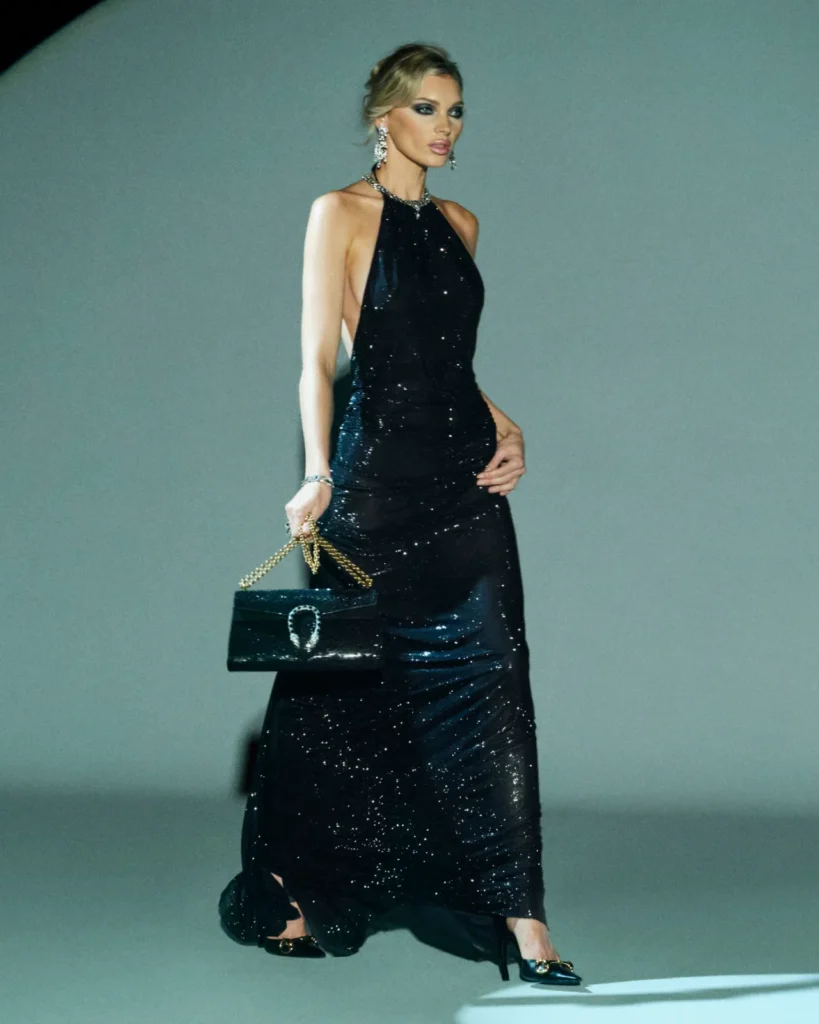
Demna shot the lookbook himself, staging it in lighting that mirrors the white-hot spotlights of Gucci’s 1996 runway. Several looks echo archival Ford-era pieces, not as replicas but as renewed propositions. For Demna, that period was “visually symbolic” and formative to his understanding of fashion—a moment when style and persona fused with striking clarity.
Courtesy of Gucci
The collection opens with a rose silk-faille suit, signaling a decisive shift toward body-skimming tailoring—a stark departure from the oversized silhouettes that defined much of his work at Balenciaga and Vetements. To recreate certain archival constructions, he even revisited original manufacturers, discovering how decades of technological change subtly reshape fabrics and finish.
Courtesy of Gucci
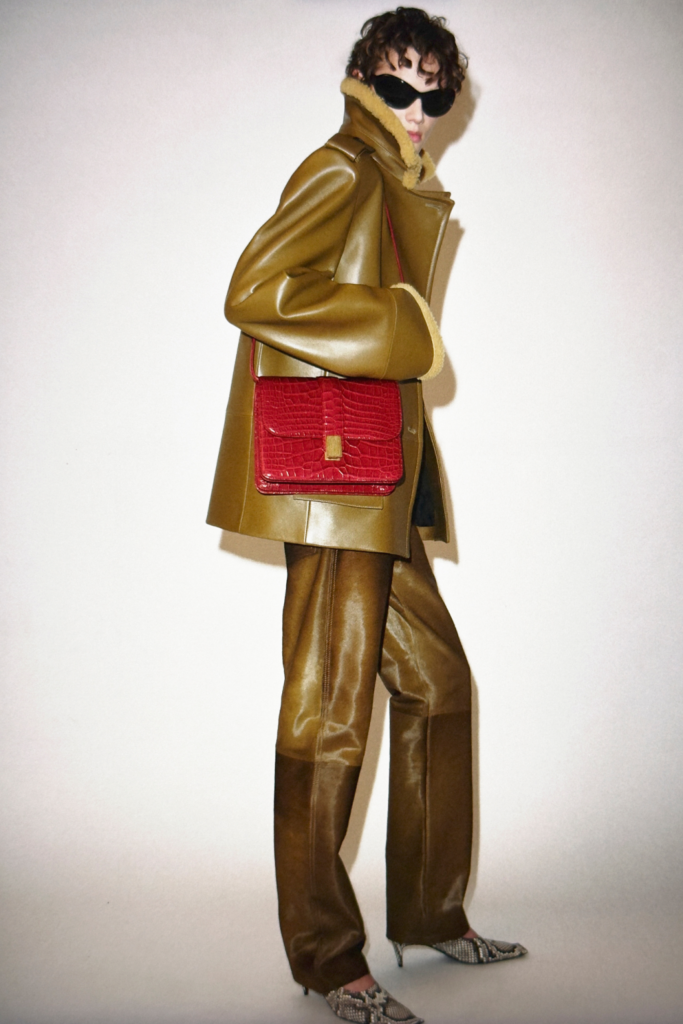
Material research is central to the pre-fall story. Demna uses everything from canvas and refined suedes to silk-cashmere blends that soften his tailoring vocabulary. Track jackets become elevated airport attire; denim is laser-cut into seamless, minimalist pieces; devoré velvet appears in translucent trousers; and leather is cut into biker jackets traced with Web motifs or into dive-inspired ensembles with a provocative edge.
Courtesy of Gucci
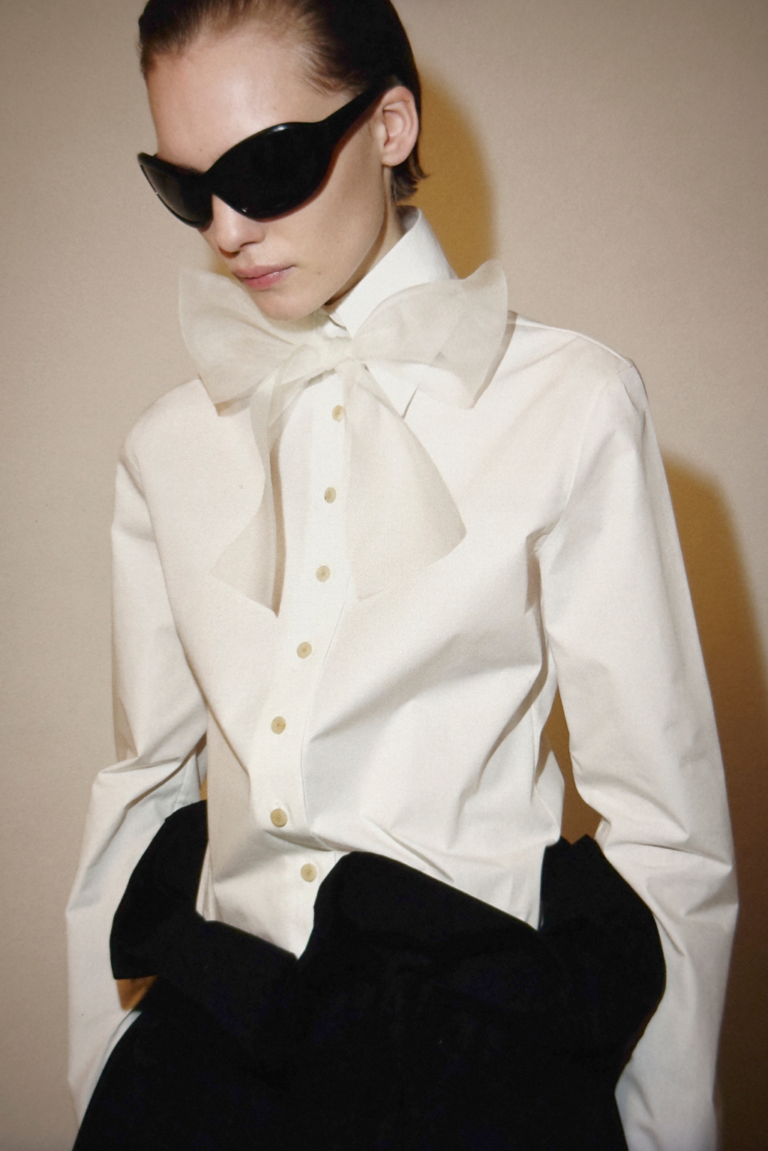
Even the most ’70s-inflected designs—pussy-bow blouses, pleated floral skirts, equestrian scarf-dresses—carry an undercurrent of sensuality through precise slits or fluid cuts. The bolder pieces amplify this tension: a leather-spliced leopard coat worn as outerwear or a dress, shimmering evening gowns, and feather-light coats that blend shearling, feathers, and muslin strips into buoyant, fur-like textures.
Pre-Fall 2026 is Demna’s clearest statement yet: Gucci’s future will draw from its past, but with a sharper, sexier, and more distilled modernity. It is a preview of the runway he imagines—and the one he suggests we never got to see.
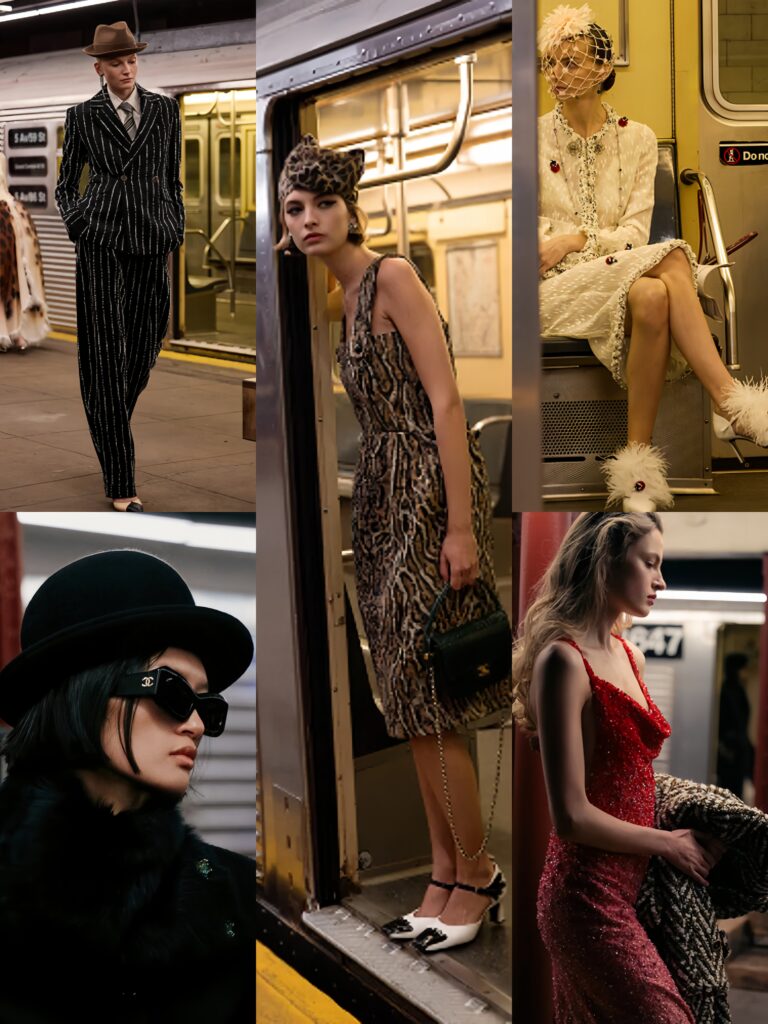
Chanel Métiers d’Art 2026: The C Line Reimagines City Elegance Underground
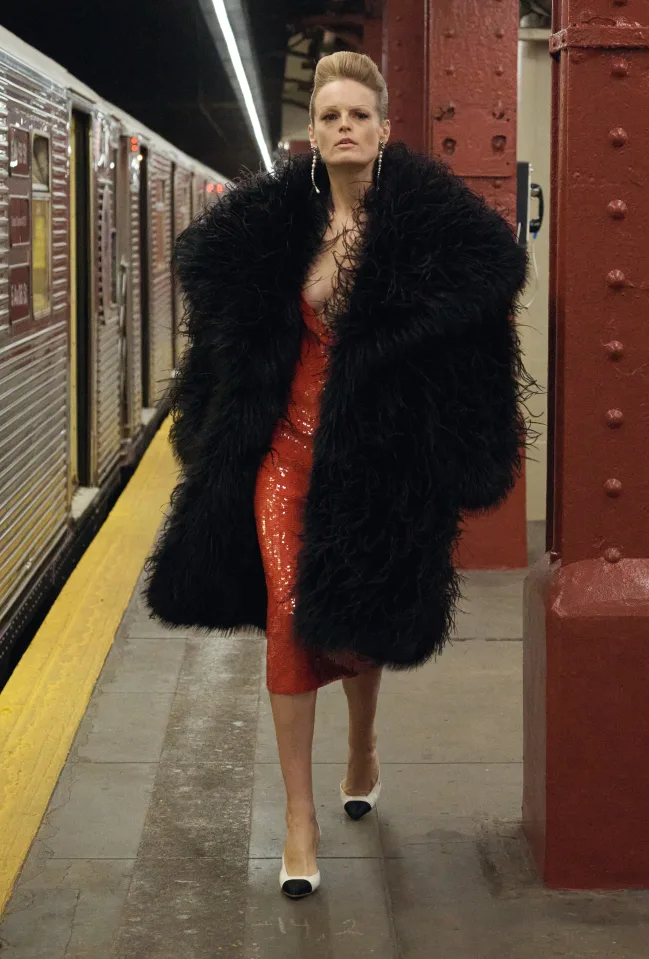
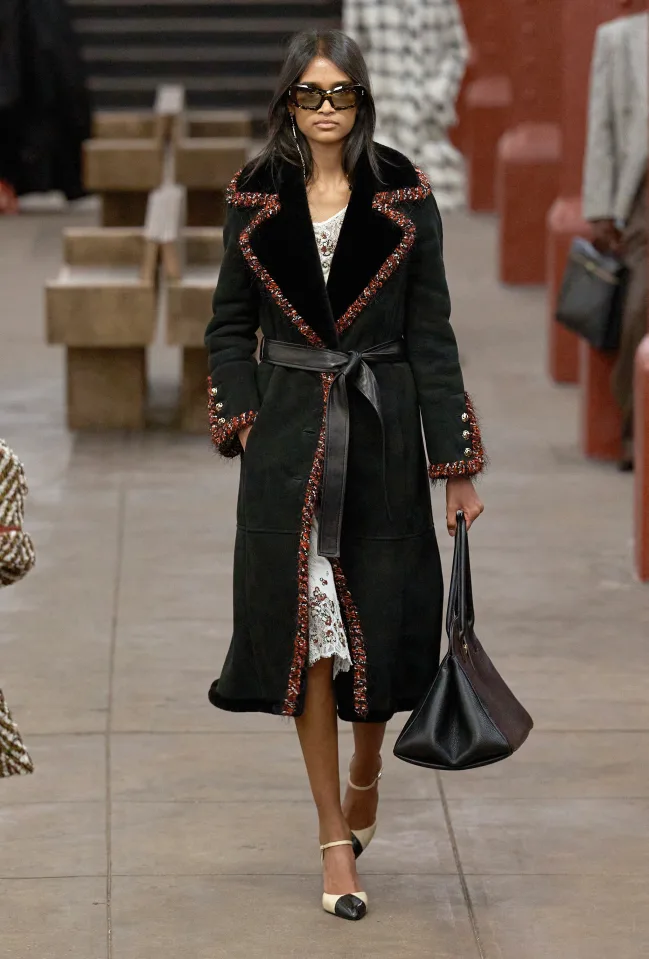
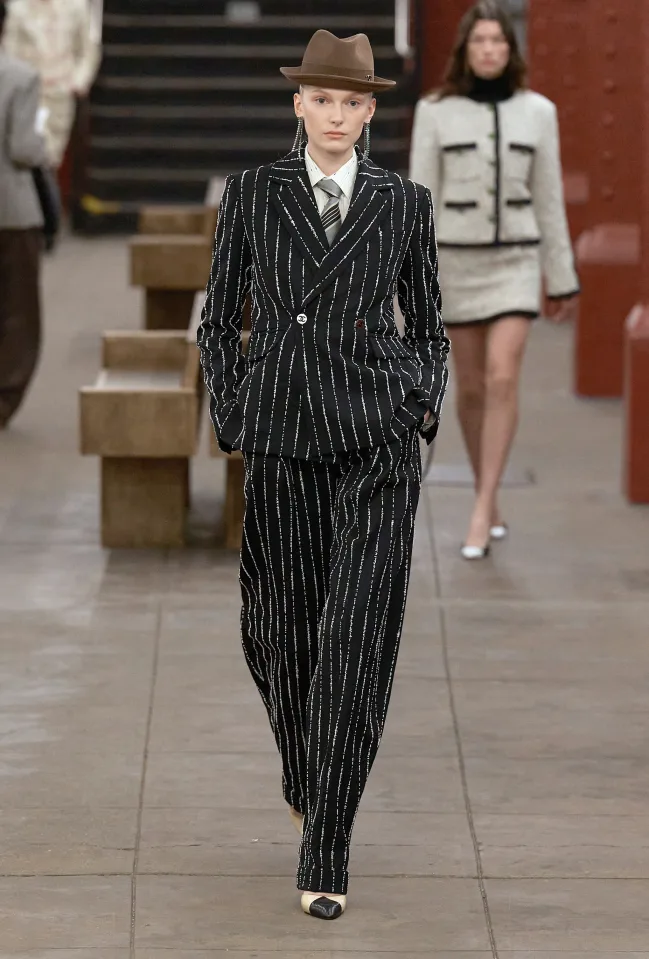
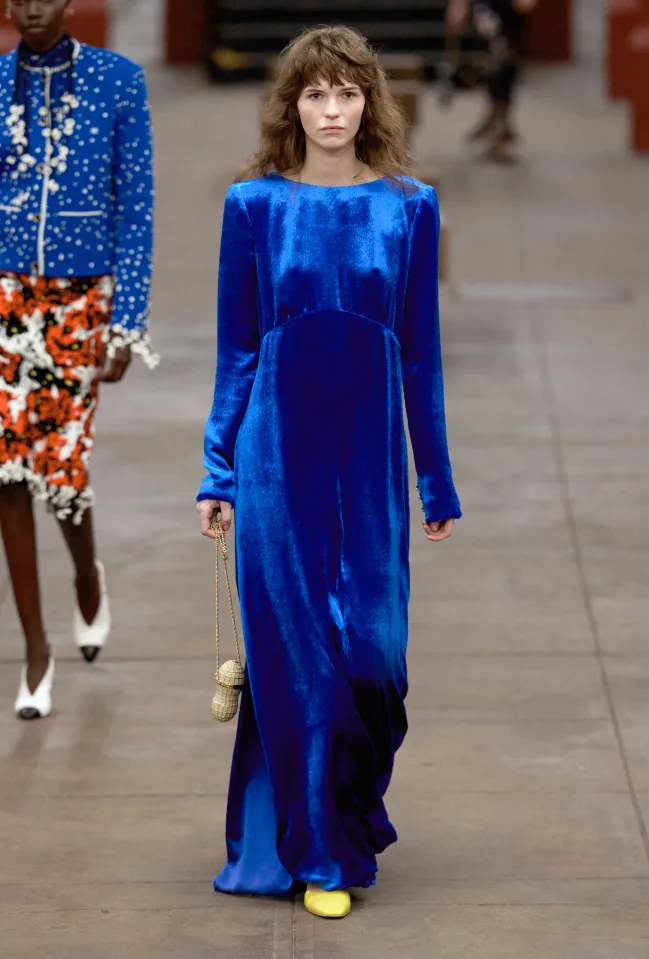
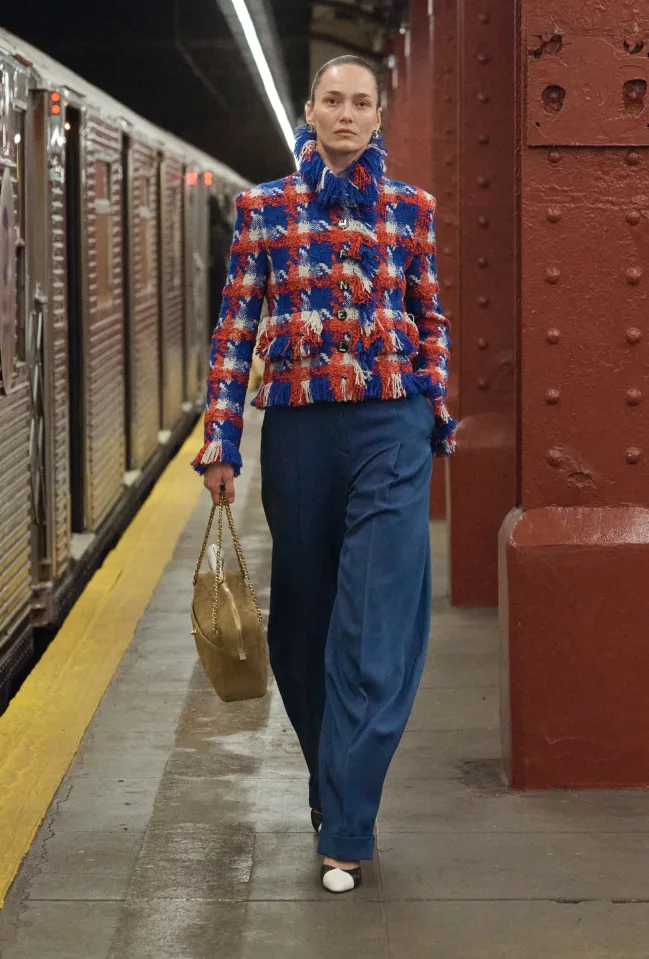
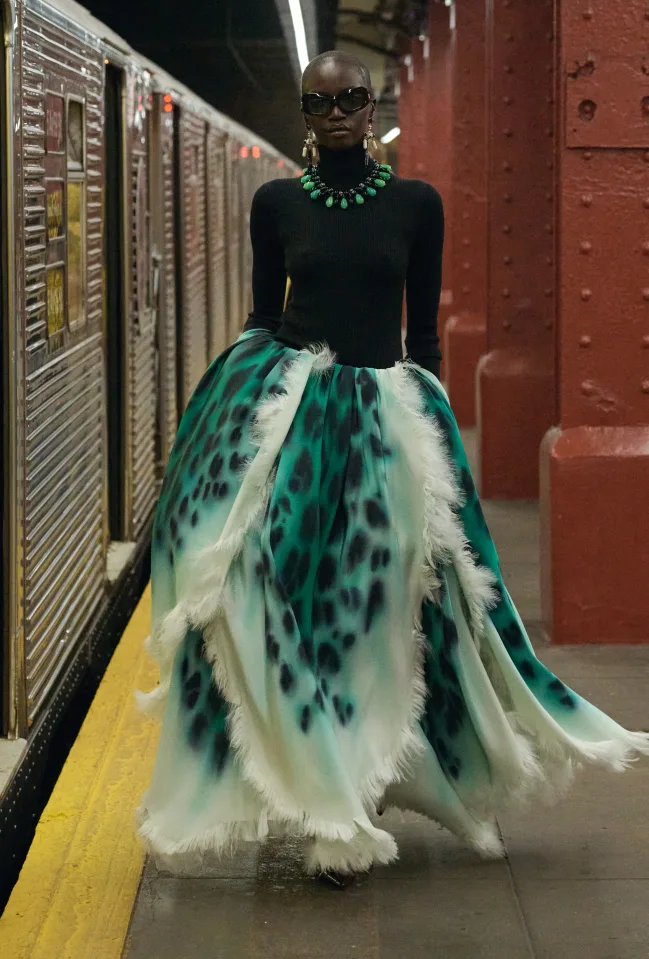
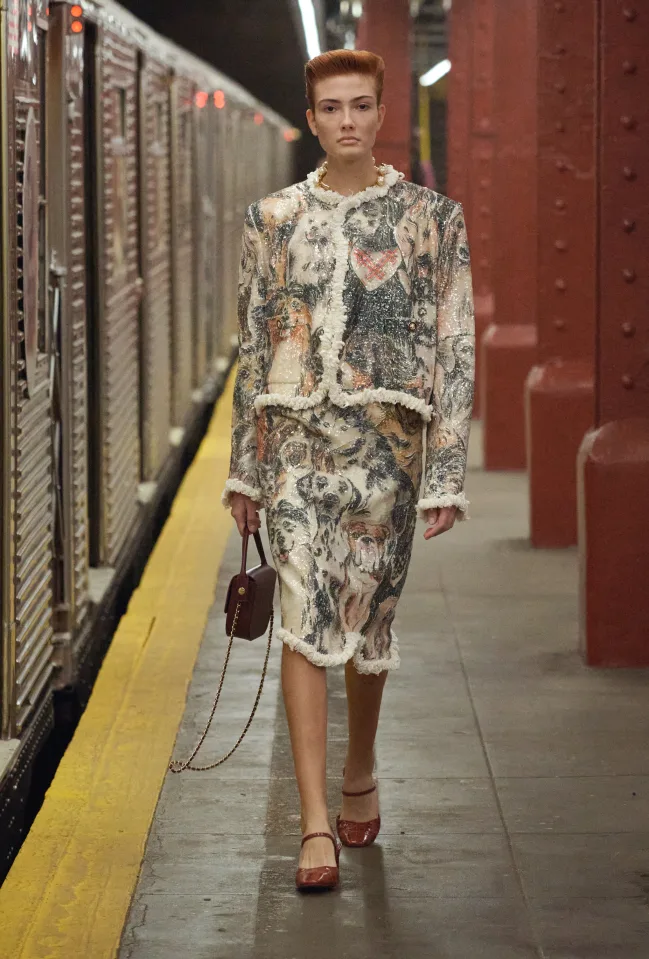
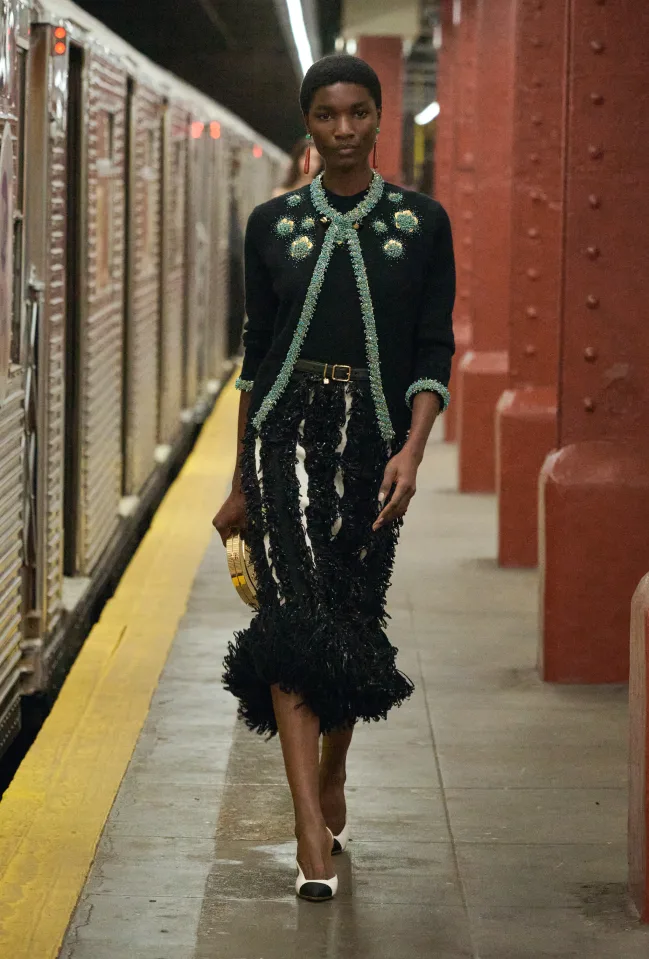
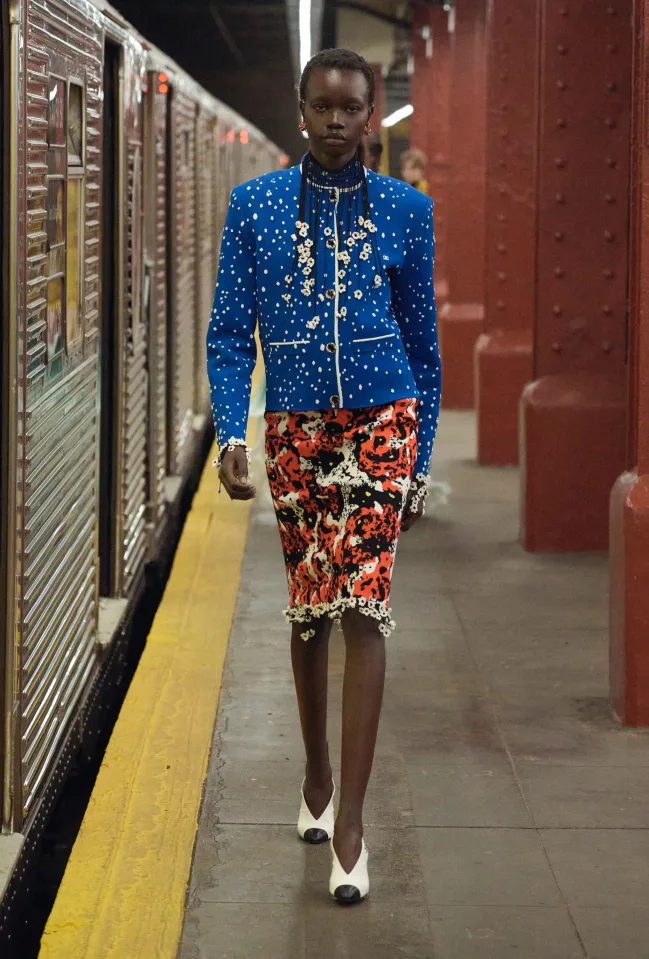
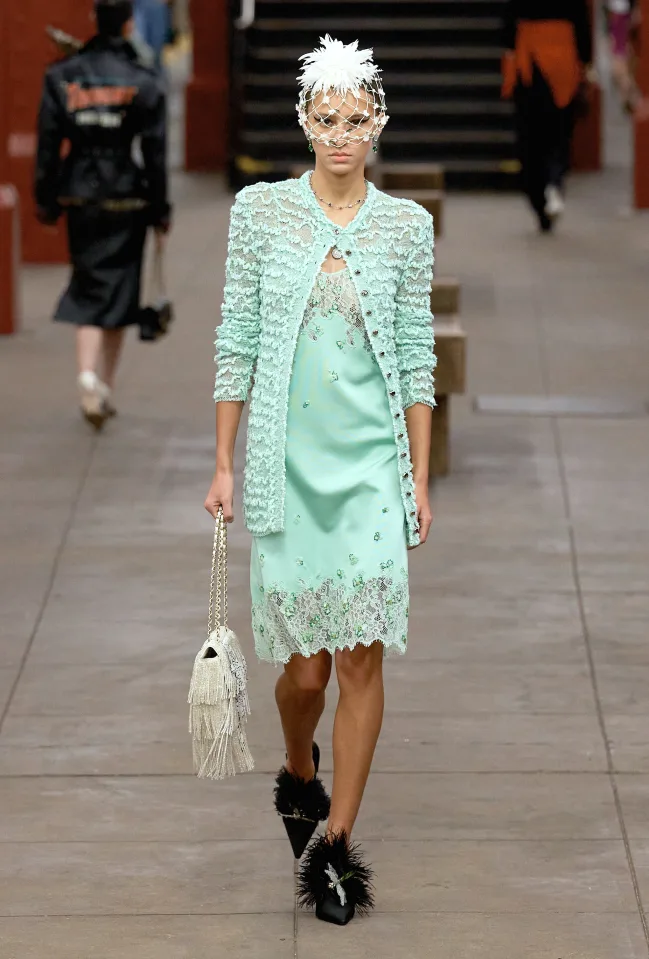
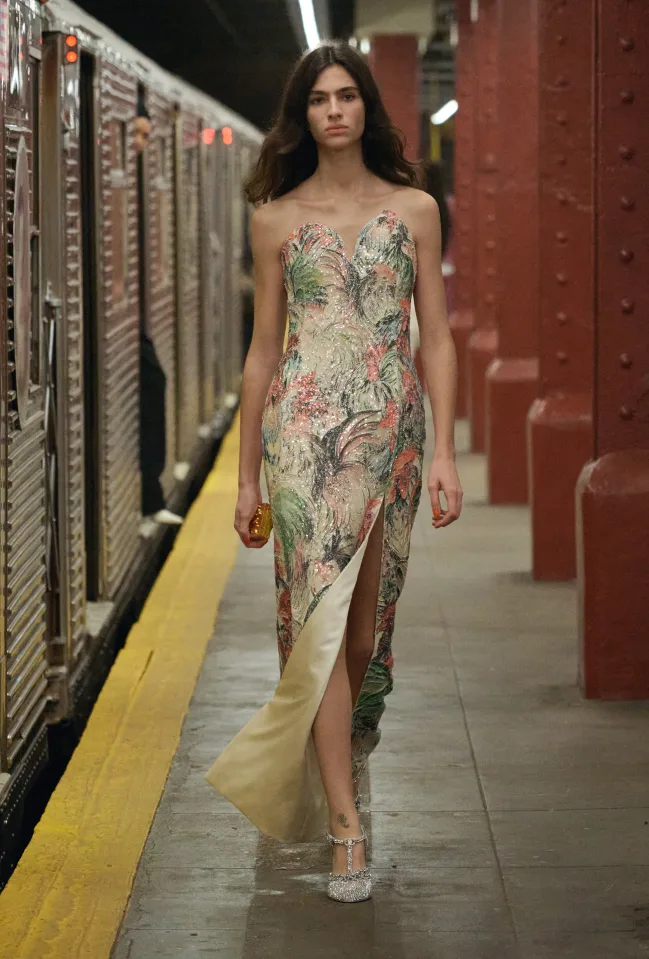
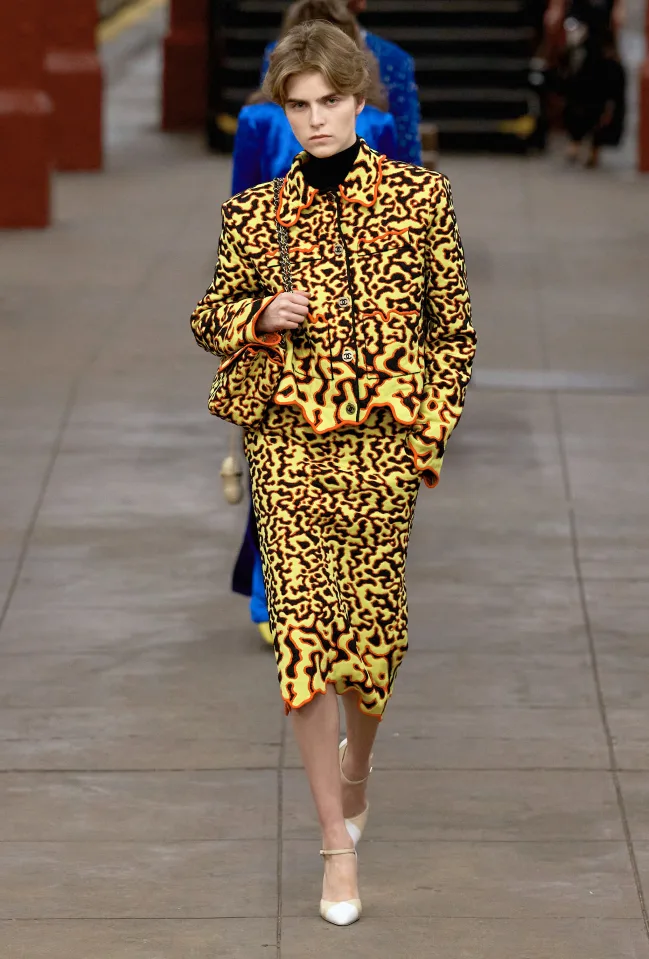
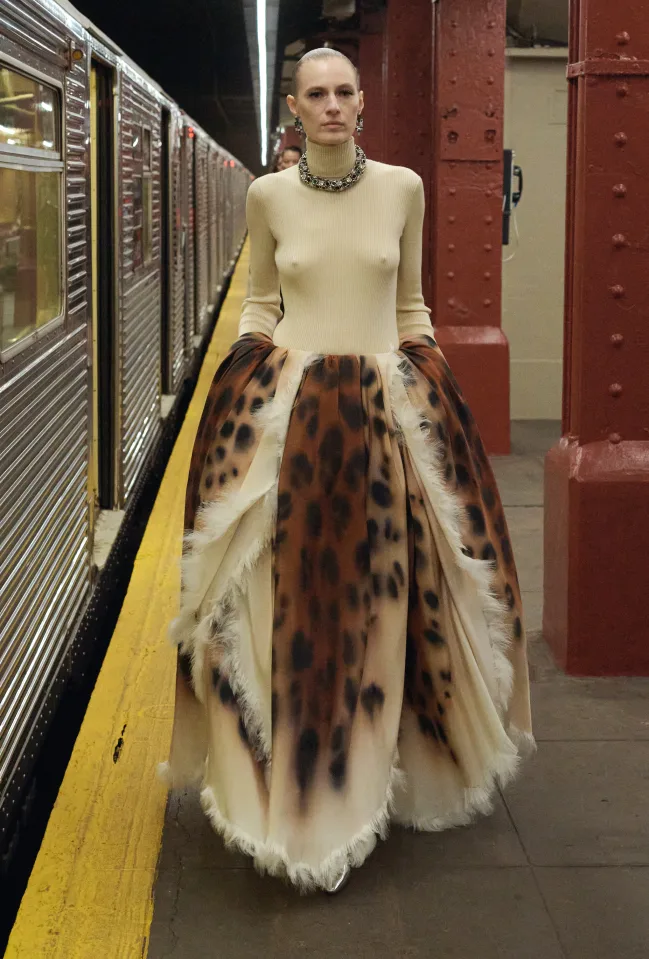
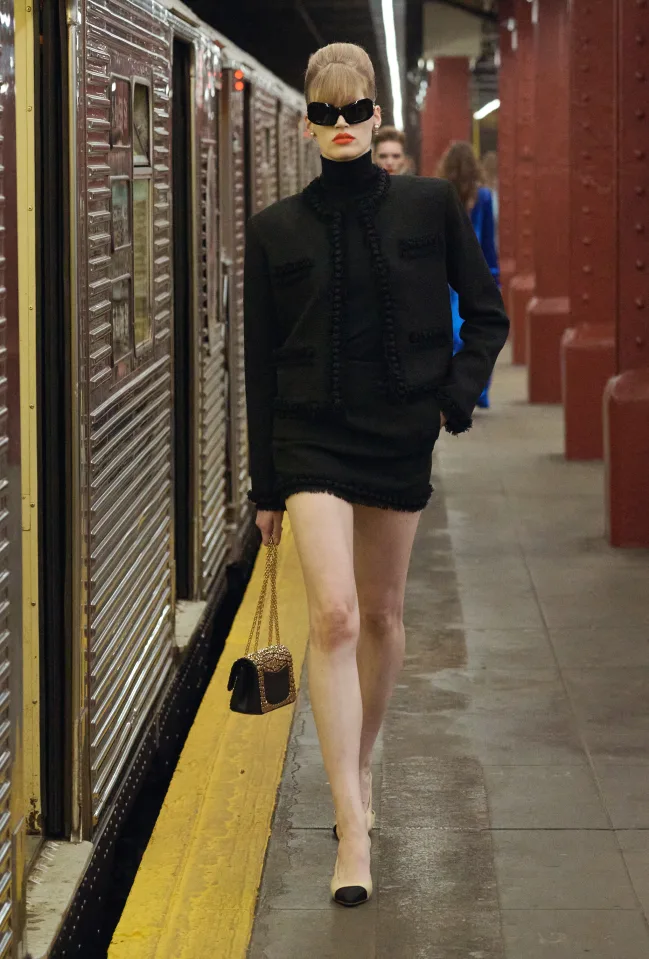
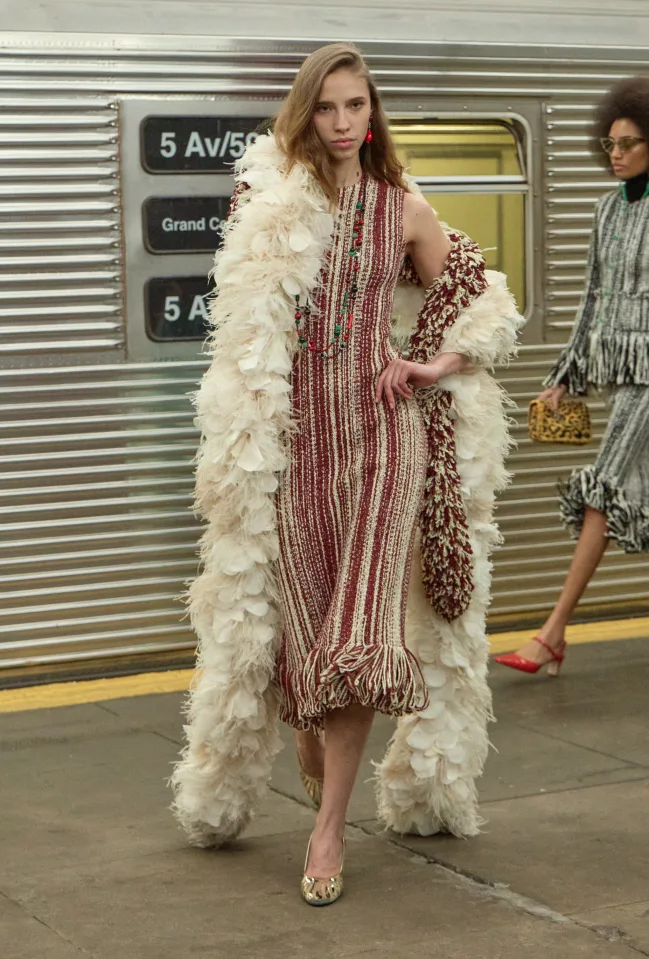
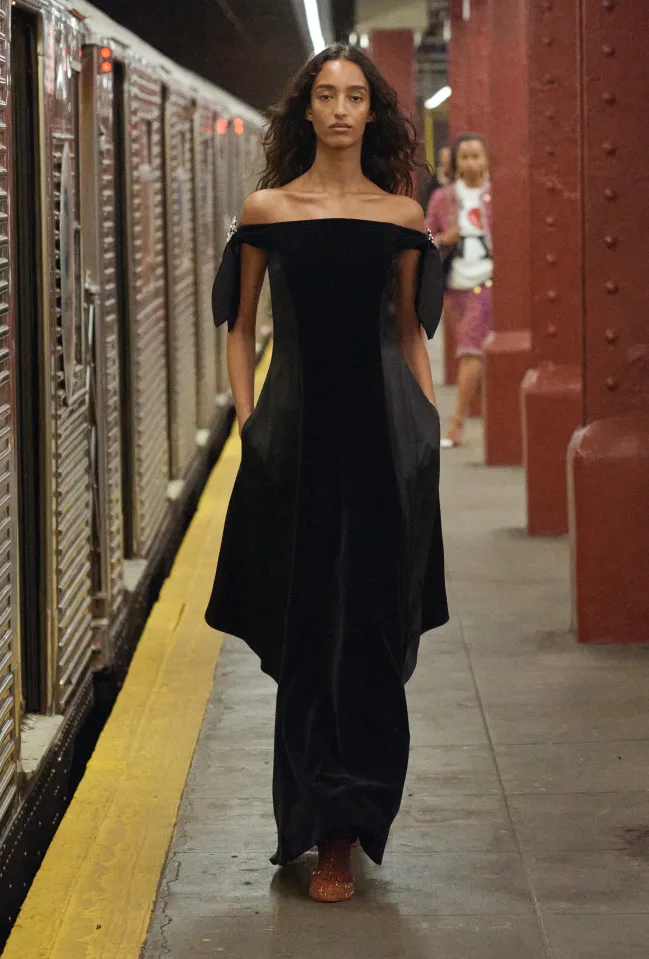
For his Métiers d’Art debut at Chanel, Matthieu Blazy delivered a sharply cinematic vision—one that transformed an abandoned New York City subway platform into a stage for craftsmanship, character, and urban glamour. The result was a show that distilled Chanel’s codes through Blazy’s precise, modern eye, all while spotlighting the extraordinary work of the maison’s artisans.
Courtesy Of Chanel
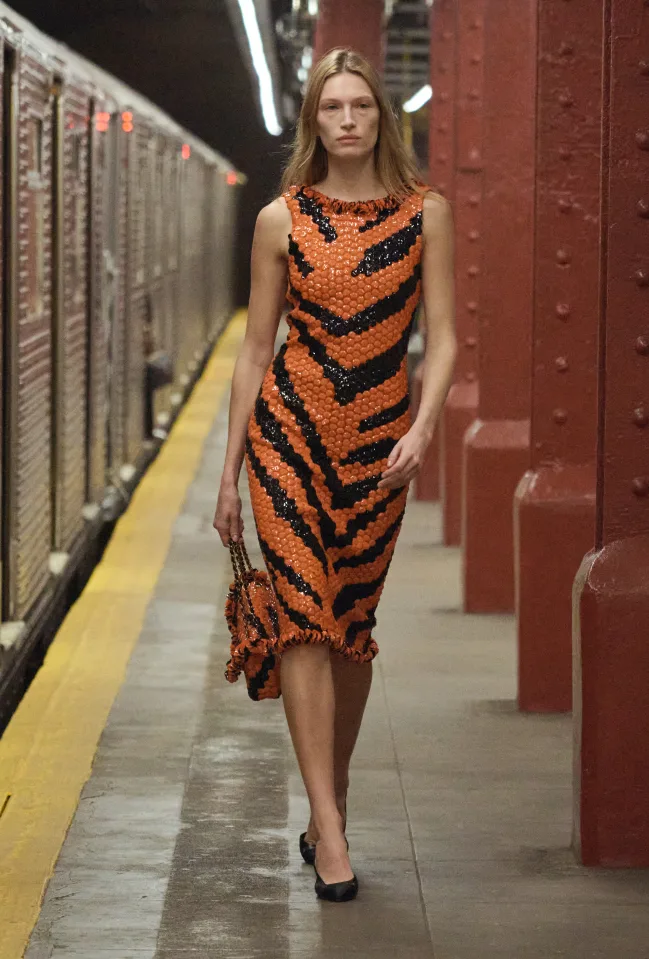
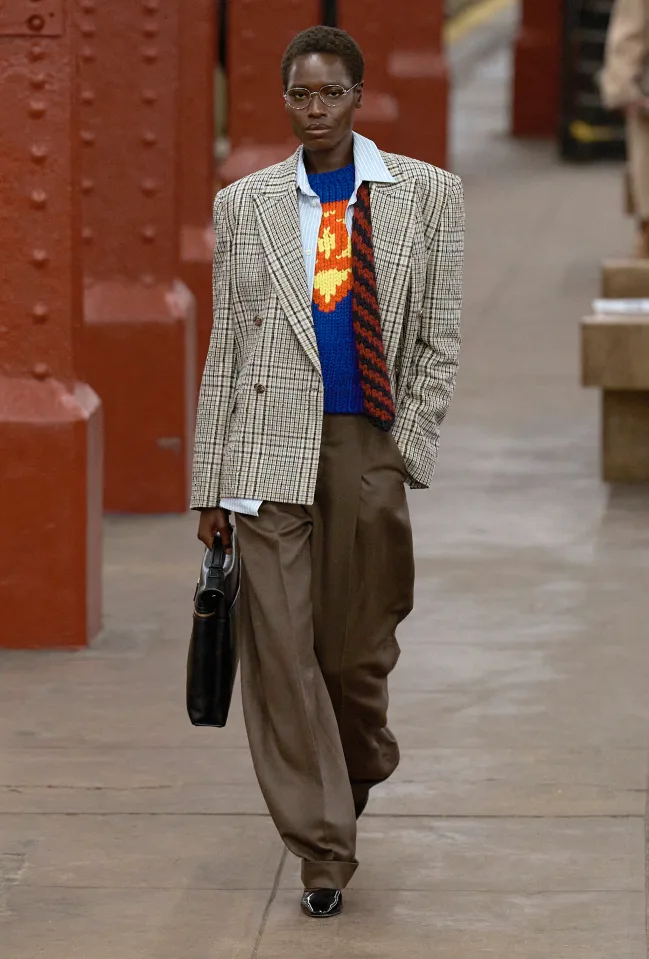
The “C Line” collection unfolded like a reel of metropolitan vignettes. Models emerged from a subway car and moved along the platform with the casual confidence of true New Yorkers, each look offering a study in character dressing—an approach central to Blazy’s narrative. He cited archetypes from the 1930s through the 1980s, from sharp-minded journalists to power-dressed businesswomen, along with Gabrielle Chanel’s own 1931 journey to the U.S. to design for Hollywood. Blazy reframed these personas with modern ease and a subtle cinematic exaggeration of silhouette.
Courtesy Of Chanel
Blazy reinterpreted house signatures with calculated restraint. Tweed jackets came with softened or heightened proportions, paired with fluid trousers or sleek skirts that suggested purposeful movement. Trench coats—some translucent, others patterned—carried hints of sequined animal motifs beneath, creating a dynamic play of layers and light. Knitwear punctuated the lineup with graphic flashes of red, blue, and yellow, a nod to comic-book iconography and Blazy’s interest in everyday urban mythology.
Evening pieces revealed the full magic of Métiers d’Art: feather-trimmed dresses that swayed like kinetic sculptures, intricate embroideries referencing New York’s architecture—including a fringe skirt crafted from inverted, shimmering Empire State Building motifs—and vivid color panels that elevated familiar silhouettes into something theatrical yet distinctly wearable.
Throughout the collection, Blazy’s fascination with the democratic nature of the subway—a place where every kind of life converges—translated into an eclectic yet coherent wardrobe. Luxe tweed sat beside playful novelty accessories, including witty coffee-cup handbag charms. A standout look adorned with tiny dog faces exemplified Blazy’s instinct for joy without sacrificing refinement.
Courtesy Of Chanel
Despite the metropolitan grit of the setting, the clothes resonated with polished sophistication. Blazy balanced discretion and aspiration with a confidence that felt both grounded in Chanel’s legacy and attuned to contemporary life. The collection expressed a city’s rhythm—unexpected encounters, diverse identities, and fleeting glamour—filtered through the precision and poetry of the Métiers d’Art ateliers.
With Métiers d’Art 2025, Blazy asserted a clear, compelling vision for Chanel: cinematic, character-driven, and exacting in its craft. The “C Line” proved that Chanel’s world can stretch from Parisian salons to a New York subway platform without losing its allure—if anything, it becomes even more alive.
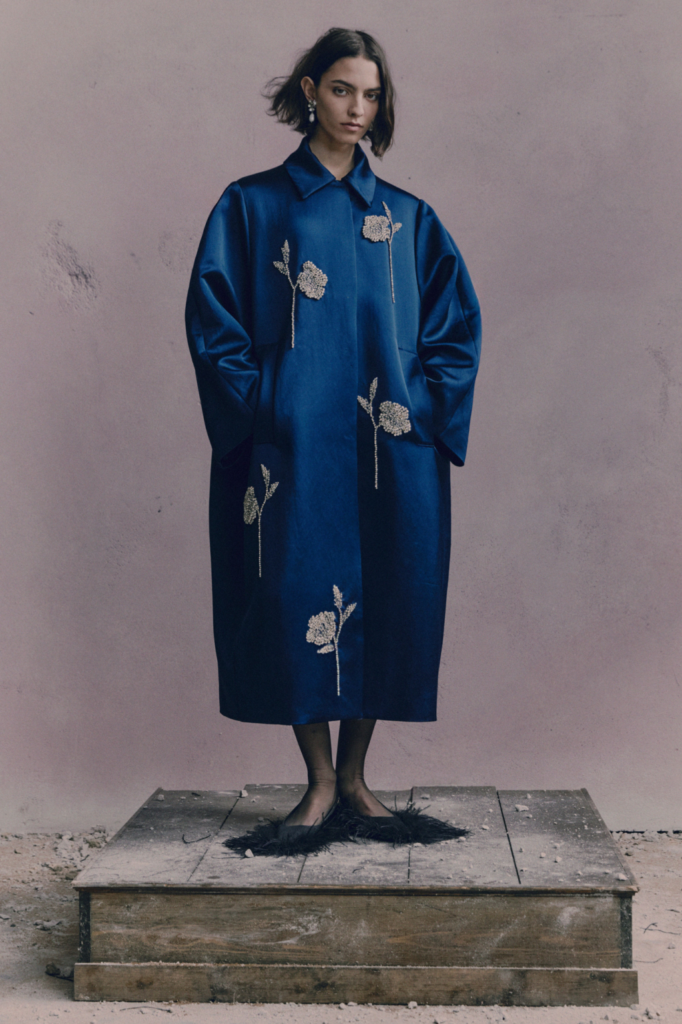
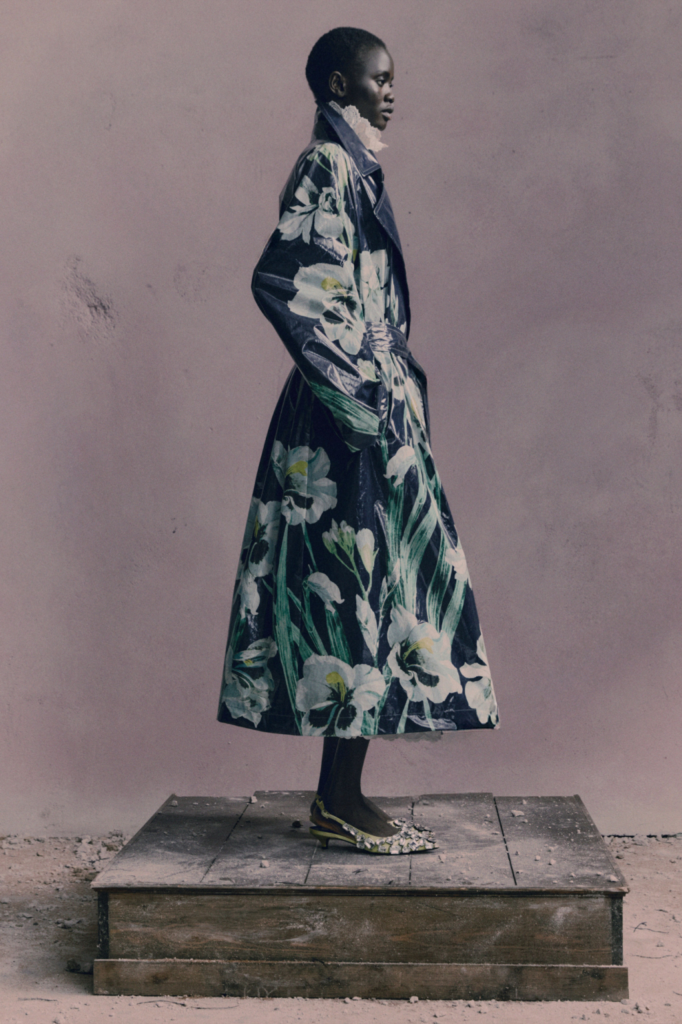
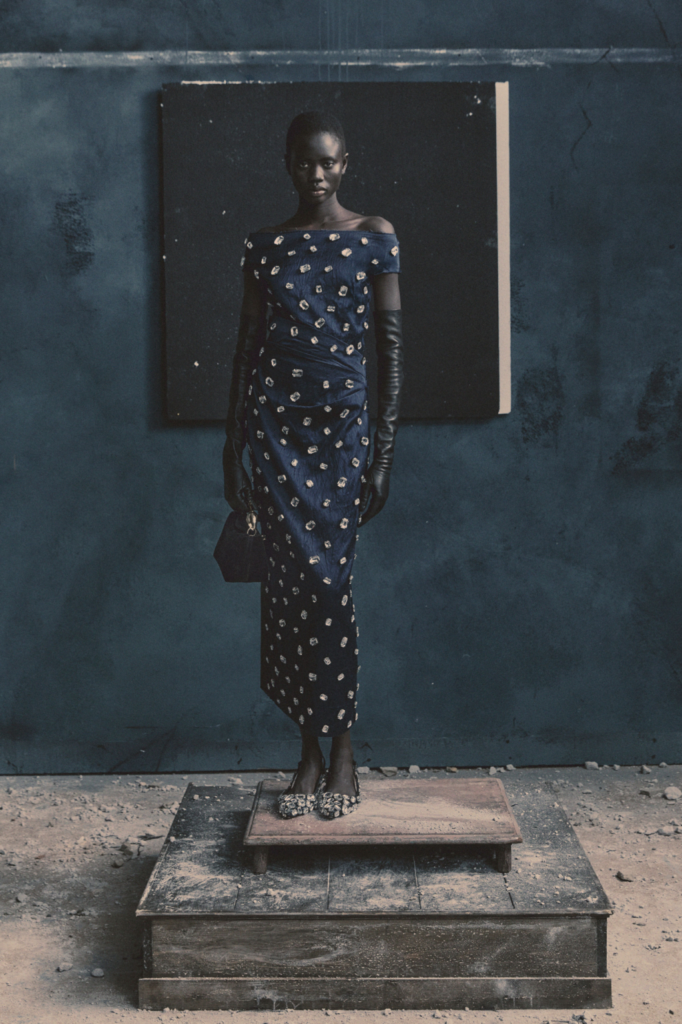
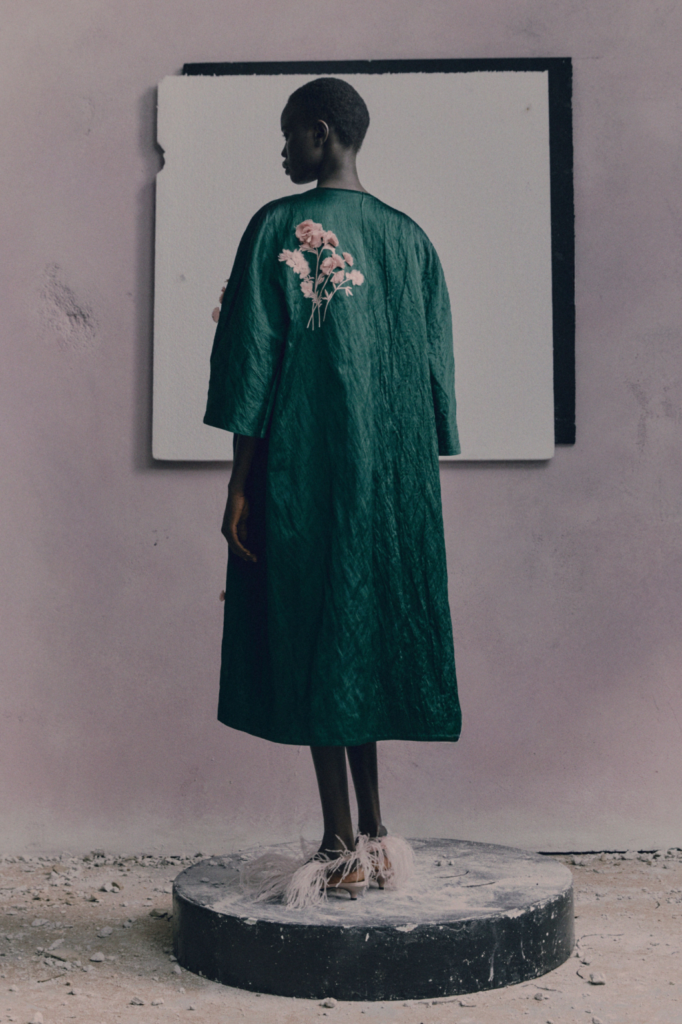
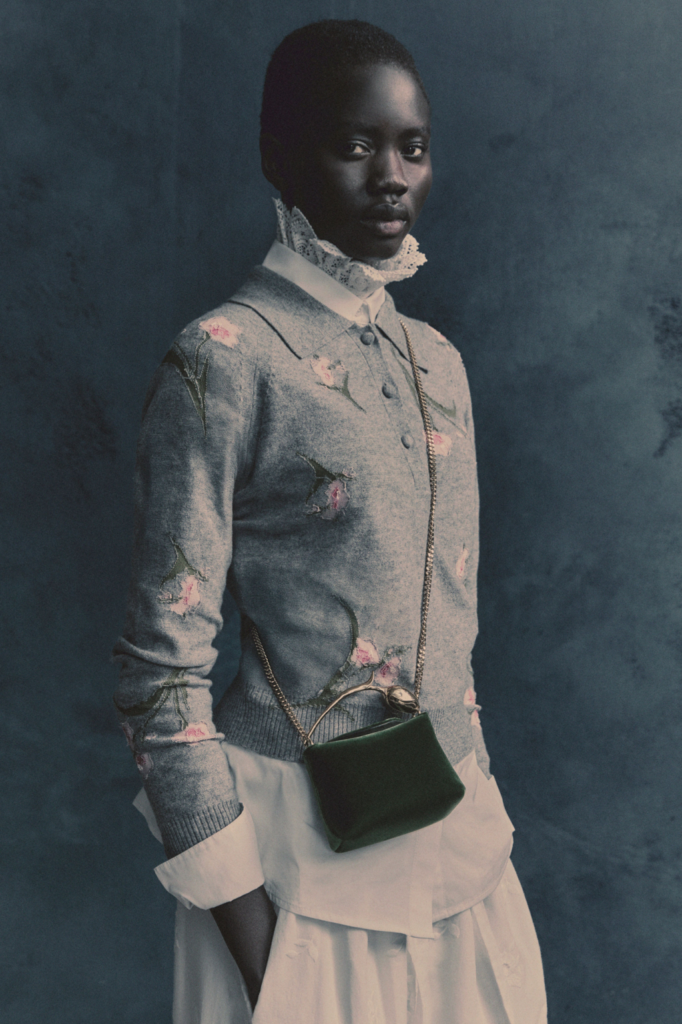
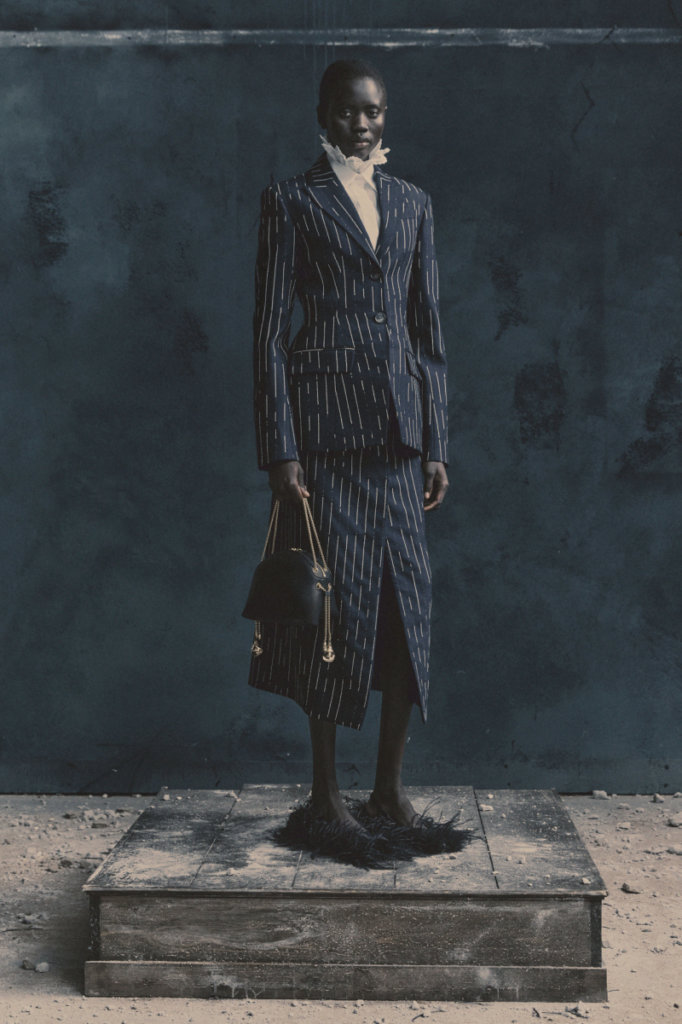
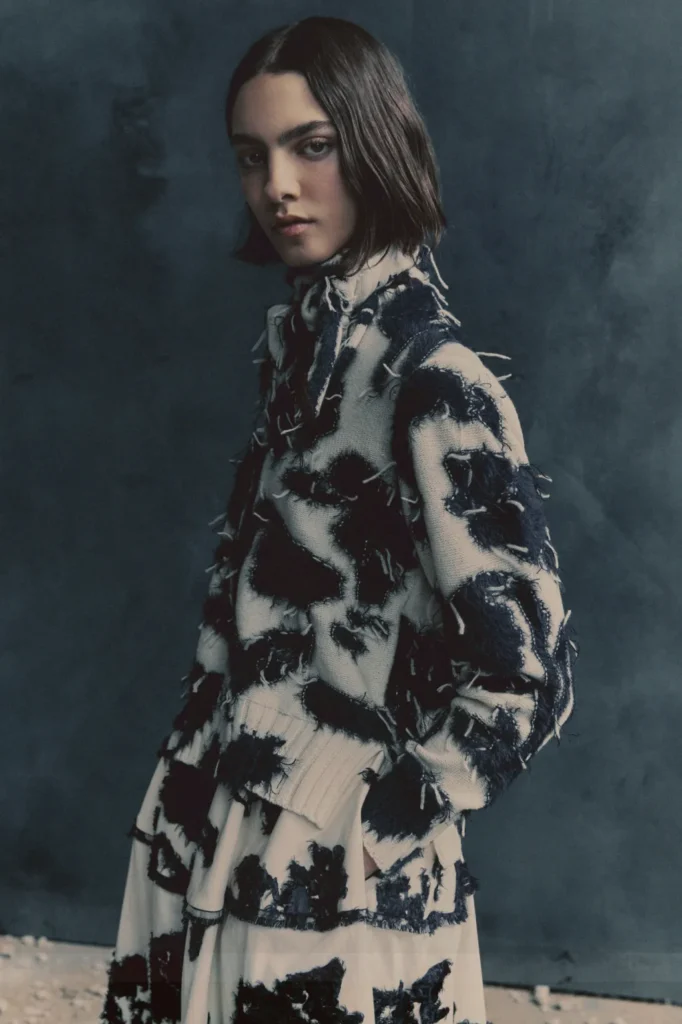
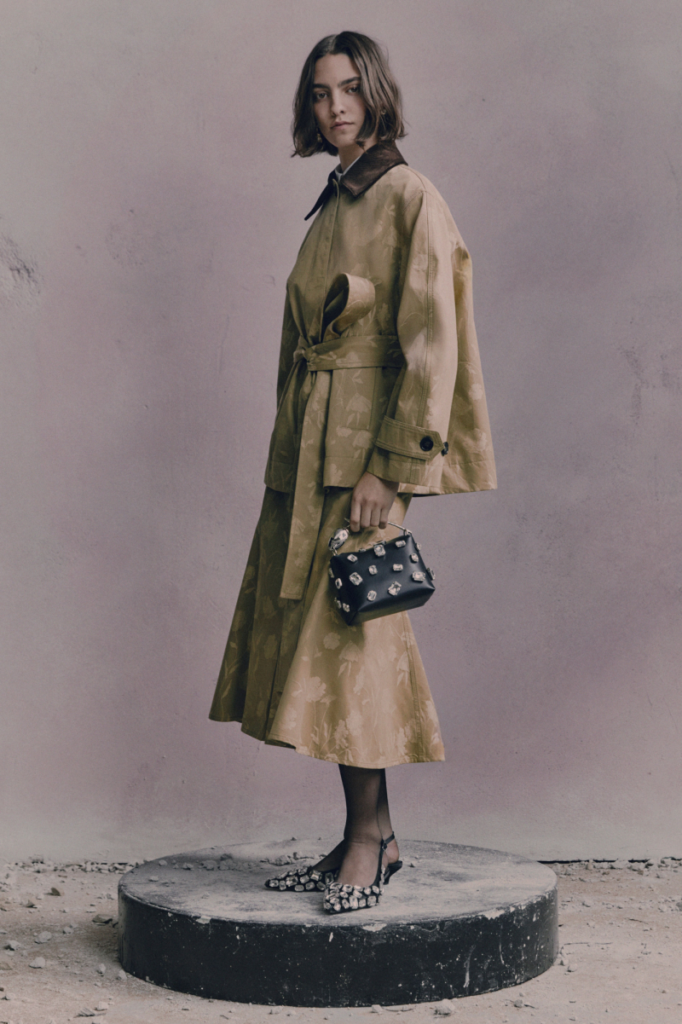
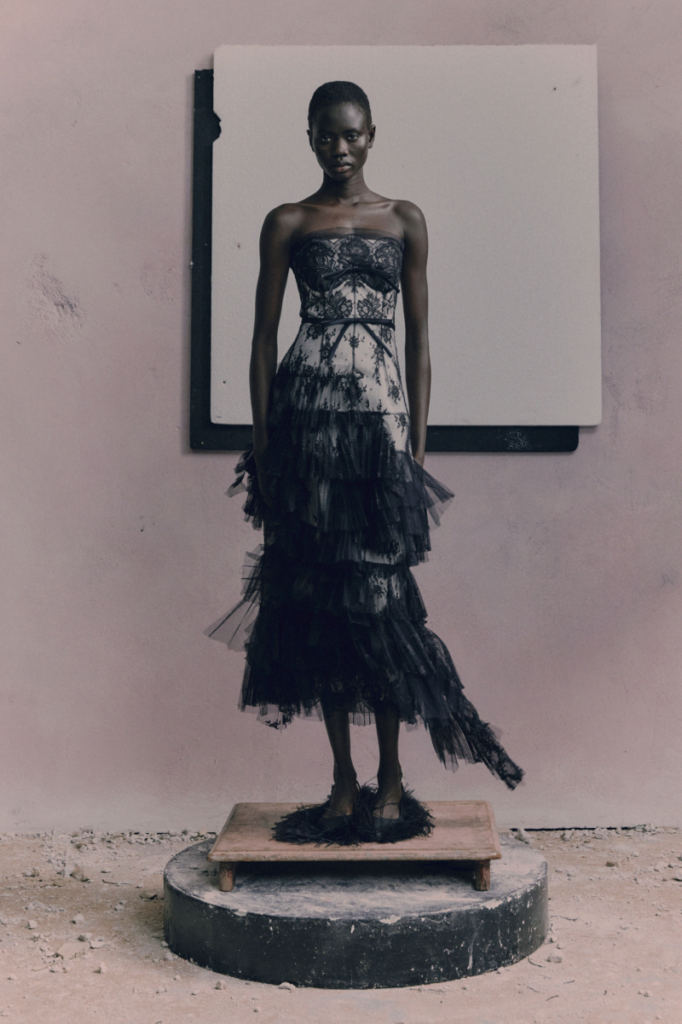
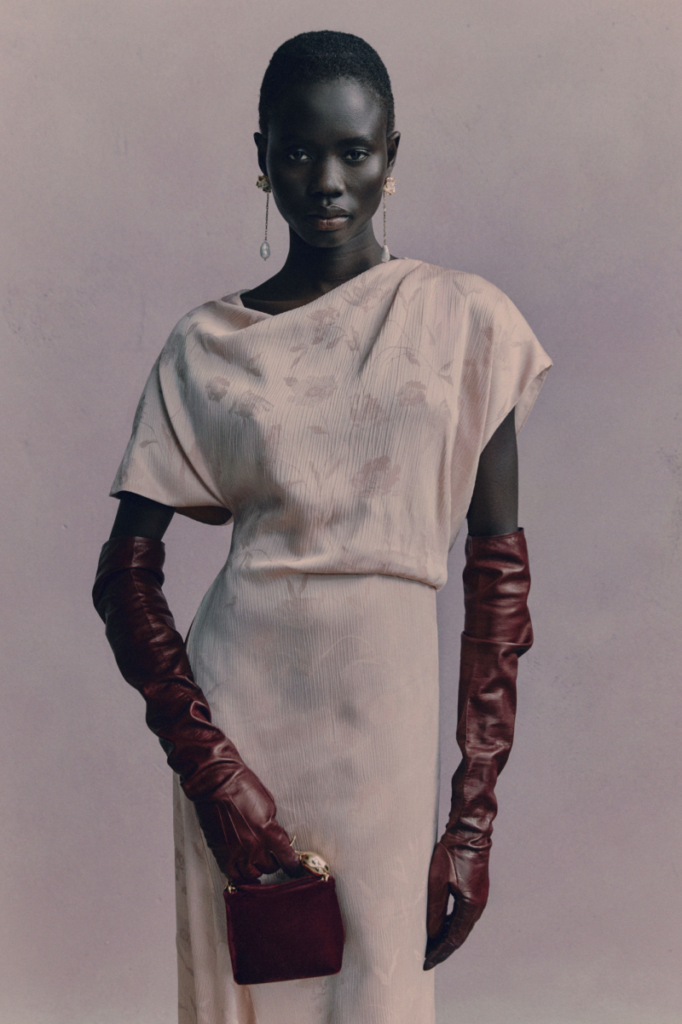
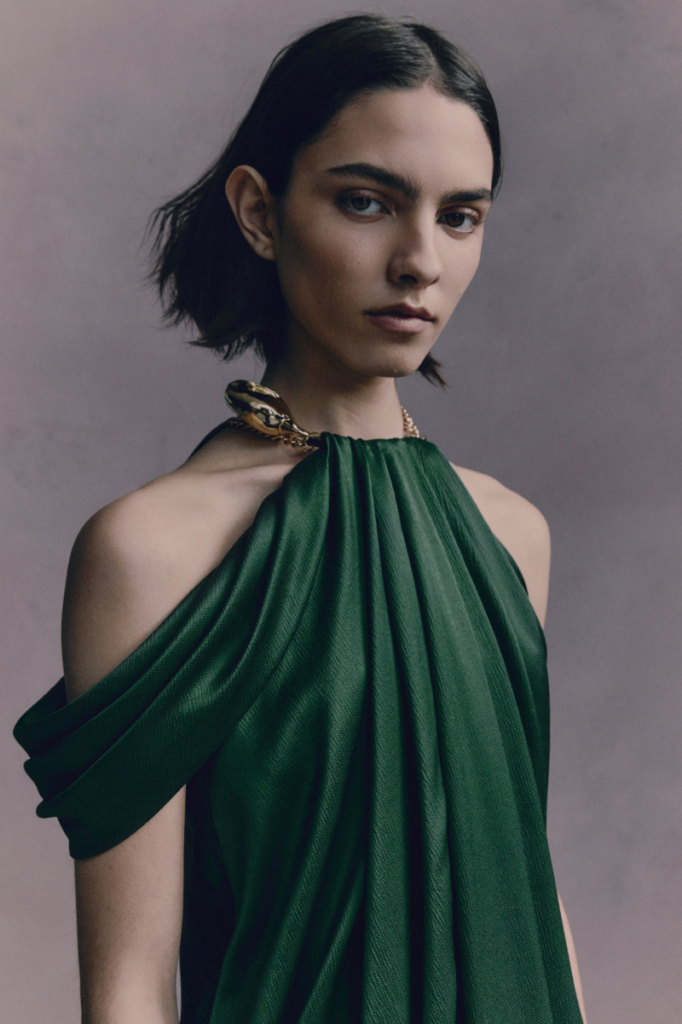
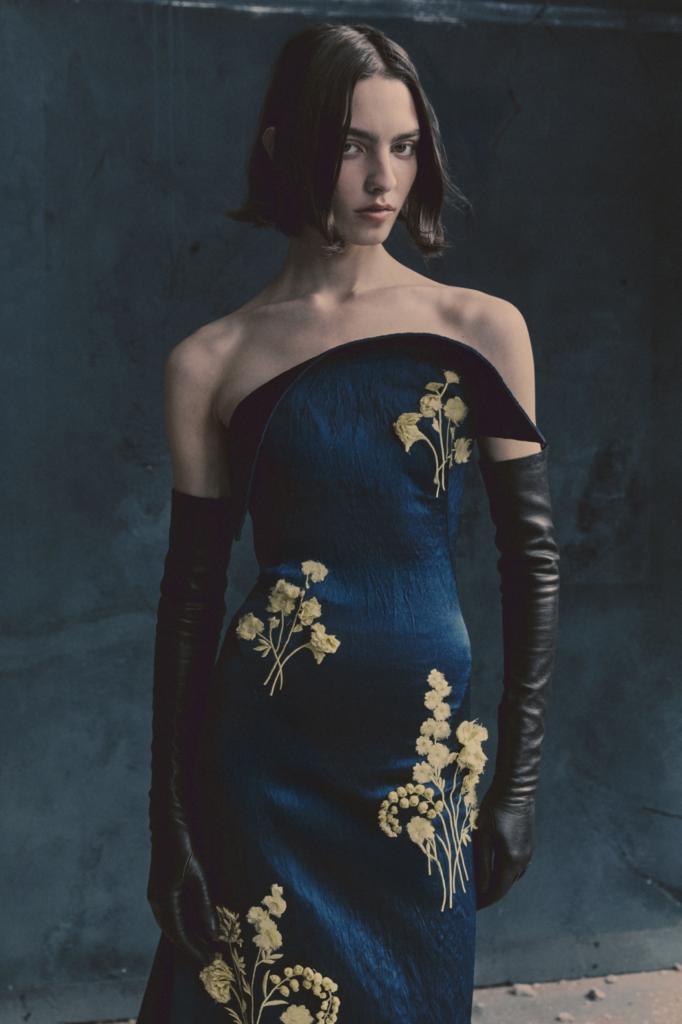
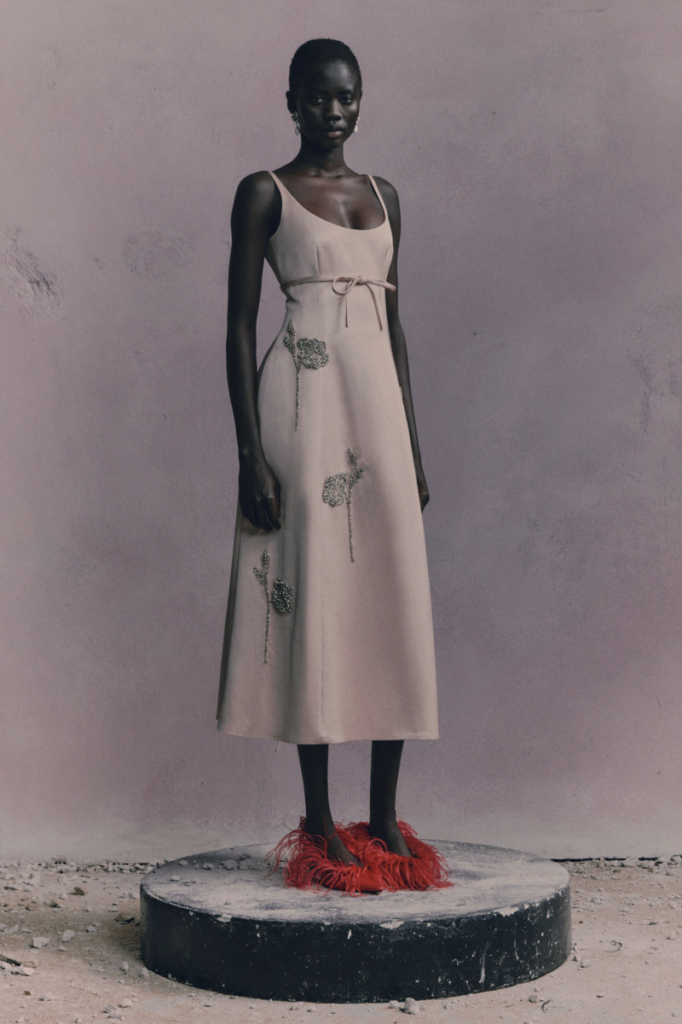
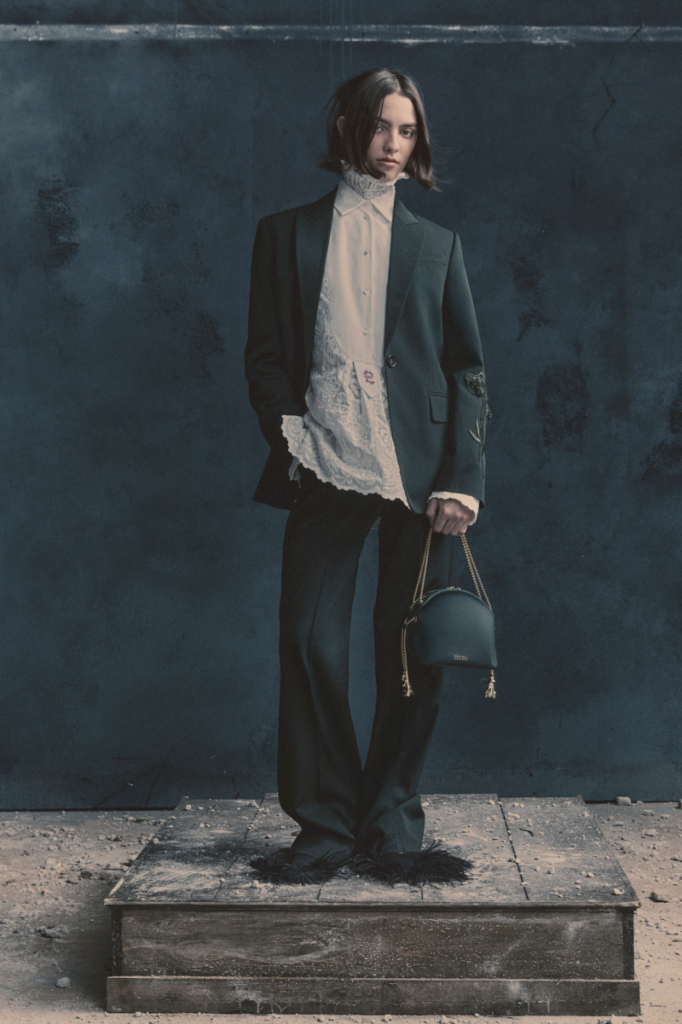
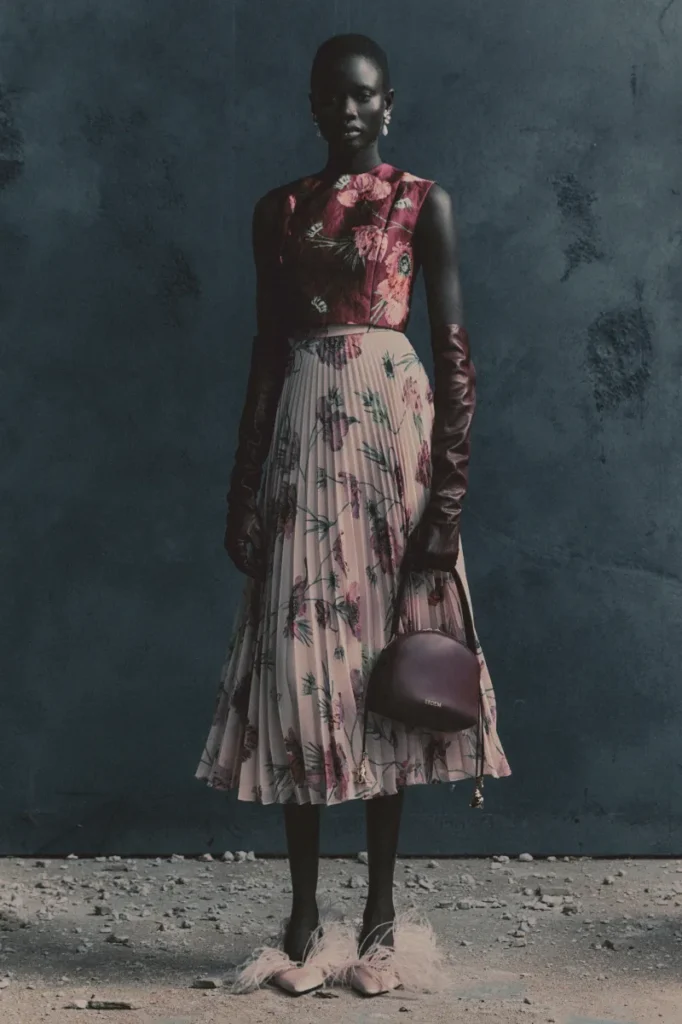
Erdem Moralioglu marks the approach of his label’s 20th anniversary with a collection steeped in personal history and the opulence of Belle Époque France. The Pre-Fall 2026 lineup channels those brief decades before World War I—an era of artistic freedom, social change, and unabashed decadence—filtered through Erdem’s signature romanticism.
Courtesy of Erdem
His muse this season is Maud Wagner, the first female tattoo artist in the United States, who treated the body as a living canvas and built a career in a male-dominated field. Her unconventional spirit threads neatly through a collection rich in texture, craft, and theatrical detail.
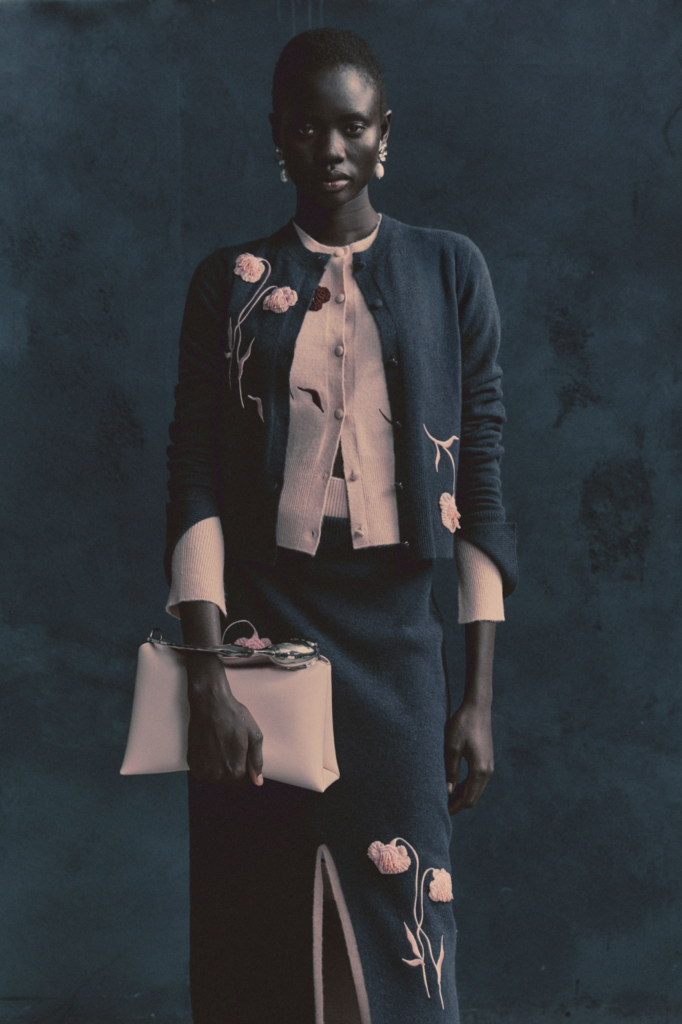
As expected from Moralioglu, the lineup is lavish. Evening coats glitter with hand-applied crystals; three-dimensional florals bloom across dresses, cardigans, and skirts. High-ruffled white blouses and gowns nod to the dandies and poets of the era, lending a sense of historical reverie without feeling costume-bound.
Courtesy of Erdem
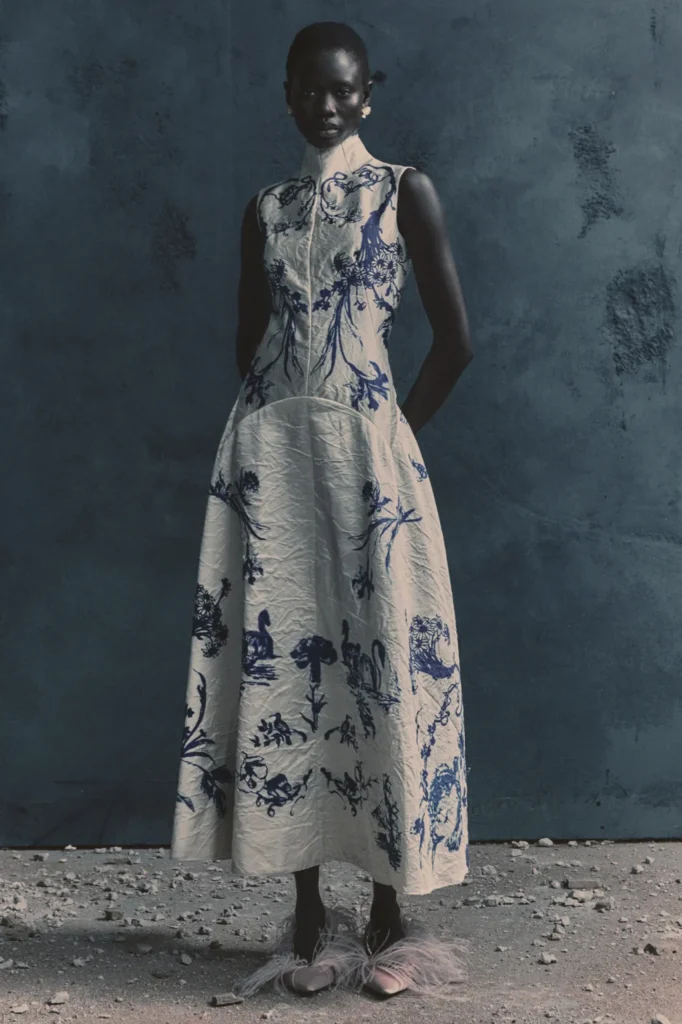
Moralioglu also mines his own archives, scattering familiar motifs across new silhouettes: blue swans gliding over a crinkled white high-neck gown; crystal carnations cascading down a teal evening coat; chalk-like white butterflies fluttering across a rounded-shoulder denim coat. These callbacks feel intentional, a quiet celebration of two decades of storytelling.
Courtesy of Erdem
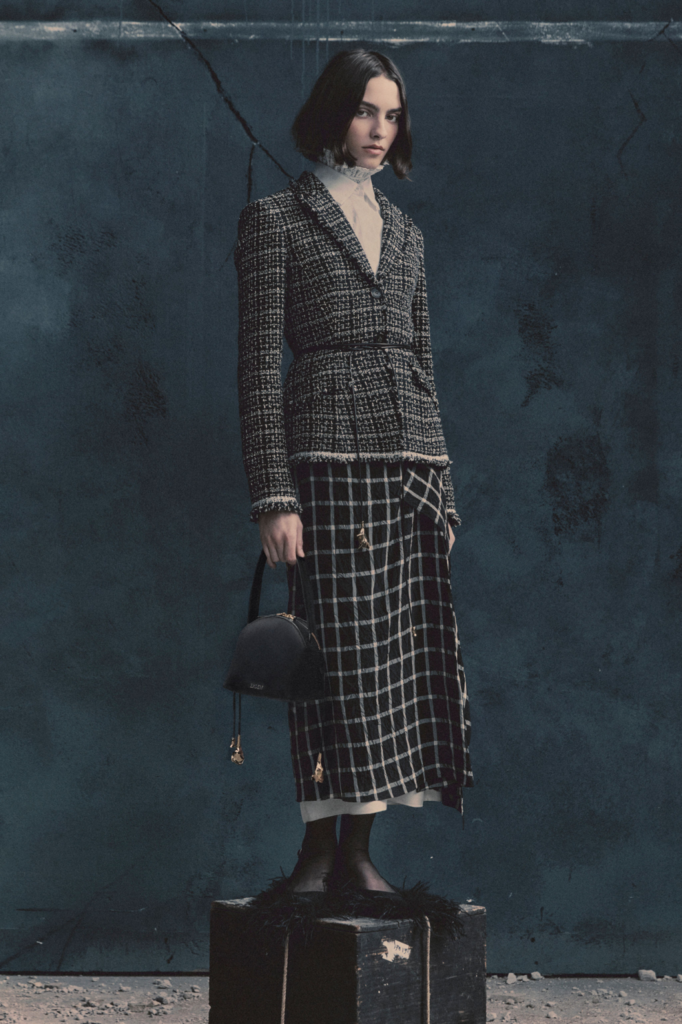
To temper the romance, he sharpens the tailoring. Those ruffled blouses pair with slim tweed jackets; lace trousers meet double-faced cashmere coats cut with a masculine clarity. The tension between softness and structure grounds the collection and reminds us why Erdem has endured: his ability to merge nostalgia, craft, and modernity with unwavering precision.