Home Blog Page 27

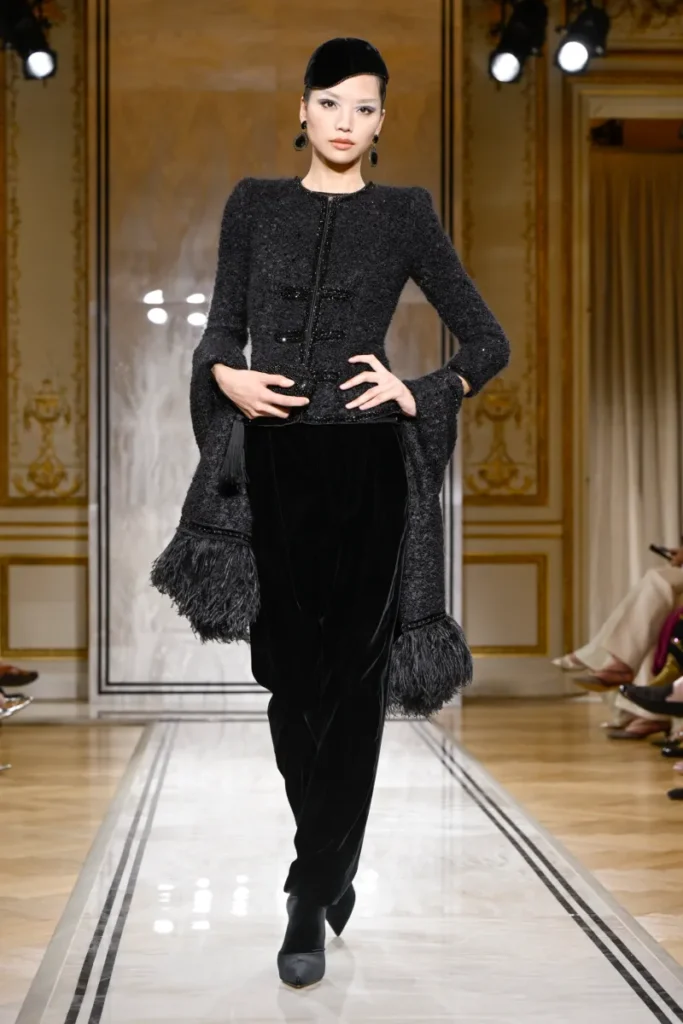
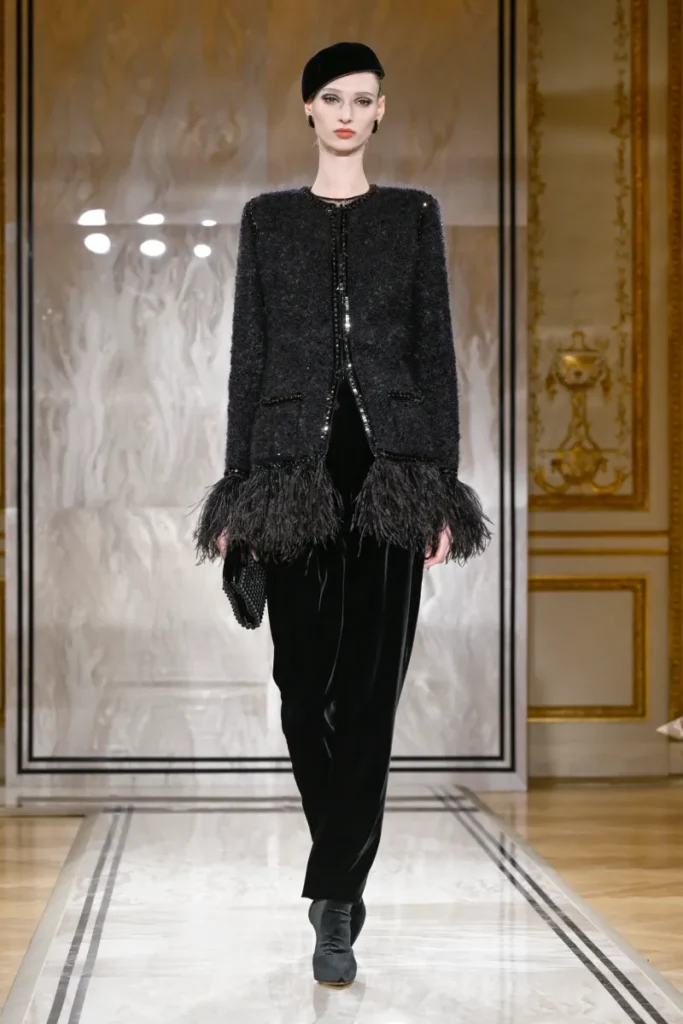
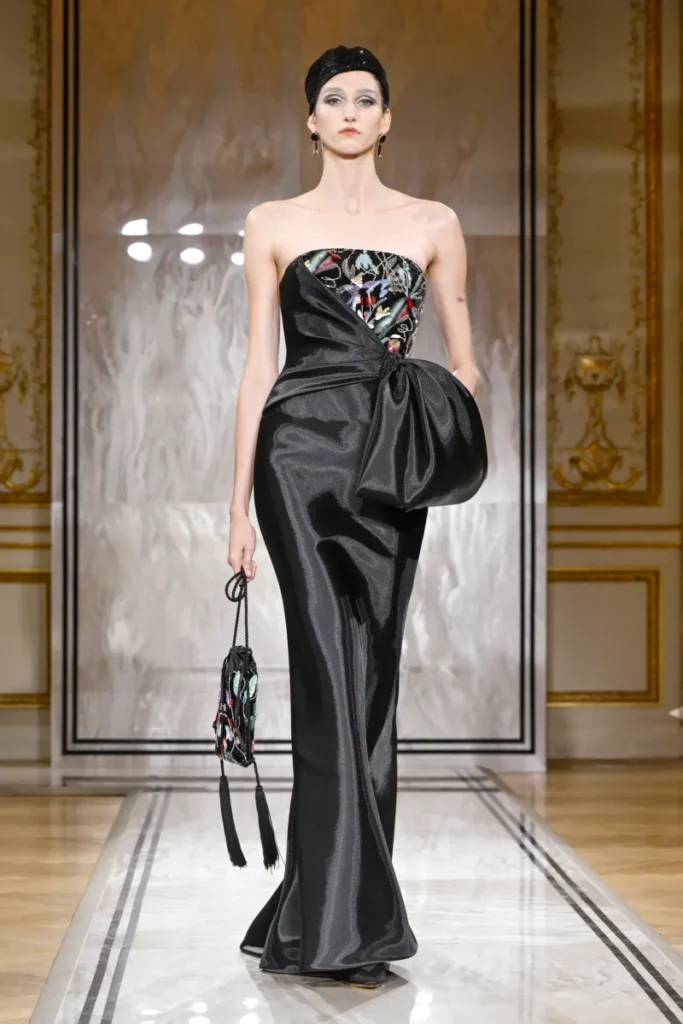
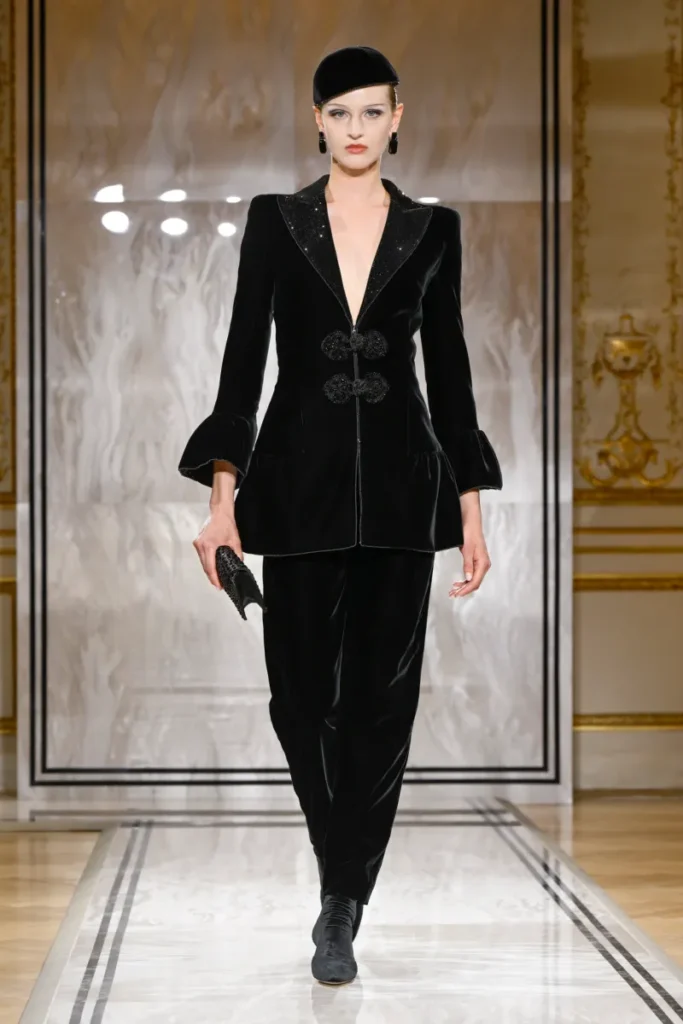
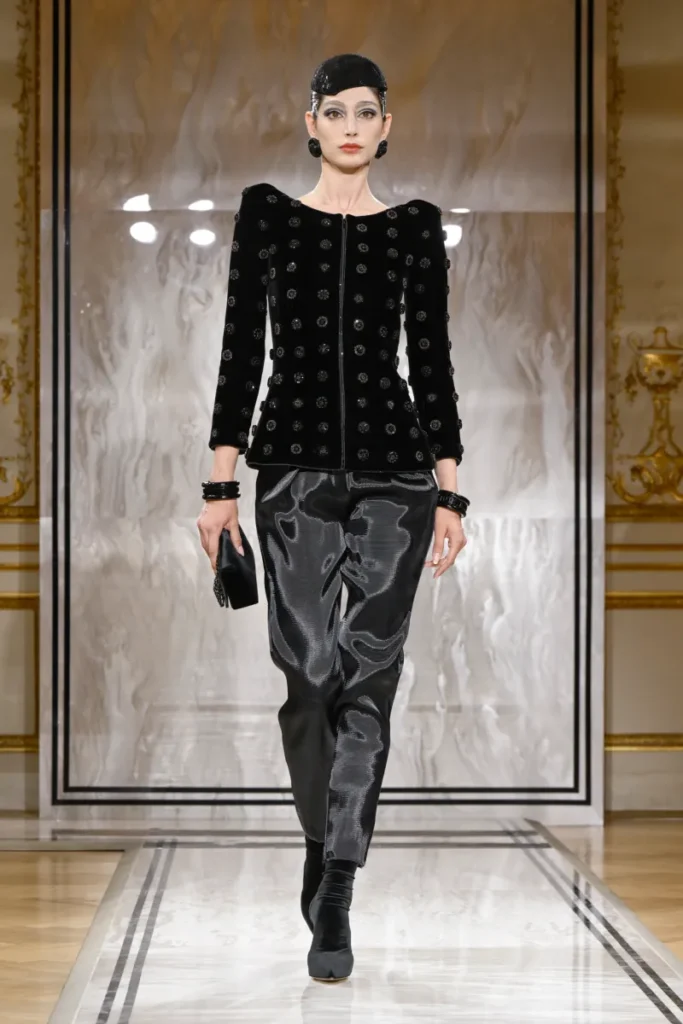
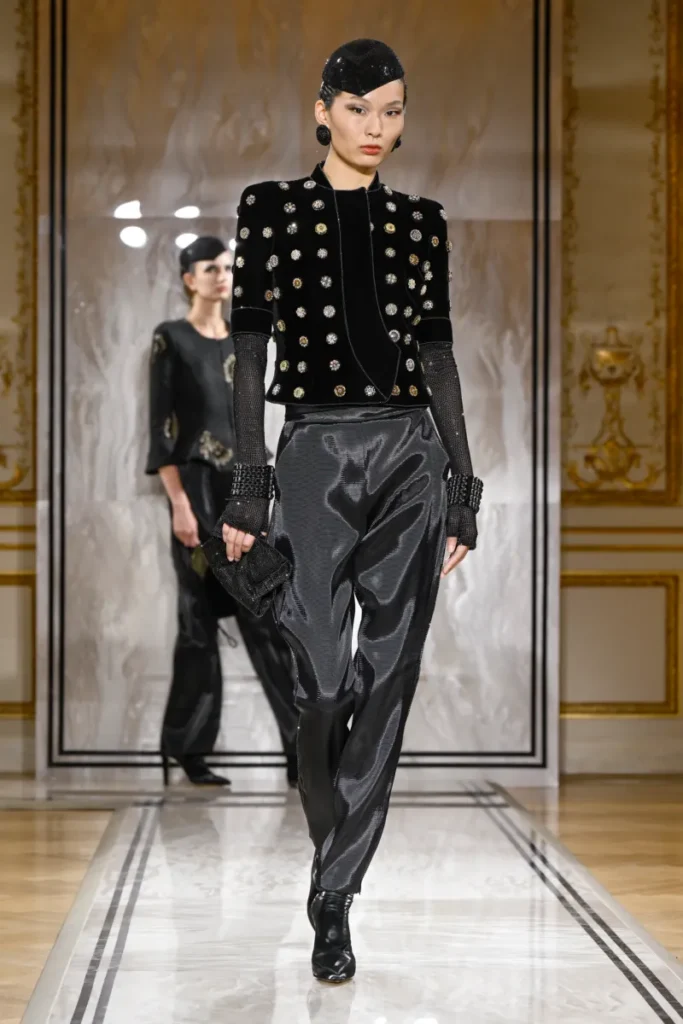
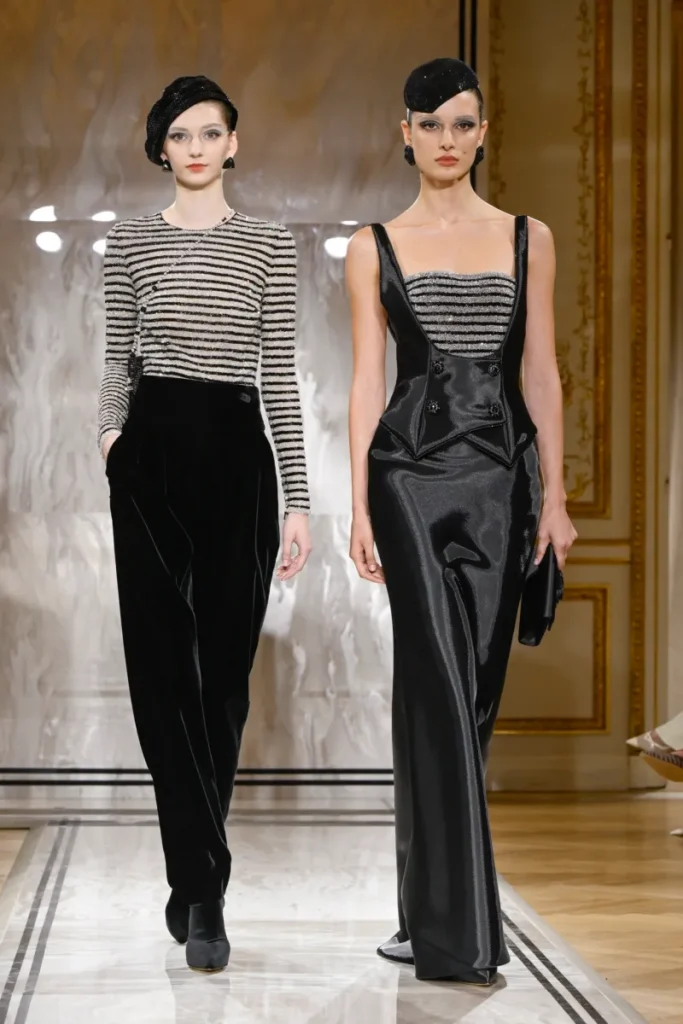
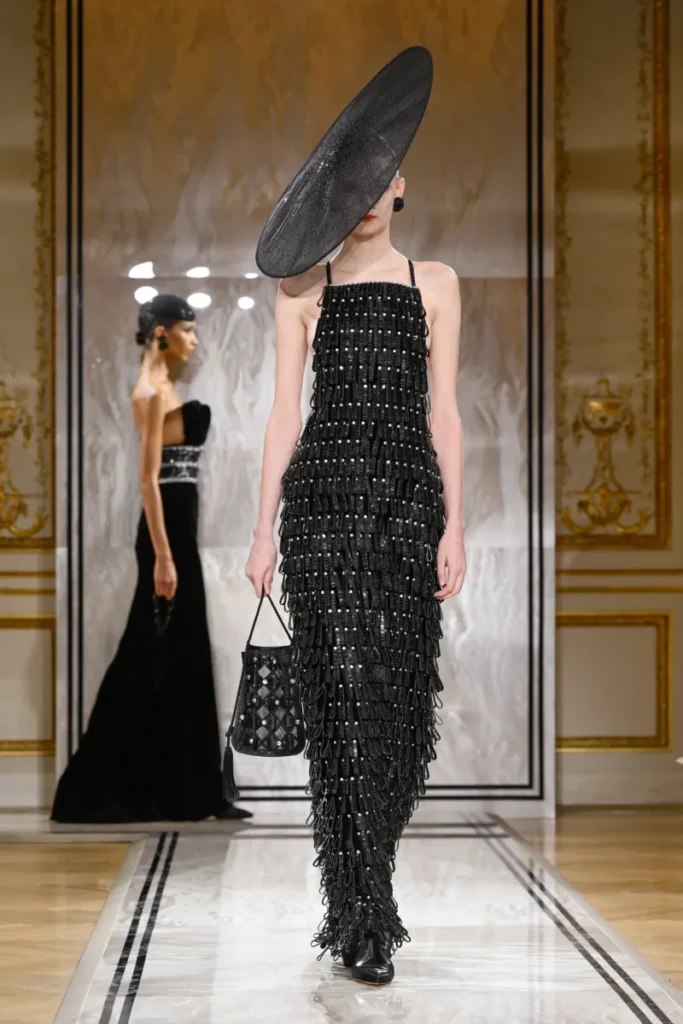
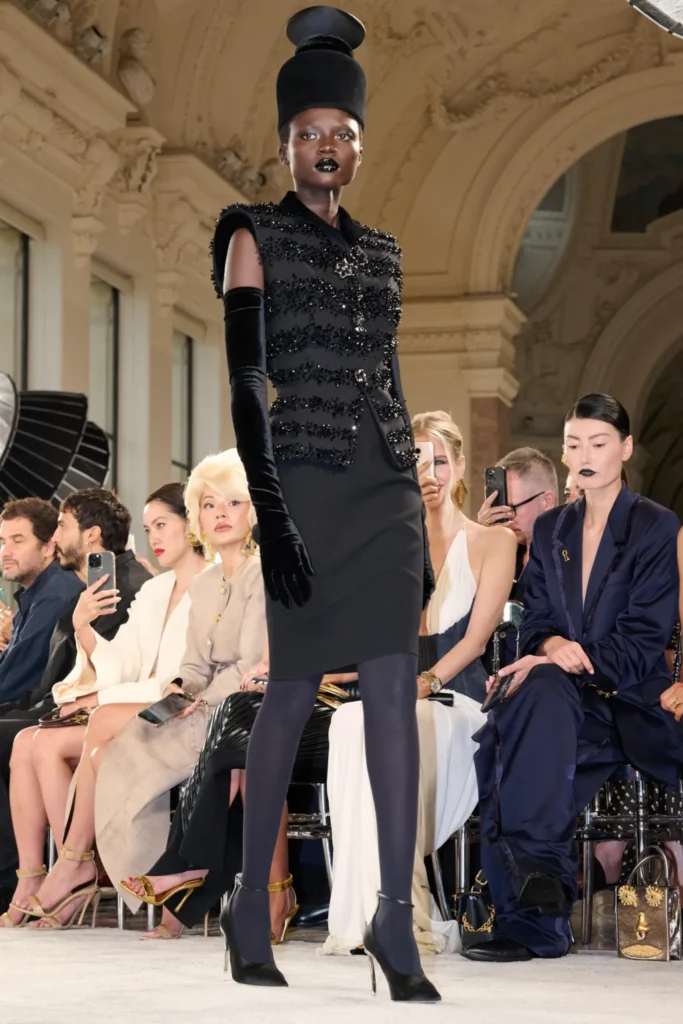
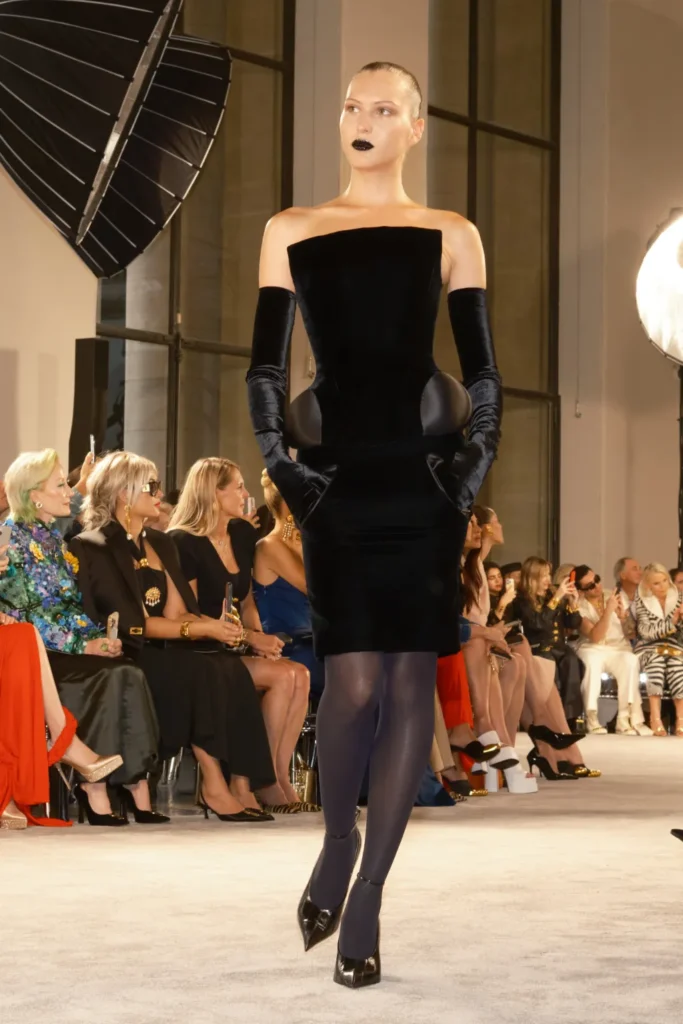
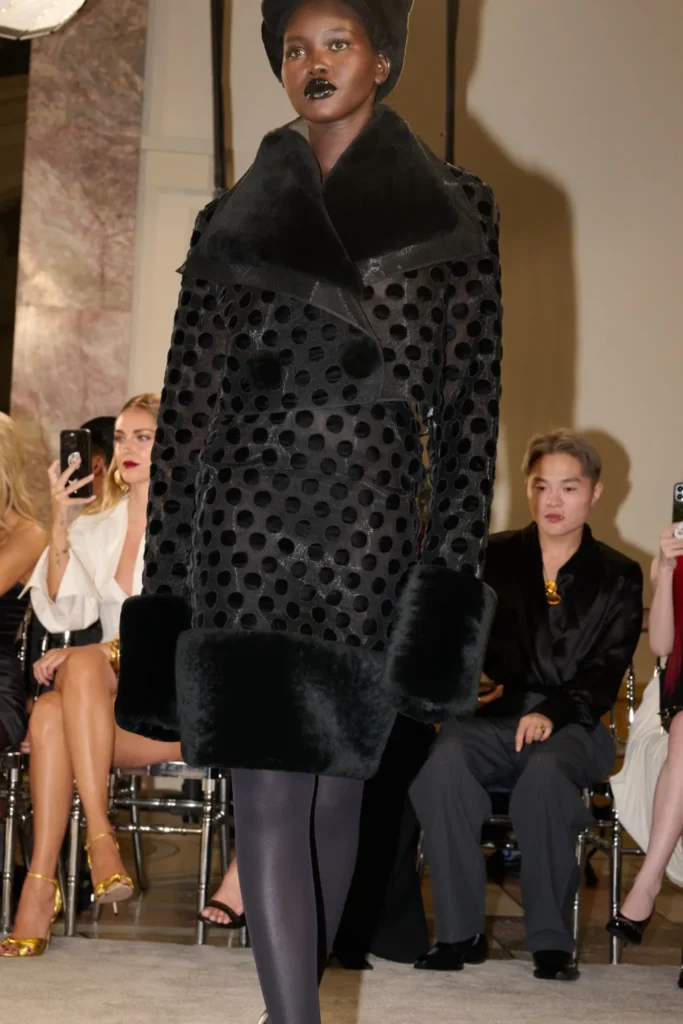
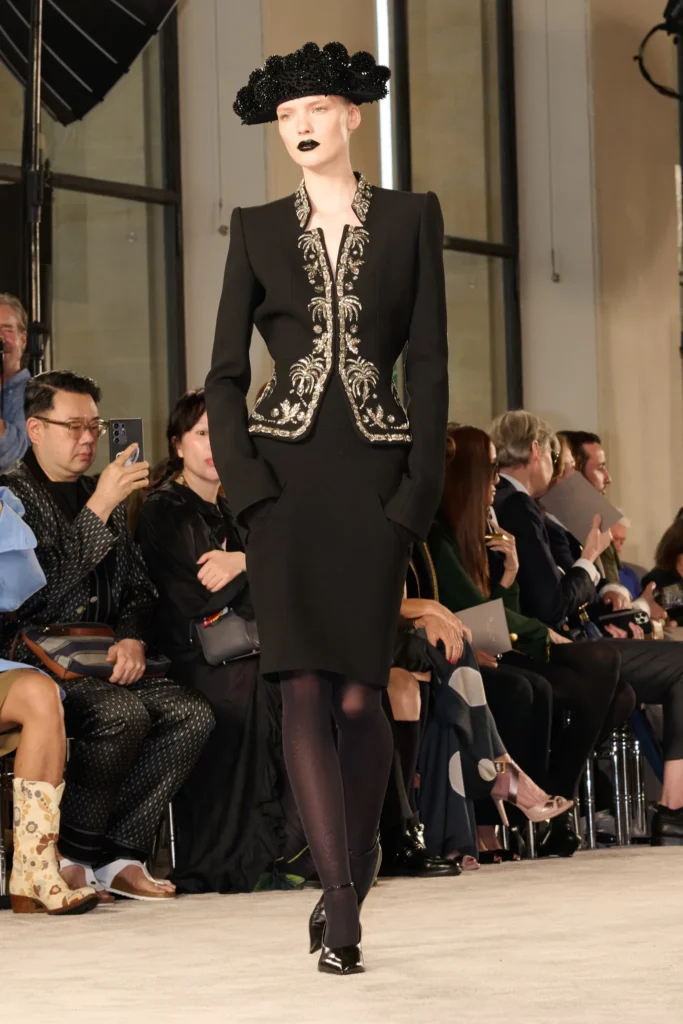
Giorgio Armani Privé Fall 2025 Collection

Giorgio Armani Privé Fall 2025 Collection

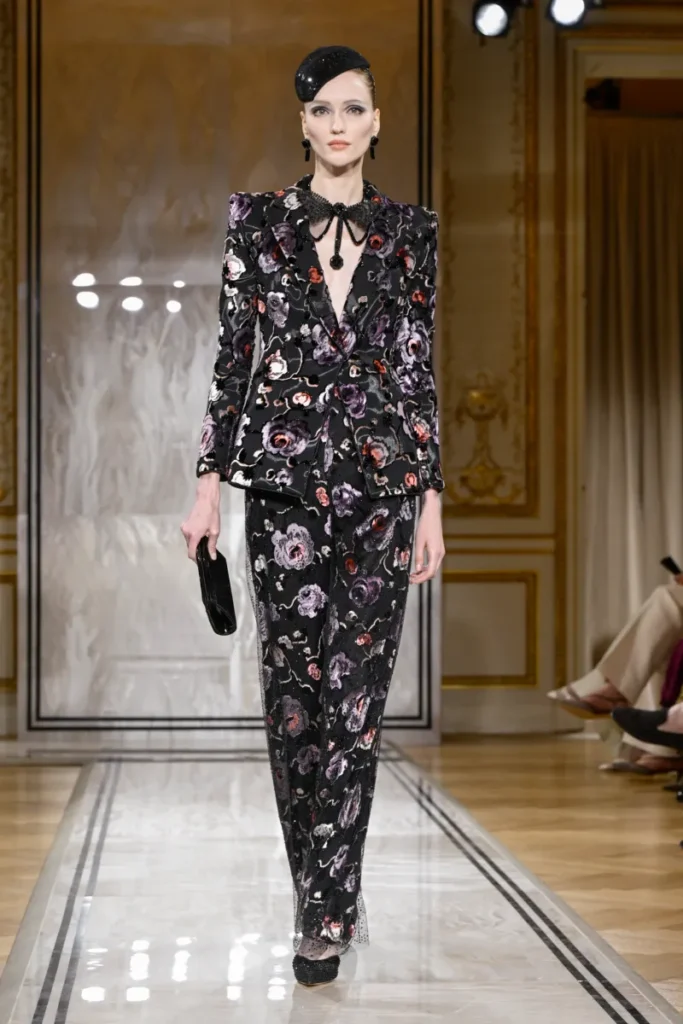
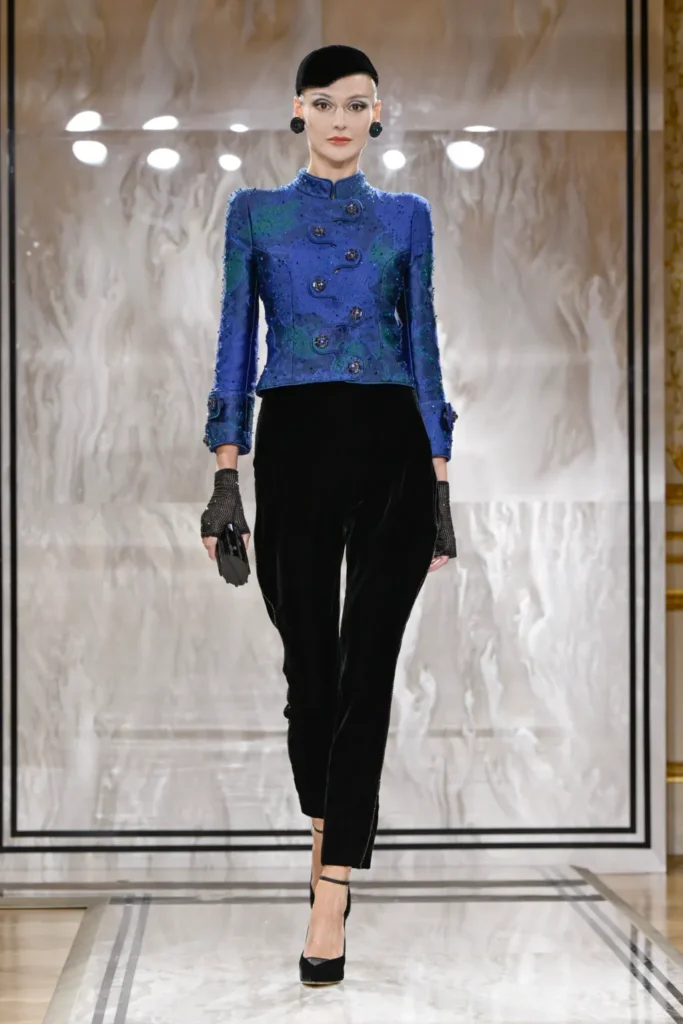
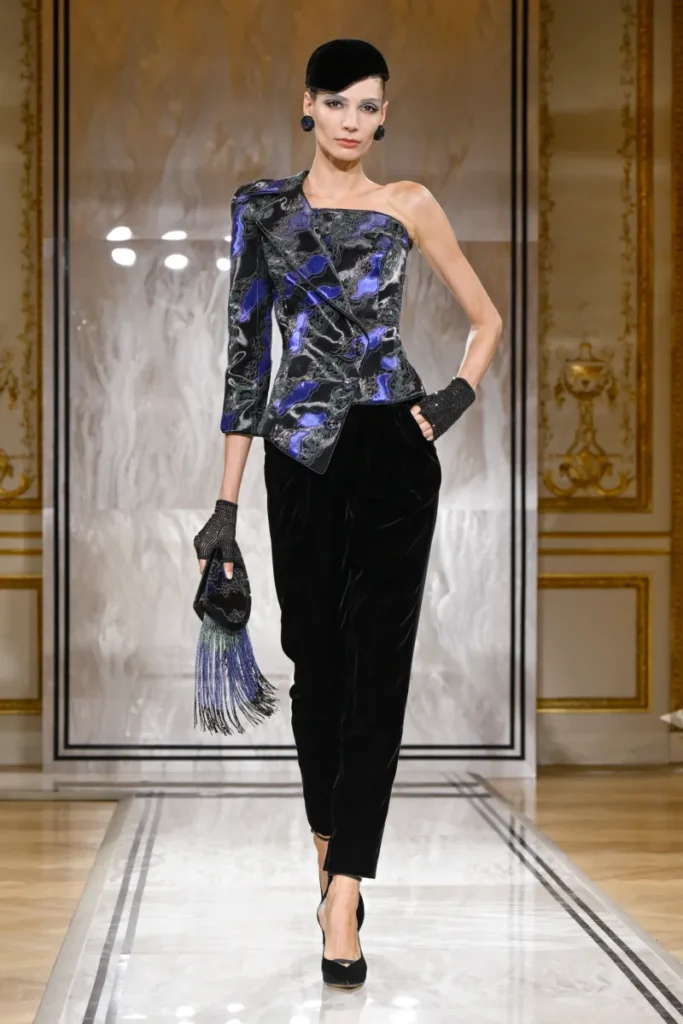
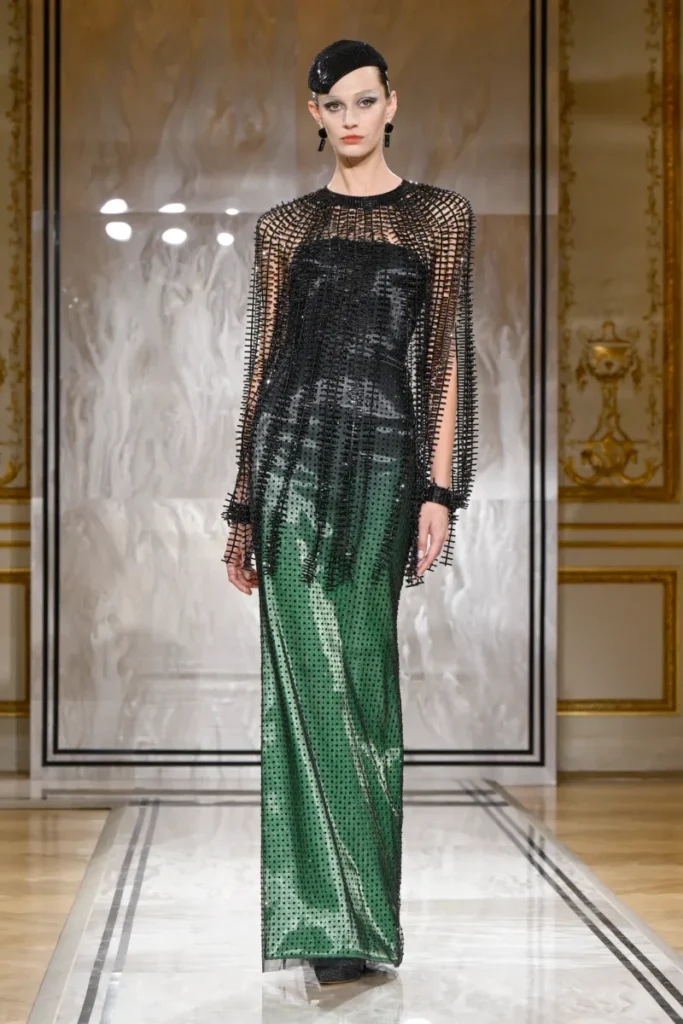
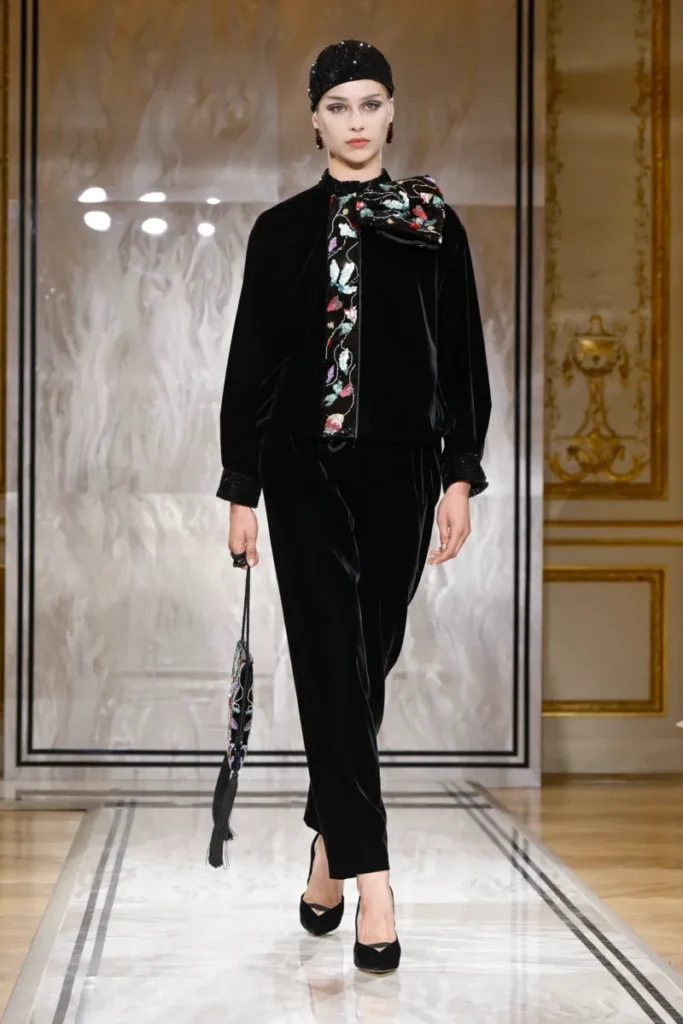
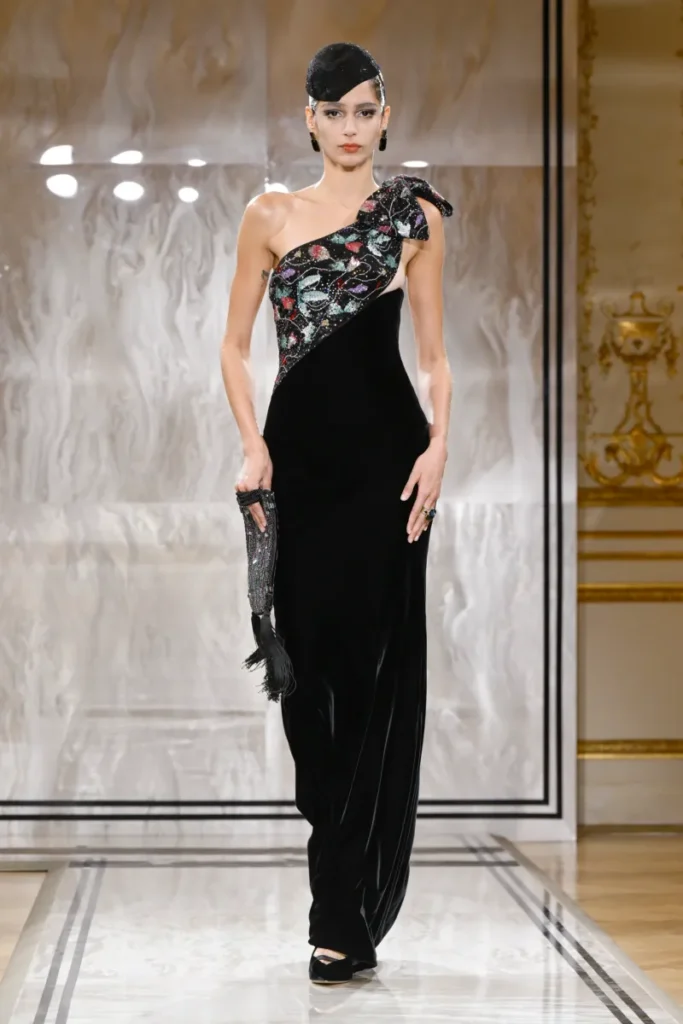
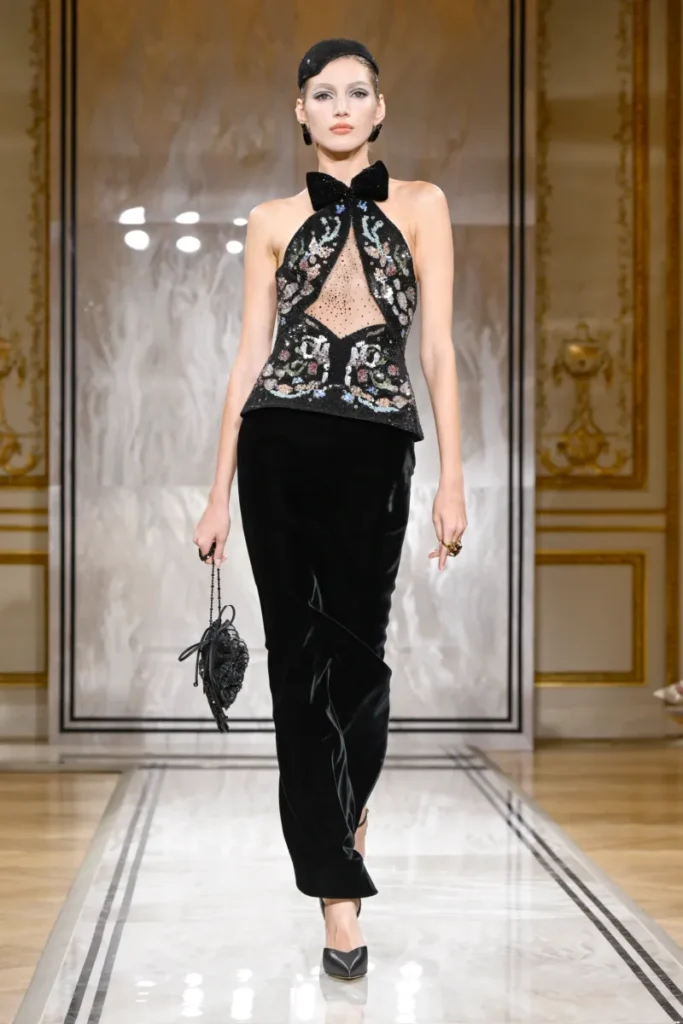
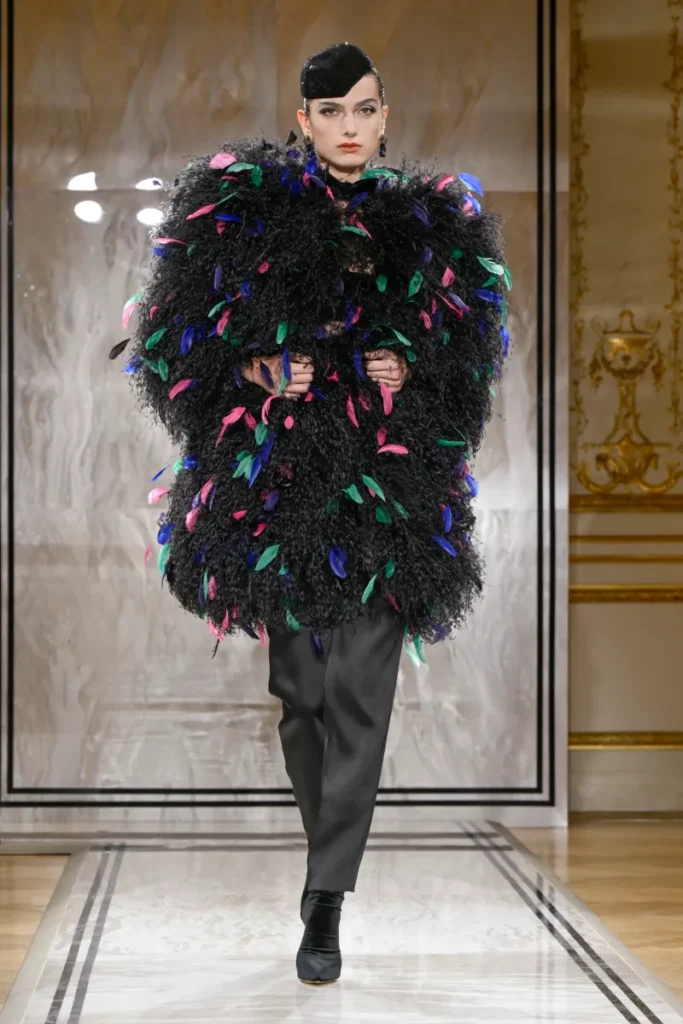
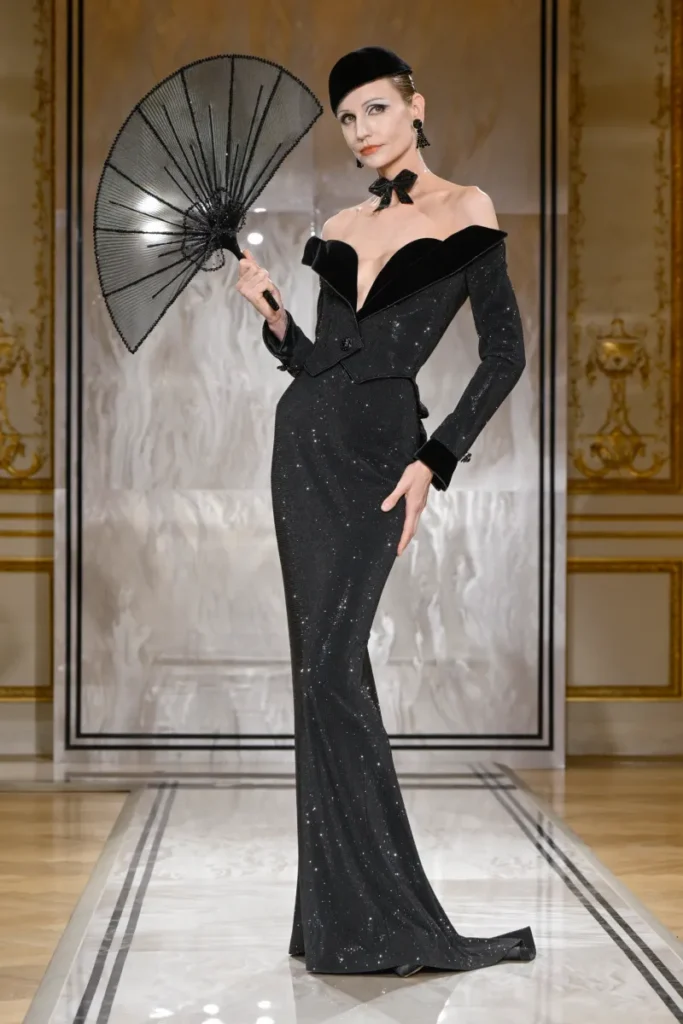
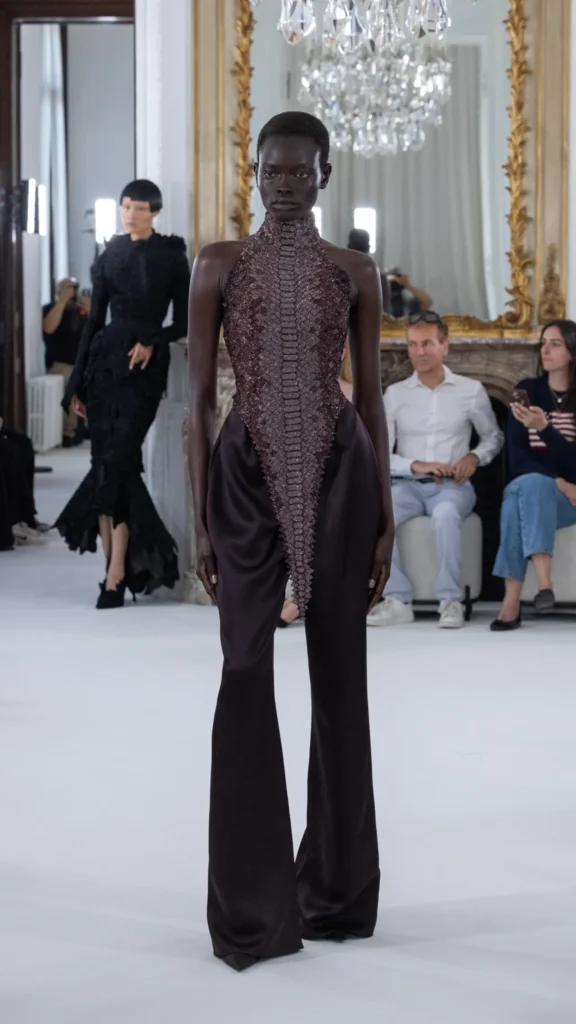
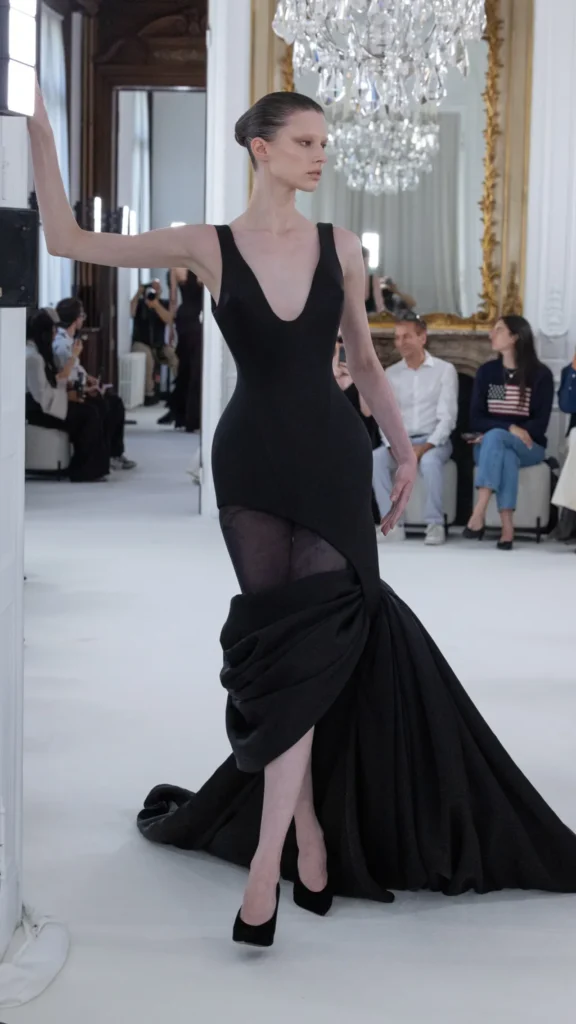
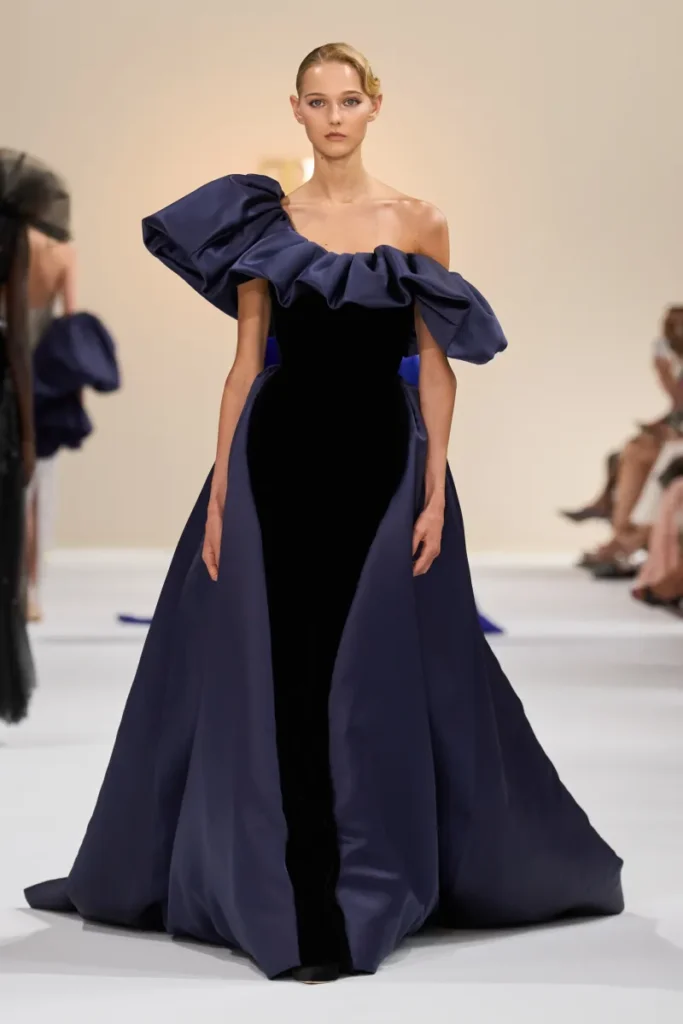
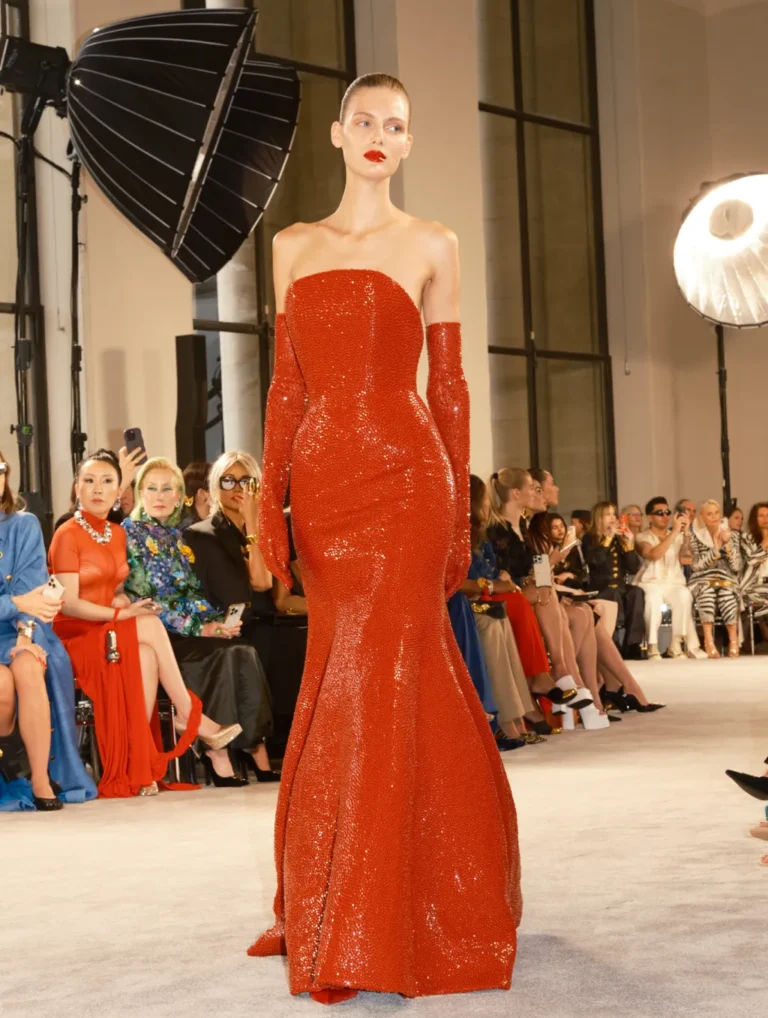
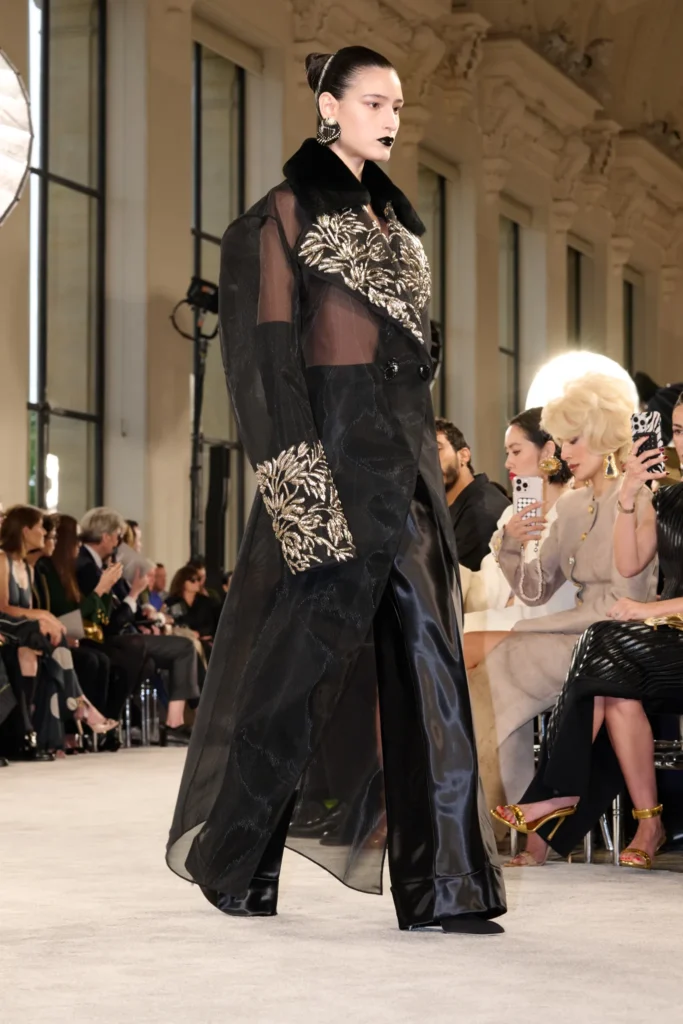
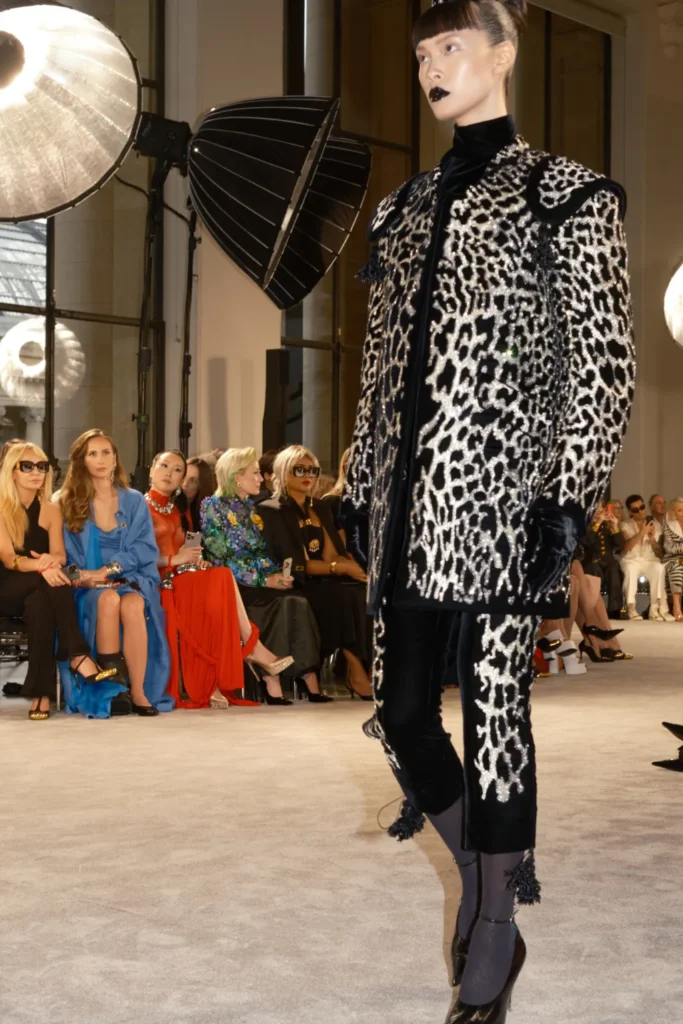
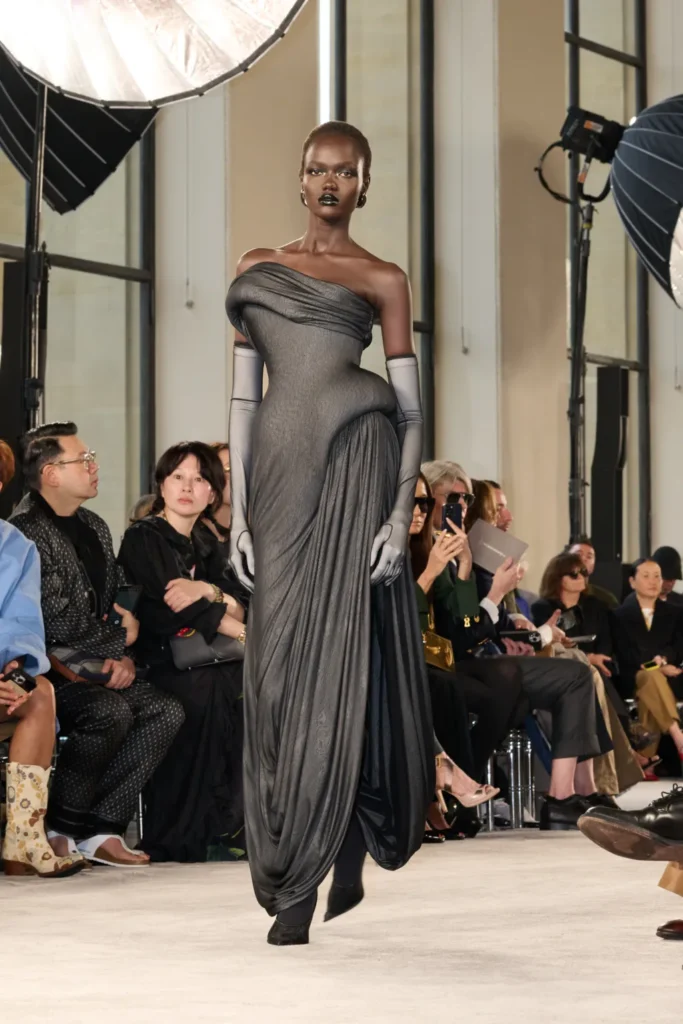
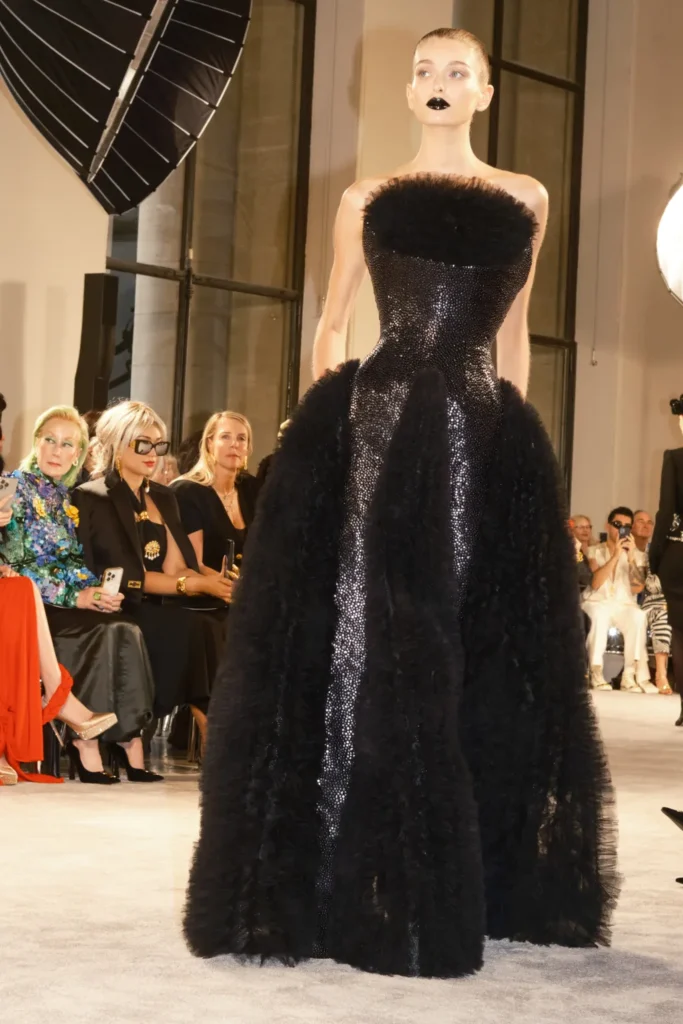
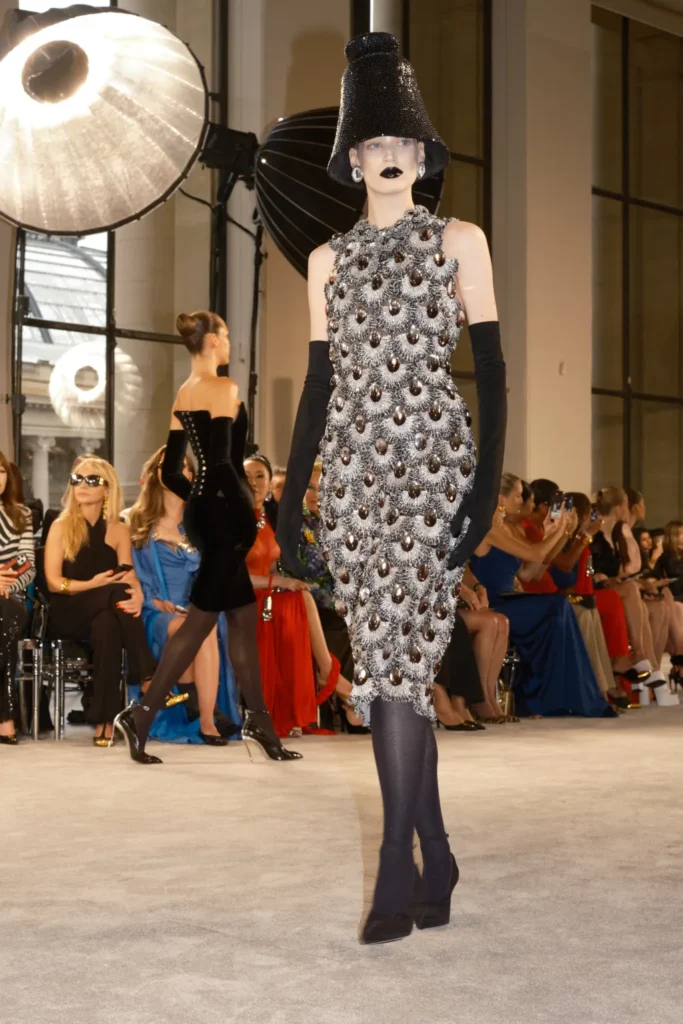
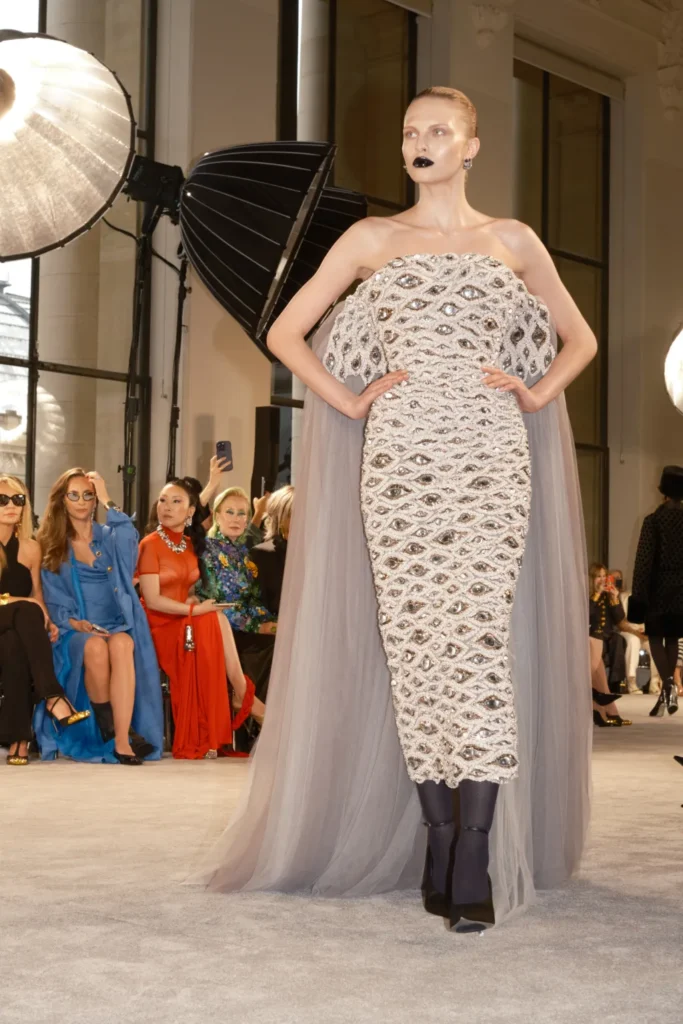
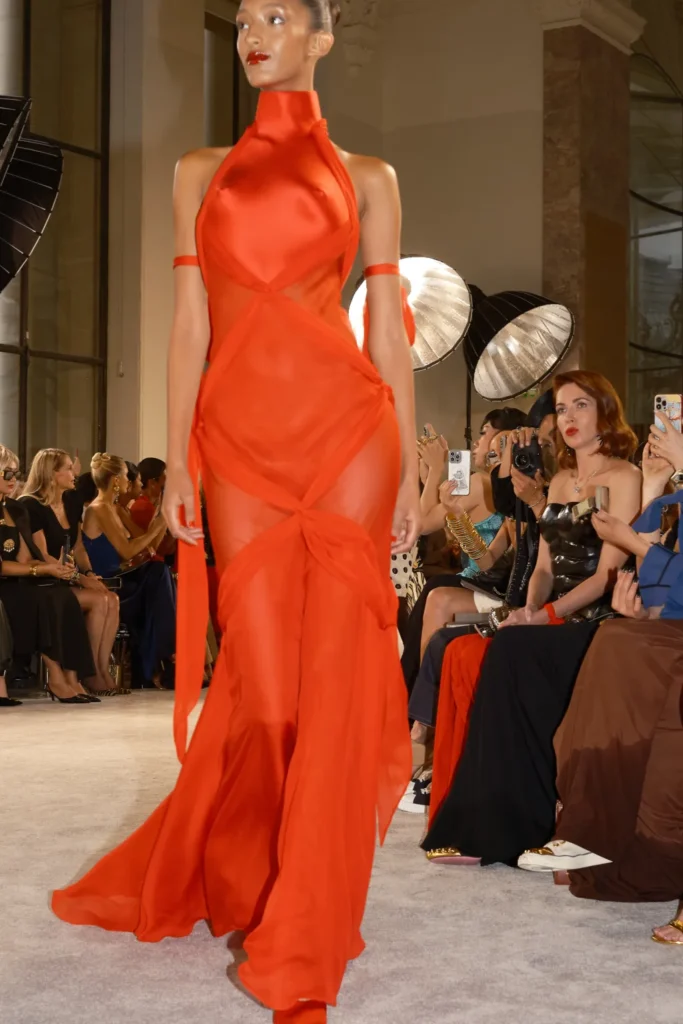
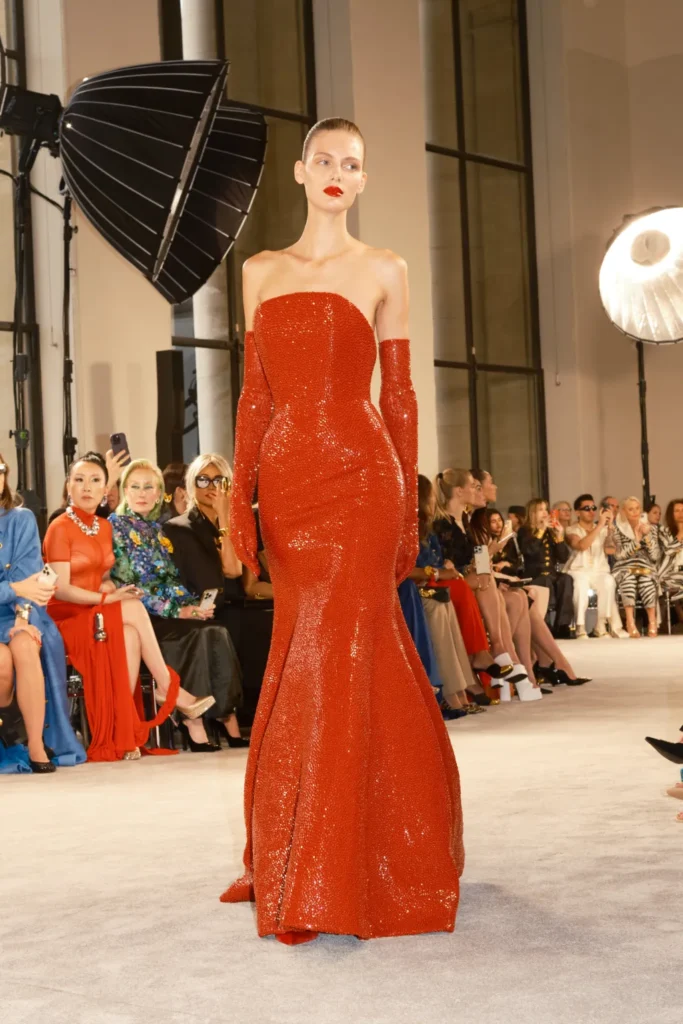
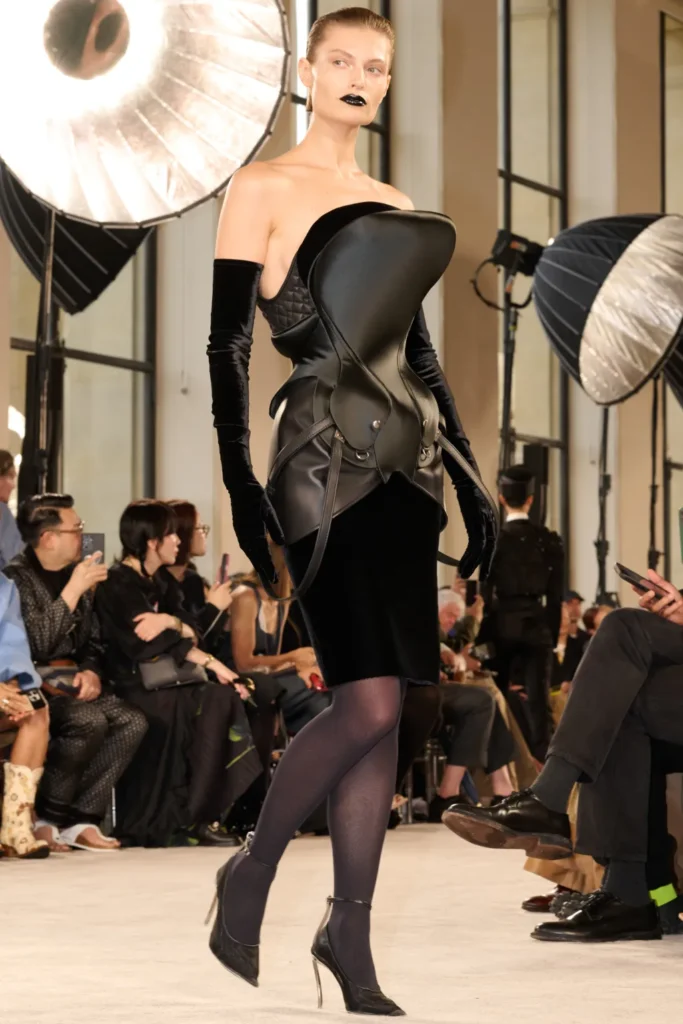
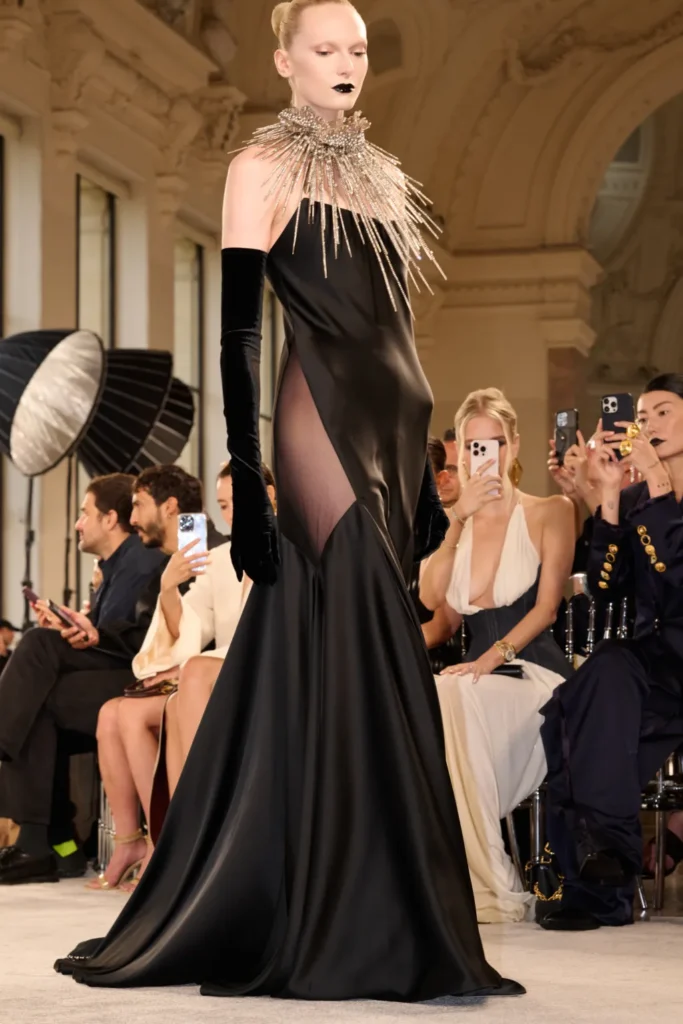
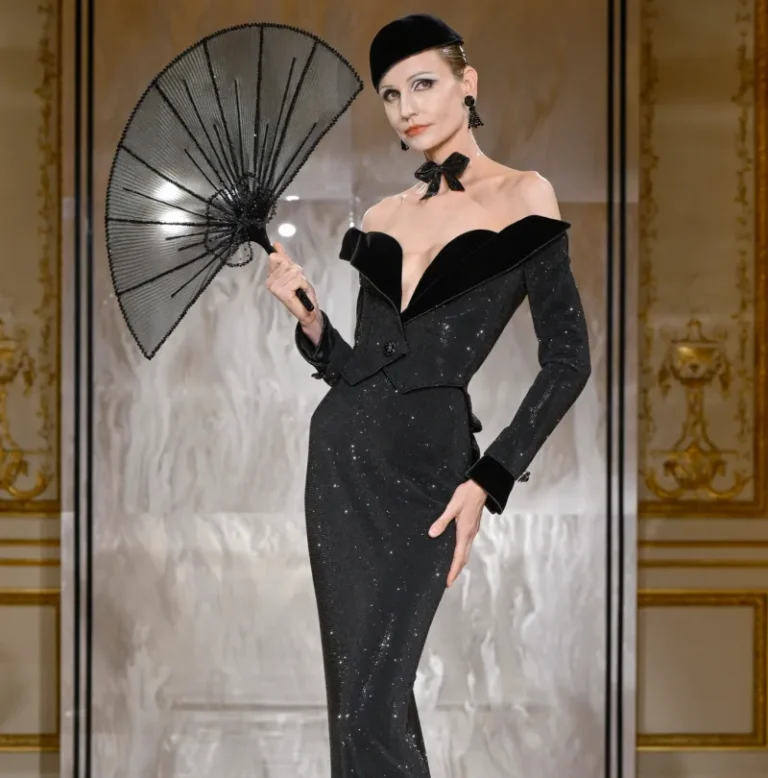
The renowned Italian designer turned his focus to exploring the elegant, seductive, and nocturnal facets of black. Known for his signature greige tones and soft Milanese neutrals, Giorgio Armani shifted direction this season with his Fall 2025 Privé haute couture collection, immersing himself in the endless possibilities of black. He played with light-absorbing velvets, lacquer-like glossy fabrics, shimmering beadwork, and jet embellishments that gave black a new dimension.

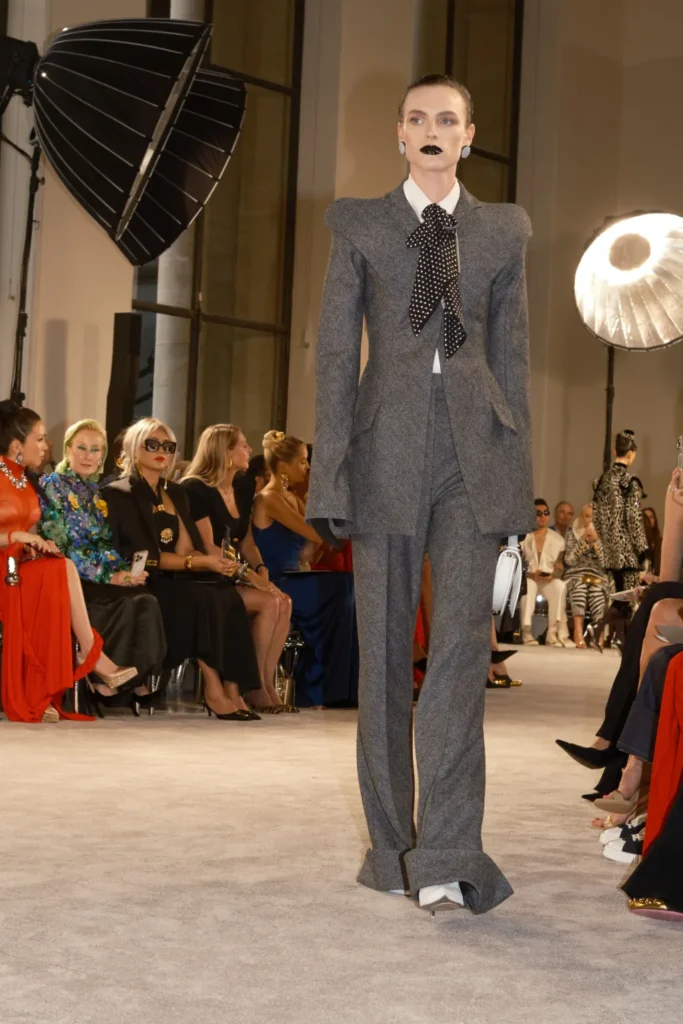
The show began on uncertain footing with velvet jodhpur pants — their bulky seams outlined in crystals — but quickly regained composure with a sophisticated rhythm. Sleek black evening trousers took center stage, proving once again to be a timeless staple. Armani paired them with fitted jackets in jewel tones or tapestry-like prints dusted with crystals, shimmering cage-like capes, and knotted tweed coats embellished with ostrich feathers, anchoring the collection firmly in festive territory.

He fully embraced the graphic power of black in his evening gowns — mostly slim-cut — which were elevated by bold feather quivers, soft oversized bows, and structured, undulating collars that introduced a dramatic flair. The designer aptly named the collection “Seductive Black”, the same name as a custom fragrance that accompanied the show’s invitation.

Masculine tailoring elements — such as tuxedo jackets, cummerbunds, bow ties, and military-style fastenings — ran throughout the collection, softened by plunging necklines, illusion panels, and bare backs that highlighted a sensual, unmistakably Armani take on eveningwear.

For the first time in his long career, Armani did not appear for his traditional bow during his Emporio Armani and Giorgio Armani men’s shows in Milan last month, as he was recovering at home from an illness. He also did not attend the Paris couture presentation on Tuesday evening, following medical advice to extend his rest, though he shared that he was ready to travel again.

Ashi Studio Fall 2025 Couture Collection

Ashi Studio Fall 2025 Couture Collection

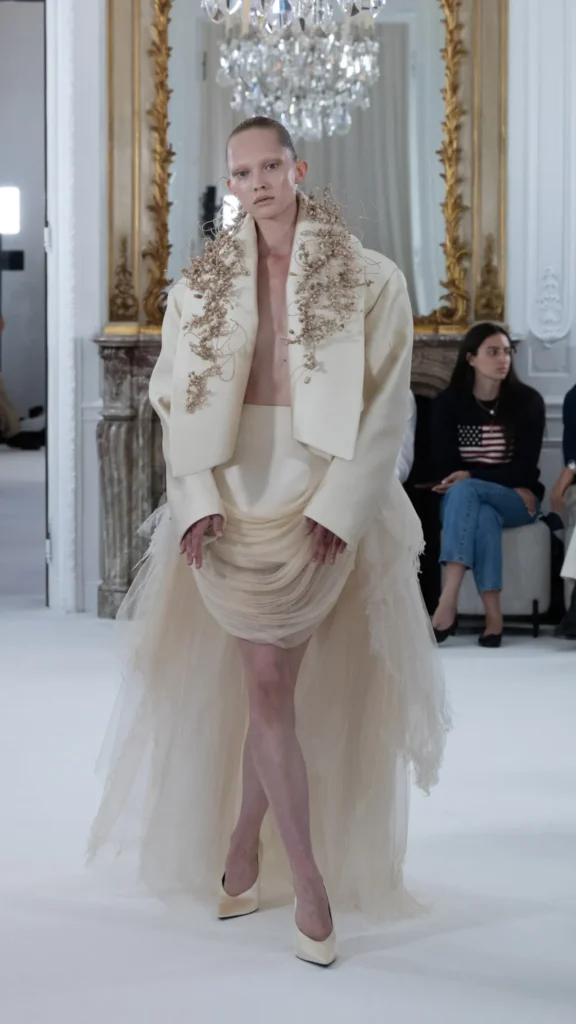
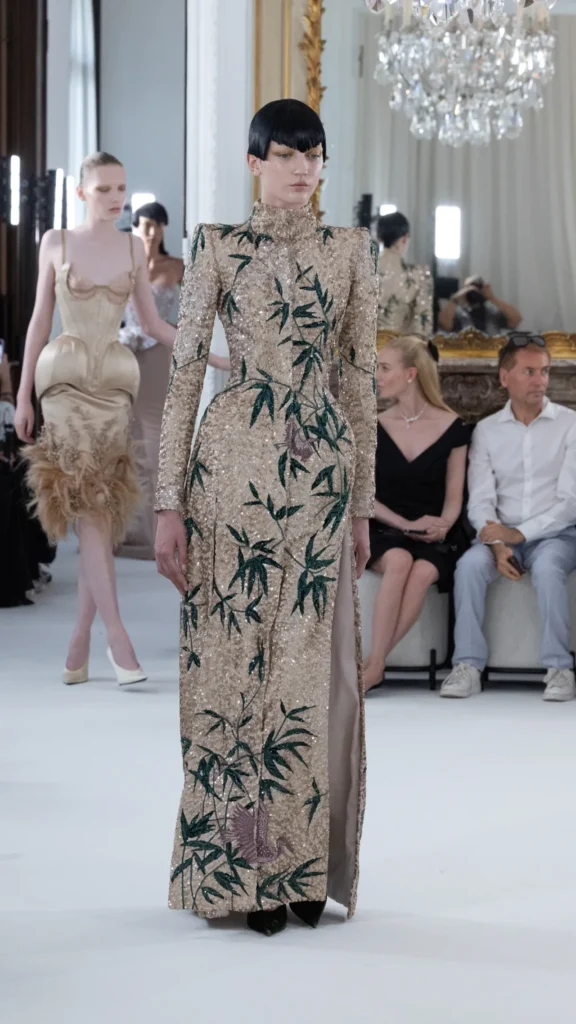
For Fall 2025, Ashi Studio unveiled a couture collection that forgoes overt storytelling to spotlight what truly lies at the core of haute couture: meticulous construction, sculptural form, and master craftsmanship. Known for his conceptual titles and intricate backstories, designer Ashi took a more instinctive approach this season, turning instead to antique markets for inspiration, collecting vintage trinkets and objects that ultimately informed the collection’s richly detailed aesthetic.

Drawing influence from ornate spaces like the Grande Singerie salon at Château de Chantilly and the intimate vanity settings of Victorian London, the designer reimagined elements such as aged textiles, delicate porcelains, and chinoiserie patterns. These were transformed into elaborate embroideries and featherwork, incorporating laser-cut mother-of-pearl to stunning effect.

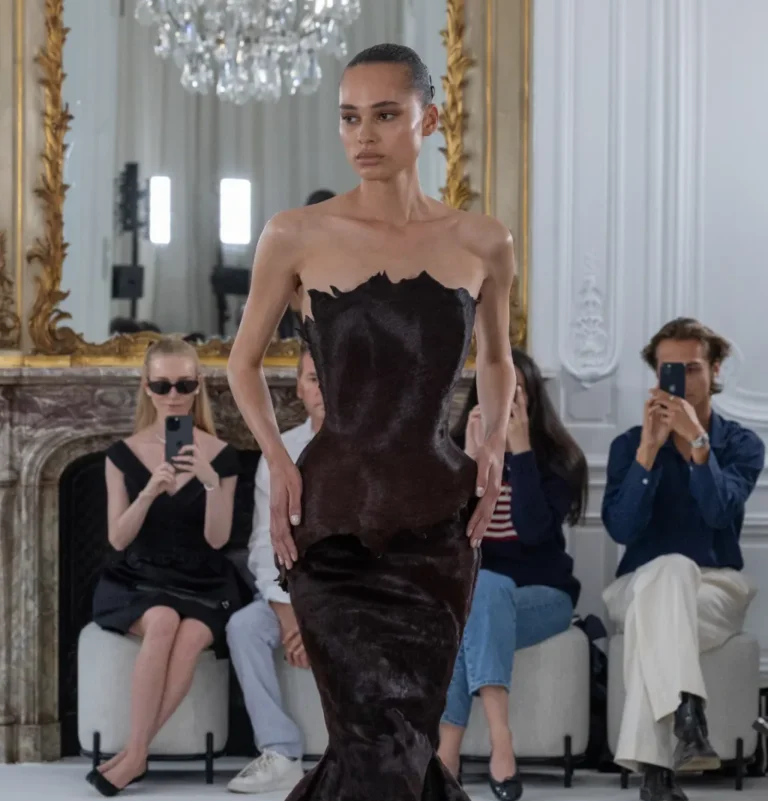
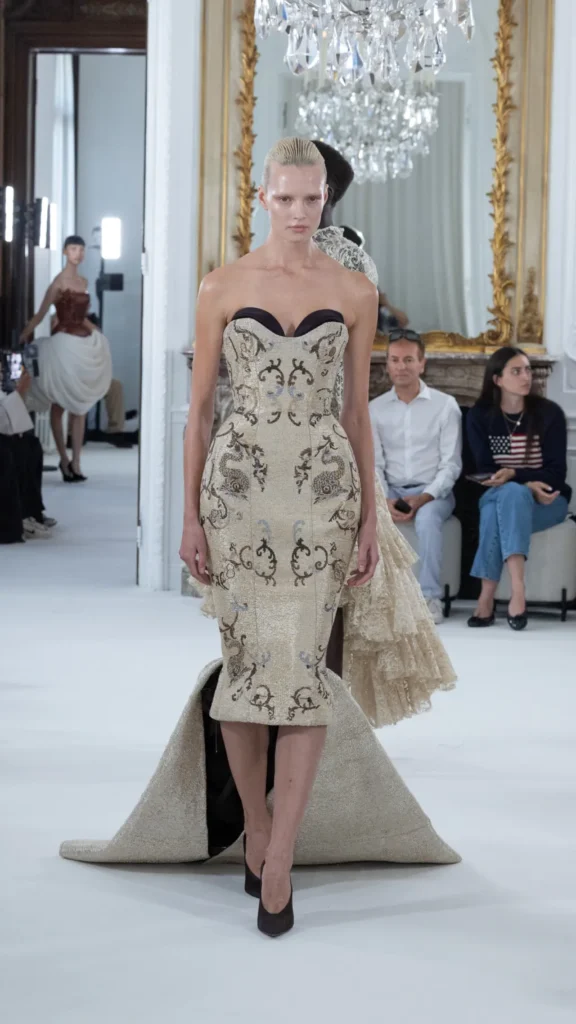
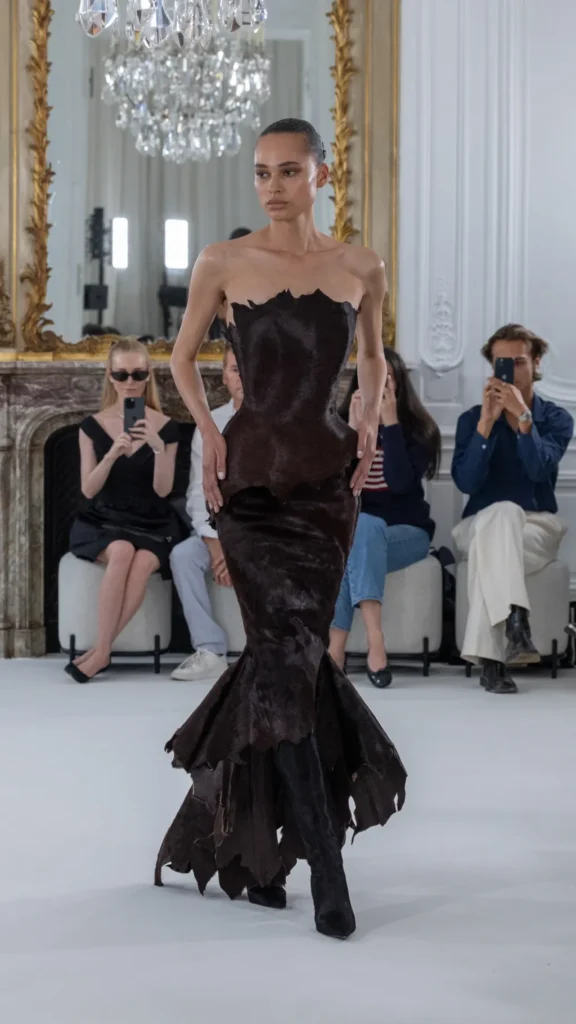
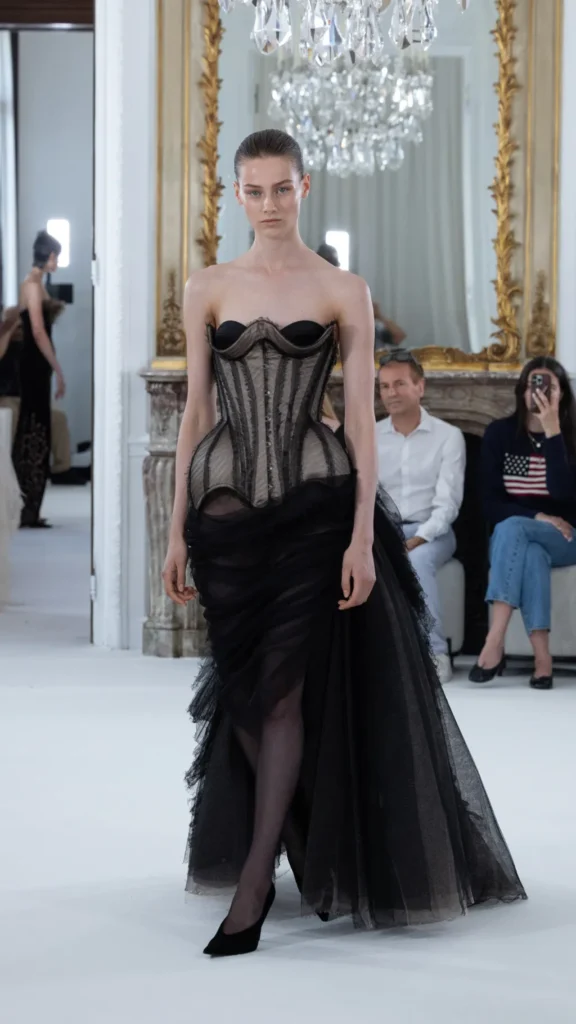
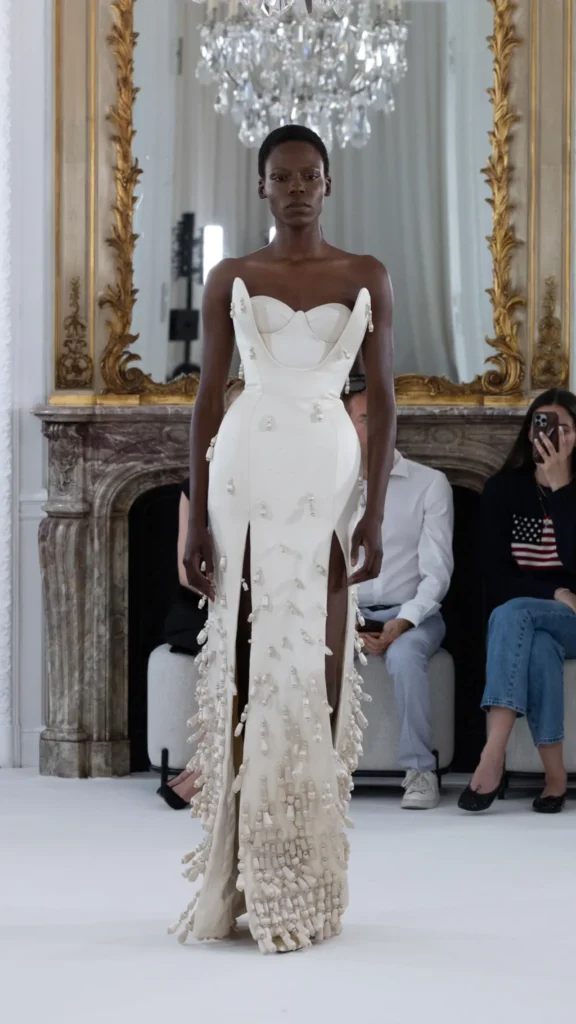
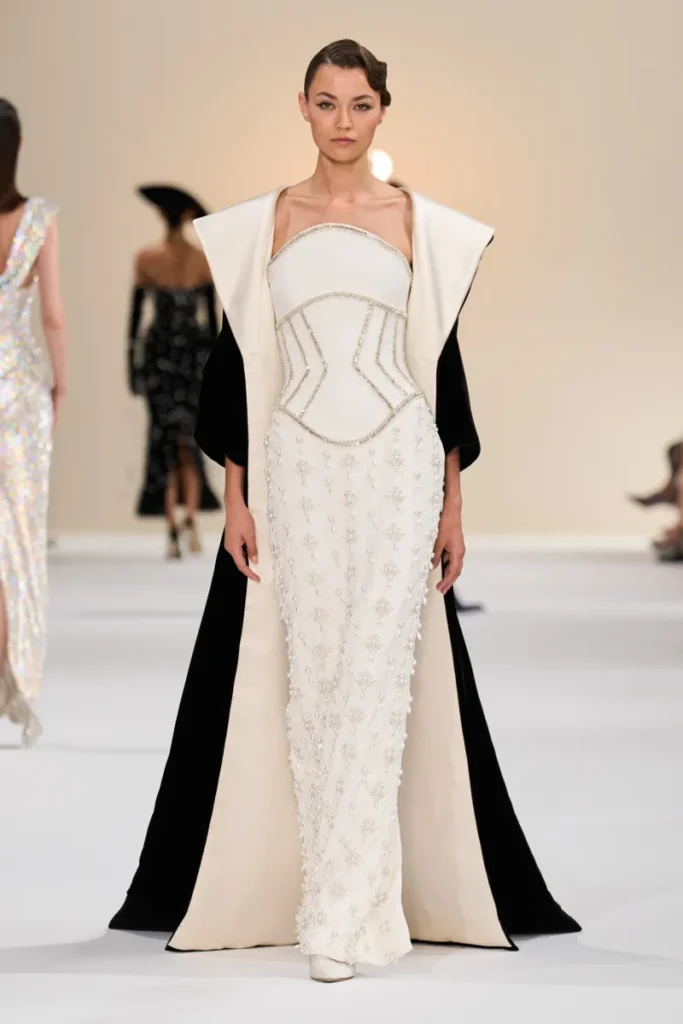
At the heart of the collection stood corsetry—either boldly on display or subtly hidden beneath fluid draping—creating striking hourglass silhouettes. These sculptural foundations grounded a lineup filled with impeccably tailored jackets, elaborately embroidered coat-dresses, and asymmetric pantsuits adorned with spiraling fringe.

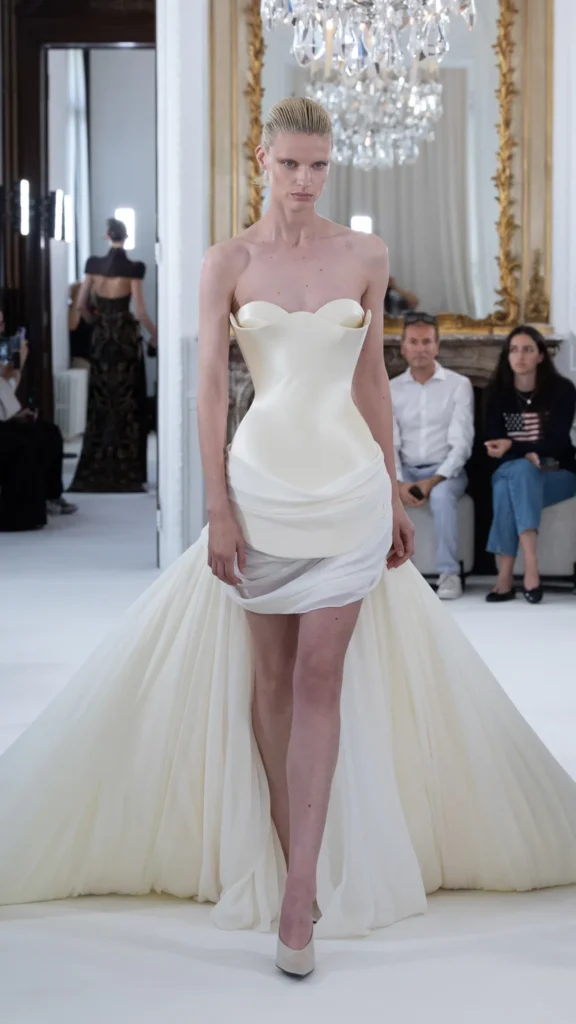
“Craftsmanship is the real story here,” Ashi said backstage, emphasizing that the atelier itself—its skill, precision, and artistry—should take center stage. Rather than relying on abstract narratives, this season was about celebrating the process and the people behind it. Standout moments, such as a beige tulle mermaid gown rendered in a material that defies imitation, underscored the house’s unwavering commitment to construction and the true spirit of couture.

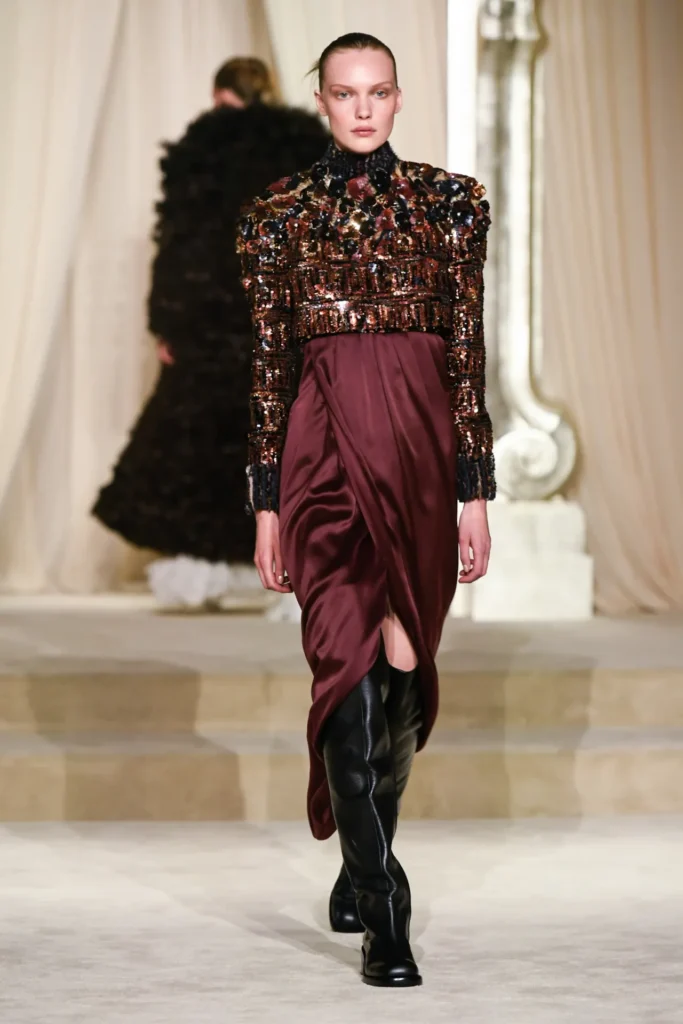
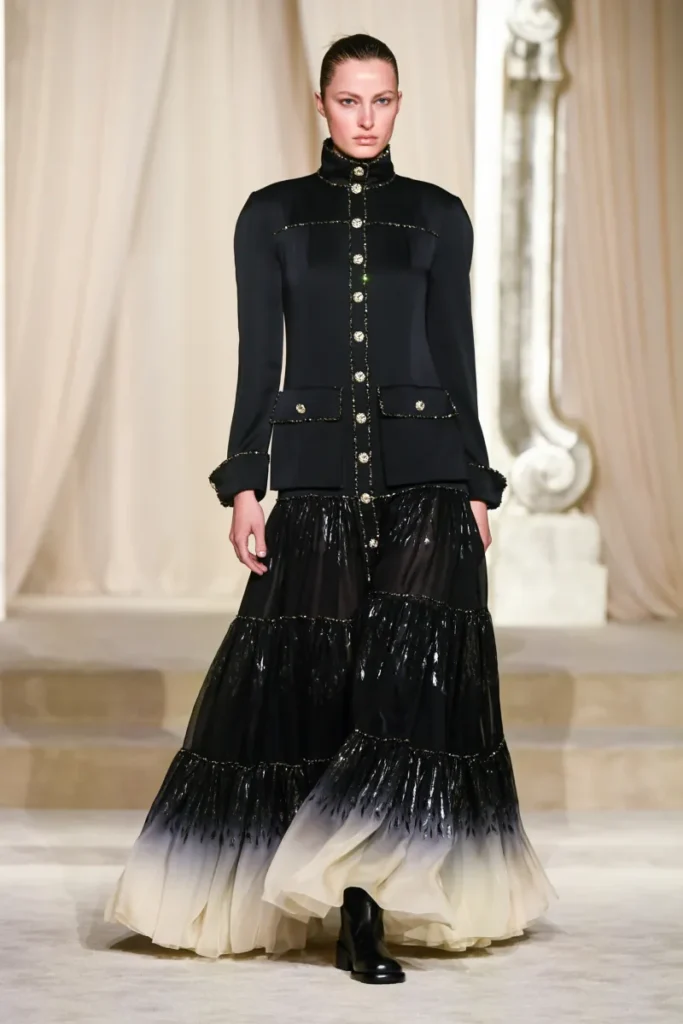
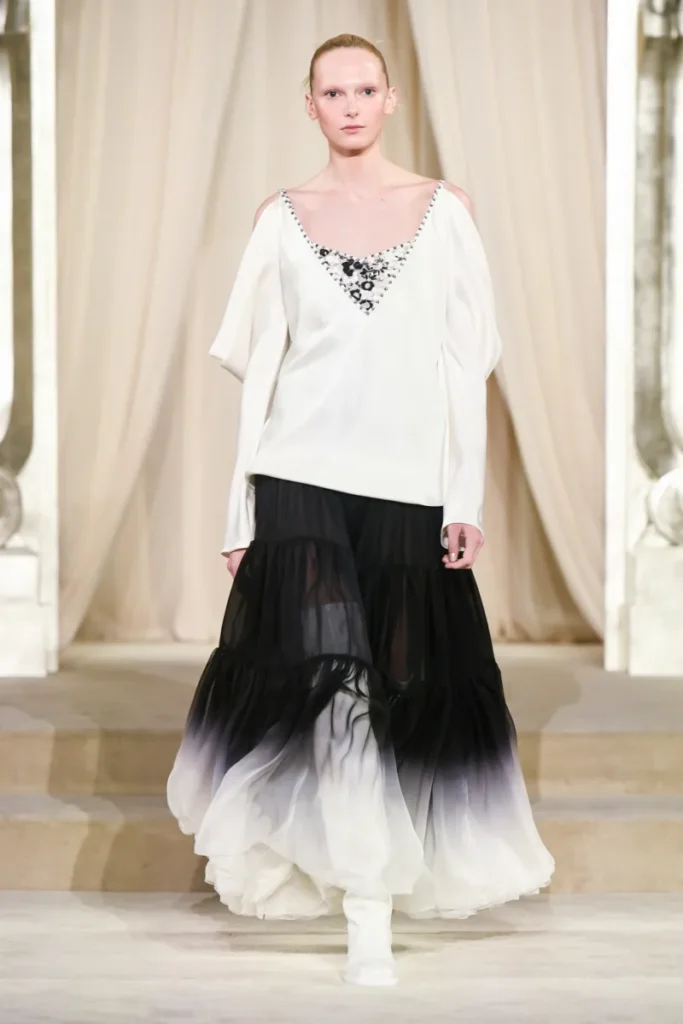
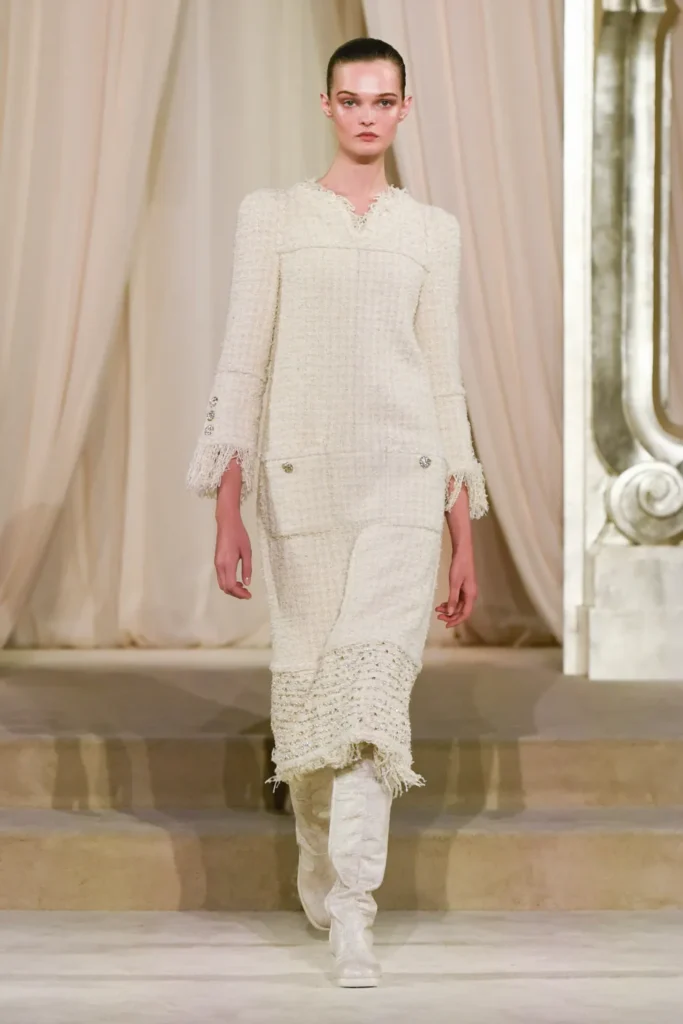
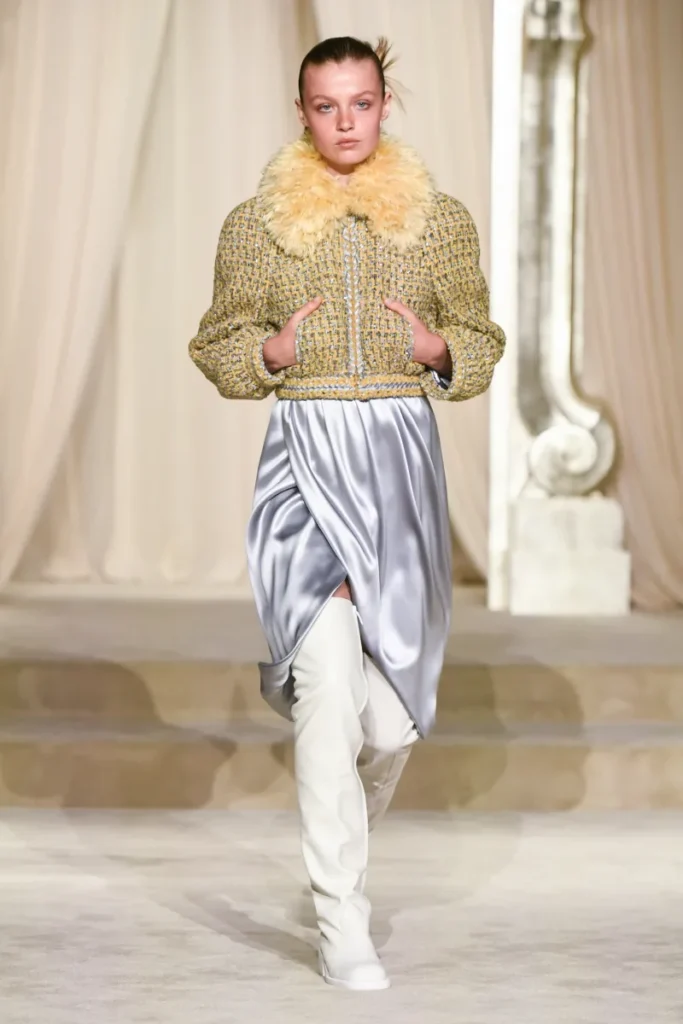
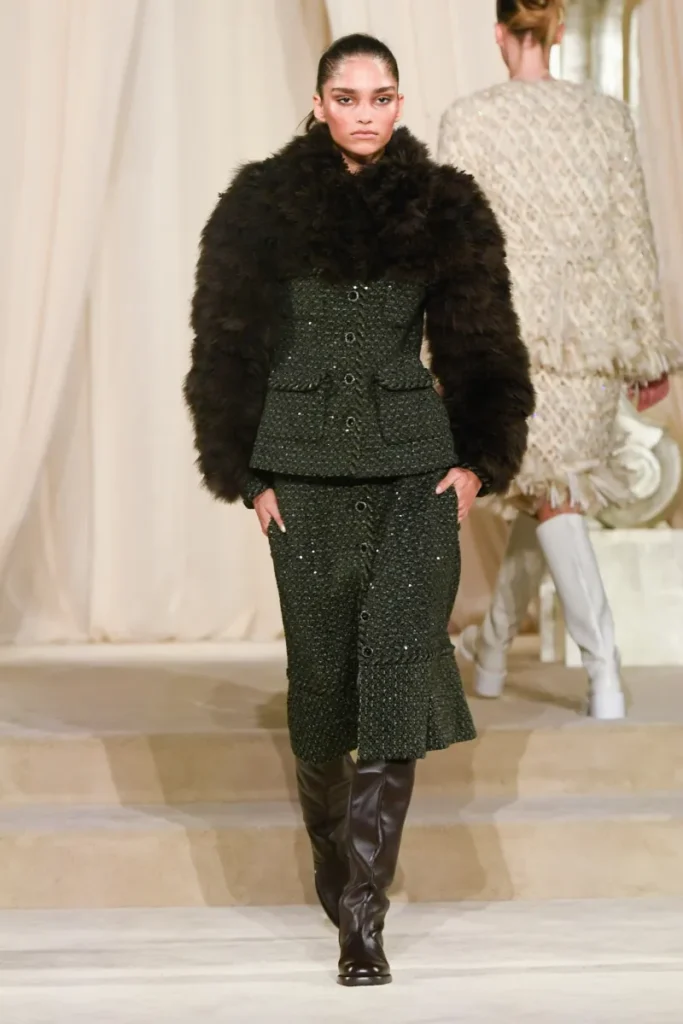
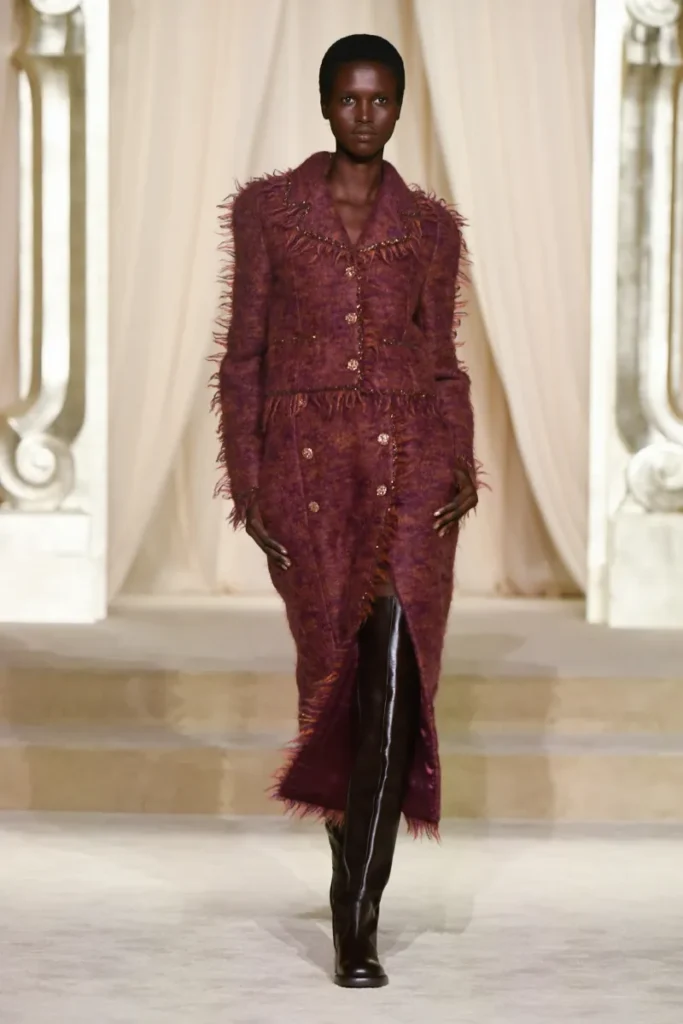
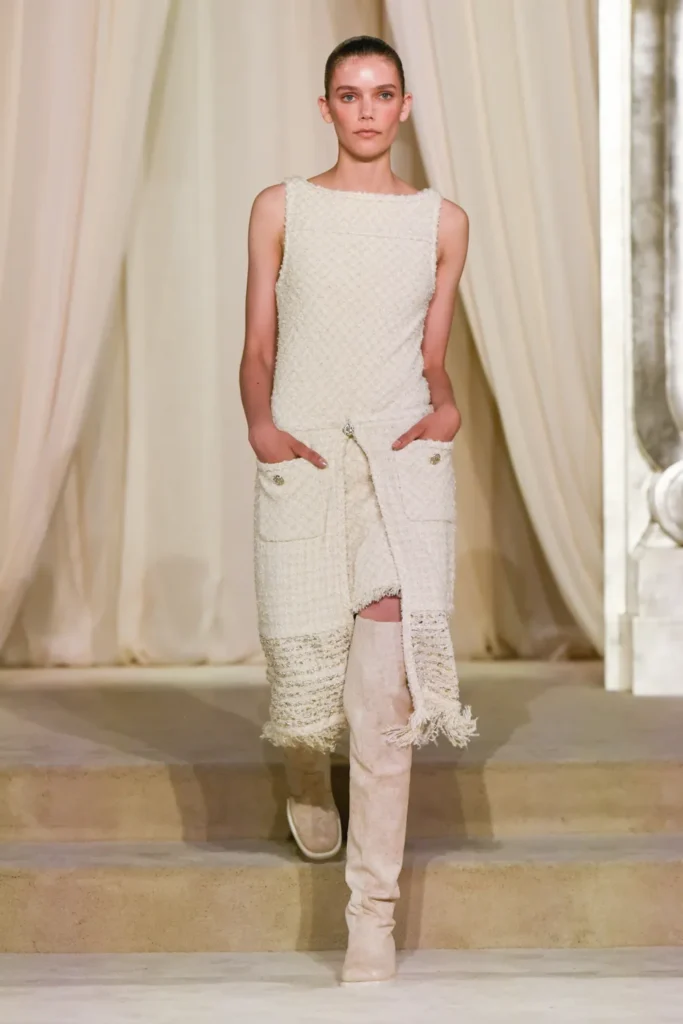
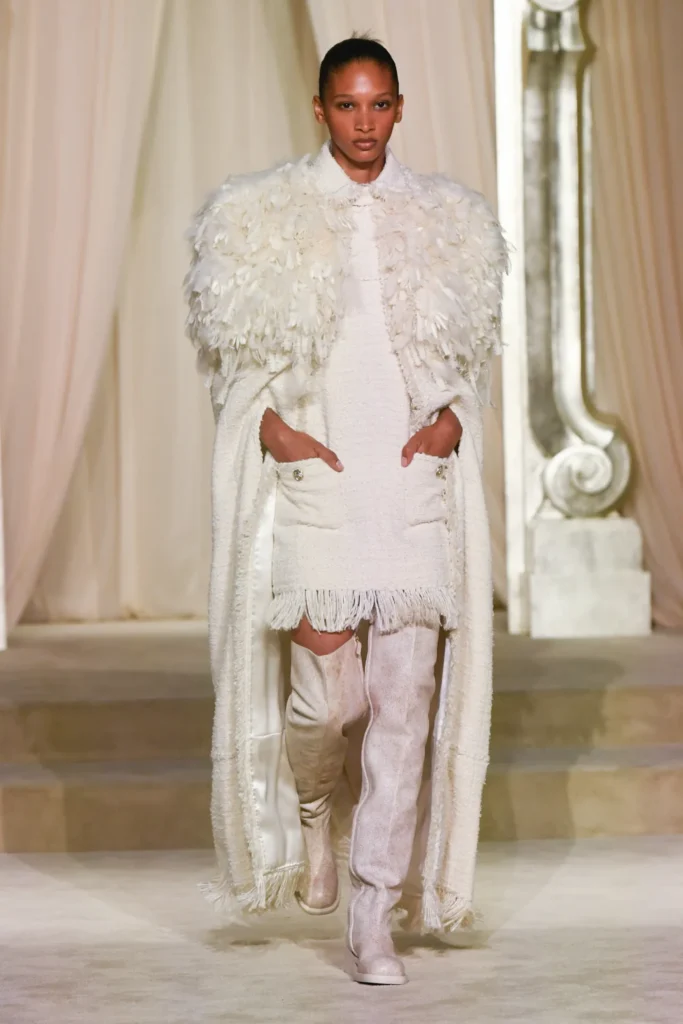
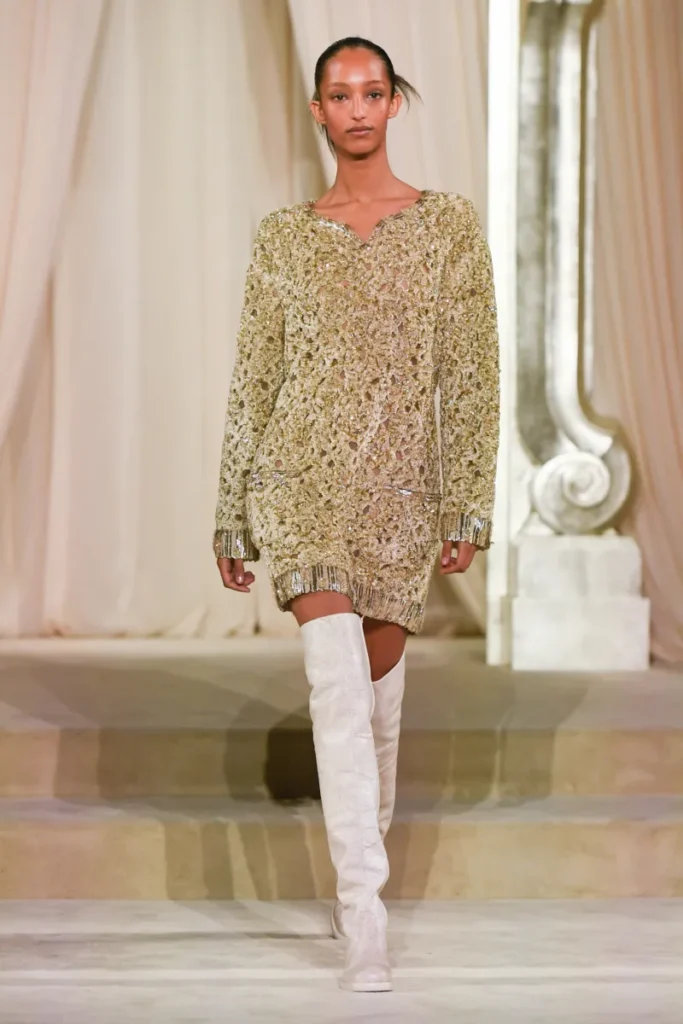
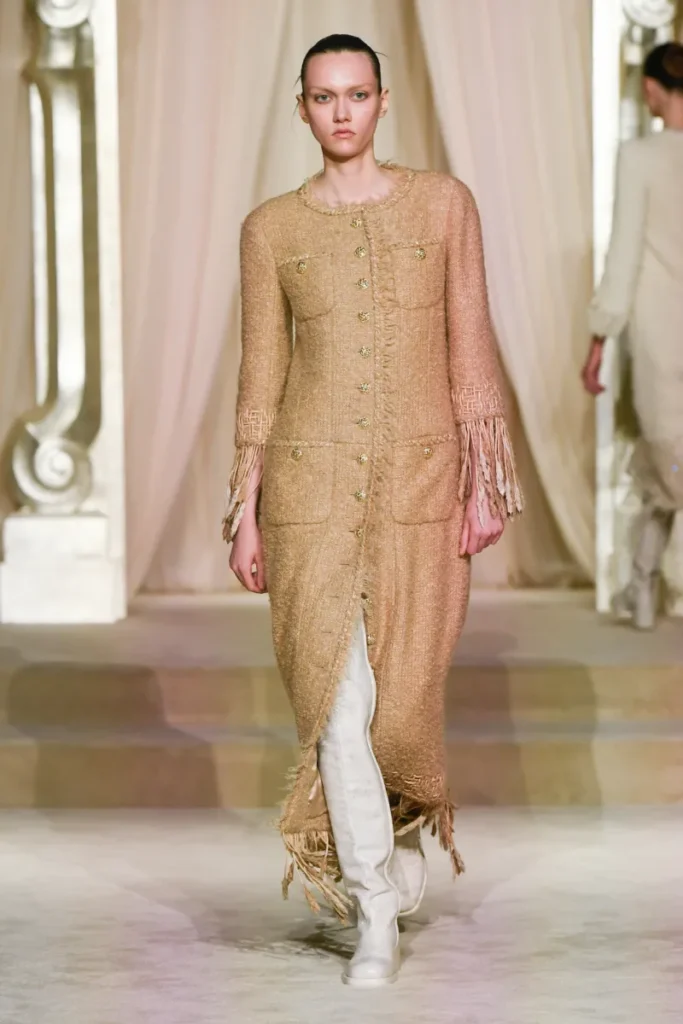
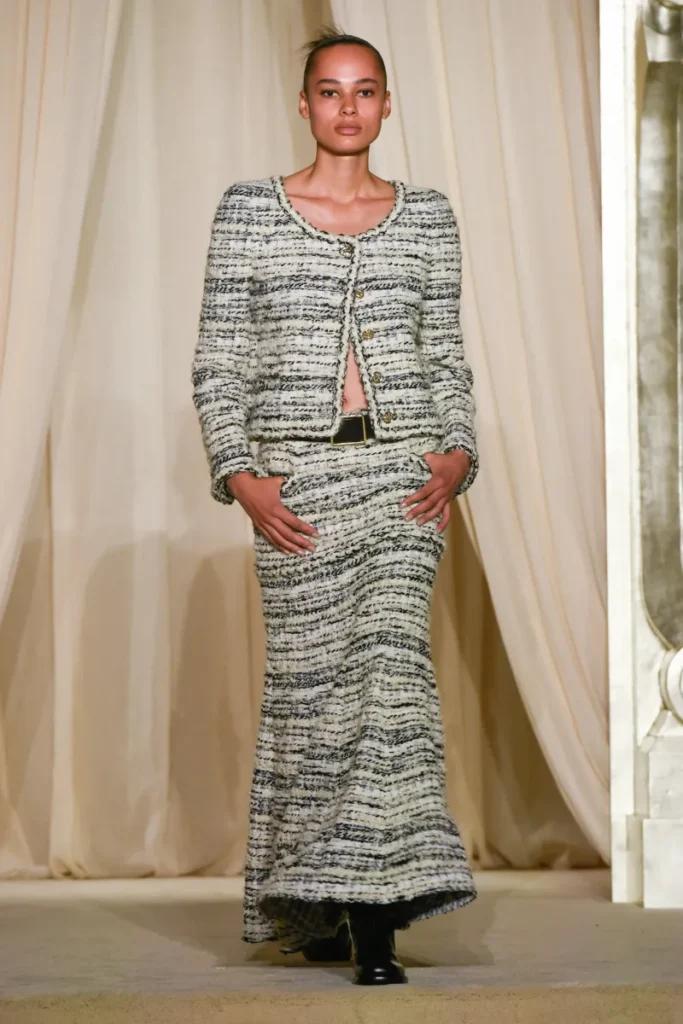
Chanel Haute Couture Fall 2025 Collection

Chanel Haute Couture Fall 2025 Collection

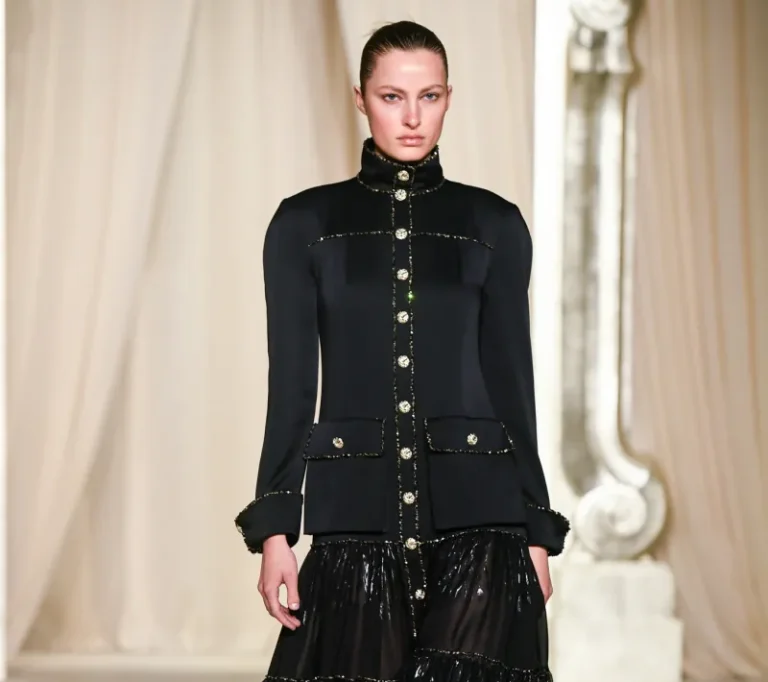
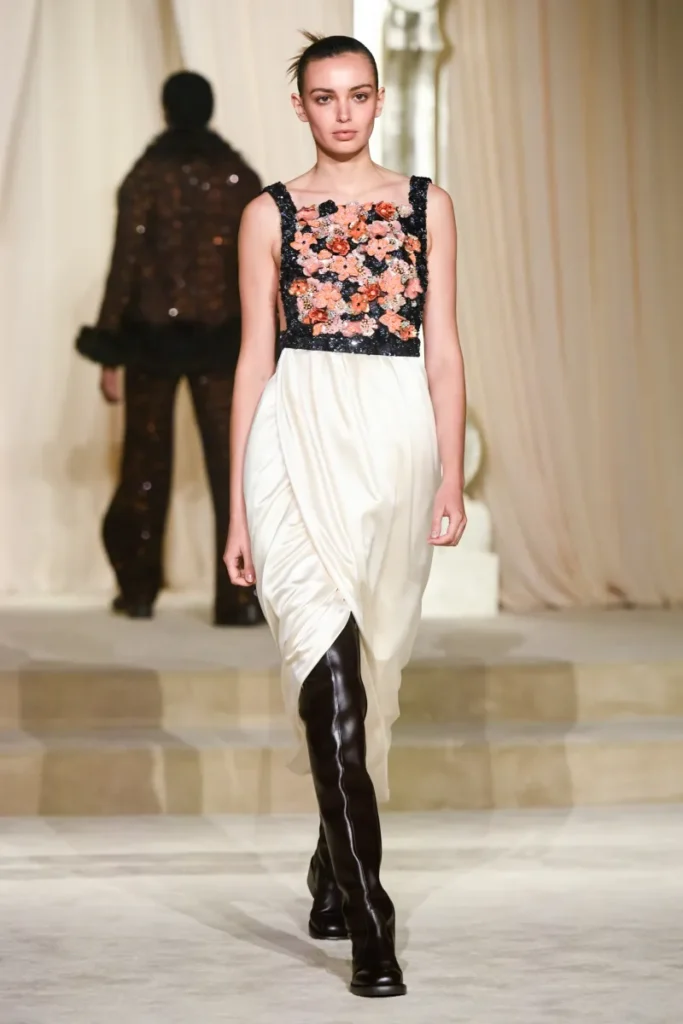
The invitation to this season’s Chanel haute couture show included an early edition of Chanel Haute Couture, a gold-bound coffee-table book edited by Sofia Coppola to commemorate the 110th anniversary of the house’s made‑to‑measure division

To honor its heritage, Chanel transformed an upper gallery at the Grand Palais, recently completed in its second phase of renovation, into a replica of its historic Rue Cambon couture salon, complete with beige benches and mirrored Art Deco panels

Floor‑to‑ceiling curtains and a plush carpet evoked the calm ambience of private fittings, while the collection transported guests into nature, featuring thick outerwear, tall boots, and a forest‑tone palette

Designed by the in‑house team ahead of creative director Matthieu Blazy’s official debut in October, the collection clearly signaled change

Chanel hadn’t played with textures this much in years—from oversized feather‑shouldered ivory tweed coats with twisted knots to fringed‑trimmed tweed tunics and a fluffy black coat topped with a large bird motif mixing tweed, feathers, and chiffon over a sculpted ivory evening dress

The collection drew inspiration from Gabrielle “Coco” Chanel’s love of Scotland, where she discovered tweed—shown here in fishtail‑hem skirts, open military‑style jackets with patch pockets, and long gold‑toned buttoned vests and pants reminiscent of wheat sheaves on each seat

Looks were filled with trompe‑l’oeil effects: raindrop‑shaped sequins on a glossy black coat worn with a stepped lace skirt, or a frothy white collar on a black bouclé column coat sprinkled with strands of wool and silk in the color of fresh snow

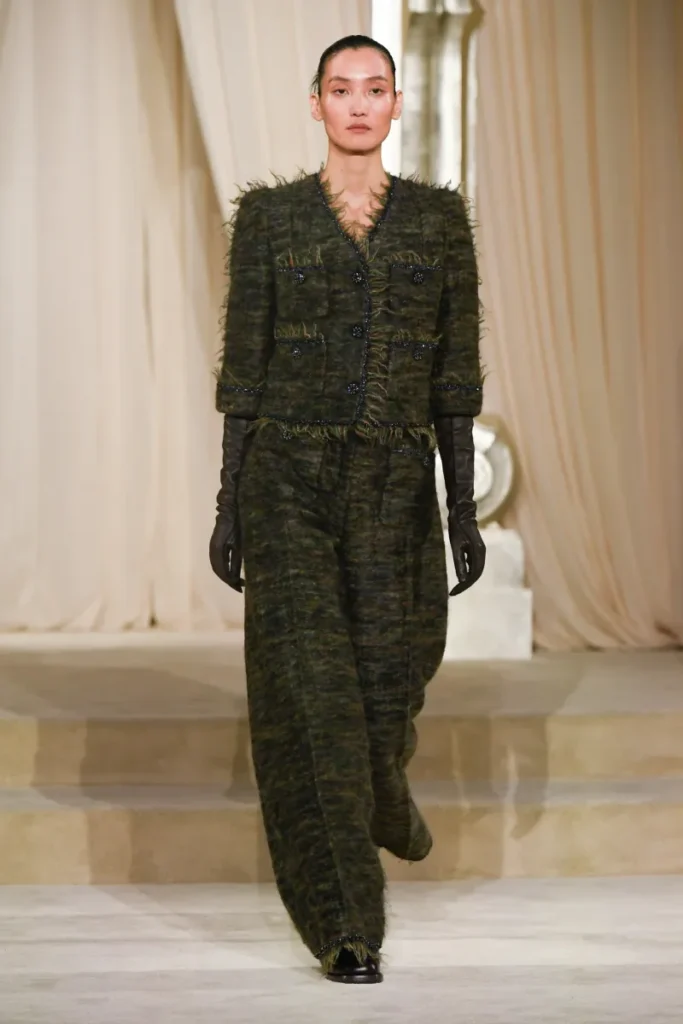
Some oversized volumes felt experimental—like cardigan‑skirt suits with dense lattice embroidery or passementerie fringe—but a brushed‑wool pant suit in olive camouflage hinted at Chanels’s more untamed side: the jacket’s furry outline contrasted with polished black buttons and trim

Tamara Ralph Haute Couture Fall 2025 Collection

Tamara Ralph Haute Couture Fall 2025 Collection

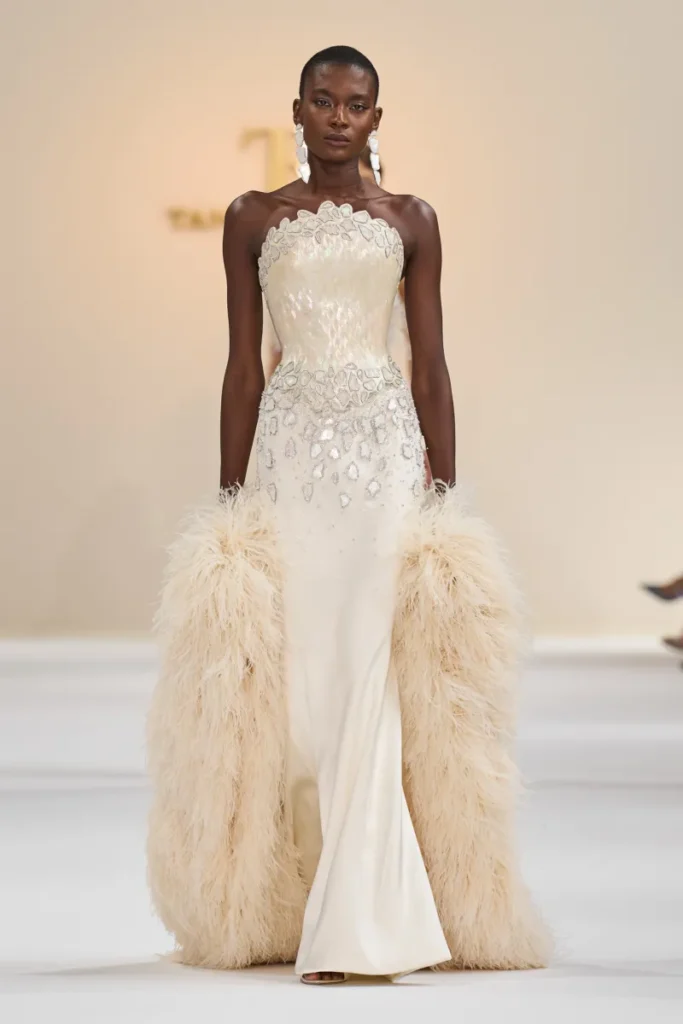
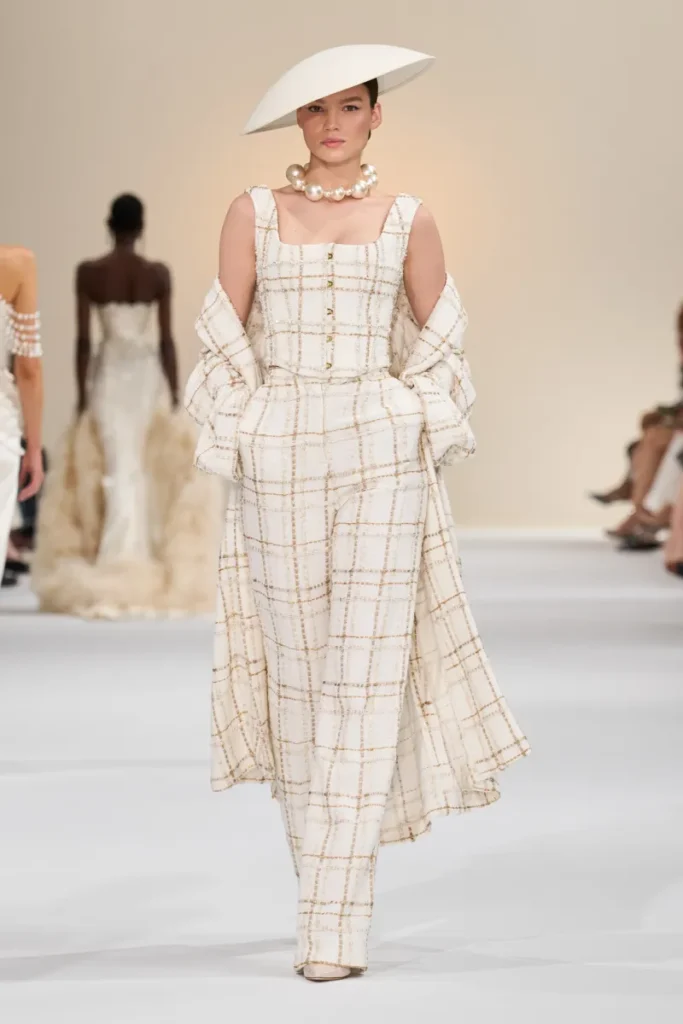
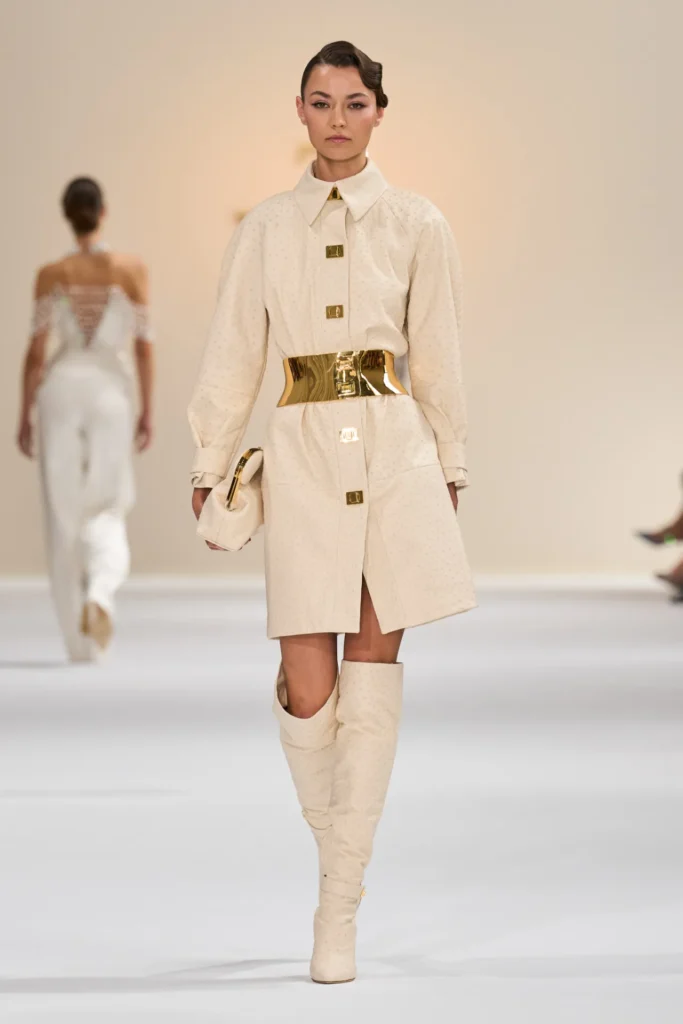
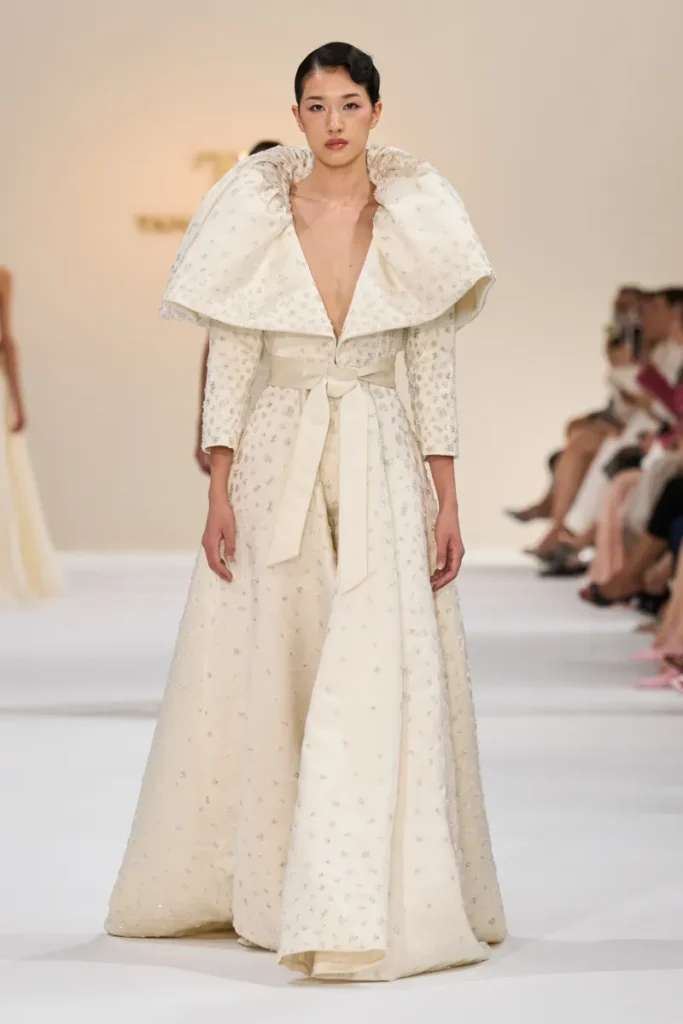
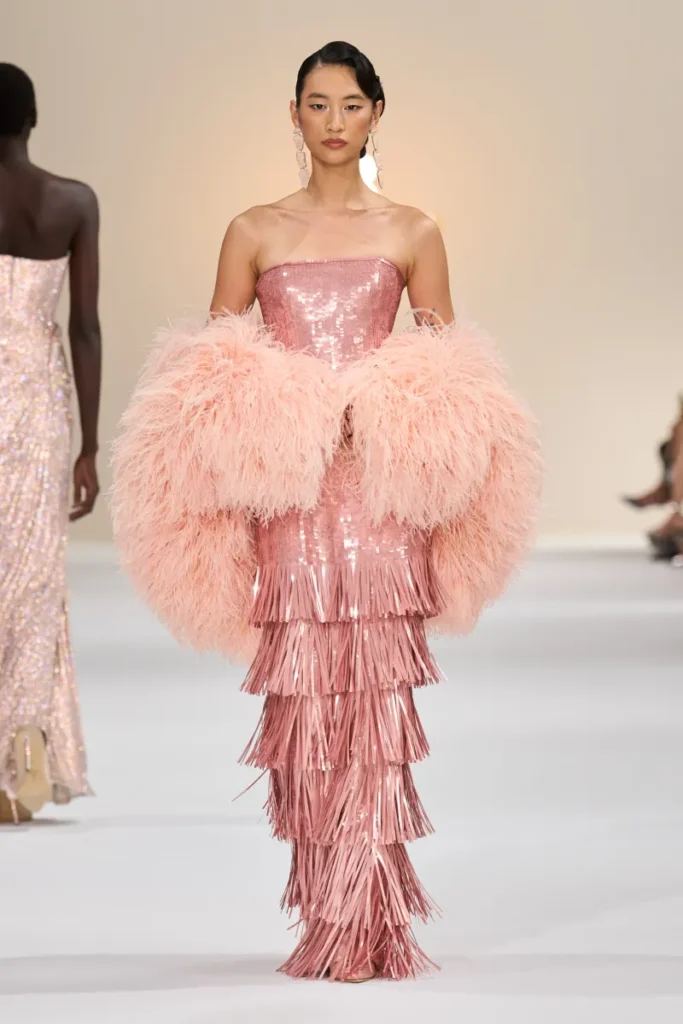
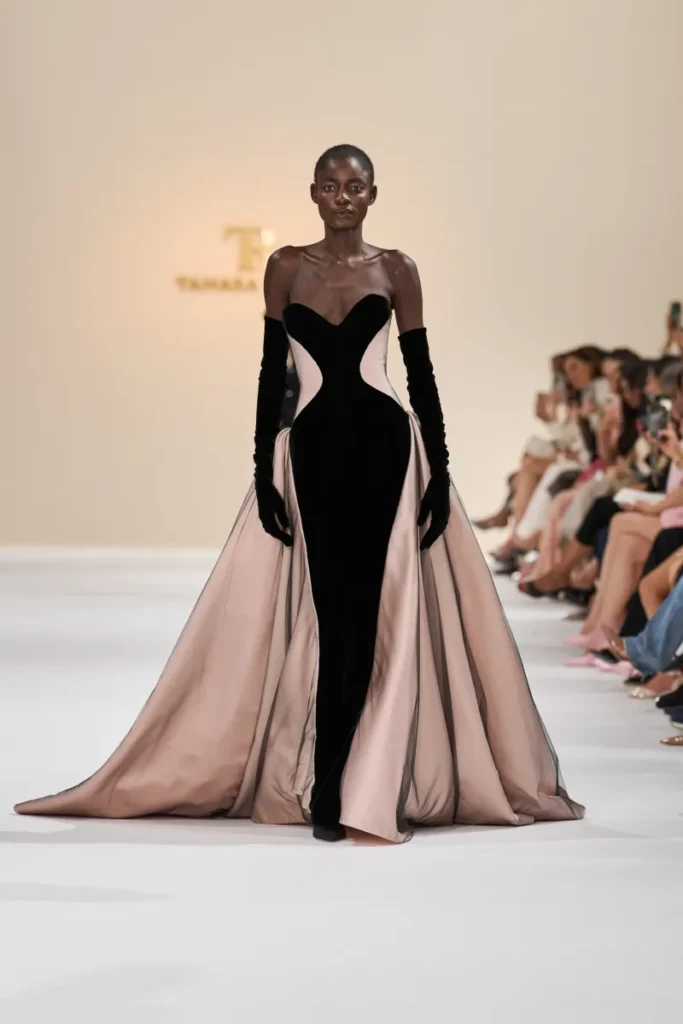
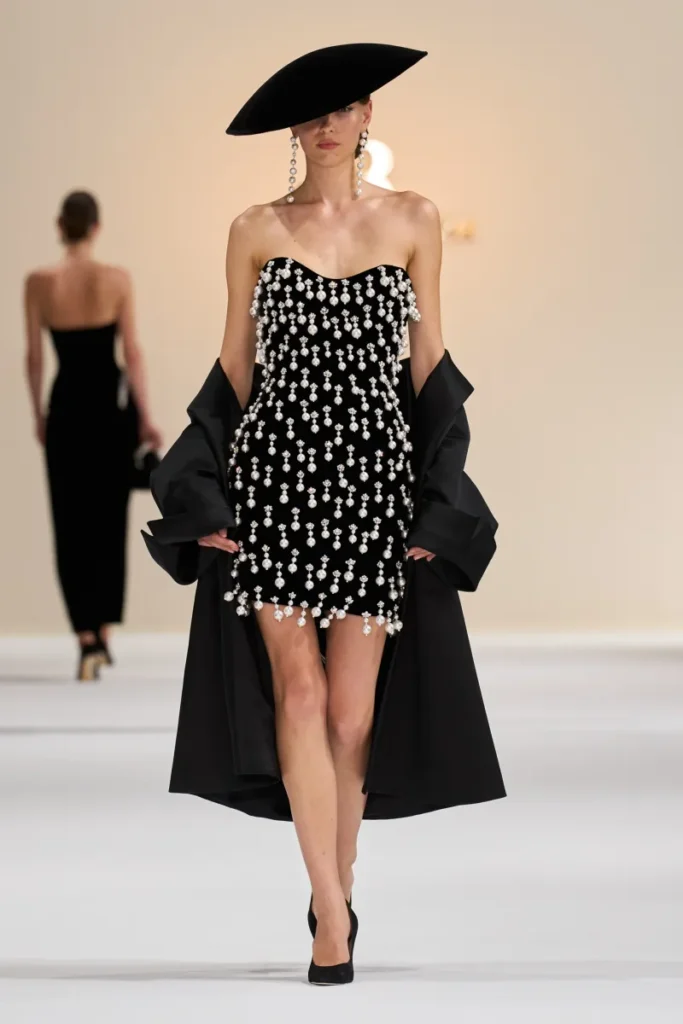
Art Deco was the theme of the season for Tamara Ralph, who drew on its festive silhouettes, bathed in old-school glamour, with geometric touches that gave the collection strength. It was dominated by a refined palette of ivory and rose gold. “There’s a lot of structure in the silhouettes, lots of angles, lots of geometric detail,” Ralph said backstage before the show.

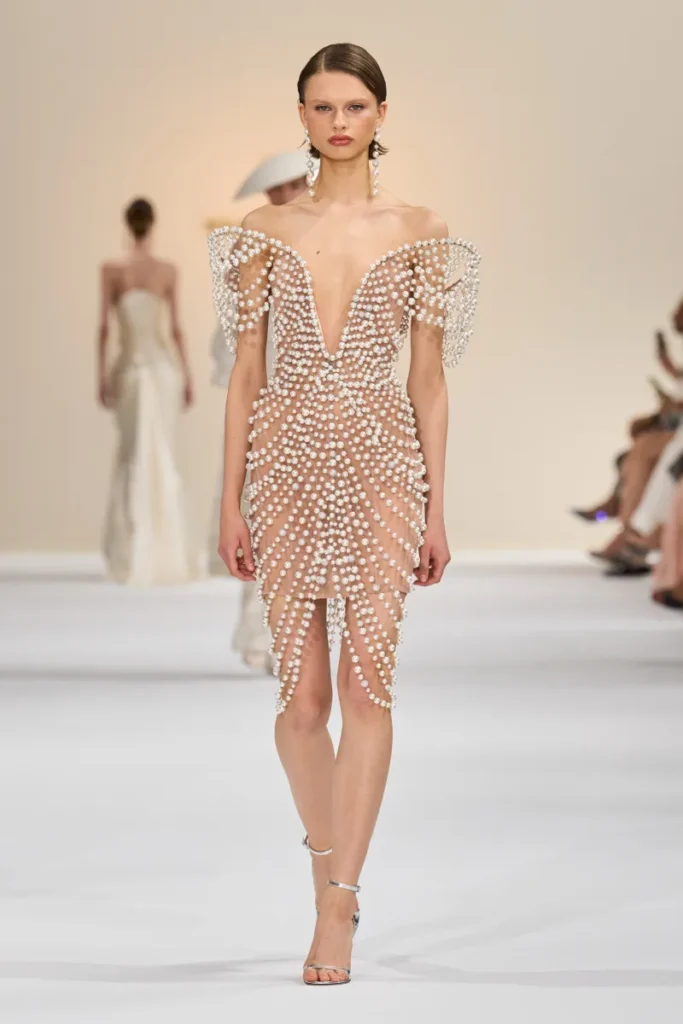
Beaded and teardrop-crystal embellishments evoked chandeliers, while sculptural pieces were adorned with rows of oversized pearls and crystal mesh designs that shimmered subtly like disco balls. Champagne and oysters, anyone?

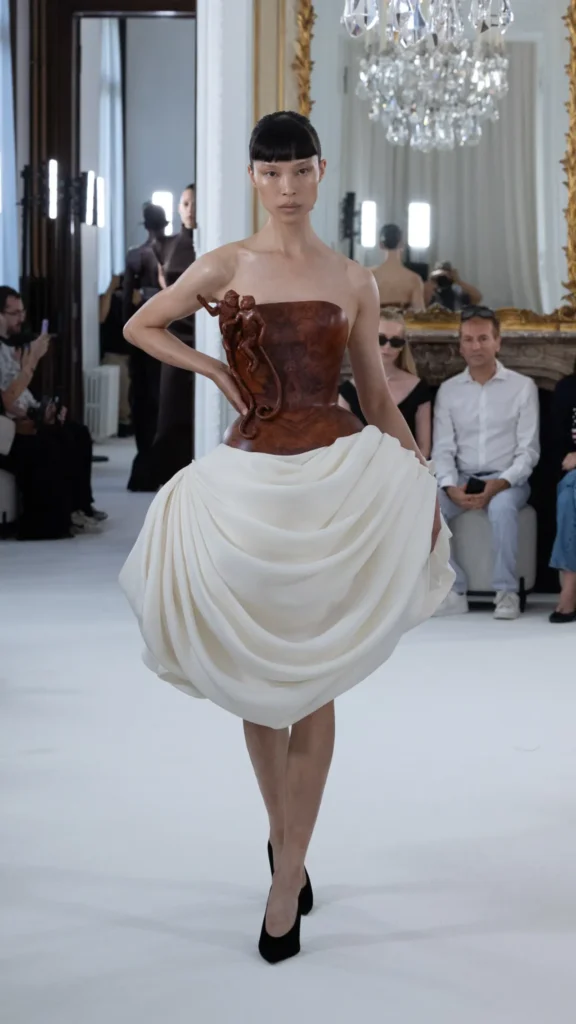
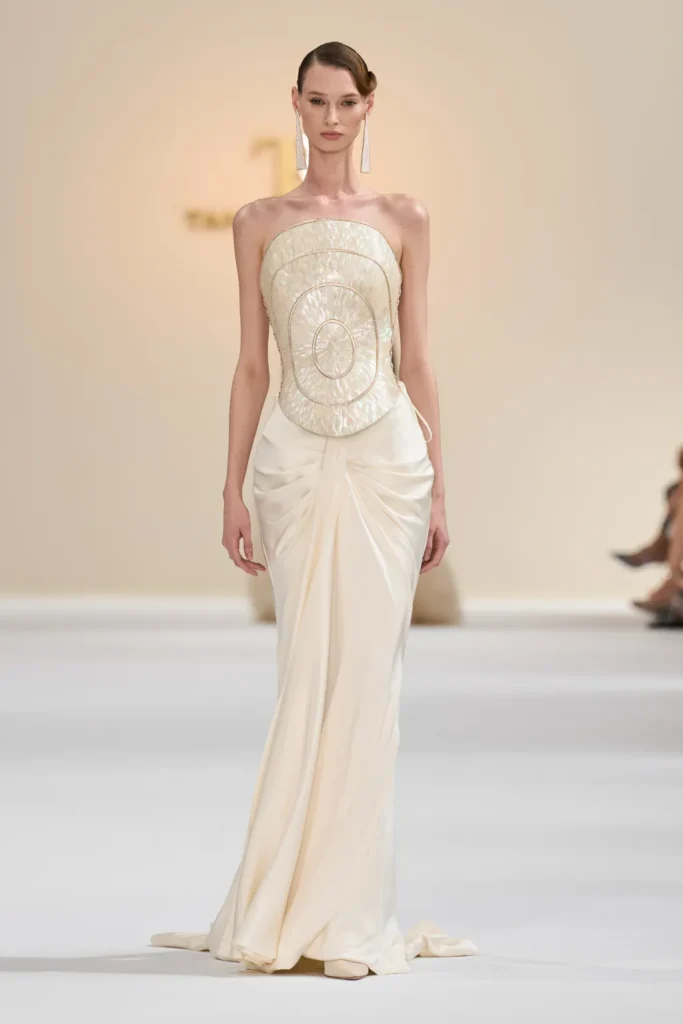
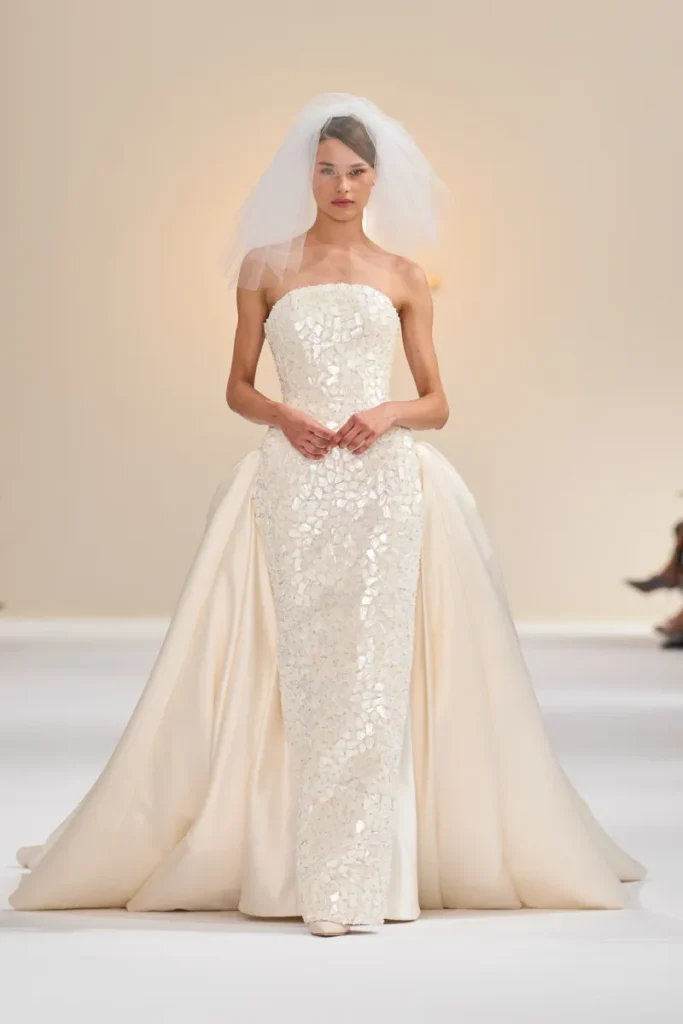
Beyond the shine and glamour, the technical craftsmanship behind some designs was the true highlight. The opening look featured a sculpted resin bodice inlaid with mother-of-pearl and polished by hand — a piece that took several months of prototyping and eight weeks of manual labor to complete. The bridal look came in a beaded gown topped with a mesh layer hand-embroidered with hundreds of shell fragments.

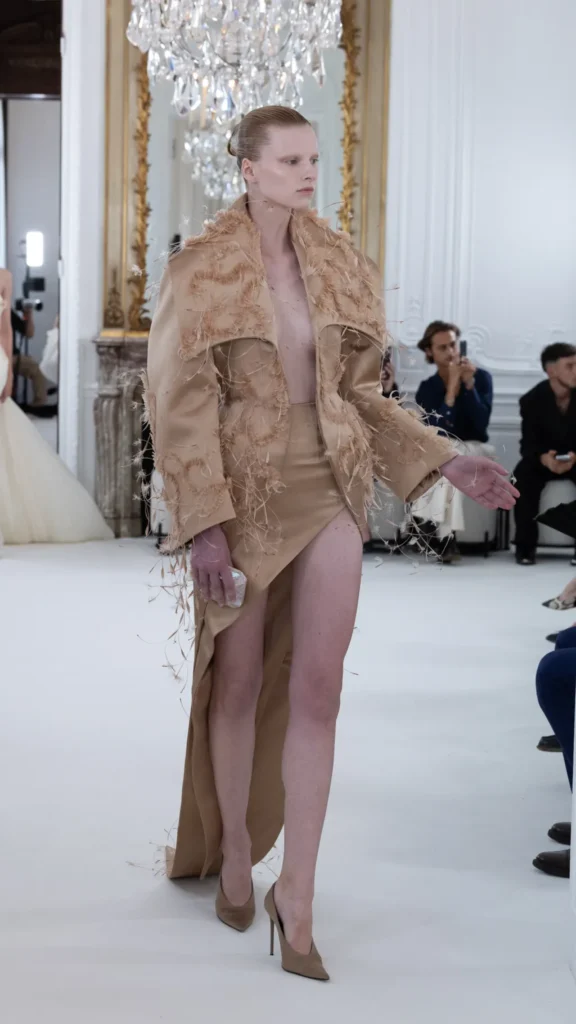
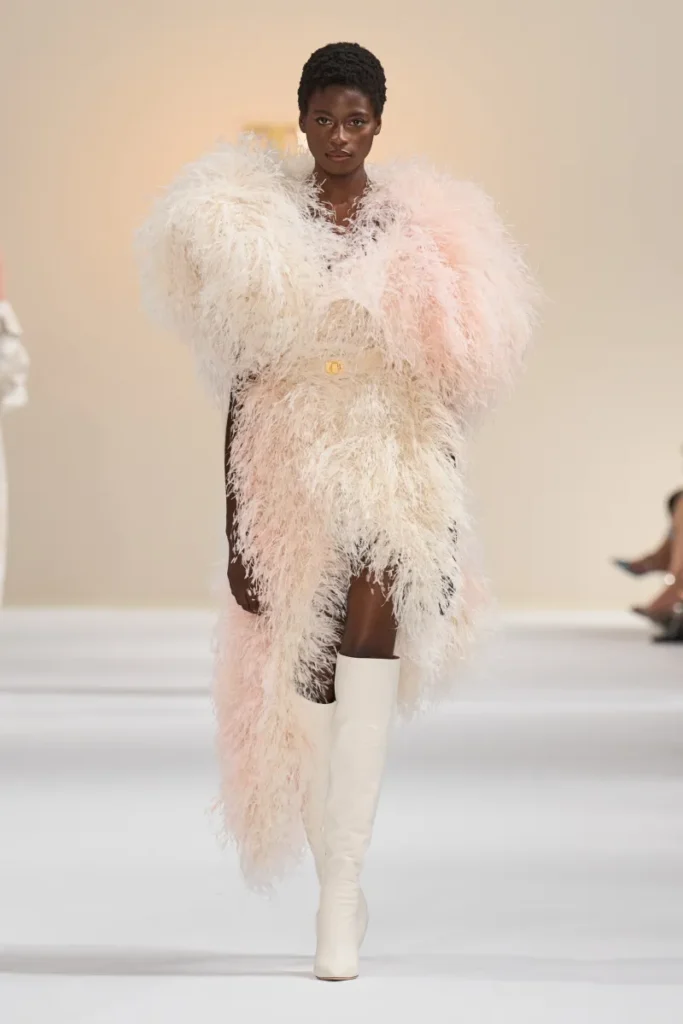
In between were meters and meters of draped and pleated silk that accentuated the body, shimmering tweeds, taffeta ruffles, flowing trains, oversized bows, animal-inspired embroidery, a dramatic ostrich-feather coat paired with matching over-the-knee boots, and a degradé feather coat, just to name a few.

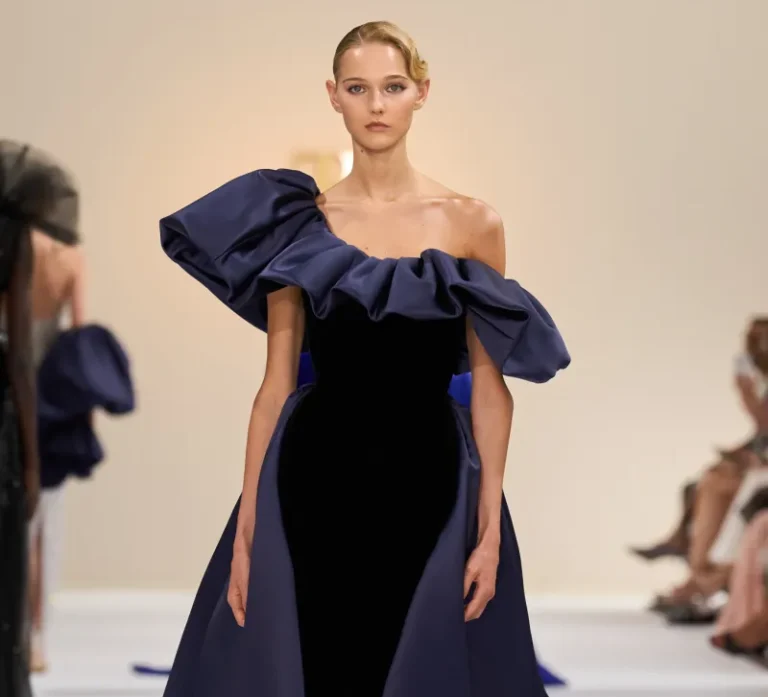
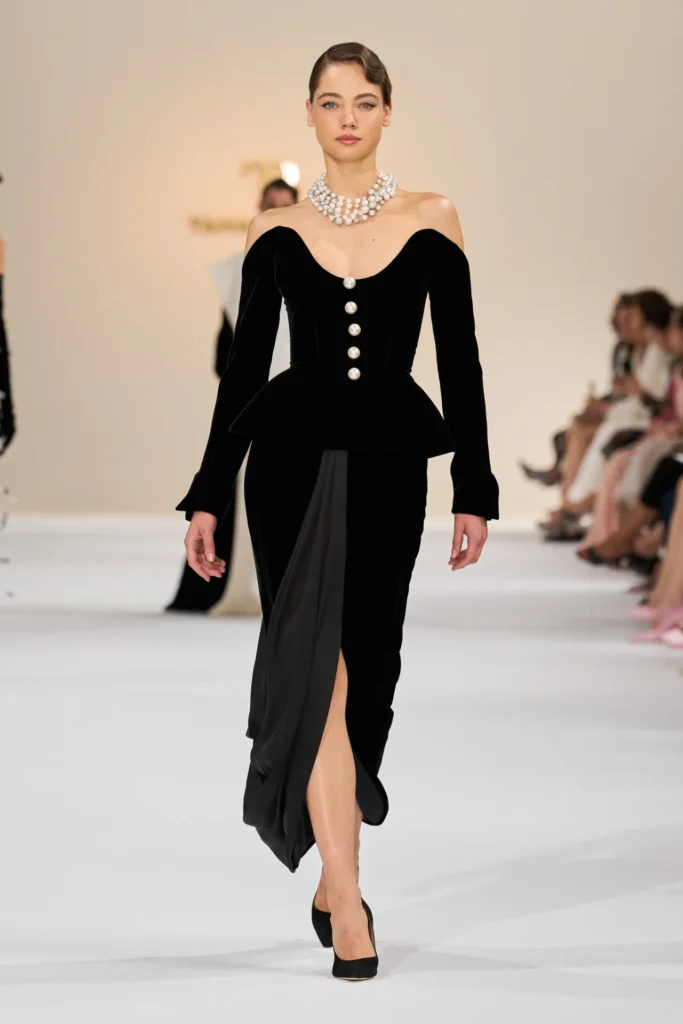
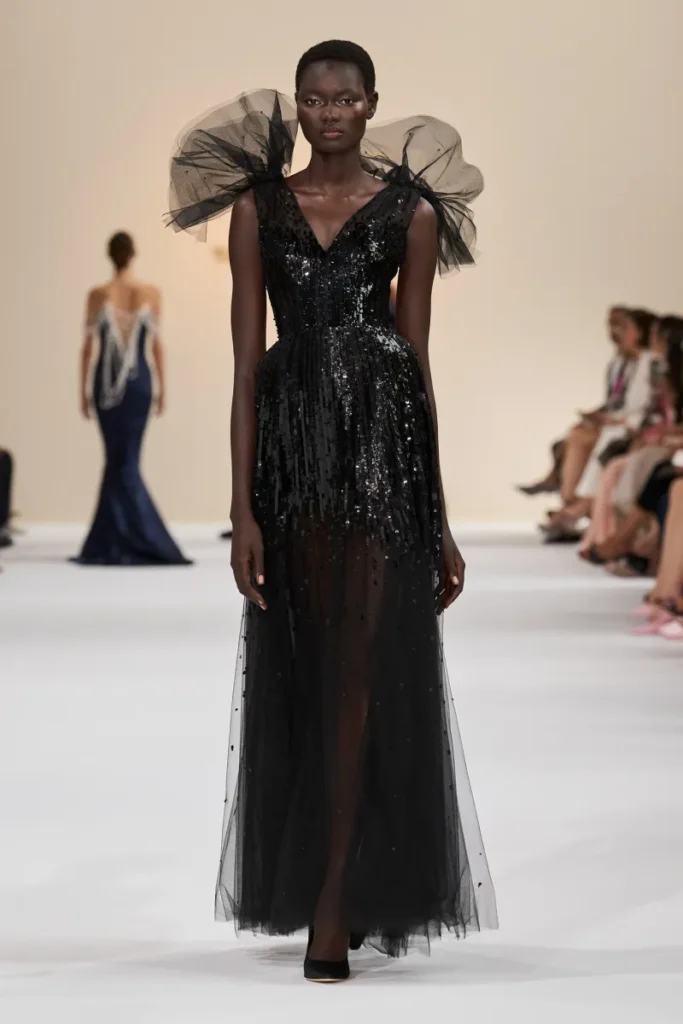
A series of hourglass silhouettes with sweetheart necklines in deep black velvet sculpted the female form, some enhanced with pearl embroidery, others with pale satin overlaid with sheer tulle. One particular look — a black embroidered tulle dress — had already claimed its front-row spot, worn in miniature by Ralph’s young daughter.

Schiaparelli Fall 2025 Couture Collection

Schiaparelli Fall 2025 Couture Collection

Daniel Roseberry is no stranger to changing gears. At a moment of profound evolution in the luxury sector, the Schiaparelli designer unveiled his most futuristic collection yet: the prelude, according to him, to a reset of his creative process amid a wave of designer shake-ups that promises to reshape the competitive landscape next season. Coincidentally, Roseberry’s fall collection evoked another chaotic moment: the interwar period, when founder Elsa Schiaparelli revolutionized fashion language with her surrealist designs, often created in collaboration with artist friends like Jean Cocteau and Salvador Dalí.

Roseberry pulled black-and-white photographs from the archives and transcribed them into an avant-garde collection where color was stripped away in favor of metallic surface effects. “There’s something about that time that felt sad and yet intense,” he said backstage after the show, which he titled “Back to the Future.”

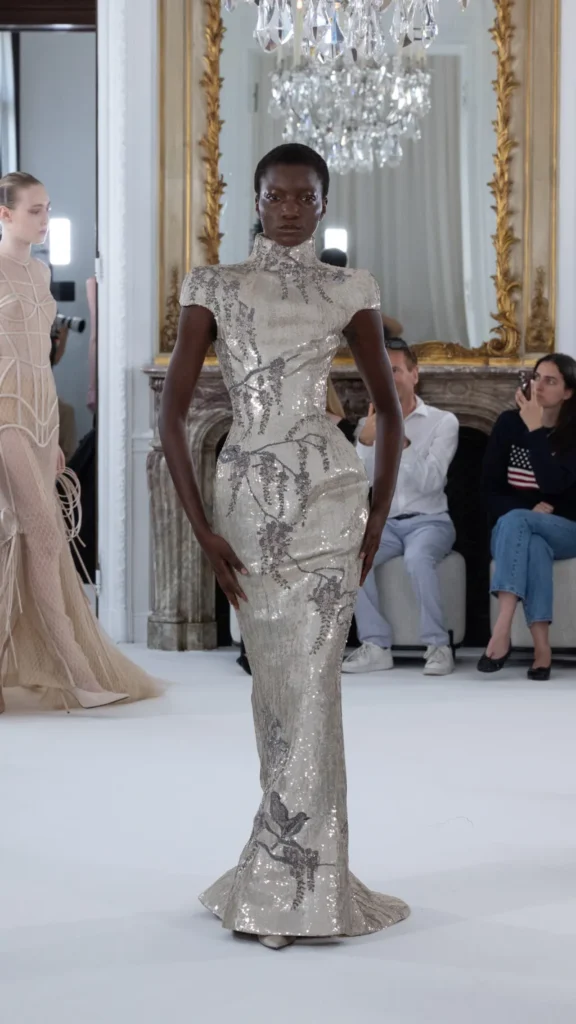
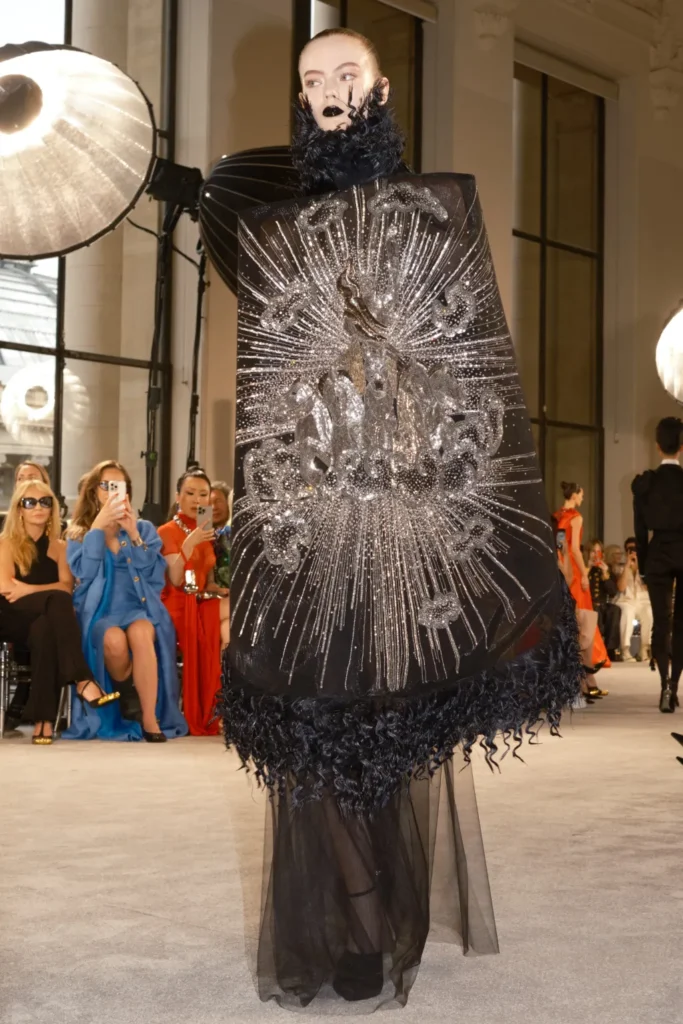
Silver sequins gleamed on a black jacket with sharp shoulders and short sleeves and burst across a transparent black tulle reproduction of the “Apollo of Versailles” cape, designed in 1938 for American actress and interior designer Elsie de Wolfe—one of the highlights of the brand’s retrospective at the Paris museum in 2022.

While hourglass constructions remained true to the designer’s aesthetic, for every padded hip there was a bias-cut fitted gown designed to reveal expanses of skin—none more so than a black satin mermaid dress, with a low back exposing a rhinestone-encrusted thong that evoked Tom Ford’s famous Gucci G-string.

Roseberry leaned into fetishistic glamour with a black dominatrix bustier shaped like a saddle frame and molded breasts with erect nipples. These elements appeared over a pearl-gray satin body plate trimmed in black harness straps and protruded from the back of a red satin gown with corset lace, topped with a rhinestone necklace shaped like a human heart that pulsed mechanically.

With her sleek chignon, glossy black lips, and silver stiletto heels, Anasofia Negrutsa—dressed in a silver motorcycle jacket with matador epaulets—looked like a blend of sci-fi classics Blade Runner and Metropolis.

Roseberry said the collection was inspired by a world and an industry on the edge, both then and now. “I wanted it to feel like a sort of farewell. We’re going to restructure everything after this,” he said. “I think if you want to change the outcome, you have to change the process, and I just want to keep moving forward.”

Back Street of New York by Emper

Back Street of New York by Emper

Back Street of New York by Emper

An Urban Symphony in a Bottle

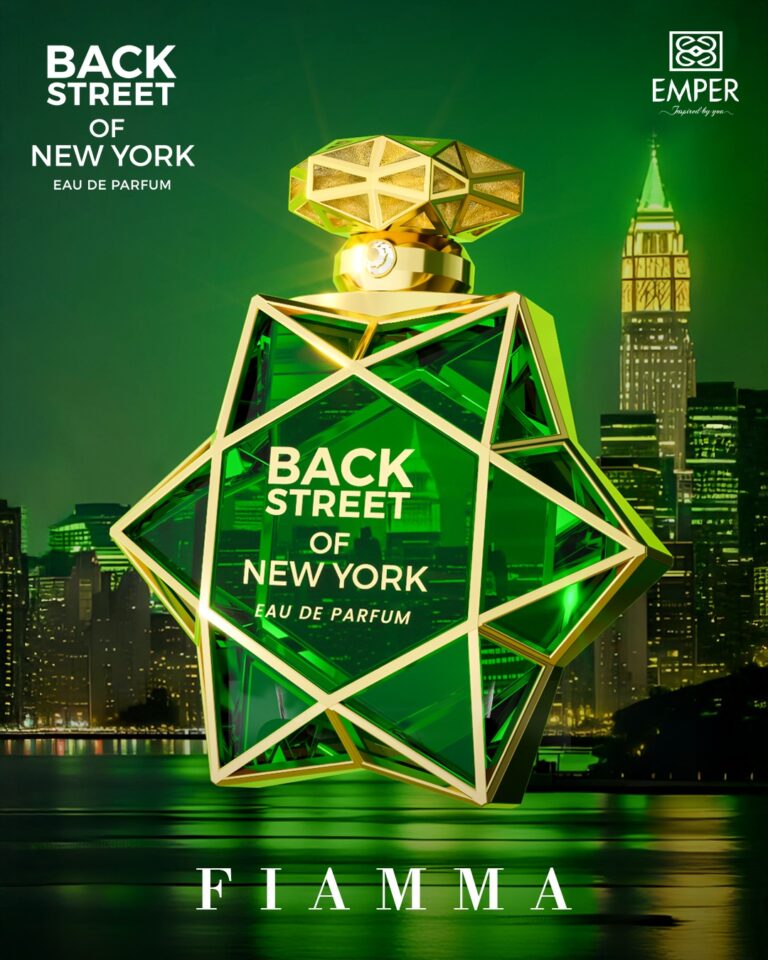
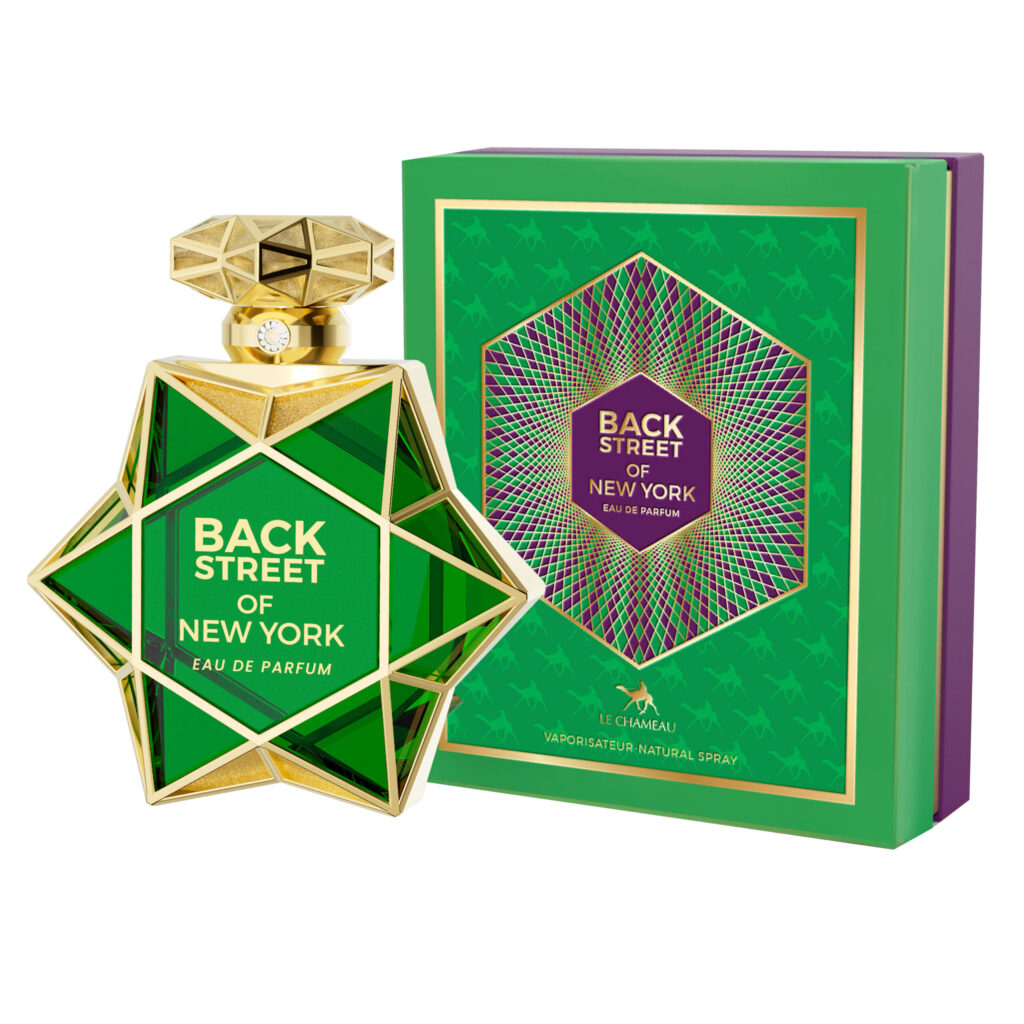
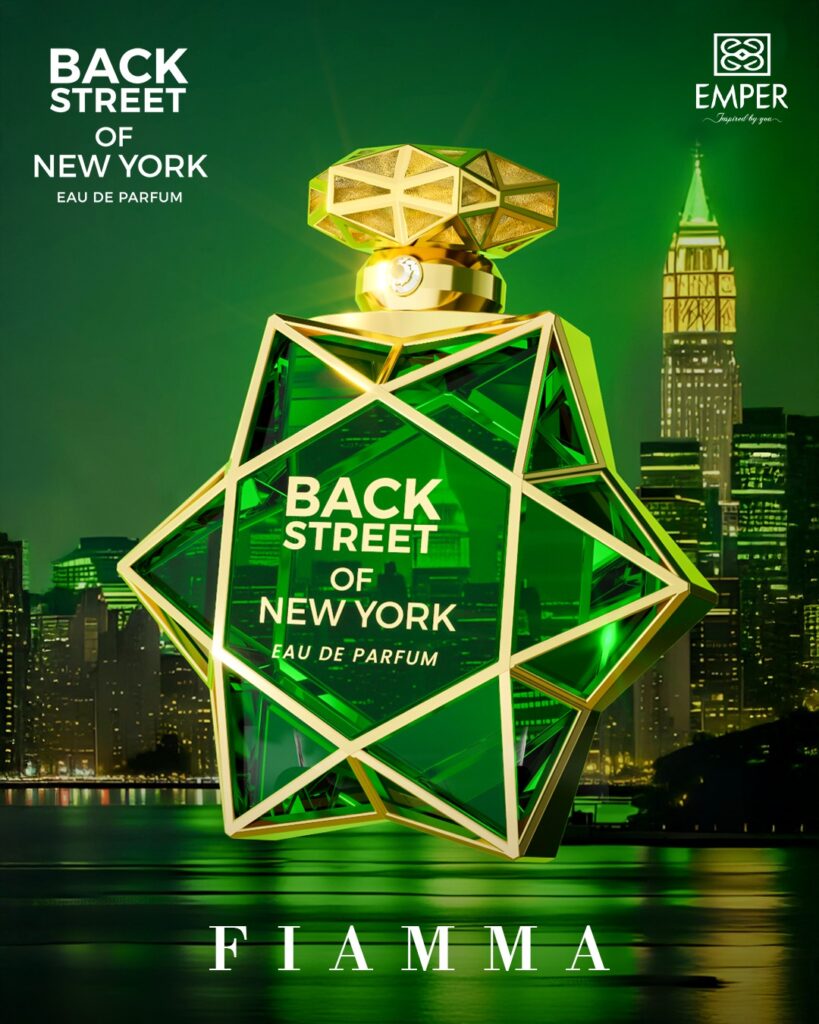
In the city that never sleeps, where ambition and artistry collide on every corner, Emper unveils Back Street of New York: a fragrance that captures the pulse of urban life with a signature as unforgettable as the skyline itself.

Designed for those who walk their own path and own every moment, Back Street of New York reflects Emper’s belief that fragrance is more than an accessory—it’s a declaration of identity. This scent doesn’t just accompany you; it defines you.

From the very first spray, Back Street of New York reveals its modern, unconventional spirit. A daring blend of violet leaf and juicy blueberry unfolds against the crisp green edge of cassis and thyme, evoking the freshness of dawn breaking over Manhattan rooftops.

As the day heats up, the heart reveals spicy cinnamon and aromatic cedar, a tribute to the contrasts that make the city magnetic—warmth meeting energy, refinement meeting grit. Subtle jasmine softens the edges, adding a breath of sophistication that lingers without ever overpowering.

But it is in the drydown that this fragrance becomes truly addictive. The base is a sensual tapestry of suede, caramel, and amber, accented by earthy oakmoss, rich patchouli, and smooth vanilla. It’s a finish that feels as luxurious and complex as New York itself—a reminder that beneath the city’s bold exterior lies a thousand hidden stories waiting to be discovered.

Back Street of New York is more than a scent: it’s an experience. Every note has been crafted for the modern man or woman who isn’t afraid to stand out, who celebrates individuality, and who knows that the streets we walk shape the people we become.

Perfumes Inspired by You.

True to Emper’s philosophy, this creation is not simply a nod to urban energy but an invitation to claim your space in the world with confidence and style.

Discover Back Street of New York today—and let the city become part of your story.

Isabel Marant Resort 2026 Collection

Isabel Marant Resort 2026 Collection

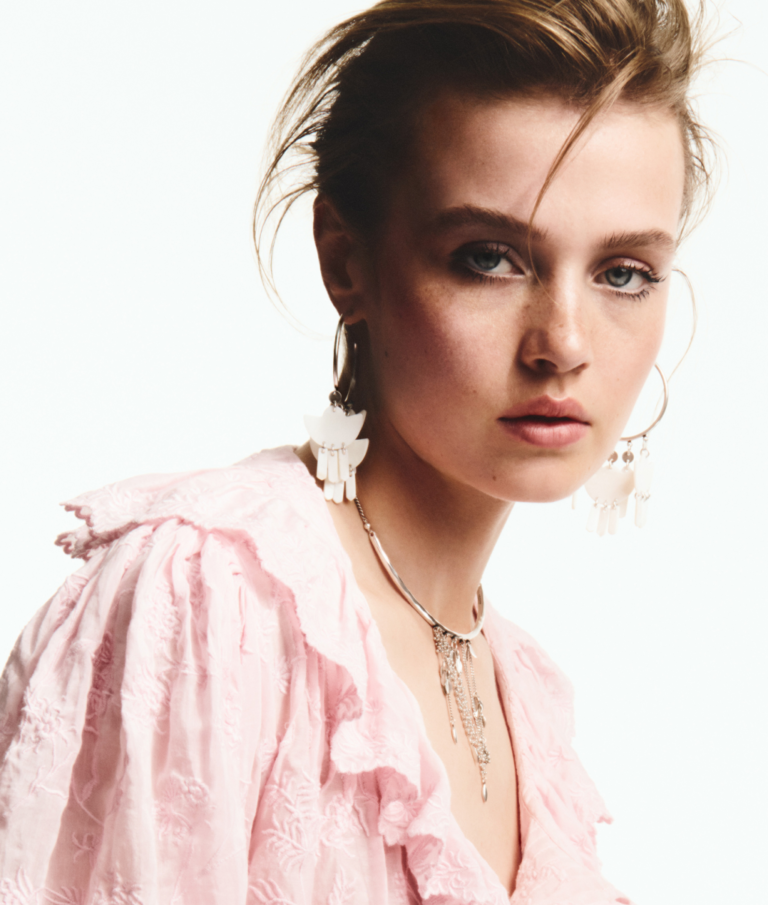
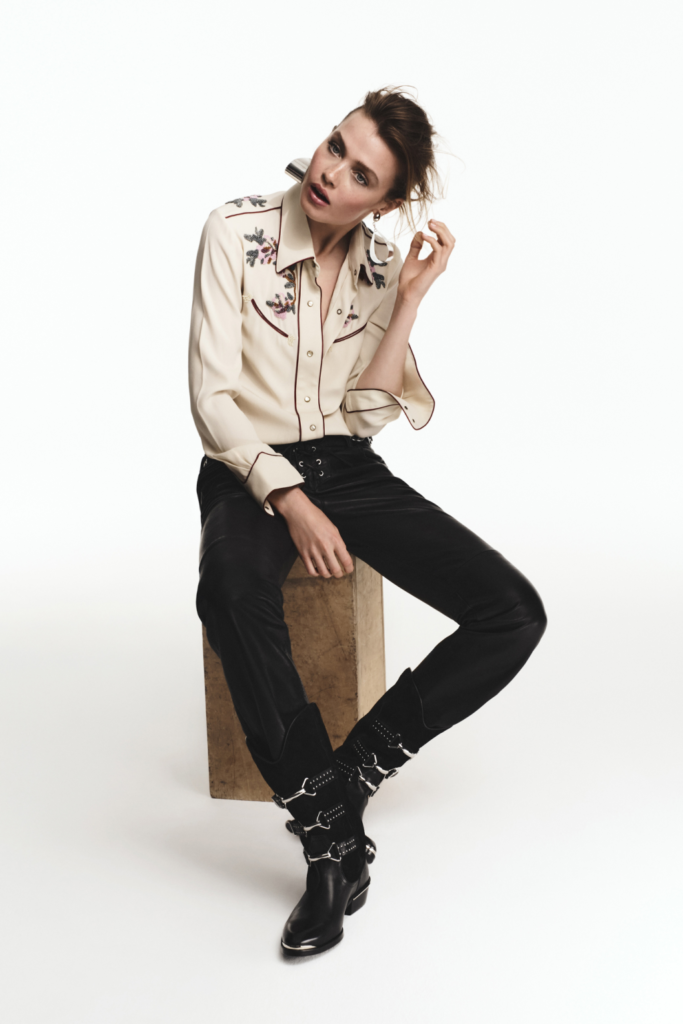
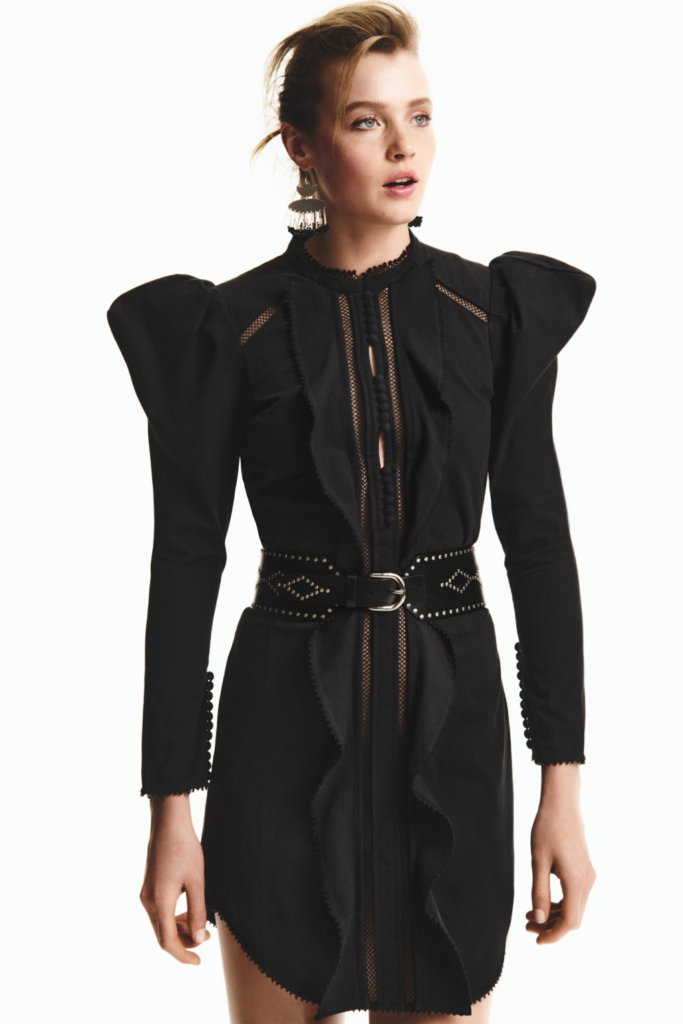
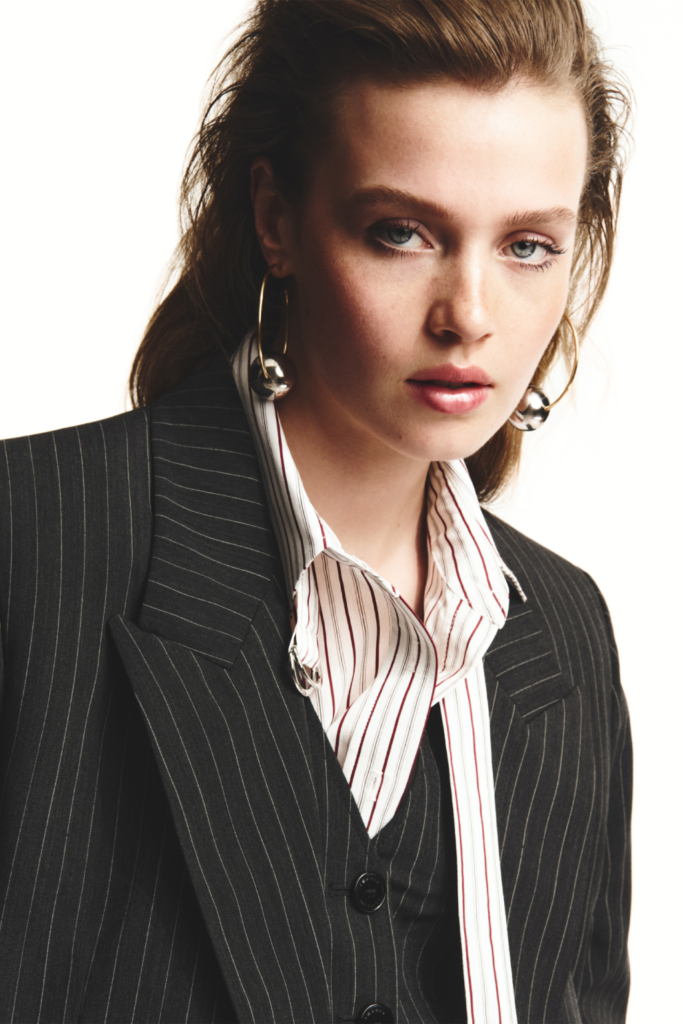
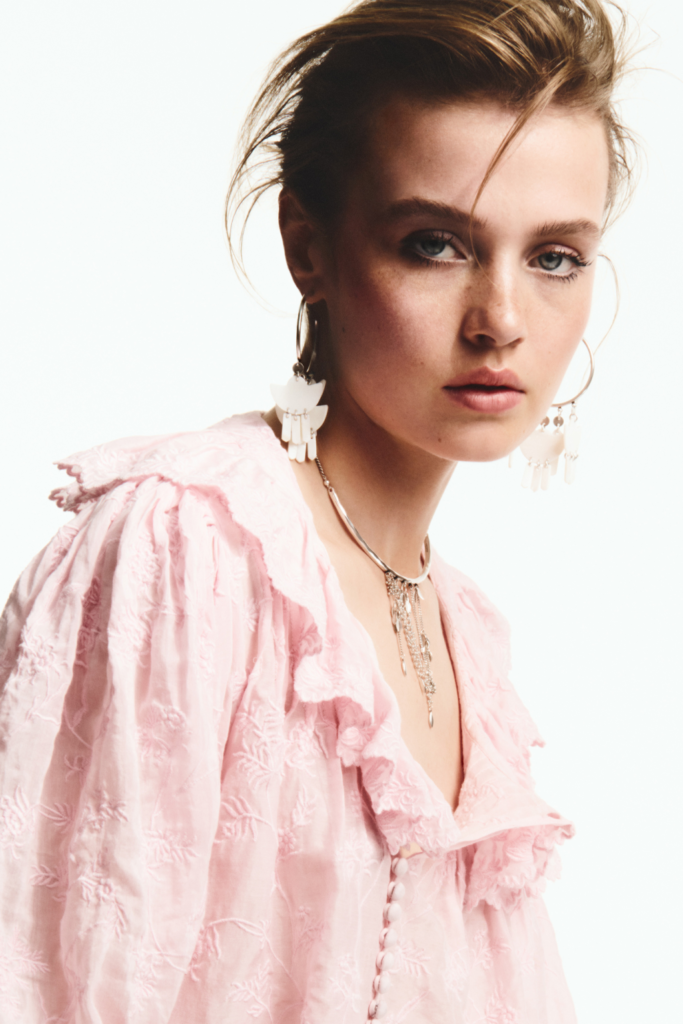
The resort collection showcased strong shoulders and voluminous sleeves that blended the Victorian era with the 1980s. Isabel Marant fused her signature softness with a resort spirit in a collection inspired by Victorian romanticism and 1980s attitude.

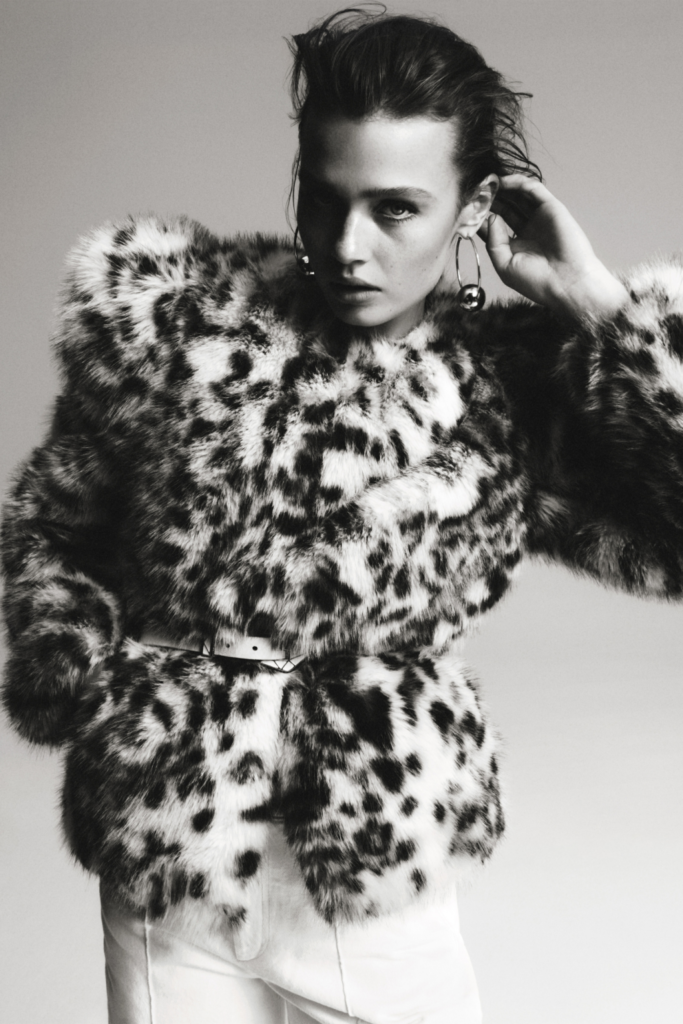
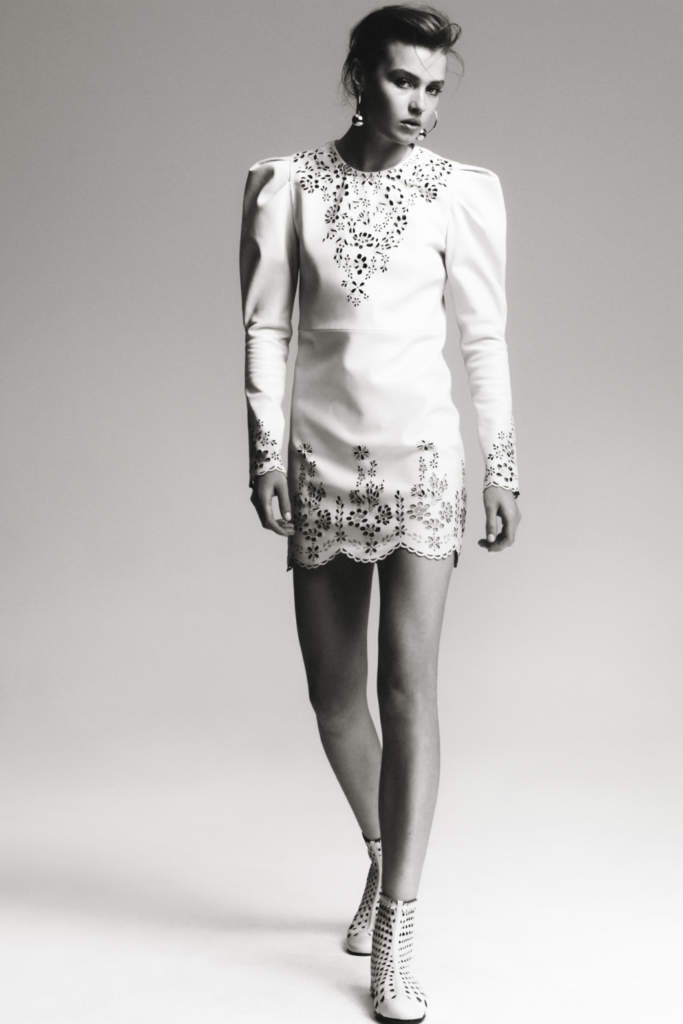
Building on the solid tailoring of the previous season, artistic director Kim Bekker softened the silhouette slightly with fluid fabrics, rounded shoulders, and subtle details like lace and delicate fabric-covered buttons.Faux fur coats were cinched at the waist and featured rounded, voluminous sleeves as a nod to Victorian fashion, while leather jackets took on an ’80s vibe, softened by delicate embroidery and laser-cut floral patterns.

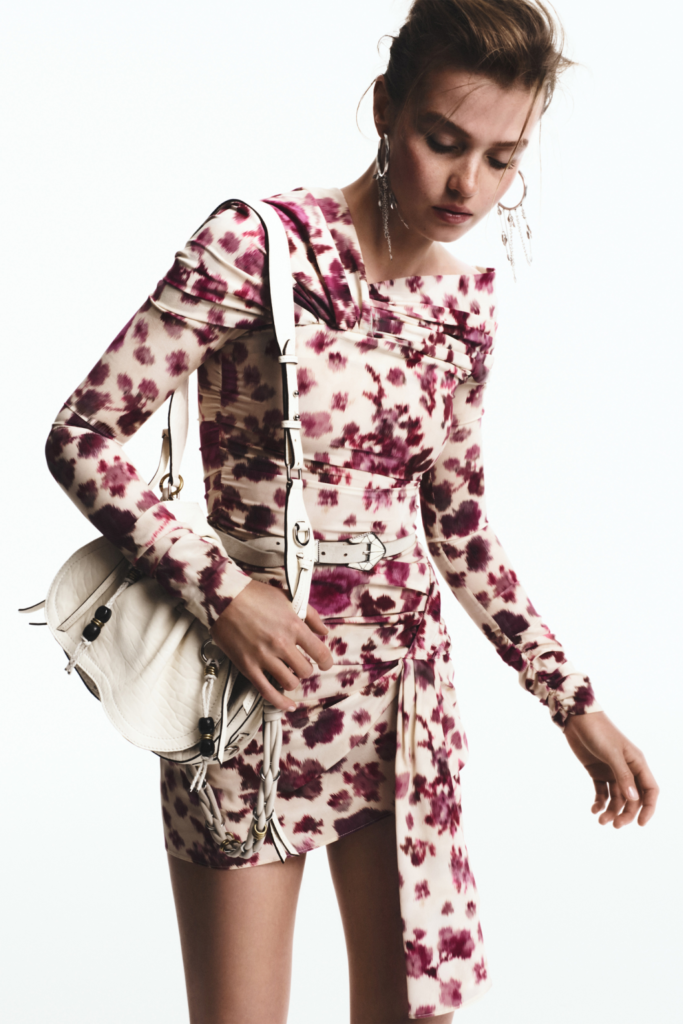
The collection leaned heavily into textiles to create a relaxed, feminine feel: think washed cotton and linen blends, soft velvets, laser-cut lace, and guipure motifs with bobbin stitches for added depth and dimension. Bekker played with prints, combining Western-inspired patterns with small Victorian flowers, as well as metallic studded designs.

The brand’s bestselling slouchy low-heel boot was reinvented this season with laser cuts, in charming heart or crescent moon motifs that radiated movement and elegance. Matching the men’s collection, colors were soft and dusty, like pale pink and sandy beige. Bekker noted that accessories and jewelry sales have been solid over the seasons, and that the faux fur coats from the winter collection sold particularly well. However, buyers are more cautious now and are looking for essential pieces that strongly convey the brand’s DNA.

“They want to have the complete look, or that iconic piece that really reflects the brand or the season,” she said. “And we try to tap into that.”

Hence the new takes on Marant’s refined classics, designed to appeal to all markets. The collection carried all the hallmarks of the brand’s cool, boho-chic Parisian look, with a trendy Western twist.

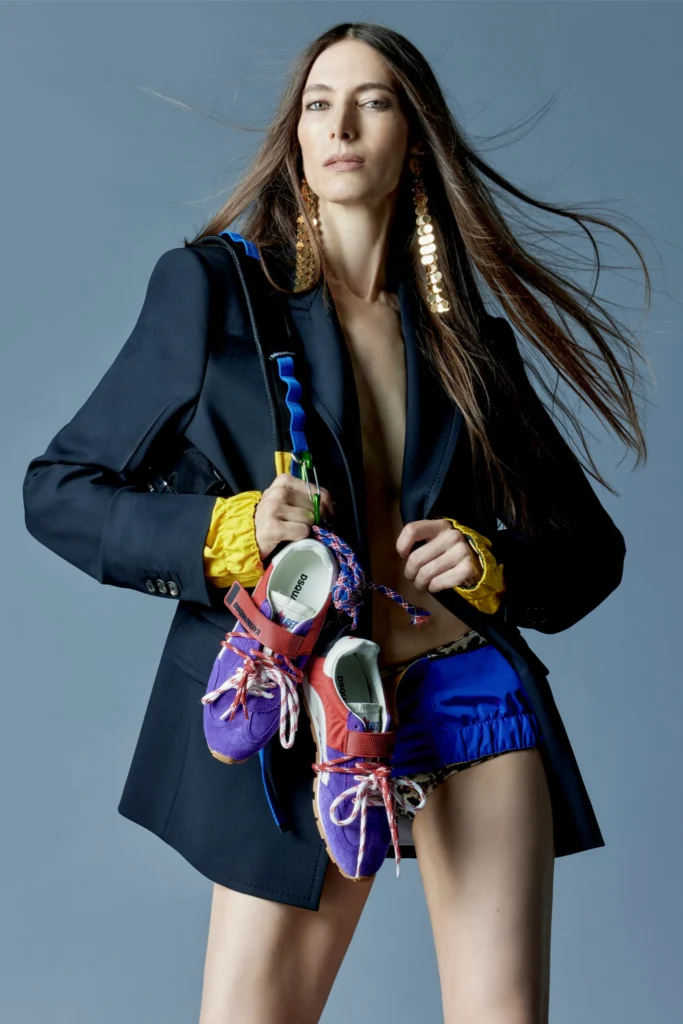
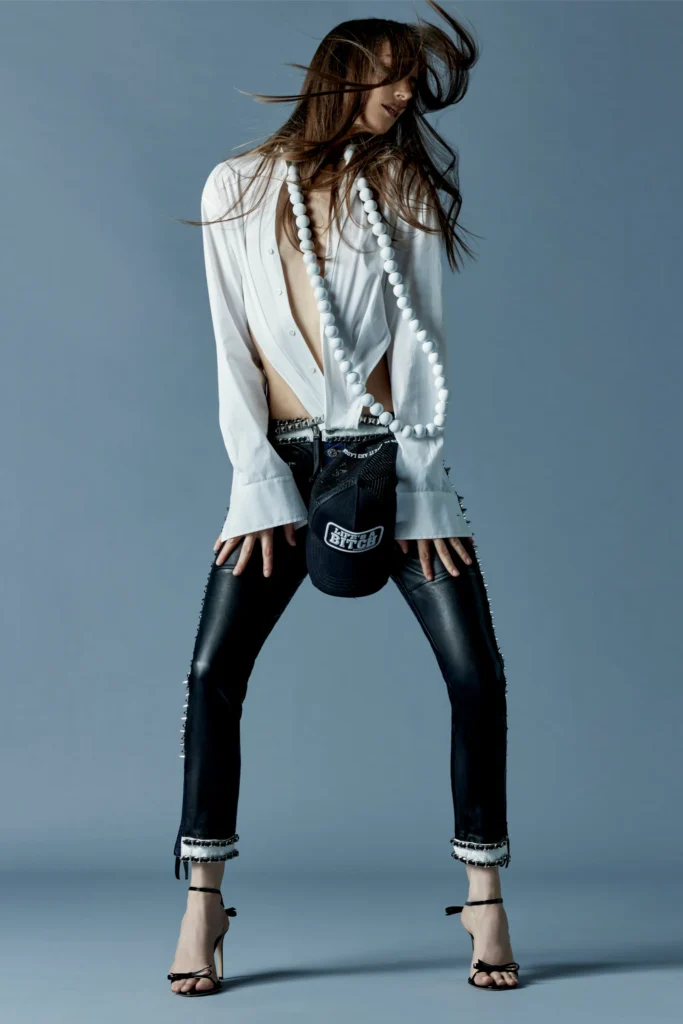
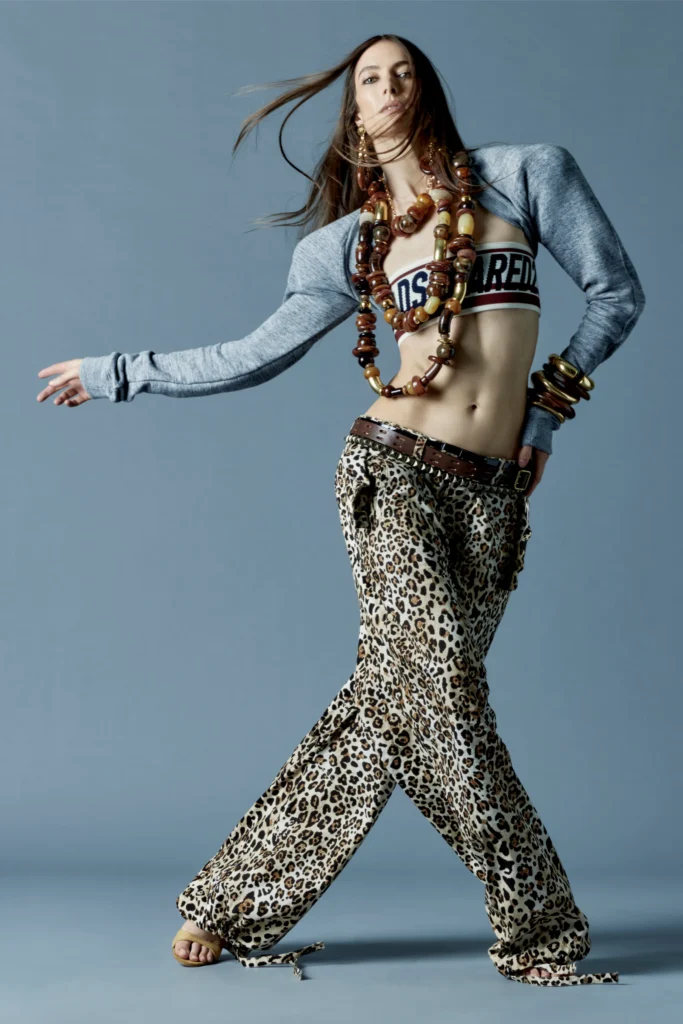
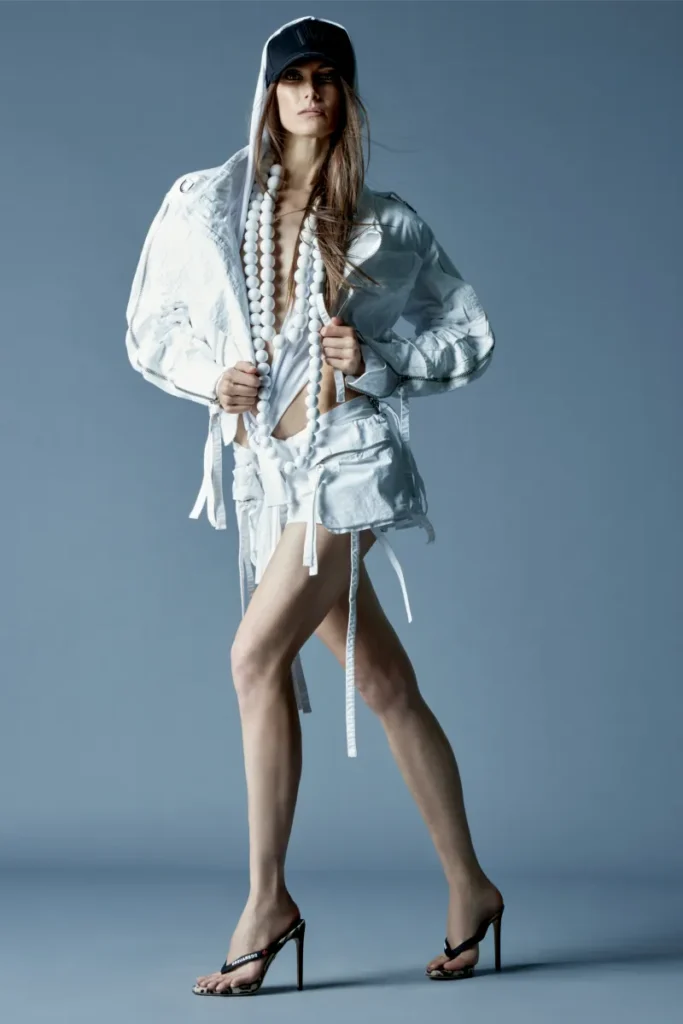
Dsquared2 Spring 2026 Collection

Dsquared2 Spring 2026 Collection

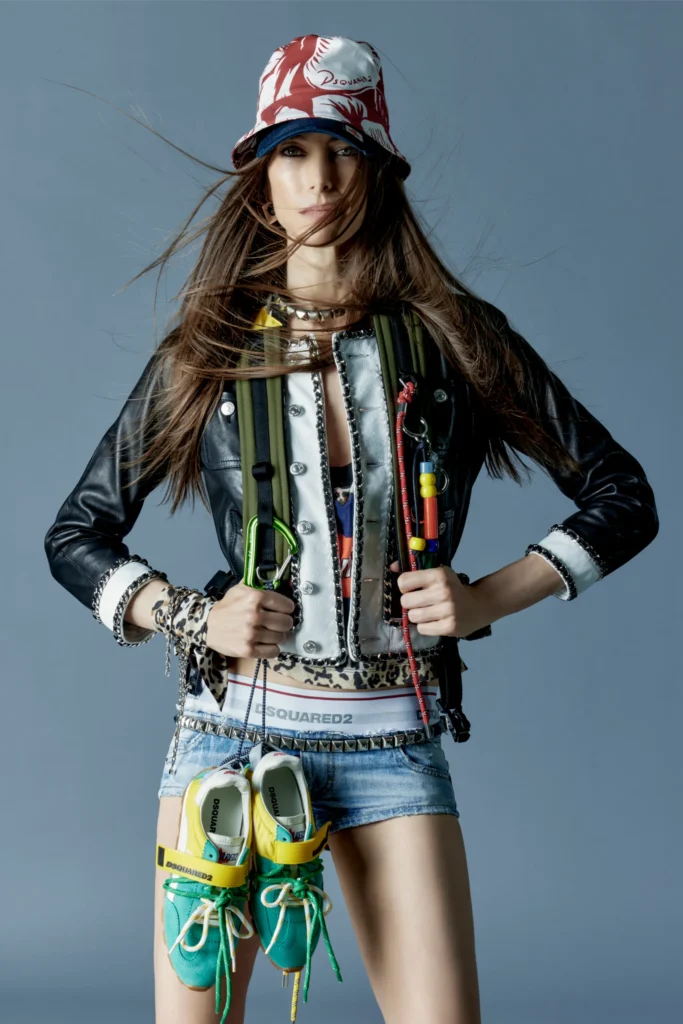
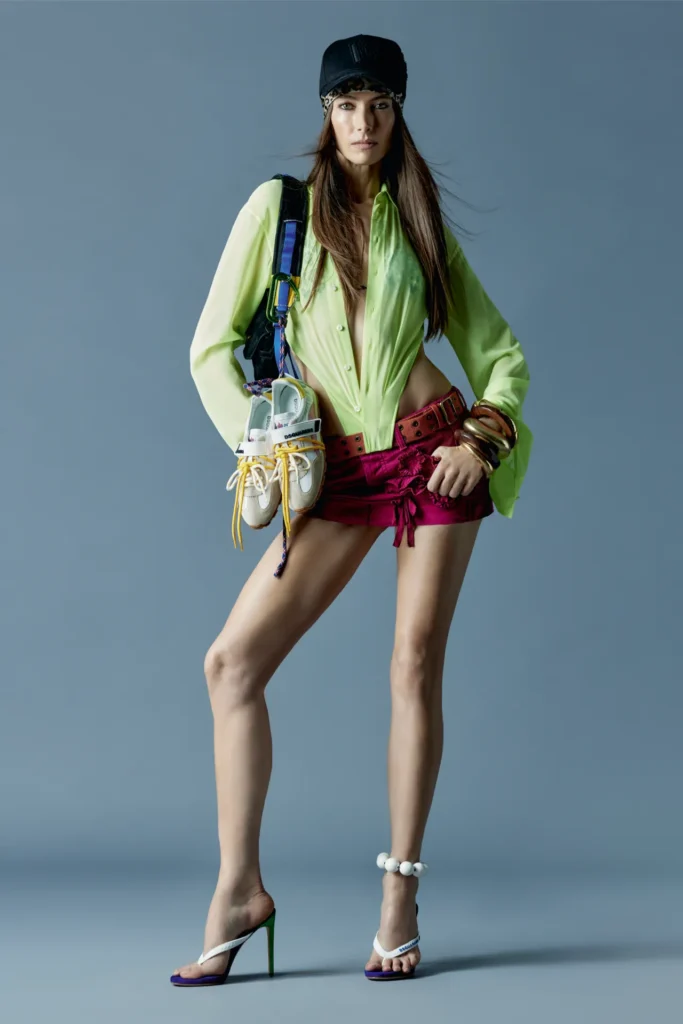
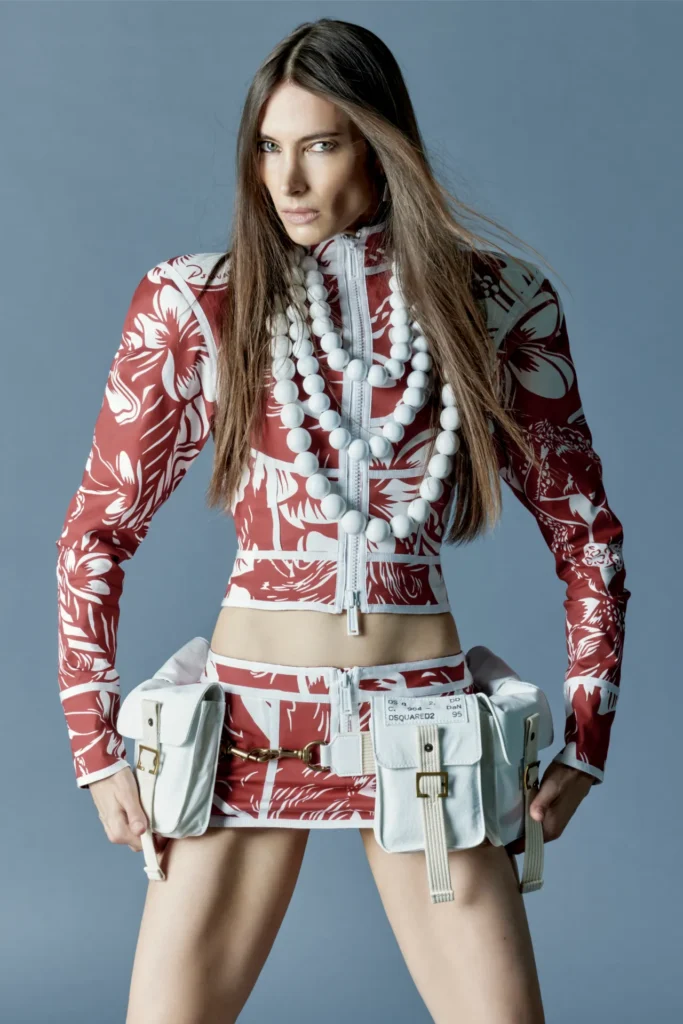
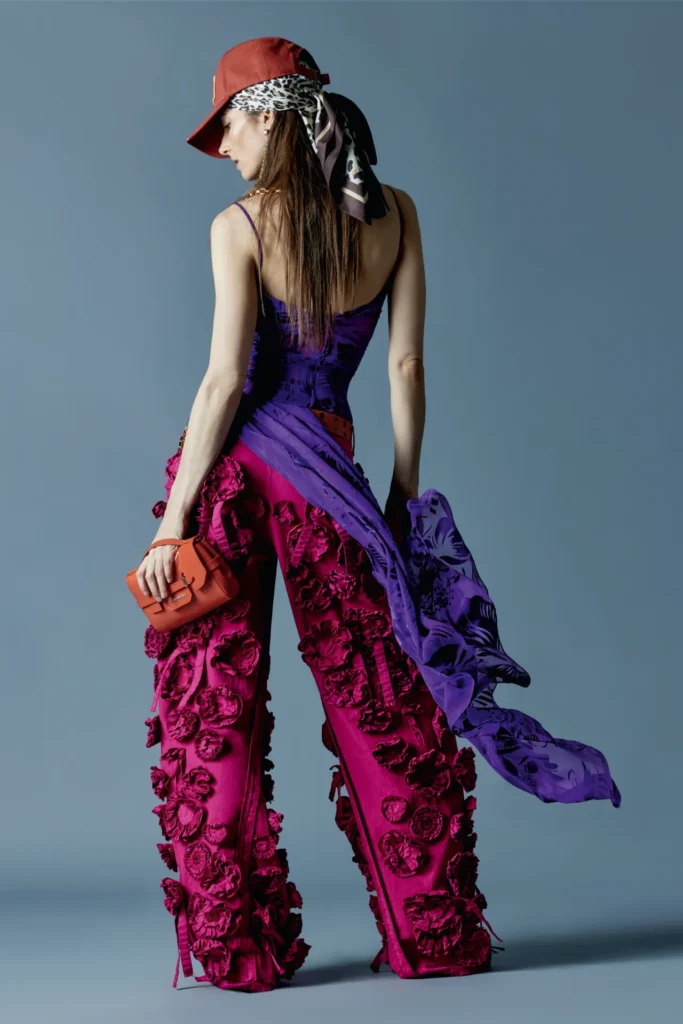
Double surprise, double fun: Dean and Dan Caten not only unexpectedly unveiled their new Spring 2026 collection off the official fashion week schedule but also made their musical debut.

Surprisingly, the Caten brothers gathered the press to present their Spring 2026 collection through showroom appointments right after Milan Men’s Fashion Week, during which they had only hosted a party to continue celebrating the 30th anniversary of their brand.

The launch of the new collection, which suggests the duo likely won’t be showing in September, may not have kept pace with the rhythm of fashion week, but it definitely had its own beat, as the Catens doubled the surprise by debuting their music as well. They collaborated with Grammy-nominated rapper Latto, composer and producer JC Chasez, and Golden Globe-winning producer Jimmy Harry on a music project called “Iconique.”

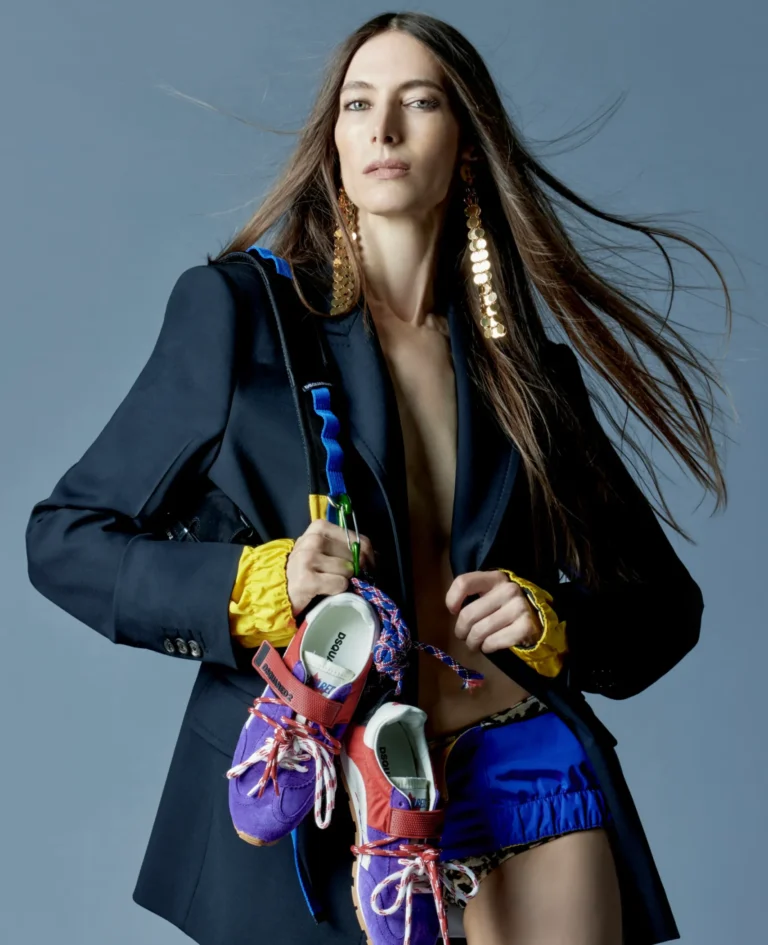
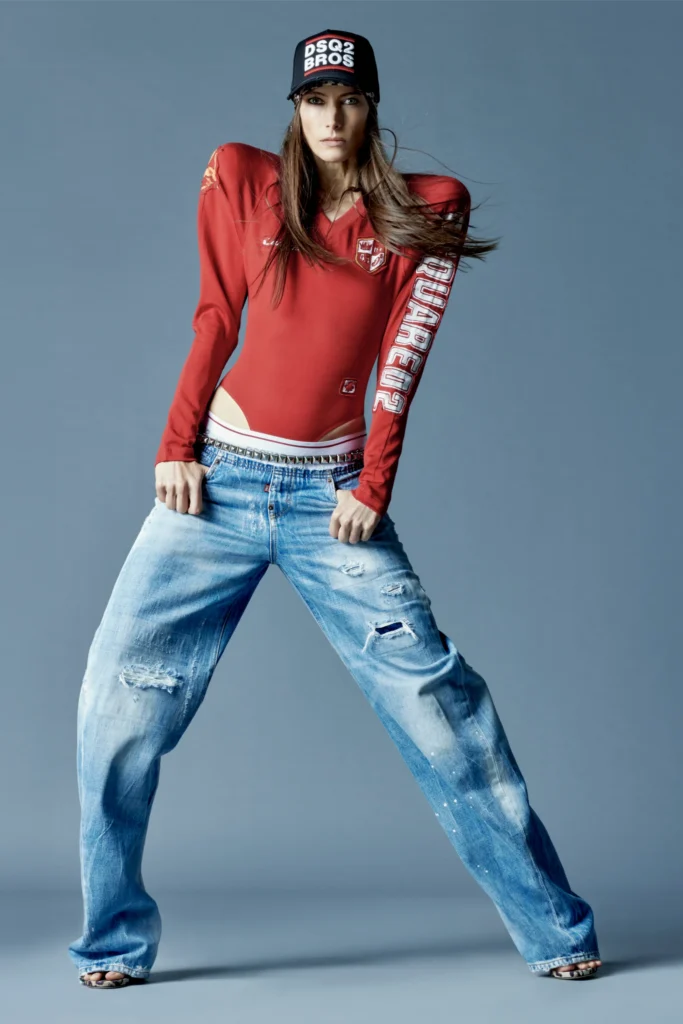
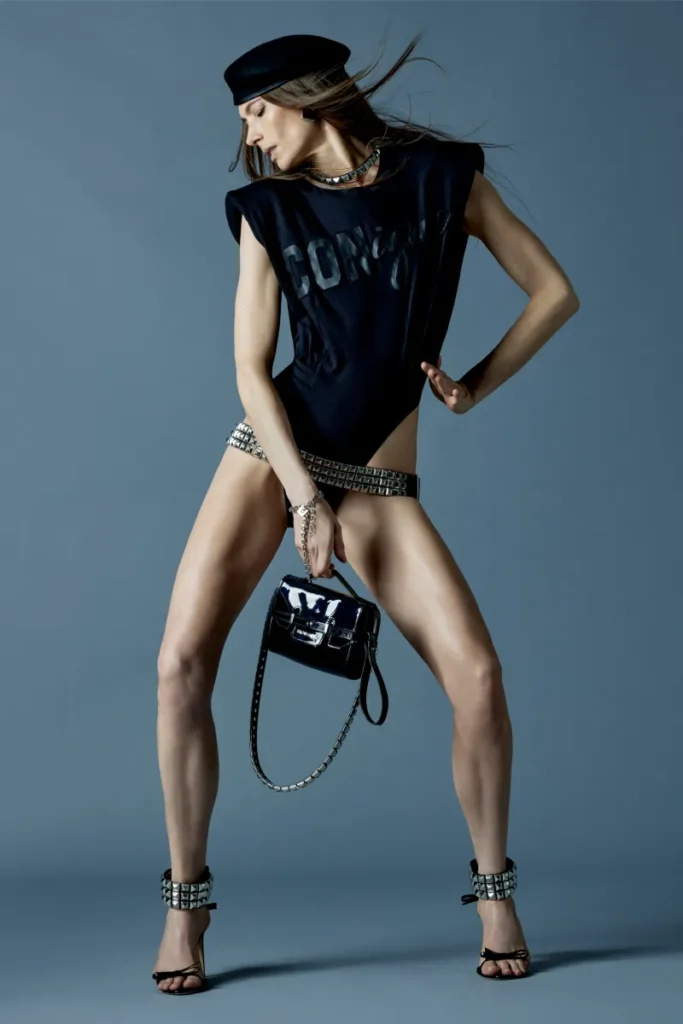
The song title referenced the capsule collection that included simple, collectible pieces such as T-shirts printed with graphics celebrating some of Dsquared2’s archive staples, from sky-high stilettos to trucker hats. Building on the existing Icon motif, a new logo also appeared on sweatshirts and shorts, among other items. “Iconique has a special twist,” Dean Caten said with a smile. However, the capsule was just the most accessible prelude to a collection that showcased all the brand’s hallmarks: playful contrasts, a blend of sporty and seductive, clever hybrid pieces, and the fierce, unapologetic attitude that defined the entire lineup.

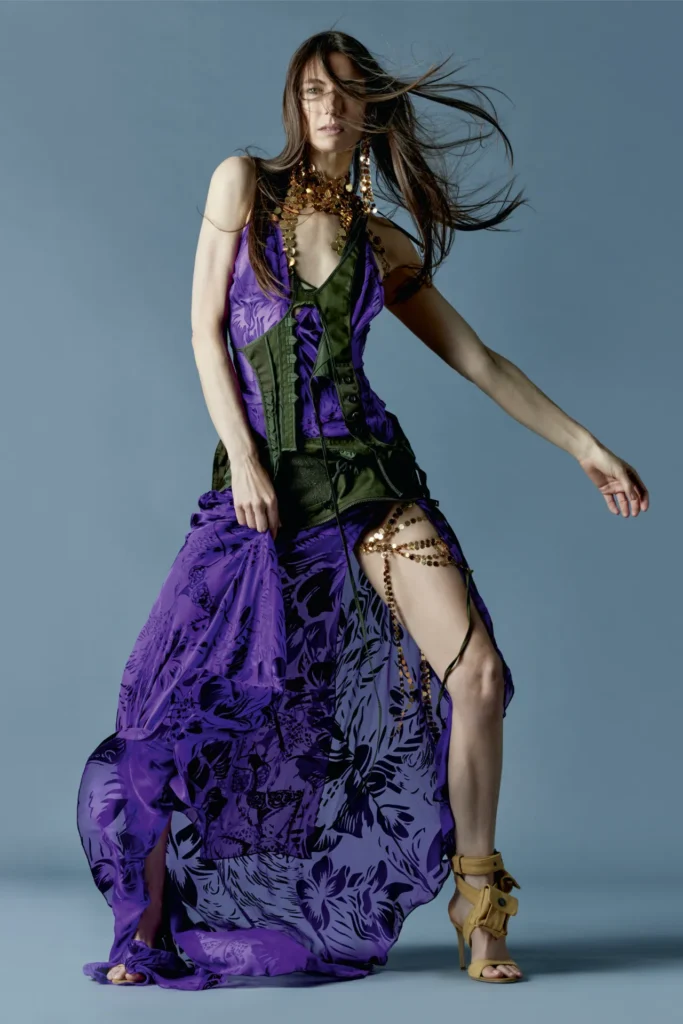
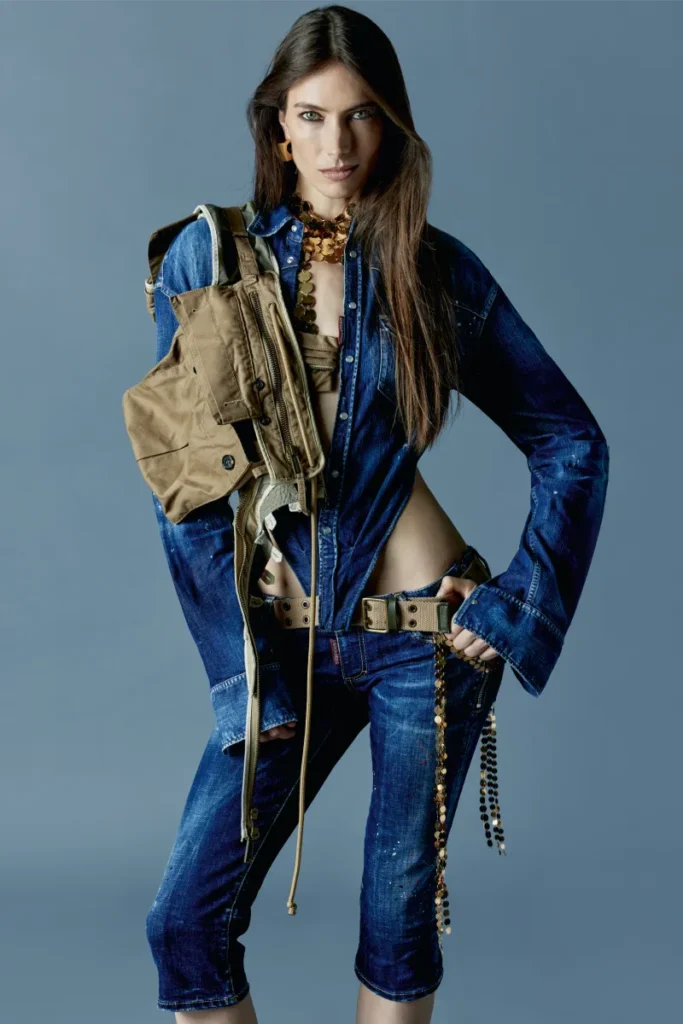
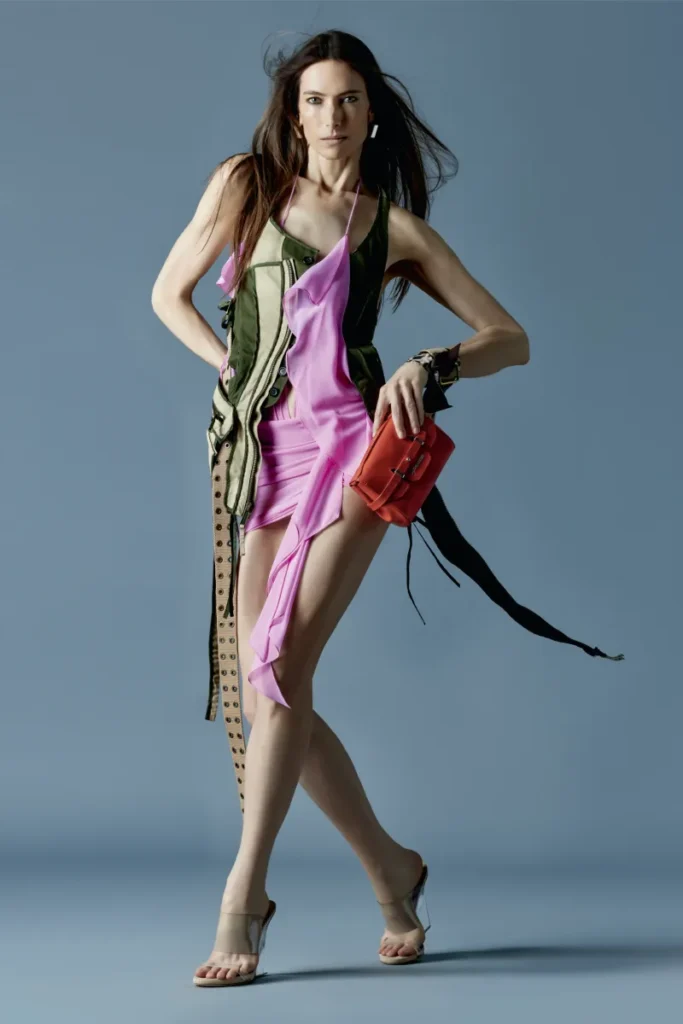
In the women’s offering, bold and heavily accessorized, classic cotton shirts and their lace versions became even sexier with open backs and narrow fronts that revealed the hips and could be worn tucked in or wrapped around a belt. Micro-proportion denim shorts were fitted with little rings to secure them, while other distressed jeans included elastic waistbands that mimicked the look of exposed underwear.

Elsewhere, sensual gauzy mini dresses were paired with military-inspired garments, while a cascade of rosette appliqués softened the urban appeal of wide-leg trousers. Ultra-feminine options, like devoré dresses printed with hibiscus flowers or beaded skirts that left little to the imagination, were juxtaposed with football jersey-style knit ensembles.

Courtesy of Dsquared2

Tailoring was also blended with sporty details for all genders, with navy blazers featuring contrasting nylon cuffs and tuxedos reimagined with zippers and mesh inserts. Other hybrid pieces ranged from playful tank tops with built-in backpack straps to a men’s piece combining four jackets into one.

While leopard print served as a visual connector, splashed across gauzy dresses and basketball tees alike, distressed details and preppy touches were even stronger in the men’s line, as seen in a look pairing a shirt pieced together from striped lining fabric with raw-hem Bermuda shorts.

Delegating Our Feelings: How Artificial Intelligence Is Shaping The Future Of Art

Delegating Our Feelings: How Artificial Intelligence Is Shaping The
Future Of Art

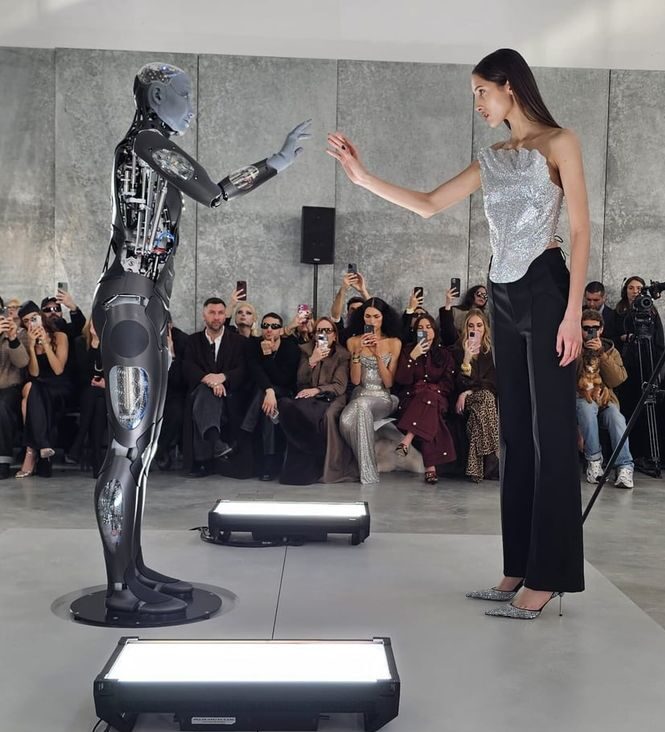
The usage of artificial intelligence in humanistic fields has to be one of the most delicate topics, as it leads people to question whether the world is letting a machine take control over those roles which, by name, should be managed by human only. But this discussion becomes more complicated when creative industries are involved as well. Since the debate on the ethicality of art created with AI is already alive, the aim of this piece is to shed some light on the topic and questioning what consequences these changes could have on the fashion sector.

Ai and art: Is history repeating itself or are we just passing the torch?

I have been-and still am- skeptic on the use of AI in creative fields, however i came across some interesting insights that gave me a way to reflect on the topic in a more attentive way. When photography debuted, in 1839 with Louis Daguerre, despite being an astonishing innovation it found a lot of critiques in the art world. Suddenly there was something able to depict the surrounding reality better than painting. Moreover it made representations, specifically portraits, affordable to both the middle and lower classes. As this shift could not be reversed, painters had to re-invent themselves: instead of focusing on an objective reproduction of the world they enhanced brushes, light’s depictions and mostly portraits “fleeting moments”. With all these new techniques in the late 19th, in the city of Paris, Impressionism was born. Its aim was not to compete with photography, but complement it by creating what a photo could not capture.

Another example in the field of arts is the introduction of the “ready-made” of Duchamp which raised lots of doubts as well. The french artist who lived in the 20th century completely changed what the world perceived as art. After realising some of his early works in line with the Cubism movement -for instance “nude descending a star anise No. 2”, 1912- in 1913 he left the public speechless with ”Bicycle Wheel”, a bicycle wheel mounted on a wooden stool. The idea behind ready-made art is very clear: it stands for artworks created by using pre existing objects, repurposed in new contexts. If art could be created by anyone, with any means, how do we understand what is to be considered as such? While still taking into account its structural techniques, the objective of art is to communicate with people. In the form of clear portrayals or more questionable pieces what has always done is make who watches it think. It has opened debates and raised awareness. The fact that under totalitarian regimes artworks- alongside books- are the first to be censored should be taken as further confirmation of the power it holds in people’s critical thinking skills.

Having understood that, i approached the topic of AI and art more openly and decided to dive deeper into the concept. In 2019 a robot with human like appearance, named “Ai-Da” was labelled as the first artistic robot, as with the use of artificial intelligence and human inputs it was able to create works, later considered as artworks. Moreover three years later, in 2022, it addressed the role that technology will hold in the future when it came to the artistic field “the role of technology in creating art will continue to grow as artists find new ways to use technology to express themselves and reflect and explore the relationship between technology, society and culture” it stated when answering some questions asked in the UK parliament. Despite still involving human ideas why does it still feel like a different shift than what the introduction of photography and ready-made were? Granting that it’s impossible to obstacle change, the usage of AI also in this field seems to be the tipping point.

The impact of AI so far

In a study conducted by Micheal Gerlich, professor at the Swiss Business School (SBS) 666 participants, among different age groups and education backgrounds were subjected to attentive interviews with the aim of understanding how AI had impacted their critical thinking abilities. The study proved that among young individuals there is a higher reliance on AI tools and lower critical thinking scores than among the older ones. ( “AI tools in society: impacts on our cognitive offloading and the future of critical thinking” published in January 2025). To date we can access artificial intelligence with any means possible: via ChatGPT, “Ask Meta AI” on Instagram and “AI overview” on Google, but instead of taking advantage of it, our thinking capabilities are worsening. It does not have to be all or nothing, in some fields its use can be very beneficial, but by constantly consulting it, our issues will slowly become its issues, as we won’t be the ones solving them anymore.

Why Art made by AI should not be promoted

I do understand it sounds like an harsh statement and i do not desire to be an advocate for hindering progress. The reflections on the changes in the art world do bring a valid counterpart to the idea of not using artificial intelligence, still i can’t help but keep on standing in my position.

While its objectives in the different centuries may have changed art has always reflected emotions. It could have been through one’s facial expression or through a natural scenario; even during movements such as the Informalism (1943-50) while the works took a completely abstract form, they mirrored something internal to the artist. When it came to photography, the subject chosen were selected because they evoked something in the photographer, the readymade work per se may not be what is to be considered as art, but the reflections around its meaning are what is important. I can understand why incorporating AI in art works can be a way to discuss our current world but having it to do the work takes from art its human nature. Delegating even this form of expression to an emotionless machine feels like giving up on one of the purest means of creations. Rationally the constant search for improvement is likely to create better techniques, portraits or elaborated paintings but despite its superficial perfection, what kind of reflections can originate from something created by a machine?

While it is fascinating to observe the progress it makes and relate its work to our current world situation, because i am well aware of the influence artificial intelligence has on our lives, there is also the risk of creating a future where most of the galleries’ works won’t be human produced.

How this all correlates to the fashion scene

While not being a direct correlation for all, there is a tight relationship between fashion and art. Both of their aims regard communication, expression and displaying the artist’s internal reality. An example could be the last collection of Maria Grazia Chiuri for Dior-the 2026 resort-. Stating “i want to show what i love, what i really love” showcased the emotional influence behind the designs: the details of each creation were chosen in order to reflect the nature of the city of Rome, close to the heart of the designer. Meaning that, either with a brush or a pencil and later a sewing machine- it’s possible to create from emotions. And despite having arleady been used in more marketing orientated spaces, could AI expand further and have a say in the creative process of designs as well? If people were able to accept Ai-Da in the field of arts, would they embrace a human like robot able to do collections by it self? One aspect to be considered is that with the help of AI trend forecasting and product design are definitely faster, which is both a good and a bad outcome: houses and brands would be able to keep up with change and lower the chances of getting out of business, but at the same time there would be an increasing of the issues caused by fast fashion. Moreover giving AI all the power of creation would also erase the history and thought behind one piece of clothing: even if you were to insert the inputs for clothes in the AI machine, to what length are they to be considered as active counterparts in the process or “simple inputs”?

Personally i feel like the over-use of artificial intelligence is giving us the burden of isolation: when we substitute people with AI we give up on connections and the diversity of opinions. Even if with tools such as ChatGPT it is possible to create a discussion by asking it to play the counter part it is not a stimuli strong enough to inspire one’s mind. Its role should be limited to the “tool” part, not being expanded to the point of defining the human purpose to an input. Lots of people have already renounced to their logical thinking skills by delegating the hard tasks to AI and while i do not agree with it i can see the reasoning behind it: hard tasks are not pleasant and seeking comfort instead feels better. But when it comes to art, which is not classified as one of the primary goods needed to survive but is created to satisfy the innate human desire of expression, why do we feel the need to delegate it?

If humans are no longer able to create, should they be considered humans at all?
Zimmermann Resort 2026 Collection

Zimmermann Resort 2026 Collection

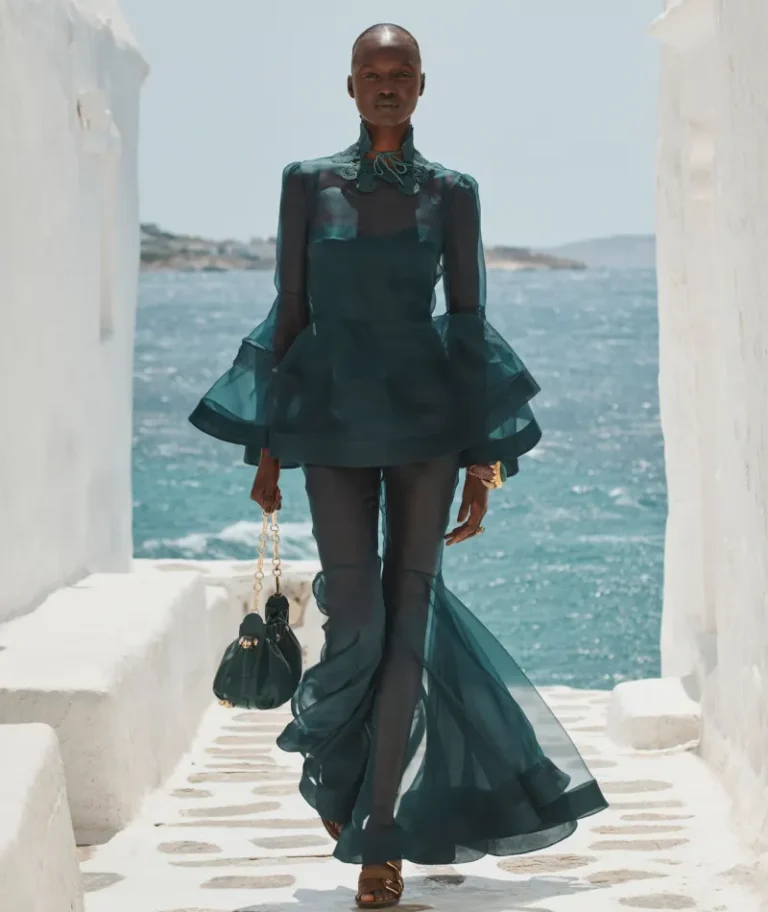
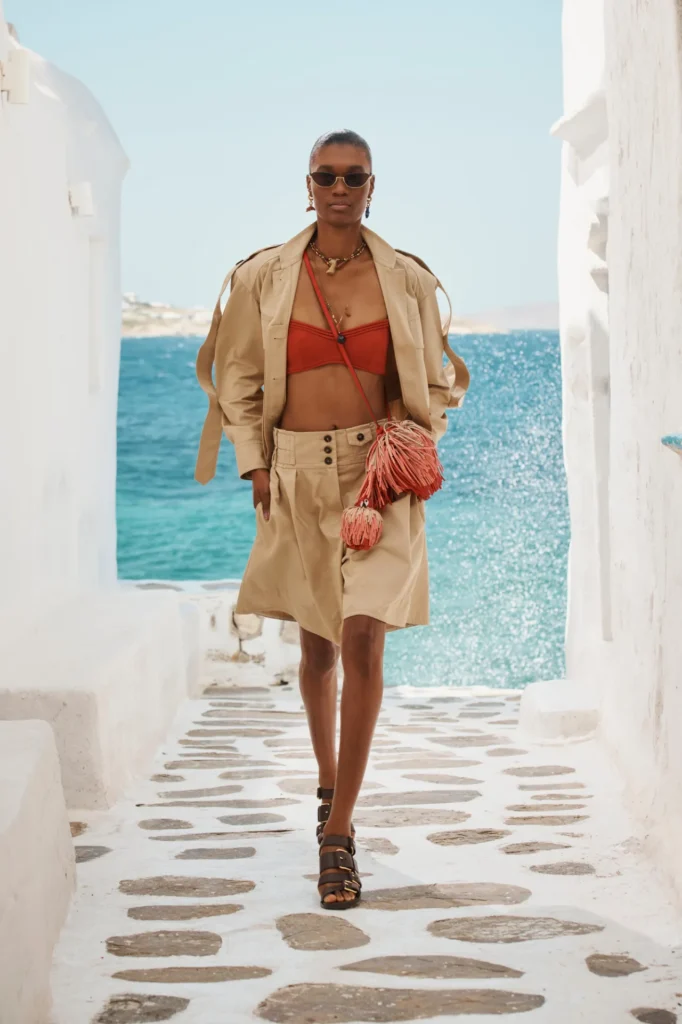
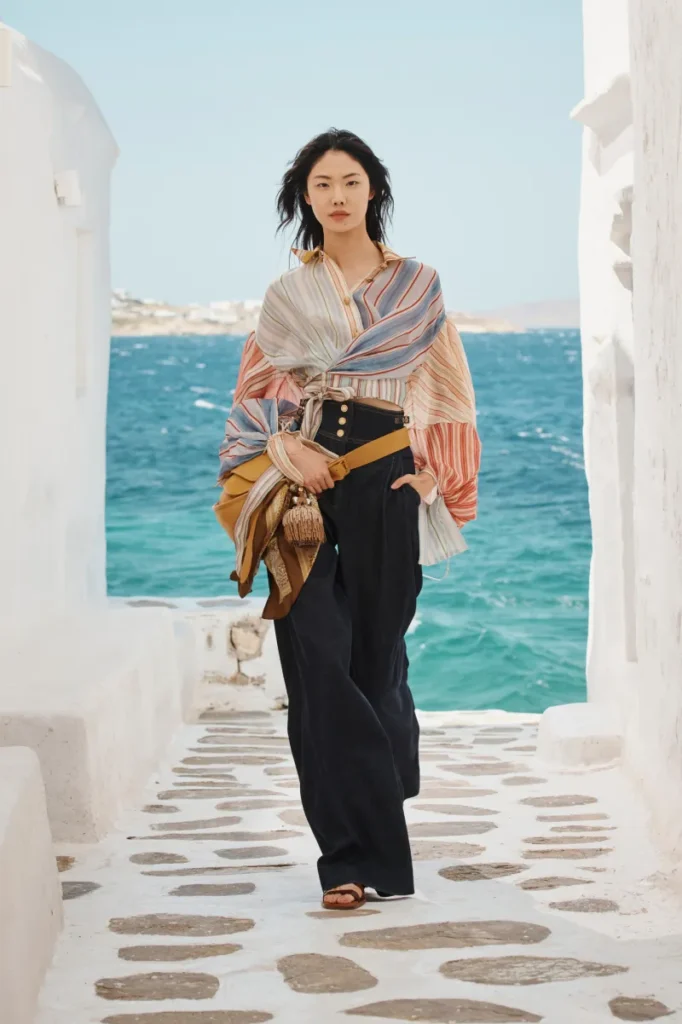
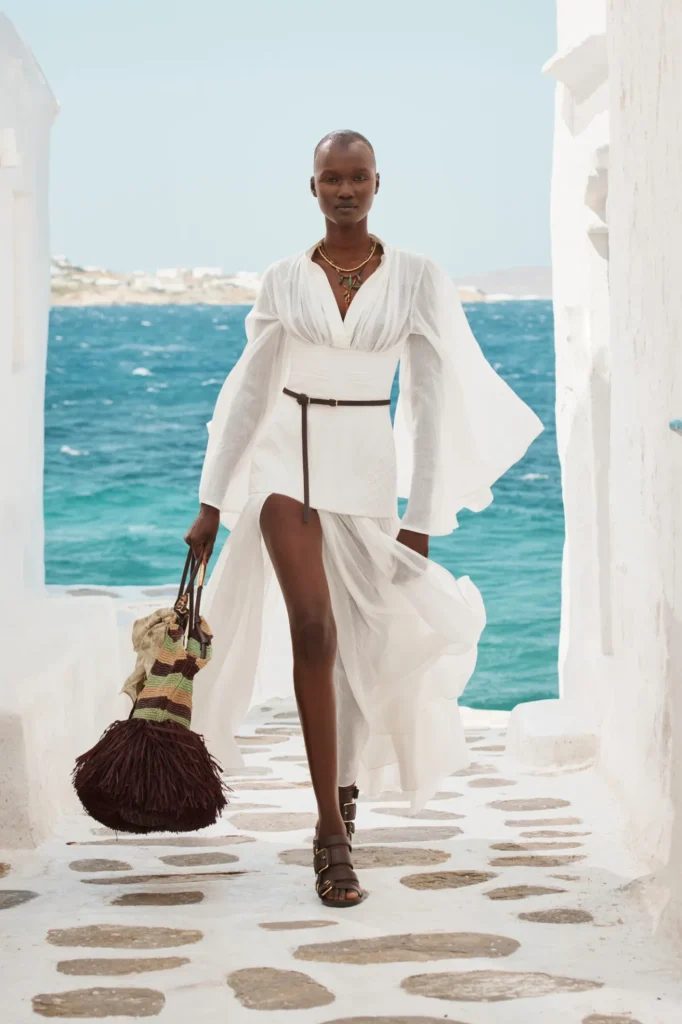
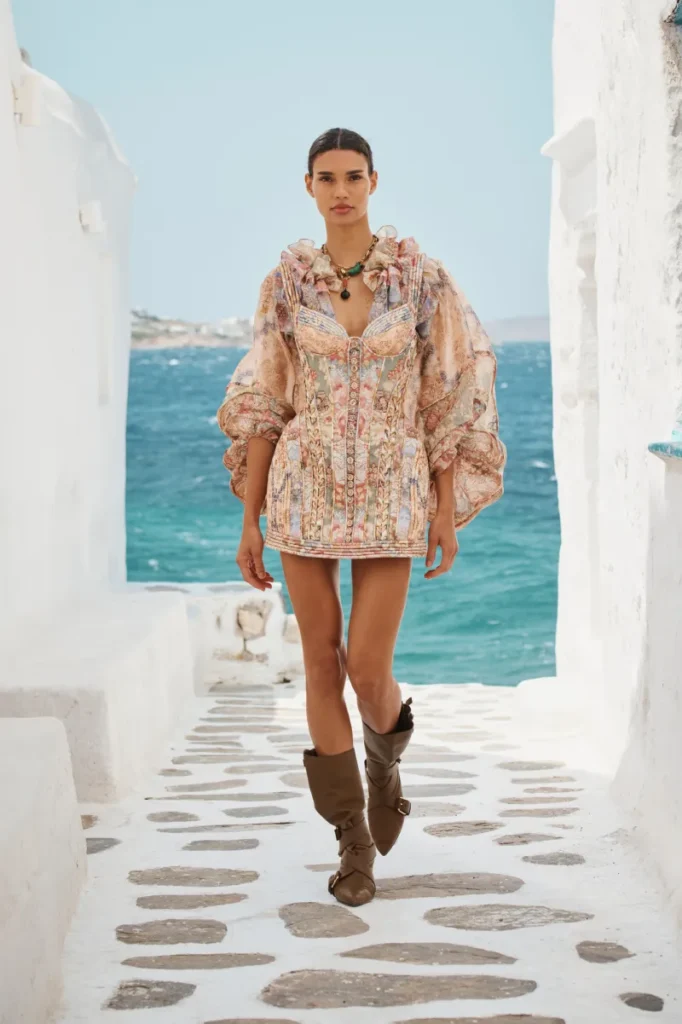
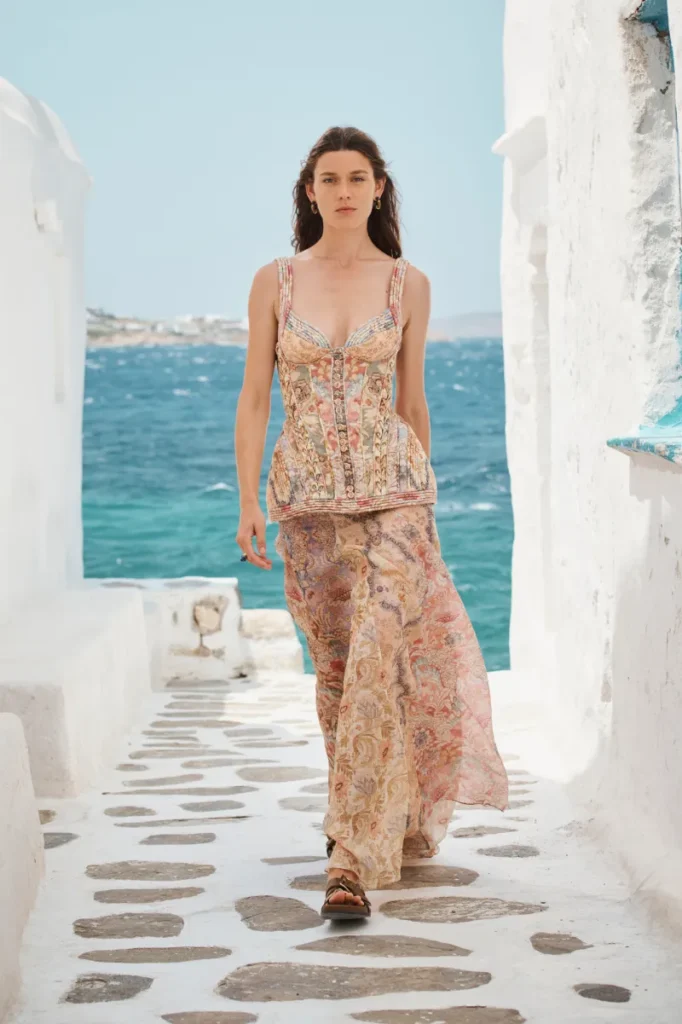
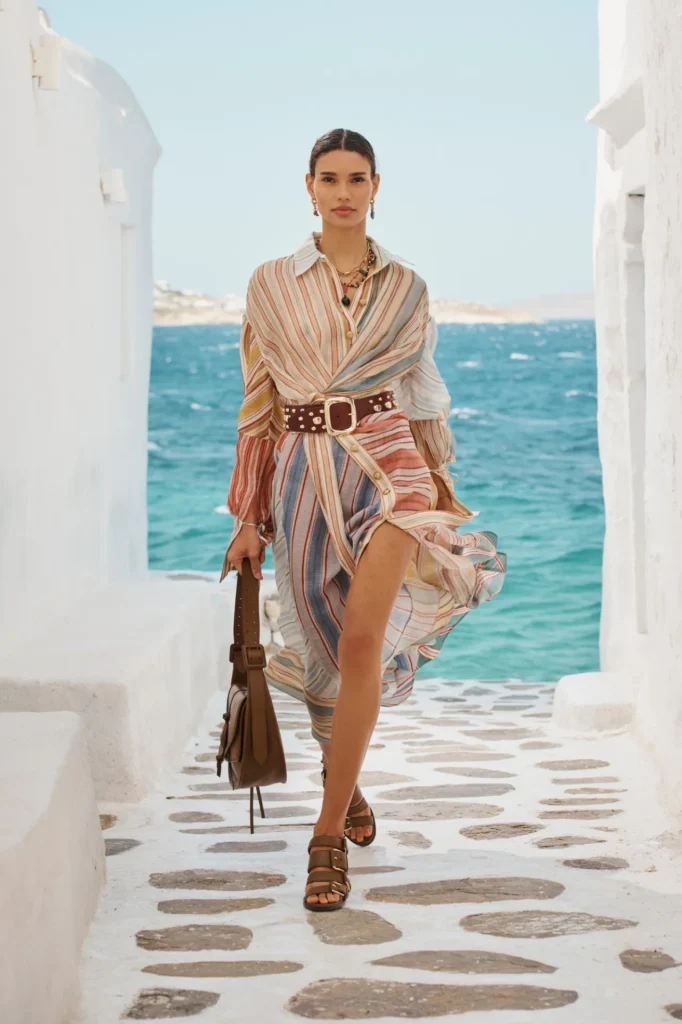
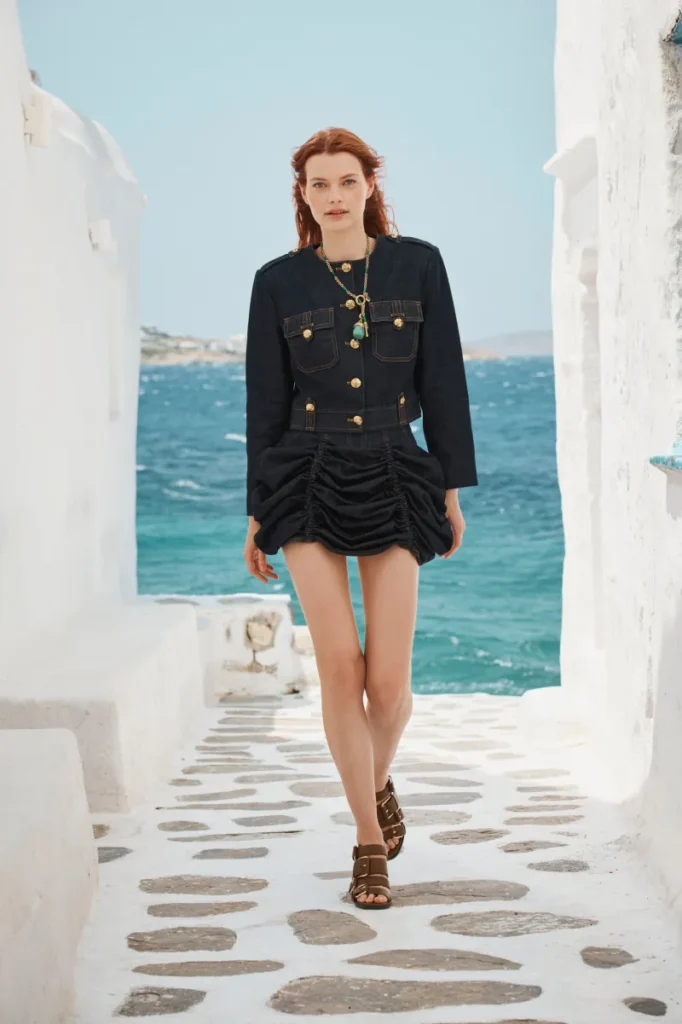
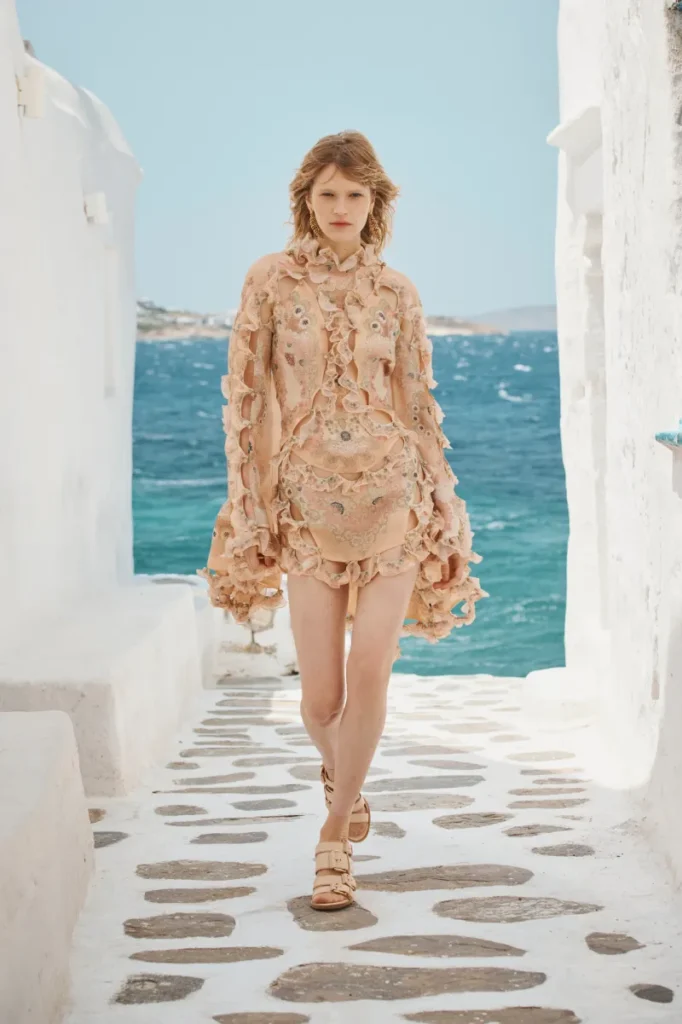
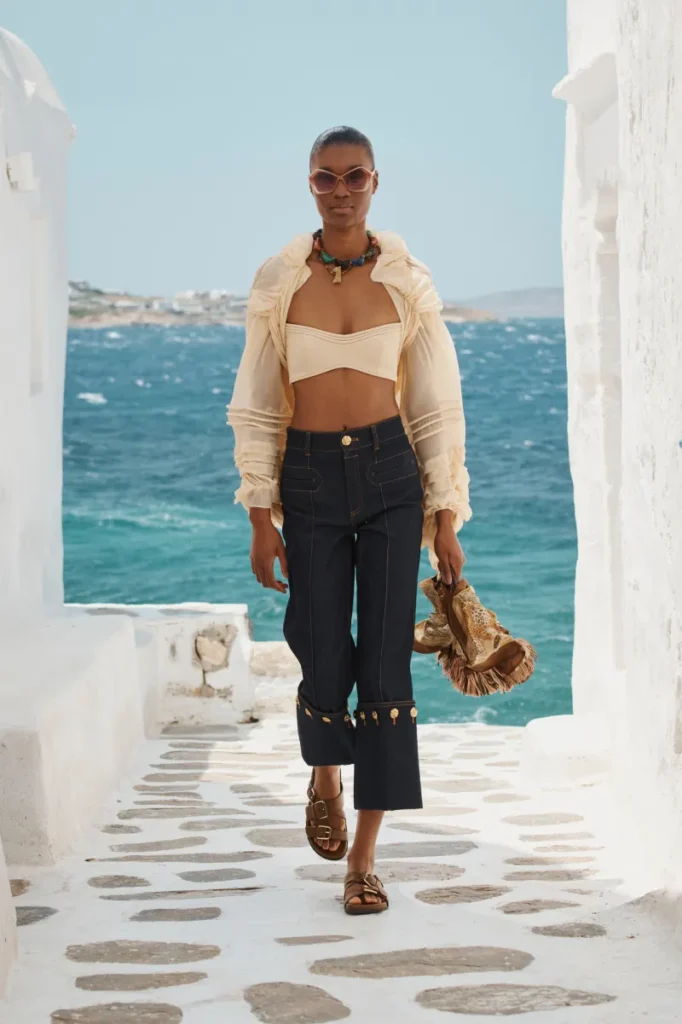
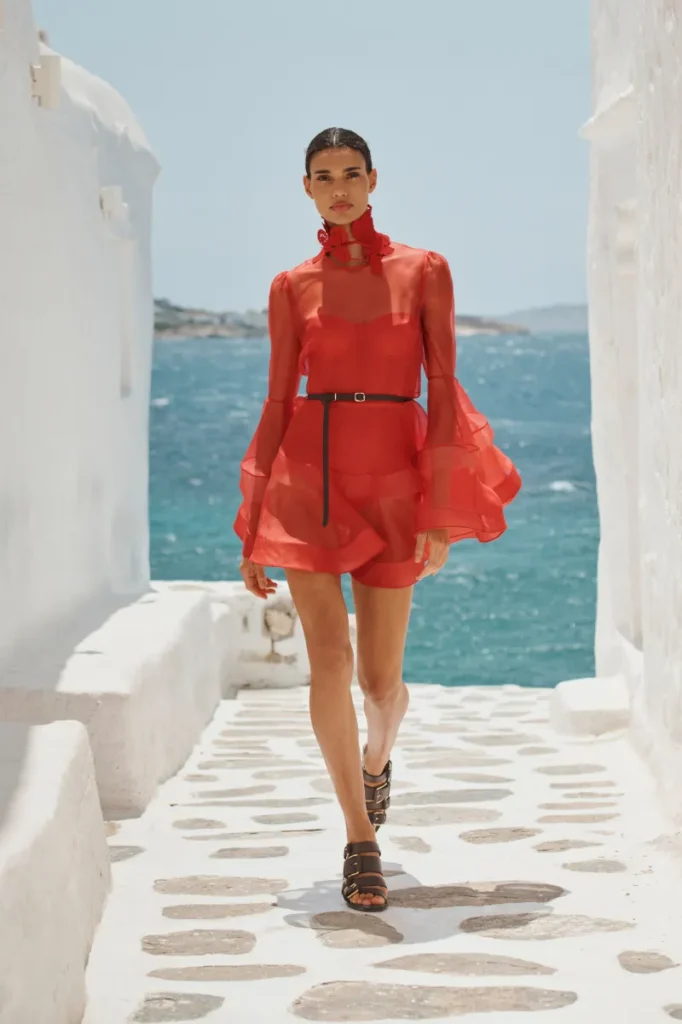
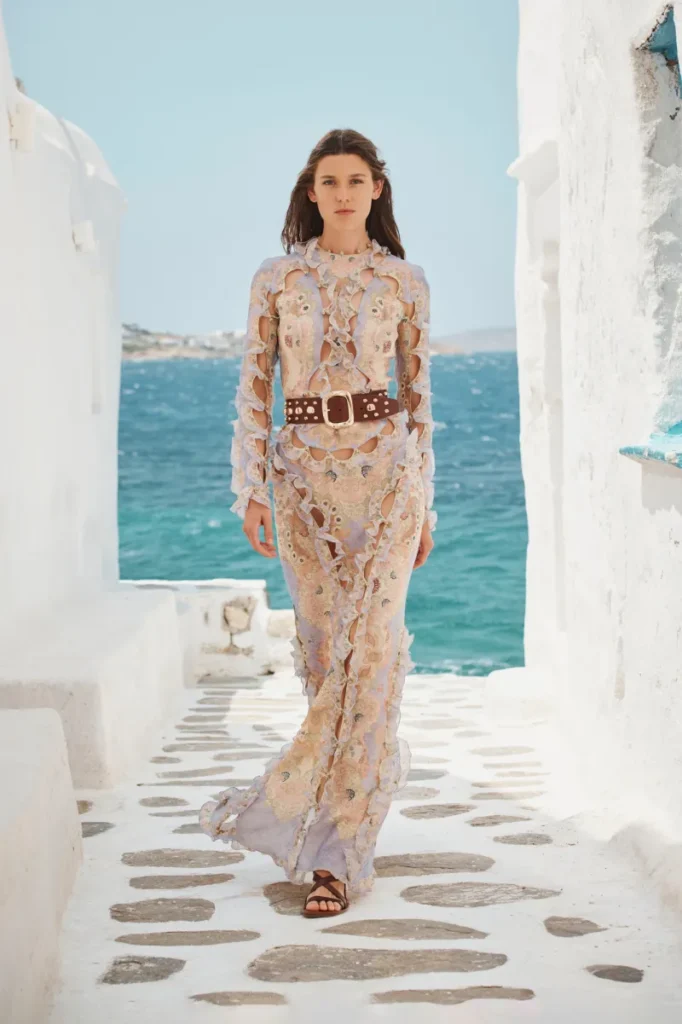
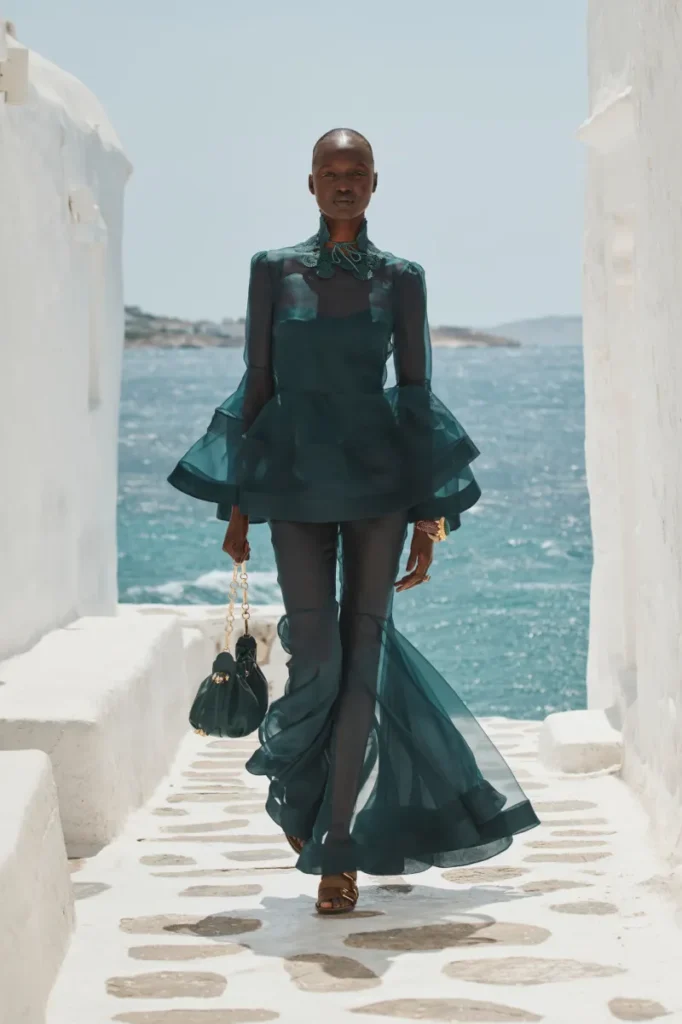
Zimmermann celebrated the opening of its Mykonos store this month alongside the launch of a romantic, fantasy-inspired resort collection. Over the past few weeks, Nicky Zimmermann has been in Mykonos, where from June 16 to 17 she hosted the opening of her namesake label’s boutique, and days later photographed her Twisted Romance resort collection in the island’s picturesque alleyways.

“It was such a pleasure to connect the launch party with the collection, and there’s always a pirate bar somewhere in Greece,” she said, hinting at the main inspiration behind the collection: blending nostalgia and fantasy into a line full of romantic femininity, striking silhouettes, and maritime touches.

“I remember those pirate movies I used to watch as a little girl. They had the most incredible posters—the handsome pirate and the gorgeous, glamorous, sexy woman who somehow gets caught up in the story,” she said about her inspiration, which included classic pirate films and the novel Treasure Island. “I wanted to create that feeling of nostalgia while bringing in an element that I really identify with: the New Romantics.”

These references served Zimmermann well, evident in the balance between breezy, cheerful dresses with hand-painted watercolor “treasure map” prints and fitted white dresses with rippling sleeves. Despite the fantastical inspirations, nothing felt overly literal—especially in the fluid striped nautical dresses and slip-style nightgowns; the refined “Pirate Rebellion” military jackets; and ruched corset tops layered over fluttering, frayed blouses.

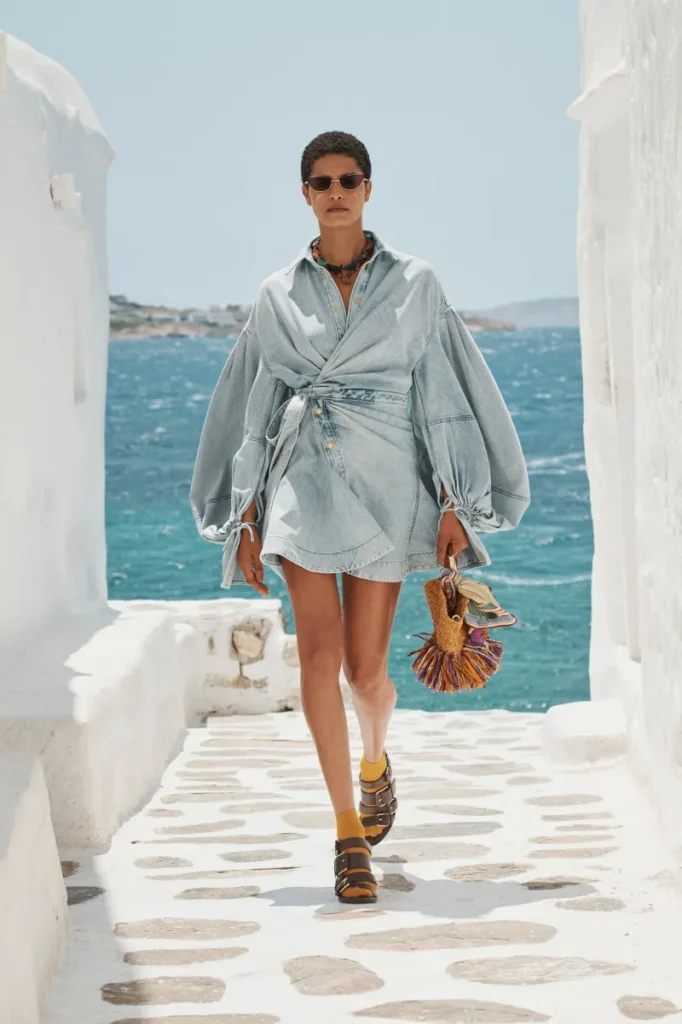
The Resort offering proved to be a smart blend of the brand’s highly romantic codes with essentials, like structured jeans with buttons, wrap balloon tops in denim, utilitarian drawstring layers, and slouchy boots with buckles.

“There has been a great collaboration between my Paris atelier and the one in Sydney, so I’ve been able to have both teams working closely together. Many of the denim pieces, coats, tailoring, and drill in this collection we’re developing with the Paris team, with our romantic, classic Zimmermann style. It’s a beautiful combination, and personally it’s how I like to dress,” Zimmermann said.

Courtesy of Zimmermann

The designer mentioned that she travels to her new Paris headquarters roughly every seven weeks and has been working with her teams there to keep developing Zimmermann’s jewelry, handbags, and footwear. As seen throughout the resort collection, the accessories continued to amplify the adventurous spirit while adding a sense of grounded modernity.