Simone Rocha Spring 2027 Collection
Simone Rocha turned to Caravaggio’s long-lost masterpiece The Taking of Christ, using its dramatic chiaroscuro and turbulent history as a starting point for a collection built on the transformation of familiar silhouettes.
Returning to London’s Old Bailey, Rocha revisited classic wardrobe archetypes—the slip dress, babydoll, ballgown, and bomber jacket—approaching each with a distinctly personal eye. After presenting her menswear collection at Pitti Uomo in June, she focused the runway entirely on womenswear, allowing her to explore femininity through the codes that have long defined her work.
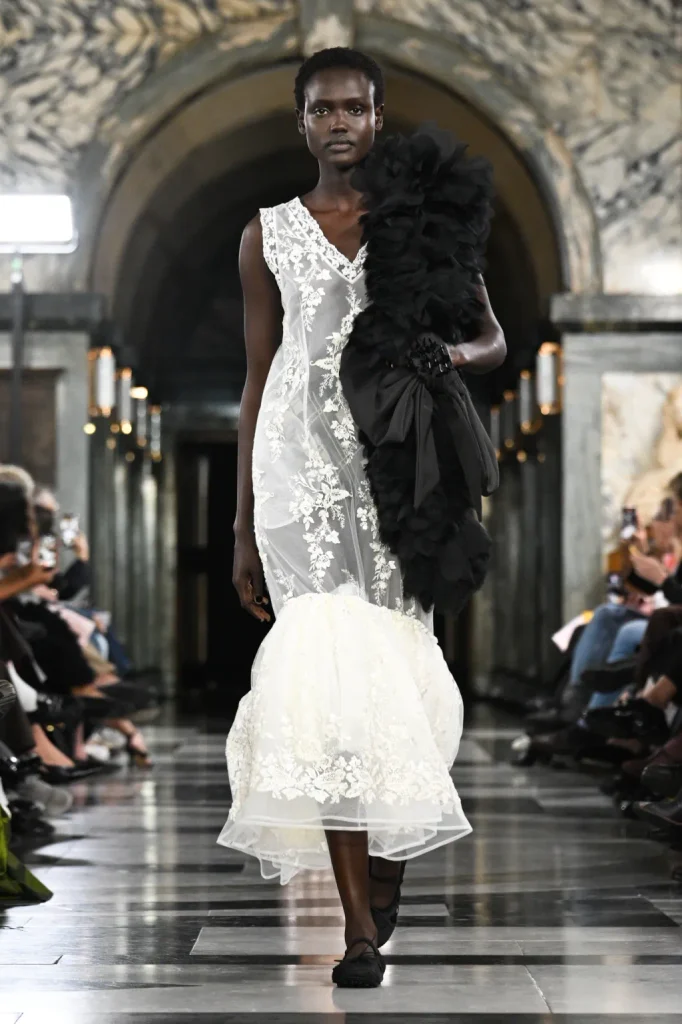
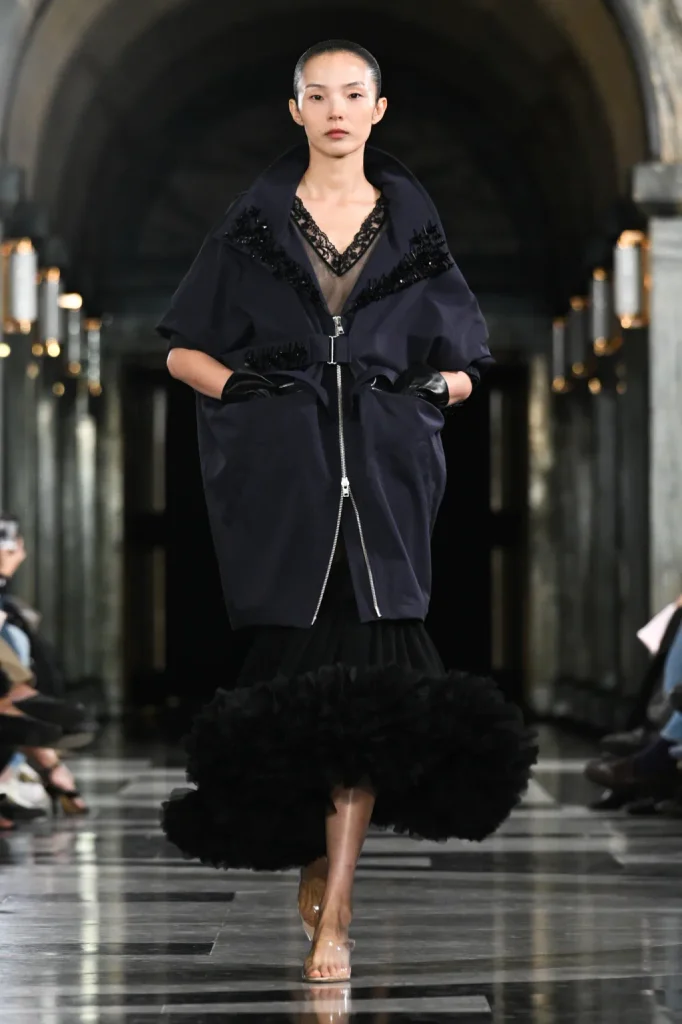
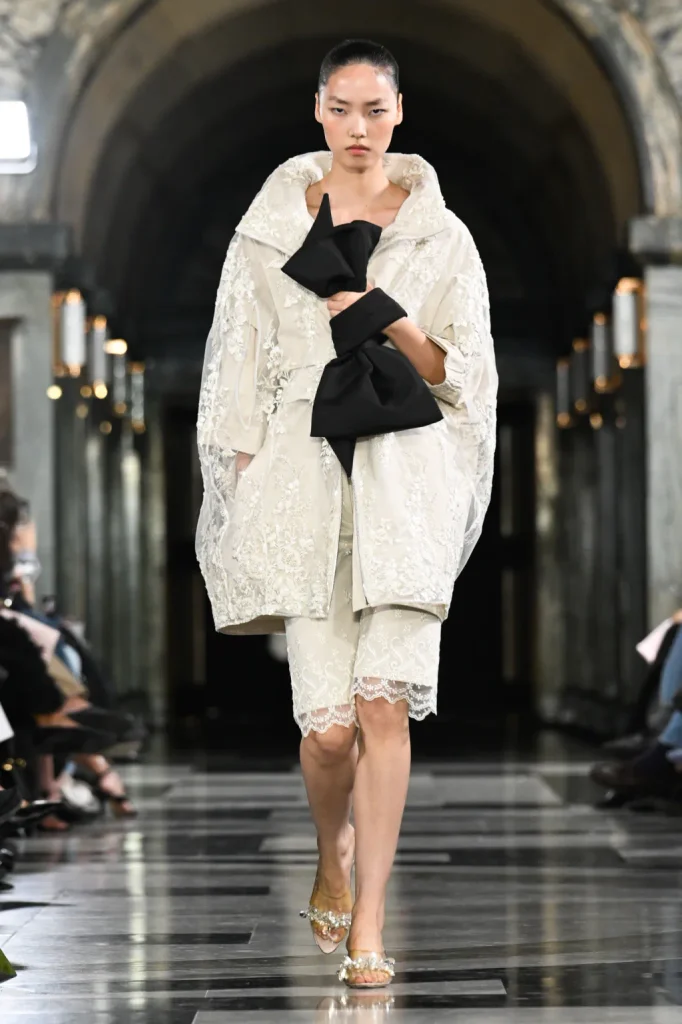
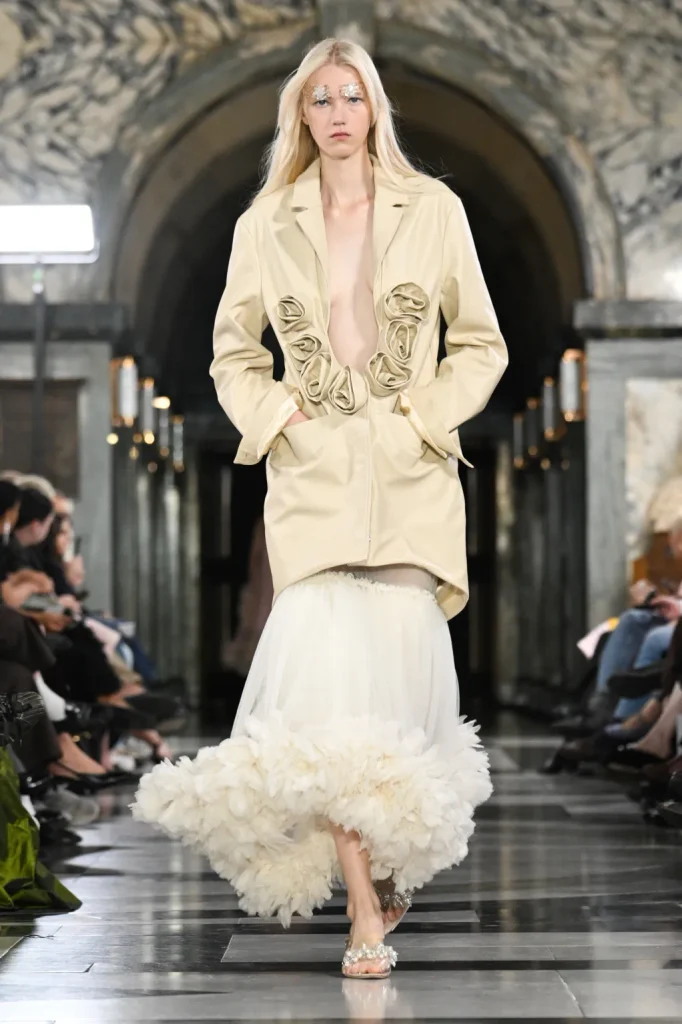
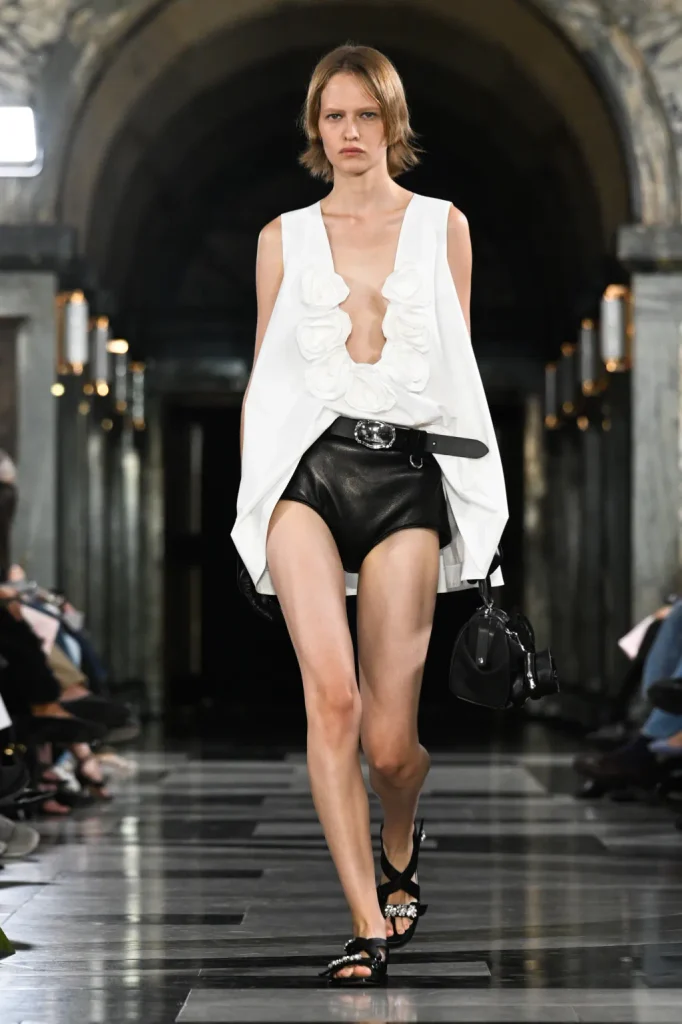
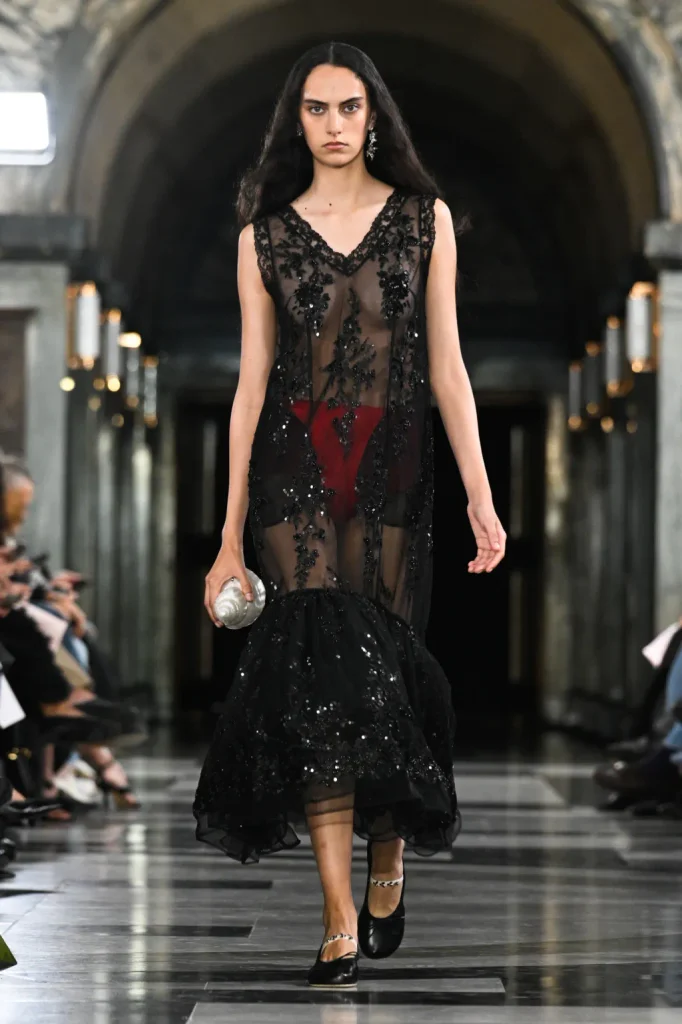
“I wanted it to feel personal, an expression of dressing and femininity,” Rocha said. That sense of intimacy came through in the way she manipulated fabrics, combining contrasting textures and reworking conventional materials. Trench and tulle became a long coat; sheer dresses were layered over argyle knit briefs; and strips of washed organza were transformed into feather-like boas.
Caravaggio’s palette shaped the collection as much as the painting’s history. Rich reds, black, and petrol blue brought the artist’s characteristic tension between shadow and illumination into Rocha’s romantic vocabulary. The Taking of Christ, believed lost for centuries, was rediscovered in 1990 hanging in the dining room of a Jesuit residence in Dublin after having been dismissed by the priests as a copy. It is now part of the National Gallery of Ireland’s collection.
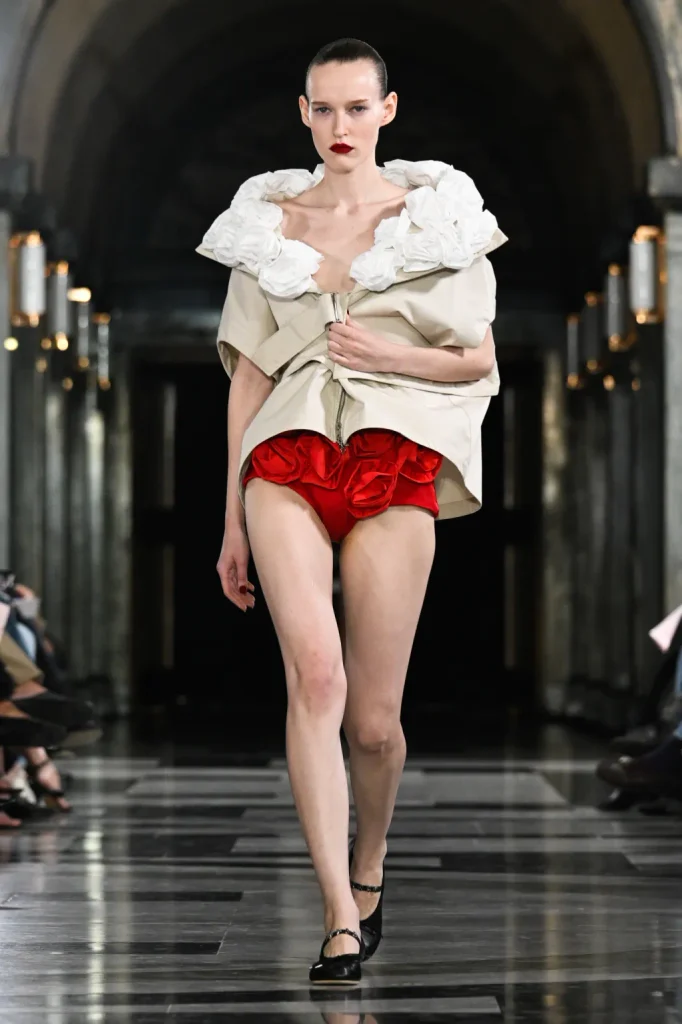
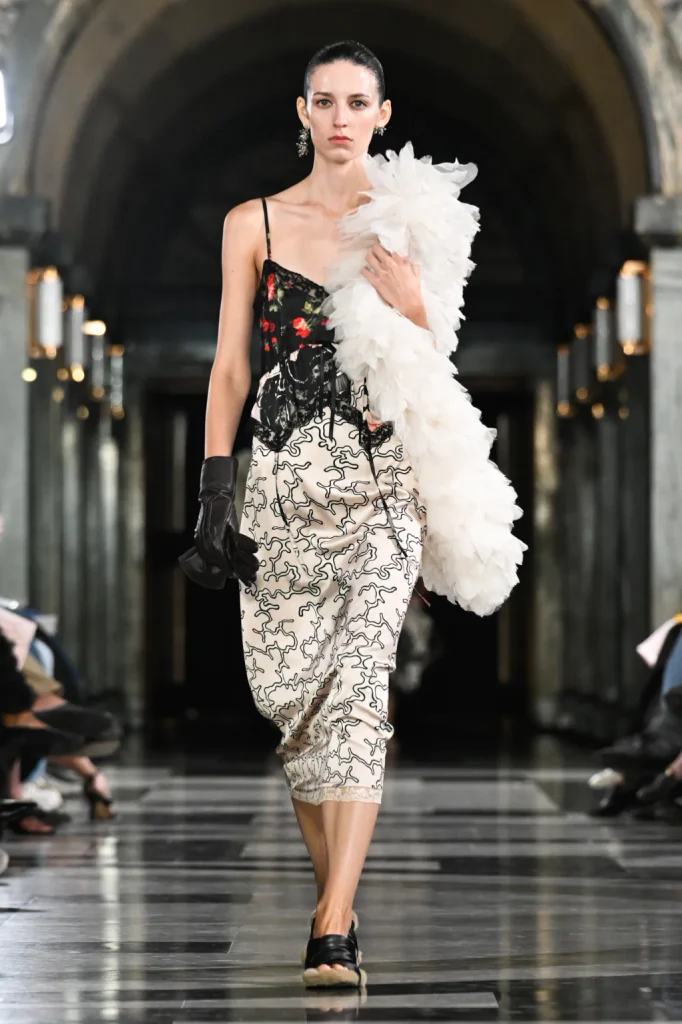
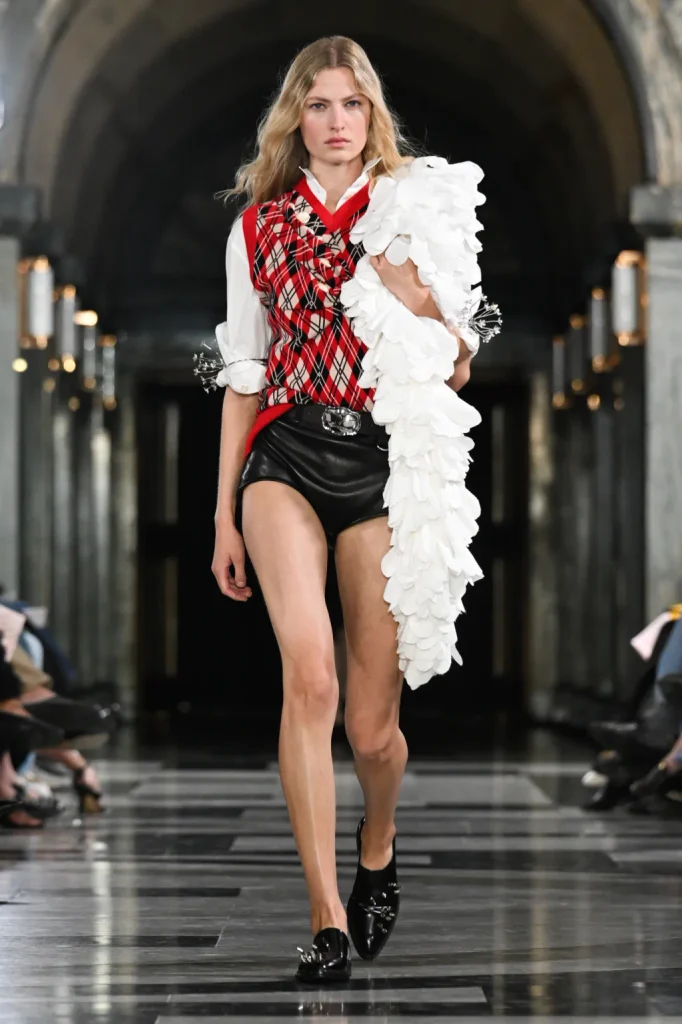
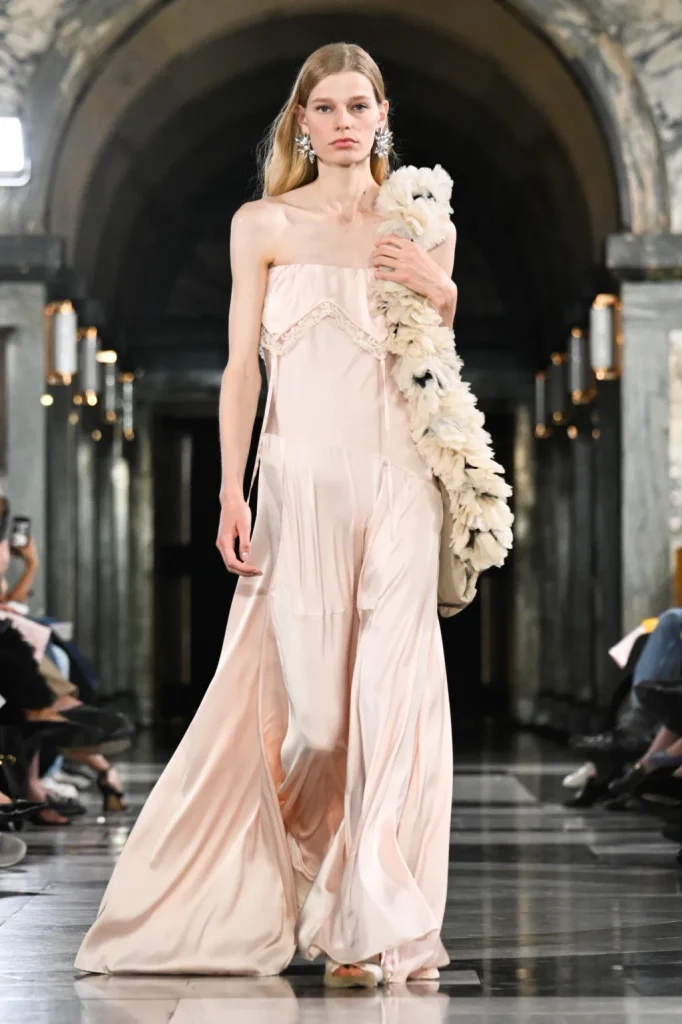
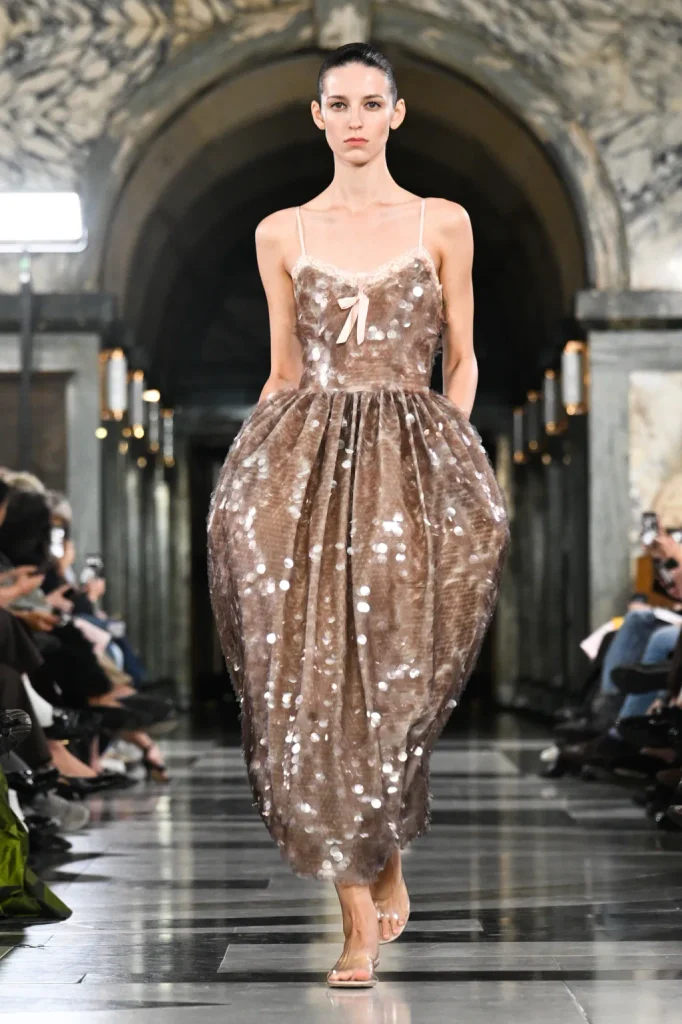
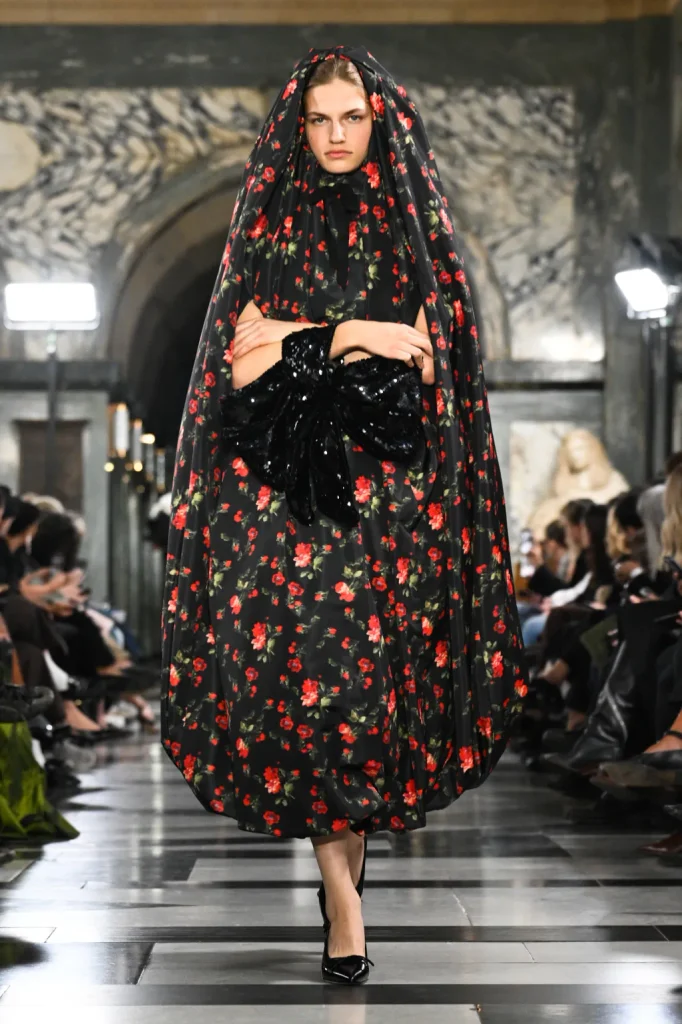
That story of rediscovery informed Rocha’s instinctive approach to styling. She borrowed freely across traditional wardrobe boundaries, particularly between masculine and feminine dress. A lavender men’s dress shirt was layered over a black-and-brown ball skirt, turning a conventional piece of menswear into part of an elaborate evening silhouette.
Romantic contrasts appeared throughout. An oversized gray sweater was scattered with small white shell embellishments, while a transparent, 1930s-inspired column dress softened its severity with delicate embroidery. Elsewhere, oversized rosettes brought volume and sensuality to crisp white blouses, low rounded necklines, and open backs on babydoll dresses, as well as the collars of silky bomber jackets and leather coats.
The result was a collection shaped by transformation rather than reinvention for its own sake. Rocha took established silhouettes, familiar materials, and references from both sides of the wardrobe, then disrupted their original context. Like Caravaggio’s rediscovered painting, the clothes revealed new character when viewed from a different perspective.