Madonna Fronts Dolce & Gabbana’s The One in a Bold New Chapter
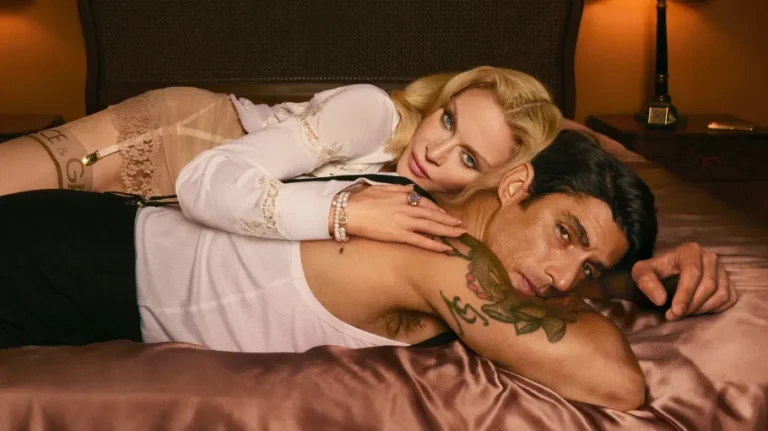
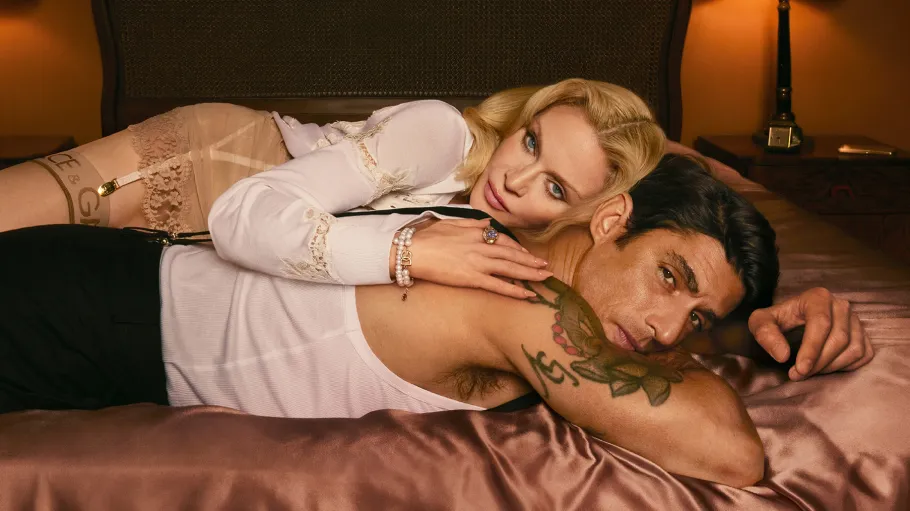
Dolce & Gabbana has tapped Madonna as the new face of The One, ushering the iconic fragrance franchise into a more provocative, cinematic era. Directed by Mert Alas, the campaign features the pop icon reinterpreting Patty Pravo’s La Bambola, a knowing statement of autonomy and power that sets the tone for the brand’s latest olfactory launch.
Madonna starring in the new campaign for The One fragrance franchise by Dolce & Gabbana Beauty / Courtesy of Dolce & Gabbana
Styled in corsetry and steeped in a 1970s, Godfather-inflected aesthetic, the visuals lean into Italian sensuality and drama—hallmarks of the house—while reinforcing Madonna’s enduring command of reinvention. The teaser, released this week, has already generated millions of views, signaling strong cultural traction.
At the center of the campaign is The One Eau de Parfum Intense, created by Quentin Bisch, alongside The One for Men Parfum by Jean-Christophe Hérault. Both scents build on the legacy of the original The One, amplifying its signature warmth and seduction with deeper, more concentrated expressions.
Courtesy of Dolce & Gabbana
The One Eau de Parfum Intense opens with a vivid burst of pink pepper, sharpened by mandarin and tart blackcurrant. At its heart, a luminous, narcotic jasmine unfolds, while a rich vanilla base melts into dense amber accords, delivering a finish that is opulent, spicy, and unapologetically sensual.
The One Eau de Parfum Intense y The One for Men Parfum
Dior has appointed LaKeith Stanfield as its newest brand ambassador, further strengthening Jonathan Anderson’s evolving vision for the house’s menswear. The announcement comes ahead of Anderson’s second men’s show for Dior, scheduled for January 21.
Courtesy of Dior
Stanfield has quickly become a visible presence in Anderson’s Dior universe. He attended the designer’s menswear debut last June and has since worn Dior on multiple red carpets, including the New York premiere of Die My Love in November. At the British Fashion Awards in December, the actor drew attention in a standout look: a blue denim “Revolution” coat embroidered with florals, paired with a matching vest and light-wash bootcut jeans—an ensemble that underscored Anderson’s renewed approach to archival references and contemporary craft.
“LaKeith has an energy that feels both spontaneous and serene,” Anderson said. “He is an exceptional actor with extraordinary range, bringing something unexpected and almost magical to every role. I’m excited to work with him.”
Stanfield is the second male ambassador named this month, following French actor Paul Kircher, as Anderson builds a new roster of faces to define Dior’s menswear identity. Known for his Oscar-nominated turn in Judas and the Black Messiah, Stanfield has navigated genres with ease, from Atlanta to Get Out, reinforcing his reputation as one of his generation’s most versatile performers.
Givenchy has named Amandine Ohayon as its new chief executive officer, effective immediately, marking a significant leadership shift within LVMH’s fashion division. Ohayon succeeds Alessandro Valenti, who moves to Christian Dior Couture as deputy CEO overseeing commercial activities.
A seasoned executive across fashion and beauty, Ohayon most recently served as CEO of Stella McCartney, during the period when LVMH held a minority stake in the London-based house. She will report to Pietro Beccari, chairman and CEO of LVMH Fashion Group, a role he combines with his leadership of Louis Vuitton.
Beccari highlighted Ohayon’s collaborative approach with creative talent, inclusive leadership style, and deep retail expertise as key assets in driving Givenchy’s next phase of growth. Her appointment comes at a pivotal moment for the house, following the arrival of Sarah Burton as creative director in late 2024.
Valenti, who joined Givenchy in July 2024 after a long tenure at Louis Vuitton, played a central role in stabilizing the brand during a transition period. At Dior, he will report to Pierre-Emmanuel Angeloglou, deputy CEO of Christian Dior Couture, and join the house’s executive committee. Angeloglou emphasized Valenti’s commercial acumen and experience within LVMH as critical to Dior’s retail and digital ambitions.
Ohayon’s background spans luxury beauty and fashion. She previously held senior roles at L’Oréal, including managing director of L’Oréal Luxe UK and Ireland, before moving to Pronovias as CEO, where she oversaw strategic partnerships and the group’s sale to Bain Capital. A graduate of ESSEC Business School with an MBA in luxury management, she brings a blend of operational discipline and brand-building expertise.
Prada Deconstructs the Art of Fashion Advertising for Spring 2026
Prada’s Spring 2026 campaign positions fashion advertising as both subject and object. Conceived by co–creative directors Miuccia Prada and Raf Simons in collaboration with American artist Anne Collier, the project—titled “Image of an Image”—examines how images are produced, consumed, and desired.
Courtesy of Prada
Rather than relying solely on traditional campaign photography, Collier transformed the season’s visuals into a physical, almost archival exercise. Against vivid orange backdrops, she photographed hands holding printed campaign images shot by Oliver Hadlee Pearch. The compositions function as still lifes, emphasizing tactility and distance at once. In several frames, gloved hands hold images of female models, subtly foregrounding the act of looking itself. As Prada explained, the result invites viewers to observe advertising as a mechanism—something examined, admired, and questioned rather than passively absorbed.
The cast reflects Prada’s ongoing dialogue with culture across generations and disciplines. Levon Hawke, Damson Idris, and Hunter Schafer lead the campaign, joined by Nicholas Hoult, Carey Mulligan, musician John Glacier, and supermodel Liu Wen. Each appears against pared-back settings—grass, faux fur, or saturated color fields—allowing the clothes and the concept to take precedence over narrative.
The styling underscores Prada’s Spring 2026 codes: a tension between intimacy and distance, simplicity and self-awareness. The garments are presented without excess dramatization, reinforcing the campaign’s central idea that fashion imagery can be both immediate and reflective.
Hawke, a new face for Prada, brings a quiet presence to the campaign. The actor, who has steadily built a résumé across film and television, fits naturally into Prada’s tradition of casting talent at moments of transition rather than peak saturation. His inclusion aligns with the brand’s long-standing preference for cultural relevance over celebrity spectacle.
Dior Unveils Its First Coed Campaign Under Jonathan Anderson
Dior has released its first-ever coed advertising campaign to mark the in-store debut of Jonathan Anderson’s inaugural collections for women and men, signaling a decisive shift in the house’s visual language. Shot by David Sims, the campaign introduces what Dior calls a new “clique”: a cast chosen less for polish than for presence.
David Sims/Courtesy of Dior
Actress Greta Lee, footballer Kylian Mbappé, actor-director Louis Garrel, and rising French actor and brand ambassador Paul Kircher lead the lineup. They are joined by models Sunday Rose — the daughter of Nicole Kidman and Keith Urban — Laura Kaiser, and Saar Mansvelt Beck. The images, rendered in a mix of color and black-and-white, favor intimacy over spectacle, replacing Dior’s recent high-gloss aesthetic with something more relaxed, observational, and human.
David Sims/Courtesy of Dior
The campaign is the most visible expression yet of Anderson’s arrival as Dior’s eighth couturier and the first to oversee both womenswear and menswear. Its impact will extend beyond advertising, informing store displays and merchandising across flagships and pop-ups worldwide.
Visually, the images distill the shared codes Anderson introduced in his debut runway shows: a rethinking of everyday staples like denim and knitwear, counterbalanced by formal elements such as lace eveningwear, stiff collars, and ties that subtly reference Christian Dior’s fascination with the 18th century. The result is a wardrobe that feels historically aware but resolutely modern.
Sunday Rose appears in her second major fashion campaign to date, following her runway debut at Miu Miu in October 2024. Here, she is photographed lounging on a Louis XVI–style settee or wearing sheer evening gowns paired with shoes adorned with bows — a motif Anderson is positioning as a key house signature. Greta Lee is captured mid-fitting, trying on black slingback heels designed by Dior’s new shoe design director, Nina Christen, whose work nods to vintage Roger Vivier silhouettes.
Paul Kircher embodies Anderson’s vision of the contemporary Dior man. He wears pieces rooted in the archives, including a forest-green Donegal tweed interpretation of the Bar jacket and cargo shorts with deep pleats inspired by the 1948 Delft dress. In one of the campaign’s most striking images, Kircher pairs a striped blue shirt and faded jeans with a knitted cape, striking a sensual balance between ease and eccentricity.
Mbappé, a Dior ambassador since 2021, brings a composed glamour to the campaign, moving effortlessly from casual knits and denim to formal tailoring. Photographed lounging in a hotel room beneath a 1928 portrait of Christian Dior, he anchors the collection’s quieter confidence. Garrel, meanwhile, channels a distinctly French nonchalance in looks ranging from a gray flannel suit to an apple-green knitted cape.
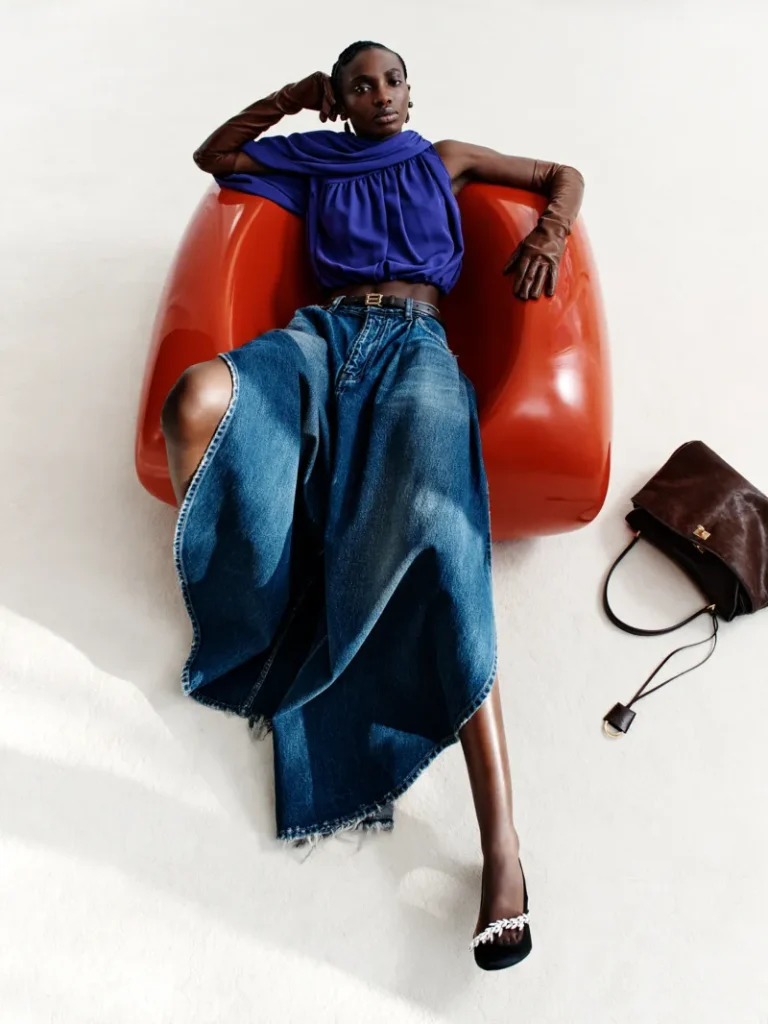
Accessories play a central role, underscoring Anderson’s intent to build a cohesive universe. Still lifes feature new iterations of the Lady Dior, the Bow, and Book Tote bags embroidered with classic literary covers, including Bram Stoker’s Dracula. Menswear highlights include the Normandie bag, while future drops are teased with styles such as the Cigale, Crunchy, and Diorly, alongside a Lady Dior collaboration with artist Sheila Hicks, embellished with red tassels.
David Sims/Courtesy of Dior
Footwear launching alongside the campaign includes the Initials, Aurore, Bow, Muse, and Bloom for women, and the Roadie, Saltwind, and Archi for men, complemented by a full range of ready-to-wear.
Styled by Benjamin Bruno — a longtime Anderson collaborator from his Loewe years — with makeup by Yadim Carranza and hair by Guido Palau, the campaign crystallizes Anderson’s Dior: elegant yet unguarded, archival yet alive, and defined by a new freedom in how luxury is worn.
Christian Siriano Pre-Fall 2026: Made for Awards Season
Christian Siriano sharpened his focus for Pre-Fall 2026, delivering a tightly edited collection designed squarely for awards season. Grounded after a whirlwind Cunard collaboration, the designer returned to the studio with one clear goal: eveningwear that performs under flashbulbs.
Shot by Richard Phibbs in a nod to classic Irving Penn studio portraits, the lookbook starred Coco Rocha in sculptural, high-impact silhouettes. Siriano leaned unapologetically into Old Hollywood glamour—less as nostalgia, more as a proven framework for modern red-carpet dressing.
Courtesy Of Christian Siriano
The collection opened with decisive statements: an off-the-shoulder black silk faille gown, gold column dresses finished with beaded fringe, and tulle peplums that added drama without excess. These were gowns made to be noticed, but precisely controlled.
Siriano balanced that spectacle with versatility. Recognizing that not every client needs a single-use gown, he proposed modular evening dressing: mermaid skirts paired with strapless bodices, lace tops styled with oversized satin trousers, and sharply tailored tuxedo jackets cinched at the waist. Accessories pushed the fantasy further—wing-like ruffled gloves, sculptural proportions, and discreet diamond accents developed through his collaboration with Rare Carat.
Courtesy Of Christian Siriano
The emphasis throughout was on choice and longevity. Separates could be mixed, reworked, and personalized, extending their life well beyond one event. Siriano also hinted at the brand’s expansion into footwear, with his own shoe line currently in development.
Fendi Taps Emily in Paris for a Limited-Edition Capsule
As Emily in Paris returns to Netflix for its fifth season, Fendi marks the occasion with a tightly edited capsule focused on one of the house’s strongest categories: handbags.
Courtesy Of Fendi
Launching the same day as the new episodes, the limited-edition collection centers on three Fendi icons—two Baguettes and a Peekaboo—each finished with a dedicated Emily in Paris logo tag. The bags are crafted in a tapestry-effect fabric featuring the Fendi Dots motif, a graphic blend of the FF monogram and Art Deco–inspired polka dots.
The palette comes in two color-blocked options—brown with pink, or dove gray with mint green—balancing Parisian charm with a playful, modern edge. Prices reflect their collectible status: the Baguette retails for $4,950, while the Peekaboo is priced at $7,700.
The collaboration is woven directly into the show’s narrative, with images circulating of Lily Collins’ Emily carrying a Fendi Baguette at the brand’s Roman headquarters, the Palazzo della Civiltà, and at the Palazzo Fendi flagship on Largo Carlo Goldoni.
Courtesy Of TheStewartofNY
Available in select Fendi boutiques worldwide and online, the capsule reinforces the series’ long-standing relationship with luxury fashion—continuing a legacy of on-screen collaborations that have helped turn Emily in Paris into a global style showcase.
Ralph Lauren’s Pre-Fall 2026 collection distilled the house’s enduring codes into a refined balance of natural textures and modern glamour. Practical yet sensual, the offering reflected a confident femininity shaped by ease, polish, and quiet strength.
Earth-driven tones anchored the collection—mushroom brown, chocolate, khaki green, stone, and granite—applied across a wardrobe that moved seamlessly from day to night. Tailoring remained central: a sharp chocolate-brown suit was softened with a glossy, partially unbuttoned shirt, while fluid wrap dresses in silk appeared engineered to follow the body, reportedly shaped with discreet spiral metal wiring.
Lauren leaned into contrast as a design language. Liquid shine met burnished leather; tall leather boots grounded luminous fabrics; and a defining accessory emerged in the form of a bold, elongated leather belt, wrapped and knotted over everything from smoked charmeuse to relaxed knits and classic tweeds. These belts became the collection’s connective tissue, reinforcing silhouette and attitude alike.
Eveningwear nodded to the 1930s through ivory silk gowns with built-in shoulders and sculptural ease, while a meticulously crafted fringe skirt—composed of individual lacquered leather panels applied over tulle—showcased the house’s artisanal rigor. Knitwear followed suit, with metallic ribbed sets offering understated drama.
Outerwear closed the story with authority. Silk bombers, sleek trenches, and a discreet Balmacaan were updated with coated membranes, rendering them water-resistant without compromising elegance.
Pre-Fall 2026 affirmed Ralph Lauren’s mastery of evolution without disruption: a collection rooted in nature, elevated by craftsmanship, and unmistakably modern.
For Pre-Fall 2026, Jonathan Anderson continues to recalibrate Dior’s wardrobe, translating the radical volumes of his runway debut into pieces designed for everyday wear—without losing their edge.
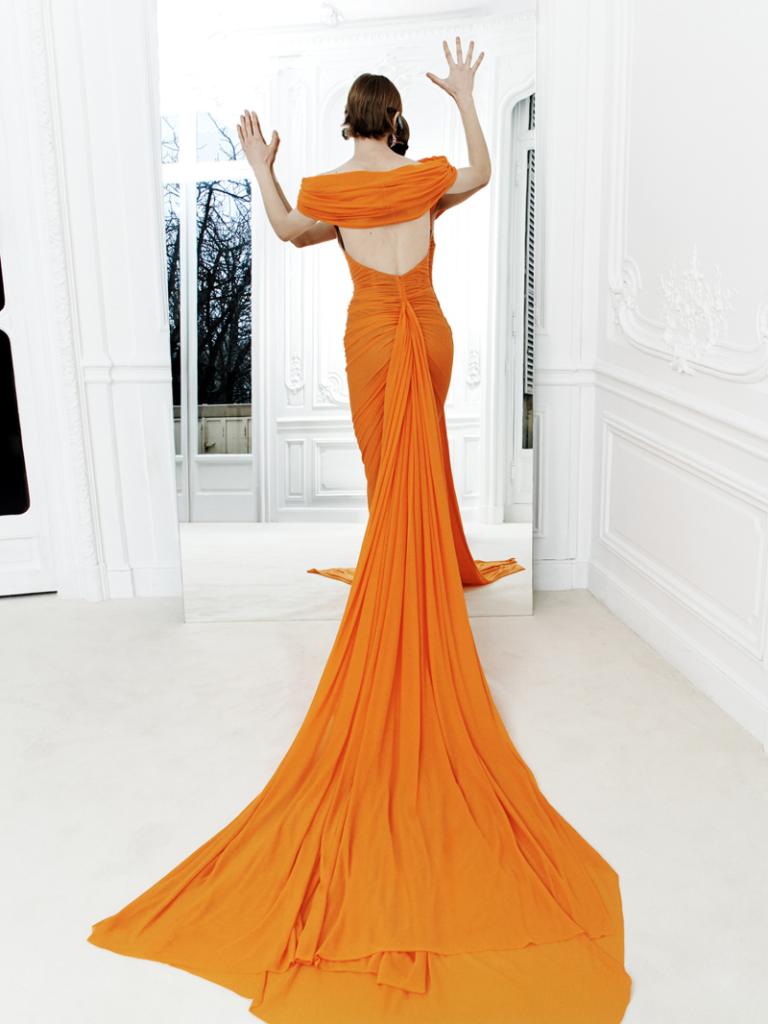
Courtesy of Christian Dior
The collection refines proportion rather than abandoning it. Oversized denim, cut so wide it reads like a pleated skirt, anchors the lineup and becomes the foundation for multiple interpretations of the Bar jacket: cropped, elongated, smooth, densely textured, and even reimagined as outerwear. Rendered in ultra-light, washed denim, the silhouette injects a contemporary attitude that nods to Gen Z’s love of exaggerated flares while subtly reshaping one of Dior’s most iconic codes.
Courtesy of Christian Dior
Anderson approaches the house archive obliquely. The 1948 Arizona trapeze coat informed the collection, but only in spirit: its logic dissolved into deconstructed forms, from a chocolate-brown jacket with a relaxed shawl collar to double-faced striped blanket coats fastened with hat pins. References are present, but never literal.
Craft remains central. A Bar jacket woven from multicolored ribbons and paired with pleated bloomers showcased the atelier’s savoir-faire and will resonate with admirers of Anderson’s more intellectual work. Elsewhere, original fabrications—such as a ribbed blue cardigan shaped like a tailcoat—struck a precise balance between conceptual design and commercial appeal.
Courtesy of Christian Dior
Romantic femininity, a growth driver for Dior in recent years, also found a place here. Draped silk scarf dresses embroidered with laser-cut florals invited close inspection, while slip dresses supported by stiff tulle delivered ease without fragility. Eveningwear pushed further, with voluminous gowns knotted at the hip and plunging moiré-silk styles gathered into dramatic side bows, including a pistachio-green bustier dress worn recently by brand ambassador Mia Goth.
Courtesy of Christian Dior
Throughout, Anderson’s focus is expansion rather than definition—testing ideas, adjusting scale, and building a vocabulary over time. As he prepares for his first haute couture collection, Pre-Fall 2026 signals a designer steadily shaping Dior’s future: thoughtful, exploratory, and deliberately unfinished.
Here’s an ode to simplicity, versatility and not over-complicating things — all features whose pursuit Ian Griffiths sees as “an act of courage” for a designer. “We think that because we’ve put more features on, that makes us cleverer designers, but in actual fact, maturity in design is the ability to leave them out,” said Ian Griffiths, wrapping up the walk-through of the Max Mara pre-fall 2026 collection.
Courtesy of Max Mara
The lineup he conjured was an ode to simplicity and versatility, with the creative director defining such an exercise as “an act of courage” for those in his same post, as designers often fall into the trap of over-decorating and “complicating things.”
He resisted such an urge, delivering an edited wardrobe of wearable pieces that can be easily dressed up and down, and that magnified the pragmaticism and timelessness intrinsic to the Max Mara ethos. As per his standard practice, Griffiths relied on cultural references and seasonal muses to convey these qualities. Here, he nodded to modernism and an overall maritime theme as he looked at cruise liners as the purest expression of the modernist aesthetic. Personalities like Nancy Cunard and Dorothy Parker popped on his mood board, but it was the image of the “Transat” armchair by designer Eileen Gray that stood out with its simple-looking yet technically intricate construction.
Courtesy of Max Mara
The furniture piece clicked with the pleated structure of a suit Griffiths designed during his sophomore year at the company, when he was tasked by his then-boss Laura Lusuardi to include lighter solutions in the brand’s fall 1989 collection. As result, he came up with a relaxed, one-button blazer and low-waisted slouchy pants to convey a sense of effortless elegance.
“We considered all sorts of tweaks, but in the end we decided to launch this look into this collection exactly as it was because it seems to have a perfect balance and proportion,” said Griffiths.
Courtesy of Max Mara
He leaned on the pleating technique also for the new designs, encompassing a breezy duster coat, fluid pants, pristine sleeveless blouses to wear with matching bias-cut skirts, and taffeta maxi frocks to style with chunky-heeled sandals or sleek loafers for daytime occasions. While an archival floral pattern and spots evoking portholes appeared on dresses or a whisper-thin knit, the collection was mainly made up of color-blocked pieces, the best of which were, as expected, the tailored options, such as the Olimpia blazer in a new white version, a pinstripe jersey suit and a light ecru belted coat — highly impactful even with its sparse lines and stripped-down appeal.