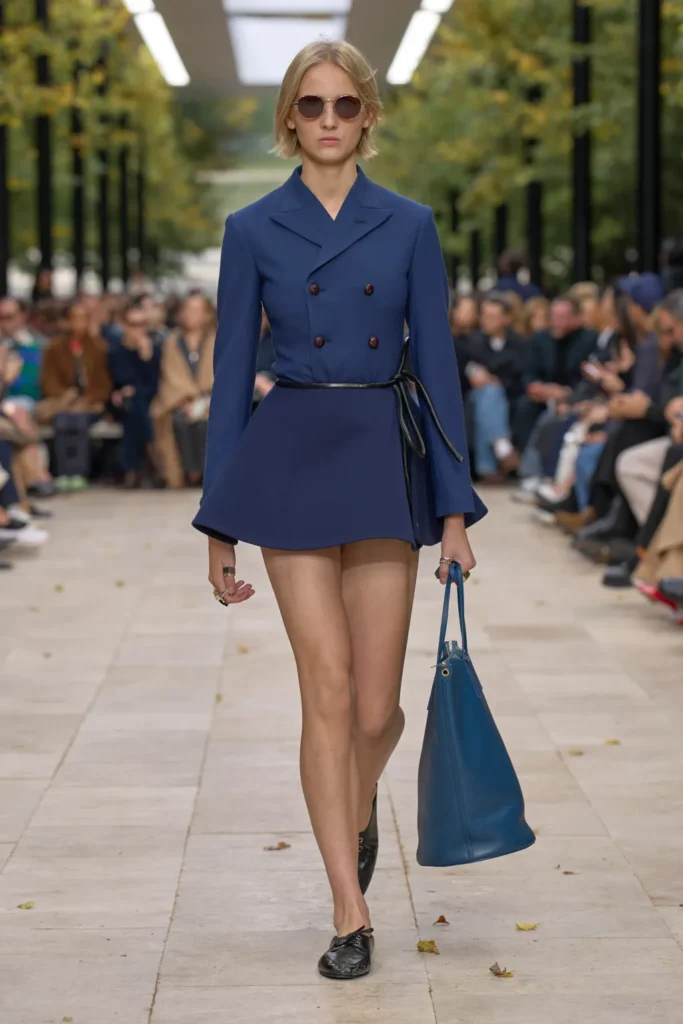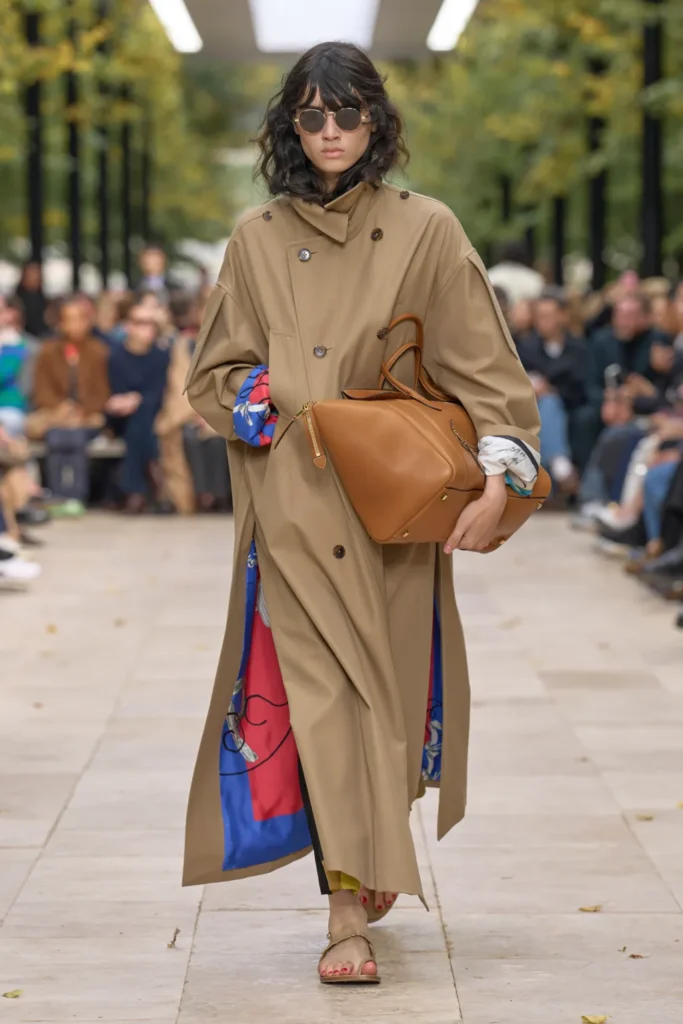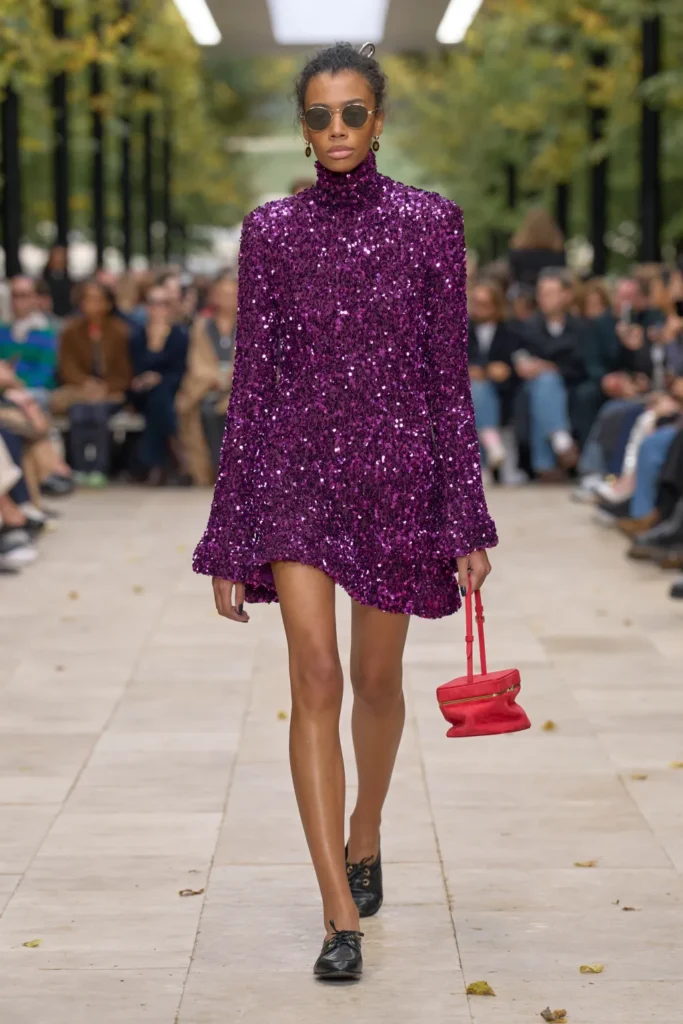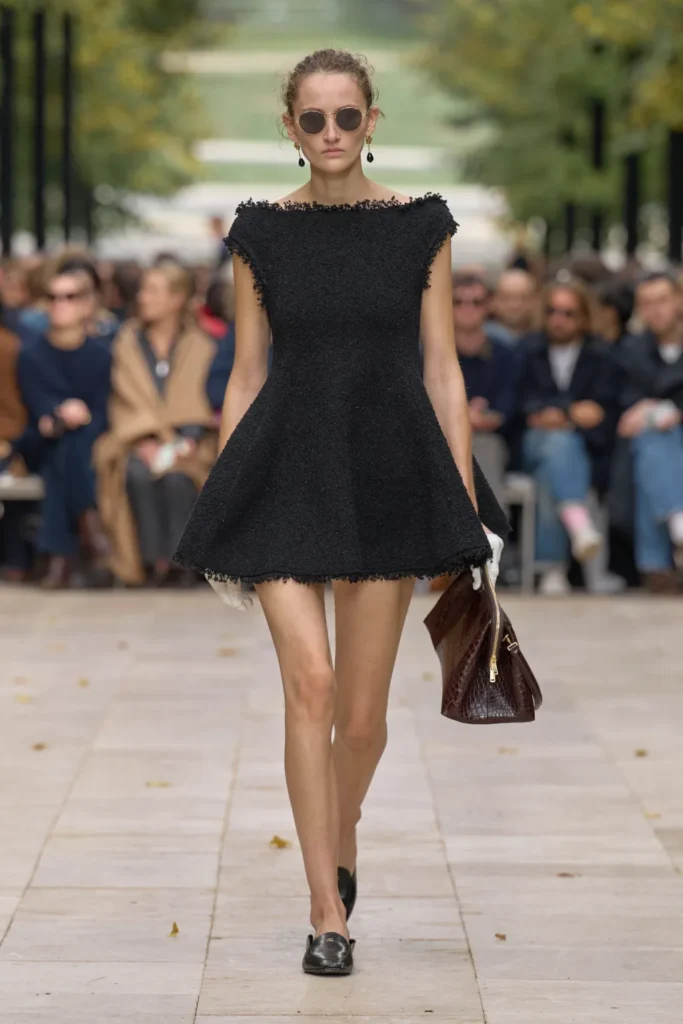
Home Blog Page 16

McQueen Spring 2026 Collection

McQueen Spring 2026 Collection

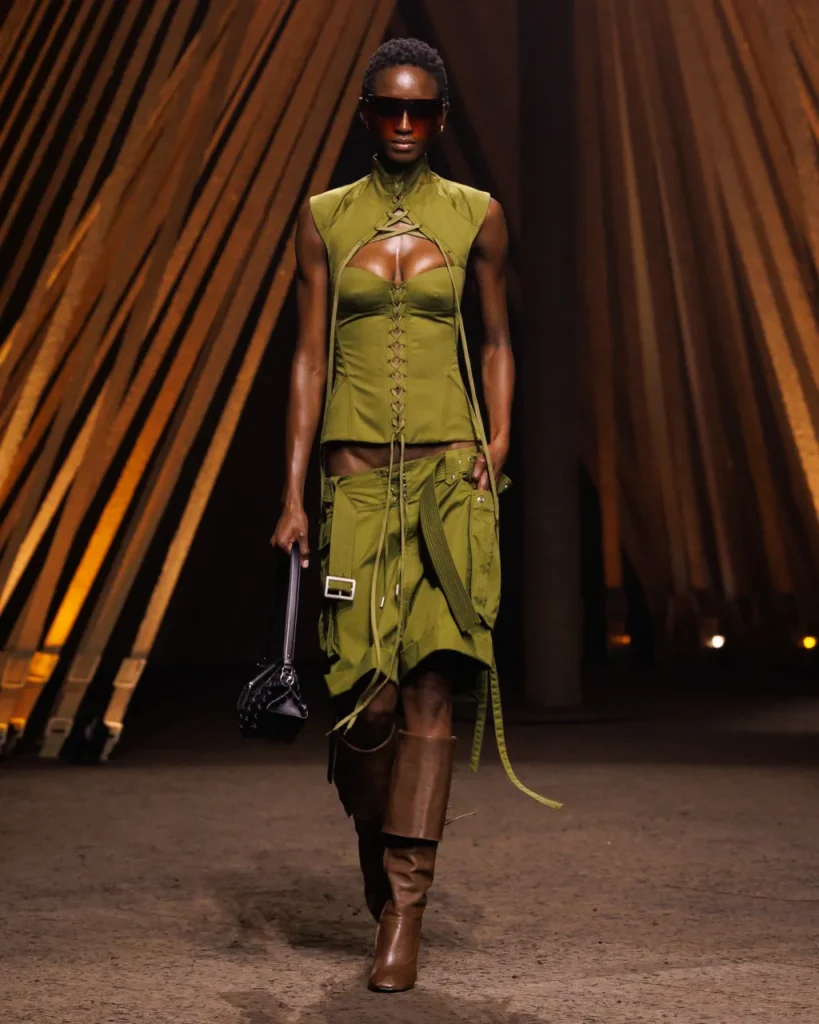
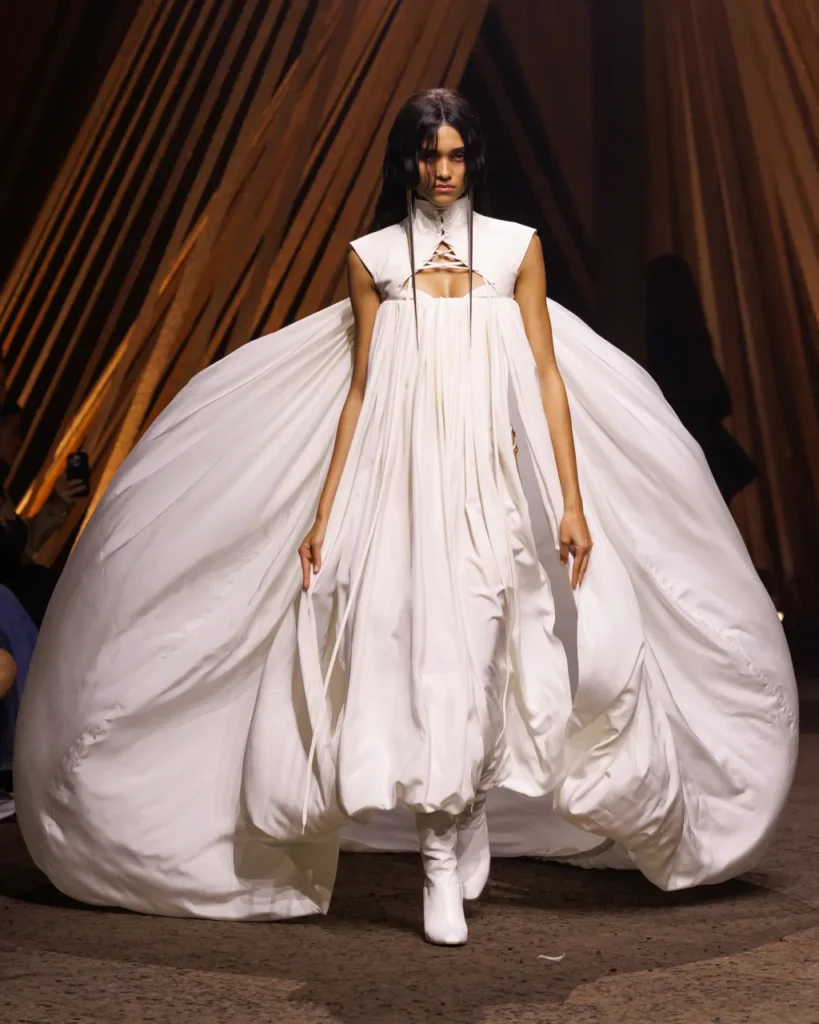
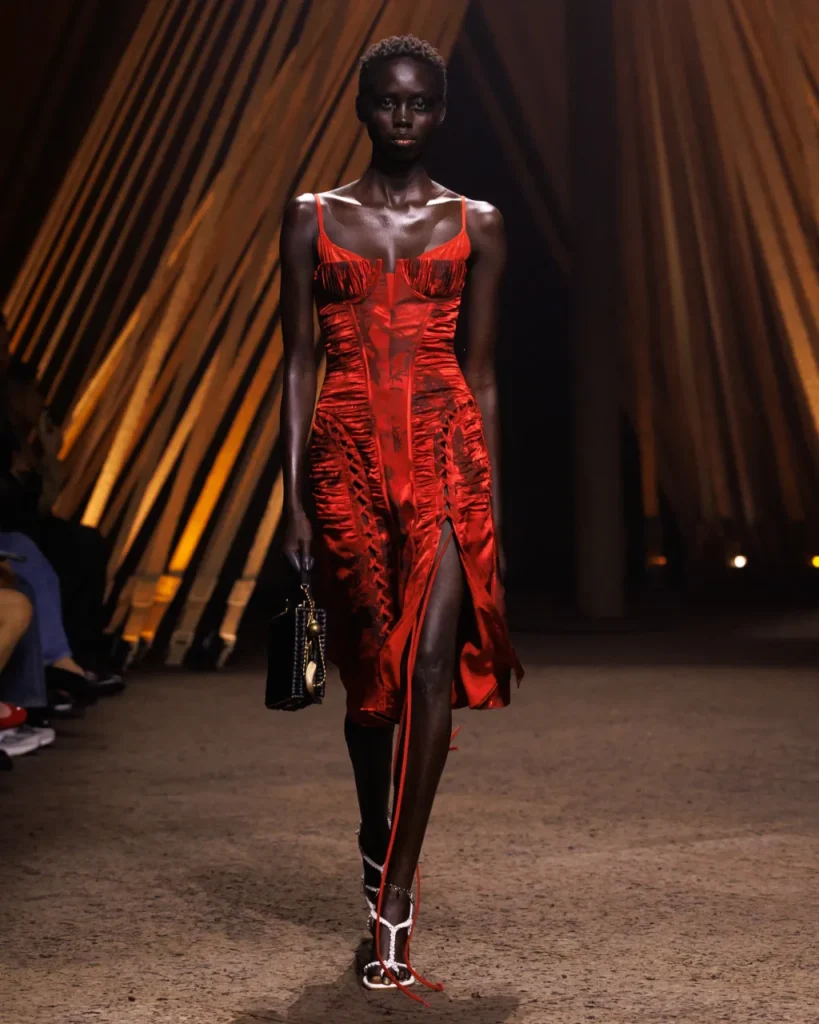
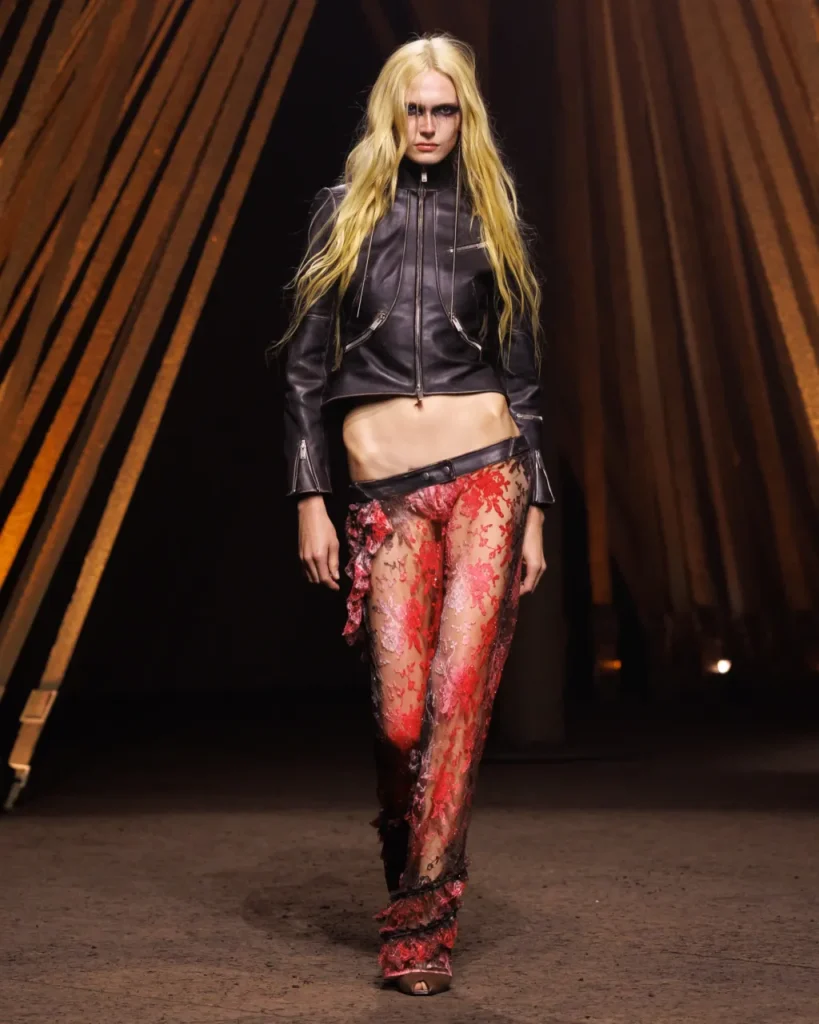
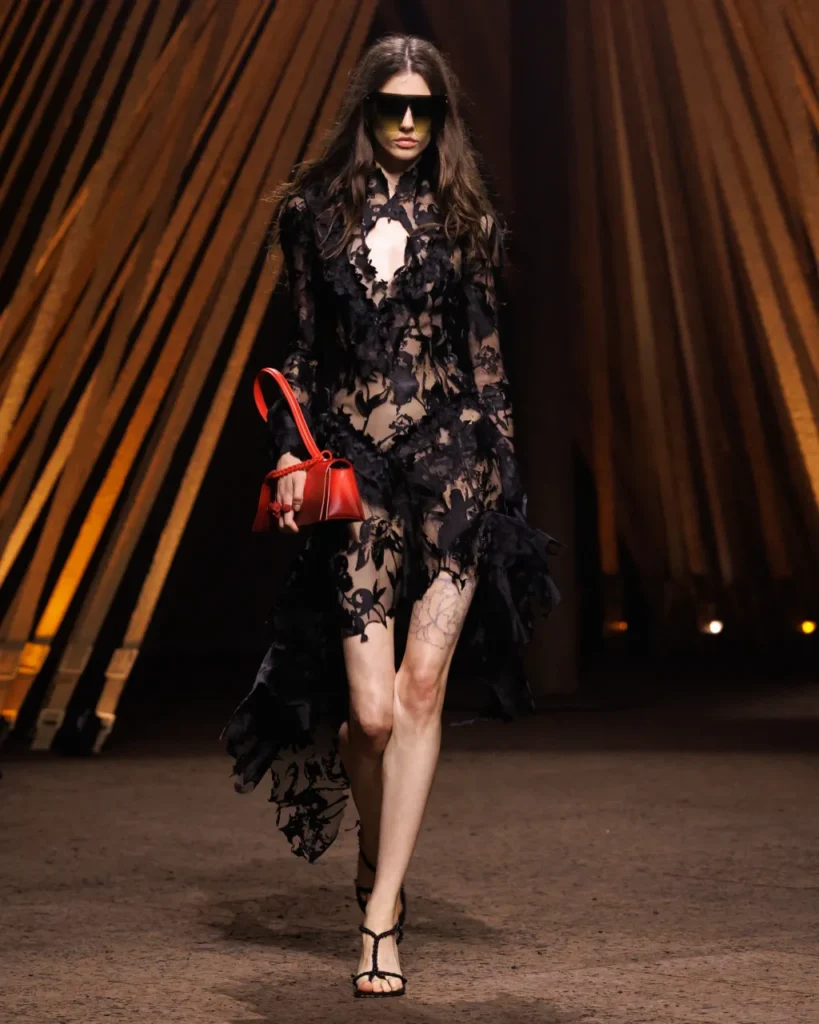
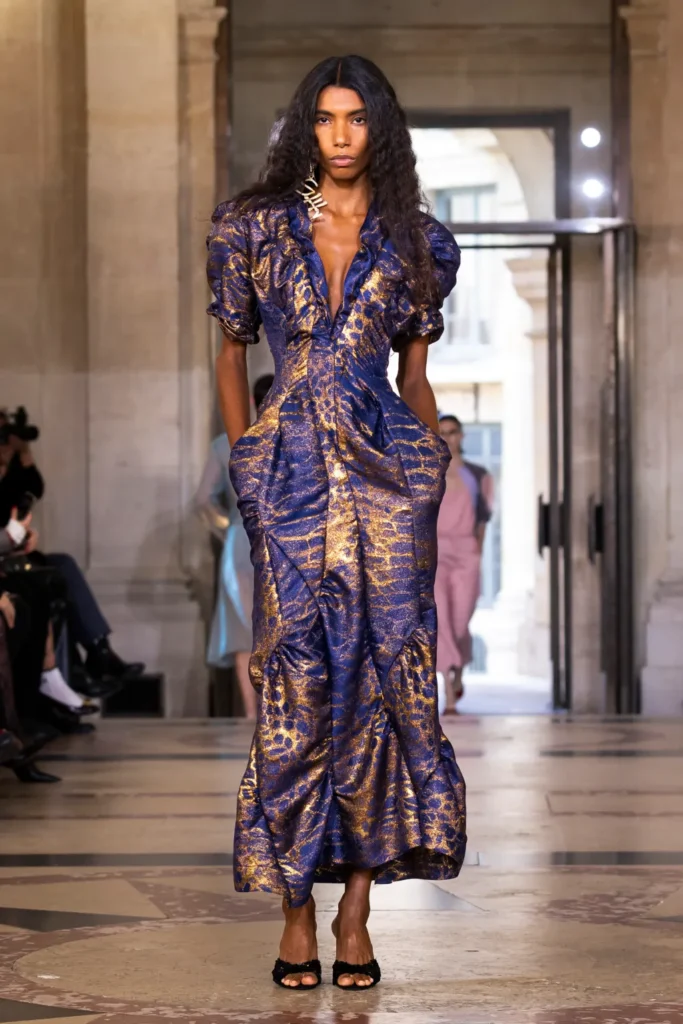
For Spring 2026, Seán McGirr resurrected Alexander McQueen’s infamous ultra-low-rise trousers, infusing the collection with a taut, erotic tension that threaded through daywear and eveningwear alike. Military-inspired jackets met flouncy corsets and cropped mesh tops, while pronounced waistlines appeared on skirts, bandeau shorts, and cargo pants — some with exposed zippers for added daring.
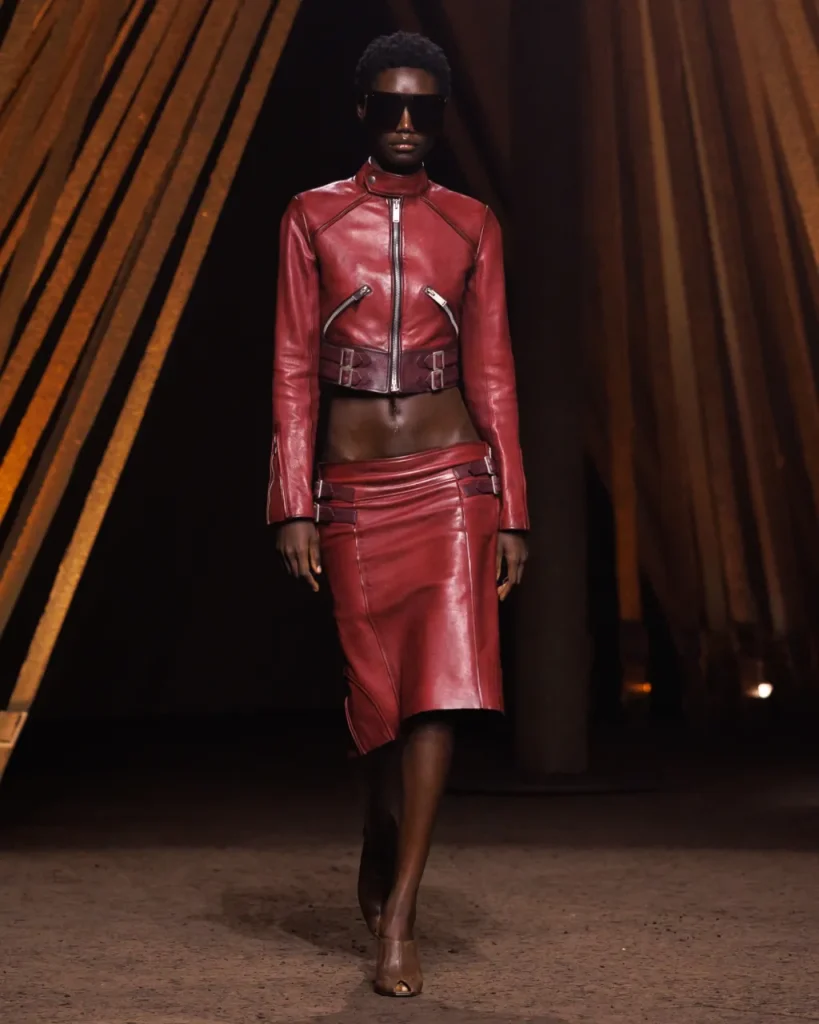
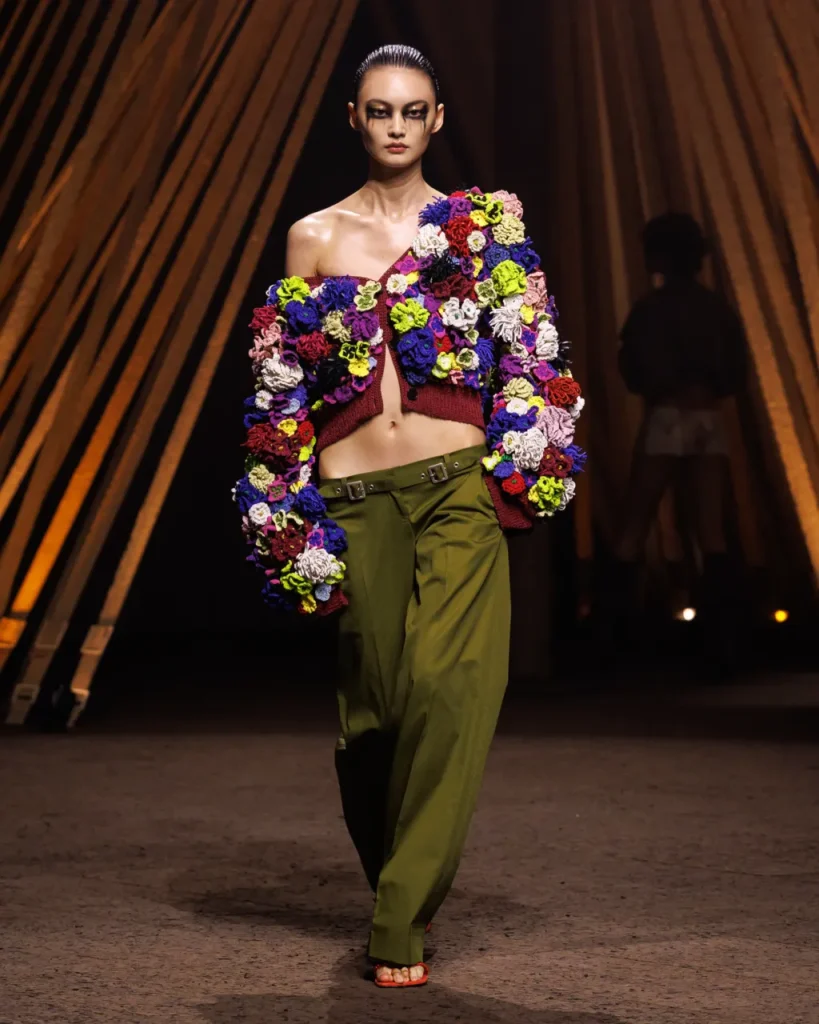
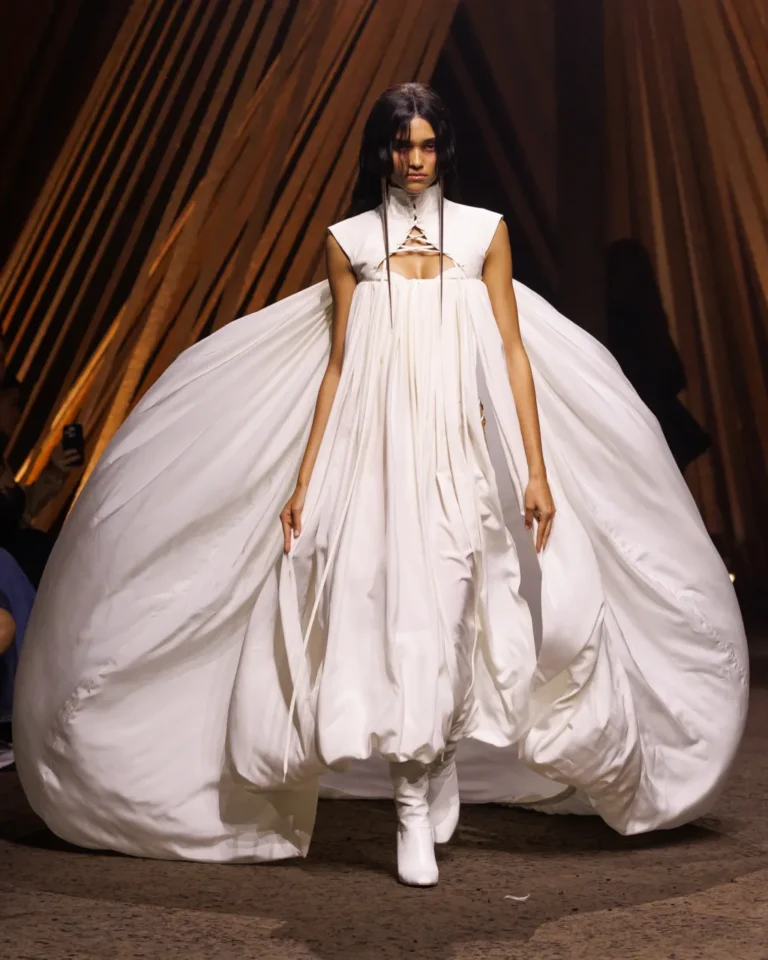
Presented on a circular stage adorned with May Day motifs, McGirr drew inspiration from The Wicker Man (1973), the cult British horror set on a fictional Scottish isle, where pagan rituals pulse beneath idyllic facades. “There’s a kind of sexual energy in the film and the girl I wanted to present,” he explained. “There’s looseness, informality, attitude — because the silhouette has a toughness, a strength. The McQueen woman always wants to look powerful.”
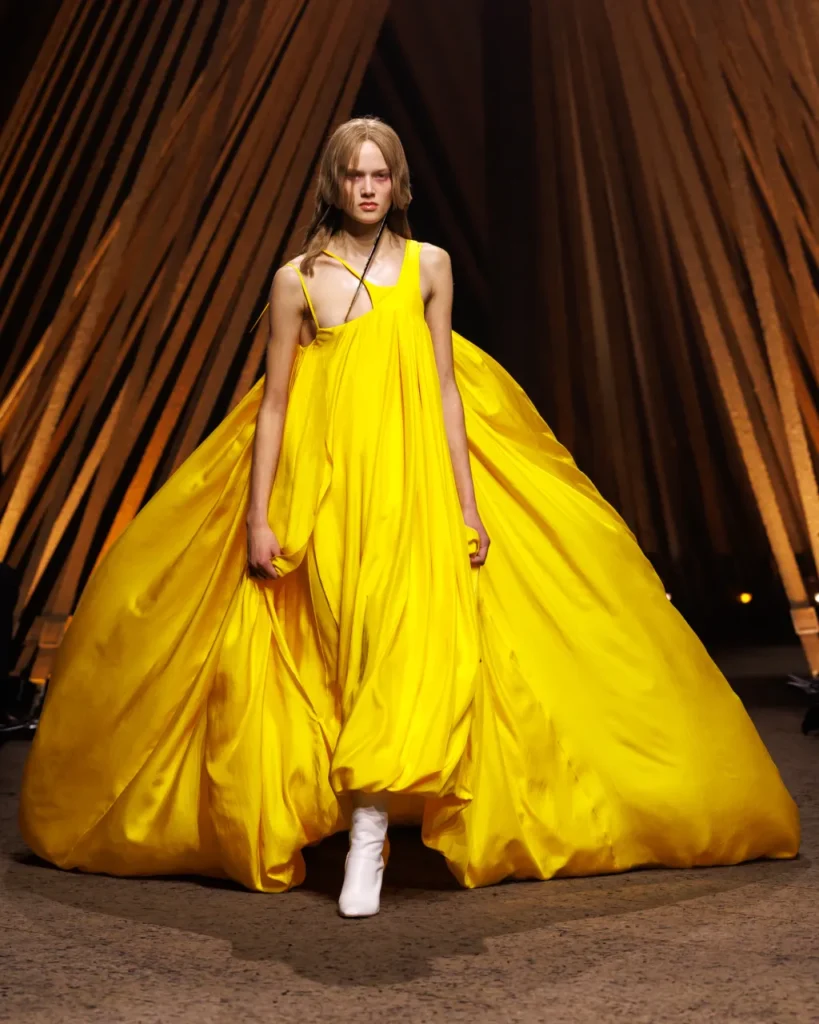
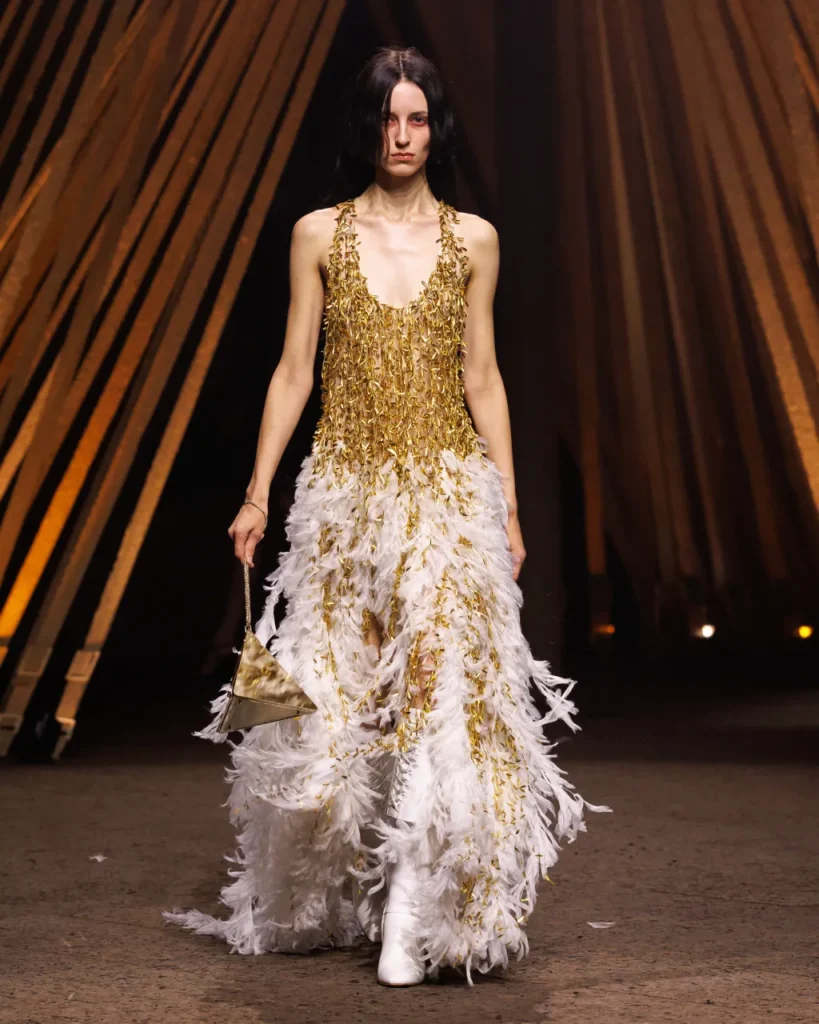
In his first fully independent women’s collection following three mixed shows, McGirr leaned into wearability while keeping the house’s signature drama alive. Uniform-blue shirts softened with corsetry; pencil skirts ranged from frayed white denim to faded floral jacquard and black leather with grommets and fringe. Vibrant red-rose prints sliced across hips or laced like corsets, recalling the rebellious glamour of Y2K low-rise jeans, though the shock factor has softened over time.

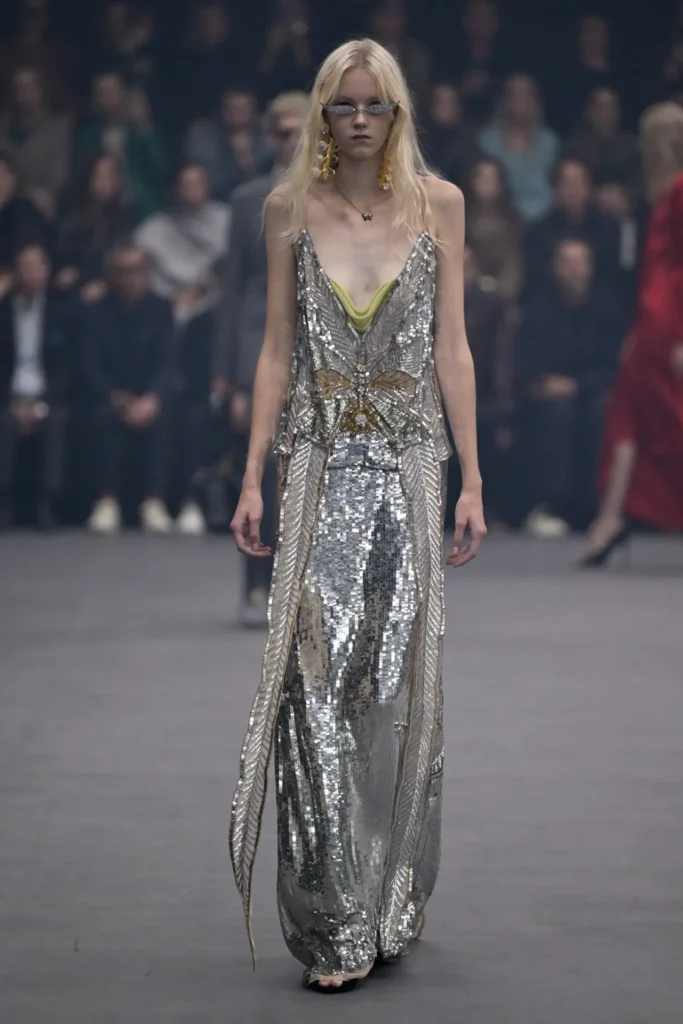
Standout moments balanced practicality with spectacle: a gold-sequined strappy dress trimmed with white feathered ruffles, and a parachute gown printed in dreamy watercolor, which McGirr said symbolized liberation. Hidden within the print were two ladybugs in a clandestine tryst, a playful nod to the film’s insect mating scene. “It’s wild,” he chuckled.
Chloé Spring 2026 Collection

Chloé Spring 2026 Collection

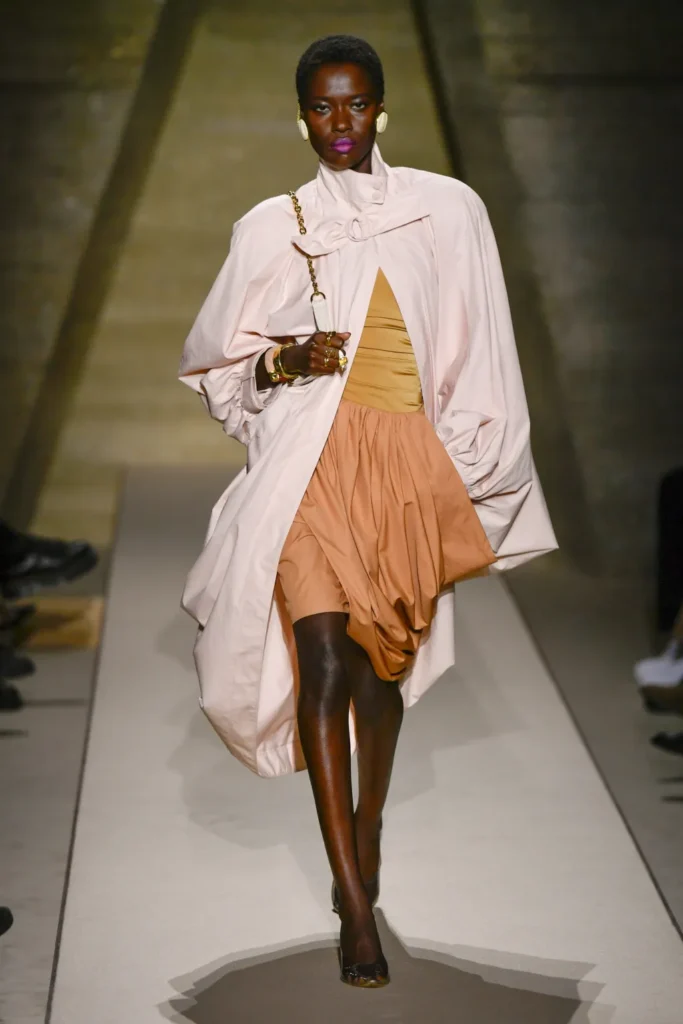
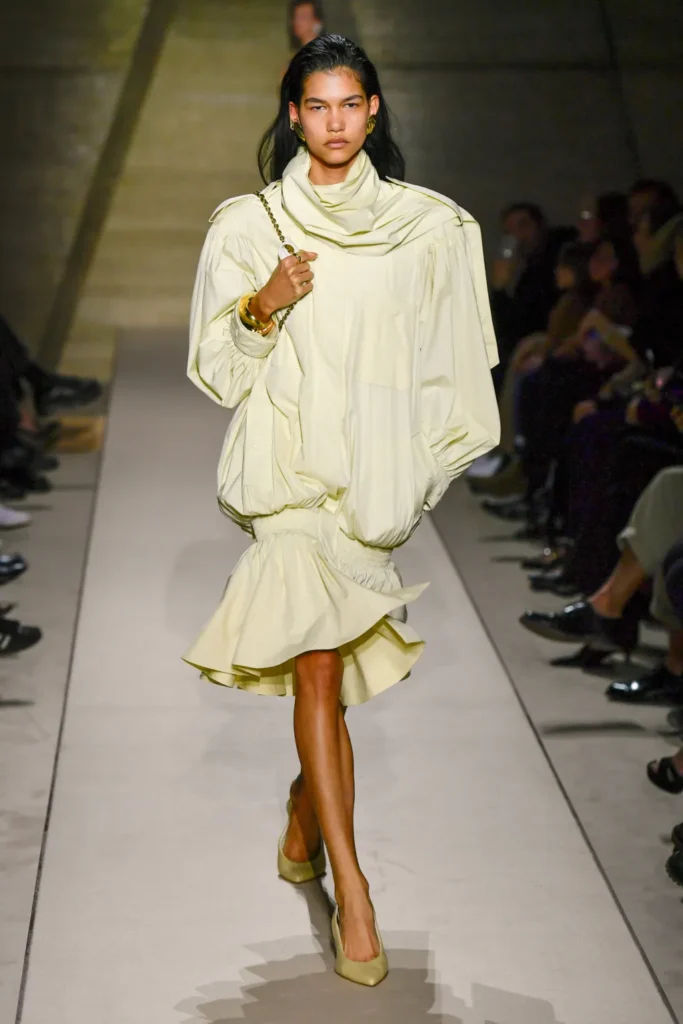
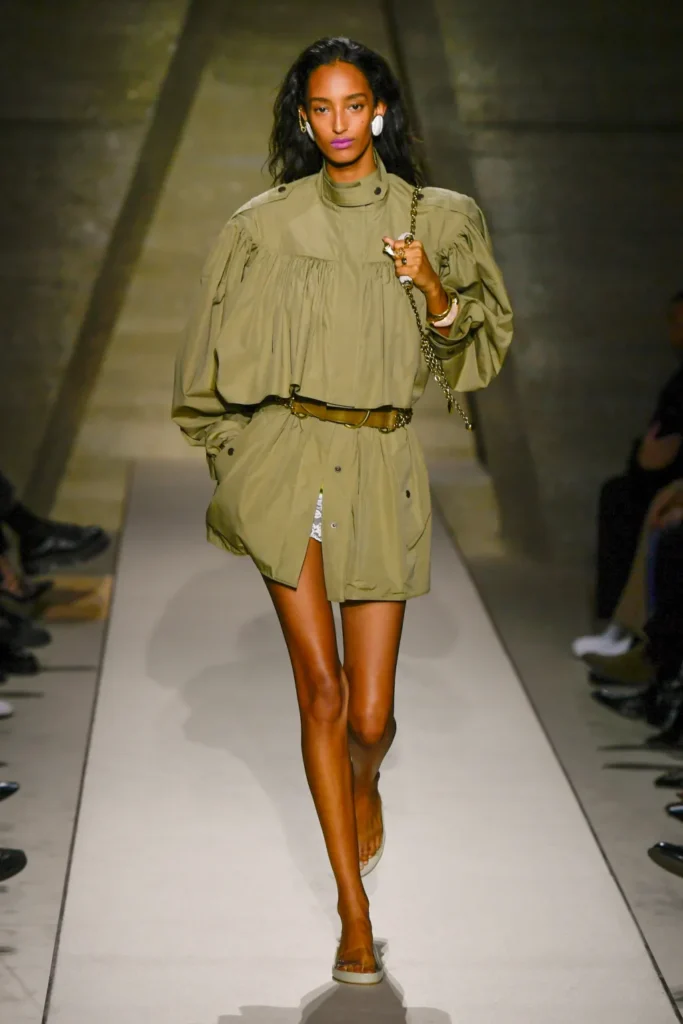
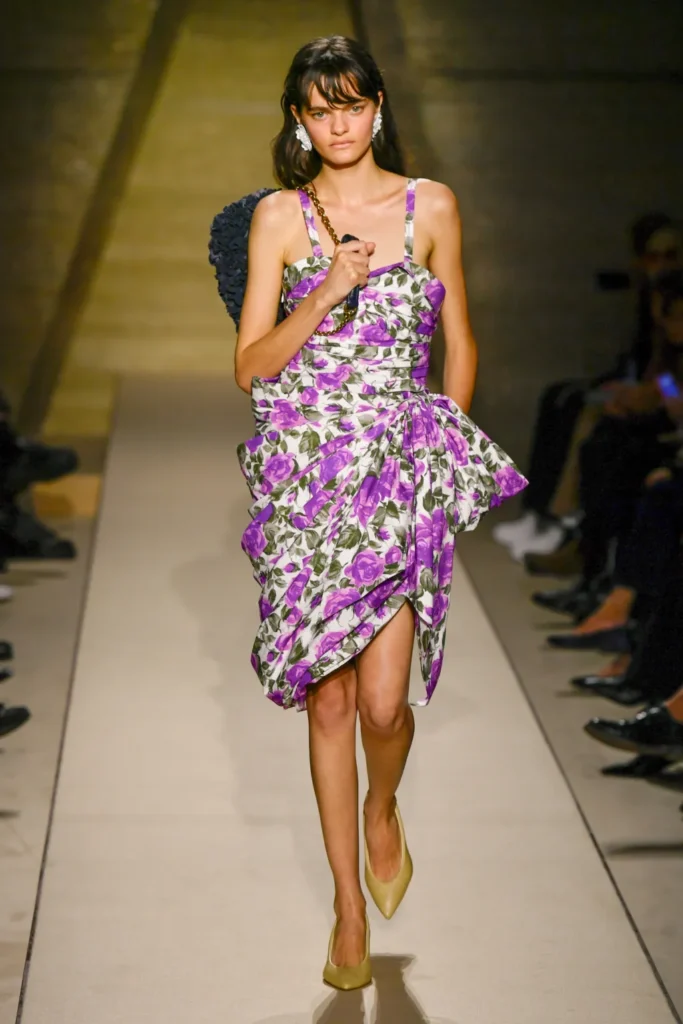
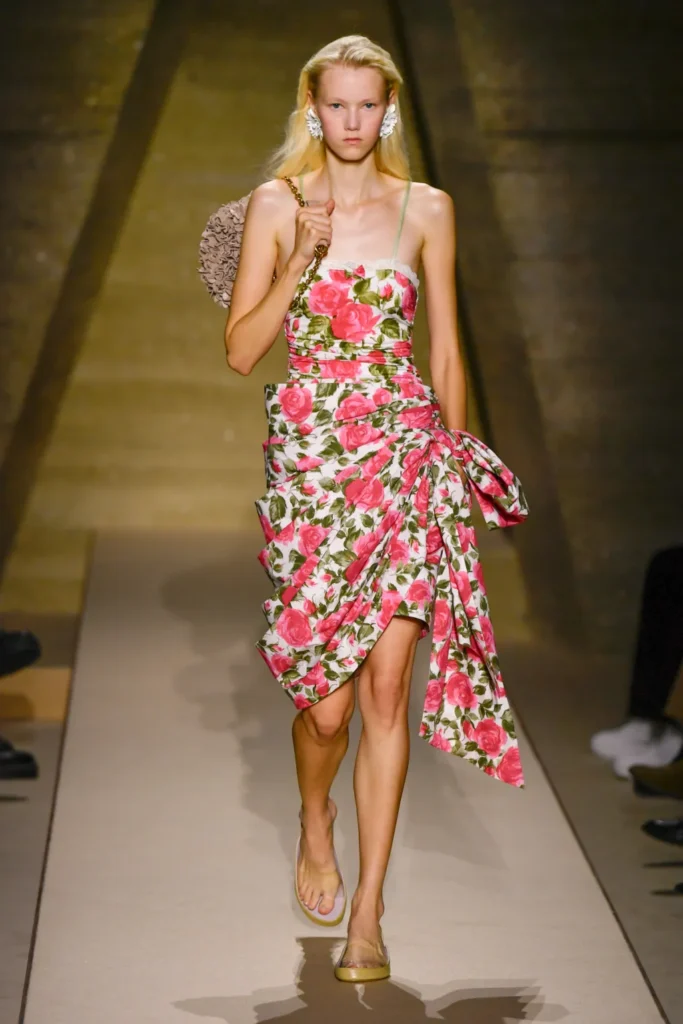
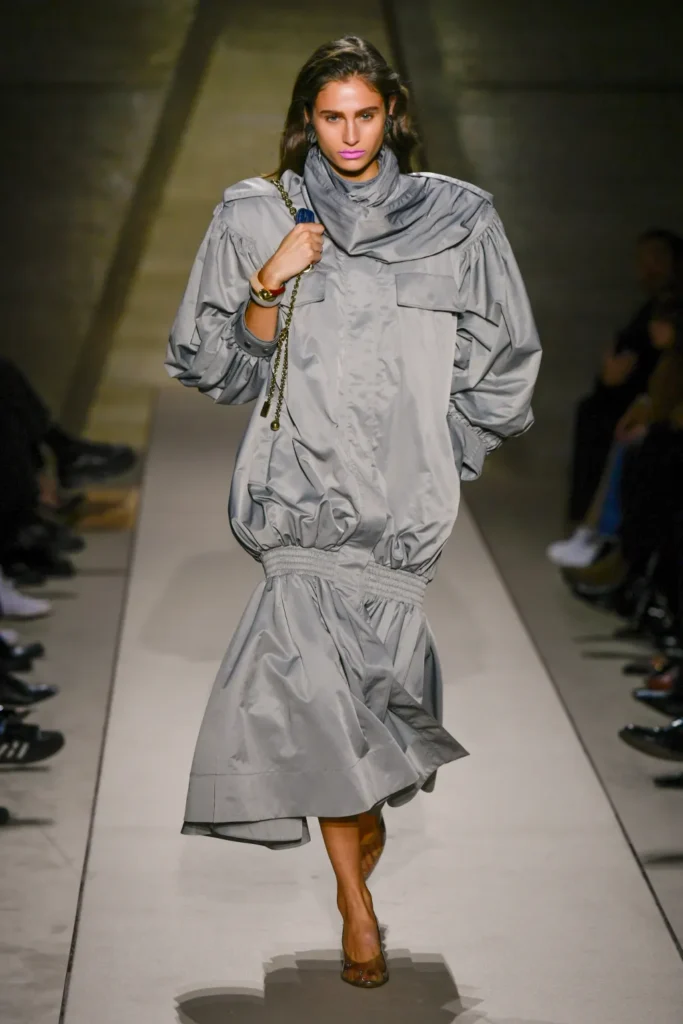
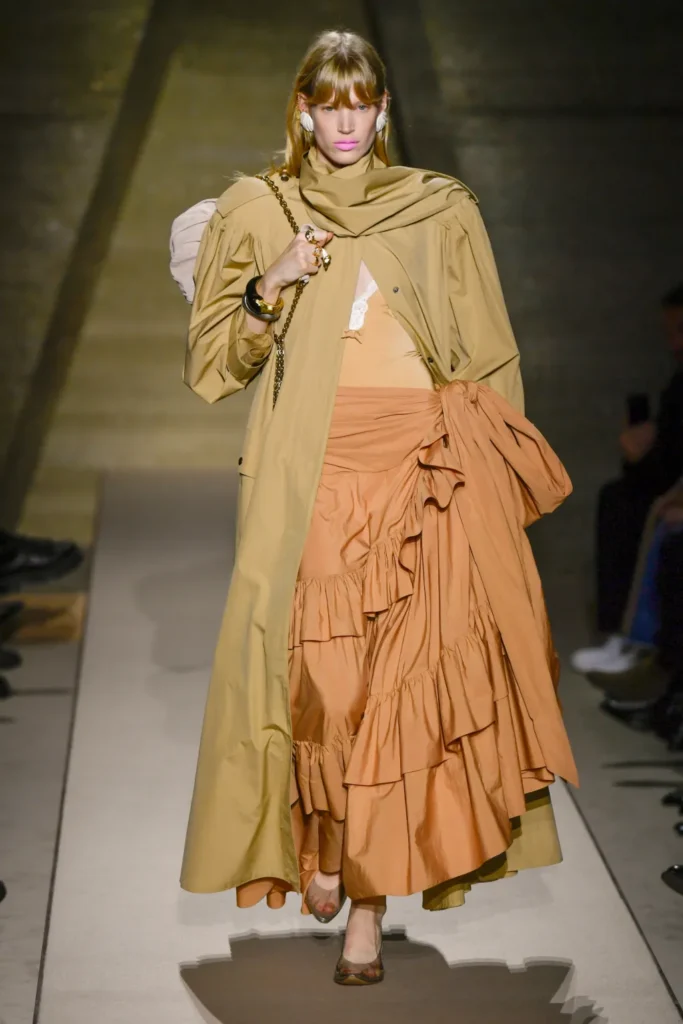
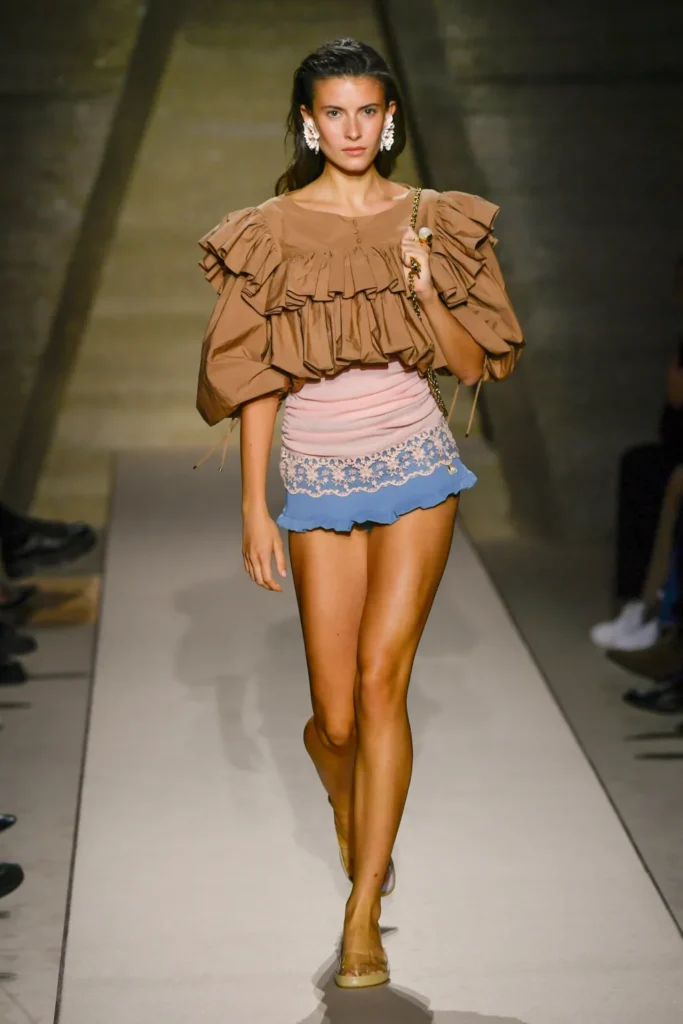
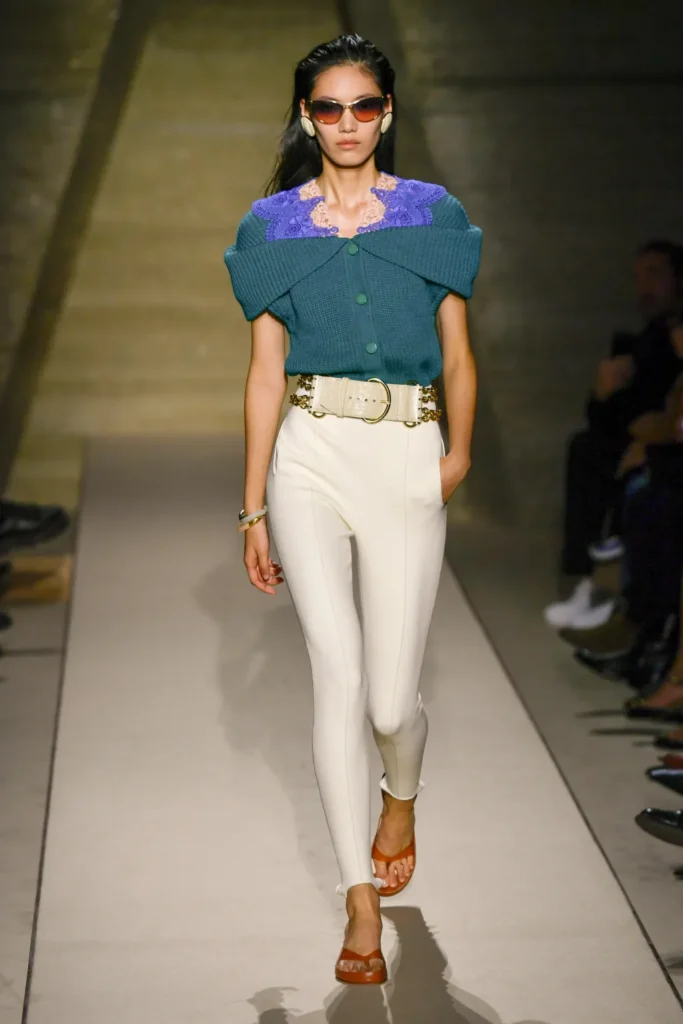
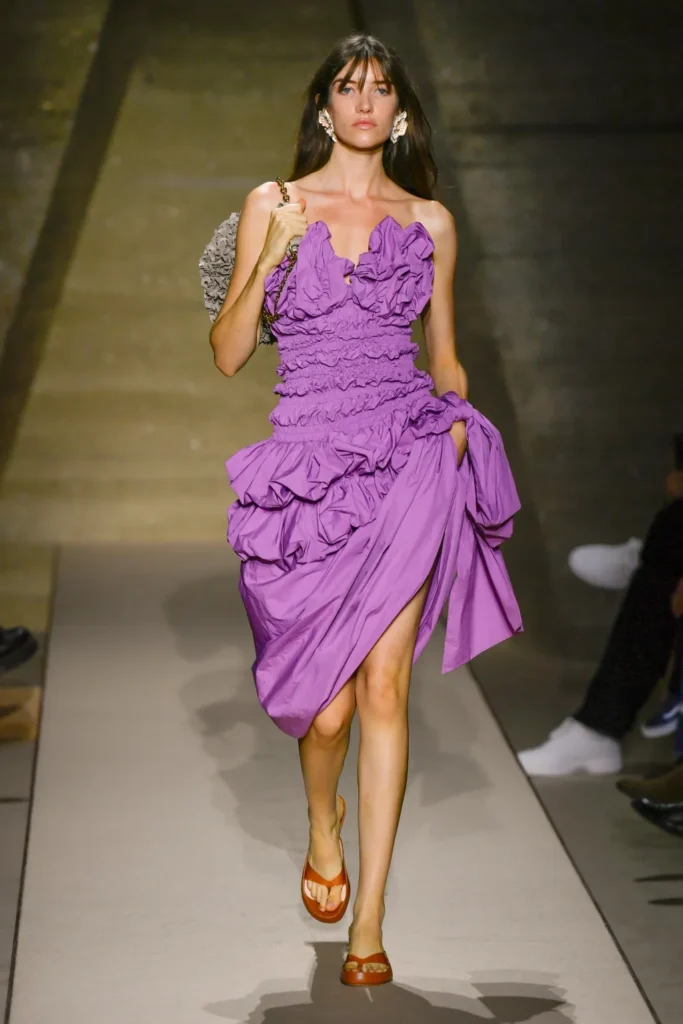
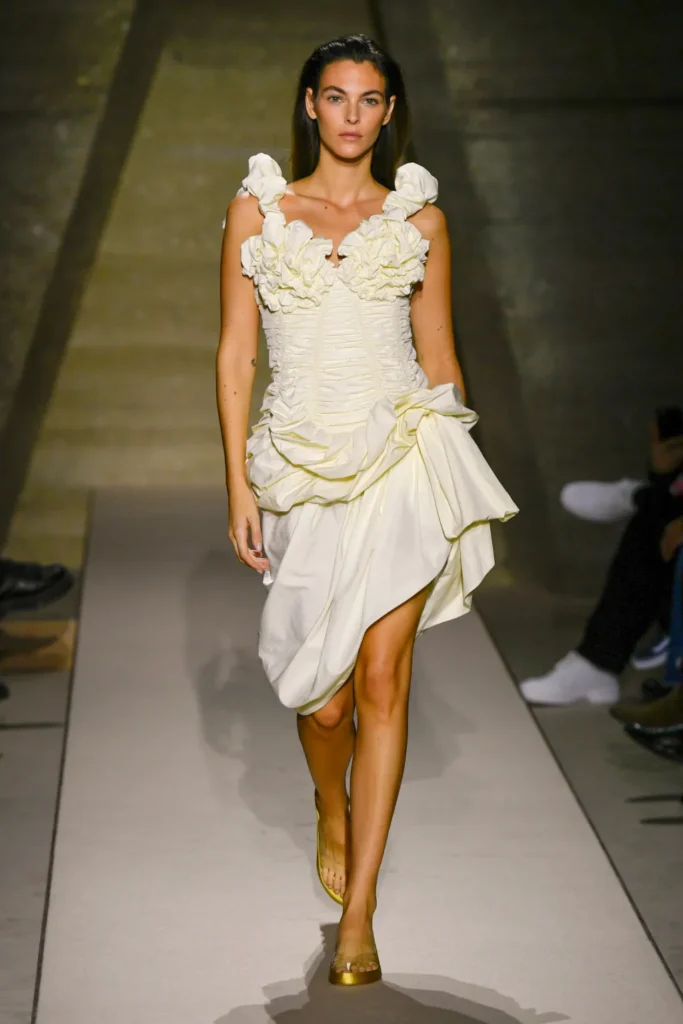
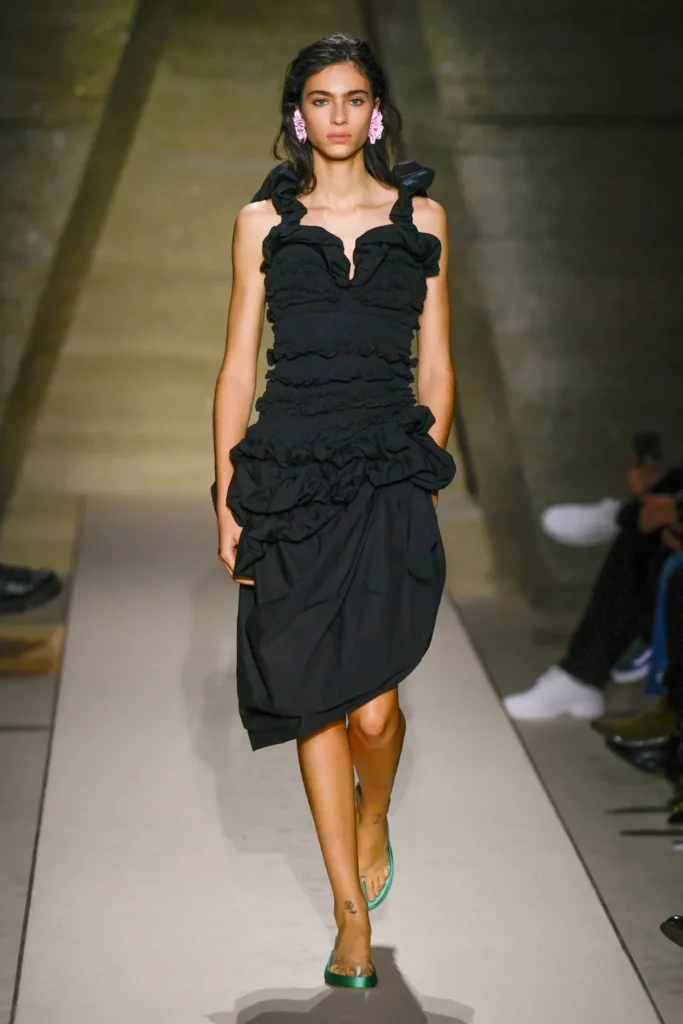
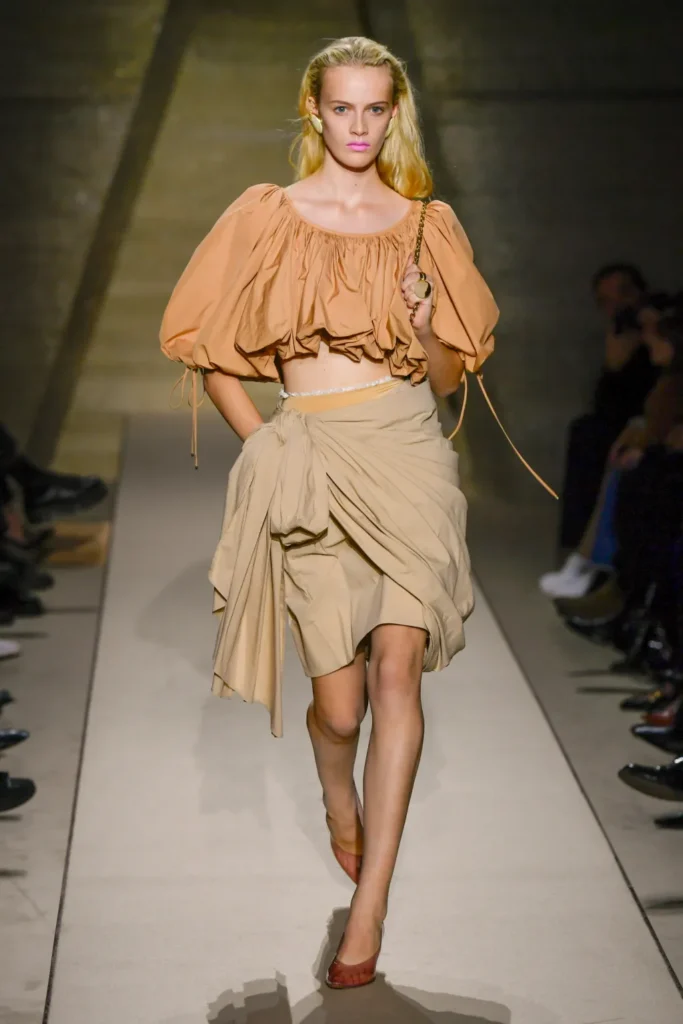
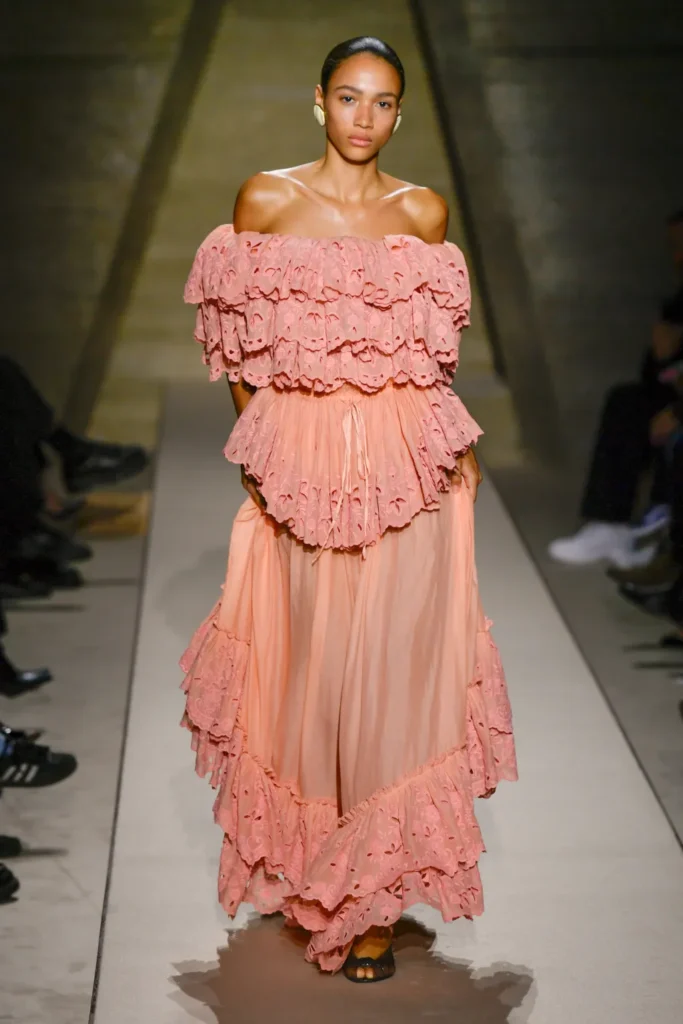
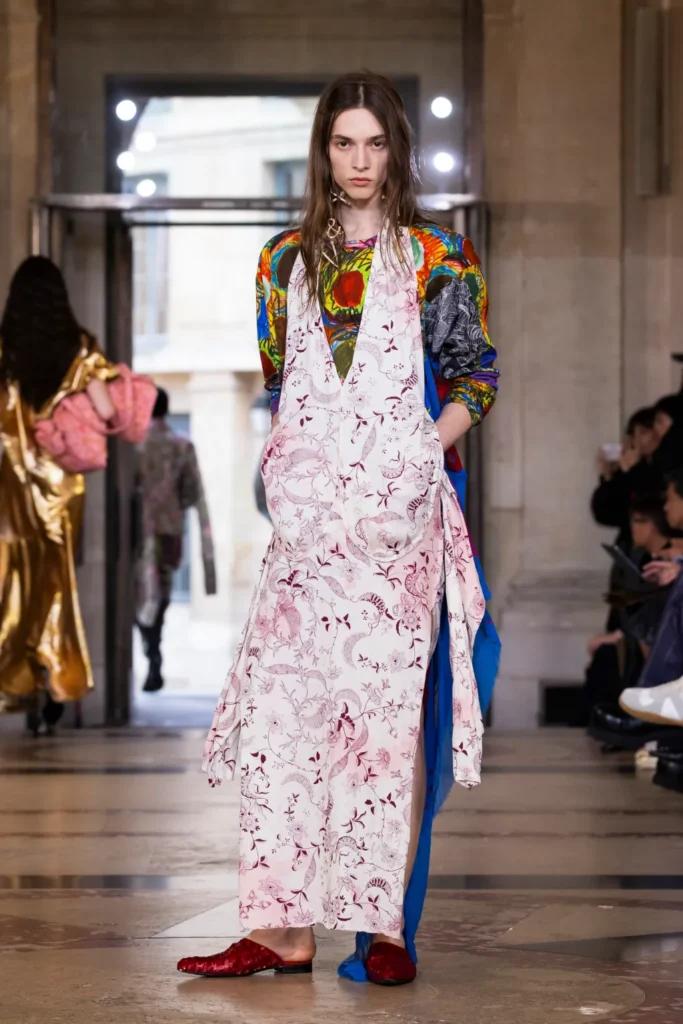
Chemena Kamali continues to peel back the layers of Chloé — and this season, she did it quite literally, exploring the tension between softness and structure through the language of couture craftsmanship.

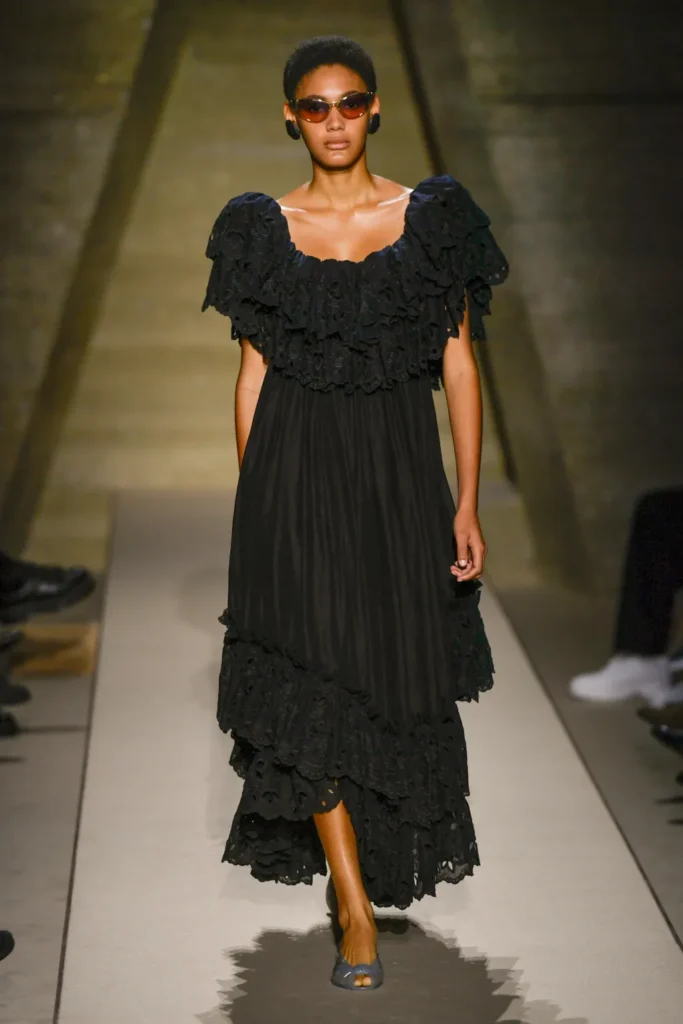
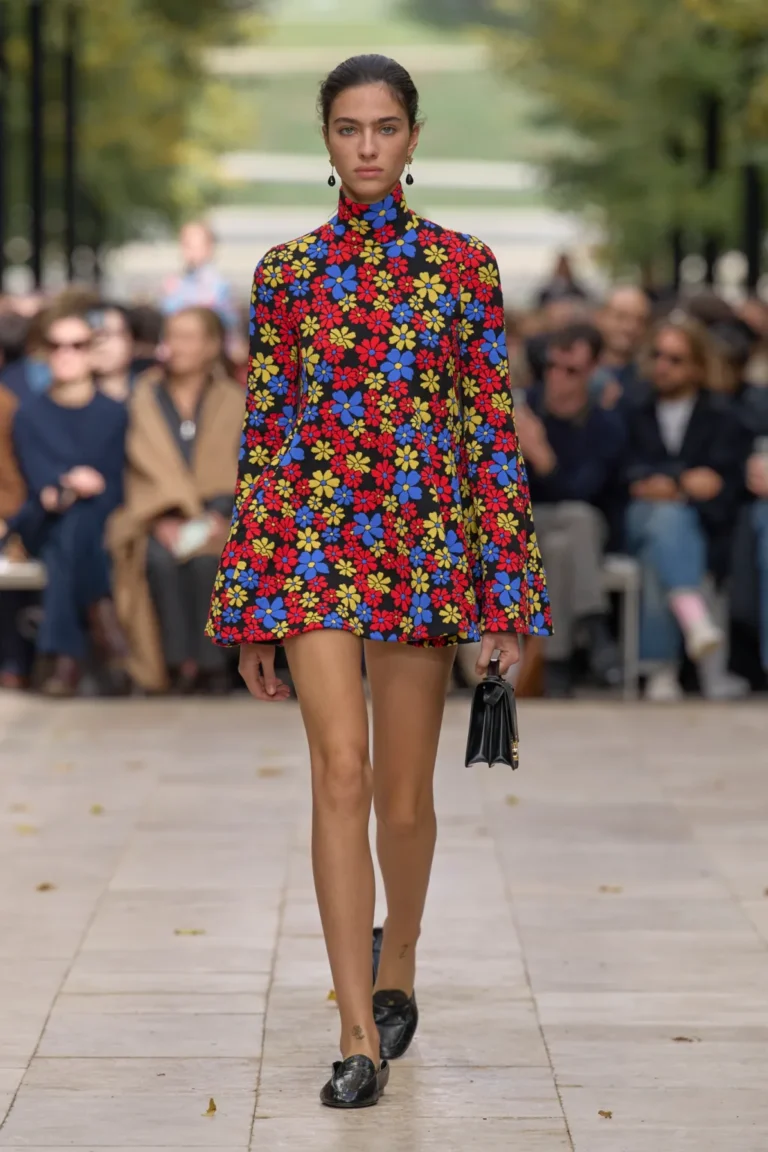
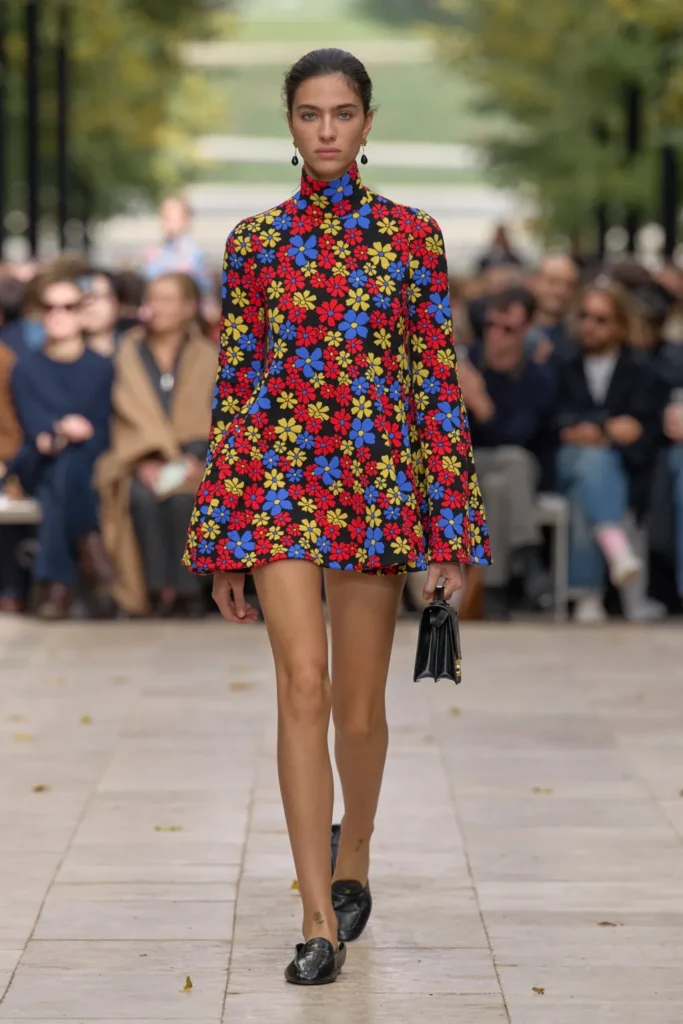
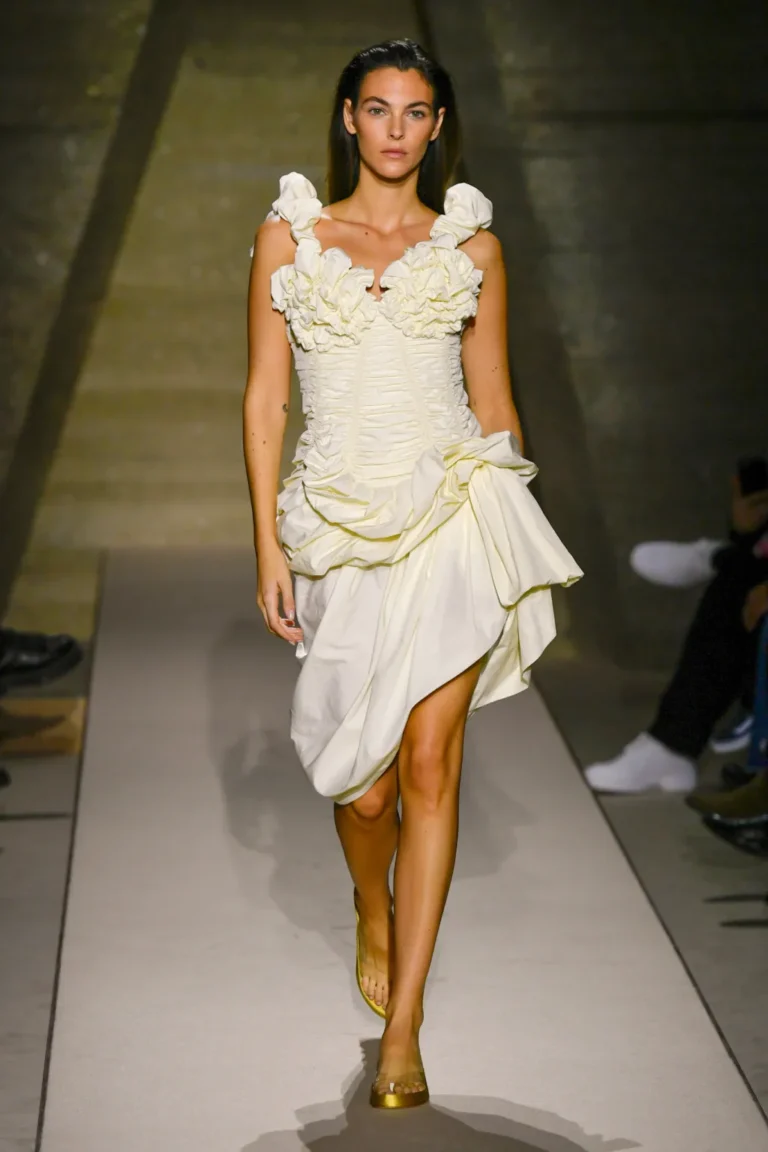
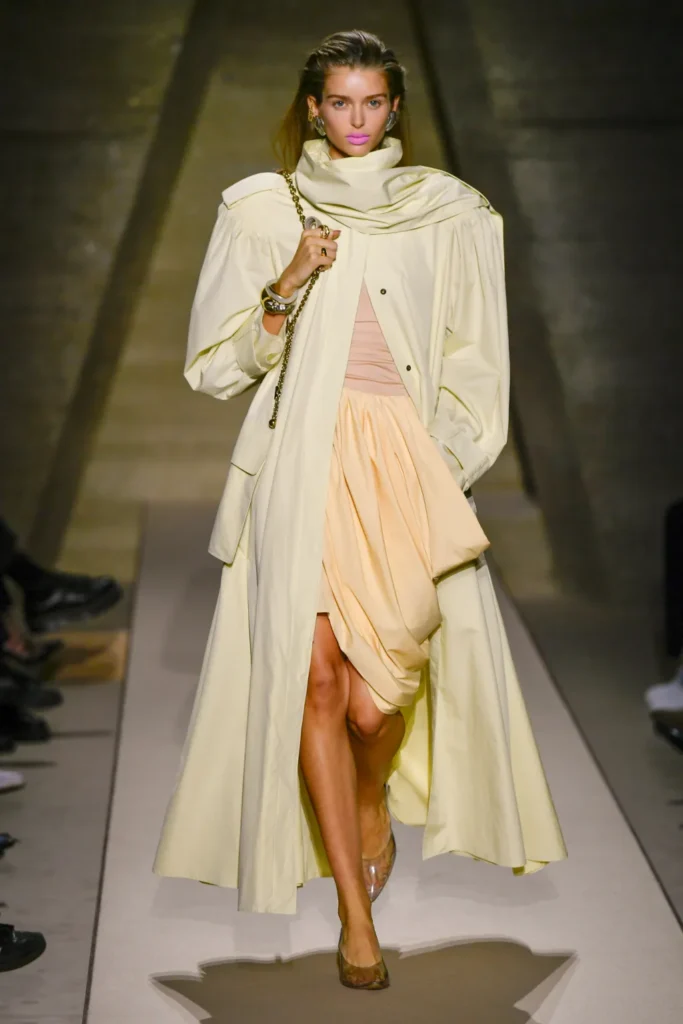
For Spring 2026, she took humble materials — dense cottons printed with faded florals — and twisted, draped, and gathered them into baby-doll dresses, swimwear-inspired tops, and full skirts that seemed to ripple like curtains caught in a summer breeze. “I’ve always been a 3D draper,” Kamali said before the show. “Draping comes more naturally to me than drawing.”

Her instinct showed. The collection echoed the legacy of Chloé’s founder, Gaby Aghion, who pioneered luxury ready-to-wear in the early 1950s. Aghion’s vision was to liberate women from the stiffness of couture while borrowing its codes — the pleats, the softness, the silhouette. Kamali’s approach felt like a conversation across time: taking those same haute couture gestures and grounding them in cotton, the most democratic of fabrics.
The result was a romantic, slightly eccentric lineup that nodded to vintage Miami florals and 1950s seaside glamour. Later looks pared things back to the brand’s signature palette of sand and cream, where cocoon coats and cropped blouses played with proportion and restraint — though some silhouettes edged toward the voluminous.

Jean Paul Gaultier Spring 2026 Collection

Jean Paul Gaultier Spring 2026 Collection

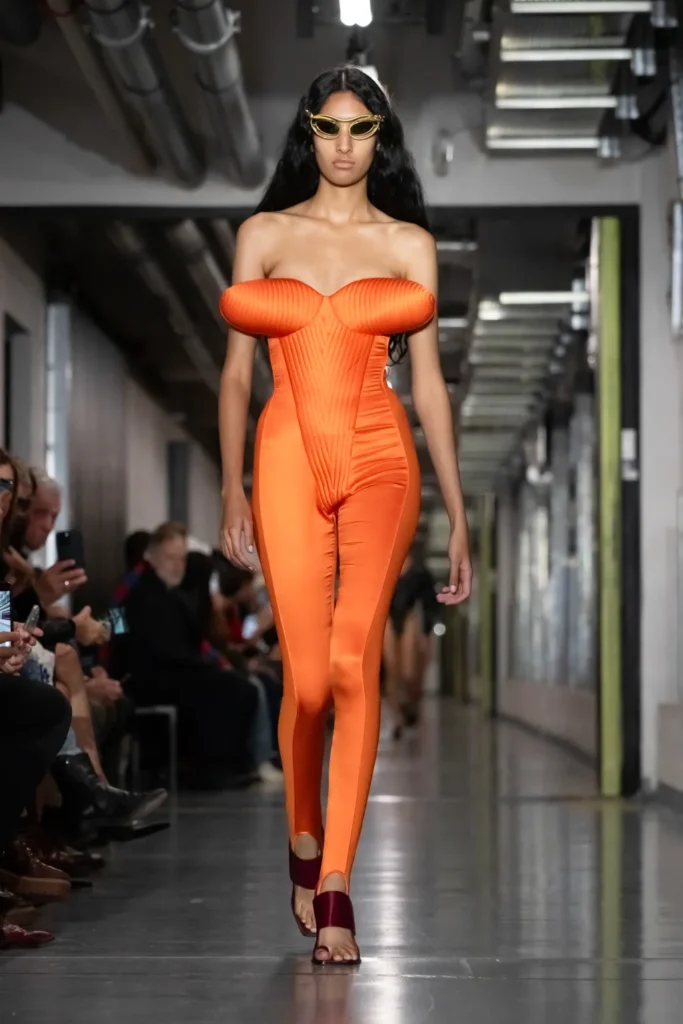
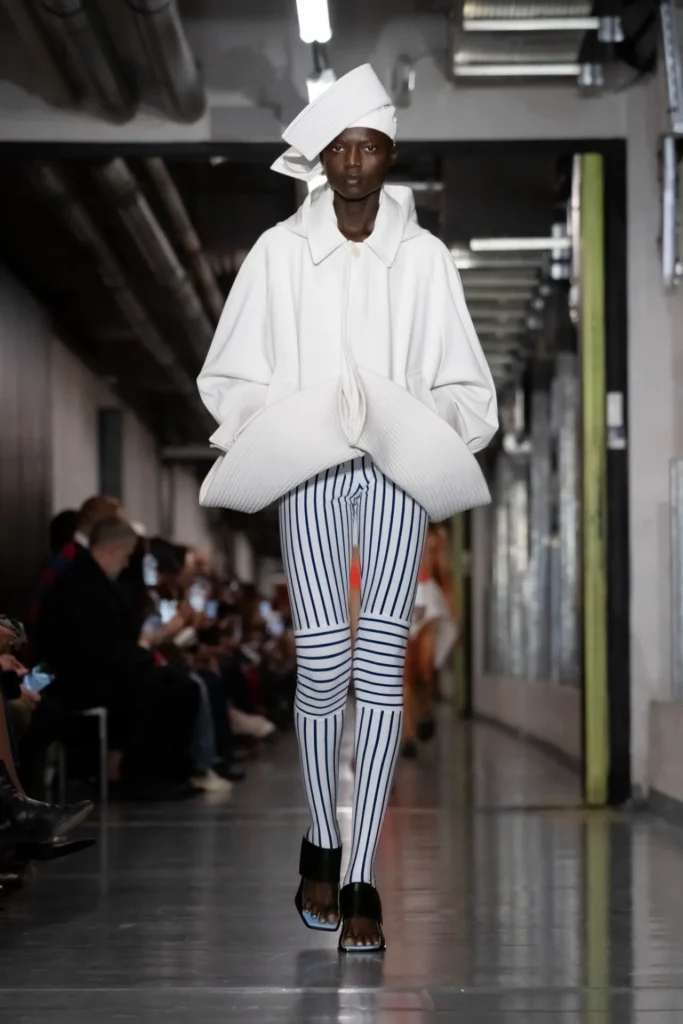
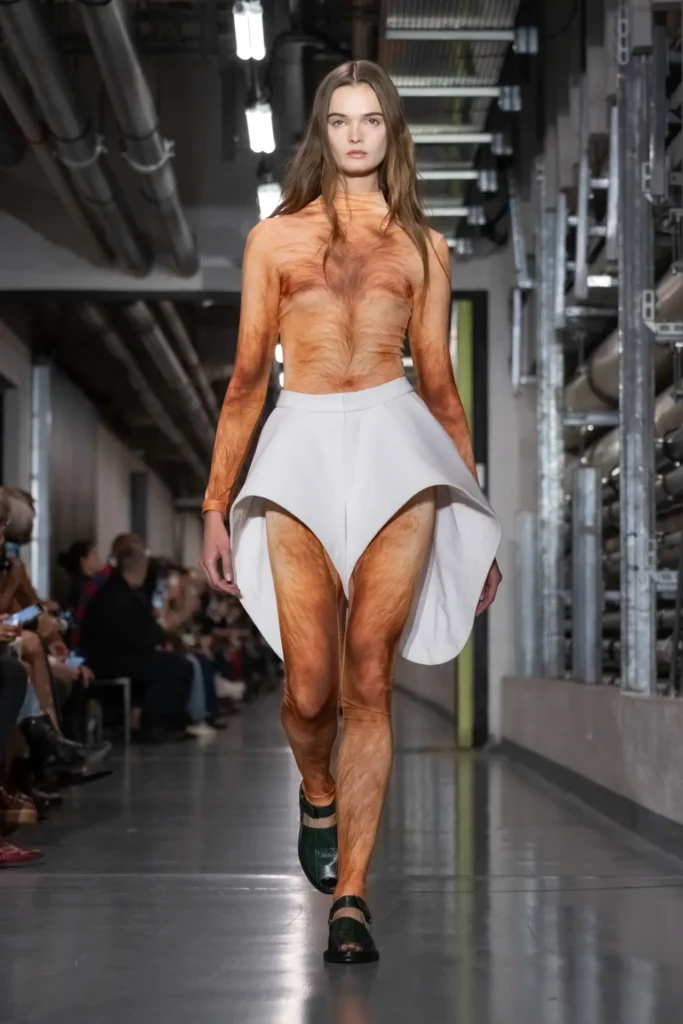
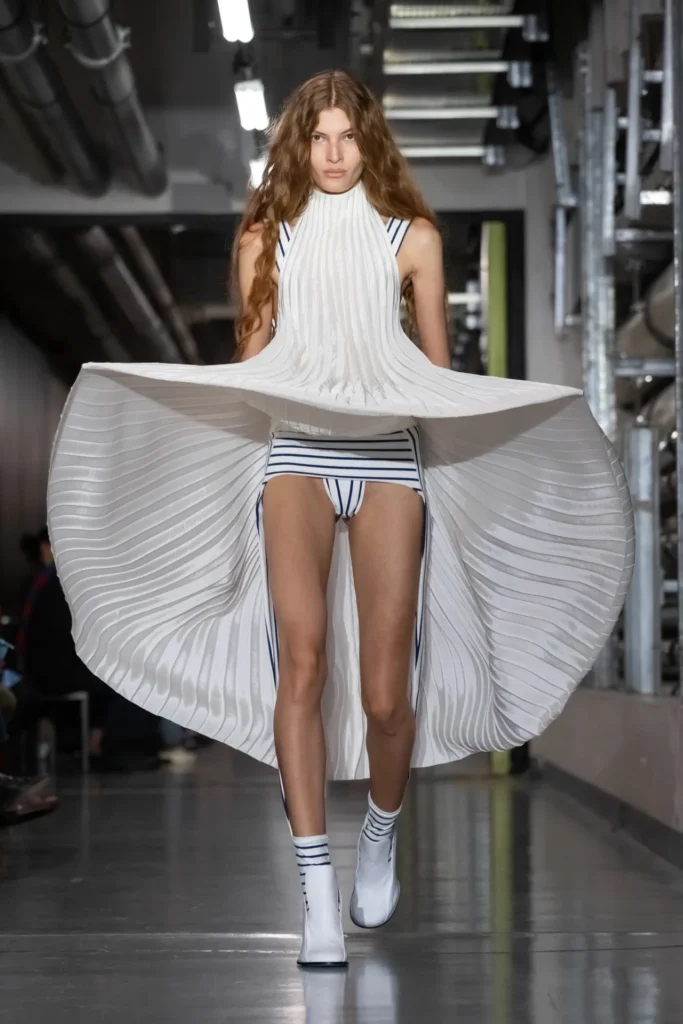
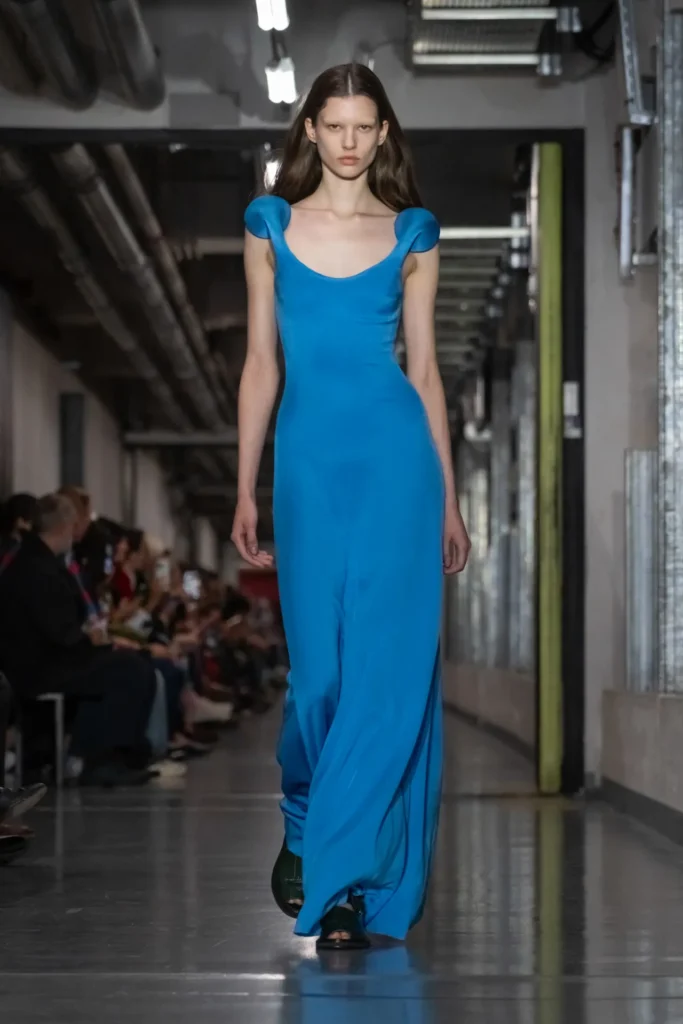
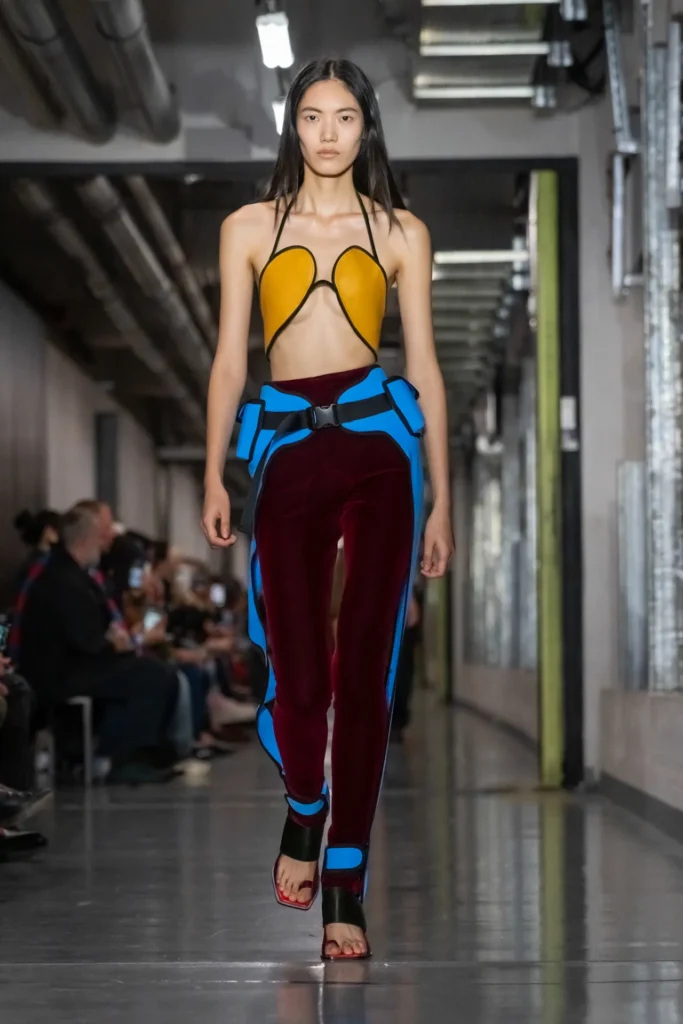
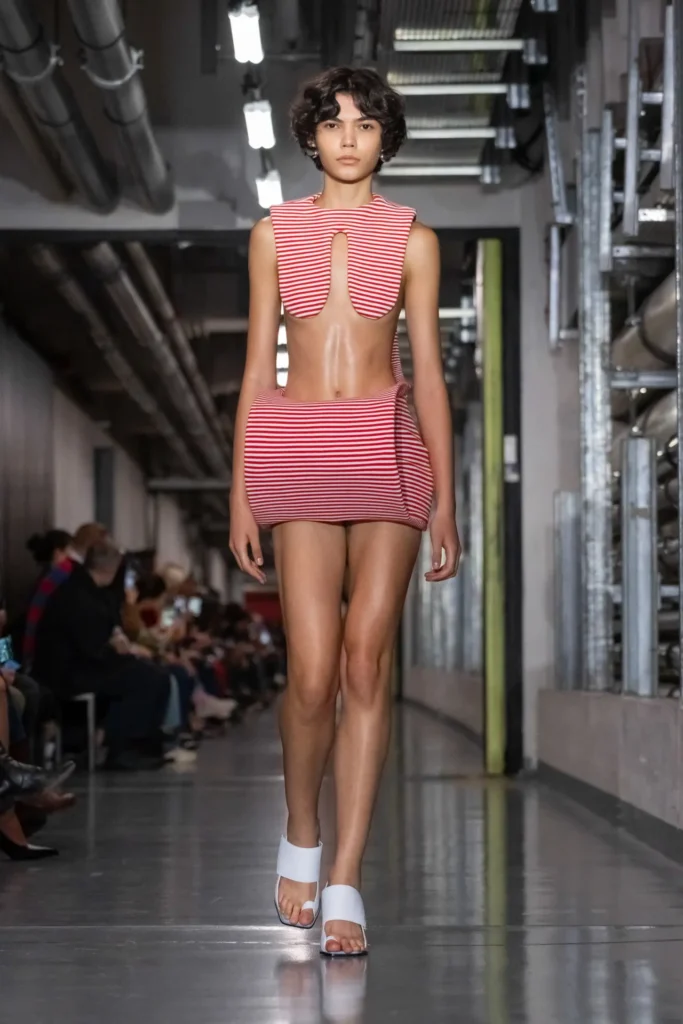
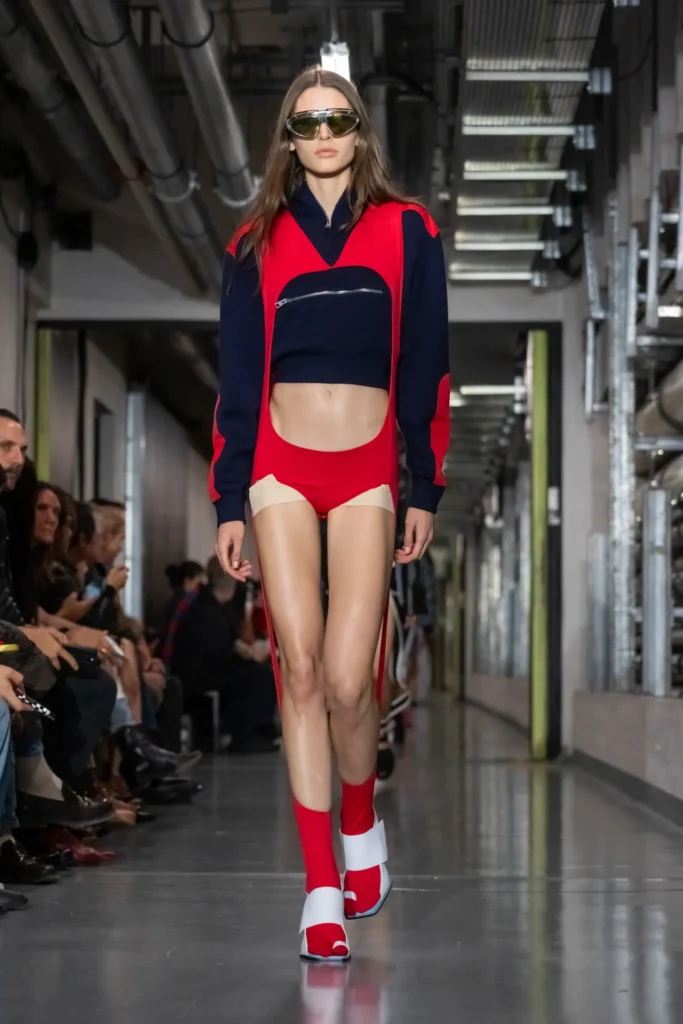
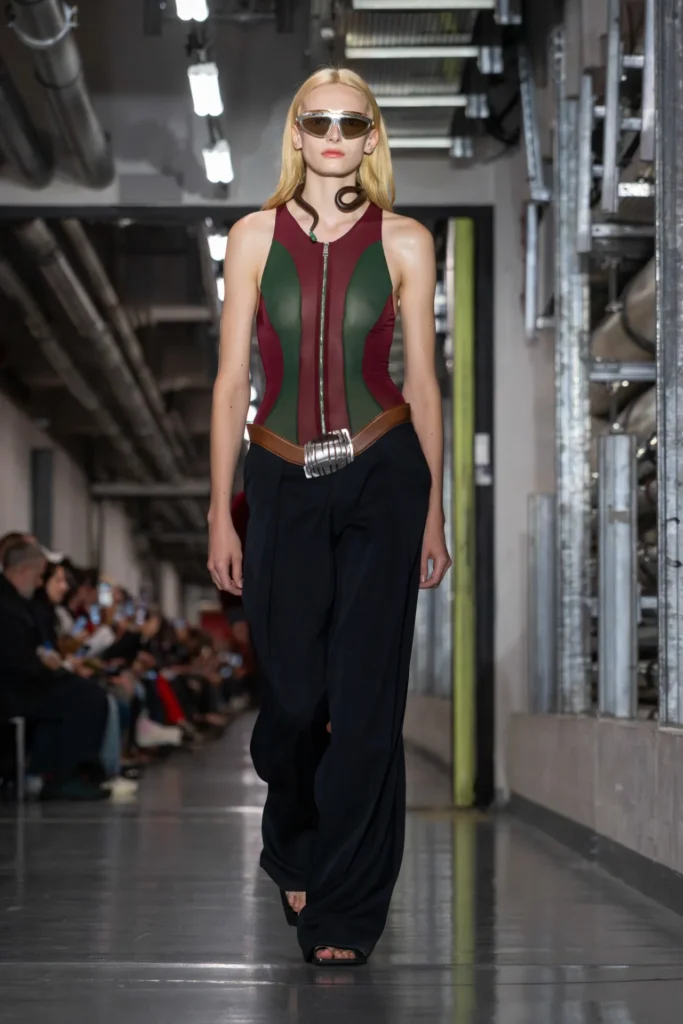
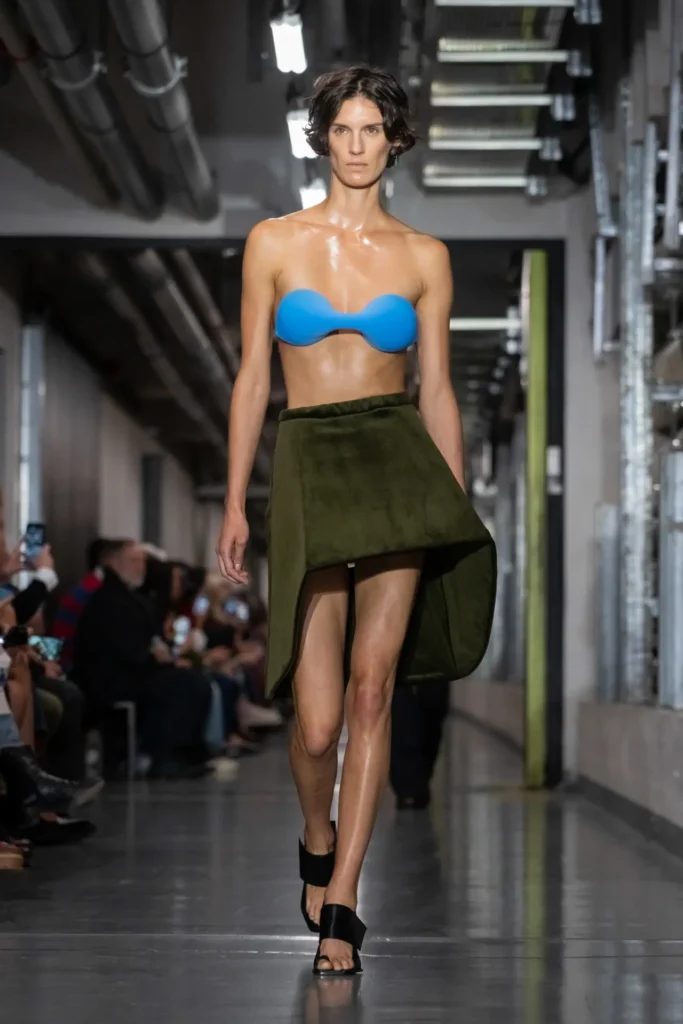
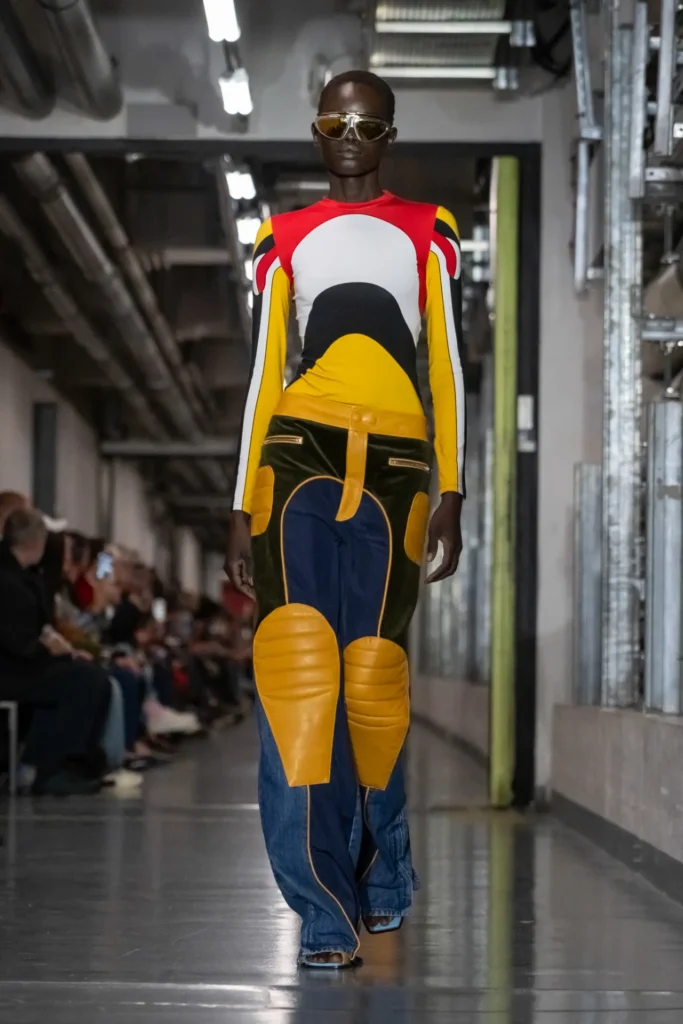
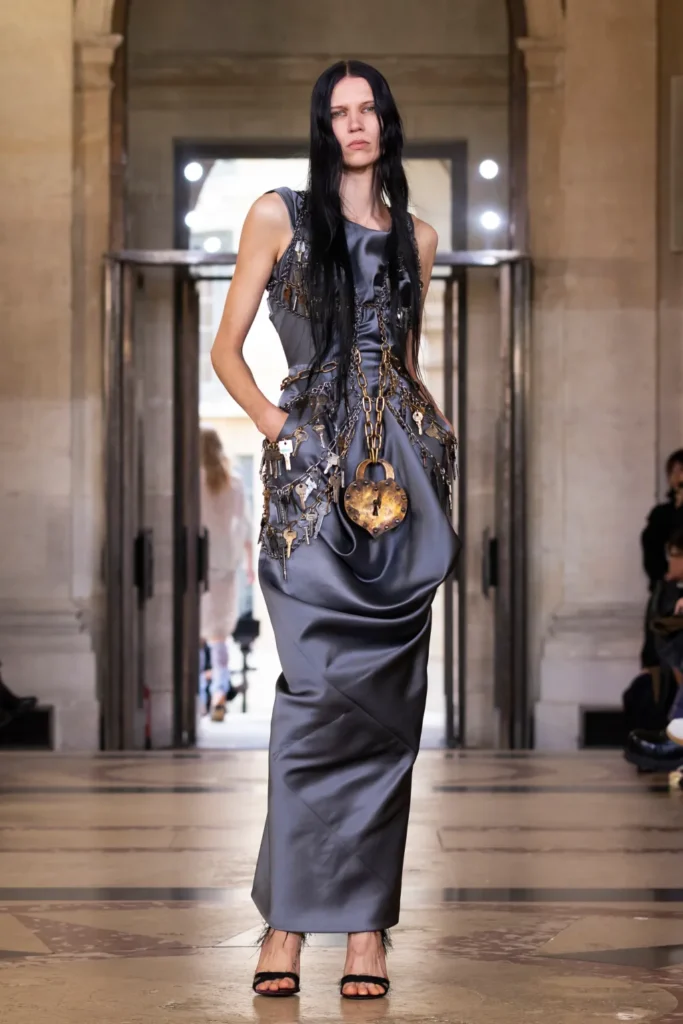
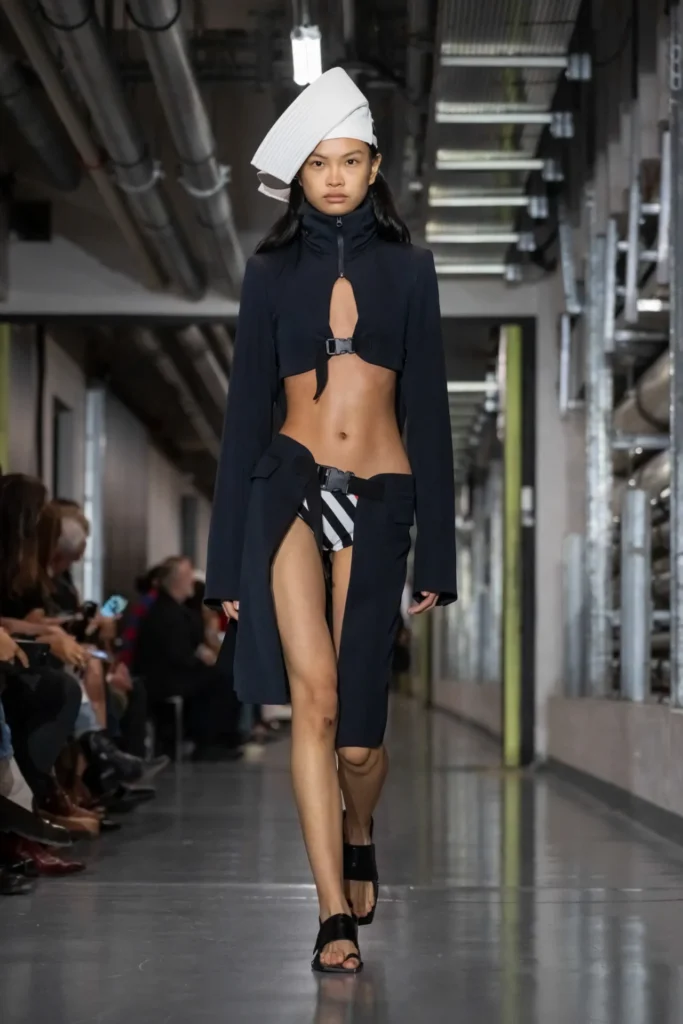
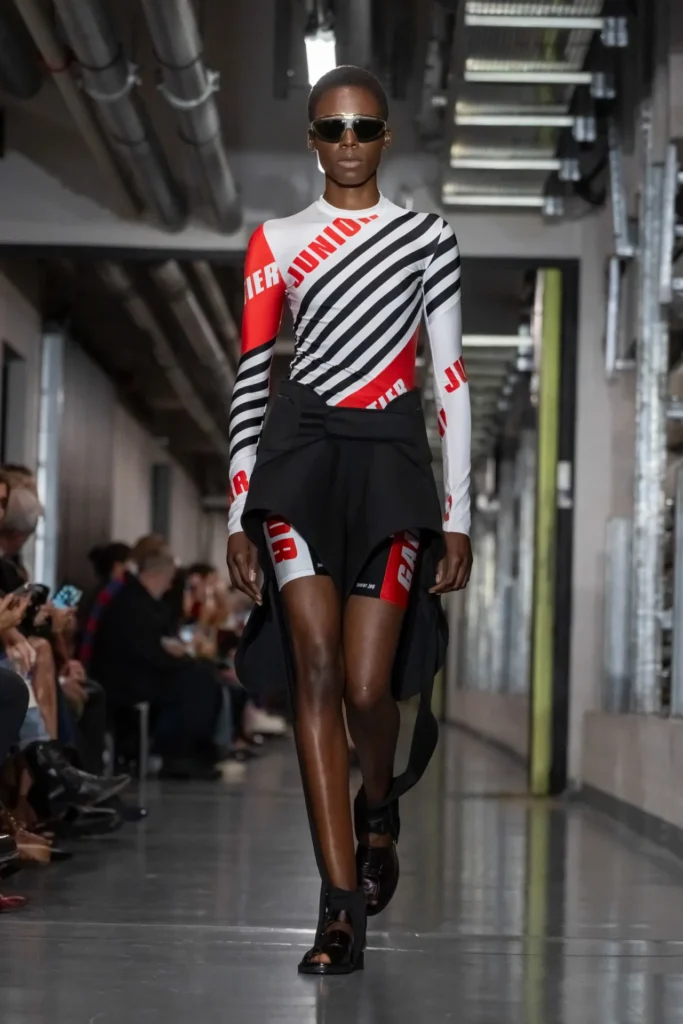
Duran Lantink’s debut for Jean Paul Gaultier unfolded like a fever dream — a decadent afterparty turned science-fiction fantasy, where bodies became architecture and fashion pulsed like something alive.

Held in the subterranean halls of the Musée du Quai Branly, the show’s prelude was cinematic: a long bar lined with half-empty champagne glasses, abandoned liquor bottles, and the faint echo of a night gone too far. Out of this glamorous wreckage emerged Lantink’s new Gaultier — irreverent, sensual, and unapologetically futuristic.

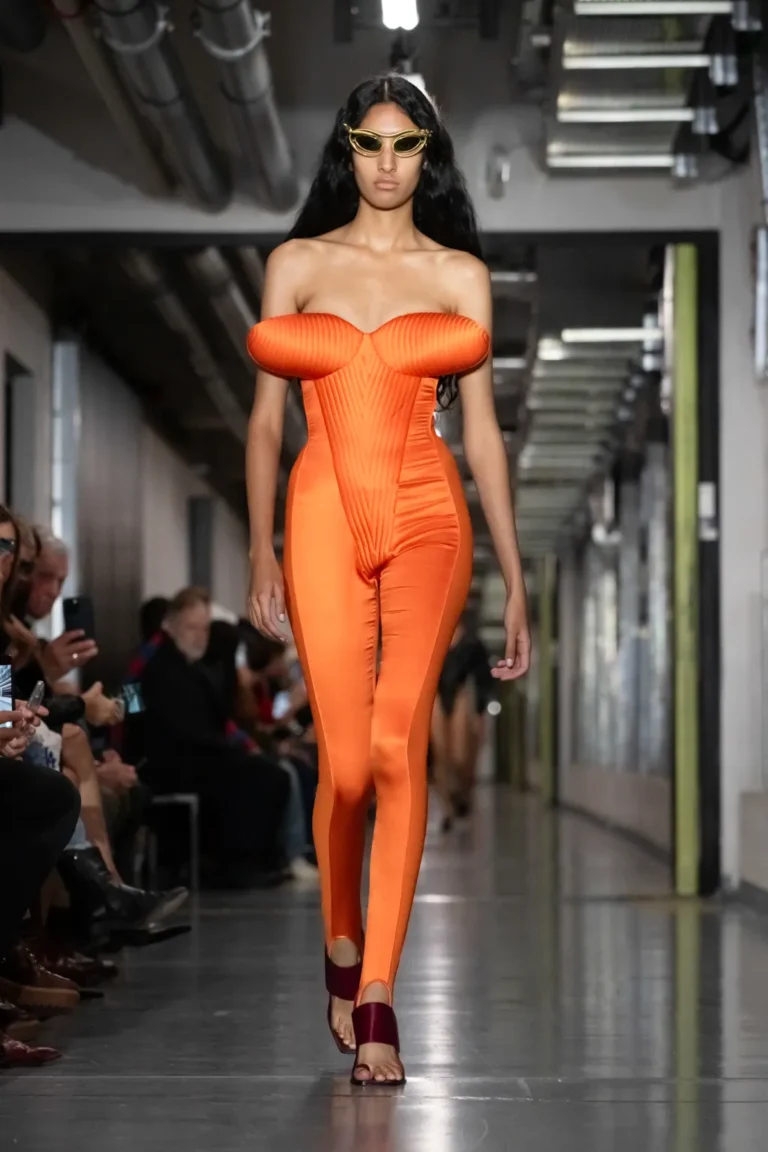
The first look fused the house’s iconic cone bra with Lantink’s own pneumatic, bumper-like silhouettes — a witty collision of eras and egos. What followed was a cascade of gravity-defying constructions: high-cut bodysuits, trench coats sliced clean across the torso, and sculptural dresses that seemed to hover around the body like magnetic fields.

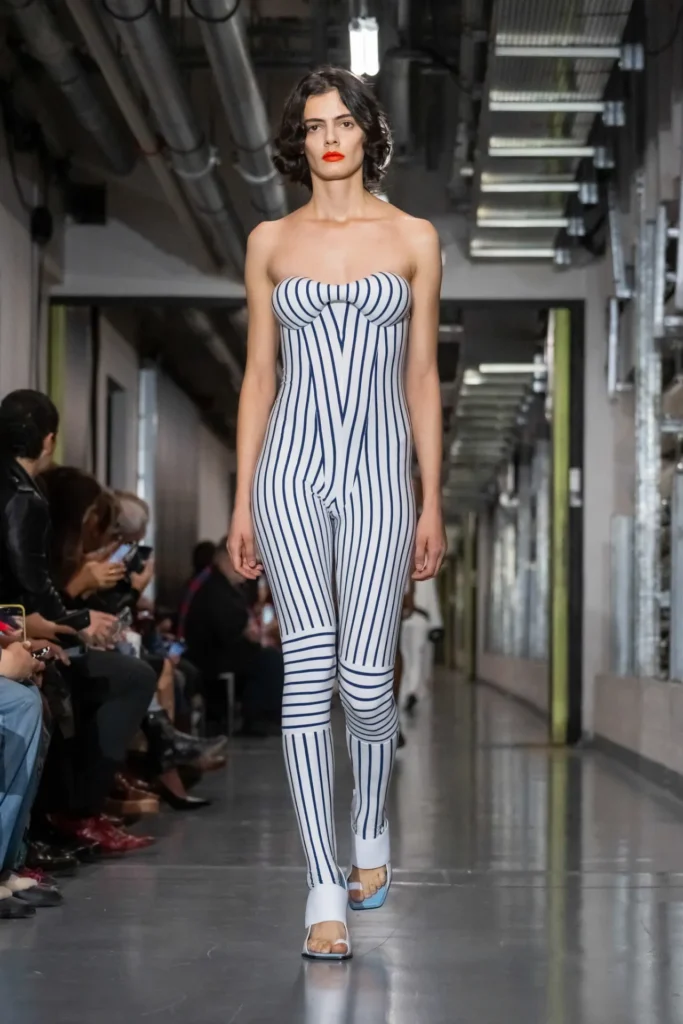
There were plenty of visual puns and optical illusions — leggings and tops printed with cartoonish internal organs, 3D tattoos, or tufts of hair rendered in uncanny detail. Some pieces bore the Junior Gaultier label, the brand’s revived diffusion line that served as Lantink’s first point of inspiration. “There’s a freedom in how people transform themselves for nightlife — something you rarely see in daylight,” he said backstage, his words as charged as the clothes themselves.

Not every look was meant for real life, but the collection was packed with potential. The printed leggings and cropped tops, sailor-hat-curved jackets, long dresses, and trousers with sculpted waistbands all hinted at what could become wearable desire. Accessories — especially the sunglasses that seemed to float away from the face — added an uncanny, almost surreal dimension.

Valentino Spring 2026 Collection

Valentino Spring 2026 Collection

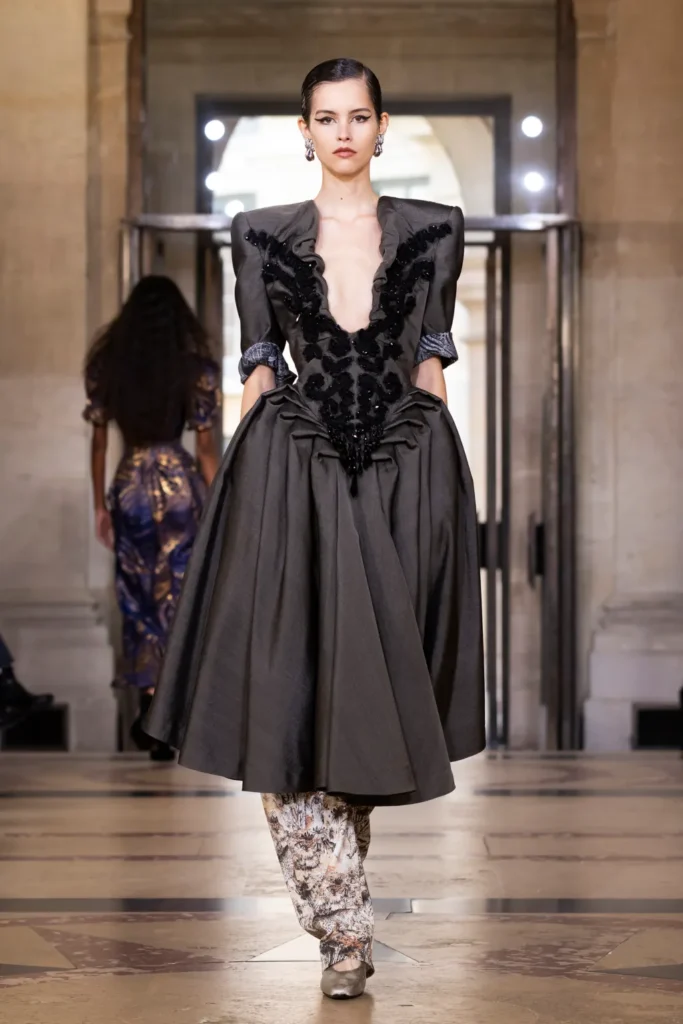
Alessandro Michele’s second act at Valentino felt quieter, lighter — a collection centered on beauty rather than spectacle. His Spring 2026 show evoked another dazzling era: the hedonistic Roman life of founder Valentino Garavani in the early 1980s. Michele distilled that spirit into soft, sensuous pieces — blouses with puffed sleeves, bow-tied jackets, and pencil skirts that hinted at elegance with ease.

Gone was his trademark maximalism. Instead, models walked a sleek black runway illuminated by spiraling lights — like fireflies flickering in the dark. Hair and makeup were intentionally undone, a gesture of restraint that drew attention back to the clothes themselves.

Some read the pared-back staging as a pragmatic response to new CEO Riccardo Bellini’s push to recalibrate spending and reignite sales. But creatively, it marked a reset — a re-centering of Valentino around craftsmanship, silhouette, and color.

The lineup ranged from sophisticated daywear — a zebra-print bomber jacket, sharply pressed suits — to richly sequined shorts and jackets in unexpected combinations: powder blue with chartreuse, mustard with deep violet. Save for a few nude gowns, eveningwear shimmered with unapologetic opulence.

Still, the dim lighting and deliberately unkempt styling occasionally dulled Michele’s magic; a lilac velvet one-shoulder gown, ruched and slipping in all the wrong places, lost some of its intended sensuality.
Yet beneath the softness lay a deeper tension — one familiar to every designer navigating today’s luxury market: the need to re-enchant weary consumers while reassuring restless executives.

Celine Spring 2026 Collection

Celine Spring 2026 Collection

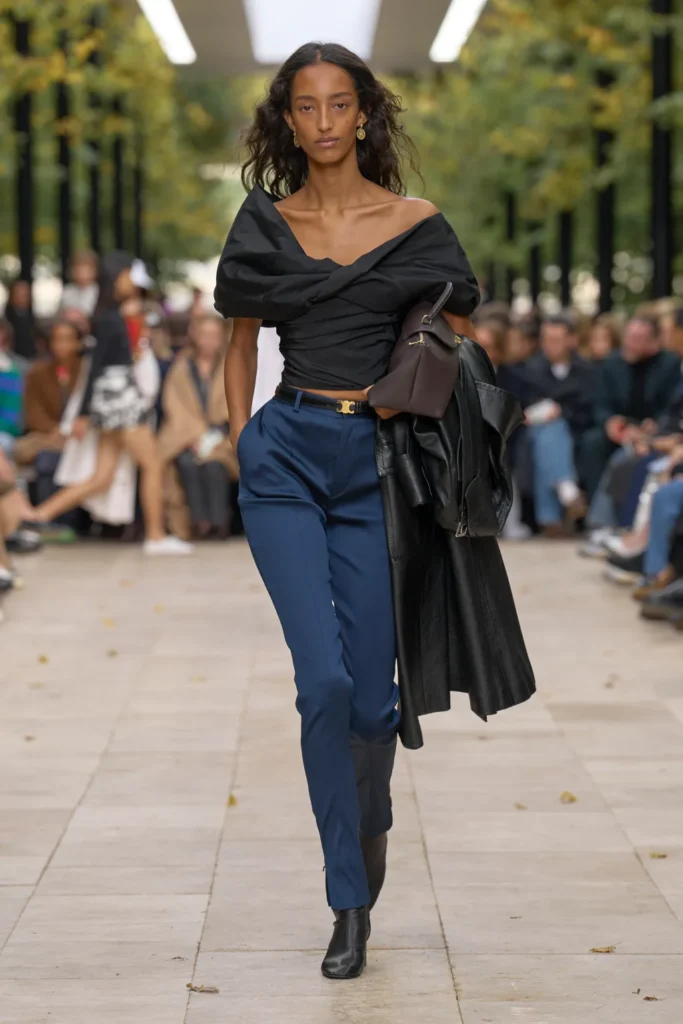
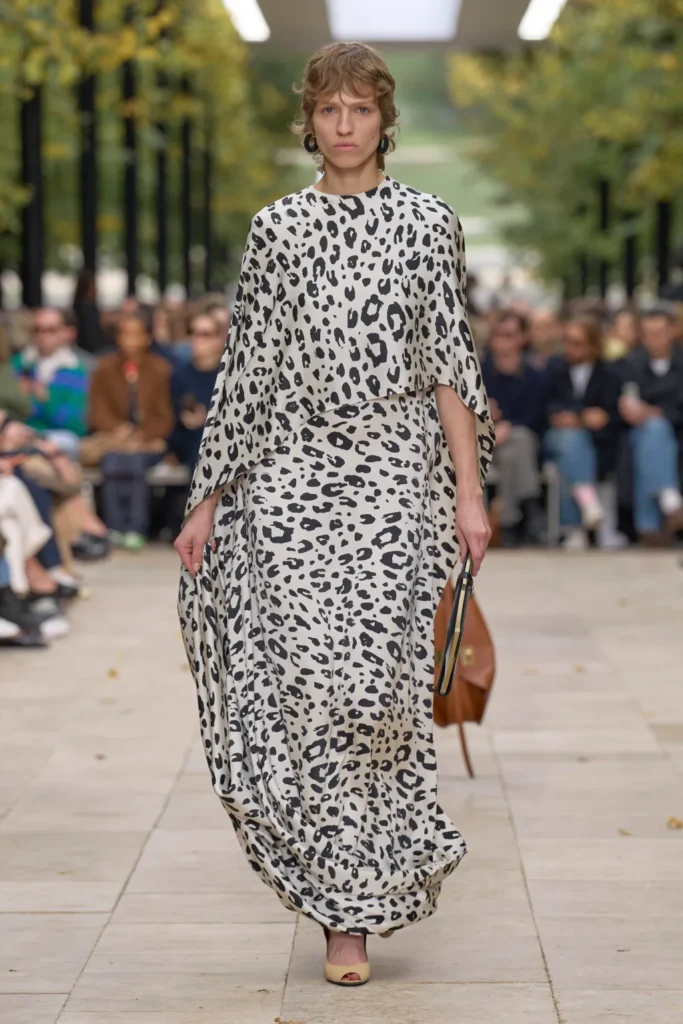
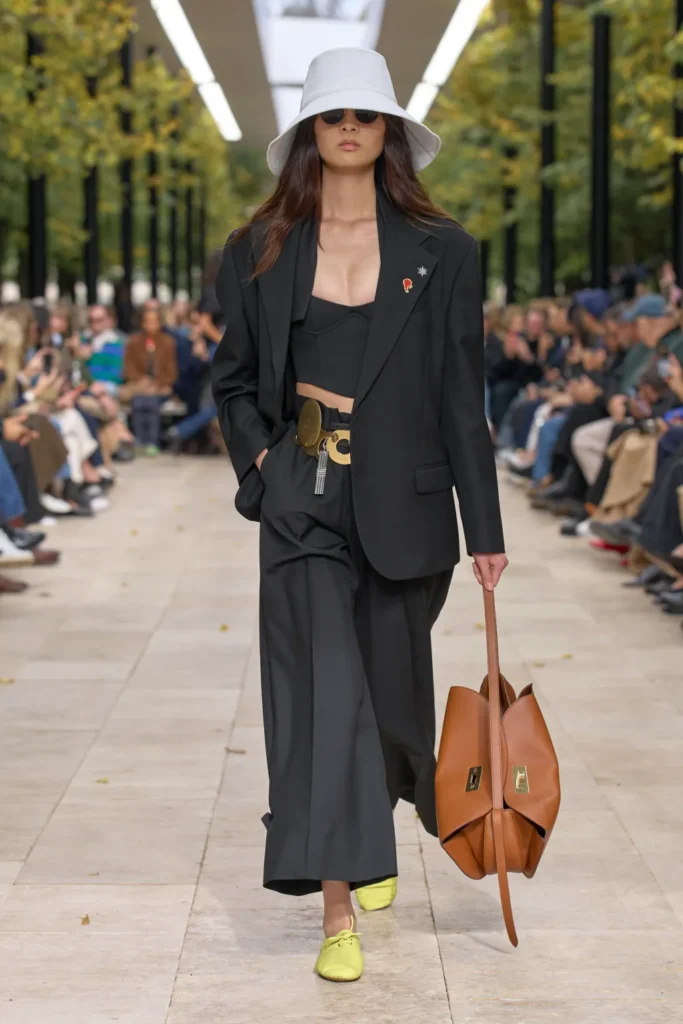
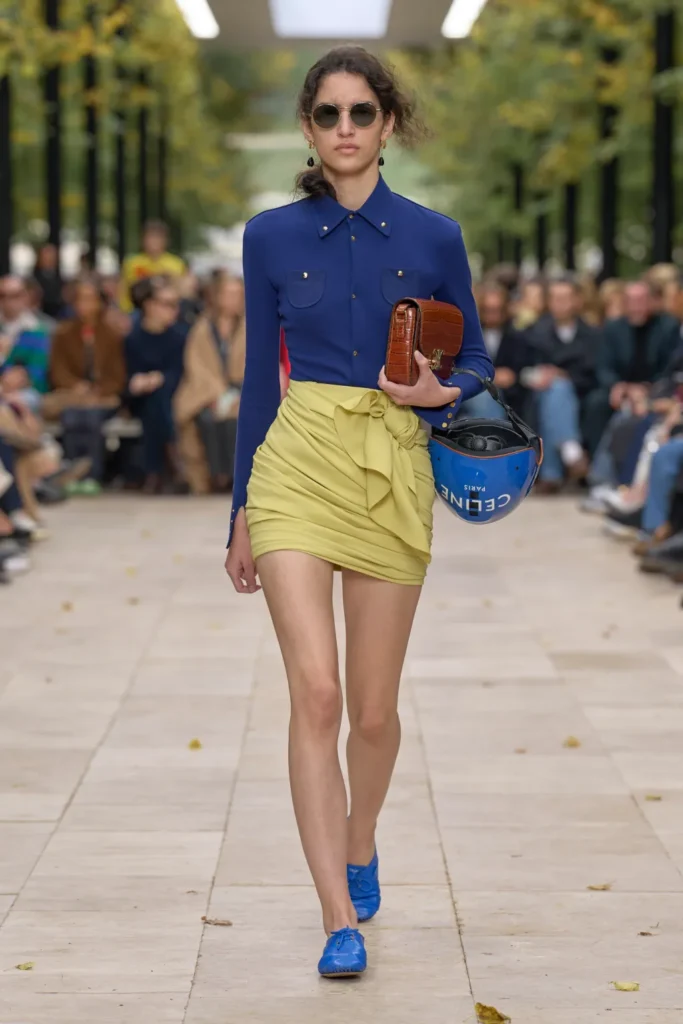
For his second outing at Celine, Michael Rider picked up right where he left off — with a cool, confident rejection of Parisian polish in favor of something looser, fresher, and more real.

When asked how he approached this sophomore effort, Rider was quick to reply, “Not so differently from the first. We kept thinking about the foundation.” That foundation, as it turns out, is the modern wardrobe: masculine-cut jackets shaped like the curve of an apple’s core; slim denim; sleek tuxedo riffs; and a dash of preppy attitude via polos and oversized silk rugby shirts.

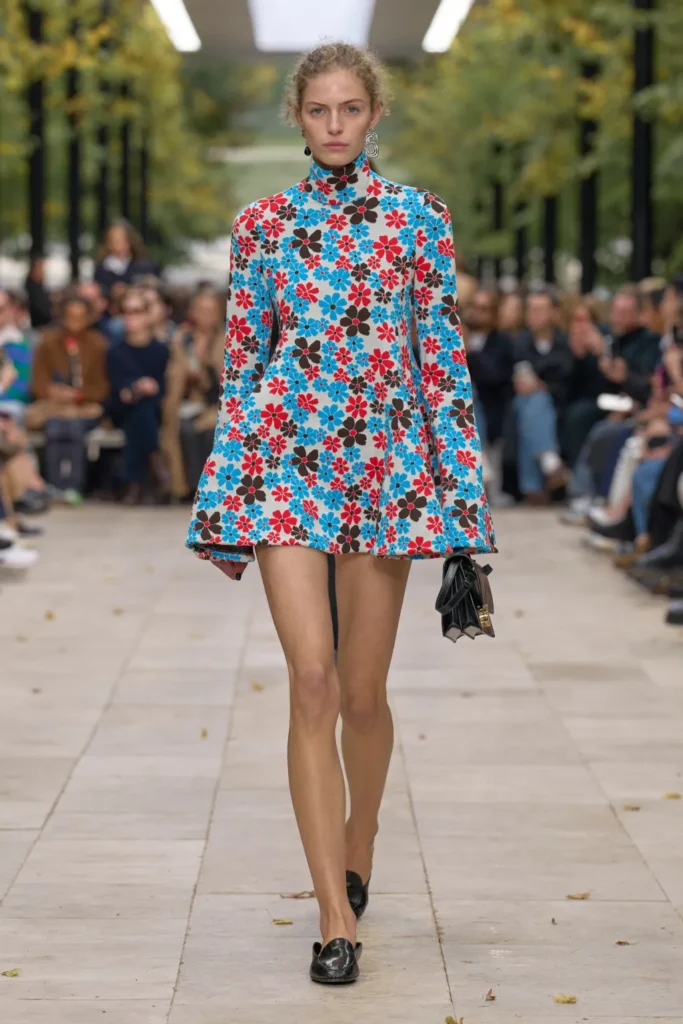
There were new pleasures too — easy baby-doll dresses in bouclé soigné and trippy floral prints, a whimsical nod to the 1960s spirit that ran quietly through the collection. Scattered among them were bicycle helmets emblazoned with the Celine logo, a playful reminder that in Rider’s world, luxury doesn’t mean standing still.

This new Celine defies the myth of Parisian restraint. Scarflike collars spilled generously over coats and blazers; bohemian jewelry caught the light; practical shoes replaced stilettos; and handbags were slung across shoulders or tucked casually under arms — an attitude, not a statement.

Menswear held its own, crisp and confident, a rarity in this season’s mixed shows. One could easily imagine those looks on the impeccably dressed K-pop idols watching from the front row — perhaps exactly the audience Rider had in mind.
Lacoste Spring 2026 Collection

Lacoste Spring 2026 Collection

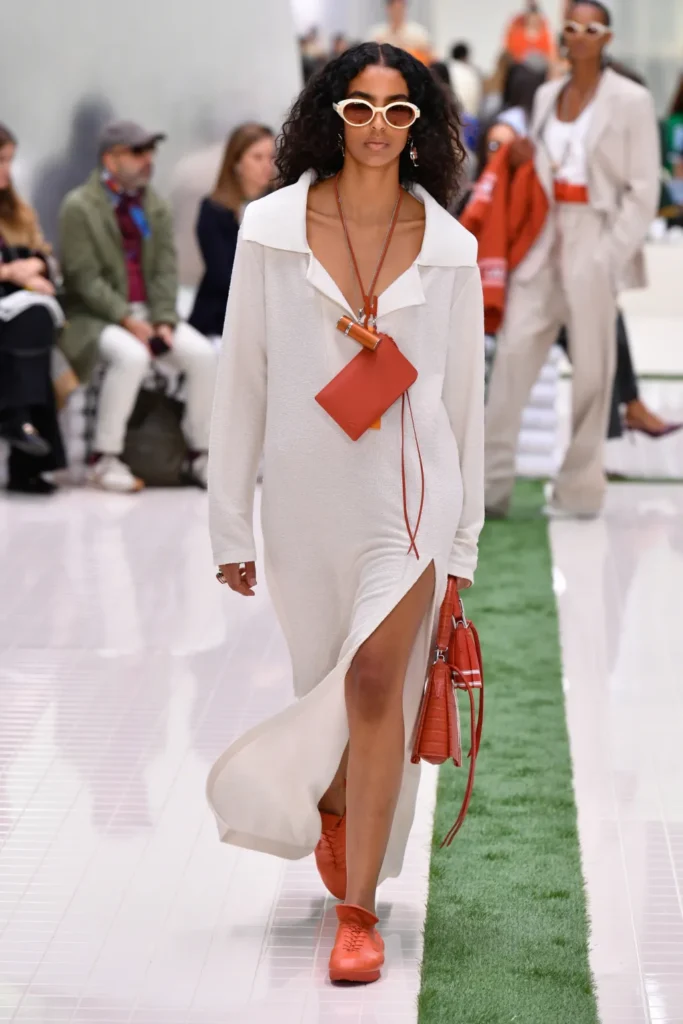
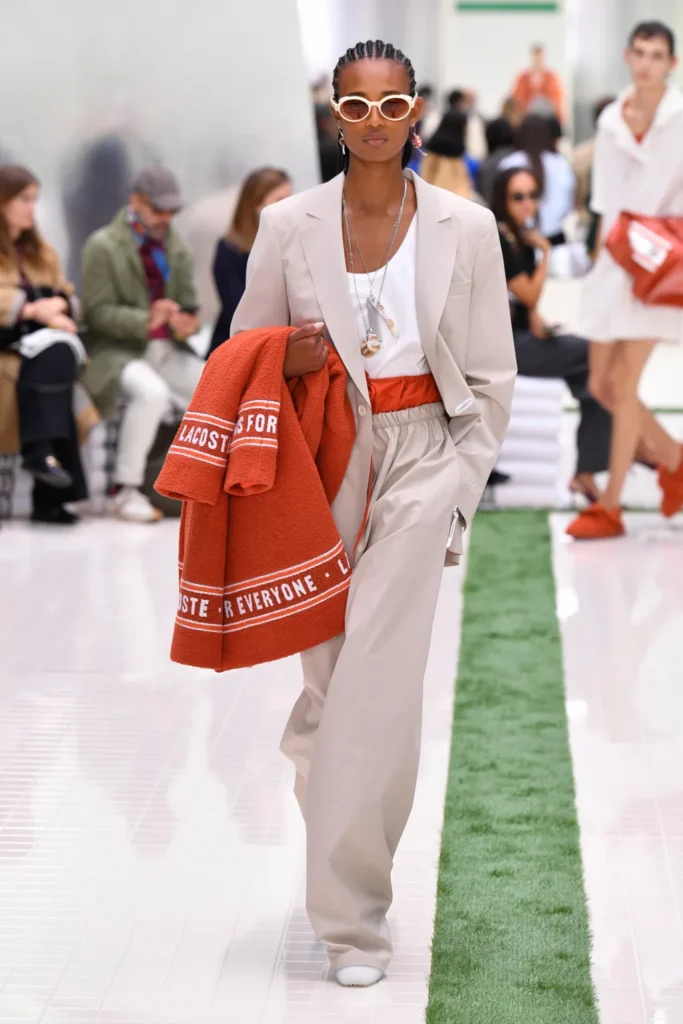
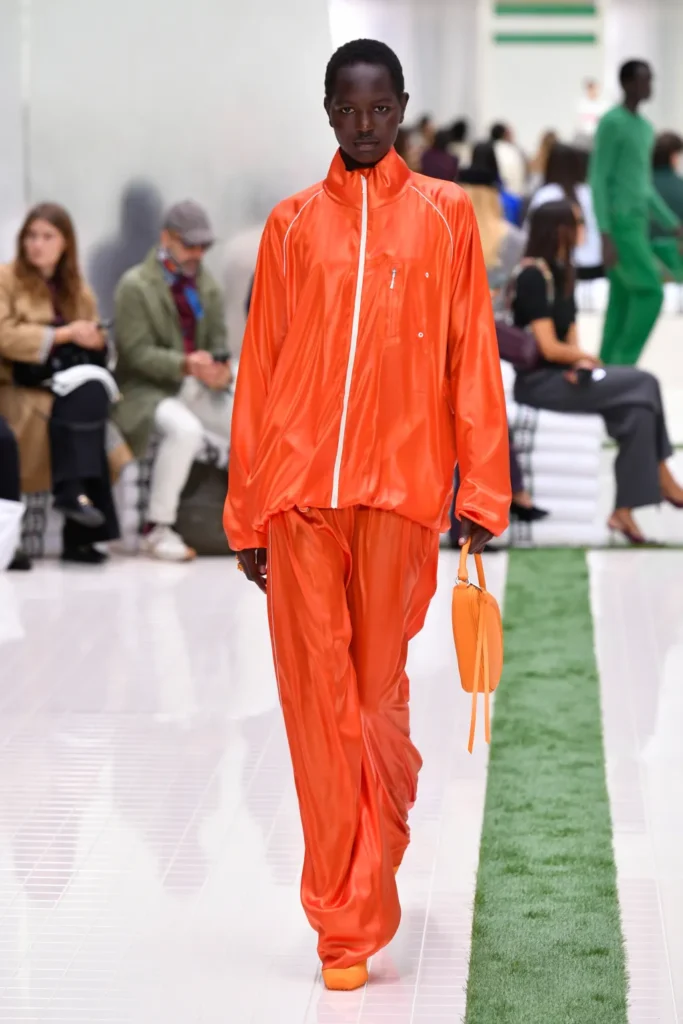
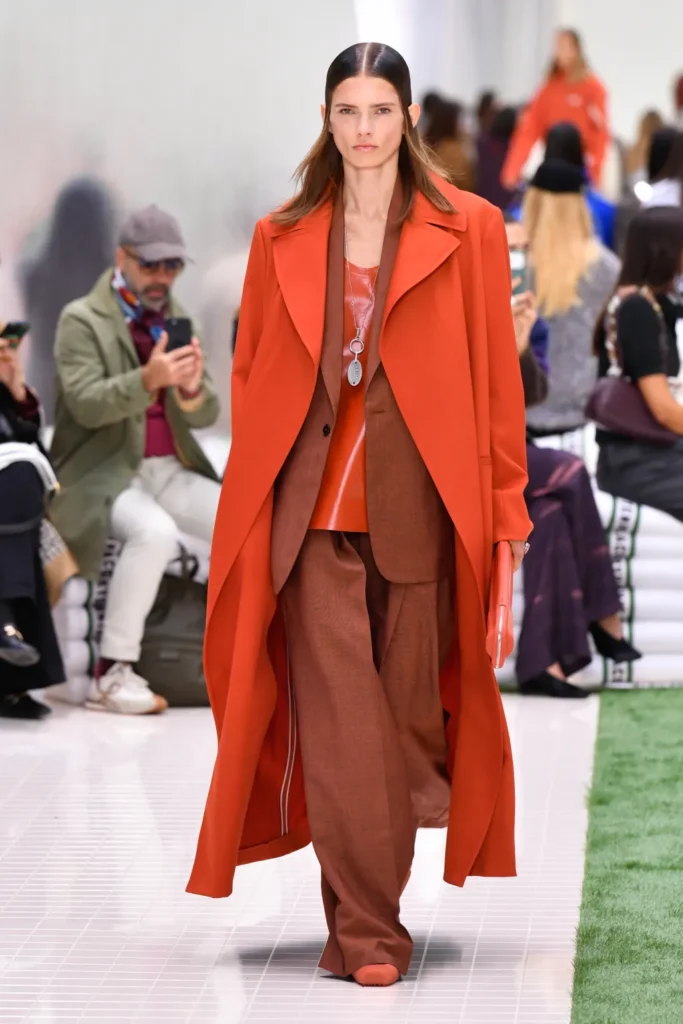
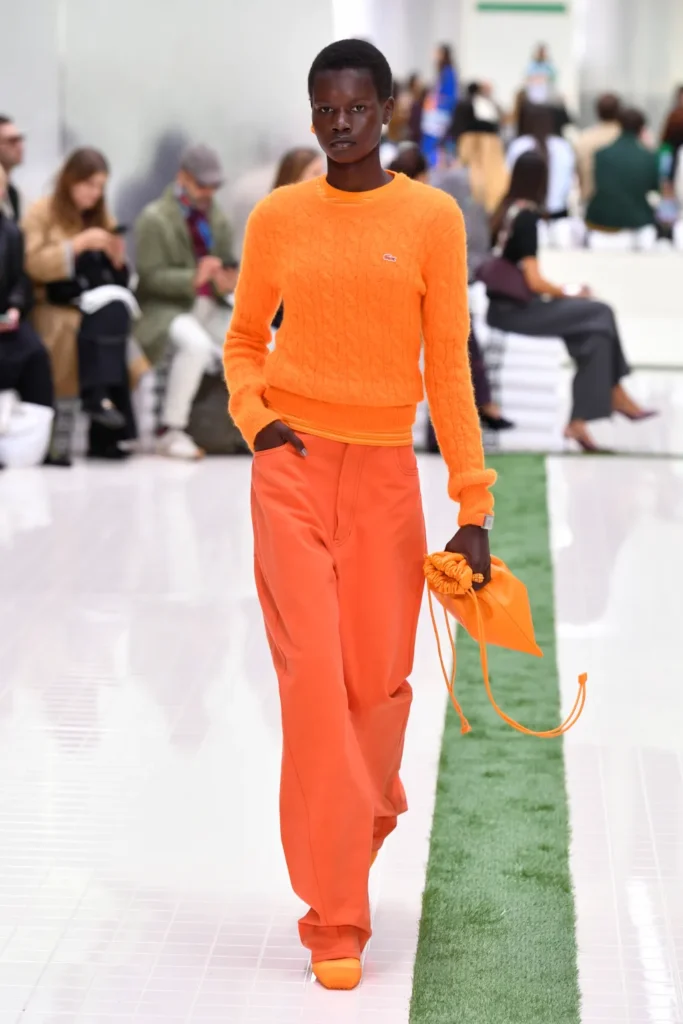
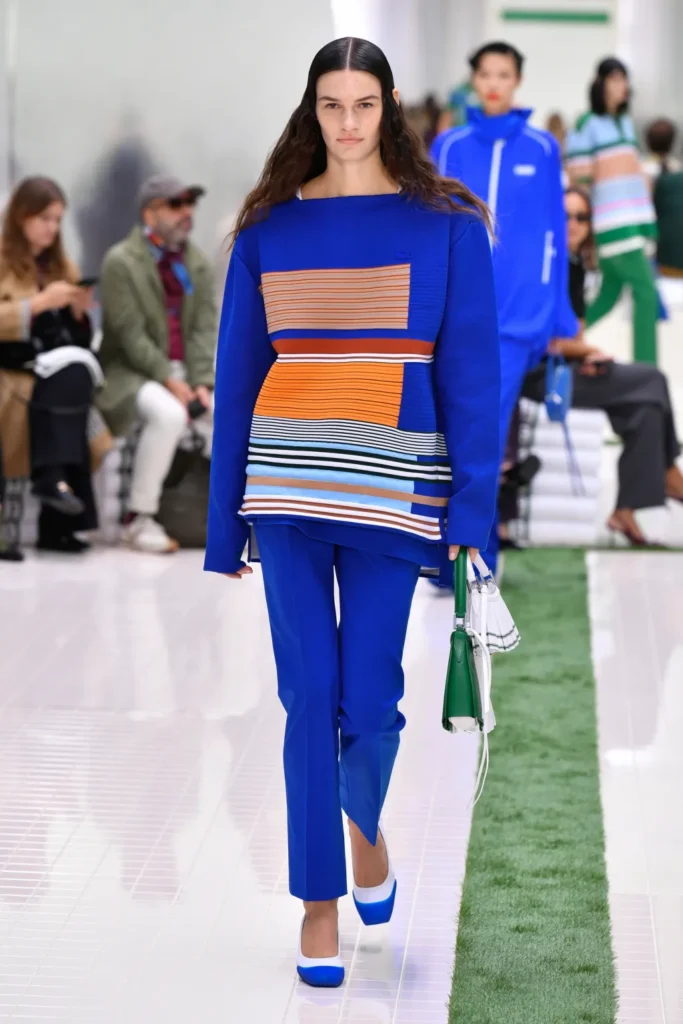
For Spring 2026, Pelagia Kolotouros invited us into the locker room — not as a space for changing, but as a metaphor for transformation. The creative director of Lacoste has been carefully stitching together two seemingly opposing worlds: the brand’s athletic DNA and a growing sophistication that places it firmly within modern fashion’s global conversation.
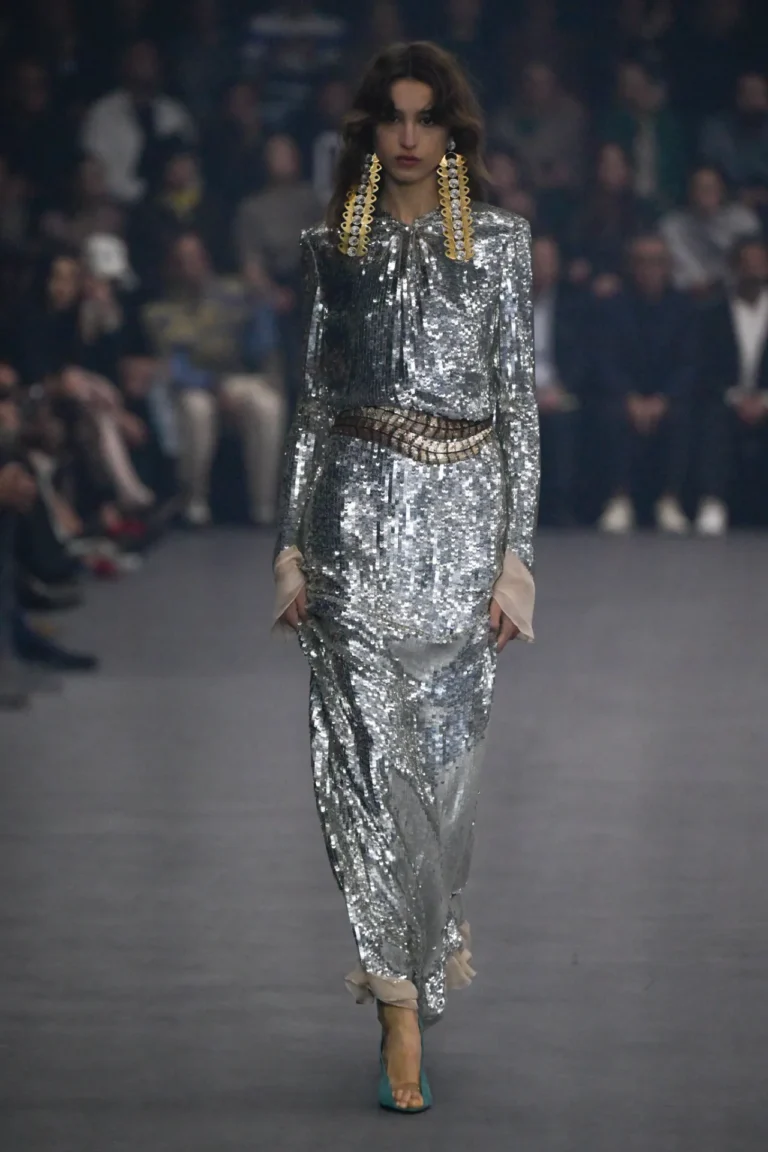
The “wardrobe” — both literal and symbolic — became her muse this season. It represented the meeting point between old-school elegance and the ease of contemporary athleisure, a reminder that refinement and functionality can share the same court.

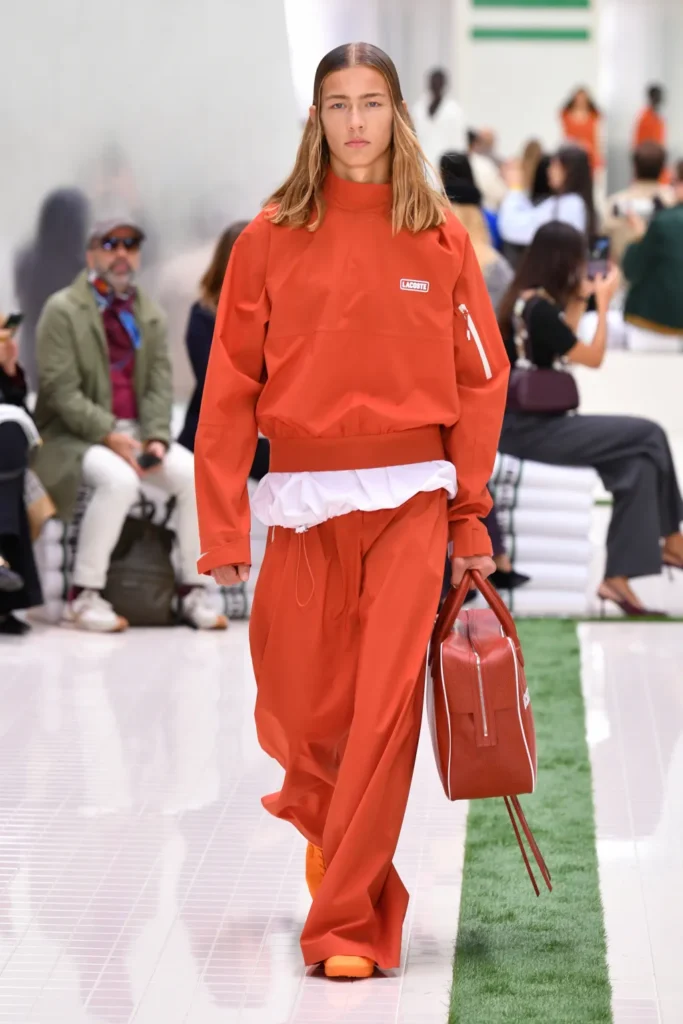
Kolotouros approached this balance with a designer’s precision and an athlete’s discipline. Cuts were considered, fabrics streamlined, and silhouettes reimagined for movement. “It might look like a new version of a tracksuit,” she said backstage, “but it’s still recognizably Lacoste — accessible, effortless, and confident.”

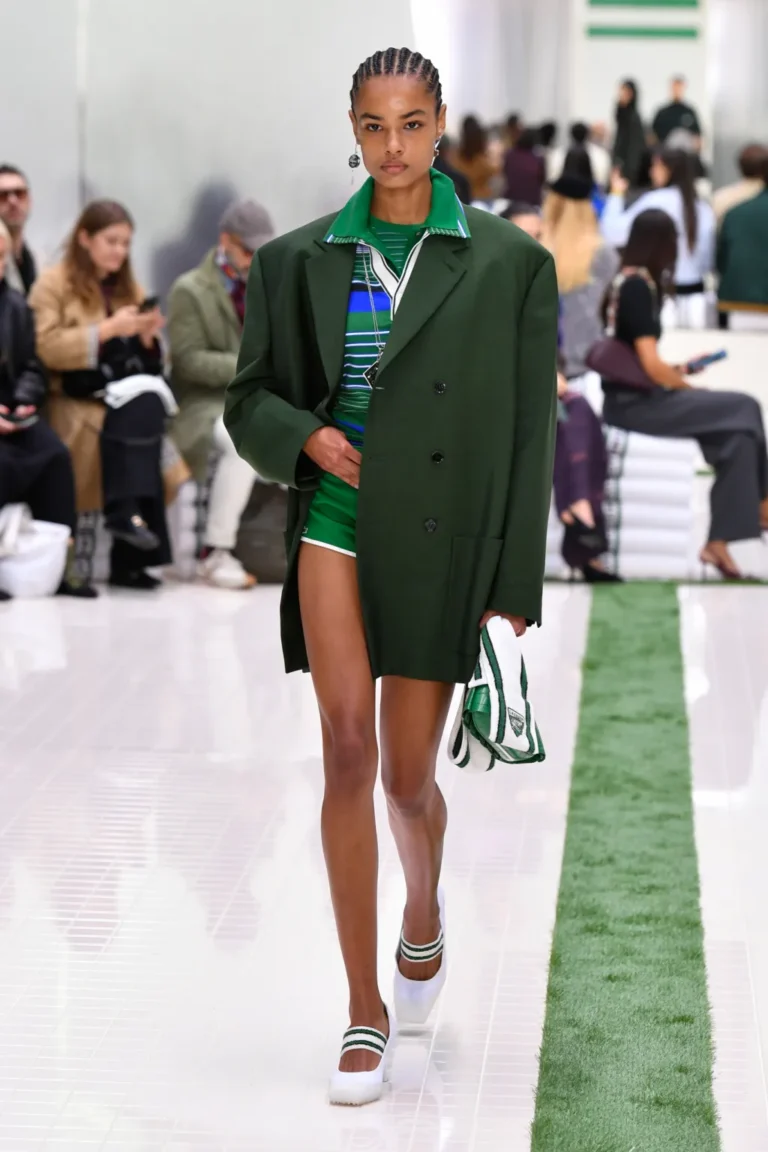
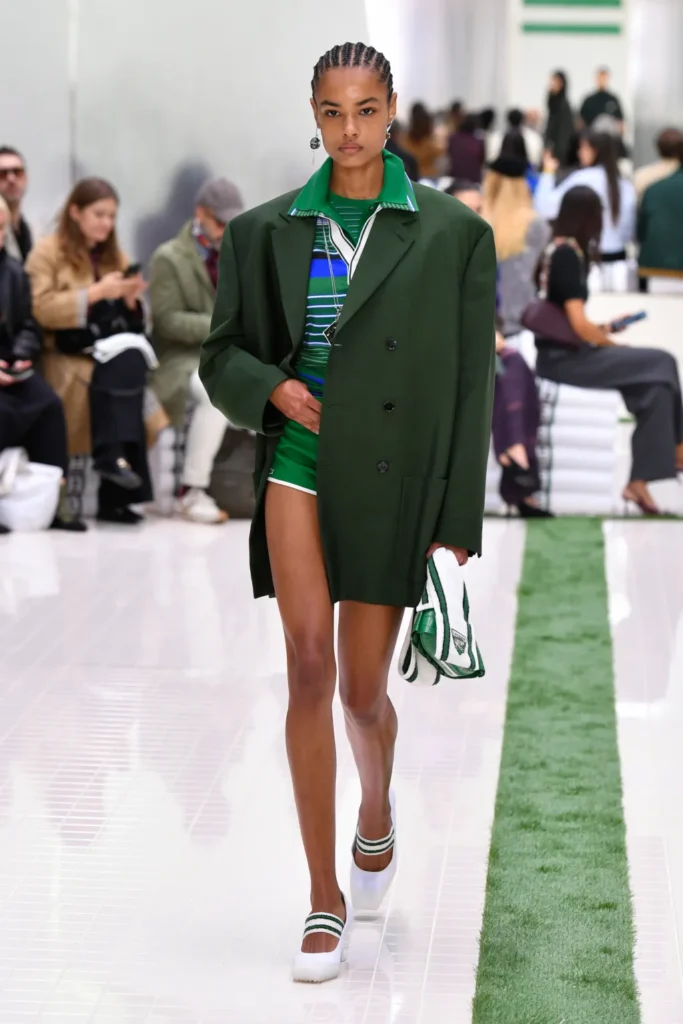
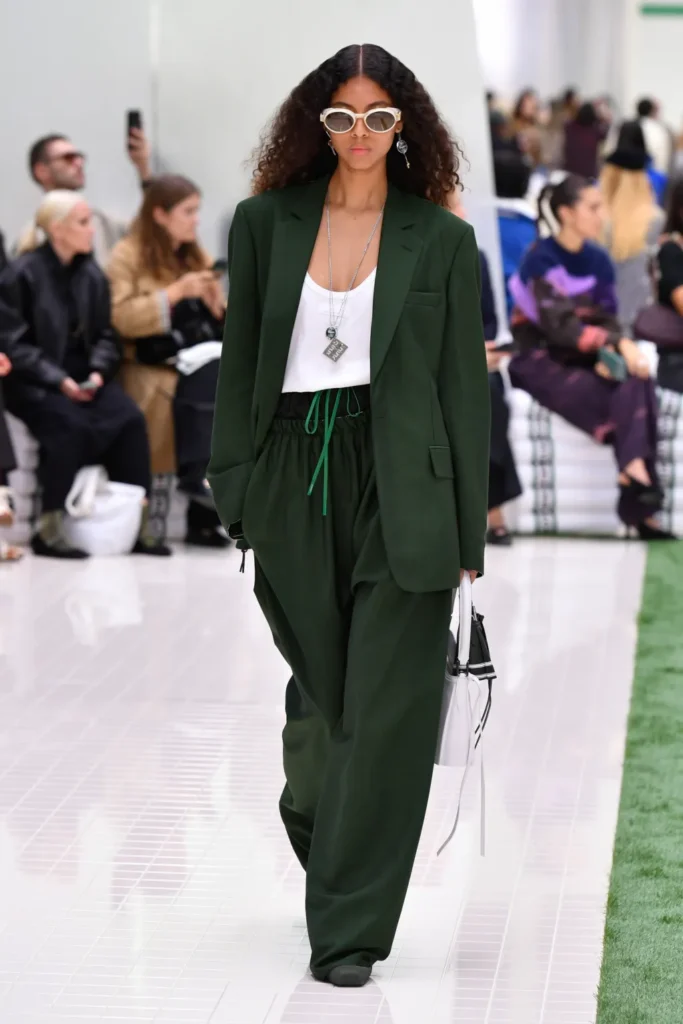
Indeed, that philosophy played out beautifully on the runway. A bottle-green ensemble appeared halfway through the lineup, its voluminous cut and gathered waist offering contrast to delicately tailored proportions. Another look, in a muted putty tone, expanded into an A-line shape — more graphic than sporty — underscoring Kolotouros’s instinct for architectural balance.

Details carried the narrative further: crewnecks stretched wider as if casually pulled over the head; nylon and organza gleamed with a subtle wet finish, evoking steam and sensuality. Layered under sportier outerwear, these pieces encapsulated Lacoste’s new identity — athletic but urbane, playful yet poised.
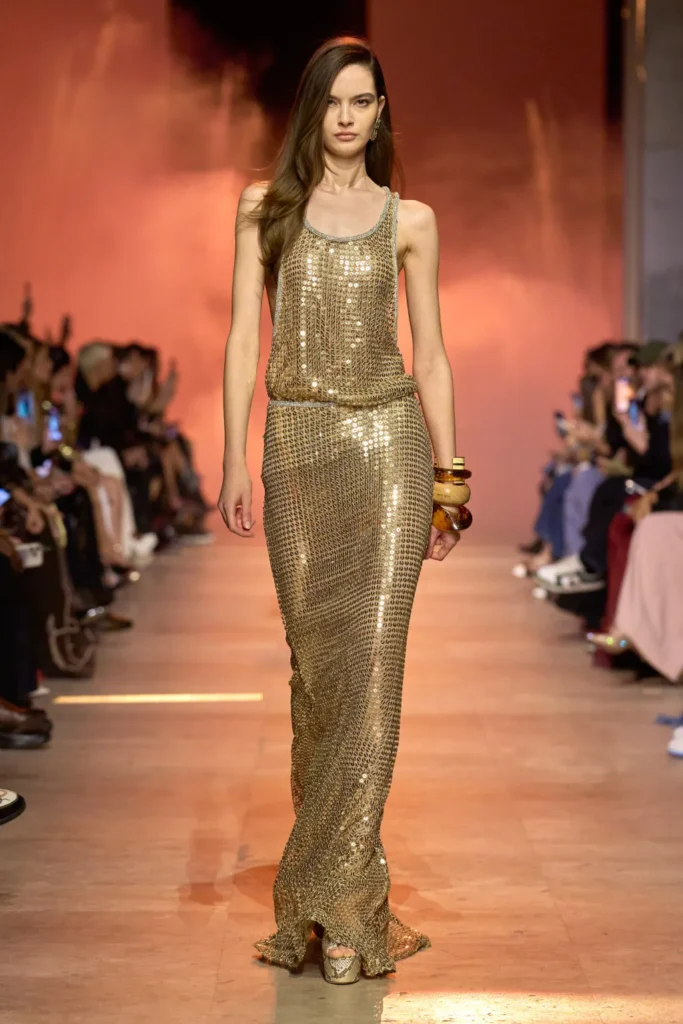
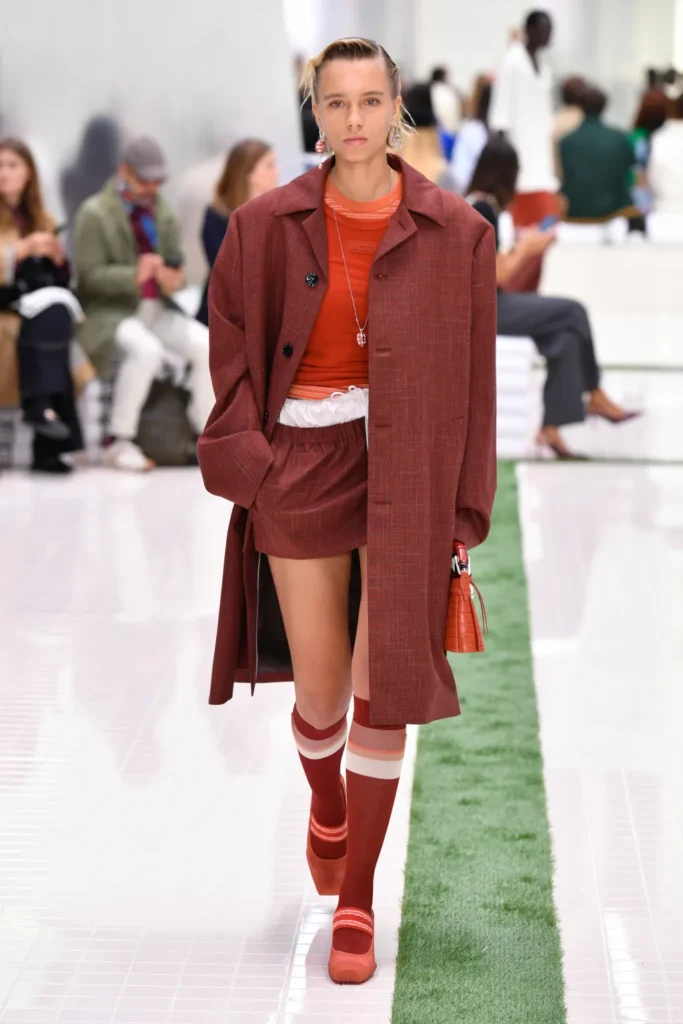
Color, as always under Kolotouros’s watch, played a quiet but decisive role. A palette of clay oranges, lush grass greens, and performance blues brought energy to the collection, while lighter tones infused a contemporary minimalism that felt both fresh and unmistakably Lacoste.

Elie Saab Spring 2026 Collection

Elie Saab Spring 2026 Collection

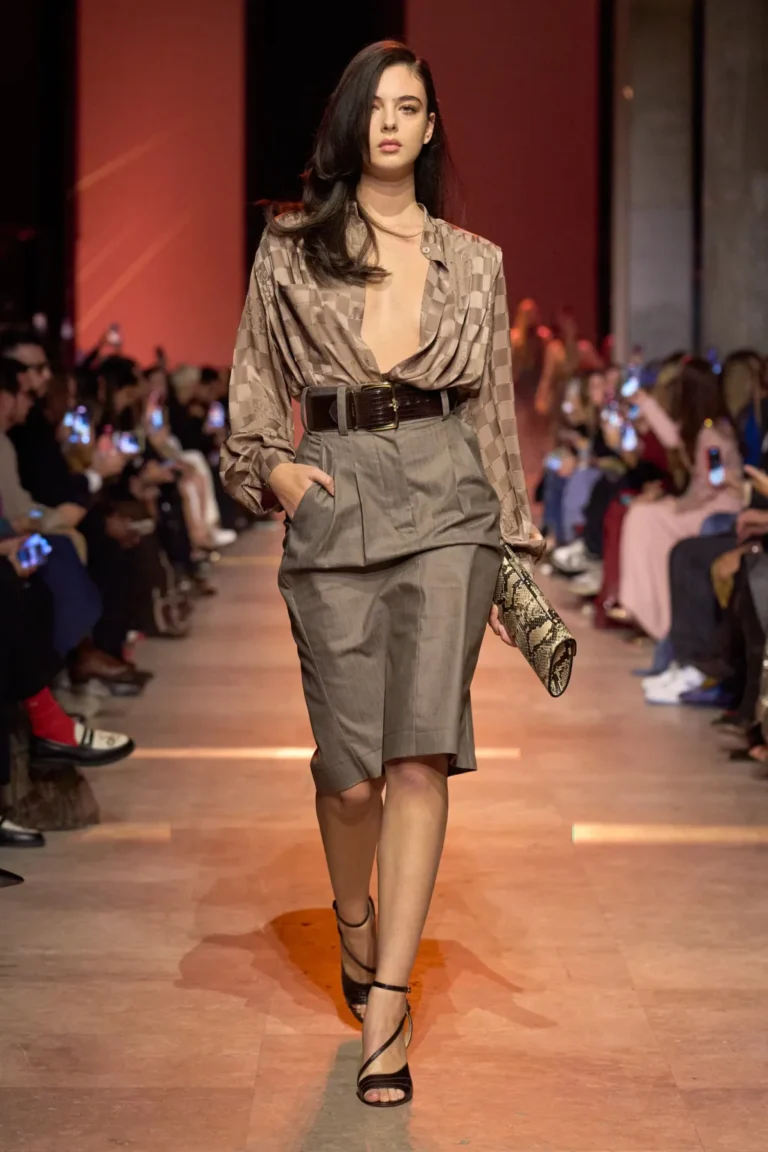
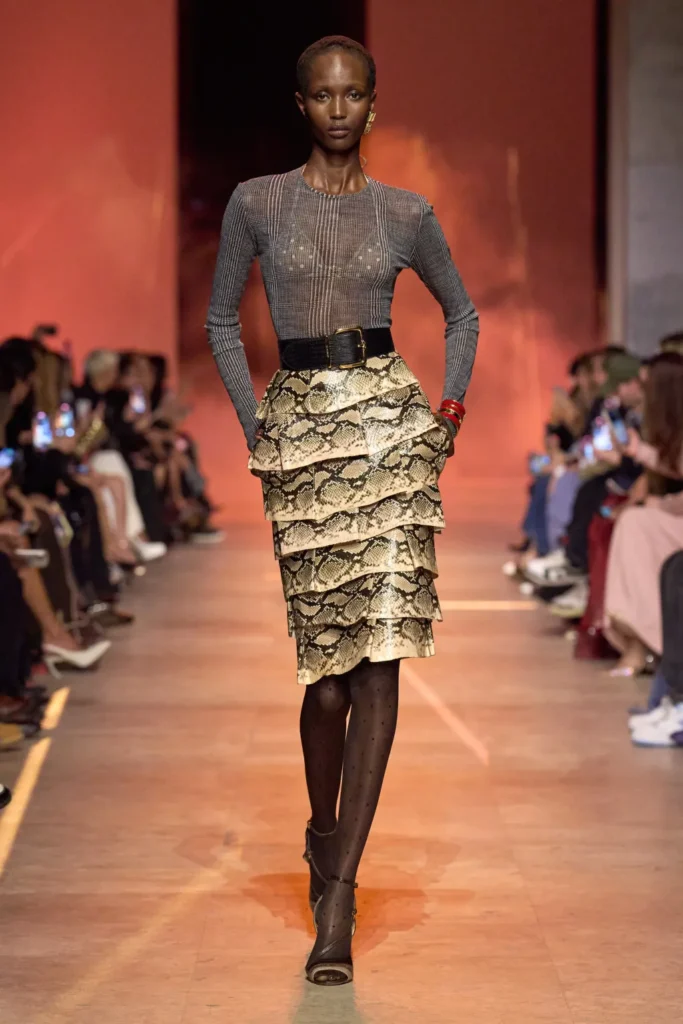
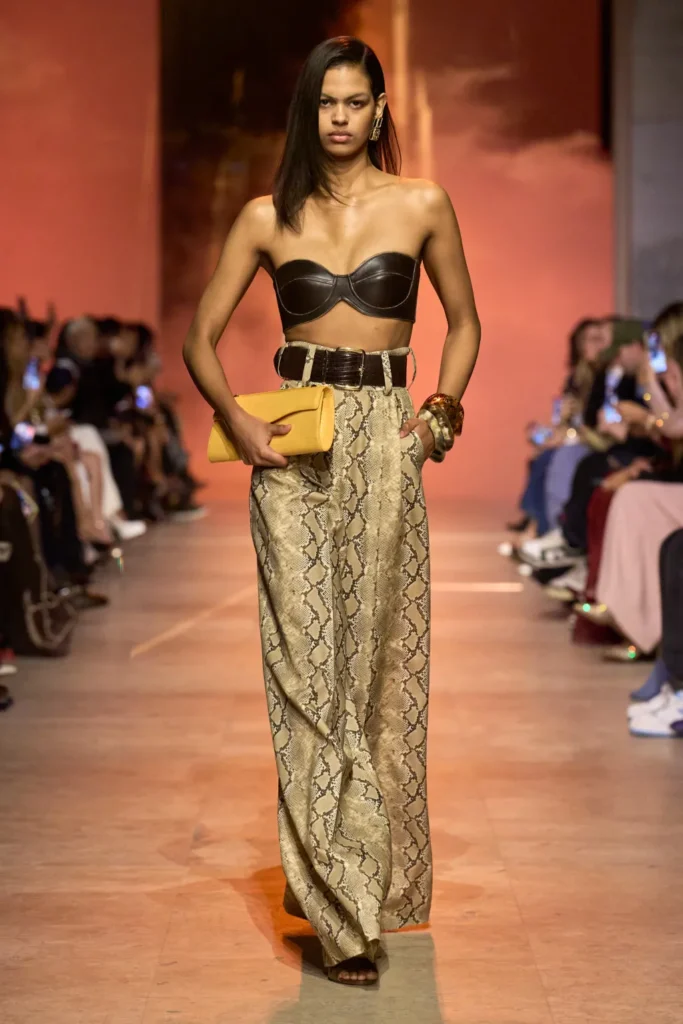
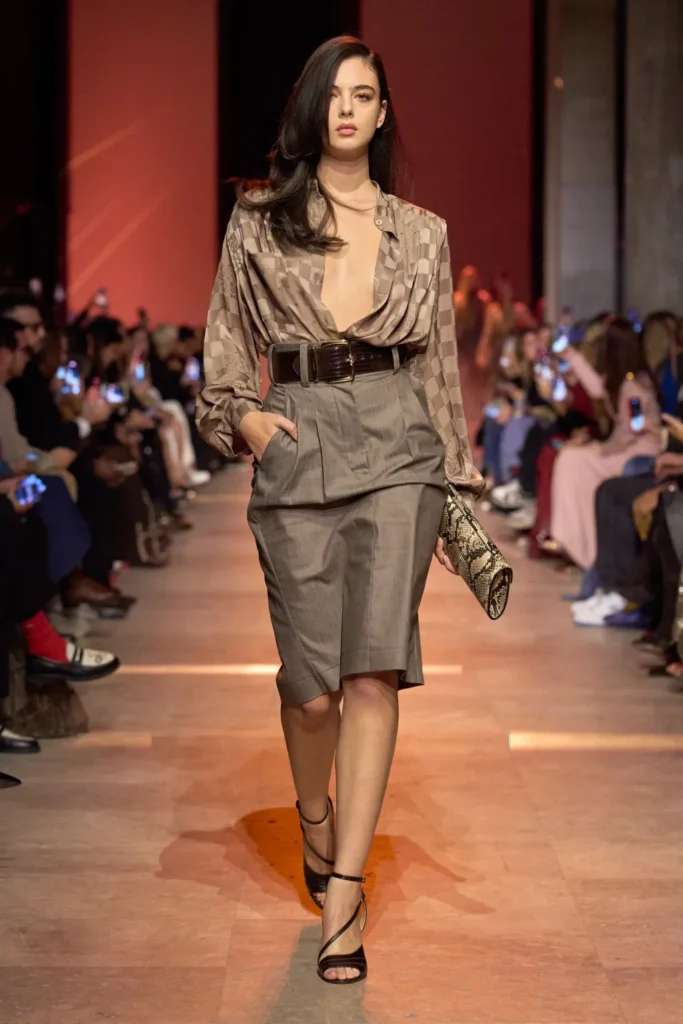
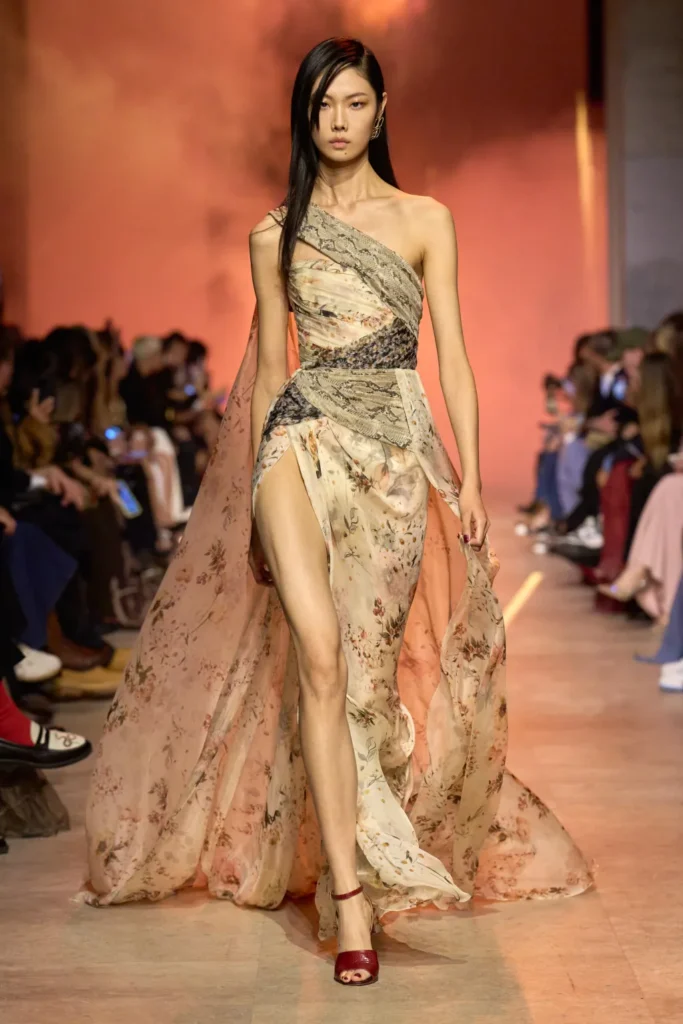
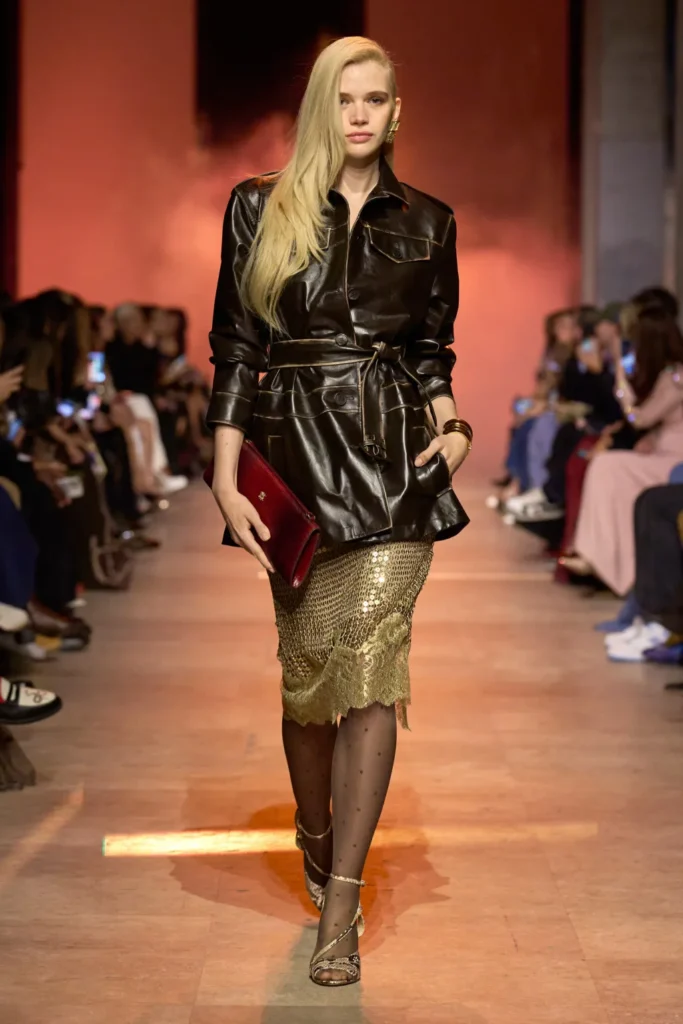
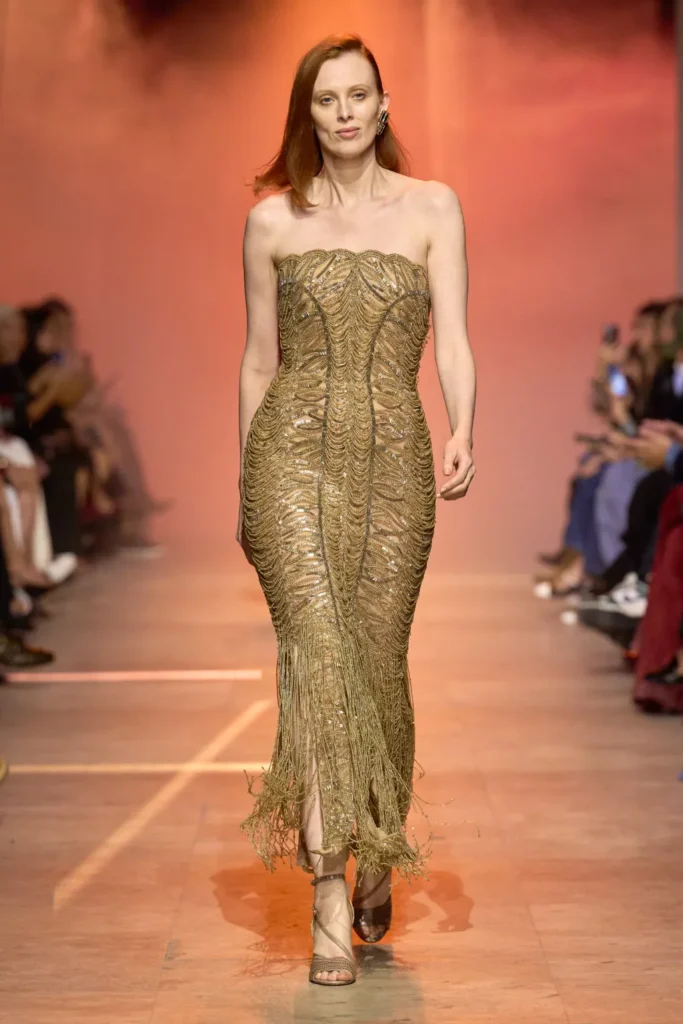
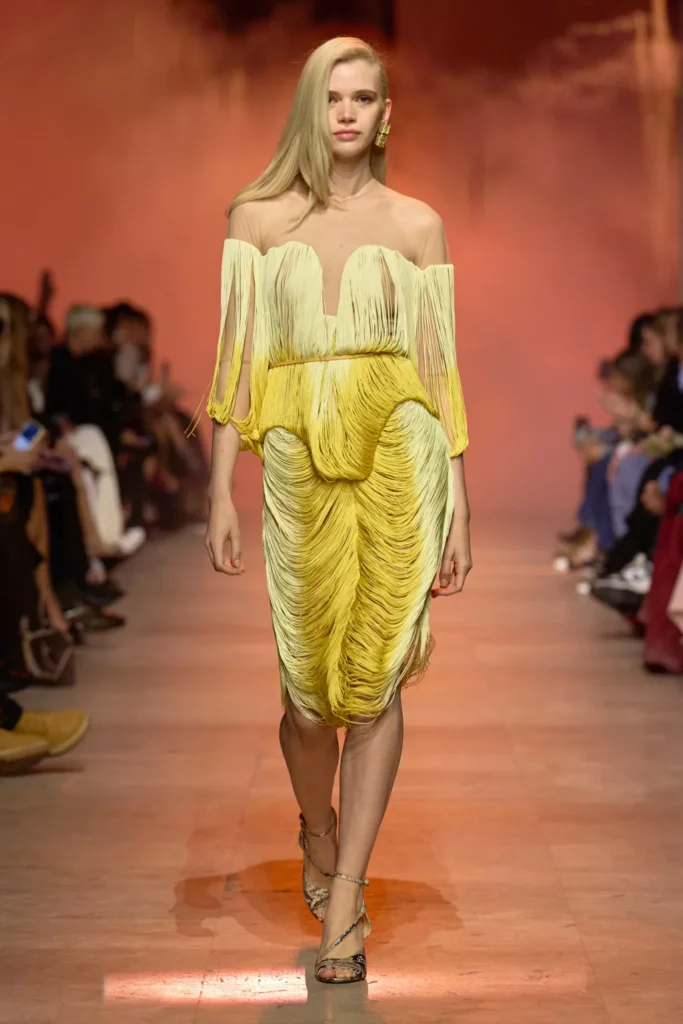
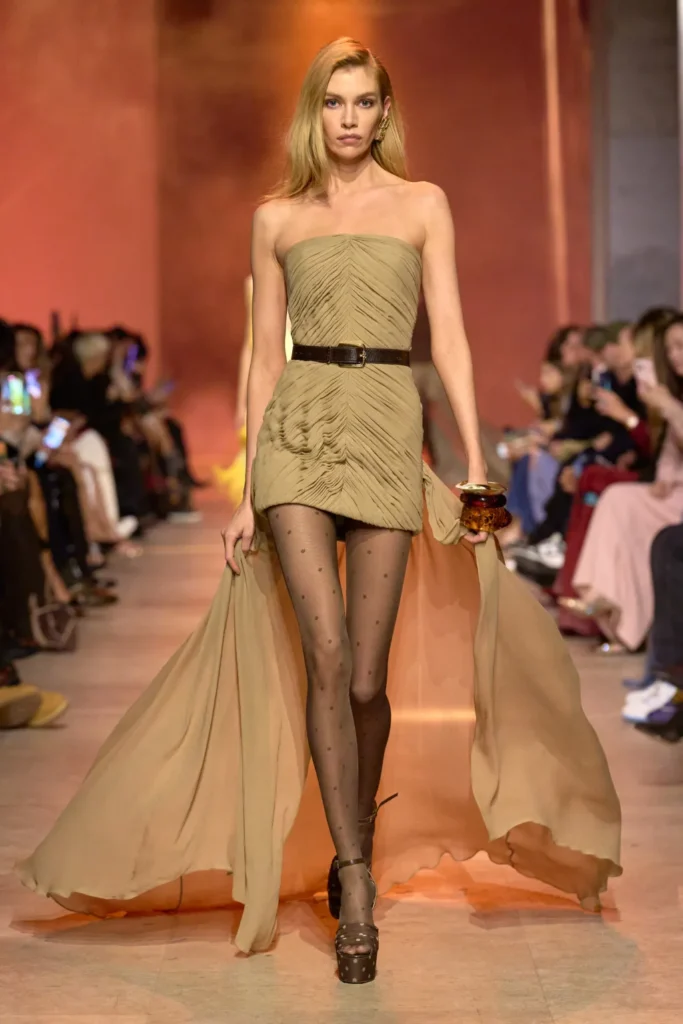
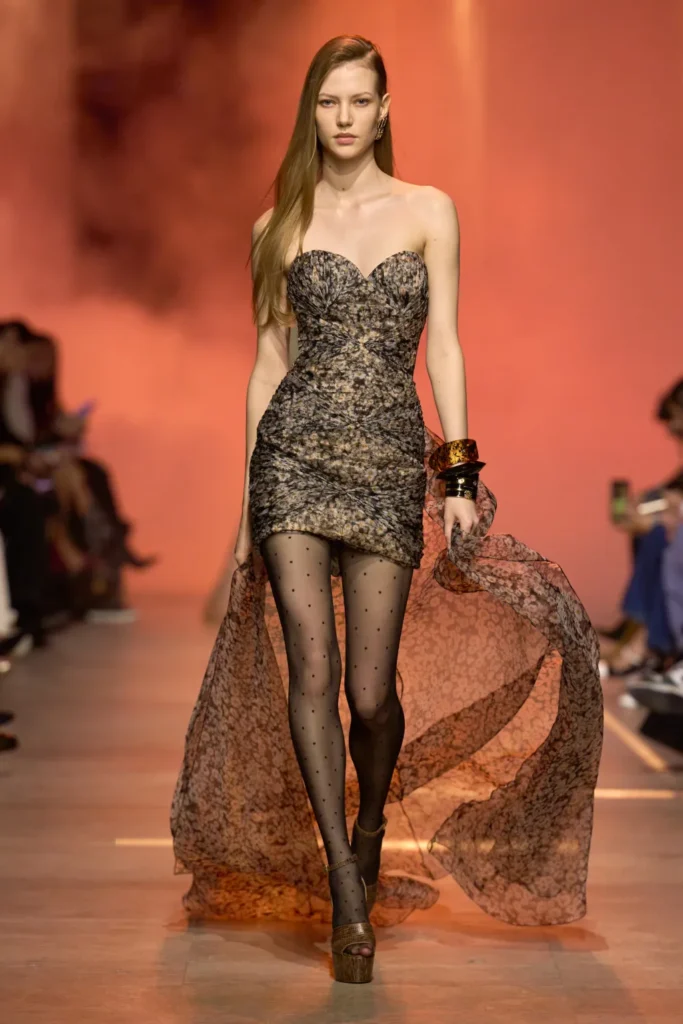
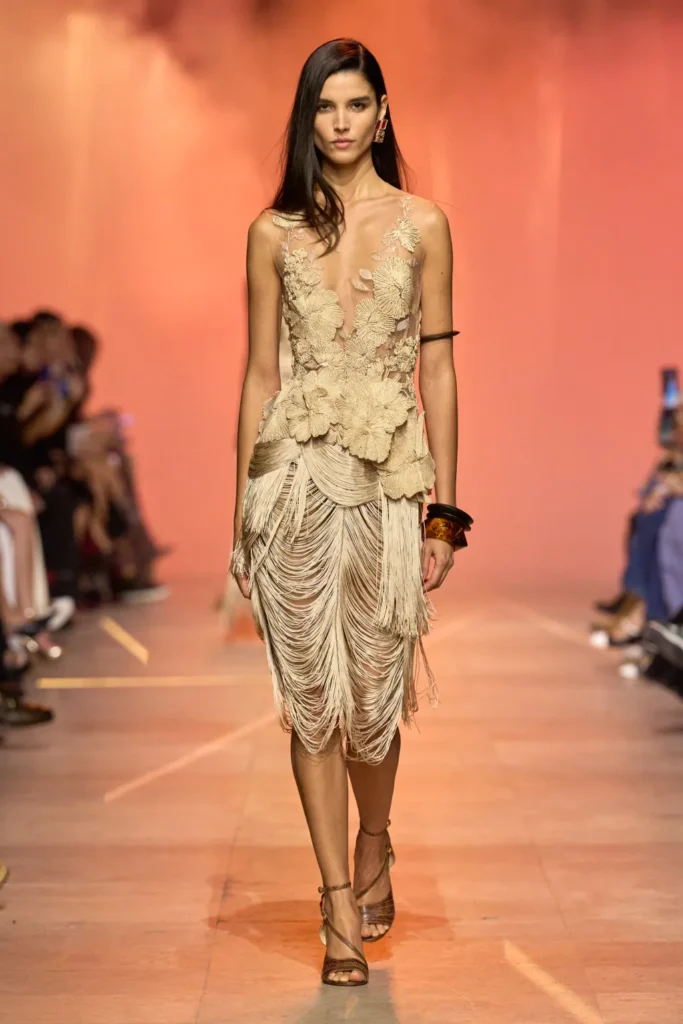
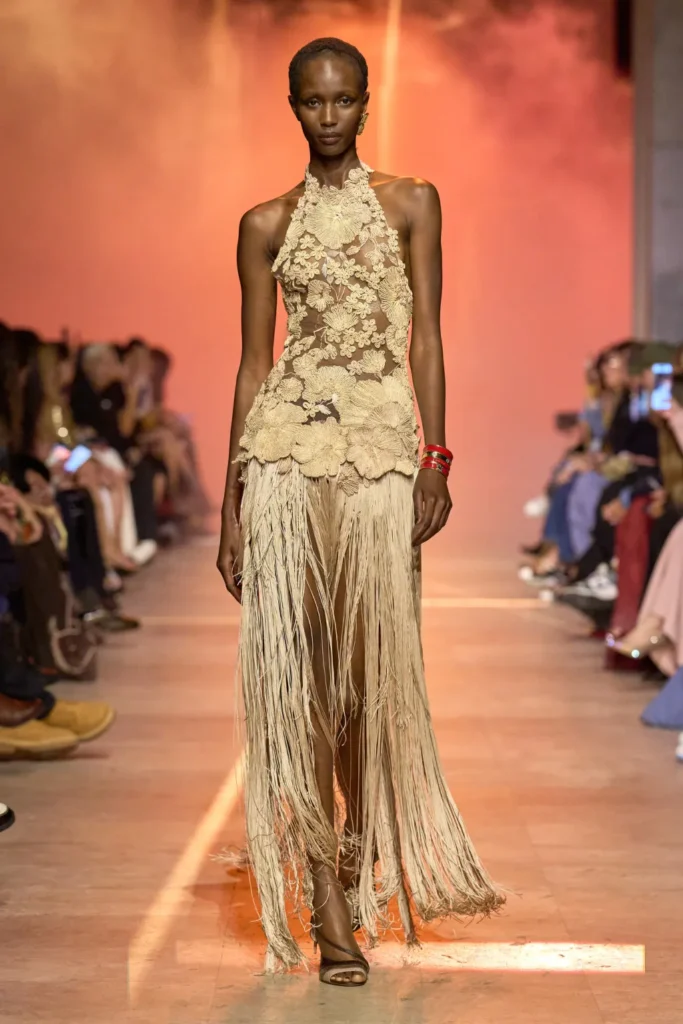
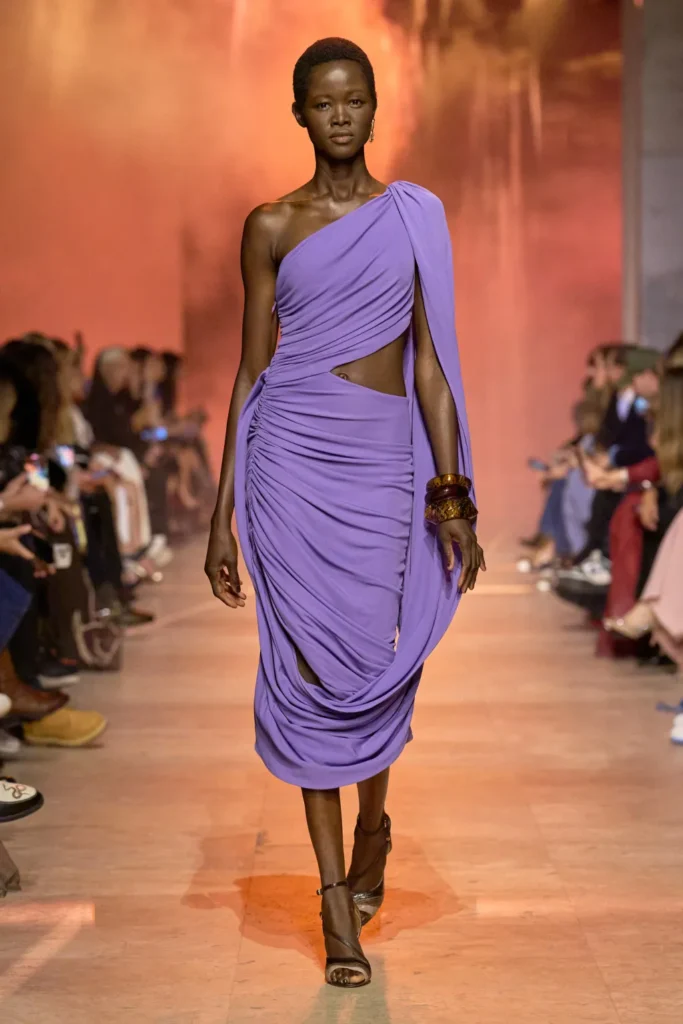
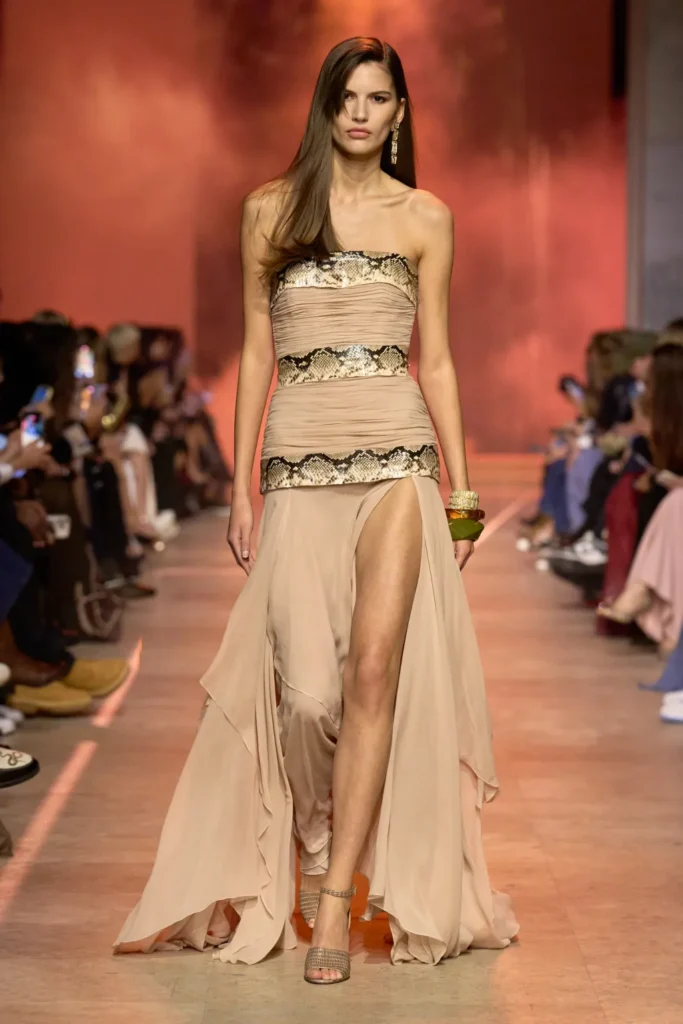
The runway shimmered with confidence — and a quiet recalibration. Elie Saab, long celebrated as the master of red-carpet opulence, stepped into new terrain this season. For Spring 2026, the Lebanese designer unveiled a collection that traded in princess gowns for power pieces, where the sensuality of draped jersey met the authority of the boardroom.

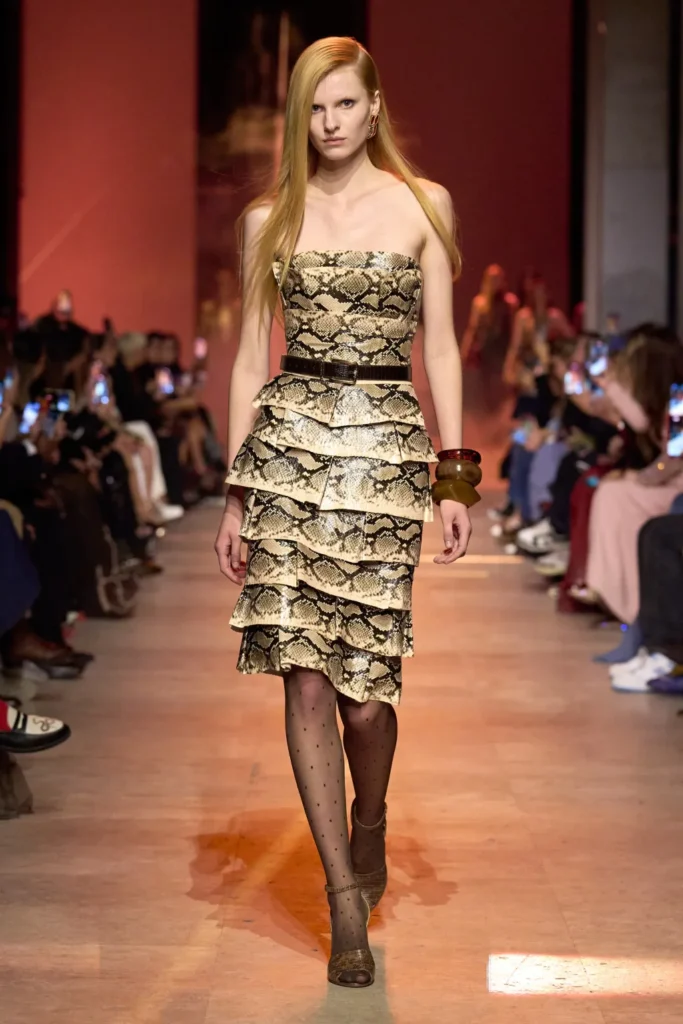
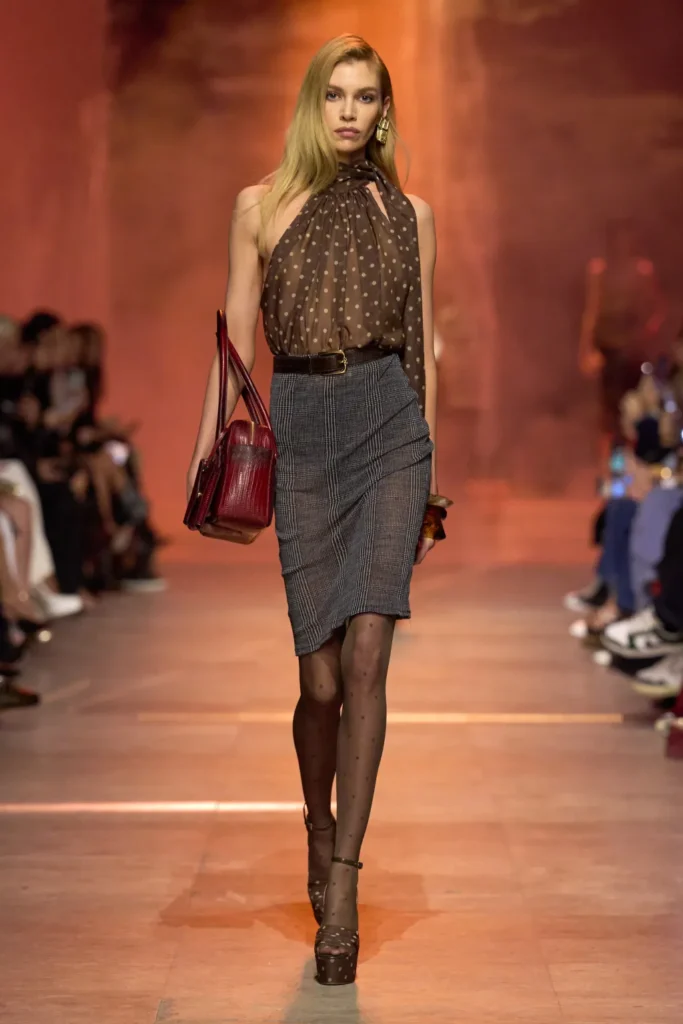
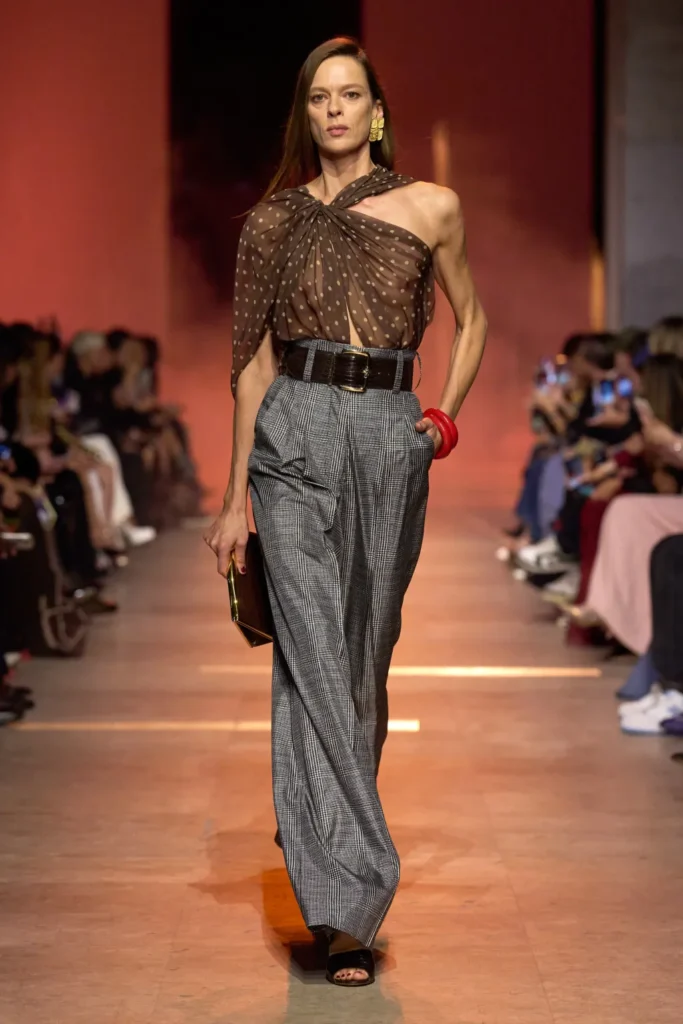
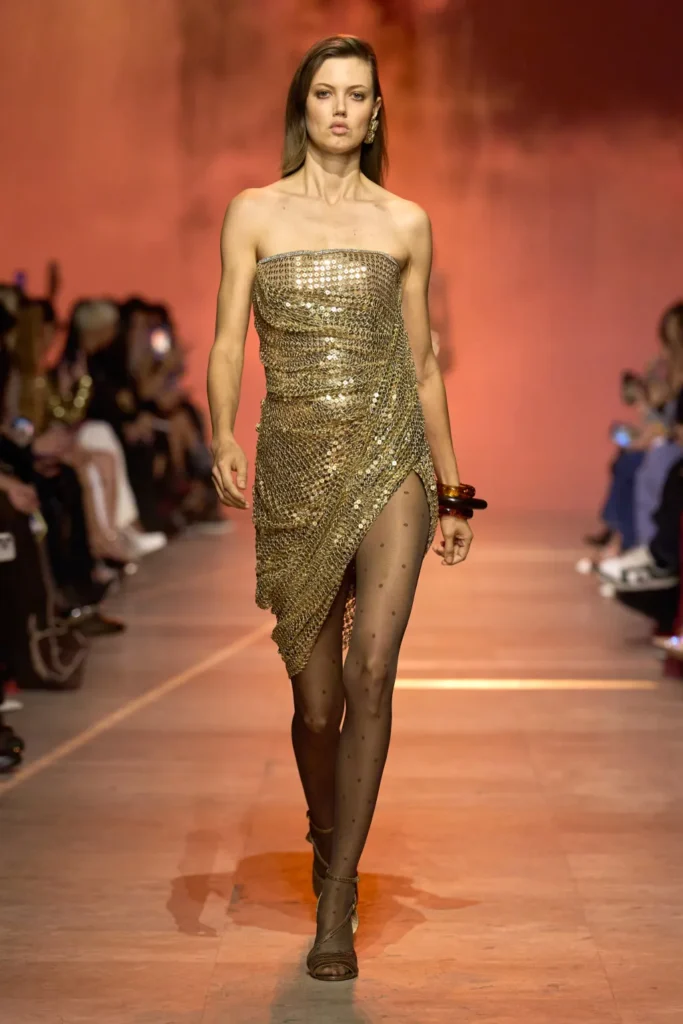
It was a deliberate evolution — a “strategic pivot,” as the house put it — toward a new kind of daytime glamour. Gone were the mother-of-the-bride silhouettes and tulle explosions. In their place: high-waisted pencil skirts, off-shoulder blazers, polka-dot tights, python trench coats, and sharp Prince of Wales checks. The show moved at a vibrant, almost cinematic pace — each look striking a chord between seduction and structure.

“I wanted to focus on separates this season — pieces that women can mix, rather than complete looks,” Saab said backstage. The result was a wardrobe of power and pleasure: draped mini dresses that clung to the body like silk armor, fluid trousers cut from satin with the texture of denim, and jackets whose precision tailoring whispered of 1980s confidence without nostalgia.

This fresh sensuality marks more than just an aesthetic shift — it’s a business one. Saab’s son and chief executive, Elie Saab Jr., confirmed that the brand’s ready-to-wear sales have surged 28% year-to-date, a sign that the house’s expansion into daywear is resonating with its global clientele.

“We’re building on our strength in the Middle East while expanding our footprint in the U.S.,” he said. The company is opening directly operated boutiques across the Gulf and preparing two key flagships in America — one in Miami, slated for the second quarter of next year, and another on the West Coast soon after.
Courtesy Of Elie Saab

While luxury brands face growing tariff and retail headwinds, Saab Jr. remains unbothered. “Our New York flagship hasn’t felt any slowdown,” he noted confidently — a statement that matched the energy of the clothes themselves.

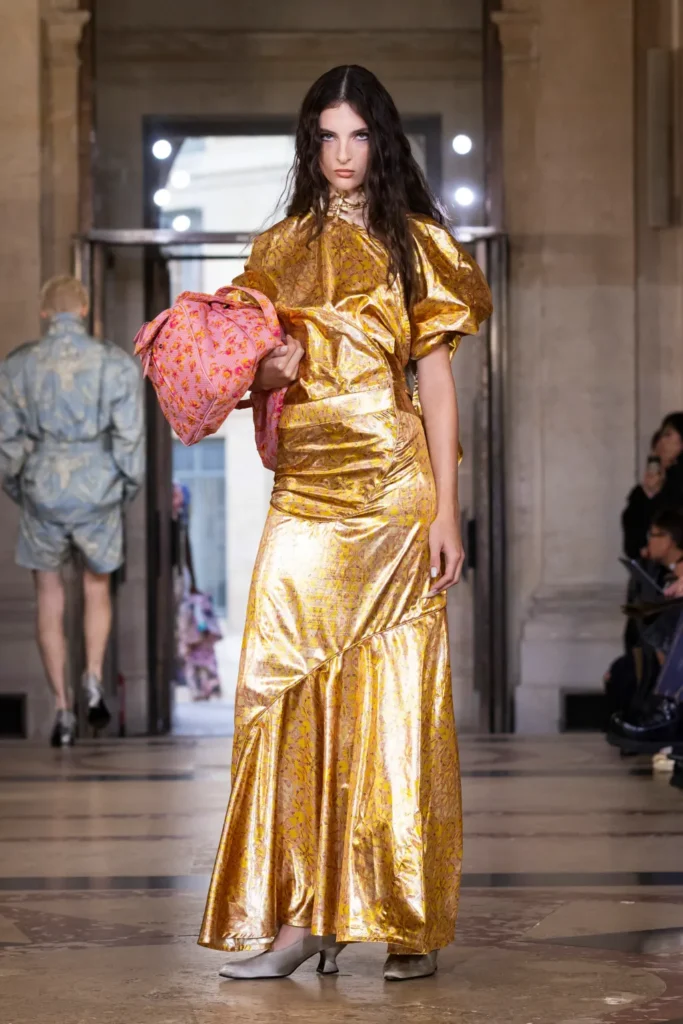
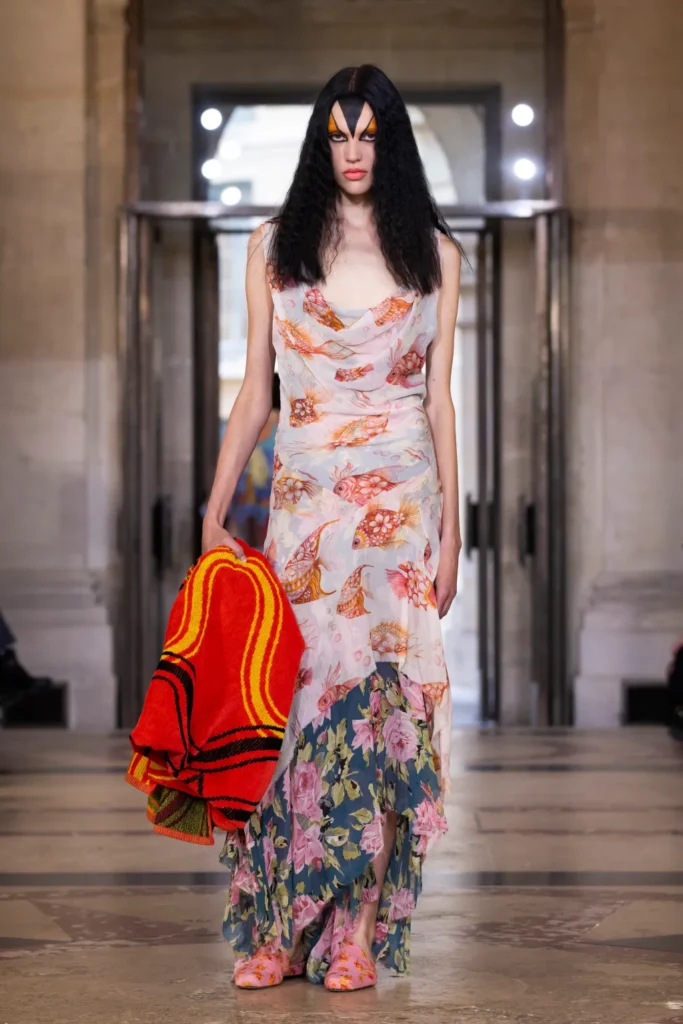
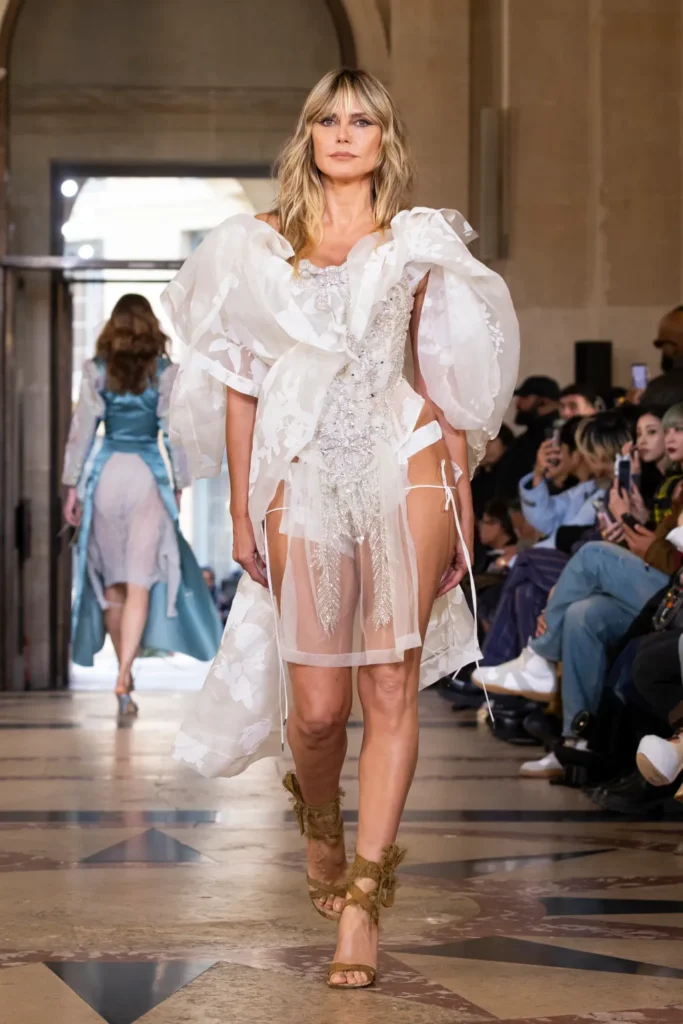
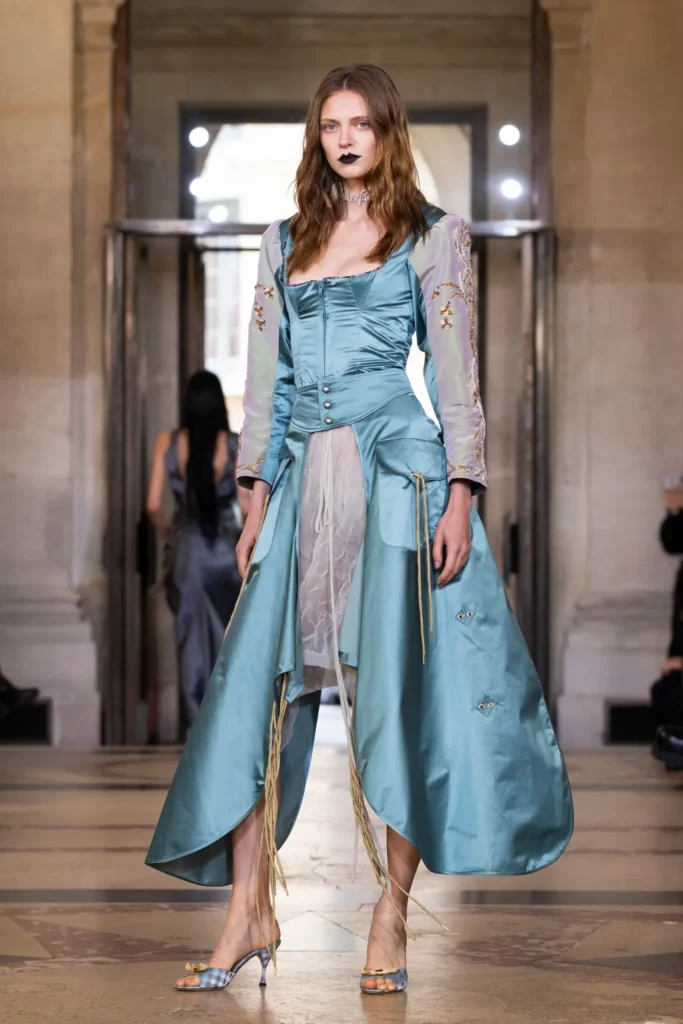
Andreas Kronthaler for Vivienne Westwood Spring 2026 Collection

Andreas Kronthaler for Vivienne Westwood Spring 2026 Collection

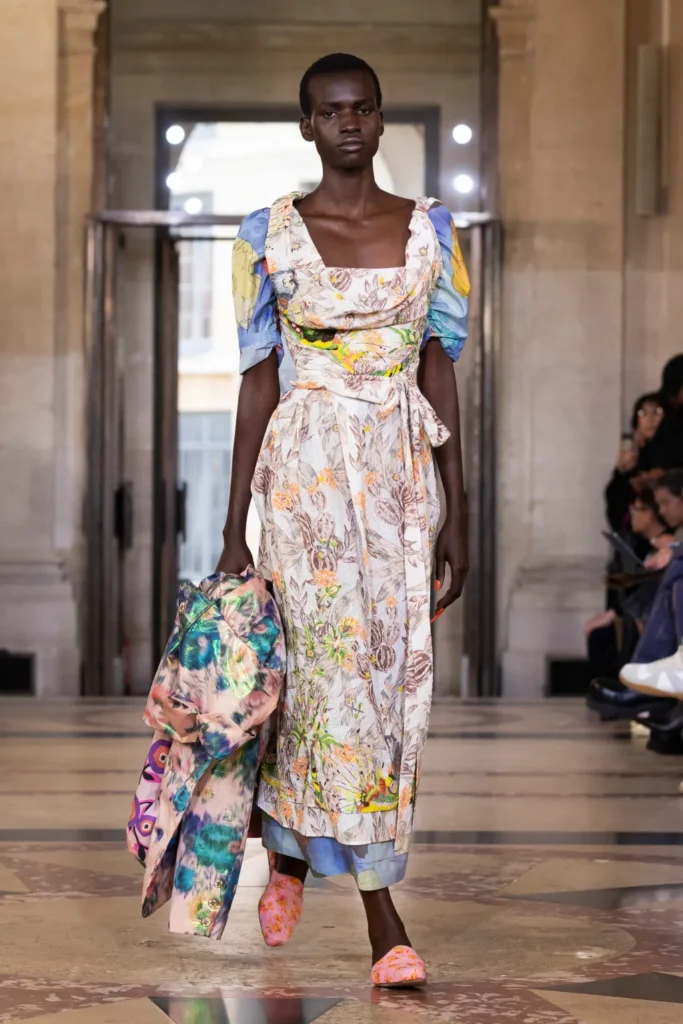
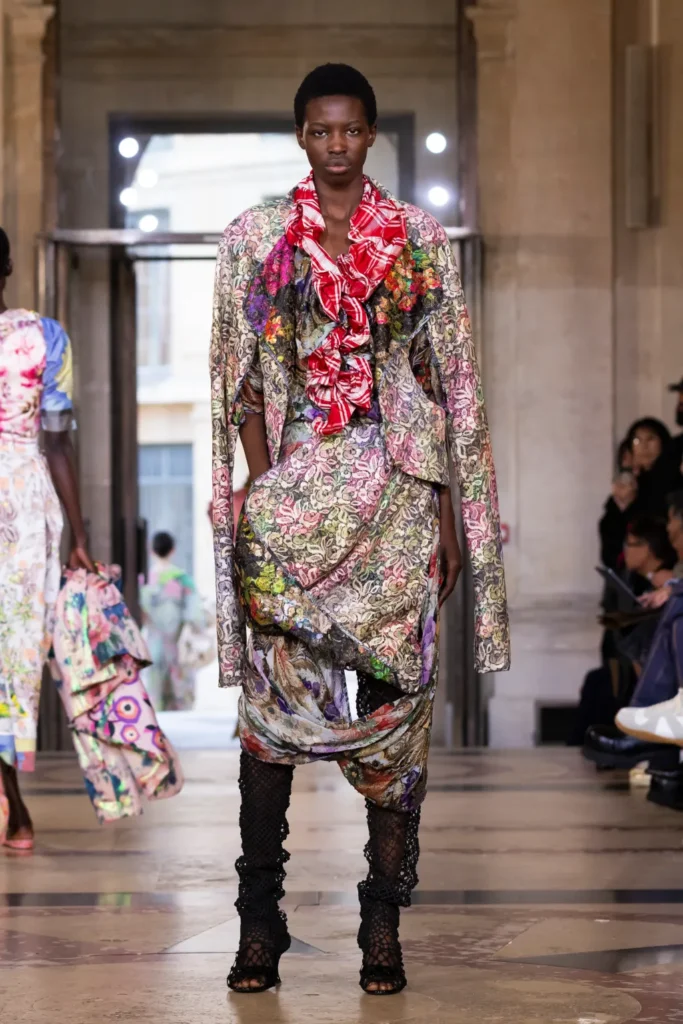
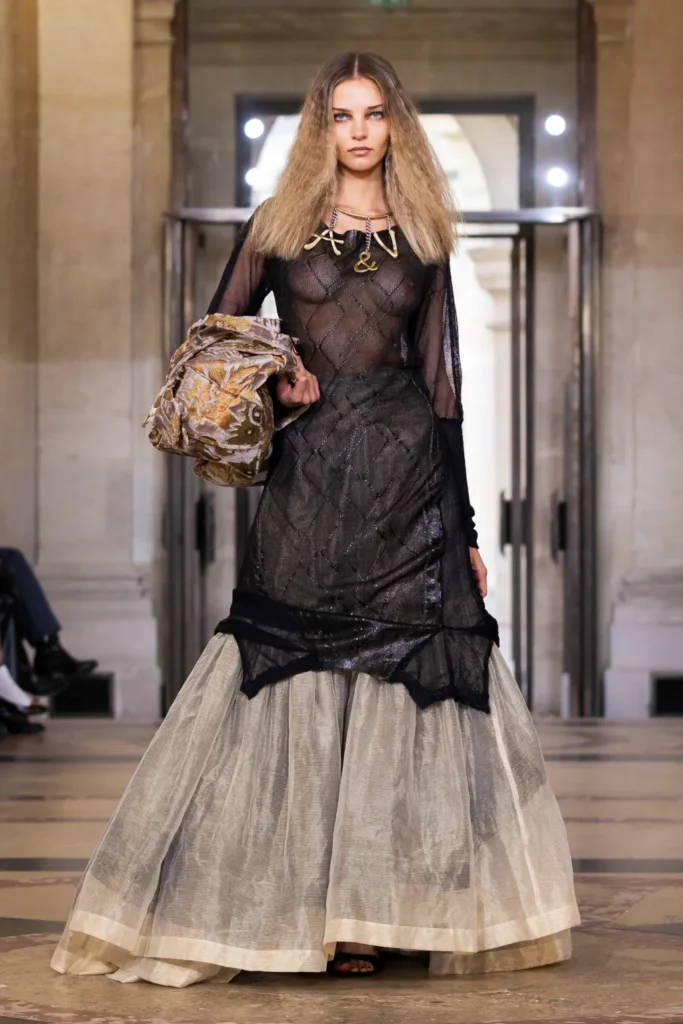
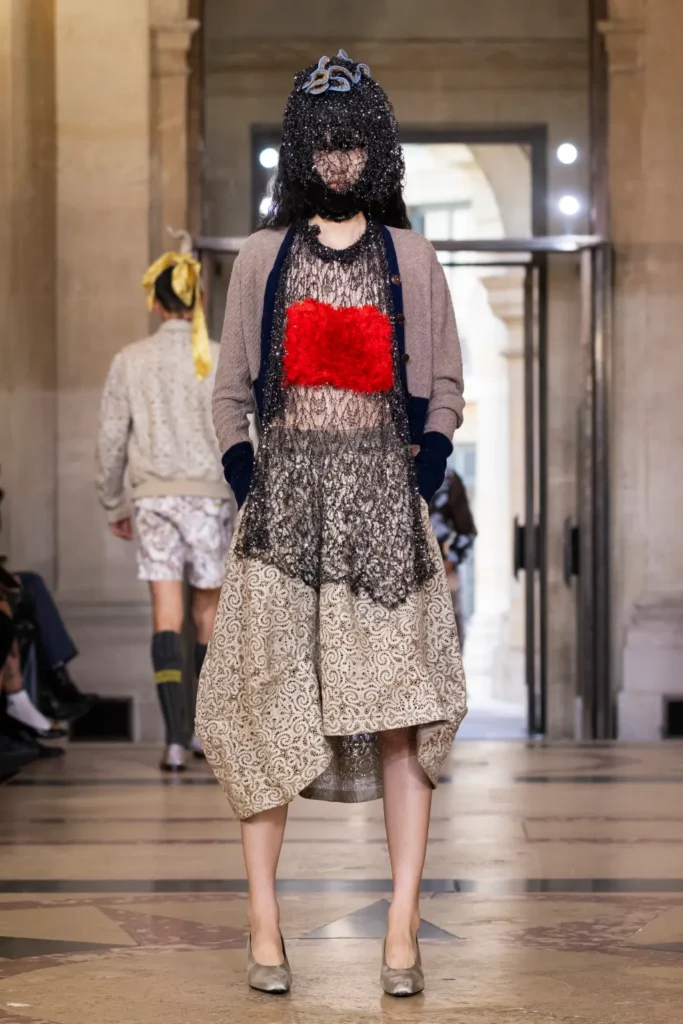
The mood at L’Institut de France was pure euphoria — a sun-drenched dream laced with punk defiance. Under the glass dome, models emerged one by one onto a raised, coliseum-like runway, dressed for an imaginary beach where the Renaissance meets The Flintstones. There was laughter, applause, and even a hint of nostalgia.

For Spring 2026, Andreas Kronthaler was chasing happiness — something elusive, precious, and achingly human in a chaotic world. “I was thinking about things that make me happy,” he said backstage. “The beach in Sicily, the friends we’ve had around the house for years, and the sunflowers outside our London studio. Every morning I see them — they’re incredible. They just make you happy.”

That sense of joy — immediate, sensual, and a little absurd — pulsed through the entire collection. Kronthaler titled it “Boudoir,” after the house’s new fragrance that debuted in November, inspired by rare Versailles Osmothèque perfumes that both he and Vivienne Westwood adored. It was a fitting tribute — intimate, eccentric, and alive with memory.

The show opened with playful beachwear that blurred time and context: toga-like sarongs cut from raw linen; shell-pink chiffon wraps; sun-bleached stripes slung low on the hips. Then, slowly, the collection transitioned toward Westwood’s irreverent codes — slouchy, punk-inflected tailoring; bustier dresses slashed and reassembled; baroque prints one might find at an Italian market; and gender-fluid knitwear that clung to the skin like sea mist.

The casting was nothing short of iconic: Simonetta Gianfelici, Heidi Klum, Isabeli Fontana, and Carmen Kass — women who once walked for Westwood in the ’90s — returned to the runway, radiant and free. They didn’t just model the clothes; they embodied them, walking with the kind of ease and humor that defined Vivienne’s world.

“It’s like a dressing room — but also the beach,” Kronthaler explained. “It’s about joy, about wanting to get dressed up for the fun of it. Because we live in times of such great change.”

Balenciaga Spring 2026 Collection

Balenciaga Spring 2026 Collection

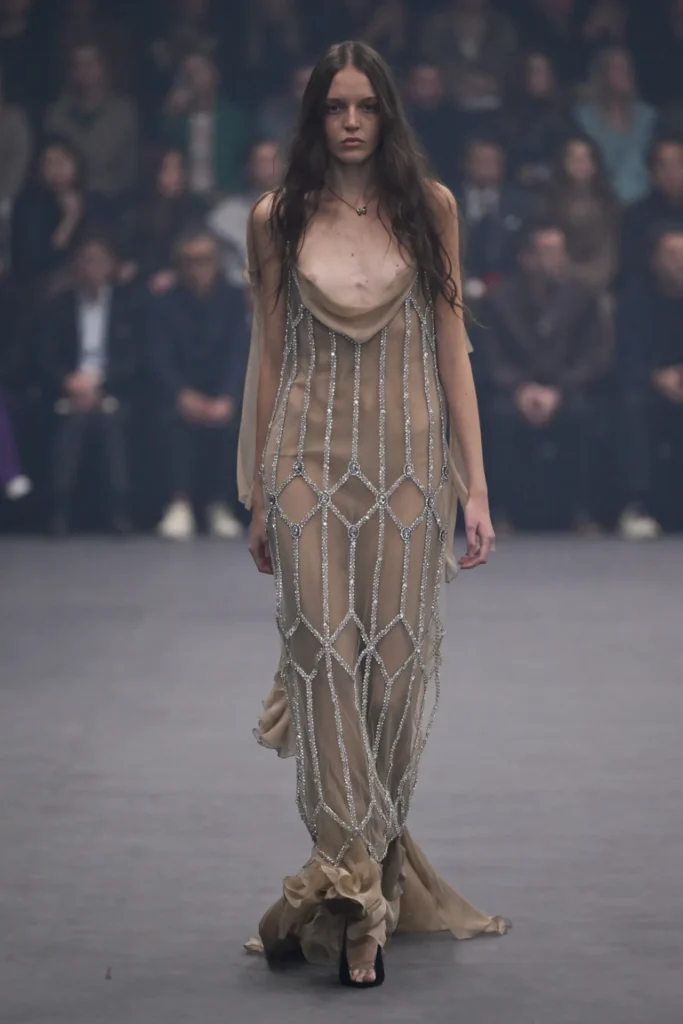
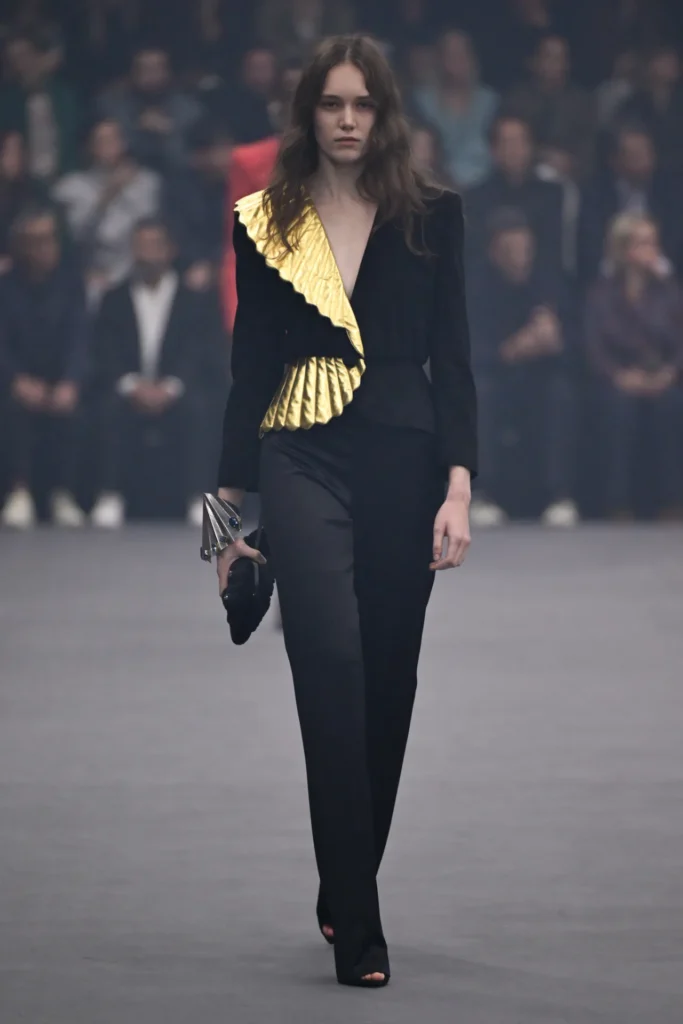
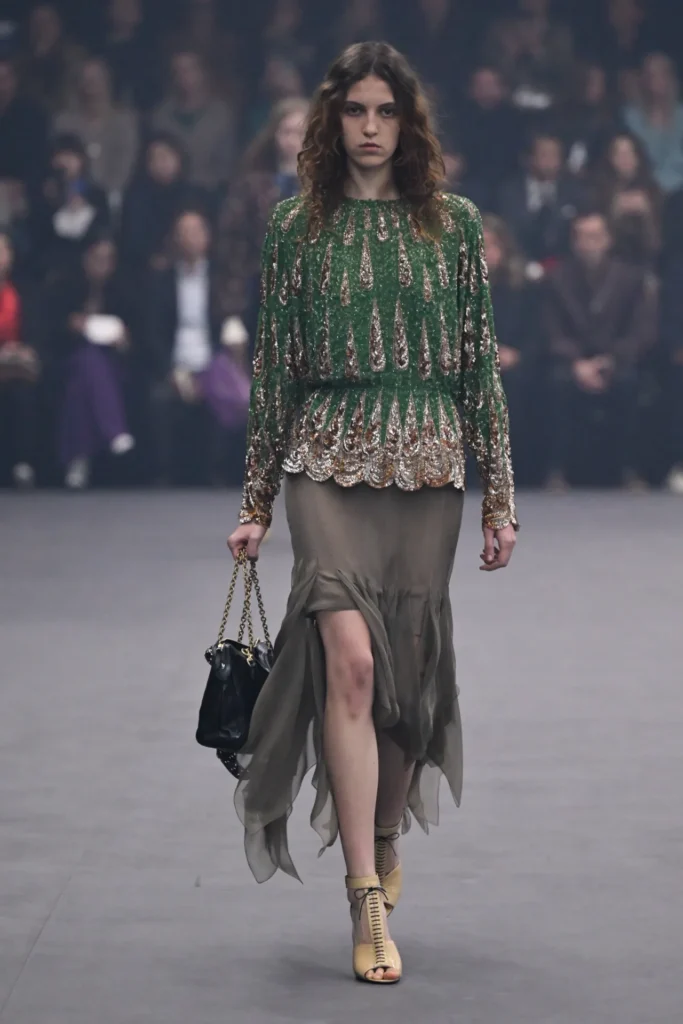
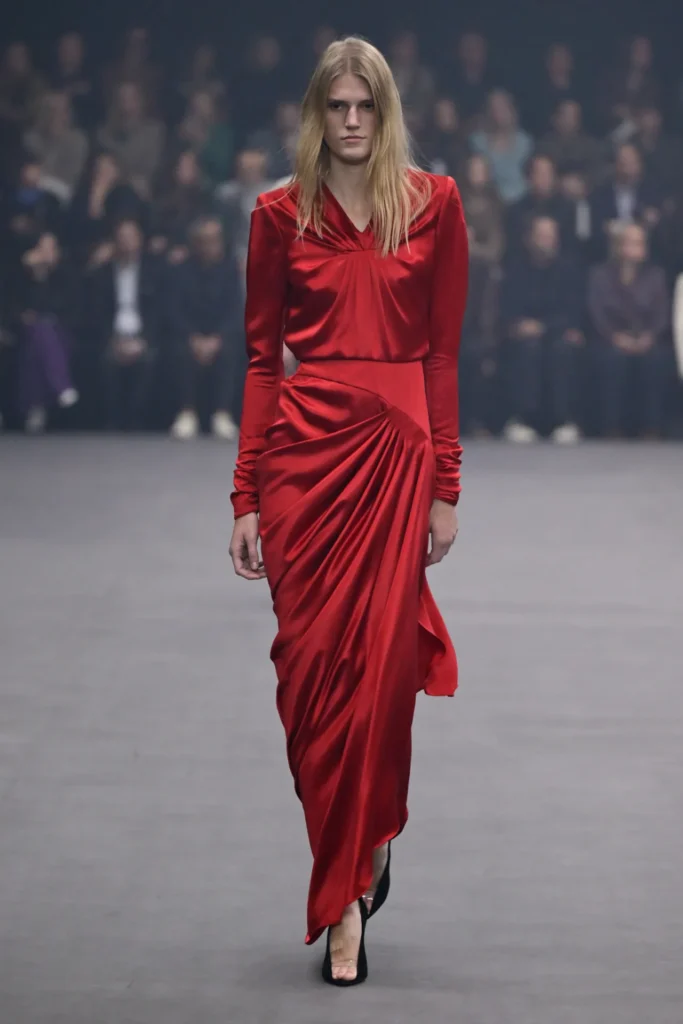
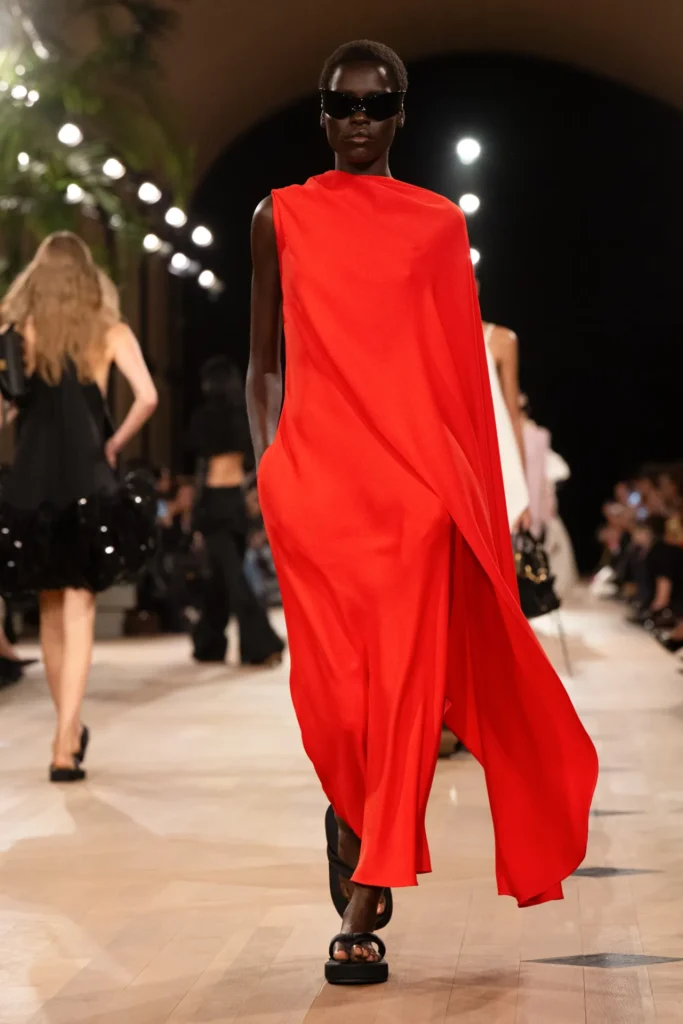
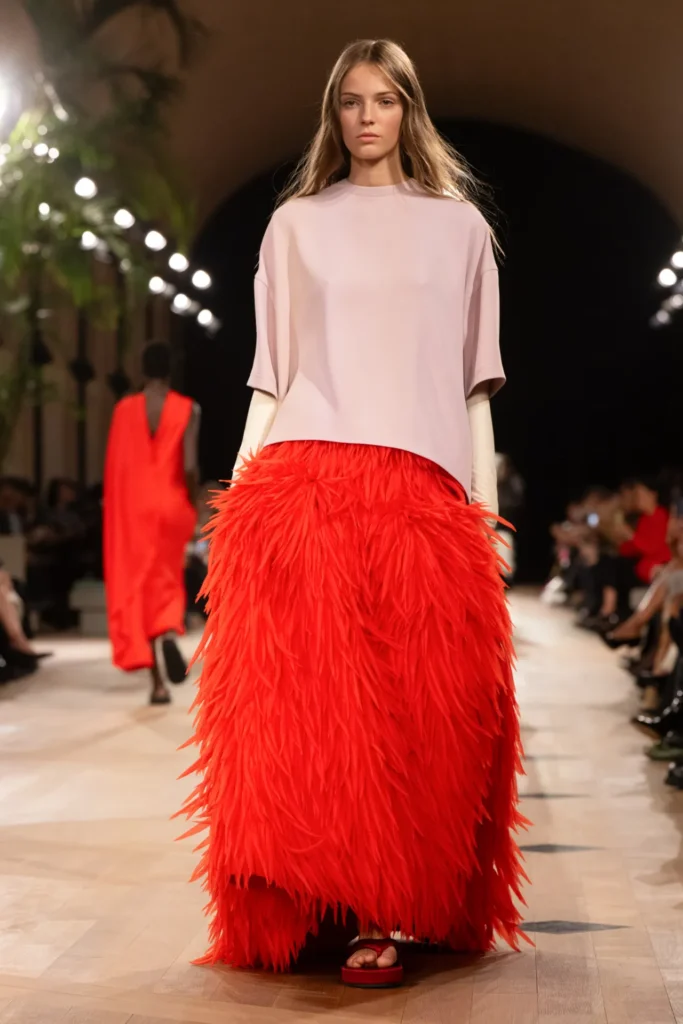
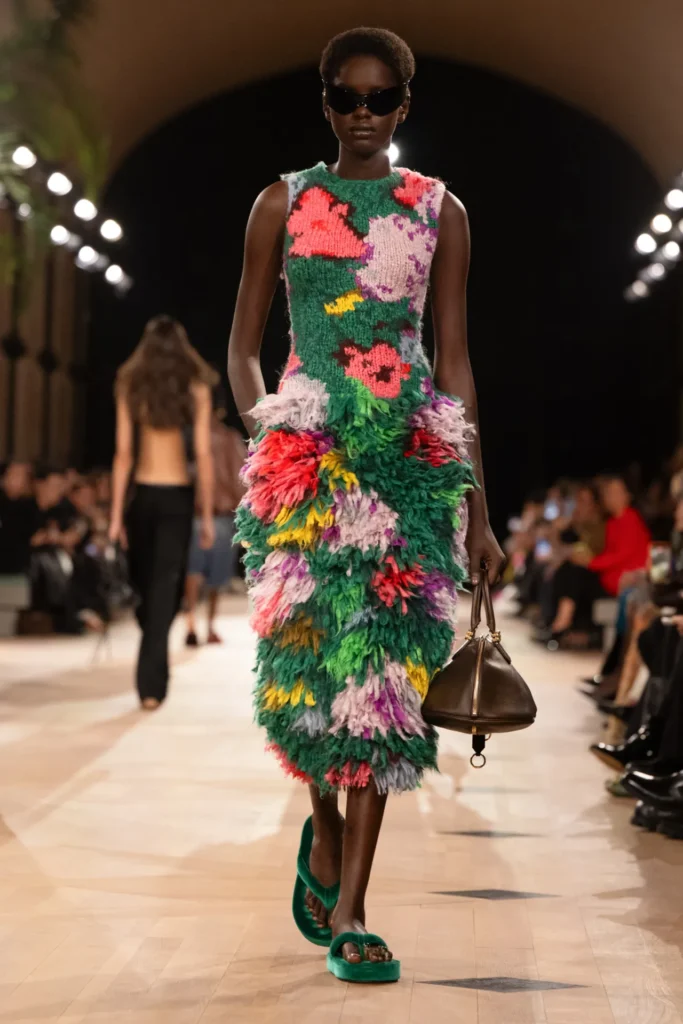
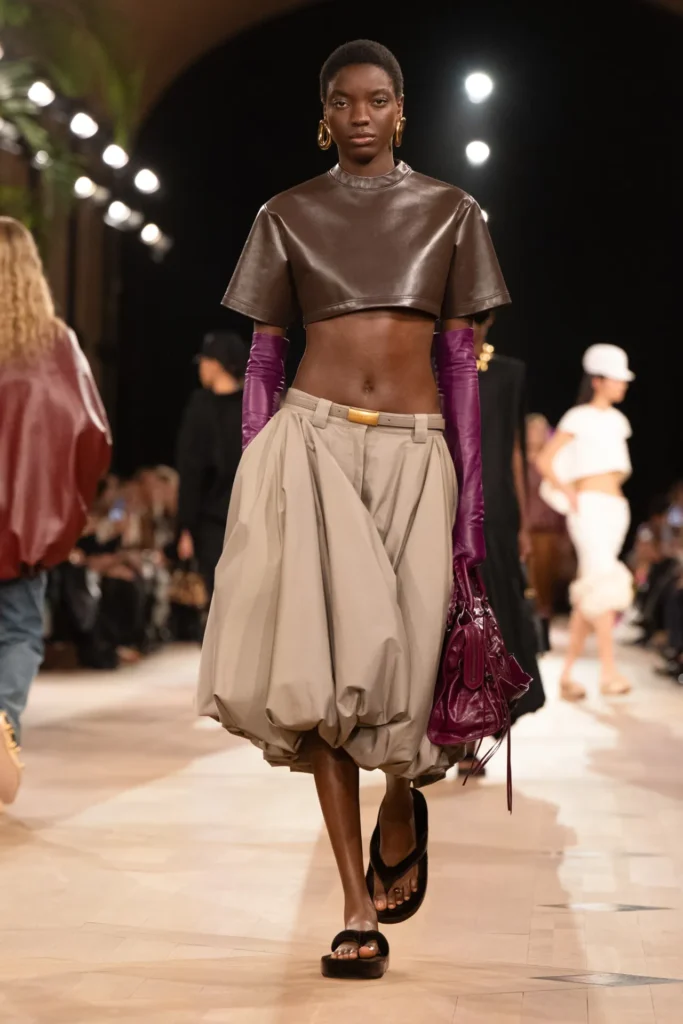
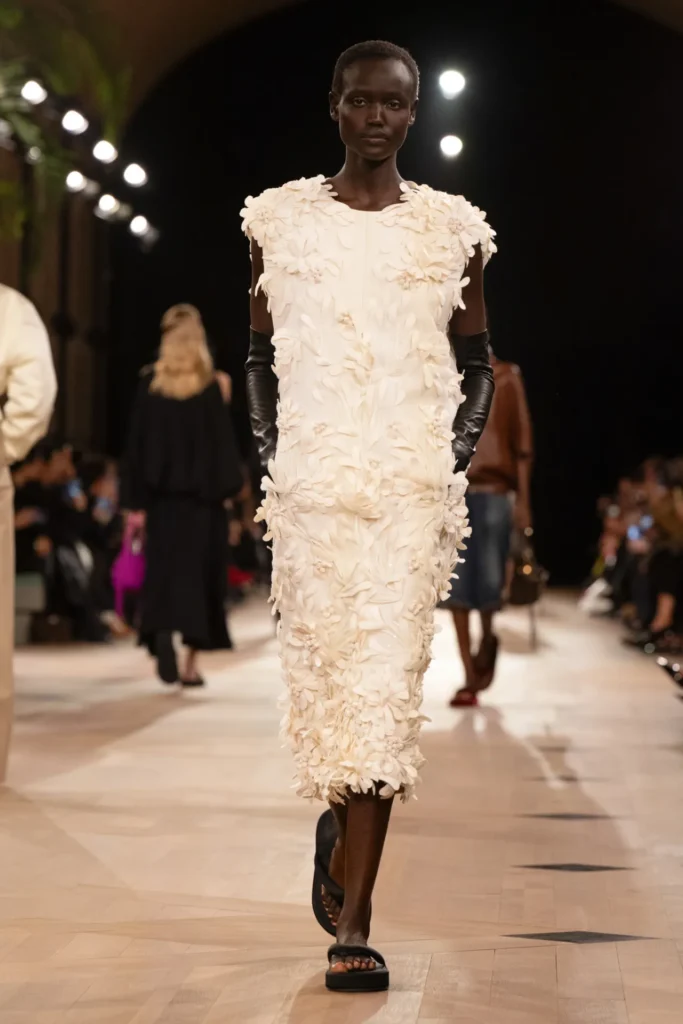
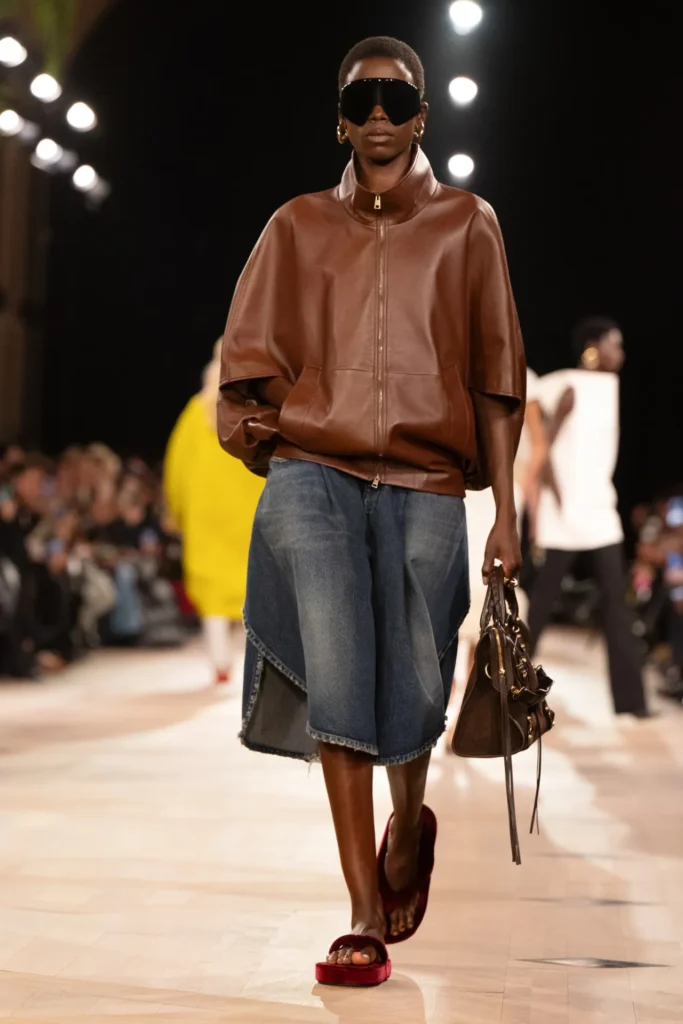
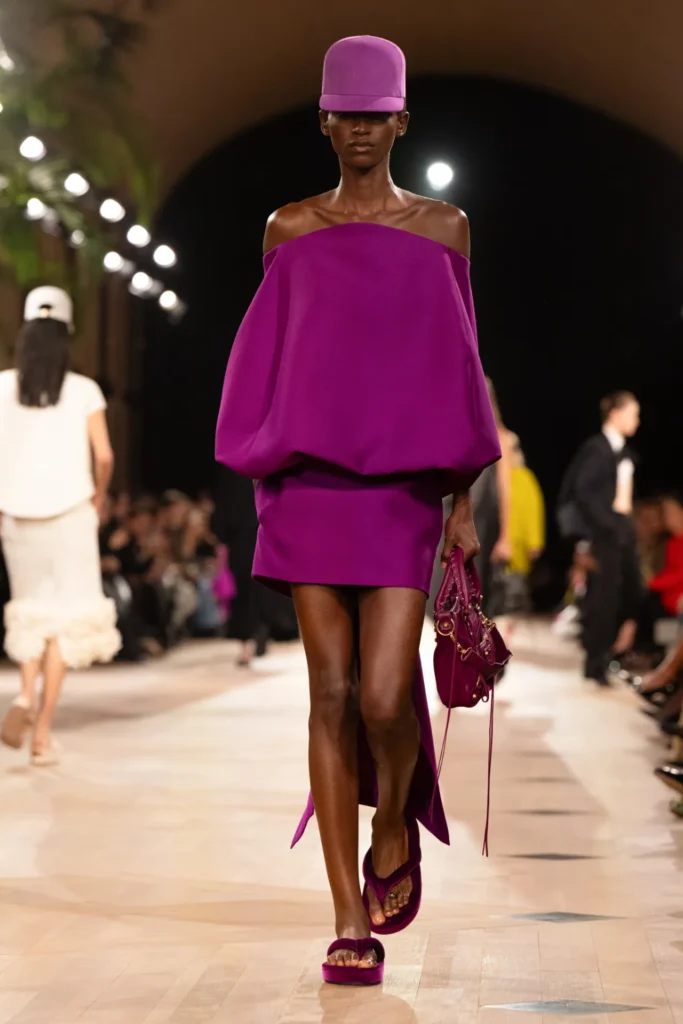
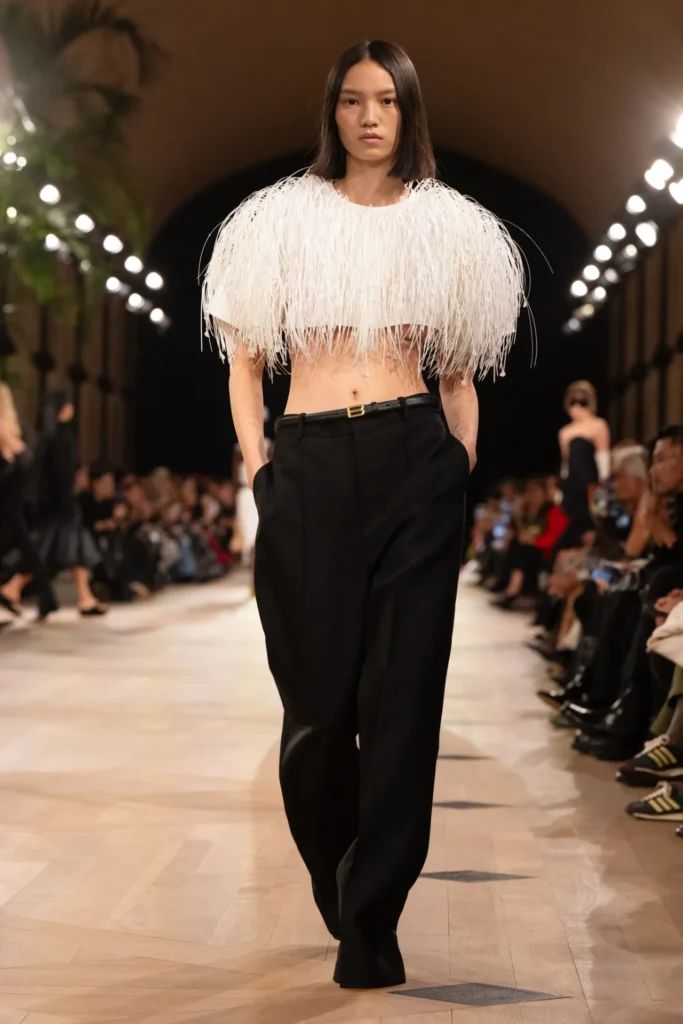
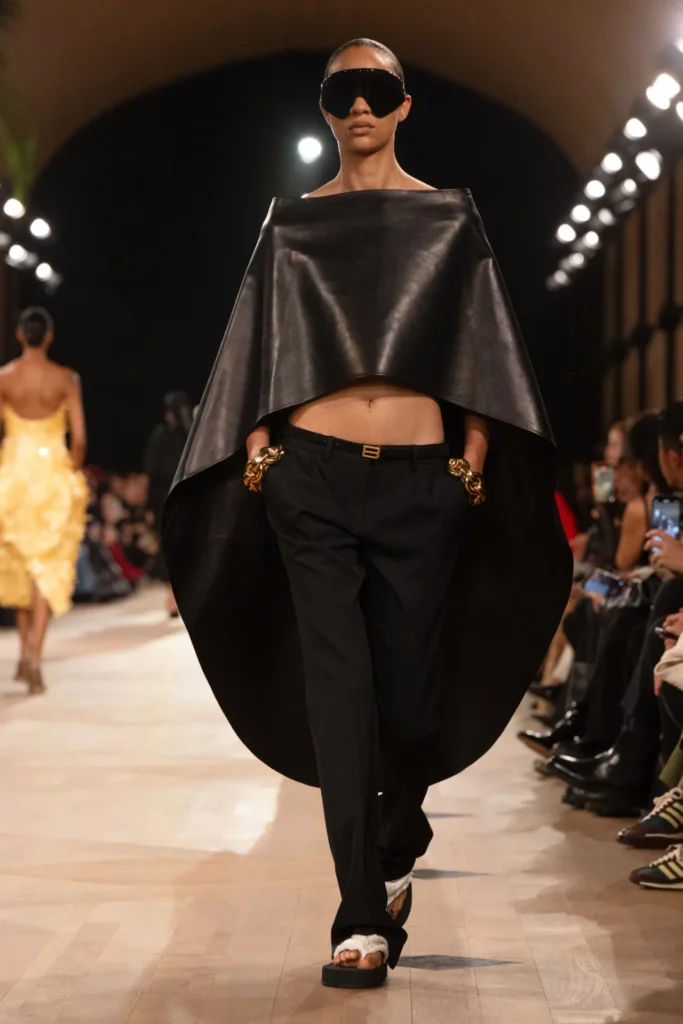
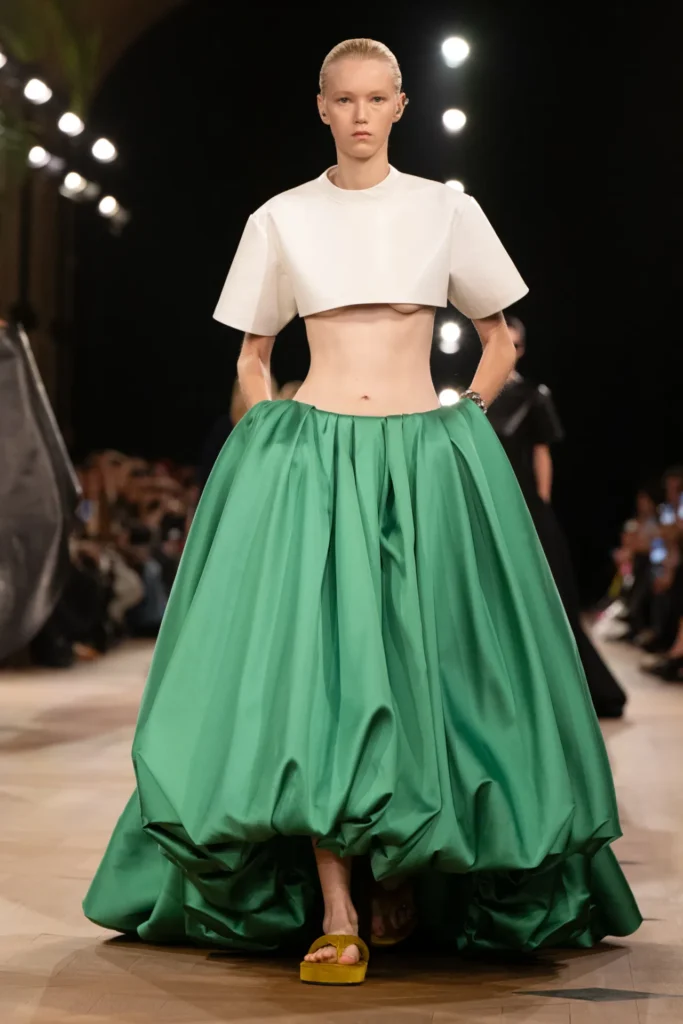
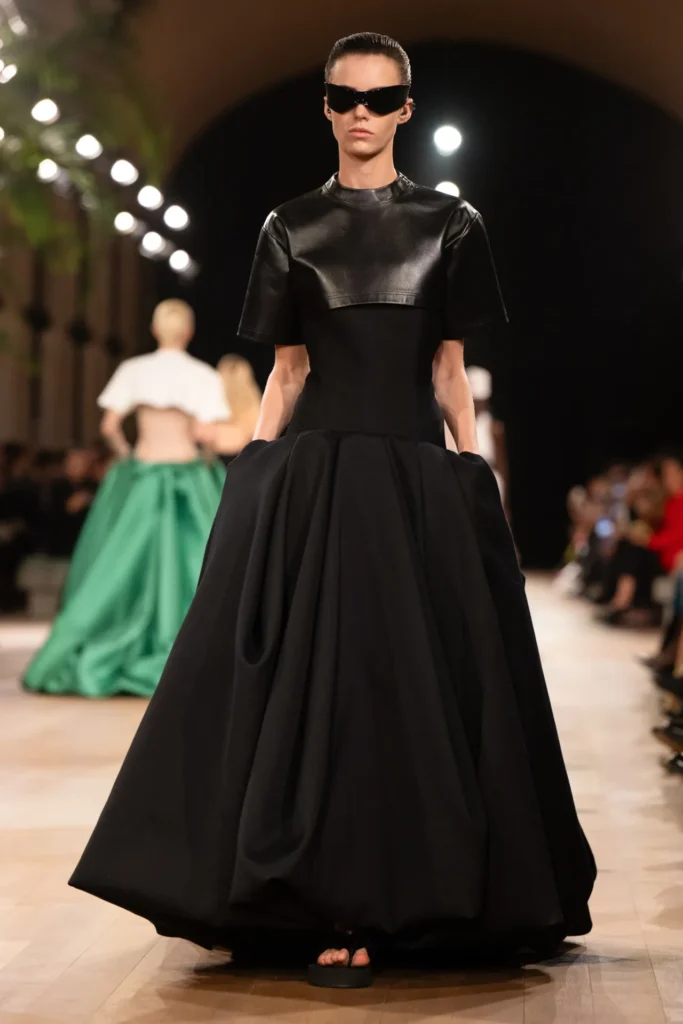
In a powerful debut that felt both reverent and revolutionary, Pierpaolo Piccioli reimagined the house of Balenciaga as a dialogue between eras — a meeting of Cristóbal’s sculptural purity, Nicolas Ghesquière’s futurism, Demna’s irony, and his own deep-seated romanticism.

Gone are the days of scorched-earth debuts. The new mood in Paris is one of continuity, respect, and evolution — and perhaps no one embodied that better than Piccioli on Saturday night, when he unveiled his vision for Balenciaga. His approach was deliberate, calm, and assured, drawing a seamless line from the master’s atelier in the 1950s to the sleek digital catwalks of today.

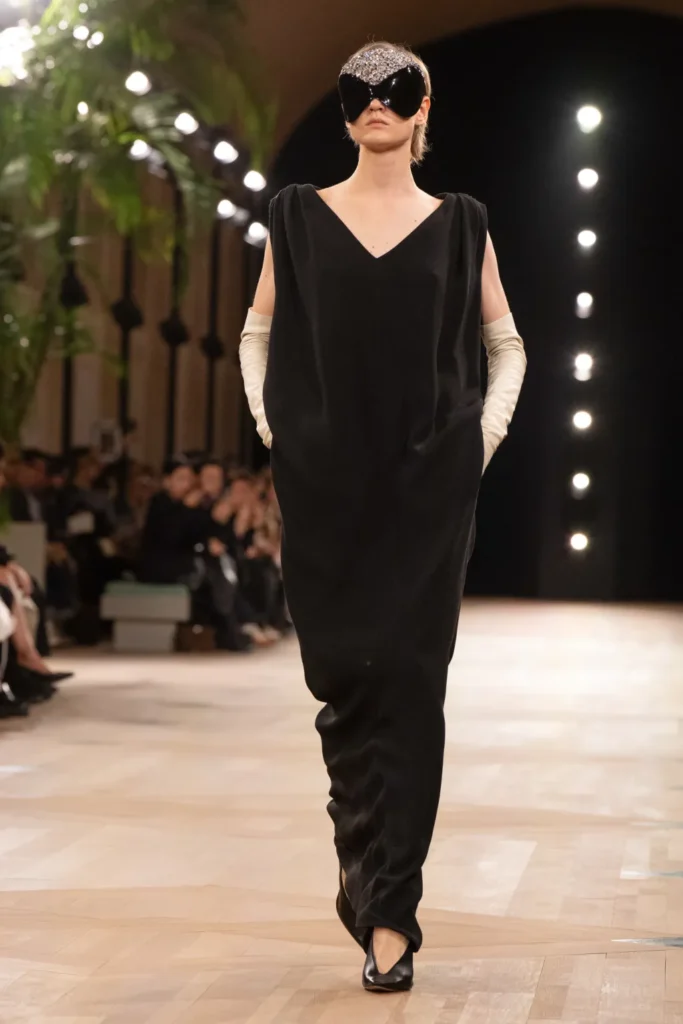
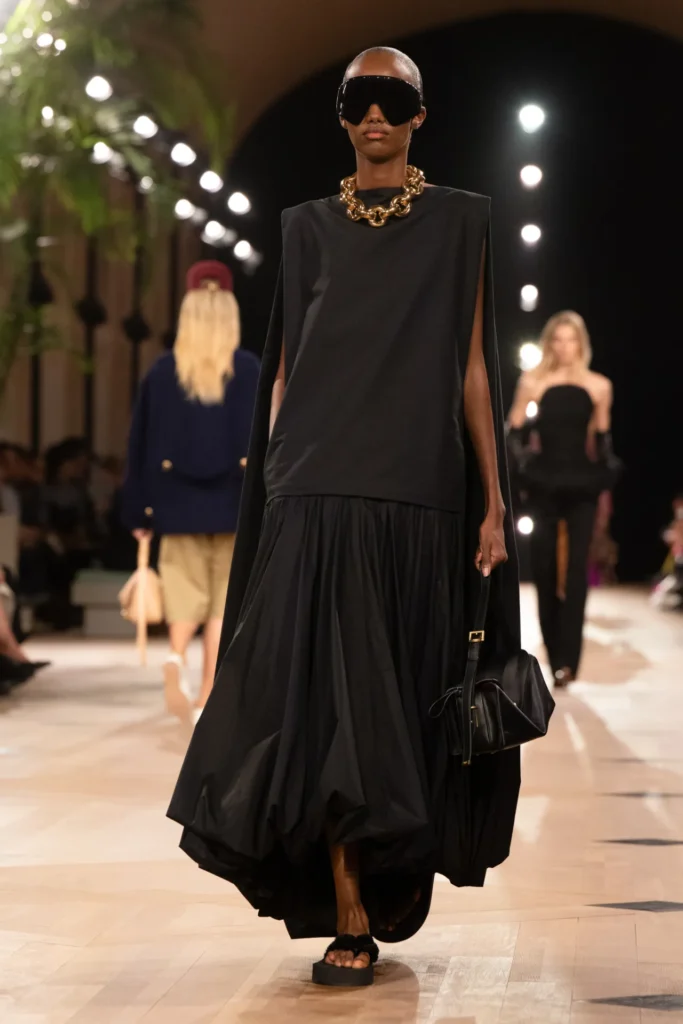
The show began in near silence, the hum of anticipation cut by the echo of a single heel. Out came the first look: a sleeveless black sack dress, its architecture impeccable, paired with oversized bug-eyed sunglasses. In that instant, Piccioli’s method was revealed — stripping down to the essentials to rebuild from the core.

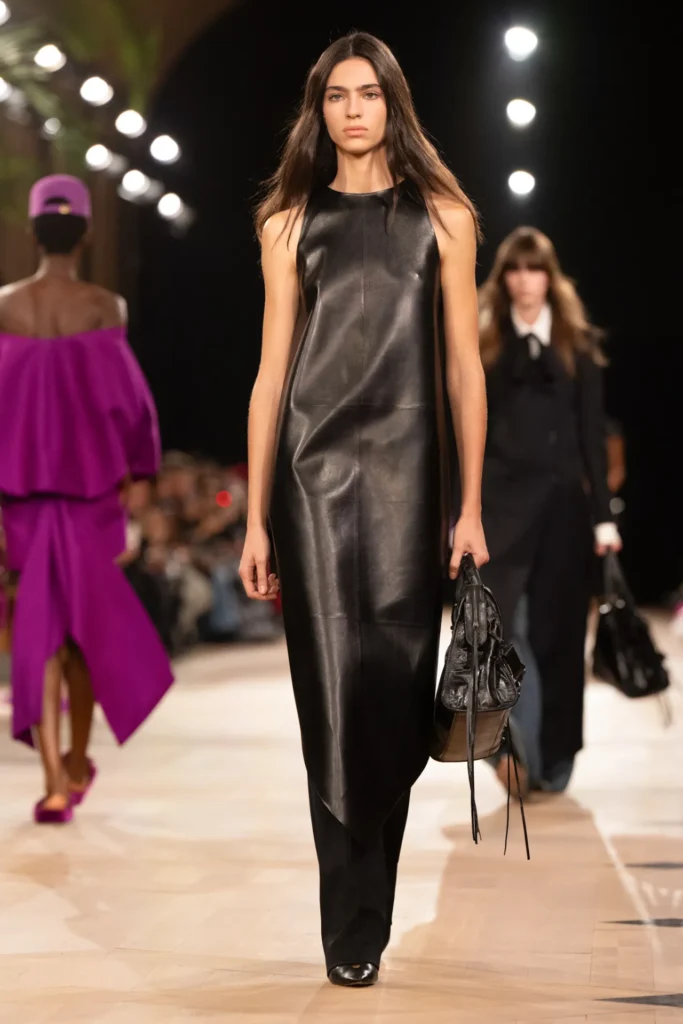
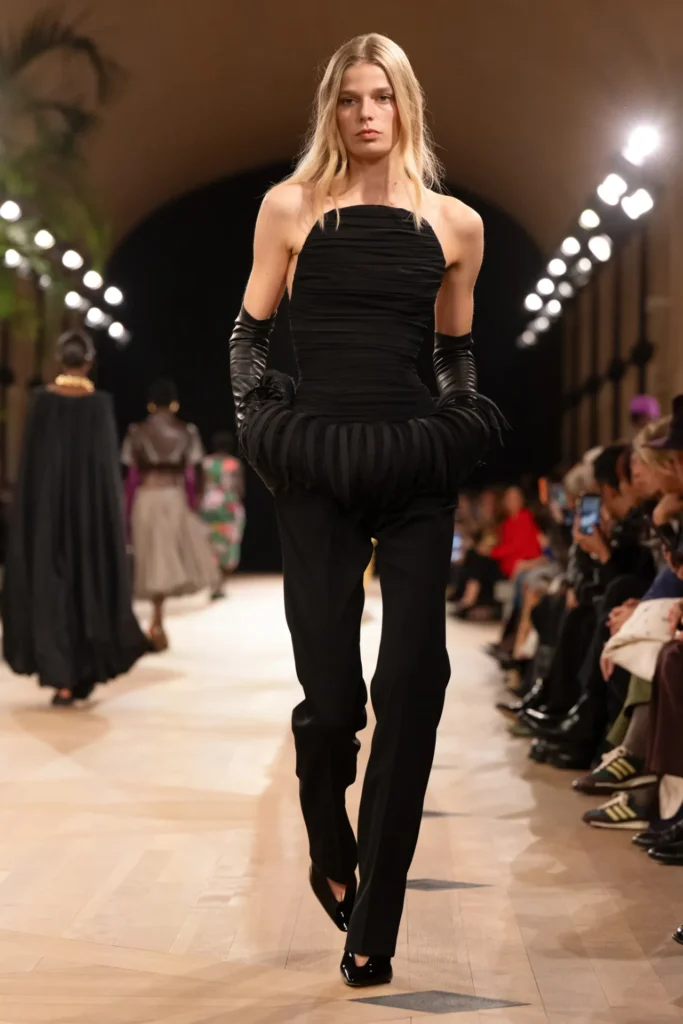
There were, of course, countless nods to Cristóbal Balenciaga himself. The legendary 1967 wedding ensemble — famously inspired by monastic shapes and, as fashion lore has it, by Darth Vader — returned in new guises: one as a crisp white shirt, another as a leather cape, each modernized with quiet irreverence. Bubble skirts and voluminous tulip silhouettes followed, some crafted in glossy black leather, others rendered in duchess satin that caught the light like liquid sculpture.

The sack dress, which once defied the era’s hourglass ideal, became a manifesto once more — this time for freedom, fluidity, and form without constraint.

Yet the collection wasn’t all archival reverence. Piccioli wove in clear tributes to the house’s 21st-century guardians. The tall riding hats and oval coats with bold buttons nodded to Ghesquière’s beloved Fall 2006 collection, while the oversized and miniaturized versions of the iconic Le City Bag — Ghesquière’s breakout accessory from 2001 — drew knowing smiles from the audience. Meanwhile, distressed wide-leg denim and torn khaki shorts conjured the streetwise rebellion of Demna’s Balenciaga, minus the mud but not the attitude.

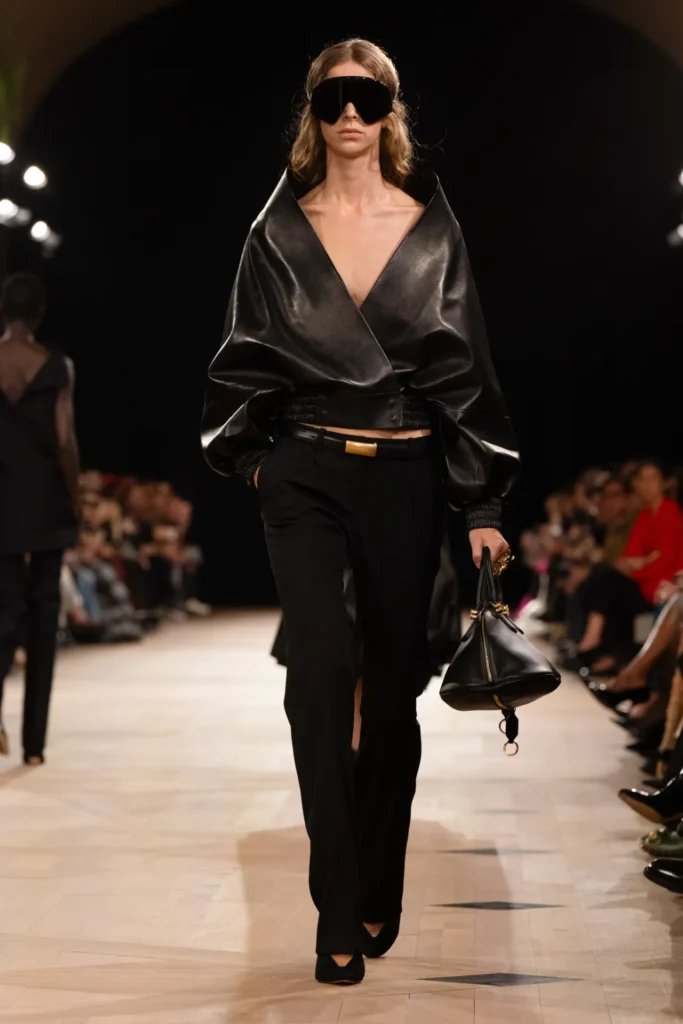
Piccioli’s own signature, however, glowed unmistakably through the seams. His mastery of color, his command of sculptural drape, and his instinct for romance redefined the house’s codes with new emotional depth. He infused sensuality with restraint — cropped leather tops exposing sculpted collarbones, crisp shirts cut just above the ribs, their minimalism radiating power rather than provocation.

After taking a year-long creative pause following his departure from Valentino, the Italian designer returned with a collection that balanced humility and grandeur. It was both homage and renewal — an act of grace disguised as audacity. And while the show opened with a sack dress — that 1957 innovation that once scandalized the fashion world — it closed with a whisper of modern liberation. In Piccioli’s hands, Balenciaga once again became what it was always meant to be: not a brand chasing the moment, but a timeless study in how form becomes feeling.

Maison Margiela Spring 2026 Collection

Maison Margiela Spring 2026 Collection

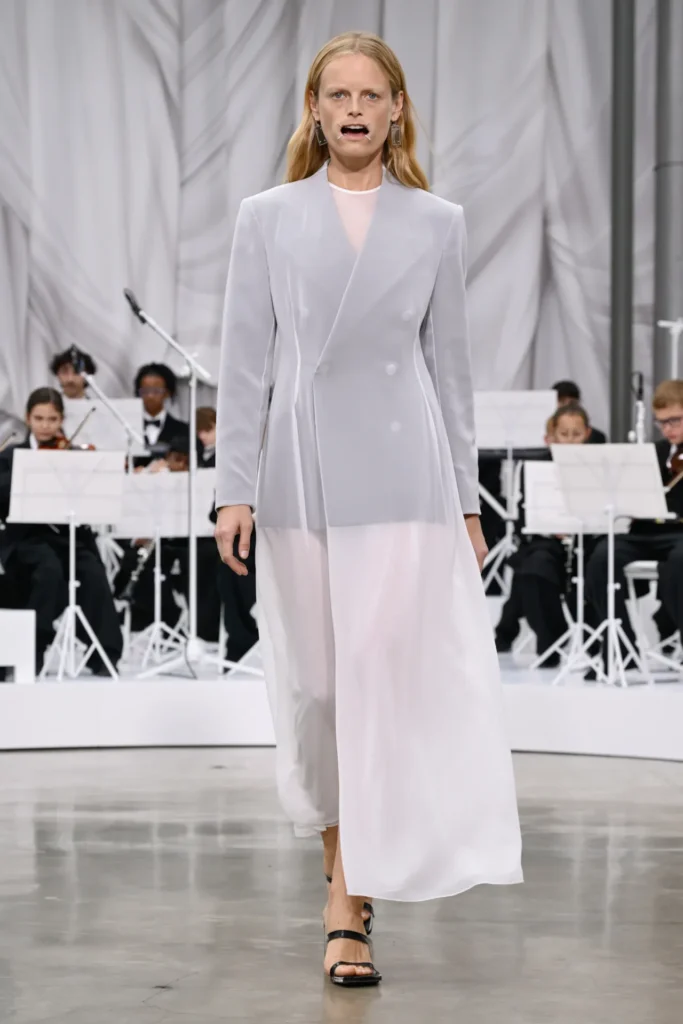
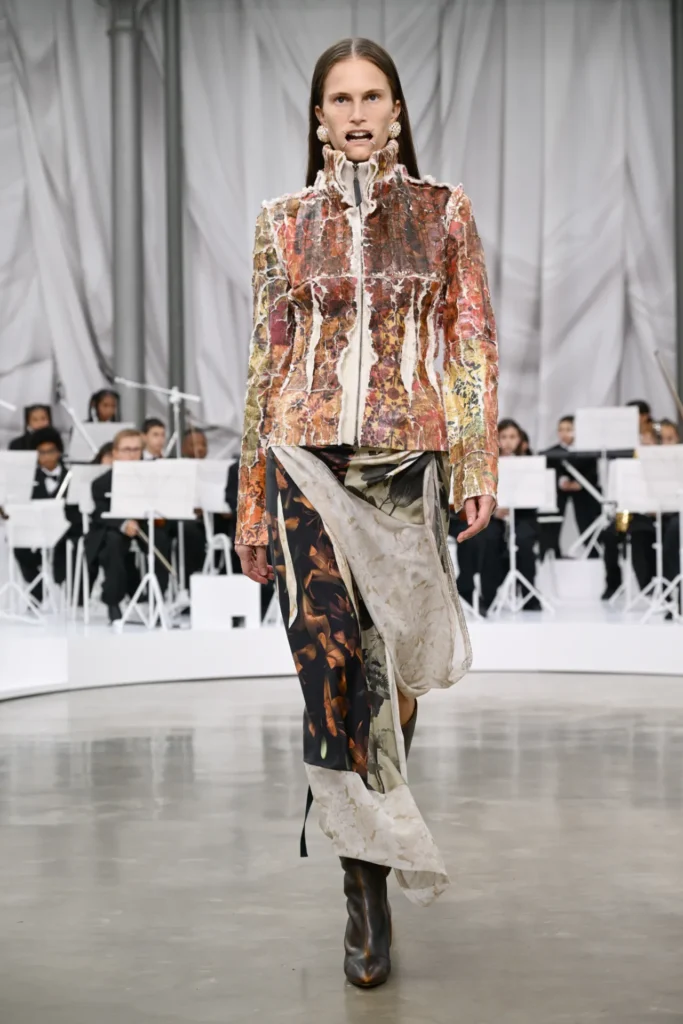
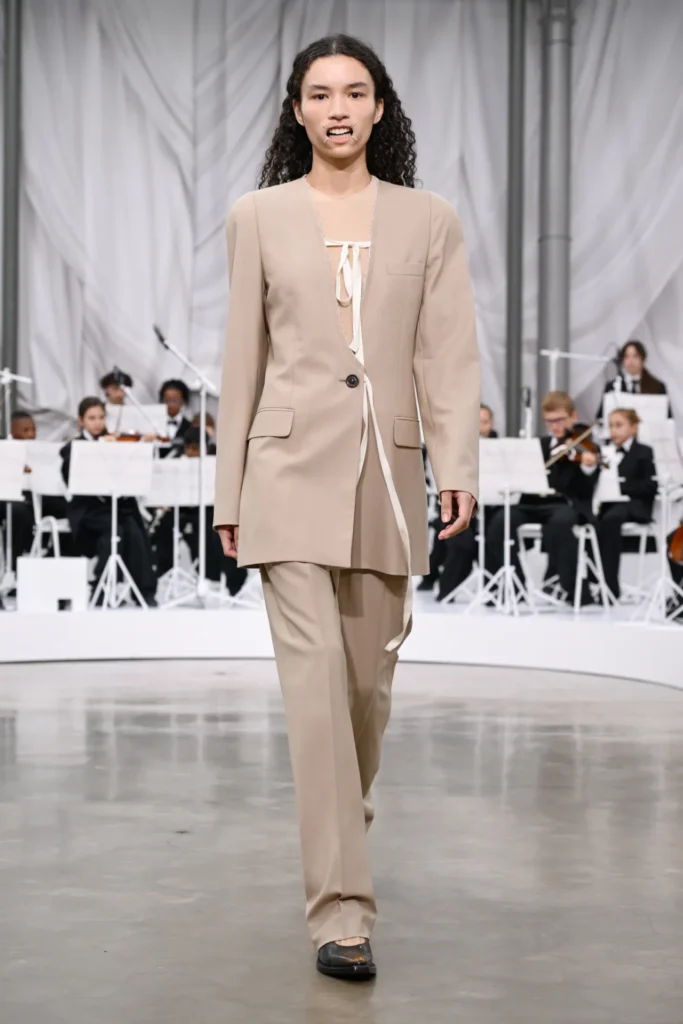
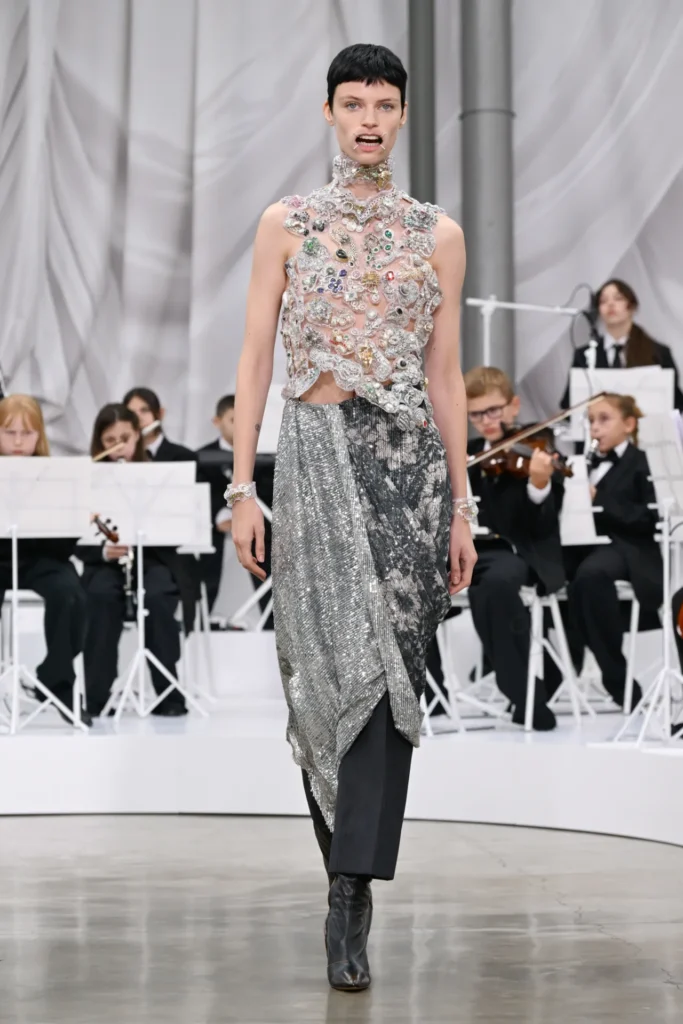
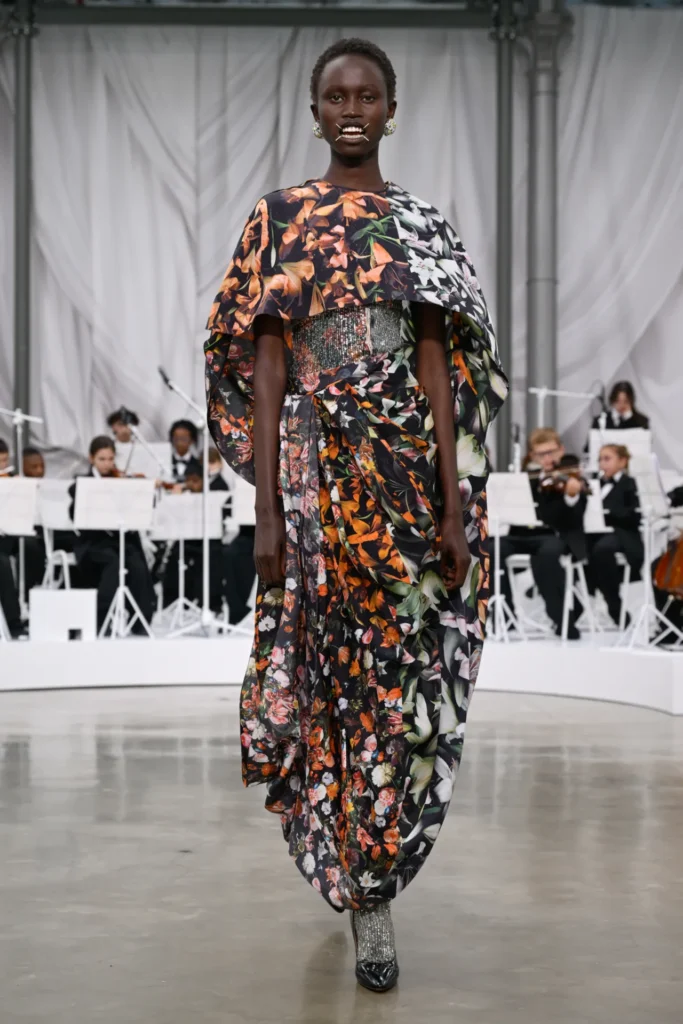
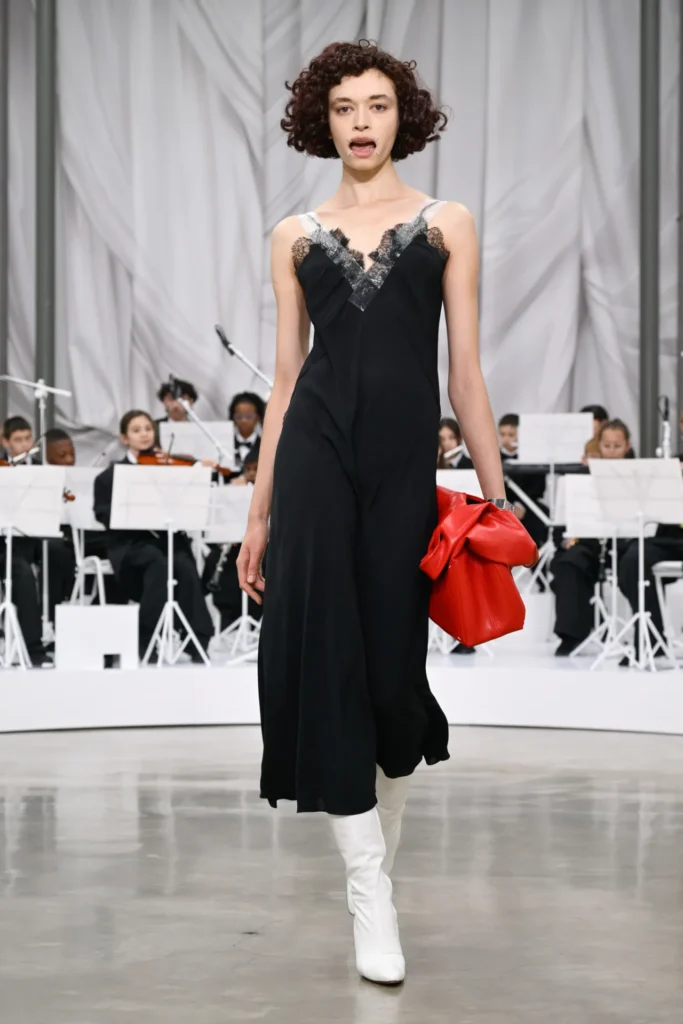
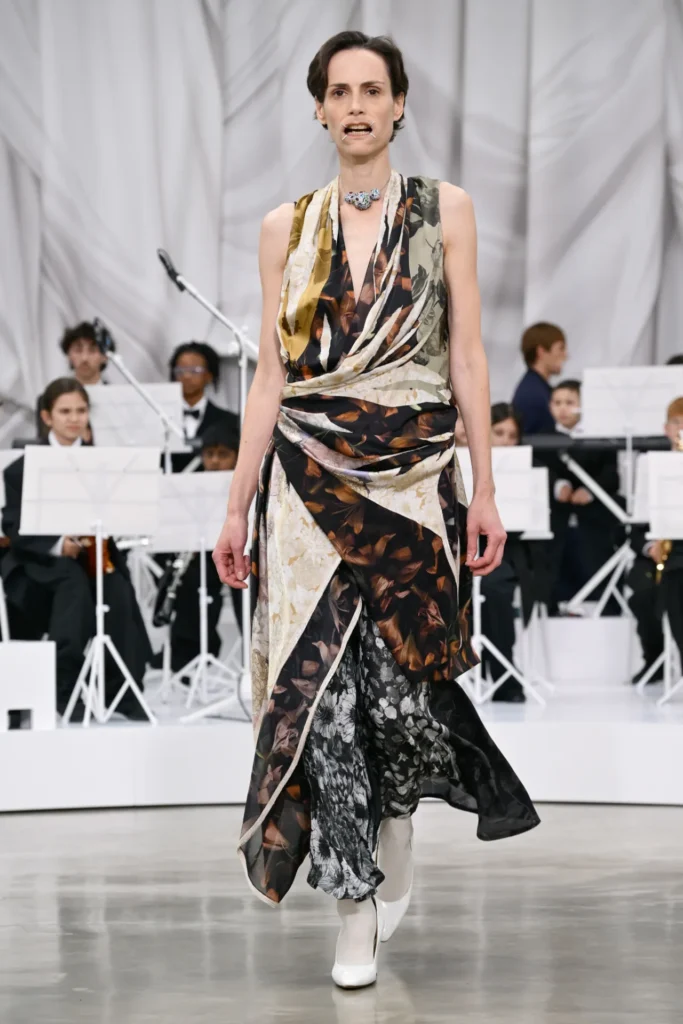
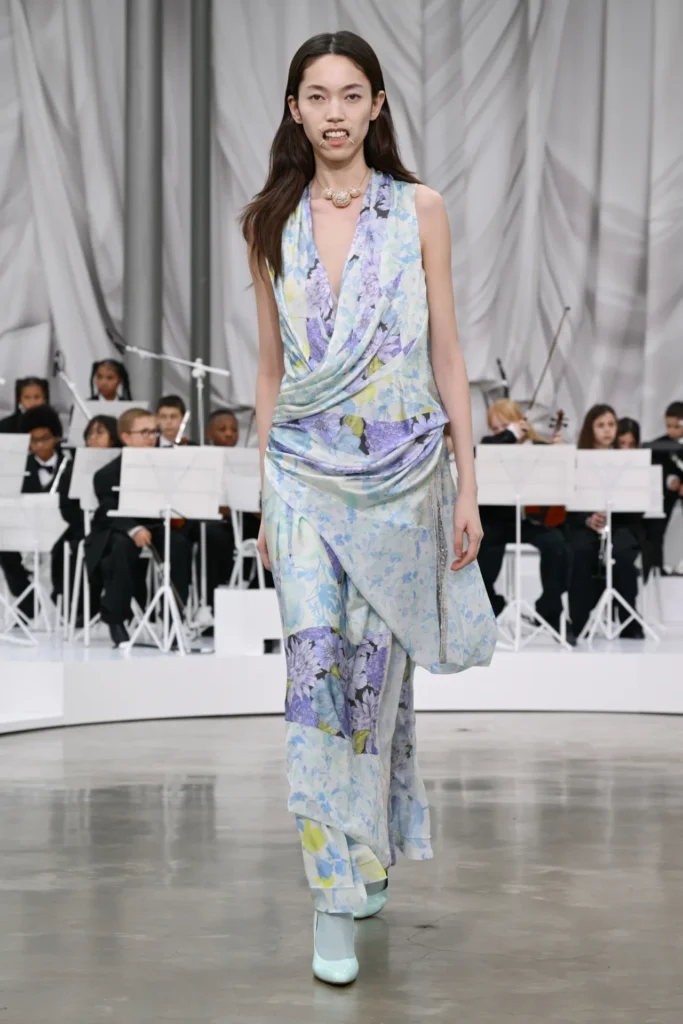
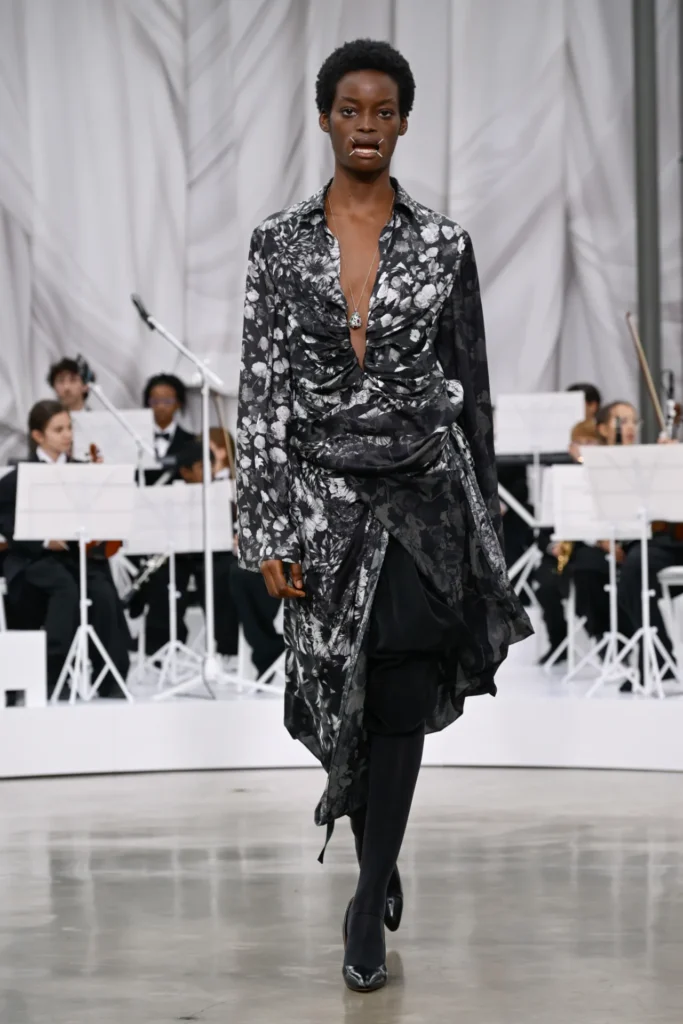
Glenn Martens returned to the roots of Maison Margiela with a collection that was as cerebral as it was tactile — a sharp reminder that simplicity, in his hands, is never simple. After his grand Artisanal presentation in July, this ready-to-wear collection felt like a deliberate recalibration: grounded, essential, and deeply faithful to the house’s codes.

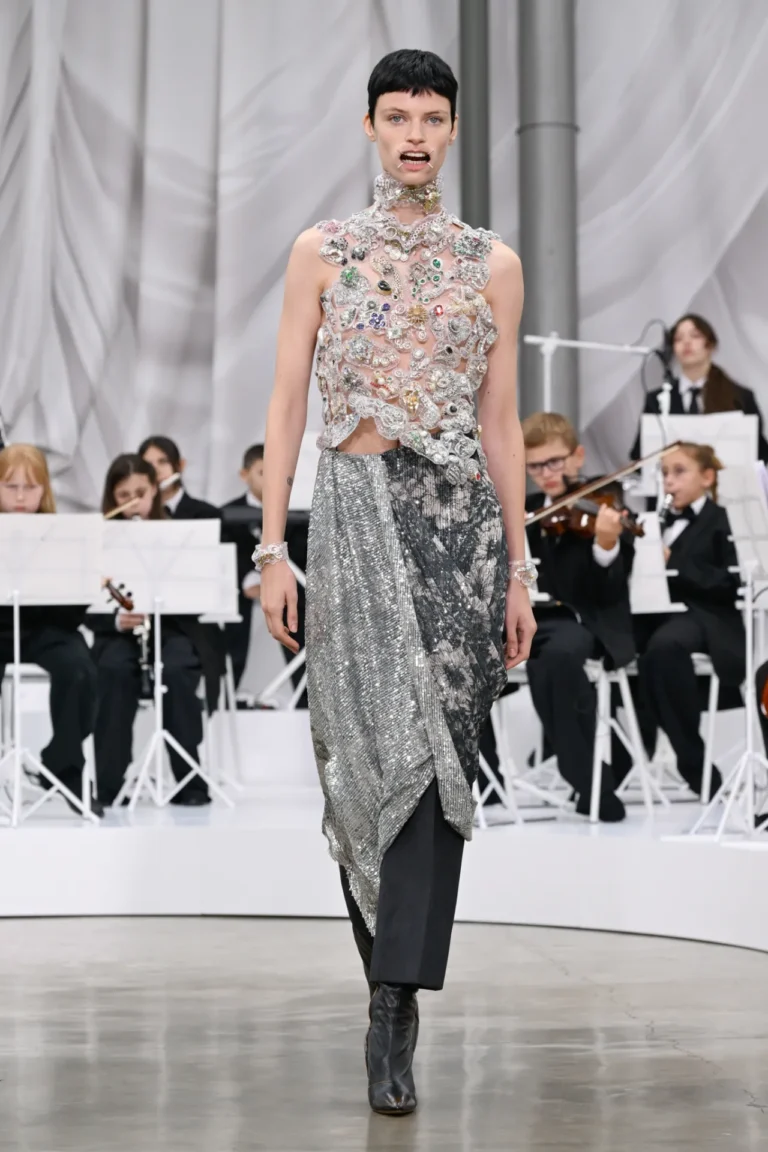
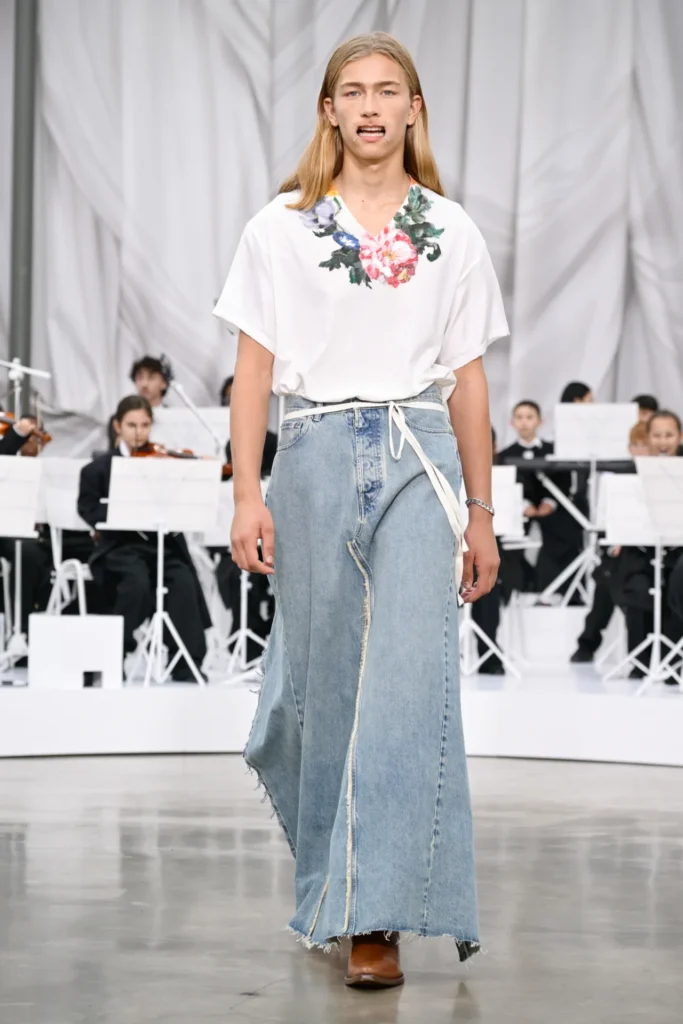
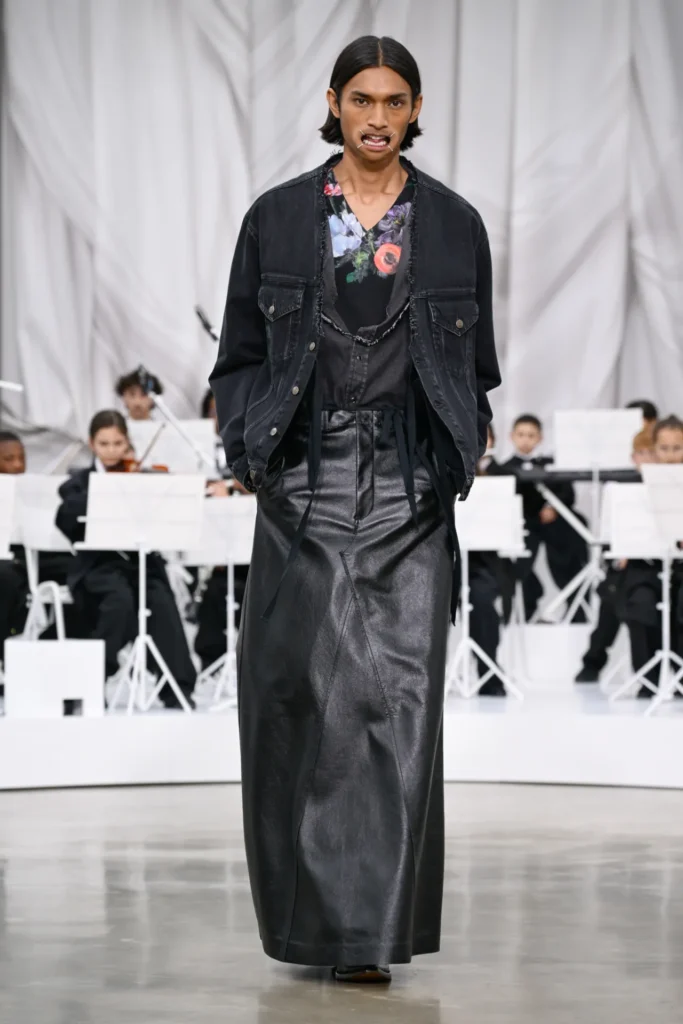
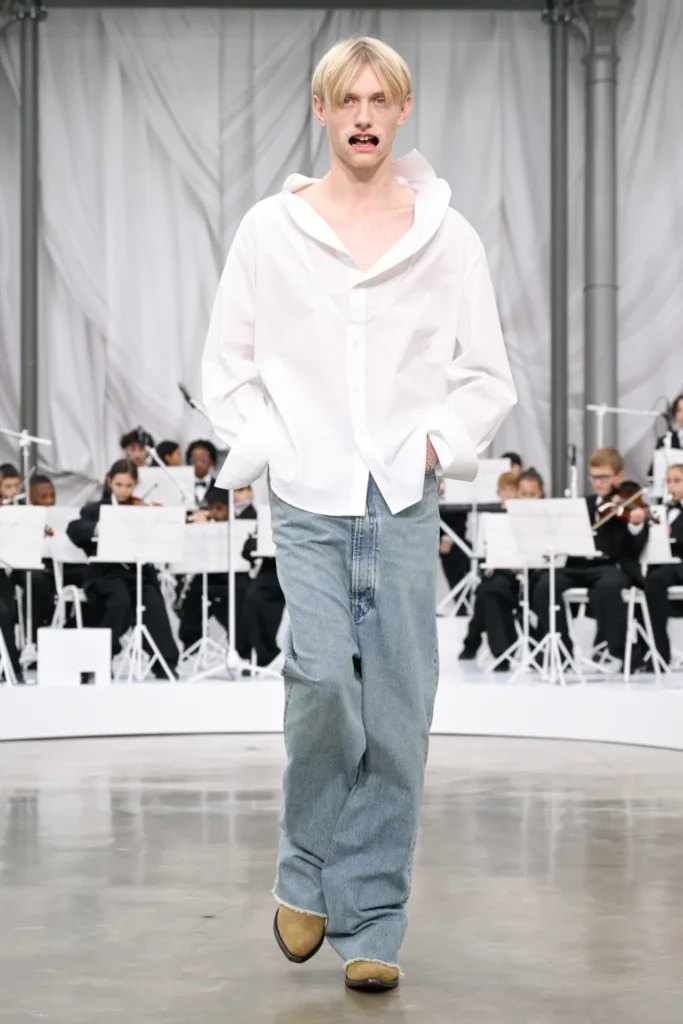
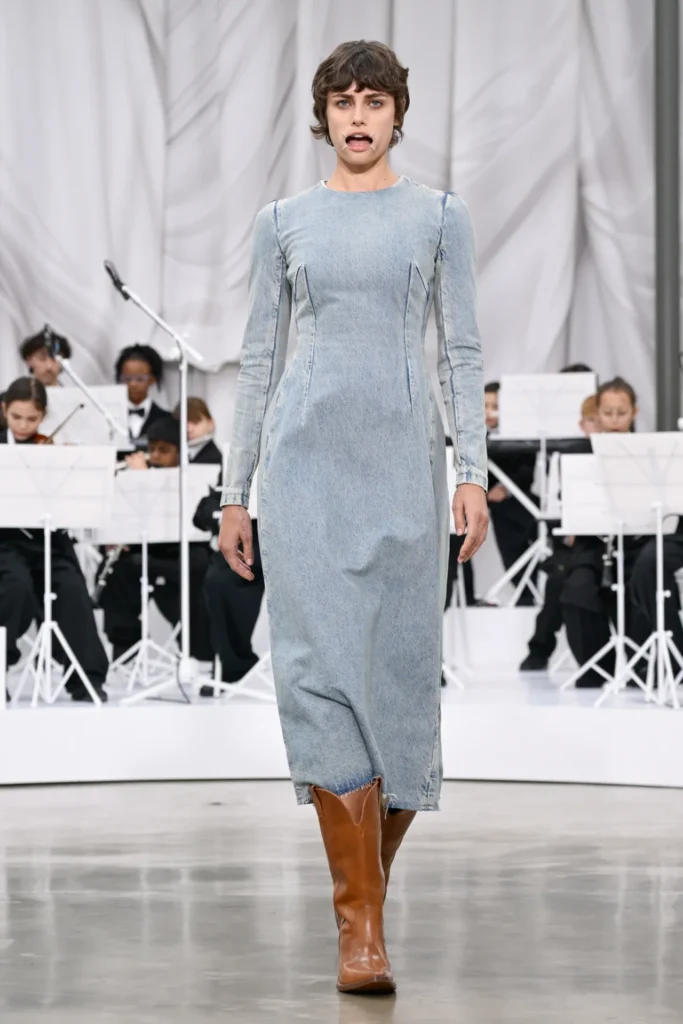
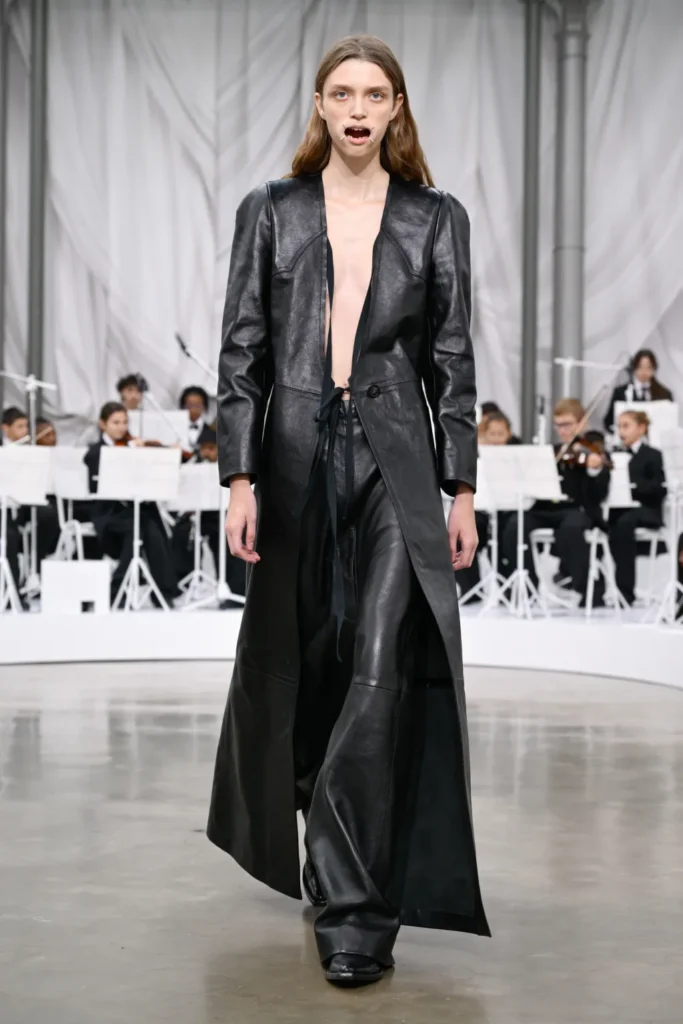
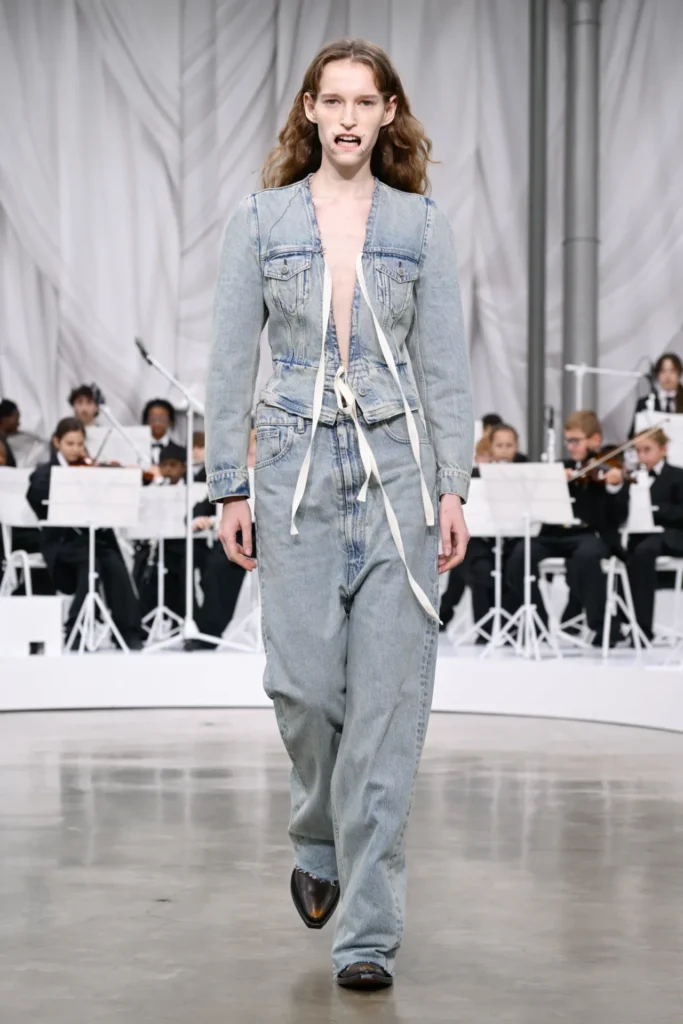
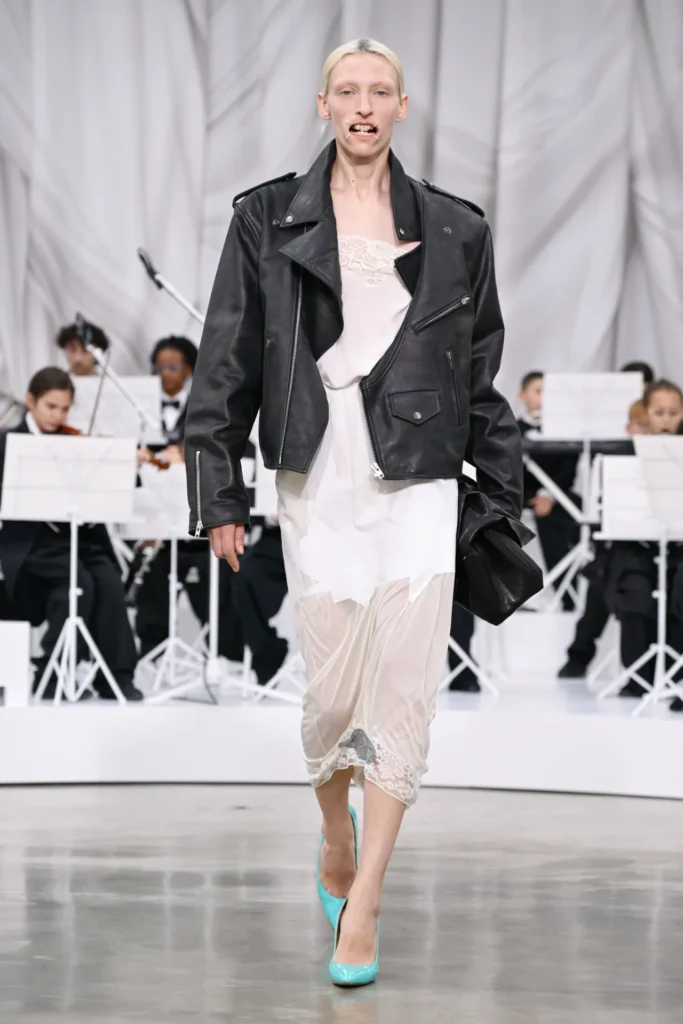
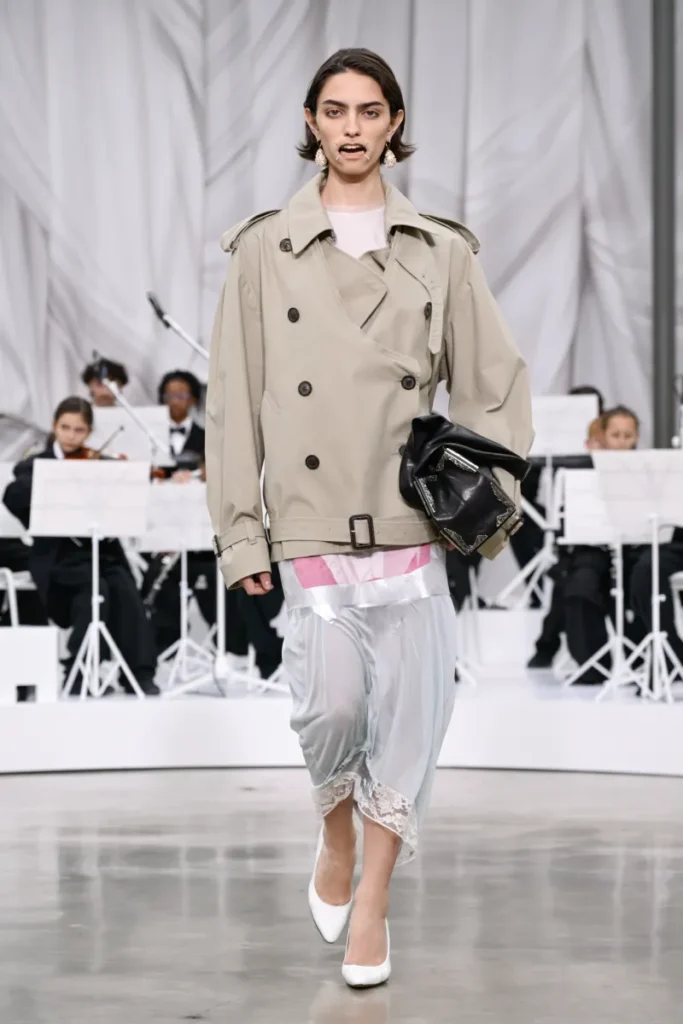
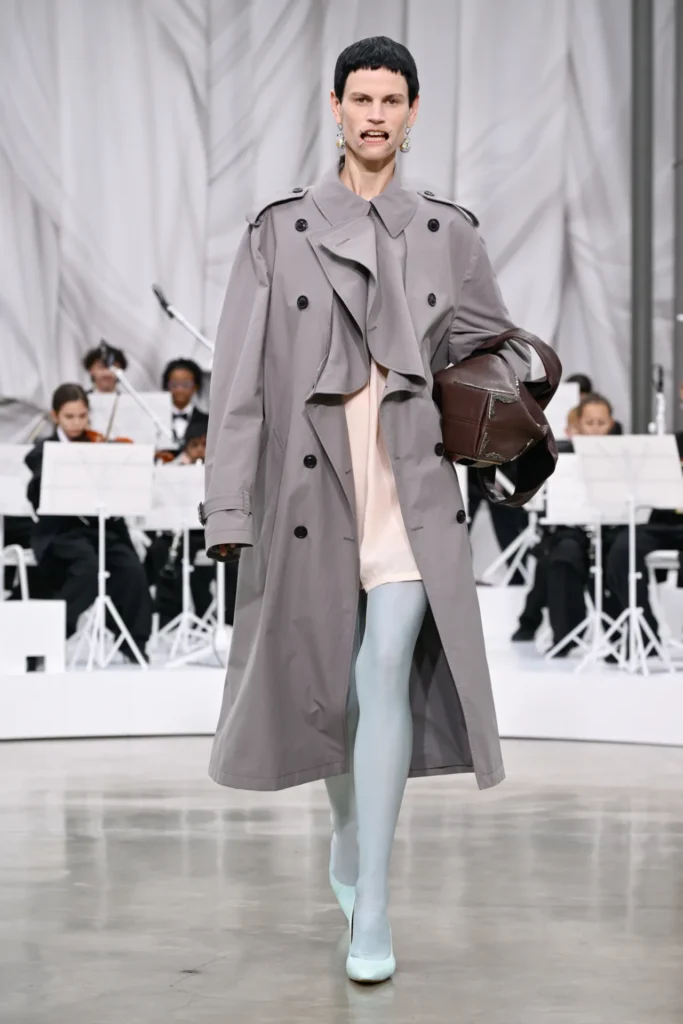
Set in a stripped-down Paris venue, the show opened with a moment of pure charm: a group of local children, dressed in oversized black suits, gathered in the orchestra pit to perform playful renditions of classical music. Even Kim Kardashian and Kylie Jenner couldn’t resist an audible “aww.” It was a tender prelude to Martens’ meditation on uniformity and subversion.

Martens revisited the house’s founding gestures — the off-kilter shoulder, the incomplete shoe — and pushed them into new territory. Jackets hung with a subtle slouch, shoulders tilting off balance, while he reinvented the “missing heel” shoe in variations ranging from boots to stilettos, turning absence into allure.

Tailoring — a Margiela cornerstone — was dissected and rebuilt. Lapels were sliced clean off trench coats and suiting, collars tucked inward, ties attached where seams once were, nodding to the white lab coats once worn by the brand’s atelier staff. Crisp poplin shirts appeared with inverted necklines, paired with low-slung trousers or slips fastened with silver tape.

The interplay between rigor and distortion defined the collection’s energy. One standout moment came with ghostly black gauze wrapping tailored jackets, leaving behind only their spectral outlines. Elsewhere, men’s blazers and coats bore fused silk scarves at the neckline, creating a surreal trompe-l’œil effect — an illusion that felt both romantic and unsettling.

There was denim — raw, unwashed, utilitarian — and leather that felt lived-in rather than polished, grounding the more experimental pieces in a sense of urban pragmatism. Martens expanded the house’s vocabulary without betraying its spirit.

If the goal, as the show notes stated, was to achieve a “uniformity of expression,” then the decision to outfit models — including legends like Guinevere Van Seenus, Saskia de Brauw, and Hanne Gaby Odiele — with Margiela’s signature four-stitch mouthpieces was a bold, if controversial, interpretation. The visual was haunting, though some may argue it muted the individuality of the women behind it.