Home Blog Page 8

Gucci Fall 2026 Collection

0

Gucci Fall 2026 Collection

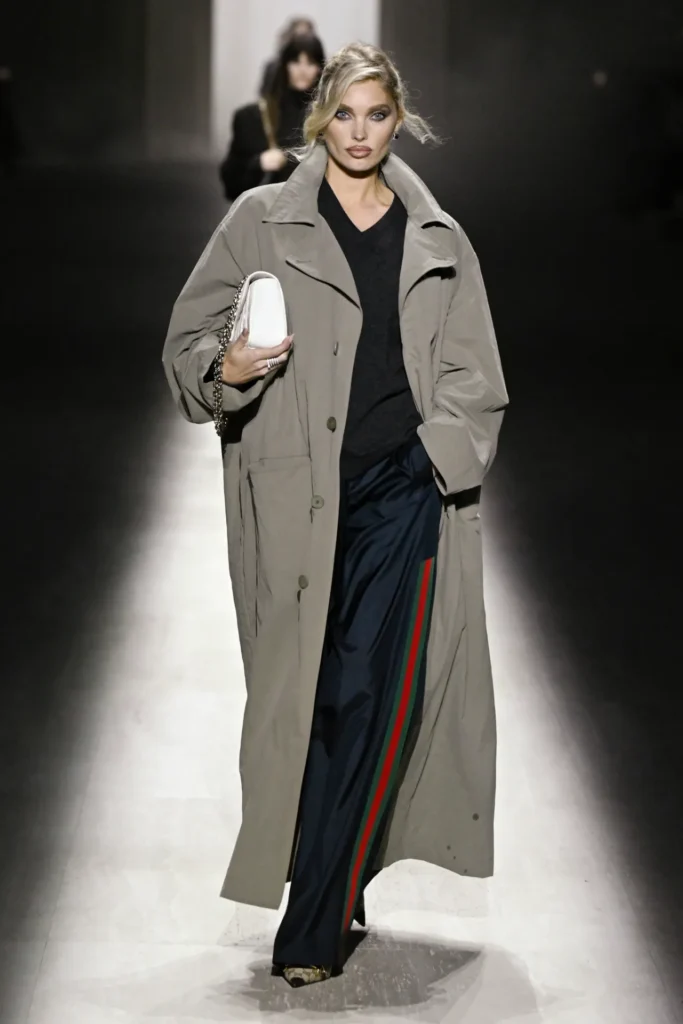
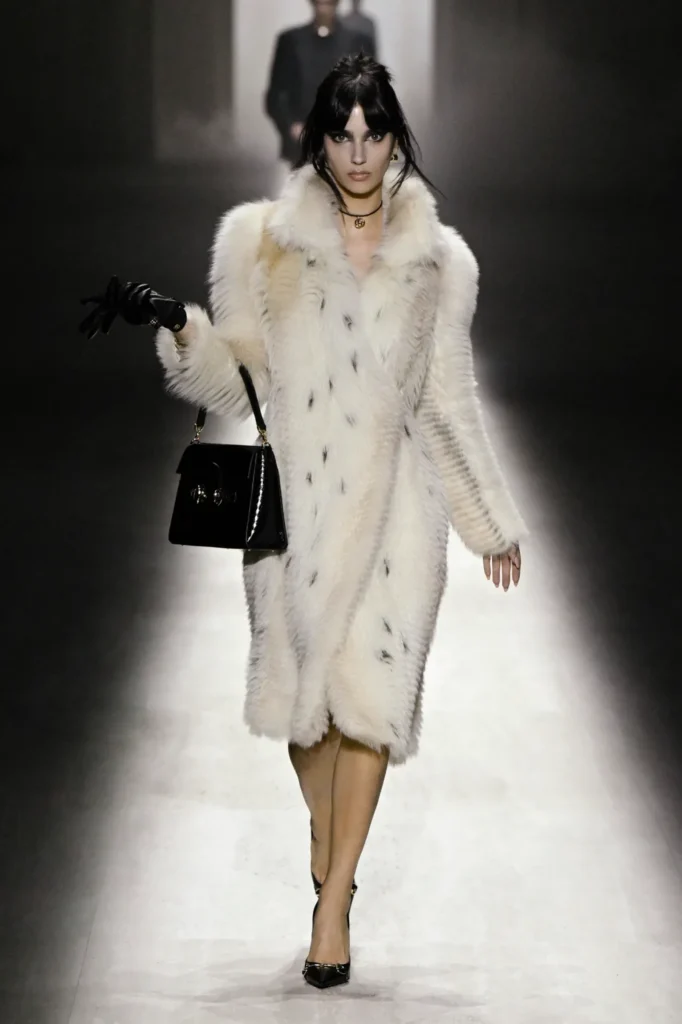
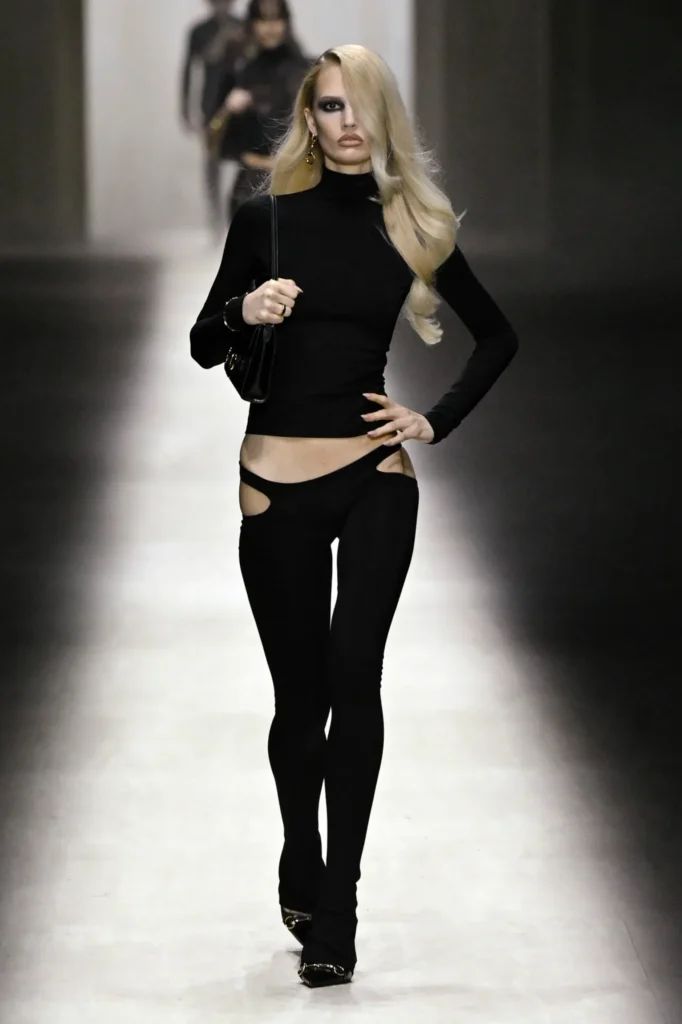
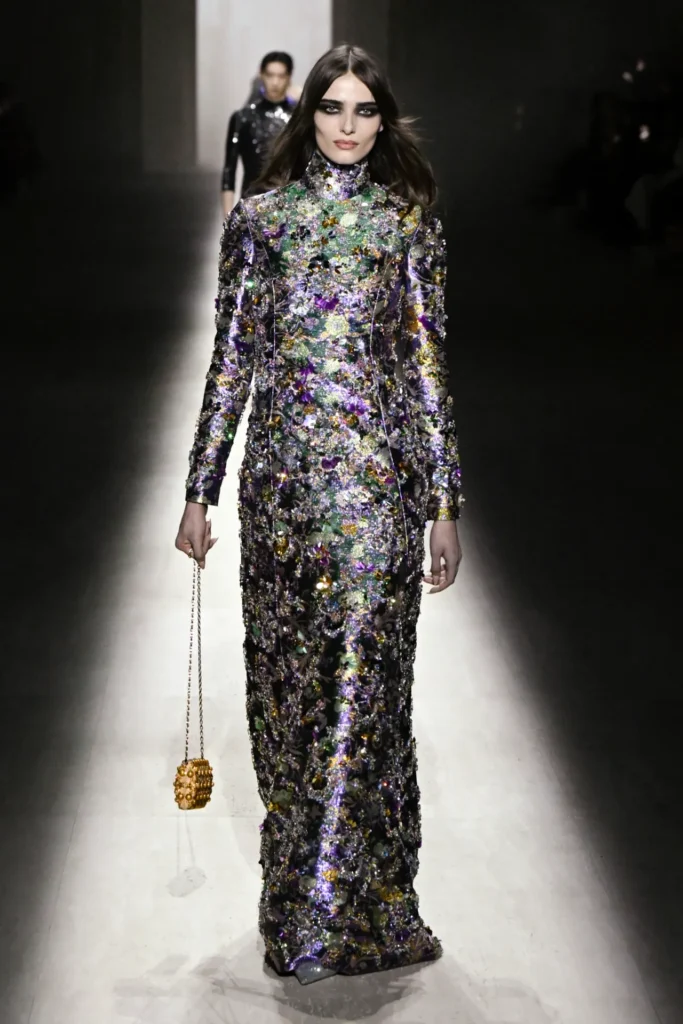
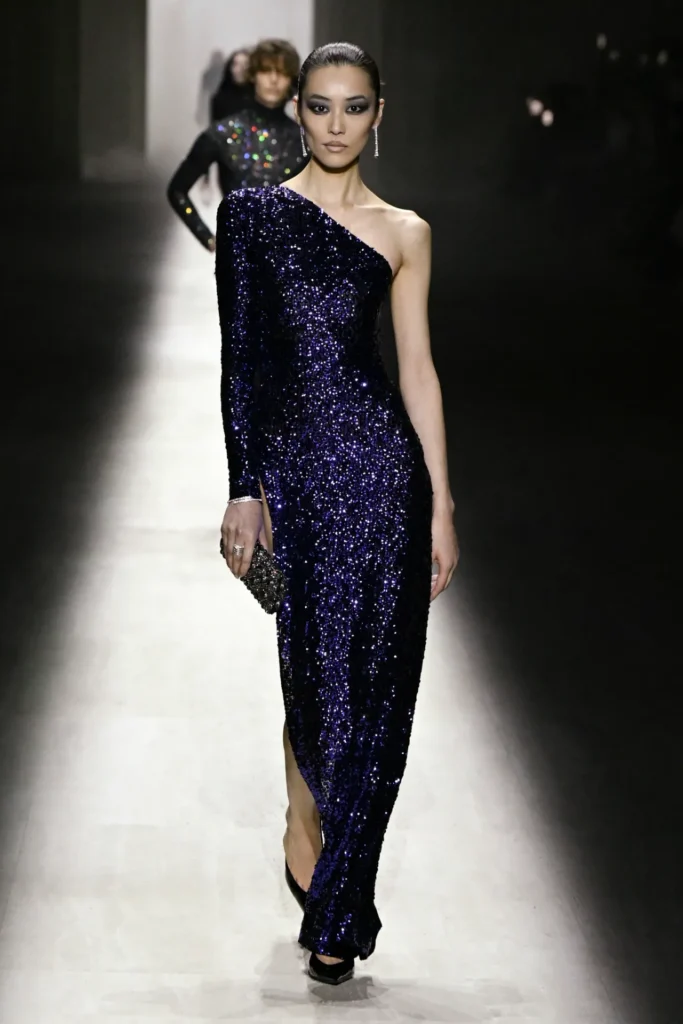
At Gucci, Fall 2026 marked the arrival of a charged new era. For his debut collection, artistic director Demna delivered what he called “Primavera”—a rebirth rooted in emotion, sexuality, and cultural memory.

The reference point was Primavera by Sandro Botticelli, housed at the Uffizi Gallery. Demna described the painting as transformative; its spirit of renewal became the conceptual backbone of the show. Staged in a monumental setting lined with classical statuary, the presentation framed Gucci not merely as product, but as culture—monumental, emotional, and alive.

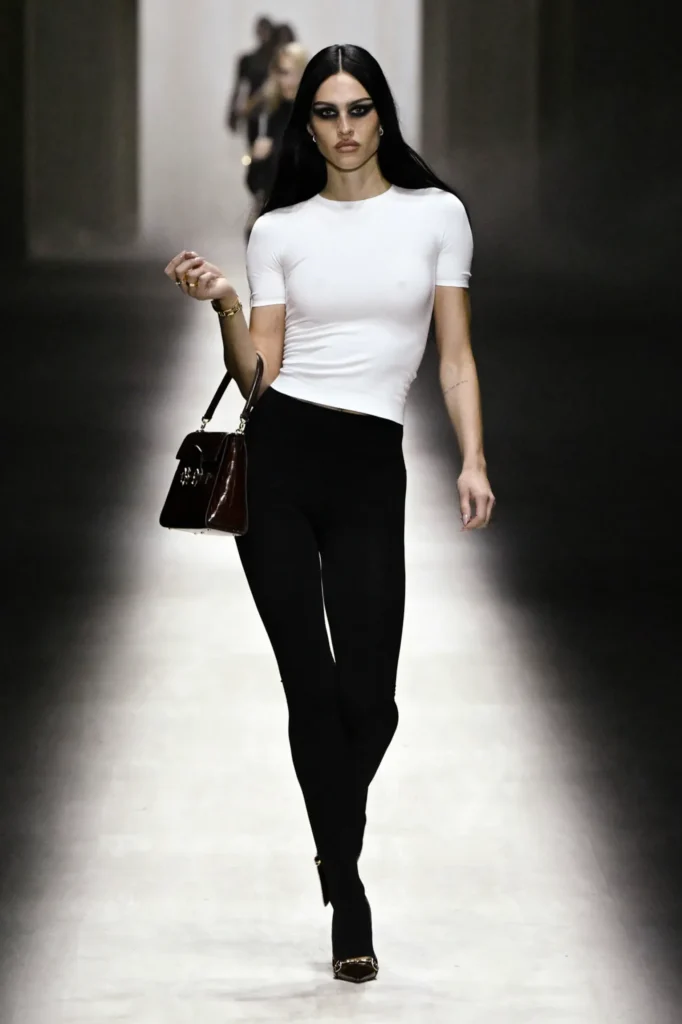
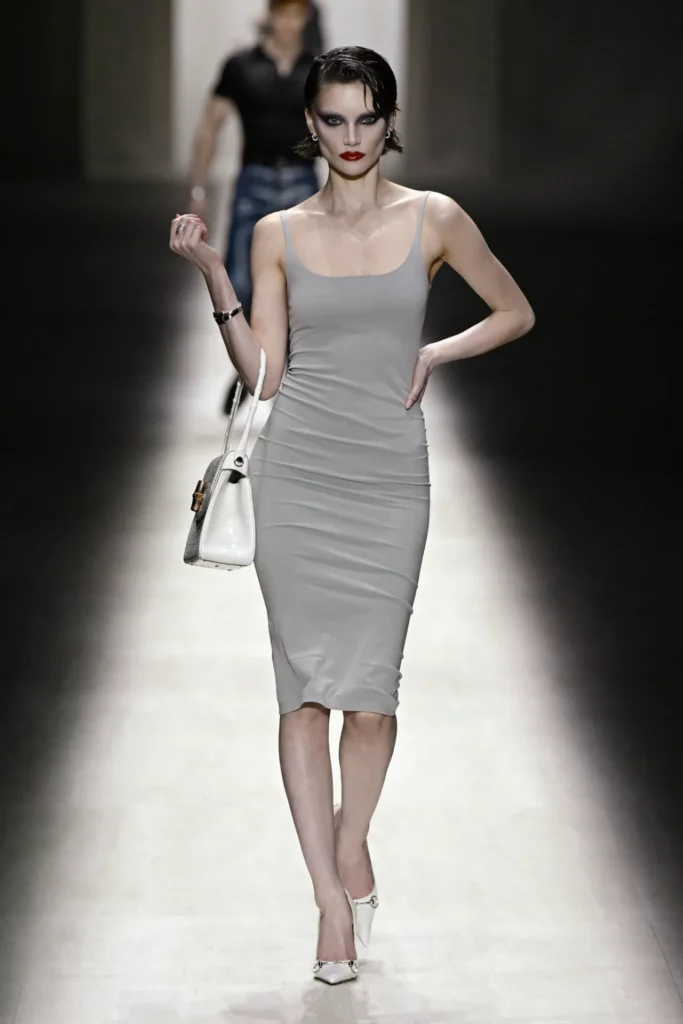
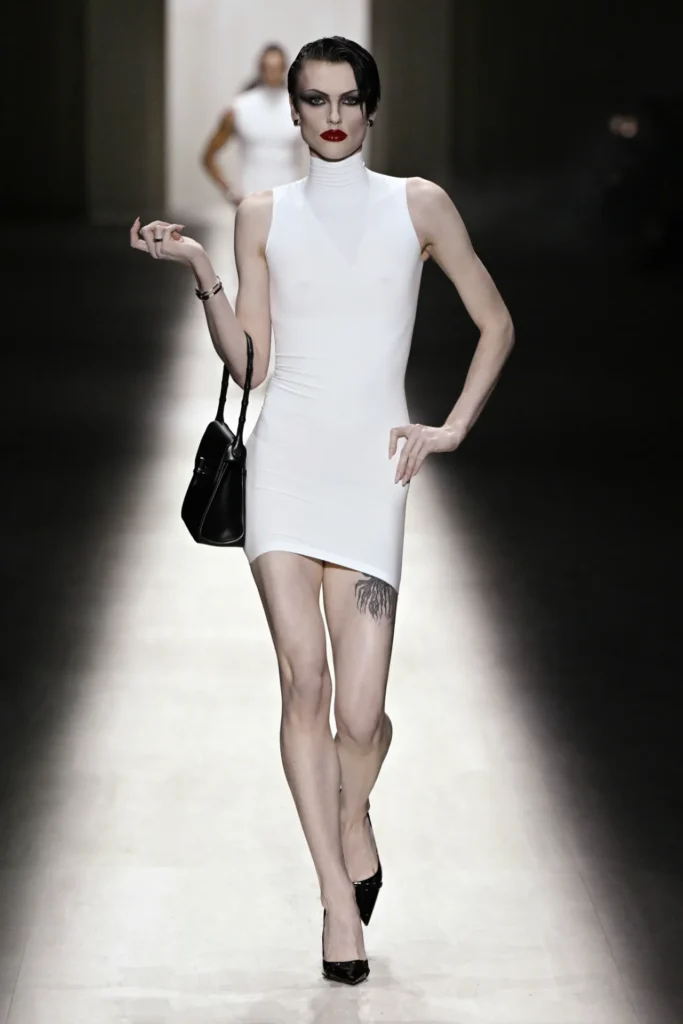
From the first look—a seamless, body-clinging mini dress in white hosiery—the message was clear: this Gucci is about the body. A sculptural male model followed in a second-skin tank and trousers, Renaissance ideals refracted through technical precision. Thermo-bonded seams, curved hems, and hyper-fitted silhouettes emphasized anatomy with unapologetic clarity.

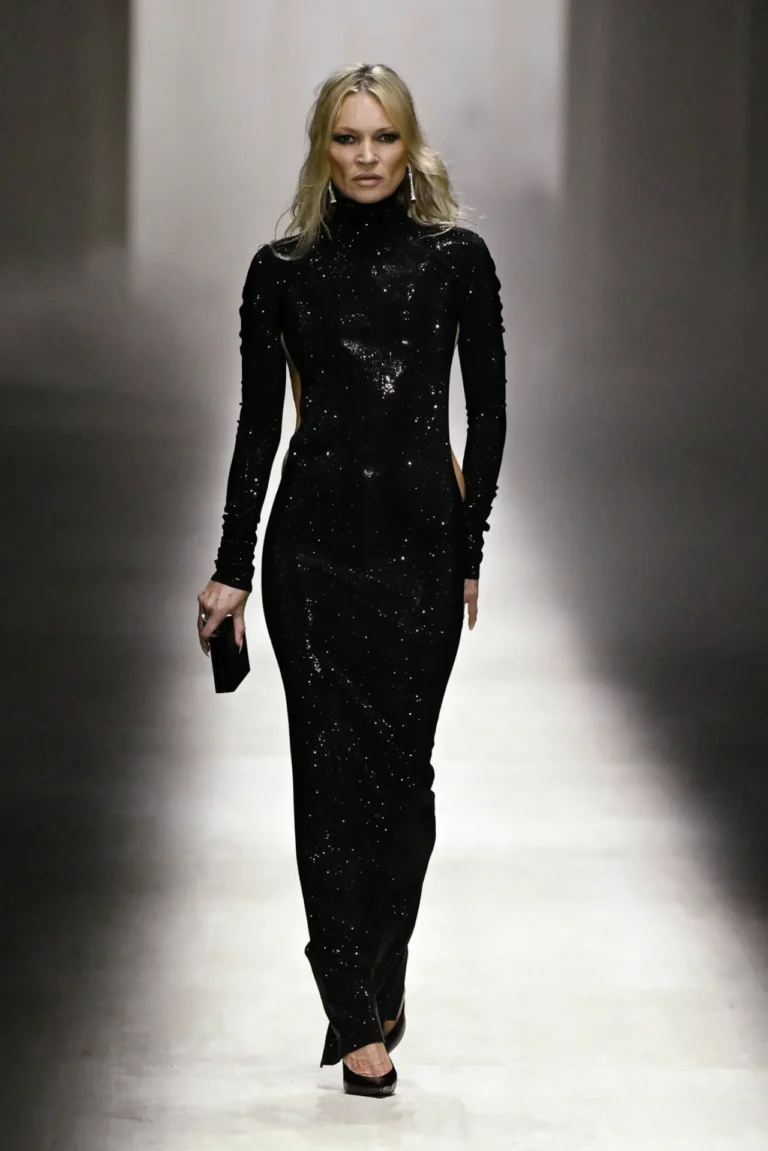
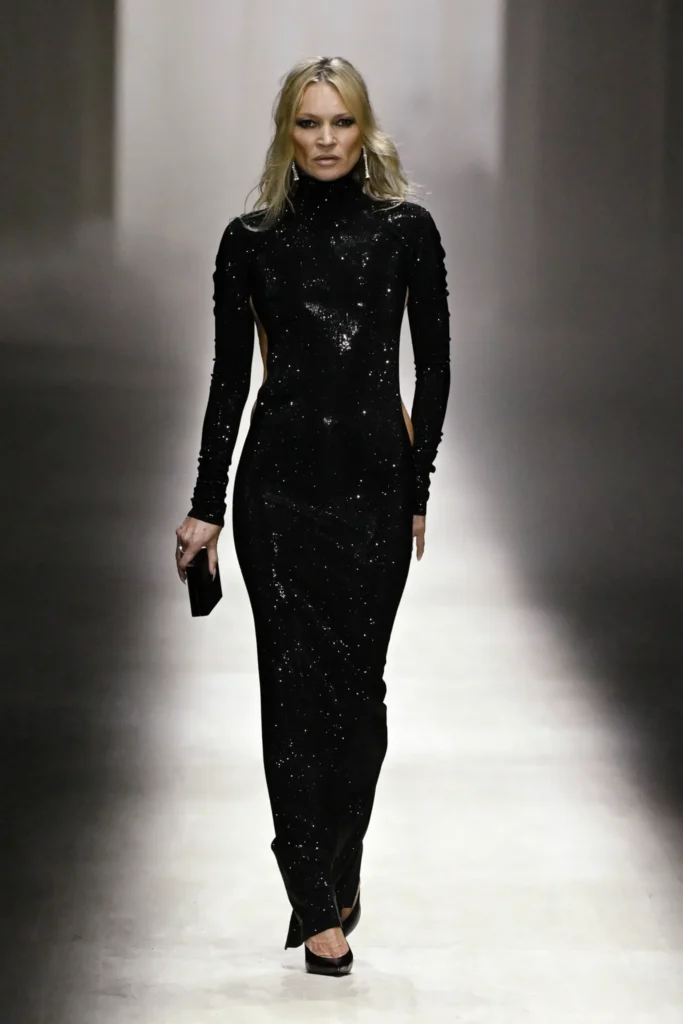
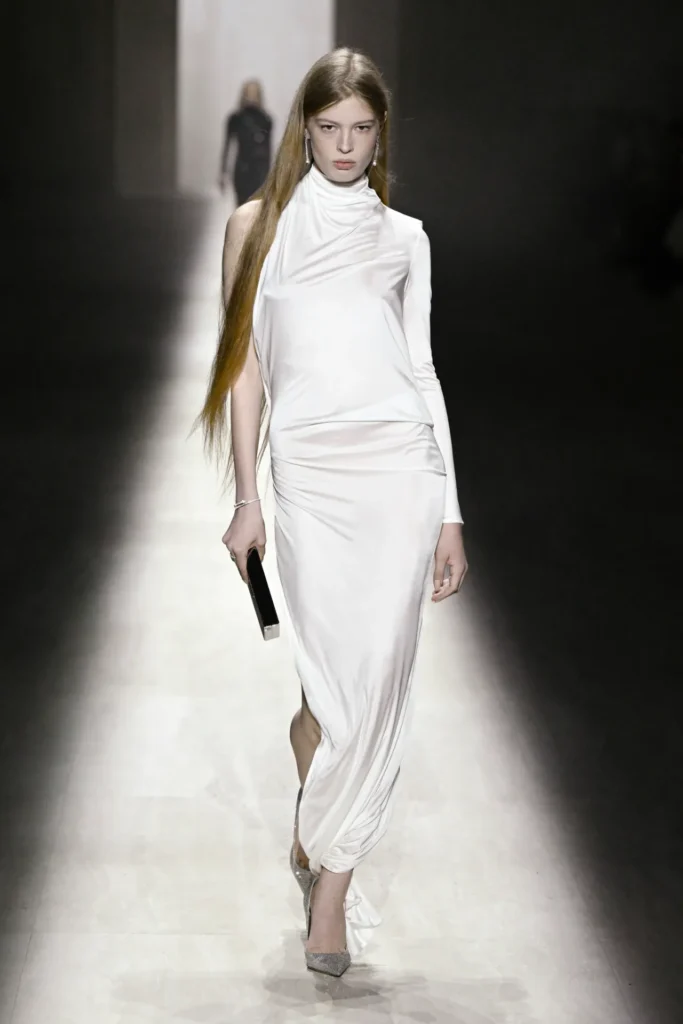
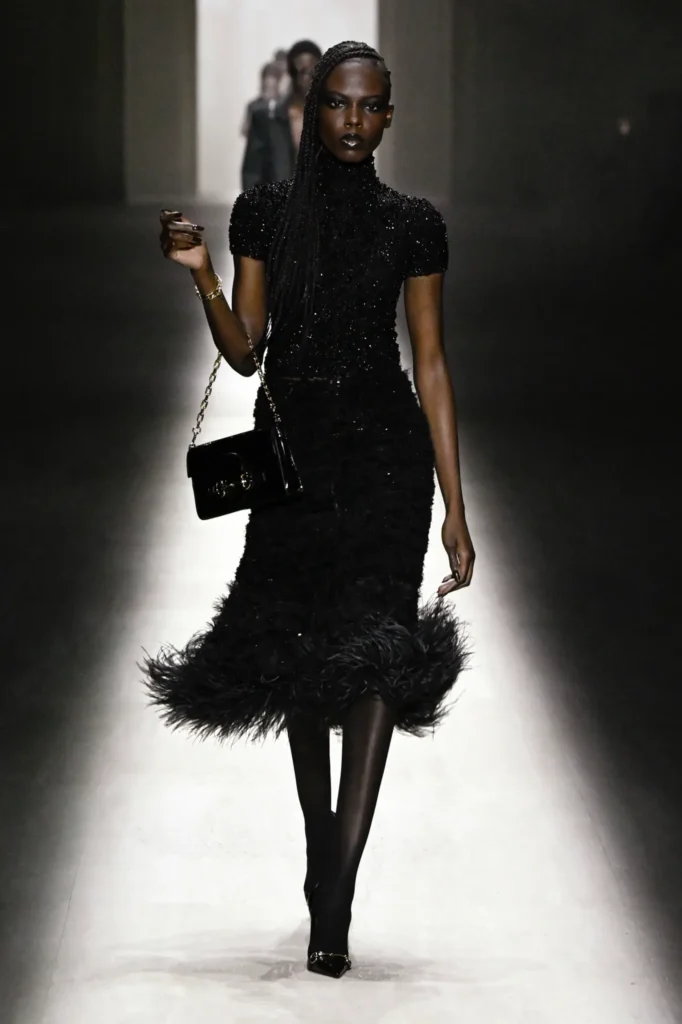
Sex appeal coursed through the collection. A white-gold GG thong set with diamonds flashed above a backless black gown, recalling the high-voltage glamour of Tom Ford’s era. There were also echoes of Alessandro Michele in plush Princetown slippers, yet Demna’s vision felt more distilled—less irony, more instinct.

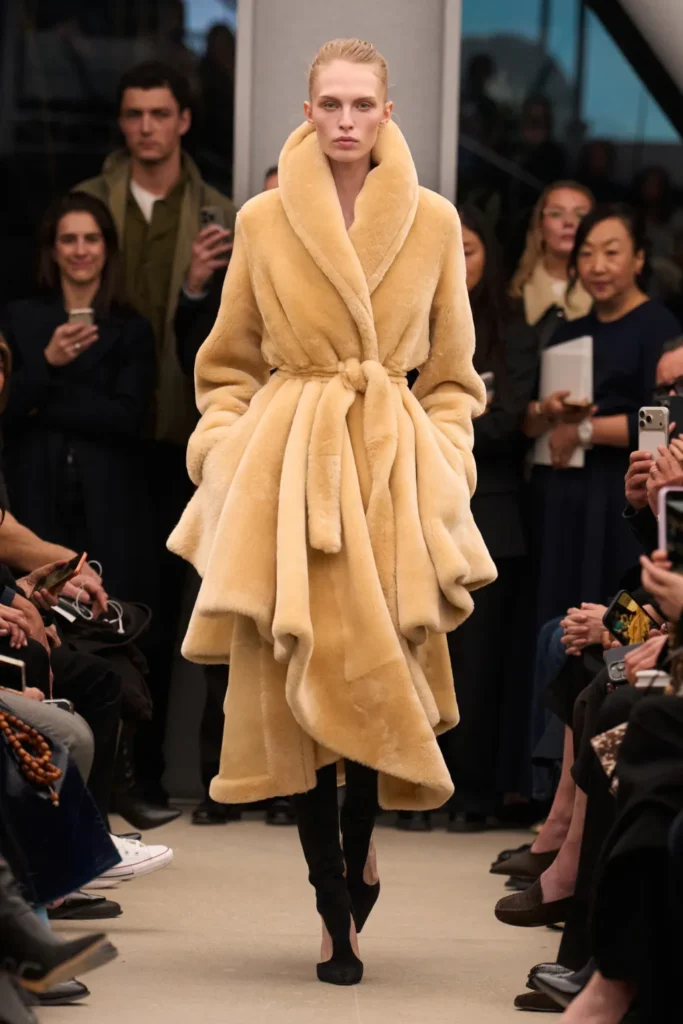
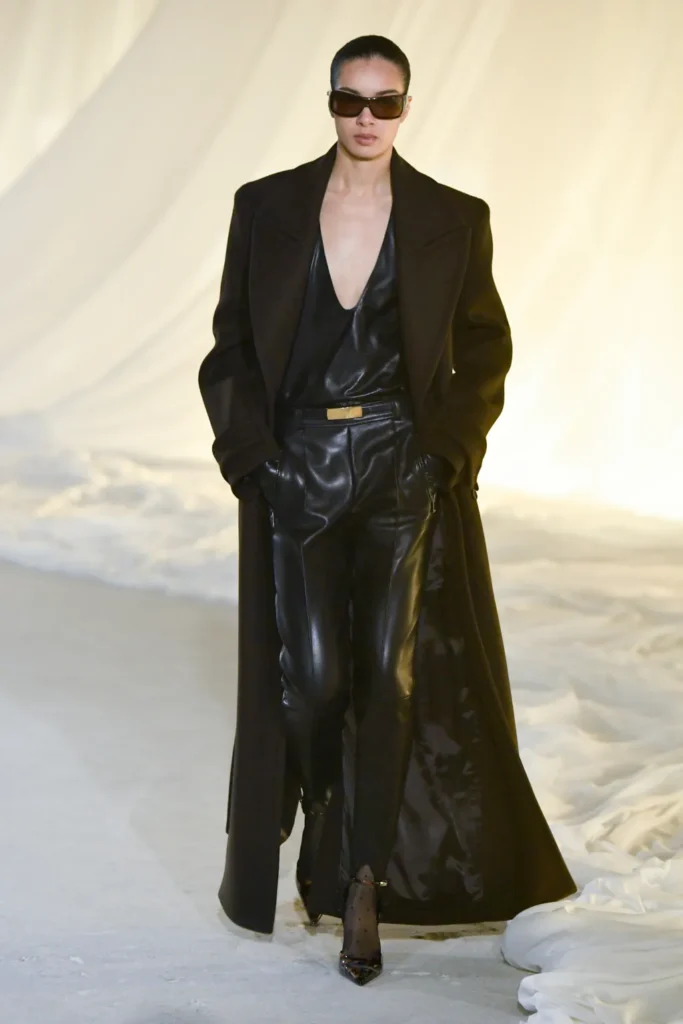
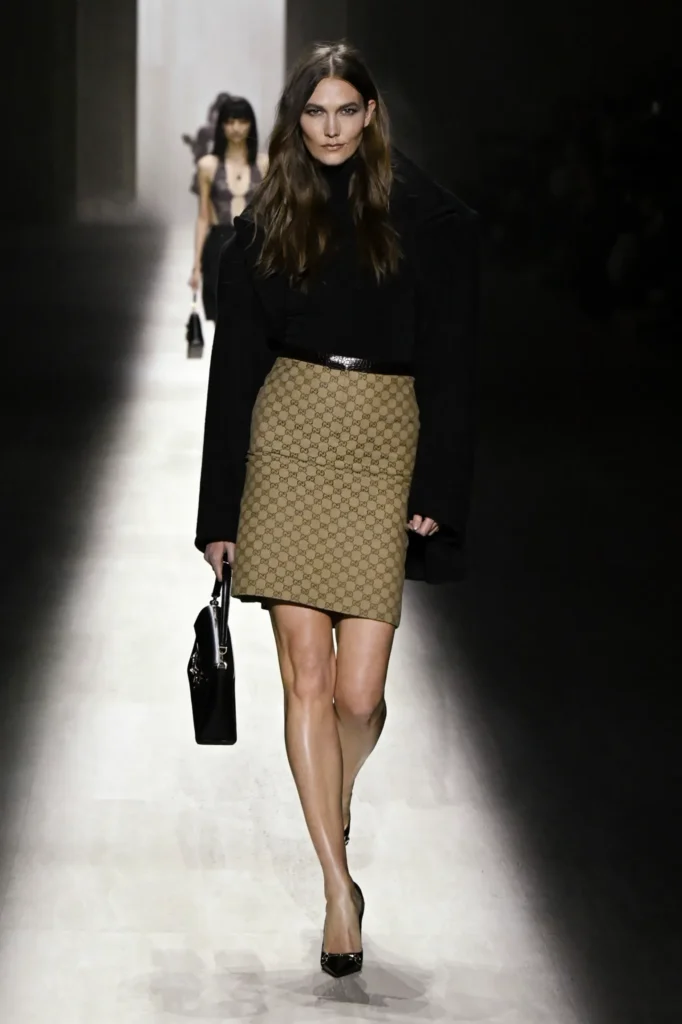
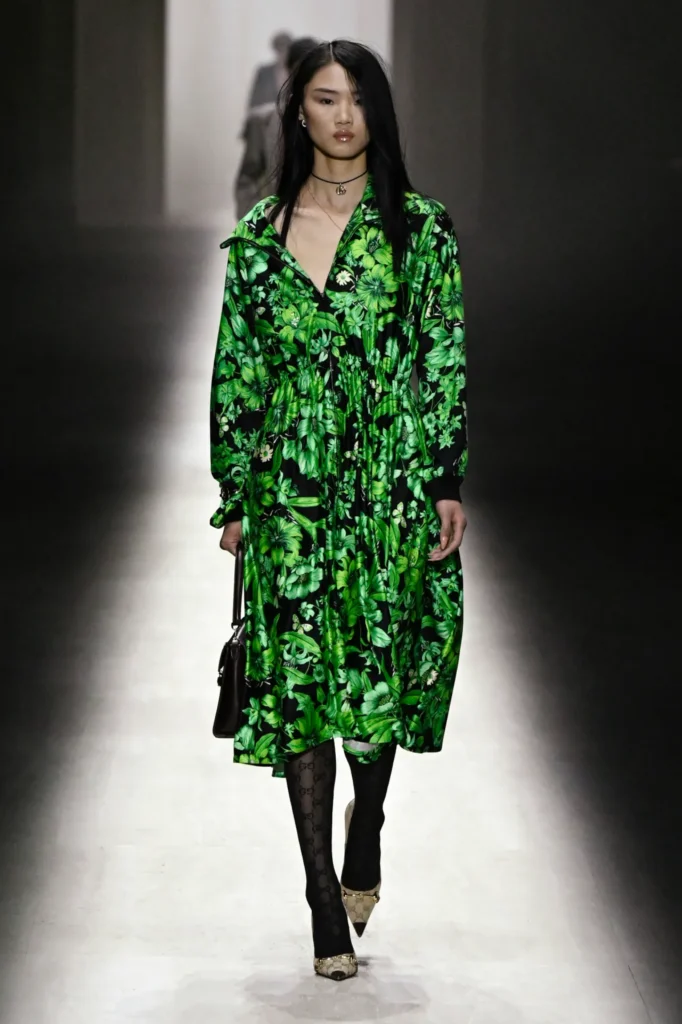
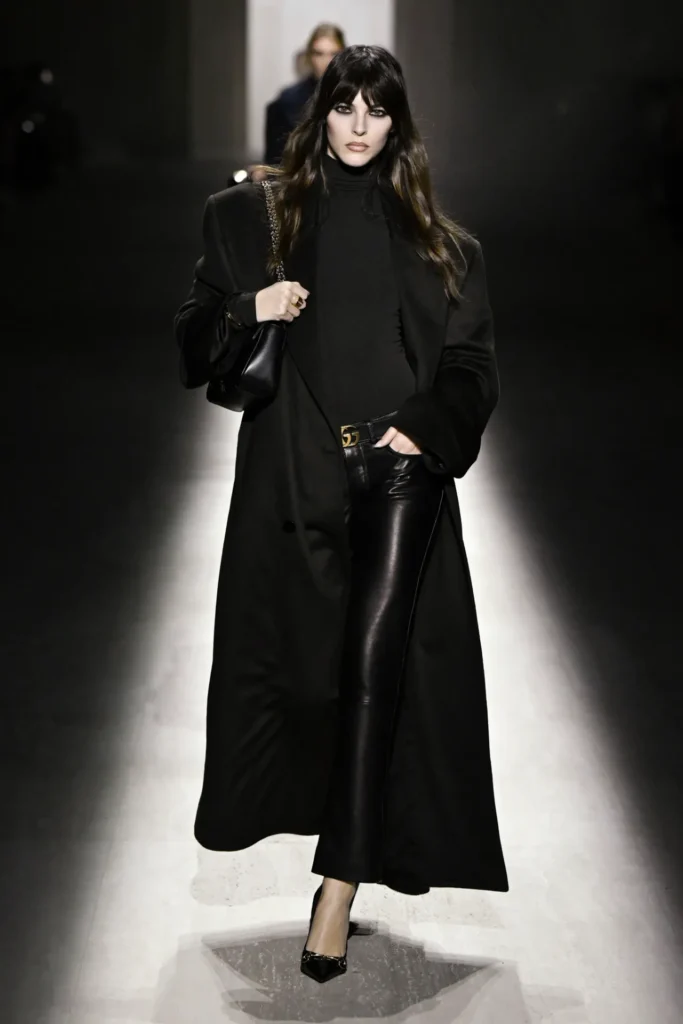
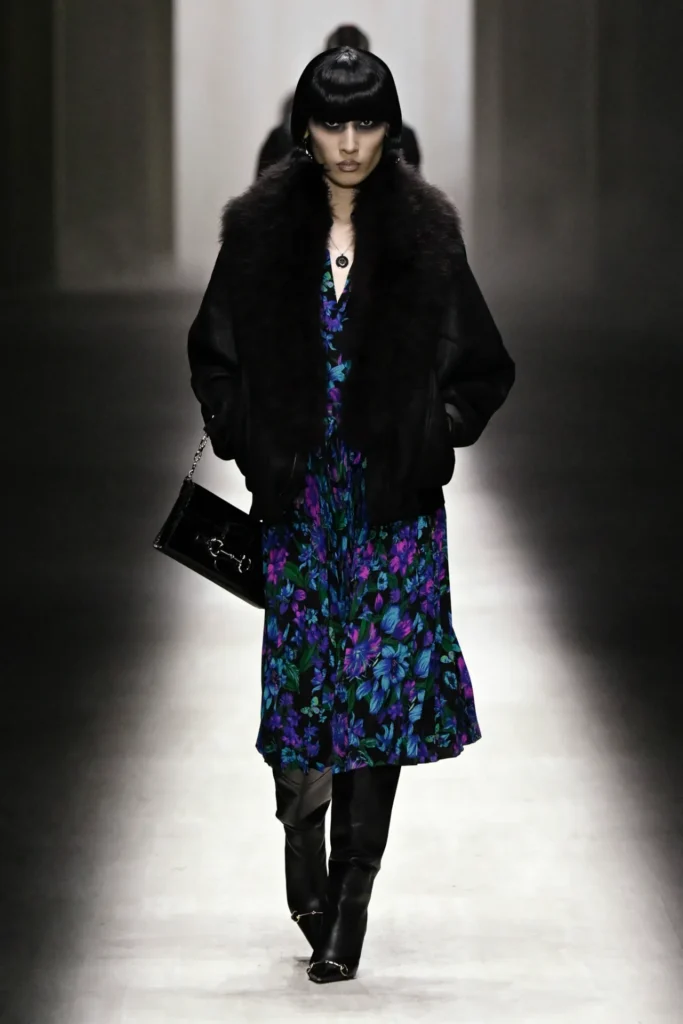
The casting reinforced the reset. Karlie Kloss and Kate Moss closed the show, bridging generations. Throughout, Demna explored varied ages, body types, and archetypes: gym-honed minimalism, fluid tailoring with plunging jackets and horizontal-pocket trousers, pleated floral dresses softened by faux-fur blouses, and lean leather looks cinched with gold GG belts.

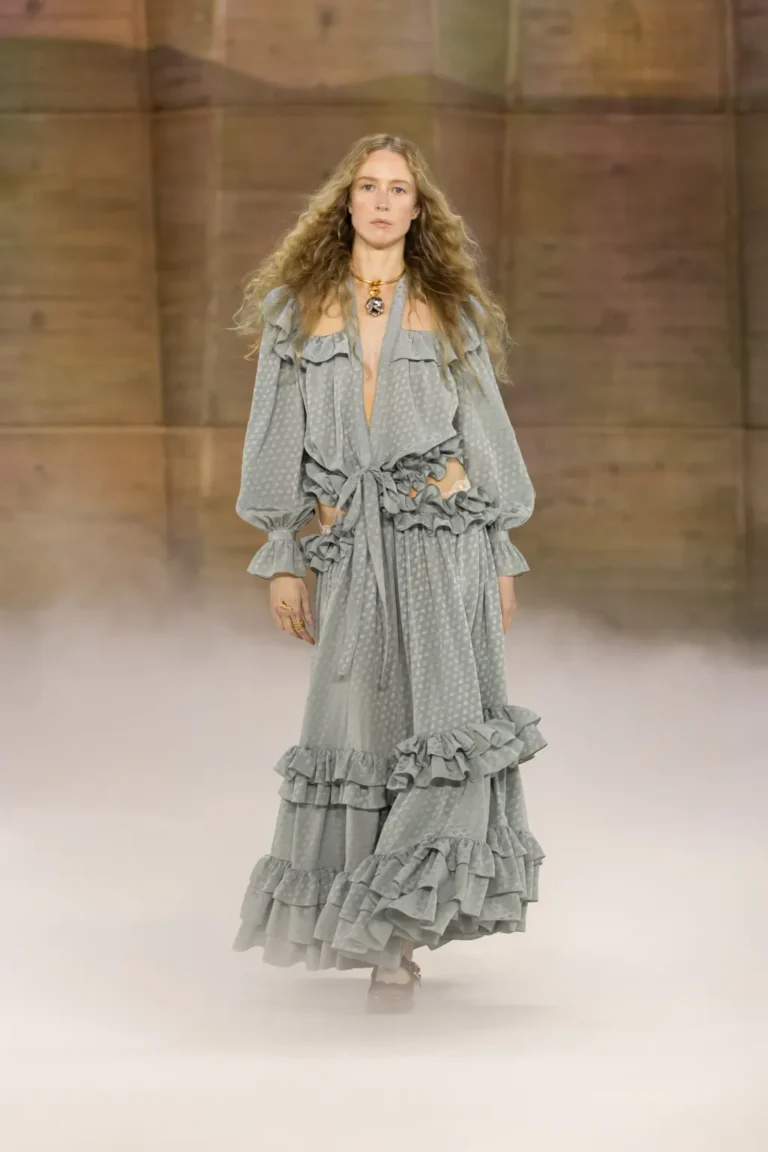
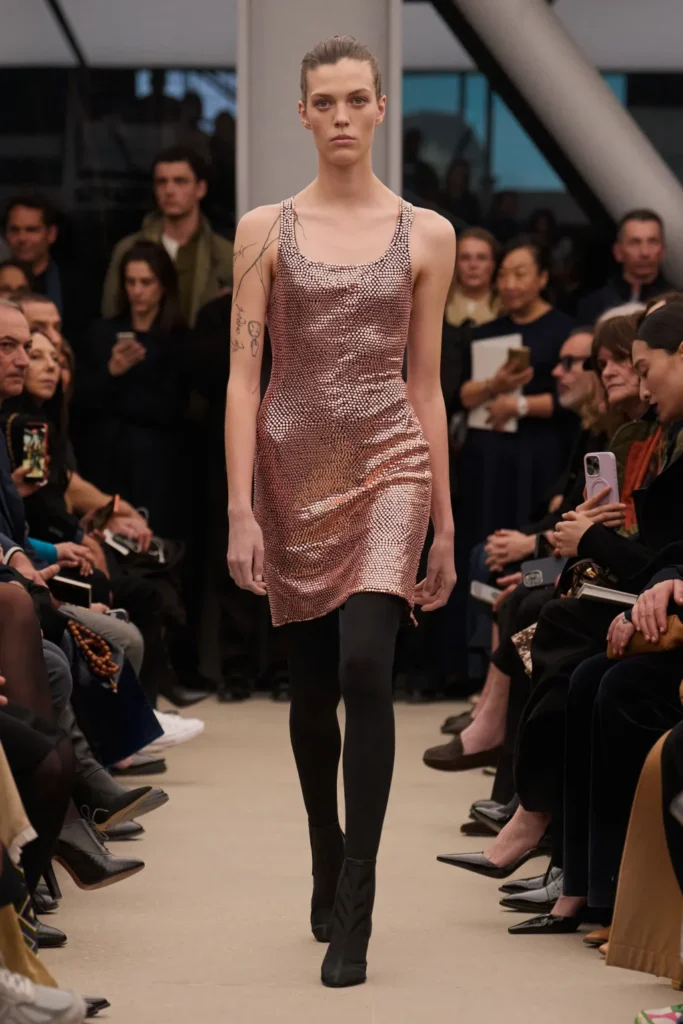
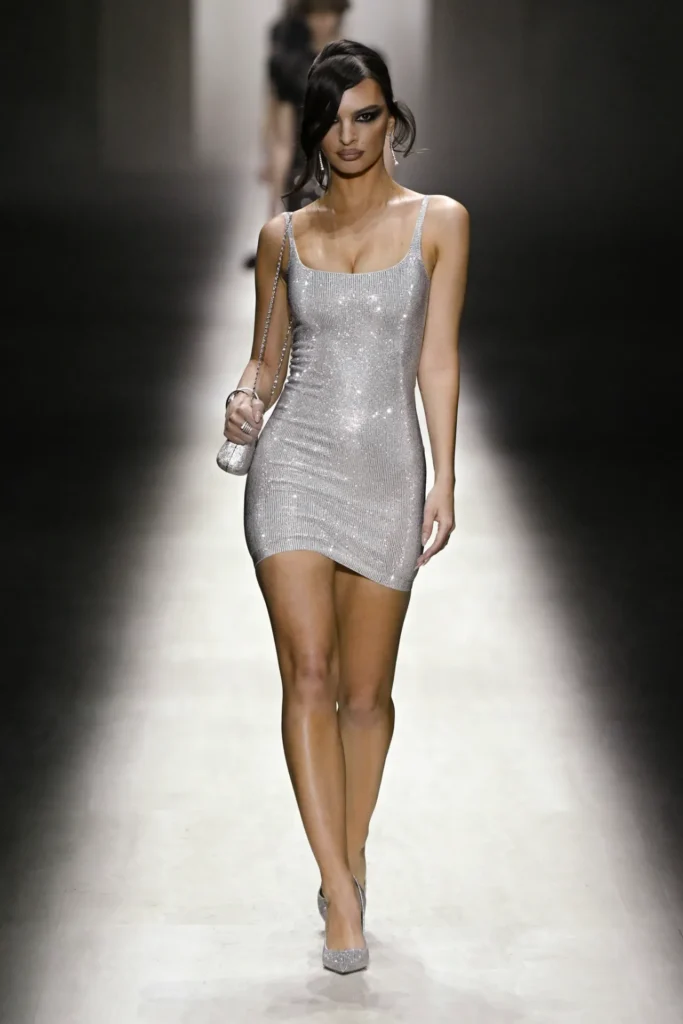
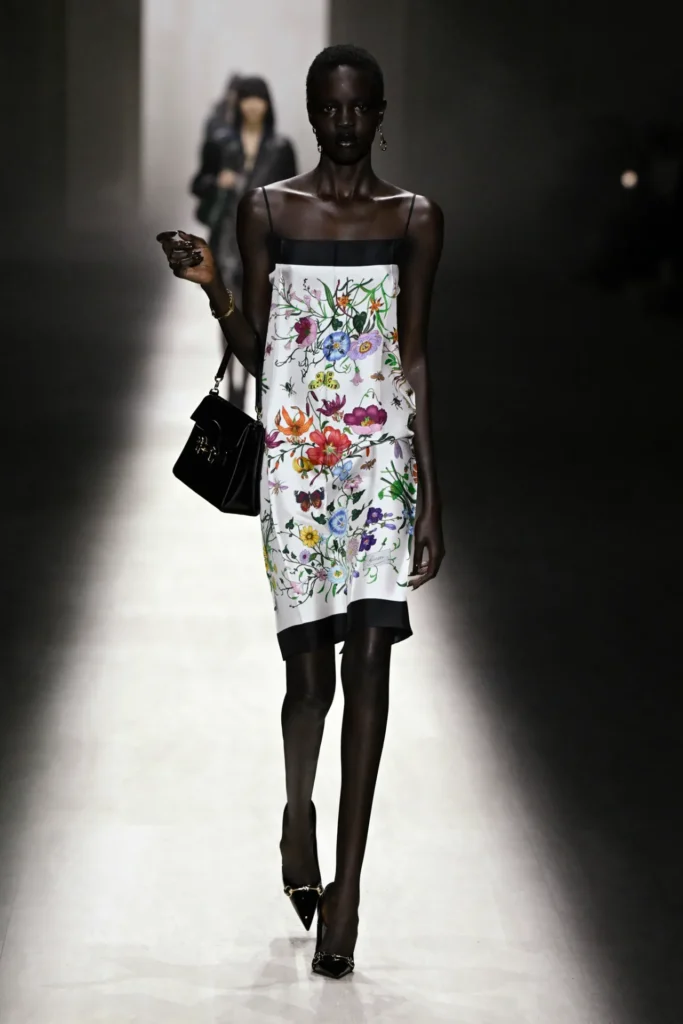
The historic Flora motif—created in 1966 by Vittorio Accornero for Grace Kelly—reappeared on a silk slip dress, tying heritage to modern sensuality. By night, the Gucci woman turned overtly provocative: crystal minis, waist-high slits, embroidered relaxed trousers paired with cropped tops, many worn barefoot for added immediacy.

Accessories, Gucci’s commercial backbone, were omnipresent. The Gucci Bamboo 1947 returned with a sleeker silhouette and softened leather handle. Archival minaudières resurfaced, alongside supple leather boots, the new Manhattan sneaker, and Giovanni and Cupertino loafers. Select pieces dropped immediately in stores and online—a pragmatic counterpoint to the show’s emotional charge.

Moschino Fall 2026 Collection

0

Moschino Fall 2026 Collection

At Moschino, Fall 2026 unfolded as a personal dispatch from creative director Adrián Appiolaza—a collection steeped in memory, filtered through the house’s irreverent lens.

The opening signals were unmistakable: a pixelated portrait of Eva Perón splashed across a T-shirt; a leather bag stuffed with chocolate-dipped churros. Appiolaza was invoking Argentina, not as costume, but as cultural shorthand—an affectionate, ironic homage delivered with Moschino’s signature wit.

The runway populated itself with archetypes: bourgeois ladies, a bus driver complete with a vintage ticket machine, fútbol devotees, gauchos, tango dancers. Fileteado porteño—the ornate, swirling decorative style seen on Buenos Aires buses and storefronts—curled across garments, most strikingly on a voluminous ballroom dress that felt both folkloric and knowingly theatrical.

Though Moschino is often shorthand for Italian exuberance, its founder, Franco Moschino, championed a kind of open-source creativity—pulling references from anywhere, everywhere. Appiolaza leaned into that elasticity. There were nods to comic-strip nonchalance via Mafalda, the iconic creation of Quino—a subtle alignment with the character’s political curiosity and outsider spirit.

The result was visually rich, sometimes chaotic. As a love letter to Argentina, it was exuberant and heartfelt. As a tightly edited fashion statement, it was less resolved. Moschino thrives on punchlines, and Appiolaza delivered them—closing with a banker archetype in euro-note heels and a leather piggy bank tucked under her arm, a sly continuation of the brand’s tradition of novelty accessories.
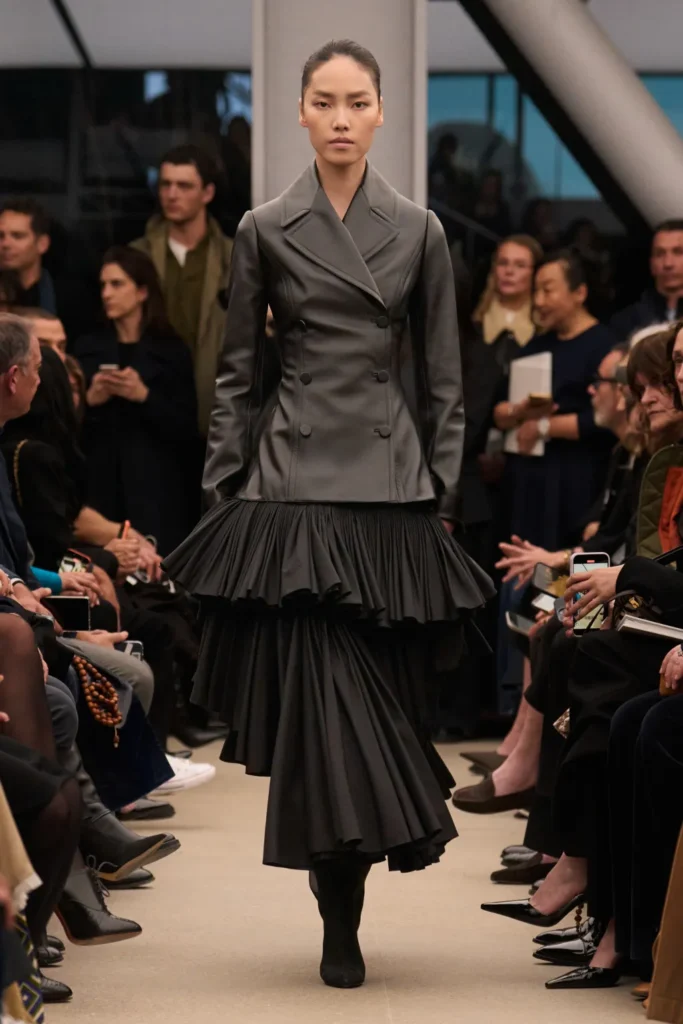
Fall 2026 marked a designer staking emotional territory. Whether this Argentine detour becomes a defining chapter for Moschino remains to be seen. For now, it stands as a bold reminder that fashion, at its most personal, is also at its most provocative.

Blumarine Fall 2026 Collection

0

Blumarine Fall 2026 Collection

At Blumarine, Fall 2026 belonged to the diva. Under creative director David Koma, the house doubled down on seduction, delivering a collection that was unapologetically dramatic and unapologetically visible.

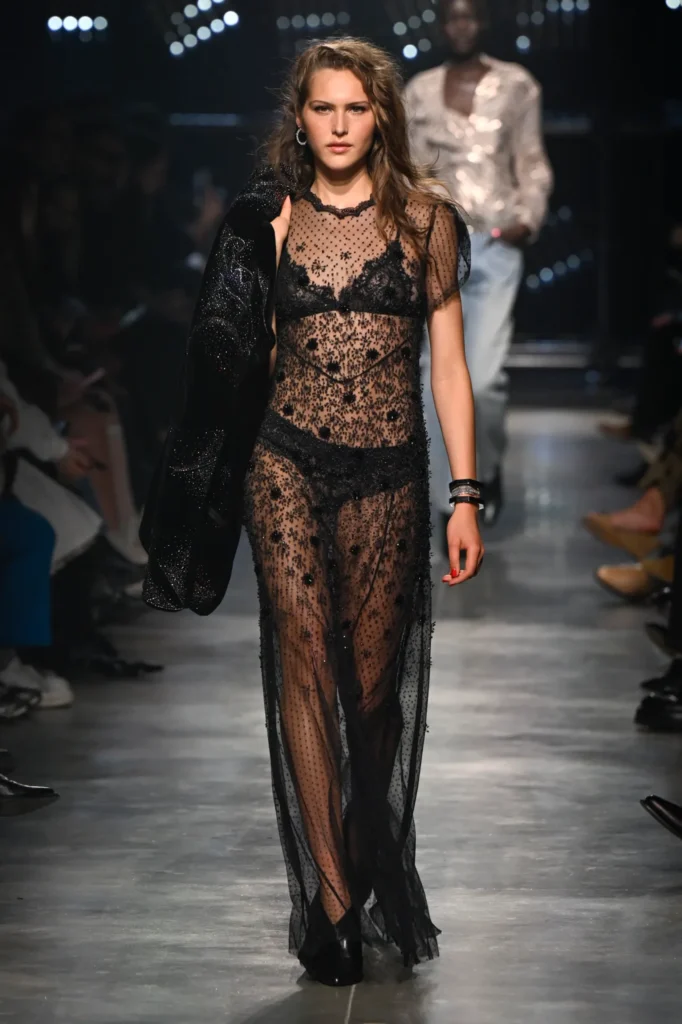
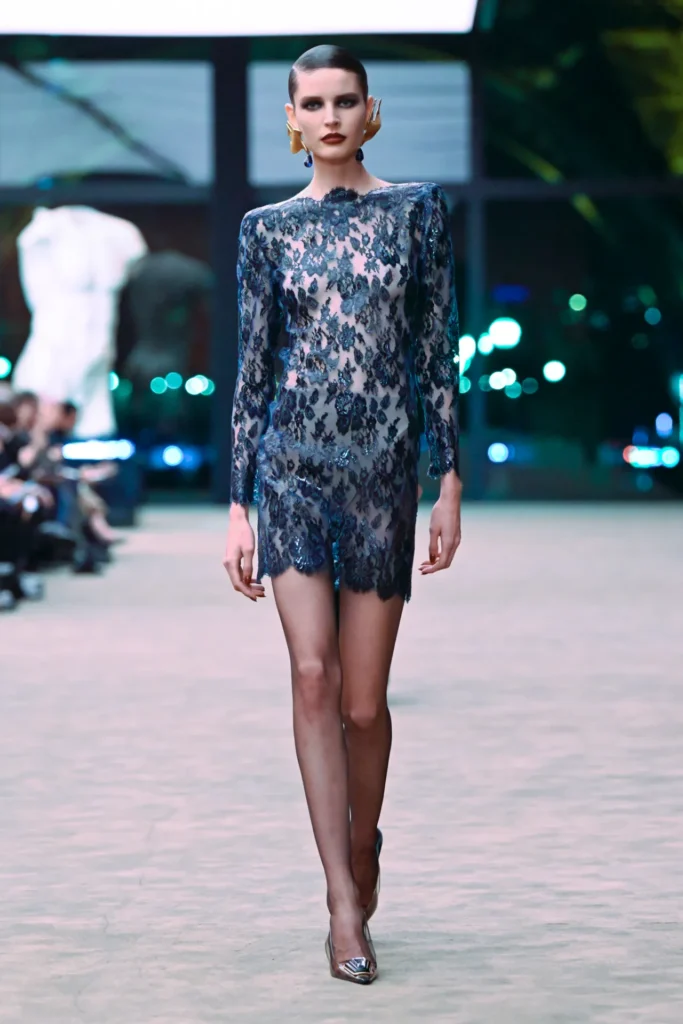
One year into his tenure, Koma has clarified his vision: the Blumarine woman does not fade into the background. This season, she arrived in abbreviated hemlines, sheer lace, and body-conscious silhouettes that demanded confidence. Glamour was not decorative—it was power.

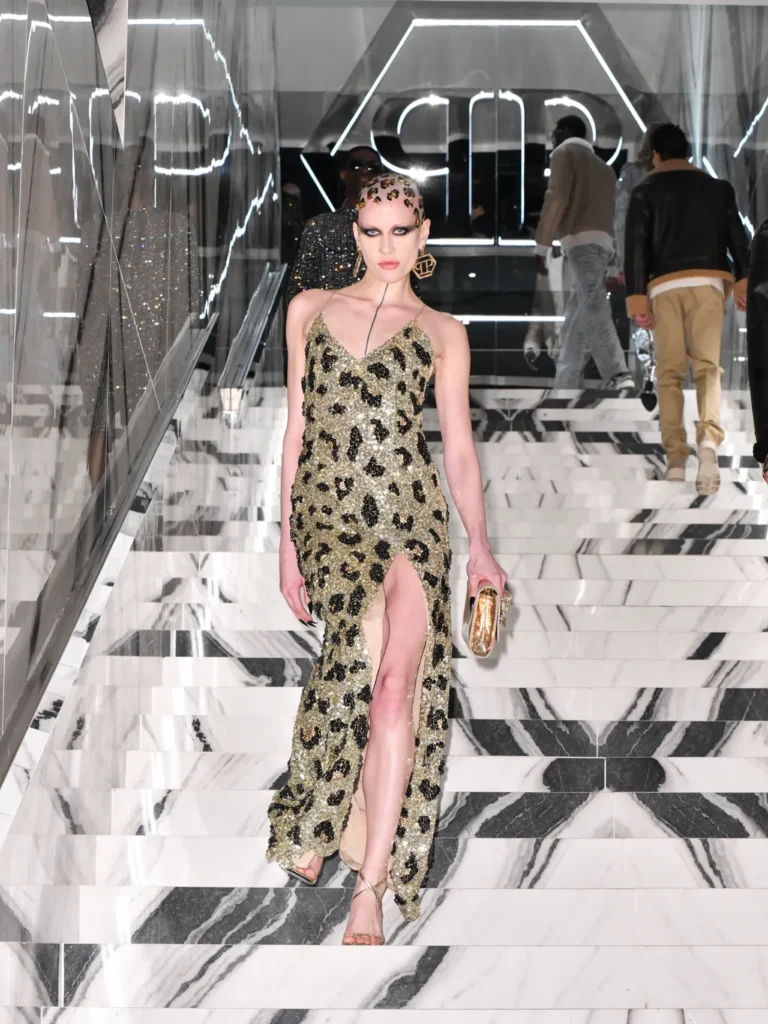
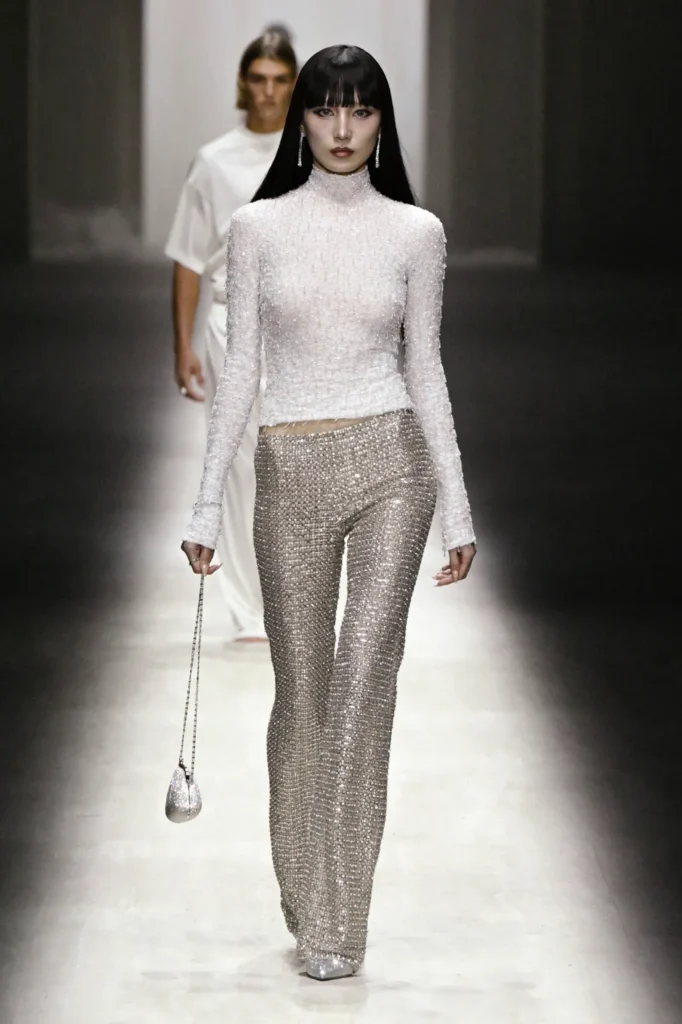
Koma pushed the collection decisively into evening territory. High-shine lamé, sequined embroidery, and bold metal hardware defined the mood. Sculptural tailoring met fragile romanticism, creating tension between sharp structure and softness—a balance that has long anchored the house’s identity.

At the center of it all was the rose, Blumarine’s enduring emblem. It surfaced everywhere: printed across beetle-backed taffeta capes and balloon skirts; embroidered in vivid threads along the sleeves of a vinyl bomber and the legs of overdyed denim; cut into a red crochet mini; appliquéd in pleated bursts on gold georgette lamé; and stamped onto a liquid gold chain-mail dress. Even tailoring carried the motif, with baroque cameo buttons and metallic chains wrapping bras and jeans alike.
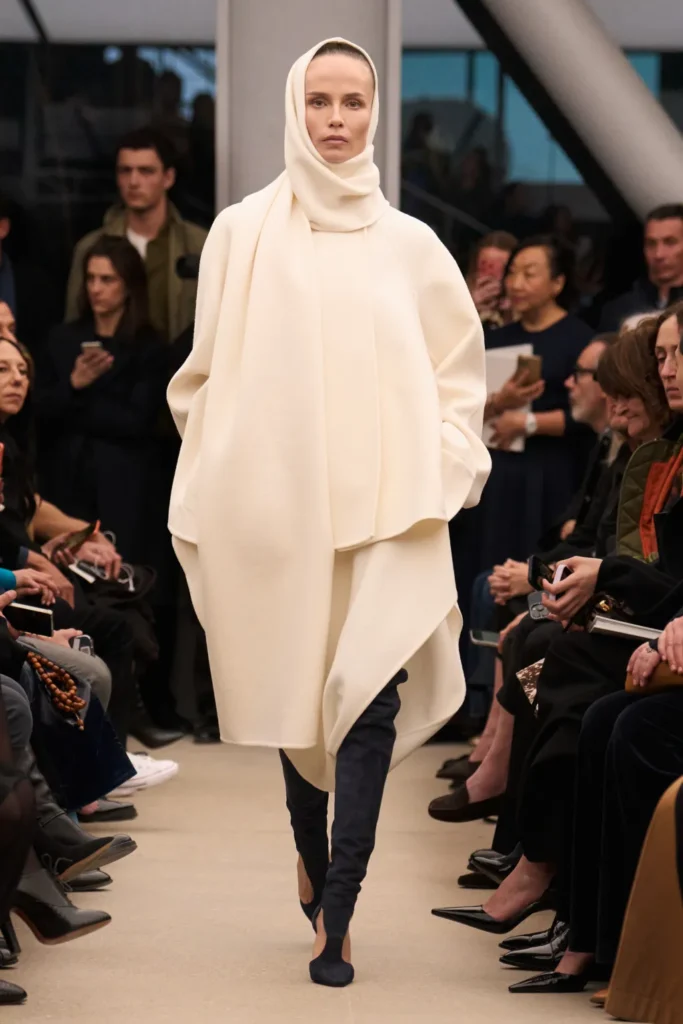
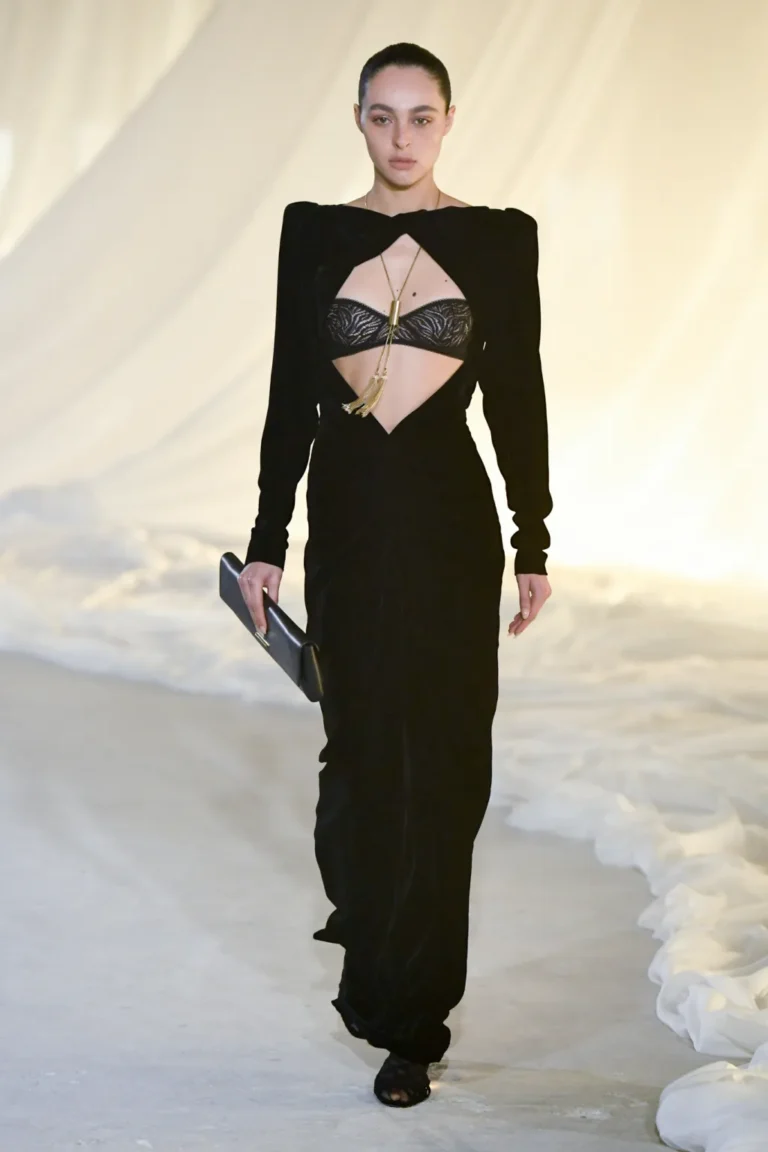
Butterflies and lions—subtle nods to Venice, a recurring source of inspiration for Koma—added a note of decadent symbolism. The theatrical impulse peaked in harlequin fur stoles, diamond-patterned coats, crinoline skirts, and a black goatskin corset molded into the shape of the house’s butterfly logo. These were runway statements first, retail propositions second.

If Fall 2026 proved anything, it is that Koma’s Blumarine thrives in heightened emotion. The collection distilled the brand’s romantic codes into something sharper, bolder, and overtly sensual. This was not nostalgia. It was a declaration: the diva moment is now.

Courtesy of Blumarine

Roberto Cavalli Fall 2026 Collection

0

Roberto Cavalli Fall 2026 Collection

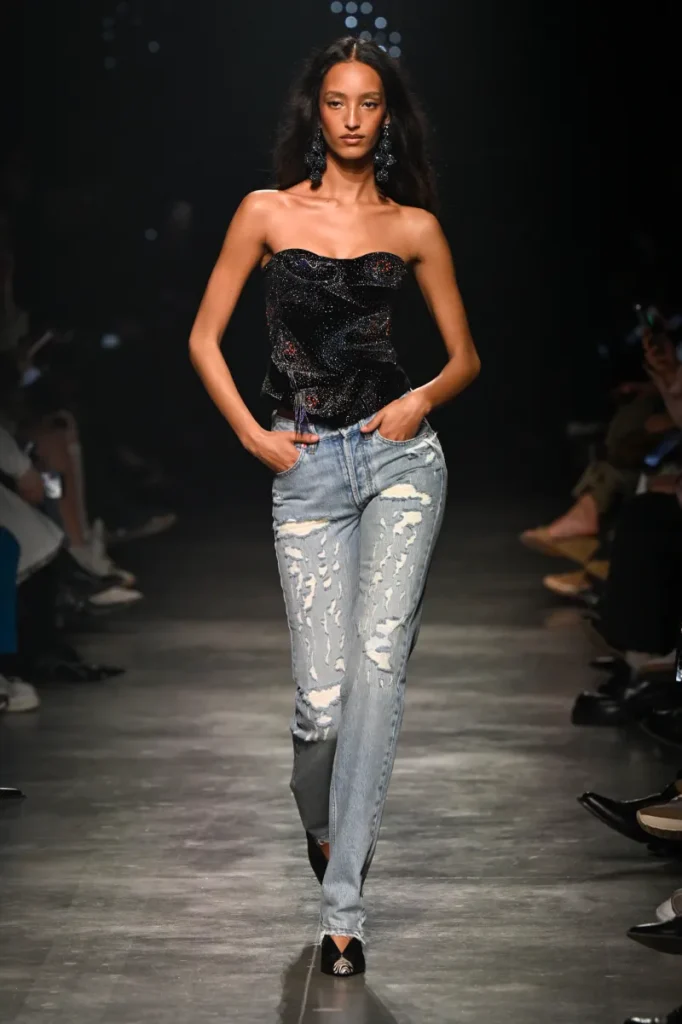
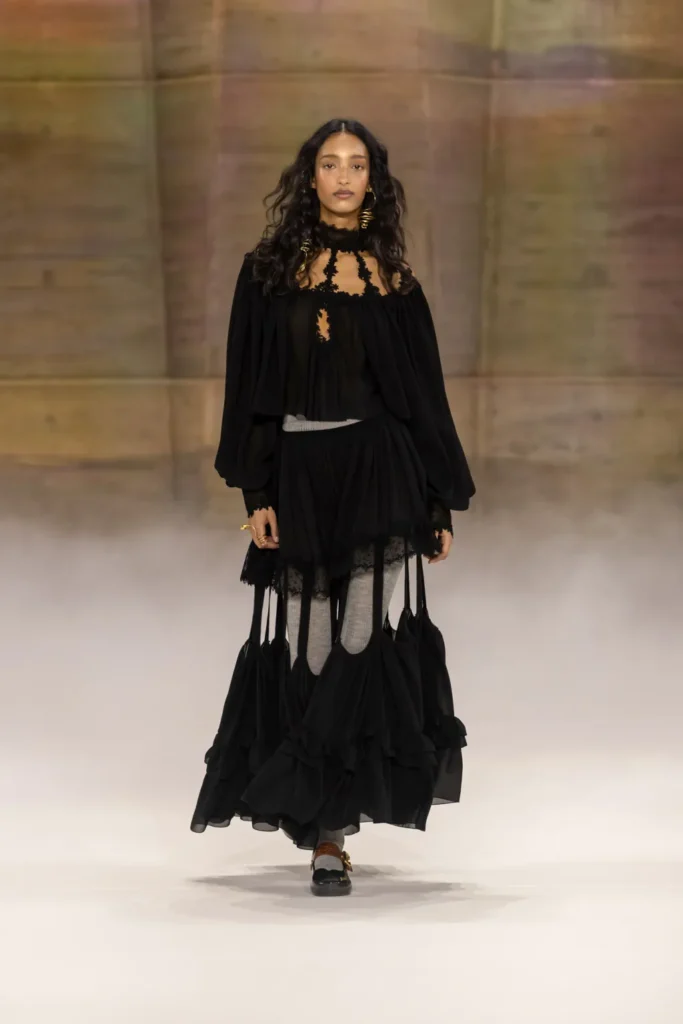
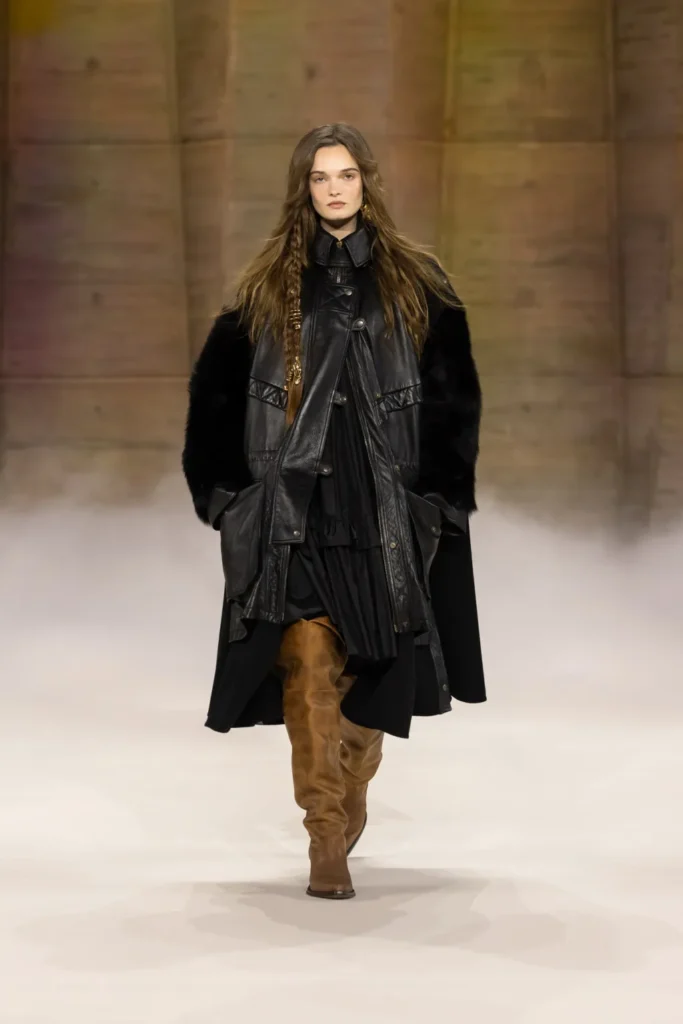
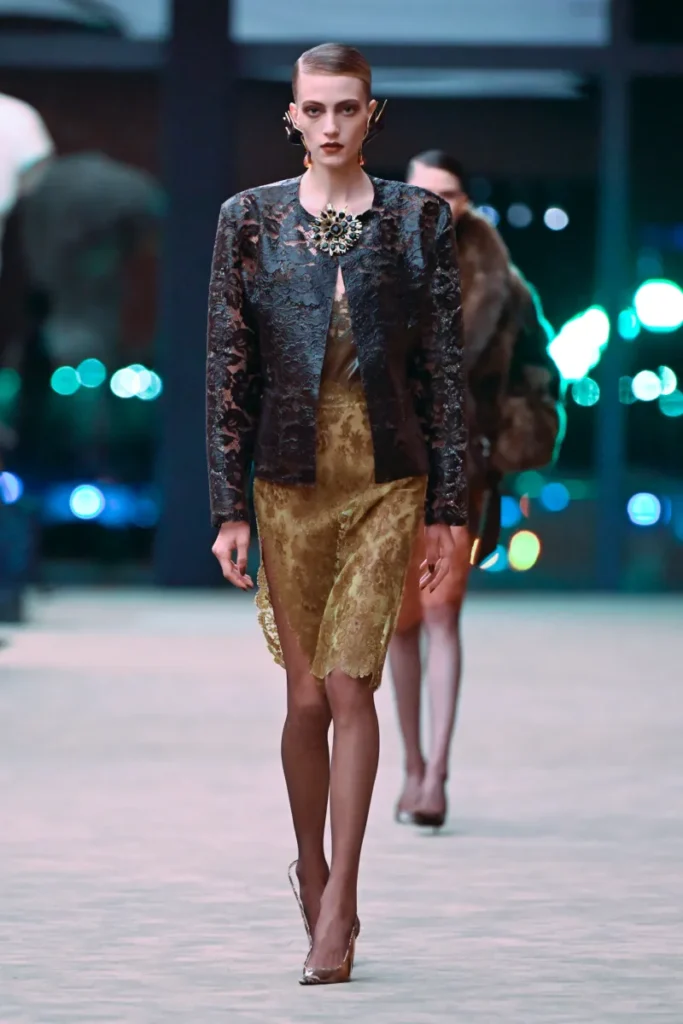
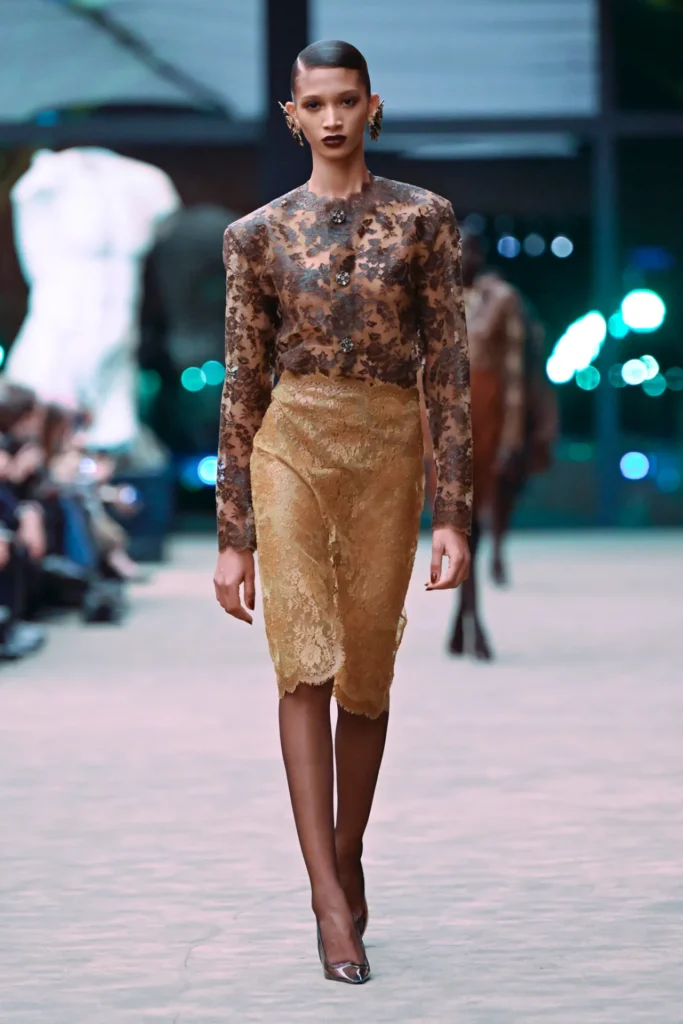
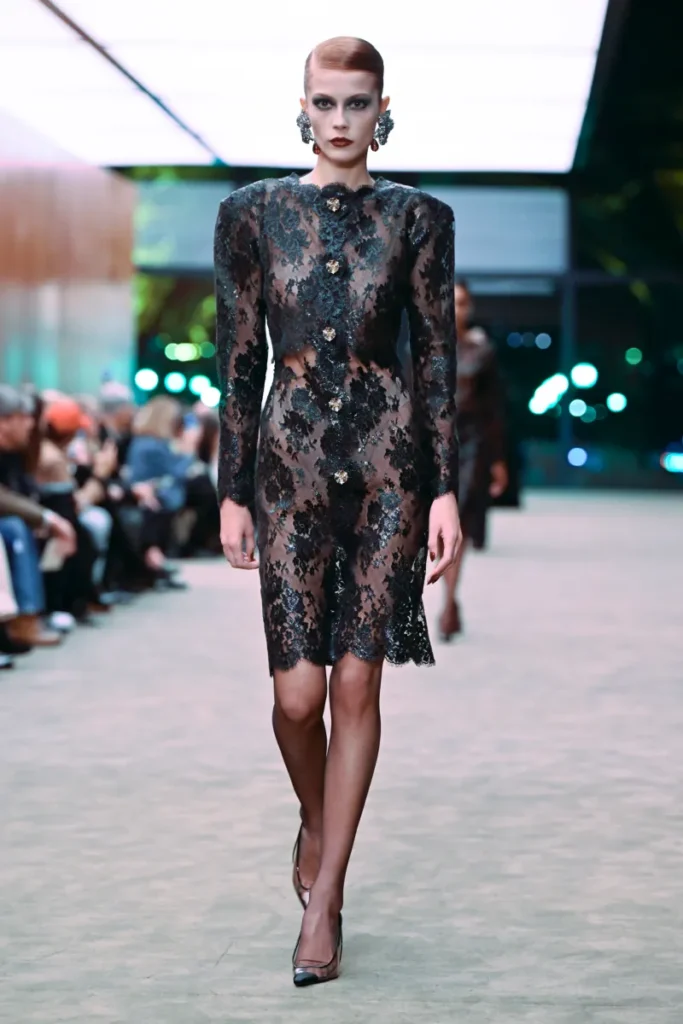
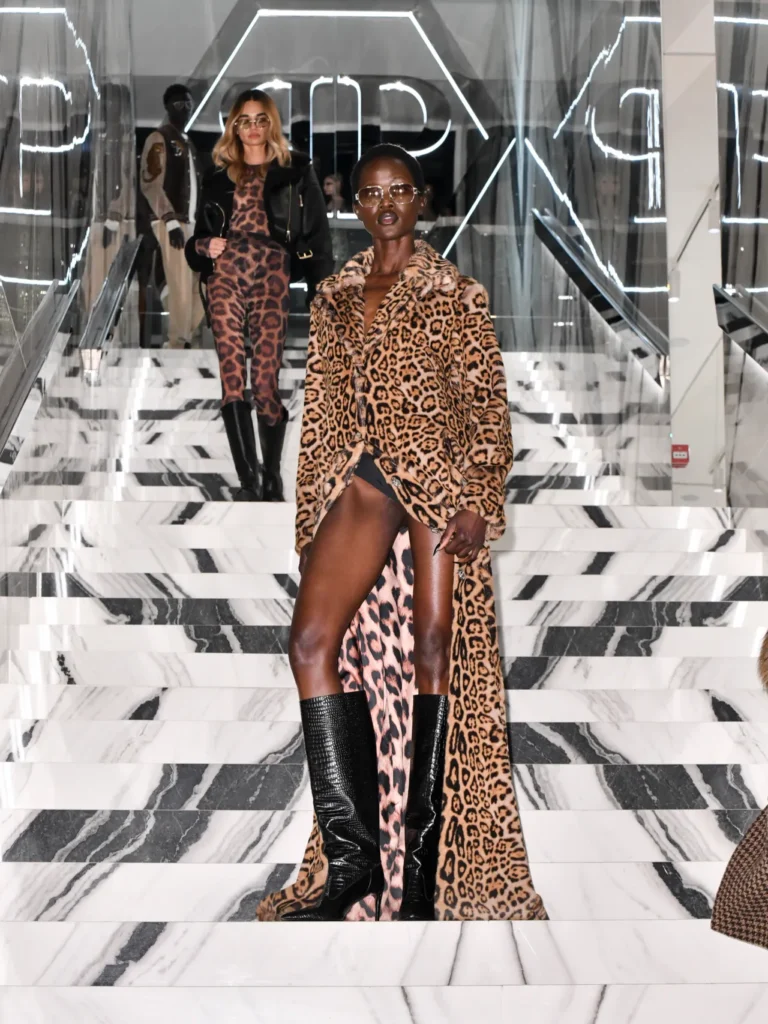
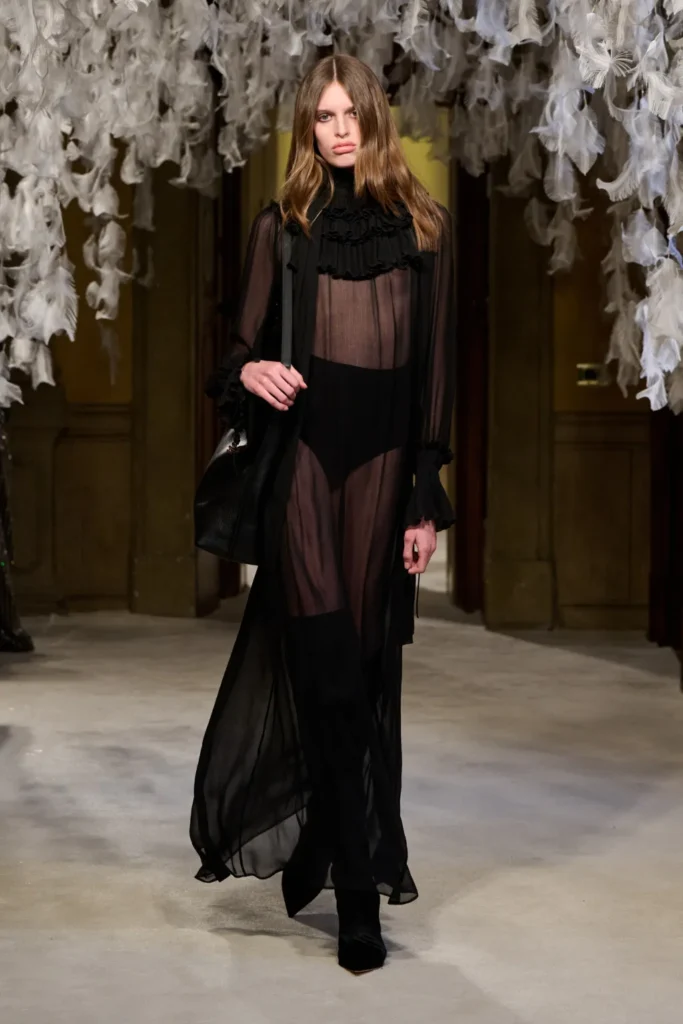
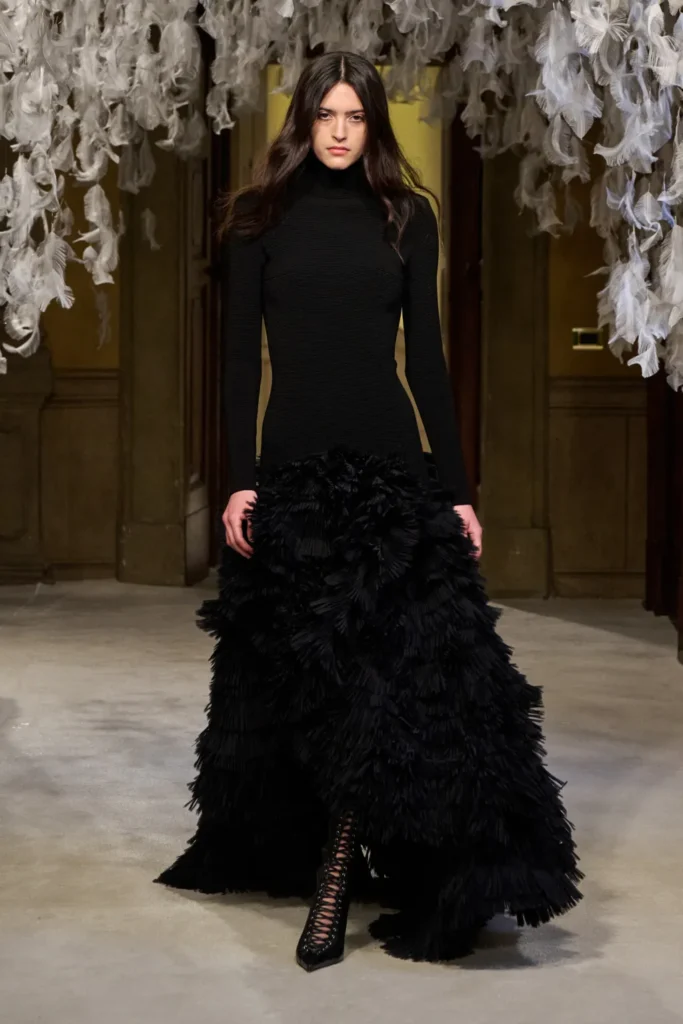
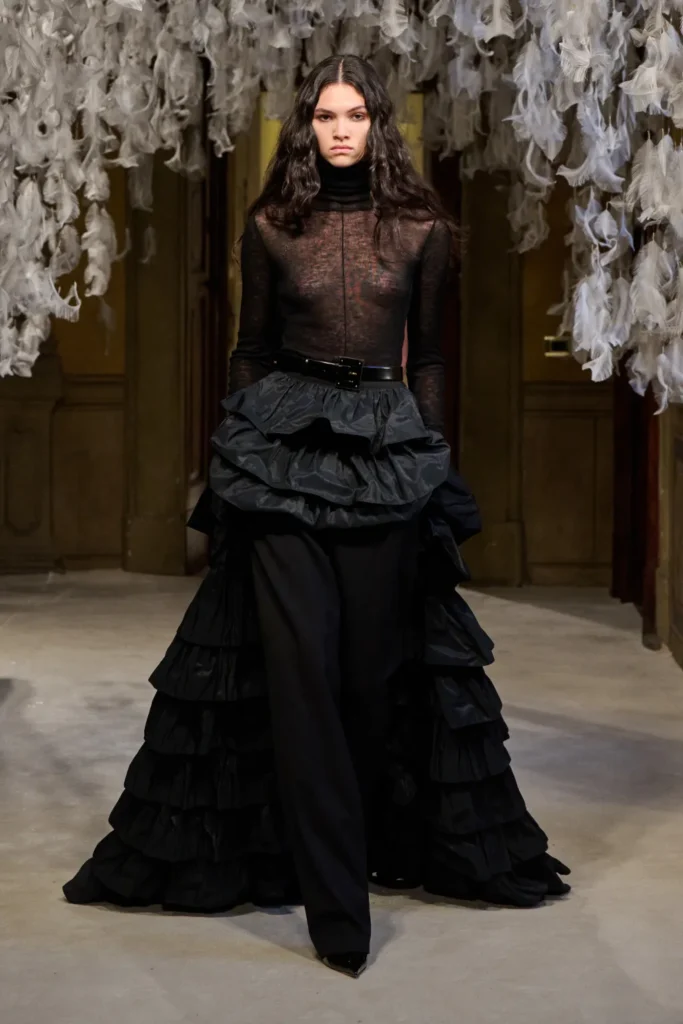
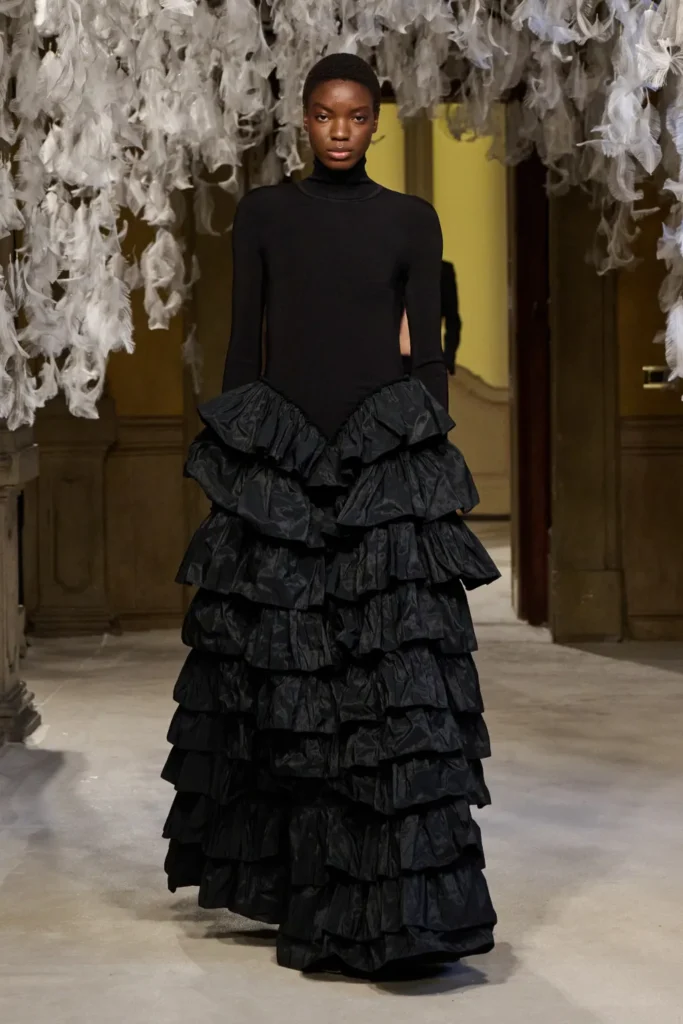
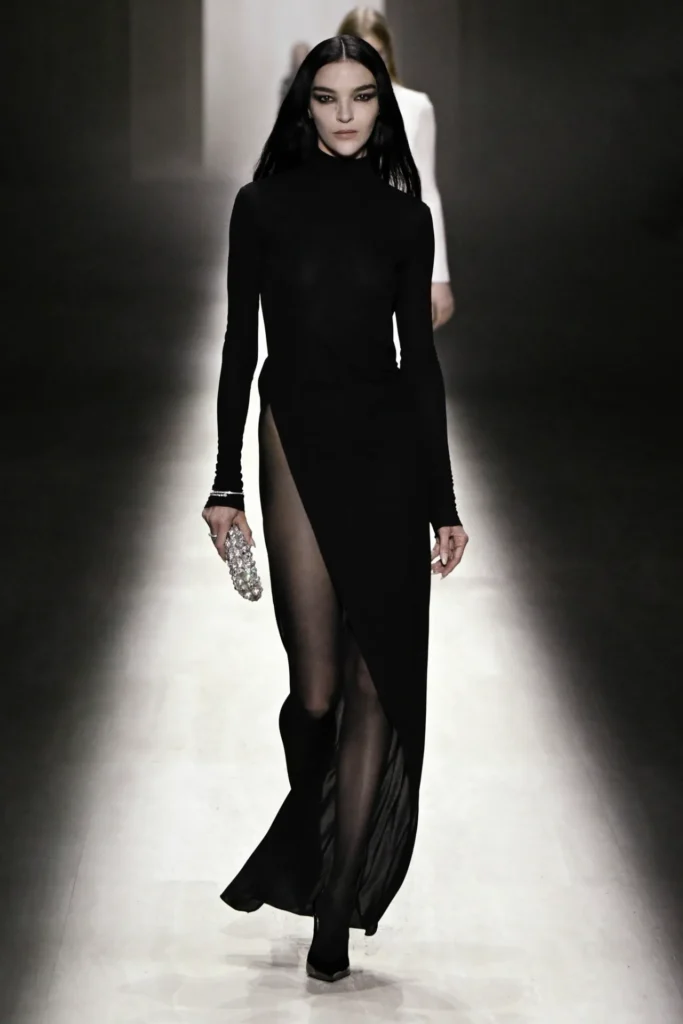
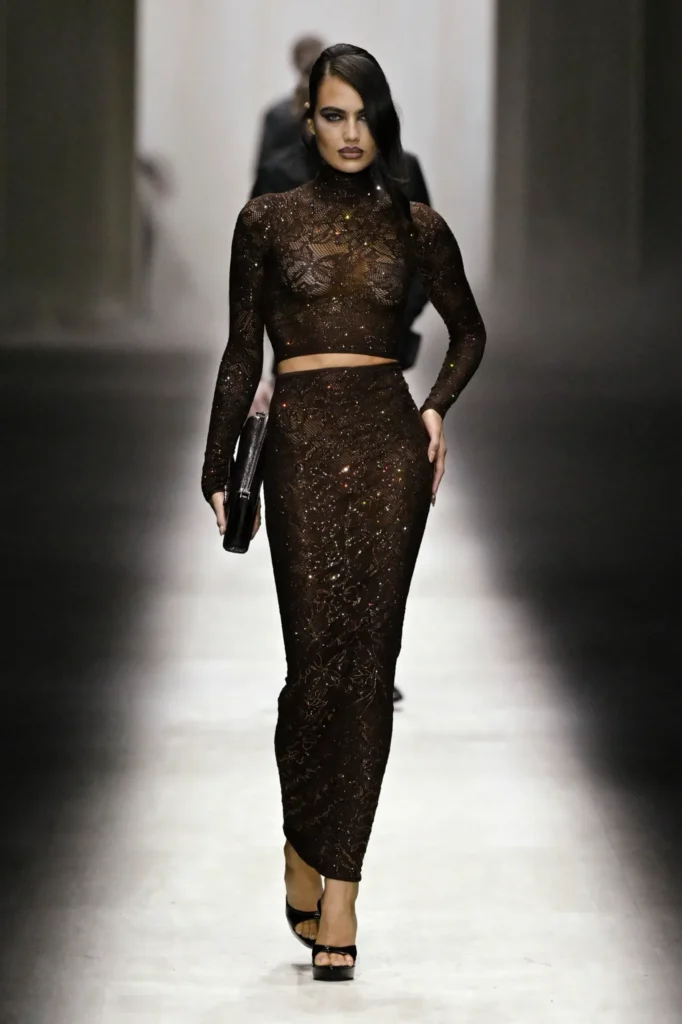
At Roberto Cavalli, Fall 2026 marked a decisive pivot. Creative director Fausto Puglisi, long associated with the house’s high-voltage animal prints and saturated glamour, traded technicolor excess for a study in black—gothic, sensual, and sharply controlled.

“I wanted something neo-romantic and dark,” Puglisi said backstage. “But festive, feminine, powerful.” It was less a retreat than a recalibration: Cavalli’s signature opulence refracted through shadow.

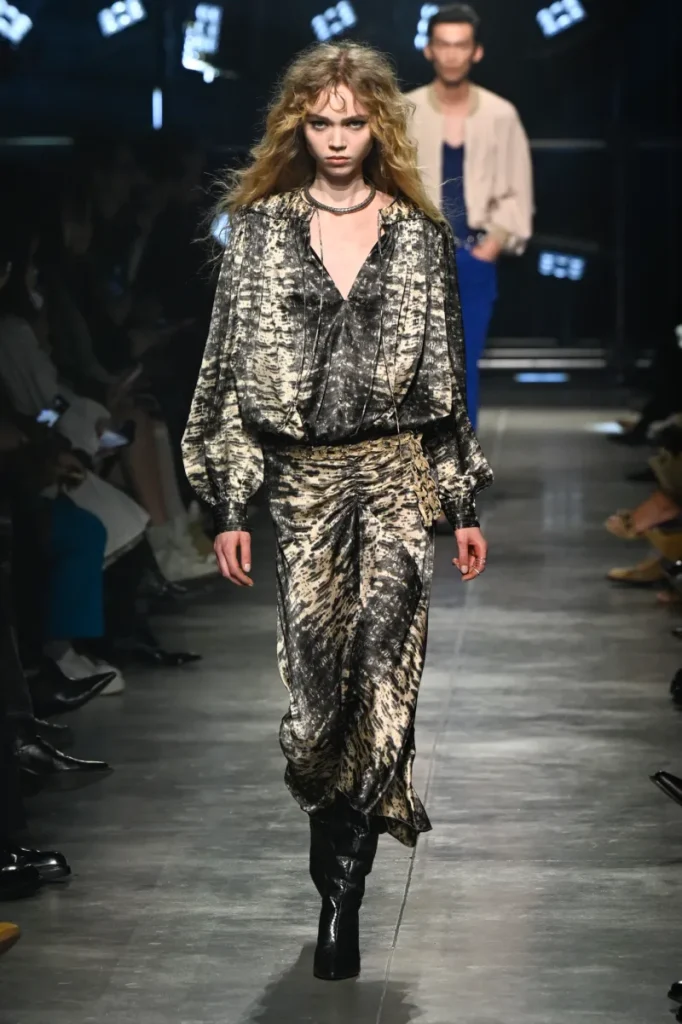
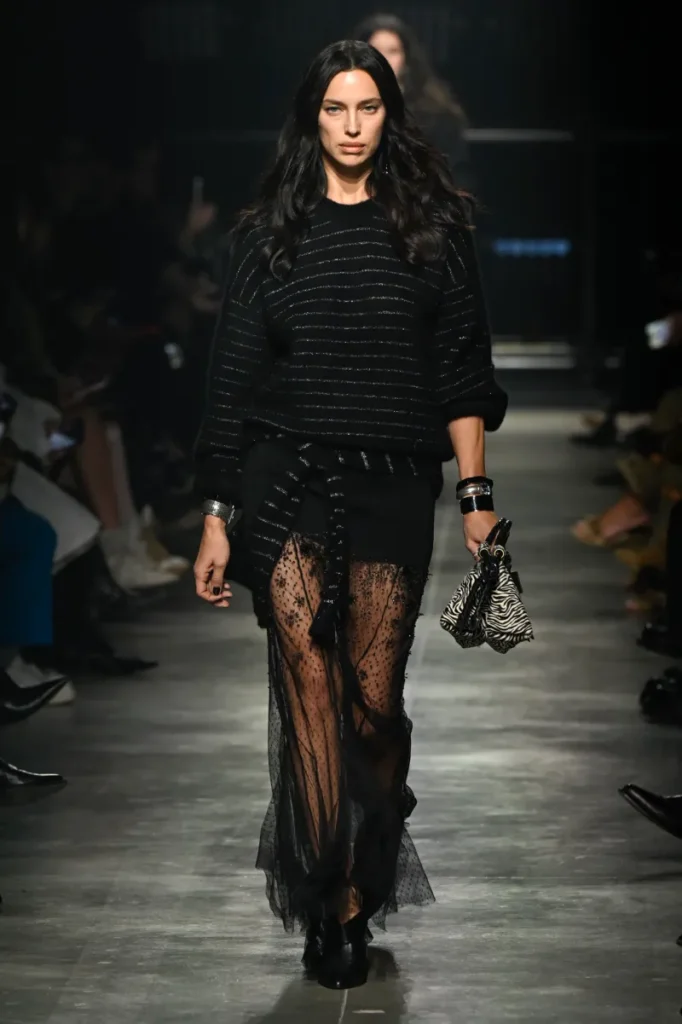
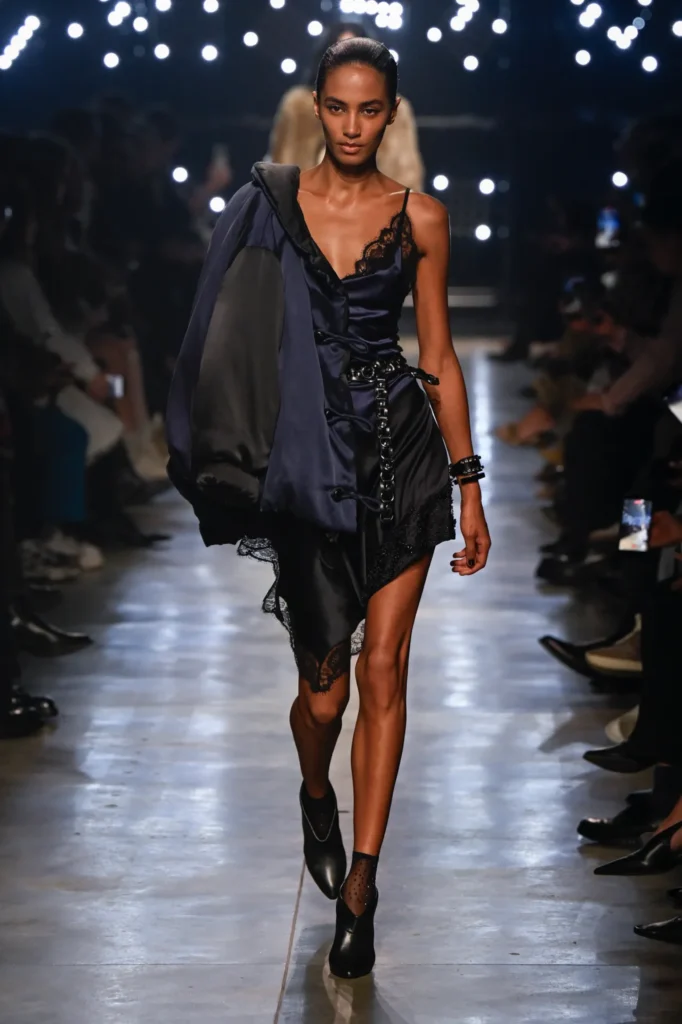
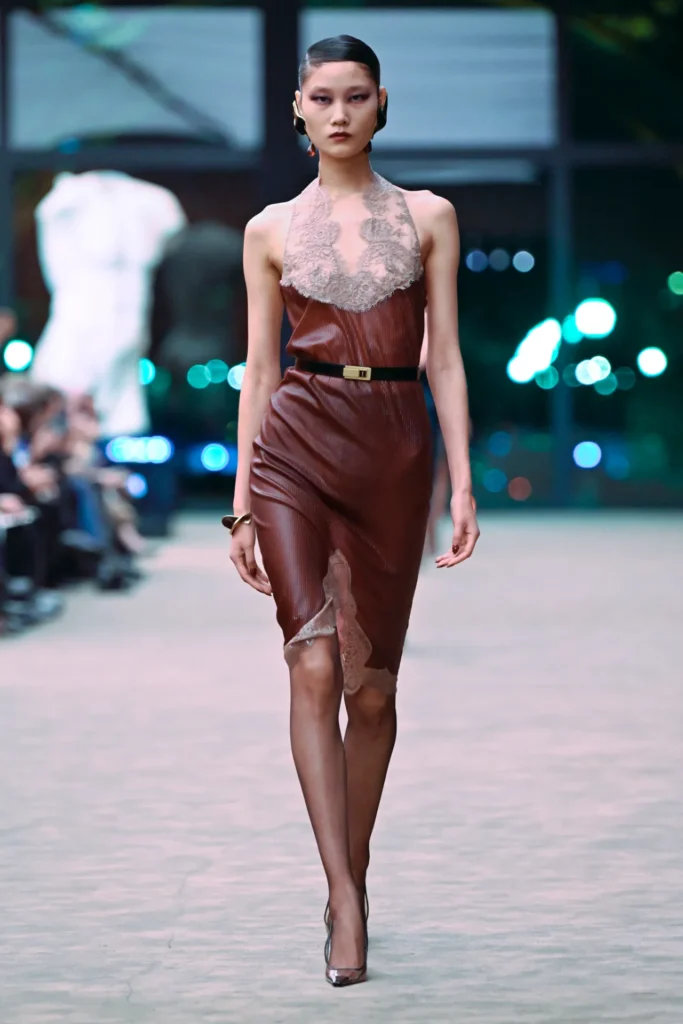
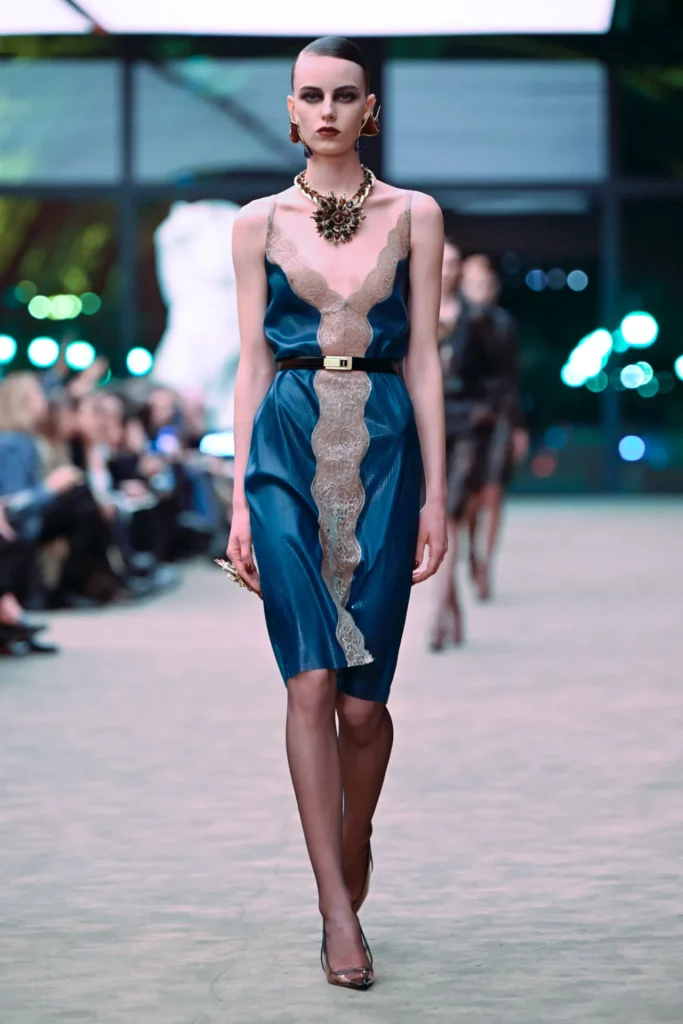
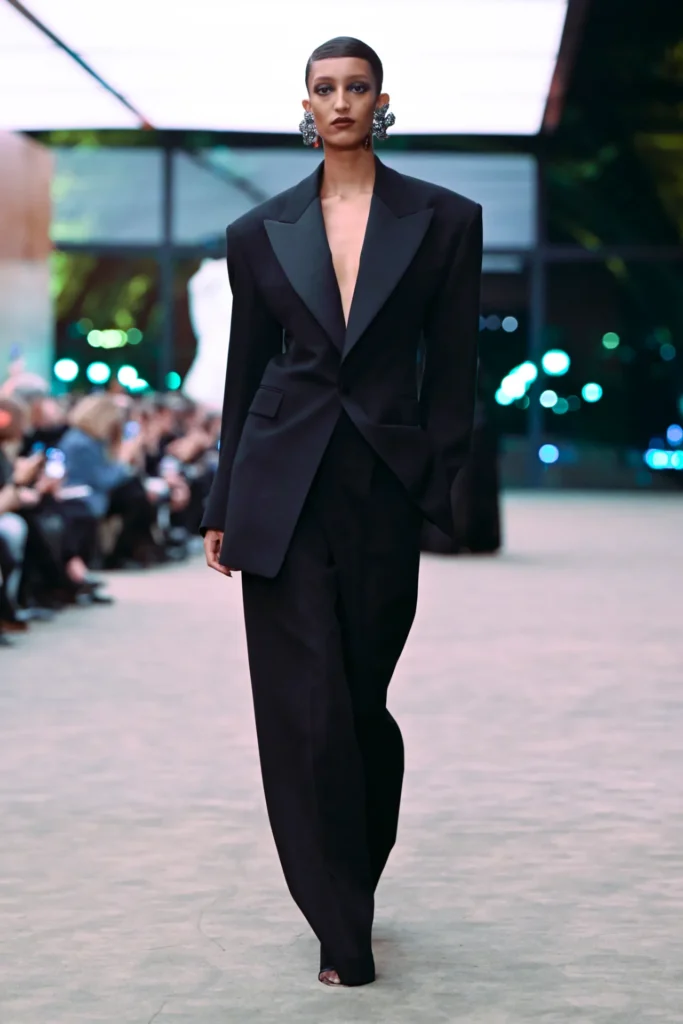
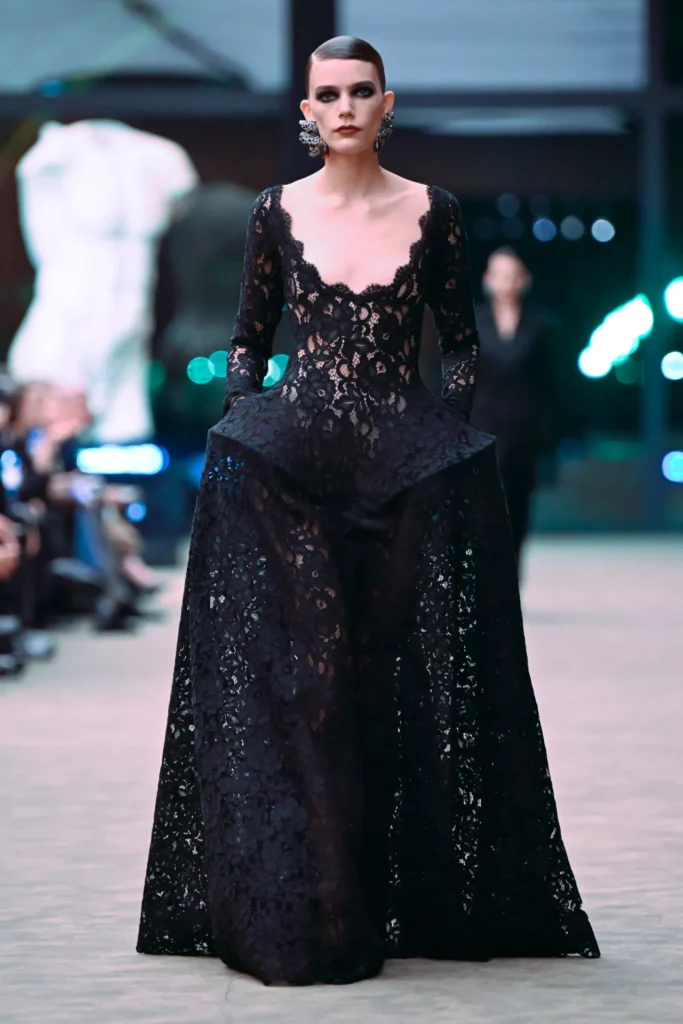
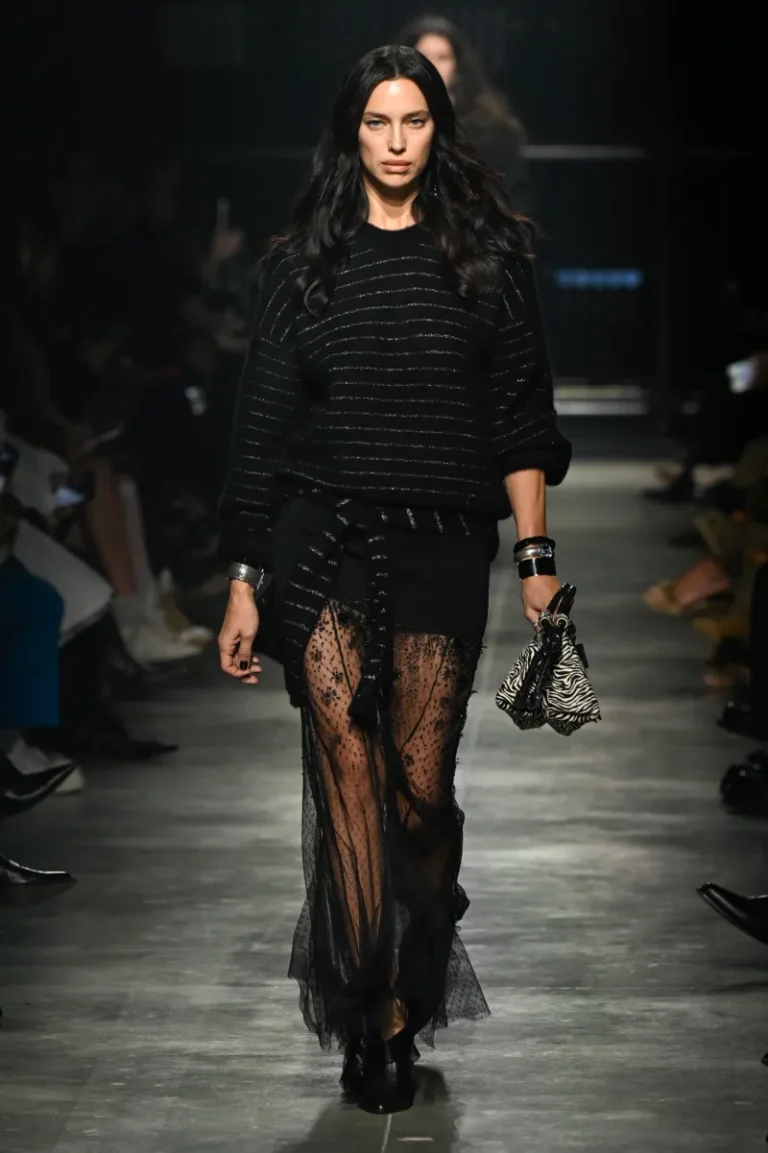
Black arrived in layers and textures rather than flat statements. Cropped biker jackets embossed in crocodile; sweeping, high-shine trousers; ballerina skirts with dramatic volume; and tiered dresses spliced from contrasting fabrics established a tactile richness. Lace played a central role—cross-back slips, sheer minis, and corset-short sequined dresses with lace sleeves sharpened the mood. Silk gowns with elongated, pleated sleeves that pooled over the hands evoked a sleek, modern Morticia: theatrical but controlled.

Courtesy Of Roberto Cavalli

The restraint clarified the house codes. Without the distraction of print, craftsmanship surfaced—embroidery, surface manipulation, the interplay of matte and gloss. Cavalli’s decadence felt distilled rather than diluted.
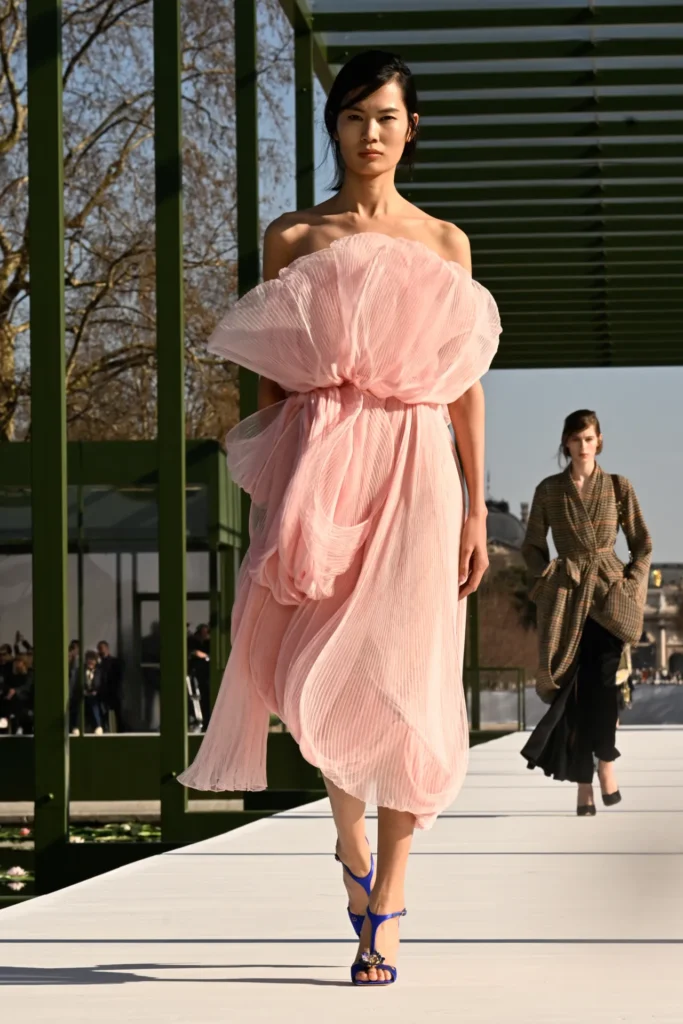
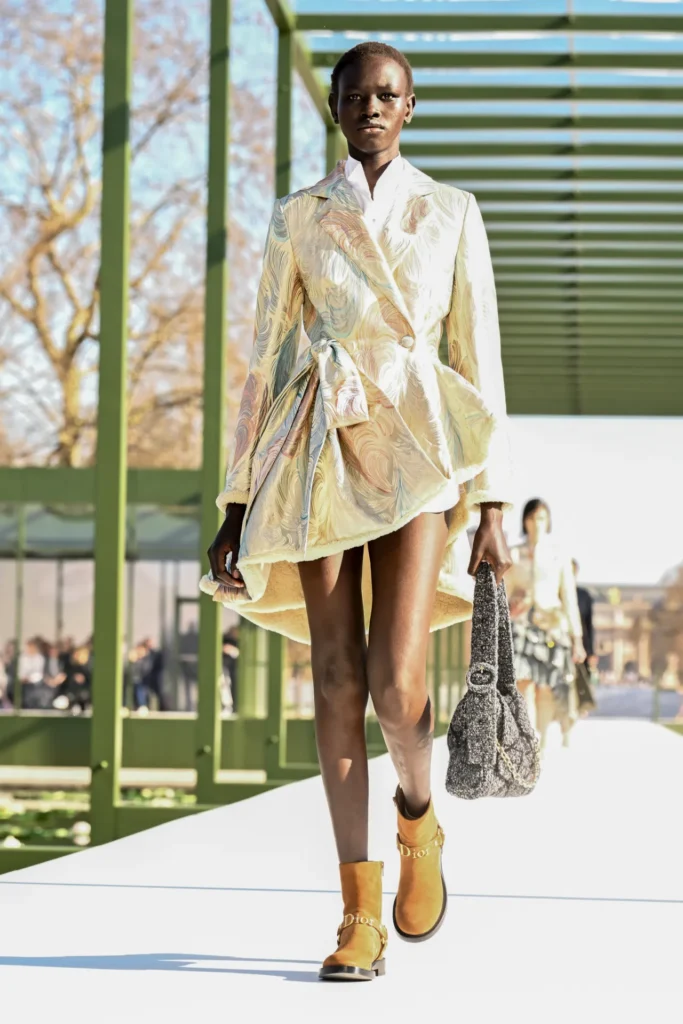
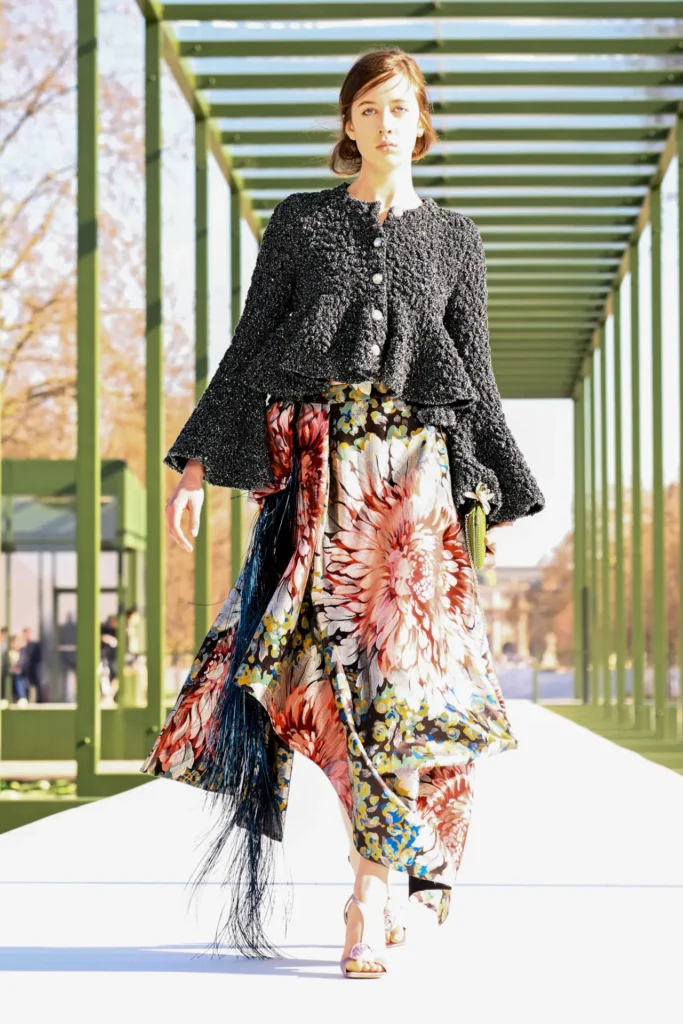
When color finally emerged, it punctured the darkness with intent. Sheer gowns printed with painterly roses, sculpted shoulders, and hues borrowed from Old Master canvases reintroduced romantic drama. Knitwear bloomed with plush rosettes; a rose-embroidered mini flashed with sequins. Later, saturated silk dresses in vivid pink and violet jolted the palette, restoring the brand’s instinct for spectacle.

Yet the story was black. By stripping back the riot of pattern, Puglisi proved that Cavalli’s identity is not confined to animal print. It lives in texture, attitude, and unapologetic sensuality. Fall 2026 was not a departure—it was a reminder that even in darkness, Cavalli commands the spotlight.

Emporio Armani Fall 2026 Collection

0

Emporio Armani Fall 2026 Collection

At Emporio Armani, Fall 2026 marked a new chapter—confident, expansive, and rooted in the house vocabulary. The coed collection, designed exclusively by Silvana Armani and Leo Dell’Orco, longtime creative heirs to Giorgio Armani, unfolded as a 360-degree vision of the brand: pragmatic, polished, and unmistakably Armani.

The premise followed two young music students training to become conductors, but the narrative served mainly as scaffolding for a comprehensive wardrobe. This was Emporio Armani as a complete proposition—day to evening, campus to concert hall.

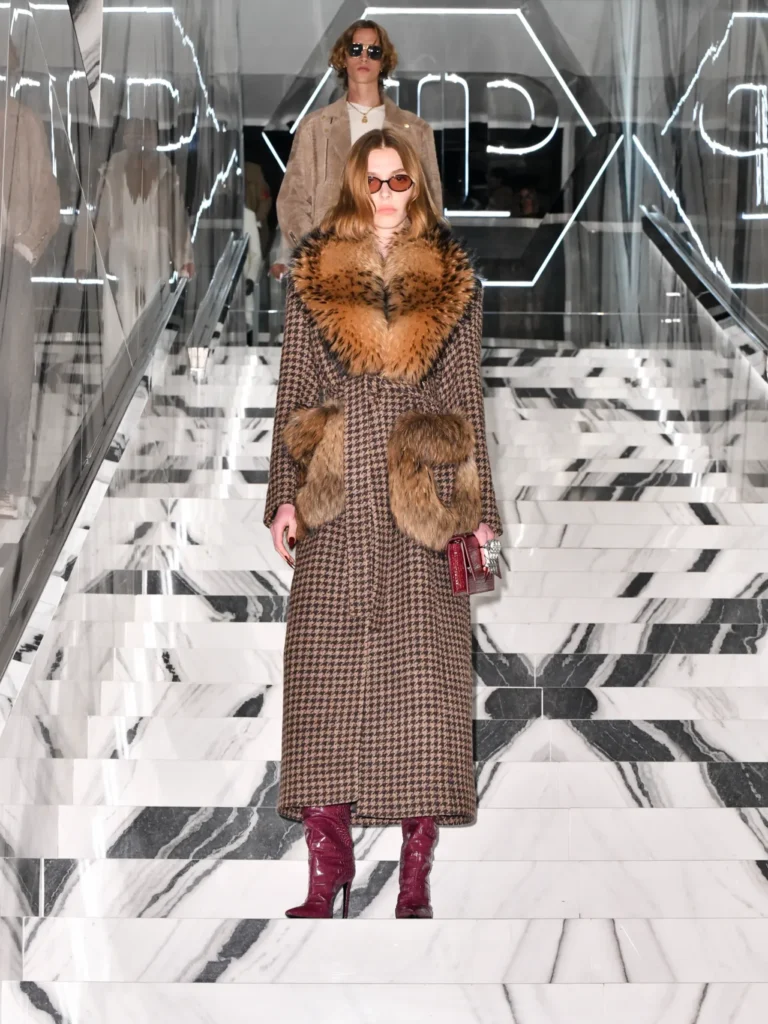
Tailoring anchored the show. Jackets ranged from softly cut blazers to substantial shearling aviators and sharp tailcoats fit for formal recital. Three-piece plaid suits came accented with pocket chains; fluid wool suits appeared in dove gray and Armani’s signature greige. Outerwear was equally assured: navy topcoats, trench styles, robe coats, and boxy country jackets in tweed, herringbone, and houndstooth underscored the brand’s fluency with British textiles.

The casting emphasized duality. Models often walked two by two, suggesting dialogue—between masculine and feminine, tradition and youth. There were collegiate V-neck sweaters under navy overcoats; workwear-inspired denim jackets with contrasting collars; sharp Prince of Wales checks styled with insouciance. For women, plaid jackets paired with easy miniskirts nodded to ’70s romanticism, while jewel-toned fur coats and elongated princess silhouettes revisited enduring house signatures.

Courtesy Of Emporio Armani

Elsewhere, subtle references surfaced: flat caps and layered tailoring evoked interwar tailoring codes; boxy coats and bermudas suggested a country polish. Yet nothing felt nostalgic. The effect was continuity without stiffness.

What emerged was a democratic vision—Italian fashion adaptable to multiple identities, grounded in fabric and cut rather than spectacle. By revisiting archival strengths—fluid suiting, restrained glamour, jewel-toned outerwear—while refining proportions for today, Emporio Armani reaffirmed its core promise: a wardrobe built not around trends, but around living.

Prada Fall 2026 Collection

0

Prada Fall 2026 Collection

At Prada, disorder was deliberate. For Fall 2026, Miuccia Prada and Raf Simons delivered a rigorous meditation on layering—both literal and conceptual—where garments were stripped back, built up, and reconfigured in motion.

Fifteen models marched through the vast, carpeted set at a punishing pace, returning repeatedly as layers were added or removed. A flared skirt revealed itself as a ’50s-inflected dress; beneath a severe black pantsuit hid cotton briefs and a gray crewneck. Each pass exposed another construction, another intention. Clothes were not static—they evolved.

The collection embraced abrasion. Fabrics were frayed, distressed, purposefully soiled. Wrinkled shirts with exaggerated French cuffs dangled from the wrist. Crumpled trench coats split at the seams to expose plaid wool linings. Tubular overcoats—echoing the men’s Fall show—reappeared, alongside glossy utilitarian capes trimmed with vertical strips of animal-patterned fuzz. Corroded black wool on skirts and sheath dresses dissolved into blurred florals, a tension between decay and delicacy.

Against this studied imperfection came flashes of refinement: polished crocodile top-handle and bucket bags, towering lace-up boots edged in beads or engulfed in feathers. Luxury, here, was not erased but reframed.

Set inside a space resembling a hollowed-out mansion—ornate moldings, marble fireplaces, colonial windows—the show underscored the theme of accumulation. Historical fragments, furniture, paintings: culture itself as layering. Prada described the process as an expression of “the constant need for change,” and how women negotiate that flux through dress. Simons rejected any hierarchy between minimal and opulent, pristine and distressed.

Boss Fall 2026 Collection

0

Boss Fall 2026 Collection

At Boss, Marco Falcioni set out to restore pleasure to the act of dressing well. His Fall 2026 collection reframed the corporate suit not as uniform, but as expression—rooted in late-’80s tailoring and sharpened with modern ease.

Falcioni revisited archival sales books from that decade—meticulously composed manuals where garments were styled into persuasive, fully realized looks. That clarity of vision informed a collection intent on giving tailoring renewed meaning. “Uniformity is not our way forward,” he has said. Instead, the goal is authenticity: tailoring that adapts to life rather than dictates it.

The result was structured yet fluid. For women, elongated blazers with softly dropped shoulders and nipped waists were paired with high-cuffed trousers that subtly sculpted the silhouette. Notch lapels cut high on the chest nodded to ’90s precision. Double-breasted jackets returned with double flap pockets and a curved back construction designed to emphasize the figure from behind—an understated but deliberate sensuality.

For men, proportion drove the narrative. Relaxed suiting gained volume through layering: leather blousons and anoraks slipped over shirt-and-tie foundations, strengthening traditional office codes with a contemporary edge. Materials elevated the proposition—brushed alpaca, cashmere, even ostrich for overshirts and coats—tempering rigor with tactility.

Courtesy Of Boss

Details delivered personality. Silk scarves peeked from beneath collars; pocket squares disrupted sobriety; cashmere ties were fastened with floral brooches. These gestures recalled a moment in the brand’s history when white-collar dressing allowed for wit—paisleys and geometric prints included—without sacrificing polish.

Etro Fall 2026 Collection

0

Etro Fall 2026 Collection

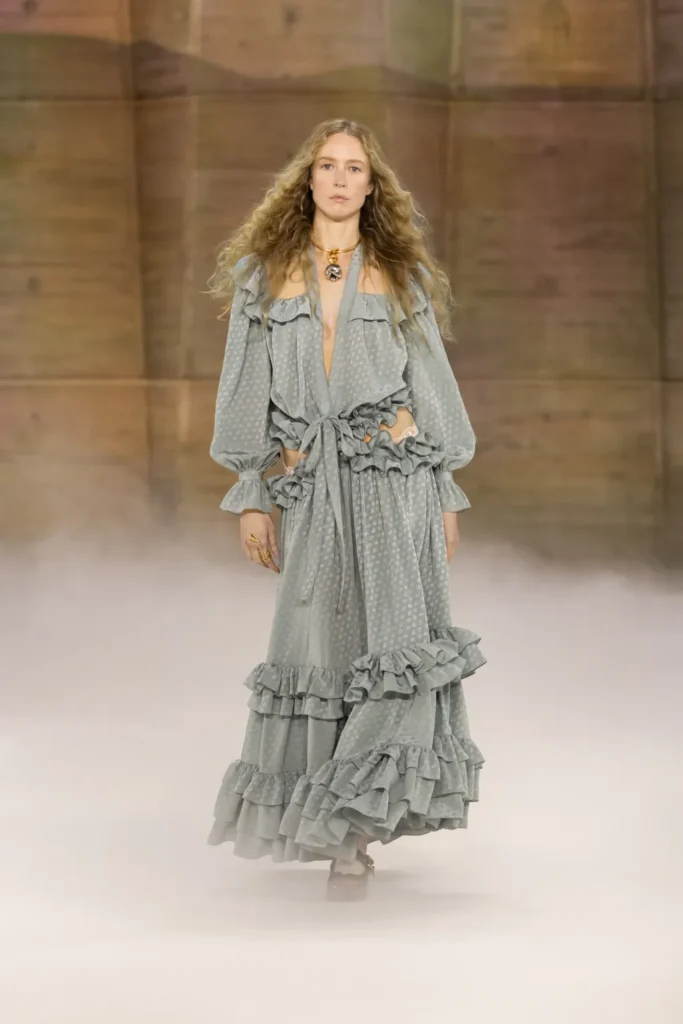
At Etro, Marco de Vincenzo staged a study in contrast for Fall 2026—one that moved decisively from restraint to exuberance without losing the house’s bohemian core.

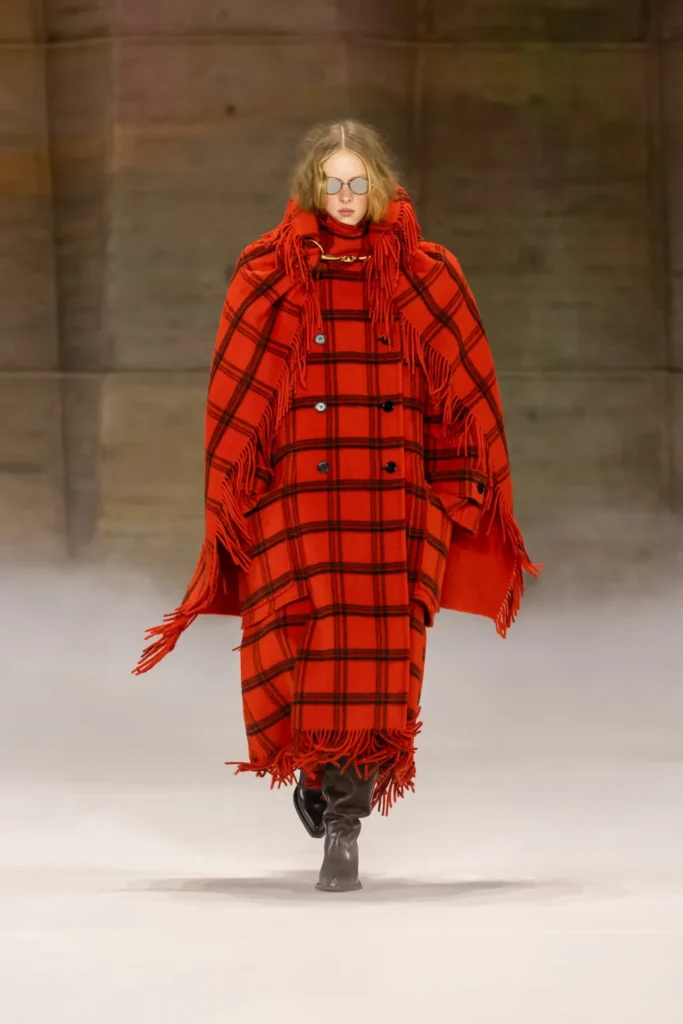
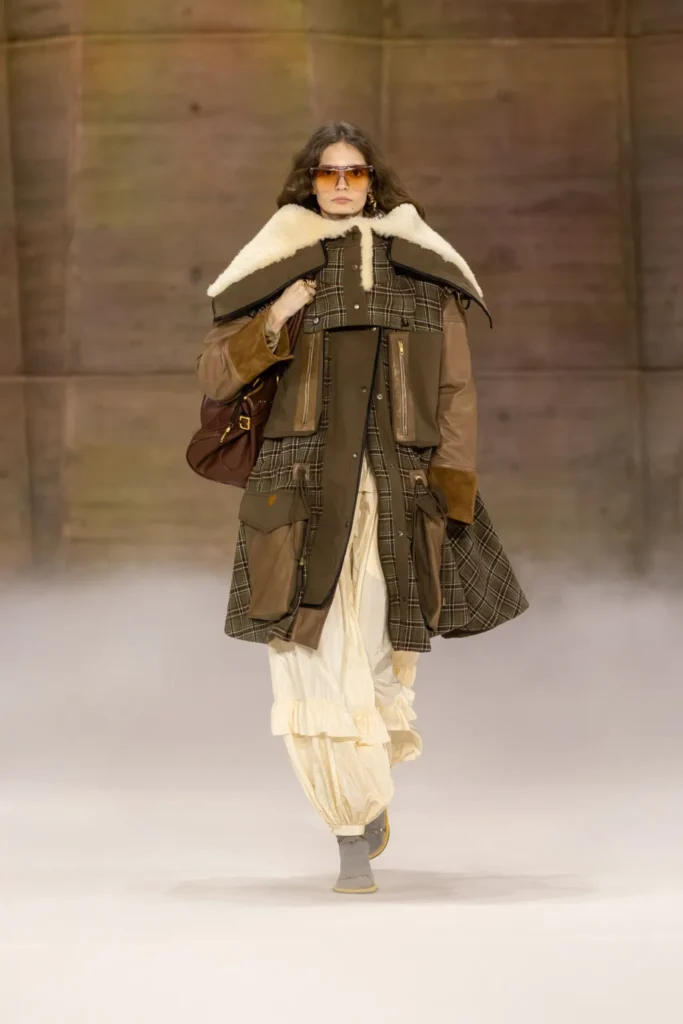
De Vincenzo has spoken about continuity, about honoring Etro’s decorative legacy while reshaping it. That dialogue was visible on the runway. The opening looks projected a brisk sobriety: masculine tailoring with a British inflection, military-leaning coats, and tartan scarves knotted at the waist. Feather-trimmed suits and studded leather iterations sharpened the mood, while pleated plaid skirts paired with chunky knit sweaters—woven with heraldic motifs and tassels—introduced texture without excess.

Denim grounded fluid printed dresses; structured outerwear lent discipline to Etro’s innate romanticism. It was a controlled first act, suggesting a recalibration of the brand’s ornamental vocabulary.

Then the volume rose.

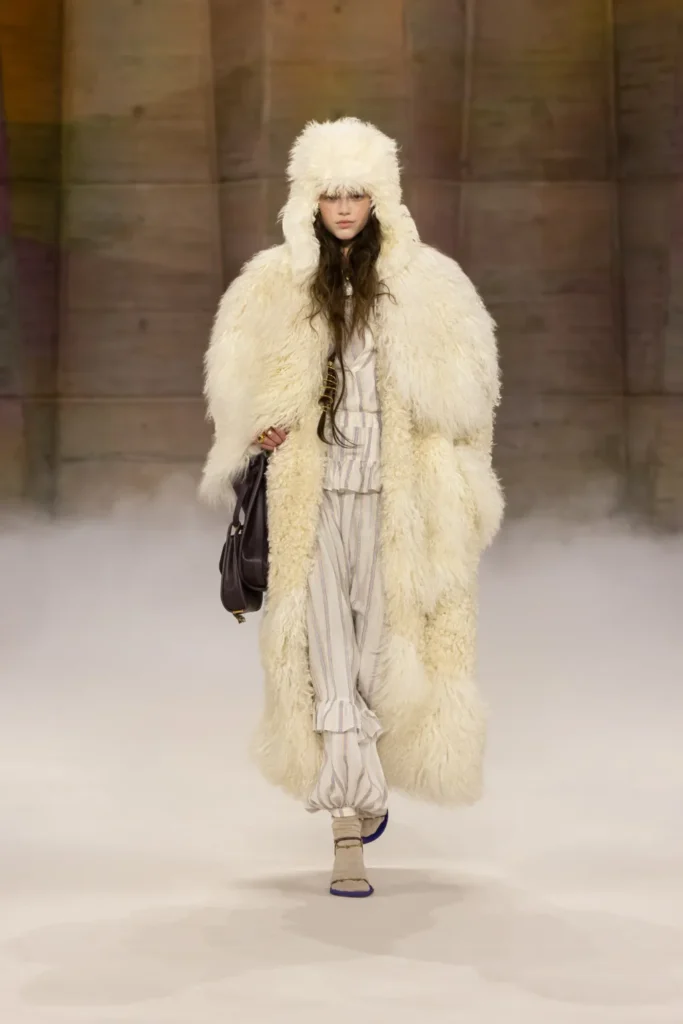
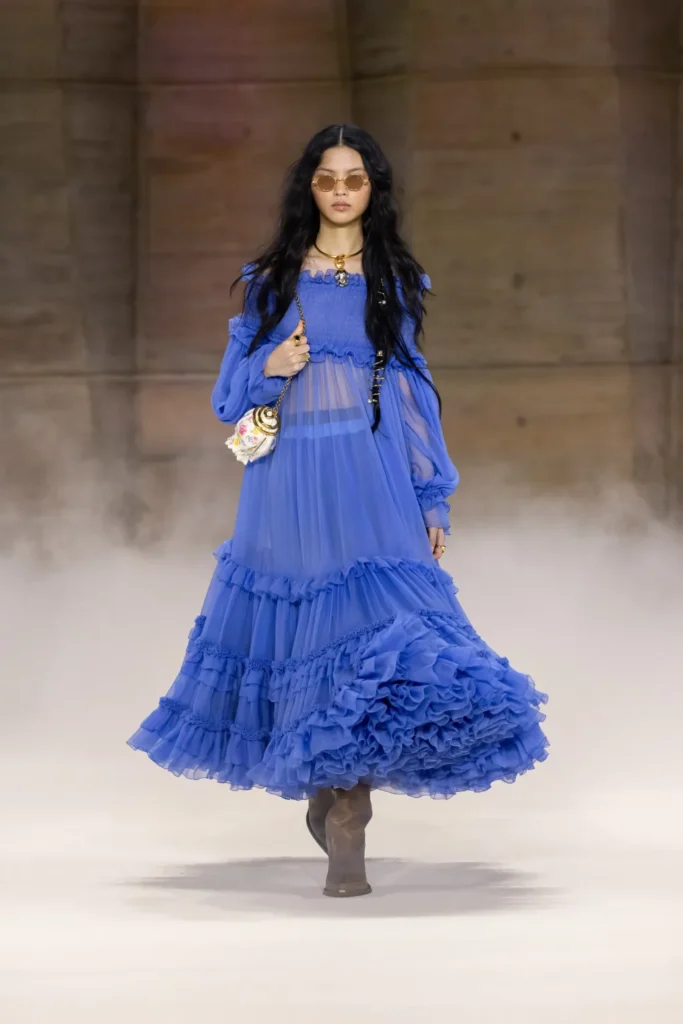
As the show progressed, paisleys and stripes—Etro’s enduring signatures—returned in saturated color and amplified scale. Silhouettes grew bolder, surfaces richer. The finale delivered the house at full intensity: plush fur coats, ruffled party dresses, feathered stoles and skirts, gold fringe, and cascades of sequins that caught the light with theatrical insistence.

Accessories mirrored the shift. Embroidered clutches and velvet stiletto sandals with gleaming metal buckles heightened the glamour, offset by suede mules developed with Birkenstock—a pragmatic counterpoint to the spectacle.

For De Vincenzo, Etro is not confined by geography or genre. Fall 2026 affirmed that elasticity. The collection traveled from tailored rigor to decorative abandon, mapping the brand’s identity as one in constant motion—rooted in craft, propelled by escapism, and unafraid of excess.

Missoni Fall 2026 Collection

0

Missoni Fall 2026 Collection

At Missoni, Alberto Caliri sharpened the house’s language for Fall 2026 with a collection that prioritized attitude over nostalgia. The message was clear: confidence is constructed—through proportion, layering, and a recalibrated approach to knitwear.

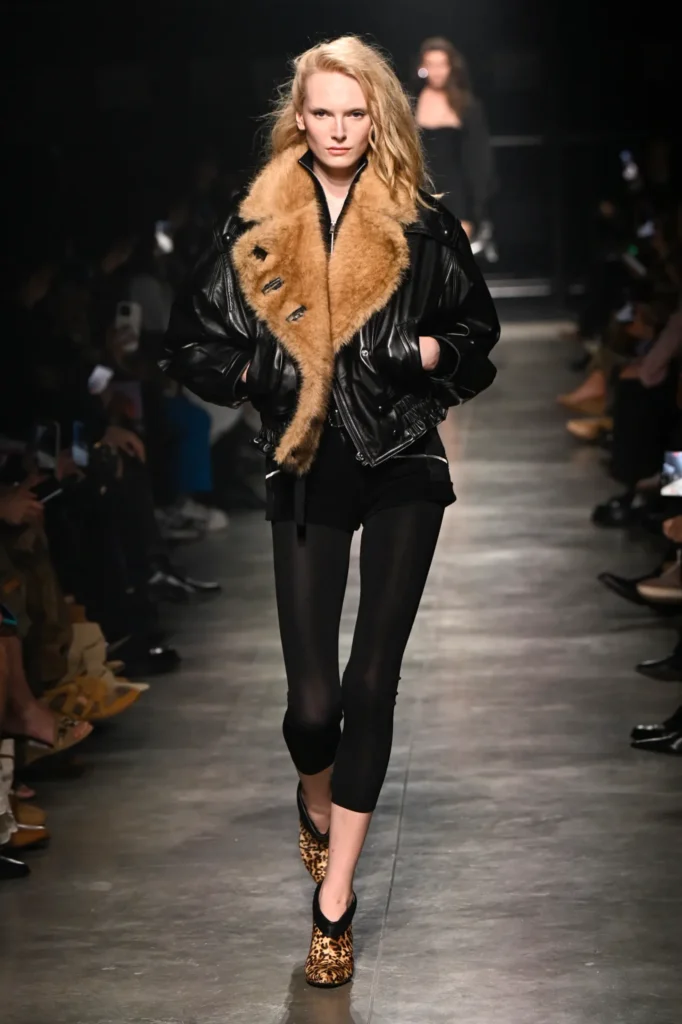
Broad shoulders set the tone. Oversized martingale coats, shearling jackets, and voluminous printed bombers formed the outer shell of looks built in deliberate layers. Models strode out with hands tucked into pleated trousers or masculine leather bermudas, amplifying the collection’s assertive stance. The silhouette nodded to the ’80s without veering into costume; this was daywear with backbone.

Caliri, who has steadily expanded Missoni’s outerwear proposition, grounded the collection in pragmatic structure. Archival images from 1978—when the house first presented women’s and men’s collections together—served as a touchstone. That duality surfaced in the balance between tailored severity and fluid knit dresses.

The standout midis were engineered to resemble two-piece sets: relaxed tops fused to lean skirts, creating movement without sacrificing line. Maxi stripes and unexpected flashes of shine refreshed the house’s signature patterns. Elsewhere, jacquards woven with Lurex and sequins delivered controlled maximalism—texture used with intent, not excess.

Courtesy Of Missoni

Missoni’s Fall offering was less about decorative flourish and more about versatility. These were pieces designed to mix, layer, and assert presence—knitwear not as embellishment, but as armor for modern daywear.

Fendi Fall 2026 Collection

0

Fendi Fall 2026 Collection

At Fendi, Maria Grazia Chiuri opened a new chapter with a proposition both pragmatic and pointed: a shared wardrobe. Her coed debut in Milan rejected rigid gender divides in favor of a tightly edited offering built on precision tailoring, disciplined glamour, and a predominantly black palette.

“Less me, more us,” Chiuri said backstage—a philosophy translated into clothes designed by one team for all. Coats, jackets, and trousers were conceived as universal pieces, adjusted only in proportion. The ambition was clear: to create the jacket everyone wants.

The result was restrained but confident. Fashion spectacle took a back seat to craft. Black dominated, reading as sober and sophisticated, though undeniably commercial. Within that framework, Chiuri explored denim, military, and bohemian codes, proposing a Fendi less about imposed identity and more about collective desire.

There were flashes of eccentricity: folkloric vests trimmed in fur, a moss-green aviator suit, a distressed motocross jacket in yellow and black. Yet Chiuri’s strengths lay in her tailoring—sharp wool coats, fluid pleated skirts, lace cocktail dresses, and panne velvet evening gowns with a subtle 1920s inflection.

Details carried the narrative. Slim white leather collars worn like chokers nodded to Karl Lagerfeld, who shaped Fendi’s fur and ready-to-wear for over five decades. Cross-body strap closures on jackets echoed the tenure of Kim Jones. Intarsia fur scarves honored the five Fendi sisters, inscribed with phrases by Italian artist Sagg Napoli, including “Rooted, but not anchored.” Continuing her dialogue with women artists, Chiuri collaborated with the heirs of sculptor and poet Mirella Bentivoglio on jewelry and graphic tees.

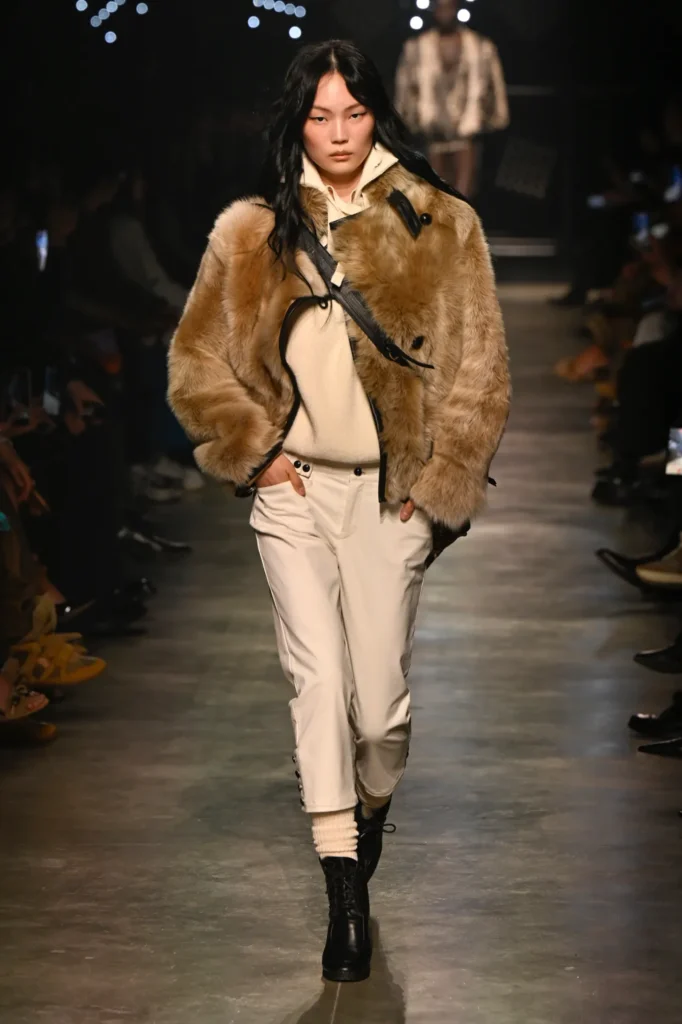
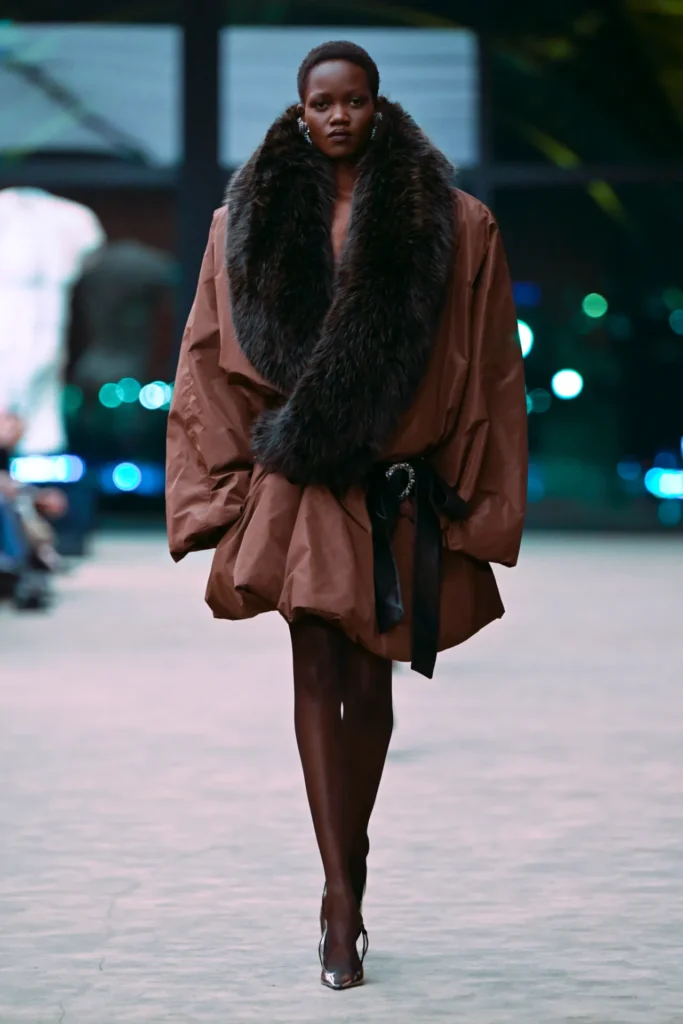
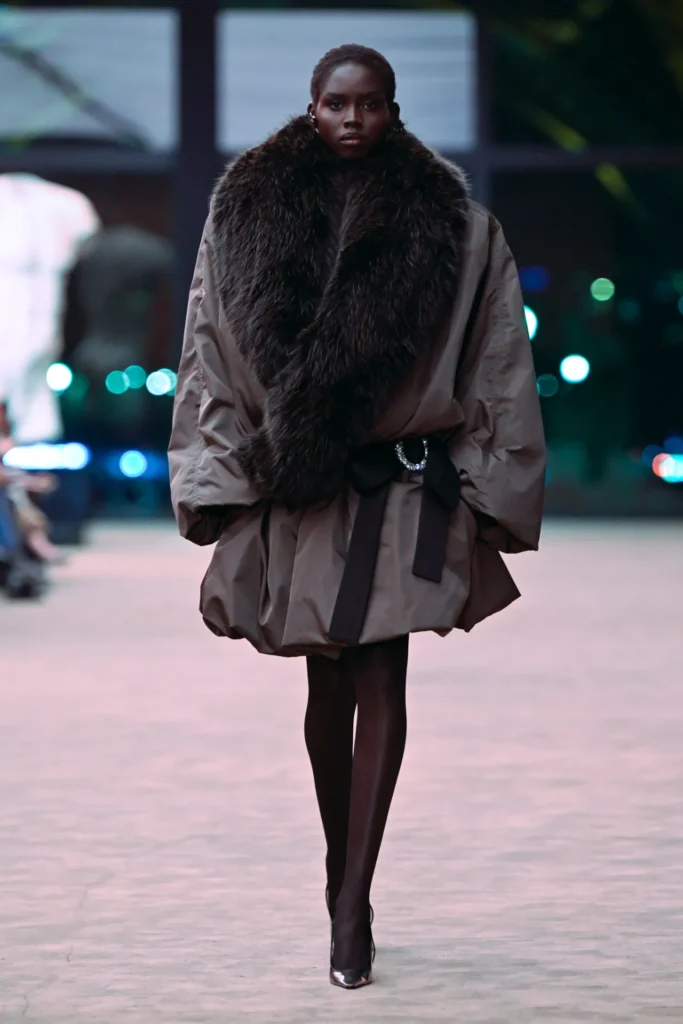
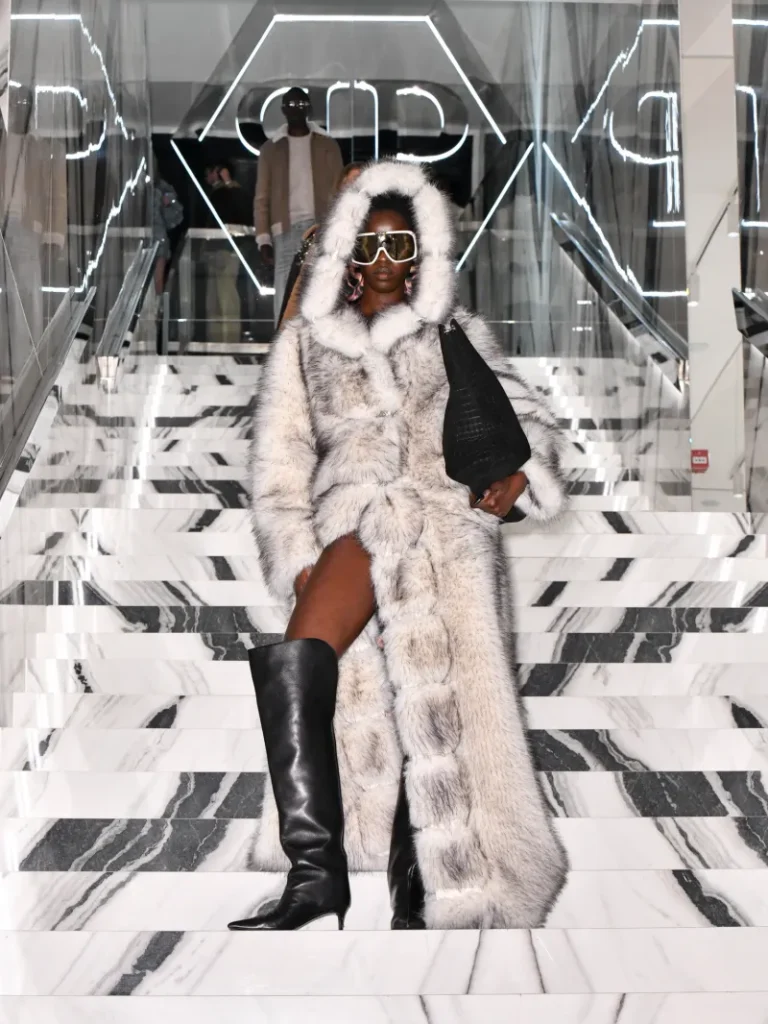
Accessories remained grounded in house signatures. Embellished Baguette bags—an enduring emblem since the late ’90s—anchored the lineup. Fur appeared as capes, collars, and patchwork coats, all crafted from reworked pelts, the house confirmed, as anti-fur protesters gathered outside the venue.