Prada Spring 2027 Collection
Miuccia Prada and Raf Simons placed the skirt at the center of the Prada universe, revisiting one of the house’s most enduring codes through a wardrobe built on femininity, function, and contradiction.
The idea recalls Waist Down, Prada’s celebrated 2005 exhibition dedicated entirely to the skirt. Nearly two decades later, the designers returned to the same territory, treating the garment not as a supporting piece but as the framework through which the entire collection could be explored.
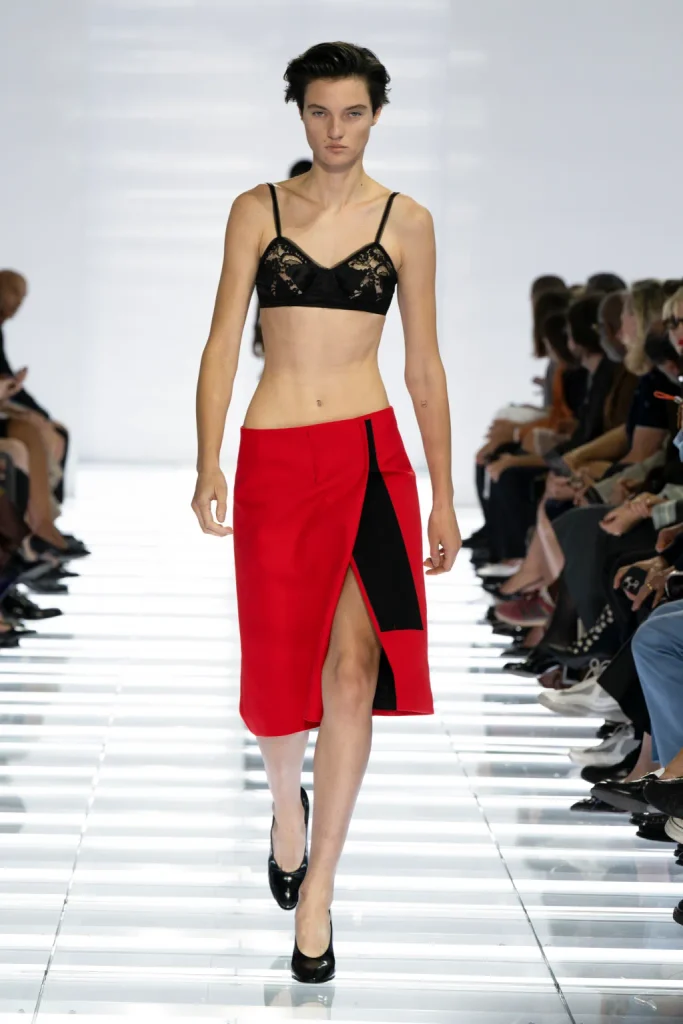
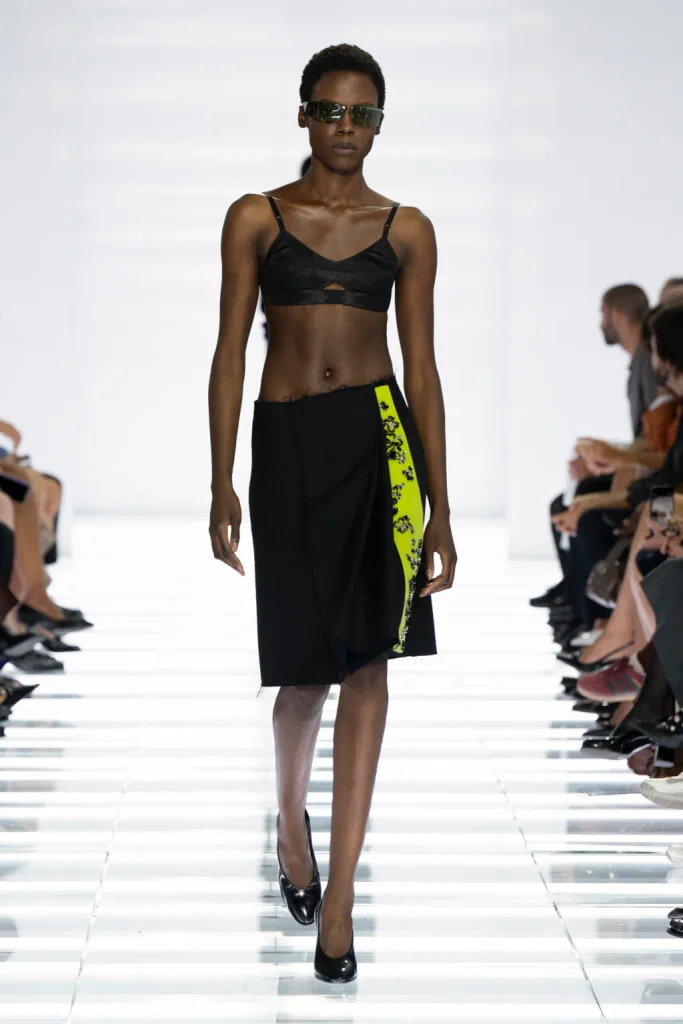
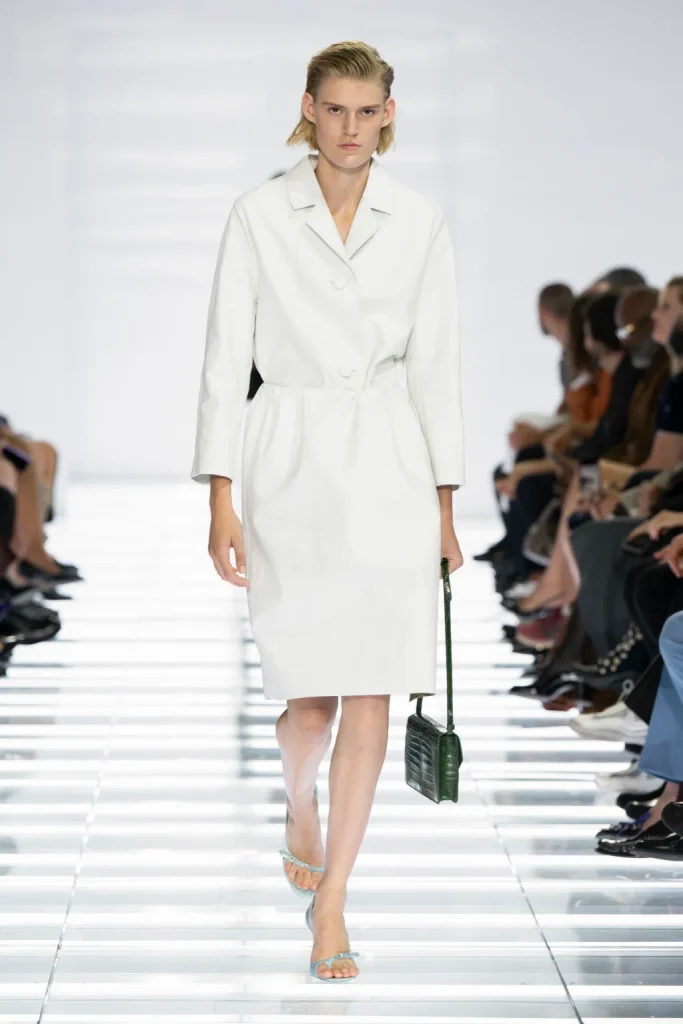
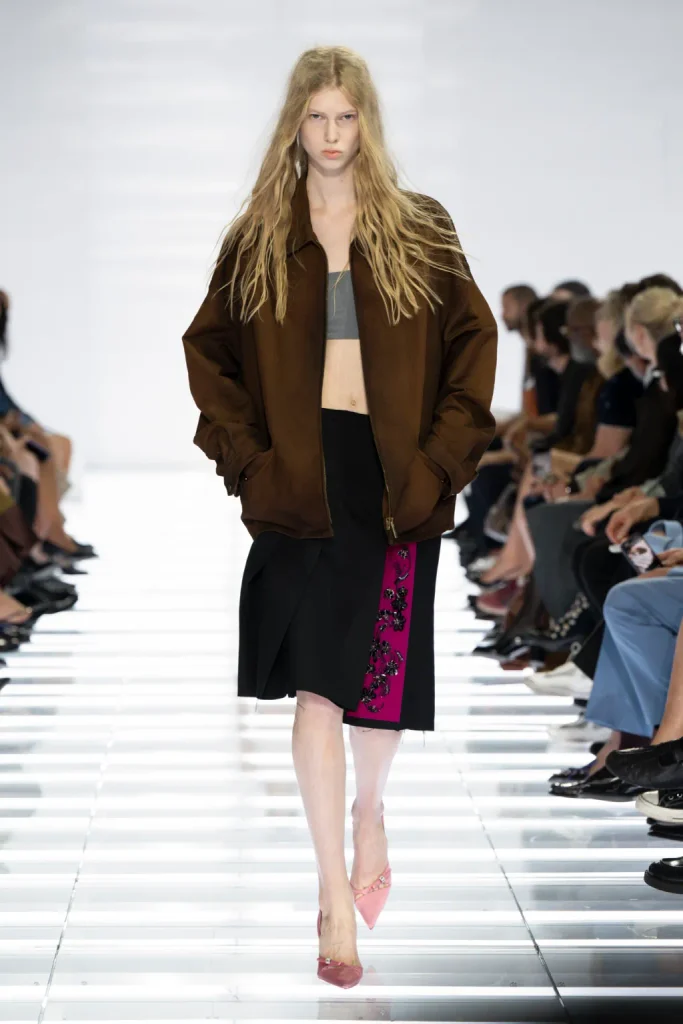
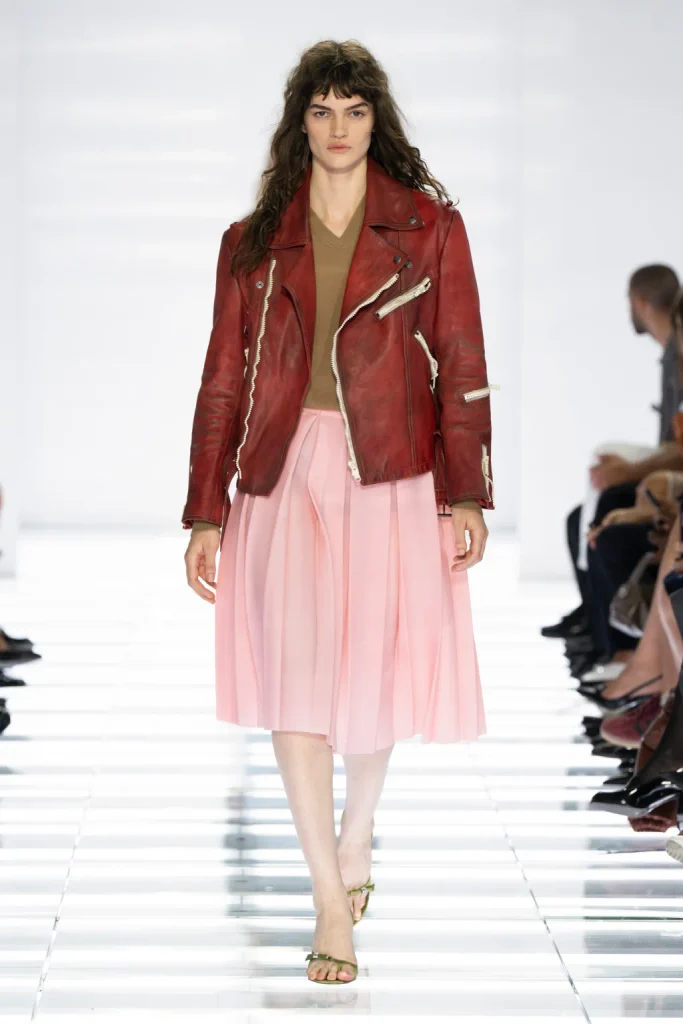
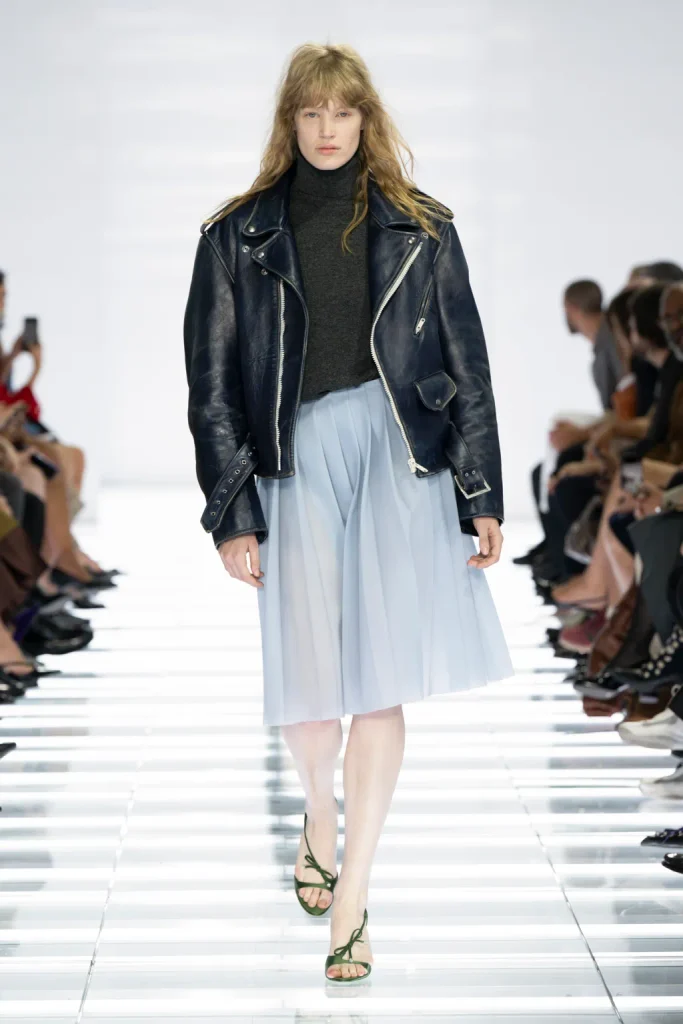
Prada compared the rectangular silhouette of a skirt to the frame of a painting: a defined space in which ideas can take shape. Simons, meanwhile, recalled an earlier interview in which Prada described the skirt as the female equivalent of a T-shirt—a garment capable of adapting to almost any situation, from work to intimacy, sophistication to ease.
That versatility shaped the runway. Wrap skirts, pleated styles, and fluid silhouettes appeared in a range of fabrics and proportions, proving how much character can be extracted from a single archetype. Some were deliberately functional, secured with oversized Velcro closures; others became more sensual through sheer construction, sculptural satin, or softly draped fabrics.
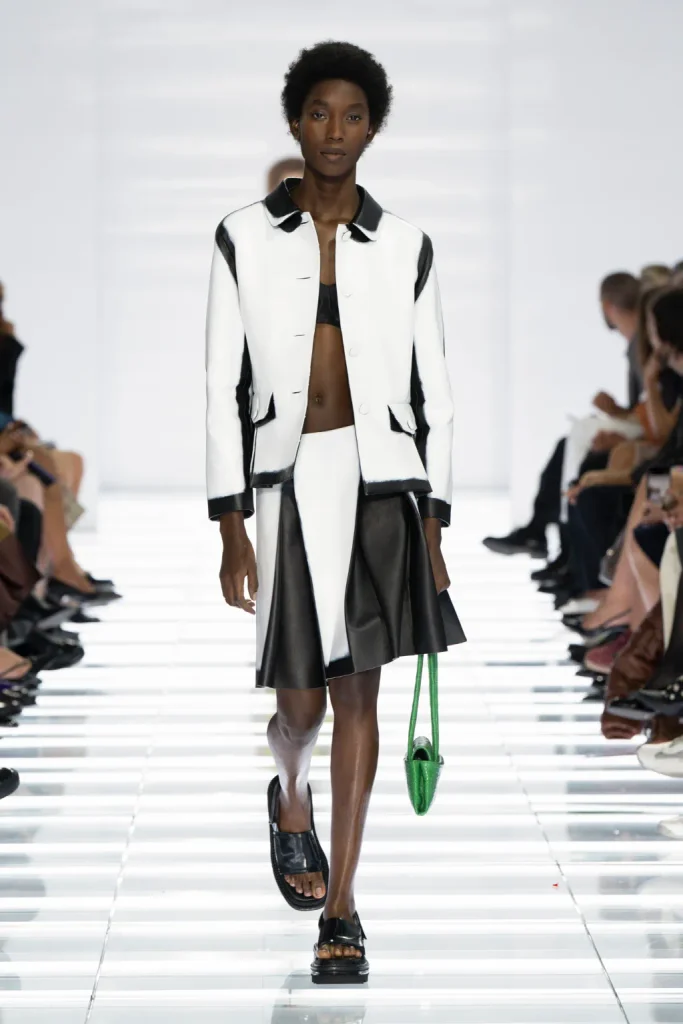
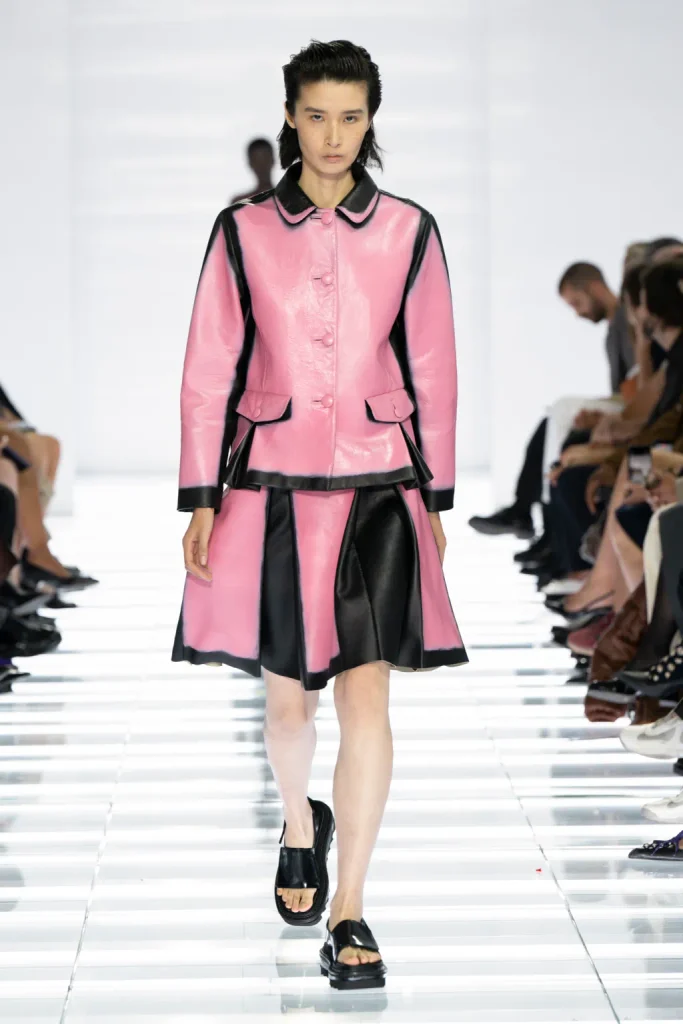
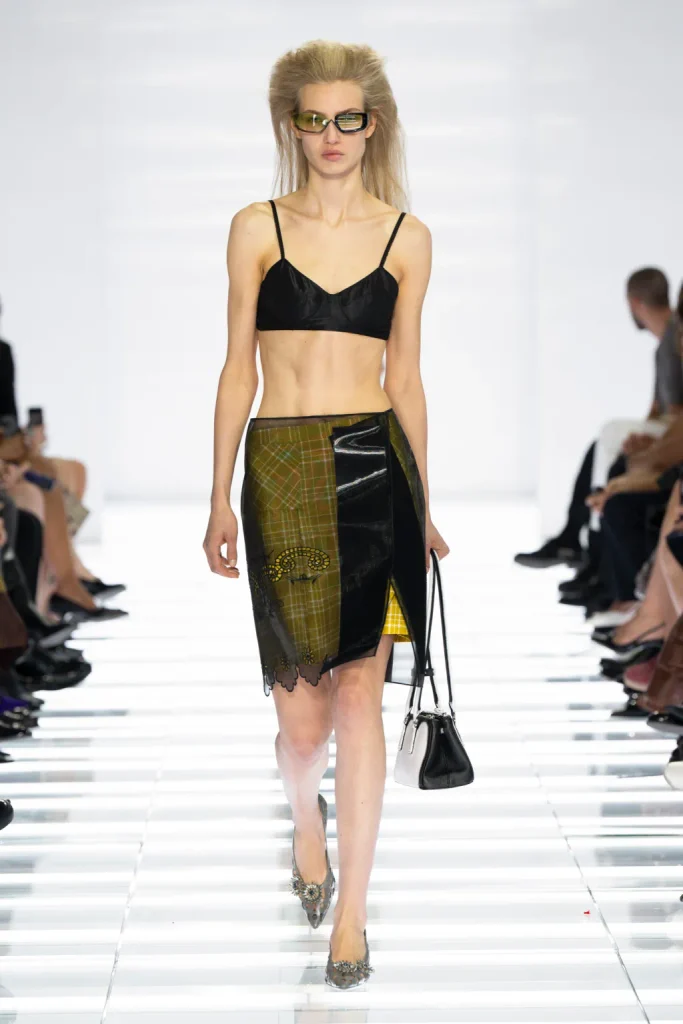
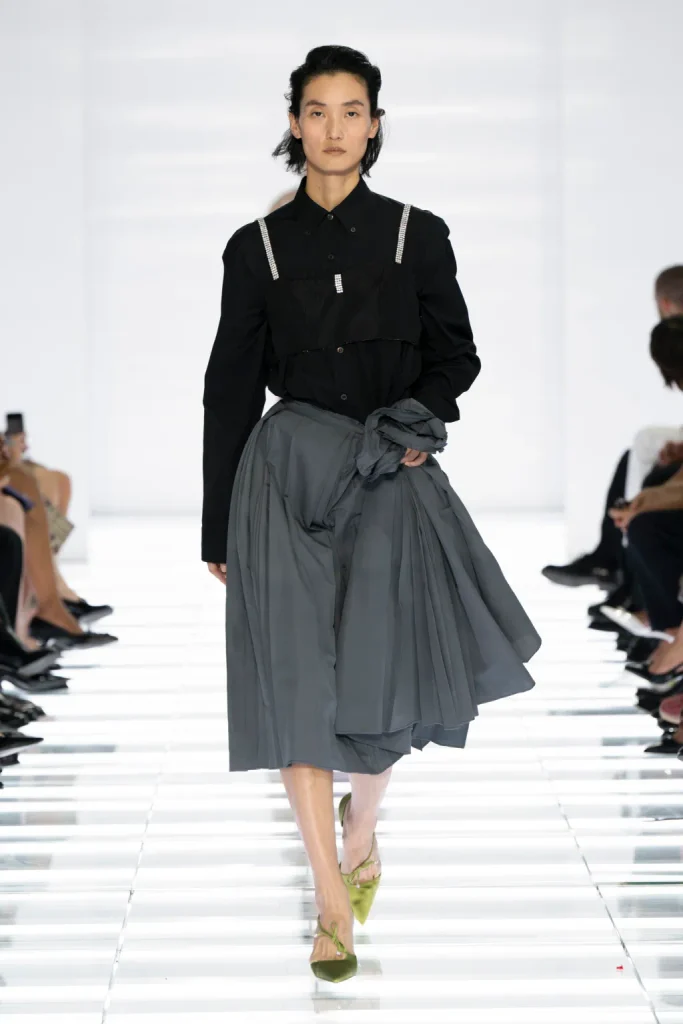
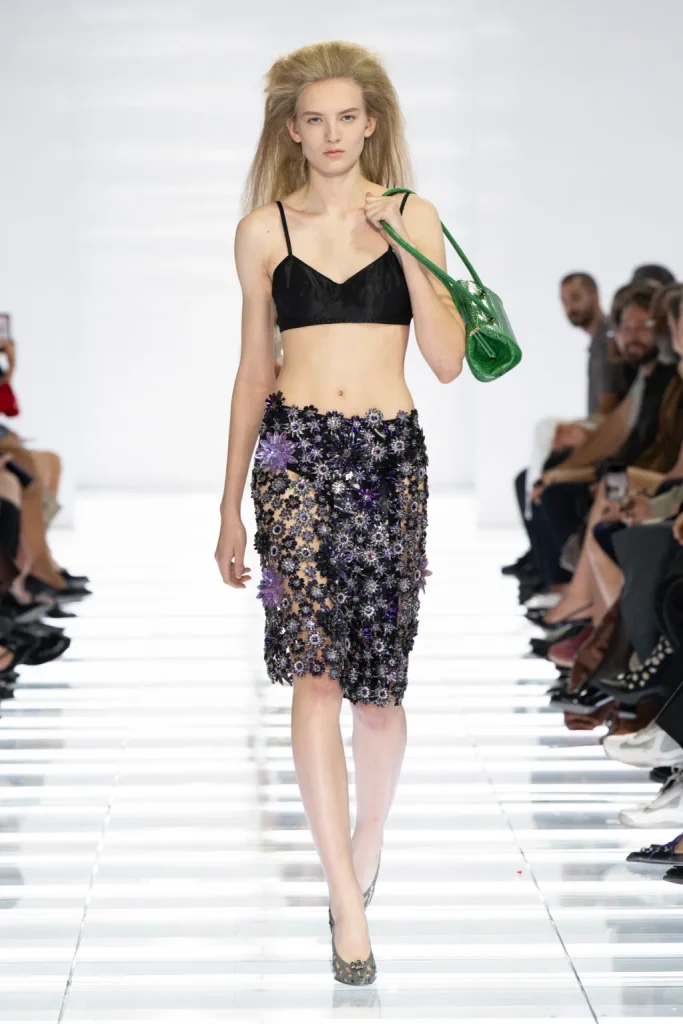
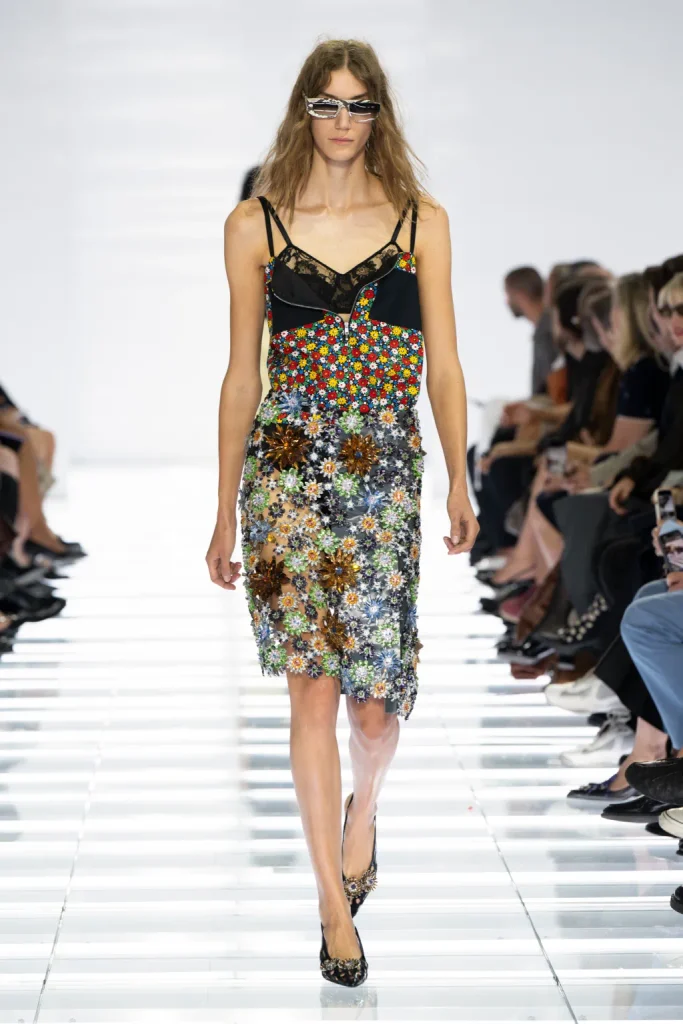
The collection drew heavily on Prada’s visual vocabulary: deliberately awkward psychedelic prints, black technical nylon, polished pumps, refined handbags, and flashes of crystal embellishment. The contrast between the practical and the ornamental was particularly effective, with sparkling details applied to otherwise utilitarian closures and hardware.
Rather than traditional tailoring, Prada favored simple cotton shirts, bra tops, and understated sweaters. The restraint kept attention on the relationship between the body and the skirt, while vintage jewelry provided occasional flashes of excess.
Simons brought his own vocabulary into the mix. Leather car coats and Perfecto jackets reinforced the tougher side of the collection, while spray-painted finishes, industrial references, and an underground rave sensibility gave the clothes a sharper edge.
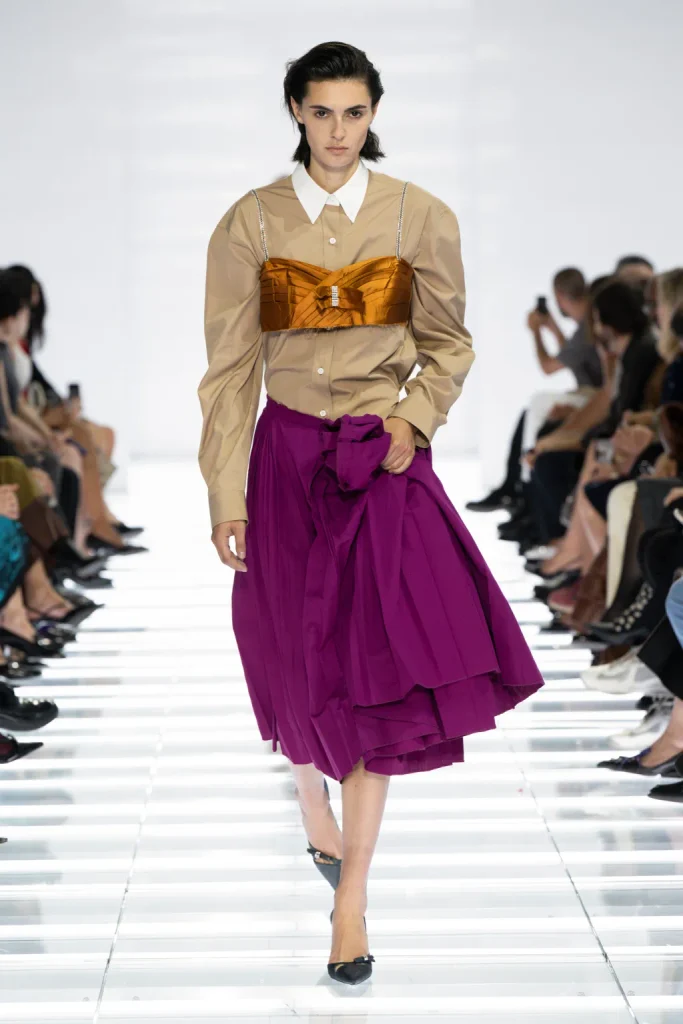
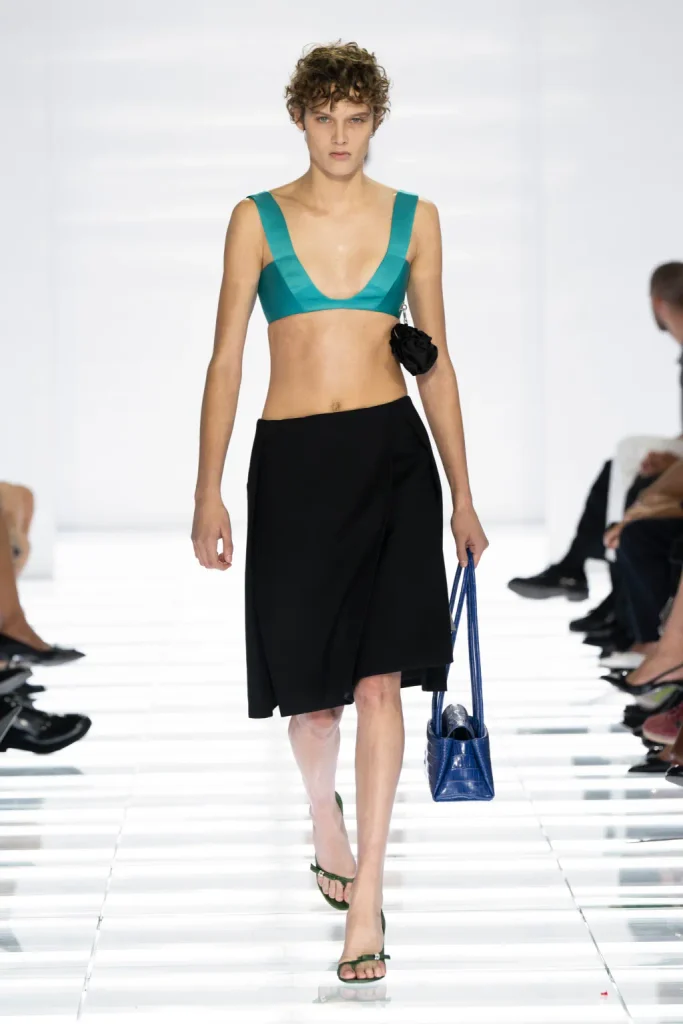
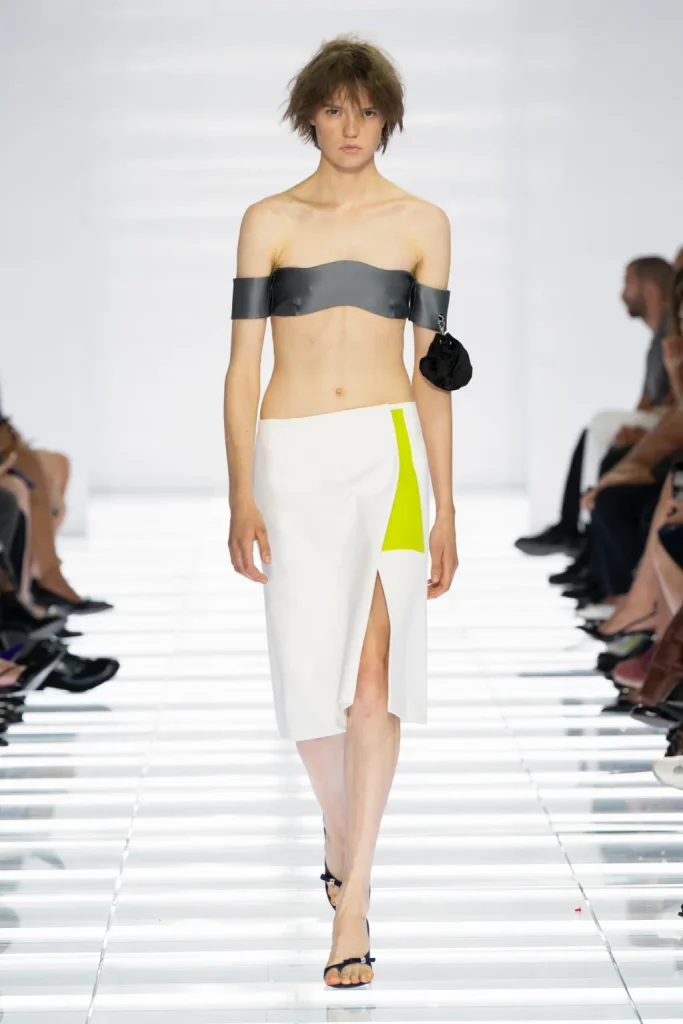
The strongest looks emerged from these contrasts: pleated skirts paired with sculptural satin tops, heavy leather outerwear against delicate silhouettes, and utilitarian details offset by flashes of crystal. Even the accessories followed the same logic, with small bags attached to sculptural bracelets and shoes maintaining Prada’s precise, polished finish.
For Spring 2027, Prada did not need to reinvent the skirt. Instead, it demonstrated how much possibility remains within the garment—functional or sensual, intellectual or instinctive, familiar yet constantly open to reinterpretation.