Proenza Schouler Fall 2026 Collection
Rachel Scott’s formal runway debut at Proenza Schouler was the week’s most anticipated show—and with Fall 2026, she delivered a collection defined by control, texture, and a distinctly female authorship.
Scott has approached the house with rigor, studying its codes—artistic dialogue, exacting tailoring, material innovation—while recalibrating them through her own lens. “She’s precise, but there’s complexity,” Scott said of the Proenza woman today. “She shows you what she wants to show you. She’s self-authored.” It’s a subtle but meaningful shift: away from idealization and toward lived experience.
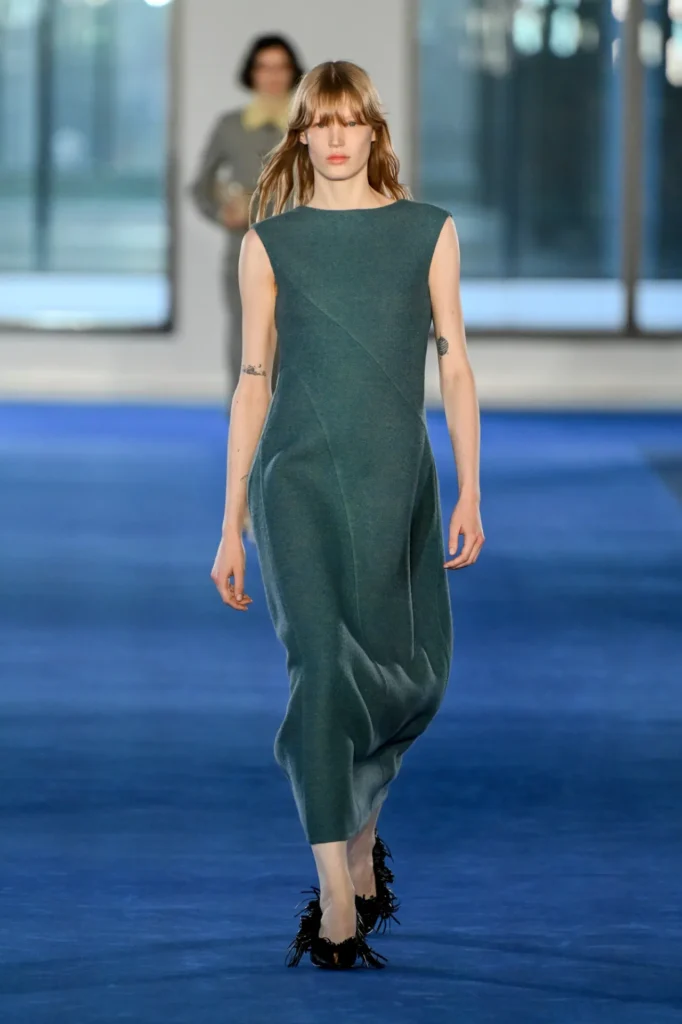
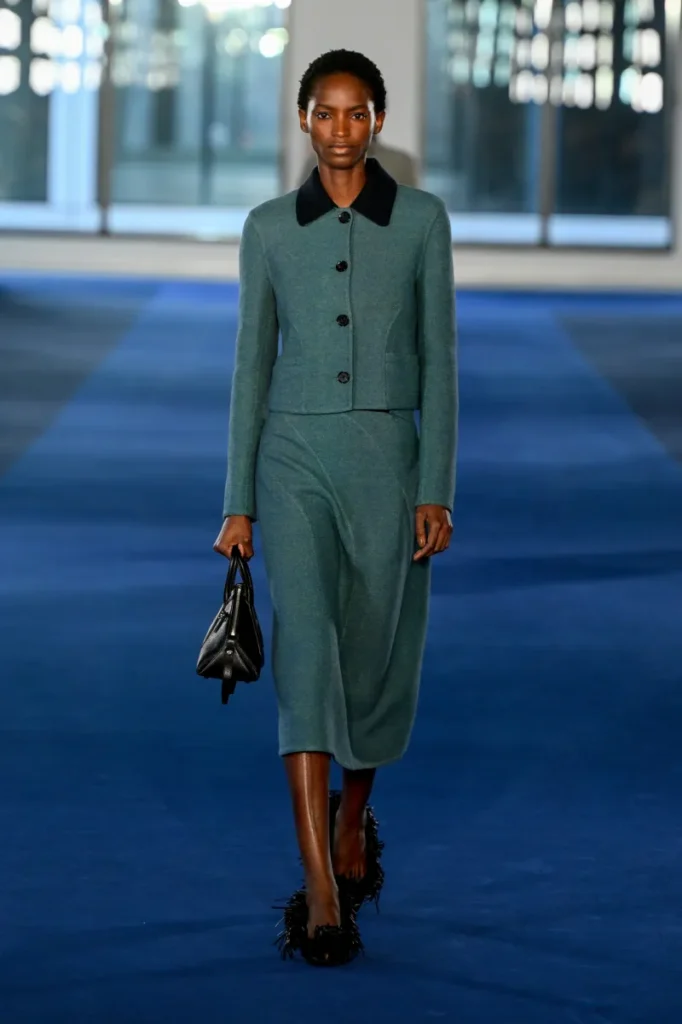
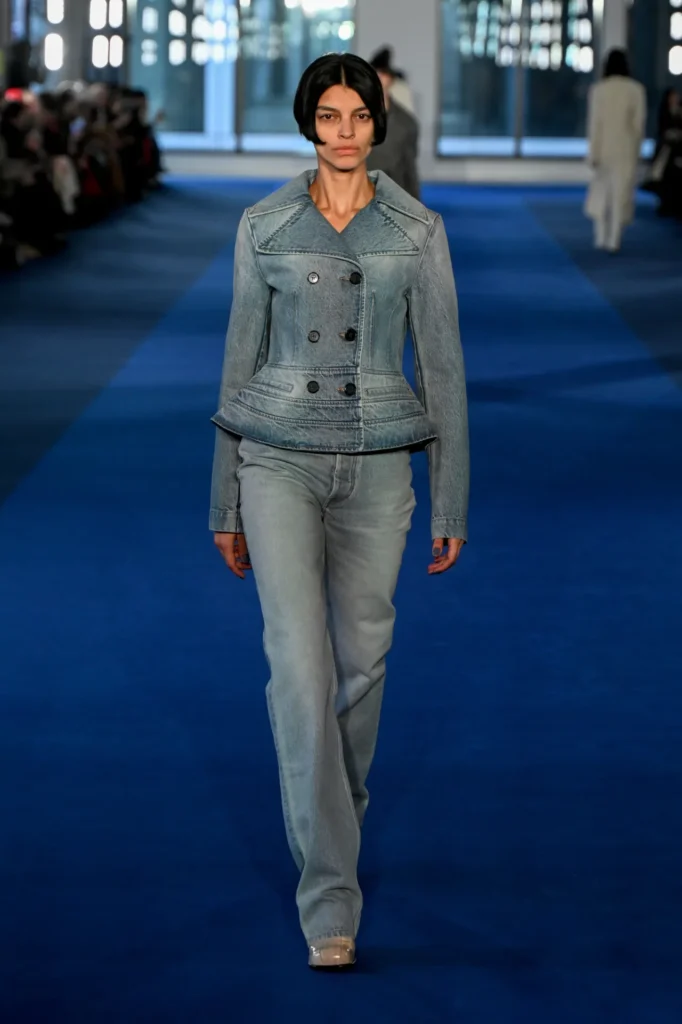
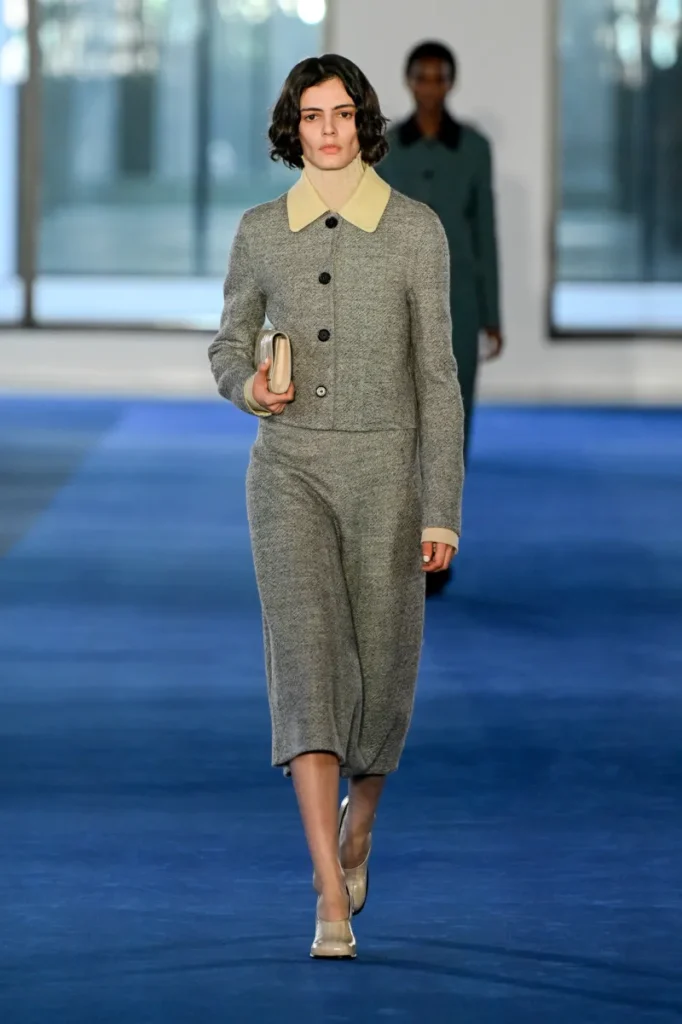
Texture is Scott’s entry point. “Even when things look clean, up close there’s something for the woman,” she explained. The opening look—a bell-shaped blue dress nipped at the waist—appeared minimal from a distance. Up close, it revealed a double-faced wool woven with multicolored flecks of green, blue, and black. Lightweight yet structured, it set the tone for a collection where restraint never meant austerity.
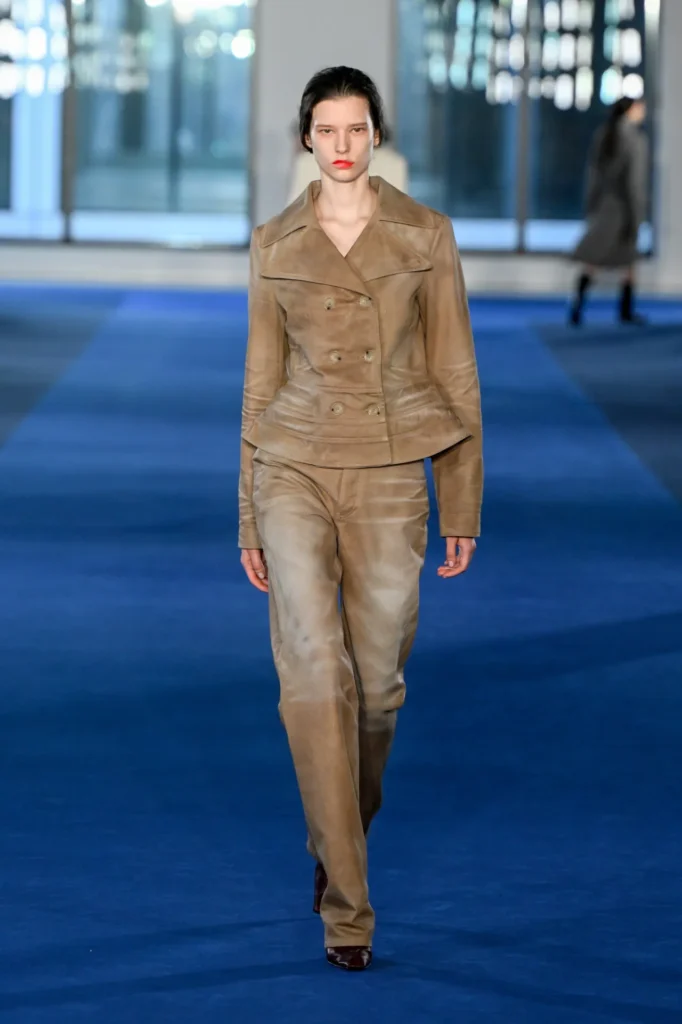
Silhouettes echoed that opening shape throughout: a peplum flaring over a denim jacket, sculpted over sand-toned tailoring. Scott introduced a charged tension between hand and machine. Orchid prints were photographed, painted onto fabric, then digitized, appearing on fringed dresses and separates that felt both artisanal and modern. The effect was thoughtful rather than ornamental—art not as embellishment, but as process.
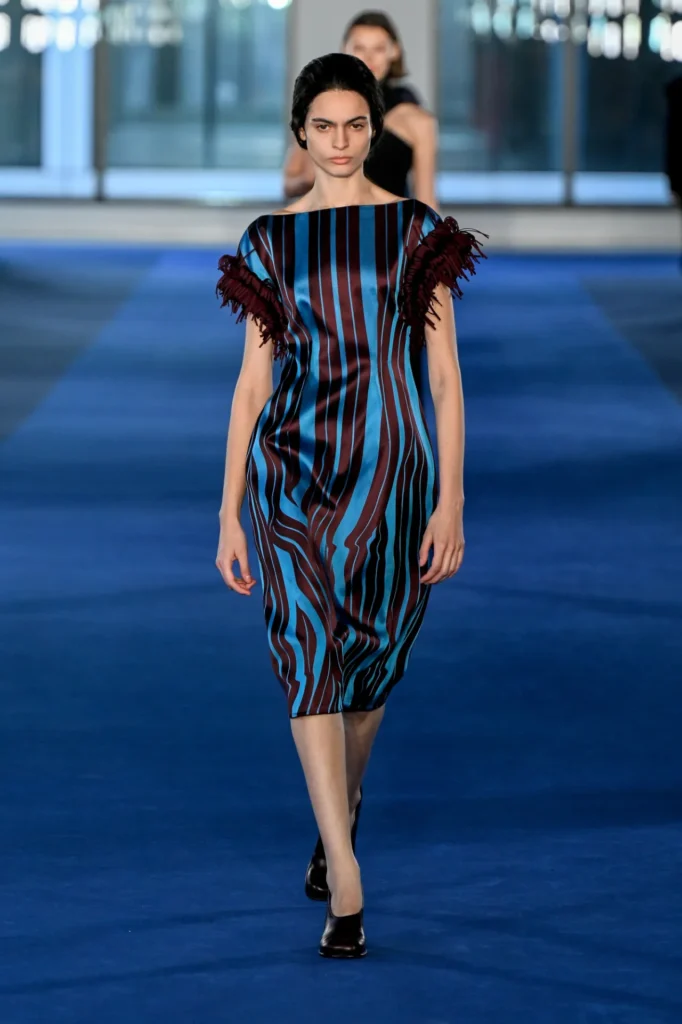
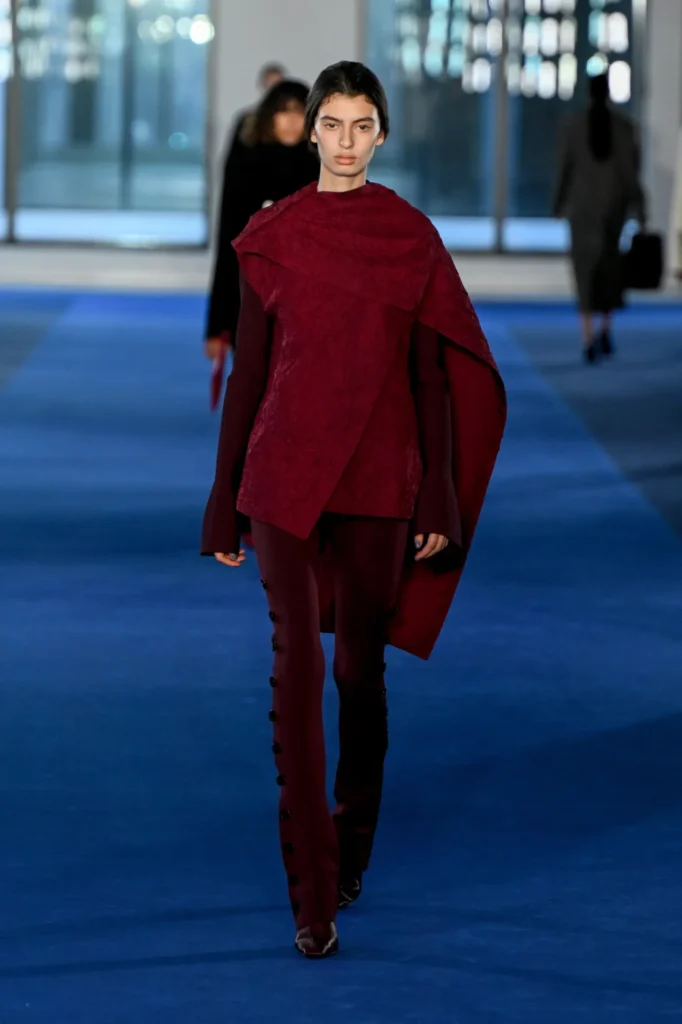
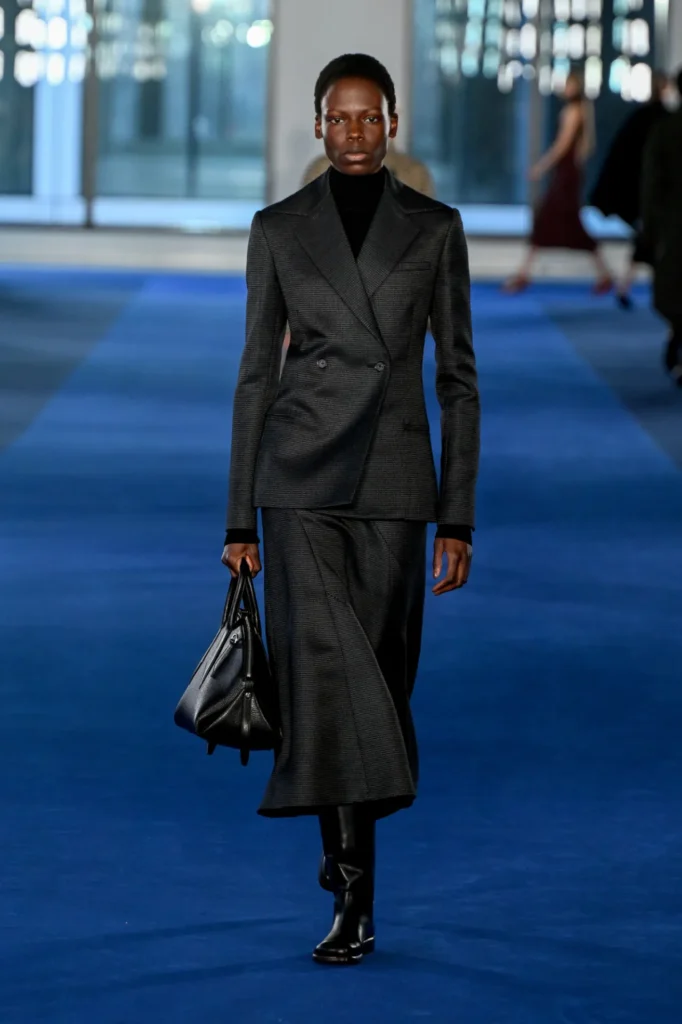
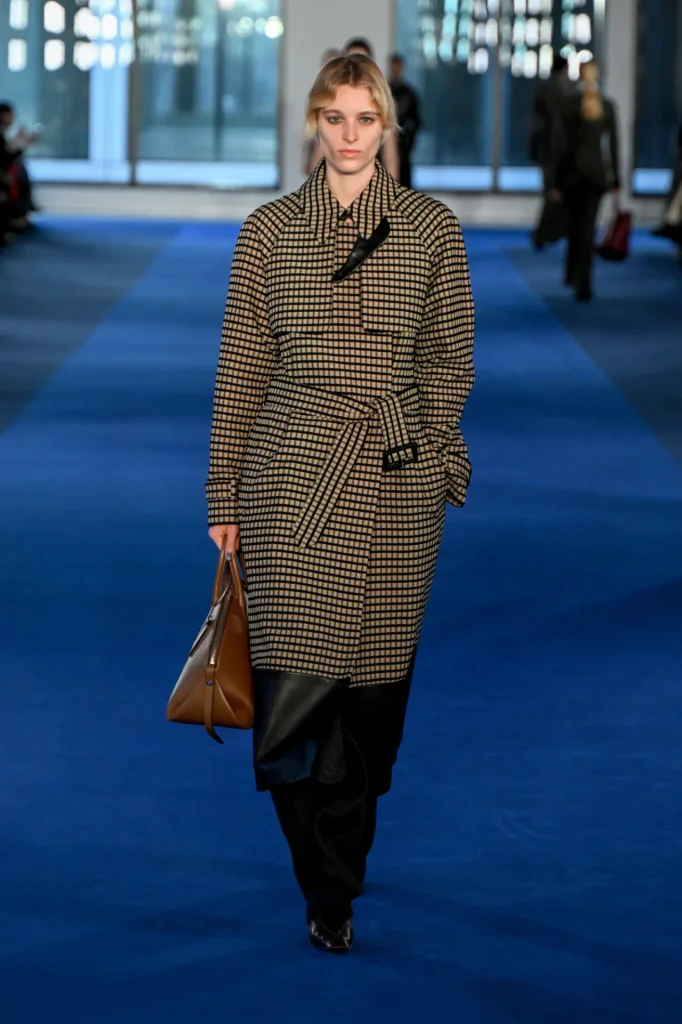
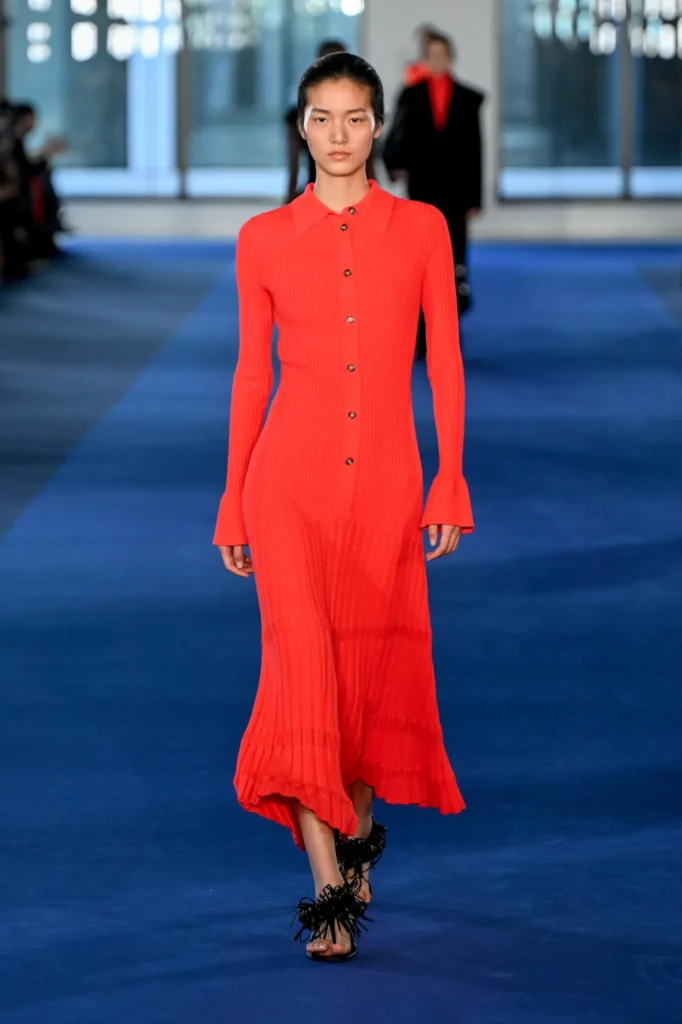
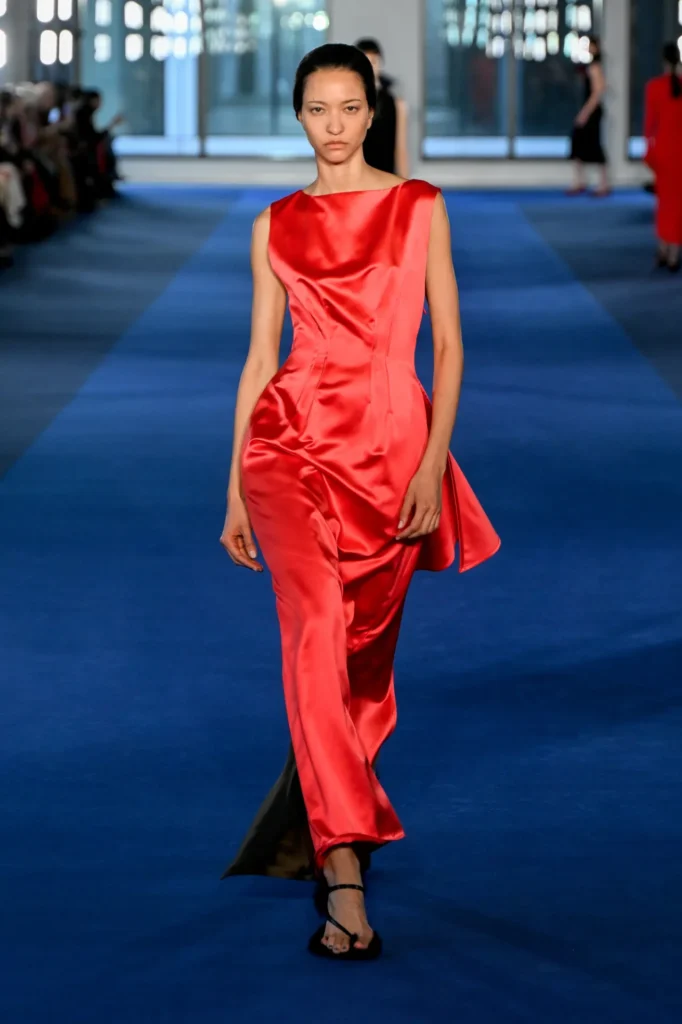
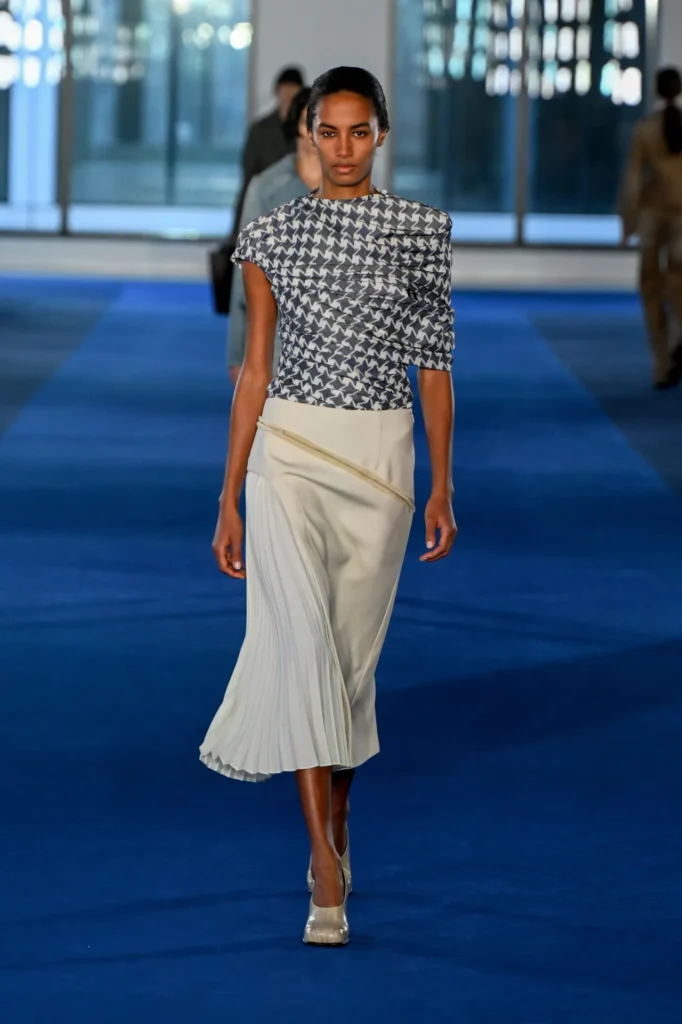
In researching the brand, Scott met with key clients and asked what they valued most. Tailoring emerged as essential, particularly the cut of shoulders and armholes that allow a woman to feel powerful and at ease. She responded with skirt suits engineered for movement and a reworked version of the house’s signature sailor pant, its buttons subtly skewed. A houndstooth rendered with chenille added tactile depth to a leather-based trench.
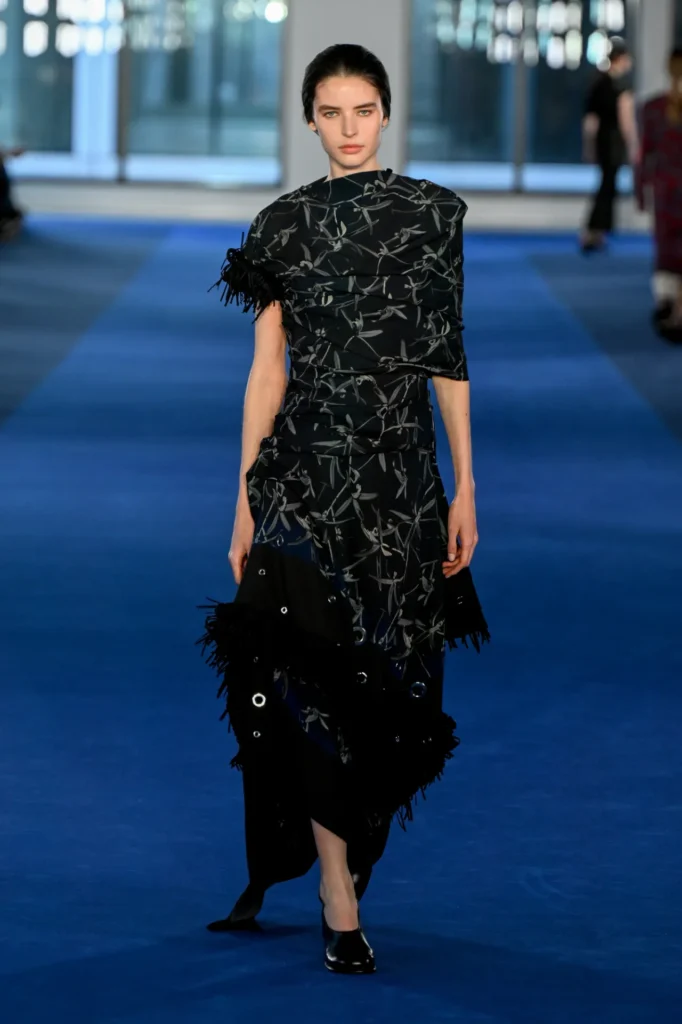
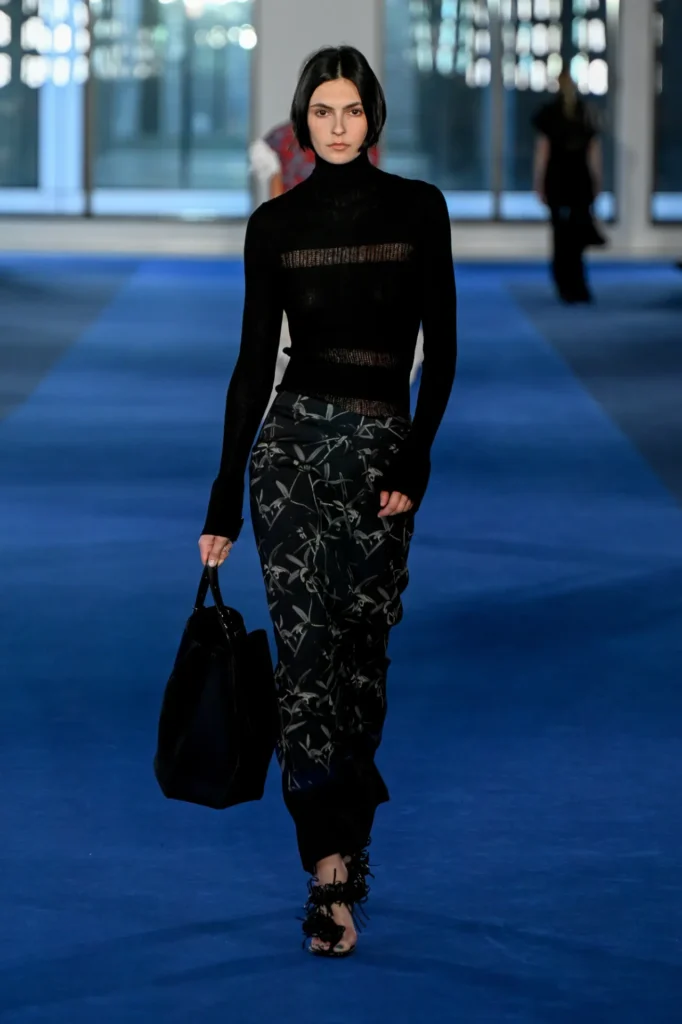
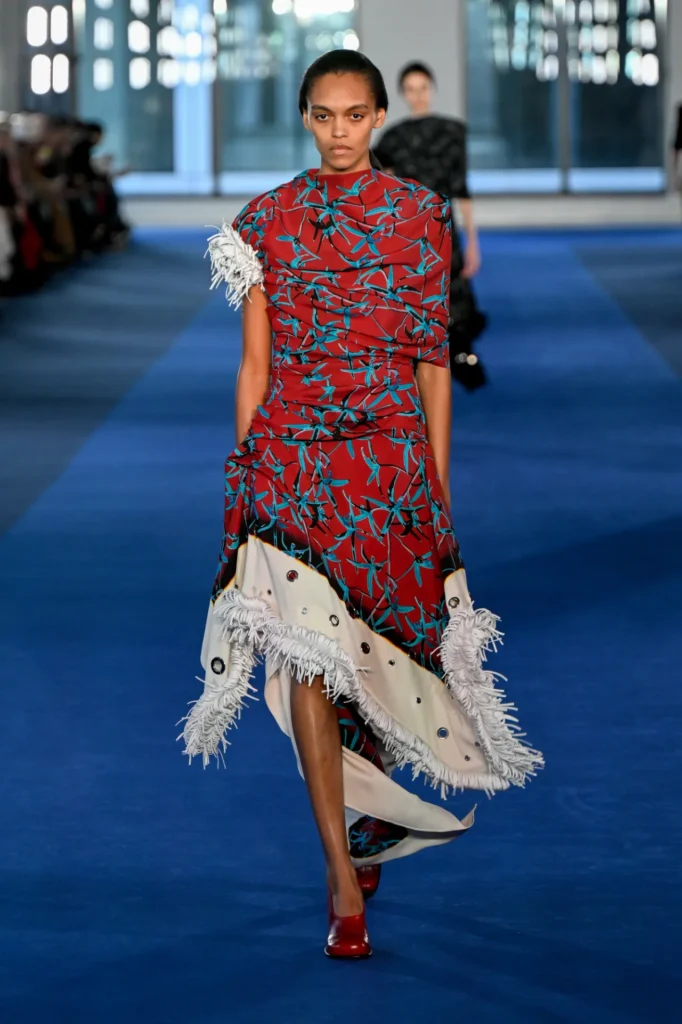
Her dialogue with the founders’ legacy was deliberate. Grommet details resurfaced on sharply cut coats with new rigor. Footwear evolved familiar codes: plush-soled heels laced with leather straps, elongated loafers with a slightly bulbous toe that leaned masculine. Accessories built confidently on the PS1 legacy—painted orchid bowler bags, supple totes, and a calf hair and suede bucket bag that nodded to one of the brand’s earliest shapes.
The closing looks crystallized Scott’s thesis. Floral dresses with asymmetric handkerchief hems, fringe, and grommet accents were layered with modern outerwear, balancing fluidity and structure. It was a persuasive statement from the 2024 CFDA Womenswear Designer of the Year—the first Black designer to receive the honor—about how she envisions dressing women in global cities now.