Dior Fall 2026 Couture Collection
Fresh off designing the wedding attire for Taylor Swift and Travis Kelce, Jonathan Anderson returned to Paris with a couture collection that deliberately sidestepped fairy-tale romance in favor of conceptual artistry. Rather than capitalizing on the cultural momentum surrounding one of the year’s most talked-about weddings, the Dior creative director presented a cerebral vision rooted in sculpture, material experimentation, and artistic dialogue.
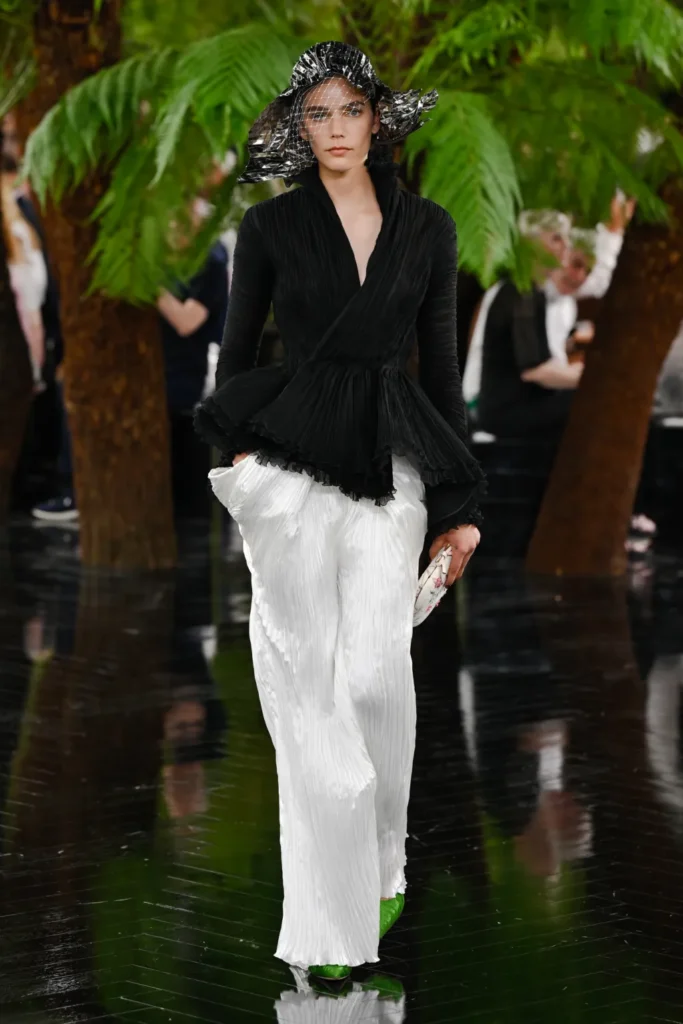
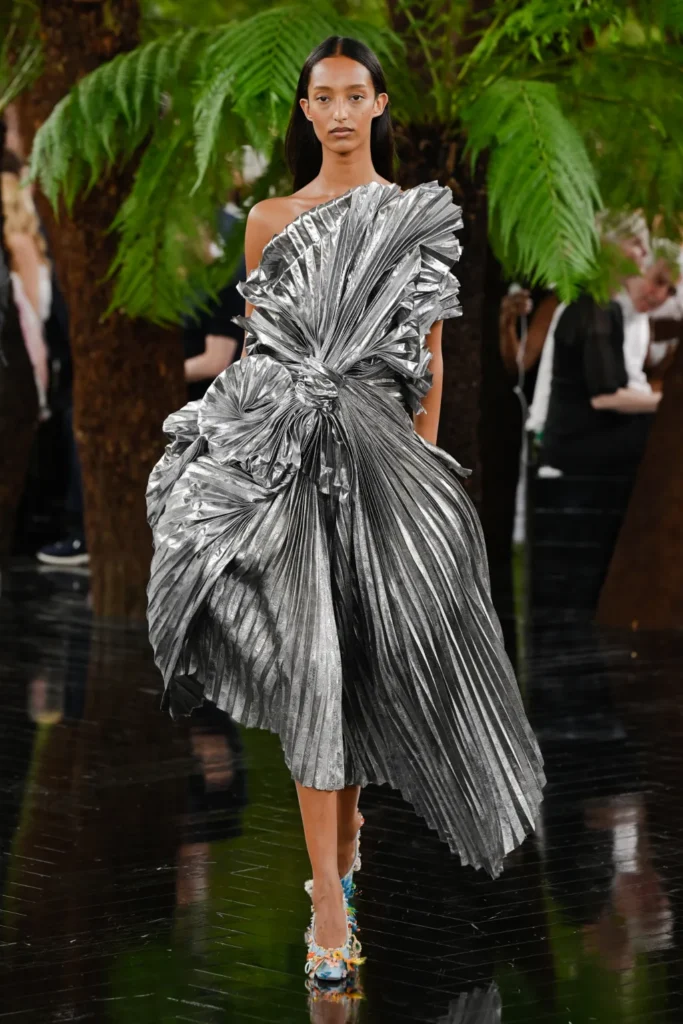
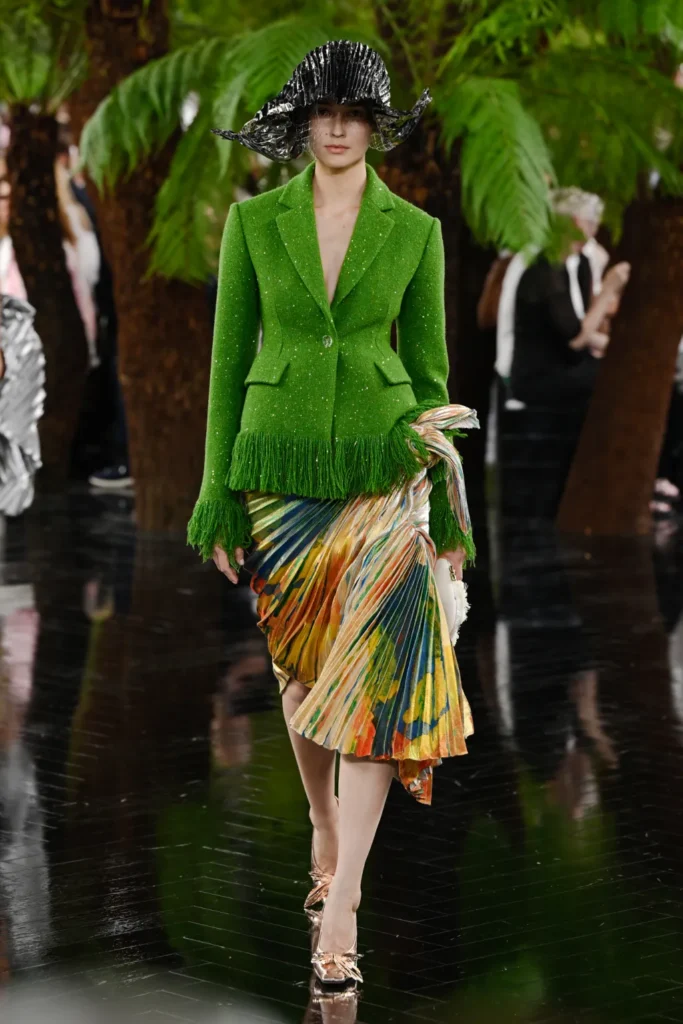
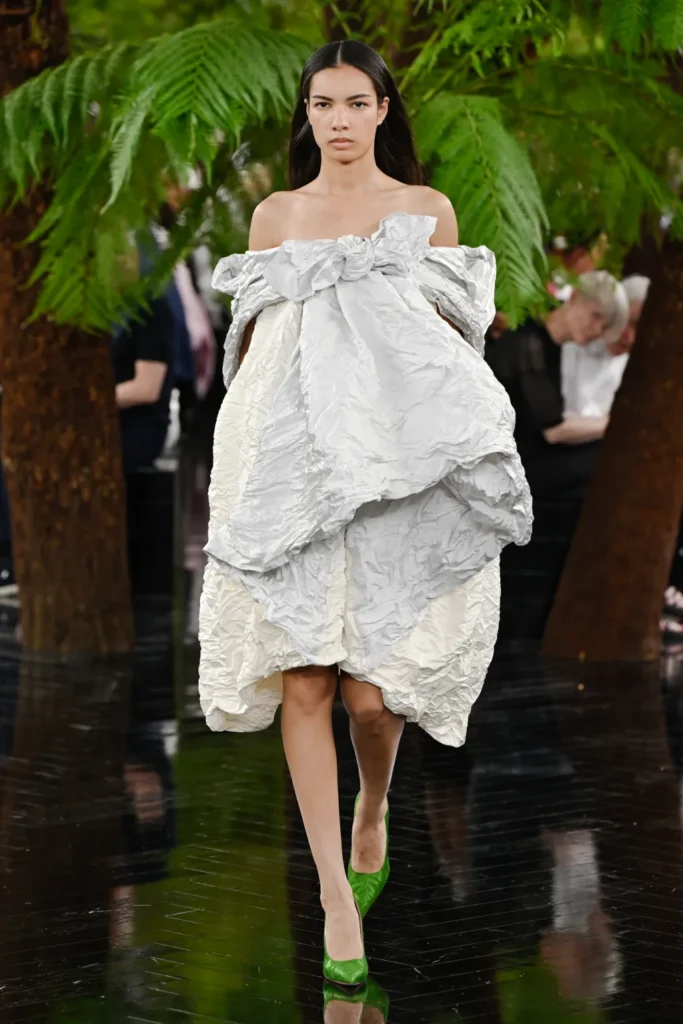
The wedding generated extraordinary visibility for the French house, reportedly delivering an estimated $15 million in media impact value over the July 4 weekend, according to Launchmetrics. Yet Anderson resisted allowing that moment to define his creative direction. While he described designing Swift’s wedding look as “a great honor” and an emotional experience, his focus quickly returned to the ideas shaping the collection.
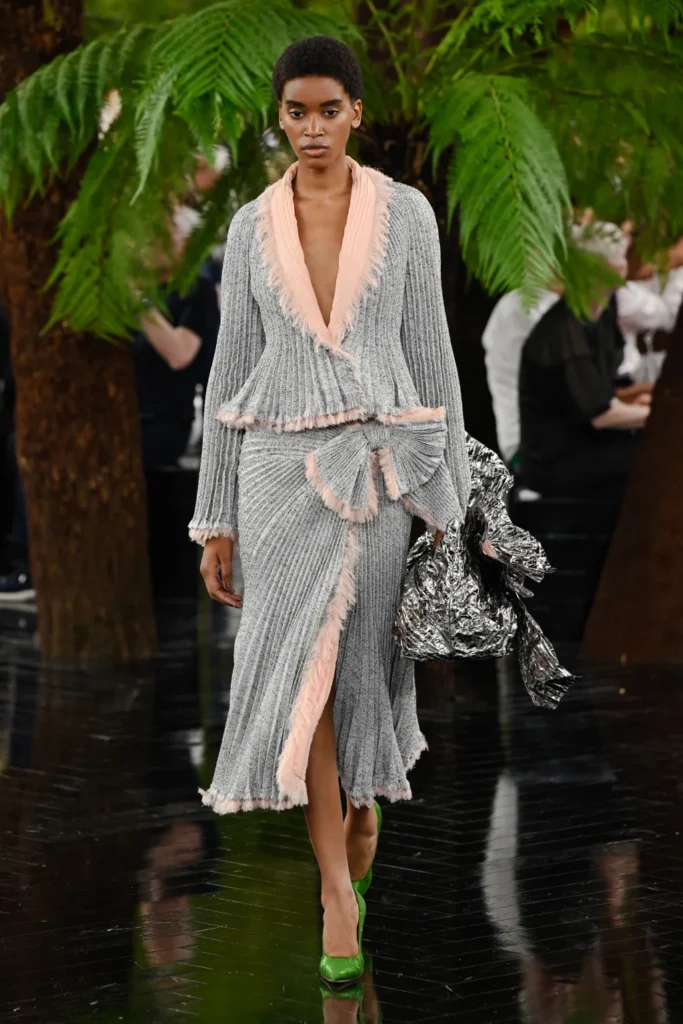
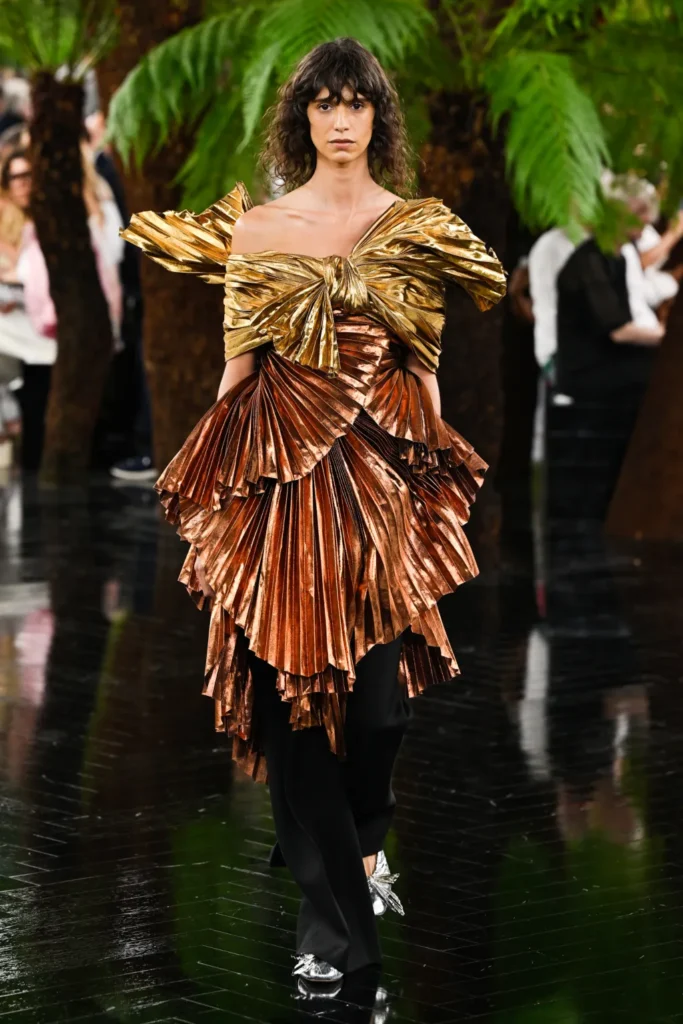
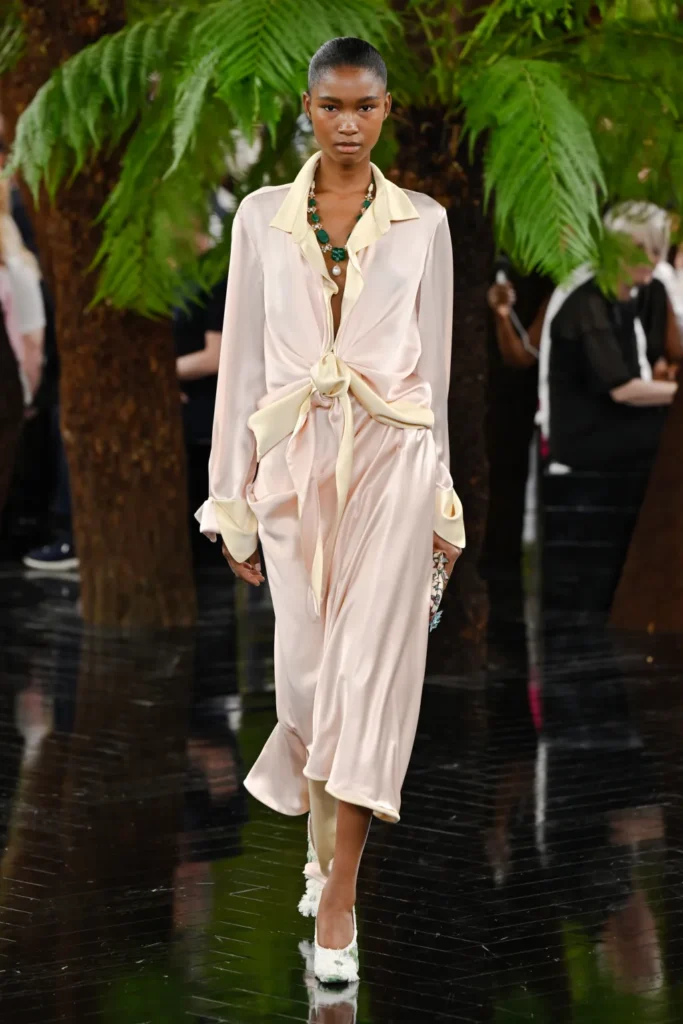
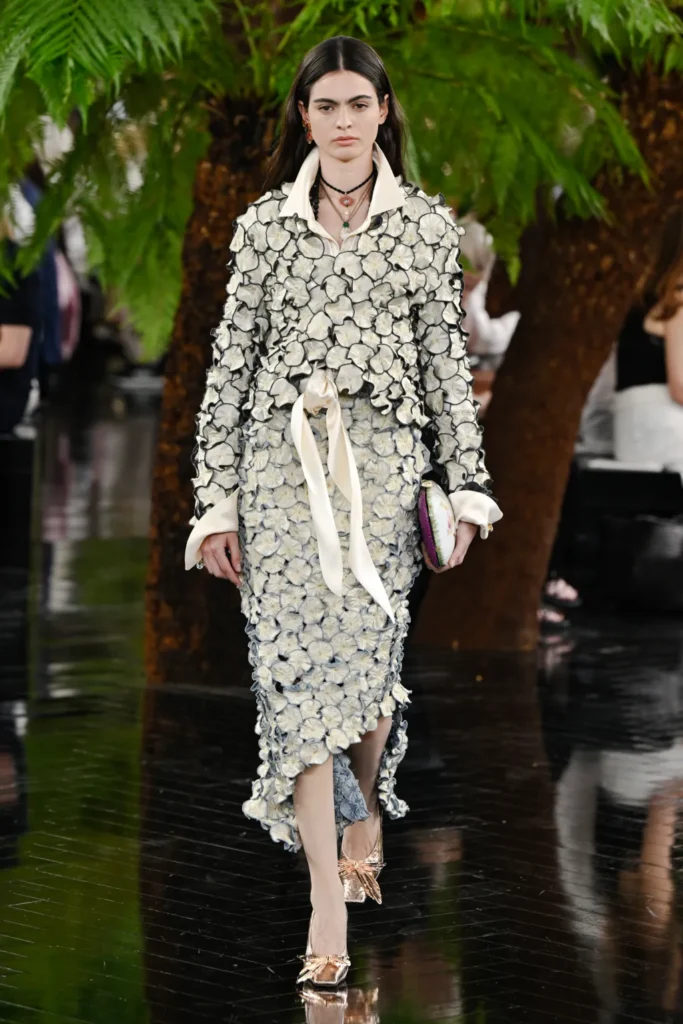
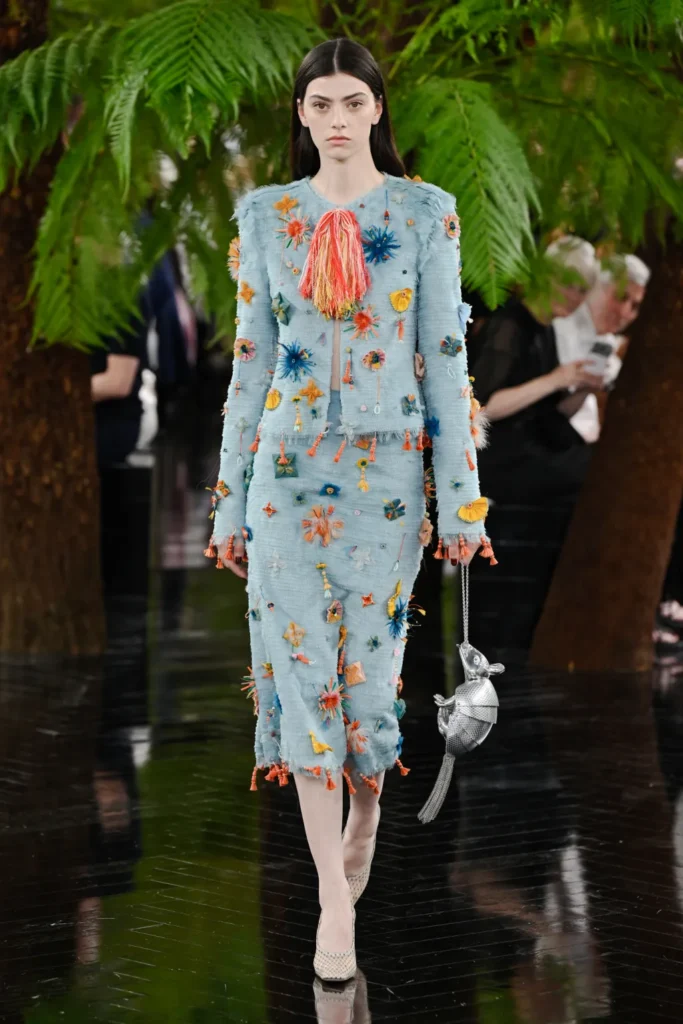
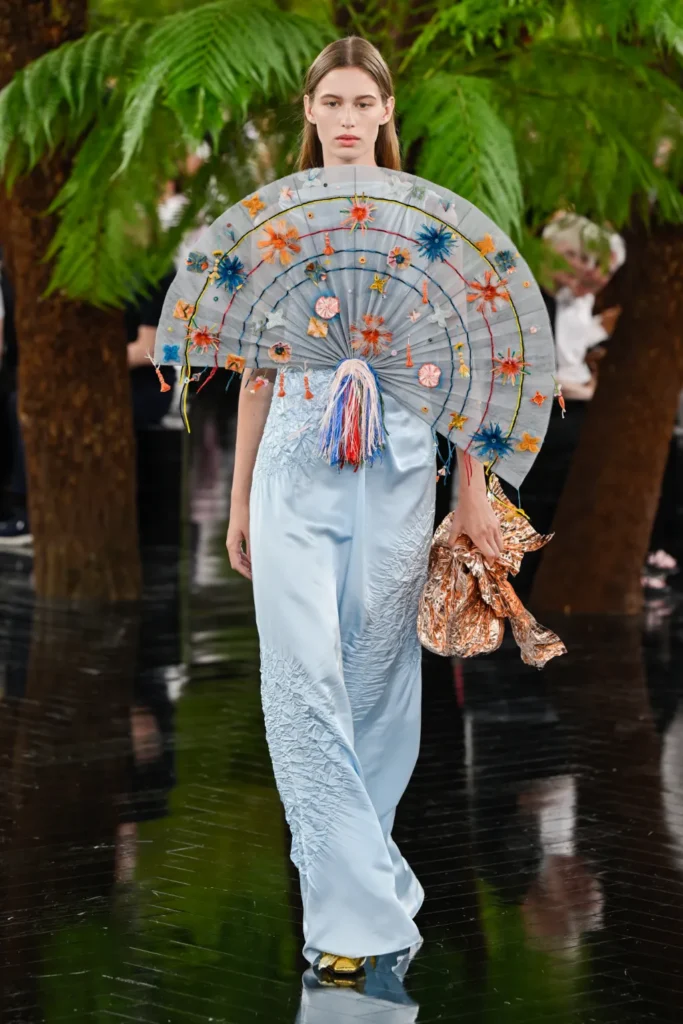
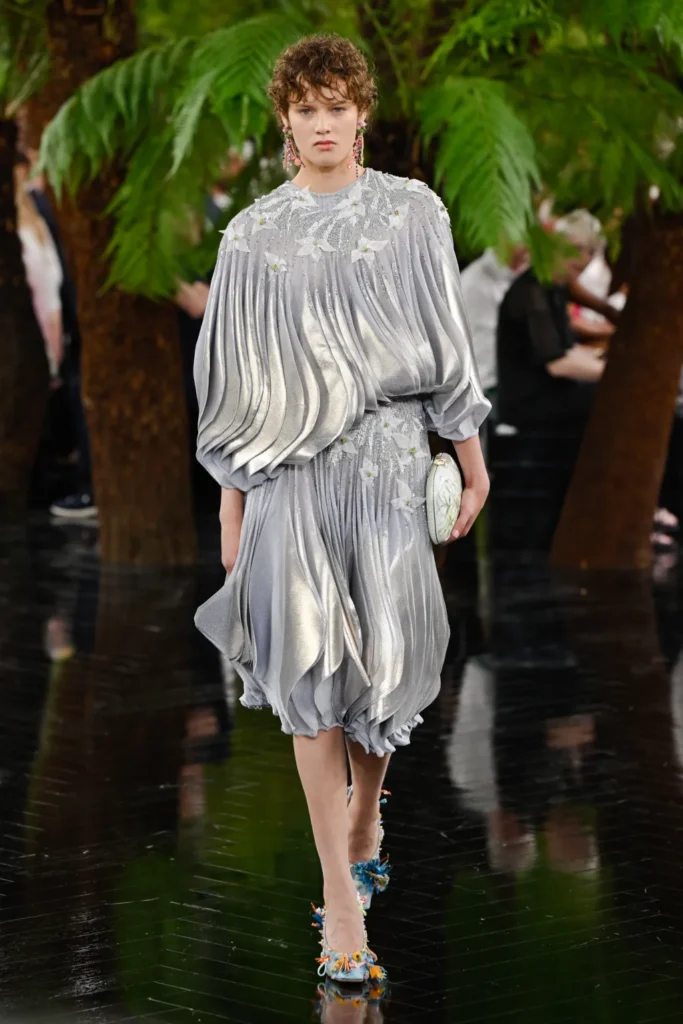
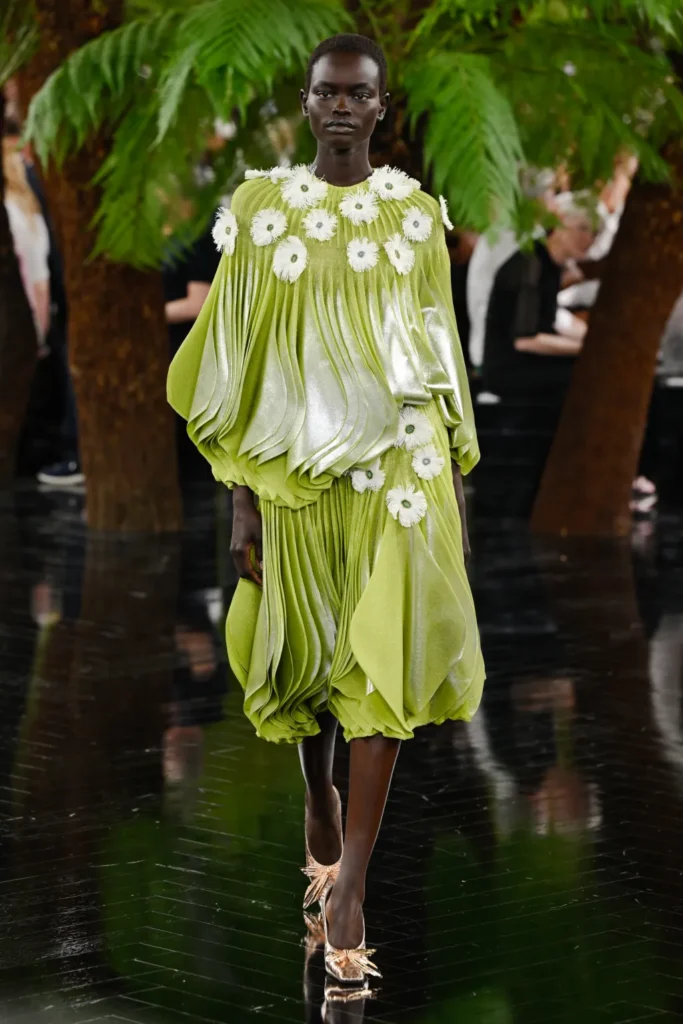
This season, Anderson drew inspiration from American sculptor Lynda Benglis, whose work informed both the collection and a series of collaborative handbags unveiled on the runway. Her influence reinforced Anderson’s fascination with texture, volume, and unconventional forms, transforming couture into a space for artistic exploration rather than nostalgia.
At the heart of the collection stood Dior’s iconic Bar jacket, reimagined through striking new interpretations. A fern-green tweed version featured cascading fringe, while another appeared in a static-gray bouclé that dissolved seamlessly into a floating white chiffon skirt. These familiar house codes became sculptural objects rather than symbols of traditional femininity.
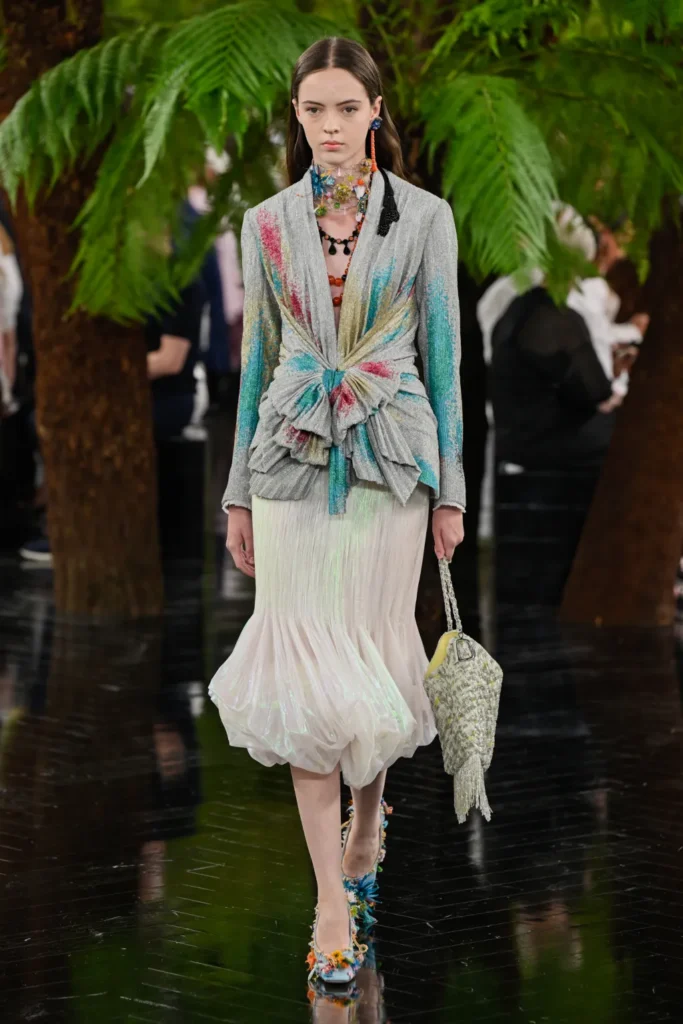
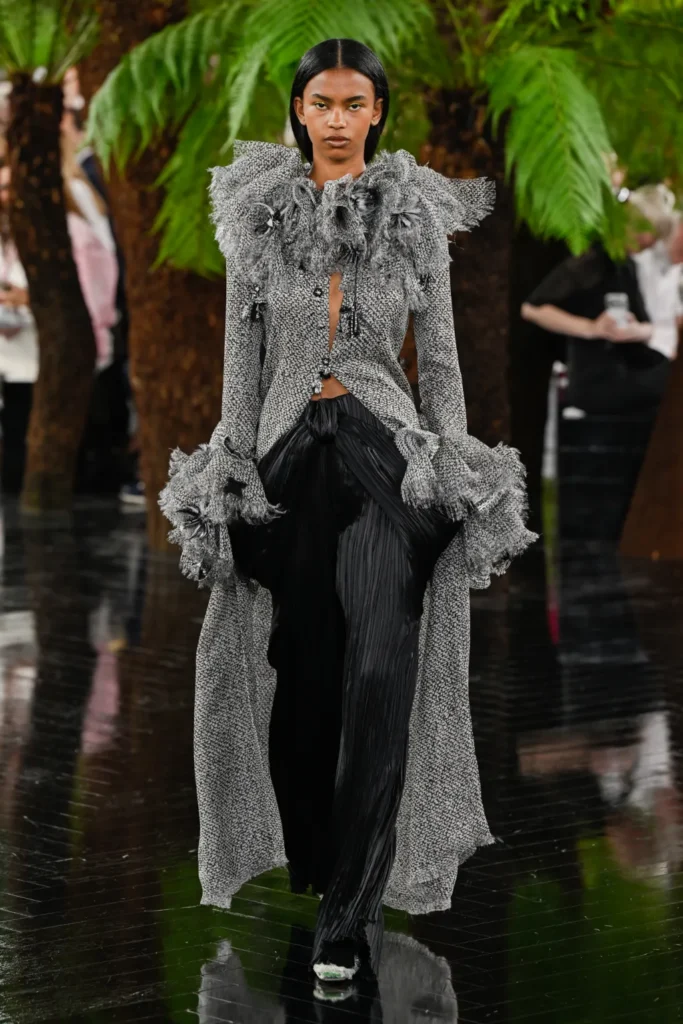
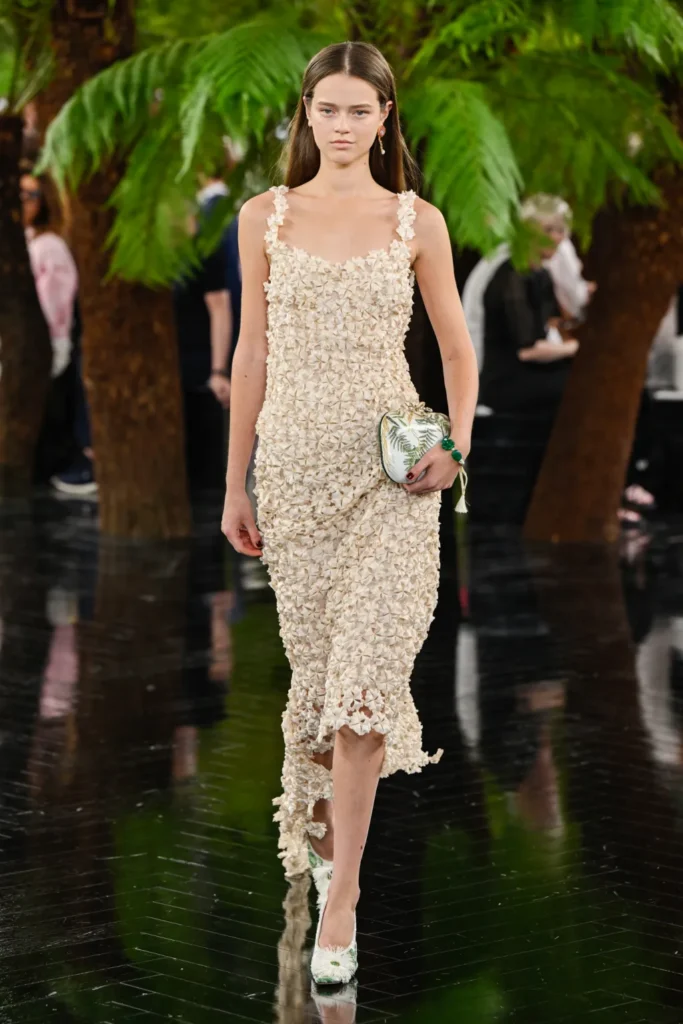
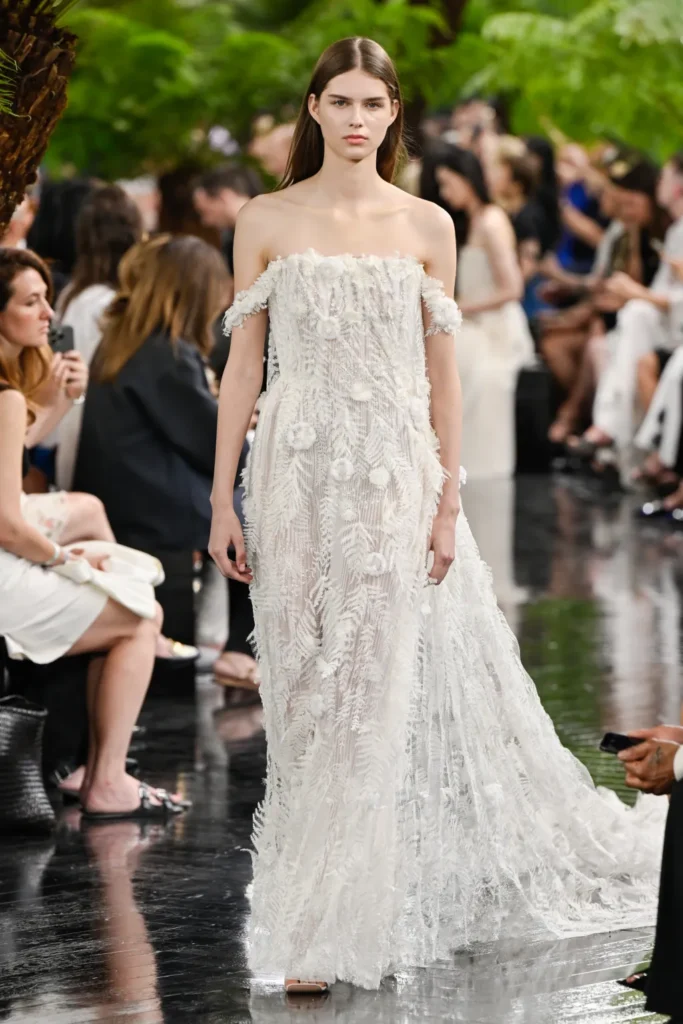
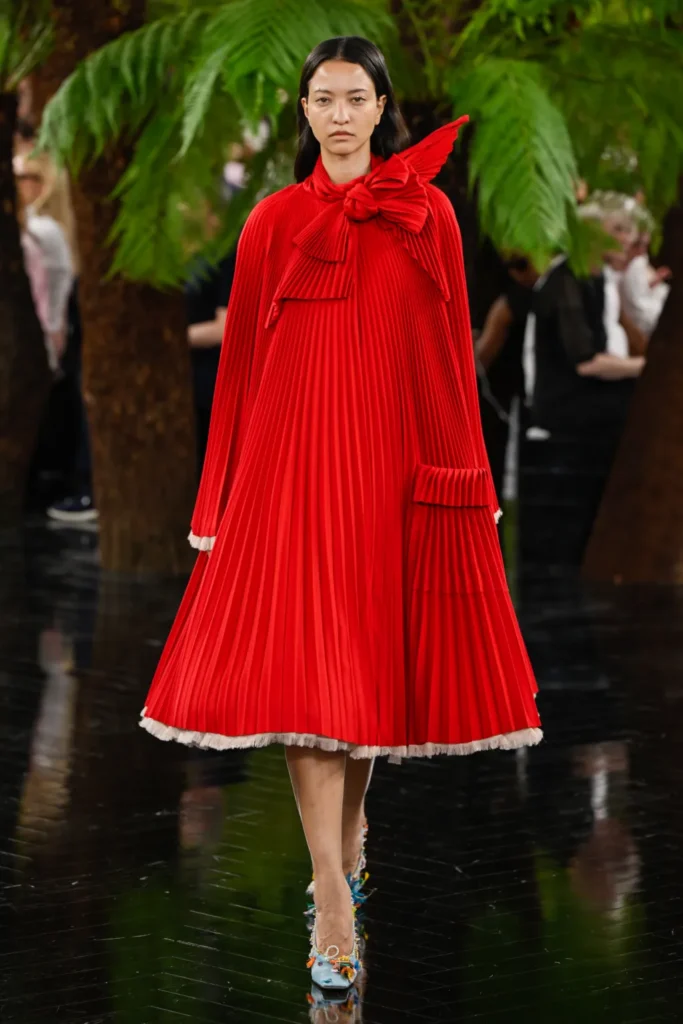
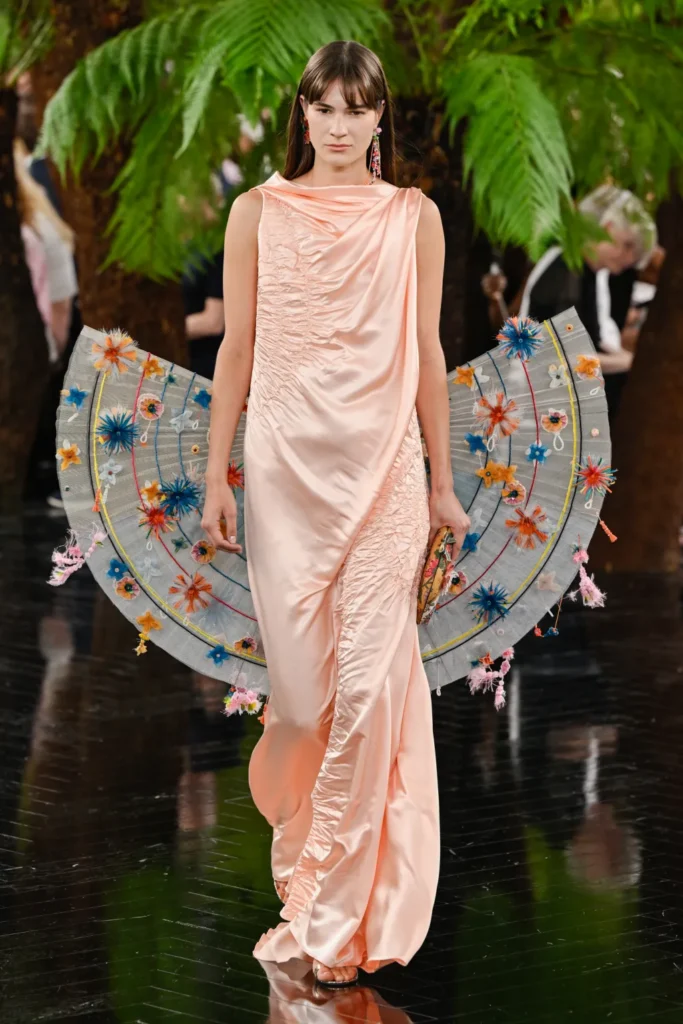
The show’s immersive soundtrack and abstract atmosphere underscored Anderson’s determination to expand Dior’s couture vocabulary. If his debut hinted at poetic romanticism, this collection made clear that his vision extends far beyond the house’s celebrated floral heritage.
That intellectual ambition may surprise those expecting Anderson to embrace the fairy-tale narrative surrounding Swift’s wedding. Instead, he treated one of fashion’s most storied maisons as a laboratory for experimentation, privileging artistic inquiry over commercial sentimentality.