Home Blog Page 4

Dior Fall 2026 Couture Collection

Dior Fall 2026 Couture Collection

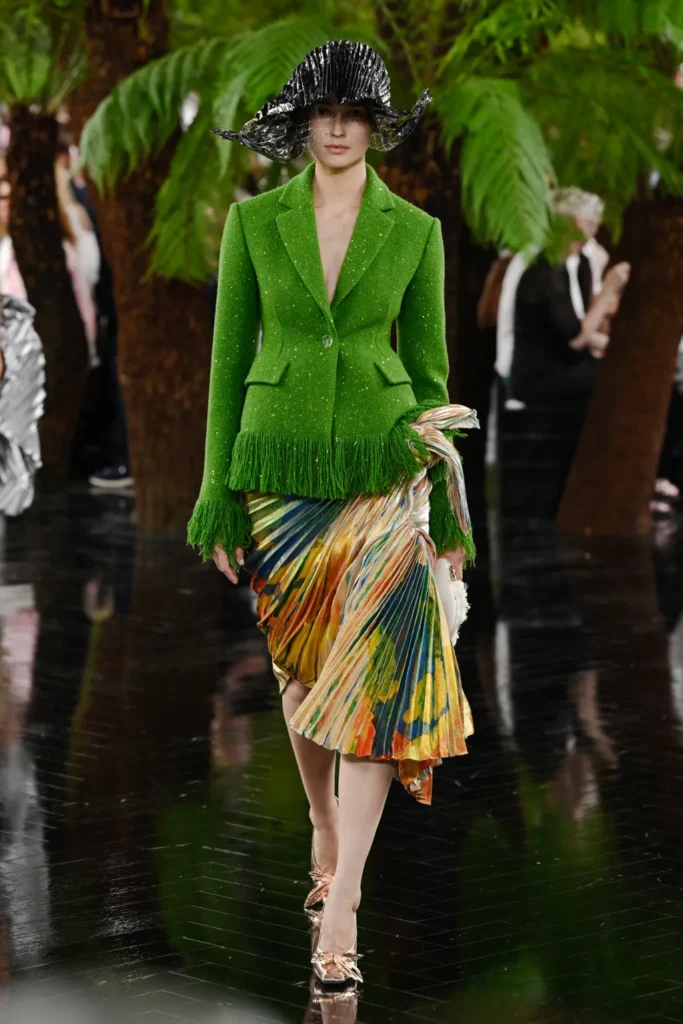
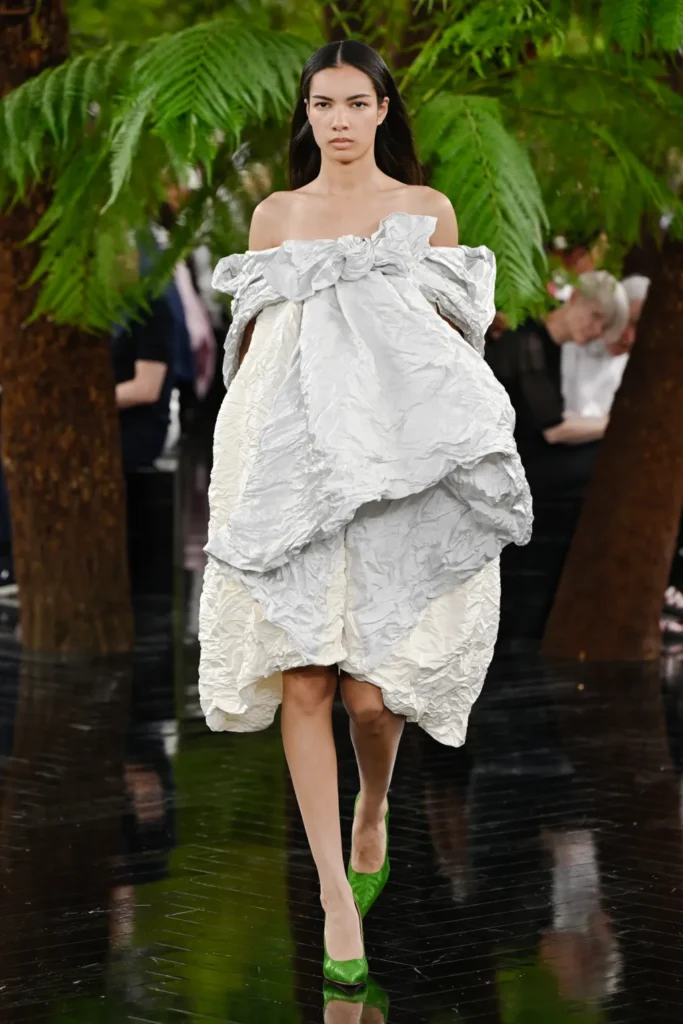
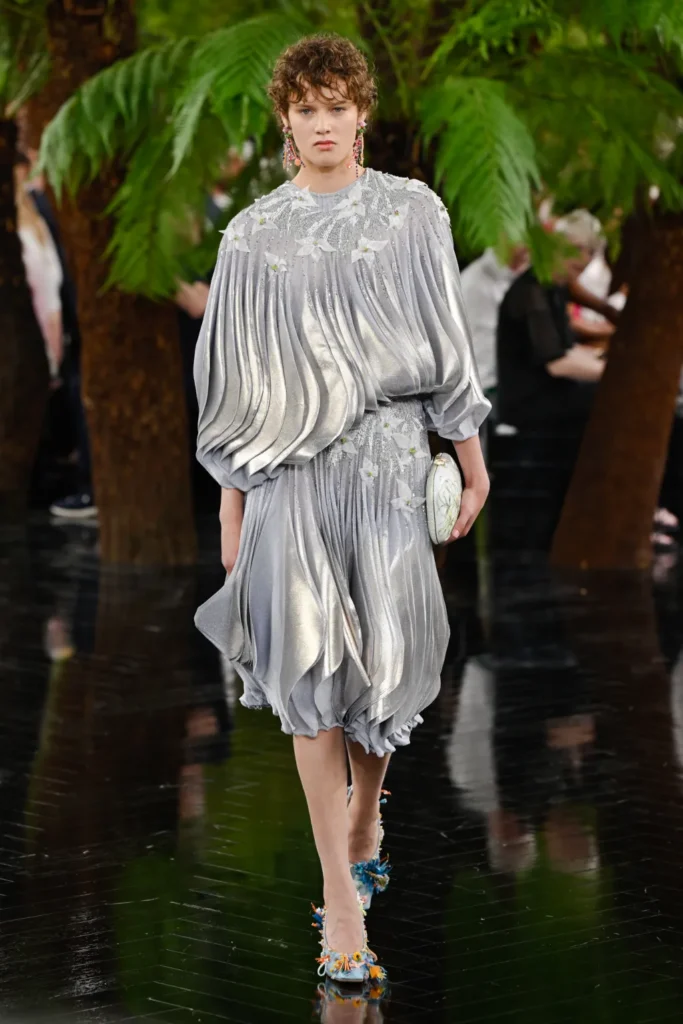
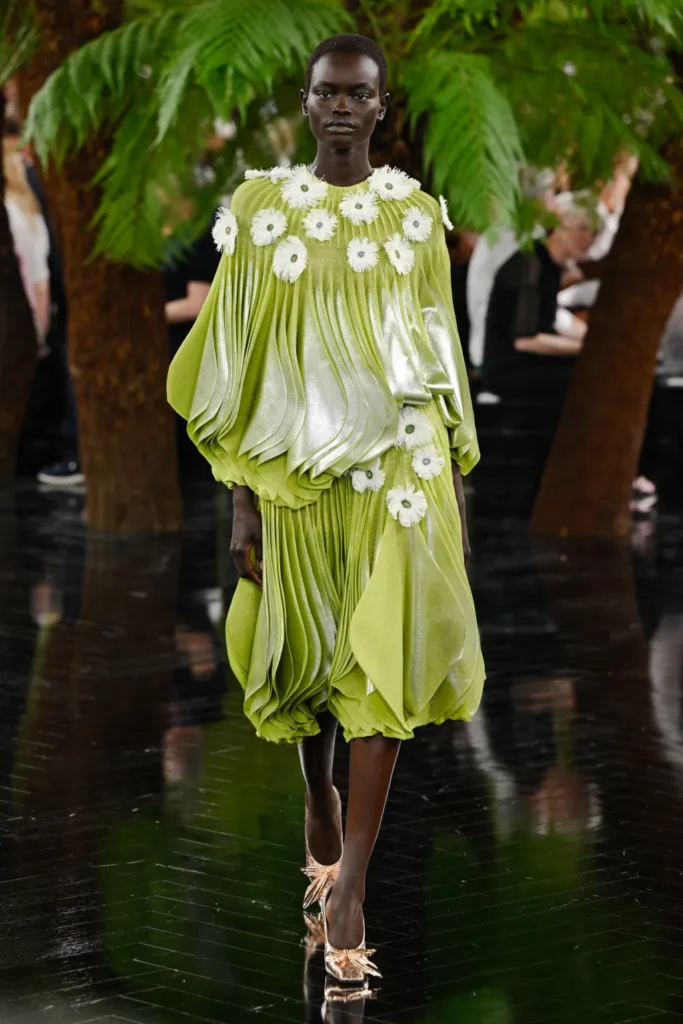
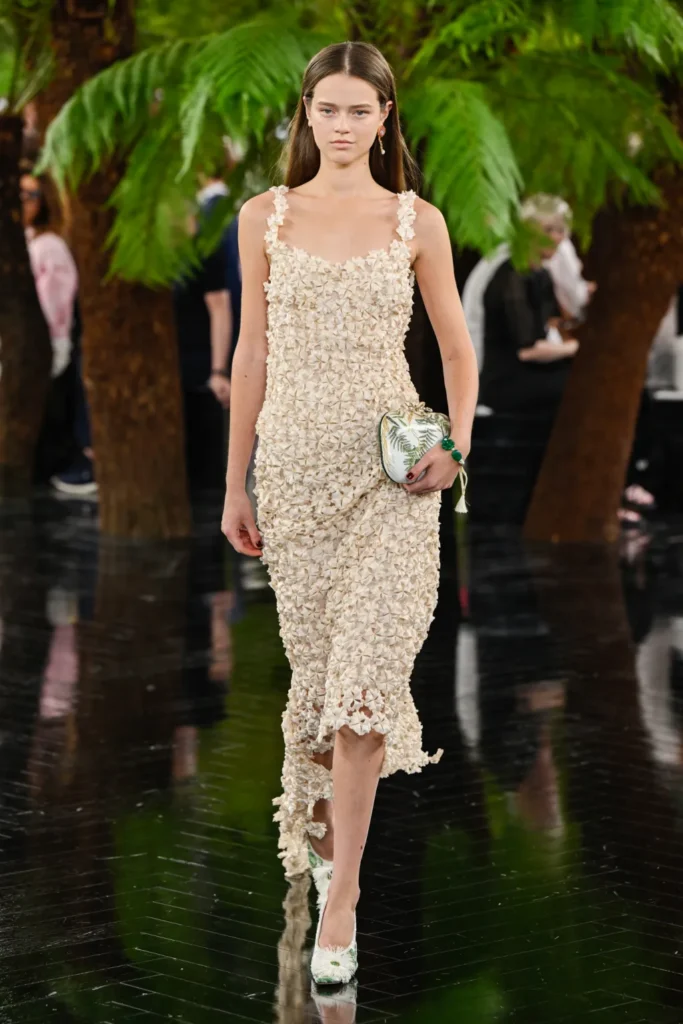
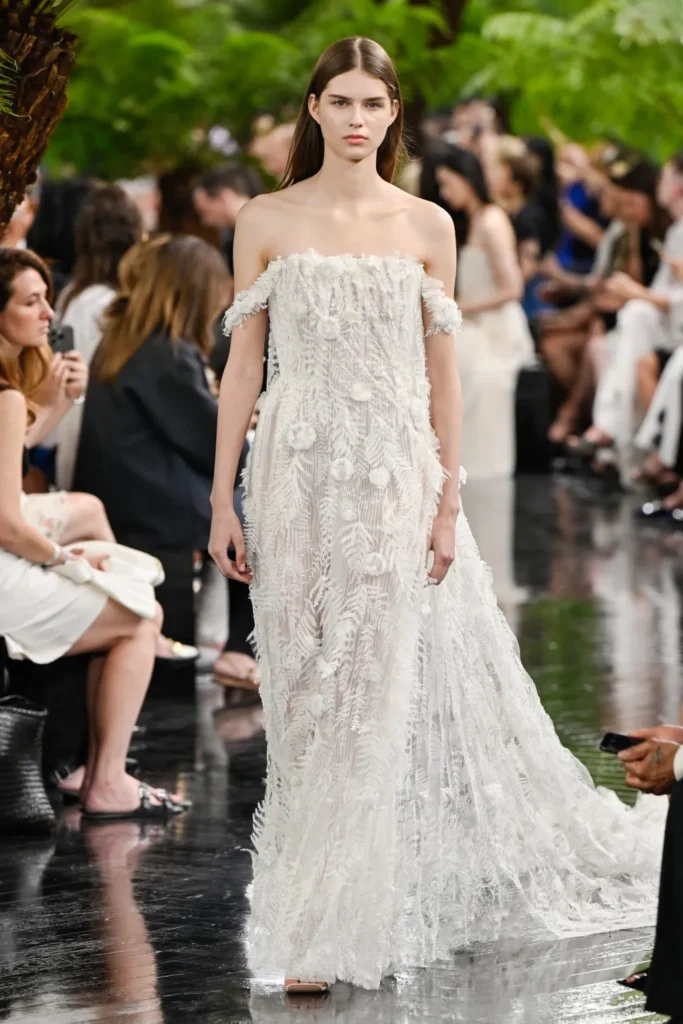
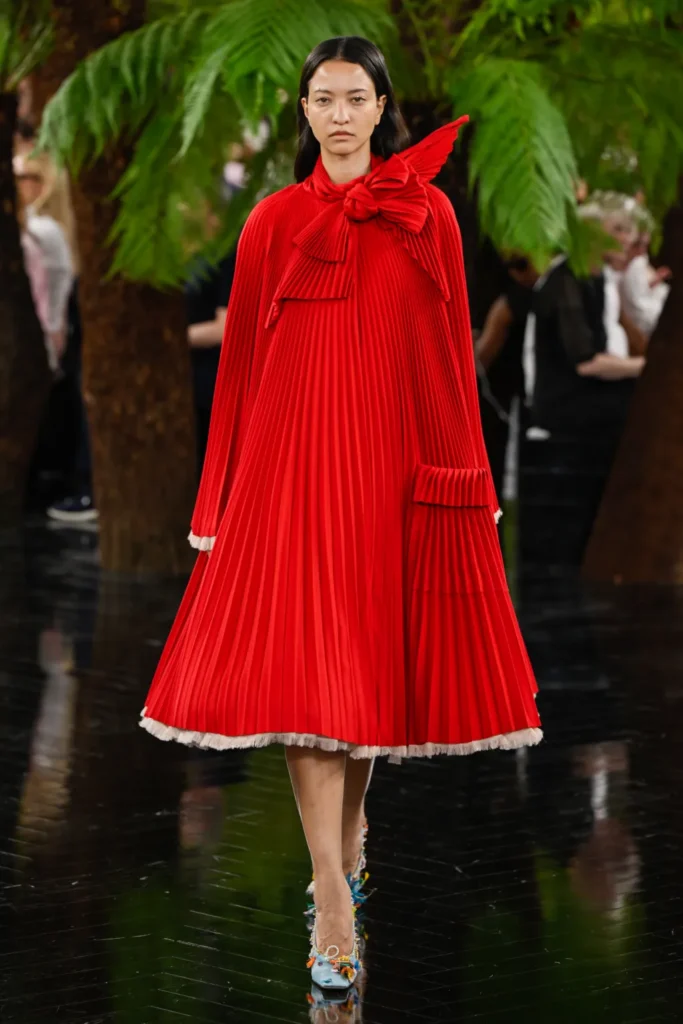
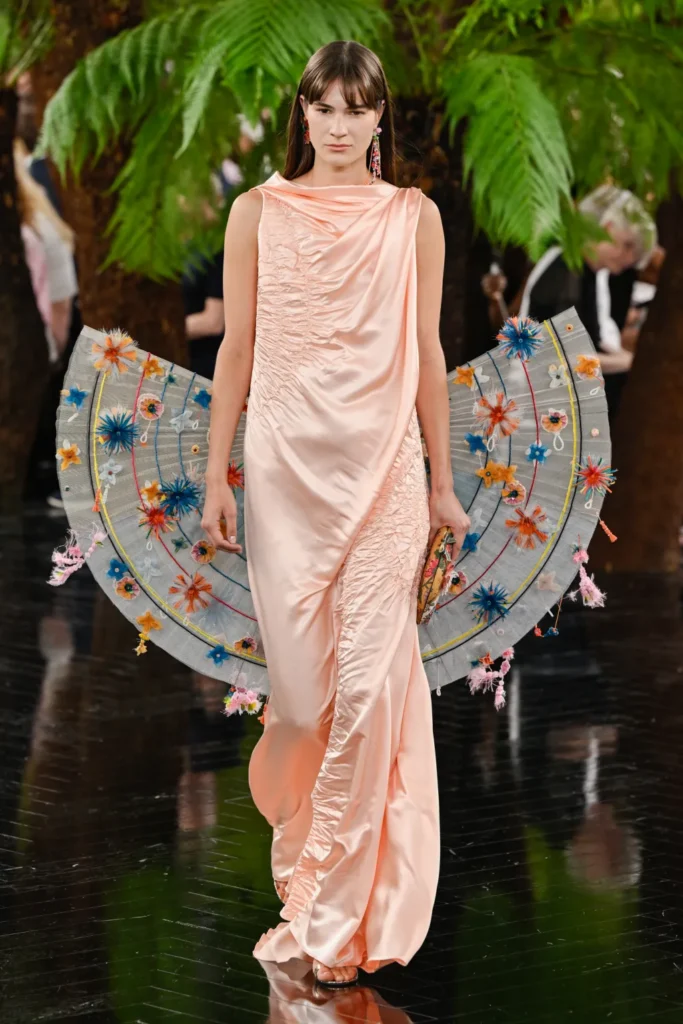
Fresh off designing the wedding attire for Taylor Swift and Travis Kelce, Jonathan Anderson returned to Paris with a couture collection that deliberately sidestepped fairy-tale romance in favor of conceptual artistry. Rather than capitalizing on the cultural momentum surrounding one of the year’s most talked-about weddings, the Dior creative director presented a cerebral vision rooted in sculpture, material experimentation, and artistic dialogue.
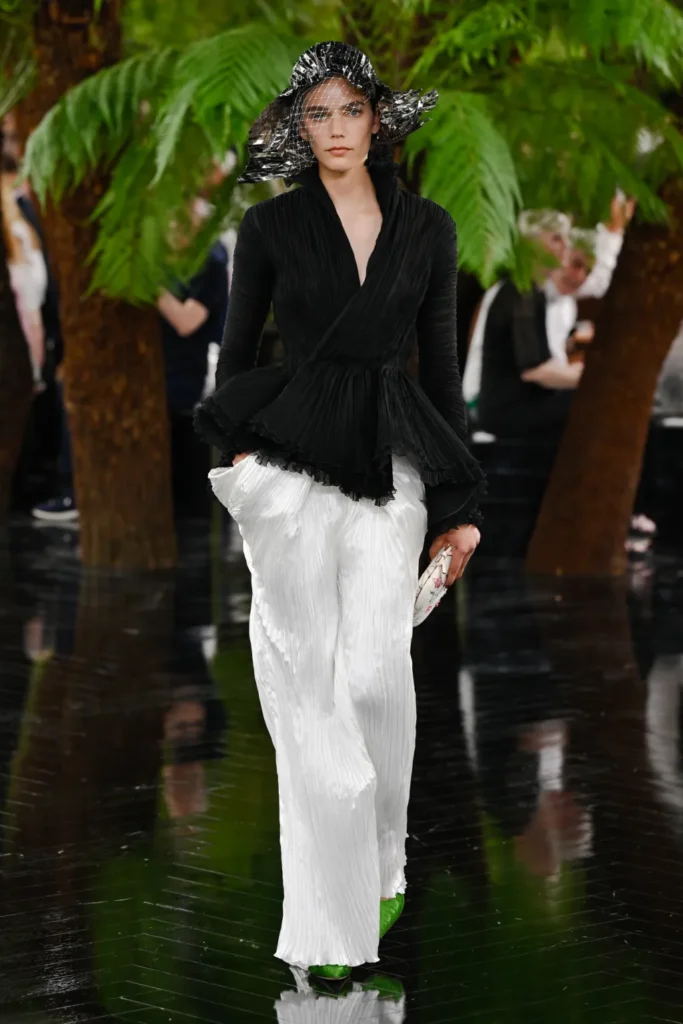
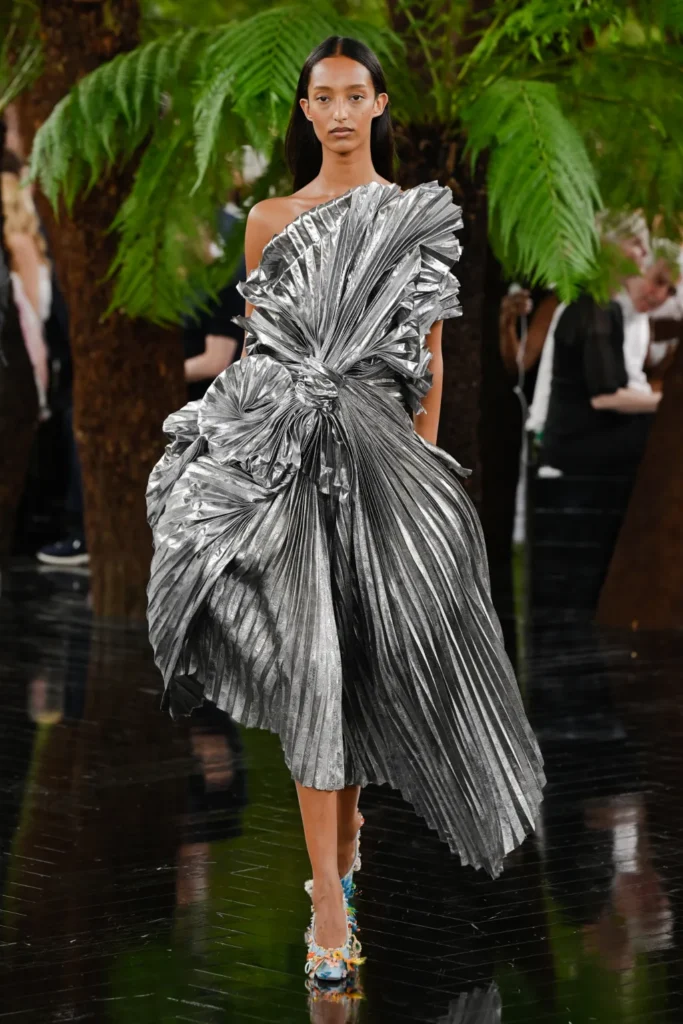
The wedding generated extraordinary visibility for the French house, reportedly delivering an estimated $15 million in media impact value over the July 4 weekend, according to Launchmetrics. Yet Anderson resisted allowing that moment to define his creative direction. While he described designing Swift’s wedding look as “a great honor” and an emotional experience, his focus quickly returned to the ideas shaping the collection.
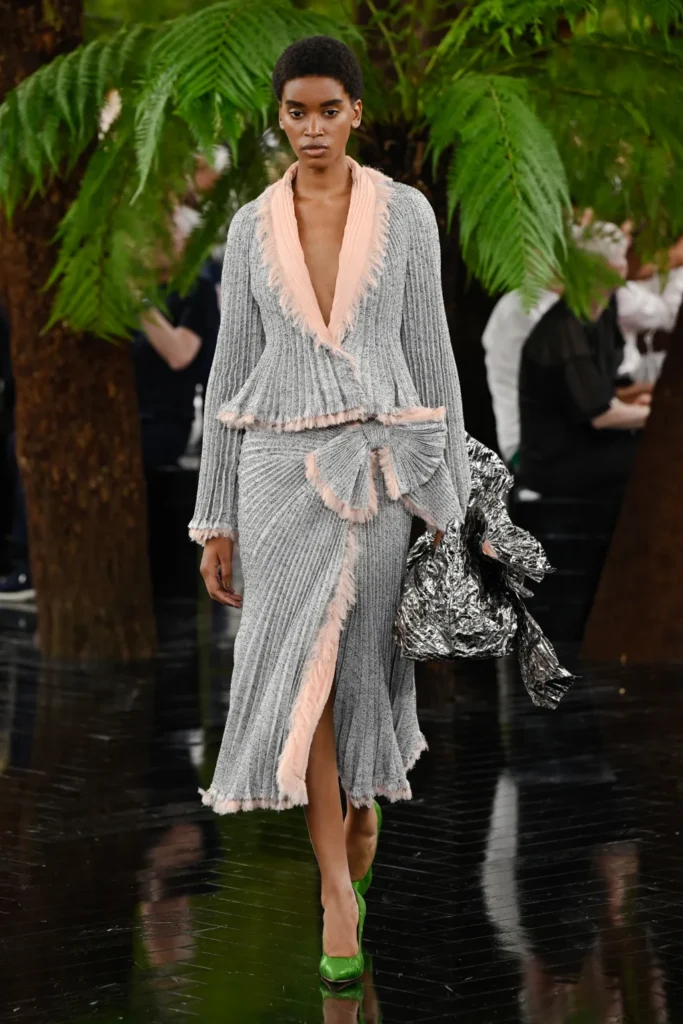
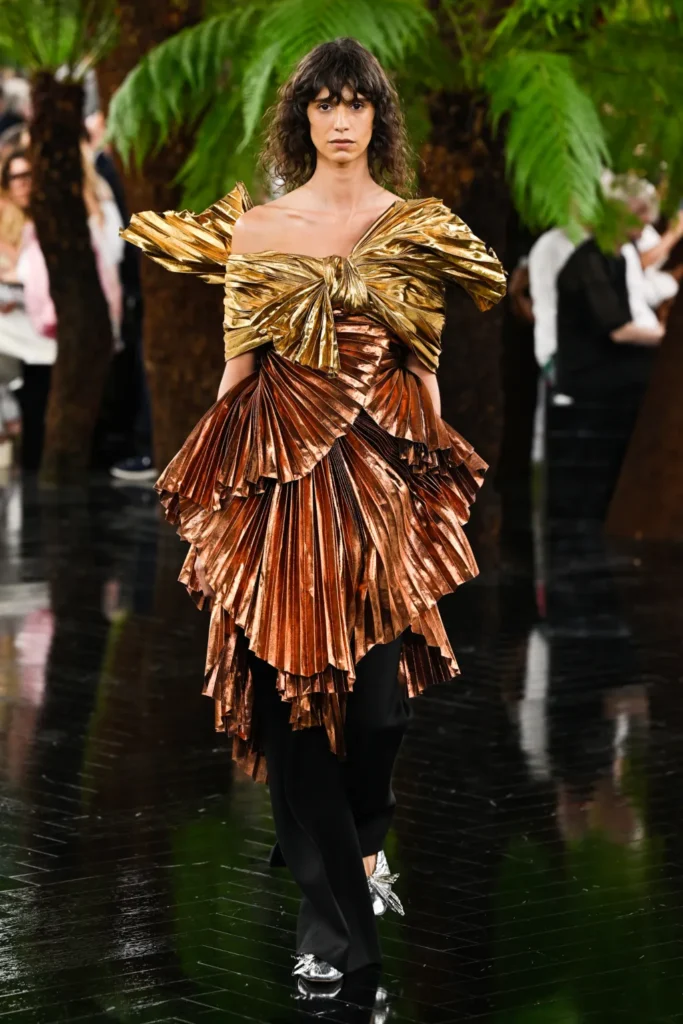
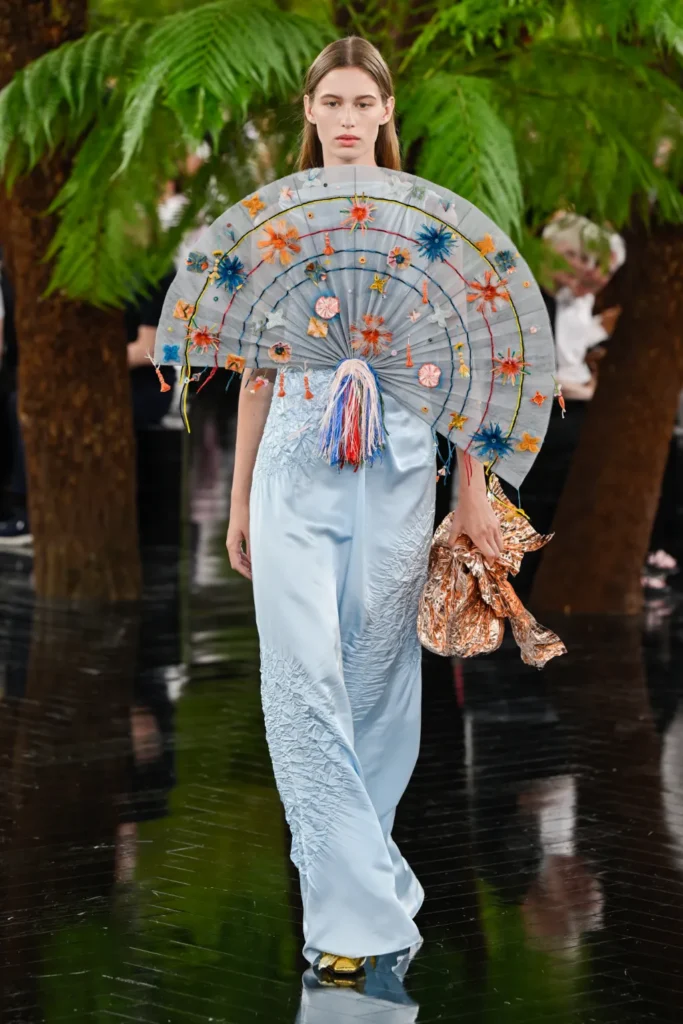
This season, Anderson drew inspiration from American sculptor Lynda Benglis, whose work informed both the collection and a series of collaborative handbags unveiled on the runway. Her influence reinforced Anderson’s fascination with texture, volume, and unconventional forms, transforming couture into a space for artistic exploration rather than nostalgia.

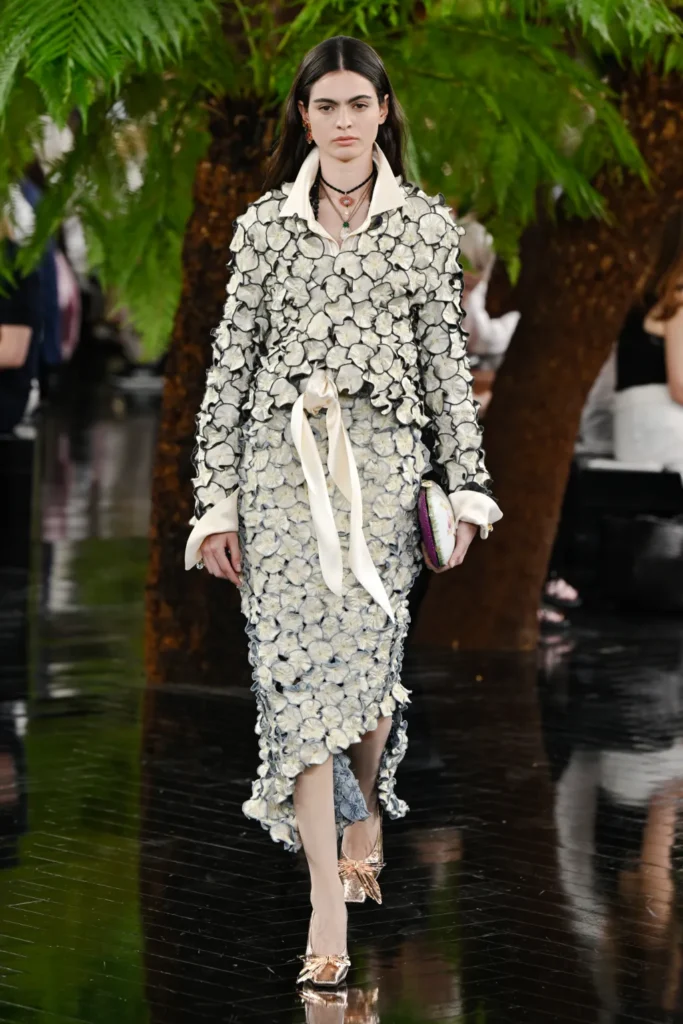
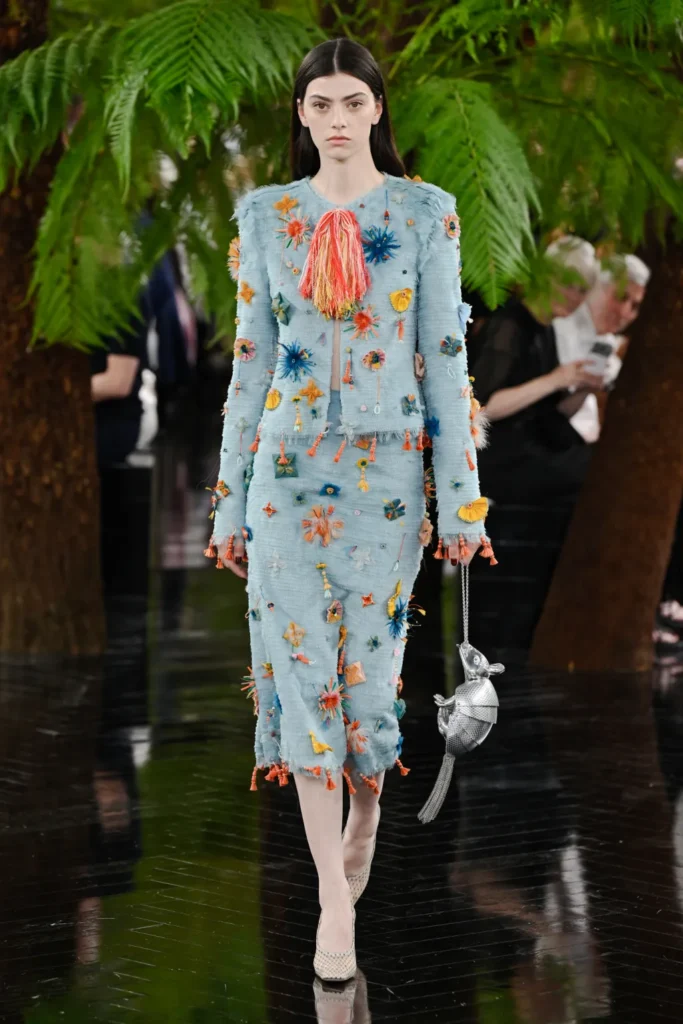
At the heart of the collection stood Dior’s iconic Bar jacket, reimagined through striking new interpretations. A fern-green tweed version featured cascading fringe, while another appeared in a static-gray bouclé that dissolved seamlessly into a floating white chiffon skirt. These familiar house codes became sculptural objects rather than symbols of traditional femininity.
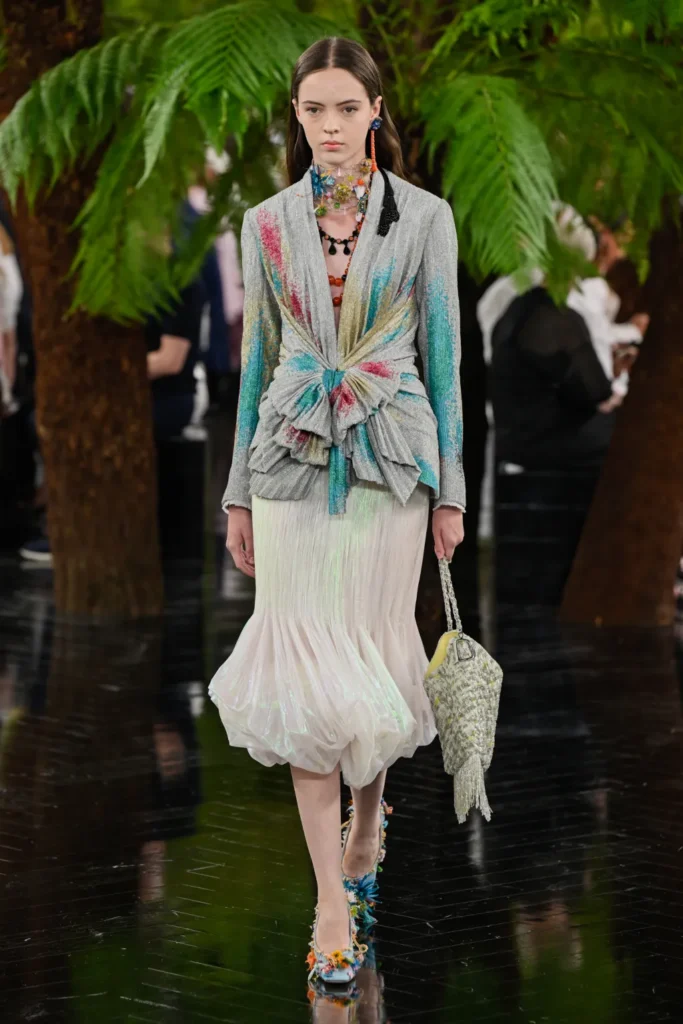
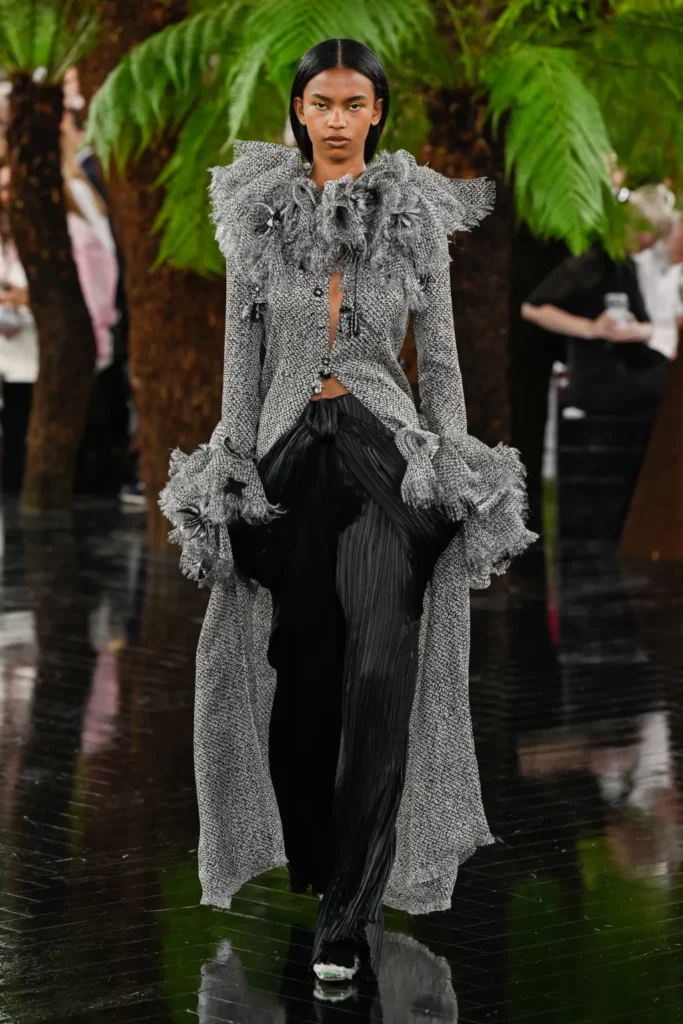
The show’s immersive soundtrack and abstract atmosphere underscored Anderson’s determination to expand Dior’s couture vocabulary. If his debut hinted at poetic romanticism, this collection made clear that his vision extends far beyond the house’s celebrated floral heritage.

That intellectual ambition may surprise those expecting Anderson to embrace the fairy-tale narrative surrounding Swift’s wedding. Instead, he treated one of fashion’s most storied maisons as a laboratory for experimentation, privileging artistic inquiry over commercial sentimentality.

Schiaparelli Fall 2026 Couture Collection

Schiaparelli Fall 2026 Couture Collection

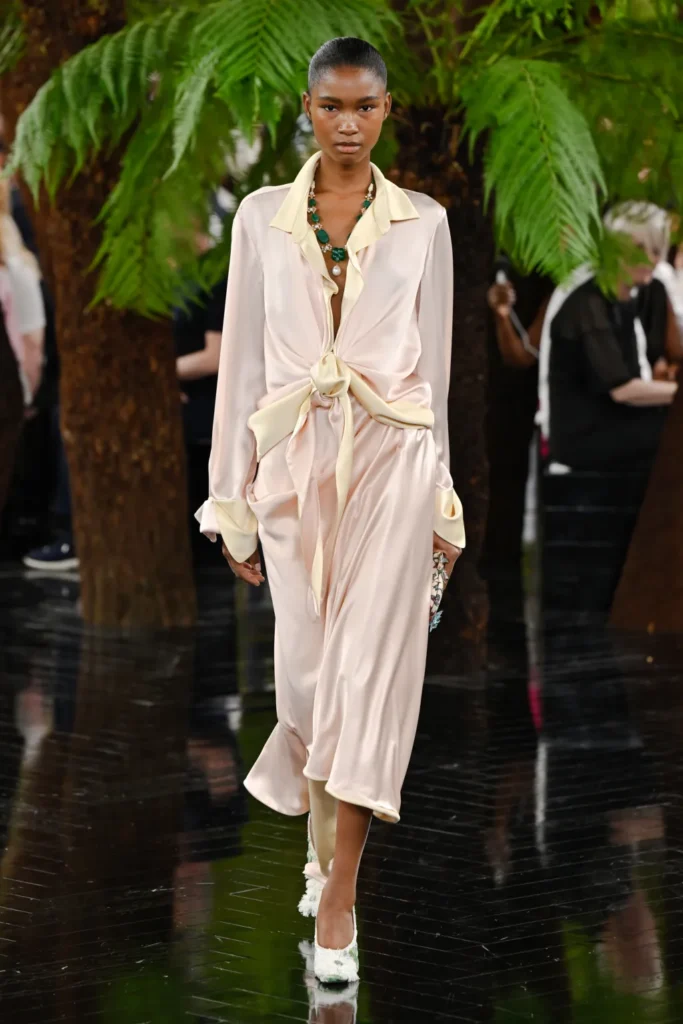
Daniel Roseberry opened Paris Haute Couture Week with one of his most provocative collections yet, plunging Schiaparelli into an otherworldly underwater fantasy that blurred the boundaries between couture craftsmanship, artificial imagery, and body transformation. At its core, the collection posed a timely question: what distinguishes human creativity in the age of artificial intelligence?

Rather than resisting technological change, Roseberry confronted it head-on. Every look—hand-sketched by the designer himself—celebrated the irreplaceable artistry of couture while embracing unconventional materials that challenged traditional notions of luxury. Latex, molded silicone, dried flowers, seashells, and fish scales merged with impeccable handwork to create garments that felt both futuristic and deeply artisanal.

The aquatic narrative unfolded through sculptural silhouettes that appeared to evolve into fantastical sea creatures. Inflatable tentacles extended from latex jackets, translucent silicone corsets mimicked gelatinous marine life, and illuminated gowns seemed to pulse with their own rhythm. The collection embraced transformation as both a visual language and a metaphor for fashion’s rapidly changing landscape.

Roseberry described the collection as an exploration of surrendering to the unknown—a collision between digital innovation and centuries-old craftsmanship. Rather than viewing technology as couture’s adversary, he explored the creative tension between handcrafted excellence and an increasingly AI-driven visual culture.

That duality defined the runway. Sculpted jackets and corsets possessed an almost armor-like rigidity, while liquid-like rubber gowns molded seamlessly to the body. Even the collection’s softer moments carried an undercurrent of unease, including an ethereal blush evening gown embroidered with pearls that balanced romance with subtle surrealism.

The designer’s references ventured into equally unsettling territory. The color palette drew inspiration from the dreamlike imagery of artist Matthew Barney’s Cremaster Cycle, while many silicone elements were developed with a Paris atelier known for producing hyper-realistic prosthetics for the film industry. The result was couture that felt simultaneously beautiful, uncanny, and unmistakably contemporary.

Boloria Spring 2027 Collection

Boloria Spring 2027 Collection

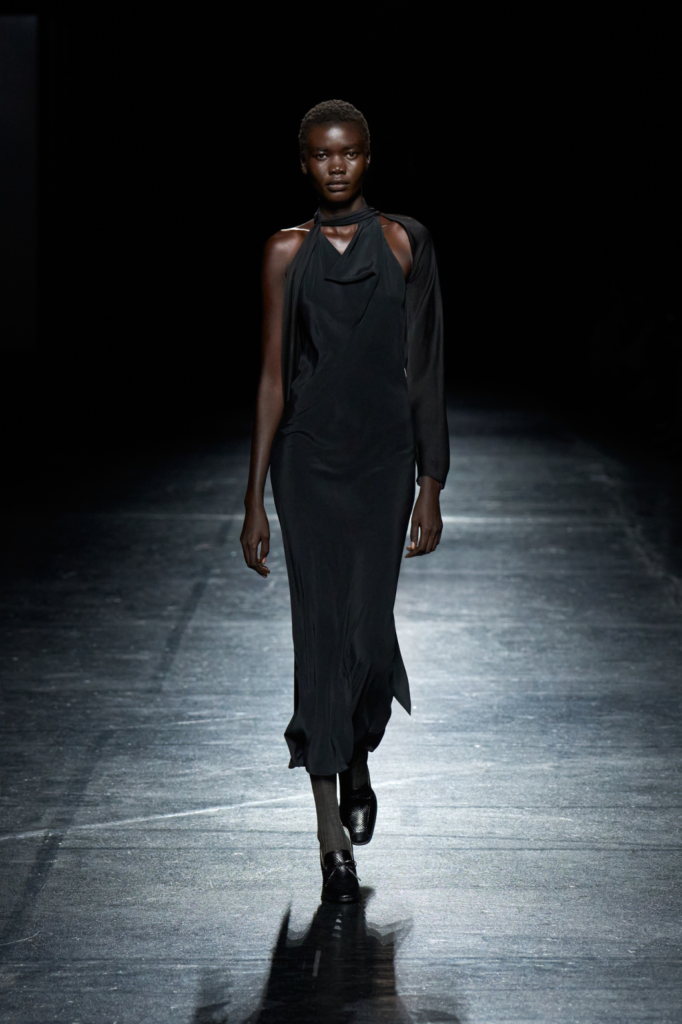
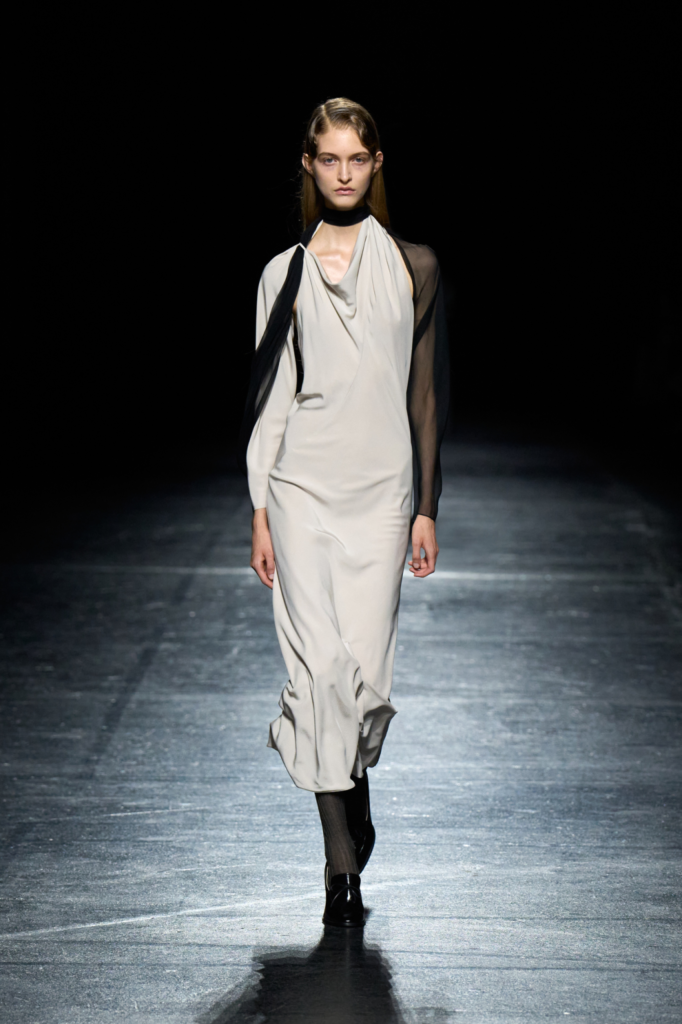
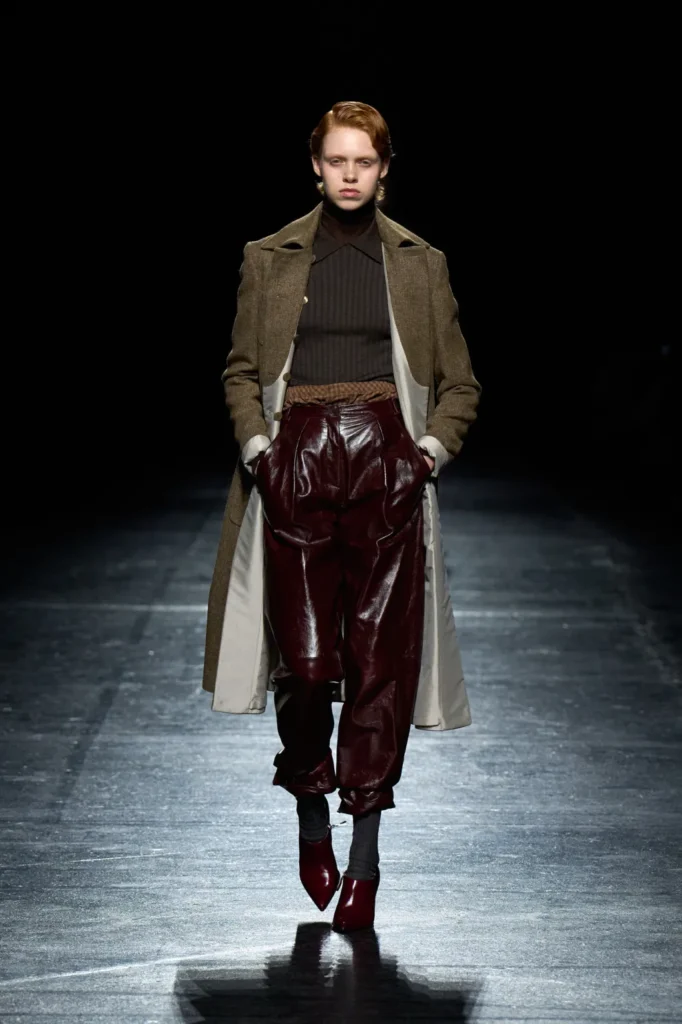
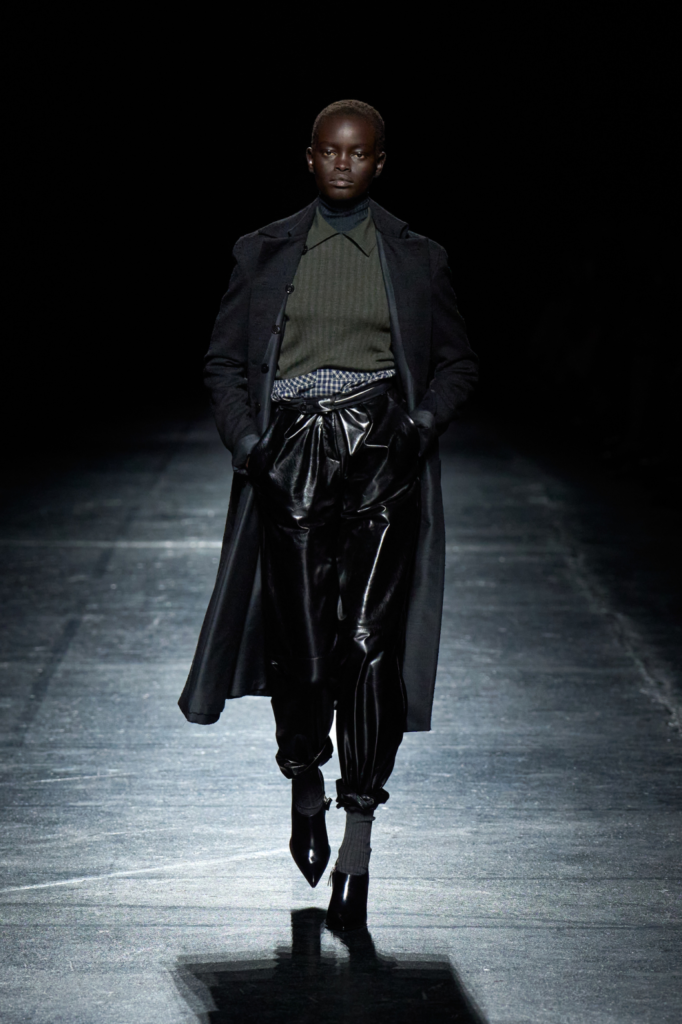
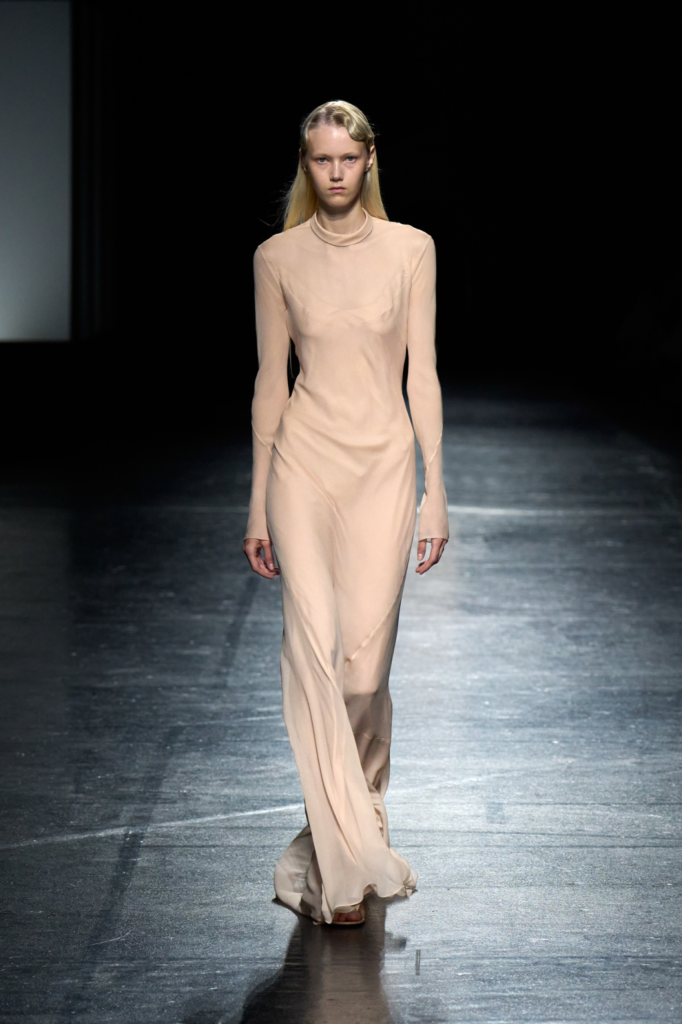
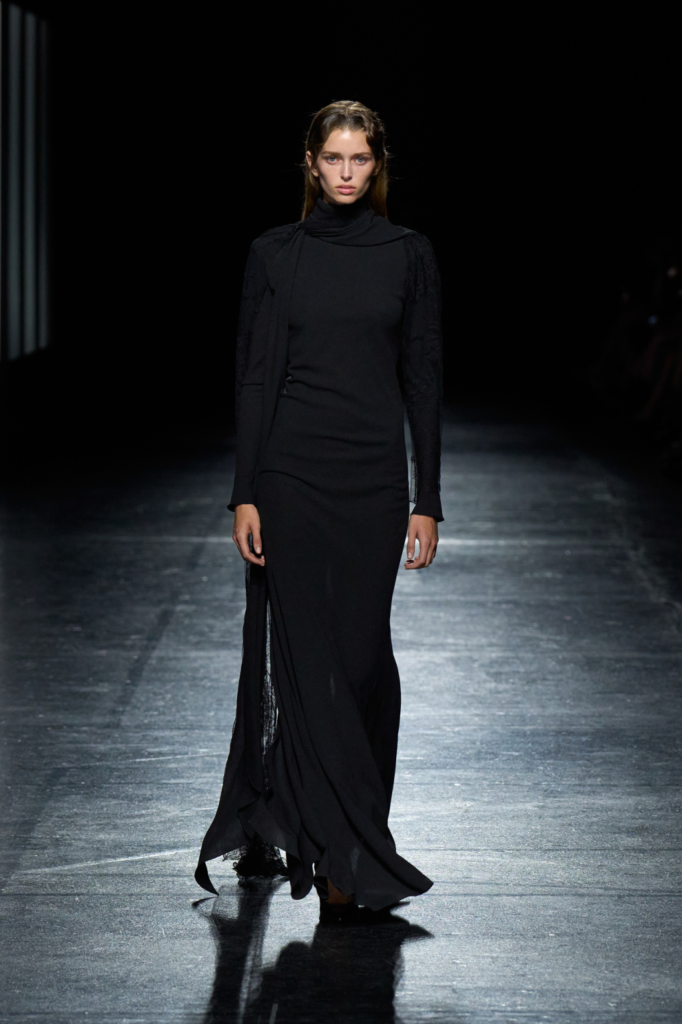
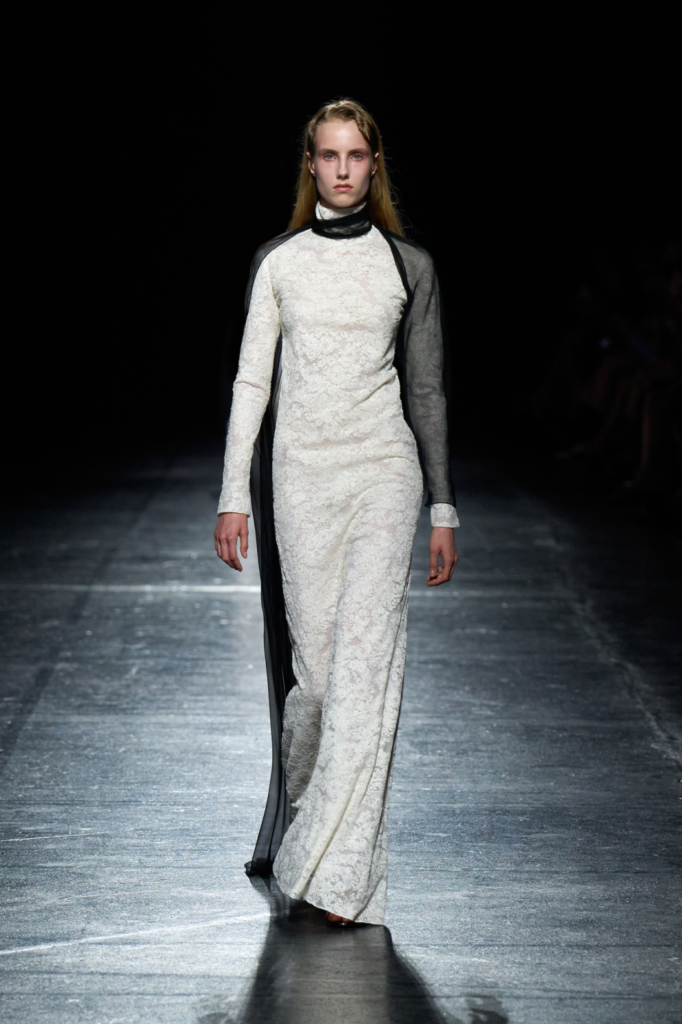
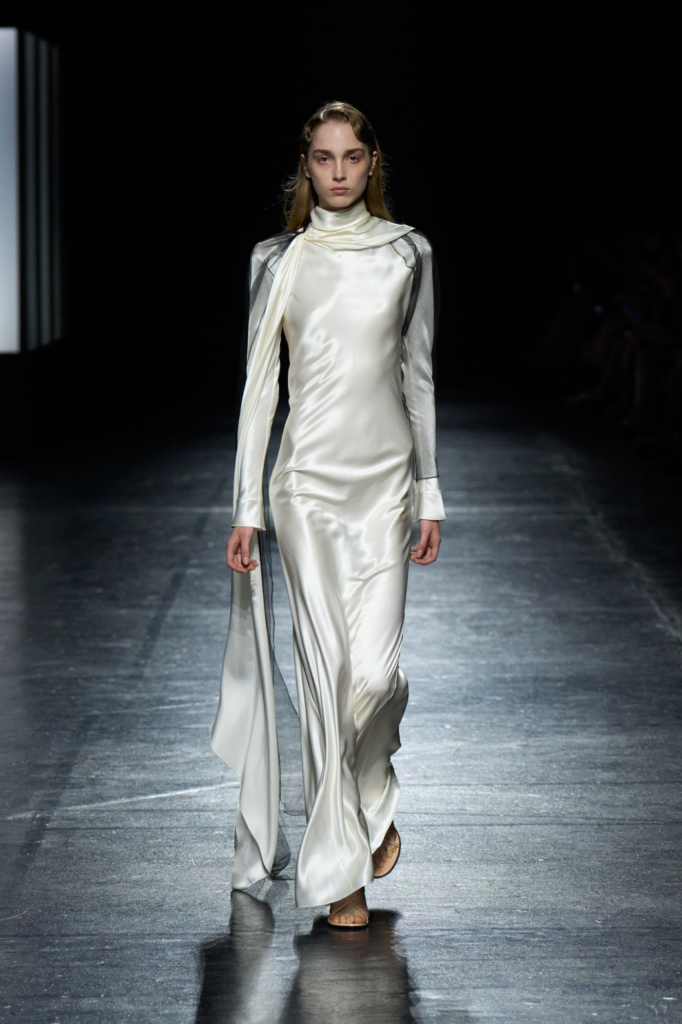
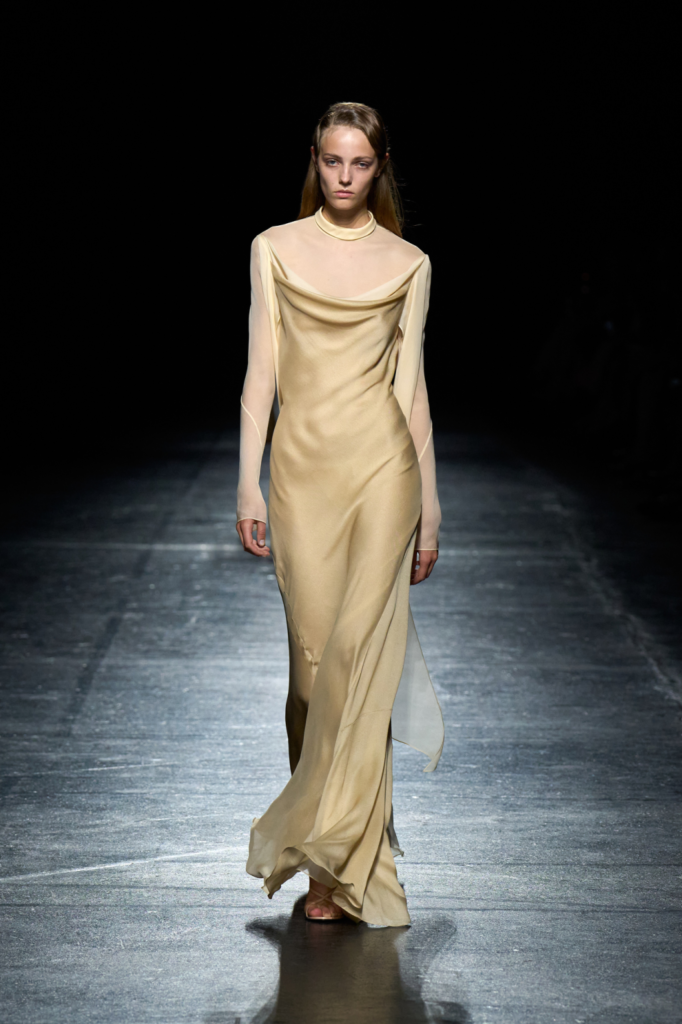
Olivier Theyskens opened a bold new chapter with the debut of Boloria, a label that reflects his uncompromising approach to craftsmanship, tailoring, and draping while introducing a fresh voice in Belgian luxury fashion. Backed by Tomorrowland’s parent company, We Are One World, the collection premiered on the eve of Paris Haute Couture Week, immediately positioning the brand as one of the season’s most intriguing launches.

Rather than creating a contemporary startup, Theyskens envisioned a house with the gravitas of a century-old institution. The name, chosen by the company’s founders, refers to Boloria, a butterfly species first documented in 1899—a poetic symbol of transformation that aligns naturally with the designer’s aesthetic.

Having spent two years refining the project, Theyskens obsessed over every detail. From the subtly protruding square sole of a heeled shoe to barely visible strands of beading suspended from lace hems, every element underscored his devotion to precision and artisanal construction.

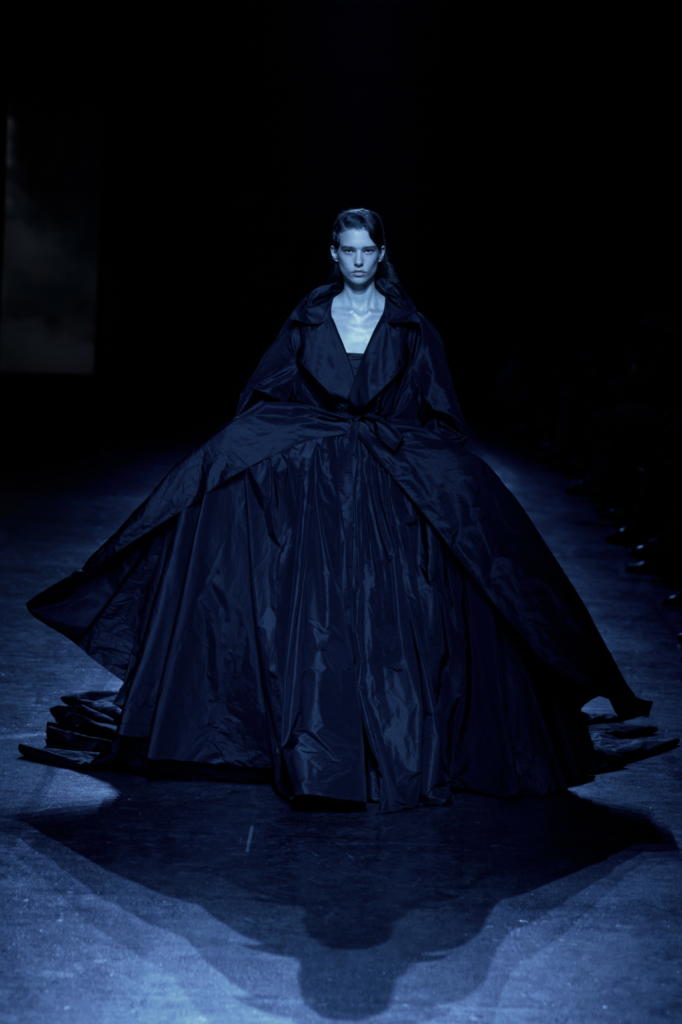
The collection opened with dramatic black gowns that recalled the sculptural silhouettes which first established Theyskens’ reputation in the late 1990s. Rather than revisiting the past, however, they served as dreamlike prologues before giving way to softly draped menswear, where models appeared wrapped in flowing fabrics as if carrying their bed linens into the outside world.

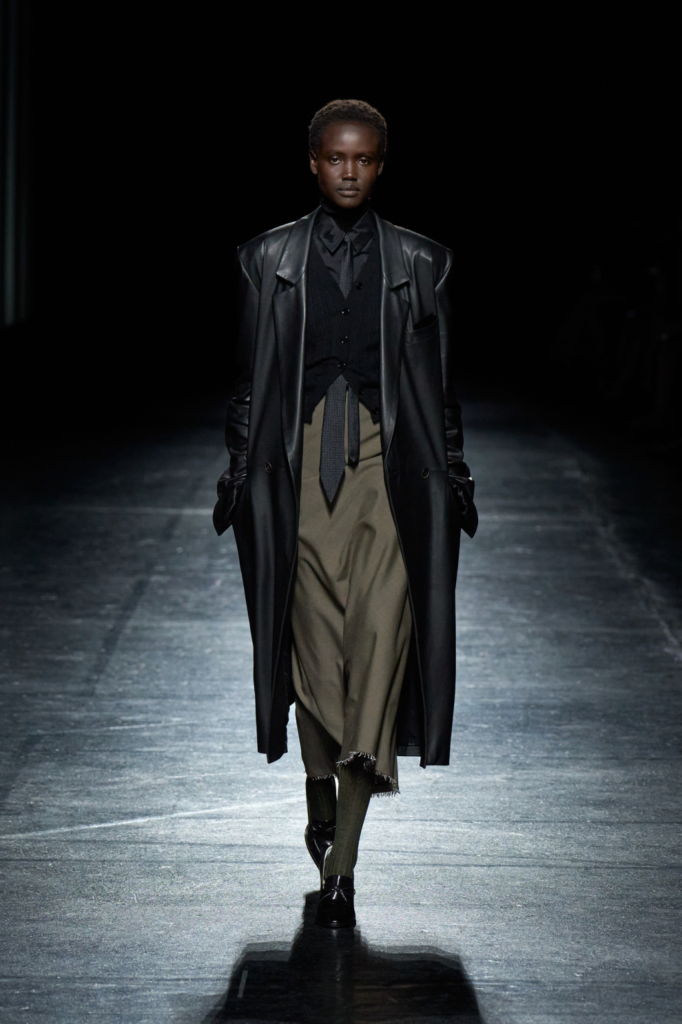
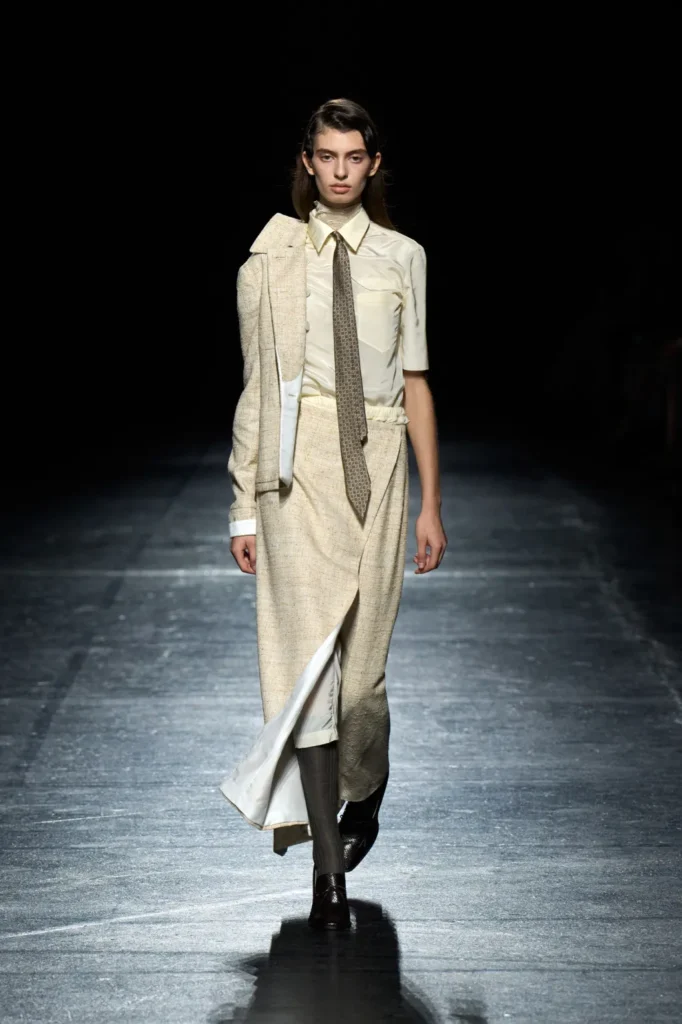
Tailoring became the collection’s defining language. Structured jackets balanced fluid movement through relaxed styling details, including rolled cuffs, turned-up trouser hems, and metallic pocket squares. Menswear carried subtle vintage influences but felt unmistakably modern thanks to lightweight fabrics with glossy and paper-like textures.

Womenswear shifted effortlessly between sharply cut androgynous suiting and bias-cut satin and silk gowns that highlighted Theyskens’ mastery of drape. Presented against a dark, mist-filled set of black monoliths, the collection projected an atmosphere of quiet drama and introspection.

Theyskens imagined the fictional residents of Boloria living across multiple decades—from the 1920s through the 1970s—blending historical references into garments that feel entirely contemporary. Rather than reproducing vintage fashion, he distilled its spirit into timeless silhouettes.

The Birkin Bag: Collector’s Item or Status Symbol?

The Birkin Bag: Collector’s Item or Status Symbol?

The Birkin bag. The A-list celebrity of the handbag world. Now, you may ask yourself: why? There is actually a story behind it. But why does a handbag need a story at all? Well, a bag that costs as much as a brand-new car deserves an iconic story behind it. Let me explain how an airplane ride made that bag happen.

Imagine it’s 1984. Jane Birkin is on a flight from Paris to London. She carries a beautiful wicker basket, although it isn’t particularly practical. Everything inside tumbles out. The passenger sitting next to her sympathizes with her. She mentions that Hermès doesn’t make handbags with enough pockets.

Jane Birkin, and her Birkin.ALAIN JOCARD,JACQUES DEMARTHON/AFP via Getty Images

Guess who that passenger was?

Jean-Louis Dumas, the CEO of Hermès.

And that’s where the first Birkin design came to life.

Jane sketched her idea on an airplane airsickness bag. One month later, she received a call. Hermès had created the bag exactly as she had imagined it. And that, dear fashion lovers, is how one of the most iconic handbags in history was born. Little did she know her name would one day become a legend.

If you look at the bag today, it is still a masterpiece. Everybody knows the Birkin. Everybody wants one, but not everyone can get one. Prices vary depending on the size, leather and hardware. Many people would love to know how to buy one—and let me tell you, it isn’t simple. Honestly, buying a house can sometimes seem easier.

To purchase a Birkin, you often need a strong relationship with a sales associate, and even then there is usually a waiting list. Yes, for a handbag.

As Samantha Jones once joked in Sex and the City: “For a bag?”

Yes—for a bag that has become the ultimate symbol of luxury and exclusivity. So no, you can’t simply walk into Hermès and ask for one. Trust me, I tried.

Looking at the prices might give you a heart attack. But before you close the Hermès website, there’s something worth knowing.

The Birkin is widely considered one of the strongest-performing luxury investments. Alongside the Kelly, it has become one of the few fashion accessories capable of retaining—or even increasing—its value over time. That is one of the reasons demand remains so high today.

Many of the Birkins you see today may one day become family heirlooms. I certainly wouldn’t mind owning one myself. Many people even buy them second-hand, knowing they can still be excellent long-term investments.

My favourite will always be the Birkin 25 in Epsom leather with gold hardware. It’s effortless. Magnificent. And yes, it certainly gives you status—at least on the outside.

But don’t confuse money with taste.

A Birkin isn’t what makes someone stylish. In fact, the opposite is true: it is the person who gives the Birkin its elegance.

Money may purchase the bag, but taste is what brings it to life.

So, back to the original question: is it a collector’s item or simply a status symbol?

The truth is, it has become both.

After all, nobody buys a Rolls-Royce simply because it drives well… do they?

Isabel Marant Resort 2027 Collection

Isabel Marant Resort 2027 Collection

For Resort 2027, Kim Bekker steered Isabel Marant away from its signature bohemian ease in favor of a sharper, city-minded wardrobe. Focused on movement, versatility, and modern tailoring, the collection embraced clean lines and sculptural silhouettes in a bold palette of black, white, and vivid red.

Designed for women navigating fast-paced urban lives, the lineup balanced practicality with effortless sensuality. Rather than dressing for vacation, Bekker proposed polished separates built for everyday wear without sacrificing the relaxed confidence synonymous with the Parisian label.

“I wanted to create something graphic, precise, and grounded in real life,” Bekker explained. That philosophy translated into a wardrobe distilled to its essentials, where every silhouette served a clear purpose.

Tailoring became the collection’s foundation, drawing inspiration from the power dressing of the 1980s. Strong-shouldered jackets appeared in varying proportions, from dark wool hourglass blazers paired with fluid mini skirts to crisp white stretch-linen styles finished with slightly off-center glossy black buttons. The result felt structured yet contemporary rather than nostalgic.

Outerwear injected energy into the collection. A striking red windbreaker, belted coat dresses, and carrot-leg trousers delivered graphic impact while maintaining everyday functionality. Their bold color and streamlined construction reinforced the collection’s confident urban attitude.

Bekker softened the architectural mood with tactile textures and relaxed silhouettes. A caramel leather jacket lined with faux shearling, an ivory knit dress with sculpted shoulders and gathered hips, and a flowing cape blouse printed with an abstract black-and-white animal motif introduced movement without disrupting the collection’s clean aesthetic. Signature Marant staples also received subtle updates. Capri pants returned with delicate side bows at the calf, while low-rise pleated cream trousers and caramel-wash denim offered an easy alternative for women seeking relaxed tailoring with understated polish.

Marc Jacobs Fall 2026 Collection

Marc Jacobs Fall 2026 Collection

Marc Jacobs returned to the New York Public Library with a Fall 2026 collection that distilled fashion into its most uplifting form: fearless color, sculptural proportions, and unapologetic optimism. Staged just ahead of the Fourth of July holiday, the concise 31-look presentation proved that a powerful fashion statement doesn’t require excess—only conviction.

Titled “Gratitude,” the collection reflected Jacobs’ belief in creativity as an act of appreciation and self-expression. That spirit resonated throughout a lineup that transformed familiar references into something unmistakably his own.

Drawing inspiration from fashion history, Jacobs reinterpreted translucent nylon layers reminiscent of Junya Watanabe’s Spring 1996, pairing sheer shirts, slip dresses, and trompe-l’Å“il lingerie with saturated shades of pink, cobalt, and violet. Bold opaque tights and bodysuits injected graphic contrast, while echoes of Prada Spring 2007, Louis Vuitton Spring 2009, Yves Saint Laurent Spring 1993, and Chanel 1993 surfaced through exaggerated proportions, vibrant color blocking, and playful styling.

The collection embraced a youthful sense of nostalgia without feeling retrospective. Stacked necklaces, layered belts, and sharply cropped silhouettes recalled early-2000s dressing, while polished construction kept every look contemporary.

Color remained the show’s defining language. Jewel tones collided with neon brights across sculptural crocodile-effect mini skirts, PVC-fringed slip dresses, embroidered jackets, corset tops, and pleated polka-dot skirts layered over transparent knit and nylon foundations. The result was energetic, graphic, and unmistakably theatrical.

Although visually exuberant, the collection also demonstrated Jacobs’ commercial clarity. Statement separates—including embellished jackets, corset tops, and bold color-blocked pieces—offered runway impact while remaining highly wearable, reinforcing the designer’s ongoing balance between creativity and desirability.

Jacquemus Spring 2027 Collection

Jacquemus Spring 2027 Collection

Simon Porte Jacquemus returned to the Mediterranean for one of his most defining runway moments yet, staging his Spring 2027 show on the rocky coastline of L’ÃŽle-Rousse in Corsica. As the designer prepares to launch his first beauty line and fragrance next year, the collection reaffirmed the sun-drenched identity that has become synonymous with the Jacquemus universe.

Against a dramatic backdrop of sea and sky, guests including Isabelle Huppert, Manon Bannerman, and Park Seo-joon watched models descend from the island’s white lighthouse as sailboats offshore spelled out the Jacquemus name. The breathtaking setting reinforced the designer’s desire to reconnect with nature while celebrating a pivotal new chapter for the brand.

“This collection had to feel unmistakably Jacquemus,” the designer explained ahead of the show. That vision translated into a refined summer wardrobe that balanced effortless ease with heightened sophistication. Crisp cotton poplin shirtdresses, sculptural bubble skirts, and sweeping taffeta palazzo pants elevated familiar warm-weather staples without sacrificing their relaxed appeal.

After several seasons of couture-inspired experimentation, Jacquemus returned to the bold silhouettes and vibrant color palette that first established his signature aesthetic. Sheer organza tank tops, supple leather versions of the same essential piece, sharply cut column bodices with open backs, and feather-trimmed evening gowns demonstrated a renewed confidence in graphic simplicity.

The collection also showcased the technical progress of the house’s ateliers. Tailoring appeared cleaner and more precise, from fluid outerwear seamlessly integrated with scarf details to impeccably engineered dresses that moved effortlessly despite their sculptural volumes. Menswear followed the same philosophy, pairing lightweight summer tailoring with relaxed wool caftans, organza trousers, and nylon separates that reimagined casual dressing through unexpected proportions.

Accessories echoed the playful spirit of the collection. Miniature cone-shaped straw hats and soft ballet flats arrived in candy-like shades inspired by fresh fruit, reinforcing the joyful optimism that has long distinguished the brand.

Vetements Spring 2027 Collection

Vetements Spring 2027 Collection

Guram Gvasalia made his Paris Men’s Fashion Week debut with Vetements by challenging expectations. While officially showing on the menswear calendar, the collection placed women at its center, with Alek Wek, Sasha Pivovarova, and Sharon Stone leading a cast that blurred traditional gender boundaries by wearing many of the men’s looks.

Stone’s appearance became one of the show’s defining moments. Striding confidently through an industrial underpass in glossy patent thigh-high boots and a sharply tailored white jacket, she brought effortless authority to the collection. Whether an intentional nod to Demna’s recent Gucci debut or simply a coincidence, the casting reinforced Vetements’ long-standing fascination with cultural references and unexpected personalities.

The venue reflected that same philosophy. Although invitations directed guests to the Novotel Paris Centre Tour Eiffel, the runway unfolded beneath the hotel in a stark concrete tunnel, replacing spectacle with an intentionally raw, urban backdrop that has become part of the brand’s visual language.

Rather than chasing conceptual extremes, Gvasalia focused on clothing designed for everyday life. As he explained before the show, the goal was to understand “what people actually want to wear.” The result was a wardrobe built around familiar essentials: striped shirting, denim, Harrington jackets, motocross-inspired outerwear, trench coats, leather trousers, and streamlined pencil skirts.

Several pieces demonstrated thoughtful versatility. Reversible Harrington jackets and trench coats revealed checked interiors and exposed labels reading simply “Clothes” instead of “Vetements,” underscoring the designer’s understated approach to branding. These subtle interventions suggested that practicality, rather than logos, remains the collection’s defining statement.

Courtesy of Vetements

While the lineup lacked the disruptive energy that once made Vetements a fashion provocateur, it reflected a noticeable shift toward refinement and commercial wearability. The collection prioritized function over shock value, offering elevated wardrobe staples with careful construction and restrained design details.

Spring 2027 may not mark Vetements’ most groundbreaking season, but it signals a brand increasingly interested in longevity over provocation. Gvasalia’s latest offering embraces the reality of contemporary dressing, proving that sometimes the strongest statement is simply creating clothes people genuinely want to wear.

Gabriela Hearst Resort 2027 Collection

Gabriela Hearst Resort 2027 Collection

Gabriela Hearst continues to prove that true luxury is measured not by excess, but by craftsmanship. For Resort 2027, the Uruguayan designer delivers one of her most accomplished collections to date, building a wardrobe defined by artisanal excellence, refined textures, and effortless sophistication.

Lace and slip dresses emerge as the collection’s central themes, yet they are only the starting point of a far richer narrative. Every garment reflects Hearst’s relentless pursuit of exceptional technique—from intricate hand-knotting and custom-developed textiles to botanical dyeing methods that recreate the soft desert hues found in her watercolor sketches. Sustainability remains inseparable from the creative process, expressed through recycled leather bombers, responsibly sourced fabrics, and carefully engineered natural fibers.

The collection’s true strength lies in its remarkable construction. Long lace dresses appear in unexpected materials, including suede, cotton, and finely woven wool, creating layers of texture that feel both delicate and substantial. Airy silhouettes dominate the season, balanced by heavier outerwear designed for the Resort calendar’s late-year delivery.

Hearst’s commitment to preserving traditional craftsmanship is evident throughout. Collaborations with artisan communities—including Manos del Uruguay, the Bolivian collective Madras & Artesanas, and New Mexico textile artist Josh Tafoya—bring centuries-old techniques into a contemporary luxury context. Handwoven cashmere, intricate knotting, Chimayo-inspired chevrons, sarape stripes, and richly textured embroidery transform classic tailoring into collectible pieces without sacrificing wearability.

Signature knitwear returns with subtle refinements, including cashmere sweaters delicately embellished with crystal beading that evokes antique porcelain florals. Tailoring reaches new heights through two-tone wool suiting that shifts with the light, while metallic-thread silk creates fluid eveningwear with a molten finish. Every piece reflects Hearst’s understated approach to luxury—quiet, intelligent, and meticulously executed.

The Resort offering also expands the designer’s menswear vision through elevated essentials crafted from premium linen, washed silk, and recycled cotton denim. Clean silhouettes, exceptional fabrication, and timeless proportions reinforce Hearst’s belief that longevity—not novelty—is the ultimate expression of modern fashion.

Absent Findings Presents SS/2027 Collection “What’s the Color of My Voice?” at Milano Fashion Week

Absent Findings Presents SS/2027 Collection “What’s the Color of My Voice?” at Milano Fashion Week

A surrealist vision where fashion becomes memory, emotion and artistic expression.

Absent Findings has officially unveiled its Spring/Summer 2027 collection during Milano Fashion Week, introducing What’s the Color of My Voice?, a proposal that transcends the traditional runway format to become an immersive artistic experience. Conceived as a surrealist fashion film, the collection explores the emotional power of clothing through memory, craftsmanship and imagination, reinforcing the Dubai-based house’s distinctive creative language.

Between Reality and Dreams

Inspired by the surrealist worlds of Leonora Carrington, the theatrical costume language of Oskar Schlemmer, Victorian ornamentation and classic preparatory uniforms, What’s the Color of My Voice? reflects on the way clothing shapes identity. Here, the uniform is no longer a symbol of conformity but an expression of intention, discipline and individuality.

Courtesy Of Absent Findings

Tailored jackets, shirts and trousers are interrupted by ruffles, gathered panels, decorative trims and vibrant accents that soften their structured silhouettes. Rather than decorating the garments, these interventions introduce emotion into precision, creating a dialogue between restraint and freedom. A renewed colour palette of olive, rust, burgundy, lilac, ochre and muted blues signals a confident evolution for the brand, embracing optimism without abandoning its intellectual depth.

A Universe Built Through Collaboration

More than a fashion collection, What’s the Color of My Voice? unfolds inside a surreal domestic apartment where every object, artwork and piece of furniture contributes to a larger emotional narrative. The accompanying film invites viewers into an intimate world where ordinary gestures become poetic, childhood imagination merges with theatricality, and fashion exists alongside art, interiors and storytelling.

This creative ecosystem is enriched through collaborations with artists Sara Kamar, Ahmed Emad, Inés Boubakri Haddad and Farah Soltani, while furniture by Forma Object becomes an active part of the visual narrative rather than a simple backdrop. Together, these elements reinforce Absent Findings’ belief that fashion is created through dialogue between disciplines, where garments become extensions of a carefully constructed universe.

Presented at Milano Fashion Week

With its official presentation during Milano Fashion Week, Absent Findings continues to establish itself as one of the most distinctive emerging voices in contemporary fashion. Under the creative direction of founder Shivin Singh, the brand once again demonstrates that technical craftsmanship, cultural memory and artistic experimentation can coexist, creating collections that invite audiences not only to look, but to reflect, revisit and discover new meanings with every encounter.